
Gingrich on CDP Push, Thomas on Affordability Tracker, Malloy on Chevrolet | Daily Dealer Live
About this episode
Dealership Guy Podcast’s Daily Dealer Live covers how dealers are winning (and losing) in 2026 through execution, not just inventory. Dennis Gingrich updates his dealership group’s CRM transition to DriveCentric, highlighting better operational visibility and insights like shoppers taking longer before committing and the need for stronger human follow-up. Dave Thomas breaks down CDK’s new Affordability Tracker, showing “affordable bestsellers” rising faster in price and tying it to deal friction. GM’s growth message: no silver bullet—discipline and inspecting what you expect. Headlines also include Hendrick’s luxury expansion and Nissan’s shift away from volume-at-all-costs.
Greensboro
"Plans include a new Porsche facility in Greensboro, a new Ferrari facility in Charlotte and a Ferrari satellite operation in Raleigh."
Greensboro is a city in North Carolina. The host is saying Porsche plans to build a facility there, which can affect how cars are handled and moved around.
Greensboro is a city in North Carolina where the speaker says a new Porsche facility is planned. In dealership/auction discussions, facility locations matter because they affect logistics, staffing, and how quickly vehicles can be processed or moved.
Charlotte
"Plans include a new Porsche facility in Greensboro, a new Ferrari facility in Charlotte and a Ferrari satellite operation in Raleigh."
Charlotte is a big city in North Carolina. The speaker says Ferrari is planning a new facility there, which can mean more local operations.
Charlotte is a major city in North Carolina mentioned as the location for a new Ferrari facility. For listeners, this is relevant because it signals where the brand is expanding its operations and support footprint.
Raleigh
"Plans include a new Porsche facility in Greensboro, a new Ferrari facility in Charlotte and a Ferrari satellite operation in Raleigh."
Raleigh is in North Carolina. The host says Ferrari will have a satellite operation there, meaning a smaller supporting presence.
Raleigh is a city in North Carolina where the speaker says Ferrari will run a satellite operation. A satellite operation typically means a smaller, supporting facility rather than a full standalone plant or headquarters.
used ultra luxury vehicles
"Hendrick says demand for used ultra luxury vehicles. [186.3s] Well, it remains strong with collector interest and values on exotic models holding very firm up next today."
“Used ultra luxury vehicles” means very expensive, high-end cars that are being sold again as pre-owned. The host is saying people still want them and prices aren’t dropping much.
“Used ultra luxury vehicles” refers to high-end cars sold on the pre-owned market, typically from premium brands and often with higher original prices and strong demand. In this segment, the host is saying demand and pricing remain firm for these cars.
collector interest
"Well, it remains strong with collector interest and values on exotic models holding very firm up next today. [194.0s] New Mannheim data shows the auction averaging 150,000 transactions per month for vehicles under 10,000 bucks."
Collector interest means car enthusiasts are actively buying certain models. When that happens, prices can stay strong because more people want the same cars.
Collector interest is demand driven by enthusiasts who buy vehicles for ownership, preservation, or investment rather than just transportation. When collector interest is strong, it can keep resale values higher and reduce price volatility.
Mannheim data
"New Mannheim data shows the auction averaging 150,000 transactions per month for vehicles under 10,000 bucks. [202.1s] It's a segment where viado data clocks just a 33 day supply."
“Mannheim data” is market information coming from a big vehicle auction/remarketing operation. Here it’s used to show how many cars are trading and how much supply dealers have.
“Mannheim data” refers to auction and vehicle market analytics associated with Mannheim, a major hub for vehicle remarketing and auction activity. In this segment, it’s used to quantify transaction volume and supply conditions by price tier.
33 day supply
"It's a segment where viado data clocks just a 33 day supply. [206.6s] That's tight in May, the tightest of any pricing tier."
“33 day supply” is a way to estimate how long the current stock of cars will last before it runs out. Fewer days usually means cars are harder to find, which can help keep prices up.
“33 day supply” is a market-supply metric that estimates how long current inventory would last at the prevailing sales pace. A lower number generally indicates tighter availability, which can support pricing.
pricing tier
"That's tight in May, the tightest of any pricing tier. [210.0s] The inventory skews older primary vehicles between seven and 15 years old with Ford, Chevrolet, Toyota and Honda well represented."
A “pricing tier” is just a price category for cars. The host is saying some price ranges are tighter than others, meaning fewer cars are available.
A “pricing tier” is a bucket of vehicles grouped by price range (for example, under $10,000). The segment compares supply tightness across these tiers, implying different market conditions at different price points.
inventory skews older
"The inventory skews older primary vehicles between seven and 15 years old with Ford, Chevrolet, Toyota and Honda well represented. [218.6s] The catch for Mannheim AVP of business intelligence Mark Ollers is that these vehicles don't stay local."
“Inventory skews older” means the cars available are mostly older model years. That can change what buyers expect and what kinds of problems or maintenance issues show up.
“Inventory skews older” means the dealer/auction mix is weighted toward older model years rather than newer ones. That matters because older cars tend to have different condition profiles, repair needs, and buyer expectations.
sourcing strategy
"The practical takeaway is about sourcing strategy. [235.3s] Mannheim VP of digital Connie Suzo says dealers need to work both physical and digital auction channels consistently, not just one or the other,"
A “sourcing strategy” is how a dealer chooses where to get cars to sell. The host is saying dealers may need to look beyond their local area.
A “sourcing strategy” is how dealers decide where to find inventory—what channels to use, what regions to search, and how to balance cost vs. availability. Here, it’s tied to whether cars stay local or get sourced from far away.
physical and digital auction channels
"Mannheim VP of digital Connie Suzo says dealers need to work both physical and digital auction channels consistently, not just one or the other, [244.1s] and be willing to expand their geographic search."
This means buying cars through auctions in person and also through online auctions. The host is saying dealers should use both so they don’t miss out when one channel is tight.
“Physical and digital auction channels” refers to buying inventory through in-person auctions versus online auction platforms. The segment emphasizes consistency across both, because relying on only one channel can limit selection when supply tightens.
geographic search
"and be willing to expand their geographic search. [247.1s] Ollers adds that stocking sub 10 K units isn't just about moving that inventory."
“Geographic search” means looking for cars farther away instead of only nearby. When local supply is tight, widening the search helps dealers find more options.
“Geographic search” is the dealer’s decision to expand how far they look for inventory beyond their immediate area. In tight markets, expanding the radius can increase the chance of finding the right cars at the right price.
sub 10 K units
"Ollers adds that stocking sub 10 K units isn't just about moving that inventory. [251.8s] It drives website search traffic."
“Sub 10 K units” means cars that cost less than $10,000. The point is that these cheaper cars can help bring people to the dealer even if they later buy something else.
“Sub 10 K units” means vehicles priced under $10,000. The host argues that stocking these low-cost cars isn’t only about selling them—it also affects marketing reach and website traffic.
website search traffic
"It drives website search traffic. [253.7s] It pulls shoppers onto the lot who might ultimately buy up Cox Automotive's Q2 dealer sent an attempt to a survey"
“Website search traffic” is how many people find a dealer’s website through online searches. The host is saying certain inventory choices can increase that traffic.
“Website search traffic” is the number of visitors coming to a dealer’s site from search engines and online listings. The segment connects it to inventory strategy: stocking certain price-point cars can increase search visibility.
buy up
"It pulls shoppers onto the lot who might ultimately buy up Cox Automotive's Q2 dealer sent an attempt to a survey [260.8s] showed independent dealers at a three year confidence low on used inventory."
“Buy up” means someone comes in looking for a cheaper car but ends up buying a more expensive one. The host is describing how low-cost listings can lead to higher sales.
“Buy up” here means shoppers start with a lower-priced target (like sub-$10k cars) but end up purchasing a higher-priced vehicle. It’s a funnel concept: entry-level inventory can attract buyers who later trade into something more expensive.
CDK's ease of purchase score
"Moving on today, CDK's ease of purchase score dropped seven points from May to June. [278.8s] We'll have Dave Thomas on today to talk about that falling from 87 to 80%."
CDK’s “ease of purchase score” is a measure of how smooth the car-buying process is for customers. The host says the score fell, which suggests buying felt harder in June than in May.
“CDK's ease of purchase score” is a metric tied to CDK (a dealership software provider) that gauges how easy it is for customers to complete the buying process. In this segment, the score dropping from May to June is framed as a sign of worsening consumer buying conditions.
consumer sentiment
"That's the wrong direction and pushing consumer sentiment close to its lowest level on record. [289.6s] Even his vehicle availability actually improved more than half of buyers."
“Consumer sentiment” means how confident people feel about money and spending. The host is saying it’s getting close to the worst levels on record.
“Consumer sentiment” is an overall measure of how optimistic or pessimistic consumers feel about the economy and their willingness to spend. The segment links a lower ease-of-purchase score to sentiment nearing record lows.
vehicle availability
"Even his vehicle availability actually improved more than half of buyers. [295.3s] 55% found their vehicle in stock in June up from 48% in May and 77% completed the full purchase at the dealership."
“Vehicle availability” means whether shoppers can actually find the car they want. The host says more buyers found their vehicle in stock in June than in May.
“Vehicle availability” refers to how many shoppers can find the specific car they want within a given timeframe. The segment says availability improved for more than half of buyers, even while the overall ease-of-purchase score fell.
CDK score for agreeing on a final price
"It wasn't inventory. It was the deal itself. CDK score for agreeing on a final price fell from 71% to 63."
They’re talking about a metric that measures how often buyers and dealers can agree on the final price. The point is that the problem isn’t just cars being available—it’s the deal process itself.
This segment discusses a “CDK score” metric tied to how often dealers and buyers reach agreement on the final price. The score dropping (71% to 63%) is used as evidence that the deal process—especially pricing and financing—has become a bigger friction point than simply having inventory.
F&I
"Dealers that can tighten the pricing conversation bring more transparency to trade and valuations and streamline F&I."
F&I means the “finance and insurance” part of buying a car at the dealership. After you agree on the price, they set up the loan and offer add-ons like warranties or insurance, which can feel frustrating if it’s not handled clearly.
F&I stands for finance and insurance, the dealership process where the sale is finalized with things like loans, warranties, and insurance products. It’s often a major part of a dealer’s profit and a common source of friction for buyers if the steps feel confusing or overly pushy.
trade and valuations
"Dealers that can tighten the pricing conversation bring more transparency to trade and valuations and streamline F&I."
When you trade in a car, the dealer has to decide what it’s worth. “Valuations” here means the numbers they use for your trade, and if that part is unclear, it can make the whole deal feel frustrating.
Trade-in valuation is what the dealer offers for your current vehicle when you buy another. “Trade and valuations” refers to how transparently the dealer prices your trade and the numbers used to calculate the deal, which affects buyer trust and the final out-the-door outcome.
Nissan
"CEO Nissan, CEO Yvonne Ivan Espinosa is drawing a hard line on the volume at all costs approach that defined the brand's last decade."
Nissan is the car company in this story. They’re talking about how Nissan is changing its sales strategy so dealers and customers have a better experience and the cars hold their value better.
Nissan is the automaker being discussed, specifically its strategy shift away from “volume at all costs.” The segment ties that strategy to dealer outcomes like resale values and brand perception, and to retail sales momentum.
Yvonne Ivan Espinosa
"CEO Nissan, CEO Yvonne Ivan Espinosa is drawing a hard line on the volume at all costs approach that defined the brand's last decade."
Yvonne Ivan Espinosa is the Nissan executive being quoted. She’s saying Nissan wants to stop chasing sales volume with big discounts and fleet deals, because that can hurt the brand and car values.
Yvonne Ivan Espinosa is identified in the segment as Nissan’s CEO, and she’s quoted explaining why Nissan is changing its approach to market share. The key point is her criticism of steep discounts and heavy fleet sales as a strategy.
resale values
"Nissan pushed too aggressively for market share, relying on steep discounts and heavy fleet sales that dealers say damaged resale values and diluted the brand's image."
Resale value is how much your car is likely to be worth when you sell it later. The idea here is that if a brand sells cars with big discounts (especially to fleets), those cars can end up worth less on the used market.
Resale value is what a vehicle is expected to sell for later in the used market. The segment argues that aggressive discounting and fleet-heavy selling can lower resale values, because the market associates the brand with cheaper pricing and higher supply.
fleet sales
"Nissan pushed too aggressively for market share, relying on steep discounts and heavy fleet sales that dealers say damaged resale values and diluted the brand's image."
Fleet sales are when companies buy lots of cars at once for their own use. If a brand sells too many cars this way, it can lead to bigger discounts and can hurt how the cars hold their value later.
Fleet sales are vehicle purchases by businesses or organizations (like rental companies, delivery fleets, or government agencies) rather than individual retail buyers. Heavy reliance on fleet volume can pressure pricing and affect how the brand is perceived in the used-car market.
rental market
"This is not a good way of operating a car company, Espinosa said, adding that he wants to stay largely away from the rental market."
The rental market is where rental companies buy cars to rent to customers. If a brand is too present in rentals, those cars can flood the used market and affect how the brand’s vehicles are valued later.
The rental market refers to cars sold or supplied to rental companies that turn over vehicles quickly. Rental-heavy supply can influence used-car pricing and brand perception, which is why the speaker says they want to stay away from it.
CRM
"48% of our car deals were happening once we opened an opportunity within the CRM, whether we got an internet lead, a phone lead, a showroom, or whatever the case may be."
CRM is a computer system dealers use to keep track of customers. It helps them log leads and organize follow-ups so sales teams don’t lose track of people who might buy or sell.
CRM stands for Customer Relationship Management. In car retail, it’s the software system dealers use to track leads (like website forms, calls, and showroom visits) and manage follow-up with sales advisors and managers.
internet lead
"48% of our car deals were happening once we opened an opportunity within the CRM, whether we got an internet lead, a phone lead, a showroom, or whatever the case may be."
An internet lead is someone who reaches out to a dealership online. The dealer then tracks that person in their system to follow up and try to turn them into a sale.
An internet lead is a prospective customer who contacts a dealer through online channels, such as a website form or online ad. Dealers track these in their CRM to measure how quickly people respond and how long they take to submit a deal.
showroom
"48% of our car deals were happening once we opened an opportunity within the CRM, whether we got an internet lead, a phone lead, a showroom, or whatever the case may be."
Here, “showroom” means someone came to the dealership in person. Dealers track that separately because it often leads to different next steps than an online or phone inquiry.
In this context, a showroom refers to a customer who visits the dealership in person. Dealers treat showroom visits as a distinct lead source from online forms and phone calls when analyzing conversion and follow-up timing.
phone lead
"48% of our car deals were happening once we opened an opportunity within the CRM, whether we got an internet lead, a phone lead, a showroom, or whatever the case may be."
A phone lead is someone who calls the dealership to ask about a car. Dealers track it so sales teams can respond quickly and keep the customer engaged.
A phone lead is a prospective customer who contacts a dealer by calling. Dealers often compare phone leads to internet leads and showroom walk-ins to understand which channels convert better and how quickly follow-up needs to happen.
affordability
"so that leaves 52%, which, you know, seemingly people are shopping longer, you know, and I think with affordability, probably driving that a little bit."
Affordability means whether people can comfortably afford the car costs. If payments feel too high, shoppers tend to take longer to decide and may delay contacting the dealer.
Affordability here refers to how easily buyers can manage the total cost of getting into a car (often influenced by interest rates, monthly payments, and overall pricing). The speaker links affordability to longer shopping times and slower lead submission behavior.
extended follow up
"And, you know, then it was really easy to see, hey, what did our extended follow up look like?"
Extended follow up is a longer, multi-touch sales process after the initial contact, rather than a quick first response. In lead management, it’s often measured by how long customers shop before submitting a lead and how dealers re-engage them over time.
qualitative lapses
"I should say, quickly identify qualitative lapses, which that's huge. So currently, you know, I've got, you know, a great team."
Qualitative lapses are mistakes in how something is done—like giving unclear answers or not communicating well. Here, they mean problems in the customer experience.
Qualitative lapses are failures in the quality of customer-facing communication and experience, not necessarily speed or process compliance. In this segment, it’s tied to how well staff answer customer questions and present information.
mystery shops
"We had some mystery shops at two of our stores through Porsche, and they weren't good. You know, we didn't hit the mark, and I really don't care that they were..."
Mystery shopping means someone pretends to be a customer to see how the dealership treats people. The dealership then uses what they learn to improve training.
Mystery shops are undercover evaluations where a person poses as a customer to test how a dealership handles questions and follow-up. The results are used to identify gaps in customer experience and coaching needs.
Porsche
"We had some mystery shops at two of our stores through Porsche, and they weren't good. You know, we didn't hit the mark, and I really don't care that they were..."
Porsche is a car brand. Here, it’s mentioned because Porsche was involved in running the undercover evaluations at the dealership stores.
Porsche is the automaker whose program conducted the mystery shops mentioned here. In dealership operations, OEMs like Porsche may audit or evaluate how their dealers handle customer interactions.
CDK stat
"And I think it was a CDK stat at the beginning of the ad read. I'm surprised 70 some odd percent of customers are still completing the process start to finish brick and mortar in the dealership."
CDK is a company that makes software dealerships use to run their day-to-day business. So a “CDK stat” means a data result based on what dealerships using CDK are seeing.
CDK is a software provider commonly used by dealerships for sales and operations. When the host says “CDK stat,” they’re referencing a dealership-industry data point coming from CDK’s systems or reporting.
brick and mortar
"I'm surprised 70 some odd percent of customers are still completing the process start to finish brick and mortar in the dealership. So it still shows that there is a strong preference towards coming in and transacting that purchase, maybe the test drive and final paperwork there in brick and mortar."
“Brick and mortar” here means in-person dealership shopping—customers completing the sales process at the physical store rather than fully online. The host uses it to highlight that many buyers still prefer dealership visits for test drives and final paperwork.
CDPs
"You talked at Dennis NADA about you are looking at CDPs. I think it's interesting. A lot of dealers in the industry are talking about, they're trying to figure it out."
A “CDP” is a tool that gathers customer info from different places and puts it into one place. Dealerships use it to message the right people with better information instead of relying on incomplete or incorrect customer records.
In dealership marketing, “CDPs” usually refers to customer data platforms—systems that collect and unify customer information from multiple sources (website, CRM, service, ads) into one profile. Dealers use CDPs to improve targeting, personalization, and follow-up by reducing “bad data” and improving match rates.
DriveCentric
"Yeah, we've made a move. You know, we partnered with DriveCentric. I know they announced it in NADA that their intent is to go live to market and Q4 with, you know, with a CDP."
DriveCentric is a dealership-focused technology provider that the host says they partnered with to deploy a CDP. The mention is relevant because it ties the CDP concept to a specific vendor and a “go live to market” timeline.
ROI
"You know, we'll catch up with you actually later because I'd be curious what the ROI is. [1436.9s] Once you finally pulled the trigger, you think it'll be live Q4 because you sat on the sidelines for quite a while and didn't pull the trigger and you wanted to see something."
ROI means “did the money spent pay off?” It compares the results you get to the cost of the project. Here, they’re wondering what kind of payoff the CDP will produce.
ROI (return on investment) is a way to measure how much benefit you get compared to what you spend. In this context, they’re asking what the CDP investment will return in measurable business outcomes.
book of business
"I heard 3% of our, you know, anybody's CRM or book of business is actively shopping at any given time. [1475.4s] And when you've been in business for a long time, you have a lot of service sales, you know, that's a significant number."
A “book of business” is basically the dealership’s list of customers it already has relationships with. It helps them estimate how many of those customers might be ready to buy again.
“Book of business” is the dealer’s existing customer base and revenue relationships—often including service customers and prior buyers. It’s used to estimate how many customers are likely to be shopping or reachable.
Patriot, Chevrolet of Limerick
"We're going to do it with you and Pat Malloy, General Manager, Patriot, Chevrolet of Limerick. [1520.1s] Let's talk acquisition."
This is the dealership they’re talking about—Chevrolet of Limerick, associated with Patriot. It matters because the conversation is about how that specific store handles sales and inventory.
This identifies the dealership brand context: Chevrolet is the vehicle brand, and “Patriot” appears to be the dealership group/name associated with Chevrolet of Limerick. It’s relevant because the speaker is describing store-level processes.
Pat Malloy
"We're going to do it with you and Pat Malloy, General Manager, Patriot, Chevrolet of Limerick. [1520.1s] Let's talk acquisition."
Pat Malloy is the dealership general manager. He’s sharing how his store uses customer data and service activity to drive sales and used-car inventory.
Pat Malloy is the General Manager being interviewed, and he’s explaining the dealership’s approach to customer data, retention, and how service activity feeds used-car inventory. His role makes his perspective store-operations focused.
acquisition
"Let's talk acquisition. [1522.2s] So how is your approach to sourcing and pricing inventory of all Denison?"
Here “acquisition” means getting new customers. They’re talking about how the dealership sources cars and sets pricing, and how that connects to their marketing/data changes.
This is a discussion topic about how the dealership finds and wins new customers and how that ties to inventory and pricing decisions. It’s framed alongside sourcing inventory and the impact of the drive-centric/CDP shift.
ACV Max
"We've done some other things with some, you know, with ACV Max. We got a Viper unit and a couple stores, which is paying dividends, you know, but some of our stores are still…"
ACV Max is a service dealerships use to find and buy used cars. The speaker is saying it’s been working well for them.
ACV Max is a used-car acquisition/lead platform used by dealerships to source vehicles. In this segment, the host says they’ve “done some other things” with it and that it’s producing measurable results (“paying dividends”).
sell my car leads
"are buying third party, you know, sell my car leads, the KBBICOs, Gurus, Carfax, all of them."
These are customer requests from people who want to sell their car. Dealerships use those leads to find cars to buy, then they fix them up and resell them.
“Sell my car leads” are inbound customer inquiries from people who want to sell their vehicle, typically generated by lead vendors or marketing platforms. Dealership groups use these leads to source used cars for acquisition, then price, recondition (“recon”), and resell them.
Carfax
"are buying third party, you know, sell my car leads, the KBBICOs, Gurus, Carfax, all of them."
Carfax provides a vehicle history report. Dealers use it to learn about a used car’s past so they can judge risk and value before buying.
Carfax is a vehicle history report provider. Dealerships use it to evaluate used-car background details (like reported incidents and title history), which helps them decide whether a lead is worth pursuing and how to price the eventual acquisition.
KBBICOs
"are buying third party, you know, sell my car leads, the KBBICOs, Gurus, Carfax, all of them."
This sounds like a type of car-selling lead tied to Kelley Blue Book. Here it’s being mentioned as another way dealerships get people who want to sell their cars.
“KBBICOs” appears to refer to a lead or inquiry product tied to Kelley Blue Book (KBB). In this context, it’s grouped with other third-party “sell my car leads,” meaning it’s a source of used-vehicle acquisition inquiries.
Gurus
"are buying third party, you know, sell my car leads, the KBBICOs, Gurus, Carfax, all of them."
“Gurus” here is a company/service that supplies car-selling leads to dealerships. The dealership then follows up to buy the cars.
“Gurus” is mentioned as part of a list of third-party lead sources for “sell my car leads.” In dealership acquisition workflows, these lead vendors feed inquiries that the store or acquisition team follows up to buy vehicles.
unique bins
"I did a, you know, a six month analysis and, you know, overall across all those leads for the first six months, we were acquiring it 5.4% and I did that off unique bins…"
They’re grouping leads into separate categories to measure results. That way they can see which kinds of leads convert better.
“Unique bins” suggests segmenting leads into distinct categories for analysis (for example, by source, store, or customer profile). The speaker uses it to calculate acquisition performance (“acquiring it 5.4%”) across different lead groupings.
long term follow-up
"And if we go back earlier in my conversation, if I have a problem with long term follow-up, I'm not going to be able to win an acquisition."
It means keeping in touch with a car seller for a while, not just right away. The longer you keep working the lead, the better your chances of actually buying the car.
“Long term follow-up” is the dealership process of continuing to contact and nurture a lead over an extended period. The speaker frames it as critical because some acquisition deals won’t close if follow-up is too short.
general managers
"yesterday we had our June recap, we had all the general managers here in the Nilo company, and we did talk about…"
General managers are the top leaders at each dealership location. They often want control over buying cars and managing inventory.
“General managers” are store-level executives responsible for overall dealership performance. The speaker notes that when GMs run individual stores, they often want control over acquisition and inventory decisions.
buy center
"Did you get buy-in on the buy center? Because by the way, a lot of people don't realize…"
A “buy center” is a team that buys cars for multiple dealership locations. Instead of each store buying on its own, the central team handles the purchasing.
A “buy center” is a centralized buying operation within an auto group that handles acquiring vehicles—often from leads—on behalf of multiple stores. In the segment, the speaker discusses getting leadership buy-in so stores can hand over acquisition control.
use car inventory
"they want that control, they want their own use car inventory, they want to be able to buy it, recon it, sell it."
That means the used cars the dealership has on hand. Having control over inventory helps them buy cars from leads and sell them faster.
“Use car inventory” (used-car inventory) is the stock of pre-owned vehicles a dealership group has available to buy and sell. Control of inventory affects how quickly cars can be purchased from leads and how efficiently they can be reconditioned and turned over.
recon
"they want their own use car inventory, they want to be able to buy it, recon it, sell it."
“Recon” means getting a used car ready to sell—fixing it up and doing the work needed so it’s in good condition for customers.
“Recon” is short for reconditioning—mechanical and cosmetic work done to prepare a used vehicle for resale. Dealership acquisition teams often buy cars based on lead conversion, then recon them so they can be sold at a profitable price.
auto group
"That's a big deal at an auto group level to be able to get the handraisers to say…"
An auto group is a company that runs multiple car dealerships. They’re discussing whether buying cars should be controlled by each store or by the group centrally.
An “auto group” is a dealership organization that owns or operates multiple stores under one management structure. The segment contrasts store-level control versus group-level acquisition centralization.
Portability Tracker
"Okay. [1953.5s] Portability Tracker comes out every month. [1955.1s] We launched it in January..."
“Portability Tracker” sounds like a monthly report they put out to track changes in the car market. In this discussion, it’s part of their regular set of data tools.
“Portability Tracker” appears to be a recurring market-tracking product the hosts publish monthly. In this segment, it’s positioned as a data source alongside EV and affordability tracking, implying it monitors changes in the market relevant to their audience.
EV studies
"We launched it in January and then the EV studies once a year, once every other year, you know, to keep track of that, of that market, right?"
“EV studies” are reports that track how electric cars are doing in the market. The hosts are saying they publish these updates on a regular schedule to watch EV trends.
“EV studies” are periodic reports focused on the electric-vehicle market—often tracking adoption, pricing, and consumer behavior over time. The hosts mention releasing them on a set cadence (once a year or every other year) to monitor how the EV market is evolving.
bestseller prices
"Your data shows that bestseller prices are climbing at roughly twice the rate of the overall market."
“Bestseller prices” means the prices of the cars that sell the most. The hosts are saying those popular cars are getting more expensive faster than the market overall.
“Bestseller prices” refers to the pricing trend for the most-sold models (the top movers in volume). The hosts say these prices are rising faster than the overall market, implying that the most popular vehicles are being priced more aggressively than less-sold models.
K-shaped economy
"I remember you talking K-shaped with us. [2010.9s] Yeah. [2011.3s] Well, and that's the K-shaped is why we wanted to do this versus just the average transaction price..."
A “K-shaped economy” means the economy is helping some people a lot more than others. In car terms, that can make nicer cars get more expensive faster because the people who can afford them are still spending.
A “K-shaped economy” describes a situation where economic gains split into two groups: one doing much better while another group falls behind. In car pricing, it can mean higher-income buyers keep paying more for premium vehicles, pushing up prices for those segments faster than the overall market.
Mercedes, BMWs
"Well, and that's the K-shaped is why we wanted to do this versus just the average transaction price because in a K-shaped economy, more Mercedes, BMWs, etc."
Mercedes-Benz and BMW are luxury car brands. The hosts are saying that when wealthier buyers keep buying, prices for these kinds of cars can rise faster than for cheaper cars.
Mercedes-Benz and BMW are premium luxury brands. The hosts use them as examples of higher-end vehicles that can see transaction prices rise faster when higher-income buyers are still spending.
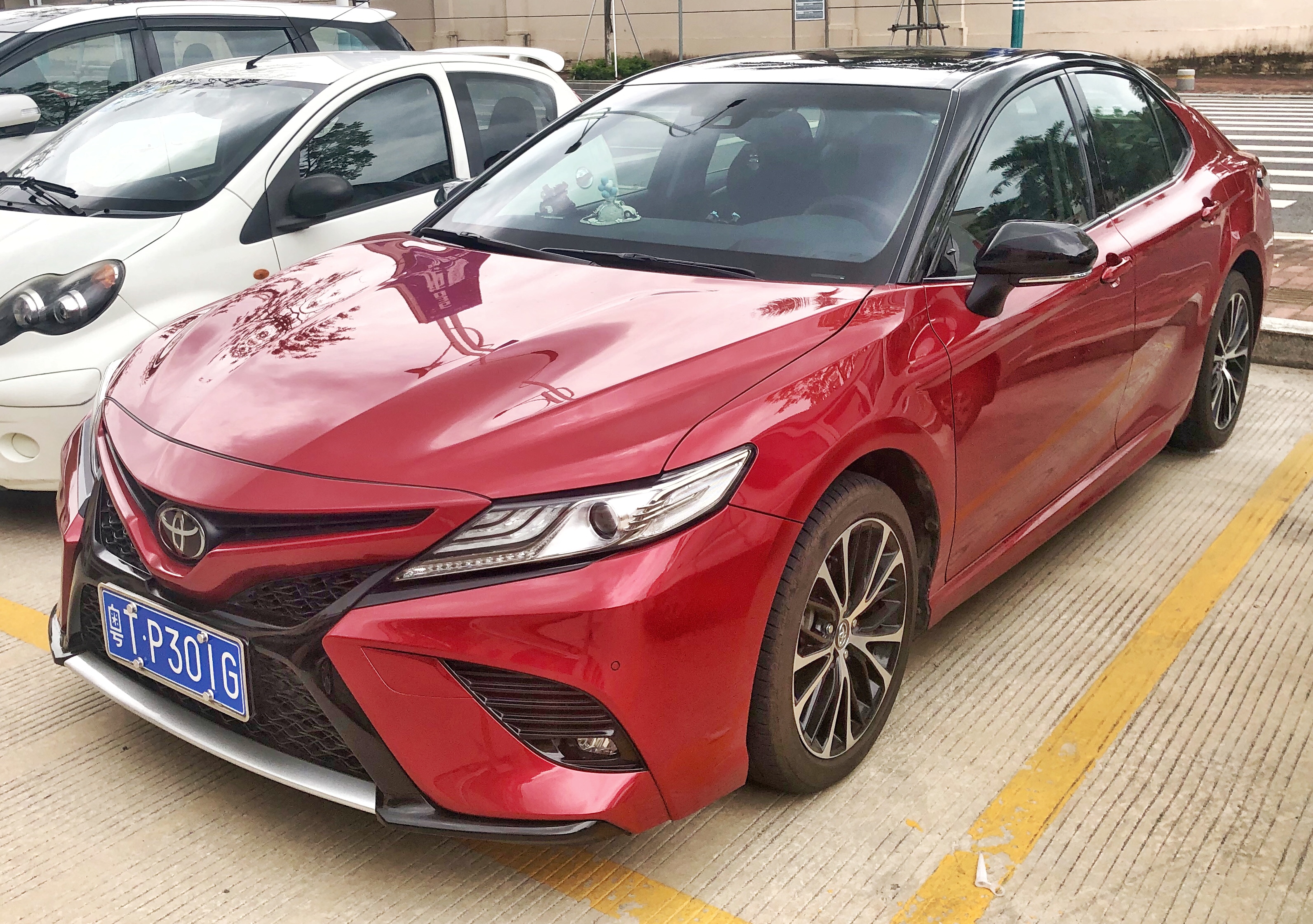
Toyota Camry
"So that's not who's buying a Toyota Camry most of the time. [2037.1s] That's why we came up with it."
The Toyota Camry is a common, mass-market car. The point of mentioning it is that most Camry buyers aren’t the same group driving up prices for luxury brands.
The Toyota Camry is a mainstream midsize sedan that’s often used as an example of a high-volume “everyday” car. The hosts contrast it with premium brands to argue that stock-market gains are not the main driver of what typical Camry buyers pay.
tariffs of the reshoring of manufacturing to the U.S.
"We're not going back. [2068.5s] There's no factor out there, especially with tariffs of the reshoring of manufacturing to the U.S."
Tariffs and reshoring can make it more expensive to build cars or move parts around. If costs stay high and factories take time to ramp up, car prices may stay elevated instead of dropping.
This refers to trade policy (tariffs) and reshoring—moving manufacturing back to the U.S.—both of which can affect vehicle costs and supply chains. Higher costs and longer ramp-up times can help keep vehicle prices from falling.
production constraints
"And in reality, what was the best selling vehicle in the country and it isn't now because of production constraints. [2135.1s] There's just certainly not enough of those vehicles in the market."
Production constraints means the factory can’t make enough cars fast enough. If there aren’t enough vehicles available, prices tend to go up because buyers compete for the limited supply.
Production constraints mean automakers can’t build enough vehicles to meet demand. When supply is tight, dealers have fewer cars to sell, which can raise market prices and increase the average price paid.
hybrid only
"As it went to a hybrid only, they're having production issues, getting ramping all the way up to the full capacity."
“Hybrid only” means the vehicle is sold only as a hybrid, not as a regular gas model. If switching to hybrid-only makes production harder at first, there may be fewer cars available, which can raise prices.
“Hybrid only” means the model is offered only with a hybrid powertrain, not a traditional gasoline-only version. That can change production complexity and supply timing, which can affect availability and pricing.
production ramping all the way up to the full capacity
"As it went to a hybrid only, they're having production issues, getting ramping all the way up the full capacity."
Ramping up production means the factory is gradually increasing how many cars it can build. Early on, it may not be enough to meet demand, so cars become harder to find and prices can rise.
Ramping production to full capacity is the process of increasing factory output until it reaches the planned maximum. During ramp-up, output is lower than demand, which can tighten supply and push prices higher.
average transaction price
"But for right now, yeah, their average transaction price is near $42,000."
Average transaction price is the average amount people are actually paying when they buy cars. It can be higher than the base price because buyers choose higher trims and options, and because incentives may be smaller.
Average transaction price (ATP) is the typical price paid for a vehicle in actual sales, averaged across deals. It’s often higher than sticker price because it reflects what buyers end up paying after trim choice, options, and incentives (or lack of them).

Ford Explorer
"But it also includes things that you wouldn't typically say are affordable necessarily like the Ford Explorer is one of the top 10 bestselling passenger vehicles."
The Ford Explorer is a popular SUV from Ford. Here it’s mentioned because it sells a lot, even though it might not always be considered the cheapest option.
The Ford Explorer is a midsize SUV that’s been one of Ford’s biggest volume sellers. In this segment, it’s used as an example of a top-selling passenger vehicle that may not fit a strict “affordable” label.

Nissan Rogue
"from May and, you know, you're talking about Nissan earlier with the Rogue. The Rogue actually saw transaction prices go up as did the Hyundai Tucson, which are two that typically aim for that, you know,"
The Nissan Rogue is a very common compact SUV. In this discussion, they’re saying its prices when people buy it went up, which they see as good for Nissan and for the market.
The Nissan Rogue is a compact SUV that’s known for being a high-volume, mainstream choice in the crowded compact-SUV segment. The hosts discuss it specifically because its transaction prices rose month over month, which they frame as a positive sign for Nissan and the broader affordability conversation.
transaction prices
"The Rogue actually saw transaction prices go up as did the Hyundai Tucson, which are two that typically aim for that, you know,"
Transaction price is the real price someone ends up paying for a car. Here they’re saying those real prices went up, which they interpret as a healthier market.
Transaction prices are the actual prices paid for vehicles after discounts, incentives, and dealer pricing—rather than the sticker price. In this segment, rising transaction prices month over month are presented as evidence that buyers are paying more, which can improve automaker and dealer economics.

Hyundai Tucson
"The Rogue actually saw transaction prices go up as did the Hyundai Tucson, which are two that typically aim for that, you know,"
The Hyundai Tucson is a compact SUV that’s popular in the same category as the Rogue. They mention it because its purchase prices went up too.
The Hyundai Tucson is a compact SUV that competes directly with other high-volume crossovers. Here it’s mentioned alongside the Nissan Rogue as another model whose transaction prices increased, suggesting stronger pricing power in that segment.
resell
"And if we can help support resell, we can actually get into leasing more, which would help address payment affordability with consumers and then shorten the trade cycle."
“Resell” means what the car is worth later if you sell it. They’re saying if a car holds its value well, it makes leasing easier and can help with monthly payment affordability.
In car shopping, “resell” refers to how much value a vehicle holds when you sell it later (often closely tied to resale value). The host argues that supporting resell helps automakers sell more leases, because consumers feel more comfortable about future value and payments.
leasing more
"And if we can help support resell, we can actually get into leasing more, which would help address payment affordability with consumers and then shorten the trade cycle."
Leasing means you rent the car for a period of time and pay for the portion of the car’s value you use. They’re saying more leasing can make monthly payments feel more affordable.
Leasing is a financing structure where you pay to use a vehicle for a set term, typically with lower monthly payments than buying—because you’re paying for depreciation during the lease rather than the full purchase price. The host links increased leasing to affordability and to shortening the trade cycle.
trade cycle
"which would help address payment affordability with consumers and then shorten the trade cycle."
The trade cycle is how often people replace their cars. If cars hold value better and leasing is easier, people may trade in sooner.
The trade cycle is how long consumers keep a vehicle before replacing it. The host suggests that better resale value and more leasing can encourage people to switch sooner, which can affect demand and inventory turnover.
rental fleets
"And props to Nissan by not offloading as many to rental fleets. I don't know if that's going to make rentals tougher to get, but it's a good vehicle."
Rental fleets are the big batches of cars rental companies keep in service. They’re saying it’s good when automakers don’t send too many of a model into rentals.
Rental fleets are large groups of vehicles owned or managed by rental companies. The host implies that how automakers allocate vehicles to rental fleets can influence availability and pricing in the broader used/lease ecosystem.
compact SUV market
"Dave Fair. The compact SUV market is one of the most competitive there is. So you have the Rogue there."
The compact SUV market is the group of smaller SUVs that lots of people shop for. The host says it’s extremely competitive, so pricing and sales trends can swing quickly.
The compact SUV market is the highly competitive category of smaller crossovers that balance space, fuel economy, and affordability. The host calls it one of the most competitive segments, which helps explain why pricing and transaction prices matter so much.

Chevrolet Equinox
"So you have the Rogue there. It's a very good, well-rounded car. You have the Chevy Equinox. That's like one of the most common. I get that rental all the time."
The Chevy Equinox is a very common compact SUV. The host says they see it constantly as a rental and likes it because it has the tech they want.
The Chevrolet Equinox is a compact SUV that’s widely sold and frequently used as a rental, which is why the host says they “get that rental all the time.” The segment uses it to illustrate how common and tech-forward these mainstream SUVs have become.

Toyota RAV4
"You look at how people rate, you know, the Rogue or the Tiguan, you know, they rate very highly versus a RAV4 and they're all just good."
The Toyota RAV4 is one of the most popular compact SUVs. The hosts are talking about how it stacks up in reviews and why Toyota can keep demand strong.
The Toyota RAV4 is Toyota’s best-known compact SUV and a benchmark model in the crossover segment. In this segment, the hosts use it as the comparison point for review ratings—arguing that the RAV4 competes strongly even as other SUVs like the Rogue and Tiguan also score well.

Volkswagen Tiguan
"You look at how people rate, you know, the Rogue or the Tiguan, you know, they rate very highly versus a RAV4 and they're all just good."
The Volkswagen Tiguan is a compact SUV that people compare with other popular crossovers. The point here is that it tends to score well in reviews compared to some alternatives.
The Volkswagen Tiguan is a compact SUV that’s often compared with other mainstream crossovers on reviews and owner satisfaction. The hosts mention it alongside the Nissan Rogue to support the idea that some non-Toyota models “rate very highly.”
forward employee pricing
"All right, let's talk forward employee pricing. Yeah. It shifts dollars from incentives into the sticker price."
This is a way of setting up discounts for employees that can also influence what regular buyers see as the “real” price. The big idea is that instead of using incentives to lower the deal, the discount gets reflected more directly in the sticker price.
“Forward employee pricing” is a pricing strategy where employee discounts are applied in a way that affects the customer-facing deal structure. The host’s key point is that it shifts dollars from incentives (dealer/manufacturer discounting) into the sticker price, changing how the final price is presented.
incentives
"Yeah. It shifts dollars from incentives into the sticker price."
Here, “incentives” means money-off deals offered to help you pay less. The host is saying the discount can be moved from these offers into the listed price instead.
In this context, “incentives” are manufacturer or dealer financial offers (like rebates or subsidized discounts) that reduce the effective transaction price. The host contrasts incentives with sticker price to explain how pricing transparency and deal math can change.
sticker price
"It shifts dollars from incentives into the sticker price."
Sticker price is the number printed on the car’s price tag/window sticker. The host is saying the deal can be structured so the discount shows up more in that printed price.
“Sticker price” is the manufacturer’s listed retail price on the vehicle (often shown on the window sticker). The host’s point is that the pricing strategy moves discount value into that number rather than relying on separate incentives.
F&I office
"if pricing transparency is key to getting people happy in the F&I office, which is one of those things that we track on that ease of purchase study you talked about earlier"
At most dealerships, the “F&I office” is where they handle the paperwork and the money side of the deal. That’s where you may talk about financing and extra products that aren’t part of the car’s base price.
The “F&I office” is the dealership’s Finance and Insurance department, where the sale is finalized and add-ons are discussed. It’s where customers often see options like vehicle service contracts, insurance products, and financing terms after the vehicle price is agreed.
ease of purchase study
"if pricing transparency is key to getting people happy in the F&I office, which is one of those things that we track on that ease of purchase study you talked about earlier"
An “ease of purchase study” is basically a way to measure how easy it is for customers to complete a car-buying transaction. They’re saying the way pricing is structured can make the process feel better or worse.
An “ease of purchase study” is a measurement framework for how smoothly and transparently customers can buy a vehicle. In this segment, it’s used to explain why pricing transparency and how incentives/employee pricing are presented can affect the customer experience and the dealership’s performance metrics.
outdoor price
"The incentives are lower, but your outdoor price is going to be lower too."
“Outdoor price” here appears to mean the customer’s final purchase price—often called the out-the-door price—after combining the vehicle price with required fees and taxes. The speaker contrasts it with incentives, noting that if incentives drop, the out-the-door number can still be lower under employee-pricing-style structures.

Ford F150
"they transaction prices are down, like that Explorer and the F-150, the prices are down because of employee, like it's the sales price outpacing the incentives."
The Ford F-150 is a very popular full-size pickup truck. They’re using it as an example of how the actual prices people pay are changing with the dealership pricing approach.
The Ford F-150 is the best-known full-size pickup in the U.S., often used as a pricing bellwether because it’s extremely high volume. The hosts cite it as another example where transaction prices are down in a way tied to employee pricing versus manufacturer incentives.
FTC
"Are things like employee pricing and just a flat out reduction, [2434.9s] is that in response to the FTC letter, do you think?"
The FTC is a U.S. government agency that helps protect consumers. If they send a letter about car pricing or financing, it usually means they want companies to be clearer and follow consumer-protection rules.
The FTC (Federal Trade Commission) is a U.S. government agency that enforces consumer protection and antitrust laws. In car sales, FTC scrutiny often relates to how pricing and financing offers are presented and whether disclosures are clear and not misleading.
Stellanus
"Other of the OEMs, GM and Stellanus have done variations on that as well to much success. [2456.7s] I mean, in my experience over the decades I've been doing this and seen Ford do it before"
This sounds like the name of a big car company (likely Stellantis). The host is saying that company has also tried discount and pricing tactics to sell more cars.
Stellanus appears to be a mis-transcription of Stellantis, the automaker formed from the merger of Fiat Chrysler and PSA. The host is grouping Stellantis with other OEMs that have used pricing/incentive variations to drive sales.
GM
"Other of the OEMs, GM and Stellanus have done variations on that as well to much success. [2456.7s] I mean, in my experience over the decades I've been doing this and seen Ford do it before"
GM is one of the big car companies in the U.S. The point here is that GM has used discount-style sales tactics before, similar to what’s being discussed.
GM (General Motors) is a major automaker that has used employee-style pricing programs and other sales incentives to move inventory. The host is referencing GM as an example of an OEM that has tried similar transparency/discount tactics.
0% financing
"like the millennial generation in their adult life has never experienced [2500.1s] a time when 0% financing wasn't readily available."
0% financing means the loan has no interest, so you’re not paying extra for borrowing money. That can make the monthly payment much easier to afford.
0% financing is an auto loan offer where the lender charges no interest rate (the buyer pays only the principal). It’s a powerful affordability tool because it reduces the monthly payment impact of interest.
FNI experience
"having the most transparent pricing presentation throughout will make that FNI experience better. [2517.4s] I know we've talked FNI before here, but you don't want to have things happen from sales"
F&I (finance and insurance) is the part of the dealership visit where you talk about the loan and optional add-ons. The host’s point is that if the deal changes between the sales desk and finance desk, it can feel worse even if you still end up buying.
FNI here refers to the finance-and-insurance (F&I) portion of the dealership process, where customers discuss loans, warranties, and add-on products. The host is arguing that keeping pricing transparent and avoiding surprises between sales and F&I improves the customer experience.
inventory availability
"Yeah, and over the years we've been doing that, the better the inventory availability, the higher the ease of purchase score is usually gone."
Inventory availability means whether dealers have enough cars in stock for shoppers to pick from. If there are more choices available, buying tends to feel easier to customers.
Inventory availability refers to how many vehicles dealers have on hand (or can quickly source) for customers to choose from. The host says that when inventory availability improves, the ease of purchase score typically rises, implying customers feel the process is easier when they can actually find what they want.
EV owners
"So you're saying only 18% of EV owners would consider a gas or hybrid today. And that's down from 73% a year ago."
This refers to people who already drive an electric car. The host is saying that after owning an EV, most of them don’t want to switch to gas or hybrid next.
“EV owners” means people who already have an electric vehicle and are being evaluated for what they’d consider buying next. The segment highlights a large shift: only 18% would consider a gas or hybrid after owning an EV, suggesting strong brand/technology lock-in.
gas or hybrid
"So you're saying only 18% of EV owners would consider a gas or hybrid today. And that's down from 73% a year ago."
This means traditional gas cars or cars that use both gas and electricity. The host is using it to see whether EV drivers would switch to those types instead of staying with EVs.
“Gas or hybrid” refers to non-EV powertrains: conventional gasoline vehicles and hybrid vehicles that combine an internal-combustion engine with an electric motor/battery. In this context, it’s used to measure whether EV owners would consider switching to those alternatives.
loyalty number
"We don't have the exact reason why that has shifted so much, but it isn't in coordination with just the loyalty number also going up. It didn't go up as starkly, but it's already really high at 82%."
This is a survey-based measure of how likely customers are to stay with what they bought. The host says EV owners are showing very high loyalty, which helps explain why fewer people consider switching to gas or hybrid.
A “loyalty number” is a survey metric that tracks how likely customers are to stick with a brand or category after purchase. Here, the host says EV ownership lock-in is rising (loyalty is already very high at 82%), and they compare that trend to the sharp change in consideration of gas/hybrid.
Tesla owners
"But even without that, in the years we've been doing the study, whether it's Tesla owners or not, Tesla owners are a little more rabid. And so it is the EVs and maybe there's some world events thrown in their gas prices were high during the study, right?"
This means people who drive Tesla electric cars. The hosts are saying those owners tend to be especially enthusiastic and likely to stick with EVs.
This refers to people who own Tesla electric vehicles. The segment claims Tesla owners show unusually strong “loyalty,” meaning they’re more likely to consider buying another EV (or stay within the brand/ecosystem) compared with other owners.
EV only households
"And a quarter of these owners are EV only households. So they are fully bought in and that while they have the hybrid or the gas car as well, the other 75%, you know, it's not, it's just kind of a, it's mostly because of a financial reason, right?"
An EV-only household is a family that only has electric cars. The hosts are saying a meaningful share of owners are fully committed to EVs.
An “EV only household” is a home where the vehicles owned/used are exclusively electric (no gasoline or hybrid cars in the household fleet). The segment uses this to argue that some owners are fully committed to EVs for financial and practical reasons.
Battery replacement
"Battery replacement showed up in your survey, 13% of owners saying that battery was a challenge. How should a dealer talk a customer through that number without scaring them off?"
Battery replacement means swapping out the big battery pack in an electric car. The hosts say some owners reported it as a problem, and dealers need to explain it without scaring customers.
Battery replacement refers to replacing an EV’s traction battery when it degrades or fails enough to affect range or performance. The segment highlights that 13% of surveyed long-term owners reported battery replacement as a challenge, which matters for dealer conversations and customer confidence.
battery warranty
"Almost every EV's got that battery covered under warranty even after a second owner."
An EV battery warranty is the promise from the maker to pay for certain battery problems. In this discussion, they’re saying it often still covers the battery even if the car changes owners.
“Battery warranty” is the manufacturer’s coverage for defects or capacity/performance issues in an EV’s traction battery. The key point here is that coverage can extend beyond the first owner, reducing the risk of a buyer paying out of pocket for a replacement.
battery degradation
"And the degradation has improved dramatically."
Battery degradation means the battery slowly holds less charge as the car ages. They’re saying newer EV batteries are losing capacity more slowly than before.
“Battery degradation” is the gradual loss of battery capacity and/or performance over time and use. The hosts are arguing that degradation rates have improved, meaning the battery is less likely to become a major ownership problem.
Request an Explanation
Heard something you'd like explained? We'll add it to this episode.
Sign in to request explanations for terms you heard.
Want to learn more?
Browse our glossary for plain-English explanations of automotive terms, jargon, and concepts.
Help improve this episode
See something that's not quite right? Our annotations are AI-generated and can sometimes miss the mark. Click the flag icon on any annotation to suggest a correction.