
GM’s EV Pivot, M5 Or Blackwing, $10K V8s | Episode 1,056
About this episode
GM’s EV pivot takes center stage as the hosts weigh “roughly 4.5 billion in ev related charges,” EV sales pressure, and why GM still “Retained the number two position in us ev market sales behind tesla.” The debate then swings to luxury EVs and JLR’s “GT” concept platform. Later, the show turns enthusiast: a manual CT5-V Blackwing, a right-hand-drive “milu” import allegedly registered as an SS, and a listener hunt for “a v8…under $10,000,” ending with practical used-car picks and track-day prep.
GM
"jumping into news from gm based on an article from yahu finance [130.0s] GM has recorded roughly 4.5 billion in ev related charges"
GM is a major car company. The hosts are talking about how GM is doing financially with electric cars and how well its EVs are selling compared to others.
GM (General Motors) is the automaker being discussed, and the hosts are focusing on its financial and product strategy around electrification. In this segment, they mention EV-related charges, EV sales trends, and GM’s position in the US EV market.
EV related charges
"[130.0s] GM has recorded roughly 4.5 billion in ev related charges [134.1s] So the negative on the balance sheet this year a little bit of red there"
This means GM is counting up costs connected to making electric cars. Those costs hurt the company’s financial results on paper for that year.
“EV related charges” are accounting costs GM records tied to its electric-vehicle efforts. These can include things like write-downs or expenses related to EV programs, and they show up as a negative impact on the balance sheet for the year mentioned.

Chevrolet Equinox
"Sales of these Chevy equinox ev the blazer ev and the gmc hummer ev shown here in the new [144.6s] 2027 color with the wheels colorways"
The Chevy Equinox EV is an electric SUV from Chevrolet. The hosts mention it because GM says sales of some of its EVs have been dropping.
The Chevy Equinox EV is Chevrolet’s electric version of the Equinox nameplate, aimed at mainstream crossover buyers. In this segment, it’s used as an example of GM’s EV lineup whose sales reportedly fell sharply.

GMC Hummer EV
"Sales of these Chevy equinox ev the blazer ev and the gmc hummer ev shown here in the new [144.6s] 2027 color with the wheels colorways"
The GMC Hummer EV is an electric version of the Hummer. The hosts mention it because GM says sales of some of its electric models have been dropping.
The GMC Hummer EV is GM’s electric Hummer, known for its big, off-road-capable image and electric power. In this segment, it’s mentioned as part of GM’s EV lineup whose sales reportedly fell sharply.

Chevrolet Blazer EV
"Sales of these Chevy equinox ev the blazer ev and the gmc hummer ev shown here in the new [144.6s] 2027 color with the wheels colorways"
The Chevy Blazer EV is an electric SUV/crossover from Chevrolet. The hosts bring it up as part of GM’s EV lineup that hasn’t been selling as strongly lately.
The Chevy Blazer EV is Chevrolet’s electric take on the Blazer crossover. Here it’s grouped with other GM EVs to illustrate that GM’s EV sales have been declining, even while the company remains a top seller overall in the US EV market.
US EV market sales
"[150.8s] Retained the number two position in us ev market sales behind tesla [156.8s] That is surprising as many cars as tesla sells gm of all companies is number two"
“US EV market sales” refers to how many electric vehicles are sold in the United States, and how each automaker ranks within that market. The hosts use this to say GM stayed #2 behind Tesla even while its EV sales were weak.
GM EV sales vs Tesla ranking
"[150.8s] Retained the number two position in us ev market sales behind tesla [156.8s] That is surprising... [192.3s] So they're doing well is the point. Yes, they're doing good and despite the low sales of their evs [197.9s] They're still number two behind tesla."
They’re talking about how GM’s electric-car sales compare to Tesla’s in the US. The point is that GM is still doing well overall in ranking even if its EV sales are down.
This segment compares GM’s position in the US EV market to Tesla, focusing on ranking and sales performance. It’s used to frame why GM’s EV results can look weak on units while the company still holds a strong market position.

GMC Sierra
"I'm surprised the sierra posted a record second quarter [166.7s] So they sold trucks and suvs and those are the gas ones the gas cars."
The GMC Sierra is a big pickup truck from GM. The hosts say it sold very well recently, helping GM financially even while EV sales were struggling.
The GMC Sierra is a full-size pickup truck in GM’s lineup, and it’s one of the company’s key profit and volume models. The hosts mention it posting a record quarter, contrasting strong gas truck sales with weaker EV sales.
average transaction price
"[179.3s] But the average transaction price is now above 52,400 dollars [183.5s] So we were talking a little while back about the average price of a car being now 50 grand"
This is the average price customers are paying for cars GM sells. In the segment, they’re saying GM’s average selling price has gone up.
Average transaction price is the typical selling price of a vehicle in actual sales, averaged across deals. The hosts use it to argue GM is selling cars and trucks at higher prices (above about $52,400) even if EV unit sales are down.
retraining
"I mean, there's a lot of we've been talking about a lot a lot of retrenchment new new planning"
Retrenchment is when a company scales back or changes direction because things aren’t going as planned. Here, it’s about adjusting EV plans.
In business/auto strategy, retrenchment means pulling back—reducing investment, slowing plans, or reworking priorities after results don’t match forecasts. The host is using it to describe GM/industry planning changes around EVs.
EV
"As evs have not had the projective sales the projected sales that people are hoping for here's what I think people are pushing back on"
EVs are cars that run on electricity instead of gasoline. The discussion here is about whether EVs are selling as well as companies expected.
EVs are electric vehicles powered primarily by electric motors and rechargeable batteries. In the context of this debate, the hosts are discussing whether EV sales have met expectations compared with what automakers planned.
Cadillac Celestique
"What I think jlr is doing is looking at the Cadillac Celestique and the jaguar type 01 concept and going You know, you guys are on to something here"
Cadillac Celestique is a concept car—basically a preview of what Cadillac might build next. The hosts mention it to compare design and strategy ideas in the EV luxury space.
Cadillac Celestique is a concept vehicle used by Cadillac to preview a future design and powertrain direction. In this segment, it’s referenced as part of a set of EV-focused luxury concepts that JLR is allegedly taking cues from.

Type 01
"...looking at the Cadillac Celestique and the jaguar type 01 concept and going You know, you guys are on to so..."
“Type 01” here sounds like a concept car or design idea, not a regular car you’d buy new off a lot. Concept cars are shown to preview new design directions. The podcast mentions it as part of a discussion about what automakers are trying next.
“Type 01” in the podcast context appears to refer to a concept or design study, discussed alongside the Cadillac Celestique and the Jaguar Type 01 concept. It’s brought up as part of a broader conversation about what designers and automakers are exploring. The significance here is the idea of future styling and concept direction rather than a specific production car.
JLR's EMA platform
"The chassis is built on jlr's ema platform engineered for evs But in the future will also be able to be used for hybrids"
JLR’s EMA platform is Jaguar Land Rover’s electric-focused vehicle architecture. The host says it’s engineered for EVs, and that it could later support hybrids too—meaning the same underlying “bones” can be adapted for different powertrains.
hybrid
"But in the future will also be able to be used for hybrids"
A hybrid uses both a gasoline engine and an electric motor. The point here is that the same platform could eventually power hybrid cars too.
Hybrids use more than one power source—typically an internal-combustion engine plus an electric motor and battery. The host is contrasting future flexibility of the EMA platform: EVs now, hybrids later.

Range Rover
"I think range rover and [349.3s] Actual customers want to buy evs because I think evs are struggling also with the reality of the fact that if everybody can buy [360.4s] You didn't buy them for the engine noise you bought them for the fact [392.1s] Because they think range over evs are the culmination of everything the brand has stood for over the past 56 years [432.3s] Rangeovers have been very clean very [436.6s] borderline [436.6s] antiseptic and borderline clinical"
Range Rover is a luxury SUV that people buy for a calm, quiet, comfortable ride. The discussion here is about whether an electric version can still feel as refined as the gas models.
Range Rover is a luxury SUV brand known for a comfort-first ride and a very quiet cabin, which is why “quietest” claims matter to buyers. In this segment, the hosts discuss whether Range Rover’s traditional appeal translates to an electric powertrain without losing the brand’s signature refinement.

Rolls Royce
"I think range rover and [342.2s] Rolls Royce are uniquely positioned in the market to be evs. I'm not sure that they're [349.3s] Actual customers want to buy evs because I think evs are struggling also with the reality of the fact that if everybody can buy [360.4s] You didn't buy them for the engine noise you bought them for the fact"
Rolls-Royce is known for ultra-luxury cars that feel very smooth and quiet. The host is saying that if a brand is about silence, an electric car could make sense.
Rolls-Royce is a luxury brand where buyers traditionally prioritize silence, smoothness, and chauffeur-style comfort over raw performance. The segment uses Rolls-Royce as a comparison point for why an EV could fit the brand’s “quiet luxury” identity.
EV adoption vs luxury brand expectations
"Actual customers want to buy evs because I think evs are struggling also with the reality of the fact that if everybody can buy [355.8s] One, I don't want that but both a range rover and under Rolls Royce traditionally [392.1s] Because they think range over evs are the culmination of everything the brand has stood for over the past 56 years [402.2s] But you know, I don't work for range over and I'm not paid to say lines like like martin is"
They’re arguing about whether people actually want EVs yet. Then they discuss why luxury buyers might be more open to EVs if the car still feels quiet and high-end.
This segment debates whether real customers want EVs, especially when EVs are still associated with tradeoffs. It also contrasts that skepticism with the idea that luxury brands like Range Rover and Rolls-Royce could be “uniquely positioned” because their buyers prioritize quietness and refinement.
electric powertrain
"So in that regard, why not have an ev [367.7s] I suppose so taking from the autocar uk site in interview by ilia verpreet"
An electric powertrain is the EV’s main system for moving the car using electricity. It’s what replaces the gas engine and helps make the car feel quieter.
An electric powertrain is the set of components that generate and deliver power in an EV, typically including electric motors, a battery pack, and power electronics. The segment frames EVs as a way to reduce or eliminate engine noise, aligning with the luxury brands’ focus on quiet cabins.
all-electric models
"Martin limpert the managing director of range over asking if range over buyers will take to the new electric models [385.1s] Apparently martin said that they have plenty of people on the waiting list who are asking when the electric range over is coming"
“Electric models” means cars that run on electricity instead of gas. Here, they’re talking about whether an electric Range Rover can still feel quiet and luxurious.
“Electric models” refers to vehicle versions that use an electric powertrain instead of a gasoline or diesel engine. In this context, it’s about whether Range Rover’s next EVs will satisfy buyers who expect a very quiet, refined cabin.
waiting list
"Apparently martin said that they have plenty of people on the waiting list who are asking when the electric range over is coming [392.1s] Because they think range over evs are the culmination of everything the brand has stood for over the past 56 years"
A “waiting list” is when people want a car so badly that they sign up to get it later. Here, it’s being used as evidence that interest in an electric Range Rover is strong.
A “waiting list” is a customer reservation queue used by automakers when demand exceeds immediate production. The host uses it to argue that some luxury buyers are already interested in the upcoming electric Range Rover.

Jeep Wrangler
"... Rover interior always feels like somebody took a Wrangler and gave it the singer treatment It feels robust...."
The Jeep Wrangler is an SUV made for off-road driving. It’s known for being tough and for having a very straightforward, durable design. People mention it when they want to describe a vehicle that feels sturdy and capable.
The Jeep Wrangler is a rugged, off-road-focused SUV known for its simple, durable design and removable roof/doors on many models. It often comes up in conversations about “robust” interiors and everyday usability because it’s built to handle rough conditions while still being practical for daily driving. The podcast references it as a baseline for a “robust” feel.
off-road cred
"It feels robust. It feels bulky. It feels off-road ready. It feels utilitarian and then very nice"
“Off-road ready” means the vehicle is designed to cope with rough trails. Here, the hosts are using it to describe the rugged look and feel of the interior.
“Off-road ready” is a shorthand for design cues and hardware choices that suggest the vehicle can handle dirt, rocks, and uneven terrain. In this context, it’s about the interior’s rugged, utilitarian vibe rather than a specific mechanical spec.
camo is off
"This thing is now the the camo is off and this is what they're projecting it to look like the car renderings"
When they say “camo is off,” it means the prototype’s disguise is removed. That lets people see the real shape and better guess what the final car will look like.
“Camo is off” refers to the stage of vehicle development or marketing where prototype camouflage is removed, revealing the production-intent body shape. Enthusiasts use it to judge styling details and predict how close the final car will look to the renderings.
ride height adjustment
"maybe with uh, you know the ride height adjustment and maybe it can do the off-road thing"
Ride height adjustment lets the car raise or lower itself. Raising it helps when the road is rough or uneven; lowering it can make the car easier to get into and a bit more efficient.
Ride height adjustment is an off-road feature that changes the SUV’s ground clearance. Raising it helps with obstacles and rough trails, while lowering it can improve aerodynamics and easier entry/exit.
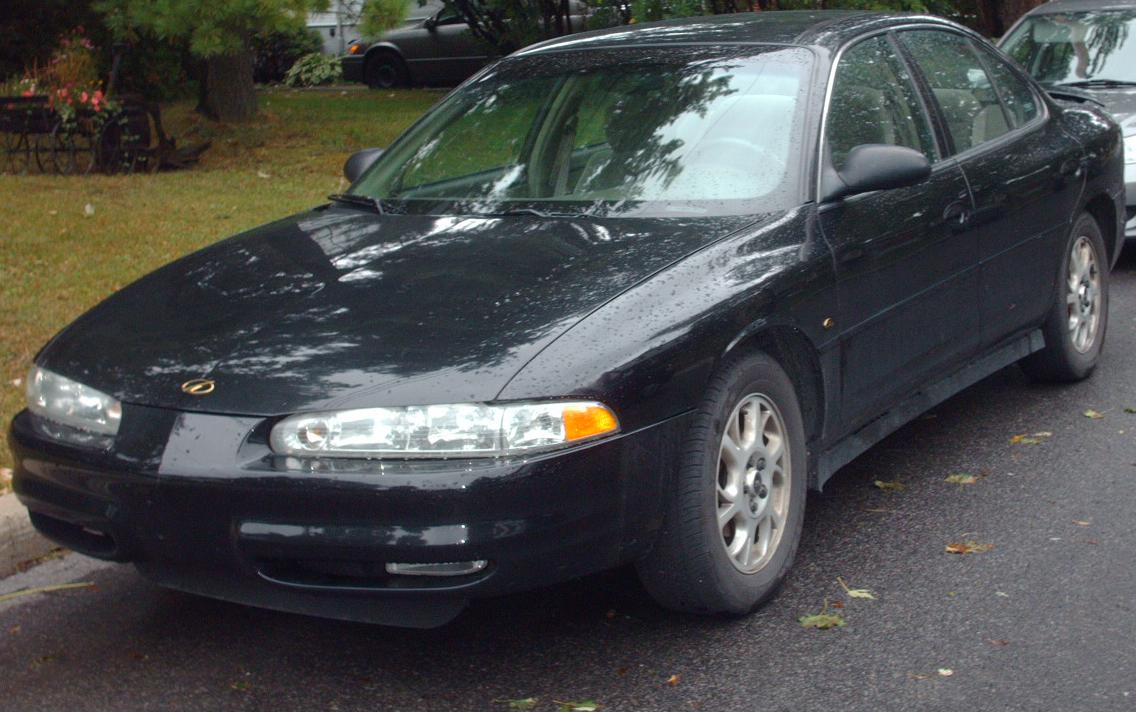
Oldsmobile Intrigue
"...e photos first off. There was a noble there These intrigue me because it is the lotus Elise thinking with uh..."
The Oldsmobile Intrigue is a mid-size sedan, meaning it’s a regular passenger car meant for everyday driving. The podcast brings it up because it’s an interesting, less typical choice. It’s mentioned more for curiosity than for being a mainstream pick.
The Oldsmobile Intrigue is a mid-size sedan that’s often remembered as a more unusual, less common American option. The podcast mentions it as something that “intrigues” the speaker, tying it to a Lotus Elise comparison in the conversation. It’s discussed as a curiosity—an unexpected choice that stands out.
PDK
"including in the in the whole singer the lysis plate is no pdk"
PDK is Porsche’s dual-clutch automatic transmission. It shifts gears very quickly by preparing the next gear ahead of time, so the car feels responsive.
PDK stands for Porsche Doppelkupplung, Porsche’s dual-clutch transmission. It uses two clutches to pre-select the next gear, enabling fast, smooth shifts compared with a traditional automatic or manual.

Porsche 356
"Thoroughly enjoyed that as we move on here this 356 Is owned by our friend mark maziars... He's got some actually really modern big bucket seats in there... it's a 63"
The Porsche 356 is an early Porsche sports car that helped define what “classic Porsche” means. Here, the hosts are discussing a particular 356 that someone is restoring, and how it’s a big deal for the owner.
The Porsche 356 is Porsche’s early sports-car model, notable for being the foundation of the brand’s classic 911-era identity. In this segment, the hosts talk about a specific 356 (a likely 1963) that’s being restored, emphasizing its lightweight character and the owner’s excitement about the project.
bucket seats
"He's got some actually really modern big bucket seats in there that are just rock solid"
Bucket seats are the supportive, contoured seats that grip you better than a basic seat. They’re common in cars meant for spirited driving because they help you stay positioned.
Bucket seats are deep, contoured seats designed to hold the driver and passenger more securely than flat, bench-style seating. The “big bucket seats” mentioned here suggest a more performance-oriented interior setup for the Porsche 356.
restoration
"He is just beginning a restoration of this... He's rest. He's like last thing he restored was like a big 60s Cadillac"
Restoration means working on a car to bring it back to a better condition, usually by fixing and replacing worn or damaged parts. In this case, it’s a new project for the owner.
Restoration is the process of returning a car to a desired condition—often by repairing rust, replacing worn parts, and refurbishing or rebuilding systems. Here, the host frames the Porsche 356 as a fresh restoration project that’s changing the owner’s perspective.
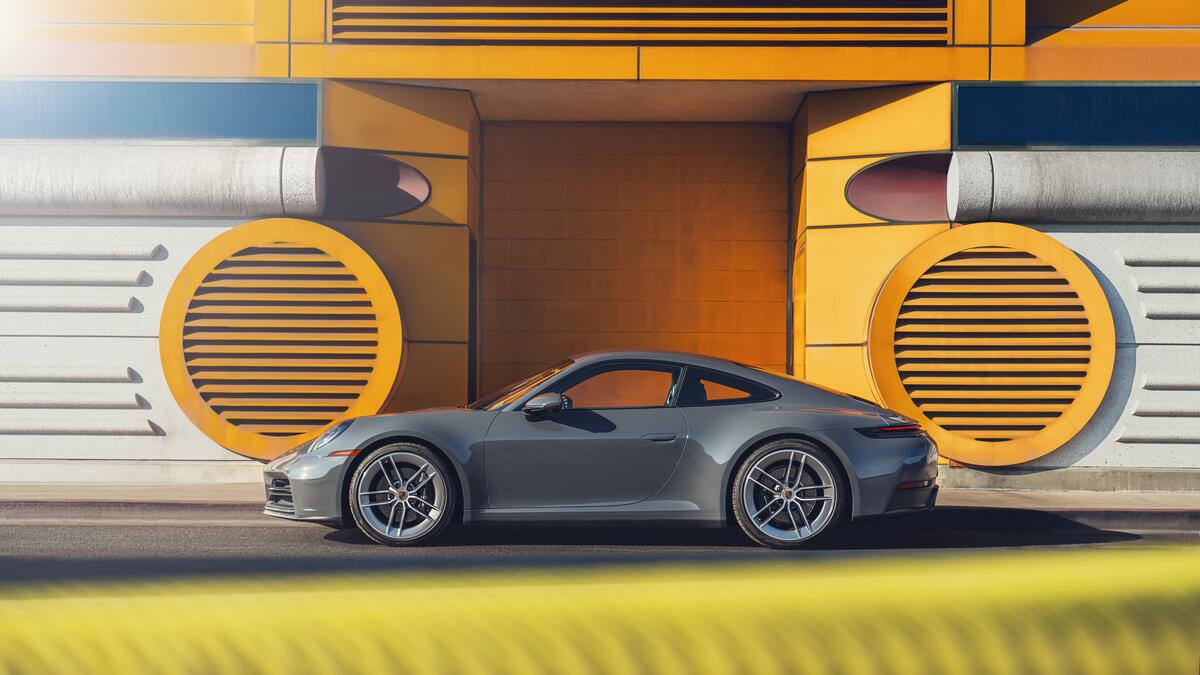
Porsche 911 (996)
"This is a 996 9 11 and in the back Is the ls 3 and what you can't see is the place underneath the duct tail"
This is a specific generation of the Porsche 911 (the 996-era). The interesting part here is that someone built a 996 911 with a different engine (an LS3), and the host is impressed by how well the swap was fitted into the rear of the car.
The Porsche 911 (996) is the 996-generation 911, known for its rear-engine layout and its distinctive “duct tail” style seen on some builds. In this segment, the host is describing a specific 996 911 with an LS3 swap, focusing on how the intake and bodywork were packaged.
LS3
"Is the ls 3 and what you can't see is the place underneath the duct tail Where they had to cut away a little bit of the metal to fit the intake"
LS3 is a GM V8 engine that people often swap into other cars. In this build, it’s installed in the back of a Porsche 911, and the host is impressed by how the intake and bodywork were made to fit.
LS3 is a GM V8 engine family (a 6.2-liter small-block) commonly used in swaps because it’s powerful, compact for its output, and has a huge aftermarket. Here, the host is pointing out that the 996 911’s rear houses an LS3 and that the intake placement required cutting and careful metal fitment.
duct tail
"Is the ls 3 and what you can't see is the place underneath the duct tail Where they had to cut away a little bit of the metal to fit the intake"
A duct tail is a rear body panel design that includes ducts/openings to manage airflow—often for cooling or engine bay ventilation. In this segment, the host mentions what’s underneath the duct tail, where metal had to be cut to fit the LS3 intake.
intake
"Where they had to cut away a little bit of the metal to fit the intake but what I found astonishing is This is really well done."
The intake is how air gets into the engine. When you put a different engine in a car, the intake often doesn’t line up with the original bodywork, so builders may need to cut and reshape parts to make it fit.
The intake is the air path and components that deliver air to the engine’s cylinders. In an engine swap, intake fitment is a major packaging challenge, which is why the host notes they had to cut away metal so the intake could sit correctly.
aftermarket
"Aftermarket with the egg headlights Okay gave them kind of the the the circles around all the lighting elements"
Aftermarket just means non-factory parts. Here, it refers to custom work done to the headlights instead of leaving them stock.
Aftermarket refers to parts made by companies other than the original manufacturer, often installed to change appearance or performance. The host uses it to describe modifications to the headlights on the Porsche build.

Porsche Cayenne (first gen) GTS
"Here is a cayenne first gen cayenne gts. That's right with the six speed manual I just I grabbed bodie and I was like look at this kind."
This is a Porsche Cayenne GTS from the first generation, and it’s the more performance-oriented trim. The big detail here is that it has a six-speed manual transmission, which you don’t see on many SUVs.
The first-generation Porsche Cayenne GTS is a performance-focused version of Porsche’s SUV, notable for bringing Porsche-style handling and power to a family-size platform. In this segment, the host highlights that this Cayenne has a six-speed manual, which is unusual for many modern SUVs.
six speed
"Here is a cayenne first gen cayenne gts. That's right with the six speed manual I just I grabbed bodie and I was like look at this kind."
A six-speed manual means you shift gears yourself using a clutch pedal and a gear lever. The host points it out because it’s a rare and fun setup for an SUV like the Cayenne GTS.
A six-speed manual transmission is a gearbox where the driver selects gears using a clutch and shift lever. The host calls it out because a manual in a Cayenne GTS is a standout configuration compared with the more common automatic setups.
right hand drive
"I you can see that it's a right-hand drive milu with a six speed So the milu is essentially the Chevy ss with a pickup back It's a it's a youth that they never ever sold here"
Right-hand drive just means the steering wheel is on the right side of the car. That’s typical in some countries, and it’s a clue that this car likely came from (or was built for) that market.
Right-hand drive means the steering wheel is on the right side of the car, which is common in countries like the UK, Australia, and Japan. In this segment, it’s used to explain why the “Milu” import stands out and why it’s unusual to see it registered and shown in the U.S.
VIN-based registration
"Tempting isn't that interesting except you had it by the right-hand drive, but this is a right-hand drive Australian milu Registered as an ss here in the u.s."
This is about how the government uses the VIN to decide what car you legally have. The host is saying someone may be using an SS VIN so the paperwork matches an SS—even if the car itself isn’t really one.
VIN-based registration is the idea that a vehicle’s legal identity with the DMV/registration system is tied to its VIN. The host describes a practice where a modified or different car is registered as an SS by using an SS VIN, which can create a mismatch between what the car physically is and what the paperwork says.

Honda Prelude
"His example is the new honda prelude like what if honda just gave the prelude a manual transmission and then [980.5s] You know you'd probably be guaranteed some sales"
The Honda Prelude is a Honda model that was made to feel sporty and fun to drive. Here, the host is saying Honda might have sold more of it if it had a manual gearbox and a few performance options.
The Honda Prelude is a sporty, two-door coupe/fastback that Honda sold in multiple generations, known for its driver-focused feel. In this segment, the host uses it as an example of how adding a manual transmission and other enthusiast-friendly options could have improved sales.
manual transmission
"like what if honda just gave the prelude a manual transmission and then [980.5s] You know you'd probably be guaranteed some sales"
A manual transmission is the kind of car where you shift gears yourself using a clutch and a stick. It can feel more engaging because you control when the car changes gears.
A manual transmission is a gearbox controlled by the driver using a clutch pedal and gear lever. Enthusiasts often prefer it because it gives more direct control over engine speed and shift timing.
supercharger
"And maybe an optional supercharger like the crz it had uh and lowering the price [988.9s] Down to 37 000 instead of what 43"
A supercharger is a device that forces extra air into the engine. More air usually means more power, so it’s a common performance upgrade.
A supercharger is an engine-driven forced-induction device that compresses incoming air to increase power potential. Because it’s mechanically driven, it can provide boost relatively quickly compared with some turbo setups.

Honda Crz
"And maybe an optional supercharger like the crz it had uh and lowering the price [988.9s] Down to 37 000 instead of what 43"
The Honda CR-Z is a small Honda hatchback that was designed to be sporty, and it also used a hybrid system. In this discussion, it’s mentioned as an example related to adding a supercharger.
The Honda CR-Z is a compact hybrid sports hatchback that Honda offered with a performance-oriented look and some enthusiast appeal. Here, it’s referenced as an example of a Honda model that had (or could have had) a supercharger option.

Honda Civic Hybrid
"Yes the price and the lack of manual in the 40s we could have had a civic hybrid coop [996.7s] I still wonder i wonder and you know honda's pondering the prelude"
The Honda Civic is a popular small car, and a Civic Hybrid is the version that uses a hybrid power system. The host is basically saying a manual hybrid Civic might have been more appealing to buyers.
The Honda Civic is Honda’s long-running compact car line, and “Civic Hybrid” refers to the hybrid version of that model. The host is using it as a hypothetical alternative—suggesting a manual-equipped, lower-priced Civic Hybrid could have sold better than the discussed flop.
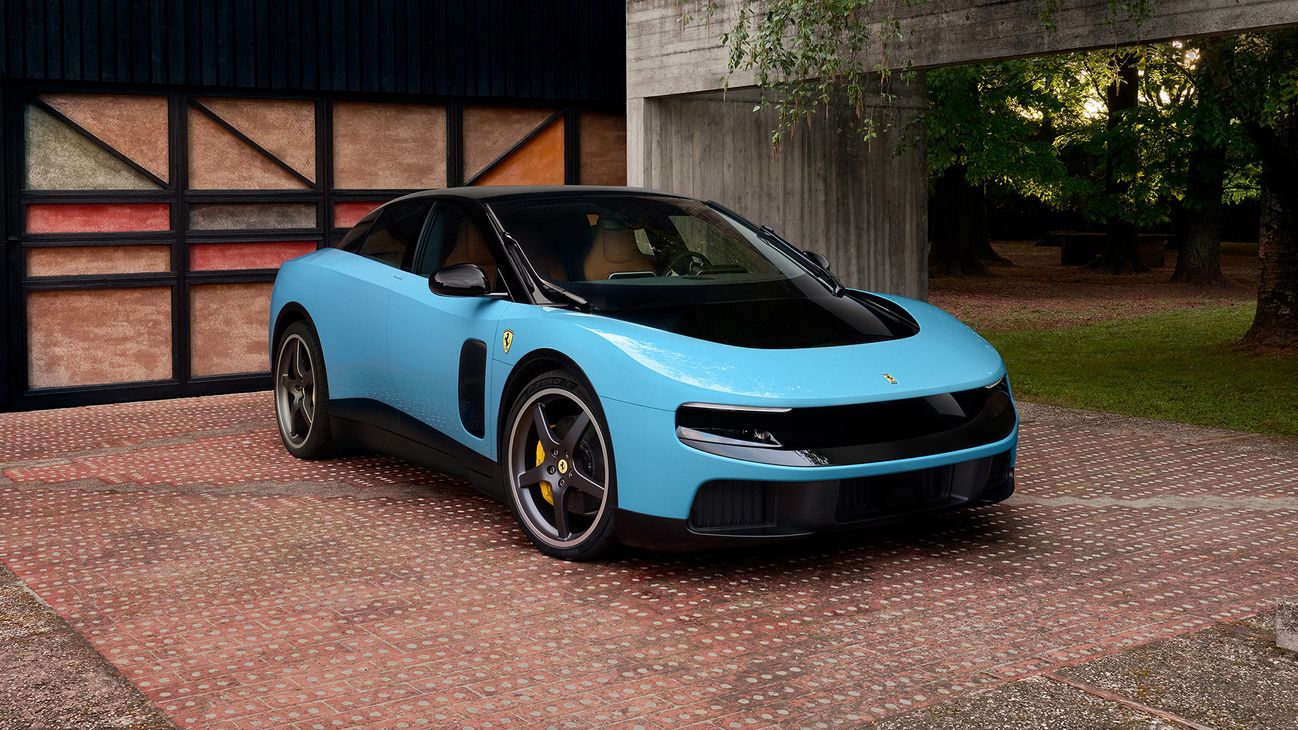
Ferrari Luce
"...f the world does too, but what i'm showing is the luce from ferrari There it is painted entirely white a..."
The Ferrari Luce sounds like a concept or new design from Ferrari. Concept cars are shown to preview future styling and ideas. The podcast mentions it because it’s visually striking and people are interested in what Ferrari is doing next.
The Ferrari Luce is referenced in the podcast as a Ferrari concept or upcoming design, shown in a specific color presentation. The discussion is about what the world does too—meaning people are paying attention to new Ferrari designs and what they might represent. It’s brought up as a visual and design-focused topic rather than a detailed spec conversation.

Porsche Panamera
"So I maintain [1302.3s] The apple car also bringing up the first generation Porsche Panamera [1307.1s] I kind of dug this when it came out"
The Porsche Panamera is Porsche’s “bigger, four-door” car. The first version was a little controversial, and the hosts are comparing that reaction to their thoughts on the so-called “Apple Car.”
The Porsche Panamera is Porsche’s four-door grand-touring model, built to bring Porsche-style performance and handling to a sedan/hatchback body. In the first-generation era, it was controversial because it stretched Porsche’s identity beyond the classic 911 formula.
digital manual
"But this will be the next place we see an application of a digital manual Yes"
A “digital manual” is when a car tries to act like it has a manual gearbox, but it’s really controlled by software. You still “shift” using buttons or controls, and the car’s computer handles the actual gear changes.
A “digital manual” is a software-based driving interface that mimics the feel and behavior of a traditional manual transmission. Instead of a real clutch and shift linkage, the car uses electronics to interpret driver inputs and control the drivetrain accordingly.
simulated manuals
"That the c9 will show up with a manual that is essentially just a simulated manual like ferrari has talked about So they won't so they only do like ferrari's doing it."
A “simulated manual” is when the car pretends to be a manual. The computer decides what gear to use based on your inputs, even though there isn’t a real manual gearbox doing the work.
A “simulated manual” is an electronically controlled driving mode that reproduces manual-transmission behavior—like gear selection and shift timing—without the physical mechanical parts of a true manual. It’s typically implemented using the vehicle’s transmission control software and driver input mapping.
DCT
"because then they can just use the same dct And just program it with the joystick essentially"
DCT means dual-clutch transmission. It’s a type of automatic gearbox that can shift quickly because it’s ready for the next gear ahead of time.
DCT stands for “dual-clutch transmission,” a gearbox that uses two clutches to pre-select the next gear for fast, smooth shifts. In this discussion, they’re suggesting the same DCT hardware could be controlled to behave like a manual via software programming.
joystick
"And just program it with the joystick essentially Well, maybe we can just buy joysticks for like 60 bucks off the shelf and install them"
Here, “joystick” means using a stick-like controller instead of a traditional gear lever. The car’s computer would translate your joystick input into what gear it should be in.
In this context, a “joystick” refers to an alternative driver input device used to command gear selection or driving modes. The idea is that software could translate joystick movements into drivetrain commands, similar to how some vehicles use electronic shifters.
OBD port
"Plug it into the plug obd port and be done, you know, maybe use a couple of wood screws to screw it down to the"
An OBD port is a standard plug in the car that lets tools talk to the car’s computer. Mechanics use it to check error codes and diagnose problems.
An OBD port is the vehicle’s On-Board Diagnostics connector, used by technicians and scan tools to read fault codes and communicate with the car’s computers. The transcript suggests plugging in there for software-related actions, which is why it’s mentioned as a practical access point.

cyber truck
"To answer your question alex The cyber truck is on my list because every time I see one of these I just hate them more and more I cannot stand them"
The Tesla Cybertruck is a very distinctive electric pickup with a sharp, futuristic look. The discussion here is about whether you can change its styling enough to make it feel better without losing what makes it recognizable.
The Tesla Cybertruck is known for its angular, stainless-steel “exoskeleton” design and its unusual, futuristic styling that makes it instantly recognizable. In this segment, the hosts debate whether its exterior look can be improved across future generations.

Tesla Model S
"Think model s they barely did a little bit about update the model 3 model y a little bit of an update"
The Tesla Model S is an all-electric luxury sedan. The point being made is that Tesla has been able to update the car over time with smaller changes instead of starting over every generation.
The Tesla Model S is a battery-electric luxury sedan known for early EV performance and tech leadership. Here it’s referenced as part of a pattern: Tesla updates the same core product with incremental changes rather than constantly retooling for totally new designs.

Tesla Model 3
"Think model s they barely did a little bit about update the model 3 model y a little bit of an update"
The Tesla Model 3 is Tesla’s popular electric sedan. The hosts are saying Tesla tends to update it gradually rather than redesigning everything from scratch each time.
The Tesla Model 3 is Tesla’s mainstream EV sedan, widely used as a benchmark for how EV makers iterate. In this discussion, it’s grouped with other Tesla models to argue that updates can be relatively small—more software and styling tweaks than major hardware reinvention.

Tesla Model Y
"Think model s they barely did a little bit about update the model 3 model y a little bit of an update"
The Tesla Model Y is Tesla’s electric crossover. The hosts are pointing out that it can get updates without completely changing the car’s underlying design.
The Tesla Model Y is Tesla’s compact electric crossover that shares much of its platform logic with the Model 3. The segment uses it to support the idea that EVs can receive frequent updates with minimal changes to the body, relying on software and selective styling revisions.
software update
"Well, just keep making them and software update, but then how do you know that it's unless you"
A software update is like updating your phone, but for the car. It can change how the car behaves or what features you get, without needing new hardware.
A software update is a change delivered to the car’s electronic systems (often over the internet) that can modify features, performance behavior, or user interfaces without replacing physical parts. The hosts are arguing that this can be a major part of how EV makers iterate between “generations.”

Jaguar E-Pace
"No despite it being called e-pace and everybody's like, oh, it's the electric... It's just a gas engine in the e-pace"
The Jaguar E-Pace is a small luxury SUV. Even though the name starts with “E,” the point here is that it’s not an electric car—it’s gas-powered.
The Jaguar E-Pace is a compact luxury SUV from Jaguar, and the “E” in the name leads to confusion. In this segment, the hosts emphasize that the E-Pace is not an electric vehicle—it’s gas-powered (and not even a hybrid, as they describe it).

Jaguar Fpace
"That was what they were thinking and the e e is the is a letter smaller Than the f-pace. This is the logic. actual logic if f-pace is bigger. What's smaller than f e"
The Jaguar F-Pace is a luxury SUV that’s meant for everyday driving. It’s designed to feel more sporty than many typical SUVs. The podcast mentions it while talking about which small SUVs might fit a budget or preference.
The Jaguar F-Pace is a compact luxury SUV known for combining everyday practicality with a more performance-oriented driving feel. The podcast uses it as a reference point when comparing sizes within a small SUV discussion. It’s mentioned because it sits in the same general “small SUV” decision space as other luxury options.

Dodge Dart
"I'm talking about 2013... And the dodge dart"
The Dodge Dart is a compact car model from Dodge. In this discussion, the hosts use the 2013 Dart as an example of a car that didn’t really stick with buyers.
The Dodge Dart is a compact car that the hosts bring up in the context of a “flop” and naming/market fit. They specifically reference the 2013 Dodge Dart as an example from the early 2010s, contrasting it with how long the model name had been used in Dodge’s lineup.

Dodge
"If they said we're just making [1818.2s] A decent affordable [1820.7s] Compact from dodge don't buy a super bowl commercial put cash on the hood."
Dodge is a car brand. In this part of the conversation, they’re using Dodge as an example of what a buyer might consider if the car being discussed doesn’t match the promised value.
Dodge is a Chrysler brand known for performance-leaning vehicles and muscle-car heritage. In this segment, “from dodge” is used as a shorthand for an affordable compact alternative, contrasting it with the idea of paying for marketing instead of building a compelling product.
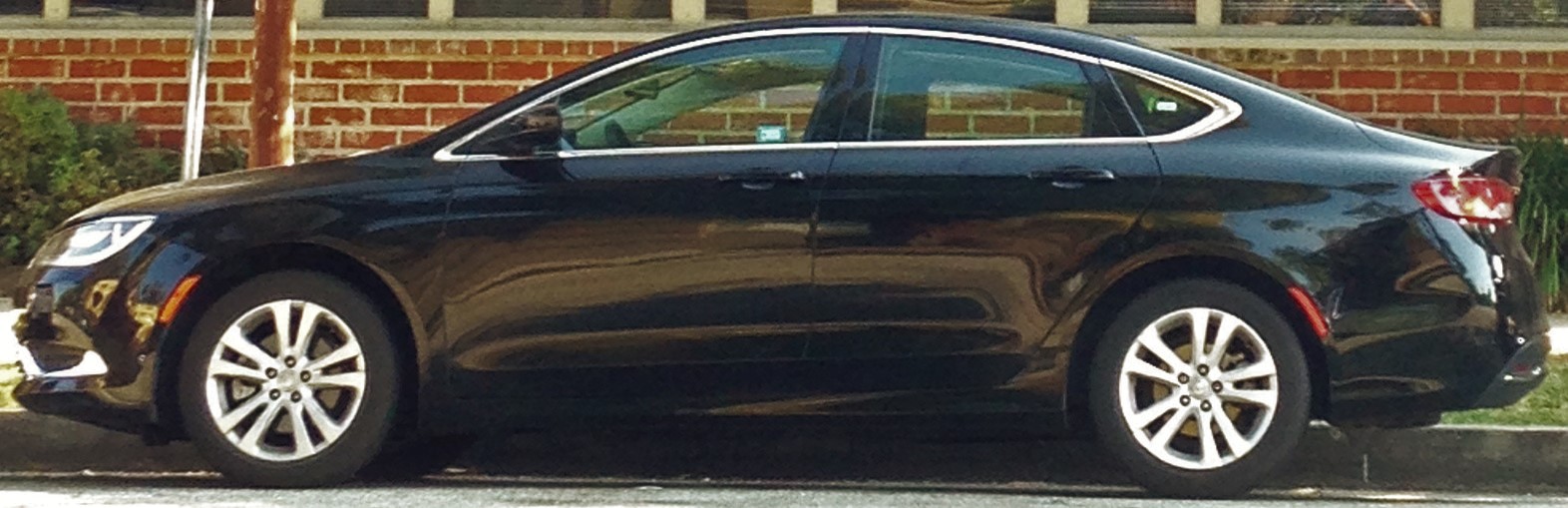
Chrysler 200
"By the way, they shared a platform with the remember the chrysler 200 [1834.7s] Oh, yeah, that also flopped."
The Chrysler 200 is a mid-size car model from Chrysler. Here it’s brought up because the speaker is talking about how using the same basic “platform” across multiple cars can make them feel alike, for better or worse.
The Chrysler 200 was a mid-size sedan from Chrysler that shared engineering with other FCA models. In this discussion, it’s mentioned to illustrate how platform sharing can lead to cars feeling too similar—especially if the shared underpinnings don’t deliver the quality the target buyers expect.

Honda S2000
"I think people remember the hot sports car much closer to the s2000 and the prelude really was [1870.0s] But it was but it was more driver involving"
The Honda S2000 is a small, sporty Honda roadster. They’re using it as an example of a car that feels more like a true performance machine to enthusiasts.
The Honda S2000 is a lightweight, driver-centric roadster known for its high-revving engine and sharp handling. In this segment, it’s referenced as a benchmark for what enthusiasts consider a “real” performance experience compared to the Prelude.
enthusiast audience
"if you enlist the enthusiast audience [1892.0s] You've enlisted an audience that wants very specific things [1895.4s] So then you really can't miss it"
An “enthusiast audience” means people who really care about cars and notice the details. The idea here is that if you market to those people, the car has to deliver what they’re expecting.
An “enthusiast audience” is a group of buyers who care deeply about specific driving and ownership details—like handling, engine character, and how closely a car matches its performance promise. The speaker’s point is that if you target enthusiasts, you can’t miss on the details they specifically want.
marginal
"It can drive greater. marginal [1903.9s] But how many balls and and people doesn't fit in the back if you nailed that you'd hit the breeze sales success"
“Marginal” means small or incremental. The speaker is basically saying the car might be a little better, but not enough to make people actually want to buy it.
“Marginal” here is used in an automotive/business sense to mean incremental or small additional benefit—like the car can drive “greater marginal” but not enough to create real sales momentum. It’s a way of saying the improvement is too small or too narrow to matter to most buyers.
SIMA
"Don't tell us that you did actually fire them. Good. And then bring it out at sima. You remember the chrysler 300 when it came out."
SIMA is an auto event/show mentioned as the place where the host saw the car and its styling tricks. It’s used to explain why the car got so much attention.
SIMA is being referenced as an auto show or event where the host saw the Chrysler 300’s attention-grabbing features firsthand. It functions here as a context marker for how quickly the car became a talking point.

Chrysler 300
"You remember the chrysler 300 when it came out. Yeah, that thing was instantly endorsed by snoop."
The Chrysler 300 is a big American sedan that became popular for its bold look and V8 options. People also customized them a lot, so it shows up in car culture stories.
The Chrysler 300 is a full-size American sedan known for its big, retro-inspired styling and V8-powered versions. In enthusiast culture, it also became a pop-culture and customization favorite, which is why it gets referenced in stories like this one.
FCP Euro
"If you own a european enthusiast car you need parts from fcp euro. Founded in 1986 this family company is celebrating its 40th year..."
FCP Euro is a company that sells parts for European cars. They’re advertising that their parts are covered for a long time and that they help customers pick the right ones.
FCP Euro is a parts retailer focused on European cars, selling parts for DIY owners and enthusiasts. In this segment, they’re positioned as a source for genuine OE parts and long-term coverage on what you buy.
pre-built kits
"Seven days a week with fulfillment centers nationwide and pre-built kits for common jobs. There's no better place for genuine oe parts..."
Pre-built kits are bundles of parts put together for a specific repair. They help you avoid forgetting something and make the job easier to plan.
Pre-built kits are packaged sets of parts assembled for a specific common job (like a scheduled repair or service). They reduce the chance of missing components and can make DIY work faster and more predictable.
OE parts
"There's no better place for genuine oe parts for your european car even for your sob. fcp euro only sells products."
“OE parts” are parts made to match the original parts that came on the car from the factory. They’re usually the safest choice when you want things to fit and work correctly.
OE parts means “original equipment” parts—components made to match what the car’s manufacturer uses. Enthusiasts often prefer OE parts because they’re designed for correct fitment and function, especially on European vehicles.

Corvette 06
"She knows what she's doing. Yeah She's owned a corvette 06 as her fun car since 2005 And then ryan her husba..."
A Corvette is a sports car known for being fun to drive and for strong performance. The podcast mentions that someone has owned one for a long time as their “fun car.” It’s brought up as a personal example of a sports car they enjoy.
The podcast references a Corvette owned since 2005, pointing to a long-term “fun car” role rather than a single model-year deep dive. The Corvette nameplate is known for being a performance-focused sports car with strong enthusiast appeal. It’s discussed here because it’s part of someone’s personal vehicle history.
coilovers
"She then had lingon felter installed a supercharger coilovers big wheel package to gain more power and grip So 345 millimeter wide rears sure in 2018 she sold that upgraded to a 2016 c7 06 coop"
Coilovers are upgraded suspension parts that let you adjust how high the car sits and how it absorbs bumps. They’re commonly used to improve handling.
Coilovers are adjustable suspension components that combine a coil spring and shock absorber into one unit. Enthusiasts use them to fine-tune ride height and damping for better grip and handling response.
lingon felter
"She then had lingon felter installed a supercharger coilovers big wheel package to gain more power and grip So 345 millimeter wide rears sure in 2018 she sold that upgraded to a 2016 c7 06 coop"
“Lingon Felter” appears to refer to Felter Performance (often misspelled in transcripts), a well-known American shop that builds and upgrades Corvettes. They’re associated with performance parts and tuning—especially for boosted V8 builds.
345 millimeter wide rears
"So 345 millimeter wide rears sure in 2018 she sold that upgraded to a 2016 c7 06 coop manual transmission in laguna blue that is her fun car today"
This is talking about very wide rear tires. Wider tires usually grip the road better, which helps put power down without spinning as easily.
“345 millimeter wide rears” refers to very wide rear tires, which increase the tire’s contact patch with the road. Wider tires can improve traction and reduce wheelspin, especially on a car making more power.

Ford F150
"She traded it in for a brand new f150 crew cab platinum He said the mini could practically fit in the bed of the truck, but she loves she loved having that monster beast for a while"
This is a Ford F-150 pickup in the Platinum trim with a four-door (Crew Cab) setup. It’s a more upscale version of the popular F-150.
The Ford F-150 is a full-size pickup truck, and “Crew Cab Platinum” describes a higher trim level with a four-door cabin. It’s the kind of truck people buy when they want comfort and capability for everyday use.
c8
"She's not impressed by the c8 But ryan thinks he's convinced her to at least test drive the 06 version of the c8"
C8 refers to a specific generation of the Corvette. It’s the one with the engine moved toward the middle of the car, which changes how it drives.
The C8 is the Chevrolet Corvette generation with a mid-engine design, which is a big shift from earlier Corvettes that were front-engine. The segment is specifically about someone being unconvinced by the C8 at first, then being persuaded to at least test drive it.
test drive
"But ryan thinks he's convinced her to at least test drive the 06 version of the c8"
A test drive is a short, supervised drive of a car to evaluate how it feels in real conditions. In this segment, it’s used as the step that could change someone’s mind about the C8.
two plus two coop
"So she does need Something more practical than a two plus two coop to handle the supplies and equipment for repairs for cleaning things like that"
“Two plus two” means the car has four seats, but the back seats are usually tight. The point here is that it may not be practical enough for carrying lots of stuff.
“Two plus two” is a sports-car seating layout meaning four seats total, with the rear seats typically smaller and more cramped than the front. In this segment, it’s paired with “Coop” (likely a Mini Cooper) to describe a car that’s not ideal for hauling supplies and equipment for repairs/cleaning.
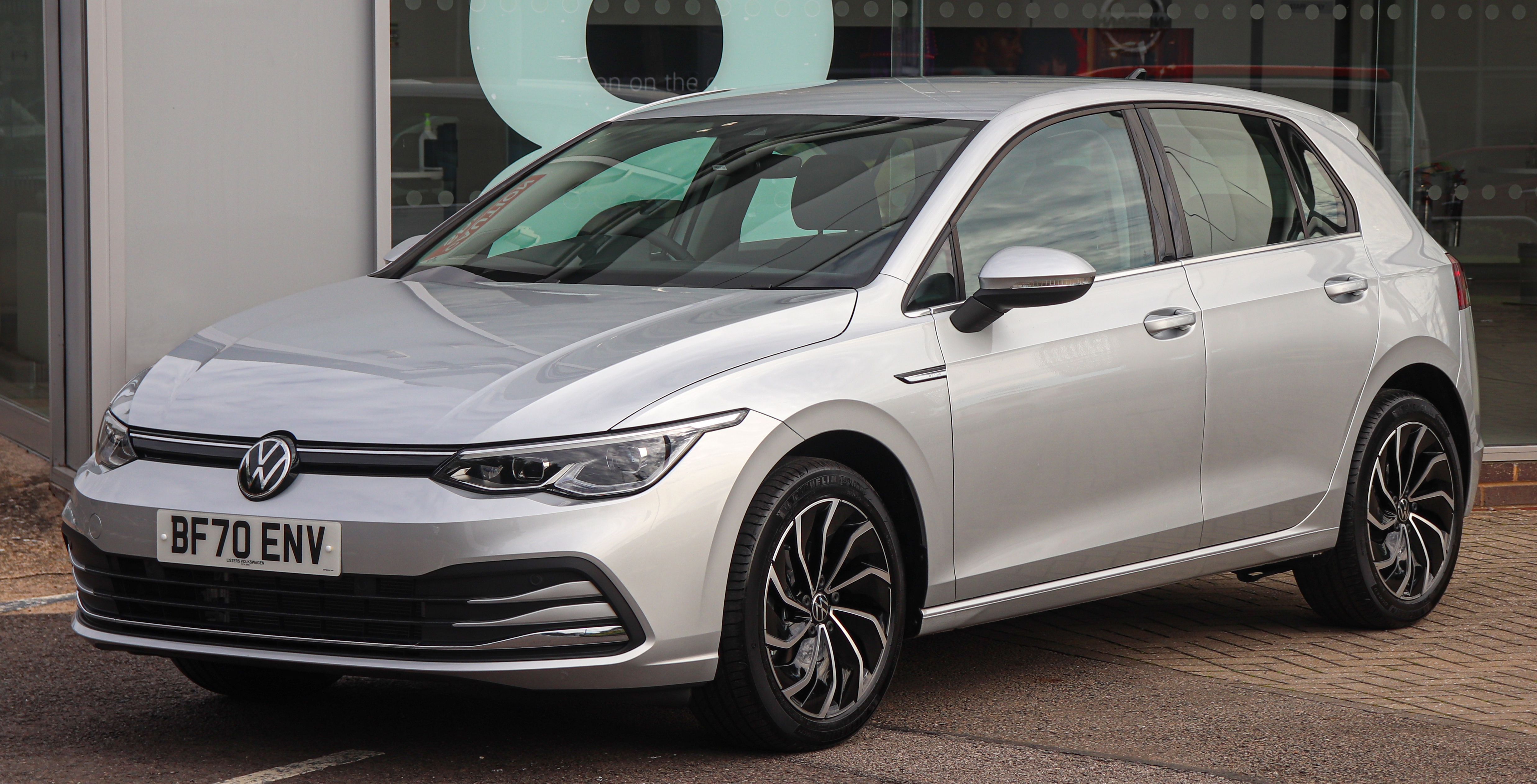
Golf R
"They've discussed many coopers a golf r. They liked she liked ryan's gti"
The Golf R is a faster, sportier version of the Volkswagen Golf hatchback. It’s meant to be a daily driver that can still feel exciting to drive.
The Volkswagen Golf R is a performance version of the Golf hatchback, built to be a practical daily car that’s still quick. The segment notes they liked Ryan’s GTI, but the discussion is about wanting more power—Golf R is part of that “hot hatch” direction.

GTI
"They've discussed many coopers a golf r. They liked she liked ryan's gti But would want more power"
The GTI is a sporty Volkswagen hatchback. People like it because it’s still usable day-to-day, but it drives more enthusiast-style than a regular Golf.
The Volkswagen GTI is the iconic performance hatchback in the Golf lineup, known for being a practical daily with a sporty driving feel. In this segment, it’s mentioned as a baseline that they like, before moving to higher-power options.

Porsche Macan
"...cussed an outie rs3 small SUVs like the rav4 or a macan or a q5 things like that Okay, her budget is arou..."
The Porsche Macan is a small luxury SUV. It’s designed to drive more like a sporty car than a typical family SUV. The podcast mentions it as one of the small SUV options to consider.
The Porsche Macan is a compact luxury SUV known for sporty driving dynamics compared with typical family SUVs. The podcast groups it with other small SUVs as a possible budget target, implying it’s a performance-leaning option. It’s discussed because it offers a more “car-like” feel in an SUV package.

Audi Rs3
"But would want more power discussed an outie rs3 small SUVs like the rav4 or a macan or a q5"
The RS 3 is a high-performance Audi that’s meant to be small and practical, but still very fast. It’s the kind of car enthusiasts look at when they want more power than a typical compact.
The Audi RS 3 is a high-performance compact sedan/hatch (depending on generation/market) that’s built for serious power in a small, daily-friendly package. The segment groups it with other small “more power” options as part of the buyer’s ideal mix of practicality and excitement.

Toyota RAV4
"... power discussed an outie rs3 small SUVs like the rav4 or a macan or a q5 things like that Okay, her bud..."
The Toyota RAV4 is a compact SUV meant for everyday driving. It’s a common choice for people who want practicality and space. The podcast mentions it as one of the small SUV options to compare against more luxury or sporty models.
The Toyota RAV4 is a compact SUV that’s commonly used as a baseline example of a small, practical family vehicle. In the podcast, it’s grouped with other small SUVs like the Macan and Q5 as part of a budget-oriented comparison. It’s mentioned because it represents mainstream everyday utility in the same category.
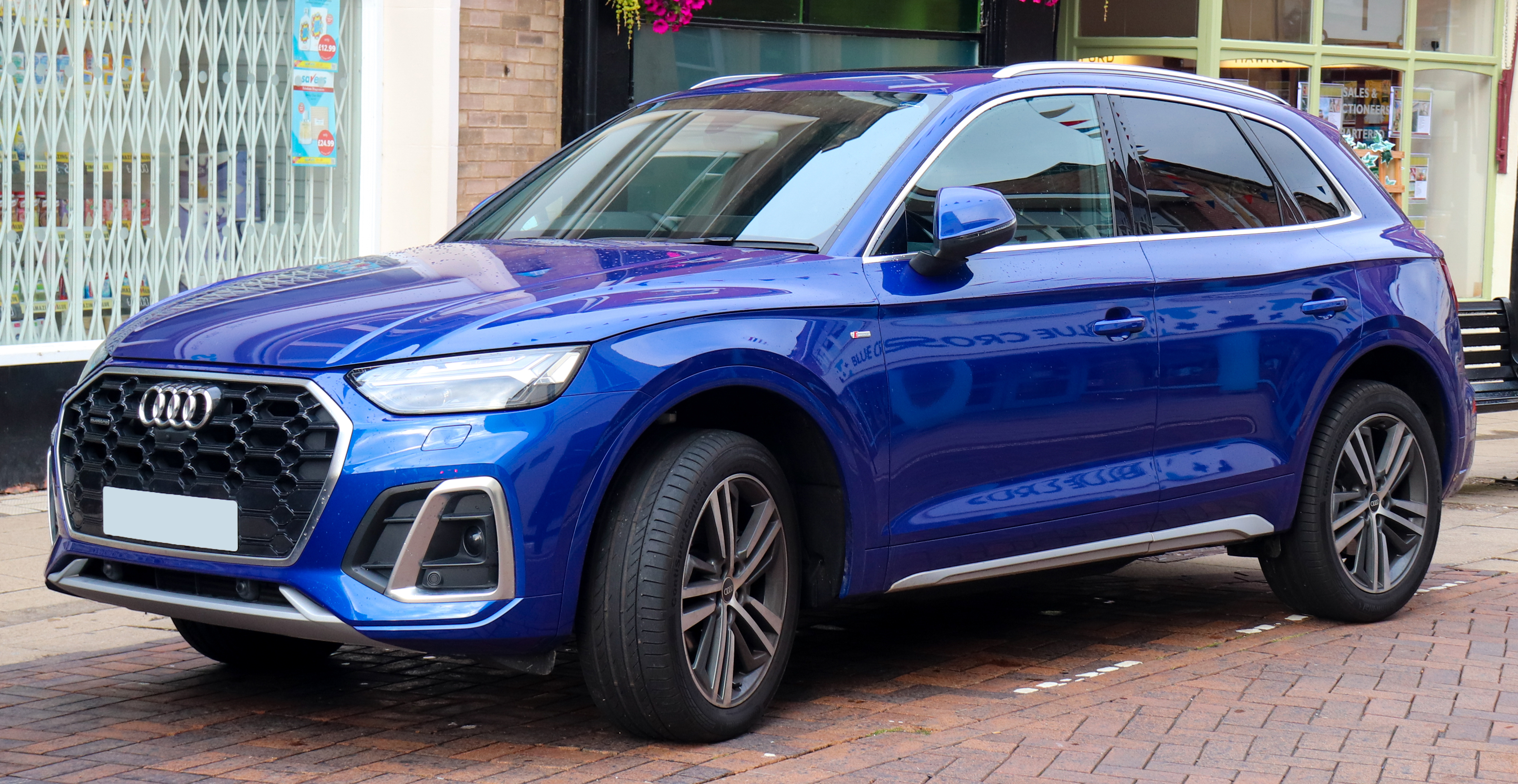
Q5
"small SUVs like the rav4 or a macan or a q5 things like that"
The Q5 is Audi’s compact SUV. It’s a common choice when you want something nicer than a basic SUV but still practical for daily life.
The Audi Q5 is a compact luxury SUV that’s typically chosen for a balance of comfort, space, and everyday drivability. Here it’s mentioned as another “small SUV” option that could serve as the practical counterpart to a higher-end sports car.

C63 AMG
"She really likes the fact that she hardly sees any other c63 amg around town"
This is a high-performance Mercedes C-Class. People like it because it’s powerful and sounds loud and sporty, even when you’re just driving around town.
The Mercedes-Benz C63 AMG is a performance version of the C-Class, historically known for its V8 power and aggressive exhaust note. It’s often discussed as a “dailyable” muscle car because it combines real track-capable hardware with everyday usability.

Lexus Lc500
"She likes the lexus lc 500 excellent. She likes the rcf"
The Lexus LC 500 is a fancy “grand touring” Lexus. It’s known for its V8 sound and smooth, enjoyable driving feel.
The Lexus LC 500 is a luxury grand tourer known for its distinctive styling and a naturally aspirated V8 character. Enthusiasts often highlight it for the way it sounds and how it delivers power smoothly rather than feeling turbo-spooled.
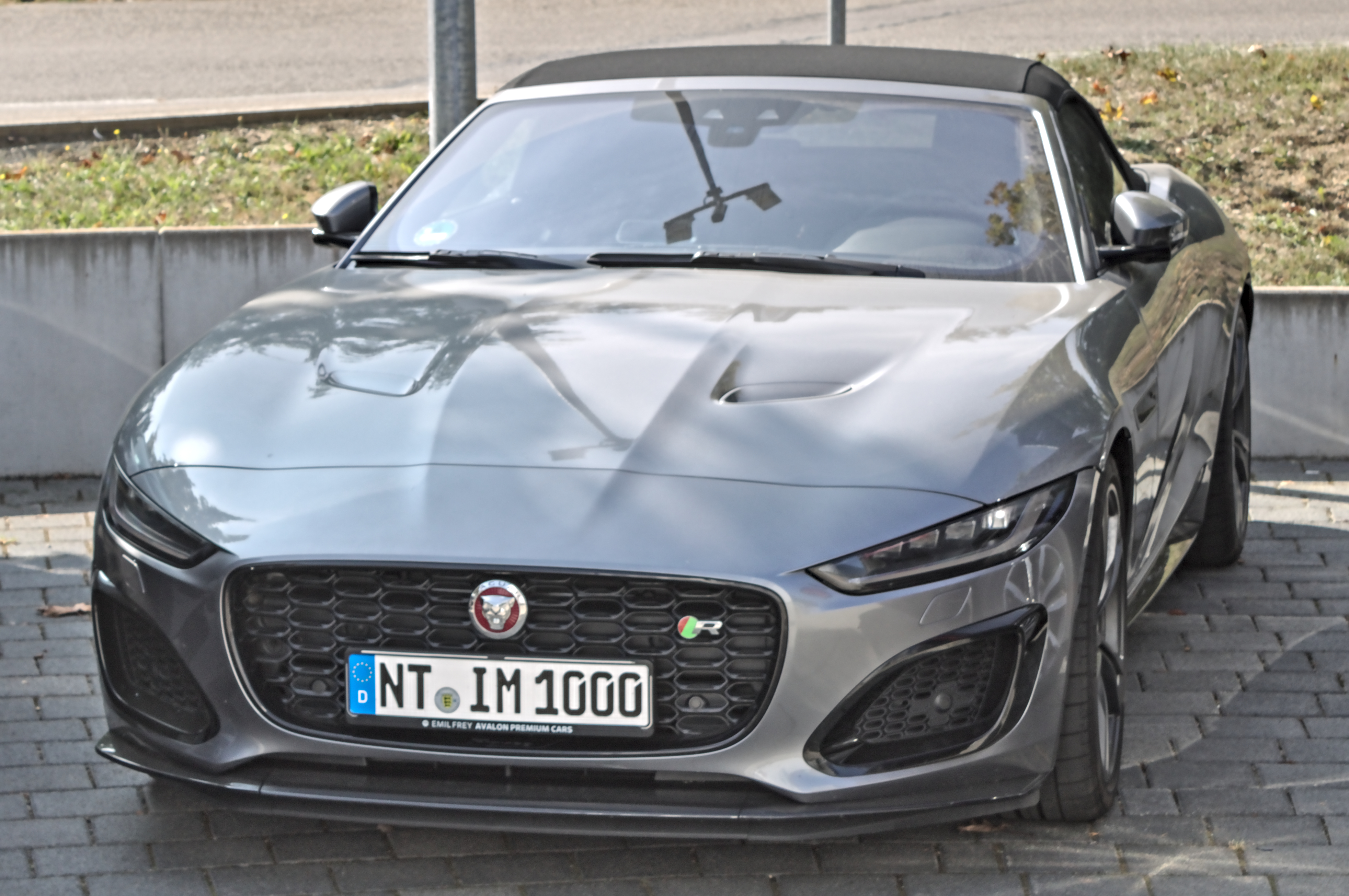
Jaguar F-Type R
"She’s also a fan of the jaguar f type r"
The Jaguar F-Type R is the stronger, sportier version of the F-Type. It’s known for being exciting to drive and for having a loud, aggressive sound.
The Jaguar F-Type R is the high-performance version of the F-Type lineup, known for its punchy power and dramatic exhaust sound. The “R” badge typically indicates a more powerful engine and sportier tuning than the base F-Type trims.

Aston Martin Vantage
"An aston martin vantage. Okay"
The Aston Martin Vantage is a stylish sports car from Aston Martin. It’s meant to feel exciting to drive while still being comfortable and luxurious.
The Aston Martin Vantage is a British sports car that’s known for its mix of performance and luxury, with a strong emphasis on styling and driver engagement. It’s a popular choice for people who want a “supercar look” without going all the way to the most extreme Aston models.
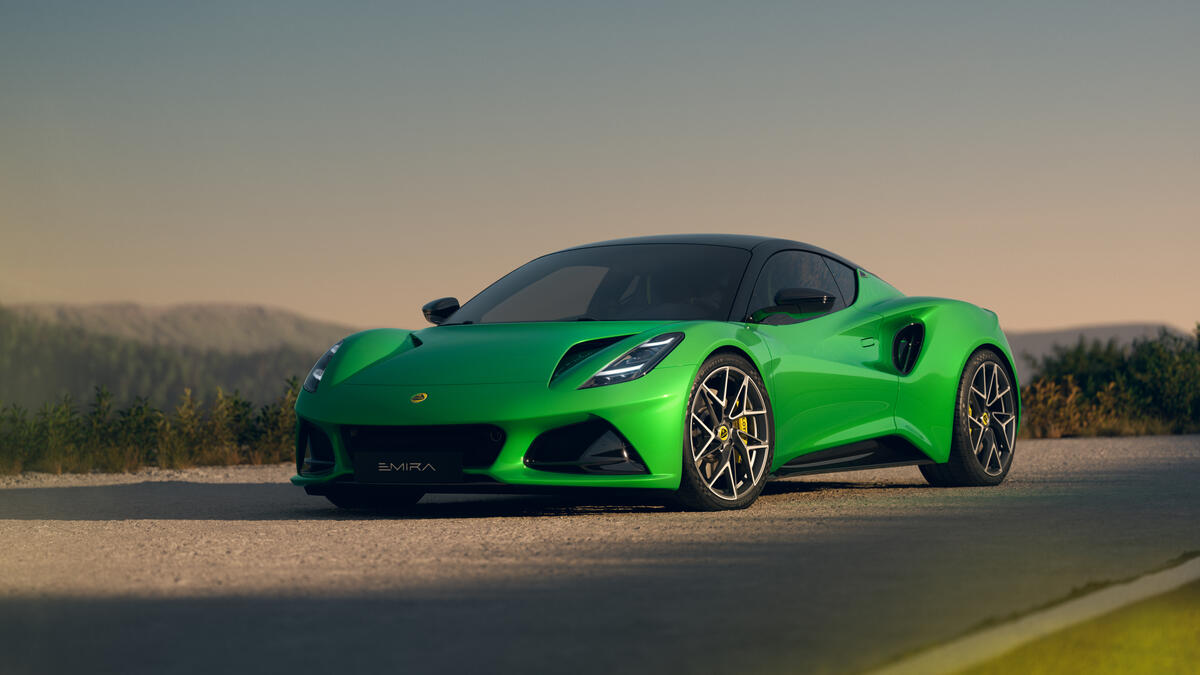
Lotus Emira
"Ryan has shown her many lotus amiris. They don't seem to interest her at all. Okay, and once once she forms an opinion"
The Lotus Emira is a small, sporty car from Lotus. The hosts are bringing it up because it didn’t grab her interest.
The Lotus Emira is a modern Lotus sports car that’s meant to feel lightweight and driver-focused, typically with a front-engine layout. In this segment, it’s mentioned as a car Ryan has shown, but the listener isn’t interested—so it’s part of the “what she likes” decision-making.
mid-engine cars
"You know, i'm also seeing here She doesn't like mid engine cars because she doesn't connect with the c8"
A mid-engine car puts the engine closer to the middle of the car. That can change how it turns and feels compared to cars where the engine sits in the front.
A mid-engine car places the engine behind the driver but ahead of the rear axle. That layout changes weight distribution and steering feel, which can make the car feel very different from front-engine or rear-engine designs.

BMW X5 M
"This is important when I suggest this she loved ryan's old bmw x5 4.8 is the x5 m before there was one. Yeah, sure. Okay great stance with the staggered wheels and I get it"
The BMW X5 M is the sporty, performance-focused version of the X5. They’re talking about how it looks and handles in a way she really liked.
The BMW X5 M is the high-performance version of the X5 SUV, built for a more aggressive driving feel than a typical family SUV. The hosts mention its “staggered wheels,” “stance,” and “negative camber,” tying it to the listener’s preference for a visually aggressive setup.
staggered wheels
"Okay great stance with the staggered wheels and I get it "
Staggered wheels mean the front and rear wheels (and often tires) are different sizes—typically wider at the rear. This setup is common on performance cars to improve grip and give the car a more aggressive stance.
negative camber
"expensive tires and the stance and negative camber in the back. Remember those really cool looking"
Negative camber is when the tires lean inward at the top. It can help the tire grip better when the car is turning.
Negative camber is when the top of the tire tilts inward toward the car. It’s often used to improve cornering grip by keeping the tire more square to the road when the car leans in turns.

Ford Fiesta
"... you're going to spend less money on I mean get a Fiesta st Get a small little hatchback just a small some..."
The Ford Fiesta is a small hatchback car that’s easy to drive and park. The Fiesta ST is a sportier version with more performance. The podcast mentions it as a cheaper option for someone who wants something fun in a small package.
The Ford Fiesta is a small hatchback designed for efficient everyday driving and easy maneuverability. The podcast mentions the Fiesta ST as a more performance-focused version within the same small-car category. It’s brought up as a budget-friendly way to get a sporty hatchback experience.
Volkswagen Golf
"...just a small something to get a mini cooper get a golf r get a you know Gti anything in that range"
The Volkswagen Golf is a small hatchback car. It’s designed to be practical for everyday use, and some versions are made to feel more sporty. The podcast mentions it as a good option if you want something in the compact performance range.
The Volkswagen Golf is a compact hatchback known for being practical while still offering performance versions like the GTI and Golf R. In the podcast, it’s mentioned as a “small” option in the same general category as other sporty compact cars. It comes up because it’s a common baseline for everyday driving with an enthusiast twist.
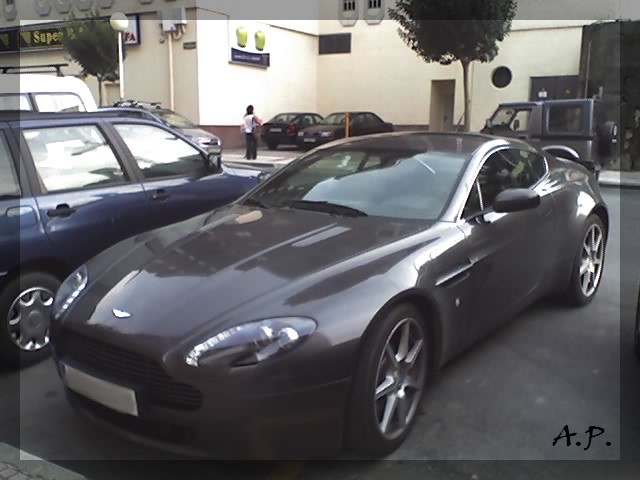
Aston Vantage V8
"This is a 2023 Vantage v8 at marshal goldman with diamond turn wheels for $..."
The Aston Martin V8 Vantage is a luxury sports car with a V8 engine. It’s designed to be fast and comfortable at the same time. The podcast mentions a specific newer example as part of a shopping or pricing discussion.
The Aston Martin V8 Vantage is a luxury sports car known for its V8 performance and upscale interior. The podcast references a specific 2023 Vantage listing, emphasizing its value and configuration. It’s discussed as an example of a high-end sports car that still has everyday usability.
diamond cut wheels
"This is a 2023 [2643.2s] Vantage v8 at marshal goldman with diamond turn wheels for [2647.7s] $139,000 so it's 2023"
“Diamond turn” describes a wheel finish that makes the spokes look faceted and shiny. It’s mostly about how the wheel looks in the light.
“Diamond turn” refers to a wheel finishing process where the metal is machined to create crisp, faceted edges that catch light. It’s mainly an appearance/trim detail rather than a performance change.
carbon fiber
"lots of buttons. Remember manufacturers. We like buttons. Everybody likes buttons. Hey, look at buttons [2666.8s] It's pretty cool. I mean, look at all the cool buttons in the carbon fiber. I'm like, yeah, very cool push it over everything"
Carbon fiber is a strong, lightweight material used for car parts and trim. It’s popular because it looks high-end and can help reduce weight.
Carbon fiber is a lightweight composite material made from carbon strands woven and bonded into a strong panel. In cars, it’s often used for trim or interior/exterior accents to reduce weight and add a distinctive look.
V12
"[2682.6s] But they had also done [2684.5s] v8s and v12s prior to that [2686.5s] In conjunction with astin."
A V12 engine has twelve cylinders in a V shape. It’s a big, high-end engine layout that’s usually found in more expensive performance cars.
A V12 is an engine with twelve cylinders arranged in a V configuration. It’s often associated with high-end performance because it can produce smooth, high-output power, though it’s larger and more complex than smaller engines.
rental properties
"To a car that combines both for your rental properties [2715.6s] But also [2717.2s] Gives you a lot of power for the supersonic bomber pilot inside of you"
The hosts are framing the car choice around a “rental property” use case—meaning the vehicle needs to be practical, easy to live with, and able to handle frequent, varied drivers and trips. That shifts the decision criteria toward space, usability, and broad appeal rather than pure track performance.
BMW suggestions vs Cadillac CT5-V Blackwing
"I'm just I'm putting the other to the last of the BMW suggestions out there ... go get yourself a brand new Cadillac CT 5 v black wing"
They’re comparing choices—talking about BMW options, then landing on the Cadillac CT5-V Blackwing as the one to go drive.
The hosts pivot from discussing BMW options to recommending the Cadillac CT5-V Blackwing as the next test drive. This functions as a decision-point in the episode’s car-debate format.
Request an Explanation
Heard something you'd like explained? We'll add it to this episode.
Sign in to request explanations for terms you heard.
Want to learn more?
Browse our glossary for plain-English explanations of automotive terms, jargon, and concepts.
Help improve this episode
See something that's not quite right? Our annotations are AI-generated and can sometimes miss the mark. Click the flag icon on any annotation to suggest a correction.