
Grounds for Growth “The Second Cup” feat. Todd Katcher
About this episode
Todd Katcher of Digital Dealership System talks about the biggest wins from NADA, especially current customers upgrading after in-person demos. The discussion centers on why live, real-time “leaderboards” motivate sales and fixed-ops teams more than static daily reports—using a sports-playback analogy. They also debate the hierarchy of priorities, landing on customer experience first, while investing in employees and protecting the dealership brand. Todd previews upcoming features like enhanced reporting, messaging apps, and more interactive digital signage and touchscreen demos.
Welcome to the Car Guy Coffee Podcast. Kickstart your day the right way and join us as we tap into the brightest minds and most passionate voices across the automotive world to bring you the education, motivation, and inspiration you need to thrive. From the showroom floor to the service lane, prepare to Upshift and Uplift your perspective.
In this episode of The Car Guy Coffee Podcast, hosts Lou Ramirez and Fred Lennartz welcome Todd Katcher with Digital Dealership System to recap NADA and discuss how meeting customers in person drove upgrades from existing clients. Todd shares key show highlights, including using a touchscreen for live demos and explaining the difference between static reports and real-time leaderboards that motivate sales and fixed ops teams throughout the day.
📲Stream it. Share it. Let's Brew.
Don’t forget to share and subscribe!
carguycoffee.com
certifiedsolutionaries.com
Certified Solutionaries
"Hello and welcome to the CarGuy Coffee Podcast. This brew has been brought to you by Certified Solutionaries and if you want to consume more brews..."
“Certified Solutionaries” is the company sponsoring the podcast episode. It’s basically the show’s sponsor for this segment.
Certified Solutionaries is mentioned as the sponsor bringing the “brew” to listeners. Sponsorships like this often support automotive podcasts and can be tied to services or products relevant to the industry.
NADA
"A really great guy that we got to hang out with at the great event, the great event, the Super Bowl of All Automotive Events, NADA this year. We got to go to his booth..."
NADA is a big annual event for car dealers and automotive companies. The hosts are basically saying, “Here’s what we learned at that big show, and what we’re doing next.”
NADA refers to the National Automobile Dealers Association, which hosts major industry events for car dealers and automotive businesses. In the episode, the hosts frame their conversation around what happened at NADA and what comes next after the show.
Super Bowl of All Automotive Events
"A really great guy that we got to hang out with at the great event, the great event, the Super Bowl of All Automotive Events, NADA this year."
They’re using a comparison to say NADA is a huge deal in the car world. Like the Super Bowl is the biggest sports event, NADA is presented as the biggest automotive event.
This phrase is a metaphor describing NADA as the biggest, most important automotive event—similar to how the Super Bowl is the biggest sports event. It helps listeners understand the scale and importance of the gathering being discussed.
second cup
"...and have the second cup of this grounds for growth. Yeah definitely all about that second cup. Some of you might be on your second cup of the day..."
“Second cup” is just the hosts’ way of saying, “Here’s part two—another conversation to keep the energy going.” It’s not a car term; it’s the show’s format.
“Second cup” is the episode’s framing device, signaling a follow-up conversation (“the second cup of this grounds for growth”). It’s used to structure the show’s theme of continuing momentum after the main event (NADA).
digital dealership system
"...from digital dealership system. System. The one. The only. Todd. Catcher. Welcome to the show time... I almost said digital dealership because they don't need your company..."
A digital dealership system is basically the online and software tools a car dealer uses to advertise and handle leads. It’s how dealers run parts of their sales process without relying only on phone calls and in-person visits.
A “digital dealership system” refers to software and online tools that help dealers market, sell, and manage customers. The host’s joke suggests Todd Katcher is involved with dealership technology rather than a traditional physical dealership.
Todd Katcher
"...The one. The only. Todd. Catcher. Welcome to the show time. Welcome back. What's up guys..."
Todd Katcher is the person the hosts are interviewing. They’re talking about his work and how he connects with car dealers and companies at events like NADA.
Todd Katcher is the guest being introduced, and the segment frames him as a key figure in dealership-related services. The discussion centers on his presence at NADA and the conversations he had with vendors and customers.
in-person demo
"and talk to us and say hey I want to learn how to use this better I want to learn this and it's almost like an in-person demo but then afterwards we're getting all of our business"
An in-person demo is when someone shows you how something works face-to-face. Here, it’s used to explain why customers are more likely to adopt the service after seeing it.
An in-person demo is a hands-on presentation where a provider shows how a product or service works in real time. In this context, it’s positioned as an “almost” in-person demo that helps dealers understand and adopt the technology more effectively.
digital content on dealership screens
"to see it actually on a screen the way it would look inside a showroom inside a sales office or wherever that the screen is going to be... versus worrying about managing digital"
The segment discusses using screens in a dealership (showroom or sales office) to display videos or presentations for customers and service-related viewing. The host argues that using a dedicated service improves professionalism and reduces the dealership’s workload managing digital media.
self-managed system (dealership)
"that's one of the distinctions between a self-managed system like dealership can go ahead and do slide shows or they could do google sheets or they could go ahead and run a youtube page"
A self-managed setup is when the dealership makes and runs its own videos or screen content. The point here is that a specialized service can make it look more professional and easier for the dealership to use.
A “self-managed system” means the dealership handles its own digital content and presentations without relying on a specialized provider. The host contrasts DIY tools (slide shows, Google Sheets, YouTube on in-dealership screens) with a dedicated service that adds structure and polish.
Service drive / dealership service area
"so this is just an extension of that marketing is inside their dealership whether it's motivating their staff or whether it's using or the service drive or lounge tv programming"
The service drive is the part of a dealership where you pull in to get your car serviced. Since people are waiting there or passing through, it’s a place where the dealership can show helpful info or updates.
A dealership service drive is the area where customers enter to drop off or pick up vehicles for service and maintenance. It’s a key part of the customer experience, so marketing and messaging placed there (like screens or programming) can influence perceptions and reduce friction.
AI for advertising creation and social media management
"there's tools that you could use and you could could say the big buzzword the ai to go ahead and create your advertising and go ahead and manage your social media advertising but it's not as good as if you were actually an expert in that"
Some tools use AI to help create ads and manage social media posts. The point here is that AI can help, but a skilled person or agency may still get better results because they understand what to target and how to run the campaign.
AI tools are increasingly used to generate ad creative and help manage social media campaigns by automating parts of targeting, scheduling, and content creation. The hosts are contrasting “using AI tools yourself” with hiring experts, arguing that campaign strategy and execution quality still matter.
Digital signs in a dealership (digital signage)
"when it comes to digital signs hire a digital sign company that's an expert in that so that way you could have a better better result at the end of the day for your customers and for your staff"
Digital signs are the screens you see in a dealership—like in the waiting area or service area—that show ads or helpful info. The idea is that a specialist can set it up and manage it so the messages are clearer and more effective.
Digital signage is electronic display screens used to show messages, promotions, and information in places like dealership service areas and lounges. In a dealership context, it’s often managed by a specialized vendor because content scheduling, targeting, and reliability affect how well it supports customers and staff.
Customer-focused leadership (asking the right questions)
"dealerships are focused on their customers the people are focused on the people that they're serving... it's so hard for these leaders to sit and see what is it that the customer seeing"
They’re saying good leaders should think like the customer and ask questions that reveal what customers actually see and feel. The goal is to improve service by making changes based on that perspective.
The segment emphasizes that leaders should evaluate service from the customer’s perspective, not only from internal viewpoints. It frames improvement as asking the right questions and making the right additions (people/process) to better serve customers.
touchscreen
"we use i use it a touchscreen for the first time this year to actually do live demos i've usually used a keyboard and mouse"
A touchscreen is a screen you can tap to control. In the episode, it’s used to show dealership software features during live demos.
A touchscreen is an input display that lets users interact directly with on-screen controls. Here it’s used for live demos of dealer reporting features, replacing a keyboard/mouse setup to make presentations more intuitive.
live demos
"we use i use it a touchscreen for the first time this year to actually do live demos"
A live demo is when someone shows a product while you watch it in real time. Here, it’s how they show dealers the software features during the event.
Live demos are real-time product demonstrations where the presenter shows how a system works to an audience. In this context, the speaker is emphasizing how using a touchscreen improved their ability to demonstrate dealership reporting features.
sales leaderboard
"talk about our sales leaderboard and our fixed ops leaderboard on a touchscreen and really be there in more presentation mode"
A sales leaderboard is a ranked display of dealership performance metrics, typically used to motivate teams and track progress over time. The speaker mentions presenting it in a more interactive “presentation mode” during demos.
fixed ops leaderboard
"talk about our sales leaderboard and our fixed ops leaderboard on a touchscreen"
“Fixed ops” (fixed operations) refers to the dealership’s service and parts departments, as opposed to sales. A fixed ops leaderboard similarly tracks performance metrics for service/parts to help dealers manage and improve those departments.
reporting tools
"that's how most reporting tools are built what our system is built on conversations with dealers"
Reporting tools are software systems that collect data and present it in dashboards or summaries for decision-making. The speaker notes that many reporting tools are built around standardizing how dealers use the same platform so results are comparable.
fixed ops director / dealer performance tracking
"a fixed ops director of 10 stores that was like i want to move to your platform... use internally that we weren't using that i want to use to motivate my guys"
“Fixed ops” typically refers to a dealership’s service and parts operations, and a director overseeing multiple stores would use performance dashboards to manage outcomes. The segment frames how managers use data to guide decisions across a dealership network.
DMS
"build these three reports from our dms but by the time that i go ahead and build that report"
DMS is the dealership’s main computer system. It’s where the dealership’s sales and service information lives, and the platform uses that data to build updates.
DMS usually means “Dealer Management System,” the software dealerships use to run sales, service, and parts workflows. Pulling data from the DMS is how the platform generates performance reporting.
ROs
"we do 3,500 ro's a day that report is old by the time that i go ahead and share it with my guys"
ROs are basically the paperwork/job records for car repairs in a dealership. If you’re making a lot of them every day, a report can get old fast.
In dealership service contexts, “ROs” commonly means “repair orders,” which represent customer service jobs opened in the system. The hosts say they generate thousands per day, making any report quickly outdated.
live leaderboards vs reports
"reporting on yesterday's numbers versus being live dealers are starting to see the value in live leaderboards... reports are a snapshot of time... take future decisions based on past performance... the leaderboard is really motivational"
They’re talking about two ways to track performance. A report is like a recap of what already happened, while a live leaderboard shows what’s happening right now so people can react and improve faster.
The hosts contrast “reports,” which are historical snapshots, with “live leaderboards,” which update in near real time. The idea is that live rankings create more motivation because dealers can see performance as it happens and adjust immediately.
using QR codes to set up a demo
"use this qr code that's over there right by Todd's head qr code that set yourself up a demo learn about it real quick"
They’re telling listeners to scan a QR code to sign up for a quick demo. It’s about getting started with the tool, not about car mechanics.
The hosts promote using a QR code to quickly access a product demo and learn about the platform. This is a marketing/workflow topic rather than a technical automotive concept.
CRM
"...everyone else has tons of reports talk to a dealer the other day who's using one was using cdk another one is with tech... lots of every crm dms has tons of reports built into it..."
CRM is basically a computer system that helps a dealership keep track of customers and sales work. Instead of everything living in spreadsheets or emails, it organizes leads and activity in one place.
CRM stands for Customer Relationship Management. In automotive retail it’s the software dealers use to track leads, customer interactions, and sales activity so teams can manage follow-ups and performance.
CDK
"...talk to a dealer the other day who's using one was using cdk another one is with tech..."
CDK is a major provider of dealership software used by many auto retailers. The discussion contrasts CDK’s reporting with a different approach that uses live performance tracking to motivate teams.
real-time reporting
"...every single pass every move every yard all of these different things that occurred and then that real-time report gets told now not just so that they say oh okay that's what happened..."
Real-time reporting means you can see results as they happen. That way you can change what you’re doing now, instead of finding out later that you missed an opportunity.
Real-time reporting means performance data is updated immediately as events occur. The hosts argue this enables faster coaching and adjustments compared with reports that arrive after the day’s work is already done.
TMS
"are you speaking to the TMS or maybe even a platform manager depending on the structure that you have"
Here, TMS sounds like a system the business uses to manage and track how things are going. It helps managers make decisions based on data instead of guessing.
In this context, TMS appears to be an internal management/operations system used to track performance and coordinate decisions across a dealership group. It’s mentioned alongside “platform manager,” implying software or a structured management layer rather than a vehicle-related system.
platform manager
"are you speaking to the TMS or maybe even a platform manager depending on the structure that you have so you're further away so you need different information"
A platform manager is basically someone coordinating operations across a bigger group, not just one person or one desk. They focus on the overall system and results.
A “platform manager” here likely refers to a centralized role or team that oversees multiple locations or functions using standardized processes. The speaker uses it to contrast local, granular coaching with higher-level, macro oversight.
general manager
"most of them should let's put this in notebooks if you didn't know this should be able to give a good accurate report of what's going on general manager comes out your gsm comes out your service manager comes out"
A general manager (GM) in a dealership oversees overall operations, including sales, service, and customer experience. The transcript frames the GM as someone who should be able to get a clear, accurate report on where the team is and what work is being completed.
GSM
"general manager comes out your gsm comes out your service manager comes out ask somebody hey where's somebody at"
GSM typically means “general service manager” in dealership operations, responsible for the service department’s performance. The speaker groups GSM with the service manager and emphasizes tracking both presence and output (what work has been completed).
service manager
"your gsm comes out your service manager comes out ask somebody hey where's somebody at"
A service manager runs the day-to-day operations of the auto service department, coordinating technicians, advisors, and workflow. The transcript highlights the need to know not only where employees are, but what their work output has produced so far.
test drive
"this one's on the test drive this one's handling some qualifications you should still know the same thing"
A test drive is when a customer drives the car to see how it feels. The speaker is saying managers should know which customers are at which stage, like test drives.
A test drive is the customer road/handling evaluation of a vehicle, commonly coordinated by sales staff. In the transcript, it’s used as an example of a specific “status” item that should be tracked in real time for performance reporting.
qualifications
"this one's on the test drive this one's handling some qualifications you should still know the same thing should be said of what it is that they've completed inside of the day"
In sales, “qualifications” means checking whether a customer is a good fit and ready to proceed. The speaker is saying managers should track that stage too, not just where someone is standing.
“Qualifications” in a dealership context usually refers to sales process steps like confirming customer needs, eligibility, and readiness to move forward (e.g., financing or trade details). The transcript treats it as another trackable stage of customer progress.
customer experience vs dealership differentiation
"if your customer has a good experience in your store and if your store is provides a unique experience your dealerships are selling your commodity right you can get the same car at many different areas and many different dealerships in a particular region"
If lots of dealerships sell the same car, then the car isn’t what makes one store better. What makes the difference is how the dealership treats you—how easy it is, how you’re communicated with, and how you’re taken care of.
The hosts are describing how dealership sales can become “commodity-like” when the same cars (same model and trim) are available across many stores. In that situation, the customer experience becomes the differentiator that influences outcomes like loyalty, word-of-mouth, and repeat business.
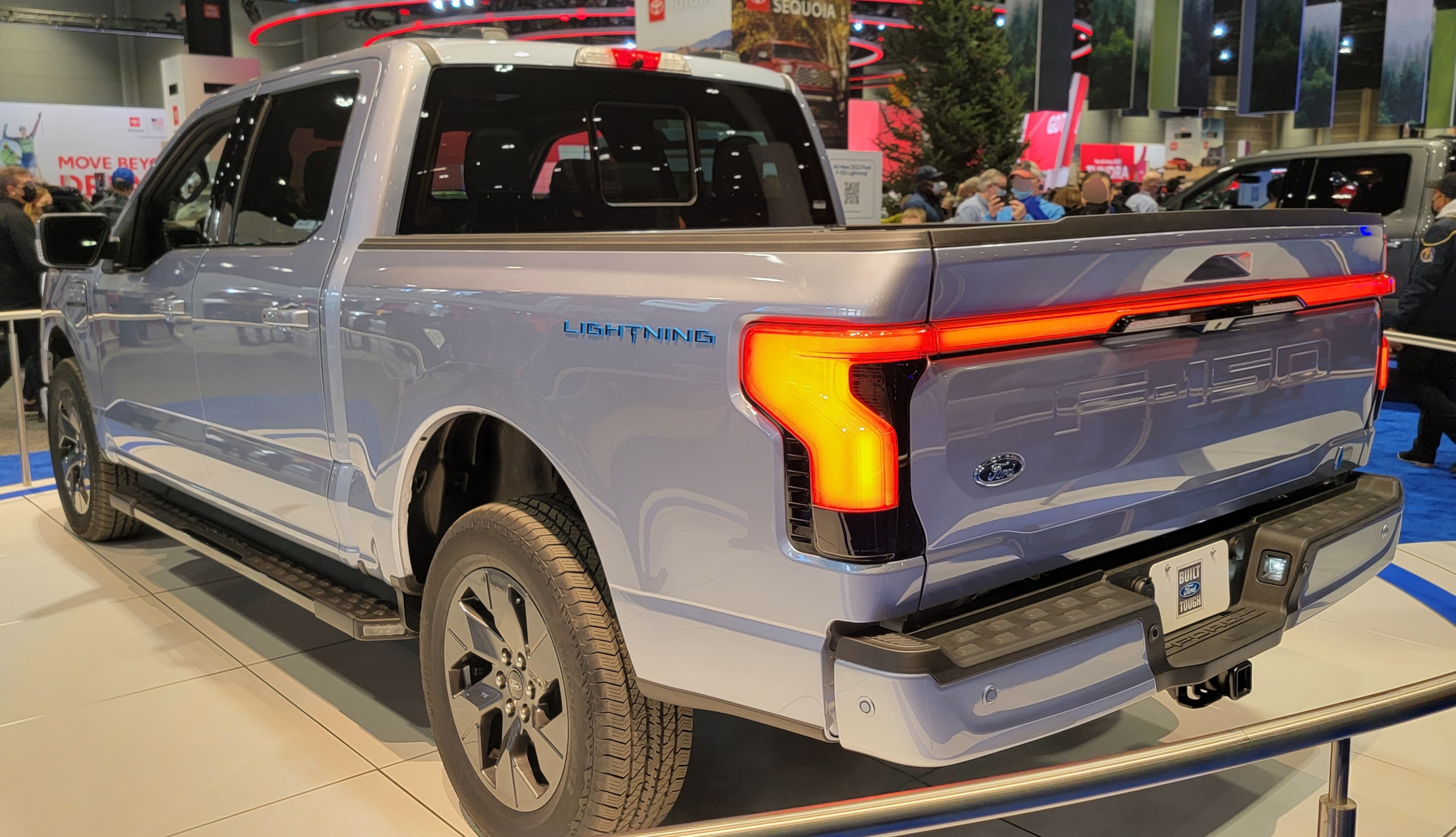
Ford F150
"so if you're in the market for let's just say something like a Ford F-150 how many dealerships in your given area can somebody go ahead and purchase that exact same car in the exact same trim"
The Ford F-150 is a very popular pickup truck. The point here is that lots of dealerships can sell the same truck, so the dealership has to stand out by how it treats customers, not just by the product.
The Ford F-150 is Ford’s best-selling full-size pickup truck and a common “commodity” vehicle in dealership showrooms. Because many dealerships can sell the same model in similar trims, the customer experience and dealership differentiation matter as much as the vehicle itself.
McDonald's
"it doesn't really work because they're selling the [1203.0s] same thing but in car dealerships they do and so the only thing they have to separate themselves [1207.6s] from a minute from someone else at the end of the day you're getting the same what Big Mac"
McDonald's is used as a comparison because it’s the same product in many places. The host is using that idea to say car dealerships need to stand out through how they treat customers, not just the product.
McDonald's is used as an analogy for standardized products and consistent taste across locations. The comparison supports the point that vehicles (like the F-150) may be similar regardless of where you buy them, so dealerships must differentiate through service and experience.
Customer experience as dealership differentiation
"and so in general you're going to go ahead and get the same F-150 so why would you buy one over the [1240.2s] others because how you take care of the customer like in store customer experience and also how [1246.7s] cohesive that messaging is from the online experience into the store so every touch point [1252.7s] that a customer has is equally important"
The segment argues that when many dealerships sell the same vehicles, the differentiator becomes the customer experience—how calls are handled, how staff communicate, and how consistently the dealership presents itself across channels. This includes “touch points” from online browsing to in-store interactions.
Touch point
"from the online experience into the store so every touch point [1252.7s] that a customer has is equally important and you could lose that at any given time you know how [1258.8s] many times i call dealerships and somebody answers the phone hello right or they transfer you"
A “touch point” is any moment a customer interacts with a dealership—phone calls, website messaging, service scheduling, the showroom experience, and more. The segment emphasizes that poor performance at any single touch point can hurt the overall customer journey.
Service status menus
"you look at like a service drive you look at the service status menus you look at [1292.9s] the lounge you look at the showroom"
“Service status menus” refer to the screens or interfaces that show customers updates on their vehicle’s repair progress. In the segment, they’re part of a broader digital approach to reduce uncertainty and improve the dealership’s customer experience.
BMW
"“...we had a great conversation with the large BMW store and they said their digital signs haven't been updated…”"
BMW is the car brand. Here, they’re talking about a BMW dealership that hadn’t updated some in-store screens and lounge setup in a long time.
BMW is referenced as a dealership brand whose store had digital signage and lounge systems that hadn’t been updated for years. This highlights how dealer experience and in-store tech refreshes can affect customer perception and engagement.
lounge cb
"“...their digital signs haven't been updated their lounge cb hasn't been updated for x number of years…”"
“Lounge cb” sounds like a screen or display system in the dealership lounge. They’re saying it was outdated, and updating it helped the store feel better.
“Lounge cb” appears to be a dealership in-lounge display or communication system (likely a screen or content board). The context is that it hadn’t been updated for years, and refreshing it improved the customer experience.
Audi
"“...we took over an Audi store down into what’s in Florida they'll and put screens everywhere…”"
Audi is the car brand. They’re describing an Audi dealership where they added new screens, and the store felt more lively right away.
Audi is mentioned as another dealership brand that the company helped modernize by installing screens throughout the store. The point is that updating the in-dealership digital experience can make the showroom feel more current and engaging.
granular reports
"[1574.8s] money up to $25 a month for services for reports and they're very granular which we're not going to [1580.5s] go in that direction but the idea is that we're trying to create a low-cost experience under $500 [1586.0s] a month but we want to give them some of those top reports on the desktop as well and so we're [1591.7s] enhancing our services there and then we've worked with some directors so that are interested in our [1614.5s] so we're working really hard to go ahead and develop those protocols and then also provide"
Granular reports are super detailed reports with lots of breakdowns. The point here is that they want simpler reports so managers can quickly understand what’s going on.
“Granular reports” are highly detailed breakdowns of data, often with many filters and categories. The speaker contrasts them with simpler “macro” reporting so managers can understand trends without wading through every underlying number.
month over month year over year
"[1597.8s] services to give to their frontline workers if you will their sales managers their service managers [1604.8s] their shop managers tools that they could get easy quick numbers month over month year over [1610.2s] year without getting into these granular reports and not giving them access to all those numbers"
These are ways to compare results over time. Month-over-month looks at the last month versus the current one, and year-over-year compares this time to the same time last year.
“Month over month” and “year over year” are common business comparison methods. Month-over-month shows how things change compared to the previous month, while year-over-year compares the same period across two different years to smooth out seasonal effects.
macro reports
"[1614.5s] so we're working really hard to go ahead and develop those protocols and then also provide [1619.8s] some macro reports so they could look at industry standards and create some industry standards so [1625.1s] they know where they are based on those and then determine that how they fit into that on their own"
Macro reports are the big-picture summaries, not the super-detailed stuff. They help a dealership see how they’re doing compared to the industry.
“Macro reports” are higher-level summaries that focus on big-picture trends rather than every detail. Here, they’re described as helping dealers benchmark against industry standards and understand where they stand.
virtual kick in the butt
"[1645.7s] so that mobile app allows them to go ahead and every time a sale is done in the store [1650.9s] car is delivered they get a text message through our application it's like a virtual kick in the [1656.3s] butt like the guys out there smoking right never happen the dealerships right so there's a guy out"
It’s a playful way of saying the app sends reminders/alerts to get people back focused. The idea is to nudge sales staff to stay active when opportunities come in.
This is a metaphor for using automated notifications to motivate staff. In dealership operations, timely alerts can increase responsiveness and keep sales teams engaged during slow or distracting moments.
performance metrics
"[1665.2s] like someone all these cars selling maybe i should go ahead and self motivate to go ahead and give [1670.8s] me a virtual kick in the butt saying hey i should get back on the sales floor so we're adding to that [1675.6s] program now it should be done by the end of this month where a dealer can actually send out text [1680.8s] messages through our app to his to their team at any given time throughout the day at any time [1686.1s] saying hey everybody come quick meeting or maybe they have maybe lunch is served or maybe hey these [1692.6s] are the performance metrics that we're looking at or different things that they might want to go"
Performance metrics are just the numbers a business watches to see if they’re improving. Here, the dealership uses them to track sales and service results over time and decide what to focus on.
“Performance metrics” are measurable numbers a dealership uses to track how well sales and service operations are doing over time. In this context, they’re used to compare month-over-month and year-over-year performance and guide managers’ decisions.
stock number
"ahead and communicate so hey where's the key to stock number whatever was that well they can say where's the key to stock number"
A stock number is basically the dealership’s ID tag for a specific car. It helps everyone make sure they’re talking about the same vehicle.
A stock number is an inventory identifier dealerships use to track a specific vehicle in their lot and systems. Mentioning it in the context of messaging implies the platform helps staff quickly reference the correct car when communicating with customers.
open platform
"before the customer comes in or those types of messages so they'd have the ability to open platform to go ahead and send whatever messaging they want to their team so we're building that that would"
An open platform is software that’s flexible—so the dealership can use it in different ways and connect it to other tools. In this case, it helps them send the messages they want to their team.
An “open platform” typically means a software system designed to integrate with other tools or allow flexible use by teams rather than being locked into one workflow. Here, it’s described as enabling the team to send whatever messaging they want.
dealer feedback
"we listen to our customers every day and based on feedback that we get tealers come up with some crazy ideas but in general we listen to everything and they they say and sometimes we allow them to customize the systems to meet their needs"
Dealer feedback just means dealerships telling the company what’s working and what isn’t. The idea is to use those real-world comments to improve the software and make the customer experience smoother.
Dealer feedback refers to input from car dealerships about what customers want and what workflows are missing. Here, it’s described as the driver for customizing systems and prioritizing new features so the product better supports dealership operations and customer experience.
customize the systems
"and sometimes we allow them to customize the systems to meet their needs but at the same time when we hear certain things that they're looking for or certain features that they're looking for consistently we want to build those to meet those needs"
This means the software can be adjusted to fit how a particular dealership does things. Instead of forcing everyone to use the same setup, they can tweak it to match their workflow.
“Customize the systems” means tailoring software tools to match a dealership’s specific processes and needs. In practice, this can include changing messaging workflows, access rules, or how the platform supports day-to-day sales and customer communication.
development queue
"they constantly we have a development queue right now that's full for the next 90 days and then over those 90 days we're continually adding more just based on the conversations that we have with dealers"
Think of a development queue like a to-do list for software. They’re saying they already have a list of updates planned for the next few months, and they keep adding more as they learn from dealers.
A development queue is an ordered backlog of software features or fixes that a team plans to build and release over time. In this context, it’s being used to explain how dealer feedback turns into scheduled product work over the next few months.
cell people
"thank you for being an uplifter thank you for bringing solutions to dealers and their cell people and for their customers to be able to have a better experience"
“Cell people” appears to be a transcription error for “sales people,” referring to dealership staff involved in selling vehicles. The context is about improving the dealership experience for both customers and the sales/service teams.
Request an Explanation
Heard something you'd like explained? We'll add it to this episode.
Sign in to request explanations for terms you heard.
Want to learn more?
Browse our glossary for plain-English explanations of automotive terms, jargon, and concepts.
Help improve this episode
See something that's not quite right? Our annotations are AI-generated and can sometimes miss the mark. Click the flag icon on any annotation to suggest a correction.