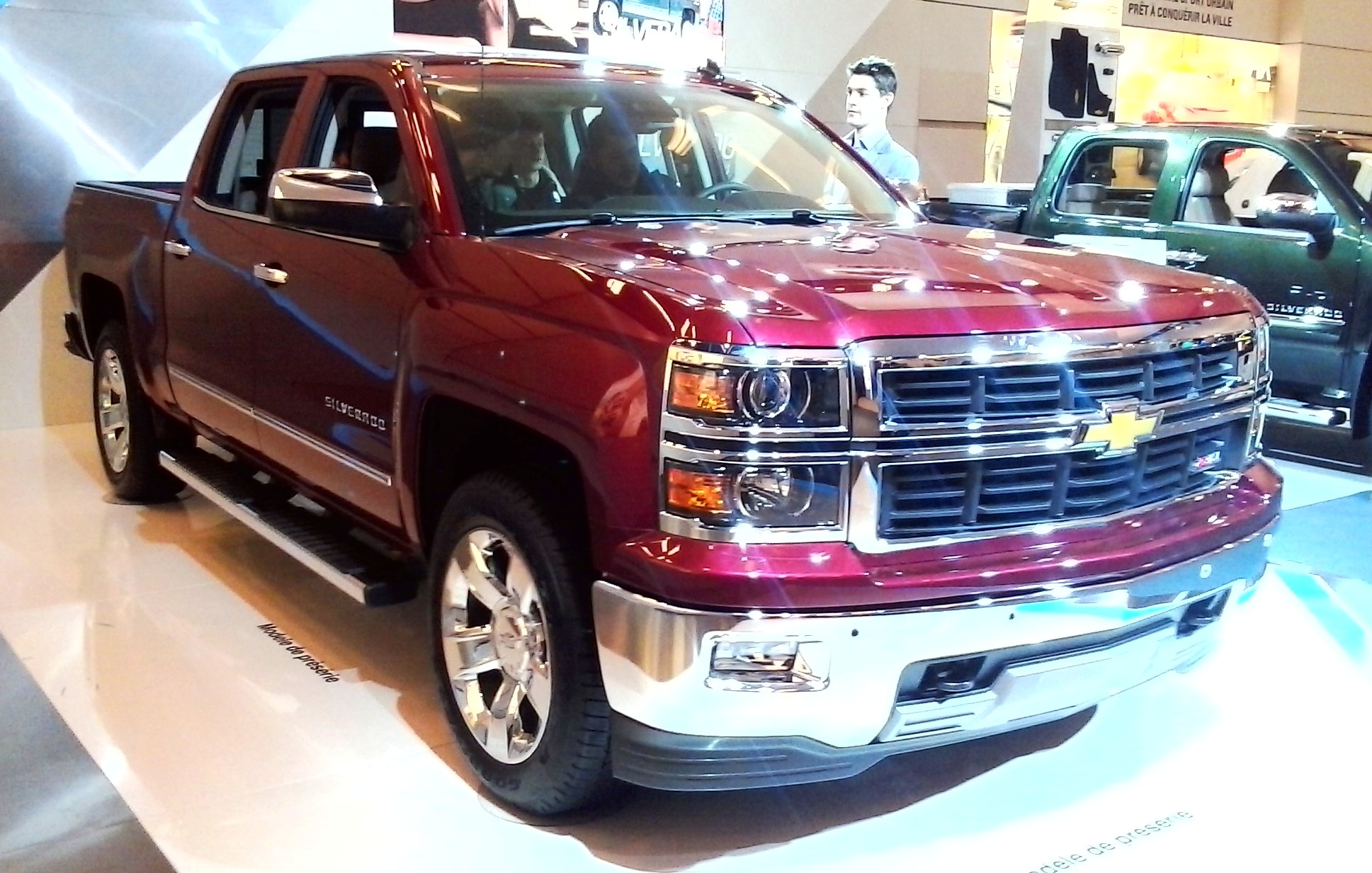
Russ and Shannon dive into a variety of automotive topics, including a class action lawsuit against GM regarding issues with the 6.2-liter engine in newer Silverados and Escalades. They also troubleshoot listener calls, offering insights on problems with a Ram truck's starting issues, a 1995 Blazer's intermittent failures, and a 2017 RAV4's water leaks. The episode features practical advice, including how to diagnose power steering noises and the importance of proper maintenance for classic vehicles. Notable guests from Berkeley One Classics join to discuss collector car insurance.
Chris is out today with the Childrenss Miracle Network Radiothon and Russ and Shannon have guests from Berkley One Classics. We answer your car and truck questions and help you save money on car repairs.
"by Berkeley One Classics, your key to collector car insurance"
Berkeley One Classics helps people insure their old or rare cars so they’re protected if something happens to them.
Berkeley One Classics is a specialty insurance provider that focuses on coverage for classic and collector cars, offering tailored policies to protect valuable vehicles.
"[105.2s] and Escalades with the 6.2 liter engine.
[107.8s] And that's just what we're referring to."
The Escalade is a big luxury SUV made by Cadillac, which is part of GM. It’s popular for its size and comfort.
The Cadillac Escalade is a full‑size luxury SUV produced by General Motors. It’s known for its large size, powerful engines, and upscale features.
Car
Dodge C-3000
"And then they put new sensors on each side of the caddy or new sensors and then they found a ground missing from the battery to the chassis"
The Dodge C-3000 is a big van that people use for moving stuff or towing trailers. It’s called the Caddy by many drivers.
The Dodge C-3000, commonly called the "Caddy," is a heavy‑duty commercial van produced by Dodge from 1994 to 2010. It’s known for its large cargo space and robust towing capability.
"[292.3s] the sensors on both sides of the Cadillac Converters,
[294.6s] is that what you were talking about?
[295.9s] Probably the oxygen sensors upstream and downstream?"
A catalytic converter is a part of your car’s exhaust that helps reduce pollution by turning bad gases into cleaner ones. It’s usually located near the engine and is essential for meeting emissions standards.
A catalytic converter is an emissions control device that converts harmful exhaust gases into less toxic substances using a catalyst. It sits in the exhaust system between the engine and the muffler.
"[294.6s] is that what you were talking about?
[295.9s] Probably the oxygen sensors upstream and downstream?"
An oxygen sensor is a small device that checks how much oxygen is in the exhaust gases. The car uses this information to decide how much fuel to add, keeping the engine running efficiently and cleanly.
An oxygen sensor measures the amount of oxygen in the exhaust gases to help the engine control unit adjust fuel delivery for optimal combustion and emissions.
"[329.7s] You know, the first thing I think of
[331.7s] that comes to mind is the Cadillac Converter"
It's a part that helps the car’s engine connect to its gearbox so the car can start and move. Without it, the engine might turn over but the car won’t go anywhere.
A Cadillac converter refers to a torque converter used in certain Cadillac vehicles, which transmits power from the engine to the transmission and allows the vehicle to start and shift smoothly.
"You can turn the fuel pump on to do some testing,"
The fuel pump is a small device that pushes gasoline from the tank into the engine so it can run. Without it, the car won’t start.
The fuel pump is a component that supplies gasoline from the tank to the engine at the required pressure. It ensures the engine receives enough fuel for combustion.
"That air relief that you give it should be enough to make it start."
It’s like giving the car a little breath of air so it can start running smoothly after you’ve fixed an exhaust problem.
Air relief refers to a small opening or valve that allows air to enter the exhaust system, preventing vacuum buildup and helping the engine start more easily after a blockage is cleared.
"He's got some Corvettes. They wouldn't necessarily be a classic."
A Corvette is a fast American sports car made by Chevrolet. It’s famous for its sharp looks and strong engines.
The Chevrolet Corvette is a high‑performance sports car that has been produced since 1953. It’s known for its sleek design, powerful V8 engines, and strong racing heritage.
"[862.0s] Scott from North Carolina has got a 92 Buick Roadmaster."
The Buick Roadmaster is a big, comfortable car that was made in the United States. The 1992 version has a roomy inside and looks like older classic cars.
The Buick Roadmaster was a full-size luxury sedan produced by General Motors under the Buick brand from 1949 to 1972. The 1992 model is a later generation of the Roadmaster, known for its spacious interior and classic American styling.
"I think that that strut that holds the glass up has failed"
A strut is like a springy arm that holds up part of the car’s body and helps it stay steady on rough roads. When it breaks, that part can fall or wobble.
A strut is a structural component of a vehicle’s suspension system that supports the weight of the car, absorbs road shocks, and helps maintain steering stability. It combines a shock absorber with a structural brace in one unit.
"[1071.4s] He loves the wagon, so we wanna keep it on the road
[1074.0s] and he grew up in a, we have a 73 Ford country sedan
[1079.8s] based on 429 in it that's gonna need to rebuild"
The Ford Country Squire is a big, roomy wagon from the 1970s. It’s popular among collectors because it looks like a classic American car and can be driven on the road today.
The Ford Country Squire is a full‑size station wagon produced by Ford from 1970 to 1983. The 1973 model is a classic example of American muscle‑style wagons, known for its spacious interior and powerful V8 options.
"and that coverage is agreed value coverage. So there's no disagreement on what your vehicle is covered for."
With this coverage, you and the insurance company decide how much your car is worth. If it gets damaged or stolen, you'll get that exact amount back, not a lower value based on how old it is.
Agreed value coverage is an insurance policy type where the insurer and insured agree on a specific monetary value for the vehicle. If the car is totaled, the payout equals that agreed amount regardless of market depreciation.
"New OEM wheels can be expensive with some wheels that cost 500 or more from the dealer."
OEM wheels are the same ones that were installed on the car when it left the factory. They fit exactly and work with the car’s brakes, tires, and suspension.
OEM wheels are the original wheels that come with a vehicle from the manufacturer. They match the car’s design and specifications, ensuring proper fitment and performance.
Car
1995 Dodge Blazer
"[1512.3s] with a 95 blazer."
The Blazer is a type of SUV that was sold by Dodge in the late 1980s and early 1990s. In 1995, it was basically the same car as a Jeep Cherokee but sold with Dodge branding.
The Dodge Blazer was a mid‑size SUV produced from 1987 to 1991. A 1995 Blazer would be a second‑generation model that was actually a rebadged Jeep Cherokee, sharing many components but marketed under the Dodge name.
It’s a small cover that sits on the engine and sends spark to each plug at the right time.
The distributor cap is a component of the ignition system that routes high‑voltage spark from the distributor to the correct spark plug via contacts.
"you're gonna wanna get a spark tester and any auto parts store is gonna have that"
A spark tester lets you see if your car’s engine is getting the electric spark it needs to start. It plugs into a spark plug and shows if there’s power.
A spark tester is a handheld device used to check whether an engine’s ignition system is producing the necessary spark at the plugs.
Think of transmission lines as the tubes that move fluid inside your truck’s gearbox. If they leak, the machine can lose power and get damaged.
Transmission lines are the flexible hoses that carry fluid—such as torque converter or transfer case fluid—from the transmission to other components. They are critical for maintaining proper pressure and preventing leaks.
"the heat exchanger on the side of the block where coolant goes in and warms up the transmission"
A heat exchanger is a small component that helps keep your car’s transmission from getting too hot by moving heat from the engine coolant to the transmission fluid. It’s like a tiny radiator inside the car.
A heat exchanger is a device that transfers heat from one fluid to another without mixing them. In this context, it moves heat from the engine block’s coolant to the transmission fluid to keep the transmission cooler during operation.
"I have a Goose Neck trailer and I haul tractors around."
A Goose Neck trailer is a small, simple trailer that you can pull with a truck. It has a short hitch that looks like a goose’s neck, making it easy to turn and park.
A Goose Neck trailer is a lightweight, single-axle trailer with a short, high-mounted hitch that resembles a goose's neck. It’s commonly used for hauling small loads like tractors, equipment, or furniture and is prized for its maneuverability and ease of use.
"And so I have a trans temp on the truck that I can monitor,"
‘Trans temp’ is the temperature inside a car’s transmission. Keeping it from getting too hot helps avoid engine damage.
‘Trans temp’ refers to the temperature of a vehicle’s transmission fluid. Monitoring it helps prevent overheating, which can damage gears and seals.
"It would have a large transmission cooler mounted out in front of the cooling stack and in front of the radiator there to cool that down."
The transmission cooler is a small device that cools the fluid inside your car’s gearbox, preventing it from getting too hot and breaking down.
A transmission cooler is a heat exchanger that removes excess heat from the transmission fluid, helping to keep the gearbox operating within safe temperature limits.
"I would most definitely get a larger cooler on it and put up there. My truck does not have a radiator cooler to warm up the coolant."
A radiator cooler is a part you can add to a car’s cooling system. It helps keep the engine from getting too hot, especially when you’re driving in very warm weather or doing a lot of hard work with the truck.
A radiator cooler is an aftermarket component that increases the cooling capacity of a vehicle’s engine by improving heat transfer from the coolant to the air, often used in high-performance or hot-climate applications.
Select text to request an explanation
Hey, welcome to the end of the hood show podcast.
I am Russ Evans, along with Shannon Nordstrom.
And Chris, he's playing hooky for a good reason.
It's just me and just Shannon.
And we're going to talk cars like we always do.
And as usual, Under the Hood is brought to you
by Berkeley One Classics, your key to collector car insurance
celebrating 50 years in business.
And by car-part.com, over 200 million recycled originally
climate use parts ready to ship to you fast.
And by roadreadywheels.com, use the code hoody
to save even more on your aftermarket OEM look-alike wheels.
Now, here's the podcast.
This is Under the Hood.
Welcome to the Under the Hood show.
I am Russ Evans, along with Shannon Nordstrom.
Welcome hoodies, thanks for tuning in
so we can help you tune up.
It's a great day today.
It's getting cold up here.
It's snowing.
Getting cold.
Again.
It's getting cold to me when it's 75.
It's been cold.
It's some crazy stuff out in the news right now.
Did you see what we knew was going to happen?
And I said, I don't think that heavier oil weight
is going to be-
I did not read that story yet.
I had some people here yesterday
and I've been way out of touch.
So-
It's like, oh, heavier oil.
People are going to be really satisfied to know
that their $80, $90, $100,000 vehicle is covered
because now we have thicker oil and it's protected, right?
So what's the latest, Russ?
Well, multiple people were filing lawsuits over that
trying to get more satisfaction out of it
because-
We're talking about the 6.2 liter recall
on the, well, basically-
Trankshaft issue.
22 and newer Silverados and Suburbans
and Escalades with the 6.2 liter engine.
And that's just what we're referring to.
Yeah, so they got together
and they've actually pooled together
multiple lawsuits into one class action lawsuit.
So they're going after GM
to try to get some customer satisfaction out of it.
We'll see where it goes.
We don't know where it's going to go yet,
but we knew that wasn't going to work
because if you've got a vehicle
and it's, let's say a year old
and it wasn't covered
and they said, oh, thicker oil will be fine.
And then now your vehicle is three years,
one month old.
It's out of the warranty.
You're out of that 50, 60,000 miles
and you're on the hook for an engine.
We're talking, a good reman's going to cost you 10 grand
installed.
People aren't ready for that soon after they shouldn't.
That's a really good engine
other than that crankshaft issue, so.
Just a minor thing like the crankshaft.
Yeah, we'll, just minor thing.
Well, you're one of them.
Yeah, no, I'm one of them.
My truck's working just fine.
I'm carefully just watching what they do
and we'll see what happens.
But I've had it in for the test
and they've put the microphones on it
and they've listened to it.
And did some due diligence
and we had already put the different oil in it
which is like I said, we knew when we did that
it was just okay, we'll play along.
Yeah, I cut the filter open and cut my finger open.
You did cut your finger on that.
Very thoroughly.
I even checked your oil while I had it apart.
Chad Shetler, our resident racing expert said,
why don't you guys cut the filter open?
We do that on the Sprint cars all the time.
And so we cut the filter open
and didn't find a thing in there.
It looked good, but hey, whatever.
We're going to jump on right in
and talk to Mike in Wisconsin.
How are you doing, Mike?
And how's that Ram truck doing?
It's not running.
Ooh, that's not running.
Like not at all?
Or poorly?
No, I can't.
No, I can't even get it started.
Okay, what have you done to it?
Nothing turns over.
Well, originally it just started running terrible.
Like you take off and all of a sudden it lost,
like it loses all its power.
Like all the power just, and it's just real sluggish.
So you couldn't even get up to speed.
Actually, you'd have to shut the key off,
but put it neutral, shut the key off
and then turn it back on.
And then you had enough power to get back up to speed
and then the same thing would happen
after a hundred yards or maybe a mile.
And then they put new sensors on each side of the caddy
or new sensors and then they found a ground missing
from the battery to the chassis and they put that on.
But somehow they got it running again
and it was good for about a day, day and a half,
and then all of a sudden it just stopped running again.
And it would do the same thing.
It would just bog down.
You'd get going a little bit
and also it just bogged down,
like it's getting no fuel in sets, you know?
Well, listening to what you've done so far,
I wanna clarify yet again just the problem today,
but first I wanna ask you,
the sensors on both sides of the Cadillac Converters,
is that what you were talking about?
Probably the oxygen sensors upstream and downstream?
Yeah.
Okay, all right.
I didn't know if you had like a caddy right next to it
that you'd put sensors on.
What kind of caddy it was.
But we got that part figured out.
But today, you say it won't start
and you made a comment that made us to believe
that it wasn't even turning over.
Is that where you're at or is it?
No, it does turn over.
It does turn over.
It's just, but it's a no start.
And before it was a sluggish once you did get it going
and then it was fun.
You know, the first thing I think of
that comes to mind is the Cadillac Converter
that being plugged up.
Because when you shut it off,
it'll bleed out some of that pressure.
And when it does,
then you can start it up again and it'll go.
But let's say the first time it went a quarter mile,
the second time it might go an eighth mile
and the third time it may only go
a few feet and then it won't start.
But if you've emptied out those converters,
there's two things to consider here.
You clean those out,
but if those converters are plugging up and coming apart,
they may have clogged up the muffler.
I had one of these on a Silverado a week ago.
The muffler got plugged up with pieces of catalyst
and the front.
So here's what to do.
Just take the front oxygen sensors out.
The ones up closest to the engine
just unscrew them like a spark plug, both of them.
Start the vehicle up.
See if it'll start.
If it does start with those removed,
you still have a restriction in that exhaust.
And that's really what I'm leaning at.
They can check fuel pressure easily on this thing.
So I'm assuming that's been done,
but a lot of shops don't go to the part
about when it's plugged up.
They don't know exactly where to go
because they don't do that.
And Russ, you're making a big assumption there
that somebody has already checked air fuel spark.
Right.
And there are.
You would think, right?
Yeah.
Because that's.
Go ahead.
Yeah, when he had the thing plugged in underneath,
he said something about,
he was checking something with the fuel
or something with something like that.
That's something familiar.
Okay.
Yeah.
Can he shut something off
by having that thing plugged in underneath the steering wheel?
No, no, not at all.
You can turn the fuel pump on to do some testing,
but you can't shut anything off to bypass anything
without a custom programmer.
And that's not something that would keep it
from starting with what you're talking about.
I really think something's restricted in that exhaust.
I would remove those O2 sensors and see if it fires up.
Does it pop and bang or even like try, but just not go?
Not sure.
There was a couple of times it backfired.
Okay.
Yeah.
Then it sounds like it's probably stuffed up.
Okay.
So maybe just, there is like a hole in the exhaust.
I might have to have that exhaust put on anyway, so.
Right.
Just open it up, take the sensors out and see.
That's a quick operation.
If they've just put new sensors in it,
they're not going to be stuck in there.
Somebody's already fought with them
to make sure they're not rusted in or corroded in,
but just unscrew the ones that are ahead
of the catalytic converter
where there's a potential blockage.
That air relief that you give it
should be enough to make it start.
It's going to sound like a funny car,
funny race engine with those out of there,
but you want to be able to.
Oh, okay.
So I'm relieving the pressure.
Okay.
Just take them out so that it can relieve the pressure.
And then if that, if it starts then, what Russ is saying,
then you're able to say, okay,
I got to figure out why this restriction is there
and is it the catalytic converters
and or is it the, it has it got further downstream?
The muffler is more, that'd be less frequent.
Having a muffler plug.
That's highly unusual, but it does happen.
And if the catalytic converters are plugged up,
they do break in certain models.
The substrates inside of them break up
and they can plug themselves,
but it's more related to a problem
with the engine running poorly
or having a issue with the engine
where it's leaking antifreeze,
it's got a burn and oil,
things that cause too much to get into those converters
that catalyst process,
which heats those things up to a thousand degrees
and just burns things up and reprocess it,
isn't capable of keeping up what's getting dumped into it.
That's why a lot of times
after people put in a different engine
or those sort of things,
they'll find out they have a secondary problem
with the catalytic converters
because that old engine
dumped a lot of things into it and caused problems.
And so that's what we're looking at here.
Now, having said all that,
we got you all thinking about this.
If they haven't checked fuel pressure
and they haven't confirmed that the spark is there,
there could be a completely different problem
than what we're talking about,
but we're making an assumption
that somebody's already done that.
Because that would be the low hang.
So he did compression tests already on everything.
Oh, that's good.
That's good.
He's made sure that the cylinders are healthy.
That's really good.
But that low hanging fruit.
There was one that was like only a hundred though.
Yeah.
It should still start with one low cylinder,
but Russ, what are you?
You're cylinder number two.
Oh, boy, that, I don't know.
If it is, get ready.
Yeah.
I mean, it'll still start
if the other ones have compression.
Yeah.
Now you got him.
Now you got him nervous again, Russ.
That's not what we're trying to do here.
We're trying to give him help.
That's all right.
I've already got tons of money in it.
A little more ain't gonna hurt.
Let's pull those sensors out and see if it starts up.
Thanks, Mike.
Okay, that's what I'll do.
All right.
I appreciate it.
Thank you guys.
You bet.
Take care.
Bye.
Ouch, huh?
Well, Russ, if it is cylinder number two, what are you?
Well, that's the one that we usually start feeling first
when we've got an issue going on with the cam.
Yeah, the top end of the engine.
You start seeing it.
Yeah, oil ring issue on that, so.
All right.
I thought you were going somewhere there,
but I wasn't quite sure.
866-594-4150, this is under the hood.
In the studio today, we've got Brian
and Shelley from Berkeley One Classics.
They've been with us for, as you know, a number of years,
and we're glad to have them here with us today.
For those of you who don't know, Berkeley One Classics,
their classic car division office, their main office,
is right down the street from us, actually,
in Chris's backyard.
Chris is off today.
By the way, Chris is out.
You wondered where he was today, missing his voice.
He is doing the Children's Miracle Network
radio thon.
They have raised millions of dollars
for children with cancer over the years,
and that's what he is doing all day today.
On his other radio gig, he has.
That's why he sounds so good when he does this one,
but we're proud of him for doing that.
And if you want to help with that,
you can go to our website,
and you can donate from underthewoodshow.com,
and you can make a donation today,
or any day, if you would like for that.
Yep, you sure can.
It's something very, very important to us,
and Chris has put, I mean, they're on the radio
for 24 hours, radio thon, him and Doc and others,
and they pour their heart and soul into that campaign.
It's quite amazing.
It's good.
You know, he doesn't do it so well too,
just whoring for him.
They have won some national awards
from the National Children's Miracle Network
for the program they've done.
They've been brought down to Florida
on the main stage for that, for national awards,
for what they've, the way they present it,
not just for the money that's been raised
through the radio stations, but how they present it,
and meaning how they care.
I mean, you can tell if you listen to those guys,
and you could catch them on the internet.
If you search, if you're a good Google search person,
like Chris, you could probably find a little bit of their-
Hey, you should be able to find the stream
of their radio station.
It's pretty awesome, for sure.
Yeah, that's great.
But they're just down the street
from Berkeley One Classics office here locally,
and they have been able to help so many people
with their coverage, with agreed value
for their classic and collectible vehicles.
It's, we're happy to tell the story, that's for sure.
Well, we, you know, with all our products,
we only talk about what we use ourselves.
And besides whatever goes into a car for repairs,
we need to protect our cars.
I've got classics, you have classics.
Your dad has classics, but also performance cars.
He's got some Corvettes.
They wouldn't necessarily be a classic.
They're turning into classics as they age,
but some of those new ones, they're performance cars,
and they're not driven.
You're not gonna drive a ZR1 Corvette,
a new one to work every day.
You know, it's an occasional driver,
so those can be covered too.
But when you look at the agreed value coverage on cars,
it's a must.
I would not be, I would not feel comfortable
insuring my car, my cars somewhere else
where I had to pay so much.
You know what it costs for car insurance.
If you had to pay that for a collection
of even three collectors that you drive,
let's say you drive them 3,000 miles a year
between the three of them,
why would you pay the regular rates for that?
But you know, you can be covered for the car,
you can be covered for spare parts.
There's a lot of different things.
And speaking of classics,
we've got one on the phone right now.
Scott from North Carolina has got a 92 Buick Roadmaster.
That takes us way back, I gotta ask.
How you doing, Scott?
Hello, under the hood folks in Berkeley One Classic.
You got him right here, direct today.
Is that Roadmaster a sedan, or is it a wagon?
It's the estate wagon.
Oh yeah.
Oh boy.
All right, when we get to the end here,
where don't tell us what color it is
or what trim it has on it until we get to the end
because we gotta guess here.
But tell us about the Roadmaster, what's going on with it?
Well, we bought the car for my 16 year old son,
about six months ago, it's his first car.
So he takes it to school every day.
And in North Carolina here, it's getting a little cooler.
So we get a frost every now and then.
So the rear of the frost is not working.
And I put a meter on it and I can get
on one side of the window pistons.
Right.
I guess is where the wire comes in.
Purple wire that comes in, that 10 gauge wire is the hot wire.
Yeah, it's a heavy wire.
It looked like someone had wired it before,
but I'm guessing maybe it's stock.
Yeah, that's normal.
It connects, yeah, it connects to the lower piston
and then there's another connection
at the top of the piston.
But for some reason they were unhooked
and they're not working when I put the meter on it.
So I'm not sure, I hot wired or crossed them going across
and I can get them to come on.
But maybe there's a disconnect between the piston
where it's connected on the bottom
and then it reappears at the top
where the other wire for the rear window of the frost is.
Right.
Well, that's good to know that you connected them that way.
So if it works, yeah, if it worked
when you had power like that,
what happens is you've got a power coming in
that there's a ground on the one side of the window
that you saw.
So that side's good, but where the power comes in,
you've got power coming into the bottom of the piston
that makes a connection inside
and then comes out of the top
and goes to the glass to heat it up.
But we know the glass is good
because you've made the direct connection and it works.
I think that that strut that holds the glass up has failed
because it's got an internal electrical connection
that moves and they're known to wear out
and that you'll just lose your connection.
So if you can take off the connection at the bottom
where it comes out of the body
and then jumper it to where it comes out of the top
of that shock that holds up the glass that strut
and it heats it up, it's definitely that piston back
there that strut that holds up the glass that's failed.
It definitely went quick, it heated the window
but I was worried that we were,
it was unplugged for a reason and is there a failsafe
that struts the top or whatever, but those...
There is and it's got a relay built into it in the switch
but it's probably disconnected.
They were probably testing it is what my guess would be.
So you should be able to just put some new ones on
because they're gonna fail in this cold anyways.
It's normal for an older car like that.
So it's time to replace them.
You can get a wire with a recoil
on it like a telephone cord
so you could just have it connected all the time.
Right, yeah, that would make those two.
All right, does that help you out, Scott?
That definitely helps, yep.
He loves the wagon, so we wanna keep it on the road
and he grew up in a, we have a 73 Ford country sedan
based on 429 in it that's gonna need to rebuild
here soon but it's done a couple power tours and...
Oh, cool.
We took his on power tour last year,
so, but yeah, we wanna keep it in the family.
The older car because it's not the old Ford
because it's not on the road every day going to school
and it doesn't have a 16 year old driver.
That's more of a Berkeley one classics
but this Roadmaster, not so much
even though it is a classic.
So we're gonna guess the color of this car.
I'm guessing it is maroon and it's got woodgrain on it.
Now the woodgrain's just an optional
but I'm thinking it's maroon.
I think it's like a light blue with woodgrain.
The woodgrain being optional.
What color is it, Scott?
What would Chris say and then the Berkeley?
Chris would say it's silver.
Well, we'll give the Berkeley folks a guess.
Oh yeah, well, let's do that.
Shelly gets a guess.
Tan with woodgrain.
I'll second that.
Okay.
All right, what color is it, Scott?
It's white with woodgrain.
White with woodgrain, all right.
But it has an odd interior, it's blue
so you don't see a lot of blue.
That's weird, I could picture that baby blue cover.
Is it the deep pillowed interior
with the buttons in the center of it almost?
Absolutely, absolutely.
It's like riding on a couch for sure.
All right, Scott, stay on the line
and we're gonna have you talk to producer Doug.
He's gonna get you a hoodie courtesy
of the Berkeley One Classic
celebrating 50 years of collector car coverage.
Under the Hood is brought to you by BerkeleyOneClassics.com,
your key to collector car insurance.
And by car-part.com, over 200 million recycled
originally-commit used parts ready to ship to you fast.
And by roadreadywheels.com, use the code hoodie
to save even more on your aftermarket OEM look-alike wheels.
Hey, it's Chris Carter with Russ Evans
and Shannon Nordstrom Under the Hood.
When you need great coverage for your ride,
BerkeleyOneClassics is here for you.
They'll work with you to help determine
the amount of coverage a vehicle like yours should have
and that coverage is agreed value coverage.
So there's no disagreement
on what your vehicle is covered for.
They also have discounts for car club members.
For 50 years, BerkeleyOneClassics
has ensured a wide range of vehicles
from sports cars and rare exotic cars
to antique vehicles including cars, trucks, tractors,
military vehicles and motorcycles.
Over 50,000 of them a year.
They give you confidence in your vehicle's protection.
Find BerkeleyOneClassics on the web
at BerkeleyClassics.com.
Get a free quote and find out firsthand
what they can save you
and how well they can cover your valuable investment.
It takes just a few minutes
using their easy online quote tool.
BerkeleyClassics.com or call 1-800-603-3330.
That's 800-603-3330.
When you need parts for your car,
finding them is half the battle
and we have a great source for you
to find those parts you need at great prices.
If you need parts, whether it be for a brand new car
or going back about 20 years, it doesn't matter,
check out car-part.com.
It's fast and it's easy.
Over 200 million parts strong all across North America.
Over 4,000 recyclers to choose from
giving you the largest selection available.
Whether it's an engine, transmission,
doors, seats or wheels,
you can find them on car-part.com.
We even let you know what parts
from other models and years fit your car.
Many recyclers supply pictures of their parts too.
We even have a mobile app.
Search US and Canada
or buy from your local independent recycler.
Whichever you choose,
buying recycled is good for the environment
and good for your wallet.
If you're a repair shop,
there is a professional version available for you
at no charge.
That's car-part.com.
Car-part.com, check it out today.
What would your vehicle be without wheels?
Our partner at Road Ready Wheels has wheels.
Thousands of wheels, affordable in stock
and ready to ship to you.
Replace or upgrade your damaged or plain steel factory wheels
with new OEM-looking Road Ready Wheels.
Maybe Steel is the way to go for you
to mount a second set of winter tires
or you just don't like the aluminum look.
Road Ready Wheels has many choices for you.
Go to roadreadywheels.com
and use their online vehicle selection tool
to help you find the wheels that fit your vehicle.
Mercedes, Cadillac, Ford, Chevy, Chrysler
and many more with the OEM fit and look that you want.
Save 10% at checkout when you use the code hoodie
for being a loyal under the hood show listener.
New OEM wheels can be expensive
with some wheels that cost 500 or more from the dealer.
Many of those from Road Ready Wheels
are about half of that saving you some serious cash.
Use your factory TPMS sensors and caps too.
Go to roadreadywheels.com to find out more.
That's roadreadywheels.com
Welcome back everybody.
It's time to get back under the hood with a motor medics.
Welcome back to the under the hood show.
I am Russ Evans along with Shannon Nordstrom.
How you doing, Shannon?
Really good, really good.
Did you get the chicken man reference?
You guys had to explain it to me
and I already forgot
because it wasn't something in my wheelhouse
when I was younger.
Maybe I'm the only one that's old enough.
Producer Doug knows chicken man.
Yeah, you just gave him two big thumbs up from Doug.
The world's, what is it?
What is it, Doug?
The greatest crime fighter the world has ever known.
Does that get that?
All right, he's dead now, right, Doug?
The gentleman.
So there was an ad guy who voiced chicken man.
Do either of our guests know chicken man?
I'm glad I'm not alone.
So Chris and Russ do this to me.
You don't know that?
Why don't you know?
I just don't know that.
Tony Stark.
Yes.
What you would remember is all over the country,
no matter what major city you lived in,
it was LosAngelesHelpWanted.com,
HoustonHelpWanted.com, DallasHelpWanted.com.
And it was the ads where there'd be a gentleman
and a lady and he would be doing a bit behind the desk
saying, Nancy, I need to find somebody
for the new job.
Well, have you tried Sioux FallsHelpWanted.com?
Well, I'm looking all over.
I don't have time to be on the internet.
Where can I go?
Well, there's Sioux FallsHelpWanted.com.
He did those ads that most people know,
but before that he did a bit called Chicken Man
that ran on thousands of stations.
And it was just a quick like a one to two minute thing
where he played kind of like the Batman thing
where the commissioner would call
and he was just the regular guy.
But at night he was the greatest crime fighter
the world had ever known.
So a few people get it.
A few people make comments on our-
Other people think we're just strange.
Post and they don't think I'm strange.
They know I'm strange.
So as strange as we are,
we're gonna jump right back to the phone
and we're gonna talk with Terry in Nebraska
with a 95 blazer.
Hey Terry.
Hey Terry.
Hi guys, how you doing?
Pretty good.
Pretty good.
Okay, great.
Well, I'm hoping you can help me out
with my old 1995 blazer.
It's got over 200,000 miles on it,
but it's a vehicle that I really love having for
like a backup sort of thing.
And this summer it wasn't running very well.
So I brought it to my mechanic
and he replaced and what it would do
it would just stop like it's been out of gas.
Anyhow, he replaced spark plugs,
wire set, distributor cap, rotor, fuel filter,
manifold pressure sensor.
And he also had tested the fuel pump
and that showed that it was running well
and I think he just ran out of ideas.
And so anyhow, I picked the vehicle up,
seemed to be running well.
I probably drove it another 20, 25 miles
and it just the same issue came back.
It just stopped right on the highway.
I was wondering if you guys had any ideas as to
what else this could be.
And it's dead completely now, right?
Yeah, completely now, right?
Well, and thanks for asking that.
What'll happen if it sits for a little while,
then it'll start right up.
Like if I went out and tried to start it now
it would start right up.
It would probably run for maybe five minutes,
well, intermittent, but five minutes,
perhaps 10 and then it would stop again.
All right, step one.
Let's turn your radio down in the background for me.
Okay.
Yeah, it's not on.
Okay, we're good to go then.
Okay.
Oh, we're just getting some feedback here.
That's fine, we'll work through it.
Okay, yeah, sorry about that.
No, I don't have anything on.
No, and is this Blazer?
We're assuming this is the small Blazer,
the S Blazer with a 4.3?
Yeah, 2.3.
Let's see.
Yes, it's a Vortec engine, a six-cylinder.
Yeah, they use the Vortec 4.3 in those.
And that, yep, no, that's no problem.
We're just trying to make sure
on the same page with what it is.
If it's shutting down like that,
I'm still leaning towards distributor
and you're gonna have to verify that
by finding out if you've got spark or not.
So you're going to, you're gonna want to check
and when it dies or doesn't start,
you're gonna wanna get a spark tester
and any auto parts store is gonna have that
for about $3.
And it just goes right in line with that,
with the spark, the coil wire,
the main coil to that distributor wire.
And see if you got spark.
I'm guessing you probably don't have spark,
which is an indicator that that vehicle,
likely the most, about 98%,
it's gonna either be a failed coil
or even more so a distributor issue.
I would pull the cap off the distributor,
take the rotor off and look at the bottom side of it
and see if it's burned through.
Because when they burn through, it shorts out that coil
and it can work for a few minutes,
but as it heats up, it opens up the porosity
of that rotor and then it will arc to ground
and it'll shut it down, it'll short the coil.
So that's where we would look.
With that model, that Vortec was super popular
and it's got a very weak point with the distributor,
the ignition system with the distributor and that coil.
So I would look at that very closely.
And then the spider.
The spider injector.
The spider injector could be problematic sometimes.
Hey, all right, well, you guys certainly gave me
some great ideas here.
I'll be checking on those.
Well, thanks, Jerry.
Take care.
All right, we're gonna jump over
and talk to Aaron in Ohio with an O3 RAM.
How are you doing, Aaron?
I'm good, how are you all?
Pretty good.
Huge fan of the show,
long time listener, first time caller.
I have a 2003 Cummins diesel, 2,500 gram.
Okay.
It has 525,000 miles on it.
Wow!
It's a great truck.
Transmission lines started leaking
and I don't know if they're original or not,
but I replaced them and I went with a kit
that had half inch rubber style hose
as opposed to switching back and forth
between the hard lines.
And then the kit, it recommended bypassing
the heat exchanger on the side of the block
where coolant goes in and warms up the transmission
and directly cools the transmission down to
under peak load.
And I did that and I kind of regret that now
or based on the forums,
I don't know if I made the right decision or not
and we're cold here in Ohio right now
and I'm trying to figure out
if I should try to do something different
before summer hits.
The truck does tow.
I have a Goose Neck trailer
and I haul tractors around.
And so I have a trans temp on the truck
that I can monitor,
but I don't wanna be halfway through a trip
and realize we're overheating.
That's no fun, is it?
No.
Yeah, if I own that truck,
then I've got a truck.
It would have a large transmission cooler
mounted out in front of the cooling stack
and in front of the radiator there
to cool that down.
And I would not have a thermostat in it.
I would sacrifice a few minutes of letting it warm up a little
and it's a diesel, you wanna warm it up anyways.
I'd sacrifice a few minutes of warming it up
to make sure that the oil is flown
in that transmission to protect it
over possibly overheating it.
Because starting up a truck when it's cold
letting it run five minutes
is far less detrimental than
you running that thing at 235, 240 degrees,
towing a bunch of tractors down the road.
What kind of tractors do you have?
Are they classic tractors or are they new tractors?
Farm tractors?
They're classic tractors
and actually I was gonna throw this in there.
I'm restoring a 1944 Oliver 60 right now.
And I was trying to get the steering rack
apart earlier in the week about a week ago
and it wouldn't come apart from PB Blaster and Heat
and I remembered one of your recent episodes
where you talked about just throwing some PB Blaster
on it on a daily basis and yesterday
when I threw it on there,
it just pulled straight into the bearing
and it loosened up and I didn't have to get
the Settling and Torch out.
So I was gonna compliment you on that suggestion.
Well thanks.
But yeah, classic tractors.
That's why we talk about stuff we use on the show
because people can use it.
Also Berkeley One Classics,
they're in our studio today as guests
and they not only ensure classic cars
and performance cars but classic tractors
and it's that time of year, antique snowmobiles.
Something to think about.
And even parts.
So if you have a classic tractor you're restoring,
sadly what would happen if the building burned down?
It is a restoration shop.
Right.
It's covered.
So I mean there's always that to think of
but as far as that truck goes,
I would most definitely get a larger cooler on it
and put up there.
My truck does not have a radiator cooler
to warm up the coolant.
So I find myself running that thing.
If I started it up today when it's 10 degrees out
and blowing snow, I'm gonna start it up
and run it for probably 10, 15 minutes
to get everything flowing in that diesel
so I can drive it.
And then I drive it easy for a couple miles
and it's running.
I mean within two or three miles
that transmission fluids up to 40, 50 degrees
which is fine.
And if you think about it,
if you were to start it cold
and the radiator's warming up that fluid,
it takes a while for the radiator to get hot
because the thermostat's 100% closed.
The coolant's passing through the engine.
It's not even warming up the radiator
to warm up your transmission fluid.
So it takes a while anyways.
You should let it warm up a little bit anyways.
So it still has the cooler up by the radiator
but then there's that exchanger.
Right.
Small, okay.
And so that's what I bypassed.
You have no concern about the exchanger itself.
You're just concerned about making sure
I have enough cooling power.
Right, make sure that up.
So the one that's on the engine, that exchanger,
not only heats it in the winter
but it cools it in the summer
but it can only cool it down to the engine temperature.
So the engine's running at 200 degrees.
That's where it's gonna go
because that's what your coolant attempts at.
So you want it to drop.
I like to be able to cool,
be a little proactive with that and drop it.
So I bypass that even if I'm gonna bypass it
in the summer and put it back in the winter.
You can do that.
They do make a kit that's online.
I think Acura Diesel sells it.
I think that's where I got mine
but it's got two valves like a mobile home,
motor home, whatever you've got a camper
and you wanna bypass the heater in the winter,
the water heater so you can winterize it.
You just turn both valves to the left
and it bypasses it, turn them to the right.
It runs through the heater.
Same thing with your truck.
You can bypass that cooler.
I didn't know they made such a thing.
Oh yeah, you can bypass the one on the engine.
It's the same product actually, brass valves.
But yeah, you could bypass it in the summer
or winter and switch it around.
I gotta ask, is that original miles on that transmission?
It is the second transmission but I know the guy
that owned it for its first stage of its life.
The guy owned a farm in Southern Ohio
and then a farm in Arizona
and he drove it back and forth between his two farms.
And then he recorded every tank of gas,
every oil change, I mean everything.
And so I have records up to 450,000 miles from him
and he put a transmission in it at like 220
and I have no records after that.
So which is hard to believe that a 48RE
has almost 300,000 miles on it at that point.
That's why I was asking.
Yeah, my estimate is that it has,
I mean based on the paperwork,
it has about 280 on it right now
or 280 or 300,000 miles on the transmission.
Well, you must maintain well
and a lot of highway miles
and then probably good driving habits
where you're not just overly working it
or a jackrabbit starting the thing
and just taking it easy all the time.
That's a lot of miles on one of those.
For sure.
Yeah, yep.
Does that help you out Aaron?
It does and makes me feel better
about bypassing the heat exchanger,
but I'll look for upgraded cooling options.
So I appreciate it.
All right, take care.
Thanks and check out Berkley Learn Classics
for that tractor coverage.
You'll be surprised.
Sounds good, we'll do.
Take care.
All right, man.
What do you think, Shannon?
I think that we should have guessed
the color on the tractor.
No, I mean we could have,
but he had multiples I could have taken a while.
I think Shelly would have won that one.
She says orange.
I would have guessed orange.
I wonder if there's some green ones, though?
Green acres.
My sister would be all over this and her husband,
they would be telling me every detail about it
if they were here.
Oh yeah.
866-594-4150, this is under the hood.
We'll be right back.
866-594-4150, this is under the hood
and I'm Russ Evans.
Chris is out today doing his Children's Miracle Network
event, so.
Radio sign.
Yeah, radio sign.
Annual event, check out our website.
There's a link there if you'd like to donate to that.
But we're gonna go right back to the phones.
And we're gonna talk to Bob.
Bob's in Georgia with an 07 Accord.
How you doing, Bob?
Doing pretty good, how are you doing?
Not bad, thanks for asking.
How was your 07 Accord doing?
Well, do I need better earplugs
or can I somehow quiet down the power steering pump
and mechanism?
It's sometimes it moans and groans
and sometimes it creaks and sometimes it sounds like
a stuck suspension system in the front end.
It just, it comes and goes.
Mmm.
So is it?
But I don't know.
A creaking noise or a whining noise?
Yes, yes.
Yes.
That didn't help me.
It makes all kinds of noises.
It is, I just need better earplugs, so I don't hear it.
It steers fine, but it kind of moans, I guess,
most of the time.
Well, you'll have different symptoms
of different problems.
And so if you're getting a high pitch,
kind of a hydraulic whine or squeal,
you know, then that's like a hydraulics problem.
There's potentially something going on with the pump.
There's something going on with the rack and pinion.
You can get, if the belt system isn't proper
and things are loose or have gotten a leak onto them,
you can get belt squeal under the pressure steering.
But those noises are gonna be a little more particular.
There's a belt squeal.
Most people can tell what that is,
that hydraulic whine of power steering,
you can usually tell what that is.
But if you're getting a noise and a creak as you turn,
then we gotta start looking at what components move
with that rack and pinion.
And assuming that the rack and pinion itself
isn't really close to a major failure,
then you gotta look at the strut plates on top.
When that thing turns, the struts have to turn with it
and there's a bearing plate on top of the struts.
And if they're starting to get a rot of just bad, thank you.
That'll give you more of a, when you turn the wheel,
a doom, doom, doom, doom, doom, doom.
Yeah, they can make a clunking noise.
And that's like a springing, doom, doom,
as they turn and bind and then they release.
Doom, doom, as they turn.
Or it could be a ball joint that is making a noise.
That's more like a creak, like the sound of trying
to tighten up or loosen a nut that's dry
and you're turning it.
Exactly.
And it gives you a creak as you move it.
And that would be, if they're making that kind of noise,
that's really close to breaking.
And that's a safety issue.
You need to get that checked right away.
The popping noise with the struts,
that can go on for a while.
But that, I would recommend going,
if you don't think it's a hydraulic noise,
I would recommend going to a suspension shop
or an alignment shop and letting them,
many places will offer a free inspection.
And they may tell you they find other things wrong
with your 07 Accord, but you're looking
for the one main thing that's wrong
that's making that noise.
That's the main thing you're looking for
to figure out what's going on.
In our shop when we're working on cars,
we make people aware of something
that's going to kill them or kill the car.
Otherwise, we know that the cars need repairs
and they don't need to hear that.
They need transportation.
They need to be safe.
Yes, they have a tiny leak coming
from their oil pan gasket.
It's an 07 Accord.
I get those calls, Shannon, every day.
It's like, oh, I went in and they told me,
I needed this, this, this, this.
You don't need any of that.
None of the leaks are reaching the ground.
Nothing is unsafe.
You're fine. Just drive it.
I feel better.
Then they come back when they need the major repair.
We're doing plenty of engines and transmissions.
Those are things that are needed.
You don't need to nickel and dime it
with all the other stuff.
Yeah, Bob, you need to get that thing in
and have a shop, even a tire shop
that does those things.
Check that because we want you to be safe.
Okay.
Does that help you out, Bob?
It's a professional voice.
Yeah, and I would just say,
I would say though that if the noise is hydraulic related
and it's more of a hydraulic squeal
and it just, if that is more of what it is,
our partner at Justice Brothers
makes a good power steering conditioner
that would be worth a try to put in there
just to see if that would help,
if it is a hydraulic type noise.
Something carried in shops
that you could ask your local shop if they've got it.
But what can happen sometimes too
is that the rack and pinion itself,
the seals can go out of the rack and pinion,
so it starts a slow leak out of the boots
or the end of the rack and pinion.
Sometimes you can get a pretty good leak
before it even hits the ground
because it gets caught in the...
We got a video on our YouTube channel
about that power steering rack leaking
and what it looked like.
It was bad.
But if you lose enough fluid,
then you're going to start getting noises
and you can have problems.
So you definitely got to get this inspected.
Hopefully it's just a belt squeak.
Hopefully you got a problem with your belts
and then get a good set of gates belts on there
and new tensioners and that will take care of it.
No belt, no ways.
Yeah, sure.
Okay, very good.
Very good.
You got to check those other things out then.
Thanks, Bob.
Take care.
Thank you so much.
Thank you.
We're going to jump over and talk to Luann.
Luann's got a 2017 RADN4.
How you doing, Luann?
Pretty good.
Tell us about your RADV4 troubles.
Okay.
Underneath where you store the spare tire,
we're getting moisture, water,
and we checked many of the,
you know, you Google the information
on where it could be coming from.
The seals underneath are good.
Yeah.
Don't know where it's coming from.
I've never heard of this.
Oh yeah, and you end up after a few car washes
and rains, you end up with two or three inches
of water back there, don't you?
Yeah, it's a mess.
Yeah, that's no good.
And it'll end up rusting the vehicle back there
eventually.
And with the paint on it, you can wipe it out.
It's usually pretty good.
But once it starts turning orange,
it's not good and it will rust through.
So here's a way to find out what's going on.
Turn, start the car up
and set the air conditioning system,
the heating air conditioning system.
Set that on vent, outside air position.
It's got that outside arrow
and then the inside recirculates.
Set it on outside and turn that vent on,
blower on high with the car running.
And then get outside the vehicle,
close all the doors and windows, sunroof, anything.
Then get yourself a bucket of soapy water.
A lot of dish soap and soapy water,
so it makes bubbles.
And then pour that on the back of the vehicle.
Pour it around that gate area back there.
Watch for the bubbles.
When you see the bubbles come out,
that's where the leak is.
Whether it's on the gate or underneath,
you can get a spray bottle and spray it underneath the car.
And if you see bubbles coming out, water's going in.
And that's usually where it's coming from.
Does the vehicle have a sunroof?
Yeah, I was just gonna ask that same question.
Does the vehicle have a sunroof?
If it has a sunroof,
there are four drains on that factory sunroof,
one on each corner.
If one of those drains becomes clogged,
it will overflow, run down the quarter panel
and can get in there as well.
So what you wanna do is open up the sunroof,
look inside of it.
The back ones you'll have to shine a light into
to see them.
But the two front you should be able to see
and they're about three eighths of an inch around.
You can put something in there
that you don't wanna blow too much air in them
because you'll blow the hose off
and then you gotta take the headliner out.
But you could get a,
they do make some long pipe cleaners.
You can get off of Amazon.
They're like four, five, six foot long.
Actually sell them for crafts.
Stick that pipe cleaner through there gently
until it comes out the bottom of the car.
You'll actually see it hanging under the bottom of the car
and clean out the leaves and the gunk that's in there.
Rotten leaves, they'll plug it up.
If it's got a sunroof,
I'd say that's the more likely culprit
with that much volume of water getting in there.
More likely, but you could still do the old test
of the blower, but hope that helps you out.
Yeah, it will, thank you very much.
Take care, Luanne.
Thank you.
Appreciate it.
Thank you.
You bet.
Bye.
There you go, another satisfied customer.
All for the great price of free.
Exactly.
We'd say if it doesn't help you double your free back, right?
That's for sure.
I love when you can connect with the listener
and they can be able to say, you know what,
I'm gonna give that a try.
That makes sense.
We haven't done that yet.
And that's what we're all about
is trying to just help people find better remedies
and not spend a bunch of money they don't need to.
That's what we're here for.
And even if you go into a dealership,
independent shop or your friend says,
hey, let's get this thing fixed
and it's gonna be this much, call us.
It costs nothing to find out what we know
from our decades of in the shop repairs
and our auto recycling center.
We can help you out where we can
and at least give you a little confidence
if they've told you it's gonna be $5,000 fixed.
And we say, yeah, that's pretty likely
maybe even a little more than you know it's right.
But if we say, you know what,
I bet you can fix that thing a lot cheaper.
Who knows?
All right, that's gonna do it
for another hour of The Under the Hood Show.
I am Russ Evans along with Shannon Nordstrom
for Chris Carter who is of course not here today.
This is The Under the Hood Show.
With Russ Evans, this is Shannon Nordstrom thanking you
for tuning into The Nordstroms Under the Hood Show.
Have a great day and remember PTLA.
The opinions heard on this program
based on the many years of experience
of Russ and Shannon are offered
for entertainment value only
and as a guide to your repair needs.
No claim to repair or cause is given or implied.
Always consult with your own certified technician
and follow all safety procedures
before attempting any repair.
To be a part of the show,
call 866-594-4150.
Find out more by visiting UndertheHoodShow.com.
Under the Hood is produced by Prairie House Productions.
All content is the property
of Nordstroms Automotive Incorporated
and may not be used without our permission.
Copyright Nordstroms Automotive, Inc.
Request an explanation for:
6 cars
6 cars featured
Request an Explanation
Heard something you'd like explained? We'll add it to this episode.
Sign in to request explanations for terms you heard.
Want to learn more?
Browse our glossary for plain-English explanations of automotive terms, jargon, and concepts.
See something that's not quite right? Our annotations are AI-generated and can sometimes miss the mark.
Click the flag icon on any annotation to suggest a correction.