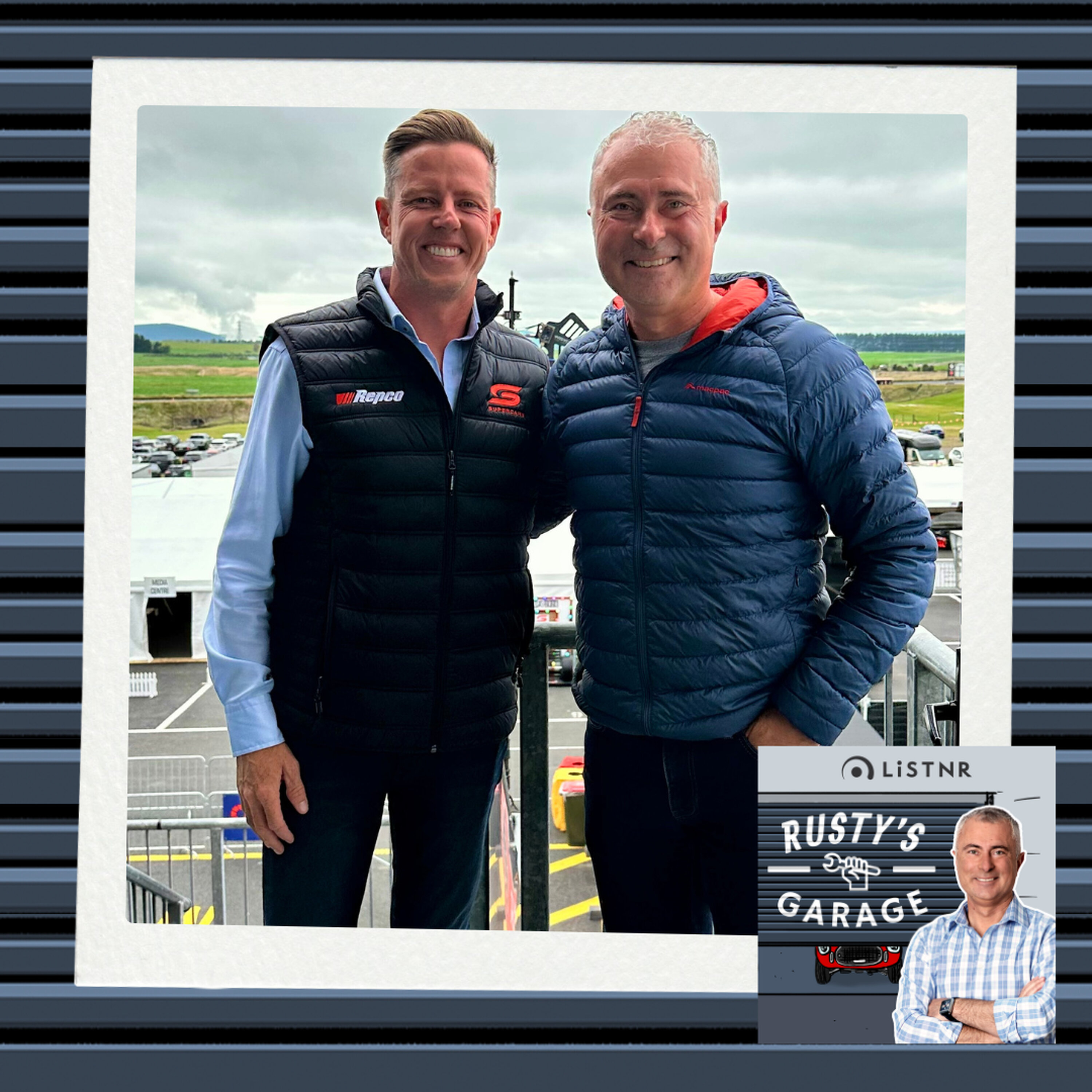
James Courtney recounts the chaotic path from junior formulas to a Monza F1 test—complete with ice, crashes, and Eddie Irvine’s calm coaching through 950-hp fear. He then revisits the devastating Monza F1 testing crash, detailing the suspension failure, injuries, and how missing key F3 rounds derailed his guaranteed F1 seat. The conversation shifts to his Japan and Indy/F1 options, then his Supercars peak with ATB and Dick Johnson Racing amid off-track turmoil. Courtney also opens up about ADHD, school struggles, and a surprising real-estate chapter selling Cocho’s place, plus his post-racing TV transition and enduring bond with Charlie.
The vivid memories of driving the V10 Jaguar Formula One car at Monza and a frightening crash at Ascari that wasn’t his fault. How Michael Schumacher stopped to help, off the charts crash data and the injuries James suffered that would keep him out of the car for months. Taking a career detour and conquering Japan plus the little known Indycar option and a potential second chance at F1. Moving into Supercars and a moment at Darwin in 2005 that necessitated a switch to SBR when HRT had been the first option. Winning the title for DJR against a backdrop of financial hardship for the team at the time and how proud he is of the way his crew rallied to get it over the line. How a move into broadcasting almost happened before his recent stint at the Blanchard Racing team. Overcoming fears that date back to school to get his Real Estate Licence and selling one of the best homes on the Gold Coast that belonged to Tony Cochrane. Plus the potential driving career bookend with his good mate Charlie Schwerkolt. A big thanks to Martin Collins and the Taupo International Motorsport Park team for letting us record there and Supercars TV for giving us nearly two hours of JC’s time ahead of the first leg of the Kiwi double header. Head to Rusty's Facebook, Twitter or Instagram and give us your feedback and let us know who you want to hear from on Rusty's Garage
"You would have success in Formula Ford, you would then get into F3
and this relatively quickly mate opens the door to Formula One."
Formula One is the highest level of open-wheel racing. It’s where the biggest teams and most advanced race cars compete.
Formula One (F1) is the top tier of open-wheel motorsport, featuring the highest budgets, advanced engineering, and strict technical regulations. The transcript frames it as the ultimate goal after progressing through junior formulas.
"So first of all, we all go to Valencia in Spain, the test gets rained out,
we sat for around for three days and it's just torrential for three days, so we don't do it."
“Rained out” means the session couldn’t happen because of the weather. When it’s that wet, it’s hard to test properly and safely.
“Rained out” means the session was canceled due to weather conditions, typically because track grip and safety are compromised. In driver testing, rain can prevent meaningful comparisons because cars behave very differently on wet surfaces.
"[139.3s] it gets to just after lunch and they said, okay, black ice is gone, the track's good to go, so I'm like, okay."
Black ice is ice on the track that looks almost like normal pavement. Because it’s hard to see, the tires suddenly lose grip and the car can slide or spin.
Black ice is a thin, nearly invisible layer of ice that forms on the road surface. It’s especially dangerous on racetracks because drivers may not see it until the car loses grip suddenly.
"...over your shoulder is an Eddie Irvine helmet, right? So you get to talk a bit with him along the way."
Eddie Irvine is a former Formula One driver. A helmet is the main safety gear drivers wear, and it also ties the story to his racing background.
Eddie Irvine was a Formula One driver, and a helmet is part of the standard racing gear used for on-track identification and safety. Mentioning the helmet signals the conversation is grounded in Irvine’s F1 experience and mindset.
"...these things were what, mate? 9, 950 horsepower, the 10s, awesome period for the sport, right?"
Horsepower is a way to describe how strong the engine is. More horsepower usually means the car can accelerate harder, but it’s not the only factor in speed.
Horsepower is a measure of engine power output, commonly used to describe how much work the powertrain can do. In racing discussions, it’s often used to convey the raw performance potential of the car, though actual speed depends on gearing, aerodynamics, and traction.
"So I wobble around my first lap and installation lap and then you come in, they tell you to get out and they check all the systems before you go again."
An installation lap is a quick run at the start of a session (or after a change) to get the driver and car settled—often checking grip, steering feel, and basic systems. It’s typically not a maximum-effort lap.
"I remember we talking with him and I think it was like 120 meters or something called 110 meters, the breaking point into turn one."
The “braking point” is the exact spot on track where a driver starts braking to set up the entry to a corner. Drivers often memorize braking points (sometimes by distance markers) to repeat consistent lap times.
"I remember the, the 400 meter board, the 350, the 300, 250 and at the 200 board... No ways are going to pull up and I jump on the brakes..."
Those boards are like distance signs for braking. A driver uses them to know roughly how far away they are from the corner when they need to start slowing down.
These are braking-distance markers placed along the track (e.g., 200m, 250m, etc.). Drivers use them as reference points to hit consistent braking zones and manage speed into corners.
"It did take a little bit to get used to, to be able to trust the level of downforce and the performance and whatever, but you know, by mid morning you're hard into it and you're sort of pressing on."
Downforce is what “squeezes” the race car onto the road as it goes faster. That extra grip helps the car turn and stop better, especially in corners.
Downforce is the aerodynamic force that pushes the car toward the track at speed. More downforce increases tire grip, which lets a driver brake later and corner faster with more confidence.
"[613.2s] isn't good.
[614.1s] So you've realized the suspension collapses happen?
[616.6s] With the brake on, just the torque, um, they replace the wishbones overnight."
A wishbone is a suspension arm that holds the wheel in place and lets it move properly. If it gets bent or broken in a crash, the wheel can move the wrong way and the car can become unstable.
A wishbone is a type of suspension control arm that locates the wheel and manages its movement. In racing crashes, damage or failure of wishbones can lead to suspension collapse, loss of wheel alignment, and loss of control.
"[625.2s] So John Russell was the head guy at the time.
[629.3s] They did the analysis afterwards and they realized at the time the wishbone, the bottom
[634.6s] wishbone was carbon had a titanium end on it, which then bolted to the gearbox."
Carbon fiber is a strong, lightweight material used a lot in race cars. Here, it sounds like the suspension arm was made from carbon, but the ends used metal to connect properly.
Carbon fiber is a lightweight composite material used in high-performance race car components. In this case, the speaker describes a carbon wishbone with a metal end piece, showing how composites are often combined with metal hardware for strength and attachment.
"[629.3s] They did the analysis afterwards and they realized at the time the wishbone, the bottom
[634.6s] wishbone was carbon had a titanium end on it, which then bolted to the gearbox."
Titanium is a tough, lightweight metal. Using a titanium piece at the end usually means that part needs extra strength where it bolts and takes the most stress.
Titanium is a strong, lightweight metal often used where high strength-to-weight and corrosion resistance matter. The “titanium end” suggests a hybrid suspension design: carbon composite for weight savings, with titanium at the load-bearing/attachment points.
"So it ripped the, all the corners off, um, the engine off the tub, the tub, the gearbox [703.7s] off the engine."
The gearbox is the part that transfers engine power to the wheels. If it gets ripped loose in a crash, the car can’t drive and it can also create a lot of debris on track.
The gearbox is the transmission that sends power from the engine to the wheels. In this crash description, the gearbox separating from the engine/tub shows how extreme the impact was and why the car became debris everywhere.
"I hit the steering wheel, stretched them an inch and a half on the slack. So you're sitting like the steering wheel was like there in my head."
“Slack” is the looseness in the belt before it tightens. Less slack means the belt grabs you sooner in a crash.
“Slack” is the extra looseness in the belt/harness before it tightens. In a crash, the amount of slack affects how quickly the restraint loads the driver and can influence injury risk.
"So I'd wake up and you just instantly from any sort of noise or light have like a mad migraine."
A migraine is a really intense headache that can also make light and noise feel unbearable. For a race driver, that kind of sensitivity can make it hard to concentrate and stay safe.
A migraine is a neurological condition that can cause severe headaches and sensitivity to light and sound. In racing terms, migraines can be especially problematic because drivers need constant focus and are exposed to intense visual stimuli and noise.
"And then ultimately they then started to sell the team to Red Bull. So then Red Bull had their own junior program."
Red Bull isn’t just a drink brand—it sponsors and runs racing teams. They also have driver development programs that help young racers move up the ladder.
Red Bull is an energy drink company that also runs major motorsport programs, including Formula 1 and junior development teams. In this context, the “Red Bull junior program” is part of how drivers get developed and placed into higher-level racing opportunities.
"Um, we then had the opportunity to go and do F1 with Midland, uh, with big, big Burgess. ... I'm only ever going to race for the back row or the, you know, 15th on the grid."
F1 stands for Formula 1, the highest level of race car competition. Drivers race on a schedule of events, and “on the grid” means where they start the race.
F1 is Formula 1, the top tier of open-wheel racing run by the FIA. In F1, drivers compete in a season of races, and grid positions (like “15th on the grid”) reflect qualifying and race results.
"I'm only ever going to race for the back row or the, you know, 15th on the grid. I don't want to go every weekend..."
The grid is the starting order for an F1 race, determined primarily by qualifying. Being “15th on the grid” implies a tough starting position where overtaking is harder and points are less likely.
"...right when guys started arriving with money and paying for drives. ... This is, you know, 10 great guys that are getting paid really good money. And the rest is just... guys with money or sponsors..."
In F1, “paying for drives” is when teams sign drivers partly because they bring money via sponsors. This can shift opportunities away from pure performance and can affect how competitive a driver feels the field really is.
"...you’re the one guy that stands on the podium and all that sort of stuff."
The podium is where the top finishers celebrate after the race. It’s a big deal because it usually means you placed near the front.
The podium is the platform where the top finishers are awarded, typically the top three. In racing, reaching the podium is a major goal because it usually brings points, publicity, and career momentum.
"So then everyone sort of booed and was quiet and then we barked it up again and driving down the pit lane."
The pit lane is the area next to the race track where the team works on the car. Drivers have to be careful and follow rules, because going the wrong way or breaking procedures can get you in trouble.
The pit lane is the restricted lane alongside the track where teams service the car, make driver changes, and perform scheduled stops. Drivers must follow strict speed limits and rules there, and actions in/near the pit lane can lead to penalties or protests.
"For me I was a castrol junior, like a little kid with my dap, my Tony Carver castrol, a lot of it. And that was pretty cool and that's how I used to go to Bathurst and that's how I met Jack ultimately because I'd go to Bathurst with Larry and sit and watch."
Castrol makes car oils. In racing, brands like Castrol often sponsor teams or help support drivers, especially early in their careers.
Castrol is a major automotive lubricant brand (engine oils, racing oils, and related products). In motorsport, sponsorships and oil partnerships are common and can be a big part of a driver’s early support network.
"they announced that Jack was, they say every year at the Drivers Briefing, who's not coming back next year and they said Jack."
The Drivers Briefing is a meeting before racing where officials explain the rules and safety stuff. It helps everyone know what to expect during the weekend.
The Drivers Briefing is where race organizers communicate critical information like safety protocols, flags, pit procedures, and any schedule changes. It’s also where team/driver participation decisions may be discussed.
"I am told you and former boss of Supercars, David Tunnicliffe, may have gone to a story shoot involving possibly Pierre Gasly and Esteban Ocon maybe,"
Pierre Gasly is a Formula 1 driver. Mentioning him here suggests the shoot involved top-level racing figures beyond Supercars.
Pierre Gasly is a Formula 1 driver known for racing with teams like AlphaTauri and Alpine. His presence in a “story shoot” context suggests cross-pollination between F1 personalities and other motorsport series for media or promotional content.
"...may have gone to a story shoot involving possibly Pierre Gasly and Esteban Ocon maybe, I'm trying to think who it was now, maybe Alpine would have been during the Tickford chapter."
Esteban Ocon is also a Formula 1 driver. Here he’s mentioned as someone who may have been part of the same media shoot.
Esteban Ocon is a Formula 1 driver who has raced for teams including Alpine. In this segment, he’s mentioned as part of a media/story shoot, indicating involvement of F1 drivers in promotional activities tied to other racing brands.
"I'm trying to think who it was now, maybe Alpine would have been during the Tickford chapter."
Alpine is a racing and car brand that’s heavily involved in Formula 1. The speaker is suggesting the shoot may have been tied to Alpine during a specific team era.
Alpine is the French automaker and motorsport brand associated with Formula 1 (as Alpine F1 Team) and with various racing programs. In this transcript, it’s likely referenced because the shoot involved Alpine-linked people or branding during a period connected to Tickford.
"selling it to, you know, whether it be the media or the public or sponsors or whatever."
Media is how the public hears about you—like interviews and TV coverage. The point is that racers have to be good at that side too.
“Media” here means interviews, TV coverage, and public storytelling around the driver. The speaker emphasizes that handling media effectively is a major part of a racing career, not just on-track performance.
"So I work and Peter Brock was, he used to come and stay with Alan and I for like six weeks every year as well."
Peter Brock was a famous Australian race driver. Here, the speaker is saying Brock showed how to keep a career going even after racing by staying visible and involved.
Peter Brock is a legendary Australian touring-car and motorsport figure, strongly associated with long-term public presence and brand-building. In this segment, he’s used as an example of someone who successfully transitioned into a post-racing public life.
"So I'm like, I'm, I'm try to be just an average bloke, drives a dual cab pickup, drink a beer, love spending time with my family."
A dual cab pickup is a truck/ute with room for people in the front and back seats. It’s a popular choice because it can carry family and still haul stuff.
A “dual cab” pickup is a ute with two full rows of seats (typically four doors), designed to carry both passengers and cargo. In Australia, it’s a common family/work vehicle layout, often used as a daily driver.
"We're going through, hey, look, these are the terms. They're a cash buyer, no dramas, settlement."
A cash buyer is buying without getting a loan from the bank. That usually makes the deal faster and simpler because there’s less paperwork and fewer delays.
A “cash buyer” is someone purchasing a property without using a bank loan. In negotiations, this often speeds up settlement because there’s no lender approval or mortgage process to wait on.
"And he walks me out to the car and he looks at my car. And I'm just driving a Ford Ranger."
A Ford Ranger is a pickup truck—more of a workhorse than a flashy sports car. The point here is that the speaker is driving something normal while other people show up in expensive cars.
The Ford Ranger is a midsize pickup truck known for being practical and widely used as a daily vehicle. In this story, it’s notable because the speaker contrasts it with the flashier supercars and sports cars that others arrived in.
"[2824.2s] either side so it killed the receptor
[2826.3s] so then you couldn't feel it.
[2828.4s] And for three months I had to have like an epidural
[2830.8s] whilst it was all healing,"
An epidural is a medical shot that numbs or reduces pain by delivering medicine near the nerves in your back. The speaker is saying they needed it for pain while their injuries healed.
An epidural is a pain-management procedure where medication is delivered near the spinal nerves to reduce pain during healing. While not an automotive term, it’s relevant here because it explains how the speaker managed severe rib/spine-related pain after an injury.
Select text to request an explanation
A Listener Production
Good day everybody, Rusty here all set for part two of a fantastic feature ep with James Courtney.
Little reminder, if you've arrived here before giving part one a listen,
I'd recommend jumping back to the garage library and powering that up first.
There are some yarns that I hadn't heard before or I only knew part of the story on,
like the intimidating euros, some of whom went on to Formula One
in a carting driver's briefing at the World Championships in Portugal,
moving to Europe on his own as a teenager and what that was like.
How a conversation with Neil Crompton helped open the door to car racing
when James thought it might have been the end of the road,
losing a mate and realising the dangers of our sport,
plus coping with ADHD and overcoming fears that began back in school.
Let's get into part two now.
You would have success in Formula Ford, you would then get into F3
and this relatively quickly mate opens the door to Formula One.
Yeah, yeah, it does, but that whole getting in was a crazy story as well.
So we, because we won the Formula Ford Championship, they tested,
they said, okay, we're going to get all the junior guys from around the world that are great.
We're going to put everyone in the F3 car, we're going to go around
because at the time, Berti was testing at all the F1 circuits.
So they said, okay, we're going to go around to all the tracks, we'll test all the drivers.
One little thing here, this is transition from Stuart to Jaguar, correct?
Yes, yeah.
So first of all, we all go to Valencia in Spain, the test gets rained out,
we sat for around for three days and it's just torrential for three days, so we don't do it.
So then they pack us all up, we all fly back, then they go, okay, we're going to Hungary,
so then we all go to Hungary and the first, they had some guys the day before me
that went out and went around, I think Andre was one of them, a couple of other guys anyway,
and then my day comes around and I wake up in the morning, they're like, okay, there's too much ice on the track,
we can't do anything, so we're sitting around for hours and hours and hours,
it gets to just after lunch and they said, okay, black ice is gone, the track's good to go, so I'm like, okay.
So I've been to Valencia, I've sat around all day, I then watched the other guys test,
I then had to miss out the morning of my test, so I get into this F3 car,
but it's clearly wanted to happen, so I go out of the track, out of the garage and around the first corner,
second corner, then it's like the fourth corner, you turn right and there's a straight before you go up
with that really quick left-hander and it sort of dips, so I'm just like,
and I spin and I hit the wall, rip the side out of the car on the out lap.
So it's ice, you see ice, yeah.
And I'm like, oh my god, you bloody idiot, you've just ruined any chance of it,
and I'm in there and I'm like, I've crashed and I can hear Luciano coming out
and I'm like, oh, I've destroyed any chance, it's over, I'm going home,
I'm laying carpet for the rest of my life with my dad, this is it, it's over.
And then I see him come around the corner and I'm watching him and then I see him hit the same patch of ice
and he loses it, hits his car into my car into the fence and ruts them both completely off.
I could not have been happier in that moment to see someone else, something else happens.
So then they come out, they tow both cars away and they're like, okay, clearly there's still some ice on the track.
So then we sat around for two days while they flew parts out to repair both cars.
We did the test and I ended up getting the drive.
Your fastest.
But yeah, it was a wild to go and then be at the same time announced that I was going to be testing the F1 car
and all that sort of stuff was sort of the first or the second last step, I guess, to the ultimate goal.
So yeah, it was pretty rewarding.
You had a bit of dialogue with Sir Jackie Stewart around this period too
and I think you learned that he had a few issues around some of the school stuff that you reflected on before
about reading and writing and look at the great things that he's gone on to achieve
and continues to achieve in life from F3, which you clearly gel with made and the sensation of those cars,
what it gives you, it gives you the final piece of the groundwork if you like to have a cracker driving a Formula One car.
Where was the first drive?
Can you remember getting the phone call where they said, hey, mate, you're going to get the chance to test this thing or sample this thing?
Yeah, I reckon I can't remember where it was, like where I was when I got told, but we were told pretty early on.
They're like, hey, this is going to happen and it's probably going to be the Monza test.
But yeah, I can't remember where I was when it exactly happened.
Fittingly, we are talking here, mate, in an office at Topor and over your shoulder is an Eddie Irvine helmet, right?
So you get to talk a bit with him along the way.
And I think he sensed in you that, I mean, these things were what, mate?
9, 950 horsepower, the 10s, awesome period for the sport, right?
And you're going to a track where you can use all of that, right?
And so maybe the thought of that was a little daunting and he helped you kind of process that or deal with that, didn't he?
I was crapping myself, like, properly.
Like these things, like a missile and plus ice, a little bloke from Penrith that, you know, I wanted to be there,
but I probably, I thought, should I be here?
So it just sort of worked your whole life to this one moment and then you were there ready to go.
So Eddie could sense how nervous I was.
I was just, I was shaking like crazy in the motorhome.
And he said to me, he said, right, you just got to scare the crap out of yourself straight away.
Get out of your system.
Yeah.
Just go down the pit lane.
Just before you're going to flick the limiter off, go to 100% throttle and then just flick it off.
And the thing will just traction control kick in and it will just take off.
And you get it all over and done with.
So I'm like, okay, so get out of the garage.
I'm like, down the pit lane and then it takes off and I just completely crap myself.
Like it is ridiculous how quick this thing goes.
Like it pulls as hard in eight gears as what it did in first gear.
It just kept going.
So I wobble around my first lap and installation lap and then you come in,
they tell you to get out and they check all the systems before you go again.
And I remember getting out and then I'm just thinking while I was sitting out,
do I really want to get back in this thing?
That's how crazy like the speed of it was.
Sure you do.
Cause this is what you've been living for.
That's what I slept myself around.
I was like, of course I did.
So then I, yeah, then I got back in and we, we got into it, but it was,
um, I remember we talking with him and I think it was like 120 meters or something
called 110 meters, the breaking point into turn one.
So I got my first like flying lap and I come past and he going like it monzi doing
300 and something like 50 kilometers an hour or something.
He's a stupid and it just becomes, cause you're looking so far ahead,
your vision, you don't really see that much stuff.
Um, I remember the, the 400 meter board, the 350, the 300, 250 and at the 200 board
I was like, this thing isn't stopping.
No ways are going to pull up and I jump on the brakes and then I have to change
up three years before you got to the corner.
It, um, it did take a little bit to get used to, to be able to trust the level
of downforce and the performance and whatever, but you know, by mid morning
you're hard into it and you're sort of pressing on.
So it's, um, it was such a surreal experience.
And I remember calling my dad on the way home after the test and like
being in tears, telling him how amazing it was and, and that everything we had
done and sacrificed, you know, the family sacrificed so much along the way.
And they're very much a part of the journey as well.
So, um, you know, it was a shame that they weren't there to be able to live it
with me, but, um, you know, both of us being tears on the phone about it was,
it was pretty cool.
Amazing, mate.
And it sort of in this period, people sitting back here probably reading magazines
rather than so much internet stuff, then are starting to think, well, is James
Courtney perhaps going to get to the grid maybe sooner than Mark Webber
and all these, all these sorts of, um, things in the, in the, the F3, uh,
chapter here at Jaguar, but ultimately become, uh, rebel racing.
But correct me if I'm wrong, there was a point, um, where you, you ultimately
ended up at, at Carlins, but if you won, um, somewhere along the line here,
if you won the F3 title, was it more or less a lock in for the formula one seat
or something along those lines?
Yeah.
Yeah.
So the second, so if I won the championship, I was, uh, in the F1 seat.
So, um, you know, it was looking great.
We had a massive championship lead and everything until that shunted Monza.
So when I missed out on three months, I think it was after that.
But yeah, we were, we were, I won't say home and hose, but we had a mad lead
and everything was going, going really good.
And I was probably starting to think my accepted speech for the F1 drive.
But, uh, but yeah, ultimately it didn't, didn't come through.
But yes, if I had won the championship, it's guaranteed seat.
How do you feel about the, the F1 testing crash now with all these years?
I mean, I mean, it happened at Monza, the place where you've just
recounted that story a moment ago.
Was it, was it a scary?
I'm trying to remember where it was.
It was into a scary.
So we had a rear suspension failure.
I think it was the next test, that same test the next year.
That's still quick on approach there too, mate.
Isn't it?
Yeah.
345 into there.
I think it was.
And I still hit the wall doing 306 kilometers an hour or something.
60, 65G or 60 something G.
Yeah.
Yeah.
So it was massive.
So, um, you know, it's some sort of paralysis on the right side for a while
and all bleeding in my eyes and mouth and they're using nose and ears everywhere.
Um, so yeah, that was, uh, I don't know.
I suppose it was a point in my life where it crossed roads and I ended up on the wrong
road at that point.
Shoomaker was one of the first on scene.
Michael Shoomaker too.
Was he not?
He was among them.
So I remember, I remember it coming off and seeing the wheel go past and thinking this
isn't good.
So you've realized the suspension collapses happen?
With the brake on, just the torque, um, they replace the wishbones overnight.
Um, and as soon as the torque happened that they ended up working.
So John Russell was the head guy at the time.
They did the analysis afterwards and they realized at the time the wishbone, the bottom
wishbone was carbon had a titanium end on it, which then bolted to the gearbox.
They didn't take the tape off the part of the, where it bonds onto the carbon, the
titanium, uh, where it was held in the machine.
They just bonded over it.
So it pulled off.
So that's what they worked out had happened in the end.
Um, so yeah, so on the break, the torque of it all just tore all that out.
Um, and then because the, as the wheel come off, it's connected to the floor.
So it pulled, it sort of ripped the floor off in the rear wing.
Um, so that's like two thirds of the downforce is generated from those.
So you don't have as much drag on the car.
Because the corner's gone.
You have no brakes on the rear because the rear system's not a closed loop anymore because
the corner's not there.
And then because the corner's not there, the car then leans over.
So the front brakes don't really work.
Um, and it's scary on the exit as you come in this, because it then goes around the
long, right?
It hit the kerbs.
I try to turn and because of it's no wheel, it sort of spun and I didn't spin, but sort
of turned that way.
Hit the curb, went in the air and hit the fence at the top and then bounce back.
So it ripped the, all the corners off, um, the engine off the tub, the tub, the gearbox
off the engine.
So it was just crap everywhere.
The track was blocked.
So, and I was sitting there and I remember, I remember thinking as the wheel come off
and seeing it go past, I thought, should I hold on here or should I let go?
Uh, cause they always say you should let go, but, um, turns out I held on.
Cause when I came back to my left arm was still on.
It stretched the belts massively too, mate.
Didn't ridiculous.
Yeah.
I hit the steering wheel, stretched them an inch and a half on the slack.
So you're sitting like the steering wheel was like there in my head.
Hit the steering wheel.
Like on the helmet, there's a mark on the side.
I've got it at home still, but it's imprinted the steering wheel.
Um, so, so yeah, so I woke up and my left arm was still holding on.
I went the radios on the right.
So then I went to talk on the radio and I couldn't move my arm and I was like, oh God,
this isn't good.
Good.
So, and then I noticed that everything was sort of red.
Um,
Must be blood in your eyes.
Yeah.
Yeah.
So then I couldn't open my vise and then I went on the radio and the radio wasn't
really, wasn't working.
I think cause everything was ripped off or whatever.
Um, but then I was trying to undo the belts and get out and I felt someone push me back
in and I sort of looked up and it was Michael.
Yeah.
Pushing me back in, telling me to stay and I could hear then the official was yelling
at me in Italian and I was pushing Michael.
I'm like, no, I want to get out.
I don't want to be in here and he was trying to hold me in.
So anyway, he helped me get out and I got out and when I was getting out of my vise
and I could, I knew cause I kept wanting to, I wanted to wipe my eyes cause I couldn't
see properly.
And as I had my vise, the look on his face sort of let me know that things weren't really
good cause my eye must, cause it's all sort of drooping on that side.
So it must have looked pretty hairy.
Um, but yeah.
So then I went to, then they took me to hospital and um, then it all started to come back and
ultimately I'm fine now.
Yes.
It was like a three month period I think until I got proper movement without pins and needles.
So I had pins and needles for ages.
Um, and then it was 12 months nearly to the day before I would not have a migraine.
So I'd wake up and you just instantly from any sort of noise or light have like a mad
migraine.
So it's um, yeah, it was quite a long and ultimately, so I missed rounds with the British F3 championship
which ended up costing me the F1 seat.
Um, but then also I didn't win the British F3 championship, which I would have won.
So, um, yeah.
So that was, uh, that was a tough little period, mate.
Um, so that, um, yeah.
And then ultimately they then started to sell the team to Red Bull.
So then Red Bull had their own junior program.
So then I sort of got shuffled to the side.
You turn hard right here and end up in Japan.
Is that right with, with maybe some talks with Gowee or what, what happens?
Yeah.
So Toyota were pushing pretty hard for me to go and do something like that with them.
Um, you know, also focus on the F1 side of things, wasn't really interested.
Um, but then when I learned about the Red Bull side of things and what was happening,
then it was like, holy crap, where are we going now?
And then so ended up doing the Toyota thing in Japan.
Yep.
And you mean you had a great chapter there, mate, didn't you, from some of the cool cars
you got to race?
Yeah, it was cool.
We did Formula three, Formula Nippon, which is now super formula and, uh, Super GT.
So yeah, it was cool.
It was cool three years.
Um, did you enjoy Japan?
I loved it.
Like the cars are phenomenal.
The racing was awesome.
Yeah.
Um, the, I moved there with my wife, Karis at the time, my first wife, um, and she didn't
enjoy it as much.
So we ended up moving back to Australia, um, that second year and just commuting backwards
and forwards.
At some point here, there is a conversation.
Maybe, I don't know whether Gowie is physically there with you or on the phone or whatever.
And I think Neil was there.
They might have even been made, if memory serves a, perhaps a conversation with Peter Hill
around the possibility of going to Indycar.
And I think something did transpire with, with Ray Halls maybe there as an option.
And was there also another F1 opportunity that come out of maybe Midlands or something
or other?
What, what transpires there?
So we had the opportunity to do, go with Ray Hall to Indy.
Um, but it was right when Zanati lost his legs.
Okay.
Um, and there's, you know, they're having huge chance and, and I think in two years or
a year prior before that, maybe two years before that, um, we lost Greg Moore.
Oh yeah.
Um, so it was good.
Yeah.
He was tight with Marino and I.
So we all sort of, it was the same year that we lost Neil.
Um, so it was a sketchy little period.
Um, so Alan really said to me, I don't want you to do Indycar.
I said the cars aren't safe enough.
Um, you know, so he sort of was a big pusher there and you know, I respect his opinion
and, and, and whatever.
So we didn't end up doing, going down that path.
Um, we then had the opportunity to go and do F1 with Midland, uh, with big, big Burgess.
Um, but, uh, yeah, that was going to have to sell my soul.
And to be honest, I was only a very, like I said to aid with all due respect, I'm only
ever going to race for the back row or the, you know, 15th on the grid.
I don't want to go every weekend and that's as good as we're going to get.
Um, so, and I probably lost a bit of taste for formal one after those three years of
being that close.
And I, you know, I grew up in the nineties with centers, pros, mancels, all that stuff
like here and thinking how amazing it was.
And then when I got to F1 at that point, it was right when guys started arriving with
money and paying for drives.
And I was like, far out.
This isn't the best 22 guys in the world.
This is, you know, 10 great guys that are getting paid really good money.
And the rest is just, you know, guys with money or sponsors or whatever.
It's not, you know, not what I thought it'd been.
And I was probably had a bad taste in my mouth a little and, and, um, yeah.
And decided that, you know, that chapter closed.
Well, you're a bit homesick too, mate.
Like you'd been away since you were 14, you know, so for sure.
I'd, um, I'd been away.
Like you said, a long period of time.
Um, wanted to start a family.
I'm a big family guy.
I think because I missed so much of family time, because I was away.
I really want to have my own family and sort of have that unit because I missed it so much.
Um, so yeah, that was a big, big part of why I wanted to ultimately come back here.
So super cars happens, mate.
I mean, you talked about ATB there a moment ago and you've done some great things together.
I think in, you know, in F3 and, and so on for a long, for a long time, for a long time.
Right.
You've driven the different teams and he engineered the prawn.
Did he?
He engineered the prawn.
What, what is it like working with him?
I mean, he's, um, he rubs a lot of people the wrong way because he's so blunt.
Um, but I'm, I'm cool with that.
Like I, if you understand him, yeah.
And I'm the same, like I, I can understand if he's critiquing me or saying I need to do something differently.
It's only because it'll be better for me in the long run or better for us as a team or as a unit will go forward.
So, but I'm super cool with criticism.
Like I, like even with this TV stuff that I'm doing now, every after age thing I'm to Nathan, like, hey, tell me what I'm doing wrong.
How can I be better?
So I think because that's my personality, I'll work really well with him because we sort of, we've had massive arguments in the past.
Like we butt heads.
Like we'll, we can have the biggest argument and then five minutes later we're like, right, you got it out?
Yeah.
Do you want a beer?
All right, let's go.
So we can say what we want to each other and get it all off our chest and sort of to better each other.
But I think a lot of people find it hard to take criticism like that.
And I think that's probably, if there's a flaw in his character, that would be what it is, is that at times if he expects something of you and you don't deliver it, he'll let you know.
And people can be taken back by that.
Yeah, but that can also be on that person.
I mean, you just have to accept that's how he's wired and what his intentions are, what he means by that.
The opportunity to race a supercar or drive a supercar for the first time comes around, mate.
Tell me about that.
Was Neil active in trying to stitch that together?
Yeah, I was talking with Neil for ages about wanting to do it and ultimately try and we sketched.
So I wanted to do HRT and I remember we'd agreed on a deal to come back and do HRT in 2026.
Or I was going to do Bathurst in, I didn't do it in 2005, didn't I, the first time?
I was going to do it in 2004 with Peter.
So it was all going to happen.
It was going to be Pete's last one, my first one.
It was going to be a transition.
It was going to be cool.
But anyway, something happened with the GT calendar and they moved things around so ultimately I couldn't do it.
So it didn't end up happening.
But then the next year I did in 2005 and I was pushing from pretty much the end of 04 to wanting to do supercars.
And Neil was pushing me back, not wanting me to come back saying, you know, it's not time.
Once you're back, you're stuck here.
Don't do it just yet.
So I was pushing for a year and a bit.
So then in 2005, pretty much did the deal with Scape to do HRT in 2006.
Well, Jimmy Richards too, was it not for the enduroes and stuff?
Yes, they do the enduroes with Jim, but race the next year with him.
So Todd was going to be out and I was going to be in and he said, all we have to do is get through Darwin
if he doesn't have a good race at Darwin, then I can get rid of him and you're in.
So we were sort of waiting on the sidelines.
The contract was drawn.
Everything was done, ready to sign.
And then Todd went and won all three races at Darwin.
So that was that was that was that was dumb.
And at that same time, Ross and Jimmy were wanting because Marcus was leaving.
And so then that's how we ended up going to HRT.
Stone Brothers.
Let's come to like a Zenith moment, a peak moment here for you with ATB with Dick Johnson racing,
winning that title in in 2010 with machinery that made you feel like you were on par with what
Jamie Winkup perhaps had in his arsenal and so on.
The satisfaction in winning that weekend at Homebush compounded by some tough stuff that Dick Johnson's
business was going through at that time.
I mean, it was was concerned about, I think I'm paraphrasing here, mate, so I may not have this right,
but I think there was concern about receivers and and yeah, they were coming in far out.
Tell us all get your stuff out.
Don't leave anything in the truck because it's not coming back.
And from when we left on the Tuesday before Homebush, it was all over and the truck was never coming back.
It was done and he pulled all of us inside and said, hey, if you can get another drive or job,
take it because it's all over.
So that's how we did the HRT thing because they had to release me from the contract to be able to do it
because I would have stayed because we're winning.
Why would I leave?
But then on the, I think it was on the Tuesday or the Wednesday prior to Homebush,
Steve Brayback came in and saved the day and kept it all alive.
But so many of us had already committed to other jobs at that point.
So moved on.
But it was for me, the highlight of my career, sure, the F1 leaving out of the pit lane the first time was amazing.
But you grew as a leader here, mate, didn't you?
I think like you, correct me if I'm wrong.
Did you not get the guys together and say, look, we've got nothing to lose here?
Let's all put our best foot forward.
If we can win this, that'll help us with whatever.
The team was falling apart from mid-year.
Like it was a disaster with Charlie and Dick fighting.
They weren't talking.
You know, ATB wasn't able to buy stuff for the car.
So there was a lot of stuff going on for a long period of time.
And that's where Adrian was really good at that point.
He sort of let everyone know what was happening and sort of pulled us all together and me with my little group.
And we all just sort of said, hey, let's do this for each other.
We've come this far.
We're leading the championship.
We're proving that we can take down Goliath with the same machinery.
So it was a real moment of us doing it for each other.
And my favorite moment in my whole racing career, like bar none.
And it's not winning a race.
It's not doing anything.
It is Saturday afternoon at Homebush.
We went into the fence.
All that stuff.
They're all in the fence.
That moment, Craig then flat out plucking gears into the back of me to try and finish me off.
Thank you, Mr. Lowndes.
Didn't work.
Everyone says he's a nice guy.
But that moment where we pulled into the garage and to see they wanted everyone in the car crew or everyone in that team that worked on the car at that point.
When it was 3,000 degrees, just fresh off the racetrack, just picking up.
I could see guys just picking up stuff with their bare hands.
Like just like that's a thousand degrees, burning their hands just to get.
Get you back doing whatever they had to do in that moment for us to get back onto the track to get that one love done to be able to be classified as a finisher to then ultimately help us win the championship.
The next day, for me, that was easily the best moment in my career to see that many guys and girls working that hard for me.
Like they were doing it for themselves.
When you're sitting there in the car, you feel they're doing this for us as a team, but ultimately you're the one guy that stands on the podium and all that sort of stuff.
So it's so selfish in that way that you can't drag all those guys and girls up because they're flat out doing all that stuff for them and us as a team.
But only I get to enjoy the moment, if you know what I mean, like that euphoric moment.
That is etched in your memory, mate, that moment.
That for me.
And I remember them saying, oh, Scotty Sinclair, who I now work with again.
He's like, bark it up, mate. We're going out.
And I remember firing the engine and just like just the crowd.
I could hear them, the commentary or the corporate boxes above going crazy because we barked this thing up.
And then Frank Adamson came running in.
He tells me we had to shut it down and he had to pull a wheel off and he wanted to see something before he had let us out.
So then everyone sort of booed and was quiet and then we barked it up again and driving down the pit lane.
And I remember I was thanking the guys and girls so much on the radio.
And as you can see, I talk with my hands and my hands are all over the place.
I'm like, thanks, guys. This is amazing.
You know, you guys have done this. You've won this for us.
But like doing the big spiel on the way out, being all emotional as I do.
And I remember and I looked because you want to look where the other and I looked in the AAA car was still sitting there.
And I'm like, you suckers and I'm still talking and I didn't say anything.
Anyway, and then after the race, I think Roland protested or complained that I went past their pit lane, sticking my finger up at them.
And then they looked at the in car and you can see I'm just talking with my hands.
But that for me is the best moment.
Not just him or yes, him being upset was fantastic.
But them working in that moment was for me the best moment of my sporting career.
James will reunite with Charlie Schwerkholt for the Enduros.
Their title winback in 2010 has mixed emotions for Charlie, given the struggles DJR went through during that period.
It was a very, very tough time, unfortunately.
No, I didn't celebrate it all really.
And I think I've had a few quiet drinks with James Courtney now and then over the junior Adrian.
And it was a bit of a sad way to end it.
But I know I was at the helm of the wheel doing all that and I can still help my head high of what we achieved.
Charlie also talks about the origins of his family business, going it alone as a supercar's team owner and a whole lot more.
Now back to Jaycee and Rusty.
Can I come to another special one for you?
And that is because I can recall this one, you and Jack Perkins Gold Coast.
You flanked the tank on the roof.
You help a guy that had been a mate for so long and lived in the shadow of his famous old man, do something pretty cool that day.
And I think this, is there a story too that Larry might have chipped in a little bit in your career and helped along the way too?
Yeah, big girl was big Larry.
I remember when I first went to Europe as a kid carding, he sent me a check in the day for $5,000 saying and he had a note in it saying,
I know it's not much, I know the road you're going on.
This is what I can spare.
Good luck if you ever need me, give me a call.
For me I was a castrol junior, like a little kid with my dap, my Tony Carver castrol, a lot of it.
And that was pretty cool and that's how I used to go to Bathurst and that's how I met Jack ultimately because I'd go to Bathurst with Larry and sit and watch.
And I met Jack then and then Jack and I sort of, I suppose when you're that age when you're sort of 16, from 15 to 20 and Jack would have been,
he was a kid so he was like 8 and sort of coming through.
So I knew Jack and we sort of mucked around with him but he wasn't that tight I guess until I came back to Australia and Jack then was a man and I was a man.
But he is, I reckon, the nicest guy, apart from yourself Rusty, one of the nicest guys in the pit lane.
He's such a good bloke, such a good mate of mine and just a real genuine guy that for him, like everyone thinks,
and I saw it with Stevie J as well, that life's easy because your dad's Dick Johnson or your dad's Larry Perkins,
but it's about a thousand times harder for those guys because society has such an unrealistic expectation of where they're at
and what they can achieve purely just because of what their father's did and there's so much more pressure.
And I saw that with Steve and I saw it the whole way through with little Jack and I remember when Jack was in the main game with his dad's team
and then when he got his own run at FPR with Charlie and then when he, I remember we were at Phillip Island Drivers Briefing,
they announced that Jack was, they say every year at the Drivers Briefing, who's not coming back next year and they said Jack.
So then on the way out of the Drivers Briefing, I grabbed Jack and I wrote, come with me, you're going to be doing Ninjuros with me,
I don't care what you say, we're doing it together.
Love it.
You're my guy and from then on we were inseparable.
But to be able to give back something to Jack, because I knew how much he loved, he loves this sport, he loves Supercars.
Massively.
As much as he sprays it at the moment and doesn't like things about it and all that sort of stuff.
It comes from a good place, comes from his heart.
Exactly.
And to be able to then, after what his dad did for me, then be able to have Jack as a really close mate,
our kids, our daughters are born the same day, our sons are born two days apart, we holiday together, we're good mates.
And then to be able to be part of his first win was, yeah, for me was really, really cool.
So they're probably better than actual wins as those moments.
Couple to finish the Supercars chapter here.
I'm going to have a bit of fun here now, a little bit of a laugh.
I am told you and former boss of Supercars, David Tunnicliffe, may have gone to a story shoot involving possibly Pierre Gasly and Esteban Ocon maybe,
I'm trying to think who it was now, maybe Alpine would have been during the Tickford chapter.
And Thomas Randall is involved in this shoot somewhere along the lines and off you go and you do your thing.
And you and Tunnicliffe, if I've got this right, sign the inside of Randall's race suit.
Is that right?
What did you do?
I might never be right.
So you correct me, you correct me.
They had been doing the Alpine Castro thing at Corva.
And Tunnicliffe came in with his suit afterwards because Thomas must have left there or something.
And I said to Tunnicliffe, I'm like, hey, let's sign his suit and tell him that it was Gasly.
Oh God.
So I think Thomas still thinks it is.
So we signed it and then didn't say anything.
And then afterwards, I think Tunnicliffe's come in the truck later in the weekend and was like, hey, did you sign your own suit or something?
I asked him about it.
And Thomas was like, no, no, no.
I guess that was those guys.
And then Tunnicliffe added to it saying something like, yeah, I thought I saw them right.
Like signing in there.
I just didn't know what was going on in this.
Oh, I love it.
So Thomas, when you're reading or watching this, yeah, it's us.
It's Tunnicliffe and me.
It's that.
Now you're doing TV stuff now, which I think is fabulous.
But there was potentially an opportunity to do this sooner.
But a driving deal with Blanchards came up.
I think there's a funny moment, perhaps with you and Tunners, where you might have talked details.
And once you realize what the Blanchard opportunity looked like, he basically said, well, enjoy your driving kind of thing.
It's not for now.
But you could have done TV potentially a little earlier, couldn't you?
Yeah, yeah.
So when the Tickford stuff finished, it was, yeah, it got a long way down the road talking with Tunners about doing it.
But then, yeah, then the whole Blanchard thing and whatever any advice me otherwise to stay on that path.
But it's something that I've always wanted to transition into.
I love motor racing.
I love this sport.
Talking about it.
Yeah, it's been my whole life selling it to, you know, whether it be the media or the public or sponsors or whatever.
It's my life.
And from a young age, Neil was so good with me.
Like I used to sit down with him when I was 14, 15 in his house at Forest Hill.
That was the way we were.
Killers were talking about that.
Yeah.
So I remember sitting with him and then him taking me into the Channel 7 news area.
And I'd sit down and he'd ask me questions in front of cameras and just to get me comfortable with it all.
And he taught me at a young age that the driving side of things is 20% of what we do.
The majority of what we do is how we handle ourselves with the public, with sponsors, with the media.
And we can make our career, it can either be five years driving a car and then you disappear and never be heard on ever again.
Or you work hard commercially, publicly, and then you can prolong your career and afterwards have something to do with the telecast and all that sort of stuff.
So I work and Peter Brock was, he used to come and stay with Alan and I for like six weeks every year as well.
And Peter was sort of pushing that into me as well throughout all his time.
So I could see the benefits of like Neil was already living that life.
Peter as well was living the post-racing life and all the appearances and all that sort of stuff.
Longevity, mate. Longevity in the sport.
Yeah. So I sort of always focused on it.
And you know, I wouldn't have done Dancing with the Stars and those sorts of things.
How'd you find that?
Yeah, that was horrific.
Was it?
Oh, so I've never been so scared in my life.
Why? Why?
I, like I said before, I'm an introvert.
Then doing something that I am completely uncomfortable with on national live TV was the most horrifying thing I've ever done in my life.
But you did it.
But I did it.
I remember the first night being there and the music starts, they play the little intro and I'm standing backstage and my dance partner was on the other side of the stage.
And it was dark and they're playing it all and I could see the video on the screen and I seriously was like, I could just run here.
And when they turn it back on, I won't be here.
And it'll all blow over in like a month or so.
James caught me.
But I didn't. I stayed there.
But yeah, that was horrifying.
You used a line before while we were talking about, you know, that you kind of switch on or you're the motor racing personality.
What is clear to me, and it's, you've reminded me of it today, it's the same guy off camera as on camera, which is what I like.
You might be introverted and you might force yourself to switch on if you will for media and the like.
But I feel like this year is off to a cracking start for you because you bring that zing, that passion, that you to the screen.
But I also feel like you're not afraid to share a straight thought on something.
Is that a fair take on things?
Yeah, I think a lot of that probably comes from the people that I've surrounded myself with.
You know, my parents are very grounded, normal, sort of tell it how it is, sort of people, Western Sydney working class.
That's, you know, I think we're, we're bred slightly different out there.
You know, having Neil was very much a grounded, don't get ahead of yourself.
And Alan, Morta, all these people have been uber successful, but yet normal blokes.
So I think it's sort of, I've sort of taken on a lot of the personalities and their traits through all my interactions with them throughout my whole career.
And I can't remember who it was that told me at an early age that just because you do your job on TV doesn't make you any more important than anyone else out there.
Correct.
Or your role in society is not any more important than the local plumber.
If not, they're more important.
Like, so don't ever get carried away and think that you're, you know, when you're dealing with the public that you're better than that.
Yeah.
So I'm like, I'm, I'm try to be just an average bloke, drives a dual cab pickup, drink a beer, love spending time with my family.
I'm just like, and I do meet people and they're like, oh, you're just a normal bloke.
I take that as a compliment.
Like, I am just a bit surprised.
I am just a normal bloke.
So I think a lot of sports people get carried away with their position in society just because they perform, they do their job on TV.
We're, we're, we're no better or no different to anyone else.
We're all got two arms and two legs.
So there's no reason why we should be treated any better than anyone else.
So that's why I try and be the normal funny idiot bloke and live my life that way.
Like, I don't, I sure enjoy eating nice food or, you know, driving a nice car at times.
But I'm not sort of someone that is so brand driven or, you know, has to be sort of perceived as being, you know, a certain way.
I'm just a, just a normal bloke that, like I said, drives a dual cab unit and has a good time with his family.
Somewhere between this crazy schedule, media, driving, beautiful family, blah, blah, blah.
You pursue an inner passion for real estate.
Talk about ADHD.
This has just lured me up, mate.
I'll just, I'll just pick and choose.
People can find it.
We don't need to talk numbers.
That's, that's not necessary, but you sold Tony Cochran's house, mate, on the GC.
Is this true?
It is true.
It is true.
Um, it was wild.
What was that conversation like with him around?
It's funny.
I called TC and I'm like, hey, mate, I think I've got someone that can buy a house.
And he was like, he's like, oh, okay.
And I'm like, no, no, I'm serious.
And he was like, okay, well, this was unlike the Wednesday.
And he's like, oh, look, and I said, can I bring him through?
And he said, I'll look on, on Saturday.
You can bring him through.
And I said, okay, I got to send you all the paperwork, like this form sixes or this sort
of stuff.
And he's like, okay, I'll send it through.
Cause I'd only been doing real estate for like, it was early, mate.
It was a few months.
A few months.
Like I had no idea what I was doing.
So then I sent TC the paperwork and then on like Friday calls me and he goes, hey, look,
you haven't been doing this long.
Do you mind if when you do the walkthrough with the house that I do it?
And I was like, TC, you know your house better than anyone else.
You know the construction, how it's been more than happy for you to roll through, tell the
story.
I'll fluff the edges.
We'll go like that.
So he's like, okay.
So we roll up, we go through to the house.
The guys would have been, the family would have been there probably like an hour and
a half, close to two hours, long time.
The house obviously isn't that small.
So we go through and I'm sort of talking with the wife and sort of getting a good feel from
her.
And then he would talk to the wife and I talked to the husband.
And anyway, we did this.
We go down, they start to leave and as we, they leave and drive off TC turns and he goes,
they're not buying it.
And I'm like, mate, she's that into it.
They love it.
I'm telling you, they're on for this.
And he's like, nah, I can't see it.
And I'm like, oh, well, I guess we'll find out.
So we leave within the hour they called me and they're like, we're in.
We want to put an offer at this number.
And I'm like, Jesus.
So the first thing I do, I call TC and I'm like, hey, Tony, what are you and Theo doing?
He goes, oh, we've got dinner this.
And I said, well, can I come and see you now?
Because I've got an offer.
And he's like, what?
And I said, hold on.
See, hold on.
Hold on.
He's calling me.
I'll call you back.
So they're going to hang out.
Get back on the guy.
Opsie's offer by a million dollars straight away.
And I'm just like, holy crap.
Hang up.
TC, I really need to come and see you.
Today and he goes, okay, well, I'll cancel dinner.
We'll just stay and come around.
So I said, okay, I'm going to be a bit an hour or so getting all the paperwork together.
Anyway, so mucking around, get it all together.
So then as I'm driving to the house to do the offer, the guy calls me again.
He goes, speaking with the wife, we can't lose this house.
We'll throw another million at it.
So I'm just like, right.
So I pull out at TC's and Matt, the other guy that's with me, Matt Lanyon, and we sort
of sit down.
We're talking to Tony.
We're going through, hey, look, these are the terms.
They're a cash buyer, no dramas, settlement.
They're happy to work with you on the settlement time, blah, blah, blah, this, this, this.
These are the things they really want to take all the furniture as well.
And then he goes, okay, okay.
And every time I spoke to TC, tell me the money.
And I'm like, mate, I want to tell you when I'm sitting with you.
I don't want to tell you.
So anyway, so then he's like, just stop all the shit.
Just tell me what the money is.
So then I tell him the money and then he, he sort of sits for a second.
Then he starts to say that he's going to accept it.
Like he's going down that path.
Like, yeah, that's not what we want.
And blah, blah, blah, all this sort of stuff.
And I'm like, I'm like, mate, even just not what you want it anyway.
So then Theo says, hey, TC, let's have a chat.
So then they go away and they come back and he says, look, we've had a chat to get it
done. We need another million dollars.
And I was like, oh, all right.
So then I called the other party because I told them that I was going to come straight
out afterwards.
So they lived it out sort of 50 minutes in the hinterland from the Gold Coast.
So you're tricking around.
Yeah.
So then I called them and I said, hey, look, at this point, it's seven o'clock at nine
or six, 30, seven o'clock.
So I said, hey, look, I understand if you don't want me to come out.
They've countersigned.
This is what's happening.
Blah, blah, blah.
Blah, blah, blah.
Look, if you guys just want to relax and whatever, we can talk tomorrow.
And he's like, no, look, let's come out and we'll have a chat about it now.
We would sort of work out our game plan moving forward.
And I was like, okay.
So then Matt and I get in the car.
We drive out there, knock on the door.
They open the door.
He's holding a bottle of champagne and she's crying.
And he says, do I sign this thing?
And I was like, holy shit.
So then Matt and I, who we've never done a deal this big in our lives.
We were both like shaking.
Matt's filling out the paperwork.
My voice is all over the place trying to control me from screaming,
talking to the couple.
They're pouring champagne.
I'm like, neck in the champagne.
Then I'm like, wait a minute.
I'm going to dry.
So then I have to stop drinking the champagne.
And then I'm like, now I have to sober up.
So then I'm in water and I'm waiting around.
We're talking for a couple of hours while they're going over everything and just
congratulating them and all this sort of stuff.
And I'm like, oh, I've got a cool tourney.
We say to the guys, okay, see you later.
We're going to go back now.
We were there for a few hours.
This is like nine o'clock at night.
This is nine o'clock at night.
So I called TC and I'm like, hey, mate.
And he goes, oh, hey.
And I said, he's there.
And he goes, hang on a minute.
And I'm like, okay.
And he's yelling out there.
And he said, oh, all right.
You're on speaker.
And I'm like, you better pack your shit up, TC.
We've got a deal.
And he's like, what?
And I'm like, the deal's done, mate.
And he goes, really?
And I'm like, yeah.
And he goes, you have to drive here right now.
I want to count on it right now.
So it's done and dusted.
So then I drive to TC's house.
So another 50 minutes to his house.
It's like 1030 at night.
And then he's trying to have champagne and everything.
And then as we leave, I'm just like in jeans and a white T-shirt.
And he walks me out to the car and he looks at my car.
And I'm just driving a Ford Ranger.
And he's like, so of all these guys that have pulled up here
in their Lamborghinis, their Porsches, all this sort of shit.
And a guy, an old racing driver in jeans and a T-shirt, trainers on.
In a Ford Ranger.
Ford Ranger sells the most expensive property on the Goldcast.
He goes, I thought it was a joke when you told me
you had someone to buy my house.
I love this.
Crompo talks about the business of motor racing.
Did it help you for this?
And where did the love for property come from?
I gather you've had it for some time.
My cousin was really big in property and sales in Northern Sydney.
And he said to me, guys, you are that good with people
and finding common ground with them and being able to hold conversation.
He said, that's what this business is all about.
He said, you have so much spare time, you should look at doing it.
If not, while you're doing it, post your career.
So then when I realized, when I was talking to Tana
about doing the TV stuff initially and then BRT thing was only ever going to be two years,
I was like, right, I've got to do it now.
So that's when I started to do the study and the online course
because school was horrific for me.
So I think a lot of me not wanting to do something.
Was fear of that?
Was fear.
Because I was like, I've done all racing my life, always been successful.
School I was always, you know, made fun of
and I could never achieve what I wanted to in school.
So a lot of why I didn't pursue it earlier
was because of my fear of not being able to.
That's amazing mate.
If one championships driven Formula One cars.
So my fear of from the school, from the rejection
and unable to like pass results and all that sort of stuff
is what was holding me back that whole time.
And I was like, right, I got two years now
but then racing is going to be finished
and if the TV thing doesn't happen for whatever reason,
I've got to support my family.
So I've got to put my big boy pants on here and get on with this.
So then I sort of did the course and passed
and then I was like, wow, I can do this stuff.
And then yeah, and then since that,
I've probably got a lot more confidence in my
sort of stuff away from racing.
And that's what's then developed
and sort of grown into the real estate side.
Well done mate, well done.
I love that you're into that too to finish here.
I don't know how much you can talk about it,
so please don't if you can't.
I can vividly recall the chopper incident
at City Motorsport Park and stuff.
I think at the time you were ducking from one garage around
to another and just in that freakish, freakish moment,
was it a pit boom, hit you?
You broke a number of ribs, maybe your sternum as well.
Are you okay all these years later from that?
Does it still knock you around at all?
Yeah, I was building a house at the time,
doing a shady deal with Charlie's,
one of Charlie Schwerkel's sponsors
for an air conditioning unit for the house.
So then I did the deal, I was all excited,
came out and as a dastard,
he put my arm up, bang, got hit by the stuff.
So I broke six ribs, three ribs in two places,
so six breaks, pushed three of the ribs into my spine.
So I've got pins and needles in the backs of my knees.
Even now as you're talking to me.
Yeah, now an arch is in my feet.
Wow.
And then as the bone grew on the rib,
your nerve runs along the bottom of the rib.
So then the bone grows over the rib.
So now when I'm breathing, you can feel pulling.
Oh wow.
Which is weird.
Yeah.
So for a long time I was getting the nerves burnt
either side so it killed the receptor
so then you couldn't feel it.
And for three months I had to have like an epidural
whilst it was all healing,
like a little bomb bag with a little pump in it,
with tubes so you could sleep and walk and talk
and function because that much break
and all the cartilage and everything broken,
it was so much pain.
So just to be able to do that stuff.
But yeah, so today I can still feel that
and the pins and needles.
So that was pretty crappy.
I'll bet, I'll bet.
Is there a nice bookend to the race driving story
in the sense that you have a great relationship with Charlie?
I mean some of your, let's call them your Gold Coast people.
I mean probably Shane Howard is in the mix of that group as well.
But you're back with Charlie for some enduro stuff.
I mean you've had that time with he and Dick
winning that championship in 2010 and stuff
and you've remained tight mate, haven't you?
Yeah, I think it's only fitting the way that my career is.
Sort of wrapping up, I started with the
Works Holden team or GM team doing enduro
and I'm finishing with doing it with two really good mates.
You know, I've loved the post HRT time.
I have probably enjoyed my racing more since then,
not I suppose because your focus transitions.
So at the HRT I was always Garth and I or Scott and I
trying to out do each other and be the leader of the team
but from when that all finished and my next phase of my career
it was very much, you know, Cam was the guy
which I was accepting, he's a young guy, super quick.
So my role within the team changed.
So of those last two years with Thomas and Cam,
like helping them, like just with, you know,
I could never get enjoyment.
Like if Garth won and I didn't win one more team mates,
I'd be pissed.
But with Cam and Thomas and with Aaron Cameron
just recently to see those guys success,
like their success and develop over the time
has been super rewarding because I've been sort of
giving so much back to those guys or, you know,
not that I know how much I helped Cam along the way
but just mentally or, you know, with things that I dealt
with with my career or I can see him maybe doing something
that wasn't his attention in some area,
just sort of helping guide those guys has been super rewarding.
So to have that sort of end to my career
and then ultimately doing the enduro's with these guys
is, you know, it's probably the dream way to finish it all up
and, you know, I can't wait to get there at Bathis time
and have a go but it's interesting at the moment.
I'm not missing the racing where I thought
I would be going crazy.
I think I found a new love for racing in a different way
because when you're racing you're so focused
on the actual result and competing.
You're a race fan now, mate.
Yeah.
Mates would come to the track and they're on the grid
before the race and like, well, this is awesome.
You know, the atmosphere is electric and I'm like, calm down, mate.
It's just cars on the grid.
It's thinking in my head.
Now you're seeing that.
But now I'm, because you don't have the pressure
of having to perform or you're not focused on the result,
you're sort of, now, like I said to Jess after, you know,
at Sydney the first weekend, I'm like, well,
it's so cool out here on the grid.
She goes, what do you mean?
You've been out here forever.
I'm like, yeah, but I don't get to live this side of it.
So it's, I am a race fan and I am enjoying the stuff
away from the racing, all the telecast stuff,
all this sort of stuff.
There you go.
It is, I am really content.
I think I called it at the right time.
My career has been, you know, fantastic.
I wouldn't change any of it, even all the crashes
and you're not getting the Formula One stuff that I did.
I think I would be a completely different person
as to who I am now.
Everything happens for a reason.
That's amazing.
Yeah.
And I couldn't be like, I have four beautiful kids
and I'm like an amazing wife.
Teagan is so supportive.
You know, even Karis through, you know,
all the racing side of things, it got, you know,
grubby, grubby at the end, but, you know,
thank her for all the stuff that she did.
You know, up until that point,
we've got two beautiful kids together.
You know, I'm so lucky that there's so many people
that sort of go through life and don't get to experience
things that I have or, you know, do that sort of stuff.
So I'm just every morning just pumped, mate.
Just let's see what life's got for me next time.
I love that little quiver in your voice there too, mate.
Absolutely.
No, that's okay.
It's okay.
I've got to stop talking.
I get emotional.
Thank you.
I have learned a lot in this chat.
I think the journey is fascinating.
I love the way that you frame the Formula One chapter
and that you feel that even the way that it ended
taught you kind of something.
And credit to you, mate, for sharing around some of the stuff
about school and ADHD.
And I hope for younger people that are listening to this
that it's a lesson.
Don't let it hold you back.
There's always a way you can channel that into something good
and, mate, you've achieved some amazing, amazing things.
Go well with the broadcast.
And thank you for chatting with us today.
Mega, mate.
Mega.
Thank you, sir.
Rusty's Garage is written and presented by me, Greg Rust.
Series editor and producer is Joel Harrison.
Audio production by Link Kelly.
If you've got a guest suggestion,
get in touch with me on social media.
The Garage, it's where a journey begins
with a tank full of passion-fueled stories.
Request an explanation for:
1 cars
1 cars featured
Request an Explanation
Heard something you'd like explained? We'll add it to this episode.
Sign in to request explanations for terms you heard.
Want to learn more?
Browse our glossary for plain-English explanations of automotive terms, jargon, and concepts.
See something that's not quite right? Our annotations are AI-generated and can sometimes miss the mark.
Click the flag icon on any annotation to suggest a correction.