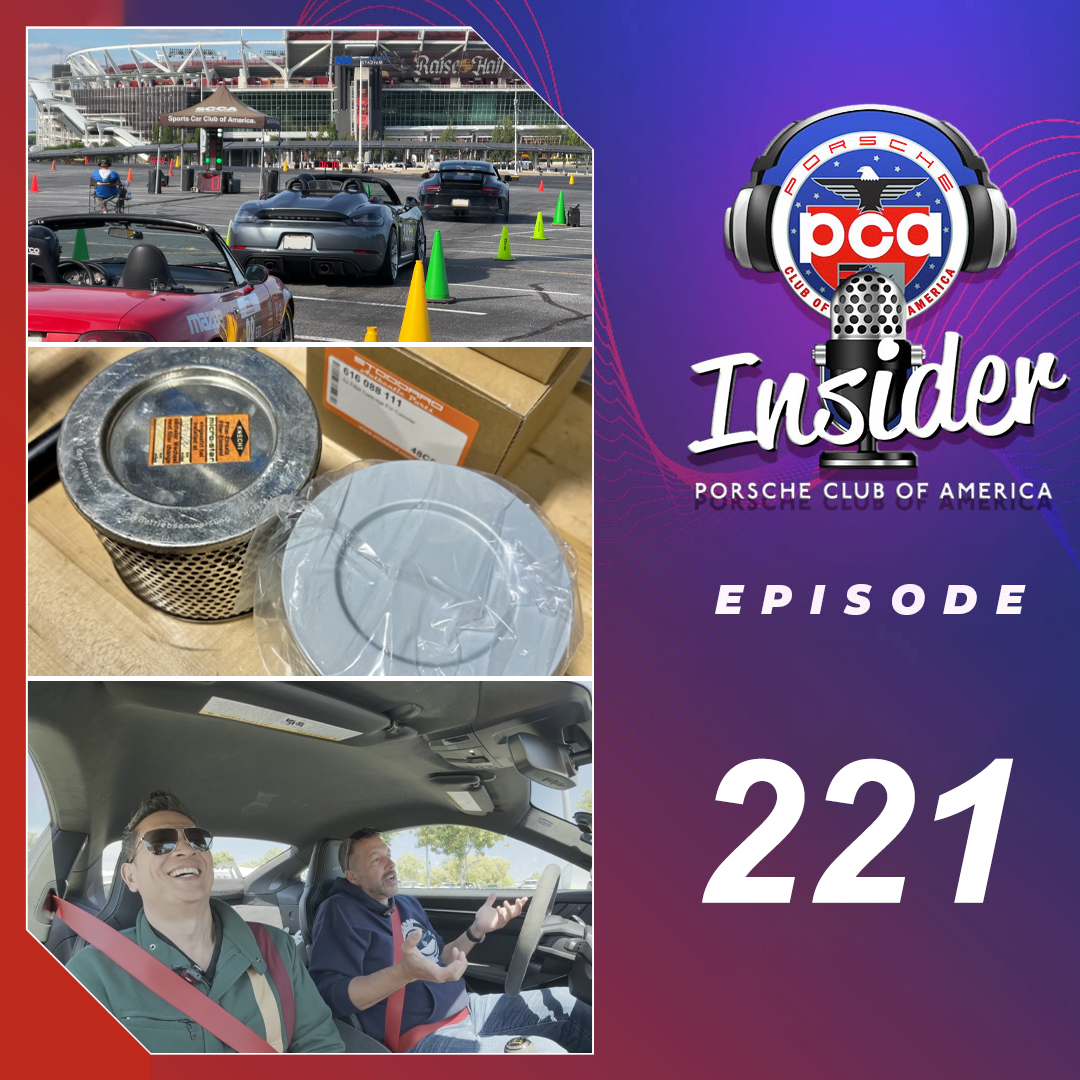
Jason Cammisa Unfiltered Plus a Cayman in Pro Solo
About this episode
Pro Solo autocross gets unpacked with a Porsche Cayman, including how it runs “over two days of competition” with “a second course right next to you.” The hosts then zoom into bracket-style starts—staging lights, reaction-time targets, and why “anything under 0.5 is a red light disqualified.” Pro Solo setup details follow, from tire warm-up questions to course layout like “a big sweeper.” The conversation broadens into what “Pro solo” really means competitively, plus advice on learning to drive before tweaking cars.
First up, we are catching up on our latest garage updates and track days. Damon fills us in on the adrenaline-fueled adventures of running his Cayman at the SCCA Pro Solo event. Then, we look back at the incredible turnout at our local Porsche dealer's recent Cars and Coffee. Plus, Vu breaks down the intense preparation and greasy fingernails required to swap out his stock engine for a high-performance version.In the second half, Vu hits the road for an exclusive interview. He sits down with legendary automotive journalist Jason Cammisa. The twist? They are doing the entire interview from the cockpit of the thrilling new Porsche GT3 S/C. Trust us, you do not want to miss Jason's raw, unfiltered thoughts on this machine.
Pirelli
"I want to thank our presenting sponsor, Pirelli. [42.2s] Pirelli tires have to achieve the highest levels of performance, safety, noiselessness, and grip on the road surface."
Pirelli is a tire company. They make performance tires that are designed to grip the road well and help with safety.
Pirelli is an Italian tire brand known for performance tires used on everything from everyday sports cars to track-focused cars. In this segment, they’re positioned as providing high grip and safety through tire design.
ProSolo
"Yes, so ProSolo, second year doing it. [85.1s] It's a sports car club of America, autocross event basically, and there's a little bit of something extra thrown in where it's not just you autocrossing all alone on an autocross course."
ProSolo is an autocross event format where drivers compete on a course. It’s organized so multiple cars run on nearby courses and the event lasts more than one day.
ProSolo is a motorsport autocross format run by the Sports Car Club of America (SCCA). Unlike a simple solo autocross, it’s structured around multiple cars running on separate adjacent courses, with competition spanning multiple days.
autocross
"And throwing in the starts and reaction times with autocross creates something where there's another variable that can either add or take away your time."
Autocross is a competition where you drive through a cone-marked course against the clock. Your start and reaction time can make a noticeable difference in your final time.
Autocross is a timed motorsport where drivers navigate a marked course at relatively low speeds but with lots of steering changes and traction management. Because it’s timed, small differences in how you stage and launch can add or subtract seconds from your run.
reaction time
"And throwing in the starts and reaction times with autocross creates something where there's another variable that can either add or take away your time... Steven with an 892 reaction time of the 214.60 foot in the Boxster on the left."
Reaction time is how quickly you respond after the start signal. In timed events, being quicker can help your launch and your recorded results.
Reaction time is the delay between the start signal and when the driver actually begins moving. In autocross timing, a faster reaction time can improve your measured launch and overall run time.

Porsche 987 Cayman
"So I had my 987 Cayman and I'm going to try and coordinate some things here on the computer."
This is a Porsche Cayman from the 987 generation. It’s a mid-engine sports car, and here it’s being used to show how autocross starts and timing affect your run.
The Porsche Cayman (987) is a mid-engine Porsche coupe known for its balanced handling and strong autocross potential. In this segment, the host uses a 987 Cayman as the basis for demonstrating how practice starts and timing work.
911 GT3
"We had the license plates out and it's in a 911 GT3 and you also see that there's a spider there."
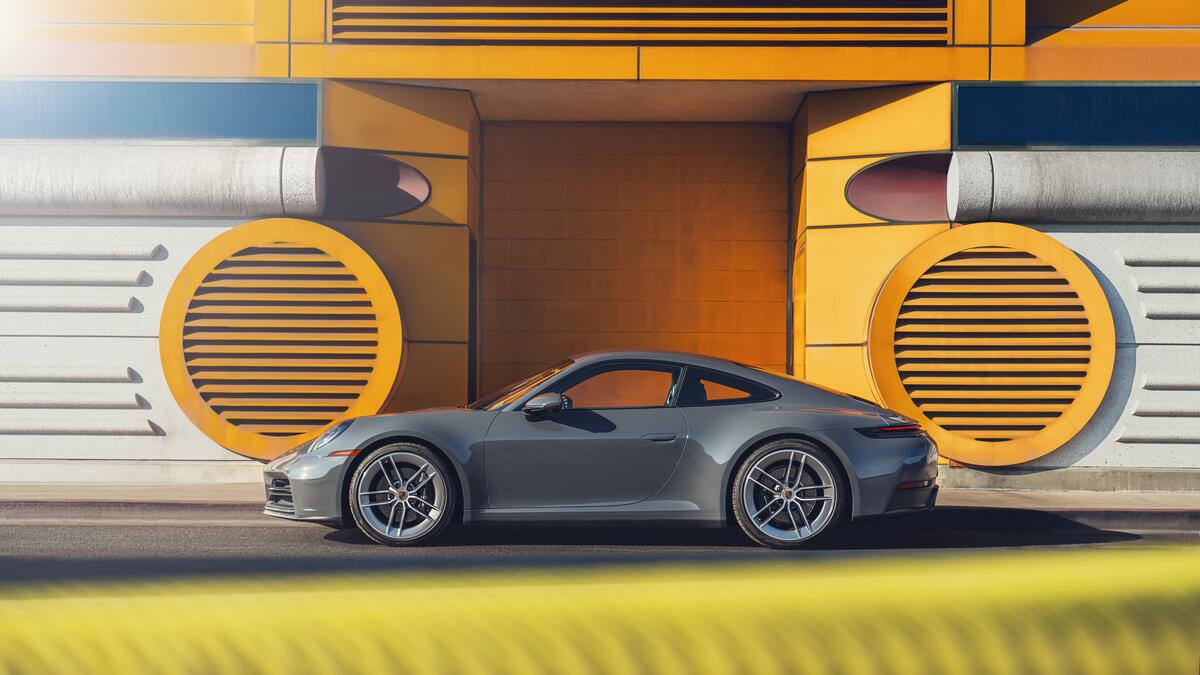
The Porsche 911 GT3 is a performance version of the 911 made for track driving. In this clip, it’s the car shown during the practice start so the timing and staging behavior can be discussed.
The Porsche 911 GT3 is a track-focused 911 variant built for high grip and fast lap performance, with a motorsport-oriented setup. Here it’s used as the example car in the practice-start footage, alongside the timing system details.
drag light tree
"You'll see the drag light tree right there."
The drag light tree is a set of start lights. It tells you exactly when the run begins, so your reaction time can be measured fairly.
A drag light tree is a multi-stage set of start lights used to signal when a run begins, commonly seen in drag racing. In this autocross context, it’s being used to standardize staging and measure reaction time.
staged properly
"See these lights there? If one light is on, you're not staged properly. If two lights are on, you're staged correctly."
Staging properly means you’re lined up and ready at the start so the timing system can start you correctly. They’re using the lights to show whether the car is in the right “ready” position.
Staging properly means positioning the car so it’s ready at the start line when the timing system arms. The host describes a rule-of-thumb using the number of lights illuminated to indicate whether the car is correctly staged before the countdown.
foot
"Steven with an 892 reaction time of the 214.60 foot in the Boxster on the left."
Here, “foot” is part of a measurement of how quickly the car gets going right after the start. It’s used to compare launches between cars.
In this context, “foot” is part of a launch measurement (e.g., a 60-foot-style metric) that captures how quickly a car gets moving after the start. The host pairs it with reaction time to show how early acceleration affects results.

Porsche Boxster
"...th an 892 reaction time of the 214.60 foot in the Boxster on the left. There we go."
The Porsche Boxster is a small two-seat sports car made by Porsche. It’s designed to handle well and feel sporty when you drive it. People talk about it a lot because it’s a “real sports car” without being the biggest or most expensive Porsche.
The Porsche Boxster is a mid-engine two-seat sports car known for its balanced handling and open-top driving (in most versions). It’s often discussed in enthusiast circles because it’s one of Porsche’s more accessible ways to experience the brand’s sports-car feel. In a podcast context, it may come up alongside performance testing or driving impressions.
hard launch
"Oh, yeah. So that's what you're doing. That's a pretty hard launch."
A “hard launch” means starting the car very aggressively to get moving as fast as possible. It can make you quicker, but it can also put more strain on parts like the clutch and drivetrain.
A “hard launch” is an aggressive start where the driver applies a lot of torque quickly—typically by dumping the clutch or using very abrupt throttle/clutch inputs. In performance driving, it can improve acceleration but also increases stress on drivetrain components like the clutch, axles, and tires.
dump the clutch
"It's one of those things where I never just dumped the clutch in the game. And maybe I should because what do people think?"
“Dump the clutch” means letting the clutch out suddenly to make the car launch harder. It can help you accelerate faster, but it can also wear out the clutch and stress the drivetrain.
“Dump the clutch” means releasing the clutch pedal very quickly, often at higher engine revs, to transfer torque to the drivetrain abruptly. It’s a common technique for maximizing launch acceleration, but it can increase wear and shock loads to the clutch and axle shafts.
slipping the clutch
"Does slipping the clutch a little bit better to save the axles? Or do you just dump the clutch, get a little slip, and everything's a little bit more?"
“Clutch slipping” means you let the clutch out more gradually instead of all at once. That can make launches smoother and less harsh on the drivetrain parts.
“Clutch slipping” is when the clutch is released gradually rather than instantly, allowing the engine and drivetrain to speed up together smoothly. Drivers may do this to reduce shock loads to the axles and drivetrain while still achieving a strong launch.
axles
"Does slipping the clutch a little bit better to save the axles? Or do you just dump the clutch, get a little slip, and everything's a little bit more?"
Here “axles” are the parts that send power from the transmission out to the wheels. If you launch really aggressively, those parts can take extra stress.
In this context, “axles” means the axle shafts that transmit torque from the transmission to the wheels. Hard launches and clutch shocks can increase the mechanical load on axles, which is why drivers talk about “saving the axles” when choosing launch technique.
U-turn
"but most autocrossers I've done, they will intentionally even take you through a U-turn first before you cross the B. So you're nice to your clutch and your axles."
A “U-turn” here is a course maneuver where you turn around to face the other direction. It can be used to set up the car before the timed part so you don’t have to launch as harshly.
A “U-turn” in autocross course design is a deliberate reversal maneuver that can reset the car’s position and speed before the timed segment begins. Drivers may use it to manage clutch/traction and avoid aggressive launches right as the clock starts.
PCA
"And like the local WDCR, SCCA regions, or the PCA ones oftentimes, you don't necessarily have to dump the clutch or have the absolute fastest start. Especially SCCA, they put the start around a corner before the time even starts."
PCA is the Porsche Club of America. They run events for Porsche drivers, and the way their courses start can affect how you plan your launch.
PCA typically refers to the Porsche Club of America, which organizes Porsche-focused events and autocross-style driving for members. Here it’s used to contrast event rules and start timing/gates that can influence whether you need an aggressive clutch launch.
SCCA
"If you're grading your local PCA series, if you want to see your Tissier metal, you go to SCCA. And yeah, these guys have their cars set up for that particular SCCA class."
SCCA is a big U.S. organization that runs amateur car racing events. Here, it’s being used as the competition series where people show up with cars prepared for the rules of a given class.
SCCA stands for Sports Car Club of America, a major organizer of amateur motorsports in the U.S. In this segment, they’re referenced as the place to compete in autocross-style events with specific class rules that affect how cars are set up.

Toyota MR2
"You know, you have all sorts of stuff, MR2s."
The Toyota MR2 is a small sports car with the engine placed closer to the middle of the car. That layout can help it feel nimble in tight, twisty autocross courses.
The Toyota MR2 is a mid-engine sports car known for its compact size and balanced handling. In autocross contexts, MR2s are popular because their layout can make them responsive and fun to drive at low speeds and tight turns.
bracket racing
"I had a pretty good reaction time, which in pro solo, and I guess drag racing or bracket racing, anything under 0.5 is a red light disqualified."
Bracket racing is drag racing where you’re trying to hit a target time. You don’t just want to be fast—you want to be close to your target, and launching too early can get you disqualified.
Bracket racing is a drag-racing format where competitors are assigned (or choose) a target elapsed time, and the winner is the one who gets closest to that target without going faster than it. Because of that, reaction time and launch timing are critical—going too early can trigger a disqualification.
red light disqualified
"and I guess drag racing or bracket racing, anything under 0.5 is a red light disqualified. So you want to get ideally like a 0.50 something."
A “red light” here means you started too early. If your reaction time is faster than the allowed limit, you get disqualified for that run.
In timed racing starts, a “red light” means you reacted too quickly—often interpreted as leaving before the official start signal. Many series disqualify you if your reaction time is under a threshold (here, anything under 0.5 seconds).
camber
"there were some tricky corners, but at Northwestern Stadium, the camber there is pretty crazy, as you'll see if you're watching YouTube."
Camber is the angle of the tire—tilted in or out. In turns, that angle changes how much of the tire is actually gripping the road, so it can make a corner feel easier or harder.
Camber is the inward or outward tilt angle of a tire relative to vertical. In cornering, camber strongly affects tire contact patch shape and grip; a “crazy” camber area can make the car feel very different from one part of the course to another.
Northwestern Stadium
"there were some tricky corners, but at Northwestern Stadium, the camber there is pretty crazy, as you'll see if you're watching YouTube."
Northwestern Stadium is where this driving course is set up. The track surface and how it’s tilted (like camber) can change how the car grips in the turns.
Northwestern Stadium is a venue where the course layout used for this driving event is set up. The host points out that the surface geometry there—especially camber—can significantly influence how the car behaves through corners.
slaloms
"So we have some slaloms here, a big sweeper that I'm coming up into."
Slaloms are a zig-zag section of the course with quick left-right turns. They test how well you can steer smoothly and keep the car balanced.
Slaloms are a sequence of quick, alternating turns (often cone-defined) that test steering precision and balance. They’re commonly used in autocross/pro solo-style courses to evaluate how smoothly a car can change direction.
sweeper
"So we have some slaloms here, a big sweeper that I'm coming up into. And on this run, I was pushing harder than before,"
A sweeper is a wide, flowing turn where you keep going fairly fast. It’s less about a sharp turn-in and more about staying smooth and stable through the bend.
A sweeper is a long, flowing corner that you carry speed through rather than braking hard for a tight turn. Course designers use sweepers to test stability and throttle control over a sustained arc.
CPO
"[751.6s] So there's CPO cars or whatever. [753.2s] Yeah, exactly. [753.9s] I mean, it seemed more like a storage area right now."
CPO means “certified pre-owned.” It’s a used car that the dealer checks and fixes up to meet certain standards, usually with extra warranty coverage.
CPO stands for Certified Pre-Owned. It’s a program where a dealer certifies used cars to meet specific inspection and reconditioning standards, often with added warranty coverage compared to regular used-car sales.

Porsche Carrera GT
"...40, 50 cars maybe. They came through, including a Carrera GT. Nice."
The Porsche Carrera GT is a very rare, very high-performance Porsche supercar. It’s the kind of car people talk about because it’s special and not commonly seen. In the podcast, it sounds like it was part of a lineup of cars they encountered.
The Porsche Carrera GT refers to the Porsche Carrera GT, a high-performance supercar known for its extreme driving character and limited production. It’s a rare car that tends to show up in enthusiast conversations because it’s both collectible and technically impressive. In the podcast context, it’s mentioned as one of the cars that passed through an event or group.
front trunk
"So anyways, it had no storage. The front trunk didn't open up. Stuff that you take for granted with Porsche."
A front trunk is like a trunk at the front of the car. In this case, they’re saying it doesn’t really work as storage the way you’d expect—so you can’t use it like a normal trunk.
A front trunk is a storage compartment at the front of the car, often called a “frunk.” On some cars it’s genuinely usable, but in this segment the host says the front trunk doesn’t open for storage on the 4C, so it’s more of a styling/packaging feature than practical space.
service
"It's a service. When you're getting the car serviced, they open it up. But it's not a place to store anything."
In this context, “service” means scheduled maintenance performed by a shop or dealer. The host explains that the compartment that looks like a trunk is only opened during servicing, not for everyday storage.
Toyota motor
"And what kind of motors in that? [877.1s] I think they come with two options. [879.4s] There's still a Toyota motor?"
The host is contrasting a “Toyota motor” option with an AMG turbo option. In this context, it’s about which engine supplier/architecture the car uses, which can affect how it feels and how it’s maintained over time.
AMG four-cylinder turbo
"Toyota or an AMG four-cylinder turbo. [885.1s] Yeah, yeah, I think you're right there."
This means the engine has four cylinders and it uses a turbocharger to make more power. A turbo helps the engine breathe better by forcing extra air in, so you get stronger acceleration without needing a huge engine.
“AMG four-cylinder turbo” refers to a turbocharged engine with four cylinders that’s built by Mercedes-AMG. Turbocharging uses exhaust gases to spin a turbine, forcing more air into the engine for more power from a smaller displacement.
Colin Chapman
"Had Colin Chapman thought of that back in the 60s. [914.5s] That's the most genius thing is let,"
Colin Chapman was the founder of Lotus. The host is saying Chapman had a clever idea: focus on what Lotus does best and let other companies handle parts that need to be dependable.
Colin Chapman was the founder of Lotus and is strongly associated with Lotus’s engineering philosophy of using lightweight design and smart component sourcing. The host credits Chapman-era thinking with the idea of letting specialized suppliers handle key systems.
let Lotus take care of suspension
"That's the most genius thing is let, [916.4s] let Lotus take care of suspension."
They’re talking about a “best at what you do” approach. Lotus would focus on the suspension (how the car handles), while other companies would handle the parts that need to be extra reliable.
This describes an engineering strategy: outsourcing parts of the car to specialists while focusing the brand’s own expertise on what it does best. Here, the host frames Lotus as owning the suspension development, while other suppliers handle reliability-critical systems.
drivetrain
"And let someone else make something a little bit more reliable, [922.6s] take care of the drivetrain."
The drivetrain is everything that sends power from the engine to the wheels. It’s more than just the engine—it includes the parts that actually move the car.
“Drivetrain” is the set of components that deliver power from the engine to the wheels—typically including the transmission and final drive. When the host says “take care of the drivetrain,” they mean outsourcing the power-delivery hardware to a more proven supplier.

Lotus Esprit
"... concern. Remember that custom bespoke V8 for the Esprit V8 back in the day? Oh, yeah."
The Lotus Esprit is a sports car made by Lotus. It’s known for being a bit different and for having a strong engineering focus. The podcast mentions a special V8 version because some Esprits had unusual engine projects.
The Lotus Esprit is a British sports car known for its distinctive styling and engineering-focused approach. The podcast context specifically references the Esprit V8 and a custom bespoke V8 project, which highlights how unusual and special some Esprit variants were. It’s discussed because it’s a notable part of Lotus’s history and a car with interesting development stories.

Porsche 914
"[950.1s] But it was about a great time driving the 914. [955.8s] Which for those of you who have 914s know, [958.2s] you drive almost like a motorcycle, [959.7s] which means you stay in everyone's mirrors."
The Porsche 914 is a small Porsche with the engine mounted toward the middle, which makes it feel quick and nimble. Drivers often say you have to be extra careful around other cars because it’s easy for people to miss you, so you drive very defensively.
The Porsche 914 is a mid-engine Porsche that’s famous for feeling light and motorcycle-like in how it’s driven. Because of its compact, low-visibility presence, the driver often has to manage how they appear in mirrors and how other traffic reacts—especially around large vehicles—so defensive driving becomes part of the experience.
third brake light
"[972.3s] And when you're braking, [967.1s] you're making sure the people that are behind you see you, right? [969.1s] Yeah, you have to drive very defensively, absolutely. [972.3s] And you don't have a third brake light [973.9s] or a blinking bulbs or anything."
A third brake light is an extra brake light mounted higher up so drivers behind you can see when you’re slowing down. If a car doesn’t have one, people behind you may notice your braking later, so you have to be more careful.
A third brake light is an additional, usually higher-mounted brake lamp that makes it easier for drivers behind you to notice braking. The host’s point is that the Porsche 914 experience can require extra defensiveness because it doesn’t have that extra visual cue.
blinking bulbs
"[972.3s] And you don't have a third brake light [973.9s] or a blinking bulbs or anything. [975.3s] Oh, no. [976.0s] Yeah, I have blinking bulbs. [977.6s] I think it just pisses people off to blinking light."
“Blinking bulbs” means lights that flash, like the turn signal. The idea is that other drivers react to those signals, and the host thinks some people get annoyed by them even though they’re there to communicate.
“Blinking bulbs” here refers to turn-signal or indicator bulbs that flash to communicate intent to other drivers. The host suggests that a blinking light behavior can annoy people, but it also serves as a clear communication cue—important when driving a car that’s easy for others to miss.

Porsche 356
"as we get closer to Porsche Parade, which means [994.7s] I should try to put my 356 back together [998.2s] because I have dreams of trailing it up to Lake Placid."
The Porsche 356 is an old Porsche sports car that’s famous with collectors. People often restore them and get them ready for shows and drives. Here, the speaker is saying he wants to rebuild his 356 so he can take it on an upcoming trip.
The Porsche 356 is the early, air-cooled sports car that helped define Porsche’s identity. It’s especially notable for its classic, lightweight layout and the way enthusiasts restore and modify them for events. In this segment, the host is talking about reassembling a Porsche 356 to get it ready for a trip to Lake Placid.
trailing it
"because I have dreams of trailing it up to Lake Placid. [1002.8s] And for the most part, I've been collecting parts and such"
In this context, “trailing it” means following another car on the road. It’s like keeping close behind while you drive together as a group.
“Trailing it” here means driving behind or following another car—using the other vehicle as a pace or lead. In enthusiast contexts, it often implies a coordinated drive where cars stay close enough to maintain timing and route together.
TENS
"and I was going to just simply spray bomb the old TENS [1022.8s] and strap it onto the new engine and put it all back in. [1026.6s] And I got all my TENS put in a box"
“TENS” sounds like a nickname for some engine parts the speaker is working on. They’re taking them off, having them refinished, and then putting them back on the engine.
“TENS” appears to be a shorthand for specific engine-related components the speaker is removing, finishing, and reinstalling. Because the transcript doesn’t spell out what “TENS” stands for, it’s likely an enthusiast nickname for a particular part set on the Porsche 356 engine bay.
powder coated
"And so he swapped them away and he had them powder coated. [1038.2s] And I do, I have to say it does look beautiful. [1042.7s] The TENS look great."
Powder coating is a way of finishing parts with a tough, baked-on coating. It helps the part resist rust and wear, so it tends to last longer than regular spray paint.
Powder coating is a durable finishing process where a dry powder is applied to a part and then baked to form a hard protective layer. It’s commonly used on engine components and brackets because it resists chipping, corrosion, and heat better than many basic paint jobs.
clutch cable
"there's a couple of things I still need to do, [1049.8s] which is I'm going to replace the clutch cable. [1052.1s] The heater cables."
A clutch cable is the mechanical linkage that transmits your pedal movement to the clutch release mechanism. On cable-actuated cars, replacing a worn clutch cable helps restore smooth engagement and prevents issues like inconsistent pedal feel or incomplete clutch disengagement.
heater cables
"[1052.1s] The heater cables. [1054.6s] And then on the back wall, there's a panel, an interior panel [1059.6s] that sits along the firewall"
Heater cables are the cables that control how hot the cabin air gets. If they’re worn out, the heat controls may feel stiff or not work correctly.
Heater cables are the control linkages that move the heater/temperature blend doors or valves in many older cars. When they get stiff or misadjusted, you can lose proper temperature control or airflow direction.
firewall
"that sits along the firewall that after so many years [1063.3s] and I guess water and humidity, it kind of got all warped. [1067.4s] It's a very flat panel when new,"
The firewall is the wall between the engine area and the inside of the car. If it’s warped or the panel near it is damaged, it can let in moisture or heat and make things fit poorly.
The firewall is the structural barrier between the engine bay and the cabin. It also helps with heat management and sealing, so warping or damage can affect both comfort and how well the cabin is isolated from engine heat and moisture.
engine
"And the engine is original to the car, which means the tin and everything is a truthy 6A. Correct. Your engine is from a B."
They’re talking about which engine is in the car and whether it matches what the car originally had. They also mention whether the parts around the engine fit and bolt up correctly.
The hosts are discussing engine provenance—whether the engine is the correct type/origin for the chassis. They’re also comparing engine “tin”/mounting compatibility, which is a key detail when swapping or verifying parts on older Porsche platforms.
original
"Yeah. So the listeners, your car is a 15-9. And the engine is original to the car, which means the tin and everything is a truthy 6A."
Here “original” means the engine is the one that originally came with the car from the factory. People care because it can make the car more authentic and more valuable to collectors.
In enthusiast talk, “original” usually means the engine (and sometimes other components) is the factory unit that came with the car. That matters because it can affect authenticity, collectability, and how the car is evaluated by marque purists.
tin
"which means the tin and everything is a truthy 6A. Correct. Your engine is from a B."
“Tin” here means the metal covers and shields around the engine bay. They help protect things and manage heat, and they also need to fit correctly.
“Tin” is enthusiast shorthand for sheet-metal engine bay covers and protective panels (often heat shields) that sit around the engine. On air-cooled Porsche engines, these pieces are important for correct fitment and heat management.
bolt holes
"And the bolt holes that don't line up are the telltale signs. But if you put them in the right place, yes, the bolt, the bolt is all in."
Bolt holes are the holes in metal parts where bolts go through to hold things together. If the holes don’t line up, it usually means something is installed wrong or the wrong part is being used.
“Bolt holes” are the drilled holes in metal parts that line up so bolts can pass through and clamp the parts together. When bolt holes don’t line up, it’s a strong sign the parts aren’t the correct pieces or aren’t installed in the right orientation.
rubber mallet
"I walked away with you had the rubber mallet in your hand. I could see a lot of holes that weren't matching up."
A rubber mallet is a hammer with a soft rubber head. It’s used to tap parts into alignment gently so you don’t scratch or dent them.
A rubber mallet is a hammer with a rubber head used to persuade parts into place without damaging the surrounding metal or finishes. In restoration or bodywork, it helps avoid dents and preserves powder-coated surfaces.
heater boxes
"I think I'm missing one spring, long spring for my heater boxes. The heater boxes look gorgeous. They're all new powder coated, new looking."
Heater boxes are parts that help send warm air into the car’s cabin. If something like a spring or mounting piece is missing, the heater system may not work correctly.
“Heater boxes” are the ducting/enclosure components that route heated air from the engine area to the cabin in many air-cooled Porsche designs. They’re often removed during restoration, and missing or incorrect springs/fasteners can affect how the flaps and seals work.
aftermarket parts
"Have you heard about how some people are kind of down on newer parts? And it could be Porsche parts or aftermarket parts about them not necessarily being copied from the original correctly and not fitting well."
Aftermarket parts are replacement parts made by other companies, not the car’s original maker. They can be cheaper or easier to find, but sometimes they don’t match the original size perfectly, so they may not fit or work as expected.
Aftermarket parts are components made by companies other than the original equipment manufacturer (OEM). In the Porsche world, fitment can be inconsistent if an aftermarket part isn’t made to the same dimensions/specs as the original.
Porsche classics
"I've seen that with Porsche classics. Yeah."
“Porsche classics” means older Porsche cars. With older cars, replacement parts may not be made to the exact same shape as the originals, so they can sometimes fit poorly.
“Porsche classics” refers to older Porsche models where parts availability and exact dimensional matching can be harder. That can make fitment issues more common when using non-OEM or incorrectly reproduced components.
air cleaner filters
"I bought some air cleaner filters and they look, especially when you take them out the box, looks the right height, the right diameter. That's the kind of thing you want to buy new."
The air cleaner filter is the part that cleans the air coming into the engine. If the filter is shaped slightly differently, it can stop the airbox cover from closing, which can cause fitment problems.
An air cleaner filter is the element inside the intake/airbox that traps dust and debris before air reaches the engine. Even small differences in shape or height can prevent the airbox lid from closing properly, which can affect sealing and airflow.
authentic one
"But I was, I mean, I bought the authentic one thinking everything would fit nicely, but it doesn't."
“Authentic” here means the genuine-style part, not a generic replacement. The surprising part is that even the genuine one didn’t fit the way it should, likely due to a small spec difference.
In this context, “authentic” means the original/OEM-style part (or a part sold as the genuine equivalent). The key point is that even an “authentic” part can still have fitment differences versus what the owner expects if the specific application/spec isn’t identical.
quality control
"If you're willing to spend the money, they will make exact replicas of whatever you're [1298.2s] trying to have a make, but there's some kind of quality control too. [1306.4s] When whoever's buying them to make sure that it's exactly the way you do."
“Quality control” means the process of checking that a product is made correctly. The speaker is saying that even with replica parts made overseas, there can be checks to help them match what you’re trying to replace.
“Quality control” refers to the checks a manufacturer or importer uses to ensure parts match the intended specifications. Here, the speaker is discussing replica parts made overseas and how buyers still rely on QC to make sure the replicas are accurate.
replicas
"If you're willing to spend the money, they will make exact replicas of whatever you're [1301.9s] trying to have a make, but there's some kind of quality control too."
Here, “replicas” means replacement parts that are made to copy an original part. The speaker is saying they can be made very close to the real thing, depending on how they’re ordered and checked.
In this context, “replicas” means reproduction parts made to match an original component’s shape and function. The speaker is weighing the tradeoff: replicas can be very accurate if the buyer specifies requirements and there’s adequate quality control.
Auto Atlanta
"And then also Alex down at Auto Atlanta, I was looking for some things and yeah, [1341.4s] everything was found. [1344.7s] This weekend is sort of the rush to get all the ancillary stuff done."
Auto Atlanta is a shop the speaker says helped find parts they were looking for. It sounds like they were able to locate the specific items needed for the project.
Auto Atlanta is mentioned as another parts/resource source for the speaker’s restoration needs. The context suggests they were looking for specific items and the shop helped locate them.
shake it down
"Motor goes in. [1362.6s] Hopefully, shake it down for a couple of days before we head to Lake Plastic. [1367.0s] Yeah, because that new motor was test run on the bench already."
“Shake it down” means doing an early test run after the car has been worked on. The goal is to find any issues quickly before you commit to a bigger trip or event.
“Shake it down” is a motorsport/restoration phrase for an initial testing period after major work—driving or running the car to catch problems early. The speaker ties it to installing a new engine and verifying it behaves correctly before heading to an event.
test run on the bench
"[1362.6s] Hopefully, shake it down for a couple of days before we head to Lake Plastic. [1367.0s] Yeah, because that new motor was test run on the bench already."
“Test run on the bench” means starting and checking the engine while it’s still on a work stand, not in the car. It’s a way to confirm it works before you install it.
A “test run on the bench” means running the engine outside the car on a stand to verify basic operation before installation. This reduces the risk of discovering major problems only after the engine is mounted in the chassis.
electric fuel pump
"I'm putting a little electric fuel pump to kind of prime the carbs, which the car didn't have before."
A fuel pump is what sends gas to the engine. An electric one uses electricity to push fuel, and “priming the carbs” means getting fuel into the carburetor so the car starts easier.
An electric fuel pump is a powered pump that pushes fuel to the carburetors. In this case, the host is adding it to help “prime the carbs,” meaning it supplies fuel quickly so the engine starts and runs more consistently.
carbs
"I'm putting a little electric fuel pump to kind of prime the carbs, which the car didn't have before."
Carbs (carburetors) are the parts that mix fuel and air for the engine. Priming them means adding fuel ahead of time so the engine doesn’t struggle to start.
“Carbs” is short for carburetors, which mix air and fuel before it enters the engine. Priming the carbs helps ensure there’s fuel available immediately when starting, especially if the system has been sitting.
relay for the starter
"I'm doing the relay for the starter so that the current doesn't have to pass through the ignition key. The ignition key just kicks off a relay, and then the starter will get direct power from the battery."
The starter relay is like a remote switch for the starter. Instead of running heavy current through the ignition key, the key just signals the relay, and the relay sends power to the starter.
A starter relay is an electrically controlled switch that sends high current to the starter motor. Here, the host is rerouting the starter power so the ignition key only triggers the relay, reducing current through the key contacts.
ignition key
"I'm doing the relay for the starter so that the current doesn't have to pass through the ignition key. The ignition key just kicks off a relay, and then the starter will get direct power from the battery."
The ignition key is the switch you turn to start the car. The point of the relay here is to keep the key from having to carry the big electrical load needed by the starter.
In older or modified wiring setups, the ignition key can become a bottleneck because it may carry more current than it was designed for. Using a relay lets the key handle only a small control current while the relay handles the starter’s high current.
floor jack
"He had his car on jack stands, and we had a floor jack, and we're still able to get it done, but I'll certainly say that I prefer our method with the lift and the lift table"
A floor jack is a tool that lifts the car using hydraulics. It’s used to support the car or help position parts while you work.
A floor jack is a hydraulic lifting tool used to raise the car or support parts during work. The host contrasts using a floor jack and jack stands versus a lift table for easier, more controlled engine positioning.
lift table
"but I'll certainly say that I prefer our method with the lift and the lift table and having everything perfectly parallel and perpendicular, and things slid in much easier."
A lift table is a platform that can go up and down. For engine work, it helps you line the engine up so it’s easier to slide into place.
A lift table is a work platform that can raise and lower to position heavy components at the right height. In engine installs, it helps keep the engine aligned so it slides in with less fighting for angle and clearance.
Monti kit
"Does have the Monti kit, which we got to tell Peter to have put on his car, because he won't have to vest his GT2 RS until you have the Monti kit."
A “Monti kit” is a specific add-on package (mostly aero/track-related) that changes how the car is set up for lap times. In this discussion, it’s important because it’s tied to how they compare cars fairly.
The “Monti kit” refers to an aerodynamic/track package associated with the Porsche GT2 RS/GT3 RS lap-time record context discussed here. The hosts are treating it as a specific setup that affects whether a car is eligible to be compared against certain benchmark rules.
production car lap record
"But it did beat the production car lap record by .2 seconds. Was that the new Z06?"
A “production car lap record” is a lap-time benchmark set by a car that’s intended to be street-legal/production rather than a one-off prototype. The hosts use it to frame how much faster the newer Porsche setup was compared to the prior record holder.
Tech Tactics
"They also had out the car that was the Tech Tactics, which is the safety car, the new 992.2 GT3 at the Monti kit."
“Tech Tactics” here is the name they’re using for the safety car. A safety car helps control the pace on track so the testing can be done safely and consistently.
“Tech Tactics” is used here as the name of the safety car employed during the on-track testing or demonstration. Safety cars are used to control pace and manage track conditions during certain runs.
GT2 RS
"I'm sure that's probably why everyone's so excited to see maybe the last GT2 RS to come out. [1567.6s] What Porsche comes out with."
The Porsche GT2 RS is a very hardcore, track-oriented version of the 911. It’s known for being extremely fast, and the episode is basically saying people are excited because it sounds like the last one is coming.
The Porsche 911 GT2 RS is a track-focused, turbocharged supercar known for extreme straight-line speed and serious aerodynamic development. In this segment, the host is talking about the excitement around what sounds like the final GT2 RS variant coming out, and how it ties into Porsche’s record-setting legacy.
Aero
"It's incredible what suspension an Aero can do. [1573.8s] Then you know when you buy this car that there's a Monti edition coming out soon after."
“Aero” here means the car’s aerodynamic parts, like wings and spoilers. They’re designed to help the car stick to the road, especially at higher speeds.
In this context, “aero” means aerodynamic hardware and design—like wings, splitters, and other bodywork—that generates downforce and reduces lift. The host is emphasizing how much grip and stability aero can add when you’re moving fast.
downforce
"Well, they say it's like 2,000 pounds worth of downforce. [1588.4s] 2,200 pounds. [1589.3s] Yeah, that's insane."
Downforce is what the car’s shape and wings use to push it harder onto the road. More downforce usually means better grip at speed, which is why it matters most on highways and track straights—not at low speeds.
Downforce is the aerodynamic force that pushes a car’s tires harder onto the road at speed. The host is discussing an aero kit that claims thousands of pounds of downforce, which is why it’s most effective at high speeds rather than around town.
low mile
"But if it wasn't for the people that kept them at low mile, we wouldn't have examples of what they looked like when they were new."
“Low mile” just means the car has been driven very little. Collectors like that because it helps the car stay closer to its original condition.
“Low mile” means a car has relatively few miles on the odometer. In collector circles, low-mile examples are often valued because they can preserve how the car looked and felt when it was new.
cars behind glass
"Anyways, a lot of these cars are, I'm going to say, behind glass. Literally. He does take them out for a special occasion."
“Behind glass” means the cars are displayed like museum exhibits. They’re kept safe and preserved, not driven every day.
“Behind glass” describes cars displayed like museum pieces rather than being regularly driven. That changes how people experience them—more about preservation and viewing original condition than about using the car as intended.
back to back
"and see how it compares to your car. It probably wouldn't be weight difference maybe a little bit. ... So it's really hard sometimes to give it a true back to back."
“Back to back” means you drive one car, then immediately drive the other, so you can compare them more fairly. They’re saying it’s hard to compare perfectly because their car has wear and has had suspension work.
A “back to back” comparison means driving two cars consecutively under similar conditions to reduce variables. The speaker emphasizes that changes like mileage and suspension/shock work make it hard to do a truly fair back-to-back test.
shock
"There's so many variables because my car now has 72,000 miles on it. And I've changed the shock."
A shock absorber helps control the car’s bounce over bumps. If you replace it, the car can feel tighter or smoother, so it changes how the car compares to another one.
A “shock” (shock absorber) controls how the suspension moves over bumps and how quickly the car settles after hitting uneven pavement. The speaker notes they’ve changed the shock, which affects ride/handling and makes comparisons to another car less “apples-to-apples.”
layered panels
"I don't think I realized quite how much stiffer and better the car is with those not double panels, but sort of layered panels that the later cars got."
“Layered panels” here refers to structural body construction changes—using multiple layers of sheet metal in the car’s bodywork. The speaker argues that the later 1974–1976 cars are stiffer because of these construction updates, which can improve how the car responds and feels under driving loads.
rust
"Everything else can be fixed. Body is rust. It will cost you so much money to get a body."
Rust is when metal starts corroding and breaking down. On older cars, it can spread into important areas and be expensive to repair. That’s why they’re saying to focus on the body condition first.
In classic-car shopping, rust refers to corrosion that eats away at metal structure and body panels. For cars like the Porsche 914, rust is especially costly because it often requires cutting out and replacing sections of the body, not just surface repairs. That’s why the discussion frames “body condition” as the deciding factor.

CRXs
"It's like MR2s or CRXs. They were pretty cheap cars for what they were back then."
The Honda CR-X is a small sporty Honda. The host is saying that these cars used to be cheap, but finding a good one now is much harder.
Honda CR-X is a compact, sporty hatchback/coupe known for its lightweight feel and enthusiast following. Here, the host compares CRXs to MR2s to make the point that these older cars were once cheap, but now it’s difficult to find good examples.
factory seats
"It's like factory seats. Grandma never drove this except on a Sunday type thing."
Factory seats are the original seats that came with the car from the factory. If they’re still there, it usually means the car hasn’t been changed much.
Factory seats are the original seats that came with the car when it was built, rather than aftermarket replacements. In enthusiast circles, original interior pieces are often used as a sign the car has been preserved and not heavily modified.
bumpers
"And the bumpers, which I mean, I'm just going to say, because I think there's not many people who would disagree. The bumpers are ugly on the later cars."
“Bumpers” are the front and rear parts of a car that help protect it if you bump something. In this conversation, they’re talking about how the later Porsche 914 bumpers look and why some people end up liking that style.
In car design discussions, “bumpers” refers to the front and rear body panels meant to protect the car in low-speed impacts and also to shape the vehicle’s visual styling. Here, the host is specifically judging the bumper styling on later Porsche 914s as “ugly,” while noting that enthusiasts now see it as part of the charm.
Phoenix red
"Especially your car with that Phoenix red, the paint and how clean it is."
“Phoenix red” is a named paint color on Porsche cars. People who care about these cars often use the exact color name to talk about how the car looks when it’s clean or restored.
“Phoenix red” is a specific paint color name used on Porsche vehicles. Color names like this matter to enthusiasts because they’re tied to original factory shades and can be a quick way to identify how a particular car was ordered or restored.
GT3C introduction
"This was when we got invited for the GT3C introduction out in California. But before we did that, we had the opportunity to drive some GT3s."
They’re talking about a Porsche-related event called the GT3C introduction. It’s basically the “we got invited to this” moment in their story.
This refers to an event or program connected to the Porsche GT3C, which they’re invited to in California. It’s a segment marker for the episode’s story about meeting Jason Cammisa and driving GT3 cars before the GT3C event.
Lemons
"And I was paired with him. I've been paired with him for some judging duties at Lemons years ago. So it's nice to be back with him."
“Lemons” is a kind of racing where people bring very cheap, sometimes sketchy cars and race them anyway. They’re mentioning they judged cars in one of those events before.
“Lemons” refers to the “Top Gear” style of endurance racing where the cars are intentionally cheap and often unreliable—commonly known as “The Cheap Car Challenge” or “Lemons”-type events. In this context, they’re saying they previously did judging duties at a Lemons event.
500 cc per cylinder
"You get all cars of the same. And so everything is a 500 cc per cylinder, turbocharged, blah, blah."
That phrase is about how big the engine is inside each cylinder. Bigger numbers usually mean more air/fuel space per cylinder, which can help power—though it depends on the whole engine design.
This refers to an engine’s displacement being expressed per cylinder (500 cc per cylinder). It’s a way of describing how large each cylinder’s swept volume is, which then implies a very large total engine size depending on how many cylinders the engine has.
turbocharged
"And so everything is a 500 cc per cylinder, turbocharged, blah, blah. The formula is the minimal investment and the maximum potential return."
A turbocharger is a device that packs more air into the engine. More air usually means the engine can make more power, especially when you accelerate.
“Turbocharged” means the engine uses a turbocharger to force more air into the cylinders. More air generally allows more fuel to be burned efficiently, which can increase power and torque compared with a non-turbo setup of similar size.
911 Porsche Gt
"...of my schedule to hang out is because, A, I think Porsche GT products are the purest, they have the most clari..."
The Porsche 911 is Porsche’s most famous sports car model. It’s known for being sporty and for having a design that has stayed recognizable over many years. In the podcast, it’s brought up when talking about the most “pure” Porsche performance versions.
The Porsche 911 is the brand’s flagship sports car line, known for its rear-engine layout and long-running evolution across generations. In the podcast context, it’s referenced as part of a discussion about Porsche “GT products” and what the speaker considers the purest form of the brand’s performance. That makes it relevant to conversations about driving character and engineering clarity.
Porsche GT products
"I'm happy to take a day out of my schedule to hang out is because, A, I think Porsche GT products are the purest,"
This is Porsche’s track-focused performance line. The “GT” label usually means the car is tuned to feel more like a sports car on a road course than a normal daily driver.
Porsche GT products refers to Porsche’s “GT” performance lineup, which is focused on track-oriented driving characteristics. In Porsche terms, “GT” typically signals a more performance-focused setup than mainstream models, often emphasizing steering feel, braking, and overall chassis balance.
GT
"I said, well, Andy is from Andreas Pointing, I remember his GT car. [2511.2s] He's like, oh, yeah, no, I've heard of him. [2512.9s] And I said, I think he'll enjoy it."
“GT” means “Grand Touring.” It’s a type of car meant for long drives that still feels quick and fun, not just a race car.
“GT” stands for “Grand Touring,” a class of cars aimed at comfortable long-distance driving with real performance. In enthusiast circles, “GT car” usually implies a more road-focused, luxury-performance setup rather than a pure track weapon.
V8
"like he's around GT cars all the time, [2532.0s] with the V8 to American iron that was well executed. [2535.9s] I was like, who's on a Cougars?"
A “V8” is an engine with eight cylinders arranged in a V shape. It’s a common setup in many American performance cars and usually gives strong pulling power and a great sound.
A “V8” is an engine with eight cylinders arranged in a V shape. The layout is known for strong low-to-midrange torque and a distinctive sound, which is why V8s are often associated with American performance cars.

Ford Cougar
"...on that was well executed. I was like, who's on a Cougars? I mean, oh, it was a well-settled car."
The Ford Cougar is a Ford car model. In the podcast, it’s described as being well done and “settled,” meaning it felt properly put together. The discussion is about how good the car was overall.
The Ford Cougar is mentioned as a well-settled, well-executed car in the podcast context. It appears to be part of a discussion about how certain models are remembered or evaluated based on their overall execution. Without more detail, it’s best understood here as a Ford model that the speaker considers properly designed and sorted.
brake systems
"But that is the difference between a corporate executive paper pusher engineer [2548.8s] who's like, I will now make a brake systems that weighs 4.2 kilos less than whatever"
“Brake systems” means all the parts that make the car slow down—like the pads and rotors and the parts that apply them. On performance cars, it’s not just about stopping, but also how well the brakes hold up under repeated use.
“Brake systems” refers to the complete braking hardware—typically including components like calipers, rotors, pads, brake lines, and the hydraulic or electronic control elements. In performance contexts, people often talk about brake systems in terms of stopping power, fade resistance, and weight.

Chevrolet C8
"Yeah. Spiker C8. We have access to the cars."
The Chevrolet Corvette is a sports car made by Chevrolet. It’s known for being fast and for having a strong performance reputation. The podcast mentions the C8 because that version has a different engine layout than older Corvettes.
The Chevrolet Corvette is a long-running American sports car known for strong performance and value. The podcast context mentions access to C8 cars, which is the mid-engine generation that brought a major layout change. It’s discussed because it’s a benchmark for modern sports-car performance and track capability.

Cadillac Alante
"...re there's an interesting story. Perfect example, Cadillac Alante. Yes."
The Cadillac Allante is a luxury car made by Cadillac. In the podcast, it’s mentioned because there’s an interesting story or something notable about it. It’s being used as an example of a unique model.
The Cadillac Allante is a luxury model from Cadillac that’s often remembered for its distinctive place in the brand’s lineup. The podcast context mentions an “interesting story,” suggesting it’s being discussed for its background or unique characteristics. It’s likely brought up as a conversation piece rather than for everyday practicality.
VIN number
"specially prepared 747s just so that it could have a VIN number that started with a Z,"
A VIN is like a car’s serial number. It can sometimes hint at where the car was made, depending on the VIN format.
A VIN (Vehicle Identification Number) is a unique 17-character code used to identify a specific vehicle. The host is using the VIN’s starting character to infer origin—specifically that a VIN starting with “Z” indicates an Italian-built car.
reset that
"So reset that. That is more in the sort of reviews."
They’re talking about how to keep your opinions from one car from affecting your thoughts about the next one. It’s like taking a mental pause so you judge each car fresh.
The host is describing a review technique: mentally “resetting” between cars so prior impressions don’t bias how the next car is evaluated. This is essentially about controlling expectation and avoiding carryover from the previous drive.
target market
"You know, you'll get a product presentation from the car company about who the intended [3076.7s] market is, or we know, and they will, they will tell you where their intended audience is."
A “target market” is the specific type of person a company is trying to sell a car to. The host is saying he reviewed the car by imagining what that kind of buyer would think.
In automotive marketing, “target market” means the specific group a car company expects to buy the vehicle. The speaker uses it as a framework for how he approached reviews—trying to imagine what that buyer would care about.

BMW E90
"And so when I came time to review that car, I did it as a comparison test with an E90, [3124.0s] BMW 3 Series, 335, XDrive."
The BMW 3 Series is BMW’s popular compact car line that’s built to feel sporty to drive. Here it’s mentioned as the comparison car for the Subaru WRX STI.
The BMW 3 Series is BMW’s compact “driver’s car” platform, and the speaker is specifically referencing an E90-era comparison. In this context, it’s being used as a benchmark against the Subaru WRX STI for how a target-market buyer would experience the cars.

BMW 335
"...t as a comparison test with an E90, BMW 3 Series, 335, XDrive. And the question was, what would Jason d..."
The BMW 335 is a sporty BMW 3 Series model. It’s the kind of car people compare in tests to see how it drives and performs. In the podcast, it’s mentioned as part of a comparison involving different versions of the 3 Series.
The BMW 335 is a performance-oriented version within BMW’s 3 Series lineup, and it’s often used in comparison tests because it represents a balance of everyday usability and power. In the podcast context, it’s specifically mentioned alongside an E90 3 Series and an XDrive setup as part of a question about performance outcomes. That makes it relevant to discussions of how different drivetrains and configurations behave.
XDrive
"And so when I came time to review that car, I did it as a comparison test with an E90, [3124.0s] BMW 3 Series, 335, XDrive."
xDrive is BMW’s all-wheel-drive system, designed to send power to the wheels with the most traction. It’s especially relevant when comparing cars like the BMW 3 Series and Subaru WRX STI because AWD changes how they launch, accelerate, and handle in low-grip conditions.

Ford F150
"And I've written my one over, first of all, I've written it over a T. But an F-150. Like, there's no way."
The Ford F-150 is a large pickup truck. It’s made for everyday driving but also for tasks like hauling and towing. People mention it a lot because it’s widely available and comes in many versions.
The Ford F-150 is a full-size pickup truck and one of the most common vehicles in its class. It’s frequently discussed because it’s a practical choice for everyday use, towing, and work, while also being offered in many configurations. In the podcast context, it’s mentioned as a comparison point in a discussion about what makes sense to buy.
Request an Explanation
Heard something you'd like explained? We'll add it to this episode.
Sign in to request explanations for terms you heard.
Want to learn more?
Browse our glossary for plain-English explanations of automotive terms, jargon, and concepts.
Help improve this episode
See something that's not quite right? Our annotations are AI-generated and can sometimes miss the mark. Click the flag icon on any annotation to suggest a correction.