KGM Musso EV, Irish Launches of Kia EV2, DS No.4 and No.8 and Nissan Micra. Nevo EV Survey and Nevo Driving Experience in Kildare
About this episode
KGM’s first electric pickup, the Musso EV, takes center stage with pricing, specs, and a quick 24-hour impressions rundown—front- and four-wheel drive, BYD Blade battery, big comfort kit, and towing/charging details. The show also covers Ireland’s launches for the Kia EV2 (trim/battery pricing and range), DS Automobiles’ No.4 and No.8 (hybrid vs EV strategy, tech and pricing), and the new Nissan Micra (40/52 kWh options, Renault 5 platform tie-in, and charging). Plus: the Nevo EV survey and a packed Kildare driving experience event.
Welcome back to the Nevo EV News Podcast. If it's Tuesday it must be Nevo EV News Day. My name is Derek Reilly and on this podcast we chat all about EV. Nevo is Ireland's only dedicated EV platform and we'll be covering where we were this week, what we've been driving and what we've been doing between podcasts. If you haven't already subscribed or followed us wherever you are listening please do so and if you enjoyed the episode, please leave a rating and comment, it really helps us out and it doesn't cost you anything. Let's get stuck in.
KGM Musso EV
https://youtu.be/oK4LNMmoZ_k
Mercedes-Benz EQS 2027
https://youtu.be/cXrRNM0SRJE
Kia EV2 Irish Launch
https://youtu.be/6sVCWhAgl8M
DS No.4 and No.8 Irish Launch
https://youtu.be/6XUfjL_N76c
Nissan Micra Irish Launch
https://youtu.be/GkiSeUSj_L4
Last Chance to Win with the Nevo EV Survey
https://docs.google.com/forms/d/1jROljg61UvaRyoNA_Ho-5RRp0JOSnykhKBb5fr7DgUM/viewform?edit_requested=true#responses
Nevo Regional Driving Experiences in partnership with Bank of Ireland
https://www.nevo.ie/nevo-driving-experience
Hosted on Acast. See acast.com/privacy for more information.

Ssangyong Musso
"...episode, we're going to be chatting about the KGM Musso EV at the one of the first electric pickups comi..."
The Ssangyong Musso is a pickup truck, and the podcast is talking about the electric version (Musso EV). A pickup is a type of vehicle with a cargo bed for carrying things. The electric version is being mentioned because it’s part of the first wave of electric pickups.
The Ssangyong Musso is a pickup truck model from Ssangyong, and the podcast specifically references the Musso EV. It’s significant here because the episode is focused on early electric pickup arrivals, and the Musso EV represents one of those new entries. Pickup EVs are often discussed for how they balance practicality, battery packaging, and real-world usability.
Bank of Ireland
"and also the upcoming Kildare Nevo driving experience in partnership with Bank of Ireland on the 26th of April"
Bank of Ireland is partnering with Nevo for the driving event in Kildare. That kind of partnership can help make the event happen and may influence how people sign up.
Bank of Ireland is mentioned as a partner for the Nevo driving experience in Kildare. Sponsorship/partnerships like this can affect event access, logistics, and how the public engages with EV test drives.

KGM Musso EV
"So we have a first look first drive of the KGM Musso EV... Thanks to Colin and Caroline for letting me have the Musso EV for 24 hour test drive... Comes in same trim... front wheel drive and a four wheel drive... Electric motors. It is a 152.2 kilowatt electric motor... giving you 419 kilometers of range, 10 year, 1 million kilometer battery warranty."
The KGM Musso EV is a new electric SUV/pickup-style vehicle from KGM. It can be set up to drive the front wheels or all wheels, and it can be used either personally or for business. The episode also mentions its battery and how long it’s covered.
The KGM Musso EV is an electric version of KGM’s Musso, offered in both front-wheel drive and four-wheel drive configurations. In this segment, the hosts describe it as usable as either a passenger car or a commercial vehicle, with different tax/grant pathways. They also cover its platform layout and key EV specs like motor output, range, and battery warranty.
N1 category
"This can be a passenger car or it also can be a commercial vehicle... So it comes in an N1 category. Musso follows in the same platform..."
“N1” is a paperwork category for light commercial vehicles. Being in that category can change what financial incentives or tax benefits you can claim. That’s why the hosts mention grants and VAT.
An “N1” category is a vehicle classification used in Europe for light commercial vehicles. In practice, it can affect how the vehicle is taxed and what incentives you can claim. The hosts connect this to the ability to use SEI grants or claim VAT back.
McPherson strut
"Musso follows in the same platform as the KGM Taras EVX. So it is McPherson strut in the front, multi-link in the rear."
A McPherson strut is a type of front suspension system. It helps the wheels move smoothly over bumps while keeping the car stable. It’s a common design because it’s relatively simple and space-efficient.
McPherson struts are a common front suspension design that combines a shock absorber and a structural strut into one unit. They’re typically compact and cost-effective, which helps packaging and manufacturing. The segment notes the Musso EV uses McPherson struts up front.
KGM Taras EVX
"Musso follows in the same platform as the KGM Taras EVX. So it is McPherson strut in the front, multi-link in the rear."
The KGM Taras EVX is mentioned because it uses the same basic platform as the Musso EV. That means the two cars likely share similar design fundamentals. Here it’s mainly used to explain the suspension setup.
The KGM Taras EVX is referenced as sharing the same platform as the Musso EV. Platform sharing usually means similar underpinnings—like suspension architecture and packaging—which can help predict how the Musso EV will drive and what components it may use. The segment uses it mainly to explain the Musso EV’s front/rear suspension layout.
multi-link
"So it is McPherson strut in the front, multi-link in the rear. So you don't have leaf springs in the rear."
Multi-link suspension is a more complex rear suspension design that helps the tire stay in better contact with the road. It can make the ride feel more controlled and comfortable. In this case, it’s used instead of leaf springs.
A multi-link rear suspension uses several control arms to manage wheel movement and alignment under load. Compared with simpler setups, it can improve ride comfort and handling consistency. The hosts contrast it with leaf springs, emphasizing the Musso EV doesn’t use leaf springs in the rear.
leaf springs
"So you don't have leaf springs in the rear. So it is not super heavy duty, but it is not bad."
Leaf springs are an older-style suspension system that’s common on trucks. They’re good at carrying heavy loads, but they can be less comfortable than newer suspension designs. The hosts are saying the Musso EV uses a different, more car-like setup.
Leaf springs are a traditional suspension method often found on heavy-duty trucks and commercial vehicles. They can handle load well but may feel harsher and be less refined than modern multi-link setups. The segment explicitly says the Musso EV does not use leaf springs in the rear, implying it’s not built like a super-heavy-duty work truck.
152.2 kilowatt electric motor
"Electric motors. It is a 152.2 kilowatt electric motor on the front wheel drive, giving you 419 kilometers of range..."
This is the power rating of the electric motor. Higher kilowatts generally means stronger performance. The episode also uses this section to talk about how far the car can go on a charge.
The segment quotes a 152.2 kW electric motor for the front-wheel-drive version. Motor power is a key driver of acceleration feel and how strongly the vehicle can pull under load. The hosts tie this motor rating to the stated range figure.
419 kilometers of range
"Electric motors. It is a 152.2 kilowatt electric motor on the front wheel drive, giving you 419 kilometers of range, 10 year, 1 million kilometer battery warranty."
“Range” is how far an EV can travel on a full charge under a defined test cycle. The hosts cite 419 km for this Musso EV configuration, which helps listeners compare it to other EVs in the same class. Real-world range can vary with speed, temperature, and driving style, but the stated number is the baseline for expectations.
10 year, 1 million kilometer battery warranty
"giving you 419 kilometers of range, 10 year, 1 million kilometer battery warranty. It is the BYD blade battery that's underneath this."
This is the warranty coverage for the EV battery. The episode says it’s covered for 10 years or up to 1 million kilometers. A longer warranty can make buying an EV feel less risky.
A battery warranty sets expectations for how long the manufacturer will cover battery performance or failures. The hosts highlight a long coverage period—10 years or 1 million kilometers—which is a major ownership consideration for EV buyers. It can reduce risk if the battery degrades faster than expected.
BYD blade battery
"It is the BYD blade battery that's underneath this. KGM are starting to put BYD batteries in their last couple of models."
BYD’s blade battery is a type of EV battery design. The hosts say the KGM Musso EV uses this BYD battery pack. They also suggest KGM is using BYD batteries on more of its upcoming cars.
The BYD blade battery is BYD’s lithium iron phosphate (LFP) battery design, known for a flat “blade-like” cell structure. In the segment, it’s positioned as the battery used under the KGM Musso EV. The hosts also mention KGM is starting to use BYD batteries across its newer models.
360 degree cameras
"You've got 360 degree cameras, premium leather, heated and ventilator front seats..."
360-degree cameras show a view around the whole car. It makes parking and tight maneuvers easier because you can see what’s near you. The episode lists it as one of the Musso EV’s features.
360-degree cameras stitch multiple views around the vehicle to help drivers see obstacles during low-speed maneuvers like parking. This feature is especially helpful on larger vehicles and in tight spaces. The hosts list it as part of the Musso EV’s equipment.
self loading leveling system
"self loading leveling system. White, black, kind of a dark blue, a green, a gold, a silver and a gray."
It’s a suspension feature that keeps the truck from “squatting” when you load it up. The car automatically adjusts so it stays more level and easier to drive.
A self-loading leveling system automatically adjusts the vehicle’s suspension to keep ride height consistent when the truck is loaded. That helps maintain headlight aim and a stable, level stance instead of sagging in the rear.
load bed
"...So if you're looking to stick it by four sheets into it, that ain't going to be happening... but you can put load in the back of the load bed."
The load bed is the open cargo area in the back of a pickup. If it’s shorter, you can’t fit as much or as large items.
The load bed is the cargo area of a pickup where you haul items. Its length and shape matter for real-world use—especially if you need to fit large sheets or bulky loads.
second row seating
"It's not the longest load bed, what they've done is they've prioritized second row seating, so proper second row seating."
This is about how comfortable and roomy the back seats are. In some trucks, making the back seats better can mean the cargo area gets smaller.
“Second row seating” refers to how much usable space and comfort the rear passengers get. In pickups and lifestyle trucks, prioritizing rear legroom often reduces cargo bed length or volume.
onboard charger
"It's got an 11 kilowatt onboard charger... I'm sorry, 17-inch wheels, eight-way lumbar support, heat pump as standard."
This is the car’s built-in charger. A higher kilowatt number means you can charge faster when you’re using AC charging.
An onboard charger is the vehicle’s built-in system that converts AC electricity from home or public AC chargers into DC power for the battery. The charger’s kilowatt rating determines how fast you can charge on AC.
heat pump
"I'm sorry, 17-inch wheels, eight-way lumbar support, heat pump as standard. I was getting 400 kilometers out of it now."
A heat pump is an HVAC system that moves heat more efficiently than a traditional electric resistance heater, especially in cold weather. That efficiency can improve winter range and cabin comfort.
WLTP
"I was getting 400 kilometers out of it now... but WLTP, that is 420. The all-wheel drive WLTP is 380."
WLTP is the official testing method used to estimate how far an EV can go. Your real range may be different in everyday driving.
WLTP (Worldwide Harmonised Light Vehicle Test Procedure) is a standardized lab test used to estimate EV range and fuel/energy consumption. Real-world range can be lower depending on speed, temperature, and whether you’re towing.
KGM Taurus EVX
"Like the KGM Taurus EVX, it is a KGM, first of all... All electric version... phenomenal car, big warranty, massive boot."
The KGM Taurus EVX is another KGM electric vehicle the host has reviewed. They bring it up to compare things like cargo space and how good the package feels.
The KGM Taurus EVX is referenced as a related KGM EV that the host previously reviewed, described as having a big boot and a strong warranty. It’s used here as a comparison point for cargo space and overall value.

Ford Taurus
"... is 380. So yeah, well specced out. Like the KGM Taurus EVX, it is a KGM, first of all, I didn't even say..."
The Ford Taurus is a car model name that’s usually known as a larger family sedan. In this podcast, it’s mentioned in an electric context (“Taurus EVX”), meaning it’s being discussed as an EV version. That’s why it comes up in a news episode about new electric vehicles.
The Ford Taurus is a nameplate that’s traditionally been used for a large, family-focused sedan. In this podcast context, the “Taurus EVX” is mentioned as an electric pickup-related reference, suggesting the conversation is about a Taurus-branded EV concept or variant rather than the classic gasoline sedan. It’s brought up because the episode is covering EV launches and new electric vehicle options.
Škoda Enyaq
"...bigger than the Škoda Enyaq, which is a fairly good standard to go by."
The Škoda Enyaq is used as a benchmark for EV cargo space, with the host claiming the reviewed KGM has one of the largest boots among EVs. This is a practical comparison for buyers who care about real storage capacity.

Skoda Enyaq
"massive boot. I think when I reviewed it in Turkey, it was, at the time, one of the largest boots for an electric vehicle, bigger than the Škoda Enyaq, which is a fairly good standard to go by. This has that light bar going across the front with the segmented"
The Škoda Enyaq Coupe iV is an electric car with an SUV-like shape and a more streamlined roofline. The podcast highlights that it has a very large trunk for an electric vehicle. That matters if you want to carry luggage or everyday items easily.
The Škoda Enyaq Coupe iV is an electric SUV-coupe style vehicle from Škoda, designed to combine EV practicality with a more sloped, sporty body shape. In the podcast, it’s specifically discussed for its “massive boot,” with the speaker noting it as among the largest for an electric vehicle at the time of review. That makes it relevant for buyers who want EV space without giving up everyday cargo usability.
light bar
"This has that light bar going across the front with the segmented middle part."
A light bar is a continuous or semi-continuous LED strip across the front of a vehicle, often used for styling and visibility. The host describes it as segmented in the middle, which affects the look and potentially the daytime running signature.
ground clearance
"...it's more a soft rotor because ground clearance is about 18 centimeters, but I've been in worst"
Ground clearance is how much space the car has between the ground and the bottom of the vehicle. More clearance helps on rough roads and bumps.
Ground clearance is the distance between the road surface and the lowest part of the vehicle. Higher clearance generally helps with rough roads and off-road obstacles, but it can also affect aerodynamics and handling.
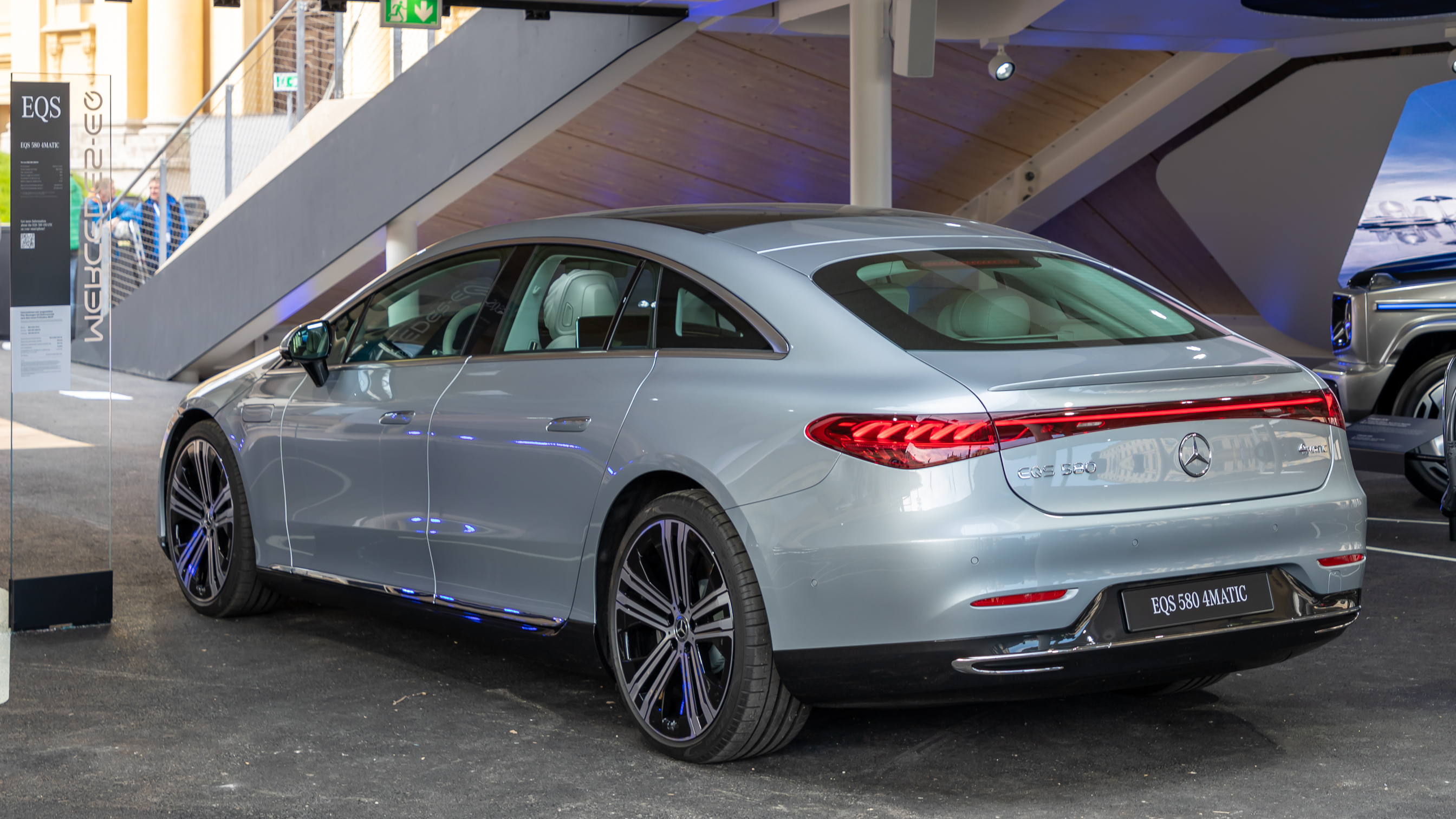
Mercedes-Benz EQS
"Next up, we also had the Mercedes Benz EQS out a few years, and this is now the updated version of the 2027 model. So what has changed? So with it, it is improving in range, efficiency, design, technology..."
The Mercedes-Benz EQS is Mercedes’ big electric luxury car. This episode is talking about a newer version that’s meant to go farther, charge faster, and feel more advanced inside and out.
The Mercedes-Benz EQS is the brand’s flagship electric luxury sedan. In this segment, the hosts discuss the updated 2027 version and focus on improvements like range, charging speed, efficiency, and updated interior tech.
800 volts architecture
"It is a whopping 122 kilowatt hour battery. It's now been updated to 800 volts at architecture. You have bigger efficiency, better performance, faster charging..."
Most EVs use a certain electrical voltage. Using an 800-volt system helps the car handle high-power charging more efficiently, which can mean faster charging at compatible stations.
An 800-volt electrical architecture is a higher-voltage design used in EVs to reduce current for the same power. That typically enables faster DC charging and improved efficiency, especially when paired with high-power chargers.
DC charging
"DC charging will be 350 kilowatt with that 800 volts. And so you can add 320 kilometers of range in just 10 minutes."
DC charging is the fast-charging option you usually find at public charging stations. It’s designed to put a lot of energy into the battery quickly compared with slower home-style charging.
DC charging is direct-current fast charging, typically used with public fast chargers. It can deliver much higher power than standard AC charging, which is why it’s closely tied to “how fast can I charge?” for EV buyers.
bi-directional charging
"It also supports bi-directional charging, vehicle to home, vehicle to grid functions."
Bi-directional charging means your EV can not only take power in, but also send power back out. That can be useful for running your home or helping the grid, if your setup supports it.
Bi-directional charging lets an EV send power back out through the charging connection. The hosts mention vehicle-to-home and vehicle-to-grid, meaning the car can potentially power a home or interact with the grid when supported by equipment and tariffs.
vehicle to home, vehicle to grid
"It also supports bi-directional charging, vehicle to home, vehicle to grid functions."
Vehicle-to-home means the EV can power your house. Vehicle-to-grid means it can potentially interact with the electric grid, depending on your charger and local rules.
Vehicle-to-home (V2H) and vehicle-to-grid (V2G) are use cases for bi-directional charging. V2H can power household loads during outages or peak pricing, while V2G can let the EV participate in grid services where regulations and hardware allow.
two-speed transmission on the rear axle
"They've introduced a two-speed transmission on the rear axle to improve acceleration and efficiency."
Some EVs use one fixed gear. A two-speed gearbox gives the car two ratio options, which can help it feel quicker off the line and also be more efficient at steady speeds.
A two-speed transmission in an EV uses two gear ratios to keep the motor operating closer to its most efficient range. On the rear axle, it can improve both acceleration and efficiency by matching motor speed to driving conditions more effectively than a single-speed setup.
Regen braking
"Regen braking has also been increased, allowing better recovery during everyday driving."
Regen braking is when slowing down helps recharge the battery. Instead of wasting all that energy as heat, the car turns some of it back into electricity.
Regen (regenerative) braking converts some of the car’s kinetic energy back into electrical energy to recharge the battery. Increasing regen can improve real-world efficiency by recovering more energy during deceleration.
Air suspension system
"Air suspension system has been upgraded with cloud-based inputs to adjust ride quality based on the road conditions."
Air suspension uses air-filled springs to make the ride smoother and more adjustable. In this case, it’s also described as using data to help the car adapt to the road.
An air suspension uses air springs instead of traditional steel springs, allowing the car to adjust ride height and damping characteristics. The segment also notes cloud-based inputs to tailor ride quality to road conditions, which is part of an adaptive comfort strategy.
LED headlamps
"...gets some visual updates. It's a redesigned front grille with an illuminated star pattern and updated LED headlamps."
LED headlamps are headlights that use LED technology. They’re common on newer cars because they can be efficient and allow designers to shape the light pattern.
LED headlamps use light-emitting diodes for illumination, often enabling better efficiency and more flexible lighting designs than older bulb types. The segment specifically mentions updated LED headlamps as part of the EQS facelift.
MBUX hyperscreen
"Inside the EQS continues the large MBUX hyperscreen setup."
The MBUX hyperscreen is Mercedes’ big digital display inside the car. It’s meant to make the dashboard feel more like a tablet or computer than a traditional instrument cluster.
MBUX hyperscreen is Mercedes’ large, integrated digital display setup inside the EQS. It’s designed to centralize controls and information, and it’s often a key part of the car’s “tech-forward” interior identity.
over the air update
"It now runs on Mercedes-Benz new MBOS software and supports over the air update."
Over-the-air updates mean the car can get new software wirelessly. That can add features or fix problems without you having to go to a service center.
Over-the-air (OTA) updates allow the car’s software to be updated remotely without visiting a dealer. For EVs, OTA can improve features, fix bugs, and sometimes update charging or efficiency-related behavior.
dual 13.1-inch screens
"Rear passengers will benefit from dual 13.1-inch screens, comfort features, heated seat belts, like who knew you needed a heated seat belt, but yeah."
The car has two big screens inside. They usually show things like maps, music, and driving info, and they can also show EV charging and energy details.
This refers to a cabin setup using two large 13.1-inch displays, typically for infotainment and driver information. Large screen layouts are common in modern EVs because they consolidate controls and can support richer navigation, media, and charging/energy views.
heated seat belts
"Rear passengers will benefit from dual 13.1-inch screens, comfort features, heated seat belts, like who knew you needed a heated seat belt, but yeah."
Some cars heat the seat belt so it doesn’t feel icy in cold weather. It’s a comfort feature, not something you’d normally expect on most cars.
Heated seat belts are a comfort feature that warms the belt webbing to reduce cold discomfort in winter. It’s an uncommon luxury EV/vehicle feature because it requires heating elements and power management integrated into the restraint system.
peak luxury electric vehicle
"Video up on the channel of a walk around with Mattis from Mercedes-Benz, yeah, like it is, peak luxury electric vehicle, big range, big tech, big comfort and yeah, we don't see too many"
They’re describing an EV that’s meant to be the most luxurious and feature-rich. Think comfort, high-end tech, and a premium driving experience.
“Peak luxury electric vehicle” is a positioning concept meaning the top-tier EV in terms of comfort, technology, and overall refinement. Listeners should interpret this as a bundle of features—often including premium materials, advanced infotainment, and efficient powertrains—rather than a specific technical term.
Kia EV2 Irish launch
"Next up, we have the Kia EV2 Irish launch, which happened on Monday of this week. So we finally got priced a couple of weeks ago. We got a"
They’re talking about when the Kia EV2 went on sale in Ireland and what it costs. Launch details are important because they tell you what you can actually buy locally.
This is a discussion segment about the Kia EV2’s launch in Ireland, including pricing and timing. Launch coverage typically matters because it affects availability, trim/feature expectations, and how the EV2 will compete locally.

Kia EV2
"We were talking to short, but we now know what's coming into Ireland with regards to the different trim levels, the different battery sizes... So we're going to get four different trim options, air, earth, GT line, which is earth with a GT package and GT plus... Comes in a 42 kilowatt... hour battery... prices starting at 28,660."
Kia EV2 is Kia’s smaller electric car. The hosts are explaining which versions you can buy in Ireland, how big the battery is in each version, and what range and pricing to expect.
The Kia EV2 is the small, more affordable electric model Kia is bringing to Ireland in multiple trim levels and battery configurations. In this segment, the hosts break down the available trims (Air, Earth, GT line, and GT plus) and the corresponding battery sizes and range expectations.
battery sizes
"...we now know what's coming into Ireland with regards to the different trim levels, the different battery sizes... Comes in a 42 kilowatt... hour battery... goes all the way up then to a 61 kilowatt hour."
In an EV, the battery size is measured in kWh. A bigger battery usually means you can drive farther before needing to charge.
Battery size in an EV is typically discussed in kilowatt-hours (kWh) and strongly influences driving range. This segment compares a smaller ~42 kWh pack versus a larger 61 kWh pack, and notes that some trims are limited to the larger battery.
trim options
"So we're going to get four different trim options, air, earth, GT line, which is earth with a GT package and GT plus..."
A trim option is basically the car’s “version” you choose. Different versions can include different features and, for EVs, sometimes different battery sizes that affect range.
“Trim options” are different versions of the same model that vary by equipment and sometimes powertrain/battery availability. In this case, the trims also determine which battery sizes and range figures you can get in Ireland.
vehicle range
"...the biggest range you'll get is 453. Once you go up to the GT line, that drops down to 413."
Range is how far the EV can go before it needs charging. Different versions of the same model can have different range numbers.
“Range” is the estimated distance an EV can travel on a full charge, and it varies by battery size and trim. The segment compares range figures across trims (including a drop for GT line/GT plus) to help listeners understand what they’re trading off for features.
AI smart assistant with open AI built in
"What have we got going on? AI smart assistant with open AI built in. Even though they're smallest electric vehicle and they're most affordable electric vehicle..."
This means the car has an AI helper that can understand more natural questions and requests. It’s powered by OpenAI, so it’s designed to feel more like a conversation than simple voice commands.
An AI smart assistant with OpenAI integration indicates the EV uses cloud/AI services to support voice or conversational functions. This can affect in-car usability for navigation, information, and potentially natural-language control of vehicle functions.
boot
"...you still get a 362 liter boot. Ireland is only going to go with the five-seater... When you fold down the seats in the five-seater, you get 1,201."
The boot is the trunk space for luggage. They’re saying how much stuff you can fit normally, and how much you can fit when you fold the back seats down.
“Boot” is the EV’s trunk cargo area, and the hosts quote both the normal volume and the expanded volume when the rear seats are folded. This is important for comparing practicality between EVs and between seating configurations.
five-seater
"Ireland is only going to go with the five-seater. It's not going to go with the four-seater as an option... because that's like separated bench."
A five-seater means the car is set up for five people. The hosts are saying Ireland won’t sell the four-seat version there, and that the different layout can affect cost.
The hosts note that Ireland will only offer the EV2 as a five-seater, even though a four-seat configuration may exist elsewhere. Seating layout affects packaging and can change cargo space and pricing.
vertical daytime running lights
"...it's still carrying that opposite United Design Language, that vertical daytime running lights and headlights, and also in the rear."
Daytime running lights are the lights that stay on in the daytime. “Vertical” describes their shape, and it’s part of the car’s overall look.
Vertical daytime running lights (DRLs) are a distinctive lighting signature used to identify the car’s design language during daylight. The hosts connect this styling to the EV2’s front and rear design consistency.
vehicle to load
"...you can head over there and have a look at that. But it is vehicle to load, vehicle to grade, et cetera, et cetera..."
Vehicle-to-load means the car can act like a power source for other things. You can plug in devices using the car’s battery.
Vehicle-to-load (V2L) lets an EV power external devices using its battery, typically through an outlet or adapter. It’s a practical feature for camping, tools, or powering household items when you’re away from the grid.
vehicle charging
"Charging, depending on the battery size, the standard or long range, 1080% in 29 or 30 minutes. So good charging to be done there."
They’re talking about how fast the EV can charge. The charging speed can vary depending on which battery version you choose.
The segment discusses charging performance in relation to battery size and whether the car is “standard” or “long range.” The key idea is that larger batteries and different configurations can change how quickly you can add energy during fast charging.
vehicle to grade
"But it is vehicle to load, vehicle to grade, et cetera, et cetera, very similar to the Mercedes-Benz we talked about."
The phrase “vehicle to grade” is being grouped with other power-sharing features. The takeaway is that the EV can potentially supply power outward, not just store it for driving.
“Vehicle to grade” is mentioned alongside vehicle-to-load, suggesting additional bidirectional power functionality (the exact meaning can vary by manufacturer/market). It generally points to the EV being able to provide power beyond just charging itself.
magma red
"There's a gorgeous magma red. It's kind of like a burgundy color... Frost blue is the halo color."
Magma red is the name of one of the EV2’s paint colors. It’s useful because color options can affect how the car looks and sometimes even cost.
“Magma red” is a specific exterior paint color mentioned for the Kia EV2. Color availability matters for buyers because some shades are limited, have different pricing, or are more common in certain markets.
Frost blue
"Frost blue is the halo color. You'll see a lot on the cars, but then you've got the black, wolf gray, white, and the silver."
Frost blue is another paint color option. The hosts call it the “halo color,” meaning it’s the special standout shade.
“Frost blue” is described as the “halo color,” implying it’s a standout or most-promoted paint option. The hosts also list other available colors, which helps listeners visualize the lineup.
long range
"...the standard range version is will be in dealerships very soon with the long range coming in July, August."
Long range means the car can drive farther on one charge. It usually comes with a bigger battery and costs more than the standard version.
“Long range” refers to a higher-capacity battery configuration that’s designed to increase driving distance between charges. The tradeoff is usually cost and sometimes weight, but it’s a key differentiator for buyers comparing EV trims.
DS Automobiles
"...we were at the DS Automobiles car launch in Goree in Wexford, and we have two cars launching the number four."
DS Automobiles is a premium car brand. Here they’re launching new models in Ireland, including electric versions, so it’s a key brand moment in the episode.
DS Automobiles is the French premium brand within Stellantis, known for design-led vehicles and a growing EV lineup. In this segment, DS is launching the No.4 and No.8 in Ireland, with both hybrid and electric options discussed.
volume seller
"This will be their volume seller just because it's more affordable."
A “volume seller” is a model expected to sell in higher numbers than a niche or halo product. The hosts imply DS No.4 is positioned as the more affordable, mainstream option in the lineup to drive sales volume.
torque
"...range of up to 450 kilometers. It’s based on that STLA platform. 343 Newton meters of torque..."
Torque is the “push” from the motor that helps the car accelerate. Higher torque usually means the car feels more responsive when you start moving.
Torque is the rotational force the motor produces, and it strongly influences how quickly an EV feels like it accelerates, especially from low speeds. The segment cites 343 Newton-meters for the DS No.4 electric setup.
STLA platform
"It’s based on that STLA platform. 343 Newton meters of torque, 18 battery modules."
An EV platform is the car’s main “architecture” that many parts are built around. STLA is Stellantis’ shared EV design, which can help make cars cheaper and easier to build.
STLA is Stellantis’ modular EV platform family used to underpin multiple electric (and sometimes hybrid) models. Using the same platform helps manufacturers standardize components and engineering, which can improve efficiency and reduce development costs across models.
20 to 80 percent
"...range of 450 kilometers, 20 to 80 percent known 29 minutes. Haven't driven this yet at the launch."
This is a way to compare charging speed. It looks at how long the car takes to go from 20% battery to 80%, which is usually faster than charging all the way to 100%.
“20 to 80 percent” is a common EV charging metric that measures how long it takes to charge from a low state of charge to a mid-high level. It’s used because charging speed typically slows as the battery fills up, so 20–80 gives a more consistent comparison between cars.
hybrid vs full electric
"...the hybrid version of the number four is surprisingly more affordable at just under 36,000 euros. So there's an 8,000 euro of a walk between hybrid and full electric..."
They’re comparing the hybrid version to the fully electric version. The hybrid can be cheaper and doesn’t rely entirely on charging, while the full electric is for people who want to drive on electricity all the time.
The hosts discuss how DS No.4 will be offered as both hybrid and fully electric, and they call out the price gap between the two. This matters because hybrid trims can reduce charging dependency, while full electric trims maximize EV-only driving and typically simplify ownership for those with home charging.
flush door handles
"So you're going to get flush door handles very similar to the DS3 E10s that we would have had in the past."
Flush door handles sit smoothly in the car’s body instead of sticking out. That shape can help the car waste less energy and go farther on a charge.
Flush door handles are integrated into the bodywork to reduce aerodynamic drag. On EVs especially, small efficiency details like this can help improve real-world range.
one pedal driving
"The 20 inch wheels stop and go one pedal driving, which is interesting on a Stalantis model, heated in front..."
One-pedal driving means you can slow down just by lifting your foot off the accelerator. It can make stop-and-go traffic easier and can also help the car recapture some energy.
One-pedal driving is an EV driving mode where lifting off the accelerator slows the car significantly, often allowing you to come to a stop with minimal brake use. It’s designed to make city driving smoother and can help with energy recovery.
Stalantis
"The 20 inch wheels stop and go one pedal driving, which is interesting on a Stalantis model..."
The host is referring to Stellantis, the multinational automaker behind brands like DS. Mentioning it provides context for platform/technology decisions and how features show up across the group’s EV lineup.
360 camera
"...3D LED rear lights, and the light blade on the front, 360 camera wireless phone charger, and the head up display..."
A 360 camera shows a “bird’s-eye” view around the car. It makes parking and tight maneuvers easier because you can see what’s near you.
A 360 camera system uses multiple cameras around the vehicle to create a top-down or stitched view. It helps with low-speed maneuvering, parking, and detecting obstacles around the car.
wireless phone charger
"...the light blade on the front, 360 camera wireless phone charger, and the head up display..."
A wireless phone charger charges a compatible smartphone without plugging in a cable, typically using inductive charging. It’s usually integrated into the center console or dashboard area.
head up display
"...wireless phone charger, and the head up display on the Palais version."
A head-up display puts important driving info in your line of sight, usually on the windshield. That way you can check things without taking your eyes off the road.
A head-up display (HUD) projects key information—like speed, navigation cues, or warnings—onto the windshield so you don’t have to look down at the instrument cluster. It improves glance efficiency while driving.
Alcantara interior
"Then the Etole, which is the top top. This gets an absolutely gorgeous blue Alcantara interior..."
Alcantara is a premium fabric used on some car interiors. It feels soft and looks more “luxury” than basic plastics.
Alcantara is a soft, suede-like synthetic material often used for premium interiors. It’s valued for its tactile feel and upscale look, especially in performance-leaning or luxury trims.
active scan suspension
"Air quality system to clean the cabin, the DS luminous screen, active scan suspension. So as soon as it's scanning the road in front of it and then adjusting the suspension to suit the road conditions..."
Active scan suspension uses sensors/cameras to monitor the road ahead and then adjusts damping to match conditions. The goal is to reduce body motion and improve ride comfort and control.
DS luminous screen
"Air quality system to clean the cabin, the DS luminous screen, active scan suspension."
The DS luminous screen is a branded infotainment/visual display feature described as part of the DS number eight’s interior tech. It’s highlighted alongside other cabin systems, suggesting a premium, design-forward approach.
electro chrome
"...and then the electro chrome and electrically heated folding exterior mirrors as well. Palais coming in Ireland..."
Electrochromic glass can automatically darken or change tint when needed. It helps reduce glare and can improve comfort without you having to adjust anything by hand.
“Electro chrome” here refers to electrochromic glass, which can change tint electronically. On cars, it’s often used for windows or mirrors to manage glare and heat without manual adjustment.
DS automobile number eight
"somebody be tempted into going into a DS automobile number eight? The showroom in Dublin is on the Navin Road, which Bright Motor Group,"
DS is a car brand, and “No.8” is the name of one of their newer models. The host is talking about going to see it in a DS showroom in Dublin.
The speaker is referring to DS Automobiles’ “DS No.8,” a model in DS’s lineup. DS is a French brand within the Stellantis group, and the No.8 is positioned as a more premium, design-forward electric vehicle compared with mainstream EVs.
Bright Motor Group
"The showroom in Dublin is on the Navin Road, which Bright Motor Group, and so if you're interested in finding out more,"
Bright Motor Group is the company running the showroom the host visited. It’s basically the local dealer for that brand in Dublin.
Bright Motor Group is mentioned as the dealer group associated with the DS showroom location in Dublin. Dealer groups matter because they influence how you experience the brand—test drives, local inventory, and aftersales support.

Nissan Micra
"we had the Nissan Ireland launch in, got the cars and got to drive up to Cavern in Virginia, Virginia and Cavern, and we got to drive the Nissan Micro on Irish roads... This is the sixth generation. Micra's been on the roads since 1983."
The host discusses the Nissan Micra’s sixth generation, emphasizing that it’s an EV and highlighting key ownership details like pricing, trims, battery sizes, charging speed, and in-car tech. They also note it shares a platform with the Renault 5, which is a common strategy to reduce development costs while keeping each model’s styling distinct.
International Press Drive in Copenhagen
"I would have driven it at the International Press Drive in Copenhagen, so we have done a great job."
This was a press event where journalists got to drive the car before launch. The host is saying they already drove it in Copenhagen, and now they’re driving it again on Irish roads.
An International Press Drive is a media event where journalists get early access to drive new cars. It’s relevant because the host is comparing their prior driving experience (Copenhagen) with the Irish road drive.

5 Renault 5
"...great job. It is sharing the same platform as the Renault 5, but it is very much styled in its own with the ..."
The 5 E-Tech Electric is an electric car. The podcast says it uses the same basic “under the skin” design as the Renault 5, but it looks different. That means it’s related in engineering, while still having its own style.
The 5 E-Tech Electric is an electric car that shares its underlying platform with the Renault 5, while using its own styling and design cues. The podcast mentions it in the context of how it’s built and how it looks, which is important because platform sharing can affect packaging, ride, and technology. It’s discussed as part of the broader EV news cycle around new small electric models.
sharing the same platform as the Renault 5
"It is sharing the same platform as the Renault 5, but it is very much styled in its own with the circular headlights."
The Micra and Renault 5 are built on the same basic “car skeleton.” That usually helps companies make cars faster and cheaper, while still letting them look and feel different.
Platform sharing means the Micra and Renault 5 use the same underlying vehicle architecture (major structural and engineering components). This can lower costs and speed up development, while manufacturers differentiate the cars through styling, tuning, and equipment.

Renault 5
"It is sharing the same platform as the Renault 5, but it is very much styled in its own with the circular headlights."
They bring up the Renault 5 because it’s the Micra’s “platform sibling.” Even though they share the same basic design foundation, the cars can still look and feel different.
The host mentions the Renault 5 because the Nissan Micra shares its platform with it. Renault 5 is an important reference point for understanding the underlying EV architecture and how manufacturers differentiate models even when they share major components.
40 kilowatt-hour
"the Engage, the Advance and the Evolver, the three different trims, and the battery sizes are 40 kilowatt-hour giving you a WLTP range of around about 320"
40 kilowatt-hours is the size of the car’s battery. Bigger battery usually means more range, but it can also affect price.
The speaker lists a 40 kWh battery option for the Nissan Micra, associated with a WLTP range of about 320. Battery capacity is a key driver of range and cost, and different trims may pair with different battery sizes.
52 kilowatt-hour
"and then a 52 kilowatt-hour giving you a WLTP range of around about 420."
52 kilowatt-hours is a larger battery option. It generally means you can drive farther before needing to charge.
The speaker also mentions a 52 kWh battery option, paired with a WLTP range of around 420. This is the larger battery choice, typically offering more usable distance between charges.
14 different colour options
"You have the option of two-toning it with a black roof as well. There's 14 different colour options and there's also a grey roof."
They say you can choose from 14 different exterior colours. The car can also be customized with different roof colours for a two-tone look.
The host notes the Micra offers 14 different colour options, including two-tone combinations. Color variety is often tied to trim and personalization packages, and it can affect how the car looks in person compared with marketing photos.
two-toning it with a black roof
"You have the option of two-toning it with a black roof as well. There's 14 different colour options and there's also a grey roof."
Two-tone means the roof is a different colour than the rest of the car. In this case, you can get a black roof for a more stylish look.
Two-tone paint refers to combining different colours for the body and roof, here specifically a black roof option. This is a popular EV customization choice because it can make the car’s proportions look sportier or more distinctive.
15 to 80% charging in 30 minutes
"15 to 80% charging in 30 minutes, and the same for the standard range battery or the large-round battery."
They’re saying the car can charge pretty quickly—going from low to a more usable level in about half an hour. Charging usually slows down as the battery gets fuller.
This is a fast-charging claim describing how long it takes to charge from 15% to 80% state of charge. EV charging is usually quickest in the middle range and slows as the battery fills up, so 15–80% is a common benchmark for real-world usability.
Google built-in system
"It has the app. It has the ability of downloading apps via the Google built-in system. You have"
“Google built-in” refers to an infotainment platform that integrates Google services and supports app functionality. For EV buyers, this can affect navigation quality, voice control, and how easily you can add features over time.
driving assistance
"Lots of driving assistance as well. The Nissan Micra, very good. It's the exact same price as the Renault 5..."
Driving assistance is technology that helps you drive—like warning you about hazards or helping keep the car in the lane. It’s meant to make driving easier and safer, but you still have to pay attention.
“Driving assistance” refers to driver-aid technologies that help with tasks like maintaining lane position, adaptive cruise control, collision warnings, and automatic emergency braking. These systems can reduce workload and improve safety, but they don’t replace attentive driving.
Nevo EV Survey
"We have the Nevo EV Survey launched after the podcast was put out last week, so if you haven't already filled that in... this survey is not open just to EV drivers, it's open to non-EV drivers as well..."
This is a survey the hosts are asking listeners to fill out. They want feedback from both people who already drive EVs and people who don’t yet.
The Nevo EV Survey is a listener-focused questionnaire the hosts say was launched after the podcast went out. It’s positioned as open to both EV drivers and non-EV drivers to gather broader opinions about electric vehicles.
pre-paid clever cards
"...so if you haven't already filled that in, there's a chance of winning a 5x50, well none of them, but we're giving away 5x50 pre-paid clever cards. Always handy to do it."
“Clever cards” are commonly used in Ireland for public transport and related services, and “pre-paid” indicates they’re loaded with credit in advance. Here, they’re used as a giveaway incentive for completing the survey.
Nevo Driving Experience in Kildare
"Last but by no means least, on Sunday week, we are going to be at the Nevo Driving Experience in partnership with Pack Viral Down in the current race course in Kildare... it looks like this is going to be sold out..."
This is an EV event in Kildare where you can go learn about electric cars and often try them out. The hosts say it may sell out, and many car brands will be there.
The Nevo Driving Experience is an event where attendees can learn about and test electric vehicles. The hosts mention it’s in partnership with Pack Viral Down at the current race course in Kildare, with multiple brands present for displays and test drives.
Pack Viral Down
"Last but by no means least, on Sunday week, we are going to be at the Nevo Driving Experience in partnership with Pack Viral Down in the current race course in Kildare."
Pack Viral Down is mentioned as a partner for the Nevo Driving Experience event. In this context, it’s an event/production partner rather than an automotive manufacturer or supplier.
Polestar
"...on the day we're going to have Polestar, MG4, Jeep, Fiat, Kia, BMW, Tesla, Nissan, Audi, Škoda, inside..."
Polestar is an electric-car brand. They’re listed as one of the brands you can expect to see at the event.
Polestar is an EV-focused brand known for performance-oriented electric cars. The hosts list it among the brands attending the Nevo Driving Experience, implying attendees can see and potentially test Polestar vehicles.
Tesla
"...Polestar, MG4, Jeep, Fiat, Kia, BMW, Tesla, Nissan, Audi, Škoda, inside..."
Tesla makes electric cars. They’re mentioned as being at the event so people can learn about and compare EVs.
Tesla is a major EV manufacturer and one of the most recognizable names in electric vehicles. Its presence at the event suggests attendees can compare Tesla models directly with other EV brands.
BMW
"...Kia, BMW, Tesla, Nissan, Audi, Škoda, inside, you can have a look at them..."
BMW is a well-known automaker that offers electric vehicles alongside its traditional lineup. The hosts include BMW among the brands attending, indicating EV options from BMW will be available for viewing and test drives.
Audi
"...Tesla, Nissan, Audi, Škoda, inside, you can have a look at them..."
Audi is a premium automaker with an expanding EV lineup. Mentioning Audi in the brand list signals attendees can explore Audi’s electric offerings at the Nevo Driving Experience.
pre-owned test drives
"...one or two of the brands are bringing pre-owned, and they're going to have test drives events..."
“Pre-owned” means used vehicles, and the hosts say some brands will bring used cars for test drives. This can broaden what attendees can try, especially if new inventory is limited.
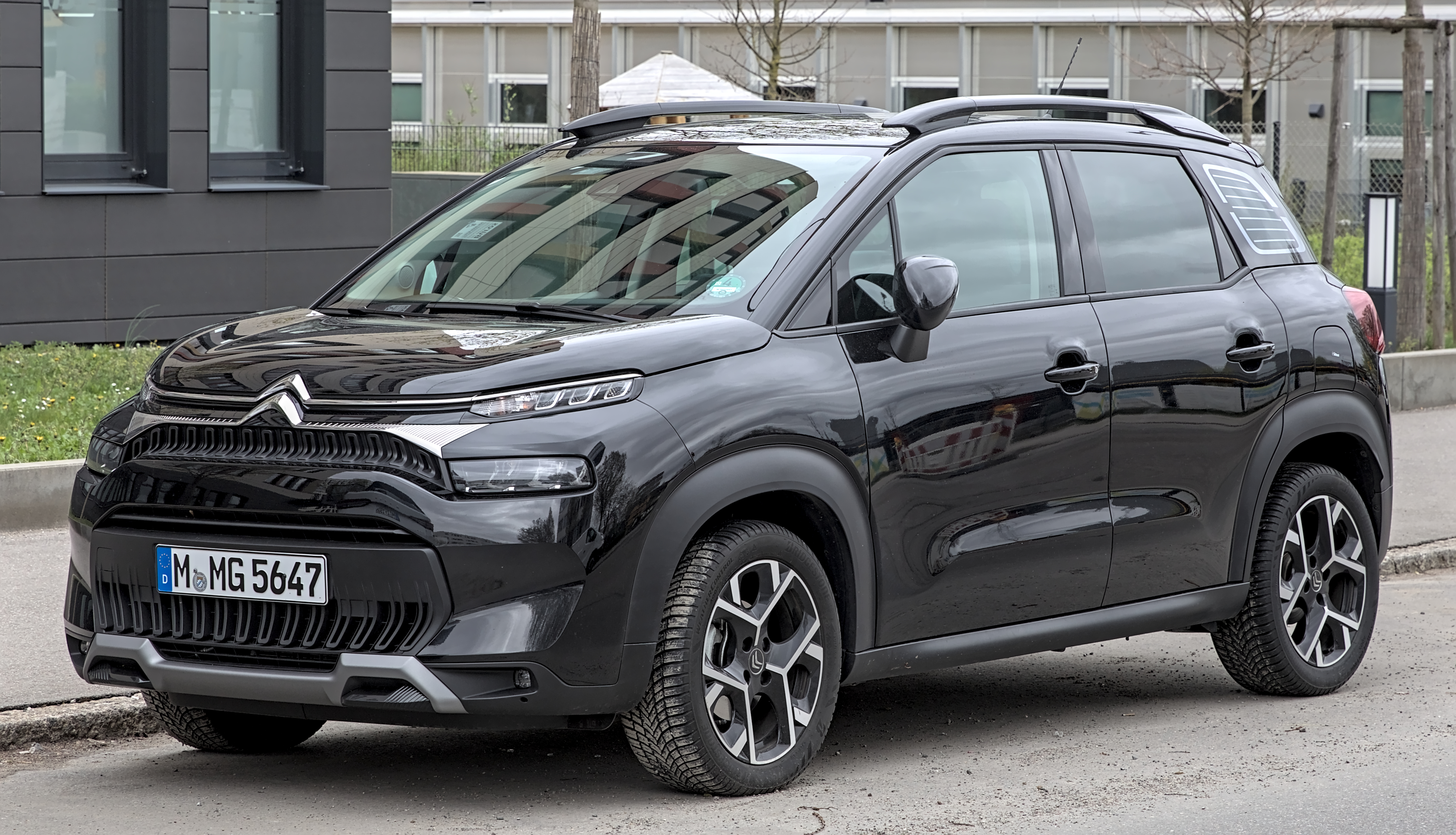
Citroën ë-C3 Aircross
"This week I am driving the Citroen EC3 Aircross, really looking forward to that, we've got some embargoed content going out early next week..."
This is Citroën’s electric SUV. They’re driving it to see how it feels day-to-day—like comfort, ease of driving, and how practical it is.
The Citroën EC3 Aircross is an electric compact SUV from Citroën. In an event context like the Nevo Driving Experience, it’s typically discussed in terms of real-world driving feel, charging behavior, and everyday usability rather than just spec-sheet numbers.

Volkswagen Id3
"This week we also put out a video on the ID3 Nevo... we're going to have Simon on the podcast next week talking about the ID3 Nevo..."
The ID3 is Volkswagen’s electric car (a hatchback). They’re planning to talk about it more next week, including what it’s like to drive and use in real life.
“ID3” refers to the Volkswagen ID.3 electric hatchback, and “Nevo” appears to be the event/media branding around the car. The hosts are setting up an interview to discuss the ID.3 in more depth, likely covering how it drives and what it’s like to live with.
Request an Explanation
Heard something you'd like explained? We'll add it to this episode.
Sign in to request explanations for terms you heard.
Want to learn more?
Browse our glossary for plain-English explanations of automotive terms, jargon, and concepts.
Help improve this episode
See something that's not quite right? Our annotations are AI-generated and can sometimes miss the mark. Click the flag icon on any annotation to suggest a correction.