
Lucid Gravity Review, Chinese Carmaker Builds in Spain, Chicago Drive-In Magic
About this episode
Lucid Gravity gets a reality-check: early software glitches included “no sound” and even a drivability moment where “I lost throttle input,” plus a lockout where “The lucid gravity locked itself.” The hosts also compare tech and value across the market—Toyota Corolla Cross Hybrid town MPG hit “as high as 55, as low as 49 MPG,” while affordability debates turn to insurance, repairs, and EV economics. Between rumors (Range Rover GT, Ford/Geely in Spain) and a Chicago drive-in detour, the episode blends car reviews with industry and everyday practicality.
Jill and Tom open the show by wishing Chicago radio friend and legend Steve King a happy birthday. Steve shares his birthday with none other than Mick Jager.
Tom shares details--what few there are--regarding a new Range Rover model due in U.S. showrooms within the next 36 months. The Range Rover GT is a sedan-like midsize/large crossover that will debut as an EV, and be made available later as a gasoline/hybrid model. Given its low profile, Tom questions the extent to which the GT will be a true off-road performer, like other Range Rover models.
The hosts talk about the planned hiatus of the Honda Ridgeline midsize pickup truck. The truck is schedule to disappear from Honda showrooms after the 2026 model year, reappearing for the 2028 or 2029 model year. The new Ridgeline will be completely redesigned, and is said to feature a hybrid V6 powertrain.
Still in the first segment, Jill and Tom review the new Lucid Gravity electric midsize crossover. The high-design EV mostly impresses, but a few software glitches left the hosts scratching their heads.
In the second segment Jill and Tom welcome industry analyst Jamie Butters to the program. Jamie shares news regarding his new radio show, and walks the hosts through a number of big stories that broke this past week, including Ford opening a factory in Spain to Chinese-car production.
In the last segment, Jill is subjected to Tom's "Which is Cheaper?" quiz, and the duo chat with producer Margaret about the team's group visit to Chicago's legendary Superdawg Drive-in. Listen in to hear what Tom, a vegetarian, orders at the Midwest's most-popular Drive-in.
Hosted by Simplecast, an AdsWizz company. See pcm.adswizz.com for information about our collection and use of personal data for advertising.
download their app
"That's a known problem on the lucid, air and the gravity. So did you download the app? [120.6s] I don't know what happened."
They’re talking about using the phone app that goes with the car. The app can help you manage the car remotely—especially if you get locked out.
This refers to using the vehicle’s companion smartphone app for remote functions like checking status and controlling locks. For modern EVs, the app is often the primary way to recover from lockouts or manage access when the car is connected to the internet.
off-roader
"Is it still going to be a good off-roader? I can't imagine having a Land Rover that is at least not competent."
An off-roader is a vehicle meant for rough roads—like dirt, gravel, and trails. The hosts are wondering if this new, sleeker Range Rover will still be good at that, or if it’ll be more of a street-focused car.
An “off-roader” is a vehicle designed to handle unpaved surfaces and rough terrain, typically with features like higher ground clearance and traction-focused drivetrain tuning. The hosts are questioning whether a more sedan-like, lower-looking Range Rover would still be capable off-road.

Range Rover
"I mean, it can't do some of the big heavy lifting that the Range Rover and Discovery and Defender can do, but it can still do some hard things."
The Range Rover is a luxury SUV from Land Rover. It’s known for being able to handle rough roads and trails, not just city driving.
The Range Rover is Land Rover’s flagship SUV line known for luxury plus serious off-road ability. In this segment it’s used as a benchmark for how much “heavy lifting” an upcoming model might (or might not) match.

Defender
"I mean, it can't do some of the big heavy lifting that the Range Rover and Discovery and Defender can do, but it can still do some hard things."
The Defender is Land Rover’s tough, off-road-focused SUV. People bring it up when they’re talking about vehicles that can handle rough trails.
The Land Rover Defender is the brand’s most iconic off-road SUV, designed for serious trail and rugged use. In this segment it’s mentioned alongside Range Rover and Discovery to set expectations for off-road capability.

Discovery
"I mean, it can't do some of the big heavy lifting that the Range Rover and Discovery and Defender can do, but it can still do some hard things."
The Discovery is a Land Rover SUV that can handle more than just regular roads. It’s often considered capable off-road for an everyday family vehicle.
The Land Rover Discovery is a family-oriented SUV that’s also built for off-road capability. Here it’s grouped with other Land Rover models as a reference point for off-road “heavy lifting.”
trail rated
"I mean, even Jeep has some Jeeps that are not trail rated. So maybe it'll be like an off-road capable but not trail rated vehicle."
“Trail Rated” is a label Jeep uses to say a vehicle is meant for real off-road trails. It usually means it has the right off-road features to handle rough terrain.
“Trail Rated” is a Jeep-specific certification/marketing label indicating a vehicle is engineered and tested for off-road trail use. It generally implies hardware and capability aimed at tougher off-road conditions than a typical crossover.

Jeep
"I mean, even Jeep has some Jeeps that are not trail rated."
Jeep is a car brand that’s famous for off-road vehicles. In this segment, the host is saying some Jeep models aren’t built or certified for the toughest trails.
Jeep is a brand known for off-road-focused vehicles, but the host notes that not every Jeep is “trail rated.” The discussion uses Jeep as an example of how some models are positioned for capability without being the most hardcore.

Jeep Compass
"You know, and they were building things like the Compass that were never really that interesting. Though the current Compass was available and I think it's still available in trail-hawk form."
The Jeep Compass is a smaller Jeep SUV. In this segment, the host is saying it wasn’t really designed to be a top off-road performer.
The Jeep Compass is a compact SUV that’s often positioned more for everyday driving than serious off-road. The host criticizes it as “not especially good off-road,” contrasting it with more trail-focused Jeep models like the Compass in Trailhawk form.
flexible architectures
"So it's one of these flexible architectures that everyone talks about. Multi-fuel strategy."
A “flexible architecture” is a vehicle design that can be built in different versions. In this case, it means the same basic platform can be used for electric and hybrid versions.
“Flexible architectures” refers to vehicle platforms designed to support multiple powertrain types—like battery-electric and hybrid—without starting from scratch. The host connects it to the idea that the same underlying design can be adapted for different drivetrains.
Multi-fuel strategy
"So it's one of these flexible architectures that everyone talks about. Multi-fuel strategy."
A “multi-fuel strategy” means the automaker plans for more than one kind of power source. Here, it’s basically electric first, with a possible hybrid option later.
A “multi-fuel strategy” is a planning approach where a company designs vehicles to run on more than one type of energy source. In this context, it’s about offering electric first and then potentially adding a gas hybrid later using the same platform approach.
marketing speak
"Members of the media like to call it, or not the media, I'm sorry, the PR folk. Yeah. The marketing speak."
“Marketing speak” is a phrase for polished, non-technical language used to describe products in a way that sounds appealing but may be vague. The host uses it to critique how PR frames the “multi-fuel strategy” idea.
Honda Acura
"So anyway, that Range Rover is due maybe as a 2028 model... So it's one of these flexible architectures that everyone talks about... So Honda Acura going through a weird time, right?"
Honda is the main car brand, and Acura is Honda’s luxury brand. The host is hinting that both are dealing with some changes or challenges right now.
Honda and Acura are Honda’s main brand and its luxury division, respectively. The host says they’re “going through a weird time,” which signals a broader brand/market discussion rather than a specific model review.

Acura Rdx
"We know the Acura RDX is going to disappear for a little while. Yep. And now Acura's volume car and that's their compact crossover."
The Acura RDX is a compact luxury SUV/crossover from Acura. It’s the kind of car people buy for daily driving, but with a more “fun to drive” vibe than many basic SUVs. The hosts are saying Acura is pausing it for a while, which can change how well Acura sells in that category.
The Acura RDX is Acura’s compact luxury crossover, known for blending everyday practicality with a more driver-focused feel than many mainstream crossovers. In this segment, the hosts discuss it being temporarily discontinued, which matters because it affects Acura’s compact-crossover lineup and sales volume.
EV architecture
"but I think the crux of the situation at Honda is they spent a lot of money building up an EV architecture, infrastructure, not infrastructure, but putting a lot of money into EVs and then canceled it at the last minute, at the ninth hour."
EV architecture is the “design blueprint” for an electric car. It covers how the battery and electric parts are built into the vehicle from the ground up. The point here is that Honda spent money planning that blueprint and then stopped, which affects what they can fund next.
EV architecture refers to the underlying vehicle design platform for electric cars—things like battery placement, motor integration, and how the car’s structure is engineered to support electrification. The hosts argue Honda invested heavily in this EV platform work, then canceled it, leaving money tied up that couldn’t be used elsewhere.

Honda Civic
"they're spending that money on building the Accord, the Civic, [480.0s] which are, I mean, I don't know if they're more popular than the RDX."
The Honda Civic is a popular Honda compact car. In this conversation, it’s brought up as another model that sells well in the U.S.
The Honda Civic is a compact car that’s one of Honda’s biggest U.S. sellers, typically offered as a sedan and hatchback. The hosts mention it alongside the Accord to illustrate which Honda models are strong sellers.
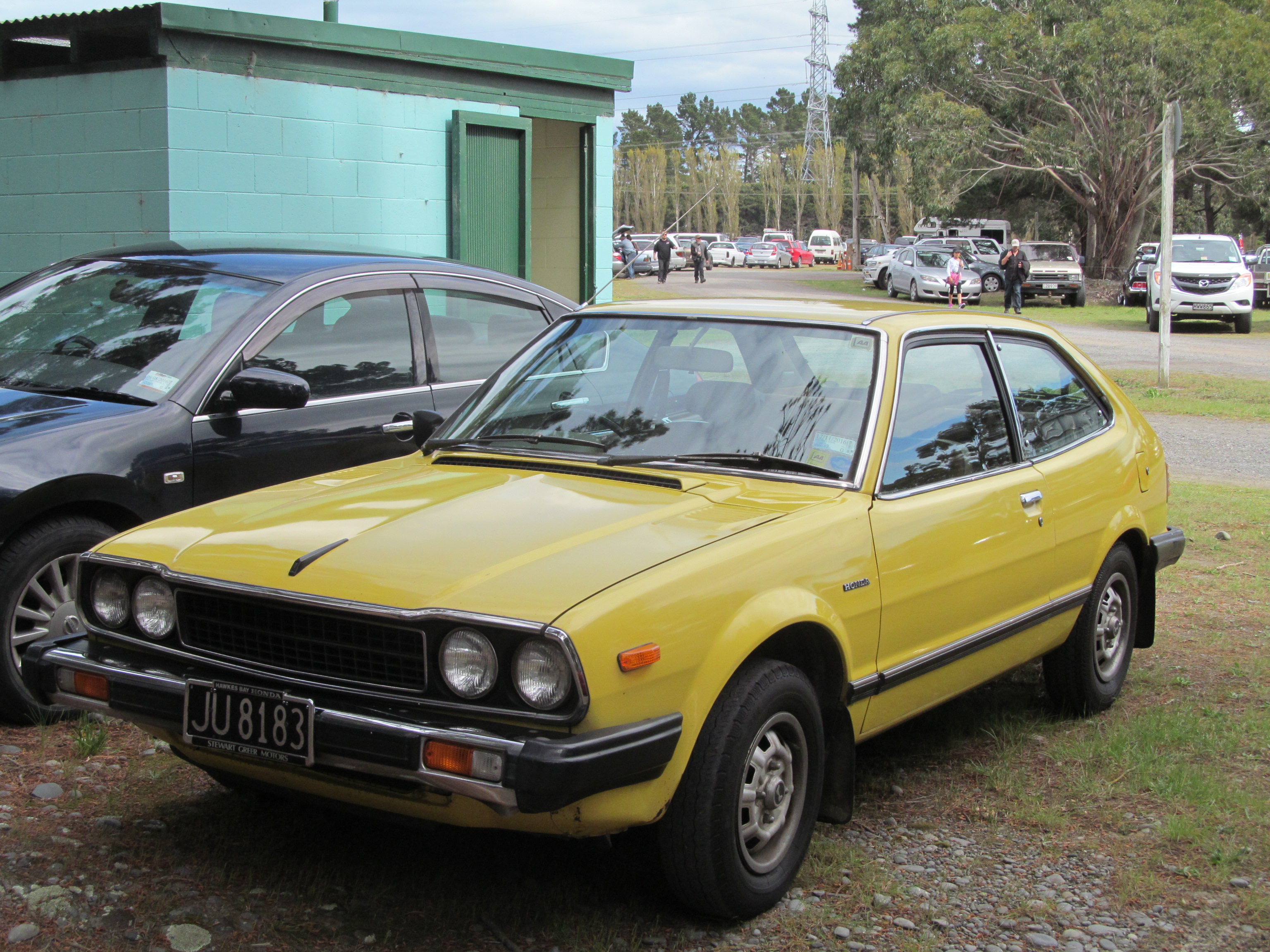
Honda Accord
"But you're also not, you know, they're spending that money on building the Accord, the Civic, [480.0s] which are, I mean, I don't know if they're more popular than the RDX."
The Honda Accord is a very common Honda model in the U.S. It’s a regular family car that lots of people buy. Here, they’re using it as an example of a Honda that sells well.
The Honda Accord is a mainstream midsize sedan/fastback that’s known for being a high-volume, family-friendly car in the U.S. In this segment, it’s mentioned as part of Honda’s lineup that sells well, contrasting with slower-selling models.

Honda Pilot
"Every single Honda product sells well in the U.S. except for the pilot. [502.9s] And I don't know how the prelude is doing right now, but that's such a special interest thing."
The Honda Pilot is a family SUV with three rows of seats. In this segment, they say it’s the only Honda model that doesn’t sell as strongly as the others in the U.S.
The Honda Pilot is a three-row midsize SUV aimed at families and buyers who need space and practicality. The host claims it’s the one Honda product that doesn’t sell as well as the rest in the U.S., making it a notable exception in their sales discussion.

Honda Prelude
"And I don't know how the prelude is doing right now, but that's such a special interest thing. [508.5s] It doesn't matter."
The Honda Prelude was a sporty Honda coupe that never had the same mass-market popularity as models like the Civic. The host is basically saying it’s a niche car and they’re not sure how it’s doing.
The Honda Prelude is a discontinued Honda sports coupe that became a niche “special interest” model compared with Honda’s mainstream cars. Here, it’s mentioned as something the host isn’t sure is doing well, implying limited demand versus the brand’s usual sellers.
3.5 liter V6
"This 3.5-liter V6 has been around forever, and it's a honey. [520.7s] It's a sporty, wonderful sounding engine with a lot of willing revviness."
This is a type of engine: six cylinders arranged in a V shape, with a total size of 3.5 liters. The host is saying it sounds good and revs freely, but it needs updating.
A 3.5-liter V6 is an engine with six cylinders arranged in a “V” shape, with a total displacement of 3.5 liters. In this segment, the host praises it for being willing to rev, but says it needed updates before being carried forward into a hybrid plan.
hybrid
"So they've got to get that set up, and they're going to bring it back as a hybrid, according to rumors. [535.3s] So this was built in Alabama."
A hybrid uses both a gas engine and an electric motor. The idea is that the car can use electricity sometimes and recover energy, which can help fuel economy.
A hybrid powertrain combines an internal-combustion engine with an electric motor and battery. The host says the Pilot will be brought back as a hybrid, which typically changes how the vehicle accelerates, recovers energy, and can improve efficiency.

Honda Ridgeline
"they will be making more pilots and passports in that factory while the Ridgeline is out of production. [546.4s] And for people who don't know, I don't know if we covered this. [548.7s] The Ridgeline is Honda's midsize pickup truck."
The Honda Ridgeline is Honda’s midsize truck. They’re pointing out that it’s built more like a car (unit body), not like traditional trucks with a separate heavy frame, so it’s not aimed at the biggest towing numbers.
The Honda Ridgeline is Honda’s midsize pickup truck, positioned against compact/midsize competitors like the Nissan Frontier and Ford Ranger. The hosts highlight its construction style—unit body rather than body-on-frame—meaning it generally focuses more on ride comfort and car-like driving than maximum towing.
body on frame
"But it is a unit body construction vehicle. [560.6s] It is not batting on frame. [562.3s] It doesn't generate the really big towing numbers or payload numbers, though most people don't need them."
Body-on-frame is how many traditional trucks are built: a separate heavy frame supports the body. The host is saying the Ridgeline doesn’t use that approach, so it’s not designed for the same kind of heavy-duty towing feel.
Body-on-frame is a traditional truck architecture where the vehicle rides on a separate ladder frame, with the body mounted on top. The host says the Ridgeline is not “on frame,” meaning it doesn’t use this layout, which usually correlates with different ride/handling and towing characteristics.
towing numbers
"It doesn't generate the really big towing numbers or payload numbers, though most people don't need them."
Towing numbers are how much weight a vehicle is rated to pull. They’re saying the Ridgeline isn’t built to tow the biggest amounts compared with more traditional trucks.
Towing numbers are the maximum weight a vehicle is rated to pull, usually expressed in pounds or kilograms. The host notes the Ridgeline doesn’t “generate the really big towing numbers,” implying it’s not optimized for maximum towing compared with body-on-frame trucks.
payload numbers
"It doesn't generate the really big towing numbers or payload numbers, though most people don't need them."
Payload numbers are the maximum cargo weight the truck can carry. The host is saying the Ridgeline doesn’t focus on the very highest payload ratings.
Payload numbers are the maximum weight the vehicle can carry in addition to passengers, typically including cargo in the bed or trunk. The host pairs this with towing numbers to explain that the Ridgeline isn’t aimed at the highest capacity figures.

Toyota Corolla Cross
"[591.6s] And that is the Corolla Cross Hybrid. [595.2s] So this is Toyota's smallest crossover available in the U.S. [599.2s] It's available with a hybrid drivetrain. [604.5s] One of them is price. [611.5s] But I did just spend a week in this vehicle and hard not to be impressed by the build quality, the ride in handling, [620.5s] and my freaking fuel economy."
The Toyota Corolla Cross Hybrid is a small SUV that uses a gas engine plus an electric motor. The host says it’s surprisingly efficient and feels quick off the line because the electric part helps right away.
The Toyota Corolla Cross Hybrid is Toyota’s small crossover with a hybrid drivetrain, aimed at U.S. buyers who want SUV practicality without giving up fuel efficiency. The host highlights its week-long real-world results (about 49–55 MPG) and notes that Toyota’s hybrid system provides electric boost immediately from a stop, making it feel more powerful than you’d expect.
miles per gallon
"[623.6s] I kept resetting it just to see what was going on. [627.2s] I saw as high as 55, as low as 49 MPG, just driving around town. [632.5s] That's insane."
MPG (miles per gallon) is a fuel-economy measure that tells you how far the car can travel on one gallon of fuel. The host is using it to report real-world efficiency while driving around town.
electric boost
"For people who don't know, the way Toyota does its hybrids is the correct way, [645.2s] where there's electric boost right away from when you pull away from a light, [649.5s] and it just feels like you're driving something with a bigger engine."
Electric boost is when the electric motor adds extra push right when you pull away. That makes the car feel quicker without waiting for the gas engine to spin up.
Electric boost is the immediate assistance from the electric motor when you accelerate, especially from a stop. In Toyota’s hybrid setup (as described here), that instant torque helps the car feel responsive and like it has a larger engine.
resale value
"But on the other hand, your resale value is likely to be very high, [674.7s] and you're going to save money on gas."
Resale value is what your car is worth when you sell it later. If a car keeps its value, you may lose less money over time.
Resale value is the amount you can sell a vehicle for later, after it’s been used. The host suggests that a higher starting price can be offset if the car holds its value well when you go to sell it.
gas
"But on the other hand, your resale value is likely to be very high, [674.7s] and you're going to save money on gas. [677.3s] Trade-offs."
Here, “gas” means the fuel you buy to run a gas-powered car. The host is saying the total cost can balance out if you spend less on fuel.
In this context, “gas” refers to fuel costs for a gasoline-powered vehicle. The host is framing the ownership cost trade-off: you might pay more upfront but spend less over time depending on fuel economy.
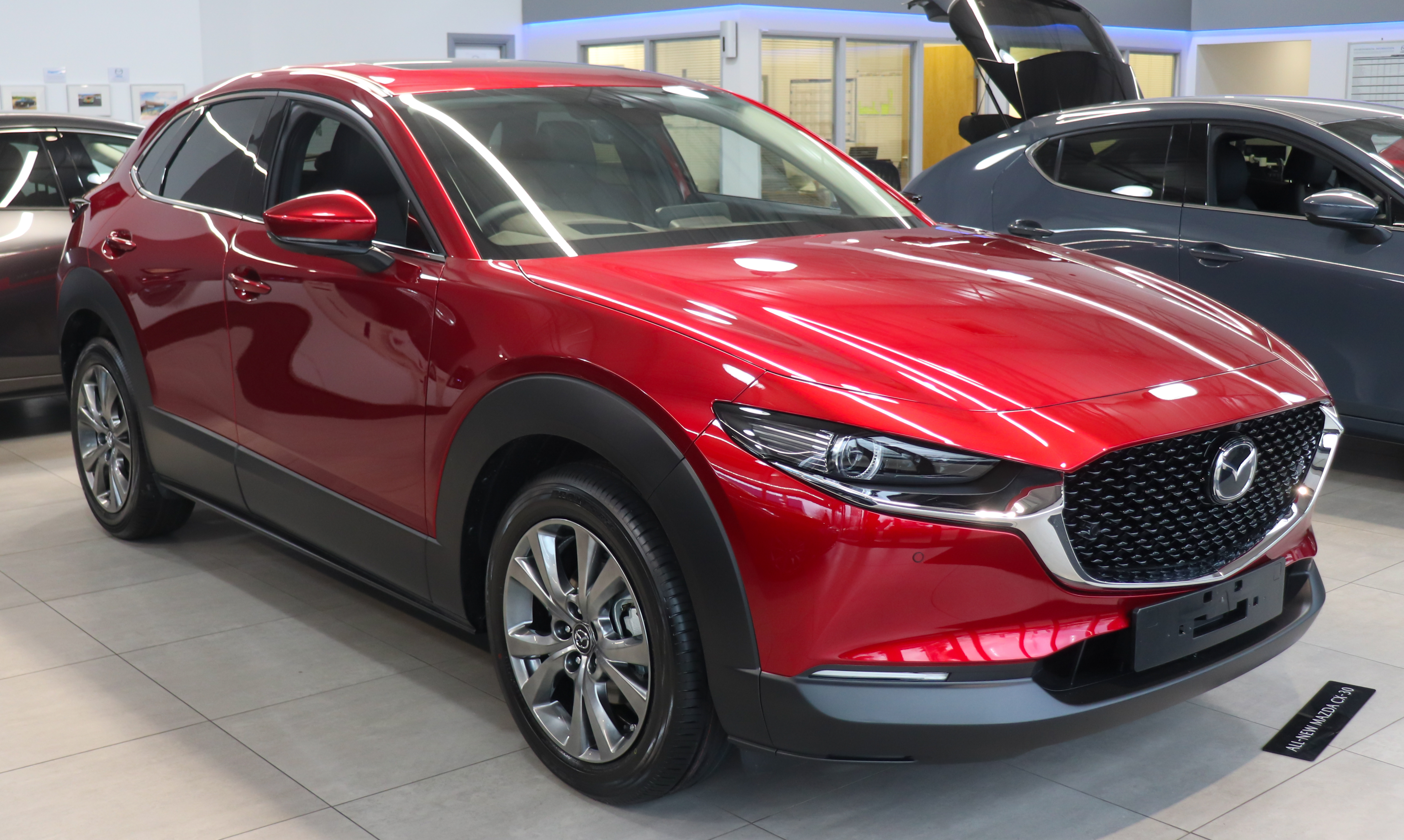
Mazda Cx30
"And somehow the Mazda CX-30 comes in cheaper, which maybe it shouldn't. [702.2s] I don't know, because it's such a good car with such a great nice luxury interior."
The Mazda CX-30 is a small crossover SUV. The host is saying it can be cheaper than what someone might expect if they’re looking for a sporty, nicer-feeling interior.
Mazda CX-30 is a compact crossover that’s positioned as a more affordable alternative when shoppers want something that still feels upscale. In this segment, the host notes it “comes in cheaper” and calls out its “luxury interior,” tying it to the trade-off between sporty wants and budget reality.

Lucid Air
"Since 2021, Lucid has been selling the air. [723.9s] A large sedan that was very similar, I think, conceptually to the Tesla Model S."
Lucid Air is Lucid’s main electric sedan. It’s the kind of car people compare to Tesla’s Model S, and the host is pointing out that Lucid has offered it for years with a big spread in price depending on the version.
Lucid Air is Lucid’s flagship large sedan and one of the most notable EVs aimed at competing with Tesla’s Model S. In this segment, the host highlights how Lucid Air has been sold since 2021 and how its pricing spans a very wide range.

Tesla Model S
"A large sedan that was very similar, I think, conceptually to the Tesla Model S. [729.5s] And it had a very, very broad price range that it was covering."
Tesla Model S is a well-known electric luxury sedan. The host is using it as a comparison to explain the kind of car Lucid Air is trying to be.
Tesla Model S is a benchmark-setting all-electric luxury sedan that many other EVs are compared against. Here, the host uses it as a reference point for what Lucid Air is “conceptually” similar to, especially in the large-sedan EV category.

Tesla Model
"...at was very similar, I think, conceptually to the Tesla Model S. And it had a very, very broad price range that..."
The Tesla Model Y is an electric SUV that runs on batteries instead of gasoline. Its price can vary a lot based on the specific version and when it was made. That’s why it often shows up in conversations about EV costs.
The Tesla Model Y is an all-electric compact SUV designed for everyday driving with a battery-powered powertrain. It’s frequently discussed because it’s a high-volume Tesla model and has a wide range of pricing depending on configuration and model year. In a podcast, it’s a common reference point when talking about how EV pricing and positioning work.
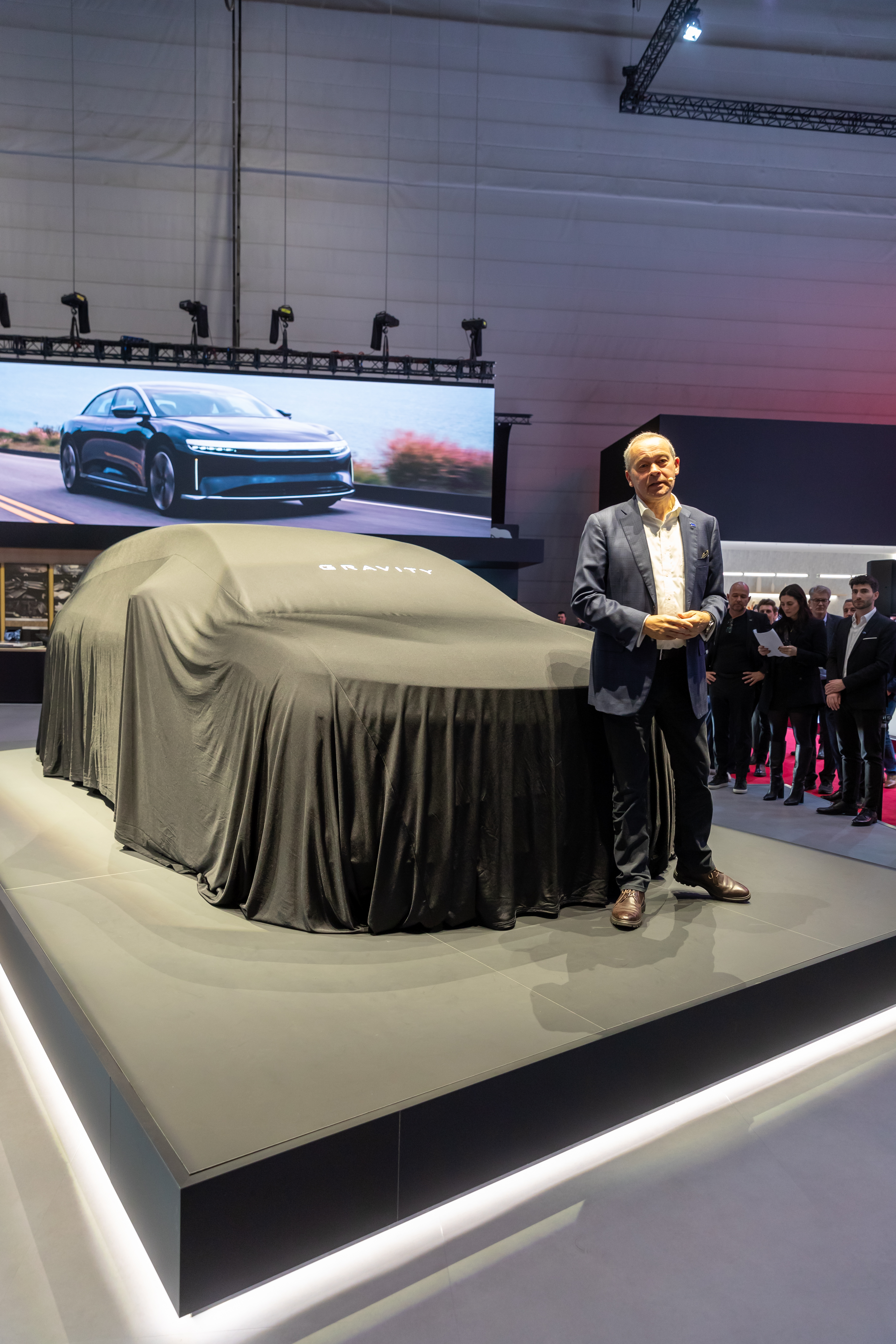
Lucid Gravity
"And that product is the gravity. [759.7s] And you just drove that? [761.7s] I just drove that? [769.4s] I mean, I will say I did have a couple of early production software glitches..."
The Lucid Gravity is Lucid’s electric SUV. The discussion here is about early software problems—things like the radio not working and needing a reset to get the car back to normal.
Lucid Gravity is Lucid’s larger, family-oriented electric SUV, positioned as a more practical alternative to its sedan lineup. In this segment, the host discusses early production issues and how the car’s software/infotainment behavior affected things like audio and turn-signal sound.
hard restart
"[790.5s] I had a glitch. [792.5s] Yeah, you did have. [793.8s] I had to do a hard restart on the vehicle. [796.6s] When I first got it, I had no sound."
A hard restart means forcing the car to reboot when something is stuck or not responding. It’s like restarting a phone or computer to get everything working again.
A hard restart is a forced reboot of the vehicle’s systems, used when software freezes or key functions stop working. It’s essentially a “power-cycle” for the car’s electronics, intended to clear a stuck state.
control, delete, like hard reset
"[810.6s] And then, you know, it was just so I contacted Lucid and I was like, I don't know what's going on here, but I don't know what to do. [817.9s] What do I do? [818.5s] And so like I had to perform like a control, delete, like hard reset on the vehicle."
They’re describing a forced reset procedure they used to fix a software problem. It’s basically the driver’s way of saying, “I had to reboot the car to make it work.”
This phrase is the speaker’s analogy to a keyboard “Ctrl+Delete” style shortcut, but applied to the car’s reset procedure. The key idea is that the driver used a forced reset sequence to recover from a software fault.
mid-size crossover
"We should describe this vehicle first. This is a midsize crossover. That's a little bit more focused in terms of its market segment target starts at 81,000 550 goes to 141,000 550, which is still a huge range, right?"
A midsize crossover is a family-sized SUV-style car. It usually has a higher driving position and more room than a regular sedan, but it’s not as big as the largest SUVs.
A midsize crossover is a vehicle category that blends passenger-car comfort with SUV-style packaging (higher seating and a more upright body), typically sized between compact and full-size. It’s often marketed toward buyers who want space and practicality without going all the way to a full-size SUV.
touchscreen
"You have to go into the touchscreen and find this and then activate something and then use controls on the steering wheel. Now, you don't do this often. I understand that, but it's irritating."
A touchscreen is the big screen you tap to control the car’s features. If the controls are in menus, it can be annoying when you just want to do something quickly.
A touchscreen in modern cars is the primary human-machine interface for functions that used to be handled by physical buttons. When key tasks are buried in menus, it can make quick actions—like mirror adjustments—feel slower or more confusing.
glove box
"And so I'm trying to open the glove box and I cannot freaking figure out how to open the glove box, which I think is also through that central display. And there's no button."
The glove box is the compartment inside the dashboard used to store documents and small items. In many cars it has a physical latch or button, so difficulty opening it can be a sign the vehicle uses a more digital/centralized control approach.
throttle response
"But as I was leaving there, I lost throttle response. Right. The car stopped responding to inputs from my right foot and like what is going on."
Throttle response is how fast the car starts to move when you press the gas pedal. If something’s wrong, you press the pedal but the car doesn’t react the way it should.
Throttle response is how quickly and predictably the car reacts when you press the accelerator. In modern cars it’s controlled by an electronic throttle system, so a fault can make the car feel like it ignores your right-foot inputs.
hood open
"And then a light came on and on the left side of the dashboard, the entire front of the car as represented in an animation is glowing red. And the message reads hood open. Well, I didn't do anything with the hood."
“Hood open” is a warning light that tells you the car thinks the hood isn’t properly closed. Even if you didn’t open it, a sensor or latch problem can cause that message.
“Hood open” is a dashboard warning triggered by the hood latch/hood sensor. It usually means the car thinks the hood isn’t fully latched, which can happen due to a sensor issue or a latch not engaging correctly.
turning it off and turning it back on
"Like I tried turning it off and turning it back on. [1038.3s] So I don't know what happened."
This is like rebooting the car—turning it off and back on. On modern cars, that can fix temporary computer glitches.
This describes a common “power cycle” behavior for modern vehicles: restarting the car can reset certain electronic control modules and software states. It’s often used to clear temporary glitches when a system doesn’t recover normally.
throttle input
"And then later on, I had the exact same thing happen for no reason where I lost throttle input and very frustrating. [1053.3s] And then I stopped the car and started then it reset."
Throttle input is basically what your foot is telling the car to do when you press the gas pedal. If you “lose throttle input,” the car may not accelerate even though you’re asking it to.
Throttle input is the driver’s requested acceleration signal (how much the accelerator pedal is asking for). Losing throttle input means the car isn’t translating the pedal request into power, which can feel like the car is suddenly unresponsive.
front trunk
"Well, because I know that the front trunk is opened with a button on the screen on the left side. [1064.3s] So I don't know if like something could have accidentally tapped that."
The front trunk (often called a frunk) is the storage space in the front of an electric car. Since there’s no engine sitting there like in a gas car, manufacturers can use that area for bags and gear.
The front trunk, or “frunk,” is the storage compartment in the front of many electric cars. It exists because EVs don’t need a conventional engine up front, so space that would be taken by an engine bay can be used for luggage.
dire financial situation
"We've talked about Lucid and its dire financial situation and they're losing a lot of money. [1087.1s] And even the Saudis that have invested in this company..."
“Dire financial situation” means the company is in serious financial trouble. For a car company, that can make it harder to keep building cars and improving the product over time.
A “dire financial situation” refers to a company being under severe financial strain, typically meaning it’s burning cash and struggling to reach sustainable profitability. In an automaker context, that can affect product timelines, scaling production, and ongoing software/quality investment.
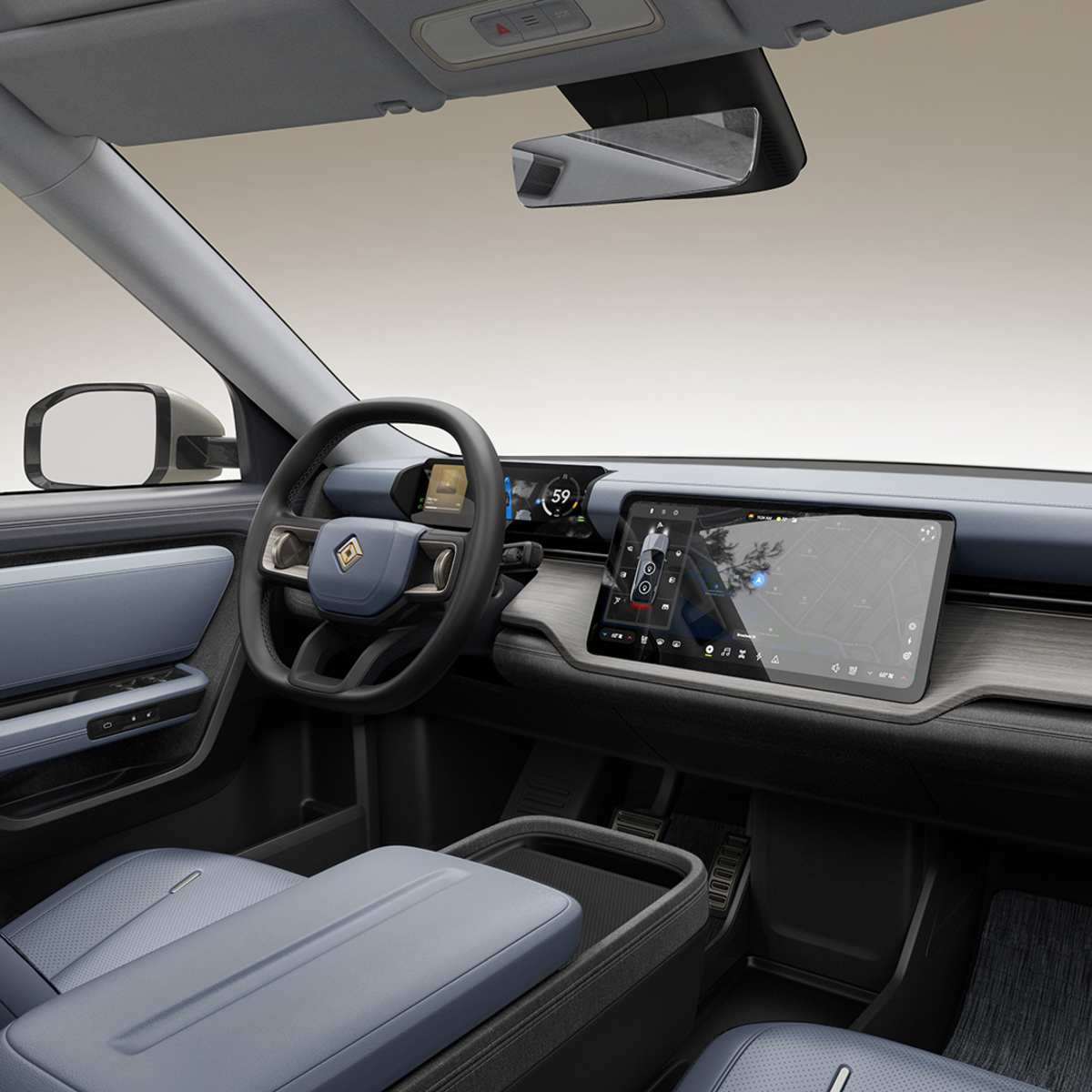
Rivian R2
"...We know that Rivian is doing something called the R2, which I think is on the road, at least in protot..."
The Rivian R2 is an electric vehicle Rivian is working on. It’s intended to be a smaller EV than some of Rivian’s earlier offerings. The podcast mentions it because it’s moving from concept toward real-world testing.
The Rivian R2 is Rivian’s smaller, more affordable EV concept compared with its earlier models, aimed at expanding the brand’s mainstream reach. The podcast notes it as something that’s at least in prototype form and potentially on the road in limited ways. It’s discussed because it represents where Rivian is heading next in product planning.

Ford Broncos Sport
"... about what the Earth is, but I think it's like a Broncos sport, which is a good size for them. And if they can g..."
The Ford Bronco Sport is a smaller SUV from Ford with an off-road style. It’s designed to be easier to drive and park than a bigger off-road SUV, while still feeling capable. That’s why people describe it as a good size for the Bronco name.
The Ford Bronco Sport is a compact SUV built with an off-road look and capability, aimed at buyers who want something smaller than a full-size Bronco. It’s often discussed in terms of size and practicality—how it fits between everyday crossovers and more serious off-road vehicles. In the podcast, it’s referenced as a “good size” for the Bronco lineup’s target audience.
glass roof
"Really nice materials. [1173.3s] Oh, oh, and the crazy ass glass roof. [1177.6s] Yeah."
A glass roof is a roof section made of glass so more light gets into the cabin. The host is saying this one goes unusually far up, which makes the interior feel more modern and bright.
A glass roof is a roof panel made largely of glass (often a panoramic or full-length design) to increase light and visibility in the cabin. In this segment, the host emphasizes how far the glass extends upward and how it affects the placement of sun visors and the overall “open” look.
contiguous windshield
"So you have this contiguous windshield and your sun visors are actually mounted to glass in the roof, not to, you know, fabric or anywhere near an A-pillar or, you know, a frame or anything."
A contiguous windshield means the windshield area looks like it flows continuously into the rest of the glass around it. In this case, it helps create that big, modern glass look from the roof down to the front.
A contiguous windshield is a windshield design that visually connects smoothly with the surrounding glass surfaces, creating a more uninterrupted “glass-to-glass” look. Here, it’s used to describe how the roof glass and windshield area blend together for a modern, airy appearance.
A pillar
"So you have this contiguous windshield and your sun visors are actually mounted to glass in the roof, not to, you know, fabric or anywhere near an A-pillar or, you know, a frame or anything."
The A-pillar is the vertical metal/structural post at the front of the car, near the windshield. Most cars mount sun visors near that area, but this design puts them on the roof glass instead.
The A-pillar is the front vertical support structure of a car’s body, located between the windshield and the front side windows. The host notes that the sun visors are mounted to the roof glass instead of near the A-pillar, which changes the interior look and packaging.
electric SUV
"[1260.6s] Your final thoughts on the gravity? [1262.4s] I think that it's a really great electric SUV. [1266.8s] I think that it is a little bit higher priced, but you get a lot of luxury features for that price tag."
An electric SUV is a bigger family-style vehicle that runs on electricity instead of gas. You charge it like a phone or laptop—plug it in—so range and charging convenience matter a lot.
An electric SUV is a sport-utility vehicle powered by one or more electric motors instead of a gasoline engine. The key difference for buyers is that it relies on charging infrastructure and typically emphasizes range, efficiency, and quiet highway cruising.
optional third row seat
"[1272.8s] It's comfortable in the front. [1274.0s] It's comfortable in the back. [1275.0s] If you equipped it with, you know, the optional third row seat, that's not so comfortable, but doable in a pinch."
An optional third row seat is an extra row of seating that turns a two-row SUV into a three-row layout. The trade-off is usually reduced comfort and/or less cargo space, especially for adults in the back row.
cargo space
"[1281.6s] And with the extra range, I really think that it is a viable EV for longer drives. [1292.3s] You also kind of get a vibe of this being an exotic vehicle, just a little bit, which is kind of cool. [1298.0s] It's kind of nice."
Cargo space is how much room you have to put bags and stuff in the back of the SUV. More cargo space usually means easier road trips and more flexibility for daily life.
Cargo space is the volume available for luggage and other items in the vehicle’s storage areas. For SUVs, it’s a major practical factor because it affects how usable the interior is for road trips and everyday errands.

Ford F150
"Yeah. And then they were 10 years ago and probably you could make the same case on a F-150 or something like that. But the problem is, okay, compared to everything else, car prices have only gone up about the same."
The Ford F-150 is a large pickup truck made by Ford. It’s sold in many different versions, from work-focused to more comfortable options. It’s often mentioned because truck prices have changed a lot over the years.
The Ford F-150 is a full-size pickup truck that’s been a major benchmark in the U.S. market for decades. It often comes up in pricing discussions because it’s widely sold in many trims, so changes in overall vehicle prices affect it noticeably. In the podcast context, it’s used to compare how costs have shifted over time.
EV
"It's trucks and they're losing less money on EVs because they're not making them now. 1866.3s] But it does seem like it would be challenging."
EVs are electric cars that run on batteries instead of gas. The hosts are talking about how EVs affect how car companies make money.
EVs are electric vehicles, meaning they use electric motors powered by batteries rather than gasoline engines. The hosts discuss EV profitability dynamics and how automakers are balancing EV production with ongoing gas vehicle sales.
incentives
"They were on a path to break even, which is the way to get to profitability is first through break even with all those incentives behind. 1802.4s] But hey, they got that money."
Here, “incentives” means government help that makes EVs cheaper or easier to sell. The hosts are saying those incentives can affect when EV companies start making real profits.
In this context, “incentives” are government or policy incentives that reduce the effective cost of EVs or support EV adoption. The hosts connect incentives to the timeline for reaching break-even profitability and to how companies may rely on those subsidies.
break even
"They were on a path to break even, which is the way to get to profitability is first through break even with all those incentives behind. 1791.7s] Remember, it took Tesla a long time to become a break even company."
“Break even” means you’ve reached the point where you’re no longer losing money and your sales cover your costs. The hosts are using it to explain why EV companies may take a while before they’re truly profitable.
“Break even” is the point where a business’s total costs are covered by its revenue, so it stops losing money. The hosts use it to describe how EV programs (and companies like Tesla) take time to reach profitability, especially when incentives and production scale are involved.
GM
"GM seemed to be close to cracking it. 1810.9s] Now the game's shifted."
GM is short for General Motors, a major car company. They’re talking about how GM is trying to make money while the industry is moving toward electric cars.
GM refers to General Motors, one of the largest global automakers. In this segment, the hosts discuss GM’s profitability path and how the company is responding to the EV market shift.
market share
"They can get them out in the market, gain some market share, make some money and then figure out whatever they might have to do to help the world deal with climate change or maybe changing consumer taste and competition."
Market share is the portion of total sales in a market that a company (or brand) captures. The hosts mention gaining market share as part of the strategy for selling gas-powered Cadillacs while the EV transition continues.

Ford Orion
"...ind of had a window to bring it back. But the big Orion plant up in, you know, north of Detroit was going..."
Ford Orion refers to a Ford vehicle assembly plant called Orion. It’s a factory where cars are built, and it’s located north of Detroit. The podcast mentions it to talk about production and where vehicles come from.
The Ford Orion reference is to the Orion Assembly plant in the U.S., which has been an important manufacturing site for vehicles built for Ford. In the podcast context, it’s brought up as part of a history or production discussion—specifically noting the plant’s location north of Detroit. This kind of mention matters because manufacturing changes can affect which vehicles are produced and when.
home charging
"And if and if you've got home charging, you know, I mean, and I'm not saying, I mean, look, the bolt has decent range. [1993.2s] If you have charging at work that you can even get to once or twice a week, probably going to be fine."
Home charging means plugging your electric car in at your house. It usually makes EV ownership easier and can be cheaper than charging only at public stations.
Home charging is using an EV charger at your residence to refill the battery overnight or between trips. It’s a big deal because it lowers the hassle and often reduces the effective cost per mile compared with relying only on public chargers.
lithium-ion battery
"And then, but it is still it's a lithium ion battery. [2083.8s] I mean, they didn't go to, you know, like, like Ford is planning to go with lithium iron batteries"
A lithium-ion battery is the rechargeable battery inside most electric cars. The exact type can affect things like how far the car can go and how quickly it can charge.
A lithium-ion battery is the rechargeable battery chemistry used in most modern EVs. Different lithium-ion chemistries can trade off cost, energy density (range), charging speed, and long-term durability.
lithium-ion batteries
"I mean, they didn't go to, you know, like, like Ford is planning to go with lithium iron batteries that are, you know, the cheaper, not as fast charging, but more durable, you know, there's trade offs with all the [2098.6s] chemistries."
“Lithium iron batteries” usually means a type of EV battery called LFP. They’re often cheaper and can last a long time, but they may not pack as much energy as other battery types, so range and charging behavior can differ.
“Lithium iron batteries” refers to lithium iron phosphate (LFP) battery chemistry, which is known for being relatively cheaper and often more durable. The tradeoff is typically lower energy density than some other lithium-ion types, which can mean less range for the same battery size and different charging characteristics.
excess capacity
"But obviously Ford had excess capacity, they weren't able to utilize this plant. I think, you know, they couldn't really get their partners like VW or Renault to use it more..."
Excess capacity means a factory has more production ability than there’s demand to use it. If cars aren’t selling enough, companies can’t justify running the plant at full output.
Excess capacity means a factory or company can produce more vehicles than it can sell profitably. The hosts use it to explain why Ford couldn’t fully utilize a plant and why partners may also be reluctant to add production.
VW's
"But obviously Ford had excess capacity, they weren't able to utilize this plant. I think, you know, they couldn't really get their partners like VW or Renault to use it more..."
VW is Volkswagen. Here it’s mentioned as a partner Ford couldn’t get to use the plant more because the market is already crowded.
VW (Volkswagen) is referenced as one of Ford’s potential partners for using an underutilized plant. The hosts argue that European automakers may be constrained by their own overcapacity while facing Chinese competition.
Renault
"I think, you know, they couldn't really get their partners like VW or Renault to use it more because they're overcapacitized... ..."
Renault is a car company. In this segment, it’s brought up as another partner Ford couldn’t get to use a plant more because the market is already too full.
Renault is mentioned alongside VW as a potential partner Ford couldn’t persuade to use excess manufacturing capacity. The context is European automakers dealing with overcapacity while Chinese EVs increase competitive pressure.
battery chemistry
"...we need to figure out what you're doing and be able to gather. ...learn the battery chemistry..."
Battery chemistry is what the battery is made of inside. It affects how well the battery stores energy, how it charges, and how long it lasts.
Battery chemistry is the specific chemical makeup inside an EV battery that determines performance traits like energy density, charging behavior, temperature tolerance, and lifespan. The hosts frame it as a key piece of know-how that a partner (like CATL) could help another automaker learn.
CATL
"I would love to think sort of like with the battery plant they're doing with CATL is you can sort of do a jujitsu, a reverse power play... ...learn the battery chemistry..."
CATL is a company that makes EV batteries. The idea here is that partnering with them could help a carmaker learn how to make batteries better and compete.
CATL (Contemporary Amperex Technology) is a leading battery manufacturer. The hosts mention CATL in the context of a “reverse power play,” implying that working with CATL could help another automaker learn battery chemistry and manufacturing know-how.
BYD
"Say steel, but learn from that and then turn around and compete with it. ...learn the battery chemistry, you know, that is fundamentally comparable to BYD."
BYD is a big Chinese company that makes electric cars and batteries. The hosts are saying that learning what BYD does could help someone compete better.
BYD is a major Chinese automaker known for producing EVs and batteries at large scale. In this segment, the hosts compare what Ford might learn (battery chemistry and manufacturing) to BYD’s capabilities.
manufacturing
"If that's what you need to learn to do the manufacturing that's competitive with a Geely or a BYD... ...the best independent... Chinese automakers..."
Here, manufacturing means how you actually build the cars and batteries in a way that’s efficient and consistent. It’s not just the design—it’s the real-world production process.
In this context, manufacturing refers to the industrial process of building EVs and batteries at competitive cost and quality. The hosts contrast “learning the manufacturing” with learning chemistry, implying that production know-how is as important as the battery materials themselves.
Geely
"If that's what you need to learn to do the manufacturing that's competitive with a Geely or a BYD... The thing is, Geely doesn't need more capacity."
Geely is a Chinese car company. The hosts are saying Geely doesn’t necessarily need more factory capacity, so the plant deal might be about strategy and access instead.
Geely is a Chinese automaker group, and the hosts reference it as an example of a Chinese company that already has enough capacity. The segment suggests Ford’s move could be partly about giving Geely a foothold rather than solving a capacity shortage.
UAW
"But again, sort of like we heard here today, you know, President Trump's here in Michigan and a UAW member... ...as long as they make it here, you know, if they want to sell here, they got to make it here."
UAW is a union that represents many auto workers in the United States. In this segment, it’s used to show labor’s position on where cars should be built.
UAW is the United Auto Workers, a major labor union in the U.S. The hosts mention a UAW member speaking in Michigan to argue that Chinese cars should have to be made in the U.S. to be sold there.

Jeep Cherokee
"...is week. We're going to be talking about the Jeep Cherokee. And we've got a labor expert on to talk about, y..."
The Jeep Cherokee is a compact SUV made by Jeep. It’s designed for everyday driving but with a Jeep identity that often appeals to people who want some capability. The podcast mentions it because they’re going to talk about repair or maintenance work related to it.
The Jeep Cherokee is a compact SUV from Jeep, typically known for offering off-road-oriented styling and available capability. It’s often discussed in the context of reliability and ownership because it has gone through multiple generations and updates. In the podcast, it’s the specific model they plan to cover with a labor/repair-focused angle.

Nissan Kicks
"[2715.5s] Nissan kicks. [2716.4s] These are all 2026 Nissan kicks are Chevrolet tracks. ... [2748.8s] The tracks is front wheel drive only the kicks offers all wheel drive."
The Nissan Kicks is a small SUV/crossover. Here they’re comparing it to another small SUV and focusing on whether it can be driven with all-wheel drive (better traction in bad weather) versus just front-wheel drive.
The Nissan Kicks is a compact crossover that’s being compared here against the Chevrolet Trax. In this segment, the key point is drivetrain availability: the Kicks is described as offering all-wheel drive, which affects how it starts and how much it costs versus the front-wheel-drive-only option.

Chevrolet Trax
"[2716.4s] These are all 2026 Nissan kicks are Chevrolet tracks. ... [2748.8s] The tracks is front wheel drive only the kicks offers all wheel drive."
The Chevrolet Trax is a small SUV/crossover. In this discussion, they say it’s front-wheel drive only, meaning it sends power to the front wheels rather than all four.
The Chevrolet Trax is a compact crossover being compared directly to the Nissan Kicks in this segment. The host highlights a major buying factor: the Trax is described as front-wheel drive only, which also makes it simpler and typically cheaper than an all-wheel-drive alternative.
base trim level
"[2726.1s] Also, I learned doing this that base trim level names suck. ... [2754.3s] But I believe, you know, base is front wheel drive."
A base trim level is the most basic version of a car model. It usually has fewer features, and in this segment they connect the “base” version to front-wheel drive.
A base trim level is the lowest equipment version of a model, usually with fewer features and a simpler configuration. The host says that base trim level names “suck,” and then ties “base” to a front-wheel-drive setup in this comparison.
all wheel drive
"[2748.8s] The tracks is front wheel drive only the kicks offers all wheel drive. ... [2760.6s] You know, I think I'm going to be with tracks simply because it's a simplified platform [2766.7s] because it doesn't offer all wheel drive."
All-wheel drive means the car can send power to all four wheels. That can help with traction on wet or slippery roads compared with front-wheel drive only.
All-wheel drive (AWD) is a drivetrain setup that can send power to both the front and rear axles. In this segment, it’s used as a deciding factor because the Nissan Kicks is described as offering AWD while the Chevrolet Trax is described as front-wheel drive only.
front wheel drive
"[2748.8s] The tracks is front wheel drive only the kicks offers all wheel drive. ... [2754.3s] But I believe, you know, base is front wheel drive."
Front-wheel drive means the front wheels do the work of moving the car. In this segment, they’re saying the Trax only comes that way.
Front-wheel drive (FWD) is a drivetrain layout where engine power goes primarily to the front wheels. Here, it’s presented as the Trax’s limitation (front-wheel drive only), which the host contrasts with the Kicks’ all-wheel-drive availability.

Nissan Frontier
"[2819.8s] We discussed it earlier. [2820.9s] Honda Ridgeline or Nissan Frontier, which one starts more affordably. [2826.3s] Oh, well, the Honda Ridgeline is certainly the simplified platform with unibody construction."
The Nissan Frontier is another midsize pickup truck. Here it’s being compared to the Honda Ridgeline to see which one costs less to start with.
The Nissan Frontier is a midsize pickup that’s commonly compared against the Honda Ridgeline on price and practicality. In this discussion, it’s part of the “which starts more affordably” comparison, so listeners can use it as a baseline alternative in the same shopping segment.
uni-body construction
"And I mean, I will say, I feel like the Ridgeline, even though it's unibody construction has more bougie features. And it definitely has a better, like overall ride to it."
Unibody construction means the truck’s body and frame are built as one piece. That often makes the ride feel smoother and more car-like than trucks that use a separate heavy frame.
Unibody construction means the body and frame are integrated into one structure, which can improve ride comfort and reduce weight versus a separate ladder frame. The hosts contrast it with the “truck light feeling,” implying the Ridgeline’s car-like structure affects how planted it feels.

Honda Passport
"...ve that truck light feeling. Shared platform with passport and pilot. Yep."
The Honda Passport is a mid-size SUV from Honda. It’s related to the Honda Pilot, so some of the main design parts are similar. That’s why it can feel more like a bigger, more rugged SUV than smaller crossovers.
The Honda Passport is a mid-size SUV built for more space and capability than Honda’s smaller crossovers. It shares a platform with the Honda Pilot, which is why you’ll hear people describe it as closely related in structure and underpinnings. In the podcast, it’s mentioned to explain how the “truck-like” feel can come from that shared design.
shared platform
"Shared platform with passport and pilot. Yep."
A shared platform is when different vehicles are built on the same basic “bones.” That can help automakers keep costs down because they don’t have to design everything from scratch for each model.
A shared platform means multiple vehicles use the same underlying architecture (major structural components and hardpoints), which can reduce development and manufacturing costs. The hosts say the Ridgeline shares a platform with the Passport and Pilot, tying that to cost reduction.

Toyota Grand Highlander
"This is a good one. The Grand Highlander. That's Toyota's big three row crossover."
The Toyota Grand Highlander is a bigger Toyota SUV with three rows of seats. The host is saying it’s easier to live with day to day because it has more room for stuff and a more usable third row, plus it comes with more safety features by default.
The Toyota Grand Highlander is a three-row crossover built to carry more people and gear than a typical two-row SUV. In this segment, the host focuses on its practical strengths—usable cargo space, a better third row, and more standard safety features—compared with the regular Highlander.

the Chevrolet Traverse
"Or the Chevrolet Traverse. General Motors' big three row crossover. Ooh."
The Chevrolet Traverse is a family SUV with three rows of seats. The host is comparing it to the Grand Highlander and saying the Traverse can be cheaper, partly because some safety/driver-assist features are offered in option packages rather than on every base model.
The Chevrolet Traverse is General Motors’ three-row crossover aimed at families who want SUV space without going to a full-size platform. Here, the host contrasts it with the Grand Highlander on pricing and on how GM/ Chevrolet often bundles advanced driver assistance features into packages that dealers may choose to stock.
advanced driver assistance systems
"I just reviewed the Traverse and I cannot remember if they did that or not, but it's common on GM products, especially Chevrolet products, to lump a lot of valuable ADAS, advanced driver assistance systems into a package."
Advanced driver assistance systems are the car’s safety tech that can help you drive—things like keeping in the lane or warning you to avoid crashes. The host is saying some of these features are bundled together, so a cheaper base car may not include them unless you buy the right package.
Advanced driver assistance systems (ADAS) are technologies that help the driver with tasks like collision avoidance, lane keeping, adaptive cruise control, and related safety functions. In this segment, the host says GM—especially Chevrolet—often groups multiple ADAS features into a package, which affects what you get on a base trim versus higher trims.
ADAS
"especially Chevrolet products, to lump a lot of valuable ADAS, advanced driver assistance systems into a package."
ADAS is short for the car’s driver-assist safety features. In this case, the host is saying they’re often offered as a bundle, so you might not get them on the cheapest version.
ADAS is the acronym for advanced driver assistance systems—driver-support and safety technologies that can automate or assist parts of driving. The host specifically mentions ADAS being bundled into packages on GM/Chevrolet vehicles, which changes the standard equipment on lower trims.

Hyundai Genesis
"The Hyundai, the Hyundai Genesis value play maybe played out."
Genesis is Hyundai’s luxury car brand. The host is saying that Genesis used to be a great deal, but the prices have gotten less “bargain” compared with other options.
Genesis is Hyundai’s luxury brand, and the speaker is talking about it as a “value play” (a strategy where a car is priced aggressively to compete on value). In this segment, they’re implying that Genesis pricing is no longer as cheap relative to rivals as it used to be.

CR-V
"CR-V or Tucson? ... By a fair amount of money, 31050 versus 32370 for the CR-V. So the CR-V is a solid 1200 bucks more."
The Honda CR-V is a popular compact SUV. In this part, they’re mainly comparing it to the Tucson based on how much more it costs.
The Honda CR-V is a mainstream compact SUV that’s often compared directly with other value-focused SUVs. Here, the speaker is using the CR-V as a pricing benchmark, contrasting its cost against the Hyundai Tucson.

Tucson
"CR-V or Tucson? ... I'm going to, to go with Tucson. As the cheaper. ... 31050 versus 32370 for the CR-V."
The Hyundai Tucson is a compact SUV. The host is saying they’d pick it because it’s cheaper than the Honda CR-V.
The Hyundai Tucson is a compact SUV that the speaker is choosing as the cheaper alternative to the Honda CR-V. This segment frames the Tucson as the better “value” option because it costs less by a meaningful margin.
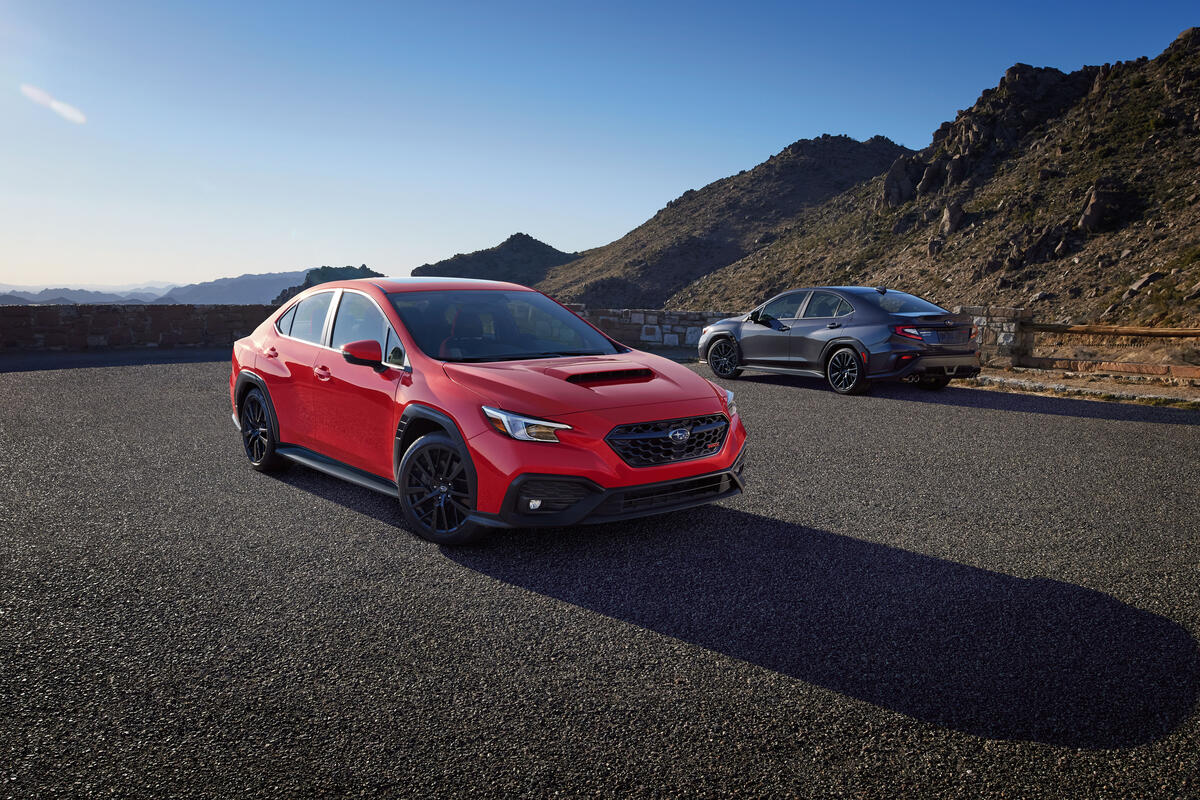
Subaru Wrx
"The golf GTI or Subaru WRX. [3148.3s] Oh, um, you know, they just launched a new base model of the WRX with a manual transmission."
The Subaru WRX is a sporty Subaru that’s famous for being quick and for having all-wheel drive. Here they’re talking about a new simpler “base” version that can be had with a manual gearbox.
The Subaru WRX is a turbocharged compact sport sedan/wagon known for its rally-inspired all-wheel-drive and manual-transmission enthusiast appeal. In this segment, the hosts discuss a new base WRX with a manual transmission and how its trim is being positioned.
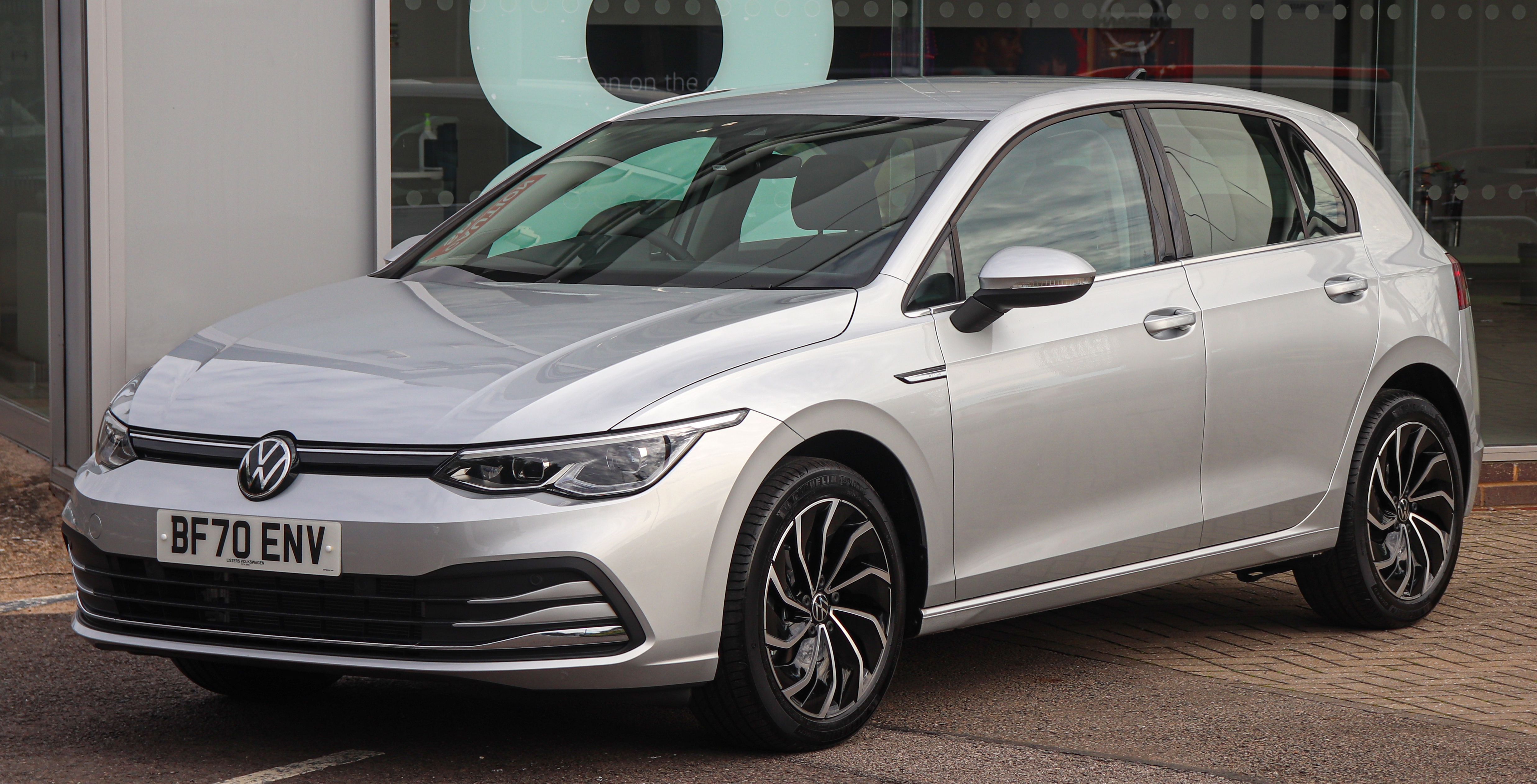
Volkswagen Golf Gti
"I've got a good one here for you. The golf GTI or Subaru WRX. Oh, um, you know, they just launch..."
The Volkswagen Golf is a compact car made by Volkswagen. The podcast is talking about sporty versions like the GTI, which are meant to feel more exciting to drive than a regular model. They’re likely discussing a recent launch or update for these cars.
The Volkswagen Golf is a compact car line that’s often discussed in performance and enthusiast circles, including variants like the GTI. In the podcast, it’s mentioned alongside other sporty compact options, which highlights how the Golf family fits into the “fun to drive” segment. The reference to “just launch…” suggests they’re talking about new releases or updates for these kinds of models.
manual transmission
"they just launched a new base model of the WRX with a manual transmission. [3155.8s] I don't think they did that as a 26."
A manual transmission is the kind of car where you change gears yourself using a clutch pedal and a stick. Some drivers prefer it because it feels more connected to the car.
A manual transmission is a gearbox where the driver selects gears using a clutch pedal and a gear lever. It’s often associated with more direct driver control and a more engaging feel than an automatic.
trim levels
"Do you know what the base WRX is called, what the trim level is called? [3172.9s] Probably something stupid. [3174.2s] Is it just base?"
A trim level is the “version” of a car you buy, based on what features it includes. Here they’re trying to figure out what the simplest WRX version is called.
A trim level is a specific configuration of a model that bundles equipment and features (like infotainment, wheels, and sometimes drivetrain options) under a named package. The hosts are asking what the WRX’s base trim is called, which matters because trim names often signal what you do—or don’t—get.
Request an Explanation
Heard something you'd like explained? We'll add it to this episode.
Sign in to request explanations for terms you heard.
Want to learn more?
Browse our glossary for plain-English explanations of automotive terms, jargon, and concepts.
Help improve this episode
See something that's not quite right? Our annotations are AI-generated and can sometimes miss the mark. Click the flag icon on any annotation to suggest a correction.