
M5 Touring 2nd Take; PNW Trip Report; CA Tire Update
About this episode
A Pacific Northwest road trip and track-day recap kicks things off, starting with “my trip across the Pacific Northwest in the BMW M5 Touring.” Along the way, they talk scooter delivery and break-in/service intervals, then get deep on track details like chicanes, “bus stop” braking, and how tires and traction modes shape lap limits. The conversation widens into rally training, Porsche/Alfa manual-swap projects, and California’s tire efficiency rules—especially how the rolling-resistance focus should leave room for DOT street-legal track tires.
Matt Farah is back from the amazing Road & Track Experience through the Pacific Northwest and has tales of rally school, track driving, and one of the best roads in the U.S.; after 600 miles in the BMW M5 Touring, has his negative of it opinion changed?; an alleged insider updates us on the California tire drama.
Patreon questions include:
Should you throw away factory run-flat tires?
Will they ever stop OTA updates for older cars?
Without cars, would we review horses or wagons?
Would enthusiasts love the Genesis GV70 if it had a manual?
Best/worst automatic shifter of all time
Sporty cars similar to a Z4 M Roadster
Can you mod your car TOO much?
Will Cybertruck owners buy Ferrari Luces?
How to assign a price to a driving experience
A watch to celebrate with
F/M/K: NY Pizza/Philly Cheesesteak/NY Bacon Egg Bagel Sandwich
And more!
Recorded June 17, 2026
Vinbidders
Smoking Tire fans get $100 off the listing price with promo code TIRE and by visiting https://vinbidders.com/tire
Go from submitting your car to a confirmed sale in under 1 week with VinBidders. And you only pay $149 if the car sells.
DeleteMe
Get 20% off your DeleteMe plan when you go to www.joindeleteme.com/ TIRE and use promo code TIRE at checkout.
ButcherBox
As an exclusive offer, new listeners can get their choice between free ribeye or top sirloins for a year or ground beef and bacon for a year, PLUS $20 off when you go to ButcherBox.com/TIRE
Bluechew
Buy two months of BlueChew Gold you get the third FREE with promo code TIRE. You will also receive an additional 10% OFF + Free overnight shipping on your first order. Visit https://BlueChew.com for more details and important safety information. We thank BlueChew for sponsoring the pod and the bedroom.
Use Off The Record! and ALWAYS fight your tickets! For a 10% discount on your first case go to https://www.offtherecord.com/TST
Want your question answered? Want to watch the live stream, get ad-free podcasts, or exclusive podcasts? Join our Patreon: https://www.patreon.com/thesmokingtirepodcast
Instagram:
https://www.Instagram.com/thesmokingtire
https://www.Instagram.com/therealzackklapman
Enter to WIN a 2025 Porsche 911 Turbo S!
Podcast Link: https://www.dreamgiveaway.com/tickets/porsche?promo=SMOKINGTIRE
Get 4X bonus tickets with any donation of $25 or more. With every donation you are helping benefit some wonderful veterans' and children's charities. Use Podcast Promo Code: SMOKINGTIRE
Want your question answered? Want to watch the live stream, get ad-free podcasts, or exclusive podcasts? Join our Patreon: https://www.patreon.com/thesmokingtirepodcast
Use Off The Record! and ALWAYS fight your tickets! Enter code TST10 for a 10% discount on your first case on the Off The Record app, or go to http://www.offtherecord.com/TST.
Watch our car reviews: https://www.youtube.com/thesmokingtire
Tweet at us!
https://www.Twitter.com/thesmokingtire
https://www.Twitter.com/zackklapman
Instagram:
https://www.Instagram.com/thesmokingtire
https://www.Instagram.com/therealzackklapman

BMW M5 Touring
"All right, folks, on this episode of the podcast, I tell you about my trip across the Pacific Northwest in the BMW M5 Touring. Also, I got my brand new Vespa 310. I'm so excited about."
This is a BMW “M5” that’s made as a wagon (called “Touring”). It’s meant to be fast and fun like an M car, but with the extra space you’d want from a wagon.
The BMW M5 Touring is a high-performance wagon version of the BMW 5 Series, built by BMW M for enthusiasts who want real daily usability plus serious power. It’s notable because the M5 name is tied to BMW’s performance-tuned engines and chassis, and the “Touring” body style is the wagon variant.
Vespa
"Also, I got my brand new Vespa 310. I'm so excited about. ... I got my new Vespa today. It was delivered. Shout out. Thank you to Vespa for delivering it."
Vespa is a well-known scooter brand. The host is saying he just got a new Vespa and is excited about it.
Vespa is the scooter brand known for small, step-through scooters that are popular for city commuting and easy riding. In this episode, the host is talking about a new Vespa model he received, emphasizing the excitement around the purchase.
Vans
"I'm wearing my most California footwear in this photo. Yeah, they're not vans."
Vans is a popular casual shoe brand, especially for skate-style sneakers. The host is just saying his shoes aren’t Vans.
Vans is a footwear brand best known for casual skate shoes. The host contrasts his shoes with Vans to emphasize the different, more “California” style.
Olu Kai
"Yeah, they're not vans. They're Olu Kai. They're the most they're most California. They're Olu Kai slip-ons."
Olu Kai is a footwear brand known for casual, beachy “island” styles. The host uses it as a detail to describe the “most California” shoes he’s wearing in the photo.
Mexico blue
"But blue electrical, which if you only speak Porsche is more or less Mexico blue. It's pretty close to Mexico blue."
“Mexico blue” here is just a nickname for a particular shade of blue paint. The host is saying the scooter’s color looks even deeper in real life than in the photo.
“Mexico blue” is a specific paint color reference used by enthusiasts to describe a particular blue shade. The host says it’s close to “Mexico blue” and compares it to the richer blue seen in person.
Smurf blue
"It's a very Smurf blue. It's kind of like that. It is kind of Smurf blue."
“Smurf blue” is a playful way to describe a bright, saturated blue color. The host is basically saying the scooter’s paint is that kind of vivid blue.
“Smurf blue” is a color description comparing the paint to the bright blue associated with Smurfs. It’s used as a vivid, non-technical way to communicate how saturated and friendly the blue looks.
Vespas
"I'm going to ride this thing for a really long time. That's three miles on it. And I was like, is there a break in? He's like most motorcycles do have a break in. Vespas don't just rip it."
Vespa is a brand of scooter (a small motorbike). The host is saying you shouldn’t just go full-throttle right away—you need a break-in period and then regular service intervals.
Vespa refers to the Italian scooter brand known for step-through styling and small-displacement, city-friendly engines. In this segment, the host talks about break-in and service intervals for a Vespa he plans to ride long-term.
break in
"That's three miles on it. And I was like, is there a break in? He's like most motorcycles do have a break in. Vespas don't just rip it."
Break-in is the first stage of using a brand-new engine. You drive it more gently at first so the moving parts can settle in, then you do the first service at the recommended mileage.
Break-in is the early running period where a new engine is operated gently to help internal components seat and wear in properly. The host mentions that Vespas shouldn’t be “ripped” immediately, then gives a first-service mileage to follow.
first service
"There's a, the first service is 625 miles. And then after that, it's every 3000."
The first service is the first scheduled maintenance you do after the new scooter has been broken in. The host is quoting the recommended mileage for that first check, and then how often it should be repeated.
The first service is the early scheduled maintenance after the initial break-in period. Here, the host cites a first-service interval at 625 miles, then a recurring interval every 3000 miles.
depreciate 30% the second they go off the lot
"These things like anything else, they depreciate 30% the second they go off the lot, but this color, super fucks."
It means new cars usually lose a lot of value right after you buy them. “Off the lot” is basically when the car is no longer sitting at the dealership as a new car.
The phrase is describing how a car’s value typically drops immediately after purchase. “Off the lot” means when the vehicle is delivered and you’re no longer buying it as a new inventory item, so depreciation can be steep early on.
Portland International Raceway
"You know, I did 800 miles and a track day in the M five Tory. First off, Portland International Raceway, lovely place."
Portland International Raceway is a race track near Portland where people go to drive their cars on track. The host is saying it’s a fun layout, especially if you like tracks without huge hills.
Portland International Raceway is a motorsports facility in the Portland area that hosts track days and racing events. It’s known for being a fun, approachable circuit for drivers because it’s not as dominated by big elevation changes as some tracks.
track day
"You know, I did 800 miles and a track day in the M five Tory. First off, Portland International Raceway, lovely place."
A track day is when you drive your car on a real race track, usually with other enthusiasts. It’s more about having fun and learning than racing for points.
A track day is an organized event where drivers take their own cars onto a closed circuit for timed laps or open sessions. It’s different from racing because the focus is usually driver practice and car testing rather than competition.
plug in hybrid
"Like I was looking for somewhere to charge the M five, the plug in hybrid to get maximum juice for no real reason."
A plug-in hybrid is a car that uses both electricity and a gas engine. You can plug it in to charge the battery, then drive on electric power for some distance.
A plug-in hybrid (PHEV) is a hybrid car that has a battery large enough to be charged from an external power source. That lets it run on electric power for a while and then switch to the engine when the battery is depleted.
chicane
"So you've got this very enormously long front straight. But you see the, you see the chicane that looks like, not no, no, it's in the front straight."
A chicane is a “zig-zag” section of track made of quick turns. It makes cars go slower and helps keep things safer and more controlled.
A chicane is a sequence of alternating turns that forces cars to slow down and change direction within a short distance. It’s often used to reduce speed before a straighter section or to manage safety and overtaking.
tarmac
"where there's an addition here with a tarmac chain. So that is the is a chicane in the front straight. So it's actually, I like this because you can go pretty fast."
Tarmac means the paved asphalt surface of the track. The point is that pavement is predictable, while grass or rough ground can make the car behave unpredictably.
Tarmac is paved asphalt track surface. The host contrasts it with grass/rocks to explain what happens if you miss a corner—staying on pavement is more predictable than hitting loose surfaces.
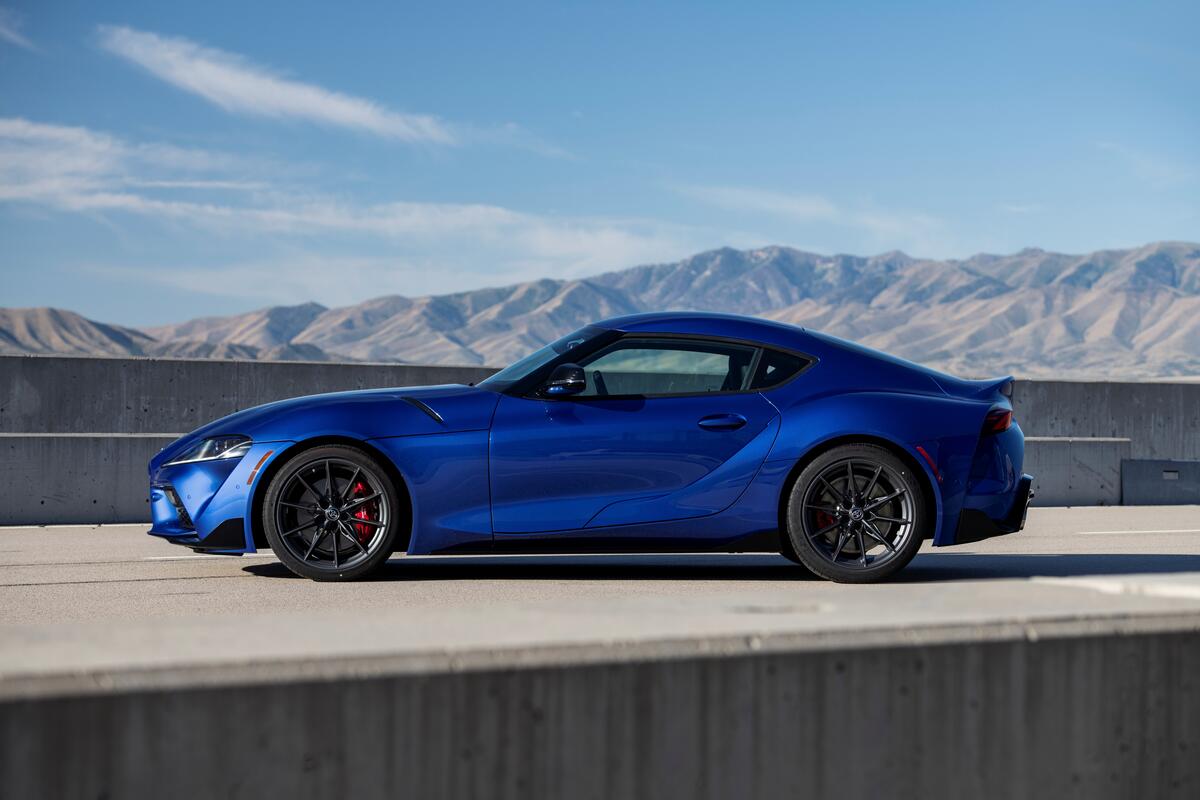
Toyota A90
"the M five at 160 at the six board to break, you know, that's a 35 mile an hour corner. Yeah, this is a 90 degree right hander bus stop tight that's tightens. That's a bus stop throw away, right? The exit is much more important than the entry here. So I'm standing on it at the six"
The Toyota Supra is a sports car designed for quick driving and fun handling. It’s often discussed in terms of how it behaves in corners and during braking. The podcast mentions it while talking about a tight corner and speed.
The Toyota Supra is a sports coupe known for its straight-line speed and driver-focused layout. It comes up in conversations about handling and cornering because it’s often used to test how well a car can manage tight turns and braking. In this episode, it’s referenced in the context of discussing corner speeds and driving lines.
bus stop
"Yeah, this is a 90 degree right hander bus stop tight that's tightens. That's a bus stop throw away, right?"
A “bus stop” is a track corner that’s very tight and slow, usually right after a fast straight. Drivers have to brake hard and focus on getting out of the turn quickly.
“Bus stop” is a common racing-track nickname for a tight, slow corner—often a near-90-degree turn—usually placed near the end of a long straight. Because it’s so slow and abrupt, braking and exit speed matter a lot.
standing on it
"So I'm standing on it at the six board and it's wagon, you know what I mean?"
“Standing on it” just means flooring the gas pedal. Here, it’s about using full throttle to help you accelerate out of the corner.
“Standing on it” is racing slang meaning to apply full throttle. In this context it’s describing how the driver prioritizes exit speed after braking into a tight corner.
National Corvette Museum
"Yeah, it's a it's a sin in fuel. It's not like it's not grass, rocks, whatever. NCM in Tennessee or Kentucky, excuse me, National Corvette Museum, they do a thing like this at the end of the front straight as well."
The National Corvette Museum is a Corvette museum in the U.S. The host brings it up because they use a similar track setup to make learning safer.
The National Corvette Museum (NCM) is a Corvette-focused museum in the U.S. The host mentions it as an example of a track safety feature used at the end of a straight to help drivers learn without turning a mistake into a bigger problem.
apex
"was fun. This big, big, big super, you throw away the first apex. There's three apexes here."
The apex is the tightest part of a corner—where you aim to get closest to the inside. Drivers plan the apex to help the car turn in and then exit smoothly.
An apex is the point in a corner where the driver aims to be closest to the inside of the turn. The hosts talk about “throw away the first apex” and “three apexes,” meaning the line they’re using has multiple planned closest-points through a complex sequence.
drifting
"This left hander is a little bit uphill over crest, very nice for drifting... you can... start a slide like mega early"
Drifting is when the car’s rear slides outward while the driver keeps steering to control it. They’re saying the track section is shaped in a way that makes that style easier.
Drifting is a driving technique where the car intentionally over-rotates so the rear slides while the driver maintains control and angle through the corner. The hosts mention a section “very nice for drifting” and talk about starting a slide early and then tidying it up, describing how the track’s shape supports that kind of controlled slip.
downforce
"with no downforce is kind of hairy. So you're flat through this left bend... Like it's not even a turn if you have that much downforce"
Downforce is the aerodynamic “squish” that presses the car down onto the road. More downforce usually means better grip, especially in fast corners.
Downforce is the aerodynamic force that pushes the car’s tires harder into the road, improving grip at speed. The hosts contrast “a car with no downforce” (hairy) with an Indy car that has so much downforce that a section “is not even a turn.”
off camber
"you then zoom out a bit, Zach. This, this sort of curve is just enough off camber to make you do"
Off-camber is when the road slopes sideways through a turn. That can make the tires grip differently, so the car may want to slide or drift toward one side.
Off-camber means the road surface tilts so the outside or inside of the corner is higher, changing tire grip. The hosts say the curve is “just enough off camber” to make the car drift toward the outside, which is a common way to describe how the chassis will want to slide or load the tires unevenly.
pit road
"And then you kind of dive the car into the pit road exit to make that last corner a little more open or pit road entrance"
Pit road is the part of the track where cars slow down to make pit stops. On some tracks, the pit lane connects to corners in a way that changes how you set up the turn.
Pit road is the controlled lane on a circuit where teams enter for pit stops and where cars follow strict speed limits. The hosts describe using the pit road exit/entrance to change the geometry of the last corner—essentially describing how the track layout affects the racing line.
M5 Wagon
"...n an indy car that is not considered a turn in an M5 wagon. That is a turn. Yeah. Especially if it's off cam..."
Here, “M5” means the BMW M5, which is a high-performance BMW. The podcast is talking about how it handles in a specific driving situation, especially how it grips and turns. It’s more about driving feel than about features.
In the podcast context, “M5” refers to the BMW M5, a performance-focused version of the 5 Series. The speaker discusses how it behaves in a driving scenario, including how it can be used in a way that’s “not considered a turn” in an M5 wagon—meaning the car’s dynamics and traction are central to the conversation. It’s essentially a driving-impression reference rather than a general overview.
Mount Rainier
"drove up the coast and looped it back around to Mount Rainier. Look, the photo... Mount Rainier is mad distracting."
Mount Rainier is a huge mountain in Washington. They’re saying it’s so visually striking that it pulls your attention while you’re driving.
Mount Rainier is a prominent volcanic mountain in Washington state, and it’s a major visual landmark when driving the Pacific Northwest. The hosts mention it as a distraction while cornering, highlighting how the road trip route frames the driving experience.

Ford F-150 Lightning
"...torcycle was a black night, black shadow or black lightning. And the reason is because I didn't fucking know ..."
The Ford F-150 Lightning is an electric pickup truck. It’s meant to be a normal truck you can use day to day, but powered by electricity instead of gasoline. The podcast mentions it while talking about a “black lightning” reference.
The Ford F-150 Lightning is an electric version of the F-150 pickup, designed to bring EV power and torque to a familiar truck platform. It’s mentioned in the episode through a “black lightning” reference, indicating the conversation is about naming/branding and possibly a specific vehicle the speaker saw or discussed. The Lightning is typically discussed as an EV that still functions like a pickup.
Steve Rimmer
"of course, fuck me. We went to see, do you know Steve Rimmer? I met him once. Very nice guy. [1580.9s] What a nice guy. Steve Rimmer is the owner of dirtfish rally school."
Steve Rimmer runs DirtFish Rally School. In this story, he also does airplane financing, and that’s what makes him interesting to talk to.
Steve Rimmer is described as the owner of DirtFish Rally School. In this segment, he’s also presented as having a unique rally-car collection and a background in airplane financing, which drives the conversation away from cars and into aviation finance.
airplane financing
"So I was like, airplane finance. I started asking [1623.4s] him about the airplane business. He told me some crazy shit. [1685.0s] a whole podcast with him about airplane financing because like that's a fucking topic."
Airplane financing is how people or companies pay for aircraft—usually through loans or special ownership arrangements. The host says it can get complicated when planes are stuck in places affected by war or other disruptions.
Airplane financing is the specialized business of funding aircraft purchases and operations, often involving loans and ownership structures that can be complicated when aircraft are located in politically unstable regions. The host describes Steve Rimmer’s work as owning the money for plane purchases and dealing with repossession when things go wrong.
Group A
"which is like every fucking, every group B rally car or like sick group A rally car next to the road going version of it."
Group A was a rally class that was more tied to production cars than the wildest Group B rules. The host mentions it to explain the types of rally cars in the collection.
Group A was another rally homologation class, generally associated with production-based cars compared with the more extreme Group B rules. In this segment, it’s used alongside Group B to describe the breadth of rally cars in the collection.

Porsche 959
"which is like every fucking, every group B rally car or like sick group A rally car next to the road going version of it. I mean, just like all the way around the horn, missing a 959 [1713.9s] The only, it's the only one he did not have."
The Porsche 959 is a famous, very rare Porsche from the late 1980s. It’s known for being technologically advanced for its time, and the host mentions it because it’s one of the standout cars in a collection.
The Porsche 959 is a landmark late-1980s performance car known for its advanced all-wheel-drive system and twin-turbo setup. In the segment, it’s referenced as part of a collection of rally cars, highlighting how rare and special the 959 is compared with other rally-era machines.
group B
"Now I'm going to get fucking hammered by somebody that knows the history of group B better than me. I don't know if a 959 ever actually raced in group B rally."
Group B was a rally racing category known for very fast, very wild cars. The discussion here is about whether the Porsche 959 ever got to race in that category before the rules/series ended.
Group B was a high-performance rally class (especially in the early 1980s) that allowed very extreme, lightly homologated cars. The hosts are debating whether the Porsche 959 ever actually competed in Group B, and they mention the series being canceled before it could be entered.
Dakar
"I think the 959 raced in Dakar or something 959 race car ish was a Dakar vehicle and not an action."
Dakar is a famous long-distance off-road race. In this conversation, it’s brought up as the kind of event where some Porsche 959 race cars may have been used instead of Group B rally.
The Dakar rally is a long-distance off-road race in which manufacturers have historically entered specialized vehicles. Here, the hosts connect the Porsche 959’s limited racing presence to Dakar, suggesting some 959 race-spec cars were used there rather than in Group B.
homologated
"I think they made a total of 337 vehicles period. And that includes 292 street legal cars. That means there's like 40 race cars and who knows how few Dakar vehicles."
Homologation means race rules require a certain number of “real” road cars to be built. The idea is that the race car has to be based on a car people could actually buy.
Homologation is the process of meeting a racing rule that requires a minimum number of road-legal cars to be built so the race car is based on something real. The hosts use this idea to explain why there were so many street-legal Porsche 959s compared to the number of race cars.
Vinbidders
"Guys, one more break because support is coming in from Vin bitters, but let's face it, buying a car is fun, but then selling a car stinks..."
Vinbidders is a service that helps you sell a car to dealers without doing all the usual private-sale work. They try to connect your car with a dealer who’s actively interested in buying it.
Vinbidders is a service that helps owners sell high-end enthusiast cars by matching them with independent dealers willing to buy remotely. In this segment, they’re positioned as a way to get a better price and reduce the hassle of selling privately.

Porsche Carrera GT
"...ir dealer network buys everything from GT 350s to Carrera GTs. And here's how they do it. You just submit your ..."
The Porsche Carrera GT is a very rare Porsche supercar. It’s known for being extremely fast and also for being hard to find. The podcast mentions it while talking about how dealers handle buying and selling rare cars.
The Porsche Carrera GT (often referred to as the Carrera GT) is a rare, track-capable supercar known for its extreme performance and collectible status. It’s discussed in the episode in the context of dealer networks and how certain dealers acquire high-end cars. That kind of mention usually signals how scarce and valuable the model is in the market.

Lamborghini Gt 350S
"...effort, their dealer network buys everything from GT 350s to Carrera GTs. And here's how they do it. You ju..."
The Lamborghini 350 GT is an older, classic Lamborghini sports car. It’s considered valuable and collectible because it’s rare and from an early era of the brand. The podcast mentions it as part of a list of cars that certain dealers buy.
The Lamborghini 350 GT is a classic, early-generation Lamborghini grand tourer known for its historical significance and collector value. It’s brought up in the episode alongside other rare cars in the context of dealer networks acquiring vehicles. That framing emphasizes its rarity and desirability rather than everyday usability.
reserve
"You just submit your car in five minutes. You submit the Vin, miles, condition, eight recent photos and your desired reserve."
A reserve is the lowest price you’ll accept for your car. If bids or offers don’t reach it, the sale won’t happen.
A reserve is the minimum price a seller is willing to accept. In the Vinbidders flow described here, the seller sets a desired reserve as part of the listing so the deal won’t go below that threshold.
manual swap
"It had like 40 something thousand miles on it. They just got it and they had it like half torn apart for like a full refresh. Cool. Yeah. Manual swap. I told him that."
A manual swap means changing a car so it uses a manual gearbox instead of an automatic. It’s more than just swapping the shifter—you usually have to change and connect several parts so it works properly.
A manual swap is the conversion of a car originally built with an automatic (or another drivetrain setup) to use a manual transmission. It’s a major modification because it typically requires fitting the transmission, shifter linkage, and integrating the controls so the car behaves correctly.
shifter like mechanism
"but he said the ones they look into the the shifter like mechanism, it's like a box that just sort of sits there. Like nobody had like nicely integrated it into the console until now."
The shifter mechanism is what connects the gear lever you move to the gearbox inside the car. Sometimes in conversions it ends up looking like an awkward extra box until it’s installed neatly.
The shifter mechanism is the set of parts that physically connect the driver’s gear lever to the transmission’s internal selector. The speaker is describing how the mechanism is sometimes awkwardly packaged—like a “box” that sits in the cabin—until someone integrates it cleanly into the console.
cables
"the transmission through the box. No, no, it's a real shifter and it's it's cables, but like the center console was not meant to ever have a shifter and doesn't really have room for it."
Here, “cables” are the physical connections that move the transmission when you move the shifter. They’re like the mechanical link between the lever and the gearbox.
In manual-shift conversions, “cables” are the mechanical linkages that transmit your shifter movement to the transmission. Cable shifters are common when packaging or mounting makes a direct rod linkage impractical.
real shifter
"the transmission through the box. No, no, it's a real shifter and it's it's cables, but like the center console was not meant to ever have a shifter and doesn't really have room for it."
They’re talking about a genuine manual gear lever, not something that’s just for show. It’s connected to the drivetrain so you can actually shift gears the normal way.
A “real shifter” means an actual manual gear lever connected to the transmission, rather than a fake/placeholder setup. In this context, it’s being discussed as a cable-and-bracket conversion to make a manual-style shifter work in a car that wasn’t originally designed for one.
bracket
"they built a bracket that like holds the shifter, but it looks sort of like race car. It doesn't look like an elegant, you know, like it would have come from the factory"
A bracket is a custom support piece that holds the shifter in the right place. If it’s not mounted correctly, shifting can feel bad or not work properly.
A “bracket” here is the fabricated mounting piece that holds and positions the shifter in a location that wasn’t originally designed for one. Proper bracket design matters because it affects shifter alignment, feel, and how reliably the cables/links move the transmission.
shock rebuild costs
"Oh, okay. Probably what the fuck. [2218.9s] The shock rebuild costs. No, but the engines were though, but straight up the number they gave me"
Shocks are part of the suspension that control how the car rides. A “rebuild” is when they’re serviced instead of replaced, and it can cost a lot.
“Shock rebuild costs” refers to the expense of having suspension dampers (shocks) disassembled, inspected, and reconditioned. Performance cars and track-focused setups often need more frequent service, and rebuild pricing can be a major part of ownership cost.
KW
"Yep. Put some KW put some whatever coil a good coil. Yeah. Well, that's what I was like, you guys fucking rally guys."
KW makes aftermarket suspension parts. They’re often used to improve how a car handles and rides.
KW is a suspension brand best known for performance dampers and coilover kits. The host is suggesting KW as an upgrade to improve ride/handling on the Alfa Romeo 8C.
coil
"Yep. Put some KW put some whatever coil a good coil. Yeah. Well, that's what I was like, you guys fucking rally guys."
A “coil” is the spring part of the suspension. When people say “coilover,” they usually mean a setup that lets you adjust the suspension for better handling.
A “coil” in this context means the coil spring used in a coilover suspension setup. Coilovers combine springs and dampers so you can tune ride height and damping behavior for better control.
valve a set of shocks
"I was like, get Olin's in here to valve a set of shocks, have a fucking custom set made, get whoever your break guy is to get you a real set of breaks for this fucking thing."
“Valving” is adjusting how the shocks control movement. It changes how the car responds when it hits bumps or changes direction.
“Valving” shocks means tuning the internal flow restrictions so the damper resists compression and rebound in a specific way. That tuning is often tailored to a car’s weight, tire setup, and intended use (street vs rally/track).
Olin's
"I was like, get Olin's in here to valve a set of shocks, have a fucking custom set made, get whoever your break guy is to get you a real set of breaks for this fucking thing."
They’re talking about Öhlins, a company that makes high-end suspension parts. The idea is to use better shocks so the car drives correctly.
“Olin’s” is almost certainly referring to Öhlins, a well-known Swedish suspension brand. The host is calling for Öhlins to supply or valve shocks for a custom setup.
custom set made
"I was like, get Olin's in here to valve a set of shocks, have a fucking custom set made, get whoever your break guy is to get you a real set of breaks for this fucking thing."
“Custom set made” means the parts are tailored for that specific car. Instead of a one-size-fits-all setup, it’s tuned to how they want it to drive.
A “custom set made” implies the suspension components are built or tuned specifically for this car and its use case, rather than using a generic off-the-shelf kit. In rally/street hybrids, custom tuning can significantly change how the car feels and controls body motion.
real set of breaks
"custom set made, get whoever your break guy is to get you a real set of breaks for this fucking thing. And you're in business."
They mean the car needs proper brakes, not something weak or mismatched. Better brakes help the car stop more reliably, especially when driving hard.
“Real set of breaks” is a colloquial way of saying the car needs proper braking hardware, likely upgraded beyond what it currently has. The context is rally-style driving, where stronger brakes and better components help resist fade and improve pedal feel.
safari it out eight C
"And you're in business. If you want to safari it out eight C, no safari the eight C road and handled like straight garbage. Oh, you just want him to do a good street car."
“Safari” here means turning the car into a rugged adventure-style build. They’re saying that approach didn’t work well for the 8C, compared with making it a better street car.
“Safari” in car culture usually refers to building a rugged, adventure-oriented setup—often with off-road-capable tires, suspension changes, and durability-focused choices. Here, the host is contrasting a “safari” approach with the idea of making the 8C into a good street car.
stage
"But real drive rally was good time. Yeah, that's good time. That's what our folks were doing on [2307.1s] this event. You do a stage or like an open, it was the intro. So, so I mean, actually it's not,"
In rally events, a “stage” is a timed section of the route. Drivers try to go as fast as possible through that specific part.
A “stage” is a timed section in rallying where drivers race against the clock on a specific route. The host is describing the event format they experienced—whether it was a stage or an open/intro drive.
yumps
"That's what rally ready. When you've been there, but like their beginner day, the two day school, the stage is legit and has little yumps and berms."
“Yumps” are little bumps or jumpy sections of the course. They test how well you can keep the car stable when the road suddenly changes.
“Yumps” is slang for small jumps or bumps that unsettle the car’s suspension and traction. In rally training, they’re used to teach how to stay composed when the surface suddenly changes.
berms
"That's what rally ready. When you've been there, but like their beginner day, the two day school, the stage is legit and has little yumps and berms."
“Berms” are raised earth or barriers along the edge of a course. On rally-style tracks, they can guide the car’s path and provide a safer boundary when you miss a line.
Nürburgring
"The Germany thing is ring to spa. It's two track days, Nurburgring and spa with, with rented race car, you know, you can choose..."
Nürburgring is a legendary racing track in Germany. Car fans use it as a “test” track because it’s challenging and has lots of different corners and elevation changes.
The Nürburgring is a famous motorsport venue in Germany, best known for the Nordschleife circuit with big elevation changes and complex corners. It’s often used as a benchmark for performance cars and driver skill.
Lime Rock
"We got Lime Rock, which is a really fun, fun and cool track. We got beautiful roads. We're going to Wayne Corini's house."
Lime Rock Park is a race track in Connecticut. It’s a twisty course where good driving technique matters a lot.
Lime Rock Park is a road course in Connecticut known for its short, tight layout and high cornering demands. It’s popular for driving events because it emphasizes braking, turn-in, and maintaining momentum.
Wayne Corini
"We got beautiful roads. We're going to Wayne Corini's house. The hotels are super, super fun."
Wayne Corini is a person they’re visiting during the trip. The mention matters mainly because it’s part of the planned route and stops.
Wayne Corini is mentioned as a host/connection for the trip, with the group going to his house. The name is relevant because it anchors the itinerary around a specific person’s location.
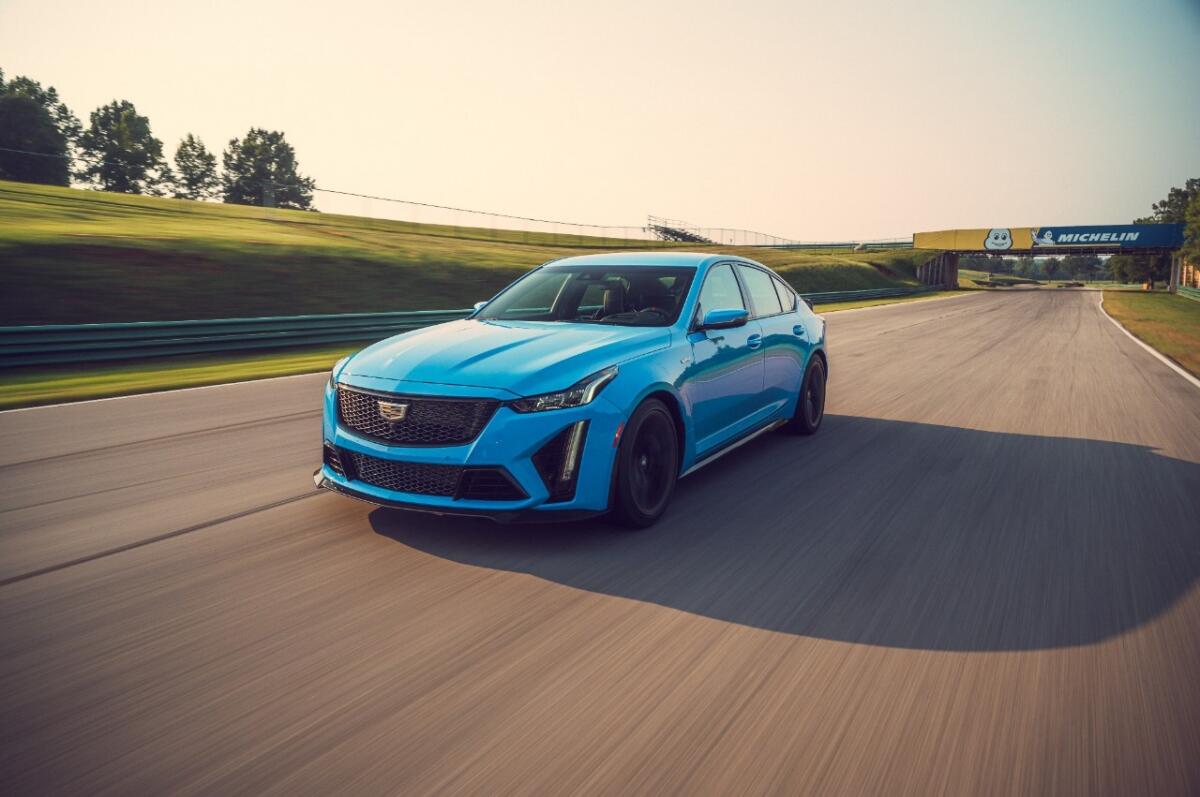
Cadillac CT5
"How did that feel compared to when you did four up in the CT5, the Blackwing? The Blackwing is better."
The Cadillac CT5-V Blackwing is a performance version of the CT5 sedan. They’re comparing it to the BMW M5 and saying the Cadillac feels more nimble, partly because it weighs less.
The Cadillac CT5-V Blackwing is a performance sedan known for its driver-focused chassis tuning and strong track manners. In this comparison, the host says the Blackwing feels better than the M5 because it’s lighter and the front/rear balance changes noticeably.
all-wheel drive sport
"It has these hand-cooked tires on it. And so if you drive it in all-wheel drive sport, you can get all four tires really hot, really fast."
This is a driving mode that changes how the car uses its all-wheel drive. In this case, it helps the tires get hot fast and keeps the car fairly controllable while you’re pushing it.
“All-wheel drive sport” is a drive-mode setting that biases the car toward more aggressive throttle response and stronger traction management when AWD is active. The host uses it to explain how the M5 can heat all four tires quickly and still stay mostly composed on track.
hand-cooked tires
"It has these hand-cooked tires on it. And so if you drive it in all-wheel drive sport, you can get all four tires really hot, really fast."
“Hand-cooked tires” is an enthusiast way of saying the tires were heat-cycled and prepared to work quickly—often by warming them up before/while running. The host ties this directly to how fast the tires reach operating temperature and how that temperature affects grip and lap-to-lap consistency.
traction control in MDM
"It'll still get on some understeer and oversteer with the traction control in MDM and all that."
MDM is a setting that lets the car be a little more “free” when you’re driving hard, but it still prevents total loss of control. It helps the car slide a bit without going fully sideways.
MDM (in BMW terminology) is a traction-control/drivetrain intervention mode that allows more slip than full stability control while still managing wheelspin. Here, the host credits MDM with keeping the M5 from getting too sideways, even though it will still show some understeer/oversteer as tires heat up.
understeer and oversteer
"It'll move a bit, but you won't have too much sideways fun. But you'll get all four tires like pretty, pretty toasty."
These are two common handling behaviors on track. Understeer is when the car pushes wide and won’t turn enough; oversteer is when the rear feels like it wants to slide out.
Understeer and oversteer describe how a car responds when you turn while accelerating or braking. Understeer means the car doesn’t rotate enough (front washes out), while oversteer means the rear steps out more than you expect—both are strongly influenced by tires, weight transfer, and traction-control strategy.
rear-drive mode
"If you put it in rear-drive mode, and I talked about this when I drove it the first time, rear-drive mode in this car is so silly."
This mode makes the car act more like a rear-wheel-drive car. That can make it feel more playful and easier to rotate, but it can also overheat the front tires sooner on track.
“Rear-drive mode” is a selectable drivetrain setting that limits power delivery primarily to the rear axle. The host describes it as especially “silly” and fun because it changes the car’s balance and rotation, but also accelerates front-tire overheating during repeated laps.
engine braking
"at, when you go into a corner, okay, first off, manual downshifting and engine braking can upset the chassis when in rear-drive."
Engine braking is what happens when you take your foot off the gas and the engine slows the car down. On a rear-wheel-drive car, that can change how the weight sits and can make the back end feel like it wants to rotate.
Engine braking is the deceleration effect you get when you lift off the throttle and the engine resists being driven by the wheels. In a rear-drive car, that sudden resistance can shift weight and traction enough to upset the chassis and help the rear rotate.
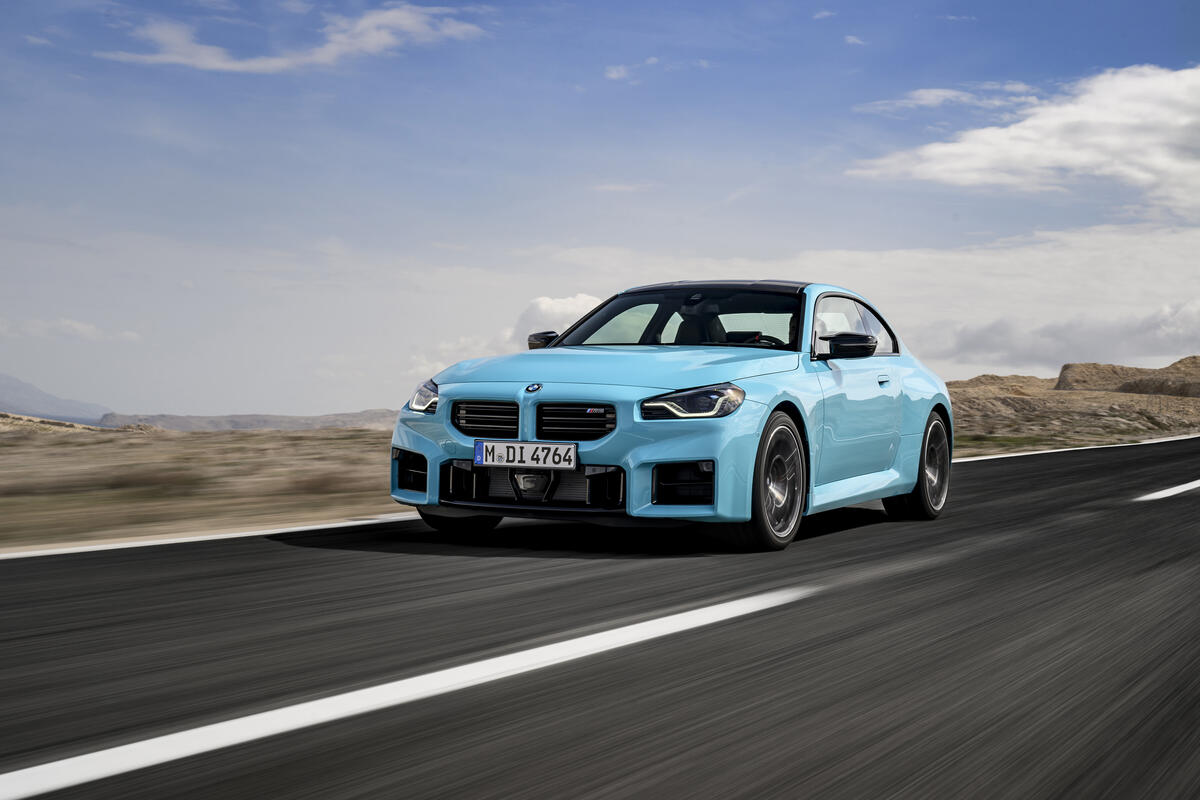
BMW M2Cs
"...ld do this and it doesn't, but this car does. The M2CS we drove? I'm sorry, did I say three? The M2CS, I..."
The BMW M2 is a compact sports coupe made for fun, sporty driving. The podcast mentions the M2CS and talks about how the car’s back end can move when braking hard. That affects how the car feels in corners and on track.
The BMW M2 is a smaller, sportier BMW coupe designed to deliver M-car driving dynamics in a more compact package. The episode mentions the M2CS and discusses how it can rotate the rear under braking—an important handling trait for track driving. It’s included as part of a comparison of how different M models behave.
throttle
"One percent throttle, somewhere between one and two percent throttle, will hold the most beautiful, smokiest slide you've ever seen in your life. You will not be going fast."
Throttle is how much you press the gas pedal. The host is saying the car is so sensitive that very small changes in gas can either keep the slide going smoothly or make you spin.
Throttle here refers to the driver’s small changes in engine torque request via the accelerator pedal. The host emphasizes that tiny throttle percentages (around 1–2%) can hold a stable slide, while a bit more (around 3%) can cause an immediate spin.
Sport Plus
"What setting was the throttle in? It's all in Sport Plus."
Sport Plus is a driving mode that makes the car respond more sharply. Here, the host is saying the car’s “slide with tiny throttle” behavior happens in that mode.
Sport Plus is a drive-mode setting that typically sharpens throttle response and other vehicle behaviors to make the car feel more aggressive. The host says the car’s slide sensitivity is tied to being in Sport Plus.
Performance Car of the Year
"I'm just pointing out an observation. I'm not saying this is a terminal problem. Once I learned that at Performance Car of the Year last year, I was able to do it very easily this time."
“Performance Car of the Year” is an award that car magazines give to a top performance car. The host is using it to say they had already learned how to drive this car’s slide behavior.
“Performance Car of the Year” is an award category used by automotive publications to recognize standout performance cars. The host references it to explain that once they learned the technique, they could repeat it more easily.
front tires
"after even a couple of laps of that, the weight of the car will overheat the front tires and it will stop being as good at it."
Front tires are the tires at the front of the car. The host is saying that after doing this maneuver a few times, the front tires get too hot and the car stops doing it as well.
Front tires are the tires on the front axle, and they can overheat when you repeatedly induce slides and weight transfer during laps. The host notes that after a couple laps, tire heat makes the car less effective at the trick.
active ride
"if you've never been anywhere near a Porsche that has active ride, [2816.2s] it's fine. It's not, it's not, it doesn't ride great."
“Active ride” means the car’s suspension is controlled by electronics. It can change how soft or firm the ride feels depending on the mode you pick. The host is saying it changes the feel between comfort and sport.
“Active ride” refers to an electronically controlled suspension system that adjusts damping and/or suspension behavior in real time. The goal is to change how the car absorbs bumps and how it responds to steering and braking. In this segment, the host says it can feel different between comfort and sport modes.
damper
"in comfort, it just takes all the damper out of it and it's just [2827.1s] a lot of movement in sport."
A damper is basically the shock absorber. It controls how much the car bounces and how quickly it settles after bumps. The host is saying the comfort mode makes it feel looser and more movement-y.
A “damper” is the shock absorber component that controls how quickly the suspension moves after hitting a bump. Softer damping lets the car move more freely, while firmer damping reduces body motion. The host notes that in comfort the system “takes all the damper out,” making the car feel more unsettled.
torque
"Especially with such a long lever. Long wheelbase, tons of torque, you know, easy, easy as [2916.6s] pie..."
Torque is the engine’s twisting force. It’s what helps the car pull hard from low speeds and can also cause wheel spin if you apply it too aggressively. The host is talking about how the car manages that force.
Torque is the twisting force an engine produces, and it strongly influences acceleration and how easily a car can break traction. The host ties torque to the car’s long wheelbase and weight transfer behavior, and later discusses how the car’s traction systems manage it. In this context, torque is the key quantity being “moved around” by the electronics.
electronic controls
"Could you feel the electronic controls [2943.4s] pulling power, moving torque around? Yes. Yes."
“Electronic controls” are the car’s computer systems that manage grip. They can reduce engine power and adjust how torque is delivered when the car senses slip. The host is saying you can feel that happening while driving.
“Electronic controls” refers to the car’s computer-managed systems like traction control and stability/torque management. The host claims you can feel these systems “pulling power” and “moving torque around,” which is how the car maintains grip during hard driving. This is a dynamic, real-time intervention rather than a one-time mechanical change.
traction off
"Because it must be, if traction off, it just, [2950.3s] excuse me, 1% throttle lights it up really quick."
“Traction off” means the car stops actively preventing wheel spin. With traction control disabled, the tires can start slipping much more easily when you press the throttle. The host is saying it can spin quickly even with light throttle.
“Traction off” means the car’s traction control system is disabled or reduced, allowing more wheel slip. The host says that with traction off, even very small throttle input can quickly light up the tires. That’s a direct description of how traction control normally intervenes to prevent spin.

Audi Allroad
"Although, you know, if this sounds good to you, you're on board with the M5 train, looks a lot better than the sedan. Did you see the new all-road pictures? An Audi all-road? There's a new Audi all-road? Yep. I feel like you're bringing this up for a"
The Audi Allroad is a wagon that’s made to handle more than just smooth city streets. It’s meant to look like a regular wagon but be a bit more capable. The podcast brings it up while talking about the look and appeal of different body styles.
The Audi Allroad is a wagon-style vehicle designed for comfort on regular roads with added capability for rougher conditions. It’s mentioned as an alternative look or direction compared with the M5 “train,” suggesting the conversation is about what kind of body style people prefer. The episode references “new all-road pictures,” indicating it’s tied to recent updates or a new reveal.

Audi A6 all-road
"It's an A6 all-road? Yeah, it's an A6 all-road. It got a wide body. So I bring it up, people brought it up in the chat."
The Audi A6 all-road is a wagon version of the A6 that’s meant to handle more than just smooth pavement. It usually has a tougher, more rugged styling and suspension feel. Here, they’re talking about the new one’s wide-body look and fender flares.
The Audi A6 all-road is an A6 wagon variant tuned for rougher roads, typically with a more rugged look and suspension setup than a standard A6 Avant. In this segment, they specifically discuss the new A6 all-road pictures and note it has a wide-body treatment and fender flares. That’s the key design change they’re reacting to.
wide body
"It's an A6 all-road? Yeah, it's an A6 all-road. It got a wide body. So I bring it up, people brought it up in the chat."
A “wide body” is a styling and fitment approach where the car’s fenders are widened—often with flared panels—to give the wheels more space and a more aggressive stance. It can also be tied to accommodating wider tires. In this segment, they’re reacting to the new A6 all-road’s wide-body treatment and how it affects the look.
fender flares
"but I don't need it to be like fender flared, even though it does look cool, but it's the fender flares."
Fender flares are the extra pieces around the wheel area that make the car look wider. They can also help cover the tire. In this segment, they’re saying they like the idea of the all-road, but the fender flares are what they’re debating.
Fender flares are extended panels around the wheel openings that cover the tire and help create a wider stance. They’re common on off-road-inspired vehicles and performance “wide body” builds. Here, the hosts specifically discuss whether they want the wide stance wagon look and call out the fender flares as the part they’re unsure about.

Audi RS6
"but it's the fender flares. Is it the RS6 [3045.6s] body? Yeah, it's like the RS. It's like the RS flares."
The Audi RS6 is Audi’s high-performance version of the A6 wagon. In this part, they’re using the RS6 as a style reference—basically saying the new wide fenders look similar to the RS6’s flared look.
The Audi RS6 is the performance flagship wagon/estate in Audi’s lineup, known for its high-output power and aggressive styling. Here, they compare the A6 all-road’s wide fender look to the “RS6 body” and call out the RS-style fender flares. It’s a visual reference to how the RS6’s proportions look.

Audi SQ5
"It's like the RS flares. Which is like, you know. It's kind of interesting looking. It's a lowered SQ5 sort of. Sort of. And that front wide fender is a little taikani."
The Audi SQ5 is a sportier version of the Audi Q5. Here, they’re comparing the new car’s stance and fender look to how an SQ5 looks when it’s lowered. It’s mainly about styling.
The Audi SQ5 is the sportier, performance-oriented version of the Q5 crossover, typically with a more aggressive stance and styling than the standard Q5. In this segment, they describe the A6 all-road’s look as “a lowered SQ5,” using it as a shorthand for the proportions and fender/stance vibe. It’s a design comparison rather than a technical one.
BBSs
"I saw a guy on the highway the other day that had one that was in a pearlescent white on BBSs, and it actually did look a lot better."
BBS is a brand of wheels. When people mention “BBSs,” they mean the car is running that brand of aftermarket wheels, which often look nicer and can be lighter than stock. Here, they’re using it to describe how good that white car looked.
BBS is a well-known wheel brand (Bayerische BBS) famous for lightweight, high-quality alloy wheels. When someone says a car has “BBSs,” they’re usually referring to BBS aftermarket wheels that can improve the look and sometimes reduce unsprung weight. In this segment, they’re describing a pearlescent white car on BBS wheels and how it looked.

Toyota RAV4
"... it's very angular like the new M5 because of the RAV4. So I guess it would look better, but I don't kno..."
The Toyota RAV4 is a compact SUV, meaning it’s a car with a higher ride height for easier everyday use. The podcast mentions it because its design is angular, and they compare that style to another car’s look. It’s basically being used as a visual reference.
The Toyota RAV4 is a compact crossover SUV known for practicality, comfort, and broad mainstream appeal. In the episode, it’s referenced as having an angular design that’s compared to the look of the new M5, implying the conversation is about styling cues. The RAV4 is used as a reference point for how certain design shapes can influence how other cars look.
A6
"It's four inches wider than an A6. Oh, it's coming in 2027. Okay. But why?"
The Audi A6 is a luxury car model. They’re using it as a measuring stick to say the BMW M5 is about four inches wider, which changes how it looks on the road.
The Audi A6 is a mid-size luxury sedan used as a baseline for comparing dimensions. Here, the host says the new BMW M5 is four inches wider than an A6, which is a concrete way to talk about stance and visual width.
Road America
"There was a purple E92 that was at Road America on purple and gold looks cool. Yeah. There was some... Oh, you can kind of see it behind."
Road America is a famous race track in the U.S. They’re mentioning it because that’s where they saw the purple BMW.
Road America is a major road course in the United States, known for long straights and fast, flowing corners. The host references it as the location where they saw a purple E92, tying the car examples to a real track setting.

718 Spider
"...can kind of see it behind. There was a shark blue 718 Spider that was particularly dope. Nice. With like a exc..."
“718” is Porsche’s name for a sports-car model line. The podcast mentions a 718 Spider, which is a convertible version. They’re talking about seeing one at a track and how it looks.
“718” refers to the Porsche 718 model line, which includes cars like the 718 Spider mentioned in the episode. It’s discussed because the speaker notices a specific color and the car’s presence at a track event, suggesting it’s part of a lineup of performance cars being observed. The 718 line is often associated with Porsche’s mid-engine sports-car feel.

Genesis GV80
"...e new McCann GTS electric and Zach is driving the GV80 gas right now. Genesis GV80. And I guess I got to..."
The Genesis GV80 is a luxury SUV, meaning it’s built to be comfortable and upscale. The podcast mentions it because someone is driving the gas version at the time. It’s included as part of the cars they’re talking about and testing.
The Genesis GV80 is a luxury SUV from Genesis, positioned as a more upscale alternative in the SUV market. In the episode, it’s mentioned alongside driving context (“Zach is driving the GV80 gas right now”), indicating it’s part of a set of cars being evaluated. The “gas” wording suggests they’re discussing the internal-combustion version rather than an electric variant.

Porsche Taycan
"My Taycan key, which is the same as the 992 key, is bigger. Does it smell funny because I washed it after I drove that car?"
The Porsche Taycan is Porsche’s electric car. This part of the conversation is about the key fob—specifically that the Taycan’s key is physically bigger than some other Porsche keys. The bigger fob likely has more electronics inside for range or security.
The Porsche Taycan is Porsche’s all-electric performance sedan, and its key fob design is part of the day-to-day ownership experience. In this segment, the hosts compare the Taycan key size to other Porsche keys, implying Porsche changed the fob hardware over time. Key fob size can correlate with electronics needed for range and security features.
fob
"Why is the fob getting bigger? It has the same number of buttons on it. You know, lock, unlock, front trunk, rear trunk."
A “fob” is the remote you carry to lock/unlock your car and sometimes start it. This segment is about why the fob is getting physically bigger. That usually means the electronics inside changed, not just the buttons.
A “fob” is the keyless-entry remote (the handheld transmitter) that communicates with the car to lock/unlock and often to start the vehicle. The host focuses on why the fob size is increasing even when the number of buttons stays the same. Bigger fobs can indicate different internal electronics, antennas, or power sources for range and security.

Porsche Macan
"The Macan that I'm driving has an even bigger fob. Why is the fob getting bigger? It has the same number of buttons on it."
The Porsche Macan is Porsche’s compact SUV. The host says their Macan’s key fob is bigger than the others they mentioned. They speculate it might be due to better range or a security change involving how the key communicates with the car.
The Porsche Macan is a compact luxury SUV, and the host notes the Macan they’re driving has an even larger key fob. They connect the bigger fob to possible internal reasons like battery size, range, or security changes. The segment specifically raises the idea that Porsche had to adjust key production due to an RFID-related security situation.
RFID situation
"Or is this the security issue? Because that's security issue. RFID situation. Where they had to stop making the old Macan's and had to do with keys. That's true. The security of the keys."
RFID is the wireless system that lets your car recognize your key without you taking it out. The host is saying there may have been a security problem with that wireless communication, so Porsche changed the keys. That kind of change can make newer key fobs look different.
RFID (radio-frequency identification) is the wireless tech used for keyless entry, where the key communicates with the car using radio signals. The host suggests Porsche had a security issue tied to RFID, leading to changes in key production and compatibility. In practice, RFID security problems can force manufacturers to update key hardware and/or software.
Run Flats
"that came a factory with Run Flats and the Internet loves to talk about how bad they are. Is that still the case? Should I be looking to swap to regular tires now or at least when these get worn?"
Run-flat tires are tires that can keep you driving for a short distance even if they get punctured. They’re built with stronger sidewalls, which can make the ride a bit rougher or noisier than regular tires. The question here is whether newer run-flats are still worse than normal tires.
Run-flat tires are designed to keep working even after a puncture, so you can drive to a safe location without immediately changing the tire. They typically use reinforced sidewalls, which can make them feel harsher and louder than conventional tires. The host is discussing whether modern run-flats still have the reputation for being bad.
tire priority
"If tires got life in them, I'm probably going to drive them until they don't anymore before I spend money on tires."
When people talk about a tire having “life,” they mean how much tread is left and how safe it still is. The idea is to replace tires when they’re actually worn out, not just because time passed.
Tire “life” refers to how much usable tread and remaining wear a tire has before it’s unsafe or ineffective. Enthusiasts often try to stretch tire replacement until they’re truly worn out, balancing grip, safety, and cost.
puncture
"Then don't sweat it and if you do get a puncture you'll be able to drive it to safety and that's cool. That's better than some alternatives."
A puncture is when the tire gets a hole, usually from something sharp. That can let the air out, so the key question becomes whether you can safely keep driving or need help right away.
A puncture is when something sharp creates a hole in the tire, causing air loss. In tire discussions, it matters because it determines whether you can safely drive on the tire (especially with run-flats) or need immediate replacement.
bushings
"I said, yeah, it's only had to go to the dealership for a set of bushings, which, you know, creaked a little bit and they fixed it."
Bushings are small parts that help the suspension move smoothly and quiet vibrations. In this case, the host’s car had bushings that made noise (creaking) and the dealer repaired them.
Bushings are rubber or elastomer components that isolate vibration and allow controlled movement between suspension or chassis parts. The host says his Taycan needed dealer service for a set of bushings that creaked, and they were fixed.
over the air updates
"And he sort of a little sneeringly was like, it doesn't get over the air updates. And I was like, no, it does. But it's like, that has to go to for a firmware update sometimes that was over the hard port."
Over-the-air (OTA) updates are software updates delivered wirelessly to a car, without needing a physical connection or a dealer visit. The host notes that sometimes even firmware updates may require a wired connection (“over the hard port”) depending on the update and the car’s update process.
firmware update
"But it's like, that has to go to for a firmware update sometimes that was over the hard port."
A firmware update is an update to the car’s built-in computer software. It can change how the car’s systems behave, and sometimes it needs a direct connection to install.
A firmware update updates the car’s embedded control software—code that runs on the car’s electronic modules (like infotainment, control units, and other systems). The host distinguishes firmware updates from general software updates and mentions that some firmware updates may require a wired connection.
stop supporting the car, updating it
"But maybe like 20, 30 years down the road. I don't know. We're also... they probably just stop supporting it. ... But at a certain point, development of that software will stop."
Connected cars rely on software updates from the manufacturer. Over time, the company may stop providing updates for older cars, so the car still works but may not get improvements or new features anymore.
This is the concept of “end of software support” for connected cars: manufacturers may stop issuing updates when development resources are moved on. The host compares it to parts availability (like hoses) and suggests that while older cars may still function, they may stop getting new optimizations or feature updates.
normal operation
"I'm a new transmission mechanic and I've already learned that customers don't know what normal operation is. You then don't elaborate on that."
“Normal operation” just means what the car does when everything is working correctly. The point here is that many customers don’t know which sounds are normal and which ones mean something is wrong.
In a repair context, “normal operation” means how a component behaves when it’s healthy and functioning as designed. The host is discussing how customers often don’t know what noises, vibrations, or behaviors are expected versus signs of a problem.
single mass flywheels
"You definitely have that issue with Porsche single mass flywheels and like the 9-11R and like the ST. Customers would call in and be like, the clutch is like broken."
A flywheel is part of the drivetrain that helps smooth out engine power. A single-mass flywheel is more “direct,” so it can make the car feel and sound more rattly or chattery even when it’s working normally.
A single-mass flywheel is a clutch/engine component that doesn’t use a multi-part design to absorb driveline vibration. Compared with dual-mass setups, it can transmit more vibration and produce a more “chattery” or rattly feel and sound, especially at idle or during clutch engagement.
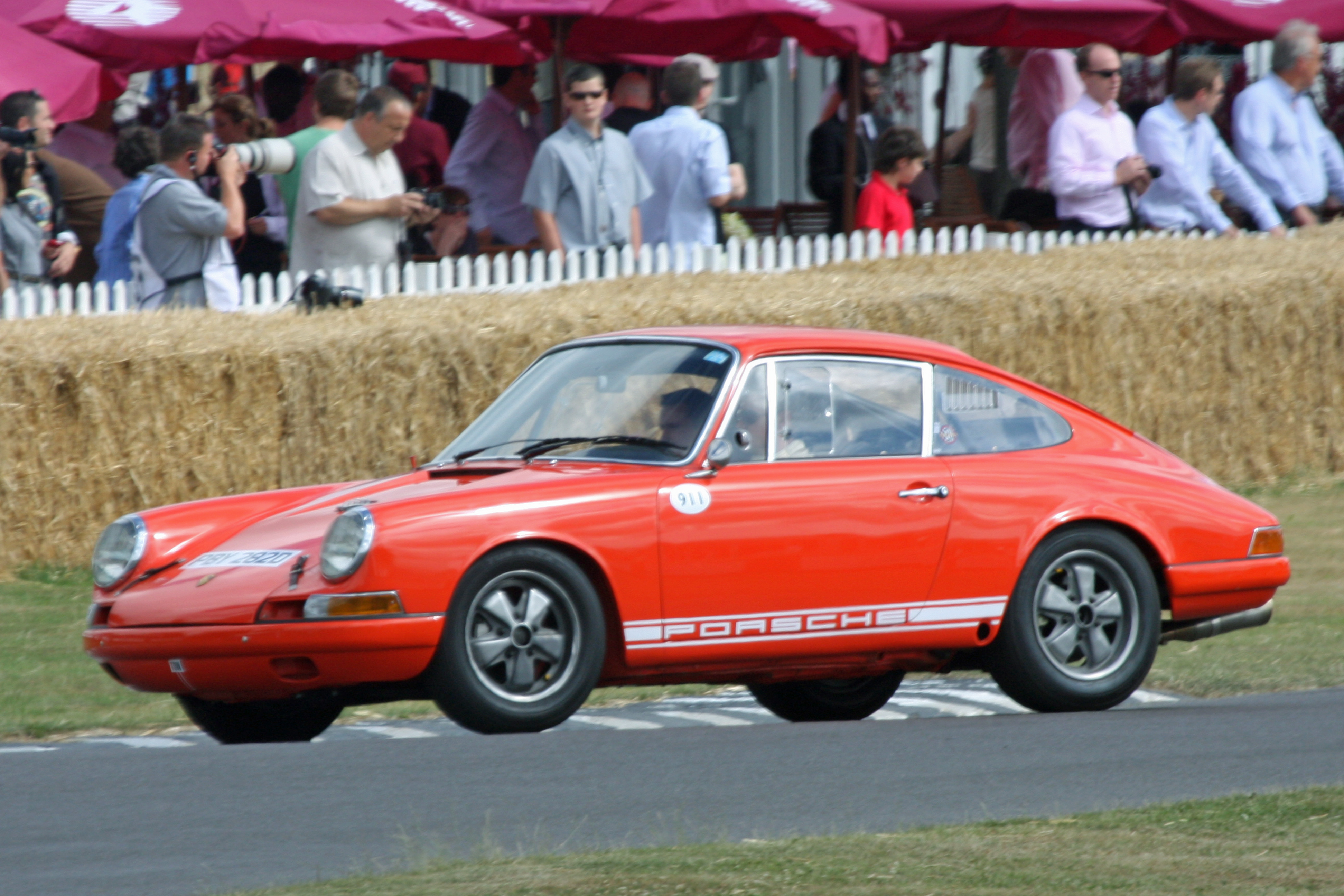
Porsche 911R
"You definitely have that issue with Porsche single mass flywheels and like the 9-11R and like the ST. Customers would call in and be like, the clutch is like broken."
The Porsche 911R is a lightweight, track-focused 911 variant known for a more aggressive driveline feel. In this segment, the host points out that its single-mass flywheel/clutch setup can sound “broken” to owners, even when the noise is normal for that hardware.
Request an Explanation
Heard something you'd like explained? We'll add it to this episode.
Sign in to request explanations for terms you heard.
Want to learn more?
Browse our glossary for plain-English explanations of automotive terms, jargon, and concepts.
Help improve this episode
See something that's not quite right? Our annotations are AI-generated and can sometimes miss the mark. Click the flag icon on any annotation to suggest a correction.