Pro Stock is a category in drag racing where cars have to follow a rulebook. The goal is to go as fast as possible down the strip, but the cars and driving are very specialized.
NHRA is the main organization that runs drag races in the U.S. They split cars into different classes so the competition is fair and rules are consistent.
Top Fuel dragsters are one of the premier NHRA classes, famous for extreme acceleration and engines that burn nitro. They’re typically long, rail-style cars designed specifically for drag racing.
They have to change gears quickly while the engine is spinning extremely fast. Shifting at high RPM helps keep the engine in its strongest power range.
This is the engine size measured by how much space the cylinders have. In Pro Stock, the rules set a displacement target so cars are compared more fairly.
Nitrous is a chemical boost you can inject to make more power. In Pro Stock, they don’t allow it, so the cars have to make power without that extra injection.
Race fuel with high octane helps the engine burn fuel more safely when it’s pushed hard. It reduces the chance of the engine “knocking” under high power.
This is a way to compare engine power that accounts for engine size. Instead of just saying “how many horsepower,” it looks at horsepower relative to how big the engine is.
Vegas is mentioned as a track where the series used to hold two events per year, but it was reduced to one. It’s included to explain the broader schedule strategy of adding more venues.
In drag racing, the “quarter” is the quarter-mile race distance. Saying a car runs “six fives in the quarter” means it covers that distance in about 6.5 seconds.
“Fifth by the eighth mile” describes how quickly the car reaches 5th gear early in the run—by the 1/8-mile mark (about 201 meters). In Pro Stock, this reflects how the transmission and gearing are optimized for rapid acceleration and staying in the power band.
Term
ramming gear
“Ramming gear” refers to the specific gear-selection method used in some drag-racing transmissions, where the driver must hold the shifter/selection under load to complete the shift. The description here suggests a shift system that won’t engage unless the shifter is held with the correct pressure.
A “Liberty five speed” refers to a five-gear drag-racing transmission made by Liberty. Pro Stock cars use specialized transmissions and shift systems to handle rapid, repeated gear changes under extreme acceleration.
Liberty transmissions is a company that makes racing gearboxes. Teams choose them because they’re built for the hard shifting and stress of drag racing.
Pro Mod is a drag racing class for heavily modified cars. It’s a place where racers can experiment with big performance upgrades while still using a car body style.
Part
318
The “318” is the engine size—318 cubic inches—used in many older Mopar V8s. Engine size is one of the big factors that affects how much power the car can eventually make.
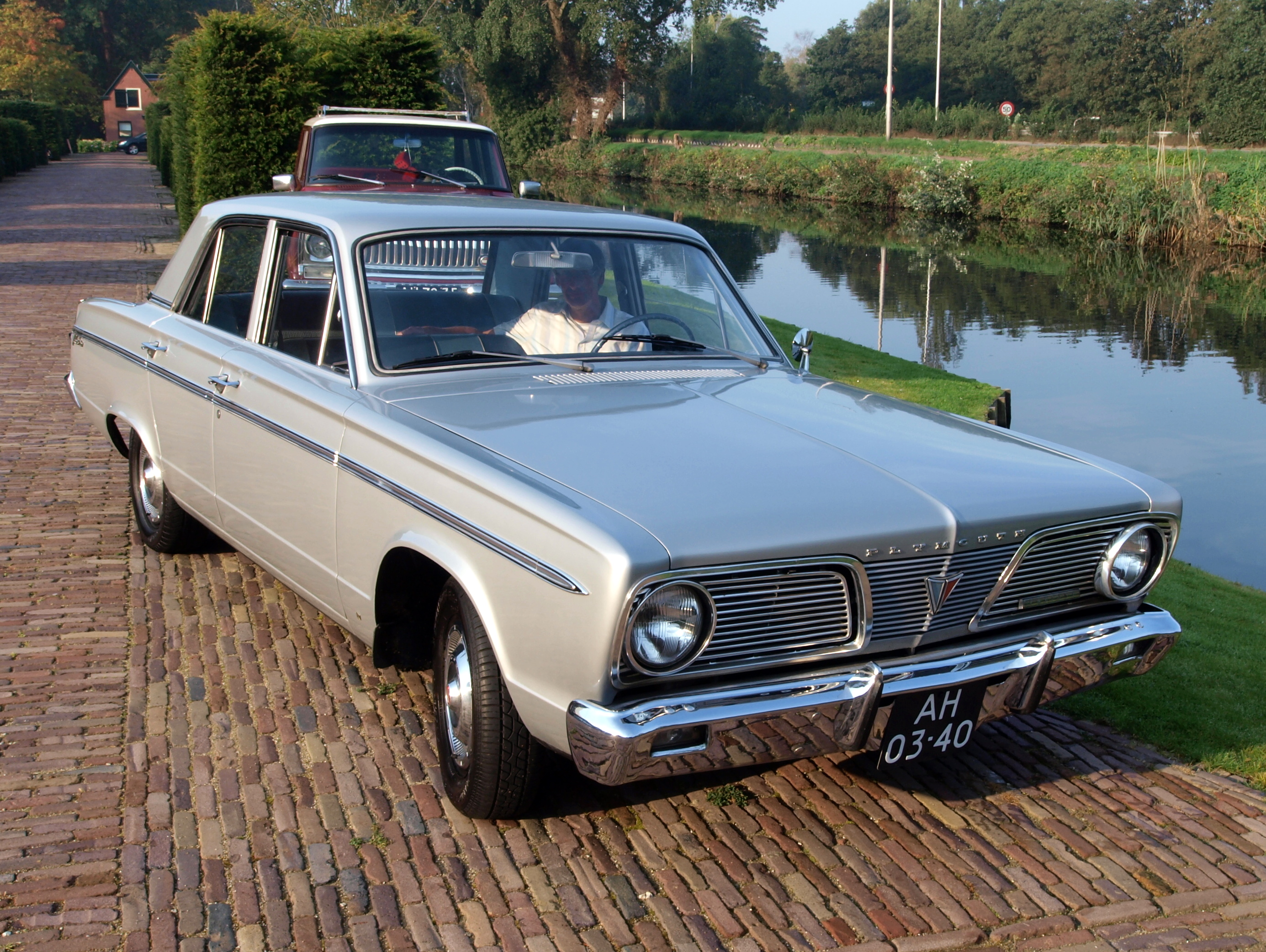
A 1964 Plymouth Valiant is an older Mopar (Chrysler-era) car. Here, it’s the first car the speaker used to start racing and build toward much faster times.
A stroker small-block is a modified V8 where the engine is built to be bigger than stock. That usually helps it make more torque, which helps it launch harder on a drag strip.
“Wiped the cam out” means the engine’s camshaft got badly damaged. Usually it’s caused by oil/lubrication problems or a setup issue that doesn’t survive hard driving.
Pro Street is drag racing that tries to keep the car usable on the street too. The goal is to make it fast at the track without making it completely impractical to drive.
Global Emissions is the company the speaker works for. They say their sales experience there helped them understand how to attract and satisfy brands that want to sponsor racing.
NHRA is a big U.S. drag-racing organization. If you hear “NHRA events,” it means races run under their rules where teams compete for points and class results.
B2B means the sponsor is trying to sell to other businesses, not individual customers. In this context, the race is used to create introductions and deals with companies that can buy the sponsor’s products.
FAS is the main company sponsoring this racing effort. They make diesel-related products—especially fuel filtration systems—so the sponsor wants access to the right trucking customers.
A diesel truck is a work truck that runs on diesel fuel. The sponsor is talking about solutions specifically for problems that show up on these kinds of commercial vehicles.
A distribution center is a warehouse/logistics hub that sends shipments out to where they need to go. Companies running these hubs can be important customers for commercial trucking-related products.
Customer retention is the strategy of keeping existing customers engaged so they keep buying from you. In sponsorship terms, the host is arguing that racing can be used to thank customers and create a relationship that goes beyond a logo on a car.
Fox Sports One (often shortened to FS1) is a sports TV channel that carries motorsports coverage. Mentioning it here highlights that sponsorship value can come from broadcast exposure, not just trackside branding.
In motorsports, the pits are the service area where teams work on cars between runs—fueling, repairs, tire changes, and adjustments. The speaker references pits to emphasize that sponsorship visibility isn’t only from the grandstands; it’s also seen by team personnel and attendees.
In an “arrive and drive” program, you don’t have to bring your own race car and set up everything. You basically show up, get in the car, and race, while the program handles most of the logistics.
KB Titan is the racing organization the speaker works with. They help set up a program where drivers can race without owning and running everything themselves.
Elite Motorsports is mentioned as one of the few builders making competitive pro stock racing engines. The speaker contrasts them with “us,” implying only a small number of companies can produce engines that perform at the front of the field.
It’s a deal where you basically show up, get put in a race car that’s already prepared, and you drive. The team handles a lot of the setup and logistics so you don’t have to run the whole program yourself.
“Building” a racing engine means making an engine that’s specifically prepared for racing—strong enough to handle hard use and tuned to make power reliably. It’s more than just buying a stock engine and hoping it works.
CNC machines are shop tools that use a computer to cut and shape parts very precisely. Racing teams use them to make components that fit correctly and consistently.
The driveshaft is the part that transfers power from the gearbox to the rear wheels. Taking it out between runs is a way to service or replace drivetrain parts so the car can keep running.
They take the tires off and put new ones on between runs. After a hard launch, tires wear out and can lose grip, so teams replace them to keep performance consistent.
Engine management is the computer system that controls how the engine runs. A specialist can adjust it so the engine makes the right power and runs correctly for the day.
Compression is how much pressure the engine can build inside its cylinders. Lower-than-expected compression can mean the engine isn’t sealing well and may need repairs.
A sequential transmission shifts through gears in order, like stepping up or down one gear at a time. That can make racing shifts quicker and more repeatable.
In drag racing, a “cleanup” delay happens when a car leaks fluid or debris onto the racing surface. Track crews must remove the contamination for safety and traction before racing can resume.
Term
trade drag racing
This is a kind of drag-racing setup where the schedule can get messy if something goes wrong on track. If a car spills oil, it can force a cleanup delay, so the event can’t always run continuously.
In elimination rounds, cars race each other and the winner moves on. The loser is done for that event, so teams have to be ready for the next run quickly.
“Time attack” is a motorsport format where cars run timed laps against the clock rather than racing wheel-to-wheel. It’s mentioned as a discipline the speaker feels they could enter if they wanted.
The ARCA series (ARCA Menards Series) is a stock-car racing ladder in the U.S., often used by drivers to build experience and move toward NASCAR. The speaker mentions it as another path they’d like to try.
A hood scoop is a raised opening on the hood that helps push outside air into the engine. On race cars, it’s mainly about getting more (or better) air to the intake.
“Four-barrel” refers to a carburetor design with four throttle bores, and “twin four-barrel” means two carburetors feeding the engine. In drag racing, carburetors can be tuned for airflow and fuel delivery, but they’re generally less precise than EFI.
Throttle bodies are air-control valves that meter airflow into the engine, and “twin throttle bodies” means two of them feeding the intake system. In EFI setups, throttle bodies work with the ECU to control how much air enters, which strongly affects power and drivability.
Term
top mount, air intake
“Top mount” just means the intake is placed on the top side of the engine area. That can change how the engine breathes and how consistent the airflow is.
Denser air means the air has a higher mass per volume (often due to cooler temperatures or specific conditions). Denser air contains more oxygen, which allows the engine to burn more fuel and make more power when the fueling and tuning are correct.
Runners are the tubes in the intake system that deliver air to each cylinder. If the air is shared more evenly, the engine can be tuned more easily and run more consistently.
The intake manifold is the engine’s “air distribution” piece. It channels air from the intake into the cylinders, and racing teams tune it to make more power.
They’re talking about how fast the car runs the quarter-mile. A change like 6.50 to 6.47 seconds is a big deal in drag racing because the cars are already very fast.
That “644” is the best quarter-mile time right now, written in racing shorthand. In drag racing, improving by even a few hundredths of a second is extremely hard.
Term
640s
In drag racing, times are measured very precisely. “640s” means the car is running in the low 6.4-second range, and the difference between close numbers can feel huge on track.
In drag racing, cars run side-by-side in two lanes. Even if they look the same, one lane can be harder to drive because of small differences in grip or how the car sits and how you can see the track.
The cowl is the part of the car body just below the windshield. In race cars, teams may change its shape so the hood scoop fits and the airflow works better.
An injector hat is a special intake part that helps get fuel into the engine in the right way. It’s part of how race teams control the air/fuel mixture.
A Lexan windshield is a racing windshield made from a tough plastic. It’s used for safety and weight, and the car’s front shape is designed to flow air smoothly into it.
Term
wicker
Here, “wicker” means a rear aero piece on the car. Teams can sometimes adjust it a little to change how the car sticks to the track, as long as they stay within the rules.
An engine program is the team’s whole plan for building and tuning the engine to work best for racing. It includes development work and fine-tuning, not just one-time setup.
When a car launches, it doesn’t stay evenly loaded. The weight shifts forward/back and side to side, and that affects how well the tires grip so the car can accelerate.
It means making sure the tires actually grip when the car starts moving. If the suspension and tires aren’t set up right, the tires can slip instead of grabbing.
Preload is like setting the starting tension of the suspension before the car hits the road. Changing it can make the car sit and react differently when you launch.
Rollout is how far the tire moves in one turn. If two tires look the same size but have different rollout, the car can feel like it has different gearing.
Grey Motorsports is a racing team the speaker says they bought. They’re describing it as a successful organization that brought skilled people into their program.
The “60-foot” is how fast the car gets through the first 60 feet. Getting that part right matters a lot because it affects everything that happens after the launch.
Suspension is the system that connects the wheels to the car and controls how the car moves. For drag racing, tuning it helps the car launch straight and hook up instead of spinning.
The Volvo 960 is a bigger Volvo sedan meant for comfortable driving. The podcast is saying that if you can find one in certain year ranges (like the 960 or 970 range they mentioned), it’s more likely to be a good, well-sorted example. That’s useful advice when you’re shopping for an older car.
gear fully out, change out the rear end. That's something that the back half guy has to do,
and then put it all back together. So that's what I did for the first half of the season.
And once I started taking on some sponsors, I had more commitments. I needed to take care
of my sponsors and the pits. So make sure they got the value, the introductions and everything
that they needed. So we brought on, we were able to hire another back half guy for my car. So now
my only responsibilities on the car are to drive it, fold the parachutes, and be there to help
whenever I'm needed. But I have a full crew now. But yeah, that would be, that was what my duties
were initially when I started. And now for any reason, if we're ever short a guy or if a back
half guy can't make it, I can jump in and do those. That makes sense. Okay, so the crew of three,
so you have the back half guy over the other two, the clutch guy, okay, and then the engine
maintenance guy, engine maintenance guy, the end there, there can also be a tuner. So sometimes
it's a group of four, but oftentimes the engine maintenance guy is also the tuner. We do also
have engine maintenance guys that aren't tuners, but they'll do engine maintenance on say two,
like for example, my car, I technically have four guys, because my engine maintenance guy is not
a tuner, but he does engine maintenance on two cars. So he'll come in, do all the valves, valve
lash, chain springs as needed, do the engine service, and then move on to one of our other
cars and do their engine service. And then I've got a tuner who tunes my car, but does engine
service on another car. Typically engine guys will have two responsibilities. It can be either
maintaining two engines or tuning one, maintaining another, or tuning two, maintaining none, but
it's typically two roles. Okay. And it's based on their expertise and skill sets. Yeah. Well,
expertise, expertise. That's a word I'm struggling with, say hello. Especially when you talk a lot
and you use a dry mouth. So yeah, expertise and all that. What's the typical age range? Because
obviously like expertise, the older you get, you have more expertise. Yeah. A lot of these guys
in their fifties, sixties, a lot of young guys, older guys, all across the board.
My back half guy now that I have, he's 25 years old. He used to work for the Cadillac F1 racing
team. He's a brilliant engineer. We brought him in from the UK. His name is Jordan Payne, great
sportsman racer. He came here because he wanted to, he loves drag racing. He loves drag racing
so much that he left his job with F1. Jordan Payne, do you have like a crazy drag car in the UK
or something like that? Oh no, I think, did you tell me about him? I might have told you about
him. He has a Compleminator Corvette that he, that he raced. I'll send you some of his stuff
after. He's got a pretty cool Compleminator car that he ran in the UK. He wants to race one of
these cars more than ever. So we hired him for global emission systems. He's one of our design
engineers, but he's also a phenomenal set of hands. He's, he's, he's an excellent mechanic.
He's great at turning wrenches. He is hardworking guy. So he's now my back half guy. So nine to
five Monday to Friday, he's in Canada at our office being a design engineer. And then every
race weekend, he's working on the back half of the car. So he's interesting. One of the engine
maintenance guy, I actually don't know how old he is, but I think he's like 17 years, 17 or 18 years
old. He's a young guy, but he's an engine maintenance guy. And he's phenomenal. And he's in
our engine shop doing cylinder heads and machine work. And he's great. So if you've got talent,
we will hire you. No matter how old you are, we just hired someone who was
got to be in his late 60s as an engine maintenance guy, but he's great. He's been doing it his whole
life. He's phenomenal at what he does. Anytime we can bring in young talent, we like, we just,
we brought in a guy a couple of years ago as a back half guy. And then he learned clutch. So then
he got on clutches. He just went and got his CDL. So now he drives one of the trucks. So over the
past two years, he started as a back half guy, learned clutch, learned gear changes. He does
gear, like training ratio changes. And now he drives one of the rigs. So it's pretty cool. Like
you can come with us. Dallas Glenn, he won the championship last year. He started, he got hired
here years ago to be a maintenance guy, help out whenever needed. He always says, I got hired to
sweep the floors. He got hired to do more than sweep the floors, but basically just like just an
extra set of hands. We need some labor help. Let's hire this guy. He's mechanically inclined. He
can help us out. He's now driving trucks, maintaining cars, winning championships,
and doing his own clutch service on his own car. Like you can come to us with just some good
mechanical experience and learn everything. So it doesn't matter how old you are. Obviously,
we like bringing in some nice young talent, but there's like, if you look at the demographics
of our group, it's all over the board. Yeah, that's crazy. And I'm still like my head's spinning on
my 18-year-old just coming in here doing a pro stock. And he can port cylinder heads. He can do
floor rebuilds. And even just on like regular automotive stuff, like when I bought my C6 Corvette,
I said to him, hey, because they have those cars have weak points in the cylinder heads. They have
valve guide problems. So when I told him I bought that car, he goes, do you fix the heads yet?
Like he just knows this. He's just a cylinder head guy. I go, no, not yet. And he goes,
you want me to? I can do it. Just pull the heads there. I'll pull the heads, whatever.
Like he's just so confident in his, his teenager is so confident. He can work on these things.
He can work on anything. It doesn't matter what he is. And he's one of our machine guys. And we
don't have to observe them or keep an eye on them. We just know he's very. I gotta ask, what's his
kid's background? Does he like, does he have like some crazy like, like his dad was like the ultimate
machine? Honestly, I don't know. I got to get to know him a little bit more. I'm still relatively
new to all this. No, that's, that's just a, that's craziness. Yeah, we just, we've got a lot of
talented guys that that's awesome. Yeah. Again, when I was again coming, I tried to do a little
bit of research going into podcasts, but not too much to where I know everything's for the deal.
But like when I was looking at like how tight the fields are here, it's like,
there still is a lot of variables, right? The driver, the setup, everything, you're still
within a couple of thousands. Like it's just mind blowing to me. Right. And all while being a stick.
Well, yeah. Well, that's the biggest thing. Like I was saying is, and that's what separates
the best drivers from either the not so great drivers or the new drivers. Like you, like,
I would consider myself to be a good driver. I'm not going to say I'm as good as say, Dallas or
Greg or some of my competitors, like Jag Coughlin Jr. and Aaron Stanfield, who I was talking about
how I beat him on a whole shot. That was, that was great, but he still had a phenomenal reaction
time. And I'd still say he's probably a better driver than me. He's way more experienced. A lot
of these guys are. I think I'll get there. And I think I can be one of the best. But going back
to kind of like anyone with some money can run one of these cars that will show you who runs
just because they have money and who runs because they're phenomenal at what they do.
Because these cars, they're all pretty well, exactly the same. So if you see someone that's
like four or 500 slower, you got to look at their graphs and see, are they, are they smashing the
chip on all their shifts? Are they shorting all their gear changes? And that's kind of what separates
these drivers nailing. You've got to go through five gears, four gear changes in less than five
seconds. It's around four seconds, really, because you look at your eighth mile times and you're
in fifth around the eighth mile. Yeah. So it's, it's just a lot going on in these cars.
It happens very quick too. I was like, what the heck is that tick or something? No, we're good.
That's a lot going on. It's a lot. Yeah. As we kind of close in on that two hour mark here,
was there anything else that you kind of wanted to touch on or anything? What do we miss?
This has been the year into making. Yeah. So much has gone on. Like when we started
communicating and you said, Hey, I want to get on the, it's funny because we, we touched a little
bit about global emission systems and G Sport cats, but we talked a lot about racing, which is
fine. This is, this is kind of the cool part. High flow catalytic converters is a great product
that everyone needs. And then we kind of, I've got this super interesting life where I'm driving
race cars, I'm selling catalytic converters, but there's so much to how this all works out.
What did we miss? Maybe the marketing side of things like, so me as a driver of one of these
cars, I have, I'm a sales manager for a catalytic converter company. I am not a millionaire. I
don't have generational wealth. I don't have a trust fund. I've got a wife and two kids and a
mortgage and, and a vehicle payment. Like I can't afford to spend a million dollars a year to race
one of these cars, but I'm good at marketing and I'm good at finding what brands need. We talked
a little bit earlier about some of the B2B aspects in this. I think that's something that
that could be taught. I think that's something that not enough people are talking about
is the business behind motorsports. I think there's a lot of really talented drivers
that are not driving race cars because they don't have the money or they don't realize
that they can do it.
So I don't know how to personality either too though.
Sure, sure. But some of them, I've met a lot of great drivers with great personalities that
don't have sponsorship funding. Some of my best friends who have large social media accounts,
they have big followings, they're well-spoken, they're great drivers, but they don't have
sponsorship funding to drive, to drive through a series. And if given the opportunity,
they would dominate, they would crush it. So I recently started a business called Matt Latino
Marketing. So it's, it started as just a company to run my, my books like bring in sponsorship
money, pay my expenses. And then I started realizing the common denominator of talented
drivers that are suffering to get funding. And a lot of drivers, there's different reasons why
they're not getting funding. They didn't budget their race team properly or they didn't realize,
oh, I actually need to raise more than I thought, or managing the money. The sponsor's willing to
give them the money, but who are they paying? Are they paying the driver and the drivers going
and doing, are they paying the arrive and drive program? So Matt Latino Marketing,
it's a company where I help drivers bridge the gap, find their weak points on what they're missing
in their sponsorship side and find that solution. If it's contract, building a package that's
beneficial for your sponsor and for you, budgeting your race team, sitting down and planning what it
takes for you to run a season so you can properly expense and plan your race season.
Managing the money, that's another thing that people don't know how to do. You can be a great
driver, very well spoken, but they don't know how to manage the money. That's something that I do
very well, because I do that on the globally mission side. And it's for a very large company
that operates globally. So I'm good with money management, managing the taxes, the logistics
of things. So it's basically driver solutions for talented drivers that need help bridging their
gap or have a weak point in their sponsorship racing program. So consulting for racers, finding
where they can need some help, helping them set up their LLCs, helping them managing their money,
wherever that downfall is. Okay. So that, and again, you alluded to, it's very different for
everybody. Everybody has their own sort of struggles for, is another one of the things
that you would kind of help with, because again, you seem to have it figured out when it comes to
the sponsor side of things and knowing what companies are looking for, is another part of
that, the deliverables. Yeah, absolutely. That's one of the biggest things. So me as a racer,
and we'll see if I have sponsorship funding next year. This is because this will see,
this will be the deliverables aspect, deliverables. There's another dry mouth word.
So deliverables are tough, because as a driver, I can say, hey, sponsor my team,
I'll get you in front of all these teams, I'll help you generate business, we'll
co-create content within the pits, we'll do these giveaways, it's going to be great.
I get the money, I put the brand on the car, if I don't deliver on my sponsors,
two things could happen. The worst case scenario, they sue me for not fulfilling my end of the
contract. The best case scenario of me not delivering is they don't sponsor me next year,
right? The perfect scenario is we deliver on everything, we bring them revenue, we prove
a value that is equally beneficial for myself as the driver, for them as the sponsor, and now for
next year, I say, okay, I proved results for you, I want to keep it rolling, I want a two-year
contract now. Now we start building a stable career, because you can build a career out of racing,
but if your racing career is trying to get funding for the next race,
you're not going to make a career out of this. If you can prove yourself and build a program that
works and start working in multi-year contracts with sponsors that you're delivering value with,
you can start looking at making a career doing something you love. That is ultimately my goal
with Matt Latino Marketing is helping racers make their passion and their skill a career.
That's something that I believe I can do for myself and help other people do and live out their
dreams. I feel like I just got to talk from a wise old man. Well, maybe one day you can have
my dad on the podcast, he's that one. I don't want to call, I'm not, take the old man part of it,
but he's a wise man that he's taught me a lot. He's taught me how to wrench on cars.
I learned almost everything I knew from being around him and his race team and seeing what
he excels at and what he could use a little assistance at and just observing and being a
part of it. He's a brilliant person that's built some phenomenal businesses and he'd be a great
person. But when I speak, it's about what I've learned and I've learned a lot from him.
I guess a little kind of close out father appreciation right there. Well, I read an
article too that one time you beat him as well. Oh God. I can't do an interview without someone
bringing that up, whether it be like over the phone or what else. But my first ever round of
competition was this time last year. We just got back from Pomona, California last week.
So last year, my first ever race that I qualified for, so I don't talk about this much,
but my first outing was in Arizona. I didn't qualify. It was the first and only time I did
not qualify for a race. Next weekend, Arizona, eight and nine in qualifying. If you qualify eight
and nine, you get paired up together. One races, 16, two races, 15, three races, 14 and so on and
nine. Dad qualified eight. My first ever race that I qualified for, my first ever round of competition,
I beat my dad on a whole shot. So I just, I got off the line a little quicker. He was
he was three hundredths of a second quicker in elapsed time. I was four hundredths of a second
quicker in reaction time. So I was one hundredth of a second margin of victory. And if you go on
my Instagram page, I have that race pinned on my profile. And it's something that both him or I
will never forget as it was, it was like such a heartbreaking, but also heartwarming moment.
Bittersweet for sure. It was so bittersweet because, oh man, one Latino's got to go home
first round and that either dad's going to beat the son or son's going to beat the dad.
And no one's ever going to stop talking about it. But first ever round of competition against your
dad. Like that is so freaking cool. That is cool. Like I have wanted my whole life to race a professional
series with my dad. The fact that we're racing together and I got to race against him in the
first ever round of competition. Thankfully, I haven't gotten him beat him. That's like the cherry
on top. But just being able to race alongside my dad is super cool. That's awesome. And it's a moment
that both him or I will never forget. Yeah. I think that's a good way to segue into the final
last question, which I'm sure you're familiar with. I think you've listened to an episode or two,
which is at the end of every episode, I like to ask guests to pick three cars. You have an
unlimited budget. You could buy anything, build anything, whatever you want. And it has to fall
within these categories. Race car or sorry, track car, show car and daily driver. Okay.
Oh, I should have been more prepared for this because I actually did know that was coming
and I didn't prepare for it. I'm a lover of all cars as someone who worked in the automotive
industry, wholesaling high end cars. You've seen everything. Yeah, no, but really, I've driven.
I don't want to say everything, but I've driven Ferrari 488s, 458s. I've driven probably a dozen
different types of Ferraris, Lamborghinis, McLarens, like any of the exotic cars you could think of.
I've driven, driven all the luxuries. I've driven all the sports cars. So it's so hard to pinpoint
three, but I have to do it. So I'll do it. So refresh me again, race car, track car, yep,
of any kind of track, but it's got to be a street driven track car, I guess. Nope. Nope,
whatever you want. Interesting. Okay. So track car, daily driver and show car. Okay. I do really
want a 67 GT 500 Elinor Cologne. You know, like, you know, everyone knows gone in 60 seconds,
Elinor. That to me is going to be my next build. When I finish my valiant build, which I've been
working on my whole life, basically, it'll be an Elinor build. Okay. Will that be the daily driver
or will that be the show car? Is a very good question. I think that'll be the show car.
Okay. I will drive it. But it'll be a show car. My daily driver, I own the car, my, my valiant.
It's, it's such a unique car. It's a 1964 Plymouth, two door car, no post, the ultimate sleeper.
That car was never designed to have more than like 200 horsepower. I've put full frame rails in the car.
I've braced the chassis. It's an 800 horsepower gen three Hemi with a stick, coilovers, four link,
air conditioning, backup camera, navigation, all digital gauge cluster. Like that is
a true daily driving car that you could do whatever you want with it. That'll, that's
my daily driver. I own the car and I'll never, I'll probably never sell it.
Race car. Well, I've got this race car, but I don't know if that's the one.
Yeah. You still got a long life ahead of you. I got a long life ahead of me.
I don't know. Maybe like a, maybe like a nine, maybe like a nine 11 GT three RS.
Oh, okay. Yeah. I love those cars. I have had the most amount of fun in those cars.
Like a 992 or the previous generation? 992.
Have you driven a 992? Oh, okay. Yeah. Yeah. So the last dealership that I worked with in Canada,
that was like the last automotive industry job that I had before moving to US and doing a massive
career change. I had a pretty great experience in one of those cars and did you take it to the
track by any chance? Yeah. Well, so one of our, I didn't drive Billis's car, but one of our family
friends out Billis, he's got, he's like a Porsche fanatic. His family is one of the founders of
Canadian tire, which is looking at Canadian tires massive. He's a Porsche fanatic. He's had just about
every nine 11 you could imagine, but no, not a track experience, but got to drive the car to the
detail shop. So I got the car at auction, brought it to the showroom, brought it to the detail
shop, which conveniently I picked a detail shop that was an hour away. I drove, I probably,
and I don't work at this dealership anymore. So I don't have any, I don't have it. Yeah,
it was a very spirited drive. Just an incredible driving car. It's only 500 horsepower. How much
trouble could you get in? And what's crazy is though, that is not the most amount of power.
Like I've driven 1000 horsepower street cars. It's just the way the car drives, the way it
handles 100. It takes like, I really liked that car. I know this, this is not really the rule,
but I'll, I'll mix one more car into this Audi S eight 20. My dad has a 2017 Audi S eight.
Okay. I love that car. That is such an awesome, it's his daily driver.
It makes 605 horsepower from factory. It's got big carbon ceramic brakes. That car launches so
hard. You can go from stopped to 150 mile an hour. I don't know the time, but it, that thing
absolutely hauls that twin turbo V eight never stops pulling. If I'm allowed to have a secondary
daily driver, that'll be runner up. That'd be runner up. I told my dad, never sell that car. If you
ever want to sell that car, I will buy it from you because it is the same four O that we had in the
S Q seven, four O. Yeah. Yeah. Same thing. Same motor that's in the like the RS eights,
the RS six wagons, same motor. Unitronic makes a set of downpipes using our six. There's actually
a handful of exhaust manufacturers that makes a set of downpipes featuring our cats for that car.
Downpipes tune over 700 horsepower. Yeah, it's insane. And it's a luxury vehicle with a long
wheelbase. You can be in the back seat and recline it. You can be getting a massage. So
I drove that car. I went 11 O's in that car at the local drag strip in Toronto with the air
conditioning on and the massaging seat going. That's crazy. That is such an awesome experience.
All wheel drive that much power. That would be my, that would be my runner up in a perfect world.
I've got 10 years from now. I've got maybe 20 or 30 cars. Okay. I have a small collection of cars
right now. They're all very obscure, weird cars. We got to check in in 10 years. We'll have a
conversation. Yeah. We'll check in sooner than that, but check in sooner than that. But yeah,
that would be on the list. But I still stick with the three that I listed on that note. Where can
everybody find you? I do a lot on Instagram and Facebook, just Matt Latino across the board.
Instagram is Matt dot Latino. But if you put Matt Latino in, I'll be the first one to come up. Okay.
Same thing on Instagram or same thing on Facebook. You can follow on Facebook or just add me as a
friend. I'll probably accept you. Okay. Matt Latino racing is my website. If you're interested
in the G-Sport products globally, any of the high performance catalytic converters,
you can go on G-Sport by Jesse.com. My email, M-Latino at G-E-S-I dot U-S.
But I'm most, most active on Instagram and Facebook, Matt Latino. Sweet.
Well, awesome. And I know, thank you very much for coming on the show. I'm glad we made this
finally happen. Thanks for having me. Ah, everybody, thanks for listening and we'll see you all next time.
About this episode
Matt Latino walks through the world of Pro Stock racing, from 1500-horsepower naturally aspirated engines and five-gear launches to the massive crew effort and sponsor economics behind each run. He also digs into NHRA’s coming hood-scoop rule change, the tiny setup changes that decide races, and how his team tests and tunes everything from tires to intake parts. The back half turns into a business conversation about building a sustainable racing career through sponsorship value, plus a personal note about beating his dad on a holeshot.
Matt Latino joins us to break down the world of NHRA Pro Stock racing, from 1500HP naturally aspirated engines and thousandth-of-a-second reaction times to the real cost of running a full season. We also dive into G-Sport catalytic converters, emissions-compliant performance, and why modern cats don’t have to kill horsepower.