Matt Latino on Pro Stock Racing, 1500HP NA Engines, and Making Horsepower With Cats
About this episode
Matt Latino walks through the world of Pro Stock racing, from 1500-horsepower naturally aspirated engines and five-gear launches to the massive crew effort and sponsor economics behind each run. He also digs into NHRA’s coming hood-scoop rule change, the tiny setup changes that decide races, and how his team tests and tunes everything from tires to intake parts. The back half turns into a business conversation about building a sustainable racing career through sponsorship value, plus a personal note about beating his dad on a holeshot.
Matt Latino joins us to break down the world of NHRA Pro Stock racing, from 1500HP naturally aspirated engines and thousandth-of-a-second reaction times to the real cost of running a full season. We also dive into G-Sport catalytic converters, emissions-compliant performance, and why modern cats don’t have to kill horsepower.
Take your build up a whole new level with 6XD Gearbox: https://6xdgearbox.com
Code "Minnoxide5" for 5% off
High Performance Academy: https://hpcdmy.co/Minnoxide
Use code "MINNOX" for 55% off ANY course
Use Code "MINVIP" for $300 of the MINVIP Package
Tuned By Shawn: https://www.tunedbyshawn.com
Code "Minnoxide" for 5% off! Ship With Sure Thing Logistics: https://www.surethinglogistics.net
MORE BIGGER Turbo T-Shirts: https://www.minnoxide.com/products/more-bigger-t-shirt
00:00 – What Makes Pro Stock So Different?
04:26 – Matt Latino’s Path Into Pro Stock Racing
12:07 – What It Costs to Run a Pro Stock Season
21:21 – NHRA Hood Scoop Rule Changes and the Cost of R&D
29:11 – Aero Limits, Weight Transfer, and Finding Thousandths
34:19 – Testing, Track Conditions, and Breaking in Tires
38:06 – Global Emissions, G-Sport Cats, and High-Horsepower Compliance 40:44 – How to Size Catalytic Converters for Power and Load
49:35 – Cell Count, Cat Diameter, and the 200-Cell Myth
55:16 – Explaining Types of Cats and Failures
01:02:17 – Testing Catalytic Converters on a 1500HP Pro Stock Engine 01:08:23 – Driver Focus, Reaction Times, and Trusting the Car
01:20:08 – Clutch Control, Burnouts, Staging, and Rookie Mistakes
01:29:13 – Working on His Own Pro Stock Car
01:35:10 – Crew Roles, Young Talent, and What Makes a Driver Good 01:44:04 – Marketing, Racing With His Dad, and Dream Cars
Pro Stock
"My first question. What is Pro Stock? [6.2s] Pro Stock is a pro class in NHA drag racing..."
Pro Stock is a category in drag racing where cars have to follow a rulebook. The goal is to go as fast as possible down the strip, but the cars and driving are very specialized.
Pro Stock is a specific class in NHRA drag racing with strict rules about the type of car and how it’s prepared. It’s known for being highly competitive and technically demanding, including precise driving and engine setup requirements.
NHRA drag racing
"Pro Stock is a pro class in NHA drag racing... [20.6s] ...there's four pro classes in NHA drag racing..."
NHRA is the main organization that runs drag races in the U.S. They split cars into different classes so the competition is fair and rules are consistent.
NHRA (National Hot Rod Association) drag racing is organized into classes with different vehicle types and rules. The episode segment contrasts Pro Stock with other NHRA categories like Top Fuel and Funny Car.
Top Fuel dragster
"Top fuel dragster, [37.6s] top fuel funny car, and pro stock are the only cars..."
Top Fuel dragsters are one of the premier NHRA classes, famous for extreme acceleration and engines that burn nitro. They’re typically long, rail-style cars designed specifically for drag racing.
Top Fuel funny car
"top fuel dragster, [37.6s] top fuel funny car, and pro stock are the only cars..."
Top Fuel Funny Cars are drag-race cars built for maximum straight-line speed. They’re in the same top tier as Top Fuel dragsters and use nitro fuel.
Top Fuel Funny Cars are another top NHRA class, using a shorter, body-on-style design compared with dragsters. Like Top Fuel dragsters, they’re known for nitro-burning engines and very high performance.
0-20 reaction time
"you've got to have a 0-20 reaction time or better, and you've got to shift through five gears..."
This is a measure of how quickly the car gets moving right after the start. Pro Stock drivers try to be very fast in the first part of the run.
A “0-20 reaction time” refers to the time window from the start signal to the car’s movement over the first 20 feet. In Pro Stock, drivers aim for extremely quick launches because the competition is so close.
shift through five gears at 10,500 RPM
"you've got to shift through five gears at 10,500 RPM every single time. They're naturally aspirated..."
They have to change gears quickly while the engine is spinning extremely fast. Shifting at high RPM helps keep the engine in its strongest power range.
This describes the transmission and engine operating demands of Pro Stock: the car must shift multiple times while the engine stays at very high revolutions per minute (RPM). High RPM shifting is part of how these cars maintain power and speed throughout the run.
naturally aspirated
"They're naturally aspirated, they're 500 cubic inch, they run on a high octane race fuel..."
Naturally aspirated engines don’t use a turbo or supercharger to push air in. They rely on the engine’s design and tuning to make power.
Naturally aspirated means the engine makes power without forced induction like turbocharging or supercharging. In this segment, Pro Stock engines are described as naturally aspirated, which strongly affects how they produce horsepower and how they respond to conditions like altitude.
500 cubic inch
"They're naturally aspirated, they're 500 cubic inch, they run on a high octane race fuel..."
This is the engine size measured by how much space the cylinders have. In Pro Stock, the rules set a displacement target so cars are compared more fairly.
“500 cubic inch” refers to engine displacement, a measure of the total volume of all cylinders. In Pro Stock, the displacement limit is part of the rules, which helps keep competition close and makes horsepower comparisons more meaningful.
nitrous
"so no additives, no nitrous, no turbochargers, no nitrous."
Nitrous is a chemical boost you can inject to make more power. In Pro Stock, they don’t allow it, so the cars have to make power without that extra injection.
Nitrous (nitrous oxide) is a system that injects additional oxygen into the engine to increase power. The speaker notes Pro Stock rules exclude nitrous, along with turbochargers, which makes the class more about naturally aspirated tuning.
turbochargers
"so no additives, no nitrous, no turbochargers, no nitrous."
A turbocharger is a device that forces extra air into the engine to help it make more power. Pro Stock cars in this description don’t use turbos.
Turbochargers use exhaust energy to spin a turbine that forces more air into the engine, increasing potential power. The segment emphasizes Pro Stock engines don’t use turbochargers, which changes both the power curve and the tuning approach.
high octane race fuel
"they run on a high octane race fuel, so no additives, no nitrous, no turbochargers..."
Race fuel with high octane helps the engine burn fuel more safely when it’s pushed hard. It reduces the chance of the engine “knocking” under high power.
High octane race fuel is formulated to resist knock (uncontrolled combustion) under high compression and high-stress conditions. Pro Stock engines use it to safely make power at extreme tuning levels.
three horsepower per cubic inch
"we usually give that 1500 horsepower kind of ballpark, which is around three horsepower per cubic inch."
This is a way to compare engine power that accounts for engine size. Instead of just saying “how many horsepower,” it looks at horsepower relative to how big the engine is.
“Horsepower per cubic inch” is a specific power metric that normalizes output to engine displacement. Using a ratio like ~3 hp per cubic inch helps compare how hard different engines are working relative to their size.
Pomona
"We race in Pomona twice. That's right. So we have 19 different tracks that we run at 20 events."
Pomona is one of the drag-racing stops on their yearly schedule. They said they race there more than once.
Pomona refers to the Pomona drag racing venue on the Pro Stock schedule mentioned in the episode. The hosts note they race there twice during the season.
Charlotte
"We used to race in Vegas twice and Charlotte twice, but they reduced them to one only just to bring more tracks into the mix..."
Charlotte is another track on their racing schedule. They explained they used to race there twice, but now it’s only once.
Charlotte is referenced as a track where they used to race twice, but the schedule was reduced to once. This is part of the episode’s discussion about how the racing calendar changes.
Vegas
"We used to race in Vegas twice and Charlotte twice, but they reduced them to one only just to bring more tracks into the mix..."
Vegas is mentioned as a track where the series used to hold two events per year, but it was reduced to one. It’s included to explain the broader schedule strategy of adding more venues.
quarter
"One of the things that blew my mind about this is that these cars are running what, like six fives in the quarter? So yeah, depending on the track conditions, yeah, fair enough..."
In drag racing, the “quarter” is the quarter-mile race distance. Saying a car runs “six fives in the quarter” means it covers that distance in about 6.5 seconds.
In drag racing, the “quarter” refers to the quarter-mile distance (about 402 meters). When the hosts say the cars are running “six fives in the quarter,” they mean elapsed time over that quarter-mile, which is a key performance benchmark in drag racing.
fifth by the eighth mile
"What's interesting is you're in fifth by the eighth mile. So oh, really? Yeah. So you go through five gears in less than five seconds..."
“Fifth by the eighth mile” describes how quickly the car reaches 5th gear early in the run—by the 1/8-mile mark (about 201 meters). In Pro Stock, this reflects how the transmission and gearing are optimized for rapid acceleration and staying in the power band.
ramming gear
"You have to always get the ramming gear and hold it there the whole time. The only gear that holds is fifth. So you get it into fifth by the eighth mile..."
“Ramming gear” refers to the specific gear-selection method used in some drag-racing transmissions, where the driver must hold the shifter/selection under load to complete the shift. The description here suggests a shift system that won’t engage unless the shifter is held with the correct pressure.
Liberty five speed
"Okay, what kind of transmissions are these cars running? It's a Liberty transmissions, a Liberty five speed."
A “Liberty five speed” refers to a five-gear drag-racing transmission made by Liberty. Pro Stock cars use specialized transmissions and shift systems to handle rapid, repeated gear changes under extreme acceleration.
Liberty transmissions
"It's a Liberty transmissions, a Liberty five speed. One thing I'll say early on in the episode..."
Liberty transmissions is a company that makes racing gearboxes. Teams choose them because they’re built for the hard shifting and stress of drag racing.
Liberty transmissions is a brand known for building purpose-built racing gearboxes used in drag racing. In Pro Stock, the transmission hardware and shift behavior are critical to getting consistent quarter-mile performance.
pro mod
"So, but basically, my dad's been racing his whole life. He used to run a pro mod car. You're familiar with pro mod? So he ran pro mod for many years."
Pro Mod is a drag racing class for heavily modified cars. It’s a place where racers can experiment with big performance upgrades while still using a car body style.
Pro Mod (short for Pro Modified) is a drag racing category known for highly modified cars that still resemble production bodies. Compared with more restrictive classes, Pro Mod typically allows more freedom in engine and chassis design, which is why it’s a common stepping stone toward top-level drag racing.
318
"When I turned 15, I bought a 1964 Plymouth Valiant with a 318 in it, made no power at all. As soon as I turned 16 and got this thing road legal, I took it on the racetrack."
The “318” is the engine size—318 cubic inches—used in many older Mopar V8s. Engine size is one of the big factors that affects how much power the car can eventually make.
The “318” refers to a 318 cubic-inch V8 engine displacement (a common Chrysler small-block). In drag racing builds, the engine’s displacement and internal parts determine how much power it can make and how reliably it survives repeated hard runs.
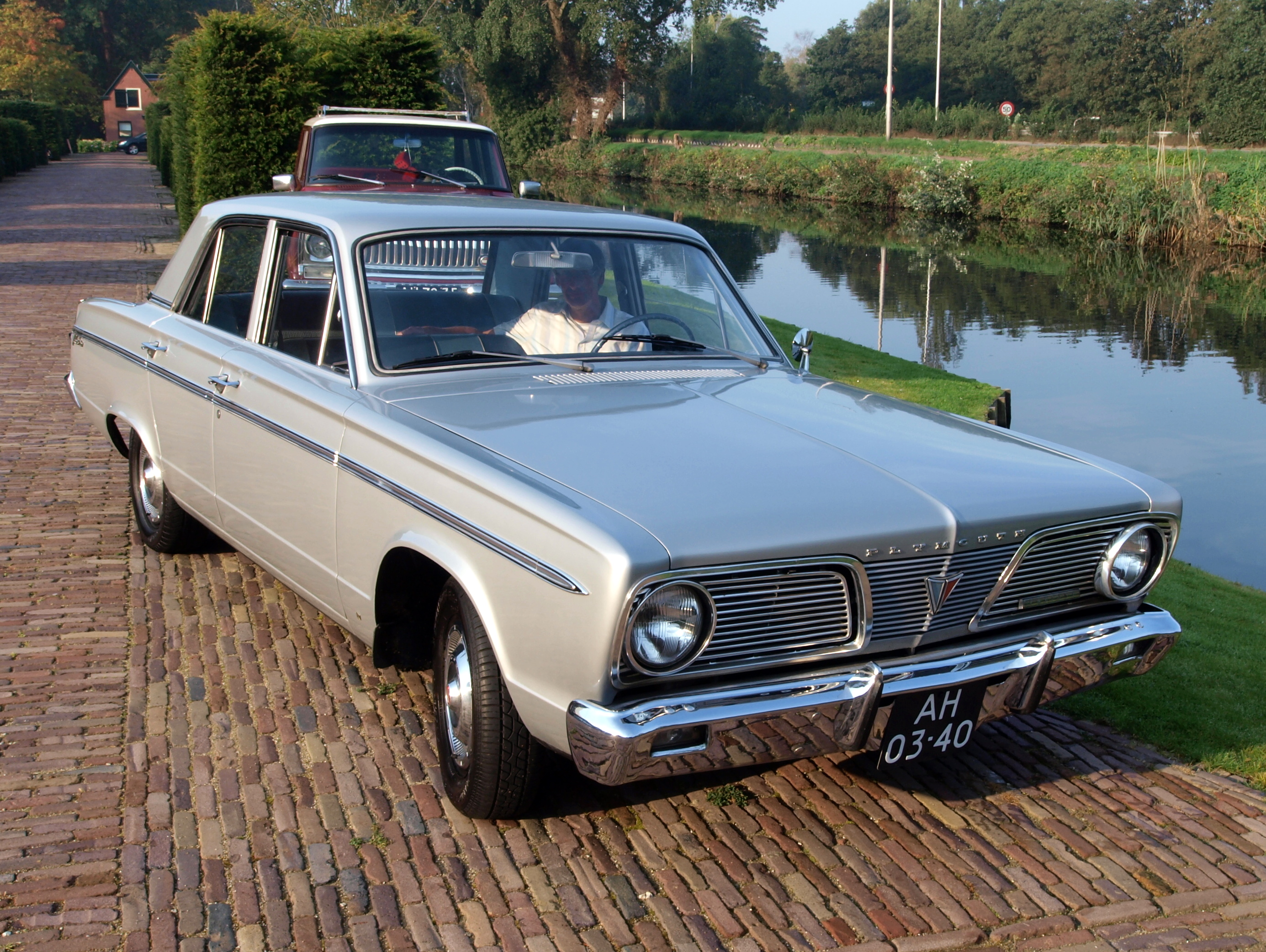
Plymouth Valiant
"When I turned 15, I bought a 1964 Plymouth Valiant with a 318 in it, made no power at all. As soon as I turned 16 and got this thing road legal, I took it on the racetrack."
A 1964 Plymouth Valiant is an older Mopar (Chrysler-era) car. Here, it’s the first car the speaker used to start racing and build toward much faster times.
The 1964 Plymouth Valiant is a classic American muscle-era compact that the speaker used as a starting point for racing. In this story it’s notable because it began as a low-output setup and then evolved through major engine upgrades.
stroker small block
"The second I could drive it on the racetrack, I was there. It ran like 1590. And by the end of the weekend, I wiped the cam out of it and it was not running anymore. Built a stroker small block, got it running 1190s,"
A stroker small-block is a modified V8 where the engine is built to be bigger than stock. That usually helps it make more torque, which helps it launch harder on a drag strip.
A stroker small block is an engine build where the crankshaft and connecting-rod geometry increases displacement compared with the stock configuration. Stroker builds are often used to make more torque and power, especially in drag racing where strong acceleration off the line matters.
wiped the cam out
"The second I could drive it on the racetrack, I was there. It ran like 1590. And by the end of the weekend, I wiped the cam out of it and it was not running anymore."
“Wiped the cam out” means the engine’s camshaft got badly damaged. Usually it’s caused by oil/lubrication problems or a setup issue that doesn’t survive hard driving.
“Wiped the cam out” means the camshaft and/or cam bearings were damaged to the point the engine couldn’t run. In performance engines, this often points to lubrication issues, incorrect break-in, or valvetrain setup problems under high load.
pro street
"I got a pro street duster that was like an unfinished pro street type car, old school pro stock type setup. I got it running 9-0s."
Pro Street is drag racing that tries to keep the car usable on the street too. The goal is to make it fast at the track without making it completely impractical to drive.
Pro Street is a drag racing style where cars are modified for high performance while retaining some street manners. Compared with purpose-built drag cars, Pro Street builds often emphasize drivability, suspension geometry, and packaging that can work on real roads.
Global Emissions
"So it's never been, and that's just, with my role at Global Emissions, I've learned a lot with sales. I've owned and operated a couple of businesses over the years,"
Global Emissions is the company the speaker works for. They say their sales experience there helped them understand how to attract and satisfy brands that want to sponsor racing.
Global Emissions is referenced as the speaker’s employer, where they learned skills related to sales. In the context of motorsports, the speaker connects that business experience to understanding what brands want to see in racing.
NHRA events
"At this scale, though, when you are going to 20 NHRA events a year, what do sponsors want to see?"
NHRA is a big U.S. drag-racing organization. If you hear “NHRA events,” it means races run under their rules where teams compete for points and class results.
NHRA refers to the National Hot Rod Association, which organizes drag racing events in the U.S. When someone says they’ll do “NHRA events,” they mean competing in that series’ sanctioned races, typically with specific rules and class structures.
B2B aspect
"So what I need to do is a B2B aspect. That's what a sponsor needs to see."
B2B means the sponsor is trying to sell to other businesses, not individual customers. In this context, the race is used to create introductions and deals with companies that can buy the sponsor’s products.
“B2B” means business-to-business, where the sponsor’s goal is to generate leads or sales to other companies rather than just consumer brand awareness. In racing sponsorship, this often means connecting the sponsor with fleet operators, distributors, or other commercial buyers.
FAS
"So if I'm bringing in, we can talk about FAS, for example. FAS is my primary sponsor for the year."
FAS is the main company sponsoring this racing effort. They make diesel-related products—especially fuel filtration systems—so the sponsor wants access to the right trucking customers.
FAS is named as the speaker’s primary sponsor. The transcript describes FAS as a diesel solution company focused on fuel filtration systems, implying they supply products used on diesel trucks.
fuel filtration systems
"FAS is my primary sponsor for the year. They're a diesel solution company. They do fuel filtration systems."
Fuel filtration systems keep dirty particles out of the fuel. That helps protect the engine’s fuel components from damage and wear.
Fuel filtration systems are components that remove contaminants from diesel fuel before it reaches the engine’s fuel system. Cleaner fuel helps protect injectors and other precision parts from wear caused by dirt, water, or other debris.
diesel truck
"They do basically all weak points on any diesel truck. They likely have a solution for it."
A diesel truck is a work truck that runs on diesel fuel. The sponsor is talking about solutions specifically for problems that show up on these kinds of commercial vehicles.
A diesel truck is a commercial vehicle powered by a diesel engine, commonly used for hauling and fleet operations. The transcript ties the sponsor’s products to “weak points” on diesel trucks, suggesting the application is aimed at commercial diesel use rather than passenger cars.
trucking fleets
"Our business globally mission systems works with a lot of trucking fleets and trucking distribution centers."
A trucking fleet is a business that operates many trucks. If a sponsor can reach fleet owners or managers, it can lead to lots of ongoing purchases.
Trucking fleets are groups of commercial trucks operated by a company, often across multiple routes and locations. For sponsors, fleets are valuable because they represent repeat, high-volume customers for parts and maintenance-related products.
trucking distribution centers
"Our business globally mission systems works with a lot of trucking fleets and trucking distribution centers."
A distribution center is a warehouse/logistics hub that sends shipments out to where they need to go. Companies running these hubs can be important customers for commercial trucking-related products.
Trucking distribution centers are logistics hubs where goods are received, sorted, and dispatched to customers or other facilities. They’re mentioned as target customers because they influence purchasing for fleets and related commercial equipment.
B2B connections
"these guys through B2B connections that we make through motorsports, then if we're asking them half a million, let's just say on a ballpark, but we can generate 10 million in revenue for them"
B2B just means one business working with another business. Here, it means sponsorship can help companies meet partners or customers through racing.
B2B means “business-to-business,” referring to marketing and relationships between companies rather than directly to consumers. The speaker is describing how motorsports sponsorship can create networking and deal-making opportunities for sponsors.
NHRA drag car
"I have some sponsors where they just love the fact that they're on an NHRA drag car. And when we go race in their town, they bring all of their staff."
NHRA is a big U.S. organization that hosts drag races. If someone says “NHRA drag car,” they mean a car set up to race in those NHRA events.
NHRA stands for the National Hot Rod Association, which runs drag racing events in the U.S. An “NHRA drag car” is a race car built and operated to compete in NHRA-style drag races, where cars accelerate down a straight strip and are judged on elapsed time and speed.
customer retention
"Why don't you send two or three of your employees to the race, customer retention. It's all about giving them a value that goes over and above just a sticker that people will see."
Customer retention is the strategy of keeping existing customers engaged so they keep buying from you. In sponsorship terms, the host is arguing that racing can be used to thank customers and create a relationship that goes beyond a logo on a car.
Fox Sports One
"We are televised on Fox Sports One. There's thousands of people in the stands and in the pits, so there is value there, but it's not the value."
Fox Sports One (often shortened to FS1) is a sports TV channel that carries motorsports coverage. Mentioning it here highlights that sponsorship value can come from broadcast exposure, not just trackside branding.
pits
"We are televised on Fox Sports One. There's thousands of people in the stands and in the pits, so there is value there, but it's not the value."
In motorsports, the pits are the service area where teams work on cars between runs—fueling, repairs, tire changes, and adjustments. The speaker references pits to emphasize that sponsorship visibility isn’t only from the grandstands; it’s also seen by team personnel and attendees.
arrive and drive series
"The most common way, the most popular way, at least the most effective way at running these cars and winning races is to run an arrive and drive series or run with an arrive and drive company program."
In an “arrive and drive” program, you don’t have to bring your own race car and set up everything. You basically show up, get in the car, and race, while the program handles most of the logistics.
An “arrive and drive” program is a racing arrangement where the team provides the car, equipment, and often the crew, and the driver shows up to race. The driver (or sponsor) typically pays a season fee rather than building and operating everything themselves.
KB Titan
"So there’s us, which is KB Titan. My father’s one of the owners in KB Titan alongside Greg Anderson, Jim Whiteley, Keith Haney, Rob Downing, some of the guys here that run this place."
KB Titan is the racing organization the speaker works with. They help set up a program where drivers can race without owning and running everything themselves.
KB Titan is referenced as the speaker’s organization involved in pro stock “arrive and drive” services. In this context, it’s the company offering access to race cars and support for drivers who pay to participate.
chassis
"To buy one of these cars, you’ll spend a couple hundred thousand dollars on the chassis."
The chassis is the car’s main skeleton or frame. It’s the part that holds the rest of the race car together, and it’s expensive in pro racing.
In racing, the chassis is the car’s main structural frame that everything else mounts to—suspension, drivetrain components, and bodywork. The speaker notes that buying a pro stock car involves spending a few hundred thousand dollars on the chassis alone.
Elite Motorsports
"The motors, there’s really only a couple guys that make competitive motors. There’s us and there’s Elite Motorsports,"
Elite Motorsports is mentioned as one of the few builders making competitive pro stock racing engines. The speaker contrasts them with “us,” implying only a small number of companies can produce engines that perform at the front of the field.
arrive and drive program
"which is our biggest competitor. They also have an arrive and drive program, but you can buy motors from them."
It’s a deal where you basically show up, get put in a race car that’s already prepared, and you drive. The team handles a lot of the setup and logistics so you don’t have to run the whole program yourself.
An “arrive and drive” program is a racing setup where the team provides a ready-to-race car and often support personnel, so the driver can show up and drive without building or managing the whole operation. It’s common in pro and semi-pro racing because it reduces logistics and setup time for the driver.
build competitive racing engines
"or you could build your own, there are some independence out there that do build competitive racing engines."
“Building” a racing engine means making an engine that’s specifically prepared for racing—strong enough to handle hard use and tuned to make power reliably. It’s more than just buying a stock engine and hoping it works.
In pro racing, “building” a competitive engine means assembling and calibrating an engine specifically for the class rules and the demands of repeated high-load runs. It typically involves selecting components, machining, and tuning so the engine can survive and produce consistent power under race conditions.
CNC machines
"We have everything you need to win races. We have a whole slew of CNC machines that never shut off."
CNC machines are shop tools that use a computer to cut and shape parts very precisely. Racing teams use them to make components that fit correctly and consistently.
CNC machines are computer-controlled tools used to precisely machine parts. In racing, they’re used to make engine and drivetrain components to tight tolerances, which helps performance, fitment, and repeatability.
blow a motor
"Well, what if I blow a motor? What if I break a transmission? What if, you know, X happens?"
It means the engine fails badly—like it can’t survive the run. In racing, teams expect it can happen and plan for replacements.
“Blow a motor” means the engine fails catastrophically—often from overheating, lubrication failure, detonation, or mechanical breakage—during a run or between runs. In high-power racing, teams plan around this risk with spare engines and fast turnaround.
drive shaft comes out
"there's on each car, there's obviously a driver, you've got your back half guy, which handles after every pass, drive shaft comes out, tires come out,"
The driveshaft is the part that transfers power from the gearbox to the rear wheels. Taking it out between runs is a way to service or replace drivetrain parts so the car can keep running.
In racing service, “drive shaft comes out” refers to removing the driveshaft (the rotating shaft that transfers torque from the transmission to the rear differential). Teams may remove it between passes to inspect components, swap parts, or service the drivetrain quickly.
tires come out
"you've got your back half guy, which handles after every pass, drive shaft comes out, tires come out,"
They take the tires off and put new ones on between runs. After a hard launch, tires wear out and can lose grip, so teams replace them to keep performance consistent.
“Tires come out” indicates the team removes and replaces tires between runs. In high-power drag racing, tires are a consumable because traction and tire condition change quickly after a hard pass, and worn tires can reduce grip or increase the chance of failure.
clutch
"there's a service interval for the back half of the car, there's a clutch slash transmission guy, [972.3s] that's the guy who pulls the clutch out after every pass, resurfaces it, checks the tolerances,"
A clutch connects and disconnects the engine’s power from the transmission. In drag racing, it’s worked hard and often serviced between runs.
In racing, a clutch is the mechanical link between the engine and the transmission. It’s used to engage/disengage power so the car can launch and shift correctly under high load.
gear ratios
"pulls the tranny out, changes gear ratios, we change gear ratios after almost every single pass. [982.6s] Oh really? Just based on how the weather changes throughout the day or just how the car performed, [987.2s] we may need more gearing, less gearing in certain gears."
Gear ratios are the “multipliers” inside the gearbox. Changing them changes how quickly the car accelerates versus how fast it can go.
Gear ratios describe how many times the transmission multiplies engine rotation before it reaches the wheels. Shorter (numerically higher) ratios can improve acceleration, while taller ratios can help top speed—so teams adjust them based on weather and how the car performs.
engine management guy
"there's an engine management guy who can also be a tuner, a lot of the tuners are also engine maintenance guys. [1004.2s] So after every pass, they'll check the valve flash, [1009.9s] check valve springs, change springs as needed, do leak downs and compression and whatnot,"
Engine management is the computer system that controls how the engine runs. A specialist can adjust it so the engine makes the right power and runs correctly for the day.
Engine management refers to the car’s electronic control system (ECU) that manages fuel, ignition timing, and other parameters. In racing, an engine management specialist may also tune the ECU to match the engine’s current condition and track conditions.
leak downs
"check valve springs, change springs as needed, do leak downs and compression and whatnot, [1013.7s] and do the engine service."
A leak-down test checks whether each cylinder is sealed properly. If air escapes, it can point to problems like rings or valves that need attention.
A leak-down test pressurizes a cylinder to check how well it holds pressure, helping diagnose sealing problems like worn piston rings or valve leakage. It’s a common way to assess engine health after hard runs.
compression
"do leak downs and compression and whatnot, [1013.7s] and do the engine service."
Compression is how much pressure the engine can build inside its cylinders. Lower-than-expected compression can mean the engine isn’t sealing well and may need repairs.
Compression refers to the engine’s ability to build pressure in the cylinders during the compression stroke. Teams measure it to spot wear or damage that would reduce power or reliability.
sequential transmissions
"you'll have to upgrade your transmission. And when we're talking sequential transmissions, [1031.8s] there's no one on the planet would have stronger gearbox than 6XD."
A sequential transmission shifts through gears in order, like stepping up or down one gear at a time. That can make racing shifts quicker and more repeatable.
A sequential transmission lets the driver shift only forward or backward through gears in order (rather than an H-pattern). It’s popular in racing because it can be faster and more consistent under hard launches and repeated passes.
6XD
"when we're talking sequential transmissions, [1031.8s] there's no one on the planet would have stronger gearbox than 6XD. And the proof is into putting here folks, half the FD field is rocking a 6XD"
6XD is the name of a transmission/gearbox brand. The speaker is saying it’s known for being very tough and common in top drifting builds.
6XD is presented here as a brand of sequential gearbox used in high-level motorsport. The hosts claim it’s exceptionally strong and widely used in the FD (Formula Drift) field.
eliminations
"and then on Sunday, it's eliminations. [1085.9s] It's straight elimination. So you run round one, if you lose, that's it, you're only, you're only going to get to run once that day, you go home."
Eliminations is the “win and move on” part of the event. If you lose a round, you’re out for that day.
Eliminations refers to a straight knockout format where winners advance and losers are done for the day. It’s contrasted here with qualifying sessions that determine starting position or bracket placement.
delay for cleanup
"...then we'll have like a two hour delay for cleanup. That's actually one of the reasons why..."
In drag racing, a “cleanup” delay happens when a car leaks fluid or debris onto the racing surface. Track crews must remove the contamination for safety and traction before racing can resume.
trade drag racing
"...then we'll have like a two hour delay for cleanup. That's actually one of the reasons why any trade drag racing doesn't play live, because that happens often..."
This is a kind of drag-racing setup where the schedule can get messy if something goes wrong on track. If a car spills oil, it can force a cleanup delay, so the event can’t always run continuously.
“Trade drag racing” refers to a drag-racing format where cars run in a way that can create frequent, disruptive delays (for example, after oil spills). In practice, it’s often contrasted with formats that can be paused or rescheduled more easily.
elimination rounds
"So segue back into how much time we have about an hour. So on elimination rounds on Sunday, we have about an hour..."
In elimination rounds, cars race each other and the winner moves on. The loser is done for that event, so teams have to be ready for the next run quickly.
“Elimination rounds” are the head-to-head stages of a racing bracket where losers are knocked out and winners advance. The timing and rules around eliminations drive how teams plan adjustments between runs.
NASCAR country
"So why did this call to your name? Again, this is Charlotte area. This is NASCAR country here."
That phrase just means the area is very into NASCAR. The speaker is saying they’re in a place where other racing styles are common.
“NASCAR country” is a colloquial way to describe regions where NASCAR is especially popular and culturally prominent. In the segment, it frames why the speaker is considering other motorsports beyond drag racing.
time attack type racing
"...if I wanted to get into rally or some sort of time attack type racing, I could do it."
“Time attack” is a motorsport format where cars run timed laps against the clock rather than racing wheel-to-wheel. It’s mentioned as a discipline the speaker feels they could enter if they wanted.
ARCA series
"...even if I could get a chance to run like an ARCA series or get any form of NASCAR, I would love to try that."
The ARCA series (ARCA Menards Series) is a stock-car racing ladder in the U.S., often used by drivers to build experience and move toward NASCAR. The speaker mentions it as another path they’d like to try.
Craftsman Truck Series
"The Craftsman Truck Series, that would be great. That'd be so much fun."
This is a NASCAR racing series where the cars are based on pickup trucks. The speaker is saying they’d love a chance to race in that series.
The Craftsman Truck Series is NASCAR’s stock-car racing series featuring pickup trucks. It’s mentioned as a potential opportunity for the speaker to drive in a different discipline than drag racing.
hood scoops
"“...Is that something that’s coming up as well? Hood scoops? Yeah. So hood scoops... they’re putting hood scoops back on these things.”"
A hood scoop is a raised opening on the hood that helps push outside air into the engine. On race cars, it’s mainly about getting more (or better) air to the intake.
Hood scoops are openings on the hood that direct outside air toward the engine’s intake. On race cars, they can improve intake airflow and cooling, and they’re often used to meet specific intake/airflow rules.
EFI
"“...NHA made the switch to EFI. These cars used to have hood scoops with twin four-barrel carbs on top.”"
EFI means the engine uses electronics to add fuel. It replaces carburetors with a system that can adjust fuel delivery more accurately.
EFI stands for electronic fuel injection. Instead of using carburetors to mix fuel and air mechanically, EFI uses sensors and an electronic control unit to meter fuel for more precise fueling and easier tuning.
twin four-barrel carbs
"“...These cars used to have hood scoops with twin four-barrel carbs on top.”"
“Four-barrel” refers to a carburetor design with four throttle bores, and “twin four-barrel” means two carburetors feeding the engine. In drag racing, carburetors can be tuned for airflow and fuel delivery, but they’re generally less precise than EFI.
twin throttle bodies
"“...it'll be like kind of like a twin four-barrel type setup, but it'd be twin throttle bodies, EFI throttle bodies...”"
Throttle bodies are air-control valves that meter airflow into the engine, and “twin throttle bodies” means two of them feeding the intake system. In EFI setups, throttle bodies work with the ECU to control how much air enters, which strongly affects power and drivability.
top mount, air intake
"“...we're going to have no choice but to convert all these cars over to top mount, air intake, and hood scoops.”"
“Top mount” just means the intake is placed on the top side of the engine area. That can change how the engine breathes and how consistent the airflow is.
“Top mount” intake placement means the air intake components are positioned on top of the engine/hood area rather than lower or side-mounted. Intake location can affect airflow quality, packaging, and how consistently the engine gets air during acceleration.
20 horsepower give or take
"“...We'll probably pick up 20 horsepower give or take, which on these cars is a lot. So we'll run faster numbers.”"
They’re saying the changes should add around 20 horsepower. In racing, more horsepower usually means the car speeds up quicker.
This refers to an estimated power increase from the rule change. In drag racing, even modest horsepower gains can translate into noticeably faster elapsed times because the car accelerates harder through the run.
denser air
"“...What's cool about it is they will make more power. We're bringing in denser air.”"
Denser air means the air has a higher mass per volume (often due to cooler temperatures or specific conditions). Denser air contains more oxygen, which allows the engine to burn more fuel and make more power when the fueling and tuning are correct.
runners
"“...It's more evenly distributed to all the runners and tune abilities a little bit easier.”"
Runners are the tubes in the intake system that deliver air to each cylinder. If the air is shared more evenly, the engine can be tuned more easily and run more consistently.
In an intake manifold, “runners” are the individual tubes that route air from the throttle body to each cylinder. How evenly air is distributed across runners affects cylinder-to-cylinder fueling and tuning, which can influence power and consistency.
intake manifold
"You cut a hole in the hood, put the hood scoop on top, change the intake manifold, you're done. There's not like an off-the-shelf intake manifold you buy and run these cars."
The intake manifold is the engine’s “air distribution” piece. It channels air from the intake into the cylinders, and racing teams tune it to make more power.
An intake manifold is the part that routes air from the intake system to the engine’s cylinders. For high-level racing, changing the intake manifold geometry can strongly affect airflow and engine performance.
R&D
"We're going to have to spend thousands of hours of R&D to be able to get to a point where we can efficiently run the hood scoops."
R&D just means “testing and improving.” Teams try ideas, measure results, and keep iterating until the parts work the way they want.
R&D (research and development) is the process of testing and refining designs until they work reliably and efficiently. In racing, it often includes repeated hardware changes, data collection, and track or dyno validation.
650 on average
"Okay. So to a lot of people that's not much for pro stock cars, that's huge. Like if we can go from running a 650 on average to like a 647, that's a huge increase."
They’re talking about how fast the car runs the quarter-mile. A change like 6.50 to 6.47 seconds is a big deal in drag racing because the cars are already very fast.
In drag racing context, “650” refers to elapsed time in the quarter-mile expressed in tenths of a second (e.g., 6.50 seconds). Moving from 6.50 to 6.47 is a meaningful performance gain at this level of competition.
record right now... 644
"that's a huge increase. That's a big difference. The record right now I think is a 644. That record"
That “644” is the best quarter-mile time right now, written in racing shorthand. In drag racing, improving by even a few hundredths of a second is extremely hard.
“644” is the current record expressed as elapsed time in tenths of a second (6.44 seconds). At Pro Stock speeds, shaving hundredths of a second requires major optimization across the car and engine.
640s
"average running 640s because my best run in one of these cars... My best run was a 649. There's a huge difference in how a 649 feels to how a 660 feels."
In drag racing, times are measured very precisely. “640s” means the car is running in the low 6.4-second range, and the difference between close numbers can feel huge on track.
“640s” refers to elapsed times in the 0.1-second range used in drag racing (e.g., a run in the low 6.4-second bracket). The speaker emphasizes that even small time changes—like a 649 versus a 660—feel very different in how the car accelerates and how the run is driven.
left lane
"Okay, fair enough. I know. So I get made fun of every once in a while. But like last year, I watched All of Street Outlaws... Okay, Left lane, you will be at a disadvantage with the hood scoop without a doubt. But I know, again, I've seen it because"
In drag racing, cars run side-by-side in two lanes. Even if they look the same, one lane can be harder to drive because of small differences in grip or how the car sits and how you can see the track.
In drag racing, the left and right lanes are not always identical. Small differences in traction, setup, or aerodynamics can make one lane feel harder or easier to drive, especially when visibility and body position are affected by aero parts like hood scoops.
cowl
"If you see the cars right now, it's going to get like a cowl type deal... We're going to keep these existing front ends. We're going to cut a hole. The hood scoop's going to go in there. So now we have the raised cowl plus the hood scoop."
The cowl is the part of the car body just below the windshield. In race cars, teams may change its shape so the hood scoop fits and the airflow works better.
The cowl is the body section at the base of the windshield that connects the hood area to the cabin. Drag-racing teams may raise or reshape the cowl to change airflow and packaging for components like hood scoops, which can alter both aerodynamics and driver sightlines.
offset
"But realistically, it's off to the side... The hood scoop is offset. As long as you have a straight line vision, you can see the cones on the center line."
Offset means the scoop isn’t centered—it’s shifted to one side. The goal is to keep the driver able to see straight ahead while still using the scoop.
An offset hood scoop is positioned to one side rather than centered. In this context, the offset is used to preserve a usable straight-ahead sightline for the driver while still providing the airflow/packaging benefits of the scoop.
supercharged
"my dad raced Pro Mod for many years in a supercharged car. So we had the injector hat, which was similar to the hood scoop's big blower hanging out of the hood."
A supercharger is a device that forces more air into the engine. More air usually means more power.
A supercharger is an engine-driven forced-induction device that compresses incoming air to increase power. Because it’s mechanically driven, it can provide strong boost across a wide range of engine speeds.
injector hat
"So we had the injector hat, which was similar to the hood scoop's big blower hanging out of the hood. When we were in the left lane, I know my dad would have to do one of those."
An injector hat is a special intake part that helps get fuel into the engine in the right way. It’s part of how race teams control the air/fuel mixture.
An injector hat is a drag-racing intake component used to distribute fuel/air (or fuel) into the engine’s intake system. In blown cars, it’s often mounted near the blower/intake area and is shaped to manage airflow and mixture delivery.
NHRA regulation
"I don't know because there's an NHRA regulation to it. So there's a template. Any new car that gets built, they have a template that sits over the car and it has to follow that profile."
NHRA regulations are the rules race cars have to follow. They can limit what teams are allowed to change on the car’s shape and setup.
NHRA regulations are the rulebook constraints set by the National Hot Rod Association for how race cars must be built and configured. In this context, they affect the allowed front-end and aerodynamic profile, limiting how much teams can change the bodywork.
templated
"Any new car that gets built, they have a template that sits over the car and it has to follow that profile. I don't know. I don't know. To be honest with you, I don't know what's going to change in term of templating. But I don't think you'd want to change it, ... because these cars are templated and they are very heavily regulated."
“Templated” means the rules use a physical gauge/template to check the car’s shape. If you don’t match the template, you can’t compete in that class.
In regulated drag racing, “templated” means the car’s bodywork and aerodynamic surfaces must match a specified physical profile. Teams use templates to verify the car stays within allowed dimensions and shapes, which strongly limits redesign freedom.
arrow aspect
"I don't think you'd want to change it, to be honest, because there's an arrow aspect to it. So if we lower that cowl down to get more visibility, you may lose arrow."
The speaker is talking about the car’s front shape and how air flows over it. If you change the shape too much, you can lose the aerodynamic benefit.
“Arrow aspect” appears to refer to the aerodynamic profile/shape that affects airflow over the car’s front and into the windshield area. The speaker suggests lowering the cowl to improve visibility could disrupt that aerodynamic shape, reducing effectiveness.
Lexan windshield
"Like if you look at the profile of those cars with the hood scooped with the cowl, the way it transitions into the Lexan windshield, it's a pretty smooth transition."
A Lexan windshield is a racing windshield made from a tough plastic. It’s used for safety and weight, and the car’s front shape is designed to flow air smoothly into it.
A Lexan windshield is made from Lexan (a brand of polycarbonate), which is commonly used in racing because it can be lighter and more impact-resistant than traditional glass. It also influences aerodynamic transitions because the bodywork is shaped to meet it smoothly.
wicker
"There's little things like the height of the wicker on the back that you have tolerances you can be within."
Here, “wicker” means a rear aero piece on the car. Teams can sometimes adjust it a little to change how the car sticks to the track, as long as they stay within the rules.
In this context, “wicker” refers to a rear aerodynamic element whose height is regulated within tolerances. Adjusting its height changes airflow and can influence downforce and stability, but teams must stay within the allowed measurement window.
downforce
"Sometimes that can be adjusted based on where we're at, based on whether we want more less downforce on the track."
Downforce is the “squeezing” force from the air that presses the car down onto the track. More downforce usually helps the tires grip better.
Downforce is the aerodynamic force that pushes a car’s tires toward the track surface to improve traction. Race teams adjust aerodynamic elements within rule tolerances to manage how much downforce the car generates at speed.
engine program
"Pretty much, yeah. There's engine program is a huge part of it, but it also takes a lot to get these cars down the track."
An engine program is the team’s whole plan for building and tuning the engine to work best for racing. It includes development work and fine-tuning, not just one-time setup.
An engine program is the organized development and calibration effort around an engine for a specific racing goal—covering parts selection, machining, tuning, and iterative testing. In pro drag racing, the engine program is often as important as chassis setup for achieving repeatable performance.
weight transfer
"A lot of it, you hear the term weight transfer a lot when we talk about pro stock cars. These cars leave and a lot of people don't believe this fact, but it's true."
When a car launches, it doesn’t stay evenly loaded. The weight shifts forward/back and side to side, and that affects how well the tires grip so the car can accelerate.
Weight transfer is how a car shifts load from one end or side to the other during launch, braking, or cornering. In drag racing, tuning weight transfer helps the car plant the tires and produce consistent acceleration.
plant the tire
"The way they transfer the weight and plant the tire, you can take five pounds of weight in a car and you can move it up."
It means making sure the tires actually grip when the car starts moving. If the suspension and tires aren’t set up right, the tires can slip instead of grabbing.
“Plant the tire” refers to getting the tire to stay loaded and gripping during launch rather than spinning or unloading. It’s closely tied to suspension setup, tire choice, and how weight transfer is managed.
preload
"Little things like that, knowing where to put the weight, knowing how to adjust the suspension, knowing how to adjust the preload, tires, like even with tires, an older tire versus a newer tire may have a different rollout."
Preload is like setting the starting tension of the suspension before the car hits the road. Changing it can make the car sit and react differently when you launch.
Preload is the initial tension/compression applied to a suspension component (often springs or shocks) before the car is loaded. In racing, adjusting preload changes ride height and how the suspension responds during launch.
rollout
"Even though the tire is exactly the same size, some tires may measure say like the rollout of the tire might be 103 inches, like 103.5 inches, but a more worn tire might be 103 inches."
Rollout is how far the tire moves in one turn. If two tires look the same size but have different rollout, the car can feel like it has different gearing.
Rollout is the distance a tire travels for one full rotation, which affects effective gearing and how the car accelerates. Even if two tires are the “same size,” wear and construction can change rollout.
R&D program
"I think because of our R&D program. Our engine machine shop is incredible."
R&D is the team’s testing and development process. They try changes, measure results, and keep improving the car based on what works.
An R&D program (research and development) is the structured process of testing ideas, refining designs, and validating changes with data. In racing, it often drives improvements in engine output, drivability, and chassis/suspension tuning.
Grey Motorsports
"We bought a business which was formally known as Grey Motorsports back about four years ago."
Grey Motorsports is a racing team the speaker says they bought. They’re describing it as a successful organization that brought skilled people into their program.
Grey Motorsports is referenced as a racing team/business the speaker acquired. The context suggests it was a championship-winning NHRA team, contributing talent and knowledge to the combined operation.
60 foot
"So if you can find a thousandth in suspension, if you can find a couple thousandths in weight transfer and get your 60 foot a little bit better... What are these cars 60 foot? Roughly? On average, 980s."
The “60-foot” is how fast the car gets through the first 60 feet. Getting that part right matters a lot because it affects everything that happens after the launch.
The “60-foot” time is how quickly the car reaches 60 feet down the track, which heavily reflects launch and early traction. In drag racing, improving 60-foot times often yields big gains in overall ET because it sets up the rest of the run.
suspension
"So if you can find a thousandth in suspension, if you can find a couple thousandths in weight transfer and get your 60 foot a little bit better..."
Suspension is the system that connects the wheels to the car and controls how the car moves. For drag racing, tuning it helps the car launch straight and hook up instead of spinning.
In drag racing, suspension tuning affects how the car squats and controls motion during launch. Small changes can alter traction and stability, which is why racers talk about finding thousandths in suspension setup.

Volvo 960
"...w. Okay. So 980, if you can get into the 970s or 960s, you've got a car that's dialed in well. Some of ..."
The Volvo 960 is a bigger Volvo sedan meant for comfortable driving. The podcast is saying that if you can find one in certain year ranges (like the 960 or 970 range they mentioned), it’s more likely to be a good, well-sorted example. That’s useful advice when you’re shopping for an older car.
The Volvo 960 is a large, late-era Volvo sedan known for being comfortable and well-built, often discussed in the context of how to choose the right condition and model range. In the podcast, the speaker mentions “970s or 960s” and suggests that getting into those ranges means the car is “dialed in well.” It’s mentioned because buyers often look for specific years/trim ranges that tend to be better sorted.
Rockingham
"Rockingham's a two hour drive from here. That's where we were planning to go tomorrow for streetcar bragging rights... We like to run at Rockingham."
They’re talking about a specific drag strip they like to use. It’s where they go to test and race, and it’s also tied to a local event.
Rockingham is a drag racing venue the hosts mention as one of their go-to places for testing and events. In this context, it’s part of how they choose where to run based on distance and scheduling.
Darlington
"Sometimes we'll run in Darlington. Sometimes we'll run Darlington like if they're doing surface prep or redoing the track at Rockingham."
Darlington is another place they sometimes race or test. They use it when they need different track prep or timing.
Darlington is another drag strip they reference as an alternate venue. They mention using it when track conditions or prep needs differ (for example, when Rockingham is being resurfaced).
Request an Explanation
Heard something you'd like explained? We'll add it to this episode.
Sign in to request explanations for terms you heard.
Want to learn more?
Browse our glossary for plain-English explanations of automotive terms, jargon, and concepts.
Help improve this episode
See something that's not quite right? Our annotations are AI-generated and can sometimes miss the mark. Click the flag icon on any annotation to suggest a correction.