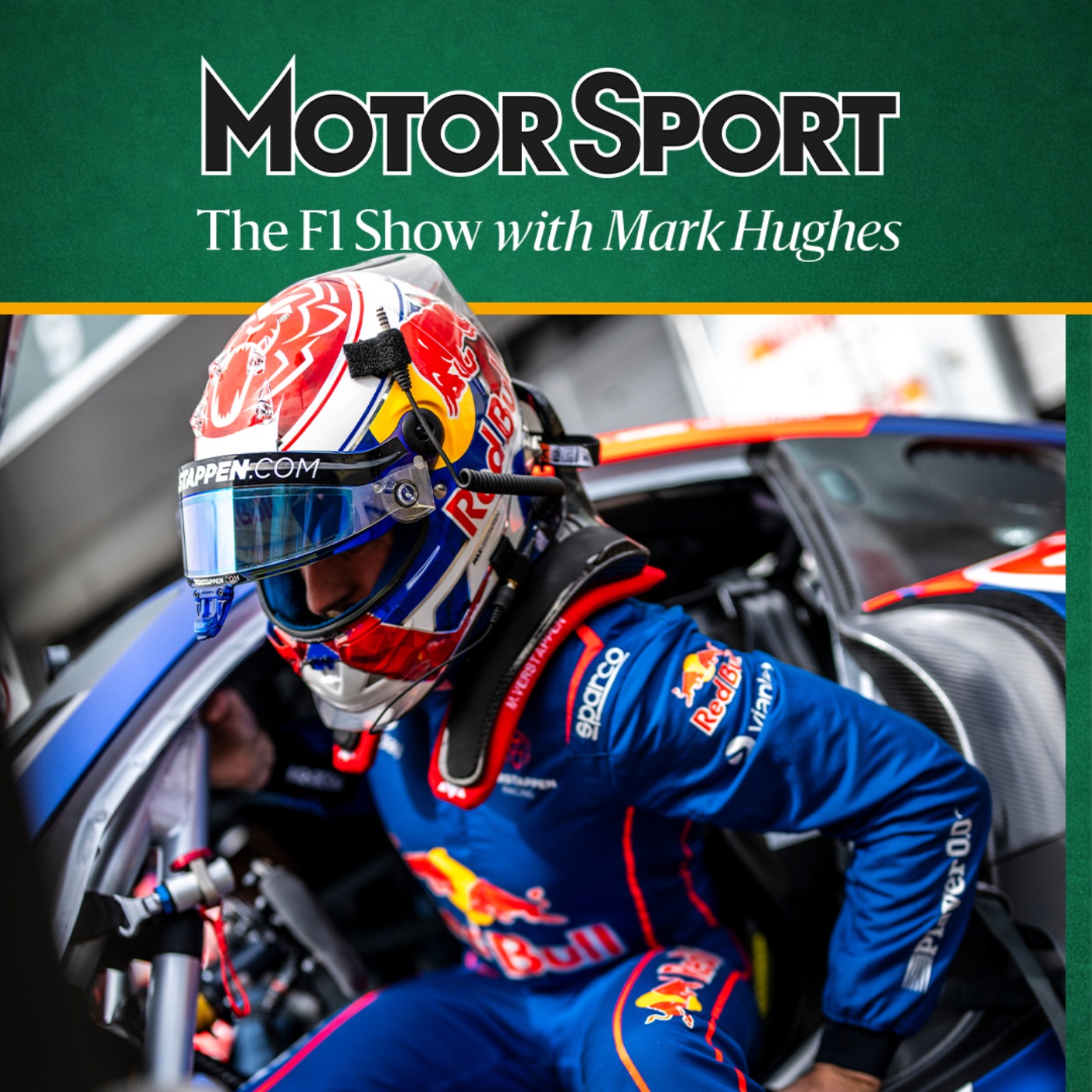
'Max Verstappen will be fastest in the Nürburgring 24 Hours!'
About this episode
Max Verstappen’s Nürburgring 24 Hours challenge becomes the episode’s anchor: the hosts weigh whether his F1-level pace and sim skills can translate against “week in week out GT3 factory drivers,” and how endurance demands differ from F1’s rhythm. They also explore what makes driving transferable—especially the “feel” gap in simulators—and how GT3 multi-driver sharing forces “setup compromises.” The conversation then widens into F1 power-unit equalization, sandbagging, and the 2027 fuel-flow rule shift.
Max Verstappen races in the Nürburgring 24 Hours this weekend on a mission to win.
But it's not just about the four-time F1 champion taking on one of the world's greatest races amid a packed grid and sell-out crowd - it could also point to his own racing future, says Mark Hughes
After heavily criticising the current generation of Formula 1 cars, could Verstappen find more satisfaction in GT racing?
Plus: Are Mercedes and Ferrari still sandbagging as part of a crafty plan to game a new F1 system?
Mark also answers your questions on F1's AI strategies and pays tribute to Alex Zanardi.
More from Mark Hughes and Bryn Lucas on the stories that really matter, in the latest episode of the Motor Sport F1 Show.
Subscribe now for every weekly episode and tell us what you want to know from Mark. Send us a message on social media or find this podcast at https://go.motorsportmagazine.com/4dm1Nu5 and drop your questions in the comments. He'll answer a selection of the best every week.
Read Mark's column every Wednesday at https://go.motorsportmagazine.com/4dm1Nu5
Hosted on Acast. See acast.com/privacy for more information.
F1 system
"…Ferrari and Mercedes suspect each other of sandbagging all season as a crafty way of gaming a new F1 system…"
“F1 system” refers to the current set of rules and procedures that govern how Formula 1 operates—such as how points, qualifying, sprint formats, or other regulations are applied. The segment frames it as something teams might “game,” implying strategic exploitation of the rule structure.
Nürburgring 24 Hours
"…it's a big Nürburgring 24 hours, 24 hours of the Nürburgring, whatever you want to call it, race coming up this weekend… It's not necessarily the same demand for our right pace… 24 hour race…"
The Nürburgring 24 Hours is a race that lasts an entire day. Teams have to balance going fast with not breaking the car, and they also have to manage driver changes and strategy.
The Nürburgring 24 Hours is a 24-hour endurance race at the Nürburgring circuit in Germany, where teams must manage speed, reliability, and driver stints over a full day. Because it’s endurance-focused, the “pace” strategy and how drivers coordinate can matter as much as outright lap speed.
GT3
"…How well can he do when he goes up against week in week out GT3 factory drivers? …"
GT3 is a category of race cars based on real production models. The idea here is that Verstappen will be competing against experienced GT3 drivers who race these cars regularly.
GT3 refers to a racing class for production-based sports cars that are built and balanced to compete in customer/“factory” teams. In this segment, the comparison is between Verstappen’s ability and the week-in, week-out GT3 factory drivers he’ll face in an endurance event.
pace
"…Pace is always important but 24 hour race especially in that type of racing it's not necessarily the same demand for our right pace…"
In racing, “pace” means how quickly you can keep going lap after lap. In a 24-hour race, the best pace might be different because the team has to manage the car and avoid breaking it.
In motorsport, “pace” is the overall speed level a driver or team can sustain—often reflected in lap times and how consistently they can repeat them. The host contrasts F1-style pace with endurance-race pace, where managing tires, fuel, traffic, and reliability can change what “fast” means.
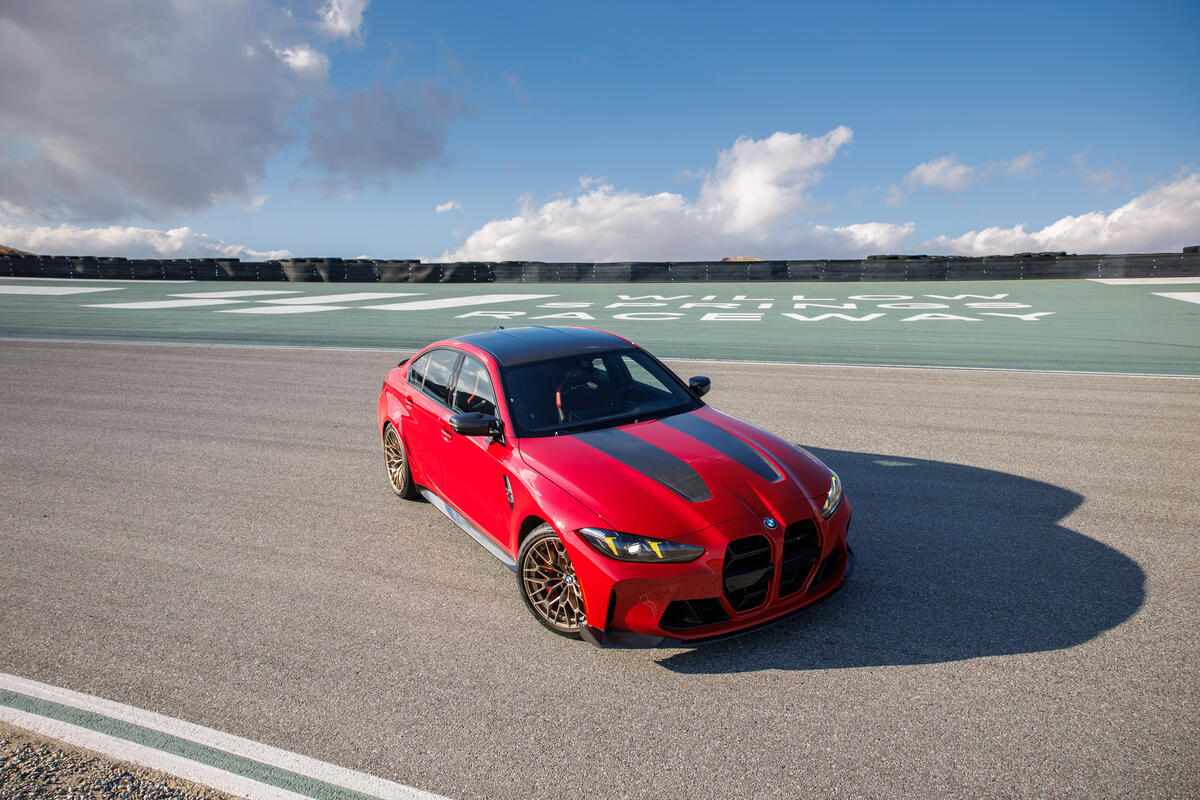
BMW M3
"…it was once that it's about two o'clock in the afternoon of the closing stages really, sort of a couple of hours to go before the flag and Terry Tassan was leading in a BMW M3 and you saw that he pulled off to the side of the track with smoke coming from the car…"
The BMW M3 is a high-performance BMW made by BMW’s M division. Here it’s mentioned as a car that was leading a Nürburgring 24-hour race before it had trouble late in the event.
The BMW M3 is BMW’s performance “M” model, built for high-revving, track-capable driving. In this segment, it’s referenced as the longtime leader in the Nürburgring 24 Hours, highlighting how even a mainstream performance sedan can be competitive in endurance racing.
sim racing to real-world racing transference
"It's quite interesting that transference because when you talk to the sim racing guys... they're saying that he is able to translate his technique from the real world into sim racing... you can't do it necessarily the other way around"
They’re talking about whether practice in a racing video game can actually help you drive faster in real cars. Some skills carry over, like timing and control, but the real car has real physics and feel that a simulator can’t fully match.
“Transference” here means how well skills learned in sim racing carry over to driving real cars. The discussion highlights that braking, throttle use, and car positioning are transferable to a point, but the real world still has primary influence because sims can’t perfectly replicate everything about tires, grip changes, and physical feedback.
braking
"so the driver coaches... they're saying that he is able to translate his technique from the real world into sim racing in the way that he transfers and the braking and uses the waiting in the car"
Braking is how a driver slows down before a turn. In racing, it’s not just “stop”—it’s done carefully so the tires keep grip and the car is ready for the corner.
In racing, braking is the act of slowing the car while managing tire grip and weight transfer to set up the next corner. The transcript connects braking technique to why a driver’s sim skills might translate to real driving.
throttle
"how he's able to use the throttle and all those things you can't do it necessarily the other way around"
Throttle means how much power you ask the engine for by pressing the gas. In racing, how you use it after a turn can change how well the tires grip and how stable the car feels.
Throttle is the driver’s control of engine power, typically via the accelerator pedal. In racing, throttle application strongly affects traction and balance as the car exits corners, which is why it’s mentioned alongside braking and cornering technique.
gold category
"went into GT World Challenge Europe last year and uh into into gold category he stepped up to pro this year"
The “gold category” is a way racing series group drivers by level. It helps decide who races in which team setups and categories.
“Gold category” refers to driver ranking used in GT World Challenge/GT3-style series to group drivers by experience and skill level. It affects who can race together and how teams are structured across classes.
Michael Schumacher
"I mean even look back to people like Michael Schumacher he was notoriously private in his life wasn't he but on track he was an absolute beast as we all know"
Michael Schumacher is a legendary Formula 1 driver used as an example of a competitor who was famously private off track but extremely aggressive and dominant on track. The point is about how a driver’s personality can differ between public life and racing behavior.
Grand Prix
"Grand Prix weekends because Montreal comes the weekend after this one coming up is there a maybe a foreseeable future where Max will miss a Grand Prix or a driver any Formula 1 driver will miss a Grand Prix for another form of racing"
A Grand Prix is a Formula 1 race event held on a circuit, typically as part of a multi-week calendar. The segment discusses whether a driver could realistically miss a Grand Prix for another major motorsport event, which would involve contractual and scheduling constraints.
Le Mans
"or a driver any Formula 1 driver will miss a Grand Prix for another form of racing a Le Mans or anything like that"
Le Mans usually refers to the 24 Hours of Le Mans, a long-distance endurance race in France. It’s brought up as an example of another form of racing that an F1 driver might theoretically miss a Grand Prix for.
Indy 500
"Fernando Alonso did it when he was at McLaren when competed in the Indy 500 and got them Super Sub Jensen"
The Indy 500 is a marquee American open-wheel race held at Indianapolis Motor Speedway. The transcript references Fernando Alonso’s participation while discussing how rare it is for an F1 driver to take on another top-tier series event.
McLaren
"you know Fernando Alonso did it when he was at McLaren when competed in the Indy 500"
McLaren is a Formula 1 team and constructor known for high-level engineering and racing success. In this segment, it’s referenced because Fernando Alonso competed in the Indy 500 while he was associated with McLaren.
Lewis Hamilton
"where Lewis Hamilton has said he doesn't really like or doesn't really take part in any sim racing because because he's scared that he'd lose the feel"
Lewis Hamilton is a multiple-time Formula 1 World Champion whose comments are used here to frame the debate about sim racing. The segment cites his view that sim racing may not provide enough “feel” to translate to real cars.
feel
"because he's scared that he'd lose the feel because if you're in a sim there's really little feel compared to a racing car Max doesn't seem to have that problem does that"
In racing, “feel” refers to the driver’s sensory feedback from the car—through steering, brakes, throttle response, and tire grip—used to judge traction and balance. The host argues that sim racing lacks this physical feedback, which is why some drivers worry it won’t translate to real lap times.
sim expertise
"if you wanted to do if you wanted to translate the real world expertise into a sim expertise it would take a lot of work and then take a lot of immersing yourself in it"
“Sim expertise” is being really good at racing in a computer simulator. The simulator can mimic how a car responds, but you still have to spend a lot of time learning how to drive it well.
“Sim expertise” means being highly skilled at using a racing simulator to drive and develop racecraft. The key idea is that simulator inputs can be mapped to how the car reacts, so real-world driving skill can transfer—but it often takes significant immersion and practice.
balance-of-performance
"one thing that is also interesting about max racing in gt3 it's sp9 by the way but gt3 sp9 nerbo green gt3 for the rest of the world"
Balance-of-performance is how race organizers try to make different cars compete more evenly. Instead of one car always being faster, the rules help level the field so driving and tuning matter.
Balance-of-performance (BoP) is a set of rules used in GT racing to keep different cars competitive. It adjusts things like weight or engine output so no single model dominates, which makes driver skill and setup consistency especially important.
GT World Challenge Europe
"he pops in from time to time when there's no formula one on to oversee or just to kind of take it all in because he likes being immersed in it but he has to share a car with other drivers so there becomes setup compromises"
GT World Challenge Europe is a European racing series for GT3 race cars. It’s one of the places where drivers compete in sports-car racing, not Formula 1.
This is a sports-car racing series in Europe that features GT3-class cars. The episode uses it to explain how Verstappen’s racing experience outside Formula 1 still involves high-level car setup and driver adaptation.
snaphen.com
"he pops in from time to time when there's no formula one on to oversee or just to kind of take it all in because he likes being immersed in it but he has to share a car with other drivers so there becomes setup compromises"
“snaphen.com” is the name of the racing team/brand mentioned in the segment. It’s tied to who runs the GT3 car and how the team manages multiple drivers.
“snaphen.com” is the team/brand name referenced as Verstappen’s GT3 involvement. In this context, it identifies the racing team that fields the shared car and coordinates the multi-driver setup decisions.
setup compromises
"but he has to share a car with other drivers so there becomes setup compromises and things like that"
“Setup compromises” means the team can’t perfectly tune the car for just one driver. Since several drivers will drive it, they pick a setup that’s good enough for everyone.
“Setup compromises” are trade-offs in race-car tuning when multiple drivers will share the same car. Because each driver prefers different steering feel, throttle response, and balance, the team often chooses a configuration that works well for the group rather than optimizing for one person.
endurance racing
"it's a very different type of sport to the more singular Formula 1 you know it's a even any form of sports car racing where you're sharing with others it's a very different dynamic"
Endurance racing is about lasting a long time. Instead of just pushing hard for a short race, drivers have to keep the car in good shape and stay consistent for hours.
Endurance racing is motorsport where the goal is to complete a long distance or time—often with multiple drivers per car—while keeping the car fast and reliable. It changes how drivers manage pace, tires, fuel, and traffic because mistakes compound over hours rather than minutes.
Formula 1
"very different type of sport to the more singular Formula 1 you know it's a even any form of sports car racing where you're sharing with others"
Formula 1 is the highest level of open-wheel racing. Even though the team helps with strategy and car setup, the driver’s performance on track is what mostly decides who wins.
Formula 1 is a top-tier open-wheel racing series where each driver competes in a single-car format, with teams supporting strategy, car development, and pit stops. It’s “singular” in the sense that the driver’s on-track performance is the primary determinant of results, even though the team still plays a huge role.
race time
"it's about working out between you what's the best way of minimizing your race time between you so i think"
“Race time” in motorsport is the total elapsed time to complete the race distance, including the effects of strategy, traffic, and pit stops. In endurance events, minimizing race time often means balancing outright speed with fewer slowdowns and better consistency.
Max Verstappen
"it's going to be fascinating to see how Max Verstappen gets on what is the the magic ingredient that someone like Max Verstappen has"
Max Verstappen is one of the top Formula 1 drivers. The discussion is about whether his skills can carry over from F1 to a different kind of race, like the Nürburgring 24 Hours.
Max Verstappen is a leading Formula 1 driver whose reputation is built on adapting quickly to different cars and racing situations. The hosts discuss whether his driving strengths—especially learning and applying them elsewhere—could translate to endurance racing like the Nürburgring 24 Hours.
performance equalizing mechanism
"well as as most listeners viewers probably know it's a performance equalizing mechanism for the power units"
This is an F1 rule that tries to keep the competition closer. If a team starts the season poorly, the rules can give them extra help so they can improve.
A performance equalizing mechanism is a rule-based system meant to reduce gaps between teams. In this case, teams that are behind early in the season can receive additional allowances so they can catch up rather than falling permanently behind.
FIA assessments after the first five races
"they are assessed after the first five races so after canada they will the fia will have made those assessments"
The FIA checks how teams are doing early in the season. After the first five races, they decide what extra allowances—if any—each team gets.
The FIA (Formula 1’s governing body) can evaluate teams after an early slice of the season—in this case, after the first five races. Those assessments determine what additional privileges (like development time or upgrades) teams may be allowed.
cost cap
"financial allowances in terms of the cost cap they either either be allowed to spend a little bit more"
The cost cap is the maximum amount teams are allowed to spend in F1. If the rules give extra allowances, it means some teams can spend more than usual to catch up.
The cost cap is F1’s spending limit intended to control team budgets and improve competitive balance. When the rules grant “financial allowances” in relation to the cost cap, it effectively lets certain teams spend more within the framework to address performance gaps.
internal combustion engine
"only the internal combustion engine not the combined internal and electrical"
They’re talking about the engine part that burns fuel. In F1, the car also has electrical power, but this discussion is only about the fuel-burning engine section.
In this context, “internal combustion engine” means the engine’s combustion portion only, not the full hybrid system. F1’s power units combine an ICE with electrical components, so separating the ICE matters for how performance is measured and regulated.
FIA performance measurement and allowances debate
"so that these things will come into effect after montreal which is montreal's next race so monaco is in theory when these things will anybody that's got these additional privileges"
They’re talking about how the FIA tries to measure engine performance fairly and what rule changes might happen next. Teams are worried because the process isn’t perfectly clear, so everyone suspects everyone else.
This segment centers on how the FIA measures F1 power-unit performance and applies regulation changes after the Montreal race. Hughes highlights that teams may not be certain how measurements will work, which fuels strategic uncertainty and disputes.
sandbagging
"what about teams that maybe have been sandbagging a bit holding back"
Sandbagging means not showing your full speed on purpose. The idea is to avoid giving away how fast you really are—or to avoid rule triggers.
In motorsport, “sandbagging” means deliberately holding back performance to avoid triggering penalties or to manage how rivals and officials perceive your true pace. Hughes frames it as a strategic uncertainty game around how F1 performance is measured and compared.
Ferrari
"um so yeah ferrari believe that Mercedes has been sandbagging"
Ferrari is one of the F1 teams/brands involved in this engine debate. They’re being discussed as possibly holding back or shaping performance to avoid triggering rule allowances.
Ferrari is one of F1’s engine/power-unit manufacturers discussed here, with Hughes describing accusations about how its team may be managing performance. The key point is that Ferrari is part of the competitive “measurement and threshold” argument around engine output.
Mercedes
"ferrari believe that Mercedes has been sandbagging"
Mercedes is another F1 brand in this discussion about engine performance. They’re portrayed as arguing that Ferrari is holding back to look slower than it really is.
Mercedes is referenced as another F1 power-unit supplier in the dispute, with Hughes describing mutual accusations of sandbagging. The segment’s focus is how engine performance is compared and how thresholds could lead to rule-based allowances.
power delivery
"Mercedes has been sandbagging in order not to appear more than two percent ahead in terms of its power delivery"
Power delivery is how the car gives you acceleration from the engine. It’s not just how much power there is, but how it shows up when you press the throttle.
“Power delivery” is how an engine’s output is translated into usable acceleration—especially how smoothly and quickly torque is made available. In F1 regulation debates, teams may try to shape power delivery characteristics to influence how the car is judged against thresholds.
Red Bull
"we've even had Mercedes saying they think the red bull power unit is actually the best one"
Red Bull is being discussed as having the strongest engine package. The host suggests their fuel-burning engine might be leading, though it’s not guaranteed to be the absolute best overall.
Red Bull is mentioned as running the “best” power unit, with Hughes arguing that its internal combustion engine might be the strongest. The takeaway is that the ICE portion could be a key factor in performance, even if the overall system’s potential isn’t fully proven.
powertrains
"two teams running the the four red bull powertrains power"
A powertrain is the car’s drive system—how the engine and related parts turn into motion. In F1 talk, it usually points to the hybrid engine package.
“Powertrain” refers to the components that generate and deliver drive to the wheels, and in F1 it’s often used as shorthand for the power unit system. Here, Hughes is counting teams by which “Red Bull powertrains” they run, tying it to engine/hybrid performance discussions.
power unit
"overall for what's been developed from that power unit or if the um if the power units are in equal specification as they or should be by regulation then the way that they have of measuring them won't be polluted by which cars got more downforce or less drag ... it's purely a measure of the power unit"
In F1, the power unit is the car’s main engine system. It’s not just the engine—it also includes the hybrid/electric parts that help the car make and reuse energy.
In Formula 1, the power unit is the complete hybrid engine system that includes the internal-combustion engine plus energy-recovery and electric components. Because teams can’t easily compare lap time effects from aerodynamics in isolation, discussions often focus on measuring the power unit’s performance separately.
regulation
"power units are in equal specification as they or should be by regulation then the way that they have of measuring them won't be polluted"
In F1, regulations are the official rules that limit what teams can change. The idea is that some parts—like the power unit—should be similar enough that comparisons are fair.
Regulation in F1 refers to the sport’s technical rules that constrain what teams can build and how components are specified. Here, the host is saying power units are supposed to be in equal specification “by regulation,” so comparisons should reflect engine performance rather than other setup differences.
downforce
"measuring them won't be polluted by which cars got more downforce or less drag or any of those other determinants of lap time"
Downforce is the aerodynamic “suction” effect that presses the tires onto the road. More downforce usually means better grip, especially in corners.
Downforce is the aerodynamic force that pushes the car’s tires into the track, improving grip and allowing higher cornering speeds. The host notes that downforce can affect lap time, so they want measurements that isolate the power unit from aero effects.
drag
"which cars got more downforce or less drag or any of those other determinants of lap time"
Drag is air resistance that makes the car lose speed. It’s one reason cars can feel slower even if the engine is strong.
Drag is aerodynamic resistance that slows the car down, especially on straights. The host groups drag with downforce as an aero factor that can change lap time, which is why they’re trying to measure power-unit performance without aero “pollution.”
Williams
"if you measure the engine performance of the Williams it should show pretty much the same as if you're measuring it of um Kimmy Antonelli's Mercedes"
Williams is an F1 team. The host mentions it to illustrate how you can compare engine performance between different teams.
Williams is a Formula 1 team brand, and the host uses it as an example of measuring power-unit performance. The point is that if the power unit is the same spec, the engine system’s output should be comparable across teams.
lap time
"what sort of lap time to be looking from the first pass ... I think two seconds a lap ... a couple of 10s is a feasible amount"
Lap time is how long it takes to drive one full lap around the track. Faster lap times usually mean the car is performing better.
Lap time is the total time to complete one circuit, and it’s the primary performance metric in racing. The host discusses how upgrades might translate into changes in lap time, including the idea of “a couple of 10s” (tenths of a second) and circuit-to-circuit variation.
GPS traces
"very very approximate looking at GPS traces from the the races that we've had so far"
GPS traces are data logs from the race that show where a car is over time. By comparing those logs, you can estimate how much faster or slower one car is than another.
GPS traces are recorded position/time data from races that can be plotted to compare performance between cars. In this segment, the host uses them as an approximate way to estimate time gaps between teams’ power-unit performance.
Aston Martin
"teams like Aston Martin for example we are 44 and a half seconds down on that they need to have some significant improvements"
Aston Martin is an F1 team. The host says they’re currently far behind and would need big improvements, not just changes to the engine/power unit.
Aston Martin is a Formula 1 team brand, and the host cites a large time deficit (“44 and a half seconds down”) as a sign they need significant improvements. The key point is that the deficit can’t be fixed by power-unit changes alone—other areas also affect lap time.
Honda
"to give an engine manufacturer 44 seconds a lap but um there are um moves afoot to help Honda"
Honda is mentioned as the engine supplier. The discussion is about how quickly they can develop and bring upgrades to the race car.
Honda is referenced as an engine manufacturer in the F1 context, tied to development timing and upgrade progress. The key idea is that teams may need coordination and approvals to accelerate development.
Monaco race and early-season development impact
"as we get to Monaco the first race from which any privileges have been granted I doubt very much are you going to see any difference um in power units performance from free Monaco"
They’re talking about whether teams will be able to improve their cars right away at Monaco. The point is that upgrades take time, and teams might not see big changes immediately even if they get extra allowances.
This segment focuses on how rule-granted privileges and development allowances might (or might not) translate into immediate performance changes at Monaco. The discussion highlights long lead times for power-unit upgrades and the risk of spending money on upgrades that may not be usable.
gaming the system
"it wouldn't be illegal it would just be gaming the system so what's the most advantageous way of doing it in theory"
“Gaming the system” means using the rules to your advantage in a clever way. It’s not necessarily illegal, but it can still feel like bending the spirit of the rules.
“Gaming the system” refers to using the rules and allowances in a strategic way to gain an advantage without technically breaking them. In F1, this often comes up around development allowances, upgrade timing, and how teams allocate resources.
turbo
"…I know Ferrari are the favourites of Monaco because of their small turbo and that's but if they if the others start turning the wick up ahead of Monaco…"
A turbocharger helps the engine make more power by forcing extra air into it. In racing, how quickly it responds can matter a lot depending on the track.
A turbocharger uses exhaust gas to spin a turbine that compresses incoming air, allowing more oxygen into the engine for better power. In F1 discussions, “turbo” often implies how boost response and engine mapping affect lap-time in different corner types.
manipulating the system going into 2027
"…there's been this announcement for 2027 so will teams be looking to not be sandbagging but manipulating the system going into 2027 when the changes take place…"
This is about teams trying to plan around the rule changes coming in 2027. Instead of pushing everything right now, they may adjust their strategy so they’re better positioned for the new rules.
“Manipulating the system” here means teams may try to game the rules or manage development priorities so they’re not fully “maxed out” before the 2027 regulation changes. In F1, this can involve how resources are allocated and how performance targets are pursued under evolving constraints.
fuel flow rate
"…they've the hands if I haven't yet specified exactly how they're going to give the engines um an extra 100 kilowatts and reduce the electric by a similar amount then said how they're going to do that on the engine side but they have suggested it will involve an increase in the fuel flow rate…"
Fuel flow rate is basically how much fuel the engine is allowed to use. If the rules let teams use more fuel, it can change how the engine is built and how much power it can make.
Fuel flow rate is how much fuel the engine is allowed to inject per unit time under the rules. In modern F1 power units, raising the fuel flow limit can strongly affect combustion strategy, engine design, and ultimately performance.
fuel flow limit
"the new revised um fuel flow limit at the very least and it impacts on everything combustion chamber shape valve angles that cooling it fuel what size fuel tank you'll need or"
Formula 1 limits how much fuel the engine is allowed to use at a time. Teams have to tune the car to get the most power possible while staying under that fuel limit.
In Formula 1, a fuel flow limit caps how quickly the engine can consume fuel per unit time. Because the limit constrains how much fuel you can burn, it forces teams to optimize engine mapping and hardware so the car still makes the required power efficiently.
combustion chamber shape
"combustion chamber shape valve angles that cooling it fuel what size fuel tank you'll need or"
The combustion chamber is where the fuel and air actually burn inside the engine. Changing its shape can change how completely and efficiently the engine burns fuel.
The combustion chamber is the part of the engine where the air-fuel mixture burns. Its shape affects how efficiently the mixture ignites and burns, which in turn influences power, emissions, and how well the engine can operate under strict fuel-flow rules.
valve angles
"combustion chamber shape valve angles that cooling it fuel what size fuel tank you'll need or"
Valve angles describe how the intake and exhaust valves are oriented in the cylinder head. They affect airflow into and out of the engine, which matters for combustion efficiency and for meeting performance targets under F1’s fuel and engine regulations.
simulation
"it's absolutely fundamental so this is an awful lot of simulation and research um so if you've"
Simulation is computer modeling used to predict how the car or engine will behave. It helps teams try ideas virtually before spending time and money testing for real.
Simulation in F1 refers to using computer models to predict how changes to the car and engine will behave before building or testing them. Teams rely on simulation to explore tradeoffs—like fuel usage, combustion efficiency, and cooling—especially when testing resources are constrained.
dyno time
"you could use that extra budget and extra um dyno time to have a real crack at the the 27 engine"
Dyno time means testing the engine on a machine that measures how much power it makes. Teams use it to check upgrades and tune the engine before running it on track.
Dyno time is time spent testing an engine on a dynamometer, which measures power and other performance data under controlled conditions. In F1, limited dyno time is valuable because it helps teams validate upgrades and calibrate the engine for the current rules.
battery technology
"had been um sufficient technology advancement in battery technology from when they first decided to go this route"
F1 cars use batteries to store and use extra electrical energy. Better battery tech can help the car use that energy more effectively.
In modern F1, battery technology is central because the car uses electrical energy as part of its hybrid power system. Improvements in battery performance and energy management can affect how effectively the car harvests and deploys energy during a race.
steering angles
"changing uh you'd need steering steering angles you'd need um dynamic weight transfer and you'd need to find a you know a genius modeler"
Steering angles are basically how much you turn the front wheels. More or less steering angle changes how the car points into the corner and how it behaves.
Steering angles are the measured angles of the front wheels relative to straight-ahead. They’re fundamental inputs for understanding how much the car is being turned, and—combined with tire grip and weight transfer—how quickly it can rotate through a corner.
dynamic weight transfer
"changing uh you'd need steering steering angles you'd need um dynamic weight transfer and you'd need to find a you know a genius modeler to be able to bring all those things together"
It means the car’s weight moves around while you’re driving—like when you brake or turn. That weight shift changes which tires have more grip, which affects how the car turns and stays under control.
Dynamic weight transfer is how the car’s load shifts between tires as it accelerates, brakes, or turns. In racing, that shift changes grip and steering balance, which is why drivers can feel (and engineers model) how the car rotates and how stable it stays.
scrub
"that trade-off between getting the rotation of the car without then losing time with scrub through the next bit of the corn and yeah that's that's really what is separating"
“Scrub” is when the tires don’t grip smoothly and instead waste motion, costing speed. The goal is to turn the car effectively without making the tires slip too much.
In racing driving, “scrub” refers to losing speed or time due to tires being forced to slip or scrub across the surface rather than rolling efficiently. The trade-off mentioned is about getting the car to rotate without creating too much scrub through the next part of the corner.
real time
"do the teams employ AI artificial intelligence to help optimize battery deployments and recharging both pre-race and in real time during the race"
Real time means the system reacts immediately using live information. In a race, conditions change quickly, so the strategy has to update on the fly.
“Real time” in racing strategy means decisions are made instantly based on live sensor and telemetry inputs. That matters because hybrid energy use and driving balance can change from lap to lap and even moment to moment.
machine learning
"AI in the broader sense not yet but machine learning which is a sort of subset of AI isn't it yes um the distinction where the machine learning it allows the software to learn from previous data"
Machine learning is a way for computers to learn from lots of past examples. Instead of being programmed with fixed rules, it gets better as it sees more data.
Machine learning is a subset of AI where software learns patterns from past data to improve predictions or decisions. In motorsport, it can be used to refine models and correlations as more race and simulation data accumulates.
energy deployments
"energy energy deployments harvesting over different circumstances tracks temperatures drivers game theory against the opposition it is a good set of equations for AI to solve"
Energy deployments are how the car decides when to use its stored energy. Teams try to use it at the right times so the car is fast when it matters most.
Energy deployments are how an F1 car allocates and uses stored energy (for example, from hybrid systems) across different moments of a race. The strategy depends on conditions like track, temperature, and the behavior of other cars, and it’s often optimized using models and real-time data.
AI
"emulate what AI has just invented so um i think with a cost cap the teams are seeing more efficient ways of spending"
AI means “artificial intelligence,” basically computers trying to think or decide in a smart way. Here it’s mentioned as a possible influence on what teams say and do.
AI (artificial intelligence) refers to computer systems that can perform tasks that normally require human intelligence, like understanding patterns or making predictions. In this segment, it’s used as a speculative explanation for how teams talk about efficiency and spending.
Formula One stats
"i think it's worth on on on this one mark talking about him as a Formula One driver and what went beyond that because his Formula One stats weren't the greatest"
“Formula One stats” means the official numbers from F1 races, like how many races someone started and how they finished. The point here is that Zanardi’s F1 numbers weren’t his biggest story.
“Formula One stats” refers to measurable race results in F1, such as race starts, points, and finishes. The host contrasts Zanardi’s F1 record with his greater impact in other racing series.
Champ Car
"he was seen to his best as a racing driver in champ car where he did some extraordinary performances with Chip Canasi"
Champ Car was a big open-wheel racing series in the United States. The host is saying Zanardi shined there more than he did in Formula 1.
Champ Car (often called CART/Champ Car in different eras) was a major American open-wheel racing series that ran separately from Formula One. The host says Zanardi’s best performances came in Champ Car, highlighting his talent outside F1.
hand controls
"completed the missing 13 laps you know using um hand controls and his his best lap would have qualified in fifth for that race"
Hand controls are driving controls that allow a person to operate the vehicle using the hands instead of the feet, typically for accelerator/brake functions. In Zanardi’s case, the host credits hand controls with enabling him to drive and complete laps after losing both legs.
Request an Explanation
Heard something you'd like explained? We'll add it to this episode.
Sign in to request explanations for terms you heard.
Want to learn more?
Browse our glossary for plain-English explanations of automotive terms, jargon, and concepts.
Help improve this episode
See something that's not quite right? Our annotations are AI-generated and can sometimes miss the mark. Click the flag icon on any annotation to suggest a correction.