
May 2, 2026 | Weekend Drive: Ford’s employee pricing return; tariff refunds buoy earnings
About this episode
Ford’s return to employee pricing is framed as both a patriotic marketing push and a way to move demand while tariffs and uncertainty hang over the industry. The conversation also digs into Toyota’s hybrid-led strength, even as tariffs squeeze U.S. profits, and into Detroit’s expected tariff refunds. From there, it turns to whether any of that money will reach consumers, before closing on the broker ecosystem and the dealer incentives that keep it alive.
Automotive News journalists Larry P. Vellequette, Michael Martinez and Molly Boigon discuss Ford bringing back employee pricing for all customers through July, Toyota posting record sales despite tariffs, Detroit automakers expecting over $2 billion in tariff refunds and more.
Ford
"And let's start with Ford. Mike, the automaker that you cover is bringing back employee pricing for all customers through July 6th."
Ford is the car company in this story. They’re offering special pricing to help more people buy cars, and they’re doing it for a limited period.
Ford is the automaker being discussed, and the segment focuses on its pricing strategy. The hosts explain that Ford is reintroducing a customer-facing version of its employee pricing program for a limited time.
employee pricing
"Mike, the automaker that you cover is bringing back employee pricing for all customers through July 6th. They're calling it American Value for American Values."
Employee pricing is a special discount that’s usually reserved for a company’s employees. In this segment, Ford is letting regular customers get similar pricing to make buying a car cheaper.
Employee pricing is a discount program where employees (and, in this case, the public) can buy vehicles at reduced prices compared with the standard retail offer. It’s often used as an incentive during slower or uncertain demand periods to move inventory and attract undecided shoppers.
sticker price
"Let's be honest, you can get up to thousands of dollars off the sticker price using these A plans that Ford offers its employees."
Sticker price is the price printed on the car’s window sticker. The hosts are saying the deal can reduce that printed price by a lot.
Sticker price is the manufacturer’s listed retail price on the vehicle’s window sticker before discounts, incentives, or dealer negotiations. When the hosts say you can get “thousands off the sticker price,” they mean the discount is applied relative to that published number.
A plans
"Let's be honest, you can get up to thousands of dollars off the sticker price using these A plans that Ford offers its employees."
“A plans” are special discount pricing programs tied to an automaker’s employee/partner pricing structure. The point here is that it can lower what you pay compared with the usual price.
“A plans” refers to a specific type of discounted pricing plan used by some automakers for employees and, sometimes, eligible customers. In practice, it’s a structured incentive that can produce large savings versus the standard retail price.
Stellantis
"...last year when Ford offered their From America for America campaign, Stellantis and others followed."
Stellantis is another big car company mentioned in the story. They’re cited because they also used promotions to encourage people to keep buying cars.
Stellantis is the automaker mentioned as having run similar incentive campaigns in the past. The hosts use it as an example of how other brands respond with promotions when demand is uncertain.
From America for America campaign
"...last year when Ford offered their From America for America campaign, Stellantis and others followed."
This is a named marketing campaign by Ford referenced as a prior example of incentive-driven messaging. The segment implies it was designed to stimulate demand and attract buyers during a period when shoppers were more hesitant.
woo these hesitant shoppers off the fence
"It was really to kind of woo these hesitant shoppers off the fence and into showrooms to keep buying vehicles."
This phrase describes a marketing tactic aimed at undecided buyers—pushing them to make a purchase decision. In automotive terms, it often means using incentives to convert “maybe later” shoppers into showroom traffic and sales.
tariff deals
"It was a really rough year ago comp when everybody was coming in to beat the tariff deals, if [200.3s] you remember, for Ford and everybody else."
Tariffs are extra taxes on imported goods. If tariff rules change, car companies can end up paying more (or less) for parts and vehicles, which can affect the prices and deals you see.
Tariff deals refer to policy actions involving import taxes (tariffs) that can affect the cost of vehicles and parts. When tariffs change, automakers may adjust pricing, promotions, and supply decisions, which can influence sales timing and incentives.
year ago comp
"It was a really rough year ago comp when everybody was coming in to beat the tariff deals, if [200.3s] you remember, for Ford and everybody else. [202.4s] But despite those comps, they still think this year they'll do well in the market."
A “comp” is a comparison to the same time period last year. If last year was unusually good or bad, then today’s numbers can look better or worse just because of that baseline.
A “comp” (comparison) is how current results are measured against the same period from the previous year. When the transcript says “rough year ago comp,” it means last year’s baseline was unusually strong or weak, making this year’s percentage change harder to interpret.
MSRPs
"The rising prices from the war in Iran, the rising MSRPs that have just continued, the [221.9s] rising gas prices."
MSRP is the price on the window sticker that the manufacturer says the car should cost. In real life, many buyers pay less than that because of discounts or incentives.
MSRP stands for “Manufacturer’s Suggested Retail Price.” It’s the sticker price automakers publish, and it often differs from what buyers actually pay after incentives and dealer discounts.
inflation
"You have inflation still hitting everybody in terms of every transaction they make. [230.1s] So I'm not sure that this really is as strong a market as Ford's trying to make it out to [235.5s] be."
Inflation means prices keep going up over time. When inflation is high, people often have less money left over, which can make it harder to buy a car or can push prices higher.
Inflation is the general rise in prices over time, which can reduce consumer purchasing power. In auto retail, inflation can show up as higher costs across “every transaction,” including financing, insurance, and the overall price of goods and services.

Ford Bronco
"...the Raptor of the F-150, the Ranger and Bronco Raptor versions, and higher trims of the Superduty."
The Bronco Raptor is a tougher, more off-road-ready Bronco. It’s built for rough trails, not just normal street driving.
The Ford Bronco Raptor is an off-road performance version of the Bronco SUV, using upgraded suspension and off-road hardware compared with standard Broncos. The “Raptor” name signals a more aggressive, trail-capable setup.

Ford Ranger
"...the Raptor of the F-150, the Ranger and Bronco Raptor versions, and higher trims of the Superduty."
The Ford Ranger is a smaller pickup than the F-150. Here it’s mentioned because Ford has different off-road-focused versions of some of its trucks.
The Ford Ranger is a mid-size pickup truck line. In this segment, it’s mentioned alongside “Bronco Raptor versions,” implying discussion of specific Ranger variants/trims tied to the Raptor off-road branding.
higher trims of the Superduty
"...the Raptor of the F-150, the Ranger and Bronco Raptor versions, and higher trims of the Superduty."
Ford’s Super Duty is the heavy-duty version of its trucks. “Higher trims” just means the more expensive, better-equipped versions.
“Superduty” refers to Ford’s Super Duty lineup, which includes heavy-duty trucks like the F-250 and F-350. “Higher trims” means the more expensive, more equipped versions within that lineup.

F-250
"So what did they do? They excluded F-250. That seems off base if you're going to celebrate the automakers."
The Ford F-250 is a heavy-duty pickup in Ford’s Super Duty lineup. They’re talking about it being left out of a deal or promotion.
The Ford F-250 is part of the Super Duty heavy-duty truck family. In this discussion, it’s called out as an “excluded” model, suggesting Ford’s pricing/offer strategy didn’t apply to it.

F-350
"...President Trump visited and Ford showed off a Rapt, I believe it was an F-350, so not the 250 comparison there, but they showed a Rapt Superduty..."
The Ford F-350 is a heavy-duty pickup in Ford’s Super Duty lineup. It’s the kind of truck Ford would highlight when showing off a high-end off-road “Raptor” version.
The Ford F-350 is another Super Duty heavy-duty truck, positioned above the F-250 in capability and typically in price/trim. The host mentions it because Ford showed a Raptor Super Duty during a political/auto-show moment.
incentives
"I think too, historically Ford's incentives, at least lately, have been a little bit lower than the competition."
Incentives are the deals a car company offers to make buying easier. That can include discounts or special financing that lowers what you pay.
In automotive retail, incentives are financial offers used to encourage purchases—commonly cash rebates, low-rate financing, or special discount programs. They can materially affect effective transaction price even when the sticker price doesn’t change.
incentive discipline
"And something the CFO called out in the earnings report was their incentive discipline. ... And this is just a unique way to work in their discounts for the quarter."
It means Ford is trying to be careful about how much it discounts cars. Instead of constantly cutting prices, they want incentives to be targeted so they don’t hurt profits.
“Incentive discipline” is a sales/finance term meaning the company controls how and when it uses discounts or other incentives. The goal is to avoid training customers to wait for deals and to protect profit margins.
discounts
"that they are still being disciplined. And this is just a unique way to work in their discounts for the quarter."
Discounts are the reduced prices Ford is offering. The segment is about how those discounts are being packaged for customers during the quarter.
“Discounts” here refers to the price reductions Ford is using as part of its incentive strategy for the quarter. In practice, these can be structured through employee programs, rebates, or other promotional pricing.
guaranteed price
"It's a guaranteed price. Again, it provides certainty to customers that probably need that right now."
A guaranteed price means the deal price is promised up front. That helps shoppers feel more confident they won’t get surprised by the final cost.
A “guaranteed price” promotion implies customers can lock in a set price for a period, reducing uncertainty about what the final deal will be. In car retail, this is often used to increase confidence and conversion when shoppers are hesitant.
employee discount
"Is there any pushback from actual employees at Ford? Are people feeling like they're getting ripped off of their employee discount?"
An employee discount is a special deal for people who work at the car company. Here, they’re asking whether employees might feel like they’re losing out if others can benefit too.
An employee discount is a benefit where a company’s workers (and sometimes eligible family members) can buy vehicles at reduced pricing. The segment discusses whether shifting how those discounts are used could feel unfair to employees.

F-150
"But Mike, one question I have is, this deal includes the F-150, even though inventory is still tight from that novellas fire that you've been reporting on, of course, novellas being the aluminum plant that has supplied Ford for a long time, especially for the F-150."
The Ford F-150 is Ford’s popular pickup truck. The hosts are talking about how dealers handle discounts on the F-150 when they don’t have many trucks to sell.
The Ford F-150 is Ford’s best-selling full-size pickup truck and a major profit driver for many dealers. In this segment, it’s the specific model tied to the employee-pricing/discount discussion, so dealer inventory and pricing strategy matter a lot.
inventory
"But Mike, one question I have is, this deal includes the F-150, even though inventory is still tight from that novellas fire that you've been reporting on, of course, novellas being the aluminum plant that has supplied Ford for a long time, especially for the F-150."
Here, “inventory” just means how many cars or trucks the dealer currently has on the lot. If there aren’t many, the dealer usually doesn’t need to discount as much.
In auto retail, “inventory” means the number of vehicles a dealer has available to sell. When inventory is tight, dealers may be less willing to discount because they can sell what they have without needing to cut prices as aggressively.
novellas
"But Mike, one question I have is, this deal includes the F-150, even though inventory is still tight from that novellas fire that you've been reporting on, of course, novellas being the aluminum plant that has supplied Ford for a long time, especially for the F-150."
They’re talking about a supplier plant that makes aluminum parts for Ford. A fire there can slow down production, which means dealers have fewer trucks to sell.
“Novellas” is referenced as an aluminum plant supplier to Ford, and the segment says a fire at that facility is affecting supply. In a real-world context, this kind of supplier disruption can tighten production and dealer inventory for specific models like the F-150.
truck month
"And some dealers have pointed out to me that a similar thing happened with truck month. Big yearly promotion. And they said, yeah, we love getting more customers in, but we are already running scarce on these things anyway. And then you have truck month, and it further depletes what little we do have."
“Truck month” is a time when automakers push extra deals and advertising to sell more trucks. The point here is that if trucks are already hard to get, promotions can make the shortage worse.
“Truck month” refers to a major seasonal sales promotion period focused on trucks, typically involving incentives and marketing to drive volume. The hosts use it as an example of how promotions can further deplete already-scarce inventory.
hot mill
"Novellas is expecting to restart the hot mill, the plant that was damaged this month in May. And Ford says they have contingency plans in place, even if something goes south again,"
A “hot mill” is a factory step where metal is heated and rolled into the shapes manufacturers need. If that part of the plant is damaged, it can slow down the supply of materials to carmakers.
A “hot mill” is a metal-processing facility where steel or aluminum is heated and rolled to create usable sheet/strip products for manufacturing. If a hot mill is damaged, it can interrupt the supply of key materials that automakers rely on to build vehicles.

Toyota
"but Larry, we do know that Toyota posted record global sales, nearly 11.3 million vehicles. That's even with the 15% tariff on Japanese imports."
They’re talking about Toyota’s sales results worldwide. The point is that Toyota is selling a lot of cars even with extra taxes on imported vehicles.
The segment discusses Toyota’s sales performance, highlighting that the brand posted record global sales despite import tariffs. The hosts attribute the strength to product demand and Toyota’s hybrid strategy.
full EV
"They several years ago, when everybody else went full EV, promising we're going to go full EV, Toyota said, you know what, we're going to take the interim step."
“Full EV” means pushing mostly battery-electric cars. Those cars don’t use gasoline engines for driving.
“Full EV” refers to a strategy where a manufacturer focuses on battery-electric vehicles rather than relying on hybrids or internal-combustion engines. It typically implies the company is shifting most of its lineup toward cars that run only on electricity.
hybrid powertrain
"Toyota said, you know what, we're going to take the interim step. We developed this hybrid powertrain back in the 90s, and it's worked really well."
A hybrid car uses two kinds of power: a gas engine and an electric motor. It can switch between them (or use both) to save fuel, especially in stop-and-go driving.
A hybrid powertrain combines an internal-combustion engine with an electric motor and a battery. The car can use one or both power sources depending on driving conditions, often improving efficiency versus a purely gas car.
capacity
"And they are maxed out globally on capacity, and where they can still build more."
Capacity is how many cars a factory can build. “Maxed out” means the factories are already producing as much as they can.
In manufacturing, “capacity” is the maximum amount a company can produce over a given time period. When the hosts say Toyota is “maxed out globally on capacity,” they mean production is running at or near its practical limit.
15% tariff
"...what's really bad for them is not the 15% tariff from Japan. That one they can live with, although it's painful. What's killing them is the tariff from Canada and Mexico..."
A “15% tariff” means a 15% tax applied to certain imported goods. The segment contrasts this Japan-related tariff with larger or more damaging tariff impacts from Canada and Mexico.

Toyota RAV4
"...What's killing them is the tariff from Canada and Mexico. That's just crippling them. You're talking about two of their highest volume vehicles, Tacoma in Mexico, and RAV4 coming out of Canada..."
The Toyota RAV4 is a compact SUV. Here it’s cited as another high-volume Toyota model whose supply chain (coming from Canada) makes it especially vulnerable to tariff costs.
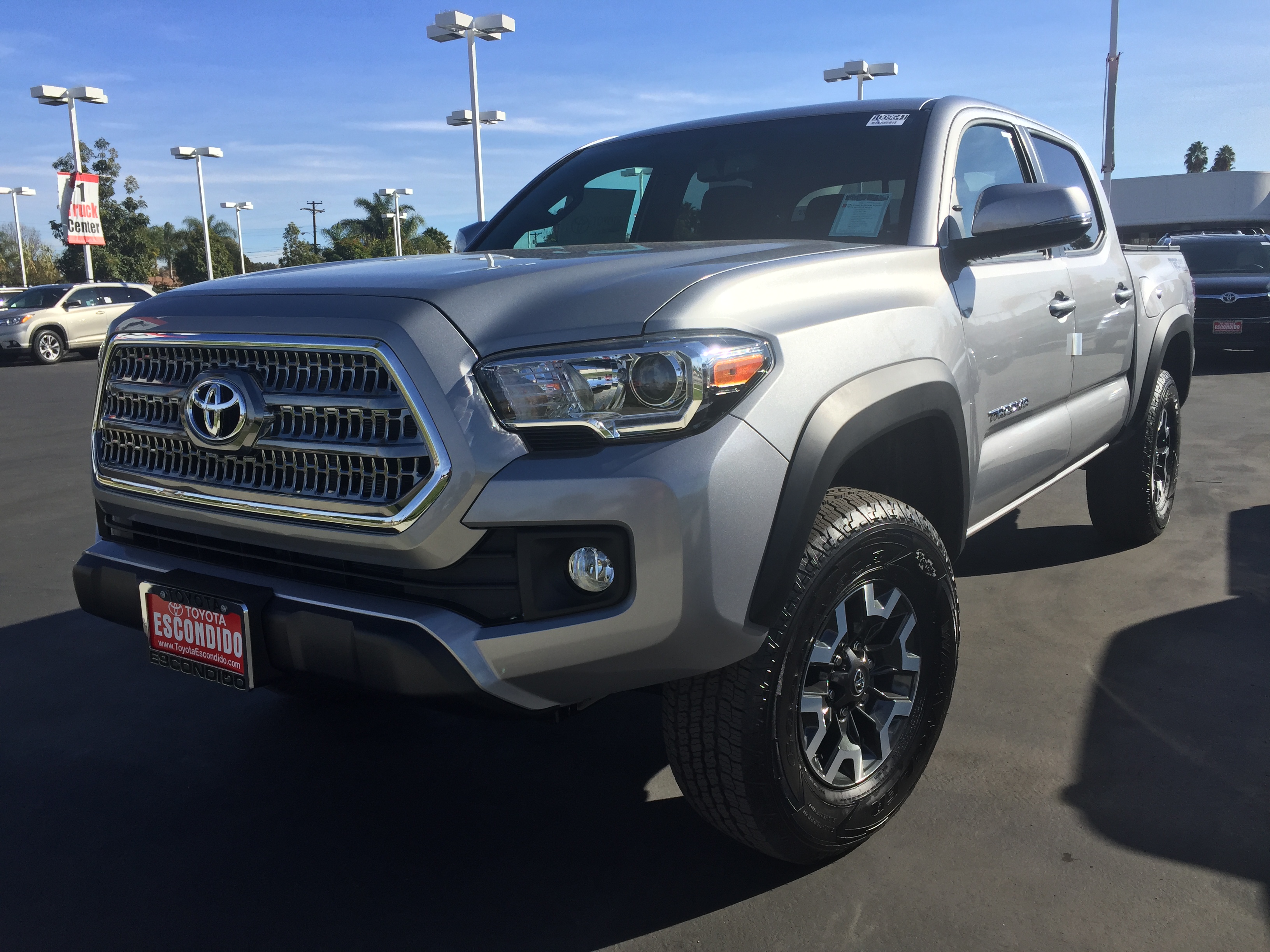
Toyota Tacoma
"...what's really bad for them is not the 15% tariff from Japan... What's killing them is the tariff from Canada and Mexico. That's just crippling them. You're talking about two of their highest volume vehicles, Tacoma in Mexico, and RAV4 coming out of Canada..."
The Toyota Tacoma is a popular pickup truck. The hosts mention it because tariffs on trucks coming from Mexico can make it harder for Toyota to sell profitably.
The Toyota Tacoma is a mid-size pickup truck. In this segment, it’s used as an example of a high-volume model that’s affected by tariffs on imports from Mexico.
raise prices
"...we've been talking about how none of the automakers really want to blink on meaningful price increases driven by the tariffs. But this is an instance where it's hard to imagine any automaker doing anything but raising prices..."
“Raising prices” refers to increasing the retail price of vehicles to offset higher costs like tariffs. The hosts argue that when cost increases can’t be absorbed elsewhere, automakers often have little choice but to pass some of the expense to buyers.
tariffs
"but we're going to pay more despite incentives because of the tariffs. All right. Well, hold that thought because we are going to come back and talk about more this tariff situation, including the refunds that automakers are expecting..."
Tariffs are taxes the government charges on imported products. If car parts are imported, tariffs can make them more expensive, and that can push car prices up. Sometimes governments later refund some of the money, which is what they’re talking about here.
Tariffs are taxes a government places on imported goods. In the auto world, tariffs can raise the cost of parts and vehicles, which often leads automakers to raise prices or adjust incentives. The segment also discusses tariff refunds, meaning some of that added cost may be partially returned later.
Salantis
"I know they've spent a lot more, but GM and Salantis are getting about $500 each, give or take, $500 million, excuse me."
“Salantis” is referring to Stellantis, a major car company. They’re talking about how much money Stellantis expects to get back from tariff-related actions. That refund can help offset some of the costs tariffs created.
“Salantis” is the podcast’s reference to Stellantis, the large automaker formed from the merger of Fiat Chrysler Automobiles and PSA. The hosts discuss Stellantis’ expected tariff refunds as part of how government policy can influence automaker costs and earnings. (The name appears to be a transcription/phonetic error.)
booked the savings this quarter
"...at least in Ford's case, they booked the savings this quarter, even though they just are assuming they're going to get it..."
They mean Ford counted the tariff-related benefit in its quarterly financial report. Instead of waiting for the money to show up, the company treats it like it’s already a benefit.
“Booked the savings” is accounting language meaning the company recorded the expected tariff-related benefit in that quarter’s financial results. It’s different from waiting to receive cash later, which is why the hosts call out the assumption that the money will arrive.
guidance
"...it's causing them to sort of raise their forecasts. Now, Ford says their forecast raise... GM basically raised their guidance about as much as they're getting back from tariffs..."
Guidance is basically a company’s prediction for how it thinks it will do financially going forward. If tariffs are expected to cost less, the prediction can improve.
Guidance is a company’s forward-looking estimate of financial performance (like earnings or revenue) that it shares with investors. The hosts discuss how tariff refunds/savings can lead companies to raise that guidance.
GM
"...GM basically raised their guidance about as much as they're getting back from tariffs, so connect two and two there."
GM (General Motors) is mentioned in the context of guidance—how much it raised its forecast based on tariff-related money coming back. The comparison is used to connect tariff refunds to earnings expectations.
commodity costs
"...much needed at a time when you're seeing, again, continued uncertainty from the rising commodity costs and probably lower or at least flat sales year over year."
Commodity costs are the prices of raw materials (like metals) that automakers need to build vehicles. The hosts say uncertainty in these costs can offset tariff-related gains, affecting sales and earnings expectations.
booking the savings now without the money in hand
"I wonder if they'll be able to continue that posture if the checks do not, in fact, arrive in the mail... They're booking the savings now without the money in hand. Is that risky?"
This is about accounting—recording money as if it’s already coming, even if the cash hasn’t arrived yet. The concern is whether that early “savings” estimate could turn out to be delayed or not fully realized.
“Booking” savings refers to recording expected financial benefits in accounting before the cash is actually received. The hosts flag the risk of recognizing savings early if the refund timing or outcome changes.
Supreme Court's ruling
"Well, I think Ford said that they have signed on to a lawsuit just as sort of standard practice as part of this, given the Supreme Court's ruling."
The Supreme Court is the highest court in the U.S. Its decision can change whether certain taxes or rules stand, which can lead to refunds for companies.
A Supreme Court ruling can determine whether tariffs or related government actions are valid, which then drives refunds or changes in how companies account for costs. Here, it’s referenced as the legal basis for Ford’s fallback.
tariff refunds
"I started trying to explain the complexity of this and who paid these tariffs in the first place... But how does that account for any savings or any costs that were passed along to suppliers?"
A tariff is a tax on imported goods. If those taxes get refunded, the big question is whether that returned money lowers the price of cars—or just helps the company’s bottom line.
Tariff refunds are money returned to companies after tariffs (import taxes) are later ruled against or otherwise reversed. The key question here is whether those refunds truly lower costs for customers or mostly benefit automakers’ financials.
supplier issue
"[1444.0s] You mentioned the supplier issue. Ford said, in most cases, they're not paying directly for [1450.8s] tariffs on the parts, but they're paying more because their suppliers are charging them more"
A supplier issue means the companies that make the parts are having problems or charging more. Those changes can then affect what the car company pays and what it charges customers.
A supplier issue refers to disruptions or cost pressures coming from a company’s upstream parts suppliers. In this segment, the supplier issue is specifically tied to tariff-related cost increases that suppliers pass along to automakers.
contractually obligated
"[1480.3s] that paid tariffs and is getting a refund is going to pass that on to somebody else [1484.7s] is if they're contractually obligated to do that."
Contractually obligated means a contract legally requires someone to act. The hosts are saying companies usually won’t lower prices just out of kindness—only if a contract forces them to.
Being contractually obligated means a legal agreement requires a party to do something. The hosts use this to explain why price reductions are unlikely to happen as a matter of goodwill—only if contracts force companies to pass through tariff-related changes.
liability
"[1495.2s] That would shock me. It's also part of the reason that they didn't put the tariffs [1500.9s] right on the Monrones because they didn't want to open themselves up to liability if"
Liability means legal responsibility. They’re saying the government or companies tried to avoid getting sued or forced to refund people if the tariff approach turned out to be illegal.
Liability is legal responsibility for harm or wrongdoing. The hosts say the reason tariffs weren’t applied “right on” a specific group (Monrones, likely a mishearing of a proper noun) is to avoid legal risk if the tariffs were found illegal and refunds had to be issued at the retail level.
price tracker
"[1521.9s] In terms of the impact, I'll refer my right honorable friends to the answer I gave some moments before [1526.7s] about the price tracker. If you look at that, there's the effect right there."
A price tracker is a way to watch how prices change over time. They’re saying you can see the impact in the data from that tracker.
A price tracker is a tool or dataset that monitors changes in vehicle pricing over time. The hosts reference it to point listeners to evidence of how the tariff/refund situation is affecting prices.
broker economy in auto retail
"[1551.3s] Molly, you've been working with Larry on this story about the broker economy in auto retail. [1557.3s] What can you tell us about what's going on there?"
The “broker economy” in auto retail refers to the role of intermediaries who help arrange vehicle purchases, pricing, or sourcing outside the traditional direct dealer-to-buyer flow. The hosts frame it as a developing system that affects how deals are structured and how pricing information moves through the market.
brokers
"there is a cottage industry that has grown in prominence over the years of brokers who basically work as a middle band between the dealerships and consumers... how the brokers get their inventory, what these relationships are like."
A broker is a middleman. In car buying, they help set up the deal between the dealership and the buyer.
In car sales, brokers are intermediaries who arrange transactions between dealerships and consumers. They can influence pricing, inventory flow, and how incentives/quotas are met, depending on the arrangement.
cottage industry
"there is a cottage industry that has grown in prominence over the years of brokers who basically work as a middle band between the dealerships and consumers."
It means a lot of smaller, independent businesses. Here, they’re auto brokers who help connect dealerships with buyers.
“Cottage industry” means a small, informal business sector rather than a single large corporation. In this context, it’s describing a growing network of auto-sale brokers operating alongside dealerships and consumers.
quota
"if they're close to not making the quota, they will sell vehicles to a broker to basically meet in name only the quota and that allows them to move inventory along and meet that quota."
A quota is a required sales goal. If a dealer is close to missing it, they may try to count sales in a way that still gets them the incentive.
A quota is a sales target a dealership must reach to qualify for incentives or other benefits. The segment describes dealers selling vehicles to brokers “to basically meet in name only the quota,” highlighting how quotas can shape behavior.
franchise dealer
"...And they did so because these franchise dealers are their faces [1813.1s] in their representatives in these communities."
A franchise dealer is a local car dealership that’s officially allowed to sell a specific brand’s cars. The episode is saying that brokers can bypass that local dealership relationship, which hurts both the dealer and the brand’s local presence.
A franchise dealer is an independently owned dealership that’s licensed by an automaker to sell and service that automaker’s vehicles in a specific area. In this context, the speaker argues that using brokers instead of having customers visit the franchise dealer weakens the automaker’s local “face” and the dealer’s relationship with customers.
lease
"...every new vehicle [1860.2s] lease that these guys do nationwide comes from a franchise dealer."
A lease is a contract where you pay to use a vehicle for a set period, rather than buying it outright. The speaker contrasts broker activity tied to new-vehicle leases (which come from franchise dealers) versus used vehicles, implying different supply chains and incentives.
shadow dealerships
"...to guys who are running basically shadow dealerships where they're displaying actual inventory and yet they have no license to do so, no license to transact. All the transaction still runs through the dealership where the car was."
A “shadow dealership” is basically a business that looks like it’s selling cars, but it doesn’t have the legal license to do the sale directly. Instead, the licensed dealership handles the paperwork and the transaction behind the scenes.
“Shadow dealerships” refers to broker-like operations that display real car inventory and market deals to customers, but do not hold the proper dealer licensing to complete transactions themselves. The actual sale still routes through a licensed dealership, which is why regulators and automakers treat it as a compliance workaround.
rewards program
"...the dealership then gets to book that sale and claim it towards their rewards program. So the automakers are clamping down on these guys..."
A “rewards program” in this context is the system automakers use to give dealers incentives based on certain sales rules. If the sale is done through a broker, the automaker may not let the dealer claim that sale for the incentive.
“Rewards program” here refers to automaker incentive accounting tied to how a vehicle sale is categorized and credited. The automakers are saying that if a sale is routed through a broker, the dealer shouldn’t be able to count it toward incentives.
brokerage
"...automakers are clamping down on these guys... just remind you, you have to identify if you sold this through a broker... New Jersey passed a law... bans brokerage from the dealership side... states like Texas have an explicit prohibition on brokerage."
Here, “brokerage” means using a middleman to help you buy a car. The big issue is whether those middlemen must have the same kind of license as car dealers, and what rules states set for how they operate.
In this context, “brokerage” means arranging vehicle purchases through intermediaries rather than the customer buying directly from a licensed dealer. The discussion centers on whether brokers need dealer-style licensing, and how state laws regulate broker behavior and dealer involvement.
dealer license
"...it seems like that is a big part... there is no license for these brokers... Would that be a possible solution?... if you want to do this, you have to get a license and we'll regulate you."
A “dealer license” is the legal permission a business needs to sell cars in a state. This segment is about whether brokers also need that kind of permission, and how different states handle the rules.
A “dealer license” is the state-issued authorization that allows a business to legally sell vehicles and complete the transaction. The segment explains that some states require brokers to obtain specific licensing (or restrict broker activity), while others have gaps that create disputes over what’s allowed.
AI agents
"...as we are also reporting on the new era of AI agents that are doing sort of a similar thing here."
“AI agents” are software systems that can take actions toward a goal—often by using tools, making decisions, and interacting with other services. Here, they’re discussed as doing work similar to humans in the auto retail space, likely affecting tasks like research, outreach, or transactions.
auto retail business
"...you kind of have the human and computer side of, you know, these third parties that are getting involved in the auto retail business. And so that's a good place to leave it for now."
“Auto retail” just means the normal process of selling cars to regular customers. The hosts are saying that AI tools and outside companies may start playing a bigger role in that selling process.
The phrase “auto retail business” refers to how cars are sold to end customers—typically involving dealers, financing, and marketing. In this segment, the hosts connect it to AI “agents” and third parties that may influence how the buying process works.
retail process
"...get all of the latest news on incentives, on the retail process, and everything happening in the auto industry at AutoNews.com."
The “retail process” is the full set of steps involved in buying a car from a dealer or seller. It includes things like negotiating, financing, and completing the paperwork.
The “retail process” is the end-to-end path from a shopper’s interest in a vehicle to purchase and delivery—often including dealer interactions, pricing, financing, and paperwork. The segment frames it as an area where third parties and AI may influence how buying happens.
Request an Explanation
Heard something you'd like explained? We'll add it to this episode.
Sign in to request explanations for terms you heard.
Want to learn more?
Browse our glossary for plain-English explanations of automotive terms, jargon, and concepts.
Help improve this episode
See something that's not quite right? Our annotations are AI-generated and can sometimes miss the mark. Click the flag icon on any annotation to suggest a correction.