
Mazda Sales PLUMMET & Cancel Vehicle Production | Episode 1069
About this episode
Mazda’s April performance takes center stage as the hosts note “Mazda sales plummeted in April” and “off 17.3% year over year,” alongside “canceling some of their vehicle production” and “delaying EV launches by over two years.” They connect the slump to pricing and strategy shifts—“pivoting back towards hybrids” and “move upscale and to abandon their customers”—then dig into how inventory days influence discounts. The episode also covers new-car pricing/incentives, plus CarEdge’s dealer transparency index using out-the-door quote data.
Mazda
"Dad, Mazda sales plummeted in April. We're going to look at that data in just a second. And they're canceling some of their vehicle production. Mazda's delaying EV launches by over two years and slashing some of their investments."
Mazda is the car company in the news here. The hosts say Mazda is selling fewer cars, changing its plans for electric vehicles, and cutting back production.
Mazda is the automaker being discussed, and the hosts are focusing on its recent business moves. They mention Mazda sales falling sharply, delaying EV plans, and canceling some vehicle production—signals of how the company is adjusting strategy in response to demand.
EV launches
"Mazda's delaying EV launches by over two years and slashing some of their investments. They're pivoting back towards hybrids."
“EV launches” means when a company starts selling new electric cars. If those launches get delayed, it means the company is postponing when those electric models will arrive.
“EV launches” refers to the start of sales and rollout of electric vehicles. Delaying EV launches usually means a company is pushing back product timing—often due to cost, supply chain, demand, or regulatory pressures.
pivoting back towards hybrids
"Mazda's delaying EV launches by over two years and slashing some of their investments. They're pivoting back towards hybrids."
This means Mazda is changing its plan and focusing more on hybrid cars. Hybrids use both a gas engine and an electric motor to improve efficiency.
“Pivoting back towards hybrids” means shifting product focus from one powertrain strategy to another—here, away from fully electric plans and back toward hybrid vehicles. Hybrids combine an internal-combustion engine with an electric motor to reduce fuel use compared with non-hybrid cars.
year over year
"Mazda sales that for the month of April were off 17.3% year over year. The industry overall data that we have from automotive news down six and a half percent."
“Year over year” means comparing this month to the same month from last year. So “off 17.3% year over year” means sales were down by that amount versus last year’s April.
“Year over year” (YoY) is a comparison of performance in a given month versus the same month one year earlier. When the hosts say Mazda sales were “off 17.3% year over year,” they mean April this year sold 17.3% fewer cars than April last year.

Mazda Cx70
"I would think the vehicles that aren't selling as well are like the CX70 and the CX90, which are their really overly expensive brands for models for that brand."
The Mazda CX-70 is a bigger, pricier Mazda SUV. The hosts mention it as a model that might not be selling as well because it costs more than many shoppers want to pay for Mazda.
The Mazda CX-70 is one of Mazda’s larger, more expensive SUV offerings. In this segment, it’s brought up as an example of a Mazda model that may be underperforming in sales because it’s priced higher than buyers expect for the brand.

Mazda CX-5
"But the CX50, the CX30, the CX5, the Mazda 3, those vehicles can be had for in the mid 20s to under $40,000."
The Mazda CX-5 is one of Mazda’s more affordable, everyday SUV models. The hosts mention it as part of the lineup that fits the price range where sales are expected to be better.
The Mazda CX-5 is Mazda’s mainstream compact SUV that typically competes in the mid-$20k to under-$40k market. The segment uses it as an example of a model that should sell well because it’s priced where many buyers are still willing to shop.

Mazda Cx50
"But the CX50, the CX30, the CX5, the Mazda 3, those vehicles can be had for in the mid 20s to under $40,000. I would think they should be doing well. I know the CX50 hybrid accounts for what was it, 35 or 40% of their CX50 sales."
The Mazda CX-50 is a smaller SUV that’s usually priced in the mid-range. They also mention the CX-50 hybrid and say it uses a Toyota hybrid system, which helps explain why the hybrid is a big part of its sales.
The Mazda CX-50 is a compact crossover positioned in the mid-$20k to under-$40k range. The segment specifically calls out the CX-50 hybrid and notes that it uses a Toyota hybrid system, which is a key detail in how Mazda sources and implements hybrid tech.

Mazda 3
"But the CX50, the CX30, the CX5, the Mazda 3, those vehicles can be had for in the mid 20s to under $40,000."
The Mazda 3 is Mazda’s compact car. The hosts group it with other Mazdas that are priced lower, implying that those models should sell better than the pricier SUVs.
The Mazda 3 is Mazda’s compact car that competes in the budget-to-midrange segment. Here it’s included with the CX-30/CX-5/CX-50 as a model lineup that should perform better because it’s priced below Mazda’s more expensive SUVs.
Toyota
"And that hybrid is a Toyota. I mean, that's the Toyota hybrid that they use in that vehicle."
Toyota is mentioned because Mazda’s CX-50 hybrid uses Toyota’s hybrid technology. So the hybrid system isn’t unique to Mazda—it’s based on Toyota’s approach.
Toyota is referenced as the source of the hybrid system used in the Mazda CX-50 hybrid. That matters because it implies Mazda is leveraging Toyota’s hybrid engineering rather than using a fully proprietary Mazda hybrid design.
go up market
"But Mazda has been very clear that their ambition is to go up market. You can see here from Rob report why Mazda wants to take on Mercedes and BMW from Torque Cafe was"
“Go up market” means a brand tries to move from selling mostly affordable vehicles into higher-priced, more premium segments. The segment frames Mazda’s “premium push” as a strategy that may have backfired by making the brand less affordable during an affordability crisis.
dealer markups
"during the height of COVID, when dealers were charging additional dealer markups anywhere from like $1,500 to $20,000, every one of the manufacturers took notice of that"
Dealer markups are extra fees a car dealer adds to the price of a car. The point here is that during COVID, dealers were charging huge markups and people still bought cars, so Mazda and others tried to move to higher prices afterward.
Dealer markups are extra charges added by dealerships on top of the vehicle’s base price, often shown as an amount over MSRP. The hosts argue that during COVID, markups became so large that manufacturers noticed buyers still paid, which encouraged them to try shifting pricing and positioning upward later.
move upscale
"So yeah, Mazda to a certain degree decided to move upscale and to abandon their customers similarly to what Stellantis did with many of their products."
“Move upscale” means trying to sell more expensive, higher-end cars instead of the cheaper ones. The host’s argument is that Mazda went that direction too fast and left behind some buyers who used to be the core customers.
“Move upscale” means shifting a brand’s strategy toward more premium products and higher price points. In this segment, the host claims Mazda did this and “abandoned” some existing customers, which made it harder to maintain sales when demand for the higher-priced segment wasn’t large enough.
Stellantis
"So yeah, Mazda to a certain degree decided to move upscale and to abandon their customers similarly to what Stellantis did with many of their products."
Stellantis is a big car company that owns several brands. The host mentions it as a comparison for how a company can change its lineup and pricing and accidentally lose some buyers.
Stellantis is an automaker formed from the merger of Fiat Chrysler Automobiles and PSA Group, and it controls multiple major brands. Here, it’s referenced as an example of another company that allegedly shifted products “upscale” in a way that left some customers behind.
EV mistake
"I would imagine that if the CEO is looking closely at the EV mistake and they have always said, when it comes to EVs, we're going to be the followers, we're not going to be the leaders"
An “EV mistake” means the company’s choices about electric cars didn’t go the way they needed to. The host is saying Mazda may have waited too long or invested differently than it should have, and that could have hurt sales.
An “EV mistake” here refers to a strategic error in how a company invests in and rolls out electric vehicles. The host suggests Mazda’s leadership planned to be a “follower” on EVs, scaling back investment, but that this may have contributed to problems when the company tried to change direction on pricing and product positioning.
days supply of inventory
"Day's supply, for those of you that don't remember, it's the number one thing me and my dad care about... If there's over a 120 days supply of inventory... That's a buyer's market. If there's 45 days or less, that's a seller's market."
It’s a way to estimate how long the dealer’s cars would sit before they’re all sold. If cars are likely to sit for a long time, dealers often have to offer bigger discounts.
“Days supply of inventory” estimates how long it would take to sell the current stock at a dealership’s normal sales pace. Higher days supply usually means more negotiating room for buyers, while lower days supply suggests tighter supply and less discounting.
buyer's market vs seller's market
"If there's over a 120 days supply of inventory... That's a buyer's market. If there's 45 days or less, that's a seller's market."
This is about who has the advantage. When there are lots of cars available, buyers can negotiate more; when cars are scarce, dealers don’t need to discount as much.
A “buyer’s market” means there’s more inventory relative to demand, so buyers typically have more leverage to negotiate. A “seller’s market” means inventory is tight, so dealers face less pressure to discount.
days on the market
"now, instead of looking at day's supply of inventory, this map showing us the days on the market... The longer it's been sitting on their lot, the more likely they want to get rid of it because it's costing them money."
This is basically how long a car has been for sale. If it’s been sitting for a long time, the dealer may be more willing to lower the price.
“Days on the market” measures how long specific vehicles have been sitting for sale, typically on a dealer lot or in listings. Longer days on the market often correlate with higher likelihood of discounts because the dealer is paying holding costs while inventory doesn’t move.
tariff impact
"But if they're trying to load up their dealers with vehicles that have less tariff impact, those prices are too high for their customers."
Tariff impact is about extra taxes on imported cars. If those taxes are high, the car’s cost goes up, which can make it harder for dealers to sell at prices customers will pay.
Tariff impact refers to how import taxes (tariffs) increase the cost of bringing vehicles into a country. If a manufacturer tries to steer inventory toward routes or production sources with lower tariff exposure, it can affect pricing and dealer stocking decisions.
dealer inventory
"I mean, they need to relieve themselves of that inventory as quickly as they possibly can because it gets very expensive to carry those vehicles."
Dealer inventory just means how many cars a dealership has available but hasn’t sold yet. If they have too many cars sitting around, they usually lower prices to move them quickly.
Dealer inventory is the number of vehicles a dealership has on its lot (or in its pipeline) that haven’t been sold yet. When inventory is high relative to demand, dealers often discount to sell cars faster because carrying unsold vehicles ties up money and adds holding costs.
inventory oversupply relative to demand
"Maryland again, we've got an oversupply of inventory. This is so fascinating to look at the Map View for Mazda because you know, let's zoom into one of these things."
This is when there are more cars available in an area than people are actively buying. When that happens, dealerships may need to offer deals to get cars sold.
“Oversupply relative to demand” means there are more vehicles available in a market than shoppers are currently buying. That imbalance can show up as more dealer stock and less availability pressure, often leading to incentives or price adjustments.

Mazda CX-90
"They made some vehicles, 17,500 CX90s, for example, that are not selling nearly as well as vehicles that they have still more supply, not enough more supply."
The Mazda CX-90 is a bigger Mazda SUV meant for families. Here they’re saying Mazda has a lot of them sitting around because people aren’t buying them as fast as expected.
The Mazda CX-90 is a three-row Mazda SUV positioned as a more premium, higher-priced family hauler. In this segment, it’s used as an example of inventory piling up because sales aren’t keeping pace with supply.
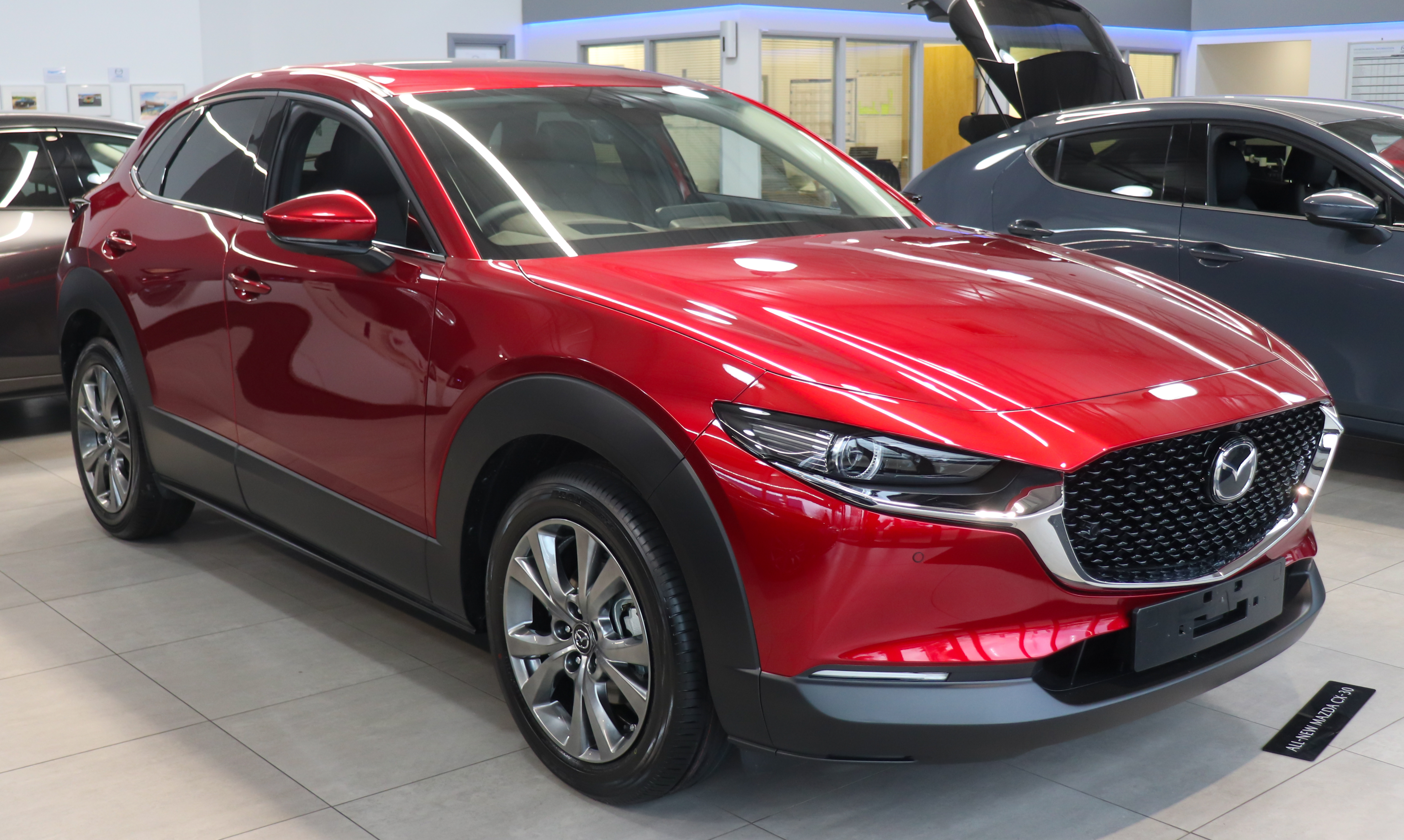
Mazda CX-30
"One of the ones I wanted to look at here... the CX30 has comparable inventory levels... Mazda had 17,500 CX90s. They have 15,633 CX30s... And one that costs them more to bring into the country because it's produced in Mexico."
The Mazda CX-30 is a smaller Mazda SUV/crossover that usually costs less than the CX-90. In this segment, they’re saying it’s moving better and that extra import costs (tariffs) can affect pricing.
The Mazda CX-30 is a smaller, more affordable Mazda crossover that competes in the compact SUV space. The hosts contrast it with the CX-90 by pointing out it has lower inventory pressure and is selling better, even while noting it faces added costs tied to being produced in Mexico.
inventory levels
"the CX30 has comparable inventory levels in terms of total models out there to the CX90. Mazda had 17,500 CX90s. They have 15,633 CX30s."
Inventory levels mean how many cars are sitting at dealerships or available to buy. If there are a lot and not many people want them, sellers often have to adjust pricing or incentives.
Inventory levels describe how many vehicles are available for sale in the market at a given time. Higher inventory relative to demand can lead to more discounts and slower sales, while lower inventory can support stronger pricing.
average days on market
"Albuquerque, the inventory is like kind of the right age, average days on markets, 84 days. I'm not saying that's great or bad, but it's kind of neutral."
Average days on market tells you how many days cars usually stay unsold before someone buys them. If it’s high, cars are taking longer to sell; if it’s low, they’re moving faster.
Average days on market is a measure of how long vehicles typically sit unsold on dealer lots. Longer days on market usually indicate weaker demand or pricing that isn’t competitive, while shorter days can suggest stronger sales momentum.
tariffs
"there's additional tariffs impacting the CX30s at the moment. It all adds up and it's, you know, I drive a CX30."
Tariffs are extra taxes on imported products. If a car has to be imported, tariffs can make it cost more, which can influence the price you see at the dealership.
Tariffs are taxes imposed on imported goods, which can raise the cost of bringing vehicles into a country. When tariffs apply to a model’s supply chain, they can affect pricing, dealer margins, and how aggressively a brand can discount.
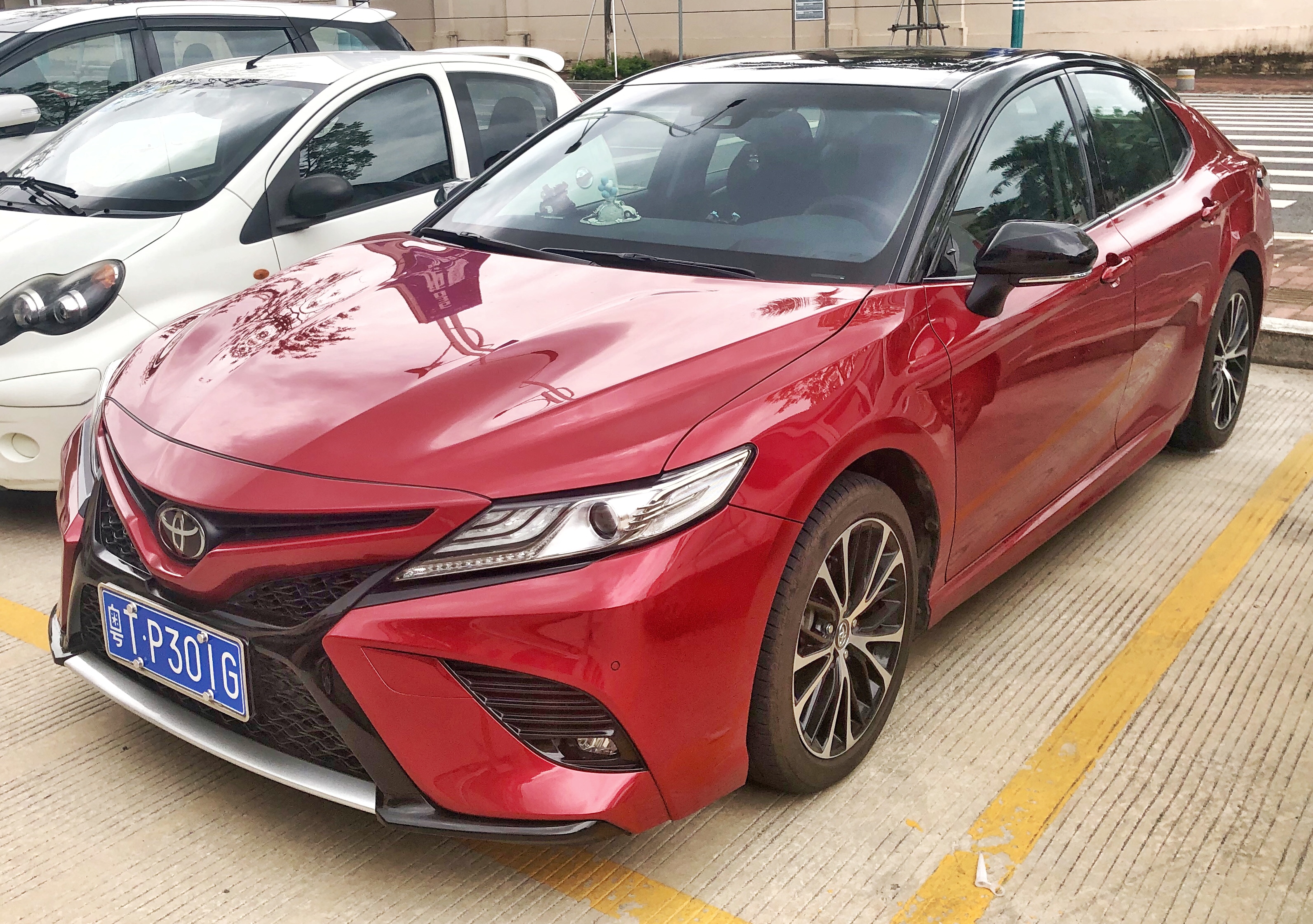
Toyota Camry
"And then literally any model. Give it a second here. We'll do the Camry. And now we'll go to map view."
The Toyota Camry is a popular Toyota sedan. The host mentions it while demonstrating how sales data changes depending on the model you select.
The Toyota Camry is a mainstream midsize sedan that’s commonly used as a benchmark model for sales and inventory trends. Here, it’s mentioned as an example while the host changes the model on a sales/map display.
infotainment system
"And let's face it, the infotainment system on the Mazda is almost as old as I am. It is a pretty ancient infotainment system that they use..."
The infotainment system is the car’s main screen and electronics for things like music, navigation, and phone connection. If it’s old, it can feel clunky compared to newer cars.
An infotainment system is the car’s integrated touchscreen and electronics for media and connectivity, like navigation, audio, Bluetooth/phone pairing, and sometimes apps. Because it’s software-driven, older infotainment can feel slow or outdated compared with newer systems.
incentives
"So I would think that provides them with the extra funds to be able to increase some of the incentives to help move these slower moving vehicles. ... even if incentives tick back up to 7.2% of the average transaction price"
Incentives are discounts or rebates that make a car cost less than the base price. They’re often offered by the manufacturer to boost sales.
Automotive incentives are manufacturer-funded discounts or rebates offered to reduce the effective price and stimulate sales. The segment discusses how incentive levels (as a percentage of the average transaction price) affect affordability and whether pricing is truly improving.
average marketed price
"The average marketed price, if you go back to that script, is $51,385 on new cars right now."
This is the typical advertised price for new cars. It may not match the final price after discounts, but it’s still a useful indicator of how expensive cars look to shoppers.
Average marketed price is the typical price presented in listings/marketing for new vehicles, which may differ from what buyers actually pay after incentives. The segment uses it to argue that headline pricing hasn’t been falling.
average transaction price
"What do you think the average transaction price last month was for a full-size pickup truck in the United States of America? ... it was up about 3% year over year ... We're at $66,705 for full-size pickup trucks"
This is the typical price people really pay when they buy a car. It’s a better measure than the sticker price because it reflects discounts and deals.
Average transaction price is the typical selling price actually paid for vehicles, after discounts and incentives, rather than the sticker price. In this segment, it’s used to show how expensive vehicles are getting by vehicle segment (like full-size pickups and SUVs).
vehicle segments
"What's surprising here, Dad, is you actually have subcompact SUVs up the most 3% year over year at $30,790, mid-size SUVs up over $50,000. It's interesting to look at the mix shift of what different types or different segments of vehicles are selling at."
Car segments are groups like small SUVs, larger SUVs, and full-size trucks. Prices can move differently in each group, so the market can feel better or worse depending on what you’re shopping for.
Vehicle segments are categories like subcompact SUVs, mid-size SUVs, and full-size pickup trucks that have different buyer demand and pricing dynamics. The segment highlights that price changes aren’t uniform across segments, which affects how “affordable” the market feels depending on what you shop for.
mix shift
"It's interesting to look at the mix shift of what different types or different segments of vehicles are selling at. Obviously, full-size pickup trucks are the highest there at almost 70 grand."
Mix shift means buyers are choosing different types of cars than before. If more expensive models sell, the overall average price can rise even if each model’s price stayed similar.
A mix shift means the sales mix changes—more units sold in one category and fewer in another. That can move overall averages even if prices within each segment don’t change much, because the “weighted average” shifts toward higher- or lower-priced vehicles.

Alfa Romeo Giulia Intensa
"How much is the 2025 Alfa Romeo Giulia Intensa selling for, it looks like the MSRP is $59,000."
The Alfa Romeo Giulia is a sporty sedan. “Intensa” is a particular version/trim level, and they’re talking about the price—especially how much cheaper it might be than the sticker price (MSRP).
The Alfa Romeo Giulia is Alfa Romeo’s compact sport sedan, and the Intensa trim is a specific equipment level within the Giulia lineup. In this segment, they’re discussing what the 2025 Giulia Intensa costs and how much it’s discounted versus MSRP.
MSRP
"it looks like the MSRP is $59,000... the base, total MSRP of the vehicle... for 2026, it's $3,250 just in destination charges"
MSRP is the “sticker price” the manufacturer lists for a car. When they say “off MSRP,” they mean the selling price is lower than that sticker number.
MSRP (Manufacturer’s Suggested Retail Price) is the sticker price a manufacturer sets for a vehicle before discounts. The hosts use MSRP as the baseline to estimate how much off the sticker price buyers might be getting.
destination charges
"Stalantis is only attached to like an above $3,000 destination charge on Alfa Romeo's... for 2026, it's $3,250 just in destination charges"
Destination charges are fees added to a car’s price to cover shipping the vehicle from the factory to the dealer. In this segment, they call out how large the destination charge can be, which affects the total MSRP baseline.

Dodge Charger SCAT Pack
"leftover SCAT packs, chargers, things like that... they sold the SCAT pack... They leased it."
The Dodge Charger SCAT Pack is a higher-performance version of the Charger. They’re talking about big discounts on leftover inventory and how fast one got sold after the price drop.
The Dodge Charger SCAT Pack is a performance-oriented trim of the Charger, typically positioned as a more aggressive “muscle” option. The hosts discuss how leftover SCAT Pack inventory was discounted heavily off MSRP, and how quickly at least one was sold after the pricing news.
lease contract
"With a lease contract, you don't owe anything at the end, unless... Well, if she's trying to trade it in before the lease is up, there'll be a payoff just like there is on a car loan."
A lease contract is like renting a car for a fixed time. You make payments, and at the end there’s usually a set “value” for the car that determines what you owe.
A lease contract is an agreement where you pay to use a vehicle for a set term, instead of buying it outright. At the end, the lease usually has a predetermined value for the car (the residual), which affects what you owe or whether you can walk away.
residual value
"Now, typically, the payoff is the residual value plus any remaining payments less a little bit of interest."
Residual value is the estimated value of the car at the end of the lease. If you end the lease early, that number often gets used to figure out what you still have to pay.
Residual value is the pre-set value a leased vehicle is expected to be worth at the end of the lease term. When you end a lease early, the payoff is often calculated using the residual value plus remaining payments, which is why early termination can be expensive or sometimes favorable.
equity in that lease
"Depending on what type of vehicle it is, you very well could have equity in that lease."
Equity in a lease means the vehicle is worth more than the amount you effectively owe to buy out the lease. If the car’s market value is higher than the payoff figure, you may be able to trade it in or settle the lease with money left over (depending on the lease terms).
out-the-door price
"We've already done 34 out-the-door price quotes back since I did my presentation."
Out-the-door price is the full total you’ll pay to drive the car home. It includes the taxes and fees, not just the advertised price.
Out-the-door price (OTD) is the total amount you pay to buy the car, including taxes, registration, and dealer fees—not just the sticker price. It’s a key number because it reveals the real cost after the usual add-ons and paperwork charges.
dealer transparency index
"One of the things that we talked about was how we have created the dealer transparency index. There would be no excuse for people today to find themselves in an F-rated dealership."
It’s basically a scorecard for car dealerships. The goal is to show which dealers are honest and clear about pricing and reviews, so shoppers can avoid sketchy ones.
A dealer transparency index is a scoring/benchmark system that ranks dealerships based on how clearly and consistently they present pricing and review information. In this segment, it’s used to help shoppers identify dealerships that may be misleading customers.
F-rated dealership
"There would be no excuse for people today to find themselves in an F-rated dealership. She said to me, well, how do you get these reviews?"
In this context, “F-rated” means the dealership scored very poorly on the host’s transparency scorecard. It’s a warning sign that the dealer may not be straightforward with customers.
An “F-rated dealership” refers to a low score within the host’s dealer transparency index. It implies the dealership’s practices—especially around pricing transparency and review behavior—fall short of the standard used by the index.
CarEdge dealer reviews map
"A friendly reminder for what we're talking about. Carage.com dealer reviews. Then you can search for dealers. You can go on the map. The map is one of my favorite things that we built from the map you can sort by brand."
They’re walking through a website map that helps you compare car dealers. You can filter by brand and see how dealers’ advertised prices and quotes line up.
This segment explains how to use CarEdge’s dealer-review data and map tools to compare dealerships by brand and location. It focuses on practical shopping workflow: searching dealers, zooming into a city, and reviewing pricing/quote behavior.
outdoor price quote
"Okay, this dealer has only given us one outdoor price quote. What do they do well? Their online advertised price as compared to the quote that they gave us was only 2.5% above."
An out-the-door price is the final total you’d pay at checkout. It includes the extra fees, so it’s a better comparison than just the advertised price.
An “out-the-door” price quote (often shortened to OTD) is the total price a buyer would pay, including the fees and charges that are added at purchase time. The host compares this quote to the dealer’s online advertised price to measure how closely the dealer’s numbers match reality.
dock fee
"Their dock fee of $999 is $413 above the average of all other Kansas car dealers that we've contacted at 586."
A dock fee is an extra charge a dealer adds on top of the car’s price. The host is saying some dealers charge much more than others for it.
A dock fee is a dealer-added charge intended to cover costs like vehicle handling and delivery logistics. In this segment, the host compares a specific dealer’s dock fee ($999) against the average dock fee at other Kansas dealers to highlight pricing differences.
out the door quotes
"we got the receipts. It's your damn out the door quotes that you sent to us. Okay,"
An “out the door” quote is the final total you’d pay to get the car, not just the sticker price. It includes the extra costs like taxes and dealer fees.
“Out the door” (OTD) quotes are the total price a buyer pays to take the car home, including the base vehicle price plus taxes, registration, and dealer fees. It’s meant to be an all-in number so shoppers can compare offers without hidden add-ons.
OTD worksheet
"literally every piece of data we get is from a redacted OTD worksheet that we've received from that dealer."
An OTD worksheet is a dealer’s breakdown of the final “out the door” price. It shows how the total is calculated from the car price plus taxes and fees.
An OTD worksheet is an internal pricing sheet dealers use to calculate the “out the door” total. It breaks down the components that make up the final number—vehicle price, taxes, registration, and fees—so the dealer can produce a consistent all-in quote.
car buying service
"when me and my dad started caredge, this business, we offered a car buying service. Literally, me and my dad would get on the phone and call car dealers and negotiate car deals."
A car buying service helps you buy a car by doing the negotiating for you. Instead of you haggling with the dealer, they handle it on your behalf.
A car buying service is a third-party service that negotiates a vehicle purchase on a shopper’s behalf, often using dealer outreach, pricing analysis, and structured offers. The idea is to reduce the time and stress of negotiating directly with dealerships.
AI agents that will negotiate on your behalf
"We have also built AI, AI agents that you're able to deploy to car dealers that will negotiate on your behalf."
They’re using software to do parts of the car negotiation process for you. Instead of you doing every back-and-forth, the system handles negotiation steps and records the outcomes.
“AI agents” in this context are software systems used to interact with dealerships and run negotiation workflows on behalf of a customer. The key point is that the negotiation is automated or semi-automated, and the results feed into the transparency scoring.
Request an Explanation
Heard something you'd like explained? We'll add it to this episode.
Sign in to request explanations for terms you heard.
Want to learn more?
Browse our glossary for plain-English explanations of automotive terms, jargon, and concepts.
Help improve this episode
See something that's not quite right? Our annotations are AI-generated and can sometimes miss the mark. Click the flag icon on any annotation to suggest a correction.