0:00 / 0:00
Midweek Motorsport s21 e15

Midweek Motorsport s21 e15

Midweek Motorsport Apr 22, 2026 128 min
0:00
0:00

About this episode

A packed Midweek Motorsport catch-up spans F1, endurance, rally, and Carrera Cup. The big debate is Italy’s tax demands on F1 drivers’ earnings, with Nick Damon calling it unethical and potentially harmful to hosting. Sports-car news focuses on manufacturers “pausing” programs: Acura stepping back from IMSA, Genesis not joining IMSA as expected, and Alpine’s WEC/F1 engine plans. Hyundai’s Andrew Wheatley joins live from Gran Canaria to discuss WRC development, engine reliability limits, and driver rotation. The show ends with IndyCar/IMSA/DTM updates and a chat with Harley Horton about switching to Carrera Cup Italia at Imola.

Filter:
|
Technical Too Afraid to Ask
Topic

FIA World Rally Championships

"...we are crossing live to Gran Canaria ahead of the FIA World Rally Championships and Andrew Wheatley from Hyundai Motorsports will be joining us from the service park."

The FIA World Rally Championships is the biggest rally series in the world. Cars race against the clock on special stages, often on mixed road surfaces.

Company

Hyundai Motorsports

"...ahead of the FIA World Rally Championships and Andrew Wheatley from Hyundai Motorsports will be joining us from the service park."

Hyundai Motorsports is Hyundai’s racing team. They help run and support Hyundai race cars in big competitions like rallying.

Topic

WeatherTech Sport Car Championship

"...CrowdStrike Endurance Team Work and Speed for the Ibiza WeatherTech Sport Car Championship which was on the streets of Long Beach at the weekend which also had"

The WeatherTech Sport Car Championship is a big sports-car racing series in North America. Races often involve different classes of cars running together.

Topic

Long Beach

"...which was on the streets of Long Beach at the weekend which also had"

Long Beach is a race track that runs on city streets in California. Because it’s tight and close to barriers, cars have to be set up carefully and drivers have to be precise.

Topic

Sport Car Race

"IndyCar there as well and we had a huge amount of Sport Car Race to, Sport Car Race that we'll talk about..."

They’re talking about sports car racing, which is usually longer races than typical sprint events. The cars are built for performance and endurance.

Topic

Monaco Historic

"This weekend is Monaco Historic, I'm not involved in that and so lots to happen."

“Monaco Historic” is a race event in Monaco for older cars. People go to see classic cars compete in a famous location.

Topic

Le Mans preparation

"Also to Sean Crockett, continuing his Le Mans preparation by trying to test fit and fold up..."

“Le Mans preparation” means getting ready for the big endurance race at Le Mans. Teams do lots of testing and planning so the car can last for many hours.

Car

BMW Z4

"...old up by biking into the passenger footwell of a Z4, thinks they're not going well. Smaller bike or b..."

The BMW Z4 is a small two-seat sports roadster. The podcast is describing an incident where a bike ended up hitting the passenger foot area, which shows that the space inside can be tight. That can make loading or moving things around the cabin more difficult.

Topic

Thunder Hill Raceway

"weekend, Marshall and Judy's off to Thunder Hill Raceway in Northern California."

Thunder Hill Raceway is a race track in Northern California. When they mention it, they’re talking about where the racing action is happening.

Concept

ATFs

"Hello to the Collective, looking forward to ATUFs. All they usually think is well done. Kevin Payne says no ATFs and then really enjoyed the Phil Hansen Tyler's long one that he posted"

“ATFs” here doesn’t sound like a car part—it sounds like a recurring type of content or posts the group shares. The hosts are basically debating whether they should be doing it and talking about which posts were good.

Topic

WEC at Imola

"All of our preview and additional content from WEC at Imola, which I call Mons and more than once."

WEC is a major endurance racing series. Imola is a famous race track in Italy, and they’re talking about the WEC event there.

Topic

FIAWC

"can't believe Acura pulling out of IMSA, hope that doesn't mean sports cars all together, maybe a switch to FIAWC, we'll have some news on that when Tim tells us we can talk about it,"

“FIAWC” is used here as shorthand for an FIA World Championship program (most likely the FIA World Endurance Championship ecosystem). The hosts are speculating about a switch in racing direction if Acura’s IMSA involvement changes, so it’s a meaningful motorsport governance/series reference.

Topic

FOM reported me

"Otter, after this weekend's Laws and Highs and Motorsport got back after a three-week ban, because FOM reported me for criticising their rules set after the Berman accident."

They mention “FOM” as the group that reported someone after they criticized the rules. It’s basically about how rules and enforcement can lead to penalties and appeals.

Concept

three-week ban

"Otter, after this weekend's Laws and Highs and Motorsport got back after a three-week ban, because FOM reported me for criticising their rules set after the Berman accident."

A “three-week ban” indicates a temporary suspension tied to conduct or rules enforcement after an incident. In motorsport communities, bans can be used to manage disputes and maintain compliance, and appeals can restore participation.

Concept

GTP programme

"Another thing, listening in live later, sad to see Honda pausing the GTP programme, thanks for the professionalism of all of you this weekend, that's kind of you at the CSO."

They’re talking about Honda’s racing/development effort called the “GTP programme.” When a manufacturer pauses it, it usually means they’re not competing in that effort for a while or are focusing elsewhere.

Brand

Honda

"Another thing, listening in live later, sad to see Honda pausing the GTP programme, thanks for the professionalism of all of you this weekend, that's kind of you at the CSO."

They mention Honda, the car company. The key point is that Honda is changing its involvement in a racing program, so you may see less of them in that specific competition.

Topic

Hong Kong

"Alexander Orgen, new EFAs tonight, Alex, your daughter did brilliantly, is doing brilliantly in the 7s for the nation at Hong Kong, brilliant stuff, great to see her get on earlier in the week, EFAs for Mark, Mark Bowling, he'll be catching up on the trip down to Monaco, excellent, he won the HRN competition, I think he did, Ed Morziss's EFAs tonight need to get back to early, starts catching up with the archive on, oh my, is it that early, I just see what he'll be."

They say Hong Kong is where the competition is happening. It sounds like a motorsport-related event where she’s representing her country.

Topic

Dubai

"Nick feeling better after being very polling, international sickness, yeah well, there's a few of us have had that made, but you actually were very polling whilst you were in Dubai at the wing end, weren't you? Abu Dhabi, Abu Dhabi on the Emirates."

They mention Dubai as where Nick was when he was feeling sick. Dubai is a common stop for people traveling to motorsport events.

Topic

Abu Dhabi

"...you actually were very polling whilst you were in Dubai at the wing end, weren't you? Abu Dhabi, Abu Dhabi on the Emirates. What's it, is it aligned in Abu Dhabi? It's aligned on the right on the edge of Abu Dhabi, yeah."

They talk about Abu Dhabi as part of the trip. Abu Dhabi is a well-known place for big racing events, so it fits the motorsport theme.

Concept

Formula One (F1) driver tax rules by country

"There's this weird situation where some countries decide that because a Formula One driver is taking part in a race in their country that they are entitled to one X and the X is the number of grand prix in the season of their salary as far as tax is concerned... And that includes Australia."

They’re talking about how different countries handle taxes for Formula 1 drivers. Because you’re racing in that country, the government may decide you owe tax there, and the rules can get complicated.

Topic

Formula One driver taxation debate

"It's a sort of financial grab. And I think it's pretty unethical, personally... Because you're a racing driver. You're not like a freelancer."

This part of the show is mainly about a debate over how Formula 1 drivers get taxed when they race in different countries. The hosts are questioning whether the approach is fair.

Concept

tax jurisdiction / pro rata tax based on working days

"You live in a different country and that's where your tax jurisdiction should be... they want it pro rata based on the number of working days spent in Italy."

This is about how countries decide which part of your income they can tax. Even if you’re based in one place, Italy may tax you for the days you’re actually working there (like race weekends), and not for days you’re just visiting for fun.

Topic

Formula One drivers and Italian tax at Monza

"...it's not just when you're at the Grand Prix at Monza."

They’re using Formula One and the Monza race as an example of how tax rules could work for drivers who spend some time in Italy for work.

Topic

Mugello

"For example, in 2020, we had races in Monza, Imola and Mugello."

Mugello is a famous race track in Italy. It’s mentioned as part of the 2020 race locations.

Concept

Grand Prix

"The Italians need to be careful about this because what will happen is it will stop them getting Grand Prix... And that's it, you don't get any Grand Prix."

A “Grand Prix” is a big, high-profile race event. The hosts are talking about whether certain countries can keep hosting those events.

Concept

taxes

"Don't forget, this is one of the reasons we don't go to India anymore after two years because they got silly with taxes... to pay French tax, French national insurance effectively, and various other things."

The segment discusses how taxes and related charges can affect where events are held and who can participate. While not a technical automotive term, it’s relevant to motorsport logistics and event economics.

Concept

financial restraint of trade

"It's a financial restraint of trade."

It means something is being restricted because the costs are too high. The hosts are suggesting taxes can act like a barrier to hosting major races.

Concept

Brexit

"I think if you're trying to pull that back trick... Actually it's a benefit of Brexit now because now France don't care about what happens because we're outside of Europe."

Brexit is when the UK left the EU. The hosts are saying it changed how taxes are handled for people working in other countries like France.

Concept

horsepower

"You're driving a 500 horsepower Mustang. 450, but yes."

Horsepower is basically how strong the engine is. More horsepower usually helps the car accelerate harder, but it’s not the only thing that matters.

Topic

Formula One cars that have been impounded

"Don't forget the Italians do like to just impound things. I think yes, you'll remember the various Formula One cars that have been impounded and released after usually Bernie dropped some money somewhere on a Saturday night."

In racing, “impounded” means officials take the car away temporarily. It usually happens when there’s a rules or technical problem that needs to be sorted out.

Company

Bernie

"...Formula One cars that have been impounded and released after usually Bernie dropped some money somewhere on a Saturday night."

“Bernie” refers to Bernie Ecclestone, a major figure in Formula One. The joke here is that big decisions in F1 can sometimes be influenced by powerful people behind the scenes.

Concept

block settlement

"[1087.4s] I assume that they're going to have to try and argue some sort of exemption. [1092.4s] No, Formula One management is going to negotiate a block settlement. [1099.4s] Formula management is going to say, right, OK, do you like having Grand Prix?"

A block settlement is basically a “one big deal” to settle things. Instead of negotiating each issue separately, everyone agrees to a combined package to close the matter.

Topic

San Rino

"[1125.4s] He's moved to a different tax haven. [1127.4s] San Rino. [1129.4s] There we go. [1131.4s] Can I just say about this then?"

“San Rino” sounds like San Marino, a small place people sometimes move to for tax reasons. The point here is that where someone lives can change how they’re taxed, even if they’re Italian.

Topic

Estaril

"[1156.4s] One Portuguese circuit, I heard. [1158.4s] Well, you know, it's between Estaril, Mugello and Monza. [1161.4s] "

“Estaril” is likely Estoril in Portugal, a race track. They’re talking about which tracks might host races and how that ties into the money/tax discussion.

Topic

Portimao

"[1169.4s] Portimao. [1170.4s] Not Portimao. [1171.4s] Sorry. [1174.4s] Portimao. [1174.4s] Portimao, Mugello and Monza for what would be in 1812 kilometers."

Portimão is a race track in Portugal. The hosts are listing tracks to talk about a planned set of races and how the schedule totals up.

Concept

10-hour race and an eight-hour race

"[1183.4s] So a 10-hour race and an eight-hour race. [1186.4s] If it doesn't happen, that's what the smart money's on."

A 10-hour or 8-hour race is a long endurance event. Teams have to plan for things like tires, fuel, and driver changes, not just speed for a short time.

Topic

Italian Carrera Cup

"[1190.4s] And we're going to try and get hold of Harley Horton. [1198.4s] He's off to Italy to go and drive in Italian Carrera Cup. [1202.4s] Are they going to take a chunk of their money out of them as well?"

The Italian Carrera Cup is a Porsche one-make racing series in Italy (part of the Carrera Cup ladder). Mentioning it implies a driver moving into a structured, brand-supported competition with similar cars and a focus on driver development.

Topic

News Top Stories segment

"And Tim is going to tell us where we're going next in our News Top Stories segment. We're going to Spain."

They’re about to switch to the show’s news section. It’s where they talk about what’s happening in the motorsport world right now.

Brand

Lando Norris

"Lando Norris was there on Monday night. To win one of the most prestigious awards an athlete can win."

Lando Norris is a well-known Formula 1 race driver. If he shows up in the news, it usually means something big happened in his racing life.

Concept

Laureus

"The Baldor. The Laureus. It's the World's Breakthrough of the Year."

Laureus is a big sports awards program that honors top athletes. It’s not a car award, but it’s a major recognition for sports stars.

Car

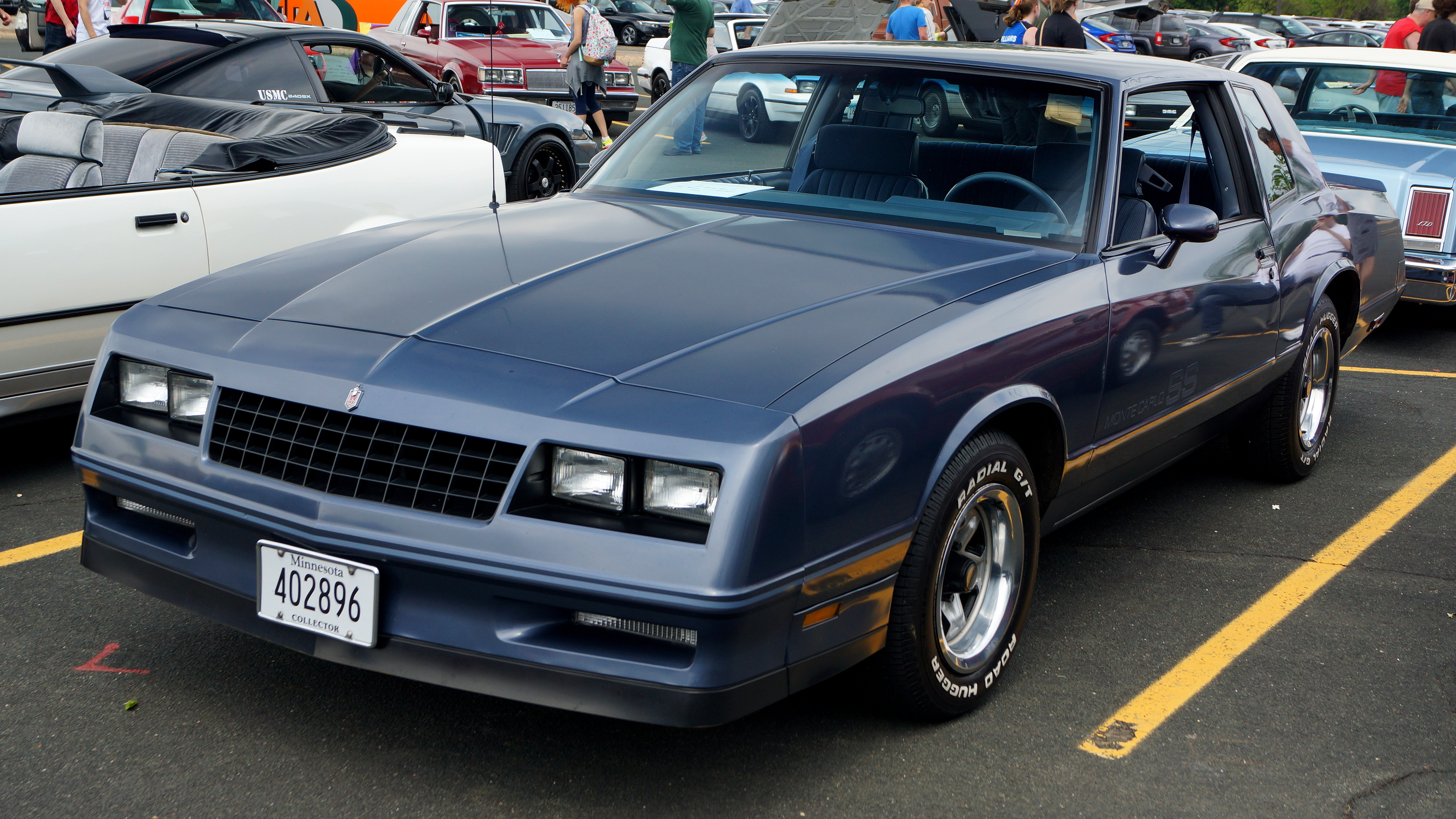
Chevrolet Monte Carlo

"The first ceremony was held on the 25th of May in Monte Carlo. Nelson Mandela gave the team"

The Chevrolet Monte Carlo is a car model made by Chevrolet. In the podcast, the word “Monte Carlo” is used in connection with an event, not just the car itself. The mention is mainly about the name showing up in a motorsport-related story.

Concept

Breakthrough Award

"What did he win? He won the Breakthrough Award. ... Breakthrough Award in 2002."

The Breakthrough Award is an award for someone who made a big leap forward. In racing, it usually means a driver had a standout rise in performance around that time.

Concept

Indy 500

"That's like six years after he won the Indy 500."

The Indy 500 is one of the biggest and most famous races in the United States. It’s a major open-wheel event, and the episode is noting how long after an Indy 500 win the Breakthrough Award happened.

Concept

comeback award

"[1646.4s] A comeback award? [1648.4s] Yeah. [1650.4s] Well, after his two bad years,"

A comeback award is an award for someone who struggled for a while and then improved a lot again. It’s basically a “you bounced back” recognition.

Company

Alpina

"[1692.4s] You are in luck, [1695.4s] because Alpina said it is working on keeping [1698.4s] the A44 in operation."

Alpina is a German company that makes special, performance-focused versions of BMWs. They’re known for making cars that feel fast but still comfortable to drive.

Concept

Formula One team got their own engine

"The winding down, the Formula One team got their own engine, they're trying to sell it, maybe they're not trying to sell it, maybe they just want to keep the money."

In Formula One, teams can run engines supplied by manufacturers or develop/operate their own engine program. When the hosts say the team “got their own engine,” they’re referencing the high-stakes technical effort and cost involved in managing an engine supply/partnership, which can affect performance and budgets.

Concept

F1

"They spend money to race in the WEC, they make money racing in F1, but quite clearly there's an opportunity for them to do something special, and particularly at Le Mans."

F1 is the top level of open-wheel racing with single-seat race cars. Races are usually shorter than endurance events, and teams focus a lot on car setup and performance over a race weekend.

Concept

manufacturers in different series

"When you've got that many manufacturers in different series, they're going to pull out. It's not the end of the world, it's not indicative of anything, apart from the fact that the three-year-old,"

Car companies don’t always race in every series forever. They may leave if the program gets too expensive or doesn’t fit their goals, especially when lots of teams are competing for attention.

Brand

Ferrari

"Look, it's different if you're Ferrari in Formula One, they've been there forever, McLaren, I suppose you could say, similarly."

Ferrari is a famous car company and racing team. In this conversation, it’s mentioned as an example of a team that has been in the sport for a very long time.

Brand

McLaren

"Look, it's different if you're Ferrari in Formula One, they've been there forever, McLaren, I suppose you could say, similarly. They've been pretty much there ever since McLaren's been a team."

McLaren is a well-known racing team in Formula One. The hosts bring it up to show that some teams have been around so long that they’re less affected by short-term changes.

Brand

Williams

"Williams is the same. But ultimately, in motorsport, in all forms of motorsports, the legacy teams, some of them have dropped in and dropped out down through the years..."

Williams is a long-time Formula One team. Here, it’s mentioned as another example of a team that’s been around for a long time.

Concept

hiatus

"Yes, and that brings us to a cessation or a pause, Tim, I think it's been described, isn't it? A hiatus! Oh, very good."

A “hiatus” just means a temporary pause. In racing, it can happen when a team or company takes a break for a while—often because money or priorities are changing.

Topic

Acura motorsport future (ERX/GTP/LMDH)

"Look, it's been banging around for a little while about whether Acura... will continue with their ERX, GTP, LMDH car... They've said that they're going to pause their IMSA programme, but they haven't said they're going to stop completely."

The hosts are talking about Acura’s racing plans and whether they’ll keep running their top endurance prototype program. They mention a pause in IMSA, but not a full stop.

Concept

IMSA programme

"They've said that they're going to pause their IMSA programme, but they haven't said they're going to stop completely."

IMSA is a major racing series in North America. If a team “pauses” its IMSA programme, it means they’re likely taking a break from racing in that series for now.

Concept

GT3 car

"And they don't have a GT3 car at the moment."

GT3 is a racing category for production-based sports cars. If a brand doesn’t have a GT3 car, it means they’re not currently competing in that very common GT racing lane.

Car

Acura NSX

"And they don't have a GT3 car at the moment. The NSX has dropped out of homologation and there doesn't seem to be anything else right now that is going to replace it."

The Acura NSX is a performance road car that Acura also used in racing. Here, they’re saying it stopped being eligible under the rules (“homologation”), so Acura doesn’t currently have a GT race car to replace it.

Concept

homologation

"The NSX has dropped out of homologation and there doesn't seem to be anything else right now that is going to replace it."

Homologation is the process of certifying that a car meets the rules to compete in a specific racing class, typically requiring a production-based connection and compliance with technical regulations. When a car “drops out of homologation,” it can no longer be used in that class, forcing teams to find an alternative.

Concept

FIA WEC competition

"into FIAWEC competition. [2025.4s] But it seems that David Salter and the US organisation"

FIA WEC is a world championship for long-distance races. Cars have to last for hours, so teams plan pit stops and driver changes carefully, not just chase lap times.

Term

endurance racing

"to look after endurance racing. [2085.4s] And as you know, the number 93 car,"

Endurance racing is motorsport focused on completing long races—often with multiple drivers per car—over hours rather than minutes. Success depends heavily on reliability, tire/fuel management, and pit strategy, not just peak performance.

Term

number 93 car

"And as you know, the number 93 car, [2090.4s] I'm sorry, spoiler alert, [2092.4s] the number 93 and the number 60 [2095.4s] are the two cars that run in IMSA."

In racing, each car is assigned a number. The “number 93 car” is just the way they identify one particular entry in the series.

Term

number 60

"[2092.4s] the number 93 and the number 60 [2095.4s] are the two cars that run in IMSA. [2097.4s] The 93 car, when Mayashank came back after"

Like the number 93, the “number 60” is a car’s race number. It’s how the team and car are identified during IMSA events.

Company

Mayashank

"[2097.4s] The 93 car, when Mayashank came back after [2101.4s] their trouble with staying within the rules [2105.4s] at Deer Turner, he says diplomatically,"

This sounds like a racing team name connected to the car number they’re talking about. The exact spelling in the transcript is unclear, so it may be a transcription error.

Term

Deer Turner

"[2101.4s] their trouble with staying within the rules [2105.4s] at Deer Turner, he says diplomatically,"

This is probably the name of a race track where something went wrong with the team. The transcript spelling looks off, so the exact venue should be verified.

Concept

disqualified for not being within the rules

"and winning the race and then being disqualified for not being within the rules."

In racing, there are strict rules. If a team breaks them—sometimes even unintentionally—they can be removed from the results, even after a strong finish.

Company

HPD

"When they came back with Honda, HPD put some people into running one of the cars, and that car was number 93."

HPD is Honda’s racing team and engineering group. They help with things like setup, development, and getting people trained to run the race cars.

Term

V6 engine

"It's a good time to be in sports car racing and that Acura is still a competitive package with the little V6 engine."

A V6 engine has six cylinders arranged in two banks that form a V shape. The idea is that it can make good power without being huge or overly heavy.

Term

2.4, 2.6 engine

"It was a 2.4, 2.6 engine. It runs really well."

Those numbers are the engine size—2.4 liters or 2.6 liters. In racing, engine size can be important because the rules and performance targets depend on it.

Concept

Daytona

"They won Daytona and then they had to give back the prizes."

They’re talking about a big endurance race held at Daytona. Sometimes teams win, but later officials review the car and rules—if something doesn’t comply, the win or prizes can be taken back.

Concept

Asian Le Mans series

"Does that mean that the Asian Le Mans series with potentially, as we know,"

The Asian Le Mans Series is endurance racing in Asia, similar in style to the famous 24 Hours of Le Mans. They’re discussing whether Honda/Acura could end up racing there.

Concept

GTPs

"getting hypercars and therefore LMDH or GTPs, in that, is that an opportunity for those cars?"

GTP is a category of fast race cars used in major endurance racing in North America. It’s basically the “top prototype” class with rules that keep the cars comparable.

Brand

Genesis

"But is your next story going to be about Genesis? Yes. Yes, you can move on to that. Thank you. So there was a strong suspicion that Genesis,"

Genesis is Hyundai’s luxury brand. The hosts are talking about Genesis doing well in racing and using that success to grow its reputation with more customers.

Concept

FAWEC

"as I'm sure we'll talk about later, in the FAWEC, would move into a very big market for them,"

FAWEC here is talking about the big world endurance racing series. It’s the championship where teams race prototype and GT cars over long distances.

Brand

Ford

"We also know Ford isn't coming at least in 2027, and they've made no announcement about whether they will come post 2027,"

Ford is discussed here in the context of whether it will participate in IMSA beyond 2027. Manufacturer commitment is a major factor in endurance racing because it influences budgets, factory support, and the overall depth of the field.

Concept

manufacturer attraction

"but it is a concern for John Dunin and for IMSA that they aren't attracting the top level manufacturers"

They’re basically saying IMSA wants more big-name car companies to race there. When manufacturers show up, it usually means more money, better cars, and a stronger competition.

Brand

Porsche

"yes they've still got Porsche, and that's a big plus, and three Porsches at that with John Church"

Porsche is a well-known sports-car brand from Germany. Here, they’re talking about Porsche teams showing up in endurance racing, which matters because it affects how competitive and attractive the series is.

Concept

golden ticket

"It's an interesting situation and obviously I'm, WEC obviously has the golden ticket obviously with the invitation to the Mon, but the other 51 weeks of the year..."

“Golden ticket” here is a metaphor for a highly valuable invitation or pathway—most likely to the Le Mans 24 Hours—associated with WEC. The hosts imply that this one marquee opportunity drives interest, even if the broader WEC calendar is less attractive.

Brand

Cadillac

"will be Cadillac and Porsche, BMW and Aston Martin. Those are your manufacturers in IMSA."

Cadillac is a car brand that also races in endurance events. When it shows up in a series like IMSA, it usually means they’re bringing serious effort to compete for wins.

Brand

Aston Martin

"Porsche, BMW and Aston Martin. Those are your manufacturers in IMSA."

Aston Martin is a performance car brand that races in endurance events. If it’s one of the IMSA manufacturers, it generally means they’re taking the series seriously and aiming to compete.

Brand

Alpine

"Obviously some of the teams who are into WEC don't have a massive footprint in the States, you know, Alpine being a very good example."

Alpine is a car brand that races at the highest levels of endurance competition. The point here is that some brands are more focused outside the U.S., so entering U.S. racing programs can be harder.

Concept

hypercar teams

"I think there is a natural resistance by the original hypercar teams, not the LMH teams. I don't think you're going to see Toyota or Ferrari come out, just for balanced reasons."

“Hypercar” here means the top-level, most advanced race cars in endurance racing. The idea is that the biggest manufacturers in that class may be cautious about where they race and why.

Concept

LMH

"I think there is a natural resistance by the original hypercar teams, not the LMH teams."

LMH stands for Le Mans Hypercar, the FIA WEC top prototype rule set introduced to create a bridge between different endurance prototype philosophies. The hosts contrast “original hypercar teams” with “not the LMH teams,” implying different manufacturer motivations and competitive dynamics within the hypercar landscape.

Concept

Le Mans entry

"I understand though, why they would start in the WAC, because that's the only way that they can guarantee their Le Mans entry."

This is about getting a car officially allowed to race at Le Mans. Because racing has rules for who can enter, teams sometimes choose specific events first to make sure they qualify.

Topic

WAC

"I understand though, why they would start in the WAC, because that's the only way that they can guarantee their Le Mans entry."

They’re talking about a specific racing series or event (“WAC”) that teams use as a stepping stone. The idea is that doing it helps them get into Le Mans.

Concept

sub resets in the race

"[2654.4s] where you have lots of chances [2656.4s] for sub resets in the race, [2657.4s] where you've got lots more track time, [2659.4s] it's not completely crowded the whole time"

In long races, there are sometimes interruptions that cause teams to reset their plan. Even if it’s not a full restart, it can change when you pit and how you manage the car.

Concept

marginal gain

"[2681.4s] I think. [2682.4s] Unless, [2684.4s] you're a motor manufacturer [2687.4s] which has already entered [2690.4s] in a bigger series [2693.4s] in the same market [2695.4s] because then your marginal gain is tiny."

“Marginal gain” just means “a little extra benefit.” If a company is already racing where the audience is, adding another race might not move the needle much.

Topic

NASCAR

"you're talking about NASCAR aren't you? ... That's not a question, NASCAR, by the way."

NASCAR is a popular kind of auto racing in the U.S., mostly on oval tracks. The cars and the fans tend to be different from other racing series, like sports car racing.

Topic

INSA

"because there is zero overlap between NASCAR and INSA."

The transcript says “INSA,” but it’s probably talking about IMSA, a North American sports-car racing series. IMSA races are usually on road courses and often feel more like endurance racing than NASCAR’s oval-track style.

Concept

demographic of the sport

"I think the demographic of the sport, ... it's called now, X, flooded with people saying I watch every race and I watch every NASCAR race,"

Different racing series attract different kinds of fans. Even if both are about cars, the racing style and events can make them feel completely different.

Term

X

"get Twitter, where it's called now, X, flooded with people saying"

“X” is the name Twitter uses now. The hosts mention it because people post about what races they watch, which can show how different fan groups overlap.

Topic

baseball and NFL

"Right, so, it's like baseball and NFL."

They’re comparing NASCAR vs another racing series to how baseball and football (NFL) are both sports but have different fan cultures. The point is that fans often don’t cross over as much as you’d expect.

Topic

GT4

"...both in IMSA, where the tech sports car championship and in GT4 and in Mustang Challenge with the Ford Mustang."

GT4 is a racing category for cars that are based on models you could buy. The rules limit performance so different cars can compete more evenly.

Car

Ford Mustang

"...and in GT4 and in Mustang Challenge with the Ford Mustang. I've spent 10 days driving a Mustang dark horse in Europe"

The Ford Mustang is a popular sports car from Ford. Here, they’re talking about it being used in a racing series called the Mustang Challenge, where teams compete using Mustangs.

Term

carbon fiber

"...that bright red racing red Mustang with all the carbon fiber, with the dark horse race kit on it..."

Carbon fiber is a strong, lightweight material. On cars, it’s often used to make parts lighter and to give that high-performance, race-inspired look.

Topic

Formula One with Red Bull and its sports car program

"...it has to sell using something else. And that's Formula One with Red Bull and its sports car program."

Formula One is a major world racing series, and Red Bull is a big name in it. The host is saying that outside the U.S., brands often use F1 and related racing programs to build recognition and sell cars.

Concept

horses for courses

"when I've been talking about a Mustang, horses for courses."

It’s a saying that means not everything is best for every situation. Different people and places want different things, so the “best” choice depends on the context.

Topic

IndyCar

"They've decided that they've seen opportunity within IndyCar, which is on the up in the States at the moment."

IndyCar is a major U.S. racing league for open-wheel race cars. It’s the kind of series teams look at when they think there’s more opportunity or momentum.

Concept

privateers

"they're looking to turn their cars over to privateers. [2920.4s] over to privateers."

A privateer is a racing team that isn’t run by the car maker itself. They may get cars from the manufacturer, then do the racing and logistics on their own.

Concept

linear for Imza

"[2963.4s] 2027 might be a linear [2965.4s] for Imza, but surely Ford and Genesis will join [2967.4s] in 2028."

This sounds like they’re talking about timing—when a team or brand might join a series or start a program. The exact wording is unclear, but the idea is about future plans.

Car

Corvette

"I remember what Doug Feehan used to say to me when he was looking after Corvette. Now, all right, Corvette World Racing at the time, he said, as long as we keep getting our entries for Le Mans, that's all I care about."

A Corvette is a Chevrolet sports car. Here, they’re talking about how Corvette racing programs focused on getting entries to major endurance races like Le Mans.

Concept

WEC entry

"And so long as they could do that without having to have a WEC entry, then we're going to keep doing it."

WEC is a racing series for endurance cars. They’re saying the team wanted to race Le Mans, and ideally didn’t have to join the whole WEC schedule to do it.

Concept

road car research and development

"but honestly, I think for their sports car program look at how much effort they put into taking those Mustangs to Le Mans."

This is about the engineering work companies do to build cars that people actually drive every day. The point being made is that you can often tell how serious a company is by what they invest in engineering, not just what they advertise.

Car

Ford F150S

"Where do you want to go Tim next? Let's point out that since we started this show Ford have sold about 1200 F-150s in North America alone."

The Ford F-150 is a super-popular pickup truck. The hosts are basically saying Ford doesn’t need to push it in Europe because they already sell as many as they can make in North America.

Car

F-150 Raptor

"They can sell every F-150 including the 700 horsepower plus Raptor that IMSA use for the MG safety teams which gets them there quicker than the speed of light it would appear at the weekends"

The Raptor is the off-road version of the Ford F-150. It’s meant to handle rough trails better than a normal pickup, and the episode is pointing out how Ford uses that capability around racing.

Concept

World Rally Rade Championship

"They're doing the off-road stuff. They're doing the W-2RC the World Rally Rade Championship, sorry. That's the nomenclature for people who are in it."

This is a rally series for long-distance off-road racing. The hosts are mentioning it to show Ford is investing in off-road motorsport, not just cars on pavement.

Concept

W-2RC

"They're doing the off-road stuff. They're doing the W-2RC the World Rally Rade Championship, sorry. That's the nomenclature for people who are in it."

“W-2RC” is just a short way of saying the rally-raid championship name. The hosts are explaining that it’s the kind of shorthand insiders use.

Topic

World Rally Championship (WRC)

"World Rally Rade Championship with the Bronco. ... They're still sort of doing WRC although bizarrely they're not supporting that as much as everything else."

WRC is a big international rally racing series. Cars race against the clock on different road surfaces like gravel or snow, and teams build special rally cars for it.

Car

Ford Bronco

"World Rally Rade Championship with the Bronco. They are doing all kinds ..."

The Bronco is a Ford SUV, and in racing it gets turned into a special off-road competition car. That means big suspension changes, stronger parts, and tuning for rough terrain.

Topic

Dakar

"... which takes in Dakar as well of course. They're doing all kinds of other stuff."

Dakar is a famous off-road race that covers huge distances. It’s tough not just because of the terrain, but also because you have to navigate carefully.

Company

Malcolm Wilson

"And Malcolm Wilson therefore is the entrant on that for the Puma."

Malcolm Wilson is a prominent rally team principal, best known for running M-Sport, a major force in rallying. When the transcript says he’s the entrant for the Puma, it implies his team is fielding cars in that rally program.

Concept

works effort

"Do I think they will end up in IMSA with a works effort? I'm not sure."

A “works effort” means the car company itself is really involved in the racing. Instead of just selling cars to a team, the manufacturer helps develop and support the race program.

Topic

IMS series

"when Acura first went to what was then the IMS series they cast about for teams to run their cars..."

“IMS series” is the name of the racing competition being talked about. The hosts are explaining how Acura tried to get teams to run its cars in that specific series.

Company

Gilda Farron

"...we had a number of teams Gilda Farron and Andretti Racing ended up running the cars."

“Gilda Farron” is mentioned as one of the teams that ended up running the cars. The context suggests it was part of the group Acura partnered with for the racing program.

Company

Andretti Racing

"...a number of teams Gilda Farron and Andretti Racing ended up running the cars."

Andretti Racing is a racing team name mentioned here as one of the groups that actually ran the cars. In these deals, the team does the racing work while the manufacturer helps with the car and technical support.

Concept

running budget

"...the behind the scenes deals that sometimes don't happen and the running budget you had to raise yourself. I could see Ford doing that."

A “running budget” is the ongoing money a racing team needs to actually run the car every race. It covers things like getting to events, maintaining the car, and paying the people who keep it running.

Concept

IMSA WeatherTech SportsCar Championship

"I'm going to who's not in IMSA? Who should be in IMSA? Chip Ganassi, maybe."

This is IMSA’s main sports-car racing series in the U.S. Multiple types of cars race together, so it’s not just one “winner-takes-all” class.

Company

Chip Ganassi

"Chip Ganassi, maybe. Who runs Ford's in NASCAR?"

Chip Ganassi is a major name in racing team ownership. The discussion is basically asking whether a team like that should also be in IMSA.

Concept

FIA World Endurance Championship (FIA WEC)

"We're going to do a year in FIAWC and at Le Mans first to gain some data."

FIA WEC is a worldwide endurance racing series. Teams race long-distance events—often with different car types—so they can learn how their cars perform over time.

Concept

GT cars

"...racing in GT cars at the weekend that's not because they're going to be in GT cars that's because they're learning about WEC."

GT cars are race versions of cars you could buy, but modified for racing. In endurance events, they have to last and stay consistent for a long time, not just be fast for a few laps.

Concept

strategy

"and a style of racing that generally speaking ends up being closer at the end of a race then you've got more of a chance to work the strategy whereas when you have three and a half hours of green flag racing"

Strategy is the team’s plan for how to run the race. It includes when to pit, what tires to use, and how to manage fuel so you finish in the best position.

Concept

green flag racing

"whereas when you have three and a half hours of green flag racing as we did at IMSA at the weekend"

Green flag racing is when cars are racing normally, not slowed down by cautions. If the race stays green for a long time, it’s tougher to make up time after a mistake.

Concept

drive through

"then you know if you get the drive through as teams did it's really hard after you've made that mistake to come back from it"

A drive-through is a penalty where you have to go through the pit lane slowly. It costs time, so if you get it during a long race, it can be hard to get back to where you were.

Concept

American Le Mans series

"did the American Le Mans series have the words Le Mans in its name because Dr. Pianos... wanted to create a series that embraced the sporting and historical background of the 24 hours at Le Mans"

The American Le Mans Series was a racing series in the U.S. that was designed to feel like the famous endurance races from Le Mans. It was meant to bring the same kind of long-distance, sports-car racing to America.

Topic

24 hours at Le Mans

"embraced the sporting and historical background of the 24 hours at Le Mans which is what you're getting at Le Mans exactly"

The 24 Hours of Le Mans is a race where teams compete for an entire day. Cars have to last, and teams have to plan driving and repairs carefully.

Topic

IMSA races

"if they're NASCAR fans will also watch IMSA races well yes yes"

IMSA is a big U.S. sports-car racing series. If someone likes NASCAR, they might also watch IMSA because it’s another major motorsport category with lots of action.

Brand

Toyota

"is that Toyota offered cars to Lexus in the US and the cars were offered for free"

Toyota is the company behind the racing program being discussed. Here, they’re talking about how Toyota’s racing support would be connected to Lexus in the US.

Brand

Lexus

"Toyota offered cars to Lexus in the US and the cars were offered for free"

Lexus is Toyota’s luxury brand. The hosts are saying Lexus could be the US “front” for the racing cars, even if the technical help comes from Toyota’s racing team.

Term

TR-O10

"that the TR-O10 could race in IMSA"

The TR-O10 is Toyota’s endurance racing prototype referenced here as a car that could compete in IMSA. It’s mentioned as a specific machine, implying it’s built to the relevant prototype rules and performance envelope for US endurance racing.

Concept

homologated

"it's been homologated at Winchia which all of the IMSA cars are as well now as they've all been re-homologated between last season and this season"

Homologation is basically “official approval” for a race car to be allowed in a certain racing series. If rules change, the car may need to be re-approved (re-homologated) so it still qualifies.

Concept

running costs

"but it's about running costs and whether it makes sense for the American arms of the manufacturer to do something with those Ferrari"

Running costs are the day-to-day expenses of keeping a race car competing. Even if you can enter a car, the real question is whether you can afford to keep it running and meeting the rules.

Company

Altman Topcars

"and a number of they were the Altman Topcars and they were incredible"

Altman Topcars sounds like a racing-related group or program. The hosts are saying it was part of what made the cars or racing “incredible,” but they don’t explain more in this snippet.

Concept

tournament

"your thoughts on how to expect your tournament please do we go into the second hour now"

They’re talking about a competition with a schedule—like multiple parts or sessions. In racing, how the event is structured can change what teams and drivers focus on.

Term

WBC

"sorry in sports cars, in WBC"

WBC is referenced in the phrase “in sports cars, in WBC,” implying a specific racing category or series abbreviation. However, the transcript segment doesn’t expand what WBC stands for, so listeners may need clarification to connect it to the correct championship.

Car

Ford Capri

"Zach Brown bought a Ford Capri off Sean Lynn and didn't get the deal he wanted"

The Ford Capri is an older Ford sports car that people still love today. Here, they’re talking about someone buying one, likely for classic-car/historic use.

Topic

historic racing

"an old RS31 presumably for historic racing it's midweek motorsport"

Historic racing is racing with older cars, usually in events that keep them close to how they were back in the day. The Capri being mentioned “presumably for historic racing” suggests it’s for that kind of track use.

Car

Porsche Carrera

"we'll be talking about the Italian Porsche Carrera Cup with a driver that we've"

The Porsche Carrera RS is a high-performance version of the 911 designed to be more track-focused. The podcast brings it up while talking about a Porsche racing series in Italy. That’s because the Carrera RS name is strongly tied to Porsche’s racing history.

Topic

F1 news

"we'll have Nick with some more F1 news more of your tweets or exes on ad specutairmen"

F1 refers to Formula 1, motorsport’s top-level open-wheel racing. “F1 news” indicates the hosts are switching to current developments—typically race results, driver/team updates, or technical rule changes.

Topic

rallying

"we can cross over to the Canary Islands and have a bit of rallying on midweek motorsport next here on RS1"

Rallying is racing on special timed sections, often on mixed road surfaces. It’s different from track racing because the grip and surface change a lot.

Brand

RS1

"next here on RS1 [3729.4s] midweek motorsport"

RS1 is the name of the radio station carrying the show. It doesn’t affect the car content, but it tells you where you’re listening.

Topic

service park

"[3753.4s] in Gran Canaria [3755.4s] so we literally just arrived [3757.4s] in the service park 15 minutes ago [3759.4s] and getting ready"

A service park is the controlled area at a rally event where teams bring cars in for maintenance, repairs, and setup changes between stages. Rally teams use it to swap parts, adjust setups, and keep the car reliable over rough, high-stress driving.

Topic

Portugal

"some of the stuff that we're working on at the moment won't come out until the next round in Portugal"

They’re talking about a specific race event in Portugal, and rally cars often need different setups depending on the roads and weather.

Topic

gravel

"once we get back onto the gravel for the second half of the season we should be in a good place"

Gravel is loose and slippery, so the car handles differently than on smooth pavement. Drivers and teams adjust the car’s setup to get better traction.

Concept

development of cars

"and so we're used to watching development of cars and evolution of cars in that scenario"

In racing, teams don’t just build a car and hope for the best. They keep improving it during the season based on what they learn from races and testing.

Concept

evolution of cars

"we're used to watching development of cars and evolution of cars in that scenario"

“Evolution of cars” just means the car gets better as the team learns—usually through upgrades and setup changes over time.

Concept

rally cars

"is it a similar sort of process in terms of rally cars"

Rally cars are made for rough, changing roads instead of one continuous track. They’re set up to handle bumps, loose surfaces, and lots of hard driving over many stages.

Concept

setup of the car

"[3865.4s] so we're constantly evolving the setup of the car [3869.4s] and that's primarily [3871.4s] where the development [3873.4s] of work is being done in how the drivers [3875.4s] feel and how [3877.4s] the car reacts in the specific conditions"

“Car setup” means tuning the car for the track and weather. In rallying, the surface can change quickly, so the team tweaks the car so it drives the way the driver expects.

Concept

old safari rally

"what we used to call the old safari rally to a smoother tarmac rally"

The “Safari Rally” is historically associated with rougher, more rugged terrain and a different driving challenge than modern, smoother tarmac-focused events. The transcript contrasts it with tarmac rallies, implying changes in surface and vehicle setup over time.

Concept

rotate shells around

"like NASCAR do they rotate shells around"

“Rotate shells around” means swapping the car’s outer structure between entries or events. Teams do this to keep cars running and to manage repairs or rules, even if the underlying setup changes.

Concept

super speedway car

"they have a super speedway car a short oval car and what they would call a circuit car"

A super speedway car is built to go fast and stay stable on huge oval tracks. The setup is different from cars meant for twisty road courses because the track demands lots of aerodynamic stability.

Concept

short oval car

"they have a super speedway car a short oval car and what they would call a circuit car"

A short oval car is set up for shorter oval tracks with more frequent turns. Because the corners come faster and tighter, the car’s balance and grip characteristics are tuned differently than for the biggest speedways.

Concept

circuit car

"what they would call a circuit car a natural terrain road circuit car"

A circuit car is meant for road-course racing—tracks with repeated laps and lots of cornering and braking. It’s different from oval cars and rally cars because the driving demands are different.

Concept

monocoque

"are you working on the same basic monocoque all the time we have different chassis for the season"

A monocoque is basically a car where the body shell is the main “skeleton.” Instead of a heavy frame underneath, the shell is built to handle the forces of racing. Teams can still change the chassis setup from event to event.

Concept

tarmac stages

"Mary Island is super smooth very little pollution on the stages and these are high speed tarmac stages"

Tarmac stages are the rally’s timed sections on pavement. Because pavement grips differently than gravel or dirt, the car setup and tires have to be chosen to match that surface.

Concept

chassis in rotation

"so we do have chassis in rotation but they're not dedicated between different surfaces"

“Chassis in rotation” means the team uses more than one car frame for different rallies. That way, if one gets beat up or needs different setup, they can swap to another car instead of starting from scratch.

Concept

compromise

"but it's the compromise that we have to have in order to be able to have the variance that we have in the world rally championship"

Because rallies are different, teams can’t make one setup that’s perfect everywhere. They choose a middle-ground setup so the car still performs well when the surface changes.

Topic

TCR

"that seems very different from the TCR or the 24 hour the Nürburgring which we see your cars at"

TCR is a type of race series for touring cars. The hosts bring it up to compare how different kinds of racing want different car behavior.

Topic

24 hour the Nürburgring

"that seems very different from the TCR or the 24 hour the Nürburgring which we see your cars at"

The “24 hour Nürburgring” is an endurance race where cars must run for a full day, emphasizing reliability, driver stints, and consistent performance. It’s contrasted with rallying to show how endurance demands a different kind of car setup and strategy.

Concept

tarmac rally

"Monte Carlo which normally is a tarmac rally to be said this year it wasn't ... Croatia is a fairly clean tarmac rally"

A tarmac rally means the race is on paved roads. The tires usually get more predictable grip than on gravel or snow, so the car setup and driving focus can be different.

Topic

snow rally

"the second event we go up to north of Sweden to do the snow rally"

A snow rally is when the race is on snow or ice. Cars can’t grip the road the same way, so tires and driving technique have to be adapted for safety and speed.

Topic

Croatia

"and the final of the quartet is Croatia which again normally Croatia is a fairly clean tarmac rally although this year with the new stages that were introduced"

Croatia is another rally stop in the season. It’s often more tarmac-like, but if they introduce new stages, teams have to relearn the route and adjust their setup.

Term

Rally One

"[4041.4s] the rally one car [4043.4s] which is what runs at the front"

Rally One is the top rules package for modern WRC cars. It sets the big technical guidelines so the cars are comparable and built for the same kind of rally racing.

Car

Hyundai i20 N

"[4045.4s] of the WRC [4047.4s] is the i20N [4049.4s] it's purely internal combustion engine"

The Hyundai i20 N is a rally car Hyundai uses for the World Rally Championship. It’s built so the engine can keep working reliably through rough stages, not just for one fast run.

Term

1600 cc turbocharged in-line 4

"[4053.4s] now [4053.4s] 1600 cc turbocharged [4055.4s] in line 4"

This describes the engine: it’s a 1.6-liter, four-cylinder layout, and it uses a turbo to make more power. The turbo helps the engine feel stronger, especially when you need quick acceleration out of corners.

Concept

WRC-spec dedicated engine block and head

"[4077.4s] it is a global race engine base [4079.4s] so it's a dedicated block [4081.4s] dedicated head"

They’re saying the engine’s main parts (the block and the head) are built specifically for rally racing. That helps the engine survive hard use and keep running reliably event after event.

Concept

Reliability as a key engine attribute

"[4083.4s] and it's [4085.4s] key attribute is its reliability [4087.4s] in terms of power"

They’re saying the engine is built to last. In rally racing, you don’t just need to be fast—you need to keep running through rough roads and long days.

Concept

overheating risk from blocked cooling

"when we block the radiators with the mud we ran pretty hot these cars ran pretty hot for a very long time ... they came back and they fired up again"

If dirt or mud blocks the radiator, the engine can’t cool down properly. That can make the engine run hot for a long time, which is risky. The interesting part here is that the cars still survived and could keep going.

Term

radiators

"when we block the radiators with the mud we ran pretty hot"

A radiator helps your engine stay cool by moving heat out of the engine coolant. If mud blocks the radiator, the engine can’t shed heat as well and it runs hotter. In extreme conditions, that can stress the engine.

Term

120, 125

"we wouldn't be able to cope with that level of temperature in excess of 120, 125 but they they did, they came back"

Those numbers are probably the engine’s temperature range. They expected the cars to overheat if they got hotter than that, but the engines handled it anyway. It shows the cooling system and engine strength were up to the task.

Concept

engine usage rules in World Rally Championship

"so in terms of the championship we have two engines for the year first 14 world championship rallies we can only use a third engine if we have a retirement"

Rally racing doesn’t just reward speed—it also has rules about how many engines you’re allowed to use. If you use too many, you can get penalized or disqualified. So teams have to plan ahead and keep the engine alive for as many events as possible.

Concept

stage mileage vs road mileage

"when rallies were a lot longer and covered longer distances both in road mileage and in stage mileage"

Rallies have two kinds of driving distance. “Stages” are the timed race sections, while “road” mileage is the travel between stages, and it still uses up tires, brakes, and engine hours.

Concept

WRC rally 1 vs rally 2 engine rules

"Andrew it's a huge amount of work and I think it's one of the things that we really appreciate in the rally 2 class you can change the engine every rally but in rally 1 you have to do the whole you have to do season with two engines"

They’re talking about different rally categories and how often you’re allowed to change the engine. One category lets teams change engines more often, while the other forces teams to use the same engines for longer, so reliability matters a lot.

Concept

WRC (World Rally Championship) engine usage over a season

"I remember when I started in WRC the rallies weren't much longer and we were using one rally one engine which multiplied by three cars equaled a lot of engines through the year"

The speaker explains how WRC engine allocation changed over time: earlier they used one rally per engine, and with multiple cars that multiplied the number of engines needed across the year. The key takeaway is that modern rules and higher demands make engine and parts budgeting a major part of team strategy.

Concept

managing engine life / parts life

"but now it's very much a question of trying to manage the life of the parts and manage the life of the engine"

This describes the shift from “use it until it breaks” toward planned durability management. Modern rallying increasingly focuses on extending component service life—especially the engine—because regulations and budgets limit how many replacements are allowed.

Concept

tactically plan engine choice by conditions and timing

"[4193.4s] because you do have to think ahead [4195.4s] there are different types of events [4197.4s] different conditions that we're going to have in the year [4199.4s] and so you have to tactically try and make sure [4201.4s] you have the best engine [4203.4s] for the best condition at the best time"

They describe a strategy problem: selecting the best engine setup for the expected conditions and timing across the season. This is essentially reliability/performance management—choosing when to use which engine configuration so it survives the scheduled distance and event demands.

Concept

engine allowance / ancillaries allowance

"[4205.4s] and that puts an alarm [4207.4s] is that allowance to those two engines [4209.4s] that's the ancillaries as well [4211.4s] so things like turbos and things like that"

The hosts mention an “allowance” that determines what can be changed between events—contrasting the sealed core with other components (“ancillaries”). In motorsport, this kind of allowance typically defines which parts can be serviced, modified, or swapped to manage reliability and performance.

Term

turbos

"[4207.4s] is that allowance to those two engines [4209.4s] that's the ancillaries as well [4211.4s] so things like turbos and things like that"

A turbocharger is a device that uses exhaust gases to spin a turbine and force more air into the engine. In racing, rules often control what you’re allowed to change, so turbos can sometimes be modified even when other engine parts are locked down.

Concept

sealed engine components

"[4223.4s] so in terms of [4225.4s] you're talking about the core [4227.4s] you're talking about the parts of the engine [4229.4s] that are sealed from start [4231.4s] so basically you seal ahead to the block [4233.4s] and then you can't change [4235.4s] those core components"

In some racing series, the engine is “sealed,” meaning certain internal parts can’t be taken apart or replaced. The goal is to stop teams from constantly rebuilding engines and to make the competition more even.

Concept

endurance in WRC

"so it's one of the things that is there is still an element of endurance in WRC it's not all sprint"

“Endurance” here refers to the ability to keep the car operating over long, demanding rally days and many stages. Even though rally events include fast bursts, the cumulative stress makes durability a performance factor.

Car

Genesis Magma

"that the Genesis Magma WEC prototype a hypercar that we saw debuting at Imola at the weekend"

Genesis Magma is a Genesis hypercar concept. The hosts are saying its engine ideas come from rally racing know-how, then get adapted for a prototype-style hypercar.

Concept

rallycar engine block

"used the rallycar engine block and base and knowledge as their base"

They’re saying the hypercar’s engine starts from parts used in rally racing. Rally engines are designed to handle rough, demanding conditions, so that experience can help when building a new race engine.

Concept

design principle of that engine

"I think that's one of the you know I think that the design principle of that engine was based around the same core"

They’re talking about the basic idea behind how the engine is designed. Even if two engines look different in practice, they can share the same fundamental goals and layout.

Term

common components

"but there is a lot of common components"

Common components are parts that are reused across different race programs. That can make development faster and cheaper, while still letting the team customize the rest for the car’s mission.

Concept

global race engine

"because effectively there's a global race engine in there as well so it's one of the key areas of development"

When they say “global race engine,” they mean the racing engine is designed to work across different places and programs. That way the team can improve it in one place and use the results everywhere.

Concept

powertrain department

"is ensuring that the powertrain department in Offenbach is as well equipped as possible to work on a number of different projects as we go forward"

The powertrain department covers the vehicle’s drivetrain systems—typically the engine, transmission, and how power is delivered to the wheels. In motorsport, this group is crucial because small changes in drivability and efficiency can have big effects on lap time and reliability.

Company

Offenbach

"is ensuring that the powertrain department in Offenbach is as well equipped as possible to work on a number of different projects"

Offenbach refers to a location (in Germany) where Hyundai’s powertrain development work is being coordinated. In motorsport, facility capability matters because it determines how quickly the team can design, test, and iterate on drivetrain components.

Concept

rotating through some drivers

"you're rotating through some drivers for part of your program it's Adrian Formore who is your best pace driver in the championship"

Driver rotation in a rally program means using different drivers across events to match experience, development goals, or availability. It can help the team gather more data and evaluate setups, but it also affects consistency because each driver can prefer different car behavior.

Concept

final year of the current set of regulations

"at the moment this is the final year of the current set of regulations for rally one"

Racing rules change on a schedule. In the last year before new rules, teams try to get the best results with the current car setup.

Concept

Rally two

"to ask a young driver to step out of a rally two car and jump into a rally one car"

Rally Two is a step below the top rally class. Drivers often use it to build experience before trying the faster, tougher top category.

Concept

world championship

"drivers that are capable of fighting at the very front of the world championship"

A world championship is the season-long competition where drivers race across many events to win the overall title. Being at the front consistently means you can perform well every weekend, not just occasionally.

Concept

free reign to go flat out

"give them the basically a free reign to go flat out"

“Go flat out” means driving as hard as possible. In rally, that can be exciting but also risky, because pushing too much can lead to errors or damage.

Concept

third driver scenario

"[4553.4s] in Portugal where again another [4555.4s] element of the third driver scenario [4557.4s] comes into play whereby providing Danny doesn't win this rally"

Sometimes a rally team has more than one driver, and the “third driver” is the one who steps in under certain conditions. The team’s strategy can change depending on who drives, because starting position and momentum matter a lot in rally stages.

Concept

starting in a very favorable position

"[4563.4s] but providing Danny doesn't win this rally [4565.4s] he should be starting [4567.4s] in a very favorable position [4569.4s] in Portugal and that's a rally where Danny"

In rallying, where you start can affect how good the road surface is. If you start in a better spot, the car may have more grip and fewer obstacles, so it’s easier to drive fast from the beginning.

Concept

running lower down the road on the first day can be beneficial

"[4575.4s] because running lower down the road [4577.4s] on the first day can be beneficial [4579.4s] to the extent that it can help him [4581.4s] to be in a good place from the second day"

In rally stages, the order you go can change how the road behaves. Going later can sometimes mean better grip or a more predictable line, which can help you carry speed into the next day.

Concept

rally winner in the third car

"[4585.4s] you know there is a number of different reasons [4587.4s] why we went with that [4589.4s] specific policy [4591.4s] you know we're very clear [4593.4s] the best policy is to have a rally winner [4593.4s] in the third car"

They’re talking about a team rule for how they assign drivers/cars. The idea is that the team thinks the best chance to win is when the top driver is placed in the “third car,” not just any car.

Concept

endurance qualities

"...they showed their longevity and their endurance qualities in what was a ridiculous rally in some respects..."

Endurance qualities means the car can handle a tough rally for a long time without breaking down. It’s not just speed for one moment—it’s staying strong stage after stage.

Concept

remarkable reliability

"this year we did have remarkable reliability you know the team did an incredible job of making sure that every time the car went out of service it was back to 100%"

“Reliability” means the car keeps working instead of breaking down. In a rally, that’s especially important because the event is long and rough, and repairs have to be done fast.

Concept

every time the car went out of service it was back to 100%

"you know the team did an incredible job of making sure that every time the car went out of service it was back to 100% and that's difficult"

“Out of service” means the car had to stop for work—like repairs or maintenance. “Back to 100%” means the team got it fully ready again, not just barely running.

Concept

manufacturer points

"...we wanted to get good manufacturer points because Takimoto wasn't entered for manufacturer points but there was always in the back of the mind... you did pick up the 25 points as Takimoto wasn't registered for his manufacturer..."

In many racing series, the cars compete, but the championship also tracks the car makers. “Manufacturer points” are the points the brand earns from race results. If a driver isn’t entered/registered to score for that brand, their finish might not add to the brand’s points.

Topic

14 rounds of the championship

"we have very clear targets for every event on the 14 rounds of the championship"

A championship is usually made up of several race weekends. “14 rounds” means there are 14 separate events, and your overall result depends on how you do across all of them.

Concept

consolidate performance

"this weekend is going to be one of our events where we consolidate performance where we make zero mistakes"

“Consolidate performance” means focusing on extracting the best repeatable results rather than taking big risks. In racing terms, it often translates to stable setup, disciplined driving, and minimizing mistakes to maximize points.

Concept

multiple classes / class entries

"at the Nurburgring 24 you've got three cars entered across two classes there this year"

In endurance racing, different kinds of race cars can share the same track at the same time. They’re usually judged within their own group/class, not just against every car overall.

Term

SP4T

"you've got a pair of Elantras in the SP4T classes as well as the TCR car"

SP4T is a race class—basically a way to group cars with similar rules and performance. The hosts are saying the Elantras are racing in that specific class.

Car

Hyundai Elantra

"you've got a pair of Elantras in the SP4T classes"

They’re talking about a Hyundai Elantra that’s been turned into a race car. In racing, the car is modified to fit the rules of its class so it can compete fairly.

Topic

Nürburgring team

"but I'm afraid I can take episodes in none of the credit for that team that is absolutely Benoit that you need to be speaking to for the Nurburgring team"

They’re talking about the people Hyundai uses to race at the Nürburgring. Endurance racing is complex, so teams are organized specifically to handle that track and event.

Concept

Nürburgring 24

"yeah absolutely Nurburgring 24 is a core of Hyundai's motorsport activities"

The Nürburgring 24 is a famous 24-hour race in Germany. Cars have to keep running for a whole day, so it’s as much about durability and teamwork as speed.

Concept

N brand

"that's in celebration of the fact that the N brand for Hyundai is based after Namyang the test track in South Korea but the spiritual home of the N brand is the Nurburgring"

Hyundai’s “N” is their performance brand. They’re saying it’s inspired by testing at their home track in Korea and by the Nürburgring in Germany.

Concept

Namyang test track

"the N brand for Hyundai is based after Namyang the test track in South Korea"

Namyang is Hyundai’s testing location in South Korea. It’s where they develop and check cars before taking that knowledge to races.

Concept

livery

"this year we are doing something slightly different with the livery on the WRC car we have around 8 or 10 special liveries over the course of the year that are particularly relevant to specific events"

A livery is the car’s artwork—its paint and stickers. In racing, teams change the livery for certain events, so fans can tell which rally or theme the car is representing.

Concept

WRC car

"this year we are doing something slightly different with the livery on the WRC car we have around 8 or 10 special liveries over the course of the year"

WRC is the World Rally Championship, where cars compete on timed stages over roads and surfaces that change a lot. A “livery” is the car’s paint and graphics, and they’re saying they’ll use different themed designs for different rally events.

Car

Hyundai i40

"[5027.4s] with the N brand [5029.4s] out of it when we buy [5031.4s] an i20 or an i40"

The Hyundai i40 is a bigger Hyundai than the i20. The discussion is basically about whether racing tech and know-how trickle down into regular cars like this.

Car

Hyundai i20

"[5027.4s] with the N brand [5029.4s] out of it when we buy [5031.4s] an i20 or an i40"

The Hyundai i20 is a compact hatchback model line. The segment connects it to the idea of “technology knowledge transfer” from motorsport, implying that racing-derived development can influence everyday road cars.

Concept

technology knowledge transfer

"[5031.4s] and indeed TCR [5049.4s] I think it's across the board"

“Technology knowledge transfer” is the idea that engineering lessons from motorsport—like chassis tuning, cooling, durability, and powertrain calibration—carry over into production vehicles. The segment frames this as a reason to care about Hyundai’s racing involvement.

Concept

road to track technology

"we were asking this question where is the road to track technology ... what we're looking for from Shell ... efficiency translates into the road cars differently"

“Road to track technology” means car tech ideas get tested in racing and then brought back to regular cars. Racing is a tough environment, so it helps prove what works. The hosts explain that the efficiency you chase in racing shows up differently in road cars—mainly through lower emissions and better fuel economy.

Term

efficiency

"what we can do in motor racing we're looking for efficiency ... the efficiency in the road cars is looking for efficiency in terms of emissions regulations ... fuel economy"

Efficiency here means using less energy to do the same job—usually less fuel for the same driving performance. The hosts are saying racing teams work on efficiency too, but road cars use it to meet rules about pollution and to help you get better gas mileage.

Term

emissions regulations

"the efficiency translates into the road cars differently the efficiency in the road cars is looking for efficiency in terms of emissions regulations"

Emissions regulations are laws that limit how dirty a car can be. They force automakers to design engines and exhaust systems so the car produces fewer harmful gases. The hosts mention them to explain why “efficiency” on the road is about more than just speed.

Term

fuel economy

"the efficiency in the road cars is looking for efficiency in terms of emissions regulations ... in terms of fuel economy"

Fuel economy means how far you can drive on a given amount of fuel. Better fuel economy usually means fewer stops for gas and lower running costs. The hosts are saying racing efficiency work can help road cars achieve this goal.

Concept

prototype development of a next generation road car engine

"two of the cars that are running will be using a prototype development of a next generation road car engine and that is a fantastic opportunity"

They’re talking about building an early version of a brand-new engine so engineers can test it before it goes into regular production cars. It’s basically a “work-in-progress” engine used to learn what works and what needs fixing.

Concept

test them in an extreme environment

"take road car developed parts and test them in an extreme environment a safe extreme environment"

They’re describing tests where parts are pushed much harder than normal driving. The goal is to find problems early, while still keeping the testing controlled and safe.

Concept

learn from competition

"I think you'll see over the course of the year there are many many things that we learn from competition"

Racing forces the car to work at the edge, so it quickly shows what’s strong and what breaks. Engineers then use that information to make better road cars.

Concept

maximising performance

"it's not just about maximising performance it's not just about making sure"

Performance maximization is about getting the car to go as fast and feel as strong as possible. But in racing, it also has to keep working reliably for repeated runs.

Concept

look for the 1%

"we look for the 1% there are very practical solutions as well"

They mean finding small improvements that might sound tiny, but together they can make a big difference. Racing and engineering often come down to lots of little tweaks.

Term

windscreen wipers

"was about windscreen wipers [5155.4s] in WRC [5157.4s] in WRC [5159.4s] quite often you'll find"

Windscreen wipers are the blades that clear rain off your windshield. In racing, they have to work better than usual because rain and speed can quickly ruin visibility.

Term

kph

"quite often you'll find [5161.4s] that the cars are sitting at around 185 [5163.4s] 195 kph [5165.4s] in a hostile environment"

Kph means kilometers per hour. They’re talking about the speeds where wipers have to perform in rain.

Concept

Autobahn

"is very relevant when you're [5175.4s] in Germany and you're driving down the Autobahn [5177.4s] yes of course"

The Autobahn is Germany’s highway network, famous for sections where speed limits may not be universal. The transcript uses it as an example of how high-speed rain visibility technology (like wipers) can be relevant outside motorsport.

Concept

two-way technology transfer between motorsport and road cars

"so there are things that we learn [5185.4s] in motorsport [5187.4s] that we could take back into road [5189.4s] but there's equally things that we learn in road [5191.4s] that we can take back to motorsport"

They’re saying it’s not just racing copying road cars or road cars copying racing. It goes both ways—ideas and improvements move between the two.

Concept

road car in the next 18 months to 3 years

"and that will find its way back into the road car in the next 18 months to 3 years that will be how these parts develop"

This describes the development pipeline from motorsport to production: race testing generates data, engineers refine parts, and the results are rolled into road cars on a multi-year timeline. It’s a common strategy for validating durability and performance before committing to mass production.

Concept

we raise you win

"and you know the old adage of we raise you win probably has never been more apt then"

“We raise you win” is a motorsport-adjacent adage implying that increasing the level of challenge (or competition) forces better performance and faster improvement. In this context, it supports the idea that extreme racing conditions accelerate development.

Concept

stages go up to over 1200 meters

"one of the interesting things about Canarias is that the stages go up to over 1200 meters so we go from literally we go from sea level 1200 meters and back to sea level on the same stage"

If a rally stage climbs a lot in altitude, the car can feel different. The air gets thinner higher up, and the weather/road grip can change as you go.

Concept

island environment the weather comes so fast

"because the weather comes in an island environment the weather comes so fast yes so we it could be quite interesting this weekend"

Island rallies can see rapid weather changes because conditions are influenced by surrounding ocean and local microclimates. For drivers, this means grip levels and visibility can shift between reconnaissance, practice, and the actual timed runs.

Concept

reccy crews

"and between the times when your reccy crews bring through the stages and your cars are waiting on the line I presume"

In rally, teams do a “reccy” run before the race to learn the road. They write down what the turns and hazards are like so the driver isn’t guessing during the timed stage.

Concept

stage start changes

"...how long does it take us to be able to make changes before the start of the stage... it can be as little as 5 minutes... the drivers are able to make fairly substantial changes to the car..."

Races are split into stages, and conditions can change fast. This is about how late you can tweak the car’s setup before the stage starts so it’s better suited to what the track will be like.

Term

suspension settings

"...is that things like changing suspension settings and things like that..."

Suspension settings are how you tune the car’s ride and handling over rough roads. Small changes can make the car feel more stable and predictable when you’re hitting bumps or turning hard.

Term

camber, shim changes

"...obviously you're not going to jack the car up and do to camber, shim changes and things like that..."

Camber is how much the wheels tilt in or out. Shims are small spacers used to adjust that angle, and it’s usually too much work to do quickly right before a stage.

Part

damper settings

"...presumably they can change damper settings... yeah they can change damper settings"

Dampers are the shock absorbers that control how the car moves after hitting bumps. Changing the damper settings can help the car stay more stable and keep the tires gripping better.

Term

rake of the car

"[5351.4s] that's relatively easy [5353.4s] they can change rake of the car [5355.4s] they can change the angle of the pack of the car"

Rake is how much higher the front or rear of the car sits compared to the other end. Teams adjust it to help the car feel more stable and predictable in different conditions.

Term

angle of the pack of the car

"[5353.4s] they can change rake of the car [5355.4s] they can change the angle of the pack of the car [5357.4s] they can"

They’re talking about changing the car’s “stance,” meaning how it sits and tilts. That can change how the tires grip when you turn or brake.

Term

differentials

"[5359.4s] you know there are a number of changes that they can do [5361.4s] within the differentials [5363.4s] that they can modify"

The differential is what lets the left and right wheels turn at different speeds. Rally teams adjust it so power goes to the wheel that has more grip.

Term

tyre choice

"[5367.4s] just through [5369.4s] the other thing that we do on rally is that we [5371.4s] quite often try to cover [5373.4s] off the tyre choice"

Tyre choice means picking the right tires for the road and weather. The wrong tires can make the car slide or lose grip, especially on fast corners.

Term

six tyres

"[5373.4s] we're allowed to carry six tyres [5375.4s] so quite often [5377.4s] where there is a risk"

There’s usually a rule about how many tires you’re allowed to bring. So teams have to plan ahead for what the weather and road might do.

Term

wet

"[5385.4s] so we have two stud, two wet [5387.4s] and two slick on the car [5389.4s] and then we have to cross them to try and get the best"

Wet tires are made for rainy or damp roads. They help the car keep traction when there’s standing water or the surface is slippery.

Term

stud

"[5385.4s] so we have two stud, two wet [5387.4s] and two slick on the car [5389.4s] and then we have to cross them to try and get the best"

Stud tires are winter tires with little metal spikes. They help on icy roads, but they’re not ideal for normal dry pavement.

Term

slick

"[5387.4s] and two slick on the car [5389.4s] and then we have to cross them to try and get the best [5391.4s] possible"

Slick tires have no tread grooves. They work great on dry roads, but in rain they can lose grip quickly.

Term

cross them

"[5389.4s] and then we have to cross them to try and get the best [5393.4s] possible [5395.4s] performance on each individual stage"

They’re talking about swapping tire sets around to match the road conditions. Since you can’t bring unlimited tires, you plan how to use each set.

Term

blackout

"[5395.4s] performance on each individual stage [5397.4s] so that is a little bit of a blackout [5399.4s] and that's where you'll find"

They’re using “blackout” to describe a tricky situation where you can’t just change things freely. It’s about managing limited options during the rally.

Concept

route crews

"drivers have the advice that they get from their route crews who are driving through the stages up to two hours before the car goes through there is absolutely invaluable"

Before the rally cars go through a stage, people drive it first and write down what the road is like. That information helps the driver know what’s coming and how to drive it quickly.

Term

Starlink

"and indeed the drivers if they've got connectivity I don't know if you've got Starlink in all your cars or you're allowed that"

Starlink is a satellite-based internet service. The idea here is that it could help rally teams get online even in remote locations so they can watch live updates.

Concept

onboards

"but on their phones they could actually be watching the WRC TV coverage in the on boards of cars that are going ahead of them"

Onboard footage is video filmed from inside the rally car. By watching earlier cars, drivers can learn what the road is doing and how it might change.

Concept

power stage runs in reverse order

"if you look at the power stage power stage runs in reverse order you'll quite often see the leading drivers studying as intently as they possibly can the conditions on the road from the earlier cars through the stage"

A power stage is a rally stage that gives extra points. If it’s run in reverse order, the later drivers can watch what happened earlier and use that to judge the conditions better.

Topic

Lombard RAC rally

"...my first experience of major motorsport was on the old Lombard RAC rally when I was working as a marshal or stage commander..."

The Lombard RAC Rally was a big rally race in the UK. It was run under the RAC banner and was a major event for rally fans and competitors.

Concept

marshal or stage commander

"...on the old Lombard RAC rally when I was working as a marshal or stage commander or something like that..."

In rallying, a marshal or stage commander helps run a timed stage safely—controlling access, flagging hazards, and coordinating responses to incidents. Their role is crucial because rally stages are often in remote areas with limited visibility and fast-changing conditions.

Car

Jeep Commander

"...AC rally when I was working as a marshal or stage commander or something like that"

The Jeep Commander is a mid-size SUV made by Jeep. The podcast mentions it in connection with rally work, where a vehicle needs to be practical for getting around event areas. It’s being referenced because it can serve that kind of support role.

Topic

Germany

"...maybe even come down to see you in Germany when you get a few weeks back at base"

They’re talking about going to Germany, which is a common place for racing events and team operations. It suggests the season includes travel across Europe.

Topic

Yorkshire

"and the Yorkshire forest Griesdale and all of that we're not going to talk about rallying anymore we're going to go back to sports car racing because Yorkshire has claimed..."

Yorkshire is discussed as the region where a motorsport venue or team is based and where it may need to relocate within the area. This kind of “new home” conversation is common in motorsport when tracks, facilities, or land use change.

Concept

endurance-style events

"we're going to go back to sports car racing because Yorkshire has claimed to be nice daughter sports and they are looking for a new home"

Sports car racing often includes endurance-style events, where the goal is to finish with the best overall performance rather than just win a single sprint. Teams manage driver stints, fuel, tires, and mechanical reliability over long race durations.

Topic

sports car racing

"we're not going to talk about rallying anymore we're going to go back to sports car racing because Yorkshire has claimed..."

They’re switching focus from rallying to sports car racing. Sports car racing is where cars race on circuits, often in longer events where teams manage speed and reliability.

Term

NMP2

"...I mean they have to stop doing NMP2"

NMP2 sounds like a specific racing category. The point here is that they’re planning to stop that racing effort so they can focus more on building and developing the hypercar.

Topic

LMP2

"well no they're still doing LMP2 [5667.4s] they're still racing in IMSA"

LMP2 is a type of race car used in long-distance endurance races. It’s meant for teams that aren’t running the very top factory prototype class, but still want serious performance.

Topic

Le Mans GT3

"[5671.4s] they've stopped doing [5673.4s] the Le Mans GT3 [5675.4s] in WEC that's gone to garage"

This refers to GT3 race cars (production-based race cars) that compete in the Le Mans endurance racing world. The hosts are saying that specific GT3 effort has been paused.

Topic

garage

"[5673.4s] the Le Mans GT3 [5675.4s] in WEC that's gone to garage [5677.4s] 59"

“To the garage” is racing-speak for taking the car out of action. It can mean the team is done for the day or has stopped that racing effort.

Topic

Le Mans entries

"[5685.4s] they're still doing that maybe [5687.4s] I'd be surprised because [5689.4s] that'll get them some Le Mans entries"

“Le Mans entries” means getting a spot to race at the 24 Hours of Le Mans. The idea is that doing the right racing series can make it easier to qualify or be invited.

Concept

classic F1 cars

"where there's all the classic F1 cars and that are up there and sports cars"

They mean older Formula 1 race cars from earlier years. People love them because they show how F1 used to be built and raced.

Topic

inside story

"maybe we'll wait till they get in the new one we'll do an inside story definitely yes"

They’re saying they’ll do a special segment with more details, like what’s going on behind the scenes. It’s usually more than just the on-track action.

Company

Greenlight Television

"friends and colleagues at Greenlight Television"

They mention a TV production company that’s involved with the coverage. It’s basically the media team helping make the event content.

Term

ESS EES

"[5805.4s] lunchtime probably [5807.4s] by the time I've cleared ESS [5809.4s] EES rather [5809.4s] at Nice on Thursday night"

“ESS/EES” sounds like a short name for a required step you have to finish before you can move on. The host is saying they’ll only be able to continue after they’ve cleared that process. The exact meaning isn’t fully spelled out in this excerpt.

Concept

Nice

"[5803.4s] or Friday [5805.4s] lunchtime probably [5807.4s] by the time I've cleared ESS [5809.4s] EES rather [5809.4s] at Nice on Thursday night"

Nice (on the French Riviera) is referenced as part of the host’s travel route and timing around a motorsport schedule. In racing contexts, moving between cities can relate to event logistics, transport, and when teams/participants can clear checkpoints. Here it’s used to explain why their plans shifted.

Topic

Nürburgring Nordschleife

"we've known you from your exploits [5947.4s] on the Nürburgring [5949.4s] Nordschleife [5951.4s] why the change to Carrera Cup"

The Nürburgring Nordschleife is a very famous race track in Germany with lots of twists and turns. It’s tough to drive, so switching from it to other series is a noticeable change for a driver.

Concept

two polar opposites of GT racing

"[5955.4s] Carrera Cup Italia [5957.4s] yeah absolutely it's kind of [5959.4s] two polar opposites of [5961.4s] GT racing if you like Carrera Cup"

They’re saying the racing styles are very different. In one-make series, the cars are closer to identical, so driving technique and setup details can matter more than having a completely different race car.

Topic

endurance test

"focused and obviously Nordschleife being the ultimate sort of endurance test"

An endurance test is about how well a car can last and stay consistent over a long run. Instead of just being fast once, it has to keep performing without breaking down.

Topic

Carrera Cup Italia

"specifically talking about Carrera Cup Italia it’s a car that Carrera Cup Italia is still using the 992.1"

Carrera Cup Italia is the Porsche Carrera Cup series as run in Italy. The key point here is that they’re still using an older version of the Porsche 911 race car, while other places have switched to the newer one.

Car

992.1

"it’s a car that Carrera Cup Italia is still using the 992.1"

“992.1” is a specific version of the Porsche 911 (the 992 generation, with an update). The hosts are saying Carrera Cup Italia is still racing that older-but-updated 911 version, while other series switched to the newer one.

Topic

Spa

"Rambrite, Craventic at Spa and a couple of years ago I also did the 24 Hours of Barcelona"

Spa is a well-known race track in Belgium. It’s tough for endurance racing because the track has fast corners and big changes in grip and elevation, so the car has to be stable for a long time.

Topic

24 Hours of Barcelona

"and a couple of years ago I also did the 24 Hours of Barcelona so it was less of a leap into the unknown"

This is a race where teams compete for 24 hours, switching drivers and managing wear on the car. It’s less about one perfect lap and more about keeping the car running fast and reliably for a whole day.

Company

Fulgenzi Enrica Fulgenzi Racing

"we drove with Fulgenzi Enrica Fulgenzi Racing and the team were fantastic all weekend"

This is the racing team the speaker worked with. In endurance racing, the team handles things like car setup, pit stops, and strategy, which can make a big difference over a long race.

Term

ABS

"ABS and that changes the racing a little bit you can be a little bit more aggressive as we saw in Carrera Cup Germany at Imola"

ABS is a safety system that stops your wheels from locking up when you brake hard. In racing, that means you can usually brake later and still keep steering control.

Concept

pre-season test

"Yeah so we did our official pre-season test there with the championship at the beginning of April..."

A pre-season test is practice before the season begins. Teams use it to learn how the car behaves and to make sure they’re ready for the first races.

Concept

sprint race

"Very difficult to pass through track position in a sprint race that means track position means qualifying"

A sprint race is a shorter race format where the emphasis is often on qualifying-like intensity and maximizing position early. Because there’s less time to recover, mistakes are punished more and track position tends to matter more.

Concept

track position

"Very difficult to pass through track position in a sprint race that means track position means qualifying so it's not something you've had to absolutely focus on before"

Track position just means where you are on the track relative to other cars. If it’s hard to pass, starting up front (usually from qualifying) makes the whole race easier.

Concept

qualifying

"track position means qualifying so it's not something you've had to absolutely focus on before how do you think you're going to be mentally make that transition and are you looking forward to the challenge I suppose Yeah well like you say qualifying is massively important"

Qualifying is the session that decides where you start the race. If passing is tough, starting position matters a lot, so qualifying becomes extra important.

Concept

safety cars

"it's very likely we have safety cars even red flags in some cases because the racing is so intense so that's a new kind of challenge for me"

A safety car comes out when the race needs to slow down for safety reasons. It bunches everyone together, so the race can completely change and you may gain or lose spots quickly.

Concept

red flags

"it's very likely we have safety cars even red flags in some cases because the racing is so intense"

A red flag means the race is stopped because something dangerous is happening on the track. When it restarts, teams and drivers have to adjust quickly—tires and strategy can be affected.

Concept

off-season

"since back in the genetic days you know for four years ago now so in the off-season"

The off-season is the break between racing seasons. It’s when drivers reset and prepare for what’s coming next, including new challenges on track.

Term

tyre preparation

"qualifying drills and simulator and tyre preparation you know getting your head in the zone just before you're there to go out"

Tyre preparation is how you get your tires ready to work at their best. If the tires aren’t warm and set up right, they won’t grip well, so your lap times suffer.

Concept

getting your head in the zone

"tyre preparation you know getting your head in the zone just before you're there to go out so all that kind of mental preparation as well"

They’re talking about mental focus right before you drive fast. Being in the right mindset helps you stay consistent and make the right moves when it counts.

Topic

Carrera Cups

"it’s a first year in a championship any of the Carrera Cups it’s often a two year commitment but do you consider yourself a championship contender"

“Carrera Cup” is a Porsche racing series where many cars are very similar. Because the cars are closely matched, the championship usually depends more on driving and consistency than on having a totally different car.

Concept

consistency and execution

"winning contender championships are about you know consistency and execution more about one lap or one weekend pace"

Championships are often won by doing the right things over and over. It’s not only about being fastest once; it’s about finishing strong and following the plan each race.

Concept

one lap or one weekend pace

"more about one lap or one weekend pace and that's perhaps what we'll be lacking"

This is the difference between being super fast for one lap versus being fast throughout the whole event. Championships care more about steady speed over many races.

Concept

track temperature was I think 42-43 celsius

"you're going to have to watch your tyre pressures because track temperature was I think 42-43 celsius at one stage over the weekend"

High track temperatures (around 42–43°C in the transcript) increase tire temperatures and can accelerate wear and overheating. That makes setup and driving inputs more sensitive, so drivers often need to manage tire temps and pressures more carefully.

Term

tyre pressures

"you're going to have to watch your tyre pressures because track temperature was I think 42-43 celsius"

Tyre pressure strongly affects grip, tire wear, and how the car responds—especially as track temperature changes. When the track is very hot, pressures tend to rise, so teams monitor and adjust them to keep the tire in its ideal operating window.

Concept

Italian GT

"this weekend is it Italian GT? yeah that's right it's Italian GT TCR Italy is there as well so"

“Italian GT” is a type of racing in Italy for sports cars that are based on real road cars. Drivers compete under rules that keep different cars fairly matched, and tires and strategy matter a lot.

Term

Michelin tyres

"and you're running on Michelin tyres? yeah we're on the Michelin's the M3, the normal Carriacup tyre"

“Michelin tyres” indicates the specific tire brand used for the event. In racing, the tire compound and construction strongly influence lap times, braking stability, and how quickly grip falls off.

Car

BMW M3

"yeah we're on the Michelin's the M3, the normal Carriacup tyre I think you'll enjoy it"

“The M3” refers to BMW’s M3 performance sedan/coupe platform, commonly used in racing series depending on the rules. In this context, they’re discussing the car’s tires and how it will behave on track early in the championship.

Concept

first round of the championship

"but it is the first round of the championship so I'm suggesting that you might just have to tread a fine line"

The “first round” is the first race of the season. It’s a big deal because you want points early, but you also don’t want to take unnecessary risks.

Term

tread a fine line

"I'm suggesting that you might just have to tread a fine line Harley between aggression and getting some points in the bank"

“Tread a fine line” in racing usually means balancing aggression with control—pushing hard enough to gain positions while avoiding incidents that cost points. It’s especially relevant at the start of a championship when drivers may be cautious or still calibrating pace.

Term

slip road

"if you outbreak yourself you can just go through a slip road so it's going to be a punishing track to race on"

On a race track, a slip road is like an escape route. If you make a mistake, you can use it to get back under control, but it usually makes you lose time.

Term

outbreak yourself

"if you outbreak yourself you can just go through a slip road so it's going to be a punishing track to race on"

“Outbreak yourself” means you waited too long to brake. The car then doesn’t slow enough for the corner, so you go wide or have to use the track’s escape areas.

Topic

Carriacup Italia

"the team have obviously done it before they're multiple time champions in Carriacup Italia so all the focus will be on how we can improve"

Carriacup Italia is a racing series in Italy. When someone says the team are multiple-time champions there, it means they’ve already been very successful in that kind of racing.

Topic

Craventic series

"we love seeing him in the in the Craventic series and hopefully we'll see him in the Craventic later on this season"

The Craventic series is a racing championship the hosts are watching. They’re basically saying they hope to see Enrico racing there later in the season.

Topic

Monaco for the Historiques

"I'm down at Monaco for the Historiques this weekend but I'll keep an eye and travel well"

This is a classic-car weekend in Monaco. It’s usually about historic race cars and how they’re preserved and driven today.

Concept

tune ups

"“they're doing some tune ups let's say well that's good things are mis-firing so they're tuning it up basically you know”"

A tune-up is routine work to help an engine run the way it’s supposed to. Mechanics check things like spark/ignition and fuel-related issues so the car doesn’t run rough or waste fuel.

Term

mis-firing

"“well that's good things are mis-firing so they're tuning it up basically you know”"

Misfiring means one or more engine cylinders aren’t igniting properly at the right time. It can be caused by ignition problems (like worn plugs/coils), fuel delivery issues, vacuum leaks, or sensor/engine-management faults.

Concept

F1 regulations

"...who was in the paddock at Imola at the weekend because obviously they had nothing else to do so they came down to see Kimmy Antonelli and I said for the most part the people who were complaining are the people who haven't got it right or don't understand how to make the regulations work..."

They’re talking about the rules Formula 1 teams have to follow. When the rules change, it can change how the cars are built and how the racing feels, so people argue about whether the new rules are good.

Concept

engine being 5050 electric

"...they are stuck with this overall concept the engine being 5050 electric and I CE and to change that..."

They’re talking about a new kind of power system where the car’s energy comes from both fuel and electricity in a balanced way. That changes how teams design the engine and how they use power during the race.

Concept

getting more fuel

"...the engine being 5050 electric and I CE and to change that they were ideas of getting more fuel"

They’re discussing changing the rules so teams can use more fuel/energy. In racing, that can affect how fast the car can go and what race strategy teams choose.

Concept

energy management

"[6583.4s] they're dropping the amount [6585.4s] of electricity actually used [6587.4s] in a qualifying laps obviously therefore [6589.4s] you can't run out of it that easily [6591.4s] and more importantly what you degenerate is"

Energy management is how teams decide when to use the car’s battery power. The idea is to stay fast the whole time and not run out of energy halfway through the lap.

Term

electricity actually used

"[6583.4s] they're dropping the amount [6585.4s] of electricity actually used [6587.4s] in a qualifying laps obviously therefore [6589.4s] you can't run out of it that easily"

They’re talking about how much battery energy the car uses. If you use too much too early, the car can’t keep full power later, so teams try to spend it more carefully.

Concept

de-rating situations

"[6591.4s] and more importantly what you degenerate is [6593.4s] what they're trying to prevent [6595.4s] is those very obvious de-rating situations [6597.4s] around iconic corners like [6599.4s] the car where the car [6601.4s] hit maximum speed then run out of power"

De-rating means the car’s power gets intentionally reduced. In a race, that can happen if the car is running low on energy or if the system needs to protect itself, so the car can’t keep pulling at full speed.

Concept

run out of power

"[6599.4s] around iconic corners like [6599.4s] the car where the car [6601.4s] hit maximum speed then run out of power [6603.4s] and then started super clipping"

“Run out of power” refers to a hybrid/energy-limited power unit where the available electrical energy (or other constrained energy budget) is depleted. Once depleted, the car can’t sustain the same acceleration and top-speed behavior, which can turn a fast line into a slower, inconsistent lap.

Concept

super clipping

"[6601.4s] hit maximum speed then run out of power [6603.4s] and then started super clipping [6605.4s] which is a terrible underword [6607.4s] and that you went 30 to 40 kmph [6609.4s] slower rather than carrying it any faster"

“Super clipping” sounds like the car’s power gets cut back very suddenly. That’s bad because it makes the car lose speed and doesn’t let you drive as smoothly as you would with steady power.

Concept

regen

"super clipping to regen ... so that means that when you're actually are lifting and coasting you're regenerating more"

“Regen” means the car slows down and also recharges its battery. When you lift off the accelerator or coast, the car uses the motor to slow you down and turns that energy back into electricity.

Concept

harvest

"...and harvest at the same time which is what's caused the problems"

“Harvest” here means collecting energy back from slowing down. The car can only recover energy in certain moments, so teams try to time it so the car still goes fast.

Concept

overtaking and braking areas

"[6675.4s] the cars behave [6677.4s] outside of the key overtaking and braking areas [6679.4s] to try and mitigate against"

Race tracks have certain spots where passing is easiest, usually right after heavy braking. If the rules or car performance change, those passing spots can become less (or more) effective.

Concept

kilowatt difference of power

"[6691.4s] it'll make it less [6689.4s] eliminate it, it'll make it less [6691.4s] likely because they've taken away [6693.4s] an element where you could suddenly have [6695.4s] a 250 kilowatt difference [6697.4s] and now it's down to [6699.4s] 350 kilowatt difference of power"

They’re talking about how much power the cars have, measured in kilowatts, and what that means in horsepower. If the power gap between cars is smaller, one car is less likely to suddenly catch up at a dangerous rate.

Concept

fiddly bits

"[6705.4s] so they've basically done [6707.4s] three or four fiddly bits [6709.4s] which will have [6711.4s] a bit of a safety"

They mean small rule or setup changes. The idea is that tiny tweaks can still make a big difference in how cars behave and how safe the racing feels.

Concept

safety implication

"[6709.4s] which will have [6711.4s] a bit of a safety [6713.4s] bit of a safety implication [6715.4s] and quite a lot of it will look"

“Safety implication” means how a change might affect how risky the racing is. Here, they think the adjustments should make dangerous situations less likely.

Concept

quality of the racing

"[6715.4s] and quite a lot of it will look [6717.4s] better implication now whether it will change [6719.4s] the quality of the [6721.4s] racing for better or for worse"

They’re talking about whether the race will be more exciting or less exciting. Even if changes make racing safer, it might also change how often drivers can pass and fight for position.

Concept

new regulations

"who knows whether it will change the ratio we've seen that probably would naturally have slowed down as teams and drivers got more used to driving the new regulations"

Racing rules can change, and teams have to adjust their cars and driving to match. Even if the cars look similar, the rules can change how fast and how consistently they can run.

Topic

Miami

"it's obviously Miami coming up in Miami isn't it that will be anyway it was a very good harvesting circuit so they would have had less of these problems"

They’re talking about the next race in Miami. Different tracks can make the same car feel better or worse, so it’s a good place to test upgrades.

Concept

running order

"I don't think anything they've done is going to do anything to the running order so it's not going to change the running order at all"

“Running order” just means which cars are ahead of others while the race is happening. The hosts think the rule changes won’t cause a big shake-up in who ends up near the front.

Concept

upgrades and learnings

"obviously what the teams have done in the month with upgrades and learnings"

Teams improve their cars over time by adding new parts and by learning from what the data shows. Even small tweaks can change how the car behaves on track.

Part

new aero packages

"with upgrades and learnings and new aero packages that may change it slightly but none of these regulation changes on the engines will make any difference"

“Aero” is the car’s shape and wings that push it down onto the track. A new aero package can make the car stick better in corners or change how it feels at speed.

Concept

regulation changes on the engines

"new aero packages that may change it slightly but none of these regulation changes on the engines will make any difference exactly the same for all of them"

Racing engines are governed by rules that can limit what teams can do. If the rules apply equally to all teams, the performance differences may not change much.

Concept

start procedure

"moving forward there are a couple other things they're going to do they're looking at the start procedure as well looking at trying to prevent these cars having"

The start procedure is how the race gets going from the grid. Small changes in how teams execute the start can help avoid problems in the first moments.

Concept

emergency power

"and they're going to have an emergency power coming if your car isn't working properly it will actually move off the line"

“Emergency power” is a safety/limp-home mode used in motorsport and some road cars when a system detects a fault. Instead of shutting down completely, the car may be allowed to move off the line or reach a safe area with reduced or controlled power. This helps prevent dangerous situations and reduces the chance of a full stoppage.

Concept

by regulation

"that's by regulation and the fact that you'd have to redesign the engines they can't just pump more fuel into the engine"

“By regulation” highlights that the limitation or requirement being discussed is mandated by the sport’s rulebook. In racing, regulations can dictate engine design, fuel flow, power limits, and how much teams can change year to year. That’s why the hosts say you can’t simply “pump more fuel” to get more power—because the engine is designed around specific constraints.

Concept

redesign the engines

"the fact that you'd have to redesign the engines they can't just pump more fuel into the engine"

The hosts are emphasizing that meeting regulatory changes may require a full engine redesign, not a quick software or fueling tweak. Engine architecture (compression, turbo sizing, cooling, combustion strategy, and hardware limits) is often set to comply with the rule’s performance and durability targets. That’s why they argue you can’t just add fuel to make a big power jump.

Concept

pump more fuel into the engine

"they can't just pump more fuel into the engine they've been designed in a certain way"

The phrase points to a common misconception: that increasing fuel alone increases power. In real engines, power depends on the whole air-fuel mixture, combustion efficiency, ignition timing, and how the engine is engineered to handle heat and pressure. Regulations and hardware constraints can prevent “more fuel” from translating into usable, reliable horsepower.

Concept

reliability issues

"but then don't forget there are specific reliability issues built into them they need to go and speak"

Reliability issues are when parts don’t hold up well under hard use. In endurance racing, it’s not enough to be fast—you have to keep the car running for a long time.

Company

Gibson

"all the manufacturers need to go and speak to the guys at Gibson because their LMP2 engines have been changed more times than most people change their socks"

Gibson is a company that builds race engines for endurance racing. The hosts are saying their LMP2 engines have been updated many times, so teams have to account for reliability and rules changes.

Term

fuel flow

"they have fuel flow and restrictors and all sorts of things yeah but the thing to remember is"

Fuel flow is how quickly the engine gets fuel. Race rules often limit it so cars don’t make too much power and so the engine can stay reliable during long races.

Term

restrictors

"they have fuel flow and restrictors and all sorts of things yeah but the thing to remember is"

Restrictors are small limits built into the engine system by the racing rules. They reduce how much air/fuel can go in, which lowers power and helps keep cars more evenly matched.

Concept

power plant manufacturers

"there's five power plant manufacturers and they all have to be able to do it and they have to be able to do it in a way that it's reliable"

Power plant manufacturers are the companies that build the race car’s engine system. The hosts are saying everyone has to make an engine that follows the rules and can survive racing, not just make power.

Concept

cost caps

"yes and there's money involved and of course the [6877.4s] cost caps [6879.4s] and the engines have cost caps now as well"

A cost cap is a rule that limits how much racing teams are allowed to spend. The goal is to make it harder for the richest teams to dominate just because they can spend more.

Topic

DTM

"[6893.4s] and the rules will be announced today [6895.4s] DTM is correct [6897.4s] great answer [6921.4s] and have they got the new tyre rules?"

DTM is a racing series where teams compete with touring cars in Germany. The hosts are saying the series is about to start and that new rules—especially about tyres—are coming.

Topic

British super bikes

"[6901.4s] I think it's the last [6903.4s] thing to start isn't it [6903.4s] British super bikes [6905.4s] British super bikes obviously doesn't start"

British Super Bikes is a UK motorcycle racing championship. They’re using it as a comparison for how different racing series kick off their seasons.

Concept

tyre rules

"[6921.4s] and have they got the new tyre rules? [6923.4s] probably not [6925.4s] they wouldn't have had them till today [6927.4s] the DTM"

Tyre rules are the regulations about what tyres teams are allowed to run and how many they can use. If the rules change, teams may have to change their race strategy and how they manage grip over a race.

Topic

tyre allocation per weekend

"[6931.4s] teams are going to be allocated three sets [6933.4s] of new tyres [6935.4s] per weekend [6937.4s] except for"

Racing series often limit how many new tyres teams can use. That keeps spending down and stops teams from just trying everything all the time.

Term

handcooked

"[6937.4s] except for [6939.4s] is it still handcooked? [6941.4s] it is handcooked"

This sounds like a tyre brand being mentioned, then corrected. Different tyre brands can feel different and wear differently on track.

Brand

Pirelli

"[6941.4s] it is handcooked [6943.4s] no it's not it's Pirelli [6945.4s] it's Pirelli now is it?"

Pirelli makes racing tyres. If teams have to return them, it’s usually so Pirelli can study how the tyres behaved on track.

Topic

extra set of tyres for the season opener

"[6947.4s] they will get [6949.4s] an extra set of tyres [6951.4s] for [6953.4s] the season opener at Spiehlberg this weekend"

They’re saying teams get an extra set of tyres for the first race. It’s basically a rule that gives a small advantage for the season start without letting teams run unlimited tyres.

Topic

double headers

"[6955.4s] the season finale [6957.4s] at Hockenheim because they're both double [6959.4s] headers and at Zandvoort"

A double header is two races in one weekend. With two races, tyres get used up faster, so teams have to plan carefully.

Topic

Hockenheim

"[6955.4s] the season finale [6957.4s] at Hockenheim because they're both double [6959.4s] headers and at Zandvoort"

Hockenheim is a race track in Germany. They mention it because it’s hosting races that affect how tyres are managed.

Topic

Zandvoort

"[6959.4s] headers and at Zandvoort [6961.4s] in the Saxon ring because they're high"

Zandvoort is a race track in the Netherlands. They’re bringing it up because it’s one of the places where tyres get used up differently.

Topic

high degradation circuits

"[6961.4s] in the Saxon ring because they're high [6963.4s] degradation circuits [6967.4s] however"

“High degradation circuits” are tracks that cause tyres to wear and lose grip quickly due to factors like braking zones, cornering loads, and surface characteristics. That’s why the transcript ties these venues to extra tyre provisions and stricter testing limits.

Topic

Saxon ring

"[6961.4s] in the Saxon ring because they're high [6963.4s] degradation circuits [6967.4s] however"

This is a race track in Germany (Sachsenring). They mention it because the track tends to wear tyres out faster.

Concept

testing limits

"[6973.4s] so they can have a look at them? [6975.4s] no so the teams [6977.4s] can't go and do [6979.4s] massive amounts of testing"

They’re saying teams aren’t allowed to test too much. The rules limit how many tyres you can use so racing stays fair and doesn’t get too expensive.

Concept

test tyres

"but they only get one set of tyres for a test for each DTM weekend that the car has raced in but at the moment there's zero yes they'll all get one set of test tyres after this weekend"

Test tires are tires teams use to learn how the car behaves before or during a weekend. If you only get a limited number, you have to use them wisely to get useful information.

Topic

free practice sessions

"and those test tyres are also to be used in the free practice sessions"

Free practice is when teams test the car on track to learn what works. If they have limited tires, they may not be able to push as hard as they would in qualifying.

Term

GTD

"taken from either GTP or GTD"

GTD is another endurance racing class, usually for cars that are more closely related to production models. It helps organize the field so different types of race cars compete fairly.

Term

pole position

"qualified on pole position unusually actually when the data is being crunched it was the accurate Mayashank racing qualified on pole position"

Pole position is when a team qualifies fastest and starts the race at the very front. That’s helpful because you avoid getting stuck in traffic early on.

Concept

endurance team work and speed award

"they're going to get a crowd strike endurance team work and speed award"

Endurance racing isn’t just about who’s fastest for a few laps. Teams win by working together—sharing driving duties, timing pit stops, and keeping the car running strong.

Company

CrowdStrike

"they're going to get a crowd strike endurance team work and speed award"

CrowdStrike is a sponsor name mentioned with the award. In racing, sponsors often attach their brand to trophies or awards.

Concept

green flag period

"quite a long green flag period after a bit of untidiness at the start"

A green flag period is when the race is “go time” and cars can drive normally at speed. When it’s not green, drivers usually have to slow down for safety.

Concept

B or P

"meanwhile at Immola lots of chats as we were talking about last week with John DeGeese about B or P and"

“B or P” sounds like a shorthand the hosts use for a specific question or topic. It probably refers to something they discussed last week, but the exact meaning isn’t clear from this snippet.

Concept

Hyperpool

"with the top four qualifying in Hyperpool in three quarters of a tenth of a second"

Hyperpool sounds like the qualifying session they used to set the grid. Qualifying is about getting the best starting position, but in long races, tire wear and pit stops usually decide who wins.

Concept

long green flag

"the race itself with a long um long green flag I think it was three hours or something"

A green flag means the race is running normally—no slowdowns. If it stays green for a long time, tires get used up faster and teams have to manage wear carefully.

Term

tyre race

"in the middle two and a half hours in the middle of the race it was a tyre race it became a tyre race even more than a fuel race"

A “tyre race” means the tires mattered more than raw speed. If the tires wear out quickly, the best strategy and smooth driving often beat the fastest car.

Term

triple stints

"or triple stints so there were triple stinting the"

A stint is how long you drive on one set of tires. “Triple stints” means they pushed the same tires for a lot longer than usual, so the driver had to manage tire wear carefully.

Concept

medium compounds

"certainly the medium compounds because they get the choice of two and it was medium and soft in the middle of the race"

In racing, tires come in different “grip levels.” Medium tires are a compromise: they usually last longer than the softest tires but still provide strong grip.

Term

VSCs

"if you had a penalty there wasn't neutralisations, VSCs or indeed safety cars to close the food back up again"

A VSC is like a “virtual” safety car. Cars are required to slow down using electronic rules, and it can affect how close the pack gets.

Term

neutralisations

"if you had a penalty there wasn't neutralisations, VSCs or indeed safety cars to close the food back up again"

Neutralisations are when race officials temporarily slow things down for safety. That can change how teams plan pit stops and tire usage.

Concept

GT battle

"and the GT battle was absolutely outstanding"

A GT battle is a fight between race cars in the GT category. Because the cars are fairly evenly matched, the racing can be really close and dramatic.

Term

electrical gremlin

"looked like some kind of electrical gremlin because the car was doing dead stick and then it restarted"

An “electrical gremlin” is a vague term for an annoying electrical problem that comes and goes. It can make the car act weird, like cutting out, and it’s often hard to find because it doesn’t fail the same way every time.

Concept

dead stick

"because the car was doing dead stick and then it restarted and then it didn't"

“Dead stick” means the car suddenly stops acting normally, like it’s not running right or loses power. Sometimes it can restart for a moment, which hints the problem might be electrical rather than something broken in the engine itself.

Topic

special liveries

"in one of what will be eight special liveries this year they ran a 1990s BMW E30 DTM livery"

A livery is the car’s design—paint and stickers—used for racing. “Special liveries” are themed looks they run for certain events, and this episode notes they’re doing multiple unique designs this year.

Car

BMW E30

"they ran a 1990s BMW E30 DTM livery Tic Tac livery, it looked fabulous"

The BMW E30 is an older BMW 3 Series from the E30 generation. People love it because it’s fun to drive and there are lots of parts and upgrades available. Here, they’re talking about one dressed up with a DTM racing look.

Car

Lincoln Nautilus

"...dock, Saturday I had to run to a meeting at Short Nautilus it sat on Saturday"

The Lincoln Nautilus is a mid-size SUV made by Lincoln. The podcast mentions it as part of a real-life situation—like where someone had to go or what car name was being used in the story. It’s basically being referenced as the vehicle involved in the day’s plans.

Concept

paddock

"there were a lot of people in the paddock saying if this is what having the first race"

The paddock is the busy backstage area of a race. It’s where teams hang out and talk about how the cars are doing between races.

Concept

field was pretty close together

"it appears that the field was pretty close together and that this conversation is going to continue"

Saying the “field was pretty close together” means the cars were clustered in performance, with small gaps between them. That usually indicates tight competition, similar pace across teams, and often makes races more unpredictable and exciting.

Topic

LeMond

"let's see how things work out before we go to LeMond Nick you are busy this weekend"

“LeMond” likely means “Le Mans,” a famous long-distance race in France. It’s a big deal in racing, and the teams prepare differently for it than for other tracks.

Concept

overtake

"I knew said you didn't see an overtake until lap 50 which is more than a half way 43 it was"

An overtake is when one driver gets ahead of another. On tight street tracks, it’s usually harder to do because there’s less room to pass safely.

Concept

yellow flag

"there wasn't a yellow flag until lap 70 something"

A yellow flag means the race is under caution. Drivers have to slow down and stay alert, which can make passing harder until racing returns to normal.

Concept

spec series

"[7541.4s] that's a spec series and you expect [7543.4s] they did change the race"

In a spec series, most of the important race parts are the same for everyone. That makes the racing depend more on how well teams set up the car and how they drive and plan their race.

Concept

two sets of soft tyres

"[7545.4s] so that you had to run two sets [7547.4s] of soft tyres [7549.4s] and"

Requiring two sets of a specific tire compound forces teams to plan a pit stop strategy around tire wear and performance drop-off. It turns tire management into a key part of race strategy rather than just a background factor.

Car

Joseph Newgarden

"[7551.4s] look for a while [7553.4s] like Joseph Newgarden [7555.4s] for Penske"

Joseph Newgarden is a well-known IndyCar driver. The hosts are talking about how his team was considering a bold race plan.

Company

Penske

"[7553.4s] like Joseph Newgarden [7555.4s] for Penske [7557.4s] going for a three stop strategy was"

Penske is a racing team (Team Penske). The hosts mention it because it’s the team associated with the driver making the strategy call.

Term

push to pass

"[7565.4s] they also had an issue with push to pass [7567.4s] where [7569.4s] they [7571.4s] enabled it too early"

“Push to pass” is a temporary power boost meant to help you overtake. If you use it too early, you may not have it available when you really need it later.

Concept

enabled it too early

"[7569.4s] they [7571.4s] enabled it too early [7573.4s] and 12 drivers used it"

If you turn on the boost too early, you spend the advantage before the moment you need it. Then you’re back to normal power when you’re still trying to pass.

Concept

Laguna Siga

"[7581.4s] 34 entries for Laguna Siga [7583.4s] GTD Pro back [7585.4s] at WeatherTech"

“Laguna Siga” sounds like “Laguna Seca,” a well-known race track. Tracks like this affect how tires wear and where passing is possible.

Topic

CTMP

"Ben Hanley is going to jump in for Paul DeResta at CTMP because Paul will be on WEC duty"

CTMP is a famous race track in Canada. Racing teams use it as a stop on their calendar, so you’ll hear it when they talk about who’s driving where.

Topic

WEC duty

"...at CTMP because Paul will be on WEC duty and Andretti performance are coming back..."

WEC is a big endurance racing series that runs around the world. Saying someone has “WEC duty” means they’re racing there that weekend.

Company

Andretti performance

"...and Andretti performance are coming back for a two race Porsche GS effort with Jarrett Andretti and Gabby Chavez"

Andretti Performance is a racing team. Here they’re saying the team is coming back to race, and they’ll be running a Porsche program for a couple of races.

Term

Michelin pilot

"...coming back to the Michelin pilot and final bit of him sir WeatherTech Championship news"

Michelin is a tire brand, and “Michelin Pilot” is one of their tire lines. In racing, tires matter a lot because they affect traction and how long the tire lasts.

Topic

WeatherTech Championship

"...final bit of him sir WeatherTech Championship news"

WeatherTech Championship is a major North American sports-car racing series. They’re about to share updates that affect who’s racing and in what cars.

Company

Conquest racing

"we can't have Manny Franco in the conquest racing 296 not this weekend but next weekend"

Conquest Racing is a racing team. The hosts are saying they can’t use a particular driver in that team’s entry this weekend.

Topic

sim racing online racing team

"...just a quick note well done to the sim racing online racing team..."

They’re giving a quick update about an online racing team and how they’re moving up into bigger competitions. It’s the kind of motorsport news you’d hear in a real racing paddock, but for sim racing.

Concept

ALMS

"...they have had an entry approved for effectively the ALMS which considering they only started relatively recently they were at the test the virtual test day recently..."

ALMS is a well-known endurance racing series name. Here, they’re talking about a sim racing team getting approved to enter an event that’s connected to that kind of racing, even though it’s online.

17 cars featured

Request an Explanation

Heard something you'd like explained? We'll add it to this episode.

Sign in to request explanations for terms you heard.

Want to learn more?

Browse our glossary for plain-English explanations of automotive terms, jargon, and concepts.

Explore Terms

Help improve this episode

See something that's not quite right? Our annotations are AI-generated and can sometimes miss the mark. Click the flag icon on any annotation to suggest a correction.

Report incorrect info
Suggest better explanations
Flag missing cars