
Midweek Motorsport s21 e21
About this episode
Midweek Motorsport s21 e21 runs through a packed motorsport week, with France and Le Mans building in the background—plus Monaco logistics and the usual debate about its passing and pace. The hosts preview endurance and rally coverage, including a gravel-heavy Royal Rally of Scandinavia recap and WRC Japan’s tricky tunnel stage. F1 discussion swings from overtaking-zone talk and adjustable aero to driver comfort and livery trivia. The show also lands in Mazda MX-5 Cup, where sequential gearboxes, slicks, and real prize money shape the path to racing.
Cadillac
"Is it a paddock because they've squeezed Cadillac in or something? ... And not only have they squeezed in Cadillac,"
Cadillac is a car brand known for luxury vehicles. Here, it’s mentioned because the brand is taking space in the race weekend paddock.
Cadillac is a luxury car brand (General Motors) that can appear in motorsport through sponsorships, partnerships, or team programs. In this segment, the host is talking about Cadillac being “squeezed in” to the Monaco paddock area.
paddock
"Is it a paddock because they've squeezed Cadillac in or something? ... It is a paddock, yes."
The paddock is the team area near the race track. That’s where cars are parked and worked on, and where teams host guests before and during the event.
In motorsport, the paddock is the secure area next to the track where teams park, work on cars, and host guests. It’s where you’ll see team hospitality, mechanics preparing cars, and often sponsor activations during race weekends.

BMW F11
"...t they're on because they were using the old Apex F11 from the movie, weren't they? No, no, they've bee..."
The BMW 5 Series is a mid-size luxury car made by BMW. It’s designed to be comfortable for daily driving while still feeling sporty. The podcast brings it up because of a specific reference tied to the car.
The BMW 5 Series is a mid-size luxury sedan known for balancing comfort with driving dynamics. In the podcast, it’s mentioned in connection with an “old Apex F11” reference, implying the car is being discussed due to its appearance or role in a specific media or story context. That kind of mention usually points to how the 5 Series is recognized beyond just everyday ownership.
Audi
"Yeah, that makes sense. Audi have got a brand new paddock building, which is three stories."
Audi is a well-known car company from Germany. In this clip, they’re being talked about because they built a new multi-level hospitality/paddock setup for the race weekend.
Audi is a major German automaker that competes in top-level motorsport and also builds brand presence at race weekends. The segment specifically mentions Audi having a new, multi-story paddock building at Monaco.
Monaco
"Where did they put them in Monacoor? Because there's no room in the building. No, but there's a paddock, isn't there?"
Monaco is a small country on the French Riviera where Formula 1 races on city streets. Here, they’re discussing where things get placed around the race area.
Monaco refers to the Principality of Monaco, where Formula 1 runs a street circuit through the city. In this context, the hosts are talking about where teams park/position their support vehicles and hospitality areas relative to the track.
overtaking zone
"Do you mean the engine changes? You know, overtaking zone changes. Overtaking zone. There aren't going to be any..."
An overtaking zone is a marked part of the track where passing is expected to be possible. If the zone changes, it can change where drivers try to overtake during the race.
An overtaking zone is a designated section of a circuit where race control or event organizers expect/encourage passing, often tied to safety rules and track layout. Changes to these zones can affect where drivers are allowed to attempt overtakes and how aggressively they can race.
movable arrow
" [843.3s] No movable arrow. [844.8s] That's the easiest way to say it. [845.8s] Apparently, the first time there's been no movable arrow in Formula One since 2007."
They’re talking about an adjustable wing on the race car. When it can move, it can change how much the car slows down from air resistance, which affects passing.
In this context, “movable arrow” refers to adjustable aerodynamic elements on an F1 car—most notably the rear wing changes associated with DRS. The discussion is about whether Monaco will have those adjustable aero allowances in a given season or rule package.
DRS
" [851.5s] Since DRS was introduced? [853.1s] No, there were a couple of years of movable front wings prior to DRS."
DRS is a Formula 1 system that briefly reduces drag. That helps a car go faster on certain parts of the track so it can try to pass.
DRS (Drag Reduction System) is a Formula 1 feature that temporarily reduces aerodynamic drag by altering a rear wing element. It’s designed to help cars generate a better chance to pass on straights by improving top speed and reducing the gap between cars.
electricity
" [866.4s] But yeah, so they're going to do that. [867.3s] They're also going to have a lower top speed [869.4s] or a lower potential by ramping down the electricity."
They’re talking about the electric part of a hybrid race car. If the team uses less of that electric power, the car may not be as fast at the top end.
Here, “electricity” refers to the hybrid power system’s electrical energy used to drive electric components and/or support acceleration. The host is saying the cars may have reduced top speed because the team will “ramp down” how much electrical power is available.
megajoule
"That extra half megajoule you get if you're behind, [900.4s] that still happens."
A megajoule is a way to measure energy. In racing, it often means you have a limited amount of “stored energy” you can use during the race.
A megajoule (MJ) is a unit of energy. In motorsport talk, “extra megajoules” usually refers to an energy budget—often from hybrid systems—that can be deployed for acceleration or power boosts.
Active arrow
"Active arrow is not for overtaking. [909.2s] Active arrow is just to reduce the drag [911.7s] to prevent the bashers wearing out."
“Active arrow” is an adjustable spoiler/wing that can move while the car is running. In this discussion, it’s used more for efficiency and protecting parts than for making a big overtaking push.
“Active arrow” refers to an adjustable aerodynamic element (an active wing/airfoil) that can change its configuration during the race. Here, it’s described as not being used primarily for overtaking, but instead to reduce drag and manage component wear.
drag
"Active arrow is not for overtaking. [909.2s] Active arrow is just to reduce the drag [911.7s] to prevent the bashers wearing out."
Drag is the force of air pushing back against the car. Lower drag helps the car go faster or use less energy.
Drag is the aerodynamic resistance that slows a car down as it moves through air. The host connects “active arrow” to reducing drag, implying an aerodynamic device that changes airflow to improve efficiency and reduce resistance.
regen
"OK, and that doesn't matter at Monaco [916.1s] because you've got so much regen."
“Regen” means the car recovers energy when you brake. Instead of wasting that energy, it stores it so you can use it again later.
“Regen” is short for regenerative braking, where a hybrid or electric system recovers energy when you slow down. That recovered energy can then be reused later, which is why the host says it “doesn’t matter at Monaco” in the context of energy deployment.
Daytona
"He won the 24 Hours of Le Mans in 1963 and the 24 Hours of Daytona in 1967."
Daytona is a famous endurance race in Florida. The cars have to stay quick and reliable for a full 24 hours, not just for a short sprint.
Daytona refers to the 24 Hours of Daytona, an endurance race at Daytona International Speedway in Florida. Like Le Mans, it rewards cars that can keep running fast for long stints with minimal mechanical issues.

Ferrari 250p
"In 1963, Lorenzo Bandini was driving a Ferrari 250p, [1151.5s] which was a three-later V12, confusingly."
This is a famous old Ferrari race car from the early 1960s. It’s notable because it used a V12 engine and competed in big endurance races like Le Mans.
The Ferrari 250 P (spoken here as “250p”) is a classic 1960s race car built for endurance events. It’s known for its V12 engine and for being used in major sports-car races like Le Mans during the early 1960s.
V12
"In 1963, Lorenzo Bandini was driving a Ferrari 250p, [1151.5s] which was a three-later V12, confusingly."
A V12 is an engine with 12 cylinders arranged in two groups. More cylinders can mean smoother power and the ability to rev high—common in many performance race engines.
A V12 is an engine with 12 cylinders arranged in two banks (usually at a “V” angle). In racing, V12s are prized for smooth power delivery and high rev capability, which is why many classic endurance and grand-touring race cars used them.
GT car
"And they won by the small mater, he and Lidus Gaffiotti, [1162.3s] of, let me see, 16 laps at Le Mans, [1167.2s] of a GT car that was in second. [1169.9s] They were running the Ferrari C-FAC car,"
A GT car is a race version of a sports car—built to be fast and durable for long races. When they say a GT car was in second, it means the runner-up was in that sports-car racing class.
A GT car is a grand touring–style race car category, typically based on production sports cars but heavily modified for racing. In endurance events, GT-class cars often compete alongside faster prototypes, and “GT car in second” indicates the runner-up was from that category.
Schumacher
"Sometimes not their own accord. You know, Schumacher left."
“Schumacher” is Michael Schumacher, a legendary Formula 1 driver from Germany. People bring him up when talking about how driver departures affect the sport.
“Schumacher” refers to Michael Schumacher, the German Formula 1 driver. He’s one of the sport’s most successful champions, and his career decisions are often used as reference points in F1 debates.
Hamilton
"Within three races. When Hamilton retires, no one cared."
“Hamilton” is Lewis Hamilton, a top Formula 1 driver from the UK. The point here is that even when a big-name driver retires, the sport doesn’t necessarily “end.”
“Hamilton” refers to Lewis Hamilton, a British Formula 1 driver known for multiple World Championships. In this segment, the hosts use his retirement as an example of how F1 can continue even after a major star leaves.
smaller turbo
"With absolutely nothing to back it up apart from it's got a smaller turbo and that doesn't make it either."
A turbo is a device that helps the engine make more power. A smaller turbo usually reacts quicker at lower speeds, but it may not make as much maximum power at the top end.
A smaller turbocharger typically means a turbo that spools up faster, improving low-end response. The tradeoff is that it can limit peak boost and top-end power compared with a larger turbo.
road car
"Do you think he's out every night practising in his road car? I think it's quite hard."
A road car is the normal car you can drive on public streets. A race car is built and tuned for track driving, so practicing in a road car doesn’t translate perfectly to race conditions.
In motorsport talk, a road car is the production vehicle a driver can drive on public roads, as opposed to the race car built for competition. Comparing road-car practice to track performance is often misleading because race cars are set up very differently (tires, brakes, aerodynamics, and steering feel).
Mid-Ohio
"None of it will be as exciting as what's going on [1750.2s] at Deijon or Mid-Ohio or... [1755.7s] No, no, no, no, I think Monaco,"
Mid-Ohio is a famous race track in Ohio. It has lots of turns and elevation changes, so it’s a good test of car handling.
Mid-Ohio refers to the Mid-Ohio Sports Car Course in Ohio, a road course used for major North American racing events. It’s known for elevation changes and a mix of fast sweepers and technical corners.
Deijon
"None of it will be as exciting as what's going on [1750.2s] at Deijon or Mid-Ohio or... [1755.7s] No, no, no, no, I think Monaco,"
“Deijon” likely means Dijon, a well-known racing circuit in France. It’s the kind of track where good grip and braking matter a lot.
“Deijon” appears to be a mis-transcription of Dijon, which is associated with the Circuit Dijon-Prenois in France. That track is known for a technical layout that rewards braking stability and traction.
Formula One calendar
"It has no place on the current Formula One calendar. [1778.6s] Of course it does. [1782.4s] It would never get a circuit sign off today."
The “Formula One calendar” is just the list of races that make up the F1 season. Saying an event shouldn’t be on it means they think it shouldn’t be part of the official schedule.
The “Formula One calendar” is the official schedule of races that make up the F1 season. When someone says an event “has no place on the current Formula One calendar,” they’re arguing it shouldn’t be included in the season’s official lineup.
circuit sign off
"Of course it does. [1782.4s] It would never get a circuit sign off today. [1786.7s] There's a vast bunch."
“Circuit sign off” is the official approval that says a race track is safe and meets the rules. If it doesn’t get approved, it can’t host the event.
“Circuit sign off” means the formal approval process that determines whether a track meets required safety and regulatory standards to host a race. If a circuit can’t get sign-off, it can’t be included on the schedule.
F1 safety inspectors
"I don't think it's safe. Well, unfortunately the F1 safety inspectors do. Okay. Well, they have slowed the cars down a bit this weekend, so..."
In Formula 1, there are officials whose job is to keep the event safe. If they think something could be dangerous, they can require changes—like making the cars go slower—for that weekend.
In Formula 1, safety inspectors are officials who review cars, track conditions, and procedures to ensure everything meets safety rules. If they decide conditions aren’t safe, they can require changes like slowing the cars down for a session or race.
Le Mans drive
"We're going to talk about Esteban Masson. Yes. He's got himself a Le Mans drive. Well, he hasn't, has he?"
A “Le Mans drive” means getting a chance to race at Le Mans, the famous 24-hour endurance race. It typically involves being assigned to a team and car for the whole weekend.
A “Le Mans drive” refers to participating in the 24 Hours of Le Mans, one of the world’s most famous endurance races. It usually implies a seat with a specific team and car for the event’s test day and race weekend.
Lexus
"He normally races for... Lexus. A Toyota brand, which is Lexus."
Lexus is Toyota’s luxury car brand. The hosts are saying Masson usually races under the Lexus name, even though it’s part of the Toyota group.
Lexus is Toyota’s luxury brand, and in motorsport it can be the badge under which drivers and teams compete. The segment notes that Masson “normally races for Lexus,” tying his usual racing program to Toyota’s corporate family.
private testing
"And he has been doing some private testing. So, he won't be in his Lexus, which I think is the 78 at the weekend."
Private testing means a team goes to a track for practice outside the official race schedule. It’s used to try things out and get the car and driver ready.
Private testing is track time arranged outside official race weekend sessions. Teams use it to evaluate setup changes, driver coaching, and reliability without the pressure of qualifying/race rules.
LMP2
"Anywhere, because he is going to be racing for the Panis LMP2. The Fiesta racing team, yes."
LMP2 is a category of race car used in long-distance endurance events. Think of it as a “middle” prototype class—built for speed, but with rules meant to keep costs lower than the very top class.
LMP2 is a prototype race-car class used in endurance racing. It’s designed to be faster than lower categories but more cost-controlled than the top LMP1/Hypercar tier, so teams can run competitive cars without the highest budgets.
Fiesta racing team
"The Fiesta racing team, yes. Petit Forestier is paid for by that company and has the son of the owner of that company in that car."
This refers to a racing team connected to the Ford Fiesta. The host is contrasting that program with the LMP2 prototype racing they’re talking about.
“Fiesta racing team” indicates a team running a Ford Fiesta in a racing context. The key point is that the host is contrasting a Fiesta-based program with the LMP2 prototype program, implying different cars/classes for different events.
Petit Forestier
"The Fiesta racing team, yes. Petit Forestier is paid for by that company and has the son of the owner of that company in that car."
Petit Forestier is a company involved in the racing effort, likely as a sponsor. The host is saying they’re funding/connected to the team and that the owner’s son is driving.
Petit Forestier is mentioned as being “paid for by that company,” implying it’s a sponsor or commercial backer in the racing program. In motorsport, sponsorship often determines who gets entries and who drives under a team’s banner.
test day
"I've quite decided when that's going to go out yet, but I was at the... It goes at lunchtime in test day. Will it?"
Test day is when teams run the cars on track to prepare. In this segment, they’re also discussing the timing of a show/program related to that day.
Test day refers to a scheduled day of on-track running for evaluation and preparation. The host is talking about when a special programme will air “in test day,” indicating a broadcast timing tied to the event schedule.

Audi Rs3
"Yes. So the preview shows will also be on RS3. OK."
The Audi RS 3 is a performance version of a regular Audi compact car. It’s made to be quicker and handle more aggressively than the standard trim. The podcast mentions it as part of their preview lineup.
The Audi RS 3 is a high-performance compact car from Audi’s RS lineup, built to deliver strong acceleration and sharper handling than a standard model. It’s frequently mentioned in previews and motorsport-adjacent discussions because it represents a modern “performance hatch/sedan” approach. The podcast specifically notes RS 3 in the context of what will be shown or discussed.
Genesis Magma
"So I put in Genesis Magma. [2411.9s] It's given us Genesis Magma racing. [2413.8s] It's got a very nice AI-generated video of the two cars racing."
Genesis Magma sounds like a Genesis-branded racing or concept program name. The host is using it to describe a video Genesis produced that shows cars racing.
Genesis Magma is a Genesis-branded concept/racing-related media or program name mentioned by the host. In this segment, it’s tied to an AI-generated video showing two cars racing, suggesting it’s part of Genesis’s promotional content around motorsport.
AI-generated video
"It's given us Genesis Magma racing. [2413.8s] It's got a very nice AI-generated video of the two cars racing."
An AI-generated video is a video made by computer software using AI. Instead of being filmed at a real event, it’s created digitally.
An AI-generated video is content created by artificial intelligence rather than filmed directly from a real race. In motorsport marketing, it’s often used to visualize hypothetical concepts, future cars, or stylized race scenarios.

Panoz Panos Roadster
"But it was... On the right part, it was an LNT Panos Roadster."
This is a race car (the Panoz Roadster) that was entered by a team/program called LNT Panos. The hosts are saying it was competitive enough to challenge Porsche cars and still finish at the front.
The Panoz Roadster is a front-engine GT-style race car associated with the LNT Panos program. In this segment, the hosts use it as an example of a car that could beat Porsche entries and still be on the podium in 2006.
Matchbox
"I had the Jager Master BMW on my Matchbox Power Slot track."
Matchbox is a brand that makes toy cars. The speaker is talking about a toy version of a car, not the real thing.
Matchbox is a toy-car brand (part of the Mattel lineup) known for die-cast model cars. The host is referencing a childhood toy track set, not a real vehicle.
Power Slot
"I had the Jager Master BMW on my Matchbox Power Slot track."
Power Slot is a toy racing track system. The host is saying they used a toy BMW car on that track.
Power Slot is a Matchbox/Mattel toy track system that uses small die-cast cars to race on a track. It’s mentioned here as the platform where the host ran a toy BMW.
Simon Hoff
"All Batmobile. [2610.5s] Simon Hoff has posted the Jürgenmeister [2614.7s] Porsche Le Mans car,"
Simon Hoff is mentioned as the person who shared the post that sparked this discussion. He’s basically the one who brought the car photo to the conversation.
Simon Hoff is referenced as the person who posted the image of the Porsche Le Mans car. In this segment, he’s acting as the source for the discussion’s visual/driver-car context.
Jürgenmeister
"Simon Hoff has posted the Jürgenmeister [2614.7s] Porsche Le Mans car,"
Jürgenmeister is the name connected to the specific Porsche race car being talked about. It likely refers to the driver or the person tied to that car’s racing story.
Jürgenmeister is the name attached to the specific Porsche Le Mans car being discussed. In motorsport context, this usually points to the driver or the person associated with that particular car’s history.
Jesse Young
"Oh, by the way, [2628.8s] sorry, just before you go that, [2630.6s] Jesse Young's just reminded me, [2632.7s] and I must remember to talk about this"
Jesse Young is mentioned as the person who reminded the host about something important to talk about. He’s basically the reason this topic comes up now.
Jesse Young is credited with reminding the host to cover a topic in the previews. In this segment, he’s functioning as the prompt for the driver-change news.
Jonas Reed
"Another interesting driver change [2642.0s] is that Harry King and Jonas Reed, [2644.5s] Jonas's brother has been kicked out for cackle water."
Jonas Reed is mentioned as one of the drivers involved in a lineup change. The hosts are explaining that a related driver won’t be racing this weekend.
Jonas Reed is mentioned as part of a driver-change discussion involving Harry King. The segment indicates a sibling-related substitution affecting who will race.
Harry King
"Another interesting driver change [2642.0s] is that Harry King and Jonas Reed, [2644.5s] Jonas's brother has been kicked out for cackle water."
Harry King is one of the drivers mentioned in the lineup change. The hosts are saying his team situation is being updated for an upcoming race.
Harry King is mentioned in a driver-change note, paired with Jonas Reed. The segment treats him as part of the lineup affected by the change.
Fuji 24 hours
"So he won't be doing the Fuji 24 hours this weekend. [2653.4s] Thank you, Jesse, for reminding me of this,"
The “Fuji 24 hours” is a long endurance race at Fuji Speedway in Japan. Cars run for a full day, so teams focus on staying reliable and consistent.
The “Fuji 24 hours” refers to the 24-hour endurance race held at Fuji Speedway in Japan. It’s a major event for endurance teams and often features a mix of factory-backed and privateer entries.
cackle water
"Jonas's brother has been kicked out for cackle water. [2649.4s] So he won't be doing the Fuji 24 hours this weekend. [2653.4s] Thank you, Jesse, for reminding me of this,"
“Cackle water” sounds like a name that the transcript may have gotten wrong. The hosts are talking about a driver who won’t race at Fuji this weekend.
“Cackle water” appears to be a mis-transcription or nickname for a specific driver. The context suggests this driver is being discussed as being “kicked out” and not attending the Fuji 24 hours.
factory-blessed drivers
"there's an awful lot of factory-blessed drivers [2663.3s] in LNP2 and in some GT cars as well. [2667.3s] Cackle water, who I think is about 25 or 26,"
“Factory-blessed drivers” are racers that a car company officially backs. That backing can come with better support and more direct access to the manufacturer’s racing program.
“Factory-blessed drivers” are drivers selected or endorsed by a manufacturer (the “factory”) to represent the brand in racing. In practice, this often means manufacturer support, coaching, and access to the team’s preferred cars and setups.
LNP2
"there's an awful lot of factory-blessed drivers [2663.3s] in LNP2 and in some GT cars as well. [2667.3s] Cackle water, who I think is about 25 or 26,"
LNP2 is a specific racing class for prototype race cars. It’s usually a step below the very top factory cars, with rules that keep the cars more evenly matched.
LNP2 refers to a racing class in endurance events for P2-spec prototype cars, typically used in series like the Le Mans–style feeder categories. It’s a category where teams run standardized prototype machinery rather than the top-tier factory hypercars.
liveries
"Yes, let's talk about BMW liveries. Shall we start with the 32?"
A livery is the car’s racing “skin”—the colors and stickers you see on it. It’s used for branding and can also be changed for special themes.
A livery is the complete visual design on a race car—paint colors, decals, sponsor logos, and graphic elements. Teams use liveries to communicate branding and sometimes to mark special themes or partnerships for a season or event.
WRT
"Shall we start with the 32? Is that the WRT car?"
WRT is a racing team. Here, they’re using it to figure out which team’s car they mean.
WRT is a motorsport team/organization that runs endurance racing programs. In the transcript, it’s used to identify which team’s car the hosts are talking about when discussing BMW liveries.
Tony McIntosh
"No, that's Tony McIntosh. He's having eight different liveries this year."
Tony McIntosh is a person involved with the racing program being discussed. They mention him because he’s linked to the car’s planned paint/graphics for the season.
Tony McIntosh is mentioned as the person associated with the car/team being discussed. The hosts connect him to the livery plan, saying he’s having multiple different liveries in the year.
Powerdyne
"So this one is artwork inspired by Powerdyne, Darren Lung's company."
Powerdyne is a company that provided artwork inspiration for the car’s paint and graphics. So the livery has a specific creative theme behind it.
Powerdyne is referenced as the company behind the artwork inspiration for a BMW livery. That implies the car’s visual theme is tied to a specific creative partner rather than being purely sponsor-driven.
Darren Lung
"So this one is artwork inspired by Powerdyne, Darren Lung's company. ... Darren Lung said, we are not ultimately concerned with staying where we are."
Darren Lung is the person behind the artwork company mentioned in the segment. He’s also quoted explaining the livery direction and what they’re aiming for next.
Darren Lung is identified as the person behind Powerdyne and as a quoted source about the livery’s intent. The quote suggests the team isn’t focused on matching a current look, but on what’s coming next.
Augusto Fafas
"So that's the Augusto Fafas and Schoenke Leal sharing this car with him."
Augusto Fafas is one of the drivers for this race car. In endurance races, multiple drivers share the car during the event.
Augusto Fafas is named as one of the drivers sharing the car. In endurance racing, driver pairings are important because they affect how the car is prepared, driven, and scheduled across stints.
Schoenke Leal
"So that's the Augusto Fafas and Schoenke Leal sharing this car with him."
Schoenke Leal is another driver who shares driving duties for the same race car. Endurance races rotate drivers over the course of the event.
Schoenke Leal is named as the other driver sharing the car. Driver-sharing is a core endurance-racing concept because it determines who drives during different parts of the race.
Toyota TR-LH2
"And that is not the Toyota TR-010, but the TR-LH2. This is the hydrogen car."
Toyota’s TR-LH2 is a race-focused hydrogen vehicle concept. Instead of gasoline or diesel, it uses hydrogen as its energy source.
The Toyota TR-LH2 is a hydrogen-powered racing concept/vehicle associated with Toyota’s hydrogen efforts. The “LH2” naming points to liquid hydrogen as the fuel source, and the host frames it as a hydrogen car in contrast to the Toyota TR-010.
hydrogen car
"And that is not the Toyota TR-010, but the TR-LH2. This is the hydrogen car."
A hydrogen car runs on hydrogen instead of gasoline. It turns hydrogen into usable energy to move the car, often using a fuel cell.
A “hydrogen car” is a vehicle that uses hydrogen to produce energy—most commonly via a fuel cell that converts hydrogen into electricity to drive the motor. The host’s context is motorsport, where hydrogen is being trialed as an alternative to conventional fuels.
Spa
"There was a Toyota hydrogen bus doing track laps at Spa, which is very interesting concept, actually."
Spa is a famous race track in Belgium. The host is saying a hydrogen bus has actually driven laps there, not just been shown off.
Spa refers to Circuit de Spa-Francorchamps in Belgium, a well-known motorsport track used for testing and racing. The host mentions a Toyota hydrogen bus doing track laps there, using Spa as an example of hydrogen vehicles being run on a real circuit.
fuel cell hydrogen bus
"Yes, but this is a fuel cell hydrogen bus, not just something using hydrogen instead of petrol."
It’s a bus that uses hydrogen to make electricity. That electricity then powers the bus like an electric vehicle, instead of burning fuel in an engine.
A fuel cell hydrogen bus uses hydrogen to generate electricity in a fuel cell, which then powers electric motors. It’s different from simply running on hydrogen as a fuel in an engine—here the key tech is converting hydrogen to electricity onboard.
efficiency
"And they've managed to get a lot more efficiency out of it, which is really interesting."
Here, efficiency means how well the bus turns hydrogen into movement. Better efficiency usually means you get more driving out of the same amount of hydrogen.
In this context, efficiency means how effectively the bus converts its energy source (hydrogen) into useful motion (electrical power to the drivetrain). Higher efficiency generally means more range per unit of hydrogen and less energy wasted as heat.
Jägermeister
"That was the Jägermeister with the green and orange. That was a great car."
Jägermeister is a drink brand. In racing, its colors and logo can show up on a car’s paint scheme so people can recognize the entry.
Jägermeister is a spirits brand whose distinctive green-and-orange branding is often used as a racing livery sponsor. In motorsport, that kind of livery is a visual identity that helps fans recognize a car/team instantly.
flared arches
"That was all flared arches and ridiculous wings and all of that."
Flared arches are the widened parts around the wheel openings. Race cars use them to fit wider tires and help the airflow around the wheels.
Flared arches are widened wheel-arch panels that cover more tire width than a standard body. On race cars, they’re often used to fit wider tires and manage airflow around the wheels for better grip and aerodynamics.
ridiculous wings
"That was all flared arches and ridiculous wings and all of that."
Those “wings” are aerodynamic parts that push the car down onto the road. More downforce usually means the car can take corners faster and grip better.
“Wings” on race cars are aerodynamic surfaces designed to create downforce, pressing the car onto the track for better cornering grip. When the host calls them “ridiculous,” they’re emphasizing how large and aggressive the aero setup is.
4-ohl race
"It is the 4-ohl race this week. We should say it's a pilot challenge."
That sounds like the hosts are talking about a race that lasts about four hours. They then explain it’s called the “pilot challenge,” which is a particular race series.
“4-ohl” appears to be a mishearing of a race name that includes “4 Hours,” i.e., a multi-hour endurance event. The host then clarifies it’s a “pilot challenge,” indicating a specific endurance-style series format.
pilot challenge
"We should say it's a pilot challenge. The scheme was in the car at Daytona, wasn't it?"
“Pilot Challenge” is the name of a racing event/series that runs alongside bigger endurance races. The host is saying this event is where the scheme showed up at Daytona.
“Pilot Challenge” is the name of a racing support series/event format associated with endurance racing weekends. The host is tying it to a specific car’s appearance earlier in the season at Daytona.
endurance team work and speed award
"Because we've got to do our endurance team work and speed, CrowdStrike and endurance team work and speed award from that."
In endurance racing, teams are judged on more than just being fast for one moment. Awards like this recognize both speed and how well the team works together over the whole race.
An “endurance team work and speed award” is a points or trophy category tied to endurance racing performance. Endurance events emphasize consistent teamwork over long stints, not just single-lap pace.
CrowdStrike
"Because we've got to do our endurance team work and speed, CrowdStrike and endurance team work and speed award from that."
CrowdStrike is a company that sponsors parts of the racing event. Here, its name is attached to an award category.
CrowdStrike is a cybersecurity company whose name appears here as a sponsor of an endurance award. In motorsport coverage, sponsor names often attach to trophies or event categories.
Mustang challenge
"And we've also got Mustang challenge going back to where it started. Yeah. Very nice. 16 of which are on the entry list apparently."
“Mustang Challenge” is a racing event where people compete in Ford Mustangs. The hosts are talking about how many cars are entered and who’s taking part.
“Mustang Challenge” is a spec-style racing series built around Ford Mustang cars. In this segment, it’s discussed as an event with an entry list and recurring participation by Ford leadership.
Jim Farley
"Okay. Jim Farley CEO Ford is is racing I think for his fifth or sixth time in Mustang challenge, he really likes it."
Jim Farley is Ford’s top executive. The hosts say he personally races in the Mustang Challenge and has done it several times.
Jim Farley is the CEO of Ford, and the hosts mention him racing in the Mustang Challenge multiple times. That’s notable because it links corporate leadership directly to grassroots/series participation.
streets of Detroit
"Well, let's talk about the weekend just gone and the strike endurance teamwork and speed award for the streets of Detroit."
This means the race is run on city streets in Detroit, not on a purpose-built track. Street courses are usually tighter and bumpier, with less room for mistakes.
“Streets of Detroit” refers to a street-circuit format where racing takes place on city roads rather than a dedicated track. Street circuits typically have tighter corners and less runoff than permanent circuits.
Bell Isle
"And I think that's the problem. The problem is that we had Bell Isle, which even though it was not the tidiest place when the first start going there, ended up being really rather picturesque and raced very well too."
Bell Isle is a part of Detroit that used to host a race on city streets. The hosts are saying it looked great and the cars raced well there, more than the newer location.
Bell Isle refers to the street-circuit racing area on Belle Isle in Detroit, Michigan. It’s remembered for being visually scenic and for producing good racing, even if the facilities weren’t always polished. In this segment, the hosts contrast it with the newer downtown venue.
Renaissance center
"And round the Renaissance center, which is where they run this race now. Well, the part of the old Grand Prix circuit, but nobody knew all of it just under 1.7 miles, nine corners."
The Renaissance Center is a big downtown Detroit building complex. The hosts say the race moved there, but the area and vibe aren’t the same as where it used to be.
The Renaissance Center is the downtown Detroit complex where the race is run now, described here as part of the old Grand Prix circuit. The hosts note it’s not in a “salubrious” (pleasant/safe) part of town and that the GM corporate presence has changed. They use it to explain why the current track atmosphere feels different from Bell Isle.
prototypes
"But no quicker in a straight line than the prototypes. Prototypes pulling in IMSA were pulling 180 miles an hour, which was right on there with, I think the Indy cars pulling 178, 176."
“Prototypes” are race cars built specifically for racing, not regular cars you’d buy. They’re designed to be very fast, and the hosts are comparing how quick they are versus Indy cars.
In sports-car racing, “prototypes” are purpose-built race cars designed for top-level endurance competition rather than being based on production models. They’re typically engineered for high downforce and efficiency, and they can be extremely fast on both straights and in braking zones. Here, the hosts compare prototype straight-line speed to Indy cars.
IMSA
"But no quicker in a straight line than the prototypes. Prototypes pulling in IMSA were pulling 180 miles an hour, which was right on there with, I think the Indy cars pulling 178, 176."
IMSA is the International Motor Sports Association, which organizes major sports-car racing in North America. In this segment, the hosts mention IMSA prototypes to compare straight-line speed against Indy cars. It’s a shorthand for the racing series and the prototype class they’re referencing.
Indy cars
"And the Indy cars kind of make it work. It's narrow, it's bumpy, even though they've resurfaced it and made it a little bit better. It's narrow, it's bumpy, even though they've resurfaced it and made it a little bit better."
Indy cars are the open-wheel race cars that compete in IndyCar. The hosts are comparing their speed and behavior to other race cars on that track.
“Indy cars” refers to open-wheel race cars used in IndyCar racing, known for high-speed cornering and strong braking performance. The hosts compare Indy-car speeds to prototype sports cars on the same circuit layout. They also discuss how the race felt “messy,” implying differences in how these cars behave on street surfaces.
St. Pete's
"it's not a typical street track. It's St. Pete's because it's not just point and 90 degrees, [3278.7s] point and 90 squirt and 90 degrees."
This is the St. Petersburg street race track. It has lots of turns close together, so driving takes careful control, not just going fast in a straight line.
“St. Pete’s” refers to the St. Petersburg street circuit used for IndyCar. It’s known for a mix of tight corners and fast sections, so drivers need precision rather than just raw speed.
qualifying
"It's really quite naggy, but it's it's it requires particularly qualifying. It requires a lot, [3294.7s] a lot of precision and concentration."
Qualifying is the session where cars set their fastest laps to determine their starting positions for the race. On tracks that demand precision, qualifying performance often strongly influences race results.
caution
"And we'd only had one caution and then all kicked off in the last quarter of the race. [3314.2s] And I think there might be one or two people, they might need to get together"
A caution is when the race slows down because of a problem on track. Drivers have to be careful, and it can change when teams pit and how the race plays out.
A caution is when race officials slow the field (often due to an incident) and drivers must follow safety-car rules. It can dramatically change strategy because it bunches cars up and affects pit timing.
the Glen
"which will actually be still in six hours of the Glen, which is another place where sometimes [3334.3s] you can get a bit lairy."
“The Glen” is a famous race track (Watkins Glen). It’s known for fast, challenging driving, and races there can get intense.
“The Glen” is shorthand for Watkins Glen, a road course in New York that hosts major endurance races. The speaker notes it can get “lairy,” meaning drivers can push hard and incidents/chaos are possible.
GTD Pro category
"Tony O'Garcy won in the GTD Pro category. [3373.3s] And it's an honorable mention"
GTD Pro is a class in IMSA for GT cars driven by professional teams. It helps group similar competition levels so results are fairer.
GTD Pro is an IMSA GT class for professional driver lineups, sitting at the top of the GTD/GT hierarchy. It’s used to separate faster, more pro-focused entries from other GTD teams.

Corvette Racing by Pratt Miller
"The Endurance [3393.2s] Speed Teamwork and Speed Award, however, goes to the number three Corvette Racing by Pratt Miller"
This is a Corvette race team effort—Chevrolet’s Corvette—run with help from Pratt Miller. They compete in endurance races and can fight for the overall win, not just their class.
“Corvette Racing by Pratt Miller” refers to Chevrolet’s Corvette program run by the Pratt Miller race-prep/engineering organization. In IMSA endurance events, this is a top-level factory-backed-style effort competing for class and overall results.
pole position
"Alex Polo, who got pole position twice at Indianapolis and didn't [3436.1s] converge into win, got a win here."
Pole position means you start the race from the very front. It usually comes from being fastest in qualifying, and it can help you control the race early.
Pole position is the starting spot on the front row, awarded to the driver who qualifies fastest. Starting from pole can be a big advantage, especially on tracks where passing is difficult.
Indianapolis
"Alex Polo, who got pole position twice at Indianapolis and didn't [3436.1s] converge into win, got a win here."
This means the Indianapolis race venue (Indianapolis Motor Speedway). It’s a different kind of track than street circuits, so racing tactics can change.
“Indianapolis” here refers to the Indianapolis Motor Speedway venue used for IndyCar racing. It’s a distinct oval/road-course environment compared with street circuits like St. Pete, so qualifying and race execution differ.
pit stops
"and then didn't work out and the pit stops and kind of [3444.3s] "
Pit stops are when the car comes into the pits during the race to do things like tires and refueling. When you pit (and how fast) can strongly affect who wins.
Pit stops are scheduled stops in the pits where teams refuel, change tires, and adjust the car. In endurance racing, pit timing often decides track position and can swing the outcome after cautions or early race incidents.
Alexander Rossi
"Joseph Newgarden and Alexander Rossi, the two stars for me, both driving injured. Rossi with a carbon fiber bit of strapping over his right foot with an injury there and on his left foot."
Alexander Rossi is a professional IndyCar driver. The host says he had an injury but raced anyway, with support strapped to his foot.
Alexander Rossi is an American open-wheel racing driver who competes in IndyCar. The host notes he was injured but still raced, using carbon-fiber strapping to support his foot.
Joseph Newgarden
"Joseph Newgarden and Alexander Rossi, the two stars for me, both driving injured. Rossi with a carbon fiber bit of strapping over his right foot with an injury there and on his left foot. Joseph Newgarden was hobbling around on a crutch in a sort of a walking boat before he got in the car."
Joseph Newgarden is a professional race car driver. Here, the host says he was hurt but still did well by staying out of trouble.
Joseph Newgarden is a top American open-wheel race driver in IndyCar. In this segment, he’s described as driving injured and still managing a decent finish by avoiding incidents.
carbon fiber
"Rossi with a carbon fiber bit of strapping over his right foot with an injury there and on his left foot."
Carbon fiber is a strong but lightweight material. In this story, it’s used like supportive strapping to help a driver’s injured foot.
Carbon fiber is a lightweight, high-strength composite material commonly used in motorsport. Here it’s referenced as strapping over a driver’s foot—supporting an injury while keeping weight and bulk low.
argy and bargy
"And there was a bit of argy and bargy between Will Power and Scott McLaughlin who ran him into the wall because he didn't know he was there."
“Argy and bargy” just means a lot of messy fighting or jostling. Here it describes rough, chaotic racing moments between cars.
“Argy and bargy” is a British phrase meaning noisy, physical-feeling back-and-forth fighting or jostling. In racing coverage, it’s used to describe chaotic on-track contact and aggressive maneuvering.
Scott McLaughlin
"And there was a bit of argy and bargy between Will Power and Scott McLaughlin who ran him into the wall because he didn't know he was there."
Scott McLaughlin is a professional race driver in IndyCar. Here, the host says he caused contact that pushed another car into the wall.
Scott McLaughlin is an IndyCar driver (and former Supercars champion) who competes at the front of the field. In this segment, he’s associated with contact that sent Will Power into the wall.
Will Power
"And there was a bit of argy and bargy between Will Power and Scott McLaughlin who ran him into the wall because he didn't know he was there."
Will Power is a professional IndyCar driver. The host says he got involved in a crash because another car didn’t see him in time.
Will Power is an IndyCar driver known for aggressive driving and frequent front-running results. The host describes an incident where Power was hit after another driver didn’t realize he was there.
Buick Motor Company
"And they do race past the Buick Motor Company was started here, Memorial as well, half way down Franklin or a third of the way down Franklin."
Buick is a car brand with deep roots in Detroit. The host is pointing out that the race passes by a place associated with Buick’s history.
Buick Motor Company is the Buick brand’s corporate name, historically tied to Detroit’s automotive industry. The host mentions it while describing the race route landmarks, connecting the track to local auto heritage.
Franklin at the hairpin at turn three
"And there's for Indy Carloo really only one. There's only really one place to pass and that's down at the end of Franklin at the hairpin at turn three."
They’re talking about a tight corner (a hairpin) where cars slow down a lot. Because everyone has to brake and turn in, it’s one of the few spots where passing is realistic.
This describes a specific overtaking zone on a street circuit: a hairpin at turn three near Franklin. Hairpins are tight, slow corners where braking and traction can create passing opportunities, especially if the track layout funnels cars into a single line.
Bomberito Automotive Group 500
"Yes, the Bomberito Automotive Group 500 presented by Exalter and Valveline."
That’s the name of a specific IndyCar race weekend. It’s the event they’re talking about, including when it starts on TV.
The Bomberito Automotive Group 500 is a specific IndyCar event name used for sponsorship. The hosts also discuss it as an oval race and give the broadcast start time.
Michelin tyres
"we're also going to welcome back after a rather long absence, actually, the Wheeler Mazda MX 5 Cup presented by Michelin tyres."
Michelin is the tire brand used for this race series. In racing, tires are a huge part of grip, so the tire brand can strongly affect how the car feels and performs.
Michelin is the tire brand supplying the tires for this Mazda MX-5 Cup. In one-make series, the tire choice is especially important because it largely defines grip levels and how the car behaves as tires heat up and wear.
baptism of fire
"Well, we've got one of the drivers with us and it's a baptism of fire because making his debut in the championship this weekend is Britain's Luke Pullin."
“Baptism of fire” just means your first time is really tough and stressful. He’s saying his debut is happening under intense conditions.
“Baptism of fire” is an idiom meaning a first experience that’s intense and challenging. Here, it describes how Luke Pullin’s debut in the championship this weekend comes right after a rushed, high-pressure testing and travel schedule.
dialed in the car
"Next morning, we were at the track at mid Ohio, so met with the team for the first time, dialed in the car a bit and just tried to pump it as many laps as we could."
“Dialed in” means they adjusted the car so it feels right and drives consistently. It’s basically fine-tuning the setup during testing.
“Dialed in” is motorsport slang for adjusting the car’s setup—like suspension, tire pressures, and alignment—until it behaves predictably. The phrase implies they made incremental changes to improve lap consistency during testing.
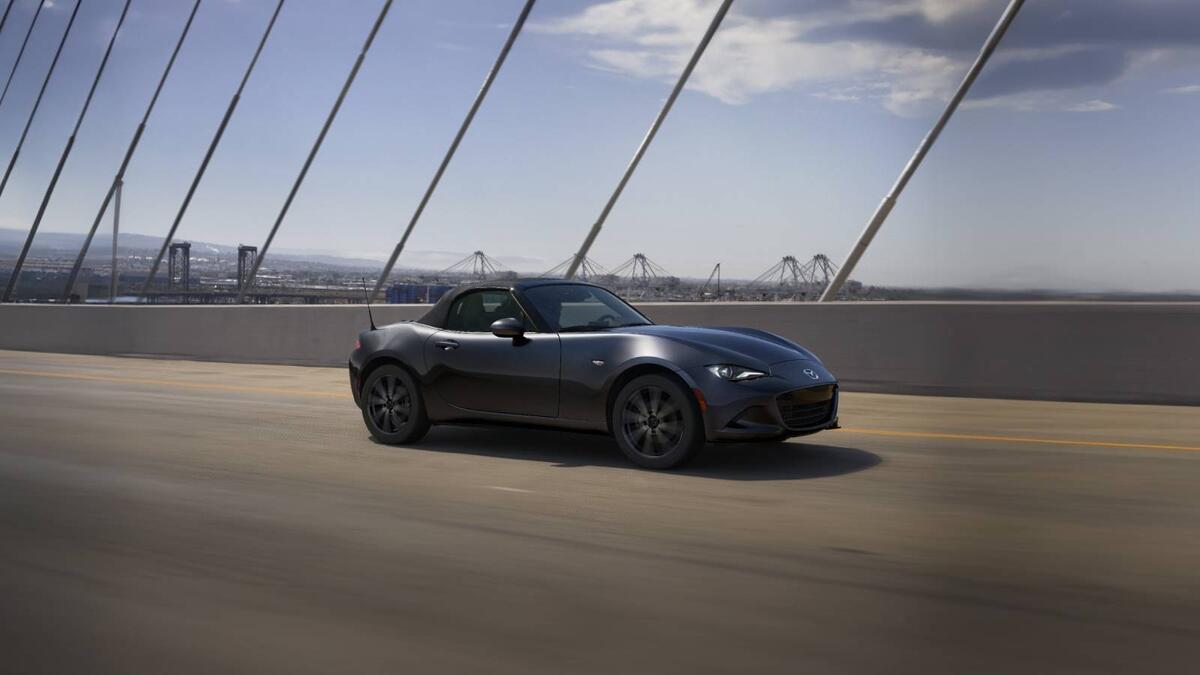
Mazda MX-5 / Miata
"...o move off? Because I know you did some SCC here, Miata racing, MX 5 racing last year. What was the motiv..."
The Mazda MX-5 (Miata) is a small two-seat convertible made by Mazda. It’s popular for driving because it’s light and fun to handle. The podcast talks about it in the context of racing.
The Mazda MX-5, commonly called the Miata, is a lightweight two-seat roadster built around simple, driver-focused handling. It’s frequently used in grassroots and club racing because it’s relatively affordable, easy to maintain, and responds well to setup changes. The podcast references Miata/MX-5 racing activity, which fits its strong motorsport presence.
spec MX 5 races
"So we spent a lot, well, all of our budget last year, flying back and forth, doing some spec MX 5 races with the SCCA, getting to grips and luckily, weren't fast enough for an invite to the shootout."
“Spec” means the race cars have to follow the same rules and be set up similarly. That keeps the competition closer and makes driver skill and small adjustments matter more.
“Spec” racing means the cars are built to a standardized rule set, limiting how much teams can change. In this context, “spec MX-5 races” implies the Mazda MX-5s are prepared similarly so performance differences come more from setup and driving than from major engineering changes.
SCCA
"So we spent a lot, well, all of our budget last year, flying back and forth, doing some spec MX 5 races with the SCCA, getting to grips and luckily, weren't fast enough for an invite to the shootout."
SCCA stands for the Sports Car Club of America, a major U.S. motorsport organization that sanctions many road-racing and club-racing events. In this segment, it’s the organization he raced with while learning the MX-5 Cup-style competition in the U.S.
shootout
"So we spent a lot, well, all of our budget last year, flying back and forth, doing some spec MX 5 races with the SCCA, getting to grips and luckily, weren't fast enough for an invite to the shootout. Didn't quite make it."
Here, “shootout” means a special high-stakes race that only certain drivers get invited to. He’s saying they didn’t qualify for that extra event.
In this racing context, a “shootout” is a special end-of-season or invitation-only event where top performers compete for a limited spot or prize. He says they weren’t fast enough to earn an invite, which frames how competitive the qualifying path is.
Request an Explanation
Heard something you'd like explained? We'll add it to this episode.
Sign in to request explanations for terms you heard.
Want to learn more?
Browse our glossary for plain-English explanations of automotive terms, jargon, and concepts.
Help improve this episode
See something that's not quite right? Our annotations are AI-generated and can sometimes miss the mark. Click the flag icon on any annotation to suggest a correction.