Moving Up or Modding Out: The $10,000 Porsche Dilemma
About this episode
The discussion weighs a familiar Porsche question: spend the extra money on a higher trim, or buy the base car and shape it with mods. Using a 981 Boxster as the example, the host breaks down how quickly aftermarket parts can exceed a $10,000 gap, while also arguing that the right upgrades can make a car feel fresh again. He leans toward thoughtful, incremental changes, especially on touchpoints like the shifter and steering wheel, and shares why he personally chose a base Boxster.
This week on ElevenAfterNine, we’re slowing things down to tackle one of the most debated topics in the Porsche community: "Do I upgrade my car or upgrade the Model?"
Today, we do the math on the $10,000 Dilemma: Should you save that extra cash to jump a trim level, or should you spend it on the "Touchpoints" and "Soundtracks" that actually create the "Fizz"?
Support the Show:
If you enjoyed this episode, the best way to support us is to leave a review!
- Apple Podcasts: Leave a Review Here
- Spotify: Rate us on Spotify
- Official Website: ElevenAfterNine.com
- Instagram: @theelevenafternine
- Subscribe to the Podcast Channel: @ElevenAfterNinePodcast
Are you Team Upgrade Car or Model? Let me know in the comments below!
#ElevenAfterNine #Porsche #981Boxster #Porsche911 #CarMods #PorscheCulture #DrivingExperience #BaseVsS
Hosted on Acast. See acast.com/privacy for more information.
Blackstone
"...my deepest thanks to Joe Adams from Blackstone, / Joe Finkel from FCP Euro, Angelos Gadiri from Porsche Nashua..."
Blackstone is mentioned as a company connected to automotive expertise. The host is thanking their representative for sharing knowledge relevant to Porsche owners.
Blackstone is referenced as the source of an expert guest, likely tied to automotive analysis/diagnostics. In the context of the episode, it signals that the show is bringing in specialists to discuss Porsche ownership and maintenance decisions.
FCP Euro
"...Joe Adams from Blackstone, / Joe Finkel from FCP Euro, Angelos Gadiri from Porsche Nashua..."
FCP Euro is a company involved in the Porsche world, and the host is bringing in one of their experts. They’re likely contributing advice about parts and maintenance.
FCP Euro is mentioned as a company whose representative is an expert guest. The implication is that their experience is relevant to parts, maintenance, and the practical side of keeping a Porsche running well.
Porsche Nashua
"...Joe Finkel from FCP Euro, Angelos Gadiri from Porsche Nashua, all of them experts..."
Porsche Nashua is a Porsche dealership location. The host is thanking someone from there, suggesting the episode includes practical dealer experience.
Porsche Nashua is referenced as the Porsche dealership/brand presence where an expert guest is affiliated. It’s included to show the discussion includes real-world dealer perspective on Porsche buying and ownership decisions.
base vs higher trim level
"I talk a lot in the channel and in previous podcasts about the idea of the base versus the S, / or the base 9-11, the base Boxster, the base Cayman versus a higher trim level,"
They’re talking about the difference between buying the “base” version of a car versus a more expensive higher trim. The argument is whether the stronger, fancier version is always better, or whether the cheaper one is actually more enjoyable to drive.
The hosts are comparing a “base” Porsche (lower trim) to higher trim levels that typically add more power, equipment, and performance hardware. The debate is whether the extra capability is worth the extra cost, or whether a simpler, cheaper car is more fun because it’s easier to use on real roads.

Porsche Cayman
"... S, or the base 9-11, the base Boxster, the base Cayman versus a higher trim level, and how sometimes th..."
The Porsche Cayman is a sports car with the engine placed toward the middle and a closed (fixed-roof) body. Porsche sells it in multiple versions, so a base model can differ from higher trims in power and included equipment. That’s why it’s often brought up when comparing trim levels.
The Porsche Cayman is a mid-engine sports coupe that’s closely related in concept to the Boxster, but with a fixed roof. In trim discussions like “base versus a higher trim level,” the Cayman is often used to illustrate how Porsche’s upgrades affect things like performance and standard features. It’s frequently mentioned because the Cayman lineup provides a straightforward way to compare what changes when you move up from the base model.
modding out
"So I thought it would be interesting to name this episode moving up or modding out. So what do we mean by that? Well, what I mean is let's just use a base Boxster example."
“Modding out” means customizing the car with aftermarket upgrades. The host is comparing that approach to just buying a higher-priced version from the factory.
“Modding out” refers to spending money on aftermarket modifications to improve a car’s performance, feel, or appearance instead of buying a higher factory trim. The host uses it as the alternative to “moving up” to a more expensive Porsche variant.
moving up
"So I thought it would be interesting to name this episode moving up or modding out. So what do we mean by that? Well, what I mean is let's just use a base Boxster example."
“Moving up” means paying more up front for a better factory version of the car. The host is weighing that against spending the same money on upgrades.
“Moving up” means buying a higher trim level (or more expensive model) rather than keeping the base car and adding aftermarket parts. In this episode, it’s the counterpoint to the “modding out” strategy for a roughly $10,000 decision.
$10,000 Porsche dilemma
"So the question I have is, is it better to take $10,000 difference between the base and the S and put it into mods on a base? Or should you just take that $10,000 and get the S?"
The episode is basically asking: should you pay extra for a nicer Porsche version, or should you buy the cheaper one and upgrade it yourself?
This segment centers on a specific decision framework: whether to spend an extra $10,000 to buy a higher Porsche trim (like Boxster S) or to keep the base car and invest that money into modifications. It’s essentially a value-and-feel tradeoff discussion.

2014 Porsche Boxster (981)
"Well, what I mean is let's just use a base Boxster example. Let's use my example. I have a 2014 base Boxster. It's a 981. It is a fantastic car."
This is a Porsche Boxster, a mid-engine convertible. The 2014 model is from the 981 generation, and the host uses it as the baseline car for a budget comparison.
The Porsche Boxster is Porsche’s mid-engine roadster, and the 2014 model is part of the 981 generation. In this segment, the host uses a 2014 base Boxster (981) as the “starting point” to compare against higher trims and the cost of upgrades.
sport exhaust
"Let's call it 38, 40, 42, somewhere in there with sport exhaust and it's a stack. Let's call it 40. Let's use round numbers."
A sport exhaust is an exhaust setup meant to sound more aggressive and sometimes breathe better. Here it’s just one of the upgrades included in the host’s example car.
A sport exhaust is an aftermarket or factory performance-oriented exhaust system designed to change sound and often improve exhaust flow. In this segment, it’s mentioned as part of the baseline Boxster example used to estimate market pricing.
de-badge
"Honestly, what I inevitably find is people that do, you know, quote unquote, settle for a lower trim level is they almost always de-badge their cars. I don't know why that is."
De-badging means taking off the little name/trim stickers on the outside of the car. In this context, the host says some people do it when they start with a lower trim.
De-badging is removing or replacing model badges (like “S” or “GTS”) from a car’s exterior. Enthusiasts often do it to make the car look less like a specific trim level, or to avoid drawing attention to a lower trim.
Boxster Boxter Gts
"... they'll say, so was this a Boxter S or is this a Boxter GTS? I love what you did here. Look at those sweet 2..."
The Boxster is Porsche’s open-top sports car with the engine placed closer to the middle. Porsche makes different versions of it, such as S or GTS, and those versions can have different performance and equipment. People talk about the trim so they know exactly which Boxster they’re seeing.
“Boxster” refers to Porsche’s mid-engine roadster, and the podcast context suggests a conversation about identifying specific trims—like whether a car is a Boxster S or a Boxster GTS. These trim names typically indicate different performance levels and feature packages within the Boxster range. It’s discussed because small visual or spec differences can matter to enthusiasts trying to understand exactly what they’re looking at.

Porsche 981
"...10,000 bucks into a 981, that's kind of crazy, especially in a base. What are you really going to get for that? ...Here's the build list of how you can drop 10 G's real quick on a base 981."
“981” is Porsche’s internal generation code for the Boxster/Cayman from that era. The point here is that adding upgrades to a base car can cost more than people expect.
Porsche 981 refers to the 981-generation Boxster/Cayman platform. In this segment, the hosts are talking about spending about $10,000 on a base 981 and how quickly that can turn into a “modding out” budget.
coilovers
"Coilovers, 3,000 bucks. Picking yourself up a numeric shifter or a function first shifter, especially with cables."
Coilovers are suspension parts that let you adjust how high or low the car sits. They can also change how the car rides and handles over bumps.
Coilovers are adjustable suspension units that combine a coil spring and shock absorber in one package. They’re commonly used to lower the car and fine-tune ride height and damping for handling.
cables
"...a numeric shifter or a function first shifter, especially with cables. You're looking at $700, $800, maybe even a little bit more."
Some cars shift gears using cables instead of rigid rods. The host is saying these shifter upgrades are especially relevant for cable-based setups.
In this context, “cables” refers to cable-actuated shifter linkages used on some Porsche manual setups. Cable shifters can feel different from rod-based systems and are often part of the reason enthusiasts upgrade the shifter hardware.
function first shifter
"Picking yourself up a numeric shifter or a function first shifter, especially with cables. You're looking at $700, $800, maybe even a little bit more."
This is an aftermarket shifter option. The idea is that changing the shifter can make the car feel nicer to drive.
“Function First” is referenced as a shifter option, likely an aftermarket part intended to improve shift feel. In this segment it’s mentioned alongside a “numeric shifter,” implying both are alternatives people consider when upgrading a base 981.
numeric shifter
"Picking yourself up a numeric shifter or a function first shifter, especially with cables. You're looking at $700, $800, maybe even a little bit more."
A “numeric shifter” here appears to refer to a specific aftermarket shifter style/brand used to improve the feel of the gearbox. The host pairs it with a “function first shifter,” suggesting they’re discussing shifter upgrades for a more engaging driving experience.
Soul exhaust
"A soul exhaust, 3K. And maybe you want to get some sweet apex wheels."
This is an aftermarket exhaust option from the “Soul” brand. People usually buy exhausts to change the sound (and sometimes the performance) of the car.
“Soul exhaust” refers to an aftermarket exhaust system brand/product. Exhaust upgrades are often chosen for sound and sometimes for flow/weight benefits, and here it’s part of the cost breakdown for modding a base 981.
Apex wheels
"And maybe you want to get some sweet apex wheels. And that's 2,500 bucks minimum."
Apex makes aftermarket wheels. Upgrading wheels can change how the car looks and can also affect ride/handling depending on the exact wheel and tire setup.
Apex is an aftermarket wheel brand, and “Apex wheels” here means upgrading from the factory wheels. Wheel upgrades can affect appearance, unsprung weight, and tire fitment—so they’re a common part of a “build list.”
stock form
"anytime you put money into a car and it takes it away from the stock form, you're never going to get that money back... almost always, stock will get you more money in the resale market."
“Stock form” means the car is still in its original, factory condition. When you sell, a stock car often has an easier time because more buyers know exactly what they’re getting.
“Stock form” refers to the factory configuration of a car—original parts, settings, and appearance as delivered by the manufacturer. In resale discussions, stock cars typically attract more buyers because they’re closer to what the next owner expects from the brand.
modding (mod) a car
"People are encouraged to mod their cars. It's really interesting, actually. The Porsche market encourages it... until it comes time to sell the car, in which case, almost always, stock will get you more money in the resale market."
“Modding” a car means customizing it instead of leaving it exactly like it came from the factory. The big catch is that you usually won’t get all your money back when you sell, especially if the changes aren’t what most buyers want.
In the Porsche world, “modding” means changing the car from its factory (stock) configuration—like altering appearance, options, or driving feel. The key tradeoff is that modifications usually don’t return the full amount of money you spent, and they can affect resale value depending on what you change.
resale market
"almost always, stock will get you more money in the resale market. Now, there are mods you can do to a car that do add value... in the eyes of some people..."
The “resale market” is what people pay when you sell your car used. If your modifications match what other buyers like, they may help; if not, they can lower what you get.
The “resale market” is the buyer-and-seller ecosystem for used cars, where prices are driven by what most buyers want. Modifications can help or hurt resale depending on whether they’re broadly appealing (and reversible) versus highly personal.
suspension mod
"there are mods you can do to a car that do add value... and it might be a certain type of suspension mod or lowering the car..."
A suspension mod changes the car’s suspension setup, which can affect both ride feel and how low or high the car sits. Here, they’re talking about mods that change the car’s stance and appearance.
A “suspension mod” changes how the car sits and handles by altering components like springs, dampers, or ride height. In this segment, it’s discussed as something that can change the car’s look—such as reducing ground clearance and creating a more aggressive stance.
lowering the car
"it might be a certain type of suspension mod or lowering the car to rest of world height, where it takes the stilt-like look with lots of clearance under the fenders to the tires."
Lowering the car means making it sit closer to the ground. It often looks sportier, but it can make the car easier to scrape on speed bumps or rough roads.
“Lowering the car” means reducing ride height so the wheels sit closer to the fenders. The tradeoff is that it can improve the visual stance, but it may also reduce clearance for bumps and everyday driving.
loud exhaust
"once you start putting loud exhaust and maybe even changing to short shifting, that's more of a preference thing..."
A “loud exhaust” is when the car’s exhaust is modified to sound louder than stock. Some people love it, but other buyers may not, which can affect resale.
A “loud exhaust” is an aftermarket or modified exhaust system intended to increase sound output. While some enthusiasts love the noise and character, it’s more likely to be a personal preference and can reduce the pool of buyers when it comes time to sell.
short shifting
"once you start putting loud exhaust and maybe even changing to short shifting, that's more of a preference thing, and those are things you really have to consider."
“Short shifting” means you shift to the next gear sooner than you normally would. It changes how the car feels—sometimes smoother or calmer—but it’s not everyone’s idea of an upgrade.
“Short shifting” means shifting gears earlier than the driver would in a more aggressive or performance-focused strategy—often to keep engine speed lower. It’s discussed here as a preference change that can alter how the car feels day to day, rather than something that universally adds value.
enjoyment per dollar
"I think that that's okay too. But I think you need to do it with an I2 strategy. I like to think about maybe like an enjoyment per dollar."
It’s basically a “best bang for your buck” idea. When you spend on upgrades, you want the changes that make the car more fun for the money.
“Enjoyment per dollar” is a budgeting mindset for car upgrades: spend money where it increases how much you enjoy the car the most. It’s meant to prevent overspending on mods that don’t noticeably improve the driving experience.
smiles per mile
"You know, we talk about smiles per mile depending on what car you buy, which is kind of a silly phrase, but it's true."
It’s a playful way of saying “how fun is this car when you’re actually driving it?” The goal is fun per mile, not just numbers on paper.
“Smiles per mile” is a humorous way to quantify driving satisfaction: how much fun you get from each mile you drive. In enthusiast circles, it’s used to compare cars or upgrade paths based on real-world enjoyment rather than just specs.
touch points of the car
"But the enjoyment per dollar... if you're going to spend the money, spend it on the touch points of the car."
This means the parts of the car you feel and use most while driving. The recommendation is to spend upgrade money where it actually changes your day-to-day experience.
“Touch points of the car” refers to the areas you interact with most—controls, feel, sound, and other direct user-facing aspects. The idea is to prioritize upgrades that improve those interactions, since they tend to deliver the biggest perceived benefit.
short shift system
"And if you want to move to a short shift system, or you want to upgrade the shifting action because maybe it's gotten a little bit sloppy."
A short shift system makes the gear lever move less distance to get into the next gear. The goal is usually to make shifting feel faster and tighter.
A short shift system changes the shifter’s geometry so each gear change requires less lever travel. That can make shifting feel quicker and more precise, especially in cars where the factory linkage feels long or vague.
steering wheel
"Steering wheel, same thing. I just upgraded the steering wheel in my 981 coming into winter last year."
The steering wheel is the primary interface between driver and car, and its grip material, weight, and shape strongly influence how “connected” the car feels. The host specifically discusses upgrading steering wheel materials and heft to improve hand feel and cabin aesthetics.
valve system
"Because not only do you have to buy the system and have them put it in, they have to run the wires because it's a valve system, quiet, loud. And then they have to install the button on the dash. And then they have to program the car."
A valve exhaust uses movable flaps inside the exhaust. They help the car switch between a quieter sound and a louder sound, which is why adding it later can be complicated.
A valve exhaust system uses electronically controlled flaps in the exhaust to alter flow. That’s what enables “quiet vs loud” modes, and it also explains why retrofitting can require wiring, a dash button, and ECU programming.
valve exhaust options
"But the good news is in the aftermarket, there are valve exhaust options. And then there's also fixed exhaust options. Both of which are fantastic."
These are exhaust upgrades that include sound-control valves. They let the car change how loud it is, similar to factory systems.
Valve exhaust options are aftermarket exhaust systems that include electronically controlled exhaust valves. They mimic the factory-style behavior—switching between quieter and louder operation—without requiring the exact same OEM parts.
aftermarket
"But the good news is in the aftermarket, there are valve exhaust options. And then there's also fixed exhaust options."
The aftermarket refers to parts and accessories made by companies other than the original automaker. Here, the host is pointing out that valve exhaust options and fixed exhaust options are available outside Porsche.
fixed exhaust options
"And then there's also fixed exhaust options. Both of which are fantastic."
A fixed exhaust doesn’t have sound-changing valves. So the exhaust note stays the same all the time.
Fixed exhaust options are exhaust systems without adjustable valves, so the sound level stays consistent. The host contrasts them with valve setups that can switch between quiet and loud.
Fister Exhaust
"I love Fister Exhaust because I find for the money they punch way above their weight class. They sound fantastic. They're affordable. They actually sound better the more you use them. They kind of bed in."
Fister Exhaust is a company that makes aftermarket exhaust systems. The host likes it because it sounds great and gets even better after you’ve used it for a while.
Fister Exhaust is an aftermarket exhaust brand the host recommends for value and sound quality. They specifically praise how the exhaust “beds in,” meaning the sound and tone can improve as the system settles after use.
bed in
"They actually sound better the more you use them. They kind of bed in. But it's not an adjustable sound either."
“Bed in” means the part changes a bit as you use it. The host is saying the exhaust sounds better after some time on the road.
“Bed in” refers to a break-in period where an exhaust (and its internal surfaces) changes slightly with heat cycles and use. In this context, the host claims the exhaust tone improves as it “beds in,” even though it isn’t adjustable.
torque
"[859.9s] and pull out of those corners really fast. [862.1s] I need torque. I need horsepower."
Torque is the engine’s pulling force. It’s what helps the car feel strong when you accelerate, especially out of turns or at lower speeds.
Torque is the twisting force the engine produces, and it strongly influences how quickly a car accelerates, especially at lower speeds and while exiting corners. In everyday driving, “more torque” often feels like stronger pull even before you reach peak horsepower.
horsepower
"[859.9s] and pull out of those corners really fast. [862.1s] I need torque. I need horsepower."
Horsepower is a measure of how much power the engine can produce. Higher horsepower usually helps the car keep accelerating faster, especially at higher speeds.
Horsepower is a measure of how much power the engine makes over time, and it’s closely tied to a car’s top-end speed and sustained acceleration. While torque helps you get moving, horsepower is what keeps building as engine speed rises.
braking
"In Europe, they look at braking because if you can carry speed deeper into a corner, well, then you don't need as much horsepower to pull out of it..."
Braking is how you slow the car down. If you can brake well and keep more speed going into the corner, you often don’t need as much power to get moving again when you exit.
In cornering, stronger braking lets you slow down later and carry more speed into the turn. That reduces how much acceleration you need afterward, because you’re already exiting at a higher speed.
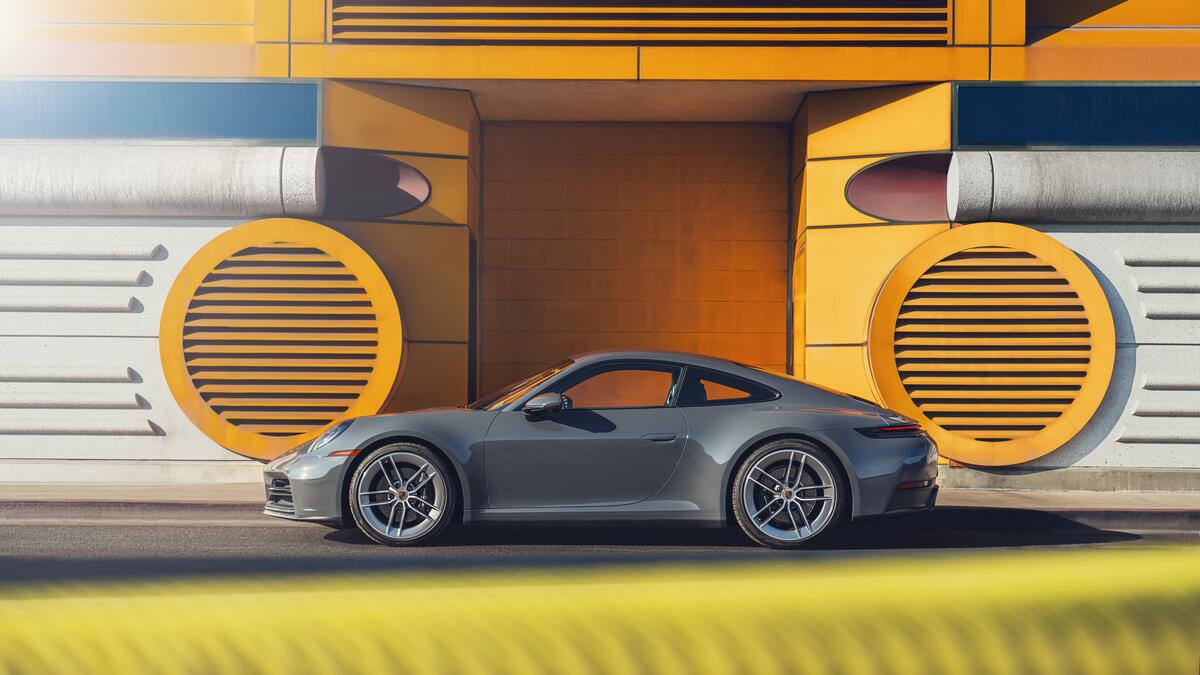
Porsche 993
"But I remember back when I was modding my 993, you know, doing the run list checklist."
A Porsche 993 is a specific generation of the 911. The host is talking about modifying one, especially suspension parts, to change how it drives.
Porsche 993 is the last air-cooled generation of the 911, and it’s a big deal for enthusiasts because of its classic layout and feel. In this segment, the host mentions modding a 993 as part of a “$10,000 Porsche dilemma,” focusing on suspension and supporting upgrades.
PSS-9 suspension
"...I was putting on my, I think there were PSS-9 suspension at the time..."
PSS-9 suspension is an adjustable suspension setup. It helps you fine-tune how low the car sits and how firm/soft it feels over bumps.
PSS-9 is a Porsche-specific adjustable coilover suspension system that lets you change ride height and damping. It’s commonly used to tighten handling by reducing body motion and improving control over bumps.
Elephant Racing
"...I had ordered maybe elephant racing bushings like full polyurethane hardcore bushings..."
Elephant Racing is a company that sells aftermarket parts for Porsche cars. Here, they’re mentioned because they make upgraded bushings for better handling.
Elephant Racing is an aftermarket Porsche parts brand known for suspension and bushings upgrades. In this context, they’re referenced as a source for performance-oriented bushings to reduce unwanted movement.
polyurethane bushings
"...full polyurethane hardcore bushings where normally in a car you have softer rubber bushings..."
Bushings are rubbery (or plastic) parts that help the suspension move smoothly. Polyurethane bushings usually make the car feel more “connected” and less sloppy, but they can make the ride firmer.
Bushings are the flexible mounts that connect suspension components and allow controlled movement. Switching from softer rubber bushings to polyurethane typically makes the suspension feel tighter by reducing deflection, but it can also increase harshness and vibration.
polyurethane hardcore bushings
"...full polyurethane hardcore bushings where normally in a car you have softer rubber bushings..."
These are very stiff bushing upgrades made from polyurethane. They make the suspension respond more sharply, but the ride can feel rougher because they don’t absorb as much vibration.
“Hardcore” polyurethane bushings are an aftermarket upgrade that replaces compliant rubber with a much stiffer material. That stiffness reduces suspension movement under load, improving steering feel and response at the cost of more vibration and a harsher ride.
rubber bushings
"...where normally in a car you have softer rubber bushings and they do that because those soak up a lot of vibrations..."
Rubber bushings are the softer parts that help soak up bumps and vibrations. They make the ride more comfortable, especially on normal roads.
Rubber bushings are the factory-style suspension isolators that absorb vibrations and help smooth out daily driving. The host contrasts them with much harder materials that reduce compliance for more direct steering and suspension response.
hockey puck bushings
"...And so I get these like super hard, hard, hard plastic hockey puck bushings that are going to go into the suspension."
“Hockey puck” bushings are extremely hard suspension inserts. They make the car feel more race-like and less flexible, but the ride can get louder and harsher.
“Hockey puck” bushings is a common enthusiast nickname for very hard, thick bushing inserts that dramatically reduce compliance. They’re used to make the suspension behave more like a race setup, but they can transmit more noise, vibration, and harshness into the cabin.
taut suspension
"If you're going to do anything refresh with rubber bushings, you have the sound, you have the taut suspension so you can go around corners. That's what you want in the road."
“Taut suspension” means the suspension feels tight and controlled instead of loose. That usually makes the car handle better, especially when turning.
“Taut suspension” is an enthusiast way of describing a suspension that feels tight and well-controlled, with minimal looseness from worn components. In practice, it usually means the car responds more crisply and stays more stable when cornering.
overdoing it (mods that make the car worse)
"And so when I talk about the danger of overdoing it, it's really that. Sitting behind a computer with tabs open and a credit card in your hand, it's very easy to go down that road of, well, then this and I can do this."
They’re basically saying don’t add a bunch of modifications just because they sound cool. Some changes can make the car ride worse, louder, or more uncomfortable.
The speaker is warning about “overdoing it” with modifications—adding parts that change ride quality in a negative way. The idea is that not every upgrade improves drivability, and some mods can introduce harshness, noise, or vibration.
mod one at a time
"And if you do do mods, do them one at a time. Don't do three or four mods at once. I've been there to do them one at a time. And if you do that, you're going to immediately notice what that mod adds to the driving experience or takes away from it."
The speaker recommends doing modifications one at a time so you can isolate cause and effect. That way, you can tell what each change adds or removes from the driving experience instead of guessing when multiple parts are installed together.
boredom threshold
"So this, so that kind of leads me into what I'll call like the boredom threshold. If you have one car and maybe you call it your forever car... And then there's a chance you might be getting a little bored with it."
It’s basically the point where the car starts to feel “old” to you. Once you’ve gotten used to how it drives, you may want something new—either a different car or changes to this one.
The “boredom threshold” is the point where you’ve learned what your car feels like and the novelty fades. Enthusiasts often describe it as the moment you start craving a new experience—either by upgrading the car or changing it with mods.
boxer
"When we talk about upgrading, say a base boxer, maybe your base boxer comes with a stock exhaust and then you go and put a fister exhaust on it."
A “boxer” engine is one where the cylinders move side-to-side in opposite directions. It’s a distinctive engine design—especially associated with Porsche.
“Boxer” refers to an engine layout where the cylinders move in and out horizontally, opposite each other like a boxer’s fists. In Porsche context, a “boxer” is a key part of the brand’s identity and how the car’s balance and feel are engineered.
stock exhaust
"When we talk about upgrading, say a base boxer, maybe your base boxer comes with a stock exhaust and then you go and put a fister exhaust on it."
“Stock exhaust” is the exhaust system the car came with from the factory. It determines the car’s original sound and how the exhaust gases flow.
“Stock exhaust” means the factory exhaust system that came on the car. It sets the baseline sound, backpressure, and overall exhaust flow characteristics before any aftermarket changes.
function first shifting system
"Maybe you reach out for a function first shifting system. Maybe you change that steering wheel."
This refers to upgrading how the car shifts gears. The goal is usually a more satisfying, more precise feel when you move the shifter.
A “shifting system” upgrade changes how the transmission is actuated—often improving shift feel, speed, or consistency. The phrase “function first” here sounds like a specific aftermarket brand or product line for a shifter/shift mechanism, aimed at making the car’s driving inputs feel sharper.
larger wheels
"Maybe you change that steering wheel. Maybe you move to slightly larger wheels. Heck, maybe you put a wrap on your car."
Bigger wheels usually change the tires and how the car rides and turns. It can also change the look, which is part of why people do it.
“Larger wheels” typically means increasing wheel diameter (and often changing tire sidewall height). That can alter ride comfort, steering response, and how the car looks, which is why it’s framed as another “reset” of the experience.
wrap
"Maybe you move to slightly larger wheels. Heck, maybe you put a wrap on your car. Who knows?"
A wrap is a vinyl covering put on the outside of the car. It can change the color or protect the paint, and it’s usually easier to remove later than repainting.
A “wrap” is a vinyl film applied over the car’s exterior to change its color/appearance or protect the paint. It’s a popular mod because it can dramatically change the look without permanent bodywork.
trading your car in at reduced value
"It's significantly cheaper than potentially losing $15,000 or $20,000 in trading your car in at reduced value, dealer fees, taxes to get another car that might be a little bit faster..."
They’re talking about how much less money you might get for your current car when you trade it in. The trade-in price can be lower than you expect, so it can make upgrading more expensive.
“Reduced value” here refers to the lower amount you get when you trade in a car compared with what you hoped it would be worth. It’s often driven by depreciation, condition, mileage, and the dealer’s pricing strategy.
dealer fees
"...losing $15,000 or $20,000 in trading your car in at reduced value, dealer fees, taxes to get another car..."
Dealer fees are extra charges the dealership adds when you buy a car. They can make the final price higher than the sticker price you first see.
Dealer fees are extra charges added by the dealership on top of the car’s advertised price. They can include documentation fees and other add-on costs that affect the total “out-the-door” price.
Michelin PS4s tires
"A new set of Michelin PS4s tires and exhaust and maybe a shifting mod will change that car and make it really interesting for you moving forward."
Michelin PS4s are a high-performance tire model. Putting them on can make the car grip better and feel more responsive.
Michelin PS4s are a performance-oriented tire line designed for strong grip and predictable handling, especially in dry and wet conditions. Upgrading to them can noticeably change how the car feels day-to-day and in spirited driving.
shifting mod
"A new set of Michelin PS4s tires and exhaust and maybe a shifting mod will change that car and make it really interesting for you moving forward."
A “shifting mod” refers to modifications that improve or change how the transmission shifts. On many cars this can mean software changes, shift kit-style hardware, or tuning that makes shifts quicker and/or firmer.
Request an Explanation
Heard something you'd like explained? We'll add it to this episode.
Sign in to request explanations for terms you heard.
Want to learn more?
Browse our glossary for plain-English explanations of automotive terms, jargon, and concepts.
Help improve this episode
See something that's not quite right? Our annotations are AI-generated and can sometimes miss the mark. Click the flag icon on any annotation to suggest a correction.