
MP 1694: The Week In Sports Cars May 2 2026
About this episode
Paul Ricard sets up a busy sports car weekend, with ELMS framed as a free, low-friction way to sample a Le Mans dress rehearsal while IMSA leans into retro liveries and fan-friendly throwbacks. The conversation then widens into major paddock news: Acura’s exit, concerns around Cadillac/WTR, criticism of Lamborghini’s GT3 direction, and a huge Nürburgring 24 entry list featuring Verstappen. From there, the hosts dig into Genesis and McLaren timelines, then speculate that BYD could fast-track a Hypercar/WEC entry by taking over an existing programme.
It's The Week In Sports Cars show featuring DailySportsCar.com's Stephen Kilbey and Graham Goodwin
Every episode is graciously supported by the Justice Brothers and TorontoMotorsports.com.
NEW show stickers and memorabilia: ThePruettStore.com
If you'd like to join the PrueDay podcast listener group, send an email to [email protected] and you'll be invited to participate in the Discord chat that takes place every day and meet up with your new family at events.
Play on Podbean.com: https://marshallpruett.podbean.com/
Subscribe: https://marshallpruettpodcast.com/subscribe
Join our Facebook Group: https://www.facebook.com/MarshallPruettPodcast
[WSC]
European Le Mans series
"South of France getting ready for qualifying and the race to come, second round of the European Le Mans series season, plenty of excitement, packed paddock as always. But I don't think that's the main reason for doing this podcast this week."
The European Le Mans Series is a set of long-distance races for sports cars across Europe. Different types of cars race together, but they’re scored within their own classes.
The European Le Mans Series (ELMS) is a sports-car endurance racing championship held across Europe. It features multi-hour races and multiple car classes competing at the same time.
qualifying
"South of France getting ready for qualifying and the race to come, second round of the European Le Mans series season, plenty of excitement, packed paddock as always."
Qualifying is when drivers try to set their best lap times before the race. Those times help decide where cars start on the grid.
Qualifying is the session where cars set their fastest times to determine starting positions for the race. In endurance series, qualifying can also influence class order and strategy.
paddock
"South of France getting ready for qualifying and the race to come, second round of the European Le Mans series season, plenty of excitement, packed paddock as always. But I don't think that's the main reason for doing this podcast this week."
The paddock is the team area at a race track. Cars are worked on there, and teams get ready for qualifying and the race.
In motorsport, the paddock is the area where teams park, service cars, and prepare for sessions. It’s also where team personnel and guests move between garages and the track.
IMSA
"There's loads to talk about across IMSA, across WAC, obviously we'll do a little bit of VLMS. And also IGTC as well, we're working 24 hours."
IMSA is a big North American organization that runs sports-car races. When people say “across IMSA,” they mean the races happening under IMSA’s series.
IMSA is the International Motor Sports Association, which organizes major sports-car racing in North America. In a “week in sports cars” context, it usually refers to IMSA’s endurance and sprint series.
WAC
"There's loads to talk about across IMSA, across WAC, obviously we'll do a little bit of VLMS. And also IGTC as well, we're working 24 hours."
“WAC” is mentioned as another racing series to cover this week, but this excerpt doesn’t spell out what it means. It’s probably a shorthand the hosts use for a specific motorsport championship.
WAC is referenced alongside IMSA and other endurance series, but the transcript segment doesn’t provide enough context to identify which specific racing organization or series “WAC” stands for. It likely refers to a regional or series name used by the hosts.
IGTC
"There's loads to talk about across IMSA, across WAC, obviously we'll do a little bit of VLMS. And also IGTC as well, we're working 24 hours."
IGTC is a GT-focused racing series. The hosts are saying they’ll cover it along with other endurance events this week.
IGTC refers to a GT racing championship within the endurance ecosystem, typically focused on GT3-spec cars. In this segment, it’s grouped with other series they’ll cover as part of the weekend schedule.
VLMS
"There's loads to talk about across IMSA, across WAC, obviously we'll do a little bit of VLMS. And also IGTC as well, we're working 24 hours."
“VLMS” is another racing series the hosts plan to cover, but this snippet doesn’t explain what the acronym stands for. It’s probably a shorthand for an endurance championship.
VLMS is mentioned as part of the weekly coverage mix, but the excerpt doesn’t define it. Given the endurance-racing context, it likely refers to a specific endurance championship or regional series name used by the hosts.
Michelin Le Mans Cup
"So it is the European Le Mans series, the full package here with the Michelin Le Mans Cup, the Asia-European series, joined, well by the way, by Euricups, you're a Formula 3, I think, which we're doing commentary for tomorrow."
The Michelin Le Mans Cup is a racing series that runs alongside the main endurance event. It helps different teams and car types get their own races during the same weekend.
The Michelin Le Mans Cup is a support series within the ELMS weekend structure. It’s designed for smaller or different-spec endurance prototypes and GT cars, giving teams additional race opportunities.
Paul Ricard
"And in a link list as well, recent ex-indicator driver taking part in that to keep his hand in for racing. At Paul Ricard, does produce great racing in the European Le Mans series habitually."
Paul Ricard is a well-known race track in France. The hosts are referencing it as the place where this weekend’s racing is happening.
Paul Ricard is a famous motorsport circuit in France that hosts major endurance and support-series events. In this segment, it’s the venue for the European Le Mans weekend and related racing.
classes
"At Paul Ricard, does produce great racing in the European Le Mans series habitually. We saw, I think, green shoots of what could be a really very close season here across the classes. I know we're hoping that the number nine car, which is the Venture Engineering"
In endurance races, cars are grouped into categories called classes. They all race together, but they’re judged within their own group.
In endurance racing, “classes” are different categories of cars that compete simultaneously but are scored separately. This allows different performance levels and vehicle types to race on the same track.
Venture Engineering
"We saw, I think, green shoots of what could be a really very close season here across the classes. I know we're hoping that the number nine car, which is the Venture Engineering"
Venture Engineering is the team behind the race car the hosts are talking about. In endurance racing, the team matters because they manage the car and strategy across the race.
Venture Engineering is the team/organization associated with the “number nine car” mentioned in the segment. In endurance racing coverage, the team name is important because it identifies who prepared and runs the entry.
hypercar seats
"There's so many youngsters who are all sniffing around at hypercar seats in the future."
“Hypercar seats” means the spots where drivers get to race the top-level hypercars. Teams are always looking for new talent to fill those driver roles.
“Hypercar seats” refers to available driver positions in the Hypercar class teams. In endurance racing, driver lineups are often the key factor in who gets to race the top cars, so teams recruit promising young talent.
hypercar factory team
"And that's why they're in insert name of hypercar factory team in two or three years time."
A “factory team” is a team supported by the car manufacturer itself. They usually have more engineering support and resources to develop the race car over the season.
A “factory team” is an automaker-backed racing team that develops and supports the car directly. In Hypercar, factory teams typically have more resources for engineering, testing, and ongoing upgrades than privateer entries.
FIWC Plus
"this is the race to do it this weekend. Watch it on Sunday or watch it on catch up next week on FIWC Plus."
FIWC Plus is the service they mention for watching the races. You can watch live or catch up later, depending on the schedule.
FIWC Plus is the streaming platform mentioned for watching the European Le Mans Series. It’s presented as the place to watch races live or on catch-up, which affects how fans follow the season.
dress rehearsal
"because this is the dress rehearsal for a majority of these teams before Le Mans."
A “dress rehearsal” here means a practice run before the big event. Teams use it to work out problems and get ready for Le Mans.
A “dress rehearsal” is a preparatory event that helps teams get everything dialed in before a major race. In endurance racing, it’s where teams test setups, refine strategy, and reduce uncertainty ahead of Le Mans.
WEC round two
"It's a good opportunity to get that nailed in before WEC round two next weekend."
WEC is a world championship for endurance racing. “Round two” just means the second race event of the season, and teams use it to keep improving after the earlier races.
WEC stands for the World Endurance Championship, a global endurance series. “Round two” means the second event in that season’s WEC calendar, which is important because teams often build momentum and data across rounds.
Pit Lane
"...Johnny Palmer and myself in the booth with Steph Wentworth on Pit Lane as always for the European Le Mans series..."
Pit lane is the area next to the track where teams pull in to work on the car. It’s where pit stops and quick repairs happen.
Pit lane is the lane along the track where teams enter to service the car during the race weekend. It’s where pit stops happen and where teams manage timing, driver changes (if applicable), and repairs.
Mustang challenge
"That's this marks the start of coverage Mustang challenge for daily sports car with Ford racing getting behind Natalie's ongoing career."
The Mustang Challenge is a racing program focused on Ford Mustangs. It’s designed to help drivers learn and compete in a more controlled, comparable way.
The “Mustang Challenge” is a spec-style racing program centered on Ford Mustang cars, used to create a more level playing field and develop drivers. In series racing, these kinds of challenges often emphasize driver skill and consistent car preparation over raw budget advantages.
Ford
"...Mustang challenge for daily sports car with Ford racing getting behind Natalie's ongoing career."
Ford is the car company behind the Mustang. In racing, Ford can support teams and help run programs that develop drivers.
Ford is the automaker behind the Mustang and the brand associated with Ford’s motorsport efforts mentioned in the segment. In racing contexts, Ford’s involvement can include factory support, team backing, and driver development programs.

Ford Mustang
"...4 hours. That's this marks the start of coverage Mustang challenge for daily sports car with Ford racing ..."
The Ford Mustang is a sporty car made by Ford, usually as a coupe or convertible. It’s known for being fun to drive and for having versions that can handle more aggressive driving. That’s why it often shows up in discussions about daily driving that still feels like a sports car.
The Ford Mustang is a long-running American sports coupe/convertible known for its performance-focused trims and strong motorsport heritage. In a podcast context about a “Mustang challenge” for a daily sports car, it’s likely being discussed as a practical performance platform that can also be used in racing-style events. Its significance comes from how widely it’s supported and how it bridges everyday driving with track capability.
transporter fire
"...even in the run up to this race with the news that DHT's had to withdraw due to a transporter fire. But when you look beyond some of the negatives..."
A transporter fire means the truck or trailer carrying race cars caught fire. That can be a huge problem because the team may lose the car and parts they need to race.
A transporter fire refers to a fire involving the vehicle used to haul race cars and equipment to and from events. In motorsport, this can be a major setback because it can destroy cars, spare parts, and tools needed for the weekend.
GP
"...hypercar and GP and beyond during this show. Stick with us but we are going to cover off the racing separately..."
GP usually means Grand Prix, which is a major kind of race event. It’s often used to talk about racing series that have their own championship and event schedule.
GP commonly stands for Grand Prix, referring to a major racing event format or series. In motorsport talk, it usually contrasts with endurance categories like hypercar by focusing on different race structures and championship contexts.

Porsche 935
"The Apple livery which is harking back to is Dick Barbacare? Yes Dick Barbacare, it's a 935 stunning livery and besting about it for me"
The Porsche 935 is a famous old race Porsche from the 1970s. Here, they’re talking about it wearing a throwback Apple-style paint scheme for the event.
The Porsche 935 is a legendary 1970s-era Porsche race car built for endurance racing. In this segment it’s being highlighted for a throwback “Apple” themed livery, showing how classic race branding can be brought into modern events.
livery
"The Apple livery which is harking back to ... they're not the only ones that throw back livery's ... It's really well turned out this livery from from Pratt Miller"
A livery is the car’s paint and sticker design for racing. Here, they’re excited about throwback designs that copy older race looks.
A livery is the complete visual design on a race car—paint colors, decals, sponsor logos, and graphics. In this segment, the hosts focus on “throwback” liveries that reference historic branding and eras to create a recognizable, publicity-friendly look.
Apple
"The Apple livery which is harking back to is Dick Barbacare? Yes Dick Barbacare, it's a 935 ... old-school Apple branding and typeface ... well done to both Porsche and most important North America and to Apple"
Apple is the company behind the classic-style branding shown on the race car livery. The hosts think it looks especially cool because it uses Apple’s older look.
Apple is being referenced as the brand behind the throwback livery and branding elements on the Porsche entries and related race vehicles. The hosts are emphasizing the visual impact of using Apple’s classic look (logo and typeface) in a motorsport context.

BMW 3.0 CSL
"... got Paul Miller racing, got a throwback to 1975 BMW 3 CSL, really really just it's not the first time w..."

C5R
"such a cool car. I have to say probably my favorite Corvette. C5R. I know you're a C6R."
“C5R” is a Corvette race car. It’s built for endurance racing—so it’s designed to stay fast and reliable over long events, not just for short sprints.
“C5R” refers to the Chevrolet Corvette C5.R race car, a GT-class endurance racer based on the C5-generation Corvette. It’s known for its purpose-built aero and durability in long races rather than showroom comfort.
TCR ranks of Machine Pilot Challenge
"outside of the WeatherTech paddock, Ibiza Farm Motorsports, they've got a livery that yeah, it's kind of associated with the F1 heritage of McLaren, Red Chevrons. Looks very nice. And a really fun one is in the TCR ranks of Machine Pilot Challenge."
“TCR” is a type of racing for cars that are based on real production models. Saying it’s in the “TCR ranks” means they’re running a TCR class at that event.
“TCR” is a touring-car racing formula (Touring Car Racing) that uses production-based cars with standardized rules. “TCR ranks” means the event includes a TCR class/field, and “Machine Pilot Challenge” is the specific race series or event context being discussed.

Dodge Neon
"and there's a cracking picture of a Dodge Neon in that livery from when the team first started. How cool is that? Check it out on DSC's paddock notes for the first day there, because it is very cool."
The Dodge Neon is being referenced as the inspiration for a throwback racing livery. In other words, the team’s current car design is paying homage to the Neon-era look from the team’s early days.
throwback element
"They're not basically a Dodge Neon this week, and we should make that clear. No, no, no. I don't know. See, yeah, that's the throwback element of it."
A throwback element is a deliberate design or theme that references an earlier era—often using retro colors, logos, or styling. In this segment, it refers to honoring the team founder with an older-style look.
Long Beach
"We've just come off of Long Beach where Acura won, and what a time to win it off the back of some unfortunate news of that program going away."
Long Beach is where the recent race took place. The hosts are saying Acura won there, and that timing matters because of other news.
Long Beach is the race venue being referenced as the most recent event before this discussion. The hosts connect Acura’s win there to the broader news around Acura’s racing program.
Laguna Seca
"So, well done to them for winning. What can they do this time at Laguna Seca against the powerhouse that is Porsche Kopenzki Motorsport with BMW still looking as if it's got possibilities of challenging for that."
Laguna Seca is the next track/race location they’re talking about. They’re previewing how teams might perform there.
Laguna Seca is the next race venue being discussed. The hosts are looking ahead to what teams can do there, including matchups between Porsche and BMW.
Porsche Kopenzki Motorsport
"What can they do this time at Laguna Seca against the powerhouse that is Porsche Kopenzki Motorsport with BMW still looking as if it's got possibilities of challenging for that."
This is a racing team name. The hosts are saying it’s strong and likely to be hard to beat at the next race.
Porsche Kopenzki Motorsport is referenced as a dominant racing effort (“powerhouse”) that the hosts expect others to challenge. It’s mentioned in the context of upcoming competition at Laguna Seca.
wet
"...a car that's capable of winning races, and in IMSA capable of winning races and wet for that matter."
“Wet” refers to racing conditions on a rain-soaked track, which changes grip levels and tire behavior. The hosts mention wet capability to emphasize that the car should remain competitive even when conditions are slippery.
Wayne Taylor racing
"No, no. And let's not forget that we're not that far away from seeing Wayne Taylor racing at Le Mans again. Not far at all."
Wayne Taylor Racing is a race team. They compete in long-distance sports car races, and the hosts are talking about whether they’ll be back at Le Mans.
Wayne Taylor Racing is a motorsport team that competes in IMSA endurance racing. In this segment, the hosts are discussing the team’s prospects for Le Mans, which is a major international endurance event.
balanced performance
"...we've seen a situation where there's a huge amount of focus, again, placed on one or two values in a balanced performance thing."
Balanced performance is how race organizers try to make different cars compete more evenly. They adjust things so no single car type is automatically faster.
Balanced performance (BoP) is a racing rule system used to equalize performance between different cars. The hosts discuss how focusing on one or two BoP “values” can miss the bigger picture of what actually determines race competitiveness.
strategic skill
"...Porsche-Bensky Motorsport have put an exemplary operational skill and strategic skill and kicked ass."
Strategic skill means making smart decisions during the race. It’s about timing pit stops and adjusting to what’s happening on track.
Strategic skill is the team’s ability to make the right calls during the race—when to pit, how to manage tires/fuel, and how to respond to traffic and changing conditions. The segment pairs it with operational skill to explain why a team can dominate even when BoP is considered.
operational skill
"...humbled by the fact that Porsche-Bensky Motorsport have put an exemplary operational skill and strategic skill and kicked ass."
Operational skill is how well the team runs the race behind the scenes. That includes things like pit stops and strategy, not just how fast the car is.
Operational skill in endurance racing refers to how well a team executes the non-driving parts of the race—pit stops, driver changes, strategy timing, and error-free execution. The hosts credit Porsche-Bensky Motorsport with exemplary operational and strategic skill.
GTP
"Yep. Completely agree. That's GTP, but it's not the only class in the field. The two GT classes or GTD classes are in action, and there's certainly some elements of that."
GTP is the highest-level prototype racing class in IMSA. It’s one of the main categories on the track, but there are also other classes racing at the same time.
GTP is the top prototype class in IMSA’s current sports car structure (standing for “Grand Touring Prototype”). The segment contrasts GTP with other classes in the field, noting that it’s not the only category competing.
GTD
"The two GT classes or GTD classes are in action, and there's certainly some elements of that."
GTD is one of the GT racing categories in IMSA. It’s for race cars that are based more closely on production models, and it runs alongside the faster prototype classes.
GTD is a GT (grand touring) class in IMSA endurance racing, typically for cars closer to production than the prototype classes. The hosts mention “GTD classes” alongside the other GT category to highlight that multiple classes are competing simultaneously.
DTM opener
"...coming off the back of quite a scathing story that came out following the DTM opener about perhaps the..."
DTM is a German race series for touring cars. “Opener” just means the first race of the season, and they’re talking about what came out of that event.
DTM (Deutsche Tourenwagen Masters) is a German touring-car racing series. The “opener” is the first race of the season, and “coming off the back of” means the discussion is reacting to what happened there.
drivability
"...it was not very complimentary about the drivability of that car and its potential..."
“Drivability” means how pleasant and easy the car is to control day-to-day and in different driving situations. If a report says the drivability is bad, it usually means the car doesn’t respond smoothly or predictably.
“Drivability” is how easy and predictable a car feels to drive in real conditions—things like throttle response, smoothness, and how well the car behaves at different speeds and loads. In motorsport coverage, poor drivability often points to setup or calibration issues.
Lamborghini
"...I've not actually been present at a race meeting where I've seen that car and had any in-depth conversations with people at Lamborghini..."
Lamborghini is the Italian supercar brand being discussed. The hosts talk about how the company’s approach—rolling out cars more gradually and using feedback to address issues—can help when early criticism or technical problems show up.
development programme
"...that they can get on with developing that before they have this massive wide rollout of the car in the next couple of years. A quick fix or development programme with relatively few cars out there..."
A “development programme” is a structured plan to improve a car—often involving engineering updates, testing, and iterative fixes—based on early data and feedback. Here, it’s framed as a short-term effort while only a limited number of cars are out.
time area erasing
"We're going to find out a lot in the next month or two when we start to see the time area erasing more regularly. That's what I'm going to say."
They’re talking about getting better over the next month or two—likely meaning the car’s speed or consistency improves as changes are made. The exact phrase in the transcript sounds off, but the idea is performance improvement.
“Time area erasing” appears to be a transcription/wording issue, but the intent is about improving lap times or performance over time as updates arrive. In racing talk, this usually means the car gets faster and/or more consistent after fixes.
entry list
"Let's talk about the Nurburgring 24 hours, because the entry list for that is out, and that is definitely worth a mention."
An entry list is the official list of who’s registered to race. For a 24-hour event, it also hints at how crowded the track will be and what kinds of cars will be competing.
An entry list is the official roster of teams and cars that are registered to compete in a race. For endurance events, it’s especially important because it determines how many cars are on track and which classes are represented.
Nürburgring 24 hours
"Let's talk about the Nurburgring 24 hours, because the entry list for that is out, and that is definitely worth a mention."
The Nürburgring 24 Hours is a long endurance race—cars run for a full day at the Nürburgring track. Different classes of race cars share the event, so it’s not just one single type of car competing.
The Nürburgring 24 Hours is a 24-hour endurance race held at Germany’s Nürburgring circuit. It’s known for large multi-class entry lists where different types of race cars compete on the same track.
Max Verstappen
"Of course, Max Verstappen featuring. Max Verstappen, the big headline, of course he is. It's his first crack at the event, first crack of the 24-hour race with his team in a GT3 car."
Max Verstappen is a famous race driver. When he shows up for an endurance race like the Nürburgring 24 Hours, it draws extra attention beyond the usual endurance crowd.
Max Verstappen is a high-profile Formula 1 driver, and his participation is a major headline for the Nürburgring 24 Hours. The hosts frame his entry as something the wider world will watch closely.
GT3 car
"It's his first crack at the event, first crack of the 24-hour race with his team in a GT3 car."
A GT3 car is a specific type of race car category used in endurance events. Here, it matters because it tells you what kind of car Verstappen is driving.
A “GT3 car” means the car is built to the GT3 class rules used in endurance racing. In this context, it highlights that Verstappen’s first Nürburgring 24 Hours attempt is in a GT3 entry rather than a different racing category.
cap of 150 cars
"they've had to lift the cap of 150 cars by maximising paddock space to be able to do it, but to the amount of people that are going to be there for that race, I don't know if I'm even ready to see it on pictures."
A car cap is the maximum number of cars allowed in the race. It’s mainly there to keep things safe and manageable when there are lots of cars on track.
A “cap of 150 cars” is a maximum limit on how many cars can enter the event. Endurance races use caps to manage track congestion, safety, and pit/paddock logistics.
box office
"We're talking about the sell-out. We're talking about them actively coming out and saying they're probably not going to have a box office on the day"
They’re talking about ticket sales. The point is that the event is so popular it may be fully sold out before race day.
“Box office” here is used in the everyday sense of ticket sales/onsite ticketing availability. The hosts are noting that the event may be so sold out that there won’t be much (or any) ticket sales on the day.
SP9
"But beyond that, other storylines as well are not just in SP9, where there's talents... SPX is a standalone class for cars that can be up to and including the performance levels of the SP9 GT3 car..."
SP9 is another class in the race. They’re using it as a reference point, saying SPX cars can be as fast as the SP9 GT3 cars.
SP9 is referenced as a higher-profile class in the same racing event structure. The hosts compare SPX cars to the performance level of the SP9 GT3 car, implying SP9 is the benchmark for GT3-like pace.
SPX
"I also want to talk about SPX. Yeah, it's going to be one that everyone's going to be watching as well. Because it's just so SPX is a standalone class for cars that can be up to and including the performance levels of the SP9 GT3 car, but are not homologated race cars."
SPX is a racing category in this event. It’s for cars that are very quick—around GT3 speed—but don’t have the official GT3 approval.
SPX is described as a standalone racing class for cars that can reach GT3-level performance but are not homologated race cars. The hosts are previewing which entries are expected to be fan favorites in that category.
homologated race cars
"Because it's just so SPX is a standalone class for cars that can be up to and including the performance levels of the SP9 GT3 car, but are not homologated race cars."
Homologated means the race organizers have officially approved the car for that racing category. Here, they’re saying these cars are very quick, but they haven’t been formally approved as GT3 race cars.
“Homologated” means a car has been officially approved to compete under a specific racing rule set. In this context, the class includes cars that are fast enough to match GT3 performance but are not officially homologated as GT3 race cars.

HWA Resto-Mod EVO-R
"But you've got three examples of the HWA Resto-Mod EVO-R, which is the one that looks like an old school Mercedes-DTM car. That just looks awesome. It goes like the cappers as well. There's three of those."
The HWA Resto-Mod EVO-R is a restomod-style race-prep car being discussed as a major SPX fan favorite. The hosts note it resembles an old-school Mercedes DTM car and that multiple entries will run in retro liveries.
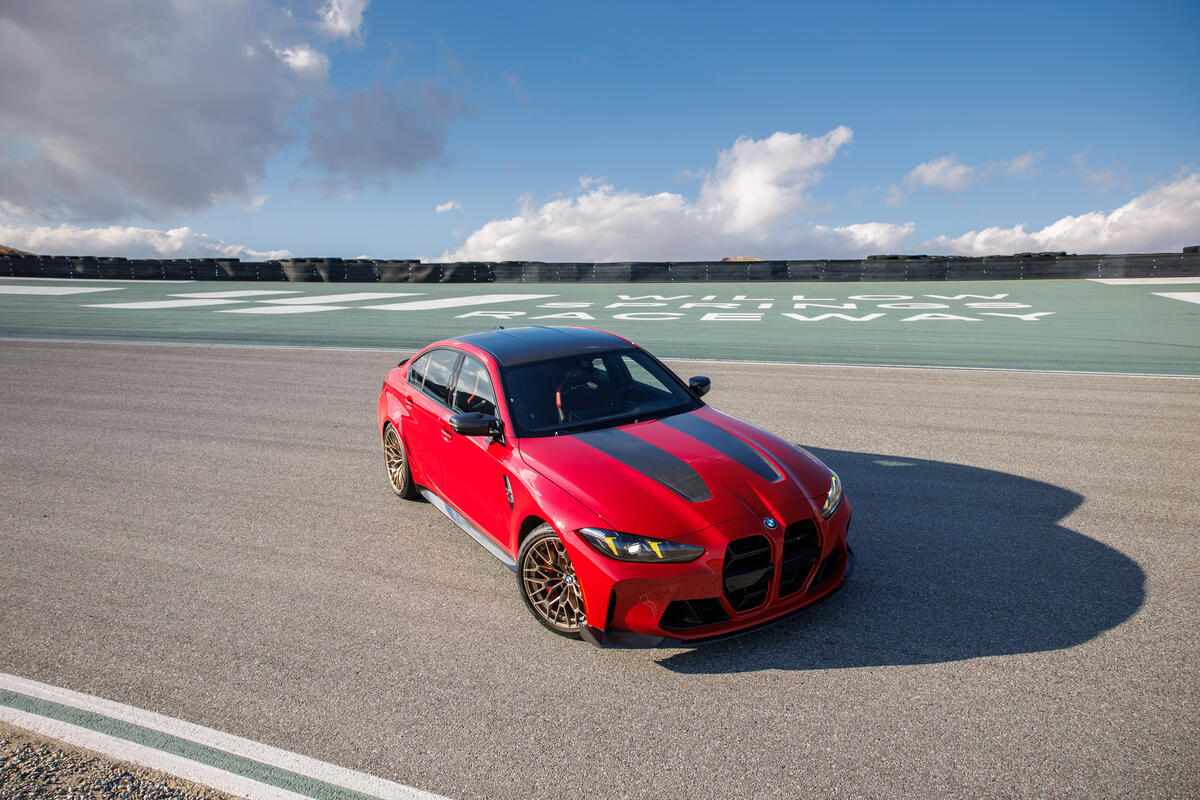
BMW M3
"And then you've got the BMW M3 Touring, which I'm going to come out and say it,"
They’re talking about the BMW M3 Touring, which is the M3 in a wagon body style. It’s a rarer and more practical take on the M3 that many fans find especially interesting.
The BMW M3 Touring is called out as one of the SPX class cars the host is excited about. The “Touring” variant is a wagon-bodied M3, which is less common than the standard sedan/coupe form and tends to draw attention from enthusiasts.
factory-entered car
"...I love everything about it. That's going to be an XPX factory-entered car."
A factory-entered car is a race car supported by the car company itself. That usually means more official backing and resources than a private team gets.
A factory-entered car is one entered by the automaker (or its official racing program) rather than by an independent private team. Factory entries usually come with more direct manufacturer support for engineering, parts, and development.
quarter
"...You're going to build a Kondiflipi in Nilverhagen. Very, very good and capable quarter. Wouldn't it be amazing if that thing won?"
“Quarter” here is probably shorthand for how fast a car can cover a quarter-mile. It’s a common way to talk about straight-line acceleration.
In this context, “quarter” is likely referring to a quarter-mile performance measure (common in motorsport and drag-related discussions), used to describe acceleration capability. The speaker’s phrasing suggests they’re talking about how quick the car is in a straight-line sprint.
boot
"Everyone involved in it is going to be 100% glued to let's just see how far we can push the thing. You just have to remember to go into the boot first."
“Boot” means the trunk of the car, where you put luggage. The speaker is making a quick reference to starting with the trunk.
“Boot” is the British term for the trunk (rear cargo area) of a car. The speaker’s joke—“go into the boot first”—is referencing where you’d access or store something before proceeding.
GT4
"...So yeah, we've got that. We've got trunk motor GT4 cars, 32."
GT4 is a class of sports-car racing for production-based cars that are modified for track use. It’s typically positioned below GT3 in performance and cost, and it emphasizes close racing within class rather than outright prototype speed.

Mclaren Artura
"...trunk motor GT4 cars, 32. There's McLaren Artura Trophy in the same class as the Dacia Logan, I believe."
The McLaren Artura Trophy is a racing version of the McLaren Artura. The host is saying it’s especially quick and worth watching.
The McLaren Artura Trophy is a track-focused race variant based on the Artura platform, built for competition use in specific classes. The host calls it “rapid” and frames it as a notable entry within the same class grouping as other cars mentioned.

Dacia Logan
"...There's McLaren Artura Trophy in the same class as the Dacia Logan, I believe."
The Dacia Logan is a more affordable car model. Here it’s mentioned because it’s grouped in the same race class as a much more expensive McLaren, showing how racing categories work.
The Dacia Logan is a budget-focused compact sedan, and in this segment it’s mentioned as being in the same class grouping as the McLaren Artura Trophy. That contrast highlights how endurance racing class rules can put very different cars into the same competitive bracket.

Genesis GMR 001
"Genesis, obviously they're expected to debut the GMR 001 at Qatar. That's race weekend, of course, postponed..."
The Genesis GMR 001 is a new race car Genesis is bringing to endurance racing. The hosts are talking about when it will debut and how its first races fit into the season.
The Genesis GMR 001 is Genesis’s purpose-built race car for top-level endurance competition. The episode frames it as debuting at Qatar before later racing plans, highlighting how new prototypes are introduced and then developed based on early race data.
expected race experience time
"because it's two cars, of the expected race experience time the team had gotten the wheels of it. Now, what does that mean? That means, obviously, I think a really good start at Imola."
They’re basically saying the team only got a certain amount of useful track running before the race. More track time usually means more chances to test the car and avoid surprises.
The hosts are talking about how long the team expects to get “track time” and race-relevant running before the event. In endurance and prototype racing, that time affects how much the team can learn about setup, reliability, and strategy.
Imola
"Now, what does that mean? That means, obviously, I think a really good start at Imola. One car run pretty much fault free. They made a bit of a strategic blunder about tires when the expected rain."
Imola is a well-known race track in Italy. It’s tough to overtake there, so strategy and car setup matter a lot.
Imola refers to Autodromo Enzo e Dino Ferrari, a famous road course in Italy known for being challenging to pass on and for punishing setup mistakes. The hosts use it as the context for race execution and strategy outcomes.
strategic blunder about tires
"One car run pretty much fault free. They made a bit of a strategic blunder about tires when the expected rain. We had one car with a sensor issue that cost it half an hour."
A “tire strategy blunder” means the team made the wrong call on when to switch tires (or which compound to use) relative to changing conditions like rain. In endurance racing, that can cost significant time because tire changes and traction differences are huge.
sensor issue
"We had one car with a sensor issue that cost it half an hour. Is that right? Something like that, yeah."
A sensor issue means a malfunctioning or inaccurate data input (for example, speed, temperature, or position sensors) that can trigger safety limits or incorrect control behavior. In racing, even a small sensor fault can force the team to slow down or spend time troubleshooting.
Ferrari
"It's difficult to pass a course at Imola and we did see one of the two cars hold up on the Ferrari for a long time. You know, I'm perfectly fair to do that."
Ferrari is referenced as the car the team had to deal with during the race. Here it’s used to illustrate traffic and race dynamics—how one car can get stuck behind another and lose time.
everything shuffles back
"What that means is everything shuffles back. Not in terms of the program, at least not yet, but in terms of the decision making process."
If you lose time or get stuck, you fall back in the running order. That can also affect what your team does next, like when to pit and what tires to use.
“Shuffles back” describes how losing time or position in a race causes the field order to change downstream. In endurance racing, one car being delayed can cascade into different pit timing, tire usage, and strategy decisions for both cars.
service provider
"test at Barcelona, Surreal said, decision on which team was going to be the service provider for the effort in Imza was going to be made likely in Q1 when Alves into Q2 of the year."
In motorsport, a “service provider” is typically an external team or organization that supplies operational support—engineering, logistics, mechanics, or race-day execution—for another program. The hosts are discussing when that support decision would be made for the team’s racing effort.
Barcelona test
"So the very end of last year, test at Barcelona, Surreal said, decision on which team was going to be the service provider for the effort in Imza was going to be made likely in Q1 when Alves into Q2 of the year."
The “Barcelona test” refers to pre-season or mid-cycle testing at Circuit de Barcelona-Catalunya. Testing is used to validate reliability, setup direction, and operational plans before committing to race entries.
Watkins Glen
"And then the debut of the car in Imza competition, GTP, likely to be Watkins Glen as a rough target."
Watkins Glen is a famous race track in the United States. They’re using it as a likely first race for the new car.
Watkins Glen is a major road course in the U.S. that commonly hosts endurance and prototype racing. The hosts use it as a likely debut venue for the program in the GTP class.
Daytona
"it's really tough to get something like that going... they're not going to just go flying into Daytona and Seabream that they want to leave it a bit longer."
Daytona is a big, high-profile racing venue in Florida. The discussion is about whether this team would jump in there immediately or wait.
Daytona refers to the Daytona road course/oval complex in Florida, a marquee venue in American sports car racing. The hosts mention it as a place teams might enter, but they’re saying this program may wait longer.
Petite Le Mans
"It could be that they come for the very end of the season, do a marquee race like Petite Le Mans, that'd be quite fun. Well, maybe a race before Petite Le Mans and Petite Le Mans."
Petite Le Mans is a well-known endurance race at Road Atlanta. They’re talking about it as a possible target event for the program’s timing.
Petite Le Mans is an endurance race held at Road Atlanta, often used as a “marquee” event for teams to showcase new programs. The hosts are speculating about when the team might enter relative to that race.
Acura
"The problem, no, the problem is it comes on the wake of the news about Acura pausing their program at the end of this year. So it bites a"
Acura is a car brand, and they’re mentioned because they’re pausing their racing program. That kind of change can shake up who’s competing and how strong the field is.
Acura is the brand whose sports-prototype program is discussed as pausing at the end of the year. That matters because manufacturer participation affects class competitiveness, engineering resources, and the overall grid.
Spa next week
"No, we might find out more when we get to Spa next week. Okay. I think we probably will."
Spa is a famous race track in Belgium. They’re saying you might learn more about the situation after the next event there.
“Spa” refers to Circuit de Spa-Francorchamps in Belgium, a track commonly used in top-level racing calendars. The hosts are implying that more information will come after the next race there.
Q1 or Q2
"The one thing we are now in the window for, and this might be an actual delay, is from memory when you spoke to Surreal, one of the things he laid out the timeline was the naming of their service provider in North America. And that was Q1 or Q2. We're now into Q2."
Q1 and Q2 mean the first and second quarters of the year. They’re using it like a calendar to say when certain decisions or announcements should happen.
Q1 and Q2 are shorthand for the first and second quarters of the year (Jan–Mar and Apr–Jun). In motorsport and business planning, teams use these to describe when milestones—like naming partners or finalizing contracts—are expected.
hypercar 2027
"Let's talk about McLaren, obviously coming into hypercar 2027 with the MCL High as it's known and been announced. After this recording and into next week, you can expect some more very fun news from McLaren."
Hypercar 2027 is about the next big era of the top endurance-racing class. Teams build and time their cars around the rules and competition that will be used then.
“Hypercar 2027” refers to the top class of endurance racing under the Hypercar ruleset that is expected to be in place for the 2027 era. Teams plan major development cycles around when the rules and competition structure change.
MCL High
"Let's talk about McLaren, obviously coming into hypercar 2027 with the MCL High as it's known and been announced. After this recording and into next week, you can expect some more very fun news from McLaren."
“MCL High” sounds like a project nickname for McLaren’s upcoming hypercar effort. It’s the kind of name teams use while the program is still being developed and revealed.
“MCL High” appears to be the internal or project name for McLaren’s 2027 hypercar program. Project codenames like this are often used during development and early announcements before the final official naming.
new ruleset 2030
"from Report Sack Brown talking about new ruleset 2030 and will that have an impact in their decision making process? And will that impact whether they come to GTP before the turn of the decade or not?"
A “ruleset 2030” means the racing organization is planning new rules for the year 2030. Teams have to plan their cars around those rules, so it can change what they decide to build or when they enter.
A “ruleset 2030” is a future set of technical and sporting regulations that will govern what race cars are allowed to be and how teams compete. When teams talk about whether it affects their plans, they’re usually weighing how the new rules will change car design, costs, and competitive strategy.
IndyCar world with the rollout of revised cars
"some of the debating points about what happens. That is impacted pretty uniquely from McLaren by what's happening in the IndyCar world with the rollout of revised cars there."
This means IndyCar is bringing out updated versions of the race cars. When that happens, it can influence what other teams or partners decide to do in other racing series.
“Rollout of revised cars” refers to IndyCar introducing updated car specifications for competition. Changes like this can ripple into other motorsport programs because they may affect engineering direction, supplier relationships, and how teams evaluate performance and development priorities.
Arrow
"whether or not Arrow, the IndyCar partners, or indeed United might have a part in the effort in the United States."
Arrow is mentioned as a partner connected to IndyCar. In racing, partners like this can provide support and help teams coordinate plans.
Arrow is referenced as an IndyCar partner, meaning it’s likely a brand/sponsor or program partner tied to IndyCar operations. In motorsport, partner involvement can affect funding, technical collaboration, and how teams coordinate across series.
United
"whether Arrow, the IndyCar partners, or indeed United might have a part in the effort in the United States."
“United” is mentioned as a potential participant in efforts in the United States, implying a corporate partner or stakeholder. Without more context in the excerpt, it’s unclear which specific organization is meant, but it’s being treated as an actor that could influence decisions.
lobbying job
"Now, you and I have had a conversation about this fairly recently. And I think we're both pretty convinced that what you're actually reading, although it doesn't read like it, is a bit of a lobbying job, correct?"
A “lobbying job” means someone is trying to influence the people who write the rules. The idea is that the comments are meant to steer decisions, not just inform the public.
A “lobbying job” here means the statements are being used to influence how rule makers decide future regulations. In racing, teams and stakeholders often try to shape outcomes by publicly framing arguments around feasibility, costs, and competitive balance.
rule book
"...we're supposed to hear more about 2030. We're not necessarily any closer than we were... four or five months ago to outright clarity and an actual rule book being published."
A “rule book” is the official list of racing rules. It tells teams what cars can be built and how races are run, so they can plan their cars and budgets.
In sports car racing, a “rule book” is the formal set of regulations that governs technical specs (car design), sporting rules (race procedures), and eligibility. Teams and suppliers need it to plan budgets and engineering work because the rules determine what will be allowed and competitive.
transition period
"...are around the wish for clarity about where things stand with current machinery and into a transition period."
A “transition period” is the time when racing rules are changing. Teams may hesitate to spend money on new cars until they know what the next rules will be.
A “transition period” in racing is the in-between phase where teams move from one set of technical/sporting rules to another. During this time, uncertainty about the next rule set can delay commitments to new cars or major upgrades.
current machinery
"...clarity about where things stand with current machinery and into a transition period."
“Current machinery” just means the race cars teams are using right now. The point is that teams need to know if they should keep working on those cars or plan for what comes next.
“Current machinery” means the existing race cars and technical packages that teams are running right now. The speaker links it to the need for clarity so teams know whether to keep developing the current cars or pivot to the next generation.
rule set coming
"...we know there's a rule set coming. And unless and until people know what that rule set is, no one's going to commit."
A “rule set coming” means the next set of racing rules that will be enforced. The speaker is saying teams can’t confidently plan new cars or spending until they know those rules.
A “rule set coming” refers to the upcoming regulations that will define what cars can be built and how competition will be structured. The speaker emphasizes that without knowing the rule set, teams can’t commit to budgets, engineering timelines, or new-car programs.
LMDH
"Because if we've got, for instance, a rule set that does look indeed like LMDH, but with a bit more of an open rule set, and we see the LMH manufacturers essentially asked to transition to LMDH or something that looks very much like it from 2030 onwards..."
LMDH is a racing rule for high-end endurance prototype cars. It’s meant to let the same type of race car compete in both the IMSA series and at Le Mans, using a shared technical framework so teams can run in multiple places.
LMDH (Le Mans Daytona h) is a modern prototype racing rule that’s designed to let cars compete in both IMSA’s top class and the FIA World Endurance Championship (Le Mans). It typically uses a common hybrid/technical approach while allowing manufacturers to build their own bodies and branding around a shared platform concept.
LMH
"...and we see the LMH manufacturers essentially asked to transition to LMDH or something that looks very much like it from 2030 onwards, that doesn't necessarily mean that the current LMDH manufacturers need to bring a new car."
LMH is a set of rules for the top “hypercar” style race cars in endurance racing, including Le Mans. In this segment, they’re talking about LMH teams possibly having to switch to a different rule set (LMDH) later on.
LMH (Le Mans Hypercar) is the FIA/ACO’s earlier hypercar prototype rule for top-level endurance racing, including the 24 Hours of Le Mans. The discussion here is about manufacturers potentially moving from LMH to LMDH-like regulations, which would affect how new cars are designed and approved.
FIA safety standards
"Very different scenario if it's a completely brand new rule set, done to new FIA safety standards, and we need brand new spines, and will it, who was going to offer a spine?"
The FIA is the governing body for a lot of racing, and its safety standards are the rules about how safe the cars must be. If those rules change, teams can’t just keep the same car—they may have to redesign parts to meet the new safety requirements.
FIA safety standards are the safety requirements set by the Fédération Internationale de l’Automobile for motorsport. If a new rule set also updates these standards, teams may need major engineering changes—potentially including structural redesigns—rather than just continuing with the existing car.
spines
"...done to new FIA safety standards, and we need brand new spines, and will it, who was going to offer a spine? Will you be able to do your own chassis?"
A “spine” is the main structural backbone of the race car that everything else mounts to. If the rules require new spines, it usually means the car’s core structure has to be redesigned.
In prototype race-car design, a “spine” refers to the primary structural chassis element that carries loads and provides the core safety cell/structure. If regulations require “brand new spines,” teams may need a new chassis structure rather than reusing the existing one.
homologation/approval
"Let's not make assumptions that we've got seven, eight, nine factory teams already willing and able to sign off on a brand new car."
Race cars usually have to be officially approved to compete under a given rule set. If the rules change, teams may need approval for a new design before they can race it.
While the transcript doesn’t use the word explicitly, “sign off on a brand new car” implies the approval process required for new race cars under the regulations. That process affects whether existing teams can keep running or must build a new car to meet the next rule set.
Alpine
"...which is Alpine. So following on from our discussion with Philippe Signo... what it means for Signitech..."
Alpine is a racing brand that competes at the highest levels of endurance racing. This segment is about what happens when Alpine steps away—who still supports the cars, and whether other partners can keep the program going.
Alpine is a French motorsport and performance brand that competes in endurance racing, including Le Mans. Here it’s central to the discussion about Alpine’s exit from a racing program and how that could change team ownership, privateer efforts, and future factory-backed participation.
LMP2
"...It's 10 years this year since they have their first Le Mans class win in LMP2 in this modern era..."
LMP2 is one of the prototype racing categories at Le Mans. It’s generally where teams run purpose-built race cars, and it’s a key stepping stone for endurance racing success.
LMP2 is a Le Mans prototype racing class focused on privateer-style teams and customer cars, rather than the top factory “hypercar” category. The hosts mention Alpine’s first modern-era Le Mans class win in LMP2 to highlight the program’s pedigree.
Proton
"...could be that we're effectively having a revised version... of sort of the conversation we're having with Proton about Porsche."
Proton is brought up as a possible partner that might help a major brand stay involved in racing. The hosts are using it as a comparison for what a “partner solution” could look like.
Proton is mentioned as a possible partner that could help keep Porsche involved in the championship via a factory-blessed effort. In this segment, Proton functions as a hypothetical or comparative example of how a team/partner structure might work.
FIA World Insurance Championship hypercar class
"...that we might well see BYD in the FI World Insurance Championship hypercar class with a likely, lightly reworked version of the A424..."
The hypercar class is the top level of endurance racing in the FIA World Endurance Championship. It’s where the most advanced, fastest prototypes compete, and the hosts are discussing BYD potentially joining it.
This refers to the FIA World Endurance Championship’s top “hypercar” category, which is the premier class for the series’ most advanced endurance race cars. The hosts are speculating BYD could enter that class using a modified A424-based car.

Alpine A424
"...we might well see BYD in the FI World Insurance Championship hypercar class with a likely, lightly reworked version of the A424 before 2030."
Great Wall
"...we've had Great Wall with a GT3 ambition, we've had Sheary come out and make some sort of public statement..."
Great Wall Motor is a Chinese car company. The hosts are mentioning it as an example of a Chinese brand that has been aiming to race in GT3-type competitions.
Great Wall Motor is a Chinese automaker. In this segment, it’s referenced as having “GT3 ambition,” meaning interest in competing in GT3-style racing categories.
Request an Explanation
Heard something you'd like explained? We'll add it to this episode.
Sign in to request explanations for terms you heard.
Want to learn more?
Browse our glossary for plain-English explanations of automotive terms, jargon, and concepts.
Help improve this episode
See something that's not quite right? Our annotations are AI-generated and can sometimes miss the mark. Click the flag icon on any annotation to suggest a correction.
3 community members have helped improve this episode.