Nevo Research show EVs now cheaper, SIMI April 2026 Numbers, Hyundai IONIQ 3 Launch, VW ID.Polo Launch, Merc CLA Irish Launch, New e408 Driven and Nevo Driving Experience Waterford May 24th 2026
About this episode
April’s Irish EV market surged, with electric models leading registrations and plug-in cars making up a big share of the total. The host also shares Nevo research showing the top-selling EVs are now cheaper on average than comparable petrol and diesel models. From there, the episode moves through launch and drive news on the Hyundai IONIQ 3, Volkswagen ID Polo, Peugeot E408, and Mercedes-Benz CLA, before ending with a save-the-date for Nevo’s Waterford driving experience in May.
Welcome back to the Nevo EV News Podcast. If it's Tuesday it must be Nevo EV News Day. My name is Derek Reilly and on this podcast we chat all about EV. Nevo is Ireland's only dedicated EV platform and we'll be covering where we were this week, what we've been driving and what we've been doing between podcasts. If you haven't already subscribed or followed us wherever you are listening please do so and if you enjoyed the episode, please leave a rating and comment, it really helps us out and it doesn't cost you anything. Let's get stuck in.
SIMI April 2026 Numbers
https://www.simi.ie/en/news/new-car-registrations-up-in-april-driven-by-strong-demand-for-electric-vehicles
Nevo EV Price Survey - EV Now Cheaper on Average
https://www.nevo.ie/post/buying-an-electric-vehicle-is-now-2-375-cheaper-on-average-to-the-best-selling-petrol-or-diesel-models
Hyundai IONIQ 3 Irish Launch
https://youtu.be/w0-c2-U0zqs
VW ID.Polo Irish Price and 1st Look
https://youtu.be/wWxCqYU-w8o
Peugeot 2027 e408 Full Review
https://youtu.be/ZQyp95c0AHc
Mercedes-Benz CLA Irish Launch
https://youtu.be/N4h3lvOd33k
Nevo Driving Experience in partnership with Bank of Ireland
Waterford May 24th 2026 Register for your Free Ticket below
https://www.nevo.ie/nevo-driving-experience
Hosted on Acast. See acast.com/privacy for more information.
SIMI
"On this week's episode, we're going to be covering the SIMI, the Society for the Irish Motor Industry, April 2026 numbers, also a piece of research..."
SIMI is an Irish organization that tracks car industry data. They publish monthly numbers, and the hosts use the April 2026 figures to talk about how EVs are doing.
SIMI is the Society of the Irish Motor Industry, which publishes industry statistics such as vehicle sales and registrations. In this episode, the hosts reference SIMI’s April 2026 numbers to discuss how EVs are tracking in Ireland.
EVs on average, top 10 versus top 10 being cheaper than petrol or diesel
"...released to the media last week regarding EVs on average, top 10 versus top 10 being cheaper than petrol or diesel."
They’re talking about running costs—how EVs can be cheaper than petrol or diesel. They also compare the “top 10” best options in each category to see which group saves more money.
This refers to a cost comparison showing that, on average, electric vehicles (EVs) can be cheaper to run than petrol or diesel cars. The “top 10 versus top 10” framing suggests they’re comparing the best-value EVs against the best-value internal-combustion options.

Hyundai Ioniq 3
"...g cheaper than petrol or diesel. We also had the Ioniq 3 Irish launch, the Volkswagen ID Polo price and ..."

Volkswagen Id
"...diesel. We also had the Ioniq 3 Irish launch, the Volkswagen ID Polo price and First Impressions video was relea..."
The Volkswagen ID. Buzz is an electric van-style vehicle. It’s designed to carry people and uses an electric battery instead of gasoline.
The Volkswagen ID. Buzz is an electric version of the classic Buzz/Bus concept, built as a people-moving van-style vehicle. It’s discussed in EV news because it brings a familiar, practical layout into the electric-car category. In your excerpt, it’s mentioned in the same breath as other EV-related items, suggesting it’s part of the broader lineup being covered.
Peugeot E408
"I was in South of France driving the updated Peugeot E408 and I also got to interview one of the product manager, Mohammed."
The Peugeot E408 is an electric Peugeot car. The hosts drove an updated version and are likely sharing what’s changed and how it feels to drive.
The Peugeot E408 is Peugeot’s electric fastback model, and the hosts say they were driving an “updated” version in the South of France. That implies changes such as revised specs, software, or efficiency improvements that matter to EV buyers.
registration numbers
"So the Siam Eye, the Society for the Irish Motor Industry, new start of the month, we get the registration numbers for the previous month. And so we have the April 2026 registration numbers, EVs up 110% versus April of 2025,"
Registration numbers are counts of cars that get newly registered in a month. They’re often used to see what people are buying and how EVs are doing compared with other fuel types.
Registration numbers refer to how many vehicles were newly registered in a given period. In EV reporting, these are commonly used as a proxy for market demand and consumer uptake.
PHEVs
"EVs up 110% versus April of 2025, PHEVs up 9% versus April of 2025. Petrol sales down 4% on April of last year."
A PHEV is a car that can run on electricity, but it also has a gas engine as backup. You can plug it in to charge the battery, and it can still use petrol when the battery runs low.
PHEV stands for plug-in hybrid electric vehicle. It uses both an electric motor and a gasoline engine, and it can be charged from a plug like a battery-electric car.
plug socket
"Electric was the most popular fuel type registered in April ahead of petrol, diesel, hybrid and plug-in. Over 42% of cars in April had a plug socket on it with one in four cars being fully electric."
If a car has a plug socket, it means you can charge it by plugging it in. That’s different from some hybrid cars that only charge themselves while driving.
A plug socket indicates the car is designed to be charged externally. In registration data, this helps distinguish cars that can be plugged in (like BEVs and PHEVs) from hybrids that can’t be charged from the grid.

Volkswagen ID4
"In second place, the Volkswagen ID4. Third place goes to the Toyota CHR Plus. Fourth place goes to Škoda again with the L-Rock."
The Volkswagen ID4 is an all-electric SUV. In this segment, it’s named as the second most-registered car in April 2026.
The Volkswagen ID4 is a battery-electric SUV in the ID family. It’s listed here as the second-best-selling model by registrations for April 2026.

Toyota Chr
"...lace, the Volkswagen ID4. Third place goes to the Toyota CHR Plus. Fourth place goes to Škoda again with the ..."
The Toyota C-HR is a compact SUV, meaning it’s a car with a higher driving position and more space than a typical sedan. It’s often included in rankings because it’s a common, easy-to-live-with choice in its size class.
The Toyota C-HR is a compact crossover SUV known for its practical size and mainstream appeal. In your excerpt, it’s referenced as a ranked entry, which suggests the discussion is about which models performed best in a particular comparison. That’s why it’s being mentioned alongside other popular vehicles.
leasing contract hire
"Nearly 80% of all the cars we talked about there in the registration numbers are private customer. 8% are motor industry. Business is about 7.6%. Leasing contract hire is 6.5%."
Leasing contract hire is when you pay to use a car for a period of time, usually without owning it. The podcast uses it to explain where the registrations come from (private vs business arrangements).
Leasing contract hire is a type of vehicle acquisition where a customer pays to use a car for a set term, rather than buying it outright. In registration breakdowns, it helps separate private purchases from business/contract arrangements.
private customer
"Some people sometimes ask about registrations, how many of them are actually manufacturers versus private consumer sales, etc. So nearly 80% of all the cars we talked about there in the registration numbers are private customer."
A “private customer” is an individual buying or registering the car for personal use. The host breaks this out because business and private buying patterns can differ.
“Private customer” refers to registrations made by individual consumers rather than companies or fleet operators. This matters because EV adoption can look different when you separate retail buyers from business purchases.
SUV
"And then you've got very few diplomats, higher drive and state agency public bodies. SUV is the most popular form factor. And gray top color for April, black followed by that,"
SUV means “sport utility vehicle.” It’s a common car type with a higher driving position, and the podcast says SUVs were the most popular style registered that month.
SUV stands for “sport utility vehicle,” a body style known for higher ride height and a more upright seating position. The segment notes SUV as the most popular “form factor” in the registrations.
fuel crisis
"So yeah, phenomenal numbers. And this is starting the fuel crisis. Car sales really started to kick through."
A “fuel crisis” is when gas and diesel get much more expensive or unpredictable. When that happens, people often look for alternatives like electric cars because running costs can feel lower.
The “fuel crisis” refers to a period when fuel prices (especially gasoline and diesel) rise sharply or become volatile. That kind of shock can change consumer behavior and push more people toward EVs because electricity may feel cheaper or more predictable than fuel.
pre-owned or used EV
"I believe it's very difficult to find a second hand or a pre-owned or used EV. Out there now, people are very much interested in them."
“Pre-owned” (used) EVs are secondhand electric vehicles. The speaker is saying the market had a shortage of used EVs, which can affect pricing and availability because buyers have fewer alternatives to new cars.
green premium
"A long time price has been a huge factor and the green premium is no longer the case. So we have cars now that are cheaper to buy on average."
A “green premium” is the extra price people used to pay for choosing an EV instead of a gas car. They’re saying that extra cost is shrinking or gone now.
The “green premium” is the extra amount buyers typically pay for an environmentally friendly option (like an EV) compared with a similar petrol/diesel car. The speaker claims that premium is no longer present, meaning EVs are cheaper to buy on average.
total cost of ownership
"We have them cheaper to run for sure. Total cost of ownership also cheaper. We've taken to servicing costs etc and so really now the only place that people are finding that"
Total cost of ownership means what the car really costs you over time—buying it plus running and maintenance. They’re saying EVs can cost less overall than gas or diesel cars.
Total cost of ownership (TCO) is the overall cost to run and maintain a vehicle over time, not just the purchase price. Here, the hosts argue EVs are cheaper in TCO because electricity, servicing, and related costs are lower than for petrol/diesel cars.
range
"so really now the only place that people are finding that there's a small bit of hesitation roadblock is range. It's down to the perceived range that people think they need"
For an EV, “range” is how far it can go before the battery runs low. The point here is that some people worry they need more range than they actually use in everyday driving.
In EV talk, “range” is how far the car can drive on a full charge (or how much distance you can expect before needing to recharge). The speaker says the main hesitation is based on what people *think* they need versus what they actually drive daily.
SAE AI
"So we also have the SAE AI, the Sustainable Energy Authority of Ireland. They're Q2 fuel prices and this was all before the fuel crisis as well."
SAE AI is an Irish organization that tracks energy and fuel information. They’re used here to estimate what it costs to drive a certain distance using petrol, diesel, or electricity.
SAE AI is referenced as the Sustainable Energy Authority of Ireland, which publishes energy and fuel-related data. In this segment, they’re using SAE AI’s fuel price information to estimate the cost of driving 100 km for different powertrains.
100 kilometers
"100 kilometers on average would take about 3 euros and 12 cents and then a diesel car 875, a petrol car 932."
They’re using 100 km as a fixed distance so the cost comparison is fair. It’s easier to compare “how much it costs to drive” when everyone uses the same distance.
The hosts use “100 kilometers” as a standardized distance to compare driving costs across EVs, petrol, and diesel. This is a common way to make cost-per-distance comparisons easier and more apples-to-apples.

IONIQ 3
"At the start of the week we were in the K Club in Kildare with the IONIQ 3... So IONIQ 3 same wheelbase as the Kia EV2... There is two battery sizes... giving you 335 kilometers or 490 kilometers WLTP range respective."
The Hyundai IONIQ 3 is a new electric car. In this episode they talk about what it looks like, how big it is, how far it can go on a charge, and how quickly it can be charged.
The Hyundai IONIQ 3 is an upcoming EV launch discussed in this segment, including its design preview and first global reveal of the non-inline version. The hosts also cover key specs like battery sizes, WLTP range, charging speed, and interior tech.

Kia EV2
"So IONIQ 3 same wheelbase as the Kia EV2. I'm interested to see why they've not decided to match the numbers..."
The Kia EV2 is another EV model they compare against. They say the IONIQ 3 has the same wheelbase, which is basically the distance between the front and rear wheels and helps determine cabin space.
The Kia EV2 is referenced as a comparison point for the IONIQ 3’s platform dimensions, specifically sharing the same wheelbase. Wheelbase affects interior space and ride/handling balance, so it’s a meaningful spec when comparing EVs.

Hyundai Ioniq 9
"...cause they have everything else at the EV9 versus IONIQ 9, IONIQ 5, Kia EV6 I suppose. So yeah, there's a ..."
The Hyundai Ioniq 9 is an electric car model in Hyundai’s Ioniq lineup. In the podcast, it’s mentioned while comparing different electric SUVs and EVs, so the focus is on how it stacks up against other similar EV choices.
The Hyundai Ioniq 9 is referenced in your excerpt as part of an EV comparison set that includes models like the EV9, Ioniq 5, and Kia EV6. That context suggests it’s being discussed as a larger or more feature-complete Ioniq option relative to other Hyundai EVs. It’s brought up because listeners are comparing what each vehicle offers in the same general EV “shopping list.”

Kia EV9
"...because they have everything else at the EV9 versus IONIQ 9, IONIQ 5, Kia EV6 I suppose."
The EV9 is Kia’s larger electric SUV used here as a comparison for how Hyundai’s EV lineup is positioned. The hosts imply there’s a naming/positioning relationship between models (IONIQ 9 vs IONIQ 3) and how specs are aligned across the range.

Hyundai Ioniq 5
"...because they have everything else at the EV9 versus IONIQ 9, IONIQ 5, Kia EV6 I suppose."
The Hyundai IONIQ 5 is another electric Hyundai model. They bring it up to compare how the new IONIQ 3 relates to Hyundai’s existing EVs.
The Hyundai IONIQ 5 is mentioned as part of the comparison set for Hyundai’s EV lineup. It’s used to frame how the IONIQ 3 fits alongside other Hyundai EVs in terms of strategy and product relationships.
IAA show
"This is, we saw the concept for this at the IAA show last September and leaning into that art of steel is what they're calling it."
The IAA show is a big car show in Germany where automakers reveal new cars and concepts. They’re saying the idea for this car was shown there last September.
The IAA show refers to the Internationale Automobil-Ausstellung, a major international auto show in Germany where new concepts and vehicles are often unveiled. Here, it’s used to say the IONIQ 3 concept was previously shown publicly at that event.
400-volt architecture
"400-volt architecture, 10 to 80 percent in under 30 minutes. It has the option of 22 kilowatt AC, vehicle to load."
“400-volt architecture” means the car’s electrical system runs around 400 volts. That matters because it influences how the car is built and how quickly it can charge.
A 400-volt architecture describes the EV’s electrical system voltage level used for power electronics and charging. Voltage affects how efficiently the car can handle high-power charging and how the battery and inverter are designed.
vehicle to load
"It has the option of 22 kilowatt AC, vehicle to load. The boot is massive because they're using torsion beam in the rear so it's a 41 liter boot."
Vehicle to load (V2L) means the EV can power things outside the car, like camping gear or small appliances. It turns the battery into a backup generator.
Vehicle to load (V2L) is a feature that lets an EV supply power from its battery to external devices, like appliances or tools, through an outlet. It’s essentially the car acting like a portable power source.
torsion beam
"The boot is massive because they're using torsion beam in the rear so it's a 41 liter boot."
A torsion beam is a type of rear suspension. It’s often simpler than more complex setups, and in this case they say it helps make room for a bigger trunk.
A torsion beam rear suspension is a simpler, lower-cost suspension design commonly used on many mainstream cars. The hosts connect it to packaging benefits—here, they say it helps create a larger boot space.
play-offs connect system
"The interior, really nice. First time we're seeing the play-offs connect system and I believe in my videos the first time people got a proper look at it because the studio phone was a screensaver."
They’re talking about a new in-car connectivity system. Basically, it’s the part of the car’s screen/phone integration that lets you use apps or features, and they’re saying it was finally shown clearly in their videos.
The “play-offs connect system” appears to refer to a connected-infotainment or phone-integration system shown in the IONIQ 3 interior. The hosts emphasize it as the first time viewers got a proper look at it beyond a static studio display.
cup holder that turns into a
"You have this cup holder that turns into a if you have a long flask or maybe a Stanley cup or baguette if you're in France like the Renault 5."
They’re talking about a clever inside storage setup. The cup holder can change function so you can carry other things too.
This describes a multifunction interior storage feature—specifically a cup holder that can be repurposed to hold other items. It’s a design detail that affects daily usability and how flexible the cabin storage is.
over-the-air updates
"It has the glio AI over the air updates. You can print your own accessories because there's attachment points around the vehicle."
OTA updates are software updates that the car downloads over the internet. You don’t need to plug it into a computer or go to a garage just to update it.
Over-the-air (OTA) updates let the car receive software updates wirelessly, without visiting a service center. This can add features, improve performance, or fix bugs after you’ve bought the vehicle.
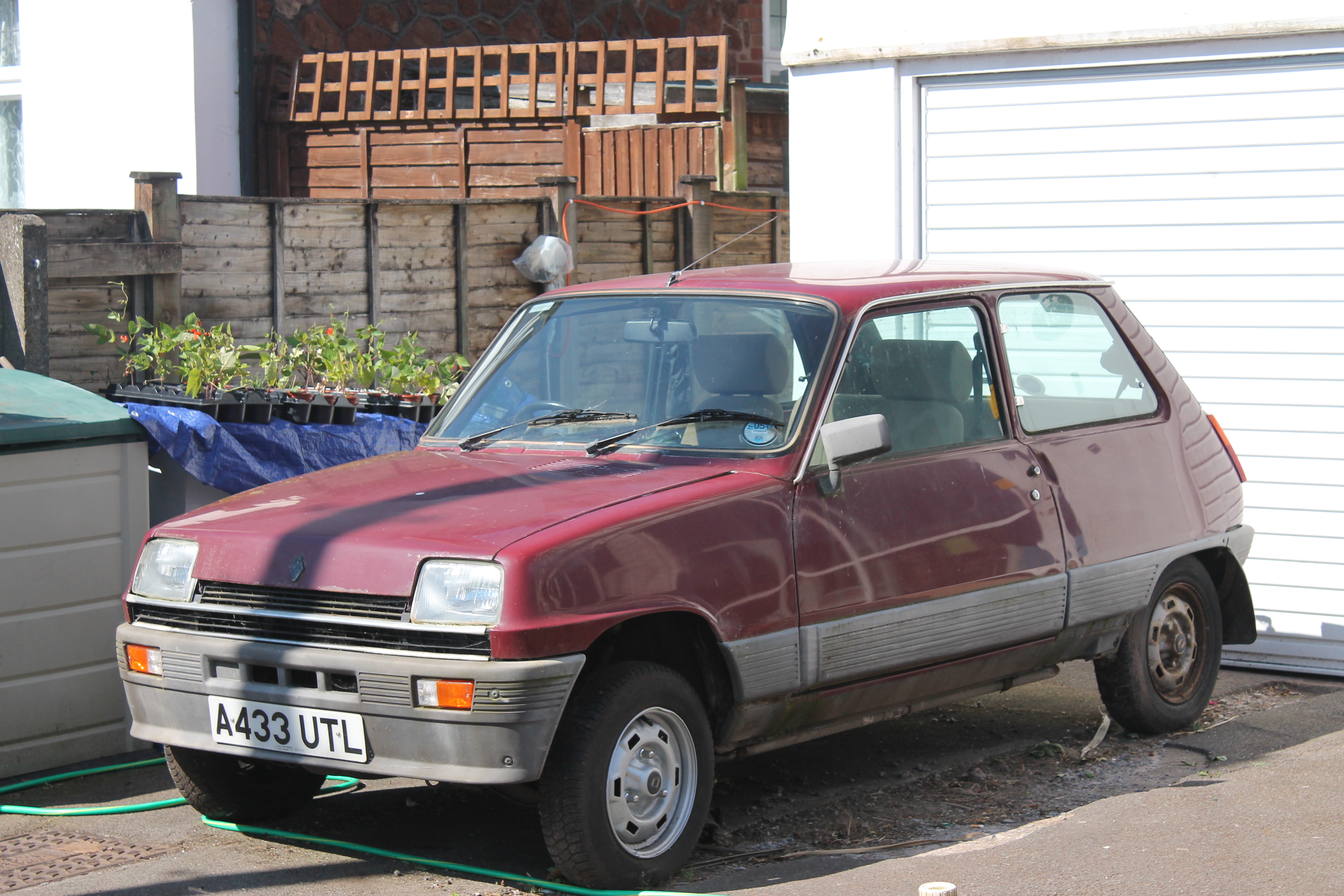
Renault 5
"...baguette if you're in France like the Renault 5. It has the glio AI over the air updates."
They mention the Renault 5 as an example of a car with a similar clever interior storage idea. It’s part of the retro-style vibe they’re comparing to.
The Renault 5 is referenced as an example of a vehicle with a similar multifunction storage idea (like a cup-holder/holder concept). It’s a nod to the car’s “retro” design language and practical interior touches.
14.6 inch touchscreen
"...very impressive. It was a 14.6 inch touchscreen inside that as well."
That’s the size of the main screen in the car. Bigger screens often mean more functions are controlled through the display.
A 14.6-inch touchscreen is a key user interface element in modern EVs, typically used for navigation, media, climate controls, and vehicle settings. Screen size can affect usability and how much is controlled digitally.

Volkswagen ID Polo
"The first one is the Volkswagen ID Polo with Simon and Nevo MD and Irish prices announced on that. ...So this will be on the MEB plus platform, front wheel drive..."
They’re talking about the new Volkswagen ID Polo, an upcoming affordable electric car. They discuss what it might cost in Ireland and how far it can go depending on the battery.
The Volkswagen ID Polo is discussed as an upcoming entry electric vehicle for Ireland. The hosts cover pricing expectations, grants/VRT relief impact, and key specs like battery options and range.
MEB plus platform
"So this will be on the MEB plus platform, front wheel drive, the Volkswagen entry electric vehicle..."
Volkswagen’s MEB plus is an EV architecture (a shared design “platform”) used to build multiple electric models. It influences packaging, battery placement, and how the car’s electrical systems are engineered.
front wheel drive
"So this will be on the MEB plus platform, front wheel drive, the Volkswagen entry electric vehicle..."
Front-wheel drive means the front wheels do the work of moving the car. It’s a common layout and can make the car simpler and cheaper to build.
Front-wheel drive (FWD) means the power is sent to the front wheels. In EVs, this often simplifies packaging and can help keep costs down compared with all-wheel-drive layouts.
VRT relief
"...and yes, after grants and VRT relief, it will be 19,885 comes in two different battery sizes..."
VRT is a tax in Ireland added when you register a car. “Relief” means eligible EVs can get a discount that makes the car cheaper to buy.
VRT relief refers to a reduction/waiver of Ireland’s Vehicle Registration Tax for qualifying vehicles. It can significantly lower the purchase price for eligible EVs.
battery sizes
"...it will be 19,885 comes in two different battery sizes with the long range coming in at 454. The standard range about 300 kilometers."
They’re offering the car with two different battery options. The larger battery generally lets you drive farther, while the smaller one is cheaper.
The ID Polo is said to come with two battery options, which typically changes range and sometimes performance. Bigger batteries usually provide more driving distance but can cost more.
power outputs
"Simon got a chance to poke around it and sit inside it. Three different power outputs, a 115 horsepower, 135 horsepower or 211 horsepower, two different battery sizes,"
“Power outputs” means how strong the car’s electric motor is. Different versions can feel more relaxed or more energetic depending on the power level.
“Power outputs” refers to how much electrical power the EV’s motor(s) can deliver, which directly affects acceleration feel and overall performance. EVs are often offered in multiple power levels so buyers can choose between efficiency and stronger drive.
kilowatt hour
"Three different power outputs... two different battery sizes, a 37 kilowatt hour and a 52 kilowatt hour."
A kilowatt-hour (kWh) tells you how much energy the EV battery can store. Bigger battery capacity usually helps the car go farther on a charge.
A kilowatt-hour (kWh) is a unit of energy used to describe EV battery capacity. More kWh generally means the battery can store more energy, which often translates to longer driving range (though real range also depends on efficiency and driving conditions).
pure positive design language
"As the first production models to showcase our new pure positive design language, the ID Polo is unmistakably 100% Volkswagen carrying out the DNA, carrying the Volkswagen DNA confidently into the future."
This phrase is Volkswagen’s way of describing a new design style for its electric cars. It’s about the overall look and design cues being consistent across the ID lineup.
“Pure positive design language” is Volkswagen’s branding term for a consistent design direction across its newer electric vehicles. It’s essentially a design philosophy—how the shapes, surfaces, and visual cues are meant to look and feel as part of the ID family.
refresh update
"with the Peugeot E408 and it is a refresh update in this stunning flare green video wound up on the channel a couple of days ago."
A “refresh update” means the car got updated without being completely new. Think of it like a facelift and improvements—often to make it more efficient or more convenient.
A “refresh update” is a mid-cycle update to an existing model, typically involving styling tweaks, software/infotainment changes, and sometimes efficiency improvements. It’s usually less drastic than a full redesign or new generation.
right hand drive
"So to refresh, really, we only got the right hand drive last year, so it's very quick in succession that we're getting this updated one."
Right-hand drive means the steering wheel is on the right side of the car. That’s important for countries where cars drive on the left, and the hosts are saying this version is arriving after the RHD release.
Right-hand drive (RHD) means the steering wheel is on the right side of the car, which is required in countries that drive on the left. The segment notes they only got RHD “last year,” implying the update is arriving quickly after the market-specific rollout.
efficiency
"They're focusing on the efficiency technology and usability rather than a dramatic reinvention."
Here, “efficiency” means how well the EV uses its battery energy to drive. A more efficient EV can usually go farther on the same charge.
In EV context, “efficiency” refers to how effectively the vehicle converts stored electrical energy into motion. Higher efficiency generally helps extend real-world range and reduces energy consumption per mile/km.
plug-in hybrid
"so there is a hybrid version that will be coming to Ireland. We won't be getting the plug in hybrid, it's just too expensive, Peugeot Ireland we're saying."
A plug-in hybrid is a car that can drive using electricity, but it also has a gas engine as backup. You charge it by plugging it in, like an EV.
A plug-in hybrid is a hybrid car that can run on an electric motor using a battery that you charge from an external power source. It also has an internal-combustion engine for longer trips or when the battery is depleted.
Peugeot Ireland
"We won't be getting the plug in hybrid, it's just too expensive, Peugeot Ireland we're saying. It is only going to get full electric or mild hybrid in Ireland... Peugeot Ireland don't plan on selling a huge amount of them."
Peugeot Ireland is the local Peugeot team handling what cars and versions are sold in Ireland. Here, they’re saying they won’t bring the plug-in hybrid because of cost.
Peugeot Ireland refers to the local Peugeot distributor/brand organization responsible for how Peugeot models are offered and marketed in Ireland. In this segment, they’re quoted about choosing which powertrains to bring to the Irish market.
mild hybrid
"It is only going to get full electric or mild hybrid in Ireland and it's a nip and tuck, really what it's all about."
A mild hybrid is a car that has a small electric assist, but it still mostly runs on gas. It helps the engine work more efficiently, especially in city driving.
A mild hybrid uses a small electric motor and battery to assist the engine, but it typically can’t drive the car purely on electricity for long distances. The system mainly helps with acceleration and reduces fuel use during stop-and-go driving.
real world 300
"Battery isn't huge, 58 kilowatt hour and it has a 400 if I'm not mistaken, roughly range, real world 300."
“Real world” range is the distance you can usually expect in normal driving, not just in ideal test conditions. Things like weather and how fast you drive can change it.
“Real world” range is an estimate of how far an EV typically goes in everyday driving conditions, which can differ from official test-cycle ratings. Factors like speed, temperature, terrain, and driving style can reduce or increase the actual distance.
Boot is 536
"Battery isn't huge, 58 kilowatt hour and it has a 400 if I'm not mistaken, roughly range, real world 300. Boot is 536. So really great because it's got that sport back look."
“Boot” means the trunk. “536” is a number for how much stuff the trunk can hold, so it’s basically about cargo space.
“Boot” is the trunk space measurement, and “536” likely refers to volume (commonly in liters) for cargo capacity. It matters because it indicates how much luggage or gear you can carry compared with other cars.
crossover fastback
"Obviously SUVs are the flavor of the day, so not everybody will want this crossover fastback, but very competent and mentioned the styling is I will be in favor of this kind of style as well, so keep up the great work, Peugeot."
A “crossover fastback” is a car shape that looks a bit like an SUV but has a sloping roof toward the back. It’s mainly a design/shape description that can also influence how the car feels and carries cargo.
A “crossover fastback” describes a vehicle style that blends SUV-like proportions (higher seating position, practical packaging) with a fastback roofline (a sloping rear). This affects both appearance and how the car’s shape packages space and aerodynamics.

Peugeot 408
"Now that we've got the break, we can jump into an interview with the production product, special product manager, Mohamed with Peugeot and the E408. So let's do that. Hello... I'm the product manager in charge of the 408."
Peugeot 408 is a car model from Peugeot. In this episode, they’re talking about the E408 version and how Peugeot plans to sell it in Ireland as an electric car.
The Peugeot 408 is a Peugeot model being discussed in this segment, specifically in the context of an interview about the E408. The hosts are focusing on how Peugeot is positioning it for Ireland with an all-electric option rather than a plug-in hybrid.
EMP2 platform
"“The E408 sits on an evolved version of the EMP2 platform rather than moving over to the STLA medium architecture…”"
A platform is the car’s underlying “build system” (structure and mounting points). EMP2 is a shared design that can be adapted for different models, including electric versions, which helps engineers move faster.
EMP2 is a modular vehicle platform used by Stellantis (Peugeot/Citroën/DS) that supports different powertrains and body styles. In this segment, the hosts use it to explain why the E408 can be engineered for electrification without switching to a newer architecture.
STLA medium architecture
"“…rather than moving over to the STLA medium architecture seeing in the 3008 and 5008.”"
This is another “car platform” approach from Stellantis. The point here is timing: the E408 was designed before this newer architecture existed, so it uses EMP2 instead.
STLA Medium is a newer Stellantis vehicle architecture intended to standardize how cars are engineered, especially for electrified powertrains. The speaker contrasts it with EMP2, saying STLA Medium wasn’t available when the E408 was designed.
fastback silhouette
"“…how you've optimized this platform specifically for the 408's unique fastback silhouette?”"
A fastback is a car shape where the roof flows smoothly into the back. That smooth shape helps the car cut through air more efficiently.
A fastback silhouette is a body shape where the roof slopes smoothly down toward the rear, reducing aerodynamic drag. The speaker ties this shape directly to improved efficiency for the E408.
wheelbase module
"“We specifically used a longer wheelbase module.”"
Wheelbase is how far apart the front and rear wheels are. A longer wheelbase can help with space and how the car is packaged for things like the battery.
A wheelbase is the distance between the front and rear axles, and changing it affects interior space, ride tuning, and packaging for components like batteries. The speaker says they used a longer wheelbase module to optimize the E408.
ground clearance
"“And we also adapted the ground clearance, which is higher than the 308.”"
Ground clearance is how much space there is between the bottom of the car and the ground. More clearance can make the car easier to drive over uneven roads.
Ground clearance is the height between the road and the lowest part of the car. The speaker notes the E408’s ground clearance is higher than the 308, which can help with rough roads while still targeting efficiency.
power chain
"“For sure, we have the efficiency of the engine, the battery and all the power chain chain…”"
They mean the whole “electric power system” that turns battery energy into driving. If each part is efficient, the car uses less electricity.
“Power chain” here means the full set of components that convert stored electrical energy into motion—battery, power electronics, motor, and drivetrain. The speaker includes it as one of the contributors to overall efficiency.
A plus tires
"“…linked also to the low friction of the tires, which are classified A plus tires.”"
This is about tires that waste less energy as they roll. More efficient tires can help an EV use less electricity.
“A plus tires” refers to tire rolling-resistance ratings, where higher efficiency tires require less energy to roll. The speaker links these tires to the E408’s low energy consumption.
O66 as SCX and O28 as a CX
"“This silhouette is offering O66 as SCX and O28 as a CX.”"
These are numbers that describe how “slippery” the car is through the air. Lower drag numbers generally mean the car uses less energy at speed.
SCx and CX are aerodynamic coefficients used to quantify drag from the vehicle’s shape. The speaker is claiming very low aerodynamic resistance values (O66/SCX and O28/CX) that help the E408 achieve benchmark efficiency.
cat ears
"And as an example, I can mention the so-called cat ears that we have integrated on the top of the rear tailgate, and which it's not a design, let's say a mark, but it also optimizes the airflow."
“Cat ears” are little aerodynamic parts on the back of the car. They help guide airflow so the car is a bit more efficient and can feel smoother at speed.
“Cat ears” refers to small aerodynamic fins/air inlets mounted on the rear of a vehicle (here, on top of the tailgate). They’re used to manage airflow around the rear to improve aerodynamic efficiency and reduce drag.
58.2 kWh usable NMC battery
"Very good. The battery sweet spot. The car features a 58.2 kWh usable NMC battery."
The battery is measured in kWh, which is how much energy it can store. “Usable” means the portion you can actually use for driving, and “NMC” is the type of battery material inside.
This is the battery capacity the car can actually use (usable kWh), and “NMC” is the battery chemistry (Nickel Manganese Cobalt). Usable capacity matters because it directly affects how far the car can go on electricity and how much energy is available for charging and power delivery.
120 kW DC fast charging
"We know that the E408 supports 120 kW DC fast charging, but many owners care more about the charging curves and the peak."
DC fast charging is the quickest way to charge an EV using a special charger. “120 kW” is how fast the car can charge at its best, but it usually slows down as the battery fills up.
DC fast charging is a method that delivers direct current to the battery at high power, allowing quicker charging than standard AC charging. “120 kW” is the peak charging power the car can accept under ideal conditions, though real-world results depend on battery temperature and state of charge.
charging curves
"We know that the E408 supports 120 kW DC fast charging, but many owners care more about the charging curves and the peak."
A charging curve is basically the “speed over time” of charging. Even if a car can hit a high peak, it may charge slower later, so the curve tells you what you’ll actually experience.
Charging curves describe how charging power changes over time during a charging session. EVs often start fast, then taper as the battery approaches higher state-of-charge, so the curve shape can matter more than the single peak number.
battery preconditioning
"Does the 408 feature a new battery preconditioning and it does support the vehicle to load for powering external devices? Yes."
Battery preconditioning means the car gets the battery ready before you reach a fast charger. That can help it charge faster and more consistently when you plug in.
Battery preconditioning is a strategy that warms or optimizes the battery before fast charging so it can accept higher power more consistently. It’s often triggered by navigation/route information so the battery is ready when you arrive at the charger.
automatic and manual battery peak conditioning
"Yes. So the E408 comes standard with automatic and manual battery peak conditioning. Automatic is associated with a navigation system and E-triplanner."
This is the car’s way of getting the battery ready to charge at its fastest. “Automatic” does it for you based on your route, while “manual” lets you start the preparation yourself.
Battery peak conditioning is a control mode that prepares the battery to achieve higher fast-charging power (“peak”) when you plug in. The transcript distinguishes automatic conditioning (linked to navigation/trip planning) from manual conditioning that the driver can enable.
powering external devices
"Does the 408 feature a new battery preconditioning and it does support the vehicle to load for powering external devices? Yes. So the E408 comes standard with automatic and manual battery peak conditioning."
This means the car can supply electricity to things outside the car, like chargers or small appliances. It’s usually done through built-in outlets or an inverter.
“Powering external devices” refers to using the vehicle’s electrical system to run or charge outside equipment (often via built-in outlets/inverters). In EVs and PHEVs, this is typically managed through the vehicle’s power electronics and can be useful for camping or emergency power.
E-triplanner
"Automatic is associated with a navigation system and E-triplanner. So it's available on all the trim levels."
E-triplanner is the car’s built-in trip planning system. It can help the car prepare the battery for charging so your first fast-charge stop goes better.
E-triplanner is the vehicle’s trip-planning/navigation feature used to coordinate charging and battery management. In this context, it’s tied to automatic battery conditioning so the battery is optimized for the first fast-charging stop.
V2L
"the V2L features which allow the driver to connect any external electrical equipment with an output up to 3.6 kW."
V2L means the EV can act like a power source for other electronics. In this case, it can run devices up to about 3.6 kW.
V2L (Vehicle-to-Load) lets an EV power external devices from its battery through an onboard outlet. Here, it’s described as allowing the driver to connect equipment up to 3.6 kW.
heat pump
"Range anxiety is still a talking point for Irish EV buyers. The E408 comes with a standard heat pump. Can you quantify how much a winter range benefit this provides compared to models without one?"
A heat pump helps the car stay warm in winter using energy more efficiently. That usually means you lose less battery range to cabin heating, so you can drive farther in cold weather.
A heat pump is an EV efficiency system that moves heat rather than generating it from scratch, helping the cabin stay warm in cold weather. In this segment, it’s credited with improving winter range by about 15% (roughly 30–40 km) versus an EV without a heat pump.
regenerative braking
"Regenerative braking evolution. The E408 introduces three levels of regenerative braking. Can you walk us through the moderate and high settings and is there a true one-pedal driving experience..."
Regenerative braking is when the electric motor helps slow the car down and also recovers some energy for the battery. The stronger the setting, the more the car slows when you lift off.
Regenerative braking is how an EV slows down while turning some of its motion back into electricity to recharge the battery. This segment explains that the e-408 offers three regenerative braking levels and discusses whether it feels like one-pedal driving versus a more traditional “ICE-like” brake feel.
one-pedal driving
"...is there a true one-pedal driving experience or has that been tuned more to a traditional ice-like feel?"
One-pedal driving means you can do most slowing down just by lifting off the accelerator. The brake pedal is used less often, depending on how strong the car’s regen is.
One-pedal driving is a driving style where lifting off the accelerator provides enough deceleration that you can slow down and often stop with minimal brake pedal use. The hosts ask whether the e-408’s regenerative braking is tuned to feel like one-pedal driving, or instead like a more familiar internal-combustion (ICE) braking feel.
ice-like feel
"...has that been tuned more to a traditional ice-like feel? Yeah. ...we preferred that the calibration would be more icy or hybrid-like in order not to disturb the driver and to give him a familiar feeling."
They’re saying the car is tuned so the slowing-down behavior feels familiar to drivers used to gas cars. The goal is to make the transition to EV driving feel less abrupt.
“ICE-like feel” refers to tuning the EV’s deceleration and pedal response to resemble how a traditional internal-combustion engine car behaves. In this segment, the calibration is described as more “icy or hybrid-like” to avoid surprising the driver and keep the experience familiar.
iCockpit
"The iCockpit is a Peugeot staple now, but we're seeing chat GBT integration rolling out across the Stellantis range."
i-Cockpit is Peugeot’s name for its driver-focused dashboard and control setup. Here, they’re connecting it to the car’s newer AI and voice features.
i-Cockpit is Peugeot’s branded driver interface concept, typically referring to the layout and design of the digital instrument cluster and controls. In this segment, it’s mentioned as the foundation for newer AI/voice features.
Stellantis
"The iCockpit is a Peugeot staple now, but we're seeing chat GBT integration rolling out across the Stellantis range."
Stellantis is a big car company group that owns several brands. They’re saying the same kind of AI features are being added across many of their cars.
Stellantis is the automaker group behind multiple brands, and the segment says AI features are rolling out across the Stellantis range. This matters because it suggests the e-408’s tech may be part of a broader platform strategy.
chat GBT
"The iCockpit is a Peugeot staple now, but we're seeing chat GBT integration rolling out across the Stellantis range."
They’re referring to ChatGPT-like AI that can understand and respond to conversation. The point here is that this kind of AI is starting to show up in car voice and planning features.
“Chat GBT” appears to refer to ChatGPT-style generative AI used for conversational interfaces. The segment suggests this kind of AI integration is being rolled out across the Stellantis lineup, including the e-408.
voice recognition
"How deeply is AI integrated into the E408's voice recognition and trip planning system? AI is fully integrated into the E408's voice recognition and trip planning system."
Voice recognition lets you talk to the car and have it understand what you want. In this case, they’re saying the e-408’s voice system is tightly connected to its AI features.
Voice recognition is the system’s ability to understand spoken commands so the driver can control functions hands-free. Here, it’s discussed as being “fully integrated” into the e-408’s AI-enabled interaction.
trip planning
"...voice recognition and trip planning system? AI is fully integrated into the E408's voice recognition and trip planning system."
Trip planning is the car’s navigation that helps map out your route and stops. They’re saying the e-408 uses AI to make that planning and interaction easier to use.
Trip planning is the navigation feature that builds a route and can account for factors like distance, stops, and driving conditions. The segment highlights AI integration into the e-408’s trip planning system for more intuitive interaction.
infotainment
"Integrated into the existing infotainment, this type of technology will support the driver with natural language answer and useful answers related to vehicle features, charging, navigation, comfort adjustment, et cetera, et cetera."
Infotainment is the car’s main screen and electronics for things like music, maps, and settings. In an EV, it can also show charging and route info.
Infotainment is the in-car system that combines entertainment and information functions, like the touchscreen, media playback, and vehicle settings. In EVs, it often also handles charging and navigation-related screens.
natural language
"this type of technology will support the driver with natural language answer and useful answers related to vehicle features, charging, navigation, comfort adjustment, et cetera, et cetera."
Natural language means you can talk to the car in a normal way, like you would to a person. The system tries to understand what you mean, not just a few memorized phrases.
Natural language refers to the ability to understand and respond to spoken or typed requests in everyday wording. In cars, it enables voice assistants to interpret intent (like “find charging near me”) rather than requiring rigid commands.
GPT feature
"And I have to precise that this such a GPT feature is associated with what we call the connected services pack, and it's available in the Perno Connect Plus pack."
A “GPT feature” means the car uses AI to generate answers to questions. Instead of only following fixed menus, it can respond more conversationally about things like charging and directions.
A “GPT feature” indicates the car is using a generative AI model (like OpenAI’s GPT-style technology) to produce responses. Here, it’s described as part of connected services to answer questions about vehicle features, charging, and navigation.
connected services pack
"this such a GPT feature is associated with what we call the connected services pack, and it's available in the Perno Connect Plus pack."
A connected services pack is a set of online features for the car. It usually needs a data connection so the car can get updates and use things like smarter voice/AI help.
A connected services pack is a bundle of features that rely on an internet connection (often via the car’s modem or a paired phone). These services can include remote functions, live traffic, and AI/voice assistance capabilities.
210 horsepower
"Next question is going to be with regards to the performance and driving dynamics with the 210 horsepower 345 Newton meters of torque."
Horsepower is a number that describes how much power the motor can produce. Higher horsepower usually means stronger acceleration, all else equal.
Horsepower is a measure of engine/motor output power. In EV discussions, it’s used to compare how strongly the motor can accelerate the car.
Newton meters of torque
"with the 210 horsepower 345 Newton meters of torque. The E408 has significantly punctured in the 2008."
Torque is the “pulling force” the motor makes. In an EV, that force often comes quickly, so the car can feel responsive right away.
Torque (measured in Newton-meters) is the twisting force the motor produces. EVs often deliver strong torque from low speeds, which affects how quickly the car feels like it responds.
battery weight
"How has the suspension been tuned to handle the extra battery weight while maintaining the cat-like agility Peugeot is known for?"
Battery weight is the extra mass added by the EV’s high-voltage battery pack. It changes how the car handles, so engineers adjust suspension and chassis components to keep ride quality and steering balance.
panhard rod
"And we also adapted a rear axle with what we call a panhard rod instead of the traditional twist beam."
A panhard rod is a metal link in the suspension that helps keep the rear axle located correctly. That can improve how straight and stable the car feels, especially when cornering or under bumps.
A panhard rod is a suspension link used to control lateral (side-to-side) axle movement. It’s often used in rear axle setups to keep wheel alignment more consistent under load compared with simpler designs.
twist beam
"And we also adapted a rear axle with what we call a panhard rod instead of the traditional twist beam."
A twist beam is a simpler rear suspension design. It can flex as the wheels move, which affects how the car rides and how the rear end behaves.
A twist beam is a rear suspension design where the beam flexes in a way that can allow some axle movement as the car goes over bumps or turns. It’s common on many mainstream cars, but it can behave differently than multi-link or rod-based setups.
C segment fastback
"And the last question I have for you, Muhammad, is the 408 occupies a unique C segment fastback space."
“C segment” is a European category of car size (compact). “Fastback” means the roof slopes down toward the back instead of ending abruptly, which can look sporty and help airflow.
“C segment” is a European vehicle class roughly corresponding to compact cars. “Fastback” describes a body shape with a sloping roof that flows into the rear, often improving aerodynamics and giving a sportier silhouette.

Bmw I4
"is the car designed to conquest buyers from traditional premium saloons like the BMW i4, or is it aimed at the crossover crouch like you see in the Polestar 2?"
The BMW i4 is a premium electric car from BMW. The speaker mentions it as an example of the kind of “traditional premium” EV buyers the Peugeot 408 might be targeting.
The BMW i4 is referenced as a traditional premium sedan-like EV competitor. It’s used to frame who the Peugeot 408 is trying to attract—buyers considering premium EVs from established brands.

Polestar 2
"or is it aimed at the crossover crouch like you see in the Polestar 2?"
The Polestar 2 is an electric car brand/model that many people consider as a crossover-style option. The speaker is using it to describe the type of buyer the Peugeot 408 is aiming for.
The Polestar 2 is cited as an example of a crossover-like EV alternative. The comparison helps position the Peugeot 408’s target customer—whether it’s more “premium sedan” or more “crossover” in how people shop.

Skoda Octavia
"...our competitors are depending on the on the powertrain. So on hybrid, it's clearly the Skoda Octavia."
The Škoda Octavia is a popular European family car. Here, they’re saying it’s one of the main cars people compare when they’re looking at hybrid options.
The Škoda Octavia is a mainstream family car that’s often used as a benchmark in Europe. In this segment, it’s mentioned as the competitor in the hybrid category, meaning it’s a key alternative shoppers compare against.
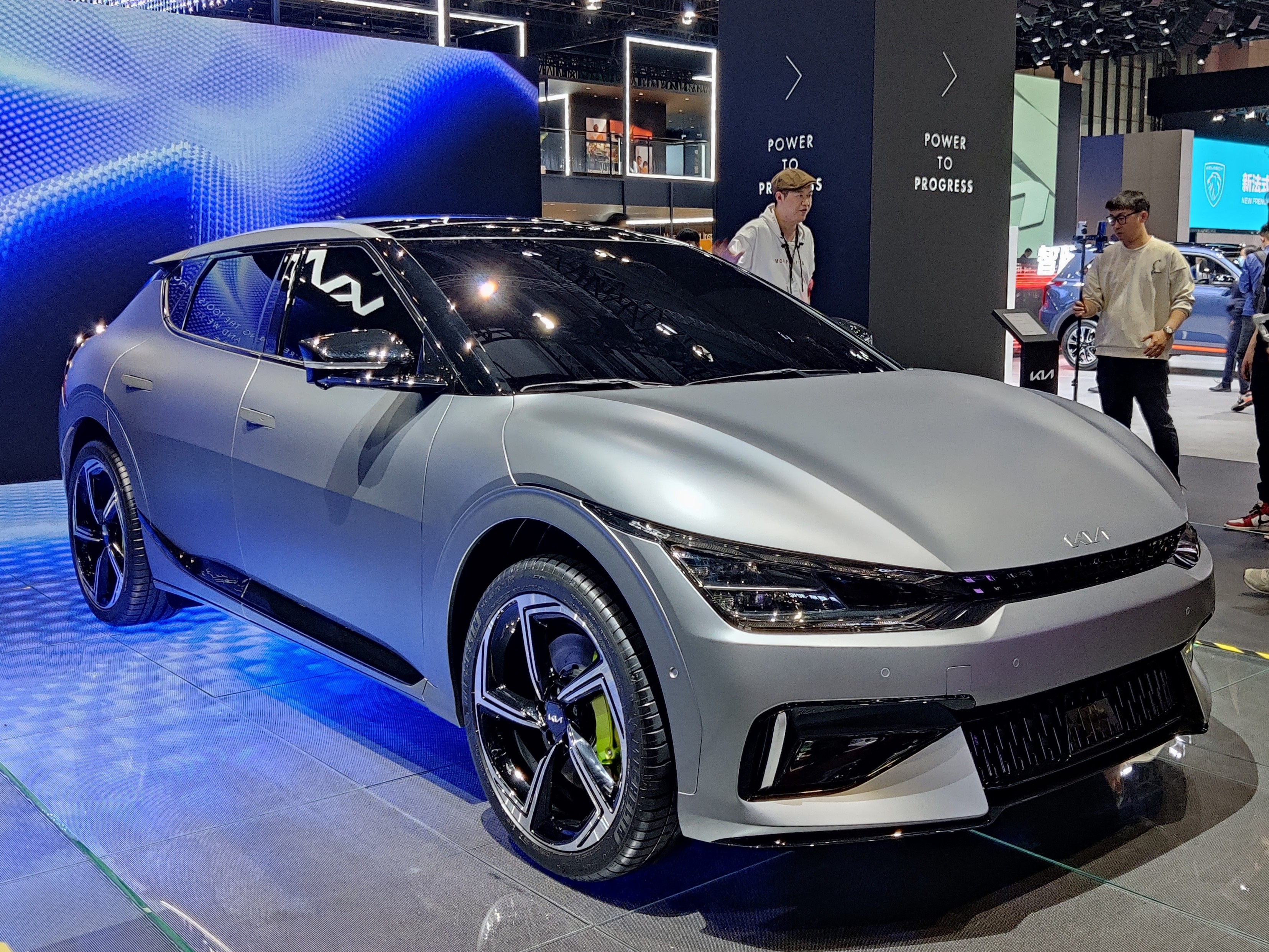
Kia EV6
"...And in the BV, at the beginning, it was Kia EV6. And now it's clearly the Kia EV4 fastback."
The Kia EV6 is an all-electric Kia crossover. They’re saying it was the earlier comparison point, but now they’re pointing to a different Kia EV as the main rival.
The Kia EV6 is an electric crossover that’s been a major competitor in the EV market. In the segment, it’s mentioned as the earlier benchmark in the “BV” category before being replaced by a newer Kia model.

Kia EV4
"...And now it's clearly the Kia EV4 fastback. Okay, yes, very similar shape and silhouettes."
The Kia EV4 is an electric car. “Fastback” just means it has a more sloped, sporty-looking roof, and they’re saying it’s now the main EV rival in this comparison.
The Kia EV4 is a compact electric model, and “fastback” describes its sloping roofline shape. The hosts use it as the current EV competitor, emphasizing how Kia’s design and packaging are aimed at similar customer types.
Formatic all wheel drive
"You can also get it with Formatic all wheel drive. You can get it on 17s to 19s, depending on the model."
All-wheel drive means the car can send power to more than just the front or rear wheels. That can help it grip better on wet or slippery roads.
“All-wheel drive” (AWD) means power is sent to more than one axle to improve traction and stability, especially in poor weather. The transcript likely refers to Mercedes-Benz “4MATIC,” which is the brand name for its AWD system.
17s to 19s
"You can also get it with Formatic all wheel drive. You can get it on 17s to 19s, depending on the model. And it's all around larger than the vehicle it was before."
“17s to 19s” is about wheel size—17-inch up to 19-inch wheels. Bigger wheels can make the ride feel different and can affect tire price.
“17s to 19s” refers to wheel sizes measured in inches (17-inch to 19-inch wheels). Larger wheels can change ride comfort and steering feel, and they also affect tire cost and availability.
aircraft-style headroom and knee space
"Greater front and rear headroom, rear knee space, all together more visually aligned..."
Headroom and knee space are ways to describe how comfortable the seats are. More headroom means less feeling cramped, and more knee space means your legs have more room.
Headroom and knee space are interior packaging metrics that describe how much vertical space occupants have and how much room their knees have in the rear seat. The speaker uses them to argue the car feels roomier than before.

Mercedes Benz CLA
"...all together more visually aligned with the appearance of those in the sibling Mercedes Benz range. It's got this shark nose front with the silhouette, all about getting the aerodynamics... I was looking up to attend the international launch at this in Rome last year..."
They’re talking about a new electric Mercedes-Benz CLA. The hosts are going over what’s different about the EV version—especially how it’s shaped to be efficient and how much range it can get.
The segment is describing the new Mercedes-Benz CLA, focusing on its EV-specific design and efficiency. They mention multiple EV versions and highlight features aimed at improving aerodynamics and range.
shark nose
"It's got this shark nose front with the silhouette, all about getting the aerodynamics. You've got frameless doors..."
“Shark nose” is just a nickname for the car’s front design. It’s meant to look sporty, but it also helps the car slice through air more efficiently.
“Shark nose” is a styling description for a more aggressive front-end shape, usually paired with aerodynamic intent. In EVs, front-end shaping helps reduce drag to improve efficiency and range.
aerodynamics
"...all about getting the aerodynamics... It's all about range and aero with regards to this."
Aerodynamics is how air flows around the car. Better aerodynamics reduces drag, which is especially important for EVs because it helps stretch battery range at highway speeds.
frameless doors
"You've got frameless doors, flush fitting handles, body color as well..."
Frameless doors mean the window glass doesn’t sit inside a metal frame. It’s mostly a design/fit-and-finish feature, and it can help the car look cleaner.
Frameless doors use glass that seals without a traditional window frame. This is a design choice that can improve the look and slightly reduce airflow disruption around the side glass.
Request an Explanation
Heard something you'd like explained? We'll add it to this episode.
Sign in to request explanations for terms you heard.
Want to learn more?
Browse our glossary for plain-English explanations of automotive terms, jargon, and concepts.
Help improve this episode
See something that's not quite right? Our annotations are AI-generated and can sometimes miss the mark. Click the flag icon on any annotation to suggest a correction.