
New AMG V8! Chevy Saves the Manual, Trouble at Honda, Spyker Returns, and More!
About this episode
Hosts kick off with Honda’s EV-related losses and the resulting multi-year delay of redesigns—Odyssey talk even stretches to “till 2030.” They compare Honda’s long product lifecycles to rivals pushing hybrid/awd tech, then widen to brand strategy, tariffs, and whether reliability-focused buyers are aging out. The conversation pivots to Mercedes-AMG’s new flat-plane V8 and what it could replace, plus Camaro manual rumors. Later, they cover Spyker’s return, Porsche’s EV mix, and a bunch of enthusiast detours.

Honda Prologue
"...s, well, lost so much money on their EVs like the prologue to which there was it was a prologue to there nev..."
The Honda Prologue is an electric SUV, so it runs on electricity. The podcast is talking about it as part of Honda’s EV efforts and how those plans have affected costs. It’s mentioned because it’s one of the EV models Honda has introduced.
The Honda Prologue is an electric SUV, and the episode references it in the context of Honda’s EV financial losses (“the prologue…”). That makes it relevant as part of a discussion about Honda’s EV rollout and how it’s been going. It’s mentioned because it’s one of Honda’s EV products in the lineup.

Honda Odyssey
"The Odyssey is highlighted because its chief rival was the Toyota Sienna was redesigned a couple years ago and went hybrid and went all-wheel drive, neither of which the Odyssey offers."
The Honda Odyssey is a minivan people buy for family use. The hosts are saying the Odyssey is at a disadvantage because the rival Sienna offers hybrid and all-wheel drive, which the Odyssey doesn’t in their comparison.
The Honda Odyssey is a mainstream minivan known for family-focused packaging and long-running model continuity. In this discussion, it’s contrasted against the Toyota Sienna’s hybrid and all-wheel-drive updates, highlighting how the Odyssey’s lack of those features affects its competitiveness.

Toyota Sienna
"The Odyssey is highlighted because its chief rival was the Toyota Sienna was redesigned a couple years ago and went hybrid and went all-wheel drive, neither of which the Odyssey offers."
The Toyota Sienna is a minivan. Here, the point is that it was updated to be a hybrid and can be all-wheel drive, which makes it a tougher competitor for the Honda Odyssey.
The Toyota Sienna is a minivan that’s been redesigned with a hybrid powertrain and available all-wheel drive. In this segment, it’s positioned as the Odyssey’s chief rival because those updates make it more appealing to buyers who want modern efficiency and traction.
hybrid
"The Odyssey is highlighted because its chief rival was the Toyota Sienna was redesigned a couple years ago and went hybrid and went all-wheel drive, neither of which the Odyssey offers."
A hybrid uses a gas engine plus an electric motor. The electric assist helps it use less fuel, and that’s why it matters in this minivan rivalry.
A hybrid vehicle uses both an internal-combustion engine and an electric motor/battery to improve efficiency. In this segment, “hybrid” is a key differentiator because the Toyota Sienna and Kia Carnival are described as offering hybrid versions, while the Honda Odyssey is said not to.
all-wheel drive
"The Odyssey is highlighted because its chief rival was the Toyota Sienna was redesigned a couple years ago and went hybrid and went all-wheel drive, neither of which the Odyssey offers."
All-wheel drive means the car can send power to all four wheels. It helps the car grip better on rain, snow, or rough roads.
All-wheel drive (AWD) sends power to more than just the front or rear axle, improving traction in slippery conditions. The hosts use it as part of the Sienna’s appeal versus the Odyssey, implying buyers may prefer AWD plus hybrid efficiency.

Kia Carnival
"And the Carnival also hybrid. That has a hybrid version is a new product."
The Kia Carnival is a minivan that’s being expanded with a hybrid variant. The segment treats it as a new product direction, showing how more competitors are adding electrified powertrains to the minivan market.
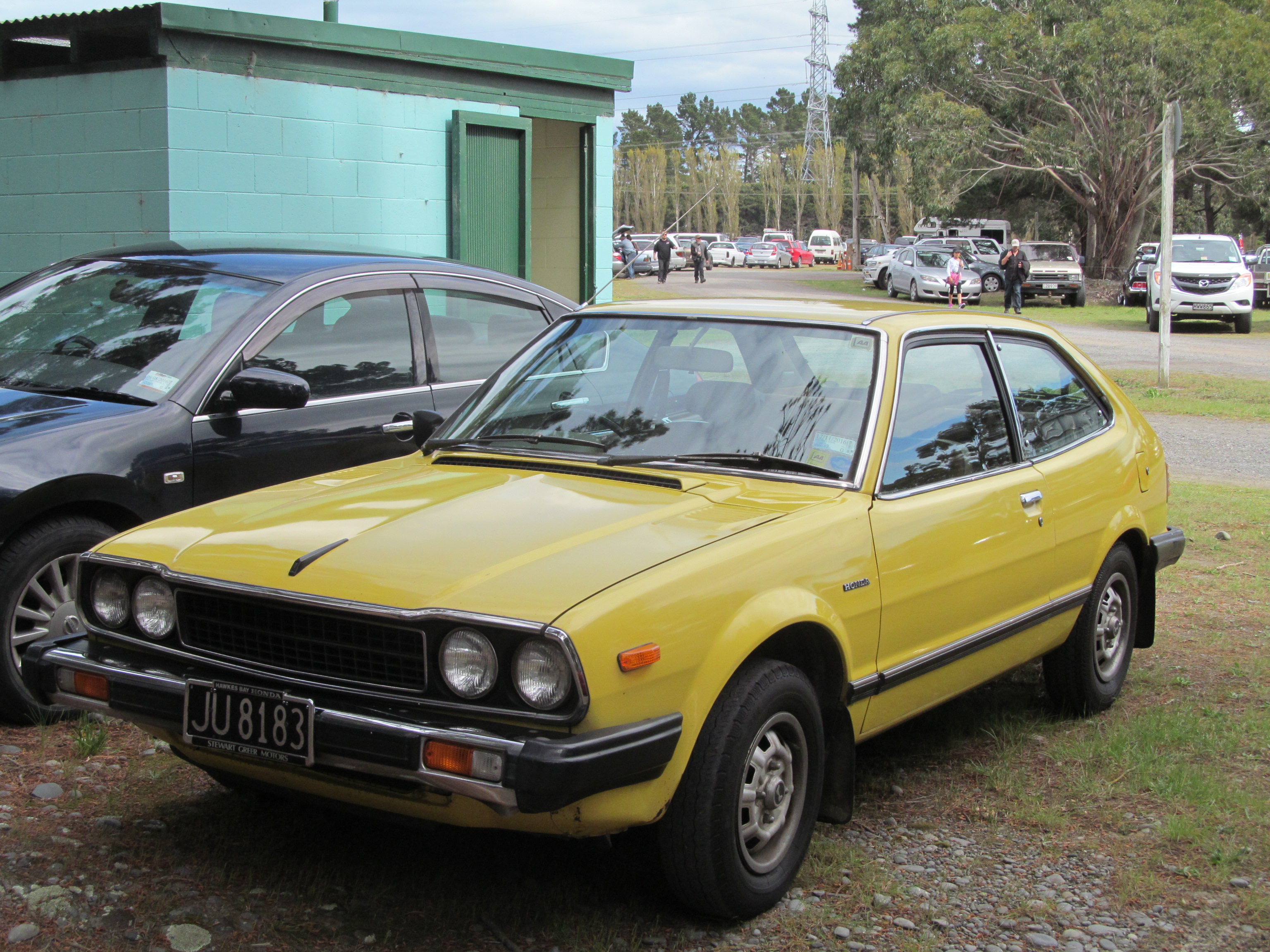
Honda Accord
"Well, as these cars get older and older, the current Accord has also already been out for a few years."
The Honda Accord is a popular Honda sedan. They’re using it as an example of how long a model can stay basically the same before a redesign, and how that can affect sales.
The Honda Accord is a long-running midsize sedan line that the hosts reference in terms of how long it stays on sale before redesign. They mention the “current Accord” being out for a few years, tying it to a broader point about product lifecycles and declining sales as vehicles age.

Honda Civic
"Well, as these cars get older and older, the current Accord has also already been out for a few years. The Civic has already been out for a few years."
The Honda Civic is Honda’s compact car. The hosts are mentioning it to make the point that when models get older, sales can start to decline unless the company refreshes or innovates.
The Honda Civic is a compact car line that the hosts reference as also being “out for a few years” in the context of aging model lineups. They use it to argue that long product lifecycles can make it harder for a brand to stay profitable if sales start to slide.
product lifecycle
"You run a 13-year product lifecycle on a minivan."
A product lifecycle is how long a car model stays basically the same before it gets updated or replaced. The longer it goes without changes, the harder it can be to keep sales strong.
A product lifecycle is the span of time a car model stays in the market before a redesign or major refresh. The hosts argue that running a long lifecycle on a minivan can hurt profitability if demand weakens as the vehicle gets older.

Honda Hrv
"You said it affects HRV, which is one of the really big segments right now."
The Honda HR-V is a small crossover SUV. They’re saying changes (or lack of innovation) in Honda’s lineup can affect sales in this popular class too.
The Honda HR-V is a subcompact crossover that the hosts mention as one of the bigger segments they’re watching. They tie it to how Honda’s broader lineup strategy and aging models could affect performance across multiple vehicle categories.

Honda Pilot
"But you have to assume that if it pushes out all the other ones, you're not going to necessarily see some real development on CRV and Pilot. That may also push out those."
The Honda Pilot is Honda’s bigger family SUV. The hosts are talking about how Honda might not redesign it for a long time, which can make it harder to compete.
The Honda Pilot is Honda’s larger, three-row family SUV. The discussion frames it as part of a generation Honda may “skip” or delay redesigning, which affects how competitive it can be without new powertrain or feature updates.

Acura MDX
"The MDX, which came out in 22, will not be redesigned until 2031. Crazy. So that's an incredibly long life cycle in an ultra-competitive, luxury, mid-sized SUV segment"
The Acura MDX is Acura’s important family SUV. The hosts are saying it’s going to go a very long time without a redesign, which can leave it feeling outdated compared with rivals.
The Acura MDX is Acura’s mainstream luxury midsize SUV, known for being a key volume model. Here, the hosts point out that the MDX (coming out in 2022) won’t be redesigned until 2031, implying a long product cycle with limited powertrain and feature evolution.

Acura RDX
"By the way, Acura, which will not have the RDX anymore, will have a 10-year, 8-year-old, 9-year-old MDX as their other core product. That's not a great situation to be at."
The Acura RDX is a smaller Acura SUV than the MDX. The hosts are saying Acura won’t keep selling the RDX, so it relies more on the MDX instead.
The Acura RDX is a compact luxury SUV positioned below the MDX. The segment notes that Acura “will not have the RDX anymore,” meaning the brand’s lineup becomes more dependent on older MDX inventory.

Honda CR-V
"The CR-V is a new competitive product. They have some time. As long as they... The CR-V is pretty new."
The Honda CR-V is a very popular SUV model. Here, the hosts are saying it’s newer and can help Honda compete while they work on other products.
The Honda CR-V is a mainstream compact SUV that’s often used as a benchmark in the crowded small-SUV market. In this segment, it’s discussed as Honda’s newer, more competitive product that gives them time to improve other areas.
EV
"You had to assume that what the plan was, was that they were going to let Odyssey go until an EV could replace it. They were going to cancel it entirely, by the way, this year."
EV means electric vehicle. It’s a car that runs mainly on electricity from a battery, and the hosts are saying it could replace a gas-powered model like the Odyssey.
EV stands for electric vehicle, meaning the car is powered primarily by an electric motor and a battery. The hosts are using it as the expected replacement for a non-EV model, implying a shift in powertrain strategy.

Acura Integra
"Filippo will have an Integra whose life cycle has been expanded by three years and still doesn't sell well, as is new. You're forgetting, maybe intentionally."
The Acura Integra is a smaller Acura model that’s meant to feel more like a fun car to drive. They’re saying its current generation is being kept around longer than usual, but it still isn’t selling as strongly as Acura would like.
The Acura Integra is a compact, driver-focused hatchback/sedan line that’s known for aiming at enthusiasts rather than just being a commuter. Here, it’s discussed in terms of its “life cycle” being extended, which ties into how long Acura can keep the model relevant before a replacement is needed.
AMG
"On the same topic, Mercedes-Benz is doing V8s. I don't know if you know much, but AMG, big V8 company. Big V8 company. I got one, actually."
AMG is Mercedes-Benz’s performance division. They’re known for making powerful V8 engines, and that’s why the hosts bring it up in a discussion about Mercedes doing V8s.
AMG is Mercedes-Benz’s performance brand, best known for building high-output engines and performance-tuned versions of Mercedes models. In this segment, the hosts connect AMG with “V8s,” framing it as a company identity built around large-displacement V8 power.

Mercedes-Benz C63
"They do V8s, although currently what they do is turbo four cylinders in the C63."
The Mercedes-Benz C63 is an AMG performance version of the C-Class. Traditionally it was famous for big V8 power, but here they’re talking about the newer setup using a turbo four-cylinder instead.
The Mercedes-Benz C63 is a performance sedan from AMG, known for its high-output V8 heritage. In this discussion, the host notes that AMG currently uses turbocharged four-cylinder engines in the C63, which is a major shift from the traditional big V8 formula.
turbo four cylinders
"They do V8s, although currently what they do is turbo four cylinders in the C63."
A “turbo four-cylinder” is a smaller engine with four cylinders that uses a turbo to make more power. It’s one way manufacturers get strong acceleration without using a bigger engine.
“Turbo four cylinders” means a 2.0–2.5L class inline-four engine that uses a turbocharger to increase the amount of air (and fuel) it can burn. Turbocharging helps smaller engines make power closer to larger naturally aspirated engines, but the driving feel can differ from a V8.
high-performance sedan
"I personally, there was nothing that could buy or lease a new high-performance sedan. What do you mean? Not a black wing? Nothing."
A “high-performance sedan” is a regular four-door car, but built to drive fast and handle well. Here they’re talking about whether there’s a good new one you can realistically buy or lease.
A “high-performance sedan” is a four-door car tuned for strong acceleration, handling, and braking rather than just comfort. The discussion is about whether there’s a compelling new option available to buy or lease at a reasonable price.

BMW E63
"...hat for now it's been years since there's been an E63. Yeah."
The BMW 6 Series is a luxury car line meant for comfortable, longer-distance driving. The podcast is referencing an older generation code (“E63”), which is how BMW labels specific model generations. It comes up as part of a history or lineup discussion.
The BMW 6 Series is a luxury grand touring model line, and the episode references “E63,” which points to a specific generation. The mention suggests they’re discussing how long certain models have been around or how the lineup has evolved. It’s relevant because BMW’s 6 Series history is often tied to enthusiast interest in particular generations.

Mercedes-Benz E63
"The thing that's the most interesting about it to me is that for now it's been years since there's been an E63. Yeah."
The Mercedes-Benz E63 is the AMG “big performance” version of the E-Class. It’s a benchmark for fast Mercedes sedans/wagons, so the fact that it’s been a while since an E63 makes this new V8 plan feel like it could matter a lot.
The Mercedes-Benz E63 is the high-performance AMG version of the E-Class, known for bringing V8 power and sports-sedan/wagon capability to the E-Class lineup. The hosts mention it because it’s been years since an E63, making the new AMG V8 news feel especially relevant to that performance-sedan/wagon niche.

BMW M5
"And we have the M5 and we have the RS6, which pretty much compete."
The BMW M5 is BMW’s top “fast sedan” model. It’s one of the main competitors in the same category as the AMG performance cars they’re discussing.
The BMW M5 is BMW’s flagship high-performance sedan, famous for combining strong straight-line power with real-world usability. The hosts bring it up as one of the cars the new AMG V8 would have to compete with in the performance-sedan space.

Audi RS6
"And we have the M5 and we have the RS6, which pretty much compete."
The Audi RS6 is Audi’s high-performance wagon/sedan variant. It’s a major competitor to other fast German performance cars, including the AMG models being discussed.
The Audi RS6 is a high-performance version of the A6, widely known for being a fast, practical “super wagon” that competes with other performance sedans. It’s mentioned here because it’s part of the same competitive set as Mercedes-AMG’s E-Class performance offerings.

Mercedes-Benz GLS
"They've said that they're going to put these first in their SUV products. Yeah. So the GLS, GLE, maybe."
The Mercedes-Benz GLS is a big luxury SUV. They’re saying the new AMG V8 will debut there first, which hints at how Mercedes plans to roll out the engine across the lineup.
The Mercedes-Benz GLS is a large luxury SUV, and the hosts say the new AMG V8 will be introduced first in SUV products. Mentioning the GLS matters because it signals AMG’s strategy: starting the new V8 in heavier, higher-demand vehicles before spreading it to other models.

Mercedes-Benz GLE
"So the GLS, GLE, maybe. Yeah. It's based on the M177 Evo and the new S-Class."
The Mercedes-Benz GLE is a luxury SUV. The hosts mention it as one of the first places the new AMG V8 will show up, which helps you understand Mercedes-AMG’s rollout plan.
The Mercedes-Benz GLE is a mid-size luxury SUV, and the hosts include it alongside the GLS as an early destination for the new AMG V8. This is relevant because it suggests the engine will be tuned for SUV use and then potentially expanded to other Mercedes-AMG models.
M177 Evo
"It's based on the M177 Evo and the new S-Class. Yeah. And it's going to be a flat-plane crank V8, apparently."
M177 Evo is Mercedes-AMG’s internal name for a newer version of one of their V8 engine designs. Saying the new engine is based on it means it likely shares core parts or design ideas, not that it’s totally unrelated.
M177 Evo refers to an evolution of Mercedes-AMG’s M177 engine family, which is used in AMG models. The hosts say the new powertrain is based on the M177 Evo, implying it’s an updated/derived architecture rather than an entirely clean-sheet engine.

Mercedes-Benz S-Class
"It's based on the M177 Evo and the new S-Class. Yeah. And it's going to be a flat-plane crank V8, apparently."
The Mercedes-Benz S-Class is Mercedes’ top luxury car. If a new engine is connected to the new S-Class, it usually means Mercedes is rolling out major tech first in their flagship.
The Mercedes-Benz S-Class is the brand’s flagship luxury sedan, often used as a technology showcase for new powertrains and electronics. The hosts mention the new S-Class because they’re saying the new AMG V8 powertrain is derived from it, suggesting it’s tied to Mercedes’ latest platform/engineering direction.
flat-plane crank V8
"And it's going to be a flat-plane crank V8, apparently. Yeah. So yeah, GLE, GLS as the starting point and then some of the other cars, probably."
This is a special way the V8 engine’s crankshaft is shaped. It affects how the engine revs and sounds, and it often feels more “eager” at higher RPM than other V8 designs.
A flat-plane crank V8 uses a crankshaft layout where the crank throws are arranged on two planes. This changes how the engine fires and typically gives a higher-revving character and a different sound than the more common cross-plane V8.
powertrain
"They have not committed under any circumstances to doing this powertrain in a C-Class, which I think is what the... That's going to be their six-cylinder offering."
A powertrain is basically the “moving system” that makes the car go—like the engine/e-motors and the parts that send power to the wheels. They’re discussing which powertrain Mercedes-Benz will put into the C-Class and how that changes the lineup.
A powertrain is the set of components that generate and deliver propulsion—typically the engine (or electric motors), transmission, driveshaft, and differential. In this segment, the hosts are debating whether Mercedes-Benz will use a particular powertrain in the C-Class, and how that affects which C-Class performance trims (C53 vs C63) exist in different markets.
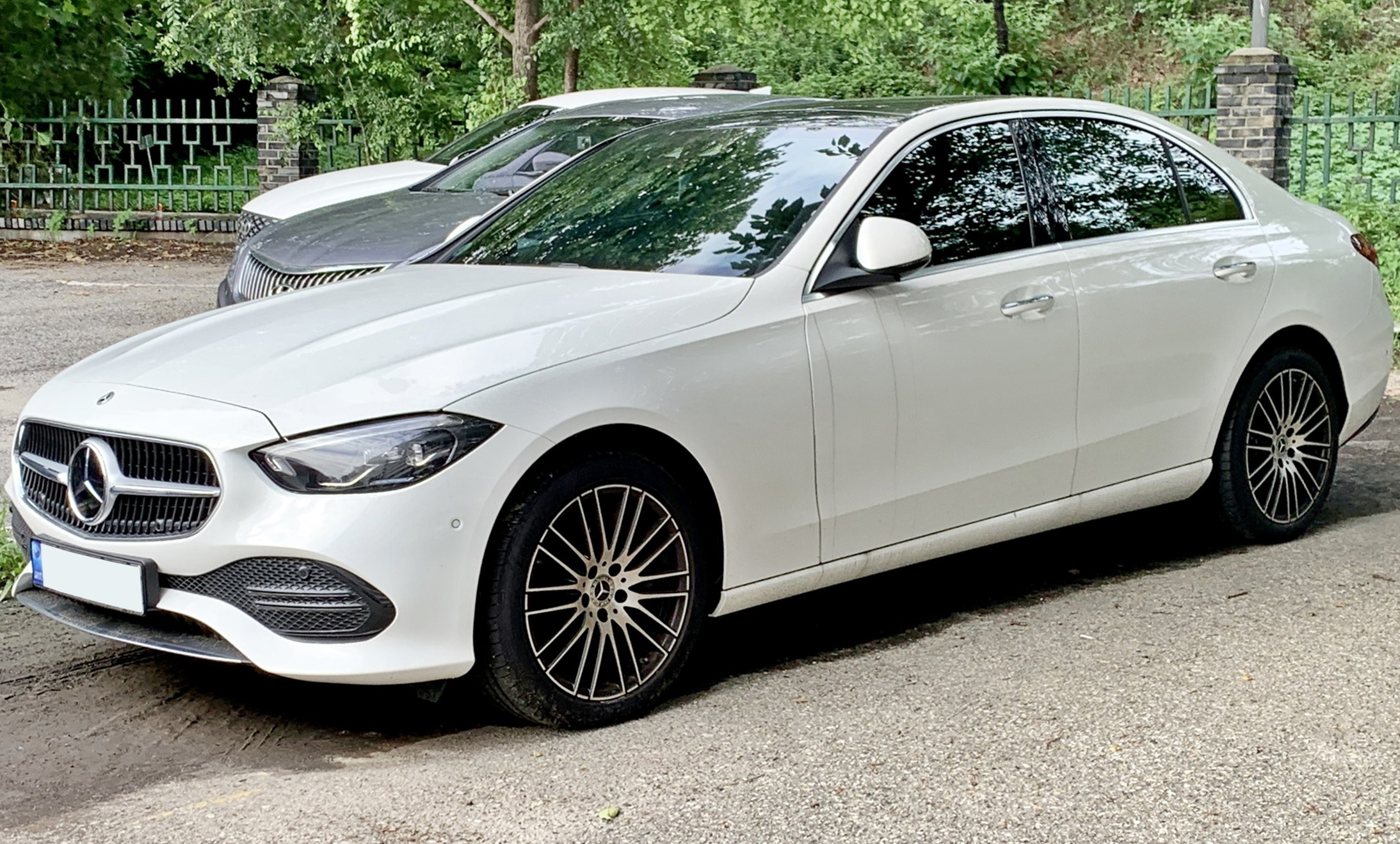
Mercedes-Benz Cclass
"Yep. They have not committed under any circumstances to doing this powertrain in a C-Class, which I think is what the..."
The Mercedes-Benz C-Class is a luxury car that’s smaller than some of the brand’s bigger sedans. The podcast is saying Mercedes hasn’t decided on a specific kind of engine or power setup for the C-Class yet. That matters because it affects what future cars will be like.
The Mercedes-Benz C-Class is a compact luxury sedan positioned below the E-Class in the brand’s lineup. The episode says Mercedes hasn’t committed to a certain powertrain plan for the C-Class, implying uncertainty about future engineering choices. It’s discussed because powertrain decisions directly affect what buyers can expect in coming model years.

BMW E60
"...e products for the US market. BMW did it with the E60. Yeah."
The BMW 5 Series is a luxury sedan that many people consider a main BMW model. The podcast is talking about how BMW handled a certain change for the US market using the E60 generation. It comes up because the 5 Series is important to BMW’s lineup.
The BMW 5 Series is a mid-size luxury sedan known for balancing comfort with performance. The episode references BMW doing something with the E60 for the US market, implying they’re discussing how BMW introduced or changed products for different regions. It’s mentioned because the 5 Series is a key model where those decisions matter.
BYD
"And EVs are going to kill it in APAC, right? Like Z-Curs of the world and BYDs are taking over."
BYD is a big Chinese company that makes electric cars. The hosts mention it to illustrate how EVs are spreading quickly in Asia-Pacific.
BYD is a major Chinese automaker known for producing large volumes of battery-electric vehicles and batteries. In this segment, BYD is cited as part of the competitive pressure in APAC that the hosts believe will accelerate EV adoption and reduce the role of internal combustion engines in that region.
internal combustion engines
"So then America is one of the best markets for internal combustion engines. Especially big. The only market."
Internal combustion engines are the traditional gasoline/diesel engines that burn fuel to move the car. The hosts are saying EVs may take over in parts of Asia, but the US is still a strong market for gas engines.
Internal combustion engines (ICE) burn fuel inside the engine to create motion, as opposed to electric drivetrains. The hosts claim that EVs will dominate in APAC, while the US remains one of the best markets for ICE—especially for larger vehicles—so automakers may keep investing in gasoline powertrains there.
V8
"I mean, this is Chrysler's strategy or Dodge's strategy, right? Like bring back the V8s. Bring back the V8s."
A V8 is an engine with eight cylinders arranged in a V shape. More cylinders usually means a smoother, punchier feel and a distinctive sound.
A V8 is an engine with eight cylinders arranged in a V shape. The cylinder count and layout affect how smooth the engine feels and how it delivers power and sound.

Mercedes-Benz E55 AMG
"Let's see. The Range Rover, the E55, the SLR, the Cayenne. You got five."
The Mercedes-Benz E55 AMG is a faster, performance version of the Mercedes E-Class. The podcast is listing it alongside other high-performance Mercedes cars. It’s mentioned because it’s a well-known performance model.
The Mercedes-Benz E55 AMG is a performance-oriented version of the E-Class, known for strong power and an AMG-tuned driving character. The episode lists it among other notable high-performance Mercedes models (“Range Rover, the E55, the SLR, the Cayenne”). It’s mentioned because it’s part of a set of enthusiast-recognized performance vehicles.

Porsche Cayenne
"Let's see. The Range Rover, the E55, the SLR, the Cayenne."
The Porsche Cayenne is a luxury SUV that’s meant to drive more like a sports car than a typical SUV. Here it’s listed because it can be had with a V8 engine.
The Porsche Cayenne is a performance-oriented luxury SUV known for bringing Porsche-like driving dynamics to a family-friendly body. It’s mentioned in this segment as one of the speaker’s V8-equipped vehicles.

Land Rover Range Rover
"Let's see. The Range Rover, the E55, the SLR, the Cayenne."
The Range Rover is a luxury SUV that’s built to be comfortable on-road but still capable off-road. Here it’s brought up because it can come with a V8 engine.
The Range Rover is a luxury SUV from Land Rover known for combining off-road capability with high-end comfort and powerful engines. In this segment, it’s mentioned as one of the speaker’s V8-equipped cars.

Mercedes-Benz SLR
"Let's see. The Range Rover, the E55, the SLR, the Cayenne."
The Mercedes-Benz SLR is a high-end supercar. It’s included in the list because it’s one of the cars the speaker associates with big-cylinder engines.
The Mercedes-Benz SLR is a supercar built with a focus on high performance and exotic styling. It’s mentioned here as part of the speaker’s list of V8 cars, highlighting how cylinder-count matters to enthusiasts.
V10
"But I do have a V10 and a V12. And we like our big, we like cylinders here on this podcast, folks."
A V10 is an engine with ten cylinders in a V layout. It’s less common than a V8 and can be tuned for a higher-revving, higher-performance feel.
A V10 is an engine with ten cylinders arranged in a V configuration. Compared with a V8, it can rev differently and often supports higher-output naturally aspirated designs.
V12
"But I do have a V10 and a V12. And we like our big, we like cylinders here on this podcast, folks."
A V12 is an engine with twelve cylinders in a V layout. It’s a “big” engine type often found in luxury or supercar-level performance, and it usually sounds amazing.
A V12 is an engine with twelve cylinders arranged in a V shape. It’s typically associated with high-end performance because it can deliver strong power smoothly, often with a very distinctive sound.
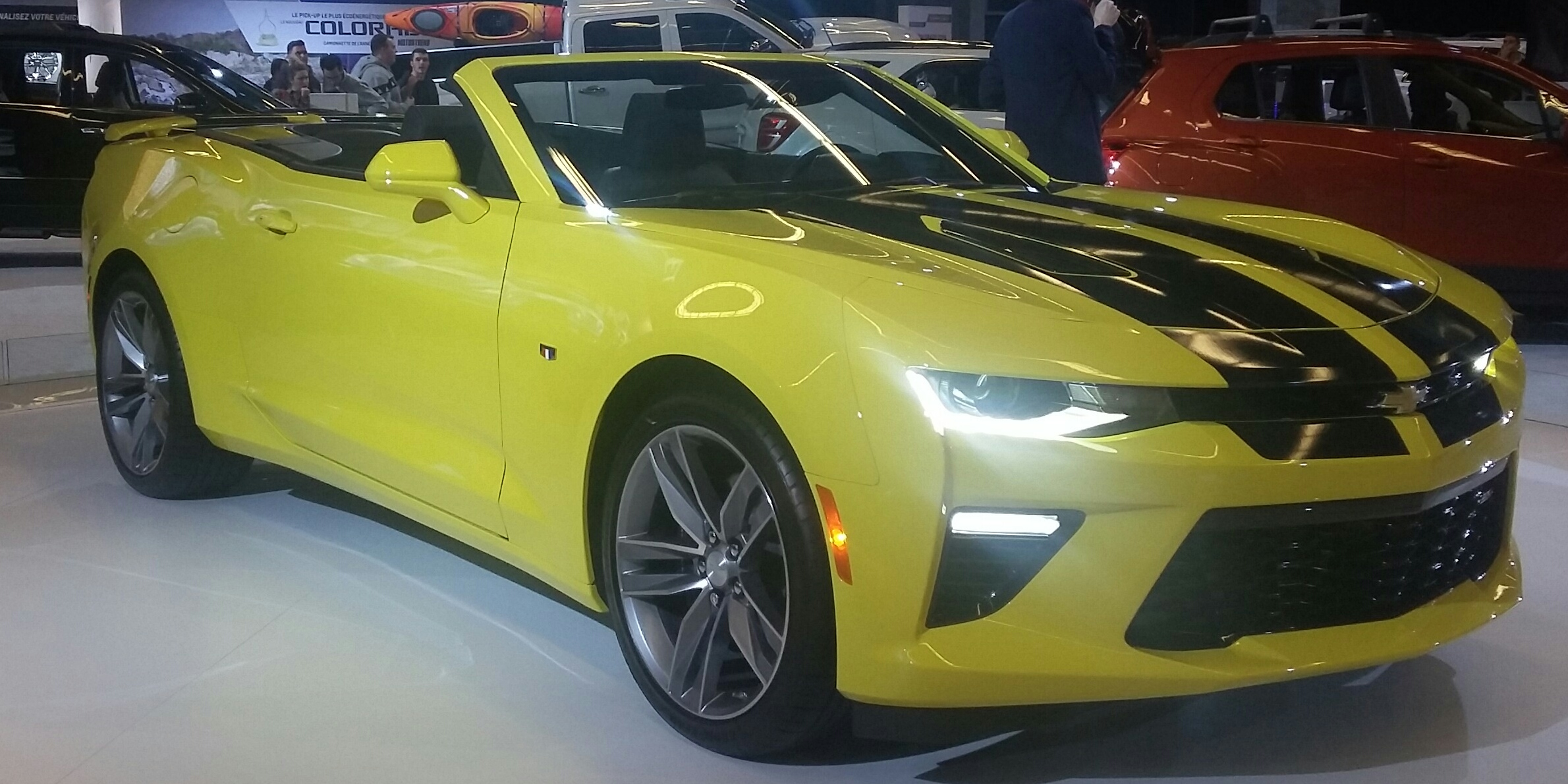
Chevrolet Camaro
"I think you were gone about there will be a next generation Camaro. Hard to believe. It has been rumored by the folks at Gem Insider that based on their sources, it will have a manual transmission."
The Camaro is a popular Chevrolet sports car. Here they’re talking about rumors that the next Camaro might still be offered with a manual transmission.
The Camaro is Chevrolet’s long-running muscle-car/pony-car model, and a “next generation” implies a future redesign. In this segment, the hosts focus on rumors that the next Camaro could offer a manual transmission for the American market.
manual transmission
"It has been rumored by the folks at Gem Insider that based on their sources, it will have a manual transmission. Manual and a new Camaro."
A manual transmission means you choose the gears yourself with a clutch pedal and a gear stick. It usually gives the driver more control than an automatic.
A manual transmission is a gearbox where the driver selects gears using a clutch pedal and a shift lever. It’s often associated with more direct driver control and a more engaging feel than an automatic.

Land Rover Freelander
"...s a sorority girl when I was in college who had a Freelander SE3. Oh, that's so cool."
The Land Rover Freelander is a compact SUV that can handle rougher roads than a typical car. The podcast is mentioning a specific version someone owned. It comes up as a personal story about that kind of SUV.
The Land Rover Freelander is a compact SUV that’s known for offering off-road capability in a smaller package. The episode references a specific trim and owner story (“Freelander SE3”), which makes it relevant as a personal anecdote. It’s discussed because the Freelander name is associated with a particular era of Land Rover compact SUVs.
EV strategy
"I mean, it's another example of the EV strategy has kind of changed things around. And this is the situation that they're stuck with."
“EV strategy” just means a car company’s plan for switching to electric cars. It includes what EV models they’ll make and how quickly they’ll change their factories and technology.
“EV strategy” refers to a company’s plan for how it will shift from gasoline engines to electric vehicles (EVs). It covers things like which models to build, how fast to change production, and what powertrains to keep using while the transition happens.
emissions reasons
"So your first guess would be for emissions reasons, they can't use existing powertrains."
“Emissions reasons” means the government rules about how much pollution a car is allowed to make. If a car can’t meet the newer rules, the company may have to stop making it or change the engine.
“Emissions reasons” points to regulations that limit what pollutants a vehicle can produce. If a car can’t meet updated emissions rules, manufacturers may stop production or redesign the powertrain to comply.

Volkswagen GTI
"But the base engine in this is the same engine that Volkswagen uses in everything. That's in my GTI, basically."
The Volkswagen GTI is a popular sporty compact hatchback. Here it’s mentioned because the speaker says the same basic engine design is used in the GTI and is still allowed under current rules.
The Volkswagen GTI is a compact hot hatch known for its turbocharged engine and enthusiast-focused tuning. In this segment, Doug DeMuro uses his GTI as an example of the “base engine” Volkswagen uses across multiple models, implying it’s still compliant where others aren’t.
Bugatti
"Profitability is down. They had to sell off that Bugatti brand."
Bugatti is the luxury supercar brand. The comment about selling it off suggests the company needed money or had financial trouble and had to get rid of part of the business.
Bugatti is a high-end supercar brand owned by the Volkswagen Group. The speaker mentions “sell off that Bugatti brand” as a sign of financial pressure, implying Porsche (or its parent group) had to divest assets to improve results.
McCann EV
"I am curious, and we don't get these numbers... how McCann EV sells globally... 22% of Porsche sales were fully electric in 2025, which would have been Taycan and McCann."
“McCann EV” sounds like it’s referring to Porsche’s electric Macan. The discussion is about how well that electric model is selling in different markets.
“McCann EV” appears to be a mis-transcription of Porsche’s electric Macan (Macan EV). The hosts discuss how this EV product performs globally versus the U.S., and how it fits into Porsche’s fully electric sales numbers.

Porsche Taycan
"...ere fully electric in 2025, which would have been Taycan and McCann. Pretty significant number."
The Porsche Taycan is an electric car, meaning it uses electricity instead of gasoline. The podcast is pointing out that it’s fully electric and part of Porsche’s EV lineup. It’s mentioned because it’s a significant modern performance model.
The Porsche Taycan is an all-electric performance sedan from Porsche. The episode notes it being “fully electric in 2025,” which frames it as a major part of Porsche’s electric lineup. It’s discussed because it represents Porsche’s modern EV direction and performance focus.
fully electric
"22% of Porsche sales were fully electric in 2025, which would have been Taycan and McCann."
“Fully electric” means the car is powered only by electricity from a battery. It doesn’t have a gas engine.
"Fully electric" means the vehicle runs only on electricity stored in a battery, with no gasoline engine. In sales discussions, it’s used to separate EVs from hybrids or plug-in hybrids.
Spyker
"It's Spiker... I have no idea what this is a photo of... So the gentleman that bought the intellectual property to it a year or two ago..."
Spyker is a small, niche car brand. The hosts are talking about it coming back and about ownership of its car-related “ideas and designs.”
Spyker is a Dutch automaker best known for making niche, high-performance cars and for its corporate history involving ownership changes. In this segment, the hosts mention Spyker returning and discuss someone buying its intellectual property.
intellectual property
"So the gentleman that bought the intellectual property to it a year or two ago, I did do some reading."
Intellectual property is the legal “stuff” behind a product—like designs and brand rights. Buying it can let someone reuse those assets to make or sell cars.
Intellectual property (IP) refers to legally protected creations like designs, engineering know-how, trademarks, and other assets. When someone buys a brand’s IP, they may gain the rights needed to build or market vehicles using that prior work.

Audi R8
"...lding level supercar. It was kind of a fancy Audi R8 underneath. Since you only did some of the readin..."
The Audi R8 is a high-performance supercar. The podcast is describing it as a fancy, performance-focused car underneath. It comes up because it’s a well-known example of Audi’s top-end performance.
The Audi R8 is a supercar that’s known for its mid-engine layout and high-performance driving dynamics. The episode describes it as a “fancy Audi R8 underneath,” suggesting it’s being compared or referenced as a performance-based platform. It’s discussed because the R8 is a recognizable benchmark for Audi’s supercar capability.
twin-turbo V8
"Our understanding is that it'll be a twin-turbo V8."
A twin-turbo V8 is a V8 engine with two turbochargers. The turbos cram more air into the engine so it can make more power.
A twin-turbo V8 is a V8 engine equipped with two turbochargers to force more air into the cylinders. Using two turbos can improve boost response and help the engine make strong power across a wider range, which is why it’s a common recipe for modern supercars.
bespoke
"800 horsepower, V8, supercar, hand-built, bespoke."
“Bespoke” means the car is made to order with custom choices. Instead of only one standard version, you can specify details to match what you want.
“Bespoke” refers to custom-built items made to a customer’s specific preferences rather than a fixed, standard configuration. For supercars, it usually implies tailored interior/exterior options and sometimes bespoke engineering or trim choices.
hand-built
"800 horsepower, V8, supercar, hand-built, bespoke."
“Hand-built” means people assemble the car by hand more than using robots and mass-production equipment. That can help with quality and customization, especially on expensive cars.
“Hand-built” means the car is assembled with a lot of manual labor rather than being produced entirely on high-speed automated lines. In low-volume supercars, this often goes along with tighter customization and more time spent on fit-and-finish.
exposed linkage
"It makes sense. [1492.8s] The exposed linkage was sort of the trademark feature of the CD. [1497.5s] Yeah. [1497.7s] So it kind of has to, I think."
Exposed linkage means you can see the moving mechanical parts instead of covering them up. It’s often done on purpose so the car looks more distinctive and “mechanical.”
Exposed linkage is mechanical hardware (often rods or arms) intentionally left visible instead of hidden behind panels. In automotive design, it’s used as a visual “signature” because it shows the actuation mechanism rather than concealing it.
Tesla
"That's what Tesla does. They are starting pre-production now, like factory production now. ... Teslas have never been ready for launch when they launch."
Tesla is a car company that’s famous for making frequent updates to its cars. Here, they’re using Tesla as an example of a company that ships cars and then improves them after launch.
Tesla is an automaker known for building and updating cars through software and iterative development. In this segment, the hosts use Tesla as an example of launching vehicles even when they still have issues that get fixed later.
development cycles
"I do think that one of the biggest problems that the legacy automakers have with competing against the other, the upstart brands, is development cycles and current, the way that they, I think the problem that legacy automakers still have is they think the car has to be ready for launch when it launches."
Development cycles are the timeline and process automakers use to design, test, and refine a car before it goes on sale. The hosts argue that “legacy automakers” tend to run longer cycles and try to have the car fully ready at launch, while newer brands may accept launching sooner and fixing problems afterward.
launch when it launches
"they think the car has to be ready for launch when it launches. I honestly think that is one of their biggest mistakes. Teslas have never been ready for launch when they launch."
They’re talking about whether a company should wait until a car is fully finished before selling it, or sell it quickly and fix things afterward. In their view, Tesla tends to do the second approach.
The hosts are contrasting two approaches: delaying launch until a car is “ready,” versus launching quickly and correcting issues later. They claim Tesla’s approach has historically involved shipping cars with problems that get addressed after the initial release.
Fiskars
"I honestly think that is one of their biggest mistakes. Teslas have never been ready for launch when they launch. They're riddled with all these things that get corrected later. Same with Fiskars."
This name is likely a mis-heard brand in the transcript. They’re basically saying another company besides Tesla also ships cars and then fixes issues later.
“Fiskars” appears to be a transcription error for a car brand name mentioned in the segment. The context groups it with Tesla as another example of launching before everything is fully sorted.

Acura TSX
"...berg, you know what he drives? He used to drive a TSX or Tio. Oh no, go to the next news story."
The Acura TSX is a luxury sedan made by Acura. The podcast is mentioning it because someone said they used to drive one. It’s brought up as a personal car history detail.
The Acura TSX is a compact luxury sedan known for being a more driver-oriented alternative within Acura’s lineup. In the episode, it’s mentioned as something someone used to drive (“He used to drive a TSX…”), which makes it relevant as a personal reference point. It’s discussed because it represents an older Acura model people remember fondly.
Formula One edition
"They're coming out with a Formula One edition of the black wing. [1856.6s] They've come up with several special editions of the black wing."
A “Formula One edition” means the car is styled and branded to look like it’s connected to F1. It’s typically a special version for fans, not an actual race car.
A “Formula One edition” is a special trim or package that uses Formula One branding and design cues. It’s usually a marketing/collector-focused variant rather than a car engineered to match F1 performance.
FIA badge
"And Nick, in the center console, there's an FIA badge. [1864.6s] It'd be a good safety car."
The FIA is the organization that runs and regulates major auto racing. If a car has an FIA badge, it’s usually showing an F1/racing connection, not necessarily making the car a real race car.
The FIA (Fédération Internationale de l’Automobile) is motorsport’s governing body for series like Formula One. An “FIA badge” on a road car is usually a branding/association detail tied to racing rather than a guarantee of track-ready engineering.
manual only
"Well, they're manual only and honestly 25 is like two months of sales. [1874.7s] Yeah."
“Manual only” means you can only get the car with a stick shift. Fewer people want a stick, so sales can be slower even if the car is good.
“Manual only” means the car is offered exclusively with a manual transmission, with no automatic option. That limits the buyer pool, which can make sales slower even if the car is well-liked.

Aston Martin F1 edition
"You see a lot of the F1 edition Aston Martins around though. Like Aston really cashed in on that. And I think limiting it to 25, like Cadillac ought to be making it big."
This is a special Aston Martin that’s made in limited numbers and uses Formula 1 branding. The point is that it looks and feels connected to F1, and the discussion here is about how limited it really is.
The Aston Martin F1 edition is a limited-run special tied to Formula 1 branding, typically featuring F1 logos and styling cues. In this segment, the hosts discuss how Aston Martin “cashed in” on that association and how many units are being made.

Daihatsu Valera
"That's who they are. Valera or Valtteri. There'll be some F1 logos."
The Daihatsu Valera is a car model name mentioned in the podcast. The episode notes it would have F1-style logos. There aren’t details here about how it drives—just that it’s part of a themed mention.
The Daihatsu Valera is referenced in the episode as a model name tied to F1 logos (“There’ll be some F1 logos”). The mention is brief and appears to be about branding or a themed presentation rather than technical details. It’s discussed mainly as a specific car name in the conversation.
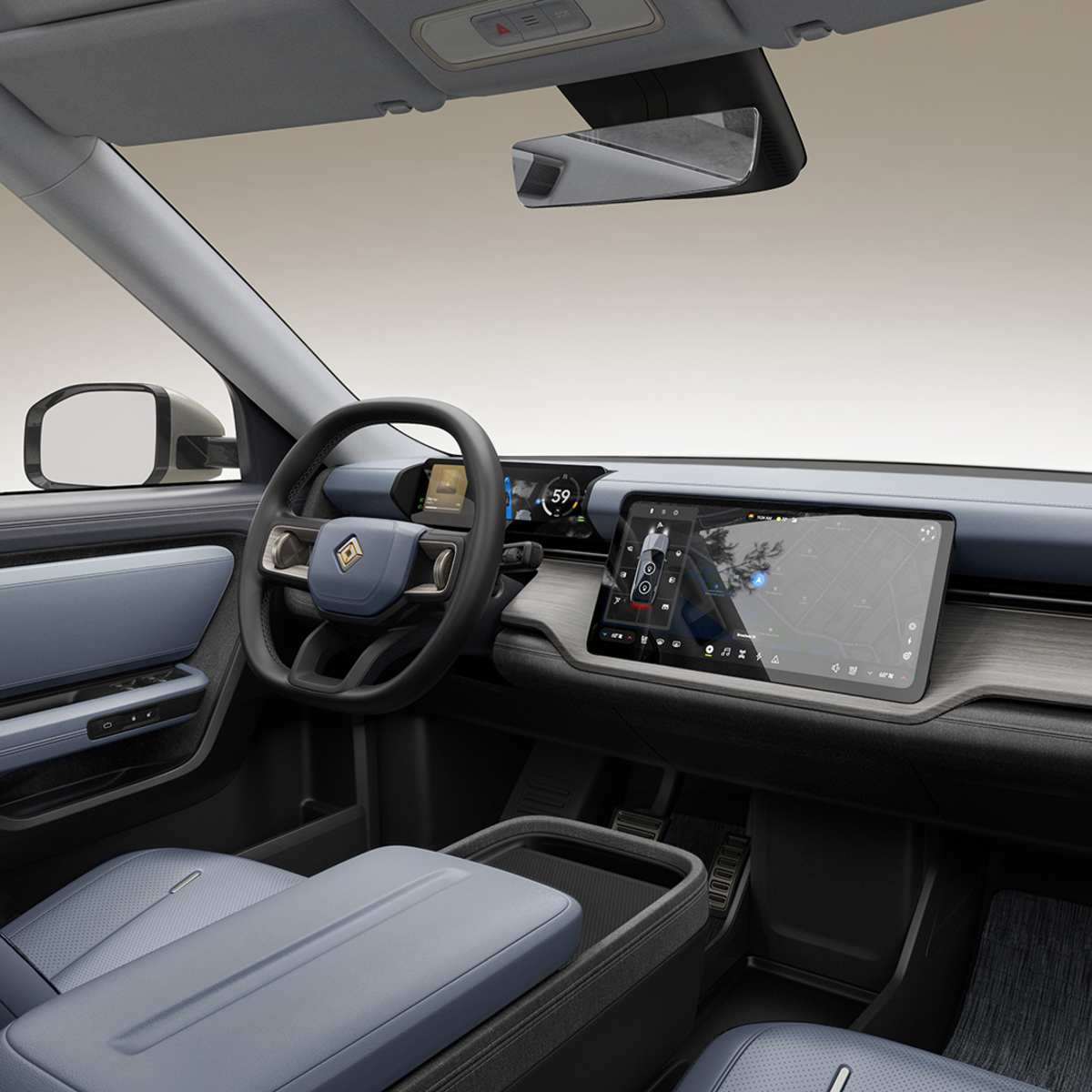
Rivian R2
"...terview that there will be other variants of the R2. The R2 we know is SUV that's going to come out."
The Rivian R2 is an upcoming electric SUV model. The podcast is saying it will be the SUV option in Rivian’s newer lineup. It’s mentioned because it’s part of what Rivian plans to release next.
The Rivian R2 is discussed as the next SUV in Rivian’s lineup, with the episode framing it as “SUV that’s going to come out.” It’s mentioned alongside the R1T and R1S to clarify that R2 is a separate model family. It’s relevant because it signals Rivian’s expansion beyond the current R1 models.

Rivian R1S
"Other R2s. Because the R1T and R1S exist. This is just R2."
The Rivian R1S is an electric SUV, meaning it runs on electricity instead of gasoline. The podcast is talking about how Rivian has different models and names for them. The R1S is the SUV version of that lineup.
The Rivian R1S is an all-electric SUV built on Rivian’s R1 platform. The episode places it in the lineup context (“R1T and R1S exist… This is just R2”), which indicates discussion about Rivian’s upcoming or variant naming. It’s mentioned because the R1S is a key model in Rivian’s electric SUV lineup.

Rivian R1T
"Other R2s. Because the R1T and R1S exist. This is just R2."
The Rivian R1T is an electric pickup truck, so it uses electricity instead of gasoline. The podcast is talking about how Rivian has multiple models and versions. The R1T is the truck version of that lineup.
The Rivian R1T is an all-electric pickup truck built on Rivian’s R1 platform. The episode groups it with the R1S and then references “R2,” indicating a conversation about Rivian’s expanding model range. It’s discussed because the R1T is a central part of Rivian’s electric truck identity.

Ford Lobo
"The Sequoia is there. I want a Lobo edition. Give me a lowered, maybe..."
The Ford Lobo is being talked about as an idea for a special edition pickup. The podcast mentions wanting it lowered, which is a style change. It’s not presented as a normal, standard model in the excerpt.
The Ford Lobo is mentioned as a hypothetical or desired edition (“I want a Lobo edition… lowered”). The episode suggests a custom-style pickup concept rather than a standard production model. It’s relevant because it reflects how enthusiasts imagine special trims and styling packages.
tariffs
"from 15% to 25% because the EU in his mind did not sufficiently move quickly enough to actually like finish the deal on tariffs."
Tariffs are taxes a government places on imported goods. In auto supply chains, tariffs can raise the cost of parts and finished vehicles, which can delay deals and affect pricing and production plans.
Audi Q9
"You know the Audi Q9? I've been hearing there's going to be three-row Audi and Porsche SUVs my entire life."
Audi Q9 is a rumored bigger SUV from Audi. The idea is that it would have three rows of seats, like many family-focused large SUVs.
The Audi Q9 is a rumored future large SUV from Audi, positioned above the Q7. In this segment, it’s discussed as a three-row Audi SUV that would be built in Europe, which matters because packaging a third row and scaling production affects cost and profits.
three-row
"You know the Audi Q9? I've been hearing there's going to be three-row Audi and Porsche SUVs my entire life."
“Three-row” means the SUV has three rows of seats for more passengers. It usually makes the vehicle bigger and changes how much room you have for cargo.
A “three-row” SUV has seating for three rows (typically 6–8 passengers), which changes interior packaging and vehicle dimensions. It also affects weight, crash structure design, and how much cargo space remains behind the third row.
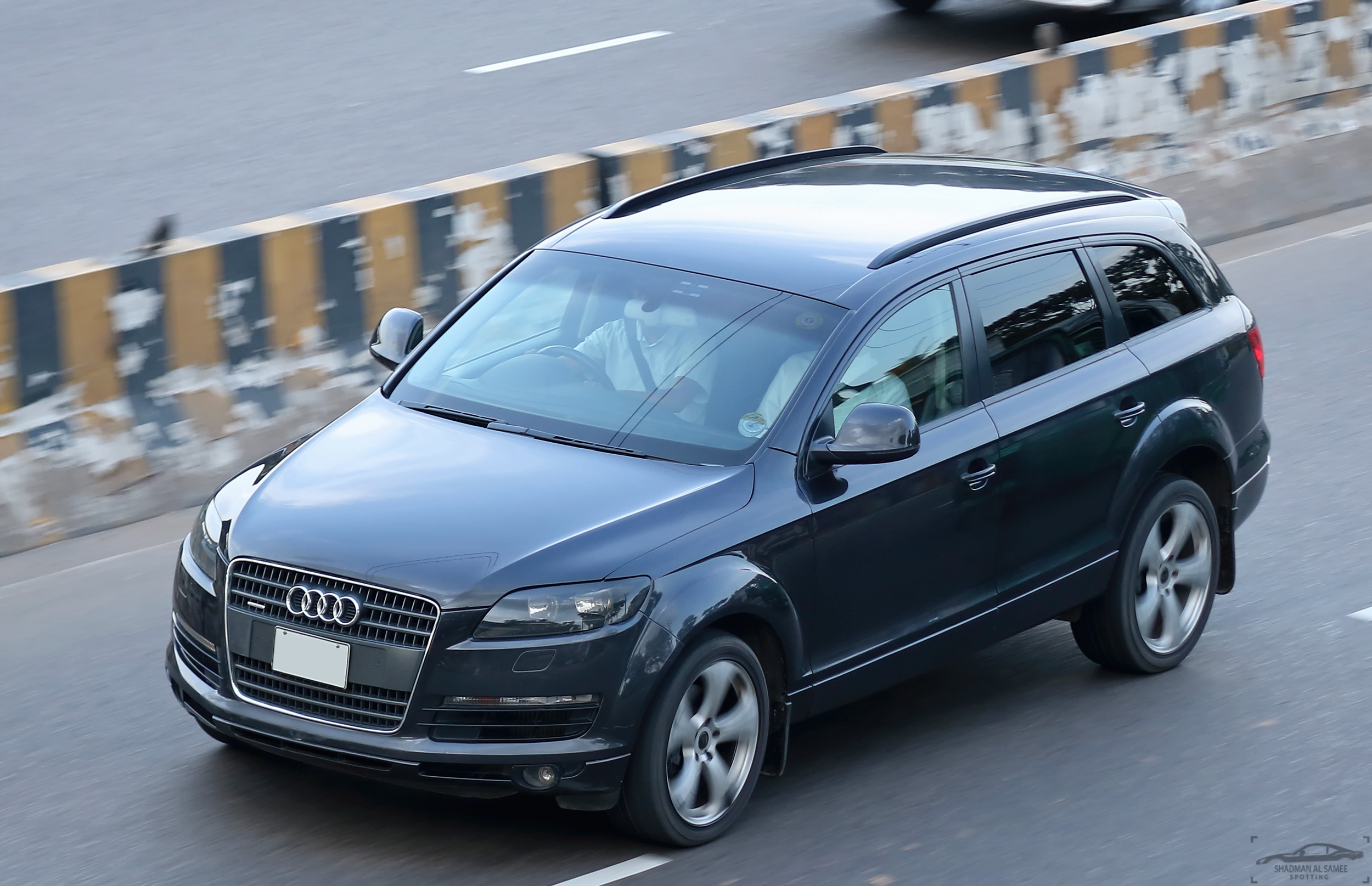
Audi Q7
"The Q7 exists, but yeah. It's like the mid-engine Corvette."
Audi Q7 is an existing Audi SUV that’s big enough for families. It’s brought up here to show that Audi already has a large, three-row option.
The Audi Q7 is Audi’s current large SUV that already offers a three-row layout in many markets. Mentioning it provides context for where the rumored Audi Q9 would sit in Audi’s lineup.

Ford Bronco
"And then one day, it happened. Yeah, the Bronco was forever."
The Bronco is a Ford SUV name that’s known for off-roading. In this conversation, it’s mentioned as an example of a rumor that eventually became real.
The Bronco refers to the Ford Bronco, a model that has been a long-running nameplate with strong off-road appeal. Here it’s used as a reference point for how long rumors can persist before a product finally arrives.

Toyota Land Cruiser
"But I just don't like it because it's shade at you saying I'd rather drive a Land Rover than I'd rather push a Land Rover than drive a Land Cruiser."
The Toyota Land Cruiser is a tough SUV built for off-roading and long-term durability. People often compare it to other SUVs and say it’s the more dependable choice.
The Toyota Land Cruiser is a long-running, body-on-frame SUV known for rugged off-road capability and durability. In enthusiast talk, it’s often held up as the “reliable” alternative to more maintenance-prone luxury off-roaders.
Range Rover Classic
"You tell me. You had the L32. Yeah. You had a Range Rover Classic."
The Range Rover Classic is an older Land Rover Range Rover model. People like it for its classic style and off-road ability, but older Land Rovers can require more attention to maintain.
The Range Rover Classic is the earlier, boxier-generation Range Rover from Land Rover, built with a strong off-road reputation and a more traditional mechanical layout than later models. It’s also a common “enthusiast” Land Rover because many owners enjoy the character, but it can be more hands-on to keep running.

Porsche Career Gt
"...n went there. And, you know, a lot of people, the career GT is this very complex technical precision instrume..."
The Porsche Carrera GT is a very expensive, very high-performance sports car. The podcast is emphasizing that it’s technically complicated and built with a lot of precision. It’s the kind of car people talk about because it’s rare and special.
The Porsche Carrera GT (often referred to as the Carrera GT) is a rare, high-performance supercar known for its advanced engineering and driver-focused feel. The episode describes it as a “very complex technical precision instrument,” emphasizing how sophisticated it is. It’s discussed because it’s a standout, special-occasion kind of Porsche.
design studio
"It was designed in a strip mall in Huntington Beach in Orange County. ... they sold the designers to Porsche. No, but they sold the design studio to Porsche."
A design studio is a dedicated workspace where a car’s styling and design direction are developed before engineering and production. This segment emphasizes the unusual origin story—design work happening in a non-traditional location—before being connected to Porsche’s GT design.
Samsung
"The story of the career GT design is one of the all time greats. Samsung, the technology company had decided they wanted to build a car."
Samsung is a big tech company. In this story, they’re said to have started a car-design effort in California, then later handed the design studio over to Porsche.
Samsung is described here as the technology company that originally hired designers in California with the idea of building a car. The segment claims Samsung later backed out and sold the design studio to Porsche, which then used those designers for the Porsche GT design work.

Toyota Corolla Cross
"Me too. With an edge and a corolla cross in the background. Yeah."
The Toyota Corolla Cross is a small SUV crossover. The podcast is just mentioning it as part of what’s in the background or lineup. It’s a practical Toyota SUV model.
The Toyota Corolla Cross is a compact crossover SUV built on the Corolla nameplate’s mainstream appeal. The episode mentions it in the background of a scene (“Corolla Cross in the background”), indicating it’s part of a visual or lineup context. It’s relevant because it’s a common, practical SUV choice within Toyota’s lineup.

Cadillac Escalade
"... think that was, it was something nice. That's an Escalade. And no, no, no."
The Cadillac Escalade is a big luxury SUV. It’s designed to feel upscale and comfortable, especially for passengers. The podcast is just pointing out that an Escalade is the kind of vehicle people notice.
The Cadillac Escalade is a full-size luxury SUV known for its large size, premium interior, and presence. In the episode, it’s mentioned briefly as a recognizable “something nice” moment, implying it’s a standout luxury choice. It’s relevant because the Escalade is often discussed as a top-tier family and status SUV.
carbon chassis
"The way that it all works well, the way that the carbon chassis is part of the trim is really cool."
A carbon chassis means the car’s main structure uses carbon-fiber material. It’s often used because it can make the car lighter and more rigid, and here they’re pointing out how it shows up as part of the car’s look.
A carbon chassis uses carbon-fiber composite structure instead of traditional steel or aluminum. It can reduce weight and improve stiffness, and in this discussion it’s specifically called out as being integrated into the car’s overall trim/appearance.

Porsche Boxster
"...e, there are a few mistakes. It looks like a long Boxster. Like in order to make the room for the engine, t..."
The Porsche Boxster is a sports car with the engine in the middle and a convertible-style driving feel. The podcast is talking about how the car’s shape can be adjusted to fit the engine. That’s why it comes up when comparing similar Porsche designs.
The Porsche Boxster is a mid-engine roadster that’s designed to deliver balanced handling and an open-top driving experience. The episode describes it as “a long Boxster” to make room for the engine, which points to how Porsche packaging can change across related models. It’s discussed because the Boxster’s layout and proportions are a key part of its identity.

Volkswagen Bora
"...ti Marac, pull up one of those, Maserati Marac or Bora. Either one, Bora is easier to type."
The Volkswagen Bora is a sedan model name used by Volkswagen. In the podcast, it’s mentioned mostly as a reference point while talking about other car names. There isn’t much detail in the excerpt beyond the name itself.
The Volkswagen Bora is a nameplate used for certain Volkswagen sedans in various markets. The episode mentions it as an easier-to-type alternative to another car name (“Bora is easier to type”), suggesting it’s part of a quick reference list rather than a deep technical discussion. It’s relevant mainly as a model name being brought up in conversation.
flying buttresses
"They just stuck. [2773.3s] The flying buttresses. [2773.8s] These buttresses have no purpose, but they knew that they didn't want to make the car"
The host is using “flying buttresses” to describe extra-looking parts sticking out from the car. They’re basically there to change how the car looks, not because they’re clearly doing something useful.
“Flying buttresses” here is an informal, visual description of external structural-looking aero/trim elements added to change the car’s silhouette. The host’s point is that they’re mostly about appearance and packaging rather than having a clear aerodynamic purpose.
Formula one engine
"A CGT take I actually enjoyed. A first for this podcast. Formula one engine. Cars and Bids is coming live to Sonoma Raceway for Velocity Invitational."
A Formula one engine is the kind of engine used in F1 race cars. It’s built for racing—very high performance and advanced tech—so it’s different from normal car engines.
A Formula one engine refers to the specialized power unit used in Formula 1 racing, designed for extreme output and high-rev operation. F1 engines are built around advanced technologies like turbocharging and sophisticated engine management, and they’re not comparable to typical road-car engines.

Alfa Romeo Giulia
"...hem. Already confirmed, we have a 1964 Alfa Romeo Giulia TZ courtesy of the Peterson Automotive Museum, an..."
The Alfa Romeo Giulia is a sporty sedan made by Alfa Romeo. The podcast is talking about a specific older version from 1964, the Giulia TZ, which is a special classic. It comes up because that particular car is historically important.
The Alfa Romeo Giulia is a compact performance sedan with a strong enthusiast reputation. The episode mentions a specific example—a 1964 Alfa Romeo Giulia TZ—courtesy of the Peterson Automotive Museum, highlighting its historical significance. It’s discussed because classic Giulia variants are often prized for their design and racing heritage.

Nissan R34 GTR
"Already confirmed, we have a 1964 Alfa Romeo Giulia TZ courtesy of the Peterson Automotive Museum, an incredibly low mile midnight purple R34 GTR, and many other insane car surprises."
The Nissan R34 GTR is a legendary Japanese sports car from the late 1990s/early 2000s. It’s famous for being fast and for being a super desirable collector car today.
The Nissan R34 GTR is the 1999–2002 generation of the Skyline GT-R, famous for its advanced all-wheel-drive traction and strong performance reputation. It’s a highly collectible “JDM icon” because it represents the peak of the R34 era before the model’s later evolution.

Nissan Gtr
"...useum, an incredibly low mile midnight purple R34 GTR, and many other insane car surprises."
The Nissan GT-R is a fast sports car made for performance. The podcast is talking about a specific rare version, an R34, with very low miles. It comes up because that kind of GT-R is collectible and special.
The Nissan GT-R is a high-performance sports car known for rapid acceleration and strong track capability. The episode references an “incredibly low mile midnight purple R34 GTR,” which highlights the car’s collectible appeal and specific generation. It’s discussed because the GT-R is both an enthusiast icon and a museum-worthy rarity in certain forms.
Mercedes-Benz E55
"Oh yeah? Me and Ryan Lopez. I got the E55 back from Atlanta. The manual swap is done."
The Mercedes-Benz E55 is a fast, AMG-flavored version of the E-Class. Here it matters because the speaker says they finished converting it to a manual transmission.
The Mercedes-Benz E55 is a performance-focused E-Class model known for its AMG-tuned V8 power and enthusiast appeal. In this segment, it’s specifically notable because the host says they “got the E55 back” after completing a manual swap, which is a major drivetrain change.
manual swap
"Me and Ryan Lopez. I got the E55 back from Atlanta. The manual swap is done."
A manual swap means changing a car from an automatic to a stick shift. It’s a big conversion, not just swapping a lever—there’s a lot of parts and setup to make it work.
A manual swap is the process of converting a car that originally came with an automatic transmission to use a manual gearbox instead. It typically requires more than just the shifter and transmission—there are usually wiring, pedal/cluster changes, and drivetrain compatibility work involved.

Ferrari 456
"...e Vons and the Peterson. We had everything from a Ferrari 456 Venice to a ton of like CTS V wagons, a lot of AM..."
The Ferrari 456 M GT is a high-end Ferrari designed for comfortable fast driving over longer distances. The podcast is mentioning it as part of a group of impressive cars at a museum. It comes up because it’s a notable Ferrari model.
The Ferrari 456 M GT is a grand touring Ferrari known for blending V12 power with a more comfortable, long-distance-focused layout. The episode mentions it among other museum cars, highlighting its variety of notable vehicles in the collection. It’s discussed because it represents a specific kind of Ferrari—more GT than pure track weapon.

Audi RS4
"...V wagons, a lot of AMG wagons, B5 S4, like really RS4 rather, really cool stuff. And then the Peterson ..."
The Audi RS4 is a fast, performance version of an Audi that’s meant to be more exciting than a normal car. The podcast is mentioning it as one of the cool performance models in a group. It’s brought up because it blends performance with a practical wagon-style body.
The Audi RS4 is a performance wagon/variant known for combining everyday usability with high power and sport-focused engineering. The episode groups it with other “really cool stuff” and then mentions the Peterson context, suggesting it’s part of a lineup of notable performance cars. It’s discussed because RS4 models are popular with enthusiasts who want a practical body style.
limp mode
"And then I got a check engine light, misfire, limp mode. [2965.3s] And Ryan fixes it with his bare hands."
Limp mode is when the car intentionally limits power so it won’t get worse. It’s like the car saying, “I’m not going to push it until this problem is fixed.”
Limp mode is an engine/transmission protection strategy where the car limits power and sometimes changes how it shifts to prevent damage. It’s typically triggered by serious sensor or drivability faults, and it usually clears once the underlying issue is fixed.
misfire
"And then I got a check engine light, misfire, limp mode. [2965.3s] And Ryan fixes it with his bare hands."
A misfire is when the engine doesn’t burn fuel in one of its cylinders the way it should. That can make the car run rough and feel like it has less power.
A misfire means one or more engine cylinders aren’t firing correctly during combustion. Common causes include ignition problems (spark), fuel delivery issues, or air/fuel mixture problems, and it often leads to rough running and reduced power.
check engine light
"And then I got a check engine light, misfire, limp mode. [2965.3s] And Ryan fixes it with his bare hands."
The check engine light is a warning that the car’s computer noticed something wrong. It doesn’t always mean the engine is about to fail, but it usually means you should get it checked.
The check engine light is a dashboard warning that the car’s engine-management system has detected a fault. It’s triggered by stored diagnostic trouble codes (DTCs) and can indicate anything from minor sensor issues to problems that affect drivability.
fuel sending issue
"What was it? [2970.4s] It was a fuel sending issue. [2972.1s] Ryan Lopez went in there."
A fuel sending issue means the car isn’t getting the correct information about the fuel system. The car may think something is wrong with fuel delivery or level, which can cause warning lights and reduced power.
A fuel sending issue usually refers to a problem with the fuel level sensor/sending unit or its signal to the car. Even if the tank has fuel, incorrect readings can cause drivability problems and can trigger fault codes that lead to symptoms like misfire and limp mode.
Request an Explanation
Heard something you'd like explained? We'll add it to this episode.
Sign in to request explanations for terms you heard.
Want to learn more?
Browse our glossary for plain-English explanations of automotive terms, jargon, and concepts.
Help improve this episode
See something that's not quite right? Our annotations are AI-generated and can sometimes miss the mark. Click the flag icon on any annotation to suggest a correction.