
NHRA Winternationals, Volvo EX60, Watch EP3 of Brad's Show on YouTube - Shift & Steer EP564
About this episode
The hosts kick off with ticket-buying and sports-betting sponsor chatter, then swap stories about home remodel chaos—especially porcelain flooring and a plumbing-flood mess at a rental. Racing takes center stage as they recap NHRA Winternationals: rain delays, full grandstands, and meet-and-greets with Ron Capps and Alexis DeJoria, plus Maddie Gordon’s transition from wrenching to fan-facing duties. The EV segment debates whether gas prices will truly drive EV adoption, covering charging costs, infrastructure limits, and California EV taxes. They also preview Volvo’s new EX60 EV, discuss its range and software, and wrap with Model T driving experiences and a Porsche 911 GT3 SC convertible.
This is Shift and Steer, your quick-hit automotive news podcast.
On this episode #564:
• Save The Chevelle EPISODE 3 on YouTube @TheBradFanshaw Channel
• NHRA WinterNationals We Attend
• Matt Drives a Volvo
• bonspeedStreetWear.com & drinkbravago.com
Let us know your thoughts about our shows; hit us up on Instagram @ShiftSteerMedia or [email protected].
VISIT US ONLINE: https://www.shiftandsteer.com/
FOLLOW US IN INSTAGRAM: @ShiftSteerMedia
@Bradley_Fanshaw
@bonspeed_Street_Wear
@Motorator
@AaronHagar
Hosted by Simplecast, an AdsWizz company. See pcm.adswizz.com for information about our collection and use of personal data for advertising.
restoration
"I'm in the middle of another restoration, so with some mods, doing some modifications, and doing something different this time, using porcelain."
Restoration just means fixing something up so it’s in much better shape. Sometimes it’s kept close to how it was originally, and sometimes people add improvements while they’re at it.
“Restoration” is the process of bringing a vehicle (or parts of it) back to a better condition—often closer to original specs, sometimes with upgrades. In enthusiast circles, it can range from cosmetic refreshes to full mechanical rebuilds.
mods
"I'm in the middle of another restoration, so with some mods, doing some modifications, and doing something different this time, using porcelain."
“Mods” means modifications—changes you make to improve or customize something. In cars, it usually means upgrading parts or tweaking how it works.
“Mods” is shorthand for modifications—changes made to improve function, appearance, or durability. In automotive contexts, mods can be anything from suspension upgrades to interior changes.
plumbing issues
"It's never good to have plumbing issues. It really, I mean, it's just, because it's, I am so glad that my house is a raised..."
Plumbing issues mean something is wrong with the pipes that bring water in or take waste out. If a pipe leaks, it can cause water damage and be expensive to fix.
“Plumbing issues” refers to problems with the water supply or drainage lines, which can cause leaks, flooding, and costly repairs. In homes, plumbing failures can be especially damaging when they’re located inside concrete slabs or hard-to-access areas.
crawl space
"I am so glad that my house is a raised, you know, I have a crawl space underneath, because everyone that I know who has ever had their cement going through a slab..."
A crawl space is the open area under a house where pipes and wiring can be reached. It can help prevent big problems because leaks are easier to find and fix than if everything is buried in a concrete floor.
A crawl space is an area under a house’s floor that’s left open (often with ventilation) so plumbing and wiring can be accessed without tearing up the main slab. It can reduce the risk of water damage compared with having plumbing run directly through a concrete slab.
mobile home
"Yeah. Well, you live in a mobile home, so. Yeah, I live in a mobile home. Yeah. I can go at a moment's notice. There's a crawl space underneath because it's a trailer. It's got wheels."
A mobile home is a house built in a factory and placed on a chassis. Since it’s not usually on a concrete slab foundation, the plumbing setup can be different from a regular house.
A mobile home is a factory-built home that’s designed to be transported, typically sitting on a chassis with wheels. Because it’s not built on a permanent foundation, it often has different water/plumbing layouts (like a crawl space) compared with slab-on-grade houses.
HOA
"the monthly hit on the park is three grand a month. Yeah, which sounds crazy, but out here on the coast of California, like if you're in a condo or something, like that's your HOA."
An HOA is a group that manages a condo or neighborhood. Everyone pays a monthly fee to cover things like upkeep and shared services, and in expensive areas those fees can be very high.
HOA (homeowners association) fees are payments condo or community owners make to cover shared amenities and maintenance. In high-cost coastal areas like California, HOA dues can be surprisingly high and can materially affect your monthly housing budget.
van life
"you're not going to pull up with a little pull behind trailer and get that one, you know. [461.0s] Yeah, right. Yeah. All right. Yeah. Maybe van life's not for me."
“Van life” means living in a van instead of renting or owning a home. The point here is that even if you travel by van, popular places can still cost a lot.
“Van life” is a lifestyle where people live out of a van (or similar vehicle) to reduce housing costs and stay flexible. The hosts are contrasting it with the reality that prime locations and amenities can still get expensive.
RV parks (4 to 10 spaces)
"there was this guy who was giving recommendations on how to make money. And I was watching it. And one of his recommendations was he said, buy RV parks that are four to 10 spaces."
The segment discusses buying small RV parks—specifically those with around 4 to 10 spaces—as an investment strategy. Smaller parks can have lower overhead and more predictable occupancy, but profitability depends heavily on location and demand.
self-financing from the previous owner
"You can buy them for like a quarter million bucks. You try and get self-financing from the previous owner."
They’re describing a deal where the seller helps you pay for the RV park instead of you getting a traditional loan. That can make it easier to buy, but you need to understand the payment terms clearly.
“Self-financing” in this context means the seller helps finance the purchase rather than the buyer relying entirely on a bank loan. This can reduce upfront cash needs, but the deal terms (interest rate, payment schedule, and contingencies) become especially important.
NHRA Winternationals
"I went on to NHRA. I went out on Sunday. They had some rain in the mornings where everything was delayed."
NHRA Winternationals is a big drag racing event. Teams race down a straight track and try to get the fastest, most consistent runs, especially with the car’s launch and setup.
The NHRA Winternationals is an NHRA drag racing event held early in the season. It’s known for top-fuel and funny-car style racing where teams focus heavily on launch performance and quick, precise adjustments between runs.
top fuel driver
"...but now when you're a top fuel driver with, you know, with big sponsors and part of Ron Capps' team, you don't get to be the mechanic and the driver at the same time."
A top fuel driver is the person who drives a top-fuel dragster in drag racing. The car is so specialized that the driver focuses on driving and the team handles the technical work and setup.
A top fuel driver is the pilot of a top-fuel dragster, which is one of the fastest categories in motorsports. In top fuel, the driver’s job is to execute the launch and run the car down the track while the team handles most of the mechanical work and tuning.
super chargers
"There, there is somebody doing super chargers. There is somebody doing clutches. There"
A supercharger forces extra air into the engine so it can make more power. In drag racing, getting it right helps the car launch hard and run consistently.
Superchargers are forced-induction devices that compress air before it enters the engine, helping it make more power. In drag racing, supercharger setup and tuning can be critical for consistent acceleration and making the car perform the same run after run.
clutches
"There, there is somebody doing super chargers. There is somebody doing clutches. There"
A clutch helps transfer power from the engine to the rest of the car. In racing, the clutch has to be set up carefully so the car launches correctly and doesn’t bog or slip.
A clutch is a friction device that connects and disconnects the engine’s power to the drivetrain. In performance drag racing, clutch setup and control are crucial because they affect how the car transfers power at launch and how consistently it accelerates.
top alcohol funny car
"her dad drives a top alcohol funny car and he won over the weekend. Yes, he did. He won. So she was very excited about that."
This is a type of drag race where the cars use alcohol fuel and are built specifically for huge acceleration. They’re called “funny cars” because they look like modified versions of production cars, but they’re really purpose-built race machines.
“Top Alcohol Funny Car” is a NHRA drag racing class where purpose-built funny cars run alcohol fuel (typically methanol) and use a supercharged engine. The cars are short, wide, and designed for maximum traction and acceleration over a straight-line sprint.
points leader
"Capps came, I think in second for the weekend, but I think he's the points leader now because he's been doing well. If I remember right, Tony Stewart won the weekend."
The points leader is the person doing best overall in the season. Instead of only caring about one race, NHRA adds up results over many events.
The “points leader” is the driver/team leading the season standings based on accumulated results from events. In NHRA, consistent finishes can matter as much as winning individual races because points determine who’s on top heading into later rounds.
first round of qualifying
"I went out on Friday and went up for first round of qualifying and saw, I saw Shiggy who owns MoonEyes and sponsors the Jim Dunn funny car and a guy I've known for a long time, good guy, went over visited Ron Capps and went over after his first round."
Qualifying is how racers set their position for the elimination races. In the first qualifying round, teams make runs to get a good time and dial in the car.
In drag racing, qualifying determines the starting order for eliminations. “First round of qualifying” is an early attempt where teams try to set a competitive time and tune the car for traction and stability.
MoonEyes
"I went out on Friday and went up for first round of qualifying and saw, I saw Shiggy who owns MoonEyes and sponsors the Jim Dunn funny car"
MoonEyes is a car-culture brand that shows up in motorsports sponsorships. Here, they’re supporting a funny car team, which helps pay for racing and promotes the brand.
MoonEyes is an automotive brand and media/community presence known for car culture and sponsorships. In this context, they’re mentioned as sponsoring a funny car, showing how motorsports teams rely on specialty brands for funding and visibility.
sponsors
"Shiggy who owns MoonEyes and sponsors the Jim Dunn funny car and a guy I've known for a long time"
In racing, sponsors pay for a lot of the costs so teams can compete. In return, the sponsor’s name and branding show up on the car and team.
Sponsorships are a major part of drag racing economics, funding everything from parts and tires to travel and crew operations. The transcript highlights how brands and owners sponsor specific cars/teams to gain exposure and support competition.
car kind of started to go towards the center line
"He came off the line and the car kind of started to go towards the center line. He corrected and got it down the track. But I walked over and I was talking to him."
That sounds like the car didn’t stay perfectly straight after launch. In drag racing, even small grip or setup issues can make the car drift, and the driver has to correct it fast.
When a drag car “goes towards the center line,” it’s describing a stability/trajectory issue during the run—often caused by traction changes, setup, or aerodynamic/weight transfer effects. The driver correcting quickly is a sign the car was loose or not tracking straight.
beer stand
"You know, I'm like, I'm like, yep, well, you better figure that one out. You know, and, and we saw a bunch of other people had a couple beers at the beer stand and, and I had a good Friday out there."
This is just talking about the food and drink area at the track. It’s more about the event vibe than the car tech.
“Beer stand” is a trackside concession reference, indicating the event’s spectator experience and atmosphere. It doesn’t affect the technical racing details, but it helps contextualize the weekend as a fan-heavy event.
qualifying schedule and rain delays
"They were really worried they were going to have rain on Friday, Saturday and Sunday, but the rain didn't move until about noon on, on Sunday when you were out there, Matt. And then it came down. But they ran late that night."
They’re talking about how rain changed the event timing. When the schedule slips, teams have to adjust their plans for getting the car ready and running.
The hosts discuss weather impacting the NHRA event schedule—rain pushing back runs and causing late finishes. In drag racing, delays can affect track conditions and how teams plan tuning and tire prep.
grandstands were full
"they got a late start. Everyone was just kind of in a holding pattern. So it was, it was a little, it was a little frustrating, I think, for them. But, you know, but grandstands were full. People were there when they fired."
They’re just saying the stands were packed. It’s about how many fans showed up, not about car mechanics.
This is a spectator-attendance note about the NHRA event, emphasizing turnout and atmosphere. It’s not a technical automotive term, but it frames the event’s popularity.
Pomota is always a good race
"Yeah, they were full on Friday. It was, it was, it was good. It was good to tenants. Pomota is always a good race. And I, um, uh, Freiburger and I talked a little bit. And, and"
They’re talking about a particular race/track stop and saying it’s usually a good one. The exact location isn’t clear from this snippet.
“Pomota” appears to be a track/event name or shorthand for a specific NHRA stop, mentioned as consistently enjoyable. Without clearer context, it’s best treated as an event reference rather than a technical term.
Indy car race
"“I think I'll be out there Sunday for the Indy car race, uh, catch some of the sports car racing.”"
IndyCar is a major kind of race in the U.S. with open-wheel cars. The host is saying they’ll be there for the IndyCar event and then watch other racing too.
IndyCar is a top-level open-wheel racing series in the U.S., and the hosts are talking about attending an IndyCar event. They mention going Sunday for the IndyCar race and also catching other categories.
sports car racing
"“I'll be out there Sunday for the Indy car race, uh, catch some of the sports car racing.”"
Sports car racing refers to endurance-style and GT-style events where cars compete for position over time, often with multiple classes on track. In this segment, it’s mentioned as additional racing beyond IndyCar.
trophy trucks
"“I'm hoping they bring out those trophy trucks at the end of the day. Those are always kind of fun.”"
Trophy trucks are big off-road race trucks. The host is saying they’re fun to watch, but they should run after the other races because they can kick up debris on the track.
Trophy trucks are high-powered off-road trucks built for desert racing, typically in series like the SCORE/Baja-style events. The host expects them to run at the end because they can leave debris (“carnage”) on the track surface.
carnage on the track
"“You kind of have to do it at the end because they leave so much carnage on the track…”"
In racing, “carnage” usually means wreckage or debris left behind. The host is saying they don’t want to bring other race cars out while the track is messy.
“Carnage on the track” is a motorsports way of saying debris, damaged parts, or wreckage can remain after hard racing. The host’s point is that running off-road trucks after other cars helps avoid mixing debris with later on-track sessions.
vintage racing
"“but, uh, they got the vintage racing out there as well. So, uh, I don't know what the theme is…”"
Vintage racing is when older cars from earlier decades race again. The host is saying there’s also vintage racing there, and they want to know what the theme is.
Vintage racing features older cars from past eras, often grouped by theme or run group. The host mentions that vintage racing is also present and is curious about the event’s run-group/theme.
run group
"“I don't know what the theme is, like what the run group is, um, this year for that.”"
A run group is just a set of cars that go out to race during the same time slot. It helps organize the event so cars don’t mix in unsafe ways.
A run group is a scheduled batch of cars that share the track during a specific window, often to manage traffic, safety, and different speeds/classes. The host is trying to figure out the run-group/theme for the vintage racing.
IMSA cars
"“Yeah. We got the Indy cars, got the IMSA cars, you've got, uh, you know, lots, lots going on.”"
IMSA is a big U.S. road-racing organization. When someone says “IMSA cars,” they mean the race cars from that series, which often includes different kinds of cars competing together.
IMSA is the International Motor Sports Association, which organizes major U.S. road racing with multiple classes (often including prototypes and GT cars). The host is saying they’ll have IMSA cars at the event, meaning there will be different types of race cars running.
streets that are closed down
"“except for the people that live in Long Beach or have to work in Long Beach because every morning on the news it's, all right, there's more streets that are closed down…”"
Street closures are common for major motorsports events held on or near public roads, especially in cities. The host notes that Long Beach experiences daily closures during the event period, affecting commuting and parking.
pay to park
"“I expect to pay to park. So if you think you're going to go around and try to find something cheap or free…”"
Event parking pricing can become a significant cost during major race weekends, especially in dense urban areas with limited spaces. The host suggests it’s unlikely to find cheap/free parking once you’re not there early.
realistic stuff
"...one reporter said that he saw some of the pre stuff on it and [1104.0s] that they're, you know, they're using realistic stuff like, you know, talking about Phil Hill..."
They’re saying the movie is trying to be accurate by using real racing history and real cars. That helps the story feel more believable to car and racing fans.
The hosts discuss the production using “realistic stuff,” including period-correct drivers and actual cars that raced in the Grand Prix. In automotive media, that approach matters because it affects how accurately the cars’ look, sound, and performance characteristics are portrayed.
actual cars that raced in the Grand Prix in 62
"...they're getting some actual cars that, [1115.5s] uh, raced in the Grand Prix in 62 and like that."
They’re saying they’re using real race cars from that 1962 event. For fans, that’s important because those cars look and behave like the originals, not like generic stand-ins.
The segment highlights that the production is getting “actual cars” that raced in the 1962 Grand Prix. For enthusiasts, using real historic race cars (or correct replicas) is a big deal because it preserves period details like chassis design, bodywork, and racing-era technology.
EV charging at home vs public charging
"...to your, to your point is going out there and coming back and charging it at home... this morning I put like $30 of charge into it... No, but when you go out to the public network, especially the Tesla chargers, it costs twice as much... at home, I pay half that..."
They’re talking about how charging an EV can cost more when you use public chargers than when you charge at home. That difference can make EVs feel less “cheap” than people expect.
The hosts compare charging costs and convenience between charging at home and using public networks. Public charging—especially fast chargers—can be significantly more expensive per unit of electricity, which changes the real-world cost advantage versus gas.
Eibach suspension
"...I just took my EV to Eibach suspension and back. We were doing a little some adjustments and stuff on it..."
Eibach (commonly spelled Eibach) is an aftermarket suspension brand known for springs and handling-focused upgrades. The hosts mention taking their EV to Eibach suspension for adjustments, which implies suspension tuning work rather than a factory service.
Tesla chargers
"...when you go out to the public network, especially the Tesla chargers, it costs twice as much..."
Tesla’s charging network is referenced as an example of public fast charging that can be priced much higher than home charging. This matters because charger pricing varies widely by network, location, and speed.
kilowatt
"...to pay 64 or 70 cents a kilowatt is, is crazy. And then at, at home, I pay half that..."
EV charging is usually priced based on electricity usage. A “kilowatt” is a measure of how much power is being used, and it’s related to the cost you see at the charger.
A kilowatt (kW) is a unit of power, and EV charging is commonly priced based on how many kilowatt-hours (kWh) you use. The hosts reference a per-kilowatt cost, which is a pricing way to compare charging expenses across networks.
charging with solar panels
"Why don't you just, um, sneak up on the roof, put some solar panels up there, and then run your own cord down the side and just charge it that way."
They’re talking about using solar panels to make electricity for charging. The idea is to reduce how much you rely on the grid, but it depends on how much sun you get and how much power your setup can produce.
The hosts discuss adding solar panels to generate electricity for charging an EV. Solar can offset some charging costs, but real-world output depends on sun exposure, panel size, and how much energy the EV needs.
EV cost savings vs gas prices
"...if you don't have an EV, will gas prices get to a certain point that would convince you to get an EV? Like, would you buy an EV purely for the cost savings of gas prices..."
They’re asking: if gas gets really expensive, would you save money by buying an electric car instead? It’s not just about the price of gas—it’s also whether the EV works for how you use your car day to day.
The hosts discuss whether rising gas prices would be enough to convince someone to switch to an EV. The key idea is comparing ongoing energy costs (electricity) versus fuel costs (gas), and whether the EV fits your real-world driving needs.
range drop when towing with an EV
"...because we know that if you put a trailer, yeah, there's EVs that can do a trailer, but eats the battery life so fast that, you know, you wouldn't make it to Arizona and back..."
They’re saying that if you tow a trailer with an electric car, the battery doesn’t last as long. The car has to work harder because towing creates extra resistance, so you use more energy.
They mention that towing in an EV can drain the battery much faster, reducing range. This is a real-world limitation because towing increases aerodynamic drag and rolling resistance, which forces the battery to work harder.

Hyundai Ioniq
"...we're, I'm also testing the Hyundai Ioniq 5N. It's the really like fast, sporty version..."
The Hyundai Ioniq 5N is an electric Hyundai made for performance, not just commuting. It’s the sportier “N” version, so it’s meant to feel quicker and more exciting to drive.
The Hyundai Ioniq 5N is Hyundai’s performance-focused version of the Ioniq 5 electric SUV/crossover. The “N” badge signals a sportier setup aimed at quicker response and more track-oriented driving than a typical EV.
range anxiety
"[1498.1s] just feels like it's a lot because it's, there's so much traffic. Like if you have to go to downtown LA... [1504.3s] LA from the west side out here..."
Range anxiety is the worry that your EV battery won’t last long enough for your trip. Stop-and-go traffic can use more battery, so it feels riskier.
The scenario describes range anxiety: the fear that an EV won’t have enough battery to complete a trip. Traffic can increase energy use (more stop-and-go driving), making drivers more cautious about whether they’ll need a charging stop.
gas prices rising
"[1515.6s] Everything takes at least an hour. It's so horrible. And with gas prices rising, [1524.4s] quarter one EV sales were up."
They’re talking about how expensive gas affects what people buy. When gas gets pricey, some people consider EVs—but the government may also add fees that change the math.
Gas prices are presented as a key driver of consumer behavior and EV adoption. Higher fuel costs can make EVs look more attractive, but the hosts also argue that taxes and fees can offset some of the savings.
EV sales were up
"[1524.4s] quarter one EV sales were up. And prior to that, like around Christmas time, everybody was saying, oh, EV sales have gone flat... [1539.2s] now it's all going the other way. Sales are up, prices are up, used car prices are up."
They’re saying EVs are selling better again. That’s important because when more people buy EVs, prices and deals for both new and used EVs can change.
The hosts are talking about a shift in the EV market: quarterly EV sales rising after earlier concerns that EV sales had “gone flat.” This matters because it signals demand and pricing power are changing, which can affect both new-car incentives and used EV values.
used car prices are up
"[1539.2s] now it's all going the other way. Sales are up, prices are up, used car prices are up. [1545.0s] It's getting there."
They’re saying the used-car market is getting more expensive. If used prices go up, it can make buying a used EV (or any used car) cost more than you’d expect.
The discussion links rising EV demand and broader fuel-cost pressure to higher used-car prices. When used prices rise, it can reduce the “deal” factor of buying pre-owned, including pre-owned EVs, and can change the total cost of switching from gas to electric.
gas tax are what pay for all the roads
"[1602.5s] they're going to tax them because the gas tax are what pay for all the roads and pay for all of that infrastructure. [1609.4s] And if they don't have people buying fuel..."
This is an explanation of the “gas tax funding” model: fuel taxes are used to pay for road and infrastructure spending. The hosts argue that if fewer people buy gasoline, governments may shift to other revenue sources (like EV fees) to keep funding roads.
EV tax on your registration bill
"[1620.2s] So California Gavin Newsom is proposing like an EV tax on your registration bill. [1628.1s] There's going to be some sort of... Yeah, but they had another one out where they were going to tax everybody."
They’re talking about a possible extra charge for EVs when you renew your registration. The reason is that EVs don’t use gas, so the state wants another way to collect money for roads.
The hosts mention a proposed California policy to tax EV ownership via vehicle registration. The idea is that since EVs don’t buy gasoline, the state may try to replace lost gas-tax revenue with an EV-specific fee.
plug in your EV
"And then the summer came around and we got text messages on our phones going, don't plug in your EV. We don't have enough power."
Charging an EV means connecting it to a charger. Sometimes charging can be restricted if there isn’t enough electricity available.
“Plug in your EV” refers to connecting an EV to a charging station or power source. The transcript suggests there were temporary limits or warnings due to insufficient power availability.
EV infrastructure is not prepared
"Yeah. There's no winning that battle. There's no winning that battle right now. Nobody's prepared. The infrastructure is not prepared for anything. But there are parts of the country where,"
Even if EVs are great, the charging system around them has to be ready too. If there aren’t enough chargers or the local power grid can’t handle demand, charging can become unreliable.
The hosts are pointing out that charging networks and grid capacity haven’t caught up with widespread EV adoption. That can lead to situations where drivers are warned not to plug in because there isn’t enough power available where they are.
charging once a week / charging to 80%
"you go charge it once a week or something, you know? I mean, honestly, I only charge my truck maybe once a week... once a week, you know, I charge it up to the normal like 80%. I don't do the 100% unless I gotta go someplace far."
If you don’t drive far every day, you can often charge less often—like once a week. Also, many EV owners avoid charging to 100% all the time because it can be gentler on the battery.
The hosts discuss real-world EV charging habits: charging infrequently when daily driving is short, and limiting charge to around 80% for routine use. Charging to less than 100% can help reduce battery stress and improve long-term battery health.
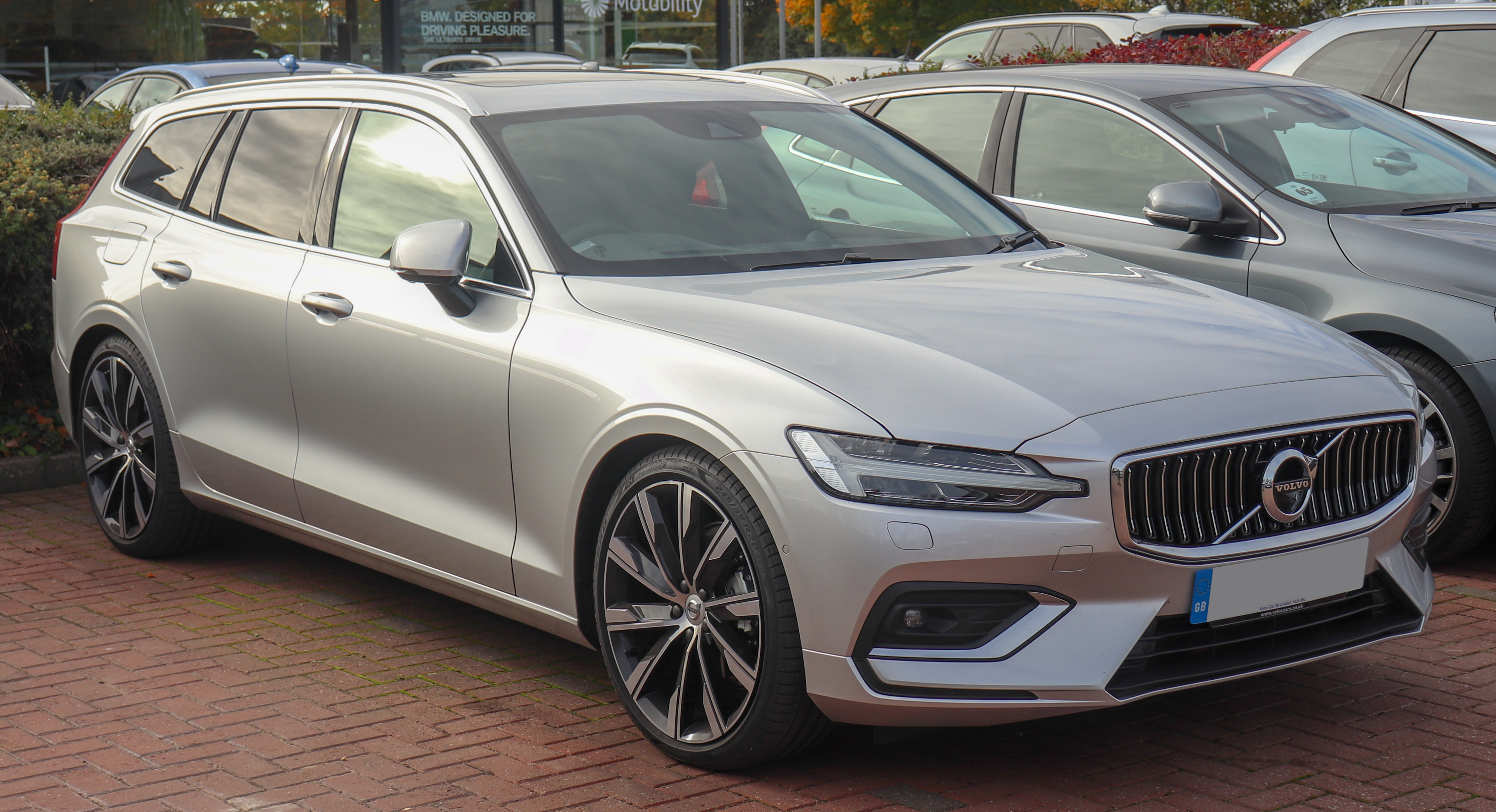
Volvo V60
"Okay, so some of the press cards that I've been driving. Recently, I drove the Volvo V60 cross country. This is the Volvo wagon. It's got a little bit of a lift on it because it's meant to be the off-road version of it."
The Volvo V60 Cross Country is a wagon that’s designed to feel a bit more “adventure-ready” than a normal wagon. It’s also a tech-and-comfort-focused daily driver, and the host is basically saying it’s worth comparing to other family wagons/SUVs in the same price range.
The Volvo V60 Cross Country is a wagon built with a more rugged, off-road-oriented setup than a standard V60. In this segment, the host highlights it as a press-car experience and compares its tech and pricing against Hyundai and Kia alternatives.
CarPlay and Android Auto
"There's a few things like, sure, the Volvo has CarPlay and Android Auto, but it's not wireless. You still have to use the plug."
CarPlay and Android Auto are systems that let you use your phone’s navigation, music, and calls through the car’s screen. “Wireless” means you don’t need to plug your phone in every time—this Volvo still needs a cable.
CarPlay (Apple) and Android Auto (Google) mirror a phone’s compatible apps onto the car’s infotainment screen. The host notes that on this Volvo, they require a physical plug, which affects convenience compared with wireless setups.

Hyundai Palisade
"...on the technology. And when you look at a Hyundai Palisade, it's about $60,000 for the really nice version...."
The Hyundai Palisade is a large family SUV with three rows of seats, so it can carry more people. Some versions cost around $60,000 and include extra features and technology. It’s the kind of vehicle people mention when comparing what you get for the money.
The Hyundai Palisade is a three-row midsize SUV built for families who want a comfortable ride and lots of interior space. It’s often discussed because higher trims can be priced around the $60,000 range, bringing in more modern features and technology. That makes it a common topic when people talk about what you get at different price points in the SUV market.

EX60
"But the event I went to last night was the Volvo EX60. This is a new all-electric SUV from Volvo. ... New OLED screen, a touchscreen that's big and very clear and great resolution. New operating system ... with NVIDIA chips in it."
The Volvo EX60 is Volvo’s new electric SUV. The big points here are a high-quality screen (OLED), faster software, and different power setups depending on the trim—some versions are single-motor and others are dual-motor.
The Volvo EX60 is presented here as a new all-electric SUV with two rows and a focus on modern tech and responsiveness. The host specifically calls out its new OLED screen, updated software using NVIDIA chips, and multiple trims with different motor configurations (single-motor rear-wheel drive vs dual-motor).
OLED screen
"Really, really nice. Great styling on it. New OLED screen, a touchscreen that's big and very clear and great resolution."
An OLED screen is a type of display that can look especially crisp and bright because each pixel makes its own light. That helps the infotainment screen be easier to read and nicer to use while driving.
An OLED (organic light-emitting diode) display uses self-illuminating pixels, which typically enables very sharp contrast and vivid colors. In EVs and modern infotainment systems, screen quality matters because it’s the primary interface for navigation, media, and vehicle settings.
NVIDIA chips in the infotainment system
"New operating system, excuse me, with NVIDIA chips in it. So no more lagging. It's a much faster reacting system."
The host is saying the car uses more powerful computer hardware (NVIDIA chips) to run the software. The goal is to make the screen and menus feel quicker—less delay when you tap things.
Using NVIDIA chips in a vehicle’s computing stack suggests a more powerful hardware platform for graphics, processing, and software responsiveness. The host ties it directly to reduced lag, meaning the infotainment and UI should react faster to touches and commands.
single-motor rear-wheel drive vs dual-motor
"It's got, I think there's three trim models, and there will be two motor options. One will be a single motor rear-wheel drive, and then ... the mid-level and the upper trim models, will be a dual motor"
Some electric SUVs use one electric motor, usually driving the rear wheels. Others use two motors, which can help the car grip better and feel quicker because power can be sent to more wheels.
EVs can be configured with one motor or two motors. A single-motor rear-wheel-drive setup typically emphasizes efficiency and simpler packaging, while dual-motor setups can improve traction and provide stronger performance by powering both axles.
all-wheel drive
"all-wheel drive. But the performance is there, and the range is like 325 miles"
All-wheel drive means the car can send power to all four wheels. That usually helps the car grip better, but it can use more battery than a single-motor setup.
All-wheel drive (AWD) sends power to more than just the front or rear axle, improving traction—especially on slippery roads. In EVs, AWD can also affect efficiency and range because powering multiple motors typically consumes more energy than single-motor setups.
range (100% charge vs real-world)
"it's 400 miles of range. Now we're getting into real kind of range. Now granted, that's 100% charge... And when you get to the big motor all-wheel drive version... maybe it's a little bit less as we find with EVs on the freeway... There's no buffer. That's because you've got to go up the"
EV range numbers are usually measured under ideal conditions. When you drive faster on the freeway, the car has to work harder and uses more energy, so you’ll often get less range than the marketing figure. Also, some cars don’t let you use every last bit of the battery, so “100%” doesn’t always equal the full theoretical range.
EV range is often quoted at a specific test condition (commonly near “100% charge” and ideal driving). Real-world range drops on the freeway due to aerodynamic drag, higher sustained power demand, and temperature effects. The “buffer” idea matters too: some vehicles reserve a portion of the battery for longevity or safety, so usable range may be less than the headline number.
charge to 80%
"And all the car companies say on a normal basis, charge to 80%. So like my truck is supposed to be 300 miles... maybe it's like 260 if I charge to 100%"
Many EV manufacturers recommend charging to around 80% for daily use to help battery longevity. Charging to 100% typically increases stress on the battery cells, which can reduce long-term capacity retention. For road trips, 100% is used because the extra range is worth the temporary tradeoff.
steady state batteries
"The battery technology is, we're waiting for that next big jump to like steady state batteries and things like that where we can get more range out of it."
“Steady state batteries” refers to next-generation battery designs aimed at improving how efficiently the battery can deliver power over time and under different conditions. The goal is typically better energy utilization and less performance drop-off, which translates into improved real-world range. It’s a forward-looking topic because current batteries still have limitations in how they behave during sustained high-demand driving.
unified operating system for vehicle modules
"more integrated software. So the car is sort of a unified software driven car... the ABS modules... Now it's kind of the opposite. They're getting more and more into having those modules talk to a unified operating system... better control, more efficient over the air updates"
Instead of lots of separate computers that don’t fully “talk” to each other, the car uses one main software system to coordinate everything. That helps the car run more efficiently and makes it easier to update the car over the internet. Sometimes those updates can even improve range by changing how the car controls the motors.
The speaker contrasts older EV architectures—where many subsystems come from different suppliers and communicate in a more fragmented way—with a more integrated approach. A unified operating system coordinates modules (like motor control and ABS) so the car can manage efficiency better and deliver more seamless over-the-air (OTA) updates. This can improve performance and range over time because software can optimize how the motors run and how systems interact.
ABS modules
"So instead of all of these external components that car builders get from suppliers... the car is trying to talk to all those things, the ABS modules and this and that."
ABS is the system that helps prevent the wheels from locking up during hard braking. The ABS module is the computer that controls that behavior. Newer cars can connect that computer with the rest of the vehicle’s software so everything works together better.
ABS stands for Anti-lock Braking System, and “ABS modules” are the electronic control units that manage braking to prevent wheel lockup. In modern vehicles, these modules are increasingly networked with the rest of the car’s control software, enabling coordinated stability and efficiency strategies. When the speaker mentions unified software, ABS is one example of a subsystem that can be integrated into that control architecture.
regen
"...it's like how much uphill you're going and downhill you regen some of it, but it still feels like the way, like for my truck specifically, going uphill eats more battery than going downhill recovers battery."
On an EV, when you slow down—especially going downhill—the car can “make electricity” to recharge the battery. Going uphill usually costs more energy than you can get back from regen, so range changes a lot with elevation.
“Regen” is short for regenerative braking, where an EV uses its electric motor to slow down and turns that motion back into electricity. It helps recapture energy on downhill grades, but it can’t fully offset the extra energy an EV spends climbing uphill.
real range
"...since 285 miles, you want 310 miles of total, like real range, not diluted range."
EV range numbers can be optimistic. “Real range” is what you can truly drive in everyday conditions—like hills and driving speed—so it’s the number that matters for planning a trip.
“Real range” refers to the usable driving distance you can actually expect under specific conditions, not the optimistic estimate from testing cycles. Factors like elevation gain, speed, temperature, and charging strategy can make real range significantly lower than advertised range.
Tesla charging station
"There's a couple places on the way. There's a big Tesla charging station. I hit up like a Walmart on the way somewhere around the middle..."
Tesla has a network of fast chargers along popular routes. If there are lots of cars waiting, even a fast charger can turn a quick stop into a long delay.
The discussion centers on Tesla’s fast-charging network, which uses high-power chargers to reduce time spent charging on road trips. Charging convenience and charger availability (including lines) can be as important as charger speed when planning a drive.
Walmart
"...I hit up like a Walmart on the way somewhere around the middle and, and I've only done it once in the EV... on the way home, I stopped at that Walmart."
Using a retail stop like Walmart as a charging pause is a common EV road-trip strategy: park at a charger, then spend time shopping while the battery tops up. The downside is that charger queues can erase the time advantage if many drivers arrive at once.
10% to 70%
"...I think they said you can add 170 miles of range. So it's somewhere like 10% to 70% or whatever it is."
Charging isn’t equally fast the whole time. EVs usually charge quickest after you start (like around 10%) and then slow down as the battery gets fuller (like near 70%).
EV charging speed is often measured over a specific state-of-charge window (commonly something like 10% to 70%) because charging is fastest in the mid-range and slows as the battery fills up. That’s why manufacturers and reviewers focus on “how much range you can add” within that window rather than charging from 0% to 100%.
charging stop time vs gas stop time
"...if you were going to stop for gas on your way back from Vegas and your average stop is seven to 10 minutes and you fill up your,..."
They’re comparing how long you’d normally spend at a gas station to how long you’ll spend charging. Even if charging is fast, the real trip time depends on how long the stop takes (and whether there’s a line).
The segment compares EV charging time to traditional fuel stops, using an average “stop is seven to 10 minutes” as a benchmark. This highlights that EV road-trip planning is often about total time (including queues and charging duration), not just miles or charger speed.
fast charger
"You go to a fast charger, you hang out for seven minutes [2296.4s] to 10 minutes, add 170 to 200 miles of range and then be on your way and go."
A fast charger is a special EV charger that puts power into your battery much quicker than a regular outlet. It helps you add range in a short time so you don’t have to wait around.
A fast charger is a high-power EV charging station designed to add significant battery range quickly. The idea is to minimize downtime—plug in, top up, and move on—rather than waiting for a full charge.
in-road charging (charging while driving)
"there are some roads that are being tested... there's a stretch of road where they put like... a charge pad in the road. [2334.0s] And it doesn't work for all cars... when you drive over the road, it starts to charge it."
This is a system where the road itself can charge an EV while you drive over it. It’s still experimental, and not every EV can use it the same way.
In-road charging uses embedded hardware in the roadway to transfer energy to an EV as it drives over the section. The transcript notes it doesn’t work for all cars and is being tested, highlighting the compatibility and infrastructure challenges.
EV charging compatibility
"it doesn't work for all cars. They're testing this where that when you drive over the road, it starts to charge it."
Not every EV can automatically use every charging system. Some cars need the right technology in the car to work with a particular charging setup.
The transcript notes that in-road charging “doesn’t work for all cars,” which points to the real-world issue of standards and vehicle compatibility. Different EVs may require specific receiver designs or communication protocols to charge safely and effectively.
MagSafe
"Not MagSafe. It doesn't need the magnet, but to do it because we're... they're doing it in garages at home garages as well."
MagSafe is a type of wireless charging that uses magnets to help align the charger and device. The transcript is saying the EV charging pad idea doesn’t need that magnetic alignment.
MagSafe is Apple’s magnetic wireless charging standard, used as a familiar comparison point in the transcript. The speaker clarifies that the EV charging pad concept doesn’t rely on magnets in the same way.
wireless charging (charge pad)
"There's a charge pad that you can put, you can bring your car in and you don't even plug it in. You just pull on top of it. Yeah."
Wireless EV charging uses a pad on the ground or in a garage so your car can charge without plugging in a cable. You just park over the pad and it transfers power.
A charge pad is a wireless charging system where the EV charges when it’s positioned over a pad, similar to how a phone charges on a pad. The transcript compares it to waving a phone over a charging surface, emphasizing convenience because you don’t plug in.
high speed rail
"it's never going to work in California because we're going to spend 130 billion dollars building a train that goes nowhere... we spent billions of dollars to go 100 feet in a train that doesn't exist."
High-speed rail is a big government project to move people quickly using trains. The speaker is using it as an example of how expensive and complicated big infrastructure plans can be.
High-speed rail is referenced as a major infrastructure project with high costs and uncertain outcomes. The comparison is used to argue that large-scale EV charging buildouts would face similar political and budget hurdles.
The Boring Company
"The boring company said, they said, forget your high speed rail for 150 billion dollars. And the boring company is like, for a tenth of that, we could dig a hole."
The Boring Company is a company that builds tunnels. In this discussion, it’s brought up to compare how much different infrastructure ideas might cost.
The Boring Company is Elon Musk’s tunneling startup, mentioned here in the context of cost comparisons versus high-speed rail. The transcript claims it proposed digging tunnels for far less money, using that as a contrast to other infrastructure spending.
backtracking on that
"Volvo was a company that went, everything's electric now, right? They're all EV... I think they're backtracking a little bit on that. So they're going to have a number of hybrid models as well..."
They’re talking about Volvo changing its plan. Instead of making only electric cars, they’ll also sell some hybrid versions too.
The hosts are referring to Volvo changing its messaging from “everything electric” to offering a mix of powertrains. In practice, that usually means adding hybrid models alongside full EVs to meet customer demand and charging-infrastructure realities.
zero to 60 time
"...it's 670 horsepower and does zero to 60 in 3.8 seconds. So it's going to scoot around."
“Zero to 60” tells you how fast a car can go from stopped to 60 mph. It’s a simple way to compare how quick cars feel in a straight line.
“Zero to 60” is a common performance metric that measures how quickly a car accelerates from a standstill to 60 mph. It’s useful for comparing straight-line acceleration between cars, though it doesn’t describe handling, braking, or real-world drivability.

Model T
"...they're doing a thing where they're pulling bone stock Model T's out of their museum and you can pay a donation... and then you actually get to drive one... starting with the crank... you've still got the foot starter and you've got to work the choke..."
The Ford Model T is an early mass-produced car from Ford that the museum is letting people drive as part of a paid experience. The hosts emphasize how different it is to operate compared with modern cars, including starting procedures and manual controls.
bone stock
"...they're doing a thing where they're pulling bone stock Model T's out of their museum and you can pay a donation to the museum..."
“Bone stock” means the vehicle is essentially unmodified from factory condition. In this context, it suggests the museum’s Model Ts are preserved as-original, which matters for authenticity and for how the cars drive and start.
choke
"...you've still got the foot starter and you've got to work the choke and you've got to all the stuff..."
The choke helps a cold engine start by making the fuel mixture richer. On older cars, you often have to adjust it by hand before the engine will run well.
A choke is a device used on older engines to help start by enriching the air-fuel mixture when the engine is cold. On carbureted cars like the Model T, it’s part of the starting routine and can be critical for getting the engine to run smoothly.
foot starter
"...you've still got the foot starter and you've got to work the choke and you've got to all the stuff..."
Instead of pressing a button like modern cars, older cars may start using a pedal or lever you operate with your foot. It’s one of the reasons vintage cars feel so different to drive.
A foot starter is a manual starting method used on some early vehicles, where you physically actuate the starter mechanism with your foot. It’s part of the hands-on process the hosts describe for driving vintage cars like the Model T.

Porsche 911
"Let's see. A new Porsche 911, if you haven't seen that yet, they're doing a GT3 SC."
They’re discussing a new Porsche 911. The 911 is Porsche’s famous sports car, and Porsche makes special versions of it for different driving styles—here, it’s a GT3-style convertible.
The hosts are talking about a new Porsche 911 variant, specifically a GT3-based convertible. The 911 is Porsche’s iconic sports-car platform, and Porsche often uses it to create track-focused trims like the GT3 line.
Manual transmission
"It's basically their convertible version of the GT3. Manual transmission, carbon fiber doors, carbon fiber hood, lightweight components, not inexpensive but looks amazing,"
A manual transmission is when you shift gears yourself using a clutch pedal and a stick. Some drivers like it because it gives you more control and can feel more fun.
A manual transmission means the driver selects gears using a clutch and gear lever rather than relying on an automatic. Enthusiasts often prefer manuals because they provide more direct control and can feel more engaging, especially in performance cars.
carbon fiber hood
"Manual transmission, carbon fiber doors, carbon fiber hood, lightweight components, not inexpensive but looks amazing,"
A carbon-fiber hood is lighter than a metal hood. That can help the car feel more agile, especially when you’re changing direction.
A carbon-fiber hood is another weight-saving component made from composite material. Putting lighter material up front can also help with front-end balance and reduces inertia for quicker direction changes.
carbon fiber doors
"Manual transmission, carbon fiber doors, carbon fiber hood, lightweight components, not inexpensive but looks amazing,"
Carbon-fiber doors are made from a lightweight material. Using lighter materials helps the car feel quicker and more responsive, but it usually costs more.
Carbon-fiber doors are made from composite material to reduce weight compared with traditional steel or aluminum. Less weight helps improve acceleration, braking, and handling response, though it typically increases cost.
carbon fiber package
"they said this is actually a pretty good deal compared to the GT3 with similar equipment. If you throw in a carbon fiber package and magnesium wheels and some of the other options on it,"
A carbon fiber package is an add-on option that includes multiple carbon-fiber parts. It costs extra because carbon fiber is a premium, lightweight material.
A “carbon fiber package” is an option bundle that adds multiple carbon-fiber components to the car. It’s usually priced as an upgrade because carbon fiber is expensive to manufacture and can significantly change the car’s weight and appearance.
magnesium wheels
"If you throw in a carbon fiber package and magnesium wheels and some of the other options on it, you'd pay about $11,000 more"
Magnesium wheels are lighter wheels than many alternatives. Lighter wheels can help the car react faster, but they’re usually more expensive.
Magnesium wheels are lightweight wheels made from magnesium alloy. Reducing unsprung mass (weight not supported by the suspension) can improve ride quality and responsiveness, but magnesium wheels are typically more expensive and require careful handling.
convertible top mechanisms
"They're not giving you a roof. A roof costs $11,000. Come on. Even that, they said they redid all of the mechanisms and power components for the convertible top to be a lighter weight,"
Making a car a convertible adds extra parts for the roof. They’re saying Porsche redesigned those parts to be lighter so the car doesn’t lose as much performance.
The hosts mention Porsche “redid all of the mechanisms and power components” for the convertible top to be lighter. This is a key engineering challenge on convertibles: the roof system adds weight and complexity, so redesigning it can help preserve performance and handling.
Air Water event in Orange County
"I imagine we will get to see it in person in a few weeks at the Air Water event in Orange County. I think you can sell by tickets to that."
They’re talking about an upcoming car event in Orange County called “Air Water.” It’s the kind of event where lots of car people show up, so you can expect to see many Porsches.
The hosts are planning to see the car in person at an “Air Water” event in Orange County. Car events like this often attract large numbers of enthusiasts and exotics, which is why they expect to see many Porsches.
Orange County Fairgrounds
"At the Orange County Fairgrounds, Fair and Event Center, they call it now, but it's the Orange County Fairgrounds. There's an auction going on there too, along with it."
They say the event is at the Orange County Fairgrounds in Costa Mesa. They also mention an auction, so it’s likely to be a busy place with more than just car displays.
The “Air Water” event is described as taking place at the Orange County Fairgrounds in Costa Mesa. The hosts also mention there’s an auction happening there too, which can affect what cars and vendors you’ll see.
P-cars
"So. Expect a lot of Porsches. A lot of Porsches. A lot of P-cars. A lot of P-cars."
“P-cars” is just a nickname for Porsche cars. They’re saying there will be a lot of Porsches at the event.
“P-cars” is shorthand for Porsche cars, a common enthusiast nickname. The hosts use it to emphasize that Porsche will be a dominant brand at the event.
Request an Explanation
Heard something you'd like explained? We'll add it to this episode.
Sign in to request explanations for terms you heard.
Want to learn more?
Browse our glossary for plain-English explanations of automotive terms, jargon, and concepts.
Help improve this episode
See something that's not quite right? Our annotations are AI-generated and can sometimes miss the mark. Click the flag icon on any annotation to suggest a correction.