
Nissan's going all in: Inside the plan
About this episode
Nissan’s planning chief Pons Pendicatira lays out the brand’s turnaround strategy from Japan, focusing on bringing back sports-car credibility while expanding SUVs and trucks. He confirms work on a future GT-R, with timing tied to emissions clarity around 2028 and hopes for a new car by 2030. The next-gen Z will lean into heritage, special editions, and more performance variants. Infiniti gets a high-horsepower sedan concept (likely linked to Skyline cues) and a QX80 performance “proving ground” targeting 600+ hp. Nissan also details the return of the Xterra and a body-on-frame family approach, plus ideas for heritage parts and tuner-supported resto-mod kits.
Nissan
"[35.8s] Today's topic is Nissan, and I'll be joined by a special guest, [39.2s] senior vice president and chief planning officer for Nissan North America, Pons Pendicatira, [44.3s] while in Japan together to discuss the turnaround plans for the beloved automaker."
This part of the show is mainly about Nissan—what’s been going wrong and what the company plans to do next.
This episode segment is organized around Nissan’s current challenges and its proposed recovery strategy. It sets up a discussion with Nissan leadership about what changes are coming and why.
turnaround plans
"[39.2s] senior vice president and chief planning officer for Nissan North America, Pons Pendicatira, [44.3s] while in Japan together to discuss the turnaround plans for the beloved automaker. [48.6s] Nissan's been in a tough spot as of late."
A turnaround plan is what a company does when things aren’t going well and it needs to get back on track. Here, it means Nissan is trying to change its direction to improve sales and reputation.
A turnaround plan is a structured strategy a company uses to recover from poor performance—often involving product changes, cost reductions, and new business priorities. In this segment, it frames Nissan’s efforts to reverse recent struggles and rebuild momentum with customers.

Nissan Sentra
"[68.3s] The XTERRA is MIA. [69.6s] There's no hoted-up Sentra or Ultima. [71.7s] The Maxima is dead."
The Sentra is Nissan’s smaller sedan for everyday driving. The host is saying there hasn’t been a more exciting, performance version for fans recently.
The Nissan Sentra is Nissan’s compact sedan, typically positioned as an affordable, efficient commuter. The host’s mention of “no hoted-up Sentra” implies there hasn’t been a performance-focused variant to satisfy enthusiasts.
CVT
"[71.7s] The Maxima is dead. [72.8s] The CVT still lives on in some places, and in infinity showrooms, [75.8s] there's two vehicles at the moment."
A CVT is a type of automatic transmission that can adjust to different speeds smoothly. The host is saying Nissan still uses this kind of transmission in some cars.
CVT stands for continuously variable transmission, a gearbox that can smoothly change ratios without fixed “gears.” The host’s comment suggests Nissan is still using CVTs in some models, even as the brand’s lineup and enthusiast appeal have struggled.

Nissan GT-R
"We know the GT-R will return and work is already underway."
The Nissan GT-R is Nissan’s high-performance sports car. It’s famous for being fast and capable, especially because it has all-wheel drive. When they say it’s coming back, they mean Nissan plans to keep or restart that performance model.
The Nissan GT-R is Nissan’s flagship performance sports car, known for all-wheel-drive traction and a reputation for strong track capability. When the hosts say it “will return,” they’re referencing Nissan’s plan to bring back or continue the GT-R line as part of its enthusiast-focused strategy.
body-on-frame
"The XTERRA is returning along with a family of body-on-frame vehicles"
Body-on-frame means the car’s body sits on a separate heavy-duty frame underneath. This is often used for trucks and off-road vehicles because it’s strong and can handle rough use and towing better.
Body-on-frame is a vehicle construction method where the body mounts to a separate ladder-like frame. It’s common on trucks and many off-road SUVs because it can handle heavy loads and rough terrain well, and it often makes towing and durability easier to engineer.
infinity showrooms
"that will make their way into infinity showrooms as well."
They mention “showrooms” for a luxury brand. Infiniti is Nissan’s luxury division, so the point is that these vehicles may be sold through that higher-end dealer network.
The transcript appears to reference “infinity showrooms,” which is likely a mishearing of “Infiniti” showrooms. Infiniti is Nissan’s luxury brand, and the mention suggests Nissan plans to distribute some of these vehicles through its luxury dealer network.

Chrysler Crossfire
"We were actually just talking a little while ago before we started recording about you launching the Chrysler Crossfire. Absolutely."
The Chrysler Crossfire was a sporty two-door car Chrysler sold a while back. It was meant to feel more like a sports car than a typical Chrysler.
The Chrysler Crossfire was a late-2000s sports coupe built to compete in the “small grand tourer” space. It’s best known for its styling and for being a relatively niche model in Chrysler’s lineup.
sports cars are the core of the company
"And I asked him about sports cars and other cars like the GTR, the Z. And quote, he said, the sports cars are the core of the company."
They’re saying sports cars are the main focus of the brand. That usually means the company wants to spend more effort on making and selling sports cars, not just regular cars.
This is a brand strategy statement: positioning sports cars as central to a manufacturer’s identity. For listeners, it matters because it signals where Nissan may invest in engineering, marketing, and product planning (like GT-R/Z and potential new sports-car models).

Nissan Silvia
"And he also noted that if he could, he would bring back something like the Silvia, right? He would love to."
The Silvia is a Nissan sports car that became popular with car fans, especially in Japan. Mentioning it usually means they’re talking about making a smaller, more fun-to-drive sports car again.
The Nissan Silvia is a classic Japanese sports coupe known for its lightweight feel and enthusiast following. When a CEO says they’d “bring back something like the Silvia,” they’re pointing to a revival of that smaller, more nimble sports-car identity.
Business case (positive vs negative) for a model
"The Z was kind of a negative business case overall. You couldn't really find a way to make it positive. And he was the guy who was chief... doing globally."
A “business case” is the justification for whether a vehicle program makes financial sense—typically factoring in expected sales, margins, costs, and brand impact. A “negative business case” means the numbers don’t pencil out well, so the team has to find a strategy (or accept tradeoffs) to keep the model alive.
Iconic nameplate / brand heritage
"...whatever happens, we got to bring this car out for the brand to save. We still care about our heritage. We want to keep an iconic nameplate out there."
An “iconic nameplate” is a model name that carries strong brand recognition and emotional value, often tied to decades of history. Here, Nissan’s strategy is described as keeping the Z name visible to preserve heritage and brand identity, even if the product’s pure financial case is challenging.
Accessible sports car positioning
"Now, he's a big fan of accessible sports cars. So you got GTR at the very top... It's a pinnacle, but not everybody can afford 130,000 plus sports car. We got a Z that's in the $45,000 to $65,000 range."
An “accessible” sports car is one that’s meant to be affordable enough for more people to buy. They’re saying Nissan wants the Z to be the entry point to sports-car ownership, not just the super-expensive GT-R crowd.
“Accessible sports car” positioning means designing and pricing a sports car so it’s attainable for a broader set of buyers, rather than only serving as an ultra-exclusive performance halo. In the segment, Nissan is described as using the Nissan Z price band to broaden the audience while reserving the GT-R for the top tier.
VR38 block
"So you and I talked about the GTR when we were in New York, and you mentioned why would we throw away the VR38 block. It's going to have to be a hybrid, of course,"
The VR38 is the engine family behind the GT-R. They’re saying that engine might not be the easiest path forward if emissions rules keep getting stricter, so Nissan may need a different setup.
The “VR38 block” refers to the engine block used in the Nissan GT-R’s VR38-series V6. The discussion implies that keeping that engine architecture may be difficult under evolving emissions requirements, which could push Nissan toward a hybridized approach.
hybrid
"It's going to have to be a hybrid, of course, because of global emissions and global cars. Got to be on the Nurburgring batteries."
A hybrid uses both a gas engine and an electric system. The goal is usually to cut pollution and use fuel more efficiently without giving up all the performance.
A hybrid powertrain combines an internal-combustion engine with an electric motor and battery. In this context, the idea is that hybridization can help reduce emissions and improve efficiency while still delivering performance.
Nürburgring batteries
"Got to be on the Nurburgring batteries. May not be there today for electric cars in terms of that. But he specifically said tonight, quote, yes, we are working on the GTR."
They’re talking about batteries that can handle hard driving, like at the Nürburgring. The concern is that today’s battery tech may not yet be good enough for that kind of sustained performance.
“Nürburgring batteries” likely refers to battery capability suitable for demanding track conditions at the Nürburgring. The point is that electric/hybrid systems must deliver sustained performance under high load, not just in ideal test cycles.
sunset that vehicle
"That would basically choke the powertrain to make it, you know, compatible with the latest emission standards. So it was definitely time to sunset that vehicle."
“Sunset” here means the company plans to stop selling that car. They’re saying the current GT-R generation couldn’t meet new pollution rules in a practical way.
“Sunset that vehicle” means ending production/sales of a model because it can’t meet new requirements or is no longer viable. In this case, the reason given is that the current GT-R generation didn’t meet emissions targets without too many compromises.
future proof
"So it was definitely time to sunset that vehicle. What we want to do is future proof next generation GTR, that it can have a really long life and keep evolving over its life cycle."
“Future proof” in automotive planning means designing a vehicle platform so it can adapt to future requirements—like stricter emissions—over a long product life. Here, it’s used to describe making the next GT-R evolvable rather than quickly obsolete.
emissions regulation
"But the unknown, the big unknown is which way our emissions regulation is going to go. We currently have a reprieve with the current administration. They backed off on a lot of the regulations."
Emissions regulation is the set of laws that control how much pollution cars are allowed to produce. If the rules might get stricter (or get relaxed), automakers have to plan their cars accordingly.
Emissions regulation refers to government rules that limit pollutants from vehicles, which can change over time and vary by region. The hosts highlight how uncertainty in future emissions rules affects engineering decisions like whether to keep evolving the current GT-R or redesign the next generation.
development of what we want this car to be
"And so that's what's actually slowing down the development of what we want this car to be. That said, there is a core group of people..."
They’re talking about how making a new car can take longer when the future rules or plans aren’t fully known yet. So engineers may hold off on certain decisions until later. It’s a reminder that car development is as much about timing and planning as it is about parts and performance.
This is describing how product development timelines can be slowed by uncertainty about future regulations, funding, or corporate strategy. The speaker references “post 28 or post 32,” implying that the plan depends on what comes next. For listeners, it highlights how automakers often design around long-term constraints rather than just engineering goals.
bringing the GTR back
"...working on bringing the GTR back. And you know, they're completely nuts about this car."
This part of the conversation is basically about the GT-R coming back. They talk about the people working on it and when we might hear more. It’s the main storyline of the segment.
This segment is centered on the idea of reviving the Nissan GT-R, including who’s working on it and when they expect to learn more. The hosts connect the effort to enthusiast culture in Japan and to specific driving routes associated with GT-R development. It functions as a clear “what’s next for the GT-R” discussion topic.

Nissan R35 Gtr
"... developed. When I lived here in Japan, I had an R35 GTR. That road is made for it."
The Nissan GT-R R35 is a specific generation of the GT-R sports car. The speaker is saying they owned one and that the roads they drove on matched the car’s strengths. It’s mentioned because it’s an example of how the car feels in everyday driving conditions.
The Nissan GT-R R35 is the generation of GT-R that many enthusiasts associate with the modern, all-around performance era of the model. In the context you provided, the speaker mentions owning an R35 GT-R in Japan and says the roads there suited it well. That’s why it’s discussed: it connects the car’s real-world usability and performance to the driving environment.
2028... hopefully see something by 2030
"...start hearing things around 2028 and hopefully see something by 2030, yeah?"
They’re giving a rough timeline for when we might hear more and when something could actually show up. In car development, big decisions and launches often depend on planning steps that take years. So even if engineers start now, the public usually hears about it later.
The hosts are discussing a likely timeline for major updates or announcements, with “2028” as a key checkpoint and “2030” as a hoped-for reveal window. In automotive terms, these kinds of milestones often correspond to program planning, regulatory clarity, and development gates. It’s a useful concept for listeners to understand why car launches can slip by years.

Nissan Z
"So talking about Z... we'd start working on the next Gen Z... So the current Z is a twin-turbo... we're literally back to a heritage-like design."
The Nissan Z is a sports car model line that Nissan keeps updating over time. They’re talking about what the next version should be and how the current one is set up with twin-turbo power.
The Nissan Z is the modern Z-car line (a long-running sports car nameplate) that has evolved through multiple generations. Here, they discuss the current Z’s twin-turbo setup and the plan for a “next Gen Z,” including design direction and what customers actually want.
twin-turbo
"So the current Z is a twin-turbo. We're back to a twin-turbo and we're literally back to a heritage-like design."
Twin-turbo means the engine uses two turbochargers to make more power. It helps the car feel quicker by boosting airflow into the engine.
A twin-turbo system uses two turbochargers to force more air into the engine, improving power and responsiveness. In practice, it’s often used to reduce turbo lag and help the engine make stronger torque across a wider range.
heritage-like design
"We're back to a twin-turbo and we're literally back to a heritage-like design."
“Heritage-like design” means the new car looks like it’s taking inspiration from older, classic versions. The goal is to keep the brand’s identity while still making a modern car.
“Heritage-like design” means styling cues that intentionally reference a brand’s past—often to signal identity and appeal to enthusiasts. It’s a common strategy for sports cars because it can balance modern engineering with familiar visual character.
customer segmentation by age/affordability
"So we're finding a lot of the customers who buy the car now are actually older customers, those who maybe lost it after this car when they were younger and maybe couldn't afford it..."
They’re saying the people buying the car now aren’t all the same—some are older customers who missed out earlier because of money. That helps the company decide what the next version should be.
The hosts are describing how customer research can show different buyer groups—here, older customers who wanted the car when they were younger but couldn’t afford it. That kind of segmentation affects product decisions like performance targets, pricing, and feature priorities.
heritage edition (heritage version)
"They're very interested in the heritage version. So those are the ones that moved really quick."
A heritage edition is a modern car packaged with styling, colors, and interior cues that reference a brand’s past. The idea is to appeal to buyers who connect emotionally to earlier eras, often using recognizable paint schemes and cabin themes.

Buick 27 Model
"...he ones that moved really quick. And you saw the 27 model year and the British Racing Green with the Camel..."
The Buick Model 27 is an older Buick model from the past. In this discussion, it’s mentioned with details like the model year and paint color, which suggests it’s a specific collectible car. The point is that it’s notable among classic Buicks.
The Buick Model 27 is a classic Buick from the early 20th century era, referenced here in connection with a specific model year and a distinctive color scheme. In the podcast context, it’s brought up as part of a story about cars that were notable and moved quickly, suggesting it’s a collectible or historically interesting example. That kind of mention fits when discussing classic-car culture and specific, identifiable models.
manual
"So a lot of tuning has been done to bring a manual into the Nismo."
A manual is the kind of transmission where you use a clutch pedal and shift gears yourself. The episode is saying Nissan did extra engineering work so the high-performance Nismo Z can be had with a manual.
A manual transmission lets the driver select gears via a clutch and gear lever, which many enthusiasts prefer for direct control and engagement. In this segment, the hosts specifically call out tuning work to integrate a manual into the Nismo version.
performance versions / special limited series
"So I do see performance versions coming out, special limited series."
This is Nissan saying they’ll make higher-performance, limited-run versions of the Z. Instead of just one regular model, they’ll offer special editions with upgrades for enthusiasts.
“Performance versions” and “special limited series” are marketing and product strategies where a base model is upgraded with higher-output tuning, braking, and/or chassis changes, then sold in limited quantities. The goal is to create a more desirable, enthusiast-focused package beyond the standard trim.
frame-based family
"We've talked about the frame-based family. We talked about reducing the model line from 56 to 45."
“Frame-based” means the car has a strong metal frame underneath, and the body sits on top. It’s common on trucks and off-road-capable SUVs because it’s built to handle heavier work and tougher roads.
A “frame-based” vehicle is built on a separate ladder-style chassis, with the body mounted on top. This architecture is often chosen for trucks and SUVs because it can handle towing and rough-road use well, and it’s easier to create multiple body styles on the same underlying platform.
reducing the model line from 56 to 45
"We've talked about reducing the model line from 56 to 45. I believe that was it. 45 units, yeah."
This is Nissan simplifying its lineup—selling fewer different models. The idea is to focus on the vehicles they think will do best instead of spreading effort across too many choices.
Reducing the number of models is a product-planning strategy to simplify the lineup, reduce complexity, and focus resources on higher-demand vehicles. In this segment, the hosts frame it as trimming models while concentrating on the company’s new “frame family” and key nameplates.
Infiniti
"And then we've got a whole frame family of vehicles coming that are going to split between Nissan and Infiniti."
Infiniti is Nissan’s luxury brand. They’re saying some of the same new vehicle platforms could be used for both Nissan and Infiniti, just with different positioning and features.
Infiniti is Nissan’s luxury brand, positioned above mainstream Nissan models. The hosts say a “frame family” of vehicles will split between Nissan and Infiniti, meaning the same underlying architecture could be used across both brands with different styling and equipment.

Nissan Pathfinder
"...Nissan is kind of teased a little about the Pathfinder doing how to split strategy with the body on frame version for more people that want more capability, but then we're also going to have that unibody version we still have today."
The Nissan Pathfinder is a family SUV. They’re saying Nissan may offer two different versions—one more rugged and capable, and another that’s built more like a typical car for comfort and efficiency.
The Nissan Pathfinder is a midsize three-row SUV nameplate. In this segment, Nissan is teased to split the Pathfinder strategy by offering both a body-on-frame version for higher capability and a unibody version for today’s buyers who prioritize ride/efficiency.
unibody version
"...but then we're also going to have that unibody version we still have today."
Unibody means the body and the main structure are basically one integrated piece. It often helps with comfort and efficiency, while body-on-frame tends to be chosen for maximum toughness.
A unibody (unit-body) design integrates the body and structure into one shell, which can improve ride comfort, reduce weight, and enhance efficiency. The segment contrasts unibody with body-on-frame for the Pathfinder, suggesting Nissan wants to offer both a comfort-focused option and a more rugged, capability-focused option.
high horsepower sports sedan
"[624.7s] His quote was, [625.5s] high horsepower sports sedan for Infiniti. [628.4s] And then we also talked about these Infiniti SUVs as well."
This phrase means a four-door car that’s meant to feel quick and fun to drive. “High horsepower” is just a way of saying it’s built for strong performance.
A “high horsepower sports sedan” is a performance-focused four-door car tuned for stronger acceleration and driving dynamics rather than just commuting. In the segment, it’s used as the positioning for Infiniti’s next U.S.-bound direction.
rear wheel drive
"[645.4s] We've already know it's a four door sedan. [646.9s] We know it's a high horsepower. [648.1s] And we also know it's going to have an available main transmission and rear wheel drive."
Rear-wheel drive means the engine sends power to the back wheels. Many enthusiasts like it because it can make the car feel more balanced and sporty.
Rear wheel drive (RWD) sends power to the rear wheels, which can improve balance and steering feel compared with front-wheel drive. The transcript treats RWD as a key spec for the planned Infiniti high-horsepower sedan.

Nissan Skyline
"[653.0s] And then today, when we're recording this in Japan, [656.1s] you guys tease a new Skyline. [658.1s] Now a Skyline is a global model that's not sold in the U.S."
The Nissan Skyline is a famous performance car line in Japan. In the U.S., you usually wouldn’t see the Skyline name—instead, similar cars were sold as Infiniti models.
The Nissan Skyline is a long-running Japanese performance sedan/coupe platform that’s marketed differently by region. The transcript explains that while Skyline isn’t sold in the U.S. under that name, related versions were sold in America under Infiniti badges like the Q50, G35, and G37.

Infiniti Q50
"[661.7s] The version of that that was sold in the U.S. was badged in Infiniti. [664.4s] And it was badged Q50 or G35 or G37, depending on the generation."
The Infiniti Q50 is Infiniti’s sedan you can buy in the U.S. It’s basically the same idea as the Nissan Skyline, just branded differently for different markets.
The Infiniti Q50 is a four-door sports sedan sold in the U.S. It’s closely related to the Nissan Skyline family, which is marketed differently depending on the region.

Infiniti G35
"[664.4s] And it was badged Q50 or G35 or G37, depending on the generation. [669.0s] Is this, are we ready to confirm that that car is the car that will come to America,"
The Infiniti G35 is an older Infiniti sedan that was sold in the U.S. The hosts mention it to explain how Skyline models were rebranded for America.
The Infiniti G35 is an earlier U.S.-market Infiniti sports sedan nameplate. In the transcript, it’s used to illustrate how the Skyline name changes by generation and market.
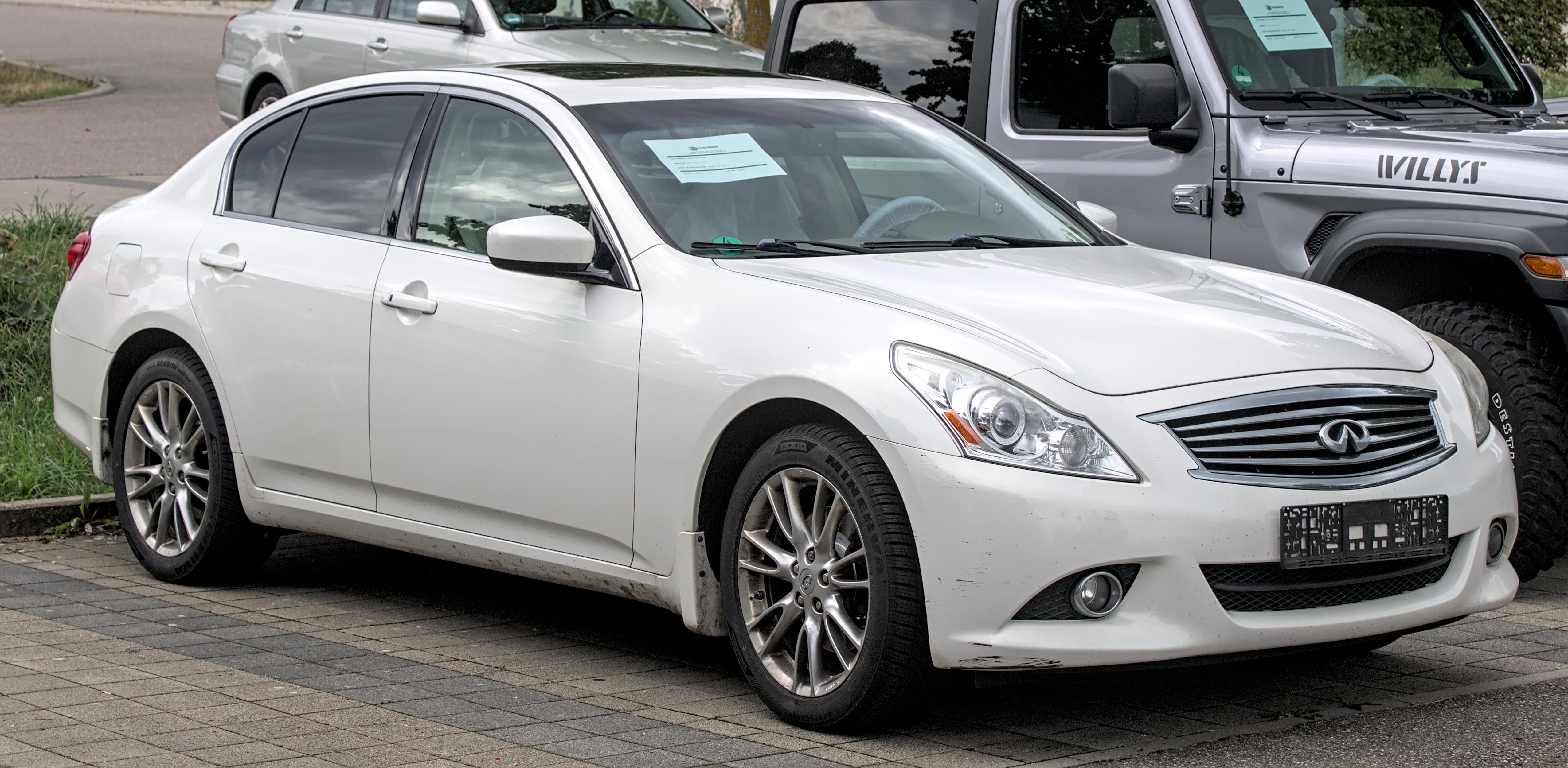
Infiniti G37
"[664.4s] And it was badged Q50 or G35 or G37, depending on the generation. [669.0s] Is this, are we ready to confirm that that car is the car that will come to America,"
The Infiniti G37 is a sedan Infiniti sold in the U.S. The hosts bring it up because it’s one of the Skyline-related badges used in America.
The Infiniti G37 is another U.S.-market Infiniti sports sedan nameplate mentioned as part of the Skyline-to-Infiniti rebranding across generations. It helps listeners understand the lineage behind the “new Skyline” tease.

Infiniti QX-60
"So Infiniti is a two car lineup right now. It's really a QX-60 and a QX-80. We just shown and revealed the QX-65..."
The Infiniti QX-60 is one of Infiniti’s main luxury SUVs. The hosts are saying it’s selling well and fits the kind of customer Infiniti wants right now.
The Infiniti QX-60 is Infiniti’s midsize luxury SUV and is positioned as a high-volume model in the brand’s lineup. In this segment, it’s described as already hitting its “sweet spot,” meaning it’s finding the right mix of buyers and demand.

Infiniti QX-80
"So Infiniti is a two car lineup right now. It's really a QX-60 and a QX-80. We just shown and revealed the QX-65..."
The Infiniti QX-80 is Infiniti’s large luxury SUV, typically aimed at buyers who want maximum space and comfort. Here it’s mentioned as part of the brand’s “massive luxury vehicle” coverage alongside the QX-60.
Infiniti QX-65
"We just shown and revealed the QX-65, the very stylish coupe version of the QX-60... that's going to bring an incremental customer into the brand."
The Infiniti QX-65 is a more stylish, coupe-like take on the QX-60. Infiniti is using it to pull in shoppers who might not have considered the brand before.
The Infiniti QX-65 is described as a coupe-style version of the QX-60, meaning it’s positioned more for style and sportier presence than a traditional boxy SUV. The hosts frame it as a strategy to attract a new, higher-income customer segment.
incremental customer
"We just shown and revealed the QX-65... that's going to bring an incremental customer into the brand... And now we're actually bringing on a regular basis customers who make more than a million dollars a year..."
An “incremental customer” is a new type of buyer Infiniti expects to win. It’s not just selling to the same people again—it’s bringing in someone who wouldn’t have bought before.
An “incremental customer” is someone who is added to the brand’s customer base rather than simply replacing existing buyers. In marketing terms, it means the new model is expected to expand the audience—often by appealing to a different lifestyle or income bracket.
sweet spot
"And by the way, it's hit its sweet spot. We're selling about 12 to 1400 units of those every single month. For the first time ever..."
“Sweet spot” refers to the point where a product matches demand—typically balancing pricing, features, size, and buyer preferences. The hosts use it to say the QX-60 has found the right formula for steady sales.
high performance sedan
"And so that's when we settled on, okay, sedans... And there is a customer base who just craves a high performance sedan..."
A “high performance sedan” is a nicer car that’s also meant to drive more excitingly. The hosts are saying Infiniti thinks there aren’t many options for people who want a sporty luxury sedan.
A “high performance sedan” is a luxury car focused on driving dynamics—handling, acceleration, and responsiveness—rather than purely comfort. The segment frames this as a niche Infiniti thinks it can serve because there are “not very many alternatives” for buyers who want that blend.
ride handling and performance
"So what if we were able to bring a premium sedan out that was biased for ride handling and performance and maybe makes a few compromises in terms of comfort?"
“Ride, handling, and performance” describes the trade space between comfort (ride quality), control (handling), and driving capability (performance). The hosts suggest a sedan “biased” toward ride/handling/performance, even if it means compromising some comfort—an important engineering and marketing decision.
quad LED taillights
"And we just tease the two images, the front and the rear ends with the very historic quad LED taillights that are little GT RS, but very, I mean,"
Quad LED taillights means the back lights use LEDs and there are four main light sections. The point here is that the design is meant to look like a classic performance Skyline.
“Quad LED taillights” means the rear lighting uses four LED elements/segments. LED lighting is typically chosen for faster response and packaging flexibility, and the speaker is using the design as a visual callback to earlier Skyline GT-R styling cues.
donor
"So yes, it could be a donor. I let you connect the dots and, you know, we have limited budgets and limited platforms we can play with."
A “donor” is an existing car that you use as the starting point for a new project. It helps keep costs down because you can reuse parts and engineering instead of starting over.
A “donor” car is a base vehicle used as the foundation for building or developing another model—often sharing platforms, parts, and engineering to reduce cost. The speaker is implying they could reuse existing architecture to create a new Skyline-style sedan without designing everything from scratch.
limited budgets and limited platforms
"I let you connect the dots and, you know, we have limited budgets and limited platforms we can play with. But the one question actually that I get asked is like,"
Car companies share the same basic building blocks across different models to save money. When budgets and platform options are limited, they have to reuse more existing parts instead of making everything new.
This is a development constraint: automakers often build multiple models on shared “platforms” (common underpinnings like chassis architecture) to control cost and speed up engineering. Limited budgets and platforms push decisions like using existing components, simplifying unique engineering, and focusing on market-specific variants.

Maxima
"And in the US where we've had Ultima as we've even phased out the Maxima recently, we really don't have a car park of people looking to buy a high performance Nissan."
The Nissan Maxima is a regular Nissan sedan sold in the US. The host is saying it’s been discontinued, which matters because it suggests there aren’t as many people in the US shopping for a high-performance Nissan sedan.
The Nissan Maxima is a mainstream Nissan sedan, and the speaker notes it has been phased out in the US. That’s used to support the idea that the US market doesn’t currently have a large pool of buyers specifically looking for a high-performance Nissan sedan.
JDM
"That said, we really do know that there's customers in the US who understand the JDM [872.2s] culture very well and do understand what the skyline really is. [876.6s] So what if there was a nice merging of the two? What could we bring?"
JDM means “Japanese Domestic Market.” It’s shorthand for the whole enthusiast scene around Japanese cars, including the culture and the specific models people chase.
JDM stands for Japanese Domestic Market, referring to cars and enthusiast culture centered on Japan. The hosts are saying some U.S. customers understand JDM culture and specifically what the “skyline” represents to enthusiasts.
four door sedan version of the Z
"You basically talked about how this could be a four door sedan version of the Z, [886.8s] which is kind of with the Q50 and the G35 and all those. [889.3s] They shared platforms and transmissions and all that stuff."
They’re talking about making a sedan that feels like the Nissan Z—same enthusiast vibe, but with four doors. The point is that Infiniti could build it using existing shared parts so it’s not starting from scratch.
This is a “concept” of turning a sports-car identity into a sedan format—using the Z’s performance/enthusiast positioning but packaging it as a four-door. The hosts connect it to the idea that Infiniti could leverage shared platforms and transmissions to make it feasible.
platforms and transmissions
"[886.8s] which is kind of with the Q50 and the G35 and all those. [889.3s] They shared platforms and transmissions and all that stuff. [891.4s] There's a lot of people out there in the tuning world easily pumping 500 horsepower out of the Zs these days."
When cars share platforms and transmissions, it means they use similar underlying parts and drivetrain designs. That makes it cheaper and faster to build new versions of the car.
Sharing “platforms and transmissions” means using common vehicle architecture and drivetrain components across multiple models. This can reduce development cost and make it easier to create new variants (like a performance sedan) using existing engineering.
3 liter turbo six
"It's a very reliable and stout three liter turbo six. [900.4s] It's almost, I don't want to call it underrated because I don't think it's coming from factory [903.1s] underrated, but I do think that there's a lot of untapped performance potential."
They’re talking about an engine that’s 3.0 liters, has a turbocharger, and has six cylinders in a line. They’re saying it’s a strong, dependable setup that can handle more power.
“3 liter turbo six” refers to a 3.0-liter turbocharged inline-six engine. The hosts describe it as “reliable and stout,” and they use that to argue there’s untapped performance potential through tuning.
performance tune
"Or B, could it be something where you add [918.5s] a performance tune with a factory warranty at a dealership level for an upgrade? [924.6s] Like Ford's done this with EcoBoost."
A performance tune is a change to the car’s computer settings to make it run stronger. In this discussion, they’re considering doing it through a dealer so you still get warranty coverage.
A performance tune is software calibration work (often ECU/engine management) that changes how the engine responds—commonly for more power, throttle behavior, and sometimes drivability. Here, the hosts specifically discuss doing it as a dealership-backed upgrade with a warranty.
factory warranty performance upgrade
"Or B, could it be something where you add [918.5s] a performance tune with a factory warranty at a dealership level for an upgrade? [924.6s] Like Ford's done this with EcoBoost."
They’re discussing performance upgrades that come with warranty coverage. Instead of risking warranty issues with an aftermarket tune, the dealer would do an approved software update.
This concept is about offering power upgrades that are warrantied by the manufacturer/dealer, rather than relying on independent aftermarket tuning. The hosts use Ford’s EcoBoost example to frame how a dealership reflash could create a safer, more mainstream path to extra performance.
reflash
"It's a reflash because is that something that [933.2s] where you see a market where people might pay the Infinity dealer to do this under warranty?"
A reflash means the dealer updates the car’s computer software. It’s like installing a new program that changes how the engine behaves, and the idea is to keep it warranty-approved.
A reflash is updating the vehicle’s electronic control unit (ECU) software—essentially rewriting the factory calibration. In this segment, the hosts describe a dealership “factory tune” as a reflash that could be covered by warranty.
Pebble Beach track spec and terrain spec QX80
"At Pebble Beach last year, we showed a track spec and a terrain spec QX80, [945.0s] really going into completely new territory and we actually have a drivable version of the track [951.6s] spec that delivers 650 horsepower off that same platform."
They’re talking about what Infiniti showed at Pebble Beach: special QX80 versions aimed at track use and rougher terrain. The takeaway is how these reveals can hint at what’s coming next.
This segment highlights Infiniti’s Pebble Beach reveal strategy—showing both a track-focused and a terrain-focused QX80 direction. It’s a discussion about how concept vehicles can preview future production or drivable performance variants.
bolt-on parts
"...we were able to get that vehicle up to 650 with some bolt-on parts but not fundamentally tearing up the engine."
Bolt-on parts are upgrades you can add without taking the engine apart. The hosts are saying you can gain power without doing major engine surgery.
“Bolt-on parts” are aftermarket upgrades that can be installed without major internal engine work. In this context, they’re used to increase power while avoiding a full engine teardown.
powertrain headroom (conservative factory output)
"So this tells you this is how Nissan likes to do their powertrains. You know we build in enough upside where we make it for a conservative power outlet output which 450 is by no means low but it's conservative but it can be tuned up..."
They’re talking about building an engine to be strong enough that it can handle more power than the factory initially advertises. That way, tuning later is less likely to cause immediate problems.
The hosts describe a strategy where manufacturers set conservative factory power targets, leaving “headroom” for tuning later. This can help durability and emissions compliance while still allowing enthusiasts to push power with approved or supported setups.
changeover kit / retro kit (factory-backed conversion)
"...is there a world where you could offer a kit, like a changeover kit that a customer could get this to be the JDM version..."
A “changeover kit” or “retro kit” here means a conversion package that updates a modern car’s appearance or equipment to a more classic/JDM look. The key twist is the hosts’ idea of selling it through Nissan/Infiniti with warranty coverage to reduce legal and reliability risk versus DIY mods.
DOT regulations
"...Because the problem is that modern cars headlights and modern cars all these things with DOT regulations and all these things, it makes it very difficult."
DOT regulations are the U.S. rules that car parts—especially lights—have to meet. The hosts are saying modern headlights are harder to swap because they’re designed to comply with these rules.
DOT regulations are U.S. rules governing vehicle equipment, including lighting. The hosts argue that modern headlight designs are tightly integrated and must meet compliance requirements, making retro swaps difficult compared to older cars.

Jeep Cherokee
"... difficult. It's not like back when I had a Jeep Cherokee and XJ and I just swapped out the headlights and..."
The Jeep Cherokee is an SUV that comes in different versions over the years. The comment here is about how older Cherokees were easier to work on for small fixes like headlight changes. Newer ones can be harder because the parts are more tightly packaged.
The Jeep Cherokee is a mid-size SUV that has existed in multiple generations, including the earlier XJ era that many owners remember for straightforward DIY maintenance. In the context you provided, it’s mentioned to highlight how simpler tasks—like swapping headlights—used to be easier than on newer vehicles. That kind of comparison often comes up when discussing how modern packaging and design can make basic repairs more difficult.
adaptive LED headlights
"Headlights can cost a thousand to eight thousand dollars. Like the LED this and adaptive that, it's crazy."
Adaptive LED headlights adjust beam pattern based on driving conditions (often steering angle, speed, or sensors). The hosts use their complexity and cost to explain why retro headlight conversions are challenging on modern cars.
factory-supported tuning
"First, whatever power frame we bring to the US will be tunable. So you can work with the right tuner if we can offer it through the factory with all our warranties, we will."
Factory-supported tuning is when the car maker supports performance upgrades instead of leaving it entirely to the aftermarket. The goal is more confidence that the car will stay reliable and covered.
Factory-supported tuning means the manufacturer anticipates performance upgrades and provides a path to do them with approved tuners and warranty backing. The hosts say any powertrain sold in the U.S. will be tunable, and they’d offer it through the factory if volumes and support make sense.
Official tuner partnerships
"...It's actually a business better done with a tuner. So we partner with tuners before we could officially partner with them..."
Instead of the company doing every modification itself, they work with trusted tuning shops. That helps make sure the car is set up correctly and works well.
The hosts discuss a strategy where the automaker partners with aftermarket tuners instead of trying to do everything in-house. This can speed up development, ensure proper calibration, and reduce the risk of “it runs but doesn’t run right” outcomes when customers want niche configurations.
ECU data
"...sharing the right mapping and ECU data so the tuner is well equipped to get a perfectly functioning car out there."
The ECU is the car’s computer. “ECU data” is the information tuners need to reprogram that computer so the car runs right after changes.
ECU data refers to information exchanged with the car’s Engine Control Unit (ECU), which manages engine and sometimes transmission behavior. Tuners use ECU data to calibrate fuel, ignition, boost (if applicable), and other parameters so the modified car runs correctly and safely.
Heritage parts / period-correct restoration
"...embrace the heritage cars and bring back parts..."
Heritage parts are replacements that look and fit like the original parts from the car’s past. Collectors like them because they keep the car feeling “true” to its history.
The discussion highlights “heritage” or period-correct parts—components designed to replicate original equipment or the look/feel of earlier eras. This matters to collectors because it preserves authenticity, resale appeal, and the intended driving character.
Parts availability for niche/collector cars
"...parts are a problem. When I needed new exhaust mufflers... It was difficult. And... we were one stop short of overnighting parts in Japan..."
For older or less common collector cars, the exact replacement parts can be hard to find. That can make maintenance stressful and expensive.
The segment emphasizes how parts availability can be a major hurdle for niche collector cars, especially when owners want to keep them stock or period-correct. When the right components are scarce, owners may face long lead times, higher costs, or complicated sourcing.

Nissan 300 ZX
"...We have a 1990, 300, ZX, a system in my garage. It's blue on blue. And I got to tell you, parts are a problem..."
The Nissan 300 ZX is a classic Z-car model, and the speaker specifies a 1990 example. They’re using it to illustrate how sourcing OEM-style parts (like exhaust components) can be difficult for older, niche performance cars.
exhaust mufflers
"When I needed new exhaust mufflers, which by the way, that car goes all the way from the cat's back..."
Mufflers are the parts that quiet the exhaust. If you need replacements for an older car, it can be hard to find the right ones that fit and keep the sound close to stock.
Exhaust mufflers are the components that reduce noise and shape exhaust flow. On older Z-cars with long exhaust setups, finding the correct mufflers can be challenging, and fitment can affect how the car sounds and performs.
X pipe
"...it was a nightmare to like, because I don't want an X pipe. I don't want to be loud."
An X-pipe is a specific exhaust connection that can change the sound. The host doesn’t want it because they’re trying to keep the car from getting louder.
An “X-pipe” is an exhaust crossover design that connects exhaust pipes to improve scavenging and can change sound and drone characteristics. The speaker specifically doesn’t want an X-pipe because they want the car to stay quiet and stock-like.
Cat-back exhaust
"...that car goes all the way from the cat's back. It's a very long setup."
“Cat-back” means the exhaust parts from the catalytic converter to the back of the car. If you replace cat-back components, you can change how loud the car is and how it fits.
A cat-back exhaust refers to the exhaust system section starting at the catalytic converter and running to the rear of the vehicle. It’s a common way to describe exhaust upgrades or replacements, and it matters because changing this section can affect sound, fitment, and emissions compliance.
Resto Mod style builds
"He'll be doing exactly what you're talking about. Heritage parts, back in production to support enthusiasts with other cars. And to do Resto Mod style builds. I love that."
A restomod is an older car that gets refreshed with newer parts so it drives better and feels more modern. The goal is to keep the classic vibe, but improve performance and usability.
“Resto Mod” (restomod) is the practice of taking a classic or older car and modernizing it with updated performance parts, drivability, and sometimes electronics while keeping the original look. In this context, Nissan is talking about bringing heritage parts back into production so enthusiasts can build restomods more easily.
0-60 time
"Excuse me. SUV does 060 in like 3.8 seconds, but it costs like 150 grand, 140 grand."
“0-60” measures how fast a car gets from stopped to 60 mph. It’s a quick way to compare performance, but it’s not the only thing that matters.
“0-60” is shorthand for how quickly a vehicle accelerates from a standstill to 60 mph. It’s a common performance metric, but it doesn’t tell the whole story about real-world drivability, braking, or sustained performance—especially for heavy vehicles like SUVs.
dealer markups and reselling over sticker
"And, and, and they can't build these things out of Texas fast enough. And they're going with markups on them at dealers. And then people are reselling them back over sticker."
The segment describes a market where dealers apply markups and buyers resell vehicles for more than the manufacturer’s suggested price (“over sticker”). This is a supply-and-demand phenomenon that can distort pricing, affect availability, and change what “value” means for performance cars and limited allocations.
Nissan QX80
"...I'd love to see a 700 horsepower QX80... you guys showed a thousand horsepower version of the QX80 with the GTR powertrain... No, it's the QX80 is being used as a proving ground."
The QX80 is a big luxury SUV. Here, they’re talking about making it much more powerful—like 600 to 700+ horsepower—and using it to test what buyers want. They also describe different concept versions built for different events and driving styles.
The Nissan QX80 is Nissan’s large luxury SUV (sold under the Infiniti brand in many markets). In this segment, they’re discussing boosting its output into the 600–700+ horsepower range and using it as a “proving ground” for the broader performance strategy. They also mention concept versions with different powertrains and track/terrain/SEMA variants.
two-prong approach
"...maybe we do a two-prong approach. Maybe we do a, you know, a sportier version and then even a higher horsepower version... Do you see this two-prong approach for the QX80 and other models or is it just QX80?"
A “two-prong approach” means they’d make two different versions of the same idea—like one that’s more performance-focused and another that’s even more extreme. It helps them see what people actually want. They’re discussing whether this plan is just for the QX80 or for other cars too.
A “two-prong approach” means offering two distinct performance tiers or variants—often a sportier version and then an even higher-output version. The idea is to test demand and manage risk by not betting everything on one extreme specification. In this segment, they’re debating whether this strategy applies only to the QX80 or to other models too.
proving ground
"No, it's the QX80 is being used as a proving ground. Let's test the market and see what it is."
A “proving ground” is basically a test area. They’re using the QX80 to see how people respond to new performance concepts before committing to the same approach everywhere. It’s like running a controlled experiment with real driving and real attention.
A “proving ground” is a product or platform used to test ideas in the real world before scaling them more broadly. Here, the QX80 is being used to gauge market reaction to performance concepts (track/terrain/SEMA variants). It’s a strategy for reducing uncertainty by learning from early experiments.
SEMA
"...and we did the R spec for SEMA. So we're going to do a very cool driving event with the R spec..."
SEMA is a big U.S. car show that’s especially focused on performance and aftermarket upgrades. Here, they’re saying Nissan brought an “R spec” version to that kind of enthusiast crowd. It helps gauge interest from people who care about modifications and speed.
SEMA (Specialty Equipment Market Association) is a major U.S. trade show focused on aftermarket parts, custom builds, and performance upgrades. In this segment, Nissan’s “R spec” concept is tied to SEMA, implying a more performance- and enthusiast-oriented direction. It’s a different audience than a concours-style show like Pebble Beach.
electric cars putting 1,000 horsepower
"...But we got electric cars now putting 1,000 horsepower. I remember when an M5 had 400..."
Electric cars can make huge power numbers, sometimes around 1,000 horsepower, especially in top performance versions. Because electric motors respond instantly, the car can feel extremely fast right away. They’re using this to explain why the horsepower targets they’re discussing feel different than in the past.
This refers to the way modern electric vehicles can deliver very high peak power quickly, often reaching four-figure horsepower figures in performance trims. Electric motors can produce maximum torque instantly, which changes how “power” translates to acceleration compared with traditional engines. The hosts use it to argue that 500+ horsepower is no longer seen as extraordinary.
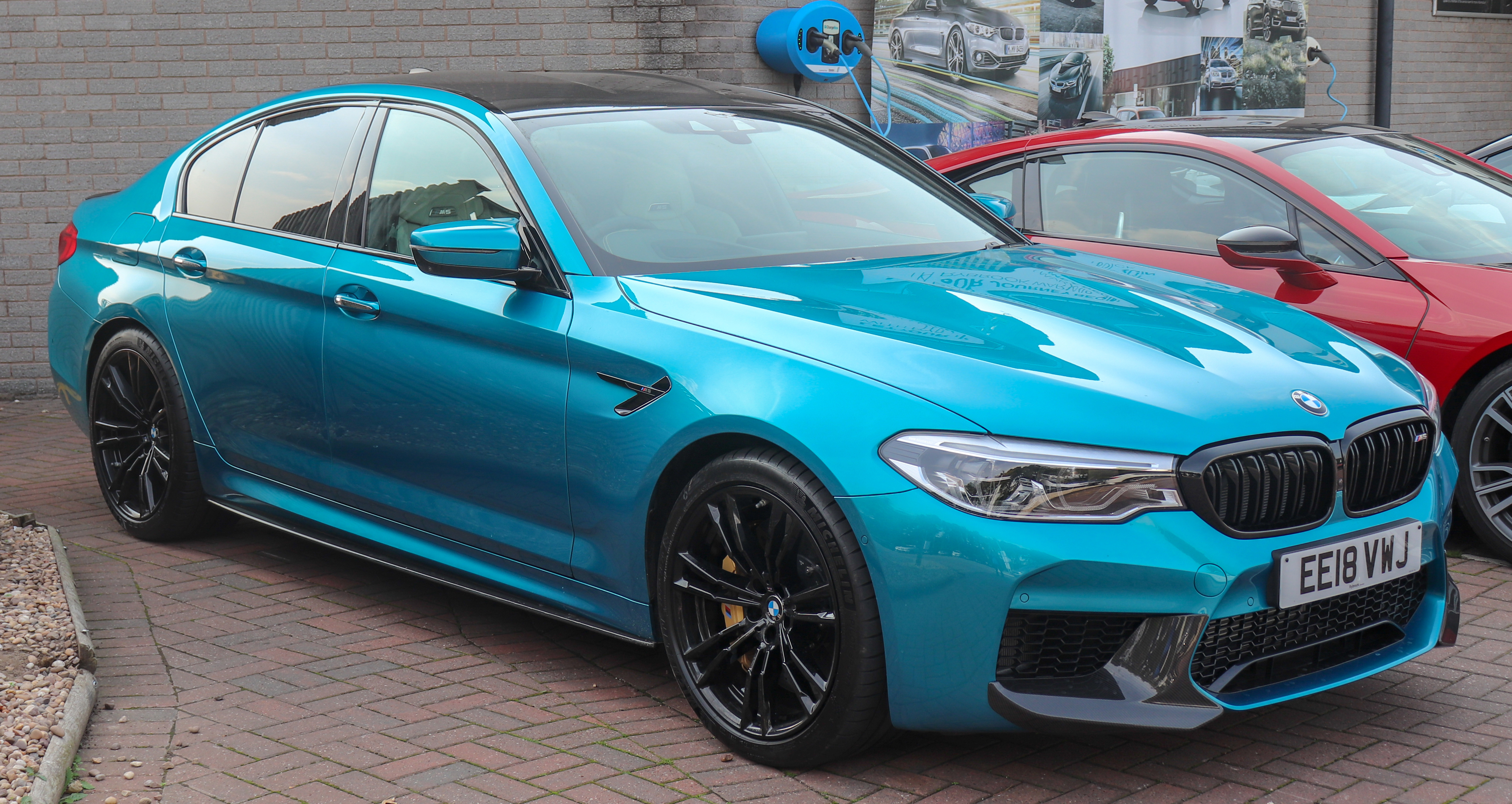
BMW M5
"...I remember when an M5 had 400, some of them were like, whoa."
The BMW M5 is a fast BMW sedan. They’re using it as an example of how horsepower numbers used to be “wow” even at around 400. The point is that today’s cars (especially electric ones) can reach much higher power.
The BMW M5 is BMW’s high-performance sedan line, and it’s used here as a reference point for how horsepower expectations have changed over time. The host notes that an older M5 had around 400 horsepower, which sounded extreme at the time. This is a historical comparison to highlight how modern performance targets (including electric cars) have escalated.
peak torque available at zero
"It's crazy. And peak torque available at zero is just incredible. So what we want to do with this is, okay, 500 is not a dramatic enough number."
It means the car can push with its strongest pulling force right when you start moving. With electric motors, there’s no waiting for the engine to rev up.
“Peak torque available at zero” describes an EV’s ability to deliver maximum twisting force immediately from a stop. Electric motors don’t need to spool up like many gasoline engines, so the car can feel instantly responsive.
JD Power IQS
"because we've won JD Power IQS now with these cars that have done extremely well. So the brand reputation is climbing."
This is a quality score from J.D. Power based on how many problems new cars have. The point here is that the brand has been doing well, and they want to keep it that way.
JD Power IQS refers to J.D. Power’s Initial Quality Study, which ranks automakers based on problems reported by new-vehicle owners. The host uses it as evidence that their current cars have strong reliability/quality, and they don’t want to risk that by pushing power too far.
bulletproof powertrain
"So we will be conservative to the point where we can deliver an absolutely bulletproof powertrain. And then we'll test the market."
They mean they want the car’s moving parts to be extremely reliable. Before chasing bigger numbers, they want to prove the system can handle it without breaking.
“Bulletproof” is a reliability-focused way of saying the powertrain is engineered to handle stress with minimal failures. In this context, it means they’ll limit how aggressive the performance target is until they’ve validated durability through testing.
shoehorned
"What if we did a special project, Joel, where we maybe shoehorned the V6 from a Z into the QX65 and really made a high horsepower."
They mean cramming an engine into a car that wasn’t built for it. It usually takes a lot of redesign so everything fits and runs correctly.
“Shoe-horning” an engine into a different vehicle is a metaphor for forcing a powertrain into a platform it wasn’t originally designed for. In engineering terms, it usually means major work on packaging, mounts, cooling, wiring, and driveline integration.
industrializing something like that
"Now, what makes it tough is industrializing something like that, so where we can get thousands of those cars out."
They mean making a special idea into something factories can build in large numbers. It’s hard because you have to make it repeatable and reliable, not just possible once.
“Industrializing” refers to turning a one-off idea into a repeatable manufacturing process at scale. The host points out the difficulty: it’s not just building one special car, but producing thousands reliably with consistent quality and cost.
One-off builds
"[1566.5s] actually tuning and customizing vehicles the way they want to, that we can't do it in industrial [1571.0s] level, but one-off bills, the stuff that I see online now, some of this really amazing, amazing [1576.3s] stuff."
A one-off build is a custom car project made for one person, not something mass-produced. It usually means more tailoring and custom work to get exactly what the owner wants.
One-off builds are custom, non-mass-produced projects tailored to a specific customer or use case. In tuning culture, they often require more flexible parts sourcing and fabrication than what automakers can offer through standard production programs.
Aftermarket support
"[1576.3s] stuff. I do think there's a lot of missing support from automakers in a big way in that [1582.1s] it used to be different, right?"
Aftermarket support means how many extra parts and upgrades are available from companies other than the car maker. More support usually means it’s easier to personalize and improve the car.
“Aftermarket support” refers to how easily owners can find parts, accessories, and tuning options from third parties. The hosts argue that automakers often don’t provide enough support, which limits how much owners can customize and tune their cars.

Ford Mustang
"...ally with its Raptor off-road stuff and also its Mustang line, so like its icons, if you will. They've do..."
The Ford Mustang is a car made for driving enjoyment. It’s known for being sporty and for having a long history as a popular model. People bring it up because it’s one of Ford’s most recognizable performance cars.
The Ford Mustang is a long-running American sports coupe/convertible known for its performance image and strong brand identity. In a discussion like this, it’s often mentioned alongside other Ford “icon” lines because it represents the company’s heritage in driving-focused vehicles. It may come up when people talk about how Ford builds recognizable, enthusiast-oriented models.

F-150 Raptor
"... really made a good attempt, especially with its Raptor off-road stuff and also its Mustang line, so like..."
The Ford F-150 is a large pickup truck made for everyday driving and work. It’s one of Ford’s most well-known models. The podcast mentions it because it connects to Ford’s bigger lineup of popular, performance-leaning vehicles.
The Ford F-150 is a full-size pickup truck and one of Ford’s most important vehicles in terms of sales and mainstream presence. In the podcast context, it’s mentioned alongside Ford’s other “icon” lines, including the Raptor off-road package and the Mustang, highlighting Ford’s broad range of standout models. It’s relevant because it represents Ford’s core truck identity while also tying into the brand’s performance and off-road credibility.
locking differential
"[1615.9s] It was blue, by the way. Really cool. Cool hardware, locking, re-differential, all that stuff."
A locking differential helps both wheels turn together when one wheel starts slipping. That makes the vehicle more capable on dirt, mud, or rocks.
A locking differential forces the left and right wheels to rotate together, reducing wheelspin when one side loses traction. It’s a common off-road feature that improves climbing and traction on loose or uneven surfaces.
Off-road tires and auxiliary accessories
"[1632.1s] car that's going to be able to have off-road tires and auxiliary stuff put on it. Like these are all [1635.8s] things we talked about between different interviews with you guys."
They’re saying the new vehicle will be set up so owners can add off-road upgrades. That includes better tires and extra gear for trails.
The segment describes a “back-to-basis” approach that still supports practical off-road upgrades like off-road tires and auxiliary accessories. This matters because tires and add-ons are often what transform a vehicle from street-capable to trail-capable.
split headlights
"[1640.0s] we saw a teaser image and it was dark and shadowy, but we did see split headlights. We saw the [1645.1s] trademark hard-body like three slots, the male slots or whatever you guys call them."
Split headlights means the front lights are designed in two separated sections instead of one continuous unit. It’s mentioned as part of what they noticed in the teaser.
Split headlights typically refer to a lighting design where headlamp elements are divided into separate sections or housings, often for styling and packaging. In this segment, it’s used as a visual clue from a teaser image.
hard-body three slots
"[1645.1s] trademark hard-body like three slots, the male slots or whatever you guys call them."
They’re talking about a signature front-end design—three vertical slots—that Nissan fans recognize. It’s being used to hint that the new vehicle will look like it belongs to the brand’s rugged past.
The “hard-body” three-slot grille/face design is referenced as a recognizable Nissan styling cue. The host connects it to Nissan’s heritage, implying the upcoming model will borrow familiar design language.
aftermarket tires
"Punched out fenders. You could put aftermarket tires back on it and they wouldn't rub. There weren't a ton of accessories like a Jeep Wrangler back in the day."
Aftermarket tires are just tires you buy from companies other than the one that built the SUV. The point here is that the old X-Terra had enough clearance to run different tires without them hitting other parts.
Aftermarket tires are replacement tires made by companies other than the vehicle’s original manufacturer. The hosts mention that the older X-Terra could accept aftermarket tires without rubbing, which implies good clearance and fitment for off-road use.

Jeep Wrangler
".... There weren't a ton of accessories like a Jeep Wrangler back in the day. We were in a different era. Now ..."
The Jeep Wrangler is an SUV designed to handle rough roads and off-road trails. It’s also popular because many owners add accessories to change how it looks and how it works. The point is that it’s become a “customizable” vehicle in a way that’s more common today than in the past.
The Jeep Wrangler is a rugged off-road SUV built around a simple, capable design and a strong aftermarket culture. It’s often discussed because it’s easy to personalize with accessories, especially compared with older eras when fewer add-ons were common. That’s why it shows up in conversations about how vehicle ownership and customization have changed over time.
Request an Explanation
Heard something you'd like explained? We'll add it to this episode.
Sign in to request explanations for terms you heard.
Want to learn more?
Browse our glossary for plain-English explanations of automotive terms, jargon, and concepts.
Help improve this episode
See something that's not quite right? Our annotations are AI-generated and can sometimes miss the mark. Click the flag icon on any annotation to suggest a correction.