Travis and the team dive into the latest automotive news, discussing the Nissan Leaf's dual charging ports, the Toyota Corolla Cross's practicality versus the regular Corolla, and the Volkswagen Atlas's mixed reviews. They also explore the Chevrolet Bolt's return with a lower price point and the implications of the new charging standards. The episode features insights on EV charging experiences, reliability, and the nuances of leasing versus buying vehicles. With a mix of humor and expert opinions, this episode offers valuable perspectives for car buyers and enthusiasts alike.
Travis and Alex wander across a bunch of topics today from the dual-charging port weirdness on the new Nissan Leaf, they question whether the Silverado EV TrailBoss might really be a trail intern, and why the Corolla Cross might or might not be the ultimate Corolla.
"...I don't have the hybrid engine here in this Corolla Cross, but I can understand why a lot of people are interested in them..."
A hybrid engine uses both gas and electricity to make the car run. This helps save gas and is better for the environment.
A hybrid engine combines a traditional internal combustion engine with an electric motor to improve fuel efficiency and reduce emissions. This technology allows vehicles to switch between power sources for optimal performance.
R Line is a special version of Volkswagen cars that looks sportier and may have some performance upgrades. It's designed for people who want a more stylish and fun driving experience.
The R Line is a trim level offered by Volkswagen that enhances the sporty appearance and performance features of their vehicles. It typically includes design elements like unique bumpers, sport seats, and upgraded wheels.
"Is it just too boring? Palisade. Is it just too boring to sedate?"
The Hyundai Palisade is a large family car that can fit many passengers and their stuff. People talk about it because it’s practical, but some think it looks a bit plain and not very exciting.
The Hyundai Palisade is a mid-size SUV that has gained popularity for its spacious interior, advanced safety features, and overall value. It is often discussed for its family-friendly design and the debate over whether its conservative styling makes it less exciting compared to competitors.
"But I know it's a it's a tough market. There are the three row SUV is booming."
A three row SUV is a type of vehicle that has three rows of seats, making it great for families or groups who need to carry more people. They usually have more space inside compared to smaller SUVs.
A three row SUV is a sport utility vehicle that features three rows of seating, allowing it to accommodate more passengers, typically up to seven or eight people. This configuration is popular among families and those needing extra space.
"I mean, every crossover SUV is booming right now."
A crossover SUV is a type of vehicle that mixes features of cars and SUVs. They are usually easier to drive than big SUVs and have more space than regular cars, making them popular for families.
A crossover SUV is a vehicle that combines features of a car and an SUV, typically built on a car platform. They offer a higher driving position and more cargo space than traditional cars while maintaining better fuel efficiency than larger SUVs.
"How do you feel about Volkswagen's two liter turbo?"
Volkswagen is a car company from Germany that makes many different types of vehicles, including popular models like the Golf and the Jetta. They are known for their reliable cars.
Volkswagen is a German automotive manufacturer known for producing a wide range of vehicles, including sedans, hatchbacks, and SUVs. The brand is recognized for its engineering quality and iconic models like the Golf and the Beetle.
"How do you feel about Volkswagen's two liter turbo? That seems to be one of the more controversial aspects of the Volkswagen."
A two liter turbo is an engine size of 2.0 liters that uses a turbocharger to boost its power. Turbochargers help the engine run more efficiently and produce more power without increasing the engine size.
The 'two liter turbo' refers to a 2.0-liter turbocharged engine, commonly used in various Volkswagen models. Turbocharged engines are designed to provide more power and efficiency by forcing more air into the combustion chamber.
"Yeah, so I actually didn't have as many issues with the turbo as I did with the transmission. So understanding that the turbo is not the pepias, the zippiest."
The transmission is the part of a car that helps it change gears. It takes the power from the engine and sends it to the wheels, allowing the car to speed up or slow down.
The transmission is a crucial component in a vehicle that transfers power from the engine to the wheels. It allows the vehicle to change speeds and is essential for overall performance and efficiency.
"...the same transmission we find in the Highlander and a whole boatload of other competitors..."
The Toyota Highlander is a popular family SUV that has a lot of space for passengers and cargo. It's known for being reliable and having good safety features.
The Toyota Highlander is a midsize SUV known for its spacious interior, family-friendly features, and reliability. It often comes equipped with various engine options and advanced safety features.
"...about how our blazer is done over the last year and 11,000 miles. So we did have a real quick video on that. We may dive a little bit into the blazer EV later in the video..."
The Blazer EV is a new electric SUV from Chevrolet. It's designed to run on electricity instead of gasoline, making it more environmentally friendly.
The Chevrolet Blazer EV is an all-electric version of the popular Blazer SUV, designed to offer a modern electric driving experience with advanced technology and features.
"...video on that. We may dive a little bit into the blazer EV later in the video and some of the issues we do ..."
The Chevrolet Blazer EV is a new electric SUV that looks stylish and is fun to drive. People mention it because it brings back a classic name with new electric features.
The Chevrolet Blazer EV is an all-electric SUV that revives the classic Blazer name with modern electric technology. It is often discussed for its stylish design and performance capabilities.
"...he's asking about routing versus Tesla for EV charging and road trips, because Tesla really set the bar for what an EV road trip should look like as far as the computer assisting you in this process..."
An EV road trip is when you take a long drive in an electric car. You need to plan where to stop and charge the car, and Tesla has made this easier by showing you where the charging stations are on the map.
An EV road trip refers to traveling long distances in an electric vehicle (EV), which requires planning for charging stops along the route. Tesla has pioneered this concept by integrating charging station locations and charging times into their vehicle's navigation systems, making it easier for drivers to manage their journeys.
"The built in systems from Rivian Volvo, Volvo Polestar, General Motors, Honda Accura, the Nissan Leaf, etc."
General Motors is a big car company that makes many different types of vehicles, including electric cars. They own brands like Chevrolet and Cadillac.
General Motors (GM) is one of the largest automobile manufacturers in the world, producing a wide range of vehicles under various brands, including Chevrolet, GMC, Cadillac, and Buick. They are increasingly focusing on electric vehicles.
"The built in systems from Rivian Volvo, Volvo Polestar, General Motors, Honda Accura, the Nissan Leaf, etc."
Acura is a luxury car brand that is part of Honda. They make more upscale cars that focus on comfort and performance.
Acura is the luxury vehicle division of Honda, offering premium cars that combine performance with luxury features. Models include the Acura MDX and TLX.
"The built in systems from Rivian Volvo, Volvo Polestar, General Motors, Honda Accura, the Nissan Leaf, etc."
Volvo Polestar is a brand that makes high-performance electric cars that are based on Volvo vehicles. They focus on being eco-friendly while still offering great performance.
Volvo Polestar is the performance electric vehicle brand of Volvo, focusing on high-performance versions of Volvo cars and dedicated electric models. Polestar aims to combine sustainability with performance.
"...lestar, General Motors, Honda Accura, the Nissan Leaf, etc. Those are all the Google built in systems."
The Nissan Leaf is an electric car that runs on batteries instead of gasoline. It's popular because it's cheaper to drive and helps the environment, making it a common topic when talking about electric vehicles.
The Nissan Leaf is one of the world's best-selling electric vehicles, known for its affordability and practicality for daily commuting. It is often mentioned in discussions about electric cars due to its role in popularizing EV technology.
"I will say the one weird twist here, though, is that even though they may include supercharger stops in your routing..."
Supercharger stops are special charging stations for electric cars, especially Teslas, where you can quickly charge your car's battery.
Supercharger stops refer to charging stations specifically designed for electric vehicles, particularly those made by Tesla. These stations allow for rapid charging, enabling long-distance travel for electric car owners.
"and they integrate with CarPlay. So you can actually use CarPlay to do your range estimate, etc."
CarPlay is a system that lets you use your iPhone in your car, so you can listen to music and get directions on the car's screen.
CarPlay is an Apple technology that allows users to connect their iPhone to their car's infotainment system, enabling access to apps, navigation, and music through the car's display.
"...it's going to be, you know, whatever your car was rated for, EPA rating, right? But then you type in your destination in the car..."
The EPA rating is a number given by the government that tells you how far a car can go on a full charge or tank of gas. It's a way to compare how efficient different cars are.
The EPA rating refers to the estimated fuel efficiency or electric range provided by the Environmental Protection Agency for vehicles. This rating helps consumers understand how far a vehicle can travel on a certain amount of energy or fuel under standardized testing conditions.
"He says, I know it's a crystal ball, but based on Blue Book values, it might be a surprise as to which one might be better for certain use cases."
Blue Book values are the prices that cars are expected to sell for in the market. It's a way to know how much a car is worth when buying or selling.
Blue Book values refer to the estimated market value of vehicles, often used to determine trade-in or resale prices. The term is commonly associated with the Kelley Blue Book, a trusted resource in the automotive industry.
"So this is this is an interesting question because we do get a lot of lease questions. Yeah, and leases are really misunderstood."
Leasing a car means you're renting it for a few years instead of buying it. You make monthly payments to use the car, and at the end of the lease, you can return it or buy it.
A lease is a financial agreement where a person pays to use a vehicle for a specified period, typically with the option to buy at the end. It allows users to drive a new car without the long-term commitment of ownership.
"Say for instance, in the before times when we had a tax credit on EVs, if an EV did not qualify for the federal tax credit because it wasn't built in the US, you could lease it and then you could buy it out from the lease and you could get the tax credit that way through the lease tax credit loophole."
The EV tax credit helps people save money when they buy electric cars. It reduces the amount of taxes you have to pay based on how much you spent on the car, but not all electric cars qualify for this credit.
The EV tax credit is a federal incentive designed to encourage the purchase of electric vehicles (EVs) by providing a tax reduction based on the vehicle's purchase price. This credit can vary based on the vehicle's manufacturing location and eligibility criteria, which can change over time.
"... seen manufacturers making changes. For example, Ram said they're not going to build their full electr..."
The Dodge Ram is a big truck that’s good for hauling and towing. It comes up in talks about trucks because it’s popular and has a lot of new features.
The Dodge Ram, now known simply as Ram, is a full-size pickup truck that has been recognized for its strong performance and innovative features. It is frequently discussed in the context of the truck market's evolution, especially with the rise of electric trucks.
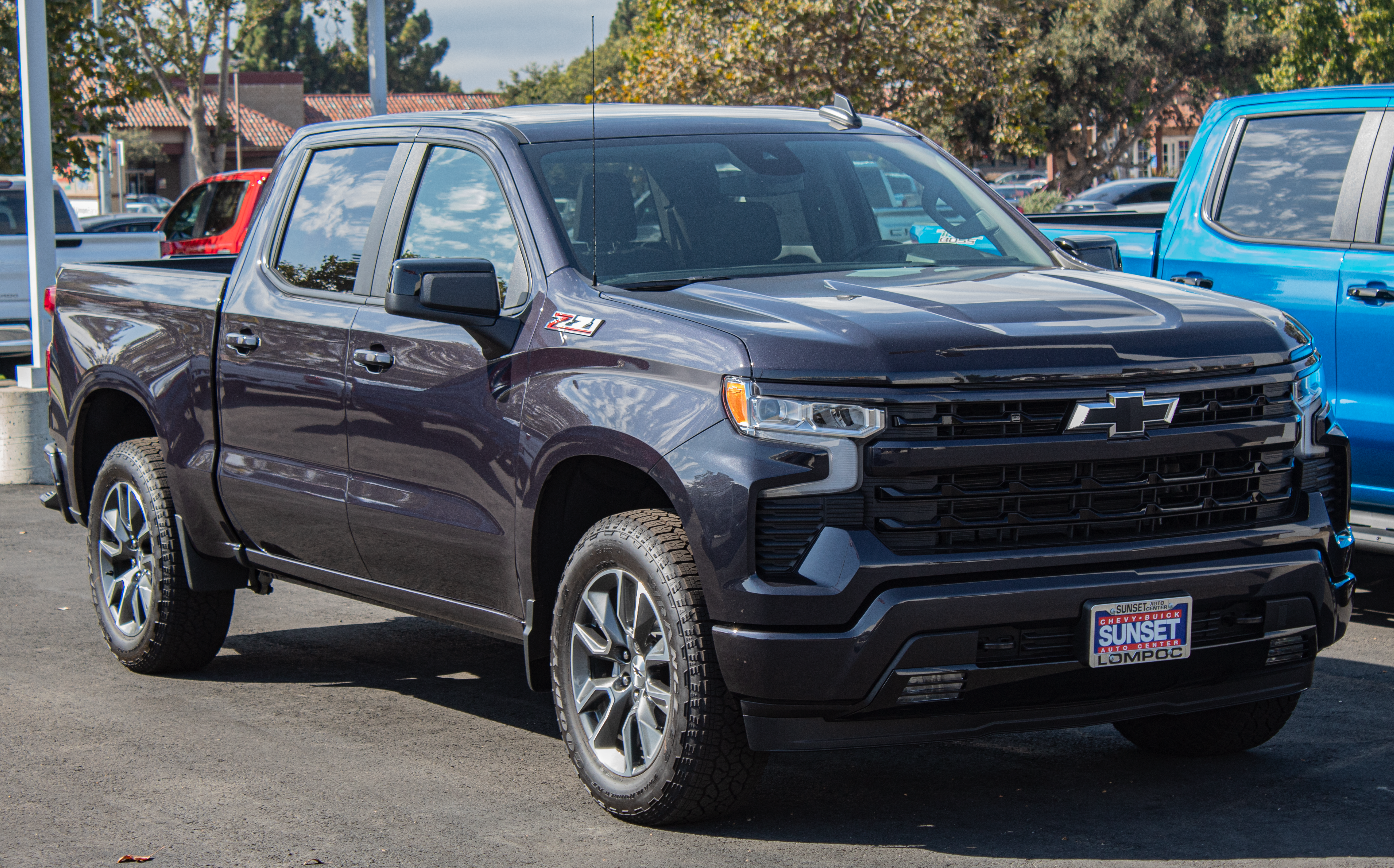
"...we're no longer going to make Equinox or a Blazer or a Silverado. No, they're all still in production and people still keep buying them."
The Chevrolet Silverado is a large truck that many people use for work and hauling things. It's known for being tough and reliable.
The Chevrolet Silverado is a full-size pickup truck known for its durability and capability. It is popular among both consumers and businesses for its towing capacity and versatility.
"...we're no longer going to make Equinox or a Blazer or a Silverado. No, they're all still in production and people still keep buying them."
The Chevrolet Equinox is a small SUV that many people use for everyday driving. It's known for being spacious and good for families.
The Chevrolet Equinox is a compact SUV that has been popular for its practicality and affordability. It offers a range of features and is often seen as a family-friendly vehicle.
"The resale value question here is important. Generally speaking, EVs see a pretty typical resale depreciation after that first three-year window."
Resale value is how much money you can get when you sell your car after using it for a while. It depends on how well the car is kept and how popular it is.
Resale value refers to the amount of money a vehicle can be sold for after it has been used. It is influenced by factors such as the car's condition, mileage, and market demand.
"..., like we have right now in the back lot here, a Volvo C40 EV that one of our employees now owns, you know,..."
The Volvo C40 Recharge is a new electric SUV that’s designed to be good for the environment. It’s talked about because it has a cool look and lots of safety features.
The Volvo C40 Recharge is an all-electric SUV that emphasizes sustainability and modern design. It is often discussed for its commitment to electric mobility and advanced safety features.
"...myself looking at an unreliable model like a Ford Escape Hybrid. Is it truly unreliable?"
The Ford Escape is a smaller SUV that’s easy to drive and good on gas. People talk about it because some older models have had problems, so buyers should be careful.
The Ford Escape is a compact SUV known for its versatility and fuel efficiency, making it a popular choice for families and commuters. It is often discussed in terms of reliability, especially with some models facing issues.
"...n model years of ionic vehicles, Kia Hyundai and Genesis vehicles, I should say, that whole electric portf..."
The Hyundai Genesis is a fancy car that’s made to feel really nice inside and out. It’s talked about because it offers luxury features at a lower price than other luxury brands.
The Hyundai Genesis is a luxury sedan that showcases Hyundai's commitment to high-quality craftsmanship and advanced technology. It is often discussed for its competitive pricing in the luxury segment.
"...le is asking us what we think of the 2026 Hyundai Nexo. Of course, we don't know whether we're going to..."
The Hyundai NEXO is a car that runs on hydrogen instead of gas or electricity. People mention it because it’s a clean way to drive and helps reduce pollution.
The Hyundai NEXO is a hydrogen fuel cell vehicle that represents Hyundai's efforts in alternative fuel technology. It is often discussed for its potential to reduce emissions and reliance on fossil fuels.
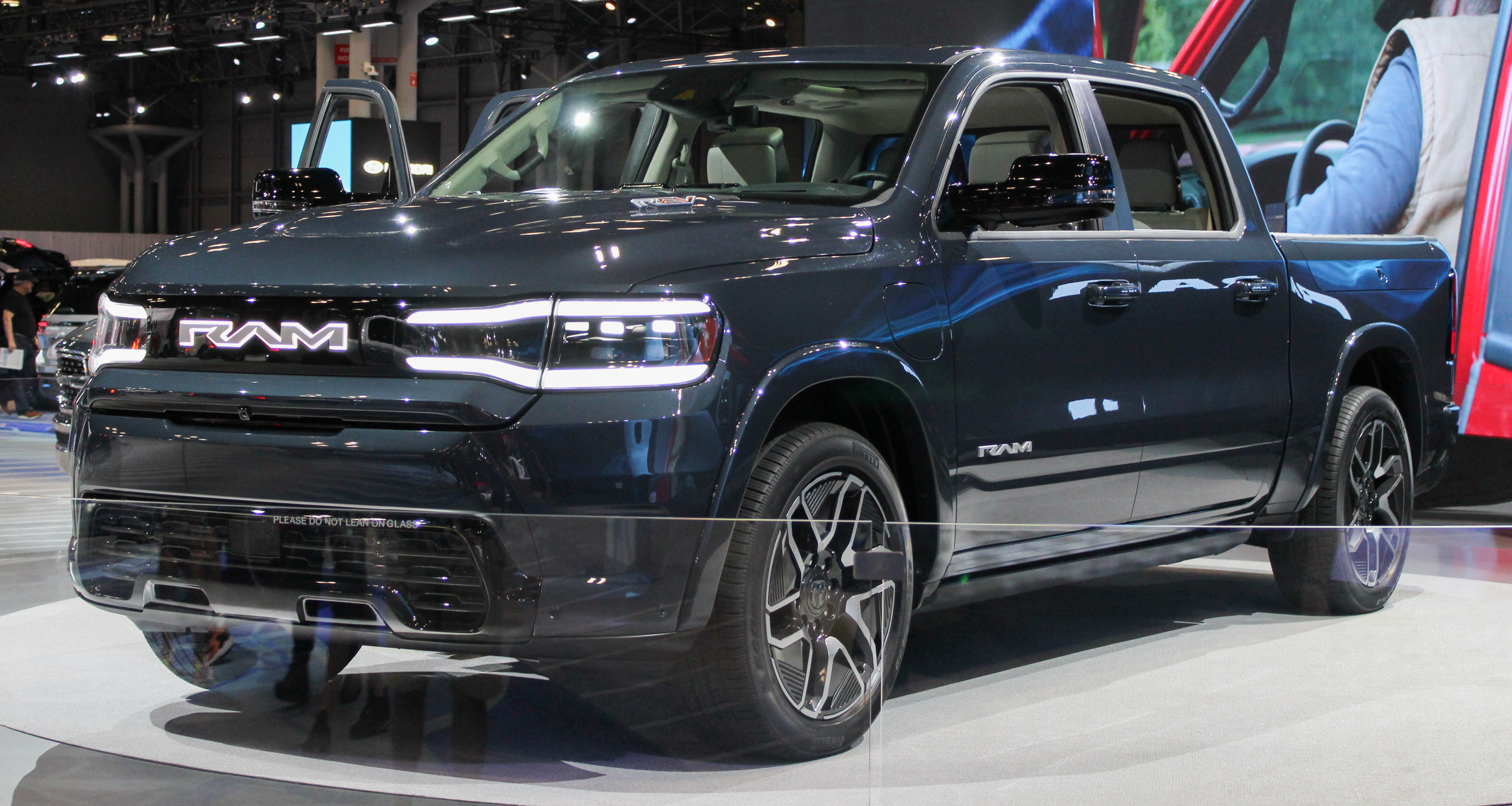
"...instance, instead of Ram doing a big electric Ram 1500, again, fueling infrastructure problem, but this..."
The Ram 1500 is a big truck that can carry heavy loads and is great for work or towing. People talk about it because it’s popular among truck lovers and is now being compared to new electric trucks.
The Ram 1500 is a full-size pickup truck known for its strong performance, comfortable ride, and high-quality interior. It is frequently discussed in the context of the evolving truck market, especially with the shift towards electric models.
"... it at home, you were recently driving the Chevy Silverado EV trail boss or is it a trail intern? Is it really..."
The Chevrolet Silverado EV is a new electric truck that doesn’t need gas. It’s talked about because it’s part of the trend of making trucks that are better for the environment.
The Chevrolet Silverado EV is an all-electric version of the popular Silverado pickup truck, designed to compete in the growing electric truck market. It is often discussed for its innovative features and potential to change the landscape of pickup trucks.
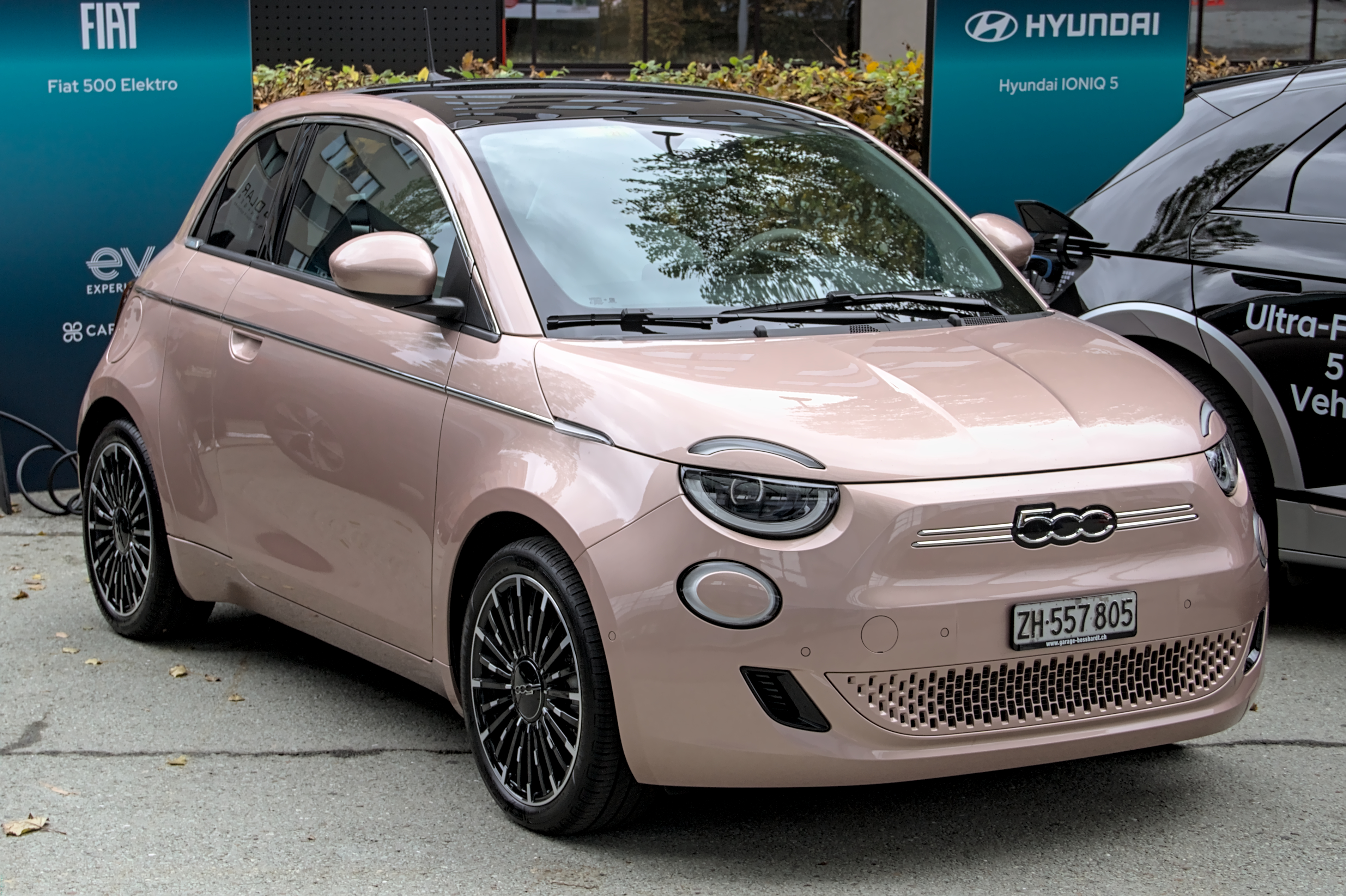
"...wheelbase. The same wheelbase as the entire Fiat 500E actually is. So significant there, but it's a lo..."
The Fiat 500e is a small electric car that’s perfect for driving around the city. It’s mentioned because it’s cute and easy to park in tight spaces.
The Fiat 500e is an electric version of the iconic Fiat 500, designed for urban driving with a focus on efficiency and compactness. It is often discussed for its cute design and suitability for city dwellers.
"...eal off-roading events with, I don't know, Bronco Wrangler, Grenadier, things like that, you will notice so..."
The Jeep Wrangler is a tough car made for driving on rough roads and trails. People love it for adventures and off-roading, which is why it comes up in conversations about outdoor vehicles.
The Jeep Wrangler is an iconic off-road vehicle celebrated for its rugged design and exceptional off-road capabilities. It is often mentioned in discussions about adventure and outdoor activities due to its strong following among off-road enthusiasts.
"They don't have wheels in there. Well, even a Grand Cherokee. So like Grand Cherokee is a good example of a u..."
The Jeep Grand Cherokee is a bigger SUV that can handle both city driving and off-road adventures. It’s talked about because it offers a nice mix of comfort and toughness.
The Jeep Grand Cherokee is a mid-size SUV that combines off-road capability with luxury features, making it a versatile choice for both urban and rugged environments. It is often discussed for its balance of comfort and performance.
"... to go. Obviously not quad motors, like a Rivian R1T, this is, this is something that I would akin to..."
The Rivian R1T is a new electric truck that can go off-road and is designed for adventure. It’s talked about because it’s different from regular trucks and is part of the electric car trend.
The Rivian R1T is an all-electric pickup truck that has garnered attention for its innovative features and off-road capabilities. It is often discussed as part of the growing electric vehicle market, especially for adventure enthusiasts.
"...this is something that I would akin to like a Ram Power Wagon in the sense that you are not doing highly techn..."
The Dodge Power Wagon is a tough truck that can go off-road and handle heavy loads. People talk about it because it’s built for serious work and adventure.
The Dodge Power Wagon is a heavy-duty pickup truck known for its off-road capabilities and rugged design. It is often discussed among truck enthusiasts for its strength and versatility.
"...r sorry, a power wagon than where you can take a gladiator. You know, that's, that's where I'm getting at o..."
The Jeep Gladiator is a truck that looks like a Jeep and can go off-road. People talk about it because it’s fun to drive and can carry things like a regular truck.
The Jeep Gladiator is a unique pickup truck that blends the off-road prowess of the Wrangler with the utility of a truck bed. It is often mentioned for its distinctive design and capability in both work and play scenarios.
"...lation. You have a frame that does have inherent flex in it as well. And that's kind of the weird twis..."
The Ford Flex is a big family car that has a square shape. People like it because it has a lot of room inside and is good for carrying kids and their stuff.
The Ford Flex is a unique full-size crossover SUV known for its spacious interior and distinctive boxy shape. It is often discussed for its practicality and family-friendly features.
"...t's truly fantastic. The GM did Silverado EV and Sierra EV, not just that they're both there, but that they..."
The GMC Sierra EV is a new electric truck that doesn’t use gas. It’s talked about because it has cool features and is part of the trend of making trucks that are better for the environment.
The GMC Sierra EV is an all-electric version of the popular Sierra pickup truck, designed to compete in the electric truck market. It is often discussed for its innovative technology and features aimed at truck enthusiasts.
"...d has kind of bopped around on their pricing and Cybertruck, you know, they dropped the cheaper model, etc. ..."
The Tesla Cybertruck is a new electric truck that looks very different from regular trucks. It’s talked about a lot because it’s made by Tesla, which is famous for its electric cars.
The Tesla Cybertruck is an all-electric pickup truck known for its futuristic design and innovative features. It has generated significant buzz due to its unconventional appearance and Tesla's reputation for electric vehicles.
"...o this is really a redesigned truck for the 21st century that happens to be electric and has some pros and..."
The Buick Century is a car that has been around for a long time and is now being made again. People mention it because it mixes old-school charm with new technology.
The Buick Century is a classic nameplate that has been reintroduced in a modern context, often discussed for its blend of nostalgia and contemporary features. It represents Buick's efforts to appeal to both older and younger buyers.
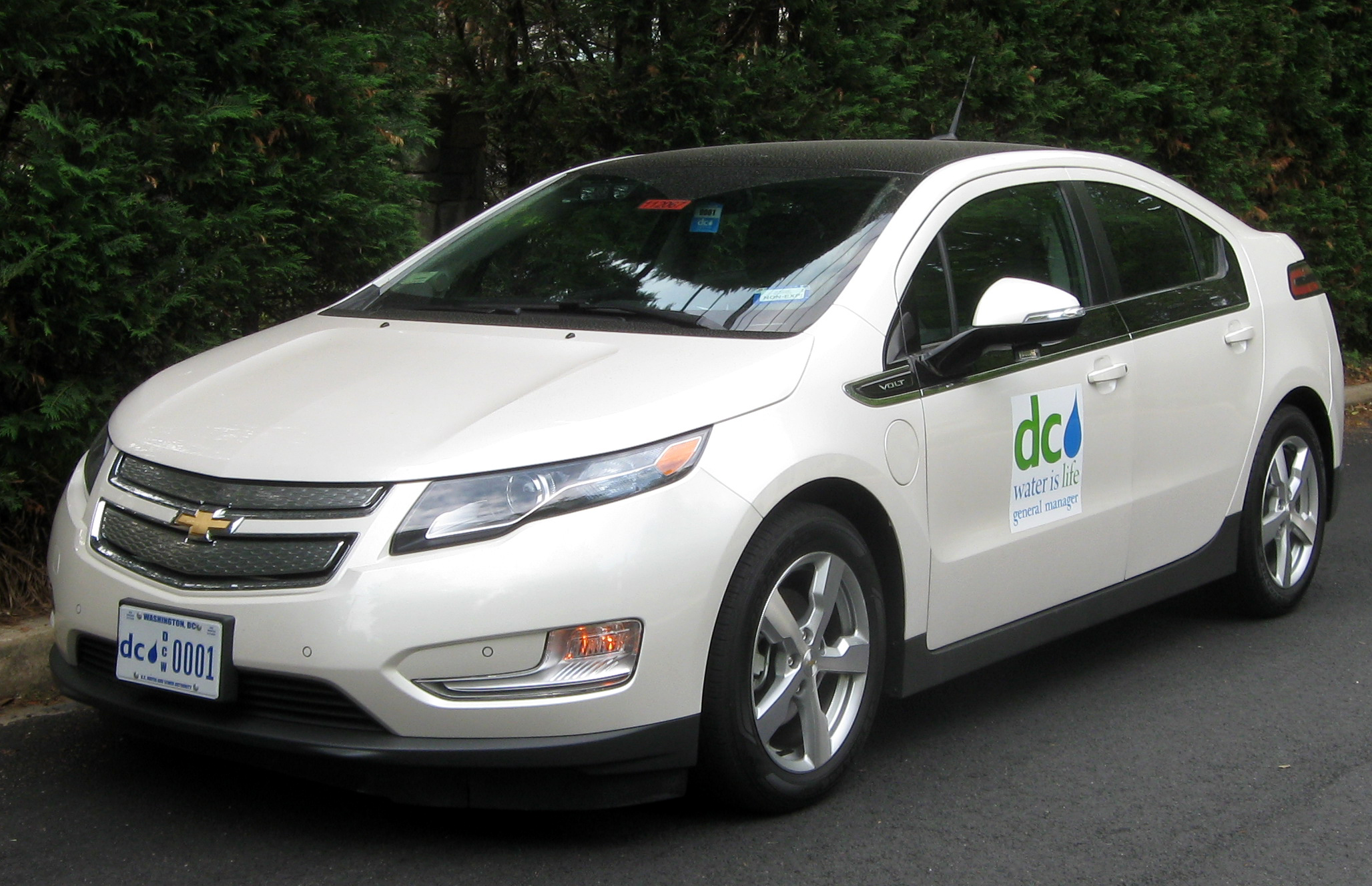
"...is because if you had a Chevy truck, they are 400 volt EVs that can charge at 800 volts. So that's kind..."
The Chevrolet Volt is a car that can run on electricity and gasoline. People talk about it because it can go a long way on electric power before needing gas.
The Chevrolet Volt is a plug-in hybrid vehicle that combines a gasoline engine with an electric motor, allowing for extended electric driving range. It is often discussed in the context of hybrid technology and its impact on fuel efficiency.
"...situation that we're going to find in the Porsche Cayenne EV. It is coming with the exact same thing, by t..."
The Porsche Cayenne is a fancy SUV that drives really well and is comfortable. People mention it because it’s a luxury car that still feels sporty.
The Porsche Cayenne is a luxury SUV that combines high performance with everyday practicality, making it a popular choice among affluent buyers. It is often discussed for its sporty handling and premium features.
"...at, when they said the bolt is back and this 20, 27 model is here for a limited time. And we went, what, wh..."
The Buick Model 27 is a special car that has a mix of old and new styles. People talk about it because it’s a limited edition and has features that car collectors love.
The Buick Model 27 is a limited edition vehicle that reflects Buick's heritage while incorporating modern technology. It is often discussed for its unique design and features that appeal to collectors.
"...ally at $27,000 basically now that, now that Kia Soul has sailed off into the sunset, you know, we're, ..."
The Kia Soul is a small car that looks a bit like a box. People like it because it’s affordable and has a lot of space inside for passengers and stuff.
The Kia Soul is a compact car known for its distinctive boxy design and practicality. It is often discussed for its unique styling and affordability, appealing to a wide range of buyers.
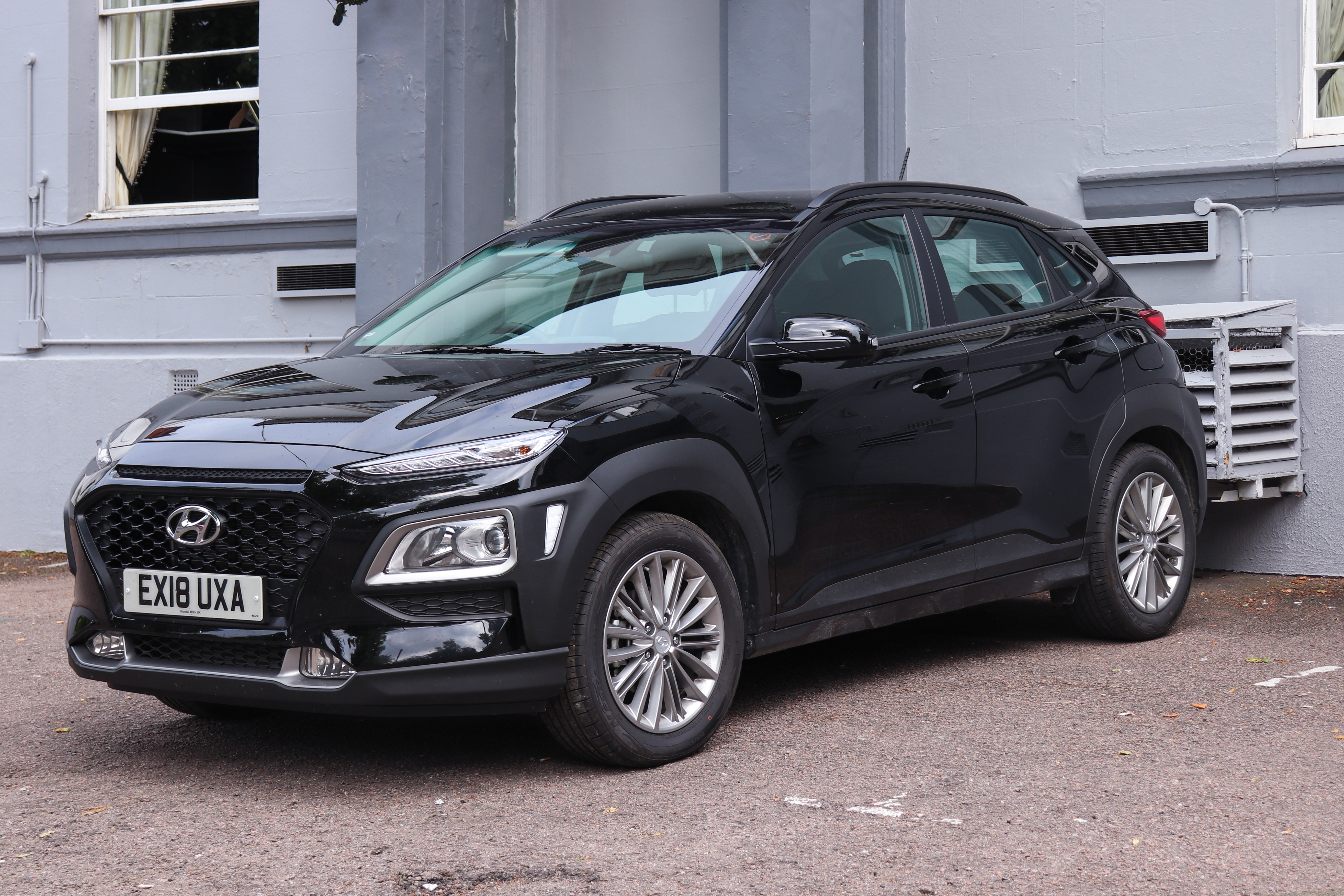
"... people might think, because if we're looking at Kona or Corolla Cross or some of these other options, ..."
The Hyundai Kona is a small SUV that’s stylish and good on gas. It’s popular among younger drivers because it has cool features and a fun design.
The Hyundai Kona is a subcompact SUV that offers a blend of style, technology, and efficiency. It is often discussed as a strong competitor in the growing SUV market, appealing to younger buyers.
"... Yeah. Pretty similar pricing, but the, the Chevy Trax or Chevy Bolt, they get really close. They get r..."
The Chevrolet Trax is a small SUV that’s easy to drive around the city. People like it because it’s affordable and fits well in tight spaces.
The Chevrolet Trax is a subcompact SUV that offers practicality and affordability, making it a popular choice for urban drivers. It is often discussed for its compact size and ease of maneuverability.
Select text to request an explanation
Hey everybody, welcome to another Auto Buyer's Guide podcast with your favorite auto nerds.
So Travis, what are you driving this week?
This week, while I just dropped off a Volkswagen Atlas and I jumped into a Toyota Corolla Cross.
So totally the exact same thing all the way across the board.
Yeah, one from holding up the world to crossing over to the dark side of Corolla.
Indeed.
And what have you got at home?
I've got a leaf and we have a Honda Odyssey and one, I like a tiny bit more than the other.
But before we get to that, we should roll the intro.
So Travis, have you crossed over to being a believer that the Corolla Cross is the best Corolla,
which I might add I would consider kind of a low bar.
You know, here's the thing.
I have a lot of miles to do on it this week and it may be not be something I'm looking super forward to.
And I think I'd actually prefer a regular Corolla for the money.
Give me a Corolla hybrid.
I don't have the hybrid engine here in this Corolla Cross, but I can understand why a lot of people are interested in them.
Really, what draws you more to the regular Corolla?
Because the Corolla Cross is definitely more practical.
It's also roomier inside.
I think it's more attractive, too.
And the interior, although Corolla themed is a little bit more premium and a little bit nicer feeling here and there.
It is.
So again, for the money, I go Corolla hybrid because I like the driving dynamics and I'd like to feel economy.
The Corolla Cross hybrid is going to be nicer to drive.
That's just that's just not the one that's just not the one I have.
Yes, the the regular old Corolla Cross.
Yes.
And you at list.
So do you feel like it has held up the world for you?
I think it's held up pretty well.
I have some some thoughts on the matter.
The driving dynamics are great, though.
Almost the exact opposite of what we're getting in the Corolla Cross.
It is it is just a couple tenths away from being a fantastic driving three row.
It's a very good driving three row by my estimation.
But I had the R line.
I want an R version.
Yeah, you and me both, but apparently nobody else.
It is it is a shame.
And you know what? It's not even about the power.
I just want that suspension dialed in a little bit more.
Now riddle me this Batman.
Why doesn't the Atlas sell better?
I think there are really competitive vehicles in the market.
And it does a lot of things well.
But one thing that drove me crazy was the touch interface.
The everything is touch.
Everything is capacitive or a slider.
And it's not like it doesn't have the features built into it.
But it also it also feels a little bit dated.
And I don't mean the interior.
I mean the exterior.
But actually, that's one of the things I like about it.
It's it's more conventional than we find in a lot of the current models.
Is it just too boring?
Palisade.
Is it just too boring to sedate?
Yeah, it might be too reserved.
Yeah, I mean, I wouldn't call it bland, but I'd say reserved.
Yeah, it doesn't stand out.
And I think I think more people should drive it for sure
and make your decision from there.
But I know it's a it's a it's a tough market.
There are the three row SUV is booming.
I mean, every crossover SUV is booming right now.
But but there are so many other options, especially like the GM triplets.
How do you feel about Volkswagen's two liter turbo?
That seems to be one of the more controversial aspects of the Volkswagen.
Seems like customers are saying, yeah, the touchscreen interface.
Maybe it's a little bit boring.
Two liter turbo seems to be of genuine concern for some people.
But even given that, I'm just not sure why it's selling so slowly.
I just think it should see a few more sales.
But about that two liter turbo.
Yeah, so I actually didn't have as many issues with the turbo as I did
with the transmission.
So understanding that the turbo is not the pepias, the zippiest.
You know, I felt like it was fine and had the power I needed for when I needed it.
The issue was getting that power to the wheels.
And the transmission felt like the thing that was holding me back there.
So, you know, more power wouldn't hurt.
And again, a lot of the competition has more power.
But for me, it was the transmission that ended up kind of let me down.
Interesting, interesting.
Since, of course, it is an ice and eight speed.
So basically the same transmission we find in the Highlander
and a whole boatload of other competitors.
It felt like programming not so much, you know, it's construction or anything.
Yeah, if you guys want to hear some of our thoughts on the bigger
and better family haulers, we think there's a video coming out soon on the main channel.
So be sure and check that one out before we get to the rest of the episode.
Let's talk about viewer feedback and viewer questions,
because we do have a bunch of questions and comments and and just information
flowing here from viewers and of course listeners as well.
The first one here is about EV routing.
So this is kind of a long question here, but he's basically asking
about how our blazer is done over the last year and 11,000 miles.
So we did have a real quick video on that.
We may dive a little bit into the blazer EV later in the video
and some of the issues we do have with it.
But essentially, he's asking about routing versus Tesla for EV charging
and road trips, because Tesla really set the bar for what an EV road trip
should look like as far as the computer assisting you in this process,
telling you here's where to stop.
Here's how long you need to charge.
Here's what charge level you need to get to.
And this is how you get from A to B and make sure that you end up at B
with the right amount of charge as well.
Or back at A from B, right?
Yeah, I would say that just about everybody that's using the built in
Google system, so Android automotive built into the car for mapping,
navigating, etc. That complete package deal.
They're all pretty darn good and just about the equal of Tesla
as far as that route estimation.
Yeah, but when you get to the manufacturer's system,
that's where things can get a little bit wonky.
And honestly, as much so much of that is just about the navigation they're using.
And not how ineffective it is, but how how dated it feels versus the Google system
or your Apple Maps or something like that.
That's constantly being invested in, right?
With time and money and resources.
And it just feels like these navigations are a way of the past.
And then not only do they not update particularly quickly,
they don't always run very fast.
And then it's an interface that's unusual to us, you know?
So it says, Hey, we're stopping here and you can do it for X minutes.
It doesn't feel like they've got the graphics, you know, dialed in
as much as we do on other systems.
There's a particular look to factory navigation systems
that we don't find in the Google systems.
I think it's mainly because Google has become so ubiquitous with smartphones
that we all see it there.
And that's what we want to see as far as how our maps look and interact with the world.
The built in systems from Rivian Volvo, Volvo Polestar,
General Motors, Honda Accura, the Nissan Leaf, etc.
Those are all the Google built in systems.
And they all work just about equally as well for range prediction, etc.
I will say the one weird twist here, though, is that even though
they may include supercharger stops in your routing,
Tesla apparently seemingly does not open status for those stations
to Google for this interface.
So they have no idea how crowded those stations are in the system.
They'll tell you how long it should take you to charge, etc.
They'll direct you there.
Some systems may even prefer the Google stops,
like the General Motors systems are definitely programmed to prefer Tesla
supercharger stops, but it doesn't know how used they are.
The Ford system is really well done.
Tesla will tell you how many folks are there in your Tesla
so you have a better idea.
Right. Ford will.
Ford does a pretty good job with their built in system that's not Google based
and they integrate with CarPlay.
So you can actually use CarPlay to do your range estimate, etc.
That actually works really quite well.
The Hyundai Kia systems, I just prefer to do my own routing
and my own estimation on the trip because I find the built in system,
it does work, but it's just clunky to use.
I just don't find it that useful.
Do you find any of them are being too conservative or too risky?
I mean, I can't imagine any manufacturer being too risky when it comes to charging.
But for folks who know, you know, you don't want to stop and charge it 50 percent.
If you can charge it 25 percent.
Yeah, and how, you know, how, how much extra battery you need
or how convenient it is, right?
If it's lunchtime and there's a stop across the street,
go ahead and plug in and go grab lunch.
But if you're trying to stop on a six hour trip,
then you want to make sure you're stopping at the right time to save extra time.
Yeah, the interesting part there, I've commented on this before,
especially with people with Teslas, because pretty much every manufacturer out there
uses some either, either the EPA's default
calculations for efficiency in the vehicle.
So the way that the EPA submissions have been done for range estimation,
when, when you look at the range gauge, like the gasometer, how many miles can you do?
Tesla has been accused of being a little too firm on that
rather than using a predictive algorithm based on how you've been driving.
Some EV is like Ford, Ford uses a predictive algorithm.
So if you drive your lightning hard, that range gauge may show really low estimates,
even when you have your battery completely full.
Whereas on a Tesla, generally speaking, it's going to be, you know,
whatever your car was rated for, EPA rating, right?
But then you type in your destination in the car and it will tell you you need to charge.
This is how you know that these EVs real world range figures may vary.
This is one thing I mentioned a while back with our standard range model three
once upon a time was that range is not realistic at all.
And the proof of point there was if it says, you know, 200 miles of range,
a lot of people think, oh, it can do 200 miles on the highway.
Not so punching a destination 200 miles away and see what the car's computer tells you.
Cars computer says, you know, you're going to need to charge
and you're going to need at least an extra 30% battery to do this trip or whatever.
So many factors are pretty good about that.
Yeah, I've always appreciated cars.
It'll tell you the minimum and maximum.
So let's say it says 250 and then it'll say, oh,
you can do up to 280 as low as 220, something like that.
If you're doing highway driving, just assume the 220 number.
But that just makes it easier for folks to predict, you know.
And if you get there with more than 220 or you're able to go more than 220,
then great, that's just kind of a bonus.
But you know, at least your baseline, it's it's also worth noting
that the reason we see General Motors and other car companies
wanting you to not use car plate is because they want you to do the routing
in their software and that makes their predictions better,
which is why Tesla's predictions have been better than other car companies before.
And it does show on the GM EVs when they launched their first
Altium platform vehicle, the range estimates were kind of wild around,
you know, sometimes they were good, sometimes they weren't good.
Now, this last weekend, we just did a road trip to see the in-laws
and the estimate was spot on, including the ultimate pass
and going up the snow grade to two mountain passes that you have to go over
because we have this predicted range data from all the other vehicles
that have been driving on those exact same roads, all feeding into the system,
going, hey, there's a mountain here.
It's going to take you more energy to go over the mountain.
So even including that, it was exactly spot on when we arrived.
So they've definitely gotten a lot better.
Seraph is asking us about buying or releasing vehicles.
How does our logic and our recommendation change
between owning a vehicle for two years to 10 years or somewhere in between?
He says, I know it's a crystal ball, but based on Blue Book values,
it might be a surprise as to which one might be better for certain use cases.
So this is this is an interesting question because we do get a lot of lease questions.
Yeah, and leases are really misunderstood.
I think the big point here, and I think I've touched on it before,
is that with a lease, you have a guaranteed value.
And I look at this more as a protection than a potential win.
So if I'm leasing a car that's $50,000, my residual value,
the value paid down to is $30,000.
But either the car gets in an accident, which will lower its ultimate value,
or it suddenly it's been given a residual value that is either not realistic
or just it comes in too high.
So all of a sudden my lease is due and I've used my mileage just as I'm supposed to.
But if I traded the car in, it's worth $25,000.
And now I'm giving it back to them for $30,000.
I didn't lose extra money, right?
That car is not worth what I thought it would be worth.
But that's to no harm of my own, right?
I don't care. I just drop it off and I move along.
There's a small world and it does happen.
But for most people, it's probably not even worth it.
Where that same $50,000 car is not worth $30,000 at the end of a lease.
It's worth $35,000.
And in that case, you do have equity somewhere.
But that is not one I would ever anticipate and go,
ooh, this is going to happen for sure.
It's just it's a great bonus if it does.
And by all means, use it.
It's more for me about if the car suddenly is devalued in some way.
You're not the one taking a hit.
Right. And remember that if you suddenly have equity in the vehicle,
it's basically because your lease payments were too high and you paid too much.
So you gave them some money to do something with while you had the vehicle there.
Generally, I would say if you plan on keeping your vehicle over three years,
it does not make sense to lease.
There are some leases that will go to 48 months, some very rarely that will go even longer.
But generally speaking, three years is your sweet spot.
Two years leases can be advantageous with certain vehicles, discount programs,
because manufacturers need to move some volume along.
Those are your best bets.
But generally speaking, outside that term, purchases are your better bet.
There can be times where lease deals and lease buyout rates are advantageous for certain vehicles.
Even if you plan on keeping them long term, just know that there are risks involved.
Say for instance, in the before times when we had a tax credit on EVs,
if an EV did not qualify for the federal tax credit because it wasn't built in the US,
you could lease it and then you could buy it out from the lease and you could get the tax credit
that way through the lease tax credit loophole.
But it's kind of a very limited case situation there.
Our next question here is from LetMeCook86 who's asking to hear more about the EV tax credit going
away and is there any interest or any benefit in the supposed writing off the interest thing
that the administration is offering now?
I'll cover the first part.
It's gone.
Bye-bye.
Will it ever come back?
Oh, not in the next couple of years.
There is a world where a political change happens and there's a refocusing on emissions
or production or that sort of thing.
But for now, that's it.
Adios.
There are a couple of manufacturers who are doing some sort of incentives as a small
carryover and maybe try to draw some attention to them versus others who don't.
And so that's just marketing on that end.
But unfortunately, it's all gone.
Yeah.
And I don't expect somehow it's going to come back.
That's my personal thought.
I don't have a Ouija board here.
But if I did, my Ouija board would be saying no on the coming back of the tax credit ever.
No, we're going Ouija board.
Yeah.
I think that that's just the timeframe.
Even if we had a massive polar shift in administrations in the United States in three
years, because remember, we still got three and a half years to go, right?
I think that it's just too long from now to just try and bring that back.
I just don't think that would fly somehow.
On the interest right off, it's a very limited value.
That's the key thing.
The average buyer out there, you have to meet specific income limits.
So the most benefit you'd get is a really expensive vehicle.
But if you somehow can afford a $100,000 car and you have a lot of interest on it,
I'm not sure how you buy that car under the income cap that the legislation requires.
So the average person is probably going to be buying an average car, quote,
unquote, average car.
And in that 40 to $45,000 range, you're talking maybe $200 to $400 a year in savings
for that interest right off.
It's really quite small.
It's going to be some help, but it's not going to be an awful lot of help.
And of course, remember, it is a deduction on your tax filing.
So you're not going to get it monthly or anything like that.
Moving on, our next question here is asking about the electric car future in North America.
I do not want to buy a used $30,000 car and not be able to sell it after an additional
five years while worrying about resale value there, basically.
Well, electric cars even still exist.
The answer there is yes, 100%.
The trend, and I had this conversation the other day, the trend is that the growth is slowing,
but slowing is worlds apart from going backwards.
We've seen manufacturers making changes.
For example, Ram said they're not going to build their full electric EV pickup,
at least not for the moment.
So they said, we're tabling that.
Okay, fine.
But that doesn't hurt current sales.
And that just means that if you want an EV truck, Ram won't be it.
It doesn't mean that they're pulling the whole program.
Chevy is not pulling vehicles off their assembly line.
We're no longer going to make Equinox or a Blazer or a Silverado.
No, they're all still in production and people still keep buying them.
I think the rate is slowing, but it's going to continue to grow.
And in this case, obviously $7,500 helped boost that.
I think at this point, it's going to be awareness.
Most people who switch over to EV, in my experience, really enjoy their EV and say,
I don't really want to go back to gas.
Yes, of course, there are going to be people who don't like plugging in at home
or if they didn't understand what it was before they jumped into it.
And that's how you're going to have a negative experience.
And we often go, oh, I didn't like that.
I'll never try it again versus what did I understand.
So they'll be there.
I have no problem buying a $30,000 car and in five years knowing I'll be able to sell it
for what I expect is pretty much the same value as any other car.
The resale value question here is important.
Generally speaking, EVs see a pretty typical resale depreciation after that first three-year window.
So they see an accelerated depreciation in the three-year window,
mainly because of cash on the hood and the tax incentive.
So it's really simple math.
If you buy a $40,000 EV and you get a $7,500 tax credit,
then immediately you roll that vehicle off the lot,
you get normal depreciation plus an additional $7,500 hit.
Because why would I pay $40,000 for that used EV?
Even if it only had one mile on it because it's used,
when I could literally go buy a brand new one for $7,500 less,
that's the core thing to remember with EV depreciation.
It's been bashed on the head a lot by people that don't understand that very significant part.
The second part of this is that when we're talking especially about
heavily discounted EVs that are discounted beyond those tax credits,
that has the exact same effect.
So when General Motors is tossing $20,000 of cash on the hood of a Blazer EV,
especially at the beginning there, that's going to have a massive,
massive hit on resale value in air quotes there over time.
But if you were to buy a, like we have right now in the back lot here,
a Volvo C40 EV that one of our employees now owns,
you know, the price we paid for it and the price that we got rid of it for
after a year and about 10,000 miles, it actually was almost exactly the same price.
It really had very little depreciation over the year because it had all already been done.
And now it's like a regular car.
Right, like a regular car.
Now it's just following typical Volvo trajectory for their smaller models.
So I wouldn't be overly worried about that on the used market.
Our next question here is about car reliability and EcoUld, or Ecooled93 is asking,
how do we truly know if a car is reliable?
I hear a sigh.
You rightfully cast my consumer reports and JD Power for reliability.
I am myself looking at an unreliable model like a Ford Escape Hybrid.
Is it truly unreliable?
You know, oddly enough, the Escape Hybrid has actually been pretty good.
Well, and my sigh is not because of the nature of the question.
It's just, it's a crystal ball.
You know, there's reference earlier about what about depreciation.
You want to know if it's reliable?
Drive it and you can tell us if it's reliable or not.
There's just, that's, it's just, it's the hard, the hard facts.
You can go look on any forum and you're never going to find, oh my gosh,
this has been the most reliable vehicle I've ever owned.
Because no one thinks about that and goes, I should tell the world.
You'll only ever hear, this is the least reliable vehicle I've ever owned.
You won't know their circumstances because I can tell you,
I take great care of my car and that means I wash it twice a month.
But I never rotate tires and ever replace oil.
I am hard on acceleration.
You know, there's just so many of these variables.
But obviously you can look at the data and if there's a huge list of issues
that lots of people seem to be having, that's likely unreliable.
And we've talked about this, I think it's part of the question.
What is unreliable to you?
Is it stranded on the side of the road?
Or that switch tends to break for the back passenger window
and you have to go ahead and get that fixed.
But generally speaking on escape hybrid, it's going to be very similar
to regular escape for everything except the drivetrain.
And the drivetrain itself has been pretty reliable because the,
the core escape hybrid system also used in the Maverick,
been used in other vehicles before, is very closely related to the hybrid system
that we find in the Toyota product line, the core Toyota hybrid system.
Same design.
So intrinsically, very mechanically simple, not a lot of failure points there.
Batteries have also been pretty good as far as their, their lifetime in Ford vehicles.
They're now liquid cooled in most of their hybrids worldwide.
I think there may still be some hybrids lurking around somewhere in the world
that Ford makes that are not liquid cooled, but basically all the ones in the US are.
So battery lifetime has actually been better than other hybrids out there with,
with air cooled or non cooled battery packs, etc.
I would say go ahead and check out our video on consumer reports and some of the troubles around,
especially their data and the whole idea of forums.
This is something that we hear a lot on our Facebook page.
There is a core group of Facebook followers out there that that's,
oh, I would never buy a Hyundai Kia because of the ICCU issue.
Everyone blows up and that does not appear to be the case.
There is a NHTSA recall on it.
And based on the, the consumer feedback to NHTSA, Hyundai's investigation,
NHTSA's investigation, etc.
It appears that the problem is somewhere around 1% of certain model years of ionic vehicles,
Kia Hyundai and Genesis vehicles, I should say, that whole electric portfolio,
where the ICCU module that does a whole bunch of voltage conversion for the EV, where it does fail.
The problem is people are, oh, the forums are full of people that have a problem.
Well, of course they are because to your point, like you said earlier,
the other 180, 200,000 people out there or more that have bought these vehicles,
they're not hopping on the forum going, Hey, my, my car is still just fine.
That doesn't take long for the one post on the forum that says, Hey,
I'm having this issue to then be picked up by seven other people who said I have the issue
to then become a headline that says, Hyundai's have this issue to then be the guy who read the
headline in a comment section saying, all Hyundai's have this issue.
So it becomes fact very quickly.
And let me be clear, this is not a defensive Hyundai.
Hyundai needs to address the ICCU issue.
And I think the bigger problem with the ICCU issue is not its relative occurrence.
It's the fact that Hyundai has stumbled at least initially with the problem,
hoping, thinking whatever the answer was that maybe software fixes could solve the problem.
People still had issues after software fixes.
There were some hardware replacements.
The hardware failed the same way in these particular vehicles.
So there was kind of a rolling like, how do we fix this?
Is it a problem?
What happens?
This is, I hate to say it, but this is kind of normal with new vehicles and new technology.
Kind of why you don't want to buy the first model of your vehicles if you're truly worried
about reliability, because the manufacturer has to discover the problem.
The problem has to be identified, categorized.
They have to find a fix for the problem that will work.
And then they have to deploy that fix to however many vehicles have that problem.
I mean, that's why Toyota had to recall every single twin-turbo V6 they ever made.
That was big, big, big problem, right?
And bummer because it would have been lovely if it had been found sooner,
but it took a while and basically the same process happened.
Owners had failed engines.
They got blamed for it.
They were denied warranty claims, et cetera.
Then over time, it was like, oh, geez, well, maybe that actually was a warranty issue.
So that's the important part there.
Cesar Diaz is asking us what our input is on advertised 0% APR and how to qualify for it.
Generally speaking, on the 0% APR deals, we're talking high credit.
So most of these places specifically will tell you what your FICO score needs to be.
750 or higher for a lot of them.
800 or higher is probably your better bet.
But you also have to have the income to qualify, of course, as well.
Yeah, you have to qualify for the loan.
And then the only thing to be wary of is it'll say 0%.
Make sure it's a term that you're also looking at because that's going to be about your affordability.
Sometimes it's 0% for 36 months.
And for most people who are looking for a five-year loan
and much less a six-year loan is becoming much more common these days,
that's going to be nearly doubling your payment,
even though obviously there's no interest involved.
Yeah, and some of those can be even shorter term.
GM has done 24-month 0% interest now and then.
And that is definitely going to be trickier to cough up that kind of cash regularly,
but you will save a lot on financing.
If you were coming in with cash, that's a great way to do it.
You say, absolutely, why not put it in a separate account, start drawing from it?
That's your win.
But if you were coming into finance, that's going to get a little bit tougher.
Terin Cole is asking us what we think of the 2026 Hyundai Nexo.
Of course, we don't know whether we're going to get the Nexo yet in the US,
but it has already been seen in Korea and it's currently on sale there.
Yeah, honestly, Alex, this is your ballpark.
You're the former Nexo owner.
Yeah, I like the concept.
I think that hydrogen just lacks the support in California.
I think that the Nexo was a fantastic vehicle.
I think that the new Nexo builds on that.
It doesn't address all the quirks that I would have wanted to be addressed,
namely all-wheel drive would have been cool and bigger motors also would have been pretty cool.
It has a bit more pep, but we're not talking, we're not talking ionic five level of acceleration.
And I kind of wish they had just borrowed the ionic five's motors and jammed them in there
somehow, all-wheel drive, 320 horsepower could have been fun.
Yeah, they could have.
But the bigger problem honestly is just a lack of support, financial and physical support
in the United States for hydrogen.
We are seeing more in Europe and maybe over time if this continues in South Korea and Japan
and in Europe, then maybe there may be a future transplanted back into North America.
But we're having such troubles with EV adoption here that I don't know how much of a place
there is necessarily for hydrogen.
I think it makes sense in bigger vehicles.
Like for instance, instead of Ram doing a big electric Ram 1500,
again, fueling infrastructure problem, but this is the perfect use case for hydrogen vehicle
because you just have so much less mass on board because batteries are big and heavy in
these big, heavy tow vehicles and a fuel cell stack is going to be an awful lot smaller.
Hydrogen is an awful lot lighter.
And in these bigger, heavier vehicles, there are places to stick hydrogen tanks that could work.
And I love them as a plug-in hybrid alternative.
But we're so much farther away from that.
I think Honda has their prototype CR-V.
I mean, you can go get them, but they're a working prototype.
And I think something like that, you get the new extended range Ram plug-in.
I guess we'll call it the Ram Charger Rev as it carries over.
Give me a hydrogen option there, assuming there is much more charging or I guess fueling
capability than we have now, but we don't need it everywhere because you plug it in at home.
That's your main source.
And speaking of batteries, big batteries and plugging it at home,
you were recently driving the Chevy Silverado EV trail boss or is it a trail intern?
Is it really a boss?
It's a trail trier.
And you know what, it did better than I thought it would.
And I'll tell you what, props to Chevy for letting us really try things.
When I drove the Sierra 84 EV, GMC did not seem very open to us doing much,
much difficult off-roading type behaviors.
And Chevy said, hey, here we go.
And we had that truck up on two and three wheels at times,
which is not ideal for off-roading, but I'm just saying they really let us stress this thing.
There's no way getting around it.
It's heavy.
It is heavy.
And you get a two inch or so lift on the standard Silverado EV, but that's really it.
So approach angle and departure angle, not horrible.
The break over is a little bit tough.
It's an enormous wheelbase.
The same wheelbase as the entire Fiat 500E actually is.
So significant there, but it's a lot of torque.
It was a pretty good tire.
They do turn the power down.
So you cannot get the top end horsepower in a trail boss.
That's the LT and you have to get obviously the top end performance kit to it,
but the RST is gone.
So that's how you go ahead and get the higher performance.
It's an expensive truck and you can't get it with a standard battery.
That was also the mid range or what do they call it, the extended or max range.
Yeah.
And it's so extended range is at least $72,095.
The max range trail boss is $88,695.
We're talking pretty healthy numbers.
I do find it funny.
I saw some of the footage of you in the trail boss and other people driving the trail boss out there
and it immediately brought my mind not to throw any manufacturers under the bus,
but I'm going to do it anyway here, but it immediately brought to mind Honda
and occasionally Subaru in events where they're like, oh, look at this.
Let's see how we can, we can get the trail sport up there on two wheels or on three wheels.
And if you go to real off-roading events with, I don't know, Bronco Wrangler,
Grenadier, things like that, you will notice solid axles and articulation.
They don't have wheels in there.
Well, even a Grand Cherokee.
So like Grand Cherokee is a good example of a unibody with a lot of wheel articulation,
especially with the air suspension, depending on the mode you're in.
So if you don't have all of your wheels on the ground, it's more difficult to move.
Yeah, you can, you can have lockers.
You can have nice software to try and direct power around.
You can have fun pictures for sure.
Cool twin clutch axles like in your trail sport.
But like, you'll notice like, if you're, if you're seeing a trail sport on the road,
I mean, it's like the, the body has, has, has moved up like this and the axles,
like maybe like a millimeter of motion, because there's just not enough suspension traveled down
to get that wheel to contact the ground.
And you're always going to be better if you have all wheels on the ground.
Yeah, yeah, I, especially in that trail sport, but, but in this case, you know,
it's a dual motor setup.
So the, the power is able to get where it needs to go.
Obviously not quad motors, like a Rivian R1T, this is,
this is something that I would akin to like a Ram Power Wagon in the sense
that you are not doing highly technical trail driving probably in your power wagon.
You were saying, Hey, I'm going to go off road.
I'm going to go on this, this, this trail.
We're not rock crawling.
We're not doing this.
We've got ground clearance.
We've got, well, I would say protection, but they don't add any protection to the trail boss.
I don't think they need to, but I think the power wagon is going to be better at all that.
I know, I know it is.
I know it is, but I'm just talking about this, this hulking mass, right?
Yeah.
There's just more limitations to where you can take a trail boss or sorry,
a power wagon than where you can take a gladiator.
You know, that's, that's where I'm getting at on the truck and the things.
So, so this is something that if you want to do very light overlanding, go for it.
I think it'll be fully capable.
You'll be able to power your entire campsite so you can go,
you can go off the beaten path for longer, just not necessarily farther.
I'm looking this up.
The power wagon with a ton of payload in it is lighter than a Silverado Eevee.
Yes, 150%.
I mean, did I mention that it's heavy?
There's no way of getting around it.
This thing is, you know, right around 9,000 pounds.
I'm just, I'm just, I'm just going to go, uh, I'm just going to go Ram.
Ram would, would staunchly argue and I would agree with them that power wagon is a bad corollary
because power wagon is quite capable.
I would, I would rebel before power wagon.
But so we have solid axles, you know, we have lots of wheel articulation.
You have a frame that does have inherent flex in it as well.
And that's kind of the weird twist.
A lot of people don't realize this pickup trucks actually can have slightly better articulation
generally because the frame itself does actually flex and that's a somewhat desirable
characteristic in that situation.
Whereas a unibody vehicle cannot flex because you'd crack glass.
Right.
And, and you know what I was doing with the power wagon, right?
Just going big truck to big truck.
But, but yeah, trail intern is maybe a bit harsh, but the reality is it's not going to
do the off-roading that real off-roaders really want.
But I think it's fully capable for someone who is looking for a little bit more ground clearance
who has really nasty roads that they say, Hey, I don't want to worry about this or
not those wimpy stuber trails.
Well, you know, it depends on how you want to find it.
But if you're looking for the most conventional looking Silverado EV, that's the one because
it does get the front end that brings it much more in line with the conventional truck,
you know, almost the exact opposite of what we got in the RST, which is this big, you know,
this big front fascia and the kind of a sport truck.
But like it almost felt like a, like a bobsled, you know, like a full face racing bike mask,
you know, where it's just everything comes off from it.
Yeah, this one's very different.
Now, I might sound like I'm giving Silverado EV a hard time, but I actually think it's
truly fantastic. The GM did Silverado EV and Sierra EV, not just that they're both there,
but that they have stayed true to their word about creating more capable versions and importantly
less expensive versions, because it has become significantly less expensive than it launched.
And that's not what we see in the competitive trucks where Ford has kind of
bopped around on their pricing and Cybertruck, you know, they dropped the cheaper model, etc.
So you can get a $54,895, including destination work truck, standard range,
and the LT, which has a few nicer creature comforts is really only a small bump above that,
just under $63,000. You'll also be able to get a work truck in a custom trim,
and that's going to give you it's the same front end. So it'll still be a work truck,
but you get, you know, carpeted floors. And I think we get rid of the vinyl steering wheel
and you get 22 inch wheels. So you get much closer to the look without having to pay for all the
demands. But importantly also, though, GM has lots of cash on the hood. So nobody pays full price
for a Silverado. Nobody pays full price for Silverado EV. So this is really a redesigned
truck for the 21st century that happens to be electric and has some pros and cons because of
that. Now, the sad part is that midgate is not going to be found on the low end trims.
No, it definitely won't. And you know what? I love the midgate conceptually, but also ask
yourself if you are going to use the midgate, because otherwise, you know, it's just another
component. I see I would do, but you have to know if it does or doesn't matter to you.
The only thing that I think it's missing is a canopy. And that's where that midgate turns into
the ultimate little, you know, pop up camp tent. You fold everything down, you have your heat and
your AC and your whatever else going. I saw a commercial. I saw a commercial canopy the other
day. I'll send it to you. It was a fun picture I took. And it doesn't look right. It doesn't fit
right because it's not the right shape. But that's that's where Chevy needs to go ahead and jump in
on a canopy. I mean, I wouldn't buy that, but I would buy a standard range truck for the office
for pickups and deliveries and things like that. I think that would be all kinds of fantastic
because of that midgate. You have eight foot beds in some things, but people largely don't buy
eight foot bed pickup trucks anymore. They really want that, that two row capability.
And that midgate allows you to not just have effectively an eight foot bed, but basically
a 10 foot bed for some items. And that's really handy because you can go and get 10 foot lumber,
you know, four bite sheet supply would absolutely no problem in there. It just makes that truck
so much more practical than I thought it would. I almost don't care how squeaky it's going to
become later in life. And that is the one thing we don't know is, is that going to squeak and
the, you know, that they had. Yeah. Yeah. The hope is not, but time will tell.
Yeah. And of course, if you want the 400 plus mile of range model bearing in mind,
that's a ginormous battery. Almost 500. Yeah. Ridiculous battery size.
On the highway, we're more like 400 something, you know, mind you, but
91,003 for the max range LT and the cheapest max range is the work truck,
still at almost 77. So it's kind of a, kind of a pricey little one there.
Yeah. The work truck will get you closer to that 500 mile estimated range. Obviously, again,
that's going to be mixed driving. But that's kind of smaller wheels and that sort of thing.
You can get up to about 95,000 on the total pricing and that's not including accessories,
right? That's the stuff that has to be installed at the factory, which is generally how we do
those calculations. And I get you really close to where the RST was. So it's almost a shame that
we got rid of that as a trim level. I kind of, I kind of enjoyed having that, but it just didn't
seem to stick. Maybe we'll see it come back. But yeah, I mean, the enormous range, not just driving
range, but pricing on a Silverado EV is honestly impressive. And it gets it so much closer to a
folks wheelhouse. Yeah. And that brings us along to charging adapters, interestingly enough, because
I have received a number of questions asking why GM has not more fully embraced the new J3400
standard here. We're talking about this electron vortex plus adapter. And this is part of the
reason is because if you had a Chevy truck, they are 400 volt EVs that can charge at 800 volts.
So that's kind of an interesting twist. And that is what allows them to drag this enormous battery
pack around and still charge in reasonable times. If you were to plug them into a Tesla
supercharger station, if it had a native connector, so you could more easily access native Tesla
superchargers, you would be charging quite a bit more slowly because Tesla superchargers don't
support 800 volt charging. There is currently one exactly one 800 volt supercharger station
in the world. I know Tesla calls it a thousand volts, but in the general classification system,
it's an 800 volt station. At any rate, it's in San Mateo, it has eight stalls only, and it's only
open to Teslas. And the only thing that can use it to its advantage is a Cybertruck. But Cybertruck
actually has kind of the same problem. Basically, you're going to, if it had an X port, you'd have to
use this adapter, the CCS to NACS adapter, and not go to a supercharger station to charge your
truck as fast as possible. Although a lot of EVs are seemingly now, you know, sucking off the Tesla
Teat, shall we say, the supercharger, which is why Electron sent us this schnifty adapter here.
This is the first model to get a physical interlock and meet the new UL standards. So if you're
interested in a UL standard approved NACS to CCS adapter for your GM vehicle, your Volvo,
your Polestar, et cetera, you know, you can pick one of these little guys up.
Yeah, hashtag not sponsored. There's a huge amount of these adapters coming out and the
questions, you know, are they certified? Do they lock? How do you access them? I'm sure we're going
to get some that are pretty gimmicky in some way. You know, it'll be the no theft, the never burned,
just going to get some weird stuff out there. At this point, I would buy pretty much exclusively
from the manufacturer just to make sure that you're getting the right thing. And I was, well,
I will dive into it probably a little bit, but I was at an event where I saw the first Chevrolet
vehicle who can plug in to the GM energy program with an adapter. And that's the question that we
had is, are you going to be able to use your car's battery for home backup through the GM system
with an adapter? The answer officially came through as a yes. Yeah. But I actually would go
the opposite direction and I probably would not get the adapter from the OEM unless it's forward,
because interestingly, this is actually the same adapter that Ford ships with theirs for two key
reasons. The UL certification is part of it, but mainly that had to do with things like durability,
because this is heavy, this is over a pound. And if you drop this guy, damage is a real possibility.
So that's one of the main changes. They put a metal latch mechanism here, and it's a big heavy
duty latch mechanism there. There's also a locking pin on the inside, which is not obvious.
That allows this to be locked onto the vehicle. So you don't have to worry about someone stealing it.
That's an important one. So if you, it also prevents accidental disconnection, because in
the regular electron adapter, the one previous to this or any of the others, you can just pull out
the NACS or J3400 plug from this end. And hopefully the car will stop the charge in time,
but maybe it will, maybe it won't. This one actually firmly keeps that in there until
the car has stopped the charge and it's been removed from the vehicle, because the vehicle
will unlock the connection when the charge has stopped. But it also prevents theft. So when this
is on the vehicle and the vehicle is restraining this latch pin right there, it will prevent the
removal of the J3400 or NACS end from that side. So you can't actually run off with it. If you're
DC fast charging and you're going to run in and you're going to go eat lunch quick for 20 or 30
minutes, you don't have to worry about coming back and finding that someone has, has ripped off
your plug there. But I don't think that's going to be the next hot thing is stealing adapters, but
people will, will grab anything if there's an opportunity, you know, and they're in a spot
they need it. But I think that sort of, oddly enough though, I have heard of that. I have heard
of adapter theft. Oh, I'm, like I said, I'm sure someone somewhere is going to go, ooh, I can grab
this and, and you know, they figured out the vulnerability and maybe they sneak around the
same charger for a couple of days and then they got to move on, you know, because someone will
figure it out. But I also don't think it'll be long before the OEMs are using that, basically
that exact adapter. And that's, that's where my thought is, you know, yeah, something at least
carefully when you're looking at this, these third party adapters and the ones that are way
cheaper. In this case, way cheaper is probably not the way I would go. Yeah. And that brings us
along to kind of the, the, the interesting talk here on charging and charging realities. We are
in a world now where we have mass adoption or mass pledges to adopt, maybe I should say,
massive pledges to adopt the J3400 connector. And we also see huge growth in CCS, which is
intriguing and strange at the same time. So the important thing for shoppers out there to remember,
if you are on a fence buying a new EV and you're thinking to yourself, well, this one has,
this one has this port on it, this one has that port on it, which one do I get? You should know
that especially for non-Tesla EVs, you are going to have to have both of these adapters around.
And for non-Tesla EVs that are 800 volt, so Hyundai Kia Genesis Porsche, the new Polestar,
the new Volvos that are coming out 800 volts, you're going to want one of these if you're going
to want to charge as fast as possible, because connecting to a Tesla supercharger station,
especially for a Lucid, is going to be a painfully slow experience. But also,
not as widely available as you might think. So if we just go down the numbers here,
we just looked this up because we had a video on this on the EV channel, so be sure and check it out.
Tesla currently has 2,800 stations in North America, sorry, in the United States,
I should say, we're excluding Canada, and almost 34,000 charge ports. But those are not all open
to non-Teslas, because a decent number of those only speak Tesla's original communications protocol,
the earlier charge stations. So open to all is somewhere between 1,800 and 2,000 stations,
approximately 21,000 charge ports. Those are basically V3 and V3 plus. Now, if we compare
that to the CCS network in very, very broad air quotes, because it's absolutely not a network,
but CCS plugs out there, 10,884 stations, 28,500 plugs, essentially. So it's a very
different kind of spread. But at this point in time, we have actually seen an increase,
a dramatic increase, oddly enough, in CCS plugs over the last few years. Reliability has improved,
but not as much as some people might like, which is generally the attraction for superchargers.
And again, up to this point, it's been Tesla's ability to track and use these superchargers for
your route planning, that sort of thing. And now these are going to be built in and integrated
into other manufacturers as they adopt on with NACS, the J3400, and working with Tesla to make
that all happen. That's going to make things a little bit easier. I do think that Tesla will
continue to obviously put in supercharger locations. They're literally being built every day,
different locations, and even ones within close proximity, but putting in a lot more stalls.
For a while, the largest stall installation was like 12 at one spot. And I have seen multiple
with like 40 plus stalls at this point. Some of them are huge. There are actually two
supercharger stations near me. I was telling you about this the other day. The two supercharger
stations near our office, they are a block away from one another, literally one block away from
one another. They're both huge. They both have over 20 charging stalls. And oddly enough, they
charge different prices and have different peak times for the power. Because of course,
it depends on where their power is coming from there. But it is just kind of funny how that
slots in there. The one thing I would caution though is the Tesla network's reliability is down to
one major reality. And that is that Tesla controls the software and the hardware on both sides of
this charging experience, the car and the charger. They build their own hardware, etc. So it's a very
simplistic world there. They've only got a few models of car, few generations, but only a few
models of vehicles, right? So that is the core here. The other part is of course, better maintenance.
Tesla does definitely unquestionably respond to broken things here and they're much faster.
The trouble here is, and we have noticed this lately actually because
because of the proximity of the supercharger network over there, when we're supercharging
vehicles here in this office, or DC fast charging, I should say, vehicles in this office, most often
we will snag an adapter and run over to the supercharger or I'll go use the Magic Dock one
in Scots Valley because it's easy, quote unquote. And mostly it's because there are so many stalls,
you can be sure you're going to find one in short order, as long as it's not a holiday.
Yeah, and that's because the business models relied on it, right? And it's not like electrifying,
well, there's an interesting conversation about electrifying America, but if their
stall is down, I feel like it's going to cost them more money to hurry up and fix it than it is going
to save them money by, oh, we're losing chargers, charging usage at the moment. And Tesla says,
hey, they might be in the exact same situation, but they've sold their car based on this existing.
Right, right. So they'll lose customers, not just a charge session.
Yeah, the availability is a feature, whereas Electrify America, even though being just a
charging network, they have to make sure that the volume at those stations is high, the utilization
is high. Otherwise, it does not make sense for them financially for that to work. That's why IANA is
an interesting twist because it's being supported more broadly by other car companies. And so we'll
see if they are able to make higher stall count stations work to try and solve that problem,
but it's way too early to tell. But anyway, back to the supercharging, though, the interesting
thing that we have noticed is that supercharging is not as reliable with a non-Tesla as it is
with the Tesla. So there is this fallacy among people out there, rather unfortunately, a fallacy
that they want to buy vehicle A, B or C, Nissan Leaf or a Chevy Bolt or a whatever,
because it has a native NACS port on it, IANA 5, because it has native supercharger access,
quote unquote, native supercharger access. But because it's not a Tesla, A, it does not have
access to all superchargers. B, the software will not tell you how available those superchargers are
because Tesla does not seem to open that API to anybody but themselves. So the car won't know
how occupied that place is. And C, the charging is not in fact going to be as reliable as a Tesla.
And that's something that I have noticed directly firsthand here. About a third of our charging
sessions do not start properly at the charging stations over here in Milpitas. And so we end
up having to move stalls or sometimes actually just go to a different station, a station that's
one block away. Is that activated via the app or is that on screen? Has to be activated via the
app. Because even though these are magic dock stations, and this is the weird twist with Tesla,
so they are the magic dock station hardware, the V4 looking things, right, with the actual
integrated part. But if it's not a specifically listed magic dock, that adapter does not come out
of the station. I don't know if it's a shell, and it's not really one, but it is the exact same
mechanism and the exact same adapter housed in there. It just will not come out. So you have to
pull out the NACS plug, put it in your own adapter and start charging. I will say the magic dock
station in Scotts Valley is a little bit more reliable, but not that much more reliable with
non-Teslas. And that's all stuff that people aren't going to be able to access because it's
anecdotal or it's regional. And if you're driving through, you're not going to know.
Right. And the problem here, and the important thing for everybody to remember is
the reason that CCS has been the way that it has been. If you're limited mobility and you have
problems plugging this guy in, then yeah, NACS is better. On a fully functional technical level,
there is no difference really between the two because this thing does the same thing as this
thing over here, right? There's two things do the same thing. And not only that, they talk the same
language. Previously, Tesla used a heavily modified version of Chathamo to communicate vehicle to
charger. Now they use the exact same ISO and DIN standard as CCS or they can, I should say. So the
stations, V3, V4 stations can use both. So full compatibility on all old Tesla models.
Teslas can talk both standards because they can use the older stations and the newer stations
both, right? They haven't orphaned any Teslas. But importantly, your vehicle with this adapter,
and also importantly, a J3400 car, which is why we have to be real clear, this is J3400,
not Tesla's NACS. J3400 cars only speak the same communication as CCS. They do not support that
modified Chathamo protocol. So they cannot use a V1 station or any of those older, non-upgraded
Tesla supercharger stations, which is why- Even if the shoe fits. Exactly. Which is why that number
of ports goes down from 34,000 available ports to just 20-some-odd thousand available ports,
because those are the ones that can talk CCS for lack of a better term. But as Tesla continues to
put stations in, you're not going to see that differential do anything but get smaller because
everyone going in now will be available for both. But it really comes down to, you know, good.
But the important part here, though, is that the communications, the ISO and DIN protocols that
define how CCS communicates, they're a set of agreed upon standards. And there's no independent
testing or validation, et cetera. So a car manufacturer builds their car to the specifications,
the charger builds their charger to the specifications, and you hope that everything
works as planned. And Tesla does do some validation with car companies on their cars initially,
but software changes on cars, software changes on chargers. And if you don't control both sides
of this, it's a very Apple-like experience over at Tesla, if you don't control both sides of this,
you are going to encounter errors. See, that's exactly where I was going, is it's the Apple versus
Android. And so your Tesla is going to be locked into what it can do. And let's say, for example,
it can't do 800 volt charging, and the charger can't do 800 volts out. But you can still use
your AirPods with the Samsung, and you can Samsung AirPods with an Apple, but they're not doing the
same. So if you want the more feature rich, you're looking at the CCS connection at all these other
third-party charging sites, but just know you're going to run into some hiccups. And I think that
is what has made Tesla so successful from the jump is that people weren't having the same sort of
issues they were with other brands, where it was a lot of a scattered, how do we build the vehicle,
how do we market it, how do we charge it, who's who's putting in the charging. IANA is going to
be a huge thing once it really rolls out. And I was excited, but we've been talking about this for
years and years, and it does not take that long to get things moving unless what they've been doing
is making sure that all of their software speaks to those charging stations in the most seamless
way possible. And they're trying to, and at that point, obviously, have way too many people at the
table, cooks in the kitchen, whatever you want to call it, trying to get to a point that works for
everyone. In the meantime, don't buy a car based on the charger unless you're looking at like an
IANA 5 or a 5N, because the 5 will come with the NACS, J3400. The N won't at this point. In that
case, you should get the N because it's way more fun to drive. And I would say if you're buying a
new EV, just remember, you're going to want one of these two adapters really for pretty much any EV
out there. And you are going to want, if you buy any Tesla, you're going to want also a J1772 to
Tesla charge adapter, because this is the interesting part, which leads on to the leaf that we're
going to talk about here in a second. There are 15 times the number of J1772 public chargers out
there as Tesla destination chargers. And those are only the publicly accessible ones that are
available for payment. So private industry, like us here on the back of our office, where we have
three J1772 chargers, that doesn't even include us because they're not publicly accessible. So
private commercial charger installations that are available for employees, hundreds of thousands
of J1772s are in the wild. So it's a big, big deal. You're going to need that adapter in your
Tesla. You're probably going to want one of these, especially if you have a Cybertruck.
Cybertruck, the only way you're going to charge at that fastest rate is with a CCS adapter at
an Electrify America or EV co-station, or that one supercharger in San Mateo. If you have every
other Tesla, though, I would say you could probably skip this unless you really want to be able to
charge anywhere, anywhere, then you can then you can snag one. For any other NACS equipped vehicle,
that you're going to buy that's not a Tesla, you definitely want this, especially if it's a Hyundai,
a Kia, a Genesis, the upcoming Lucids that are going to have the NACS port, anything that's 800
volts, you need one of these. Otherwise, you are going to be stuck in a really slow charger.
And I'm right where you're at. My car came with a J1772 adapter, so perfect for all the
level two charging. I can pull into any Tesla supercharger and plug it in without issue. I have
not gotten the NACS to CCS or, again, whichever way you want to call it, adapter. But I also know
that my route pretty consistently, and I know where my superchargers are, and I just haven't run
into that issue. And it saves you 150 bucks, I'm ballparking something like that to get to not
have the adapter, and you'd have to carry it around or worry where it's at. But the one time
you need it, you're going to really wish you had it. You go, oh my gosh, I'm somewhere that's
too far away, and is it your AAA call to come get your car, or could you just pull the adapter out?
The main reason I would say to snag a CCS to NACS adapter, if you had an S, an X, a 3, or a Y,
the main reason for this would be sort of, I guess, opportunity charging in suburbia. If you're
wondering around urban or suburban America, especially on the West Coast, in the Bay Area,
there are thousands, literally, I'm almost, I'm sure, probably hundreds, if I'm not being hyperbolic,
at least hundreds of CCS random stations in the Bay Area. They're all small onesie twosies, some of
them are slow, some of them are not slow. But if you're going to roll into Bank of America, and
you're like, I'm only here for 10 minutes, but I want to, I want to get some power.
The grocery store, the gas station. Every Whole Foods has got a whole slew of old,
old CCS starters, et cetera. So kind of handy on that front, not essential, but
find your Walmart over there. And that is kind of the weird twist, though. I think with Hyundai's
a little bit cart before the horse transition. I understand why they did it, because they wanted
to be ahead of the game and really advertise native supercharger access. We're forward thinking,
we're on this, someone else might have beat us to the supercharger access, but we're going to
beat everybody to the real game, which is native. They had some of the biggest problems with super
charging. Yes. And they're the ones that are most affected by this. So you as an Ionic 5 shopper,
and if you are an Ionic 5 shopper, I want to hear your stories. Be sure and call us,
email us a voice memo, hey at AutobuyersGuide.com or 669-842-1947. Give us a jingle.
I want to know how do you decide to charge? Do you go into this going, I'm going to go to that
supercharger. I know it's going to take 50% longer, but I'm going to do it because it's more reliable
and I don't have to use an adapter, or do you go, I really only want this to take 15 minutes or 18
minutes. So I'm going to whip out my adapter, pray to the EA gods that there is not a brick
station out there, which I honestly have to say doesn't happen very often anymore to me, but
could still happen. Do you pray to that EA God and use the adapter so you can charge as rapidly as
possible? I want to know. But it turns out that some of the least expensive EVs in America, at least
coming into this next year, don't need the adapter because we've got a bolt. Bolt is back with NACS
charging. It's the first Chevrolet model to do that with the native plug, which is, well, to dive
into that because that's a whole weird situation. And on the equally weird, but differently weird
situation, we have the Nissan Leaf that has two plugs, one J1772, one J3400. Yeah. And I'll touch
on the leaf first, but trust me, we have to go drill you with questions about the bolt because
Travis actually went to go see the bolt, which is very handy. But it sounds weird that the leaf
has both, but this is the exact situation that we're going to find in the Porsche Cayenne EV.
It is coming with the exact same thing, by the way, the leaf in the Cayenne, you heard it here
folks, the exact same same problem, same, same, same reason that they have two ports, same thing
going on. So both many fact, well, Porsche was actually more upfront than, than Nissan. Porsche
said, you know, hey, we have to redesign the entire electronic charging module, the AC charging
module on board the vehicle in order to fully support J3400. We don't want to do that now because
we wanted this port on the car as fast as possible. Also, North America is the only place that is
going to get the J3400 connector. They're never going to sell a Porsche Cayenne or anything
else outside of this area with, with the NACS connector because it just doesn't make sense,
either legislatively or power realities in other markets just doesn't make sense. Any rate. So
the reason they have to redesign the connector is the importantly in a J3400 vehicle or any Tesla,
the onboard charger, and remember the actual charger is on the car. It's not that thing on the
wall. The, the charger is always connected to the two pins, the two main pins here, the AC charger.
So there's a reason for that. The reason they don't use a relay is reliability because if you
had a relay, maybe it's open, maybe it's closed, you always want to be able to charge somehow
more reliably and effectively. So there is a contactor that will connect and disconnect
the DC side to those same pins. So it can DC fast charge, but the AC side's always connected.
And the AC charger has to be able to have DC power there, high voltage DC power there
up to 1000 volts without frying itself. That's the important part of a J3400 compliant vehicle.
The second part is it has to be able to support 277 volts single phase AC charging video on the
channel about that. But those are the two things that have to be done. And that means a complete
redesign of these power units in the vehicles. Nissan and Porsche didn't have the time or the
wherewithal or whatever reason to do it. So we have the two plugs. Although because of what we
just talked about with the ubiquity of J1772 in the wild, I'm strangely okay with that.
I mean, I think it's a fun, quirky little thing. I think you guys remember which one's which,
but it's easy enough, right? Then you can do a little AC-DC thing in your head, you know,
which side's which, right? Whichever way you need to do it. And I think it means that
you have a little bit more flexibility, at least for the moment. So it's strange that
you can't use both of them. There have been some vehicles that came out where you had
charging on either side or both sides and you could do DC on one and AC on the other.
Or, you know, you could do DC AC on one or you could do AC on the other. So they've been able
to do that. And they have it a select DC DC, but very rare. Right. And this one's, this one's,
I don't know, you can park a car in whichever way you want, headfirst or back it in. I guess you
have a little flexibility there. But I think for the main thing is get the car out, get it going.
Like if there's a weird little hiccup, this is an easy weird hiccup. Also, on the leaf,
the location is correct. If you want to do a DC charging, a DC charger, you know, they've got
that, that way they've got that one right. That's an important piece of the puzzle. And then for
market, for cars that are global, yeah, the NACS, the J3400 is not going to take off and take over
the globe, not today and probably not tomorrow. So being able to swap those components in and
just not have to do a whole unit. Yeah, go for it. Yeah, it's, I am, I am personally intrigued.
Side, sidebar here, it's worth noting that one of the reasons that the charge module also has to
be redone is you don't find 277 volt power in a lot of places in the world, including most places
in Canada. So Canada is going to get the ability to do that, but it's going to be real rare because
generally 480 volt three phase is not as common in Canada and commercial installs as it is in the
US. Anyway, back to the main topic though, I am sad that we don't have AC charging as well on the
leaf on the passenger side, because for curbside charging, that would be the most convenient.
But again, the cost of this, there is some cost in having the two connectors and the two doors
and the extra cabling, but they didn't have the some cost and time of redesigning the module.
Now, I would not be surprised if when they do give us a fully J3400 compliant vehicle,
that we end up with like the Chevy Bolt, where you have only the one plug. And on the bolt,
I do understand why it is where it is because survey after survey, including our own survey of
viewers has indicated that drivers by and large prefer the charge door to be on the driver's
front quarter panel. And they also kind of like it in the very, very front of the vehicle,
they basically want it up there somewhere because they want to be able to nose into the parking
spot and connect. They don't want to walk around to the other side of the car. So
I kind of understand why they put it there, but it does present a challenge for the promise of
Tesla supercharging. Yeah, but I can tell you the reason the 2027 bolt has it up there is because
it's very similar to the bolt that disappeared. Yes, I mean, they did redesign some pieces here
and there and they could have relocated it if they truly wanted to. But it is also, I mean,
brand new car designs, design after design after design where it could have gone anywhere.
That's where they stick it varieties of reasons, not just customer preference. If it's a front
wheel drive vehicle, their drive electronics up there. So it does make more sense to put it where
the charge controller could be, et cetera, for, for the onboard charging, et cetera. But also
customer preference just plays a big role there. But speaking of customer preference,
bolt versus leaf. Oh, kind of a tough one. And I say that because the bolt did so well for so long.
Like I, I, I, my, the, the place I'm at right now is my, my friend's place and, and he had a bolt
for years and we went and looked out at the bolt together. And it's, it was such a great little
car. And it was what the leaf was conceptually, but more capable. Now those roles have reversed
because the bolt we're getting back is minimally more capable as far as driving range. And the
leaf is certainly better and is going to have better equipment capable and, and more fun and
interesting. Ultimately, both front wheel drive and cheap and tearful. I think, oh, it's a little
bit tough. I think I like the form factor of the bolt better. But if it was my money, I would likely
end up with a leaf. Yeah, we should talk about the pricing because the, the bolt is now technically
the least expensive EV in America. It will start at 28, 29, 95. The next trim up, which is going to
be the first one to happen is 29, 990. The leaf starts with destination. Yep. Leaf starts at
31, 485. So the leaf is more, but Nissan has promised a $26,800 Nissan leaf, the regular leaf S
with no plus that is coming later. And this is where things are interesting. So you get,
you pay more for the leaf, but you get about 50 miles more range, 303 miles versus 255.
Four more horsepower. Who cares about that? Same charging speeds looks like, but the cheaper model
has a smaller battery and we're estimating about 200 miles of range on that one. So 50 miles less
range. So it's really this interesting fork, same size and form factor to the leaf, but either end
cheaper or more expensive. Yeah. And that's, that's where it would get tough. So if I was on the cheap
end of the leaf or like the, or an LT bolt, I would probably lean towards the bolt, but if I
was spending plus or minus 30, then it would probably go to the, the, the S plus leaf, I think
is where I would end up. And probably decent discounts on both. We don't know exactly what
the cash on the hood situation is going to be because leaf's too new, bolt's not on sale yet,
but both these manufacturers have a history of some pretty solid negotiating and cash on the hood.
I am curiously optimistic that both will be ultimately almost exactly the same price.
Yeah. I mean, effectively you're looking very close. I will, I got to tell you though, I'm
disappointed that this bolt looks so much like the outgoing one because I don't understand this.
It's like they shut down the assembly line and then went, uh, oh, hold on. Let's just fire it
back up and we're going to make it, we're going to make a point about it, but they were, there was
an obvious point and, and you know, the little crowd went, what, when they said the bolt is back
and this 20, 27 model is here for a limited time. And we went, what, what limited time, limited run,
the word limited was used. And so they're making this big fuss about bolt is back and they brought
out owners, which was awesome. I talked to a lot of folks who had their bolts, loved it, you know,
two, three, four bolts, that sort of thing. And I said, why are we doing all this for a car that
you don't plan to keep around for very long? Why don't you throw the big party for the new bolt,
which I have to, I have to assume at this point there is a new bolt down the road. Otherwise,
why would you bother doing all this? It was, it was strange. It is, it is curious and we don't know
all the details behind the scenes. I've tried reading the tea leaves and I come up with an empty
cup. So lessons, lessons on tea leaf reading. That's why people tune in Alex. Yes, from, from
Nana Alex. But it's logical because it does lower the cost of bolt and bolt is supposed to be an
affordable vehicle. So the more you can base on the previous generation, the less expensive,
intrinsically, it can be the lower the R and D costs are. But what's also odd is that it's not
like they went super cheap and just gave us a rehashed original bolt because it's got new batteries,
new motors. It's got basically a motor, an ultium heart transplant. Well, multiple bolts have
multiple motors. It's basically has an ultium transplant. They snag bits and bobs from,
from equinox, jammed them in there. And then they gave us what is assumed to be the next generation
ultium battery pack is an LFP pack. And it does appear that this is the, the, the direction that
ultium is going to go as well for some of their lower end vehicles right now. They're, they're
nickel chemistry lithium ion backs packs rather. So LFP also has the promise of being able to charge
to 100% without long-term degradation the same way and lower costs as well. So, and also less
reliance on, on rare materials. Right. And, and I will say, you know, they did restructure the front
end or the interior, right? So the front dash is different. You got bigger screens. It does feel
a little bit more updated, but they took something away. And this one I am a little bit bitter about.
They got rid of the, the regen paddle. And that one I feel, I don't even know why you touch it.
I don't know why, why you wouldn't just leave it as is. If you're making changes, that's one that
oh, I'm, I'm disappointed. I really am. Yeah. I think I'm more disappointed that they're not
giving it carplay to try and satisfy, especially the segment or shopper that's interested in bolt.
Because if you're trying to lure people away from a regular hatchback, which,
which I think is actually a really good goal for these under $30,000 leaf potentially at $27,000
basically now that, now that Kia Soul has sailed off into the sunset, you know, we're, we're talking
competitive sets in the subcompact crossover segment that don't by and large get purchased with
all wheel drive. So the lack of all wheel drive, I don't think is as big of a deal as some people
might think, because if we're looking at Kona or Corolla Cross or some of these other options,
the average one going off the lots, unless we're talking about the Northern States is
high 20 drive. Front wheel drive. Yeah. Pretty similar pricing, but the, the Chevy Trax or Chevy
Bolt, they get really close. They get really close, but one of them's going to give you carplay
and the other one is not. And that's where I'm wondering, it's like, hmm, that shopper, especially
I could see being more in tune. If they're trying to go for a younger, more, more phone
integrated shopper, things like that are pretty important. Luckily you will, you will be able
to get supercruise in that bolt, but it sounds like it's going to be bolt RS and they're not going
to be doing supercruise right off the gate. You're going to have to wait for those to be available
later. So do not know if it's very interesting to roll out and we don't know if it's the new
supercruise or the old one. Right. Because they have lots of that. I asked a lot of questions
and I left with lots more questions than I had answers and it was hard to find the right people
to talk to. So, um, yeah, I haven't looked at all the reporting on it, but I'm sure things are a
little bit scattered, but on the comparison front here. So, uh, dimensionally in a nutshell,
leaf is a little bit lower in roof line. It's about 10 inches longer and it's wider. So the cabin
is notably wider feeling than the bolt. Both are a little tight in the back seat. Legroom is,
is not the most generous in either. I was surprised though, we got double the number of 24 inch roller
bags in the back of the leaf as we could in the bolt, but I also discovered a quirk in the back
of the leaf. I don't know if you noticed this when you were driving it. If you pull up those,
those dividers in the back, the sort of the, what are they, the flip and fold or whatever they call
that thing, divide and hide cargo system, whatever. Yeah. Pull off those things. You'll notice then
there's that huge foam divider under the floor where they got the knickknacks, right? And then
behind that, there's this strange foam block. It looks like it's like it has this multi-tiered
nature to that, that cargo floor. Well, we removed everything from the back. So we pulled out the
foam divider. We pulled out that big block in the back and we discovered that all that is back
there. It's not some sort of weird hump in the unibody like I had expected to maybe accommodate
battery modules or something. No, there is one little, little, maybe the size of this camera,
electronic module in the back corner. So it's very much like that Corolla cross where there's like,
there's one tiny thing back here. Guys, couldn't you have moved it somewhere? It could have been
hidden under the rear seat because the rear seat bottom cushion doesn't flip or do anything.
Why is that module not in there? They could have given us a significantly bigger cargo area. I
measured it out. That Nissan Leafs cargo area could have been about nine inches deeper than it is
if they had simply moved that model. Or they could have given us a spare tire.
Right, right. One or the other. Pick one, but one or the other.
A dinky temporary could have been in there. Now, what did you think about the interior
design of the bolt? Because I thought it was a little bit drab on the black on black. I'm assuming
they're going to have other colors, but I think the Leaf presents better, actually much better than
I thought admittedly too. Yeah, I mean, even the Leaf with the smaller screens, which we haven't seen,
you know, I haven't seen in person, but you know, it'll be out there. It feels much more modern,
and it feels much more open. The bolt is fine and functional. It's got lots of little cubby spaces.
They have sort of a gray interior. So it's like black on gray, but you have room for your phone.
You have room for your passenger's phone. There's cubby areas around. I was actually pretty impressed
with it. But the Leaf is much more pleasant. It's more open. It feels more EV in that way.
I have to admit, I am surprised that Nissan didn't really strip down the base Nissan Leaf S,
which is the base model. It does get smaller screens, but they're 12 inches rather than 14.
So it's not a not a huge loss. And it gets the twin screen set up still, just ever so slightly
smaller. Yeah, it's the same design, and it'll feel very similar. And there are a lot of base
models that feel cheap compared to the next level up. And that is not what we're going to find in
the Leaf. You'll get the same screen layout in both of the bolts so that there's some simplicity
there and some consistency, honestly, just in manufacturing more than anything else. But yeah,
and I really do think the Leaf is a good deal. And I first got to look at it and went for the
first drive. For me, it was really, do I go bottom end or top end? Not that there's not good value
in the middle because I think there is, but they've added such fun components to it, which you are
certainly not going to find in the bolt. You know, nothing against it. But now you're looking at,
you know, the electrochromatic roof, you've got the holographic rear lenses, you've got the upgraded
stereo system. I mean, and some really cool colors you get on the higher end as well.
The Leaf is one that really stretches, but I could see myself getting a base model.
It doesn't feel stripped out. And I don't think we need to go into it if we don't want to. But
obviously, the Tesla just released their standard models, the three and the Y. And those feel very
stripped out comparatively. They definitely do, yeah. In a number of ways, but at the same time,
then still not that much less expensive versus the other models. So I feel like the Leaf actually,
from a value proposition there, has probably smashed a nail on the head. And I'm someone who
doesn't love enormous batteries if we don't need them. And I think most people don't need them.
So the 52 kilowatt hour battery in a Leaf should be perfect for so many people. The question is,
will it take off? You know, will folks go, this is enough and be comfortable with it?
And it'll still be an active cooled battery, which is important. So I know a lot of people
are concerned because Leaf has had a reputation for battery degradation over time. But even the
highest most expensive Leaf you can get, $41,585, including destination, which is what we're driving
this week. I think it's an interesting good deal. There is just one little bitty thing. DC fast
charging has really ramped up. It's much better than before. But I actually think I could have
handled slightly slower DC fast charging for faster AC charging. And the onboard 7.2 kilowatt
charger is just so slow. I actually thought it was 11 and a half. And that's gonna that's gonna
be noticeable. Even my Tesla, which has the slowest AC charging of any Tesla you could buy,
is at 7.7. And that's a little slow. But I've got, you know, I've got even less range than the
top end Leaf does. So yeah, crawling ish or crawling by today's standard. So if you if you
and this is this is the origin of my confusion. If you have a bolt and you drain your batteries
to zero and you plug it in to an AC charger that can handle 48 amp AC charger, which is pretty
common these days, you can charge your bolt in under six hours from zero to completely full.
It's actually pretty darn quick. A leaf will take almost 11 hours.
And I think importantly, to get the same mileage as you would on the bolt is still going to take
more time than yes. Yeah, even though admittedly that full battery in the leaf will get you 50 more
miles, efficiency is relatively similar between these two vehicles just has a bigger battery,
but the bigger battery is going to take longer to fill. We actually had to put a new EVSE in
in the back. And I thought something was wrong with it because I plugged in the leaf and I was
like, no one no one makes an EV that charges this slow anymore. And yeah, what is this? A plug-in
hybrid? Yeah, it's like, what's happening here? Is there a plug-in hybrid tool charge faster?
There are not that I can think of off the top of my head. There probably are somewhere, but not
that I can think of off the top of my head. It's a few seven seven without DC fast charging. There
are some DC fast charge capable ones, but 6.6 to seven kilowatts is what we've seen most most
plug-in hybrids topping out. But yeah, it's that part is just a little on the sluggish side.
It's probably not a deal breaker. You can still charge most of your battery at night at home
and in eight hours. But if you are really planning on using a lot of range every day,
then keep that part in mind. The big win for both of them, but both of these affordable EVs is that
they now have 150 kilowatt charging. And that is that is a life changer from crawling at 50
max, which means you're floating around 30 kilowatts, you know, for a decent portion of your
charge rate. Even even when your rate has declined on something like the bolt, you'll now be charging
probably at or above that 50 kilowatts, which was the old peak.
And the last part to remember, of course, is, and this is probably a bit more critical for some folks,
the bolt will have an LFP battery, which means it is generally considered okay
to charge to 100% and use all 255 miles of range. The leaf has an NCM battery,
nickel manganese cobalt battery. So you should not charge it to 100% all the time. The more
acceptable charge range is somewhere between 80 and 90%. So it's like 300 miles of range.
Because my math skills are bad, you know, we're talking 240 miles of range at 80%. So your daily
driving is actually really close to the bolt. So with that bombshell, where can everybody find us?
Well, you can find us on Instagram, you can find us on Facebook, you can find us on both of our
YouTube channels. And if you're listening to this, you can find it on YouTube. If you're watching
this, you can find it on Spotify and and Apple music and wherever you listen to your favorite
podcasts. And if you want to reach us personally, give us a ring or shoot us an email at hey at
auto buyers guide.com. Yep. And always remember to give us five star reviews on Apple podcasts,
because that's where you can give written reviews and we love seeing them. In fact, we have a brand
new one here from David just dropped a few days ago. He says he was in the market for buying a
new car found our channel now that he's not in the market. Your podcast is the only one that has
retained my interest. Oh, I love that you discuss industry news ownership issues such as maintenance,
tires, charging, etc. general car buying advice, as well as quick report on what we're driving.
Well done. Please keep it going. Well, thanks for watching and listening, David. And of course,
thanks for that wonderful five star review. So get out there. We can only keep it going.
We can only keep it going with five star reviews. Otherwise, what's the point?
And if you want to make them humorous, you know, we may read those as well,
just as long as they're not dirty. Yeah, we gotta be careful.
We'll still read the dirty ones, but you know, we can't put it all on, you know.
All right, everybody. See you everybody next week.
Request an explanation for:
34 cars
Scroll for more
34 cars featured
Request an Explanation
Heard something you'd like explained? We'll add it to this episode.
Sign in to request explanations for terms you heard.
Want to learn more?
Browse our glossary for plain-English explanations of automotive terms, jargon, and concepts.
See something that's not quite right? Our annotations are AI-generated and can sometimes miss the mark.
Click the flag icon on any annotation to suggest a correction.