No School Like The Old School, e-Trons Off Your Mind, Bringing Family Together | Episode 1,049
About this episode
From track-day photo workflows to Audi’s R8 successor and EV sound, the hosts bounce between performance, design, and real-world ownership. They break down why aero-and-tires track cars feel “cheat code” fast, then critique styling and discuss how CPO and software-defined EVs can complicate used-car confidence. The conversation also turns practical—daily-driver needs, wagon/“dad car” shopping, and upcoming driving events—before wrapping with listener garages and Rivian R2 launch coverage.
spray and pray
"You heard that, right? Which is a lot. 9,000 photos and then he does selects. Yeah, so that's like a lot of what I call spray and pray."
“Spray and pray” is a photography term meaning you take lots of shots quickly and hope some of them come out sharp or well-timed. In motorsports, it often describes firing off many frames during fast action because getting the perfect moment is difficult.
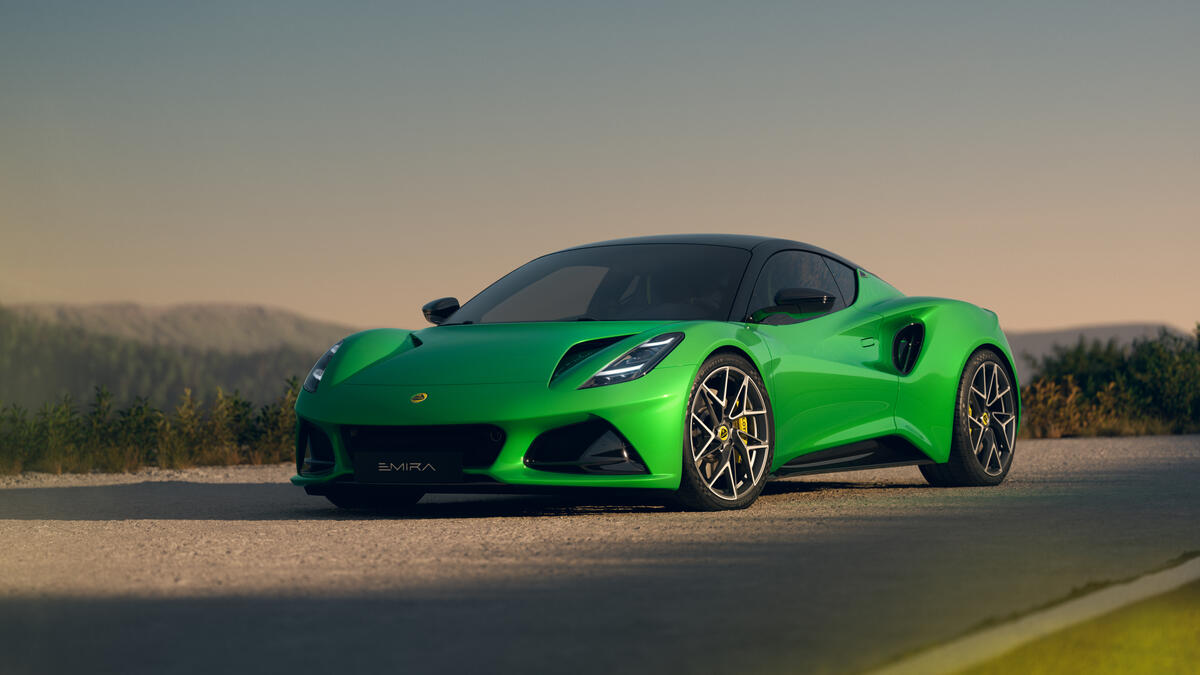
Lotus Amira
"... of our cars last year on track. And that was the Amira that you saw from last year. But we did not have ..."
The Lotus Emira is a sports car made by Lotus. The podcast mentions it because they saw one driving on a track at an event. That’s a common way people judge how well a sports car really performs.
The Lotus Emira is a modern Lotus sports car designed for track-capable driving with a focus on lightweight feel. The podcast references seeing an Emira on track last year, tying it to real-world event use rather than just specs. It’s discussed because Lotus models are often evaluated by how they perform and feel when driven hard.
whip pan
"Yeah. So this is a very trendy technique right now. They call it a whip pan."
A whip pan is a camera trick for moving cars. You move (pan) the camera fast to follow the car, and the slower shutter makes the background streak while the car stays clear enough to tell what it is.
A whip pan is a photography technique where you pan the camera quickly in the same direction as a moving subject. The goal is to create intentional motion blur while keeping the subject recognizable, often with a slower shutter speed than you’d normally use.
shutter speed
"And the way you do that is with this is a one-fifth shutter speed, which is really, really slow."
Shutter speed is how long the camera “looks” at the scene. A slower shutter lets motion blur happen, which is what you want for a whip pan effect.
Shutter speed is how long the camera’s shutter stays open to collect light. Slower shutter speeds let more motion blur build up, which is why whip panning often uses a very slow shutter speed to create streaking “trailing edges.”
motion blur
"You whip it that direction, which creates even more motion blur. It's a fun technique. I really like it."
Motion blur is the streaky look you get when the camera captures movement while the shutter is open. In this technique, it’s intentional to make the car look faster.
Motion blur is the streaking effect caused when something moves during the camera’s exposure. In whip panning, motion blur is used creatively to show speed and direction while still keeping the subject identifiable.
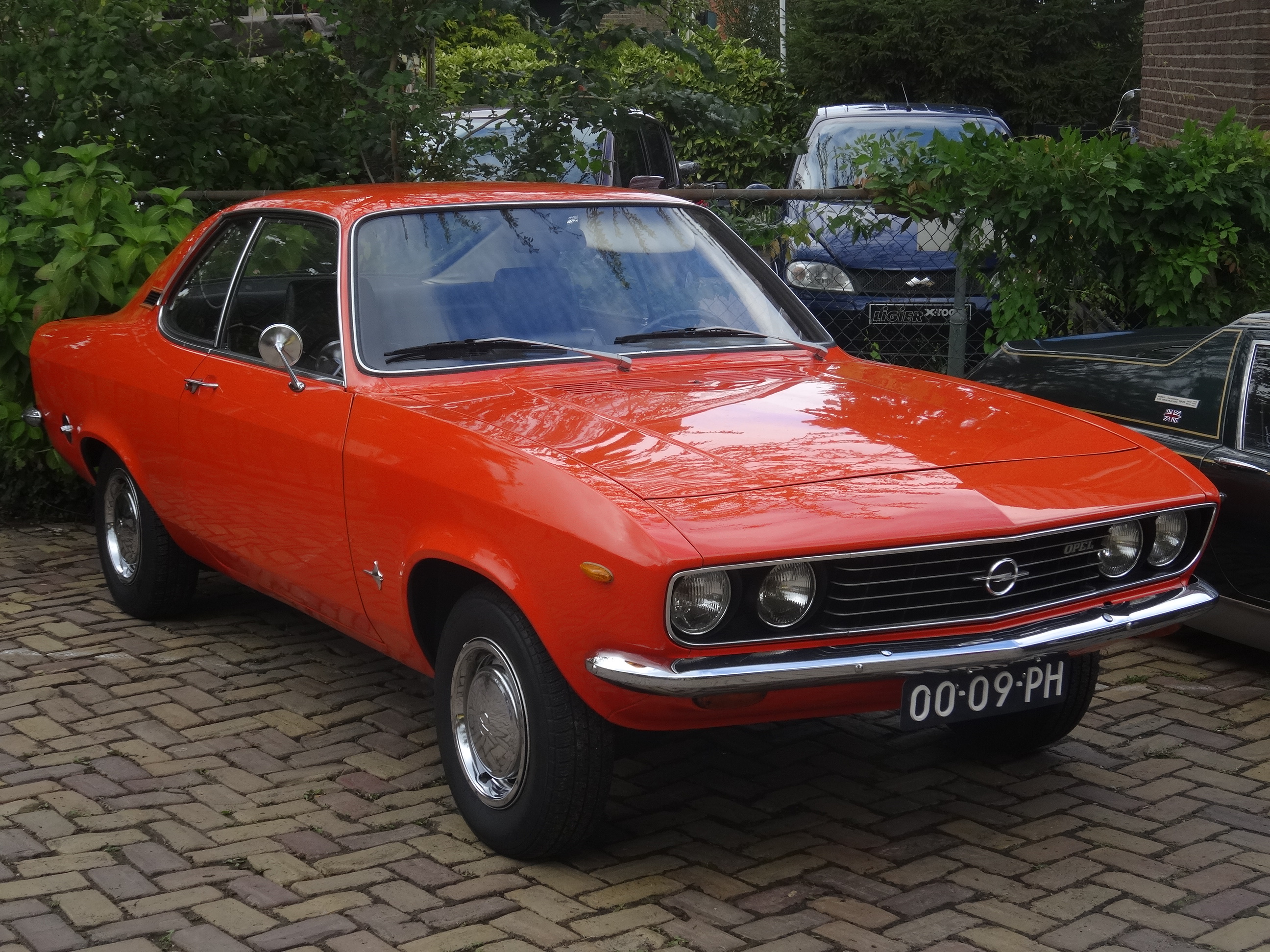
Opel Manta
"...you can't see it, this is a pretty new 911 GT3 RS Manta racing package car. It's amazing. I mean, the dif..."
The Opel Manta is an older sports coupe model. In this podcast moment, the word “Manta” is being used as part of a racing package name for a track car. So it’s not just about the original car—it’s about the package branding.
The Opel Manta is a classic European coupe associated with older motorsport and enthusiast culture. In the podcast, it appears in the phrase “911 GT3 RS Manta racing package car,” which likely refers to a racing package or livery rather than the original Opel model itself. It’s mentioned because the discussion is centered on a track-prepared Porsche build.
suspension
"I don't think they do either. I think it's aero and suspension. And nothing for brakes either, right?"
Suspension is the system that connects the wheels to the car’s body and controls how the tires move over bumps and during cornering. In racing, suspension tuning helps maintain tire contact and grip under load.
aero
"I don't think they do either. I think it's aero and suspension. And nothing for brakes either, right?"
“Aero” is short for aerodynamics. It’s how the car’s shape helps it push down onto the road so it can grip better, especially in corners.
In car talk, “aero” means aerodynamics—how the car’s shape and wings manage airflow. On a race car, aero is used to create downforce so the tires keep grip at high speed.
grip
"The car's a cheat code though. He had grip in places. We were entering corners at 100 plus of like, you can do that."
“Grip” means how well the tires can hold the road. More grip lets the car go faster through turns without losing control.
“Grip” is the traction between the tires and the track surface. More grip lets a car carry more speed into corners and reduces how easily it slides.
cheat code
"The car's a cheat code though. He had grip in places. We were entering corners at 100 plus of like, you can do that."
“Cheat code” here just means the car feels unfairly good—like it has an advantage that makes it much easier to go fast. The speaker is praising how well it sticks and handles.
“Cheat code” is a metaphor for something that makes the car dramatically easier or faster to drive than expected. In this context, it suggests the car’s grip and aero/suspension package give it an unusually strong advantage.
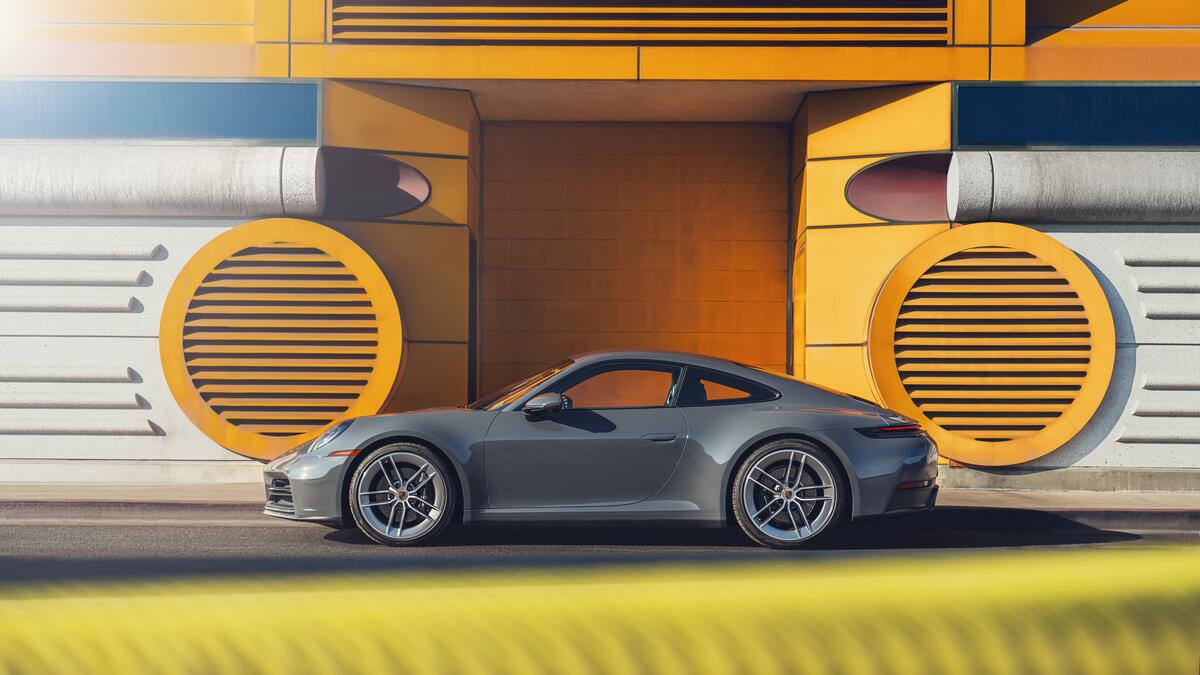
GT3 Cup car
"We got passed once the entire hour and it was a GT3 Cup car and it didn't really pull ahead that quickly."
A “GT3 Cup car” is a Porsche race car built for a one-brand racing series. Because it’s a spec series, the car’s grip and handling—plus tires and setup—matter a lot for speed.
A “GT3 Cup car” refers to Porsche’s one-make GT3 racing program (the Porsche 911 GT3 Cup). These cars are built for spec racing, so lap-to-lap performance differences often come from setup, tires, and aero rather than major engine changes.
better tires
"They have the same engines. It's just more power, more aero and better tires."
“Better tires” means racing tires that grip the track better. If the tires have more grip, the car can brake and turn harder without sliding.
“Better tires” means tires with a compound and construction suited for racing, typically offering higher grip and more consistent performance under heat. Tire choice is one of the biggest variables in lap time because it directly affects traction and braking.
more power
"They have the same engines. It's just more power, more aero and better tires."
“More power” means the engine can push harder, helping the car accelerate faster. But you still need grip and good handling to use that power effectively.
In racing comparisons, “more power” usually means the engine can produce greater output, improving acceleration and top speed. Power matters most when it’s paired with traction (grip) and aerodynamic stability.
hairpin
"I think this is 10. It's the one before the hairpin that goes onto the back straight."
A hairpin is a very tight turn, usually taken slowly compared to other corners. Drivers have to slow down a lot and turn carefully to stay on line.
A hairpin is a very tight, slow-speed corner that requires heavy braking and precise steering. It’s called a “hairpin” because the path resembles a hairpin shape.
corner 10
"I think this is 10. It's the one before the hairpin that goes onto the back straight."
Race tracks use numbers to label specific turns. “Corner 10” means a particular turn on that track that drivers can talk about precisely.
The speaker is referring to a specific numbered corner on a race circuit. Corner numbering is how track maps and driver coaching identify where braking and turning points are.
back straightaway
"Okay, so you're coming up over the hill 10 and then going to 11 to go on the back straightaway."
A back straightaway is a long straight part of the track where the car speeds up. Drivers use it to build speed before the next turn.
A back straightaway is the long straight section of a circuit where cars accelerate hard before braking for the next corner. It’s often where top speed and aerodynamic efficiency show up most clearly.

Honda Fit
"...riety of cars we have at these events is we had a Honda Fit on track with us as well. So it's anything and ev..."
The Honda Fit EV is a small car that runs on electricity instead of gasoline. The podcast mentions it because they had one at a track event. It’s an example of an electric car being used in a driving setting.
The Honda Fit EV is an electric version of the Honda Fit, built to provide compact, practical daily transportation with an electric powertrain. The podcast mentions it as part of the variety of cars at events, including one on track. It’s brought up because it shows how electric compact cars can participate in driving-focused activities.

Cadillac Cts
"Someone was driving a normal Cadillac CTS, not a V, just a normal CTS."
The Cadillac CTS is a regular Cadillac sedan that’s meant to drive more like a sporty car than a typical family cruiser. Here, they’re saying someone brought a standard CTS to the event, not the special high-performance V version.
The Cadillac CTS is a midsize performance-oriented sedan from Cadillac. In this segment, the hosts mention someone driving a “normal” CTS (not the higher-performance V model), which highlights how even non-V CTS cars can show up at track events.
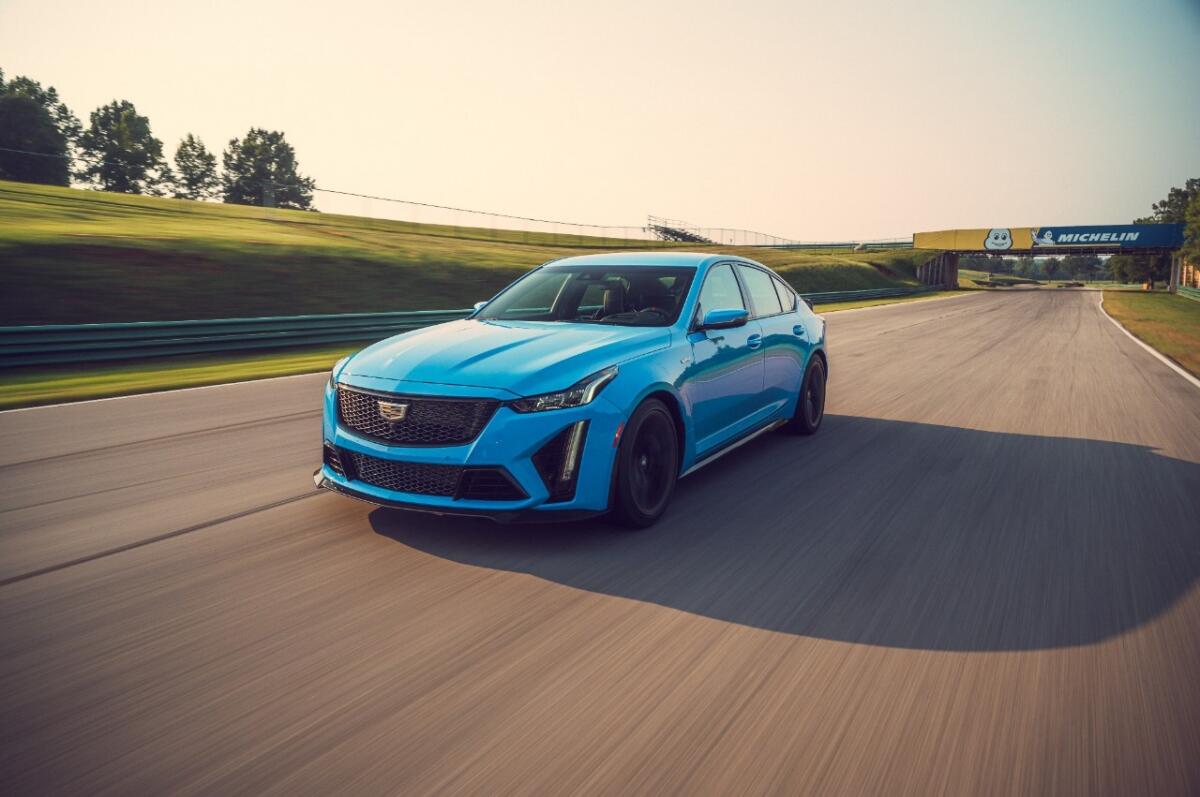
Cadillac CT5
"I heard there were three LeMonster versions of the CT5 there. ... There were so many CT5 and CT4 Black Wings."
The Cadillac CT5 is a mid-size luxury sedan. In this segment, they’re saying there were several CT5s there, including special versions, which shows the CT5 is popular with track/enthusiast groups.
The Cadillac CT5 is a midsize luxury sedan, and the hosts specifically talk about multiple “LeMonster versions” of the CT5. They also mention a lot of CT5 cars at the event, implying a track-focused or enthusiast setup for that model.
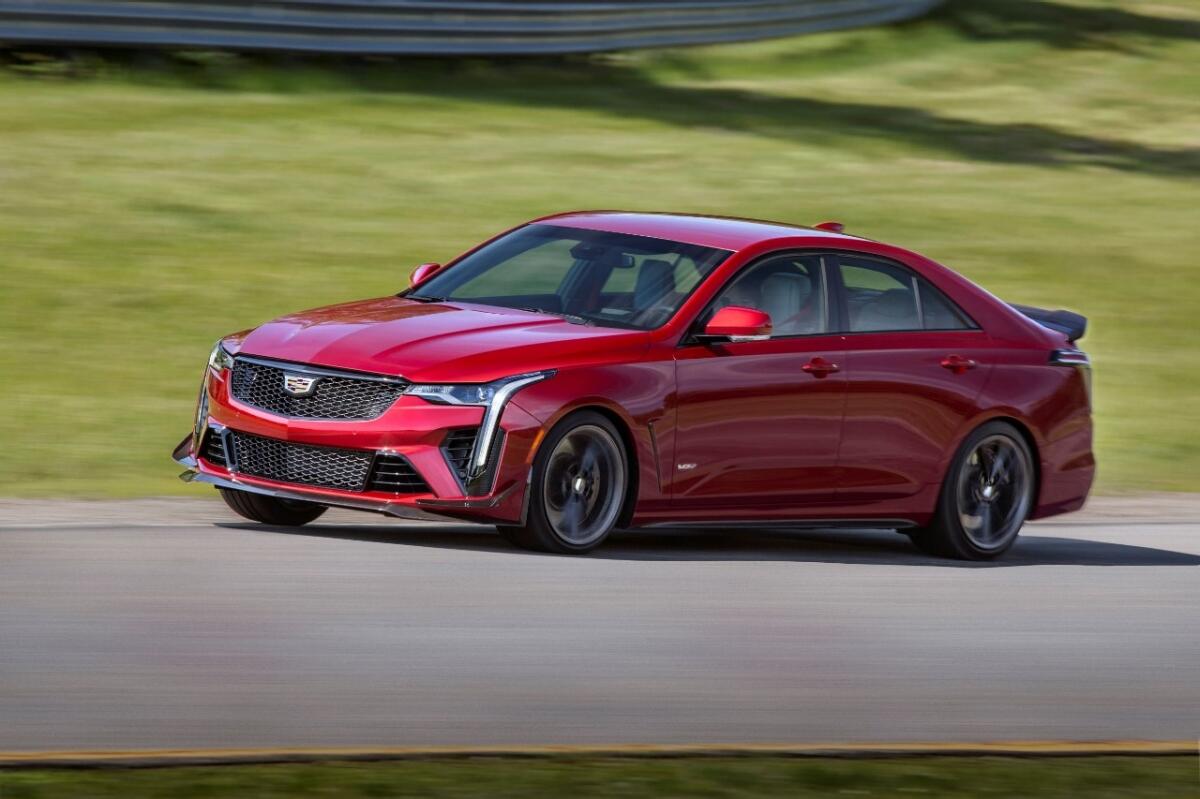
Cadillac CT4 Black Wings
"There were so many CT5 and CT4 Black Wings. That was the whole point."
The Cadillac CT4 is a compact luxury sedan, and “Black Wing” appears to be a specific enthusiast/trim or track-prep designation the hosts are using for CT4 cars. Mentioning both CT5 and CT4 Black Wings suggests a themed lineup of Cadillac sedans built for spirited driving and track use.
Pirelli World Challenge
"Well, they used to run them in Pirelli World Challenge like 10, 15 years ago. They had a class for these."
Pirelli World Challenge was a racing series in North America where race cars were based on real production models. The hosts are saying these kinds of cars used to race there years ago.
Pirelli World Challenge was a North American road-racing series that featured production-based cars in multiple classes. The hosts reference it to explain that cars like the ones they’re discussing were run in that series years earlier, showing the track pedigree of these builds.
class
"They had a class for these. For the fit."
In racing, a “class” is like a division of cars that compete under similar rules. They’re saying the series had a specific division for these cars.
In racing, a “class” is a grouping of cars with similar rules—often based on performance level, modifications allowed, or vehicle type. The hosts say Pirelli World Challenge had a class specifically for these cars, which implies they were competitive enough to warrant their own category.
Spec B
"Spec B is what the class was."
“Spec B” is likely a racing category where the rules limit car changes. That helps make races more about driving than expensive modifications.
“Spec B” sounds like a class designation in a racing series where cars are regulated to a specific specification. That kind of class structure is meant to keep competition closer by limiting how much teams can change the cars.
TC
"Okay. TC was also what the class was called."
“TC” here is another name for a racing class. The exact meaning isn’t spelled out in this excerpt, but it’s part of how the series groups cars.
“TC” is presented as another class name in the racing context of the segment. Without the full expansion, it likely refers to a specific ruleset/category used by that series.

Mini Coopers
"And they were Honda Fitts, Mini Cooper's, Fiesta's, those kinds of things."
The Mini Cooper is a small car that can be used in racing classes. In this segment it’s mentioned as an example of the cars people used to compete.
The Mini Cooper is a compact car that’s often used in entry-level and spec-style racing because it’s relatively affordable and easy to prepare for competition. Here it’s mentioned as one of the kinds of cars used in the class the host is describing.

Audi R8
"Moving to news for various car manufacturers, starting with Audi up front, you thought the R8 was dead, but it is not."
The Audi R8 is a high-performance Audi supercar with its engine placed in the middle of the car. It’s the model being discussed as being replaced by a successor.
The Audi R8 is a mid-engine supercar from Audi, known for its V10 performance and all-wheel-drive traction. In this segment, the host says they thought the Audi R8 was “dead,” setting up the news that Audi is replacing it.
Audi Nuvalari
"Audi has announced the successor to the R8 called the Nuvalari named after Tazo Nuvalari,"
Audi is introducing a new supercar called the Nuvalari to replace the R8. The name is meant to honor a famous race driver from the past.
Audi Nuvalari is described here as the successor to the Audi R8, meaning it’s positioned as the next flagship supercar from Audi. The name is tied to Tazo Nuvolari, linking the new model to historic racing heritage.
Tazo Nuvalari
"Audi has announced the successor to the R8 called the Nuvalari named after Tazo Nuvalari,"
Tazio Nuvolari was a famous early race car driver from Italy. Audi is using his name as inspiration for the new model being announced.
Tazio Nuvolari (spoken here as “Tazo Nuvalari”) is a legendary Italian racing driver, often remembered as one of the most courageous and talented racers in early motorsport. The segment uses his racing record to explain why Audi would name a new supercar after him.
F1
"But his name has never been associated with the greats because everything he did was prior to F1."
F1 is the highest level of open-wheel race car racing. The host is saying Nuvolari raced before F1 became the main reference point for fame.
F1 refers to Formula 1, the top tier of open-wheel racing. The host is contrasting Nuvolari’s era with F1, implying his achievements happened before modern F1-era records and fame.
24 hours of Le Mans
"He had five wins at the Copaciano, two at the Milaimilia, two victories at the Targa Florio, two RAC tourist trophies, 24 hours of Le Mans victory and a European championship."
The 24 Hours of Le Mans is a super-famous long-distance race in France. It’s hard because cars have to keep running fast and reliably for an entire day.
The 24 Hours of Le Mans is one of the world’s most famous endurance races, held annually in France. Winning it is a major achievement because teams must balance speed, reliability, and driver consistency over a full day of racing.
hypercar
"So they have named their brand new supercar, hypercar, is Audi make hypercars?"
A hypercar is an even more extreme version of a supercar. It’s meant to be one of the fastest and most advanced cars a company makes.
A hypercar is an ultra-high-performance car category above a typical supercar, usually with extreme power, advanced materials, and cutting-edge technology. The host uses it to describe Audi’s newly named top-tier performance vehicle.
three axial flux electric motors
"V8 is back with three axial flux electric motors, Audi space frame with carbon exterior."
These are electric motors designed to be efficient and powerful. The host says the car uses three of them, which helps it deliver strong acceleration when you need it.
Axial flux electric motors are a motor design where the magnetic flux travels parallel to the motor’s axis, often enabling a more compact, high-power layout. Using three of them suggests a multi-motor hybrid/electric architecture aimed at delivering very high peak output and responsive torque.
Audi space frame
"V8 is back with three axial flux electric motors, Audi space frame with carbon exterior."
A space frame is the car’s main structural “skeleton” made from a network of strong parts. The idea is to keep the car rigid and light, which helps it handle better.
A space frame is a structural chassis concept made from a network of members that spreads loads through a rigid framework. The host attributes it to Audi and pairs it with a carbon exterior, implying a lightweight, stiff foundation for high-performance handling and safety.
carbon exterior
"V8 is back with three axial flux electric motors, Audi space frame with carbon exterior."
“Carbon exterior” means parts of the outside of the car are made from carbon fiber. Carbon fiber is light and strong, which can help the car feel more agile.
A carbon exterior means body panels or outer structure made from carbon fiber composite. Carbon fiber is valued for high stiffness-to-weight ratio, which helps reduce mass and can improve handling and acceleration by lowering overall weight.
dynamic energy management
"Dynamic energy management for boost and recuperation, motorsports inspired and break by wire with ceramic discs derived directly from F1 according to Audi's media"
Dynamic energy management is the car’s computer deciding how to use and recharge energy. It coordinates when to add extra power and when to recover energy during slowing down.
Dynamic energy management is the control strategy that decides how to allocate energy between the engine, electric motors, and battery. In this segment it’s specifically tied to “boost and recuperation,” meaning it coordinates acceleration power and energy recovery to maximize performance and efficiency.
recuperation
"Dynamic energy management for boost and recuperation, motorsports inspired and break by wire with"
Recuperation is when the car recovers energy while slowing down. Instead of wasting that energy as heat, it turns it back into electricity.
Recuperation is energy recovery in an electrified powertrain, where kinetic energy is converted back into electrical energy (often during deceleration). The host pairs it with boost to describe how the car manages energy for both acceleration and slowing.
boost
"Dynamic energy management for boost and recuperation, motorsports inspired and break by wire with"
Boost means the car can add extra power when you ask for it. In this context, it’s part of how the hybrid system delivers strong acceleration.
Boost refers to extra pressure or power delivered to increase engine output, typically associated with forced induction systems like turbocharging. Here it’s used in the context of hybrid energy management, implying the system can add power on demand.
ceramic discs
"break by wire with ceramic discs derived directly from F1 according to Audi's media and 10 piston calipers on the front."
Ceramic brake discs are a high-end type of brake rotor made from ceramic material. They’re designed to keep braking strong even after repeated hard stops, but they can cost more than normal brakes.
Ceramic brake discs (ceramic brakes) use ceramic composite material instead of conventional cast iron. They’re known for strong fade resistance and lighter weight, which helps repeated hard braking—though they can be more expensive and may require specific driving/maintenance habits.
break by wire
"Dynamic energy management for boost and recuperation, motorsports inspired and break by wire with ceramic discs derived directly from F1 according to Audi's media"
Brake-by-wire means the brake pedal is connected electronically rather than through a direct mechanical linkage. The car’s computer controls braking more precisely.
Brake-by-wire replaces the traditional mechanical/hydraulic linkage with an electronic control system that commands braking. This can enable more precise brake modulation and integration with stability/traction systems, which is especially useful in high-performance applications.
10 piston calipers
"ceramic discs derived directly from F1 according to Audi's media and 10 piston calipers on the front. Huge, huge brakes."
Calipers are the parts that press the brake pads against the disc. “10 piston” means there are many small pistons working together to squeeze the pads firmly for stronger braking.
A caliper is the clamp that squeezes the brake pads against the rotor, and “10 piston” indicates multiple pistons distributed across the pad area. More pistons can help apply clamping force more evenly and improve brake feel and thermal performance in extreme braking scenarios.
monolith
"And I definitely see a lot of Audi's design language from the past, but they're introducing more of the monolith, very heavy, sturdy looking kind of design language."
Here “monolith” is describing the car’s design style. It means the body looks like one solid, heavy shape rather than lots of separate design pieces.
In automotive design talk, “monolith” is used to describe a heavy, unified, block-like visual language—often implying a single, cohesive form rather than many separated surfaces. The host contrasts it with older design language, suggesting a more solid, weighty look.
radiator
"the entire theme is designed after a radiator. Like let's put radiators everywhere. You need cooling."
A radiator is part of the cooling system that helps keep the car from overheating. The speaker is saying the car’s front design looks like it’s trying too hard to look like it’s full of radiators.
A radiator is the heat-exchanger that helps remove heat from the engine’s coolant. The host is criticizing a design choice that visually “copies” radiator-like elements, arguing the theme is overdone.
side blade
"They kind of did a like an homage. What do they call it? The side blade. They kind of did a side blade thing on the side..."
A “side blade” is a sharp-looking design feature on the side of a car, like a fin or fin-shaped panel. It’s mainly there to make the car look more aggressive and sporty.
A “side blade” is an aggressive body styling element—typically a sharp, fin-like contour or panel feature on the side of a car. It’s used to create visual tension and break up the body shape, often to emphasize aerodynamics or a performance look.
B pillar
"You personally, this photo makes it look like two different cars from kind of does right and split just at the B pillar."
The B-pillar is the support post in the middle of the car, between the front and back doors. It helps hold the car together and it also affects how the car’s body lines look.
The B-pillar is the vertical structural support between the front and rear doors on a car. It’s important for crash protection and also strongly affects how the body panels visually “break” into sections.
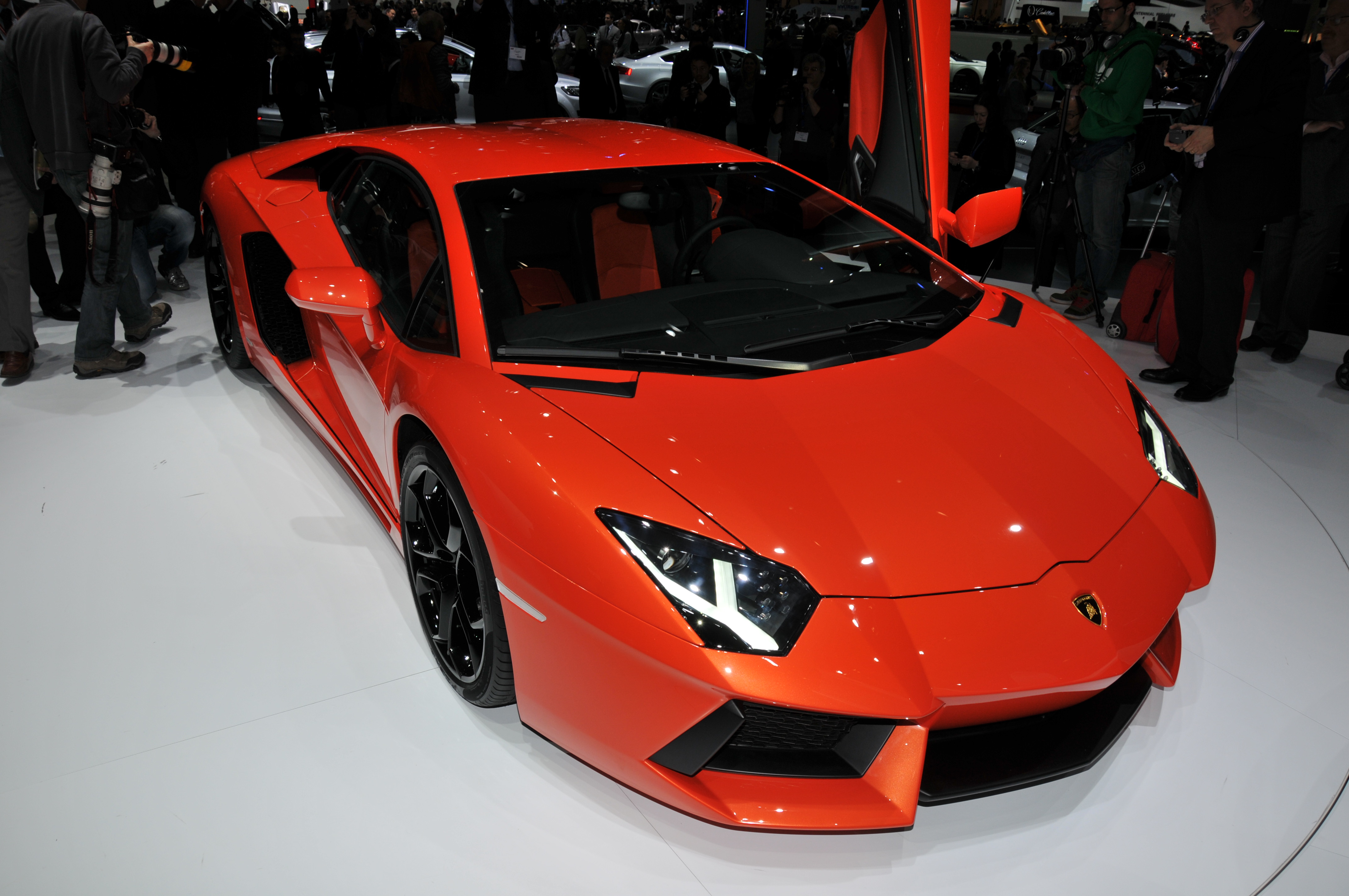
Lamborghini Ventador
"And I see, I had a Huracan, but I guess a Ventador."
The Lamborghini Aventador is a loud, high-end supercar with a powerful V12 engine in the middle. The speaker is basically saying they meant the Aventador when they referenced their Lamborghini.
The Lamborghini Aventador (often misspoken here as “Ventador”) is a mid-engine supercar famous for its aggressive styling and V12 character. The host brings it up as the Lamborghini they meant, tying the design comparison back to known Lamborghini proportions.

Lamborghini Huracan
"And I see, I had a Huracan, but I guess a Ventador."
The Lamborghini Huracán is a high-performance supercar from Lamborghini with the engine mounted in the middle. Here it’s mentioned just as a comparison for the car’s look and shape.
The Lamborghini Huracán is a mid-engine supercar known for its sharp styling and performance-focused layout. In this segment, the host uses it as a reference point for how the discussed car’s proportions and design cues feel.

Veyron
"I actually think the specs and even the overall shape and proportions kind of remind me of the Veyron."
The Bugatti Veyron is a famous hypercar known for being extremely powerful and very wide. The speaker is comparing the other car’s look and size to the Veyron.
The Bugatti Veyron is a landmark hypercar known for its extreme power and distinctive, wide stance. Here, the host says the other car’s specs and overall shape/proportions remind them of the Veyron, including a similar “footprint.”
mid engine
"But I can't say that a supercar shape with mid engine proportions anymore is really groundbreaking. Right."
“Mid-engine” means the engine sits closer to the middle of the car instead of the front or the back. Putting the weight more evenly helps the car feel more balanced when you turn.
A mid-engine layout places the engine near the center of the car, typically behind the front seats and ahead of the rear axle. That helps balance weight distribution and can improve handling and stability compared with front- or rear-engine designs.
hybrid
"What are, what technology are we implementing? So all right, it's going to be a hybrid. It's going to be a V8."
A hybrid uses both a gas engine and an electric motor. It can save fuel and sometimes make the car feel quicker because the electric motor can help instantly.
A hybrid powertrain combines an internal-combustion engine with one or more electric motors and a battery. The goal is to improve efficiency and can also add performance via electric torque, depending on the system design.
top speed
"We're going to bring the power. We're going to bring the speed, 217 miles an hour top speed, apparently something like that, but it's still got to be 350 KMH."
Top speed is the highest speed a car can reach. They’re using it as a benchmark to talk about how fast these supercars are supposed to be.
Top speed is the maximum speed a car can reach under ideal conditions. The hosts use it to compare supercar performance claims, citing “217 miles an hour” and “350 KMH.”
shared platforms
"Do we think it shares platforms with the Temerario? ... I mean, does the R eight and the Gallardo and the Huracan shared platforms from a business perspective?"
“Shared platforms” means different cars might be built on the same basic skeleton. That can make them cheaper to develop and sometimes makes them similar in how they’re put together.
A shared platform means multiple car models use the same core vehicle architecture—like the chassis design and major structural components. The hosts are wondering whether the Audi R8 and Lamborghini models (Gallardo/Huracán) use similar underpinnings, which can affect cost, engineering efficiency, and how cars feel.

Lamborghini Gallardo
"I mean, does the R eight and the Gallardo and the Huracan shared platforms from a business perspective?"
The Lamborghini Gallardo is a famous Lamborghini supercar, known for its V10 engine. In this segment, it’s brought up as part of a comparison about how similar Lamborghini and Audi models might be under the skin.
The Lamborghini Gallardo is a V10-powered Lamborghini that became a benchmark entry point for the brand’s supercar lineup. Here, it’s mentioned alongside the Audi R8 and the Huracán to discuss whether these cars shared platforms or engineering roots from a business perspective.

4Runner Forerunner
"... kind of look like something you'd see in maybe a forerunner or a frontier. Sure."
The 4Runner is a Toyota SUV. The podcast is using it as a reference for how an SUV looks and fits in size. It’s mentioned because it’s known for being a tough, practical vehicle.
The Toyota 4Runner is a midsize SUV known for rugged capability and a body-on-frame design that suits off-road and long-distance driving. In the podcast, it’s mentioned as a visual reference point—something that looks like a forerunner or frontier—suggesting they’re talking about SUV styling and size. It comes up because it’s a common choice for people who want a durable, straightforward SUV.
LED DRLs
"The LED DRLs. I don't know that Audi is resetting that for the car industry with this, but well,"
LED DRLs are the lights a car uses during the day to help other drivers see it. They’re powered by LED bulbs and often look like part of the car’s design.
LED DRLs are “daytime running lights” that use light-emitting diodes (LEDs). They’re designed to make a car more visible in daylight, and their shape is often used as a styling cue on modern cars.
FCP Euro
"If you own a European enthusiast car, you need parts from FCP Euro. Founded in 1986, this family company is celebrating its 40th year serving DIY enthusiasts and remains focused on giving you a better ownership experience."
FCP Euro is a parts retailer focused on European cars, emphasizing DIY-friendly support and parts availability. In this segment, they’re presented as a source for “genuine OE parts” and a program that guarantees parts for the life of the car.
guaranteed for the life of your car
"Every part you buy from FCP Euro is guaranteed for the life of your car. Plus, they have a dedicated team of service advisors to help you solve issues and complete jobs correctly seven days a week."
“Guaranteed for the life of your car” refers to a long-duration parts warranty/guarantee promise tied to the vehicle rather than a short, time-limited coverage window. In practice, it’s meant to reduce the risk of buying replacement parts that might wear out again later.
OE parts
"With fulfillment centers nationwide and prebuilt kits for common jobs, there's no better place for genuine OE parts for your European car. And yes, even your sob."
OE parts means “original equipment” parts—components made to match what the automaker installed on the car when it was new. The host is contrasting these with aftermarket parts, implying OE parts are the safest match for fit and function on European cars.
X Drive
"I mean, great question because X Drive for the first time has been introduced on the BMW shown here in Borosan Blue."
BMW’s xDrive is its system for powering all four wheels. That usually helps the car stay planted and handle better on wet or snowy roads.
“xDrive” is BMW’s all-wheel-drive system. It can send more torque to the wheels with the most grip, improving traction and stability when road conditions are slippery.
zero to 60
"BMW is claiming enhanced traction, enabling even faster acceleration combined with further improved agility and directional stability. So zero to 60 in 3.6 seconds."
“Zero to 60” is how long it takes a car to accelerate from 0 to 60 mph. It’s a simple way to compare how quickly different cars feel at launch.
“Zero to 60” is shorthand for 0–60 mph acceleration time, a common performance metric. Faster 0–60 times generally indicate stronger launch and acceleration, though they depend on traction, gearing, and vehicle weight.
directional stability
"BMW is claiming enhanced traction, enabling even faster acceleration combined with further improved agility and directional stability."
Directional stability is how well the car keeps going where you steer it. On slippery roads, it helps prevent the car from feeling like it’s sliding out of control.
Directional stability is the car’s ability to stay pointed in the direction the driver intends, especially during cornering or on slippery surfaces. Systems like AWD can help by reducing sudden loss of grip at individual wheels.
traction
"BMW is claiming enhanced traction, enabling even faster acceleration combined with further improved agility and directional stability."
Traction is how well the tires can grip the road. More traction means the car can accelerate without the wheels spinning uselessly.
Traction is the grip between the tires and the road surface. Better traction lets the car transfer engine torque to the ground without excessive wheel slip, which improves acceleration and stability.
winter tires
"So what they're selling is instead of putting winter tires on your M2, look, just buy an all wheel drive M2."
Winter tires are tires made to work better in cold weather. They grip more reliably on snow and ice than regular tires, which is why people swap to them in winter.
Winter tires are specialized tires designed with softer rubber compounds and tread patterns that work better in cold temperatures. They typically provide more grip than all-season tires in snow and ice, which is why the host compares them to buying an AWD M2 instead.
torque
"Still the same 473 horsepower, 400 and 43 pound feet of torque, automatic transmission only."
Torque is the engine’s pulling force that helps the car speed up. Higher torque usually helps with stronger acceleration, especially when you’re not already going fast.
Torque is the engine’s twisting force that helps the car accelerate, especially from low speeds. The host quotes torque to compare how the AWD M2’s output remains the same even though it gets heavier.
automatic transmission only
"Still the same 473 horsepower, 400 and 43 pound feet of torque, automatic transmission only."
This means the car is only available with an automatic gear system. You don’t have to shift gears yourself.
“Automatic transmission only” means this AWD M2 is offered with an automatic gearbox rather than a manual. Transmission choice affects how the car delivers power during launches and in different driving conditions.
pounds
"But the problem is it got heavier. Yes, but I'll counterpoint to that. It is almost 4000 pounds."
Weight matters because it changes how hard the engine has to work to accelerate. The host is saying the AWD version is heavier, which can make it feel less quick.
Vehicle weight is often discussed in pounds because it directly affects acceleration, braking, and how much grip the tires can use. The host’s point is that adding AWD hardware makes the car heavier, which can offset some of the traction benefits.
all wheel drive
"It's all wheel drive and it still weighs less than a dark horse Mustang. Does it?"
All-wheel drive means the car can send power to both the front and rear wheels. That helps it get moving and stay stable when the road is slippery.
All-wheel drive (AWD) sends power to more than just the rear wheels, typically to both the front and rear axles. In practice, many AWD systems are “on-demand,” meaning they mostly run like rear-wheel drive until traction is needed.
DSC off
"But what you can do is put this in two wheel drive mode with DSC off. That's interesting."
DSC is the car’s stability/traction control. When you turn DSC off, the car is less controlled by electronics, so it can feel more willing to slide—especially on dry roads.
DSC (Dynamic Stability Control) is an electronic system that helps prevent loss of traction and skids by reducing engine power and/or applying brakes. Turning DSC off (or partially disabling it) lets the car be more “playful,” but it also removes some of the safety traction intervention.
rear wheel drive mode
"I didn't know that most of the time this is going to be in rear wheel drive mode. And then they do not tell us the torque split front to rear."
Rear-wheel-drive mode means most of the power goes to the rear wheels. The car can still add front-wheel power if it detects the rear wheels are losing grip.
Rear-wheel-drive mode means the car is primarily sending power to the rear axle rather than the front. Many AWD systems default to this behavior to improve feel and efficiency, then add front-wheel torque when traction is limited.
AC Schnitzer
"I got to drive the M2 AC Schnitzer car that RSR."
AC Schnitzer is a company that modifies BMWs for better performance. Here, they’re saying the M2 was tuned by AC Schnitzer.
AC Schnitzer is a German BMW-focused tuner known for performance upgrades and track-oriented builds. In this context, the speaker drove an M2 that was tuned by AC Schnitzer.
RSR
"I got to drive the M2 AC Schnitzer car that RSR."
RSR is the group connected to the car the speaker drove. It’s likely a shop or team that prepared or supports performance builds.
RSR is referenced as the owner/builder associated with the AC Schnitzer M2 car the speaker drove. In enthusiast circles, RSR commonly refers to a motorsport-prep shop or racing team tied to Porsche and BMW builds, depending on context.
coilovers
"And it's tuned. It's got coilovers, some track track things on it."
Coilovers are upgraded suspension parts that let you adjust how firm the car rides. They’re often used to lower the car and make handling feel more precise.
Coilovers are adjustable suspension components that combine a coil spring and shock absorber. They’re commonly used to lower the car and fine-tune ride stiffness for track use or sharper street handling.
cage
"Rearward, it's completely stripped out. No carpet. There's a cage back there harnesses."
A cage is a reinforced metal frame inside the car. It’s there to protect people in the event of a crash and is common on track-focused cars.
A cage (roll cage) is a metal safety structure installed inside the cabin for increased protection during hard driving or crashes. Track-prepped cars often add a cage to improve occupant safety and chassis rigidity.
harnesses
"There's a cage back there harnesses."
Harnesses are upgraded seat belts used for racing. They hold the driver more securely than normal seat belts, especially during hard driving.
Harnesses here refers to racing seat belts (multi-point harnesses) used to secure the driver more firmly than a standard belt. They help reduce movement during aggressive cornering and in track incidents.
bus stop
"And shifting fourth into fourth gear, coming out of the bus stop every"
The bus stop is a named section of the Spa race track. It’s a tight part where you slow down a lot and need good grip to get through cleanly.
The bus stop is a specific chicane section at Circuit de Spa-Francorchamps. It’s a tight, braking-heavy sequence where traction and tire grip matter a lot.

BMW M5
"It was a lot of fun, but it's not the fastest way around track, obviously. No. And for an inexperienced driver, it's not ideal. Yeah, right. But I think doing that, making it all the drive might get rid of some of that character that the car has. ... Automatic only. Yeah, the M5 is all the drive only now."
The BMW M5 is BMW’s super-fast version of the 5 Series. Here they’re saying the newer M5 is only available with all-wheel drive, meaning power goes to more than just the rear wheels.
The BMW M5 is BMW’s high-performance M5 sedan, known for big power and strong handling. In this segment, they mention it being “all the drive only now,” which points to an all-wheel-drive (AWD) setup rather than a traditional rear-drive layout.
Gazoo Racing
"Gazoo Racing unveiled this, developed with a singular focus on responsiveness, control and driver engagement through intensive testing at the ring. So you weren't aware, GR, so Gazoo Racing and master of the ring."
Gazoo Racing (GR) is Toyota’s performance and racing team. When you see GR on a car, it usually means Toyota tuned it with a lot of track testing in mind.
Gazoo Racing (often shortened to GR) is Toyota’s motorsport and performance brand. In practice, it’s associated with engineering work that’s focused on track testing and driver feel, including Nürburgring development.
Nurburgring
"So you weren't aware, GR, so Gazoo Racing and master of the ring. So master of Nurburgring, master of the Nurburgring, refined aerodynamics, dedicated suspension tuning of exclusive shocks, tuned all wheel drive system,"
The Nürburgring is a very famous race track in Germany. Car makers use it to test handling and tuning, because it’s hard enough to reveal real-world weaknesses.
The Nürburgring is a famous German road course used as a benchmark for car development. When a car is described as being “mastered” or “refined” at the ring, it usually means the tuning was validated on that track’s long, varied corners and elevation changes.
downforce
"There are a lot of aerodynamic developing and the rear wing apparently has five angles of adjustment so you can, you know, really tune the experience if you want a lot more downforce for, you know, depending on the track that you're at."
Downforce is the “squeezing” force that pushes the car toward the road. More downforce usually helps the car grip better in corners, especially on a track.
Downforce is the downward pressure created by aerodynamic features (like a rear wing) that increases tire grip. More downforce generally improves cornering and stability at speed, but it can also increase drag.
JDM
"Like I've never been a JDM guy. I've never been in the Fast and Furious body kit, all the stuff."
JDM means “Japanese Domestic Market.” It’s a car-enthusiast term for Japanese cars and styles that were originally meant for Japan.
JDM stands for Japanese Domestic Market. It refers to cars and styling that were originally sold in Japan, and it’s commonly used by enthusiasts to describe a certain look and parts culture.
Fast and Furious body kit
"I've never been in the Fast and Furious body kit, all the stuff. That's not me. Sure."
A body kit is a set of add-on parts that change how a car looks, like bumpers and side skirts. They’re comparing it to the flashy style associated with the Fast and Furious movies.
A body kit is an aftermarket set of exterior parts—like bumpers and side skirts—used to change a car’s appearance and sometimes aerodynamics. The speaker is referencing the exaggerated, street-tuner look popularized by the Fast and Furious franchise.
rally car
"It's kind of rally car looking, especially with the new slats and things they've added. Very rally car."
A rally car is designed for off-road-style racing on rough roads. The speaker is saying the car’s styling looks like it’s inspired by that kind of race car.
A rally car is built for rally stages—loose surfaces, frequent changes in grip, and lots of suspension travel. When the speaker says it looks “rally car looking,” they mean the styling cues resemble rally-focused aero and stance.
GT3 RS
"It's kind of the GT3 RS like with those front fender vents that it's got. Kind of that kind of thinking."
The Porsche 911 GT3 RS is a hardcore, track-style 911. Those front fender vents are there to help move air for cooling when you’re driving hard.
Porsche 911 GT3 RS is a high-performance, track-focused version of the 911. The speaker specifically references its front fender vents, which help with airflow and cooling for performance driving.
front fender vents
"It's kind of the GT3 RS like with those front fender vents that it's got. Kind of that kind of thinking."
Front fender vents are openings in the front fenders that let air flow where it’s needed. On performance cars, they often help cool important parts when you drive hard.
Front fender vents are openings in the fender area that help direct airflow to components behind them, often for cooling. On performance cars, they’re typically tied to brake cooling, engine bay airflow, or aerodynamic management.
charging more and getting less
"And continuing with the Porsche theme of charging more and getting less. They've removed the rear seats in a four door car, even though the Mariso existed."
They’re complaining that the car costs more but gives you less—like fewer features. Here, they’re pointing at the lack of rear seats.
This is a consumer-value critique: the speaker argues that the brand is raising prices while removing features or content. In this context, they connect it to deleting rear seats despite the car being a four-door.
AWD
"But on the other hand, you get all the suspension tuning in the tweaks and the fun old drive system and the arrow."
AWD means the car can drive all four wheels. That usually helps it grip the road better, especially in bad weather or on slippery surfaces.
AWD (all-wheel drive) sends power to both the front and rear axles, improving traction—especially on wet, snowy, or uneven roads. It can also help performance cars put power down more effectively when accelerating out of corners.
Volkswagen
"And notice, everyone, that Volkswagen has not really done that kind of thing. They've they've stopped at the R, but the R could be so much more..."
Volkswagen is the car brand being discussed. The host is saying Volkswagen’s performance lineup feels limited—like they don’t push the idea far enough beyond their “R” models.
Volkswagen is the German automaker behind the Golf R and the brand the host is critiquing for how it approaches performance trims. The host argues Volkswagen stops short at “the R” and could do more by applying the same kind of thinking to other models.

Toyota Supra
"They have the G.R.M.N. Supra as the last, you know, raw of the Supra."
The Toyota GR Supra is a sports car known for being fun to drive. Here it’s mentioned as the most recent “real” version of the Supra, used as a comparison point.
The Toyota GR Supra is a modern sports coupe built around a performance-focused driving feel and strong enthusiast identity. The host mentions it as the “last” raw of the Supra, contrasting it with what they wish Volkswagen would do with its performance approach.
G.R.M.N.
"They now have the G.R.M.N. Corolla Toyota. Where is the G.R.M.N. G.R. 86. Yeah."
GRMN is Toyota’s label for a more hardcore, enthusiast-focused version of a car. It usually means extra tuning and a more performance-first setup compared with the standard model.
“GRMN” is Toyota’s performance sub-brand associated with Gazoo Racing, used for limited, enthusiast-oriented models. It generally signals more aggressive tuning and a more “track-capable” focus than the regular GR trim.

Toyota Gr86
"G.R. 86. Yeah. If they did this to the G.R. 86 and did arrow and maybe just a touch more power and maybe a tour over."
The GR 86 is Toyota’s sporty, driver-focused 2-door coupe. Here, they’re talking about a possible even more hardcore version of it under the GRMN branding.
The GR 86 is Toyota’s enthusiast coupe built around a lightweight, rear-wheel-drive layout and a boxer engine. In this segment, the hosts are discussing a hypothetical GRMN 86 variant and how it might differ from the standard GR 86.

Toyota MR2
"I'm still waiting for the M.R.2. I want the Mr. Two to come back. I want that I want it to be a G.R.M.N."
They’re talking about the Toyota MR2, which is a small sports car with the engine placed more in the middle. The host wants Toyota to bring it back as a more powerful, performance-focused version.
This appears to be a reference to the Toyota MR2, a mid-engine sports car known for its compact size and balance. The speaker is expressing a desire for an MR2 to return, potentially as a GRMN-style 400-horsepower enthusiast model.
Hedge Hollow Raceway
"That's Saturday, Sunday at Hedge Hollow Raceway in Adrian, Missouri, [1776.3s] just an hour southeast of Kansas City and our Midwest region running [1780.6s] the Hedge Hollow Raceway for the flat out classic superb track."
Hedge Hollow Raceway is a track in Missouri where people go to drive cars on a closed course. The hosts are saying it’s a great track for fast, fun track-day driving.
Hedge Hollow Raceway is a racing venue in Adrian, Missouri. The hosts mention it as the location for their “flat out classic superb track” driving events, meaning it’s set up for high-speed, track-day-style driving.
JMP lightning track
"Doing some photos there up in the Northeast and JMP lightning track, [1792.4s] HPD and time trial."
“JMP lightning track” sounds like a particular track layout used for timed driving. The hosts are describing it as part of an event where drivers run laps against the clock.
“JMP lightning track” appears to be a specific layout or named track area at the event venue. The hosts pair it with “HPD and time trial,” suggesting it’s used for timed driving sessions and performance-focused runs.

Ford F-150 Lightning
"...ing some photos there up in the Northeast and JMP lightning track, HPD and time trial."
The Ford F-150 Lightning is a pickup truck that runs on electricity. The podcast mentions it in the context of track activity and photos. It’s included because it shows how an electric truck can be driven hard, not just used for commuting.
The Ford F-150 Lightning is an electric version of the F-150 pickup, combining EV power with a truck body. The podcast references photos and event activity involving “Lightning track,” suggesting it’s being used in performance or time-trial contexts. It’s discussed because it brings electric technology into a mainstream truck format people actually use.
time trial
"Doing some photos there up in the Northeast and JMP lightning track, [1792.4s] HPD and time trial."
A time trial is a timed driving format where the goal is to set the fastest lap or best elapsed time. Unlike racing with direct wheel-to-wheel competition, it’s typically about individual performance against the clock.

Pontiac Solstice
"...0th, Sunday, June 21, Thunder Hill Raceway Summer Solstice and then moving up to Pacific Northwest on Saturd..."
The Pontiac Solstice is a small sports car. The podcast mentions it around event plans and track-day dates. That’s why it’s part of the conversation.
The Pontiac Solstice is a compact two-seat sports car that’s known for its lightweight, enthusiast-oriented character. The podcast references it in the context of event dates at Thunder Hill Raceway and the Pacific Northwest. It comes up because it’s the kind of car that fits track-day culture and weekend driving.
Thunder Hill Raceway Summer Solstice
"Saturday, June 20th, Sunday, June 21, Thunder Hill Raceway Summer Solstice [1812.7s] and then moving up to Pacific Northwest on Saturday, June 27th at PIR,"
This is a named event at Thunder Hill Raceway. The hosts are using it to point out another weekend where they’ll be running track activities.
Thunder Hill Raceway Summer Solstice is a named event at Thunder Hill Raceway. The hosts mention it as part of their late-June schedule, implying a track-day-style gathering timed around the summer solstice weekend.
PIR, Portland International Raceway
"and then moving up to Pacific Northwest on Saturday, June 27th at PIR, [1817.1s] Portland International Raceway. [1818.3s] If you haven't been there, it's a superb track from what we understand."
PIR is Portland International Raceway, a race track in the Portland area. The hosts are saying it’s supposed to be a great track, even though they haven’t visited yet.
PIR stands for Portland International Raceway, a track in the Pacific Northwest. The hosts highlight it as a “superb track” and note they haven’t personally been there for any race series.
Sonoma Raceway
"starting at Sonoma Raceway Thursday, July 2. So if you have plans for July 4th, you can come to Sonoma on Thursday, July July 2nd and then go enjoy your July 4th."
Sonoma Raceway is a famous race track in California. People use it for professional racing, and it also hosts events where regular drivers can take their cars on track.
Sonoma Raceway is a major road course in Sonoma, California, known for its elevation changes and long, flowing corners. It’s a common venue for racing series and also hosts track-day events where enthusiasts can drive their own cars.
Ridge Motorsports Park
"But if you don't also Ridge Motorsports Park running the same day, Thursday, July 2nd and then out in Mid-Atlantic NC car"
Ridge Motorsports Park is a road course in the Pacific Northwest (Washington state) that’s popular with driving enthusiasts. It’s known for technical corners and elevation changes that make it a fun, challenging track for track days.
North Carolina Center for Automotive Research track
"and then out in Mid-Atlantic NC car that is North Carolina Center for Automotive Research track on 4th of July weekend, Saturday, Sunday, July 4th and 5th."
That’s a track facility in North Carolina run by an automotive research organization. It’s used for events where people can drive their cars on a closed course.
The North Carolina Center for Automotive Research (NCCAR) track is a motorsports facility used for testing and driving events in North Carolina. When hosts mention it for a weekend, they’re typically referring to an organized track-day-style event for enthusiasts.
Watkins Glen
"In the Northeast, Watkins Glen is having their blowout event from the 3rd through the 5th called Stars, Stripes and Speed."
Watkins Glen is a well-known race track in New York. It’s famous for being a tough, exciting course for both racing and track-day events.
Watkins Glen is a famous road course in New York known for its challenging layout and high-speed sections. It’s a well-known venue for racing and also hosts enthusiast events.
Stars, Stripes and Speed
"Watkins Glen is having their blowout event from the 3rd through the 5th called Stars, Stripes and Speed."
“Stars, Stripes and Speed” is the name of a weekend event at Watkins Glen. It includes track time and other fun stuff like car-related activities and entertainment.
“Stars, Stripes and Speed” is the name of a multi-day event at Watkins Glen. The hosts describe it as a track-day-style weekend with multiple activities beyond just driving.
HPDE
"That is a 3D 3-day HPDE open to everyone. All classes, drifting, car shows, food trucks,"
HPDE means “High Performance Driver Education.” It’s a track-day where regular drivers go learn how to drive their cars better on a closed course, often with coaching and organized groups.
HPDE stands for High Performance Driver Education. It’s a structured track-day format where drivers are grouped by skill and typically get instruction, so enthusiasts can learn and drive safely on a closed course.
drifting
"All classes, drifting, car shows, food trucks, merch vendors, live entertainment, it's going to be a huge event."
Drifting is when a driver intentionally makes the car slide sideways while still moving forward. It’s usually done on a track where it can be done safely.
Drifting is a driving technique where the car is intentionally steered to maintain a sideways slide while still moving forward. It’s often done in controlled track environments with specific rules and safety measures.
hookedondriving.com
"And all of these can be found at hookedondriving.com register now. And we hope you find a great track day."
hookedondriving.com is a website where you can find and sign up for track-day events. It’s basically where the event info and registration live.
hookedondriving.com is the website the hosts point listeners to for finding and registering for track-day events. It functions as an event listing/registration hub for driving experiences.
e-trons
"So you know how I've been talking about e-trons. Yeah, every time we see them, they're such great looking cars."
“e-tron” is Audi’s electric-car line. The hosts are saying they look good and making comments about the sound they make while driving.
“e-tron” is Audi’s name for its electric vehicles. In this segment, the hosts are talking about how Audi e-trons look and how they sound when driving by.
electronic sort of burble, rumbly world kind of noise
"It's this electronic sort of burble, rumbly world kind of noise. What is that? Like, oh, yeah, e-tron."
Electric cars are usually very quiet, so some makers add an artificial sound. The host is describing that added sound as a rumbling, “burble” type noise.
This is describing an “electronic burble” style sound that some EVs generate to mimic engine-like noise. Because EVs are quiet at low speeds, manufacturers often add artificial sounds, and they can feel “rumble-y” or “burble-y” depending on the tuning.
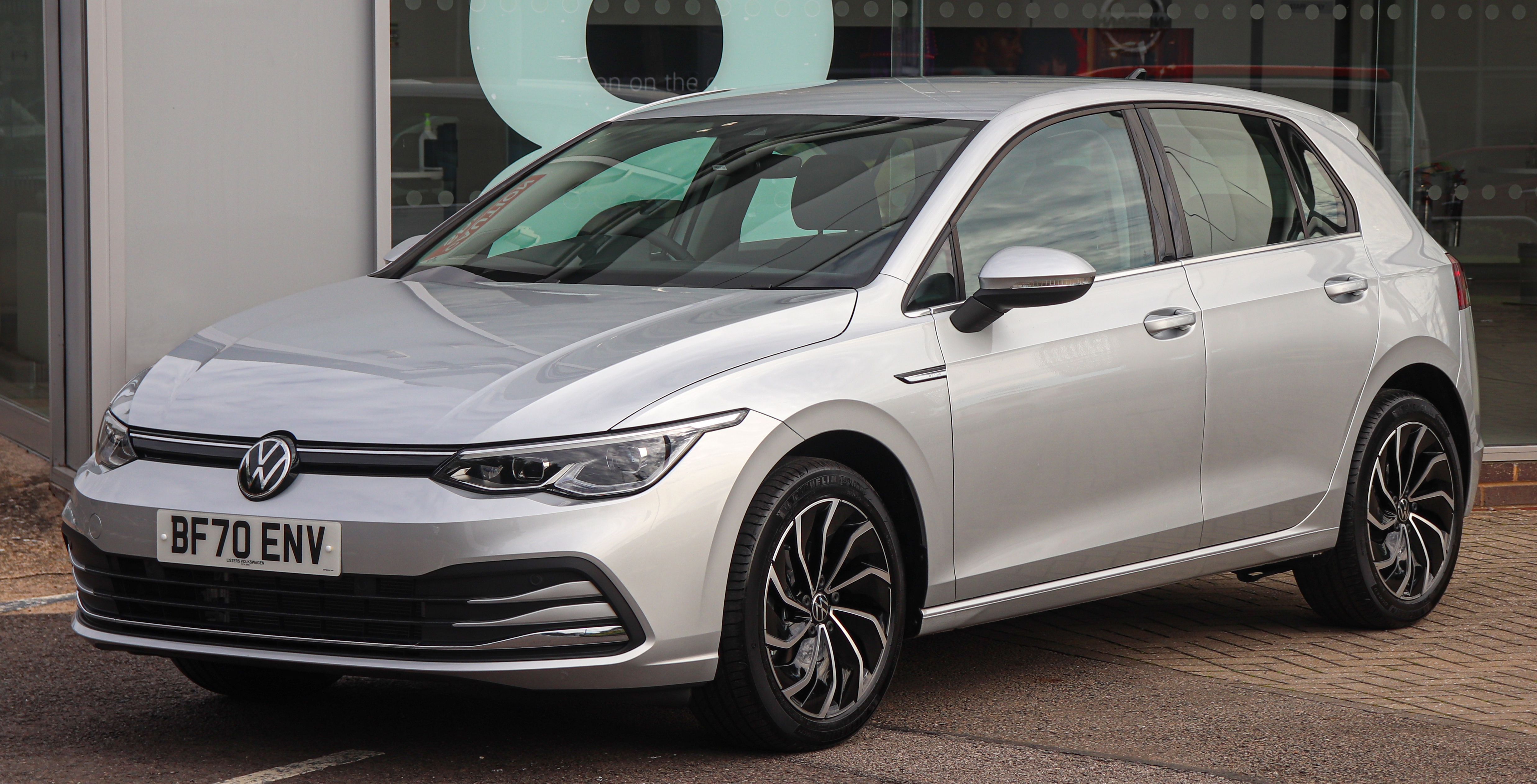
Volkswagen Golf
"He's been following the channel since he was 23 in the market for his Volkswagen Golf in 2014. But now Michael is 35."
The Volkswagen Golf is a popular compact car (often a hatchback). Here it’s just mentioned as the kind of car Michael was looking for years ago.
The Volkswagen Golf is a long-running compact hatchback that’s known for being practical and widely available in many markets. In this segment it’s mentioned as Michael’s prior car—he was shopping for a Golf back in 2014 before moving on to the e-tron topic.
charging curve
"He bought it for pure engineering bravado, specifically its legendary flat 150 kilowatt charging curve. To Michael, all EVs are torquey and fast."
A charging curve is how fast an EV charges over the course of a charging session. If it stays near the top for longer (a “flat” curve), you usually get a quicker, more consistent charge.
A charging curve describes how charging power (kW) changes over time as you plug in. A “flat” high-power curve means the car holds near-peak charging speed longer, which can make real-world charging faster and more predictable.
efficiency
"The real engineering feet is efficiency and charging speed. And like me, he couldn't understand the tanking values of used e-trons."
Charging efficiency (and overall energy efficiency) is how effectively the vehicle converts stored electrical energy into usable driving energy. For EV owners, efficiency affects how far you can go per charge and how much energy you waste during real-world driving and charging.
BMW weekend warrior
"It was supposed to be the seamless silent luxury nanny to his BMW weekend warrior. Instead, a series of high voltage software faults bricked it less than 24 hours after he bought it."
A “weekend warrior” is a car you mostly drive for enjoyment, not as your everyday commuter. Here, the speaker is saying the e-tron was supposed to be the calm, comfortable one, while the BMW is the fun one.
“Weekend warrior” is an enthusiast phrase for a car you mainly use for fun on weekends rather than daily driving. In this context, the speaker contrasts the Audi e-tron’s intended role as a calm “luxury nanny” with a more spirited BMW used for weekend driving.
high voltage software faults
"Instead, a series of high voltage software faults bricked it less than 24 hours after he bought it. That is so that's rough, man."
This means the car’s computer detected a serious problem involving the battery’s high-voltage system. If it can’t guarantee safe operation, the EV may shut down and need the dealer to fix it.
High-voltage software faults are errors detected by the EV’s control systems that involve the battery and high-voltage power electronics. When these faults occur, the car may refuse to operate safely, require a reset, or need dealer reprogramming—especially if the fault triggers a protective shutdown.
bricked
"Instead, a series of high voltage software faults bricked it less than 24 hours after he bought it. That is so that's rough, man."
“Bricked” here means the car got stuck in a broken state where it won’t work properly. With EVs, that can happen when the computer detects a serious issue and locks the car until a shop fixes it.
To “brick” a car means it becomes effectively unusable—often because software or control modules fail in a way that prevents normal operation. In EVs, a bricking event can be tied to safety logic around the high-voltage system, requiring dealer diagnostics and recovery procedures.
high voltage electronics
"they are known to have a host of issues with their high voltage electronics that can result in the battery shorting all 400 volts of its stored electricity through the chassis."
Electric cars have a high-voltage system that runs the power for the drive. If the electronics that control that system fail, it can cause major electrical problems, not just a minor warning light.
In an electric car, the high-voltage electronics manage and control power flow between the battery and the rest of the drivetrain. If these modules fail, they can trigger serious electrical faults that are much harder to diagnose than typical low-voltage issues.
battery shorting all 400 volts
"issues with their high voltage electronics that can result in the battery shorting all 400 volts of its stored electricity through the chassis."
A short is when electricity flows where it shouldn’t. Here, the concern is that the car’s 400-volt battery system could accidentally connect to the car body, which can be dangerous.
A short circuit means electrical current takes an unintended path, bypassing the normal circuit design. In this case, the claim is that the battery’s 400-volt system could short through the chassis, which is a severe safety concern, especially at speed.

Porsche Taycan
"He does say Porsche gets away with it, but just barely. He goes up, you know, Taycan and there's they make some other products, too."
The Porsche Taycan is Porsche’s electric car. The host mentions it as an example of an EV that seems to avoid the same kind of problems—at least in their view.
The Porsche Taycan is Porsche’s electric performance sedan, and it’s brought up as a counterpoint in the discussion. The speaker claims Porsche “gets away with it, but just barely,” implying fewer or less severe high-voltage fault issues than the e-tron being criticized.
software defined vehicles
"But software defined vehicles, Michael writes, raised the stakes so high that it could literally mean your life."
Some modern cars are controlled a lot by software instead of separate hardware parts. That can mean repairs and troubleshooting are more complicated if something goes wrong.
A software-defined vehicle relies heavily on software for functions that used to be handled by dedicated hardware. That can make updates and diagnostics more complex, and failures may be harder to trace when the system is distributed across many electronic control units.
disposable black boxes
"We're told they're the future and they've become disposable black boxes of mystery to their owners, dealerships and apparently the companies that build them."
The idea is that the car becomes hard to understand and fix. Instead of being something you can diagnose and repair step-by-step, it can feel like you just swap the whole system.
This describes a perception that modern cars—especially complex EVs—are difficult for owners and even some service departments to understand internally. When systems are tightly integrated and heavily software-driven, the car can feel like an opaque unit that’s replaced rather than repaired.
checklist
"My understanding is it's a checklist provided by the manufacturer of things [2140.6s] to look at to check for those things. [2142.6s] And those are all well and good, but it doesn't mean that it's not prone"
Here, “checklist” means the official list of things a car has to be checked for before it can be called certified. If something on the list isn’t right, it may need to be fixed or replaced first. Passing the checklist doesn’t mean the car is guaranteed to be problem-free forever.
In the CPO context, a checklist is the manufacturer-defined inspection and reconditioning list that the car must pass to be certified. It typically covers condition items and wear components, and it may require specific repairs or replacements before certification is granted. Even if a car passes the checklist, it can still fail later due to normal wear or issues that weren’t present at inspection time.
CPO
"When I bought my GTS, it was CPO, but the sales department took it [2155.2s] to the service department and bought the CPO. [2158.2s] Money changed hands from department to department."
CPO means “Certified Pre-Owned.” It’s a used car that gets inspected and approved under a program, usually with extra coverage compared to a regular used car. It doesn’t guarantee the car will never need repairs later, but it does mean it met the program’s checklist at the time.
CPO stands for Certified Pre-Owned. It’s a program where a dealer (often with the manufacturer’s rules) inspects a used car and then backs it with additional coverage or certification requirements. The key point is that “certified” usually means the car passed a specific inspection checklist at the time of certification—not that it can’t develop issues later.

Volkswagen Jetta
"I've bought a CPO car before. [2199.9s] It was a 2009 Jetta five cylinder car. [2203.3s] Really? And I worked at the dealer when I worked at the dealer there."
The host is talking about a 2009 Volkswagen Jetta that had a five-cylinder engine. They’re using it as an example of a CPO purchase and what they noticed when the warranty period ended. The main takeaway is about how coverage timing can matter after you buy a certified used car.
The Volkswagen Jetta is a compact sedan, and the host specifically mentions a 2009 Jetta with a five-cylinder engine. That’s notable because the five-cylinder layout is less common than four-cylinder engines in this class, and it can affect how the car feels and how it’s maintained. Here it’s used as a personal example of buying a CPO car and what happened around the end of warranty coverage.
warranty
"And right as the warranty ran out, the factory warranty within what happened"
A warranty is the coverage that helps pay for certain repairs for a limited time. The host is saying that once the warranty period ends, you may start paying for repairs yourself. Even a certified car can still need work after coverage runs out.
Warranty here refers to the factory coverage period that protects the buyer from certain repair costs for a set time or mileage. The host’s point is that issues or costs can show up right after the warranty ends, even if the car was previously certified. In other words, certification and warranty are related, but they’re not the same thing.
ABS module
"within like 300 miles or so, ABS module failed. And in that car, the ABS module, it's like a second brain to the car."
ABS is the system that helps you stop without the wheels locking up. The ABS module is the computer that controls it—if that computer fails, the car may warn you and braking behavior can get weird.
The ABS module is the electronic control unit that runs the anti-lock braking system. When it fails, the car can lose anti-lock braking and related stability functions, which is why multiple warning lights can appear at once.
brake master cylinder
"It wasn't because the part itself was very expensive. It was because where it was located was down beneath the brake master cylinder."
The brake master cylinder is the part that turns your brake pedal push into hydraulic pressure that makes the brakes work. If another component sits under it, repairs can become much more labor-intensive.
The brake master cylinder is the hydraulic component that converts pedal force into brake fluid pressure for the braking system. In this case, the ABS module is located beneath it, so replacing the module requires removing and reinstalling major brake components.
reblead the brakes
"And then you had to put the brake master cylinder back on, reblead the brakes, do all that."
When you open the brake system, air can get in the lines. Rebleeding pushes that air out so the brakes feel firm and work correctly.
Rebleeding the brakes means removing air from the brake hydraulic system after opening it. Air in the lines can cause a spongy pedal and reduced braking effectiveness, so bleeding is a required step after brake-related work.

Mazda three
"So we traded it and got a Mazda three instead, which was fine."
A Mazda3 is a small, everyday car from Mazda. Here, they’re saying they ended up buying one instead of the original car because the original option was too expensive.
The Mazda3 is Mazda’s compact car line, typically offered with efficient engines and available manual or automatic transmissions depending on year/market. In this segment, the host mentions switching to a Mazda3 as a practical alternative after a deal didn’t make sense.
controller area network
"So much of their code is locked down behind proprietary can bus systems. So the controller area network and firewalls."
Modern cars have lots of computers, and they need a way to communicate. CAN is the car’s internal “data network,” and the host is saying it can make it harder to diagnose or verify safety without the right access tools.
A controller area network (CAN) is the wiring-and-protocol system modern cars use to let different computers (engine, brakes, body electronics) talk to each other. The point here is that many functions are controlled through these networks, so independent inspection and repairs can be harder.
firewalls
"So the controller area network and firewalls. You can't just go kicking the tires anymore is what Michael's Michael's point is."
A firewall is a security feature that blocks unauthorized access. In a car, it helps prevent random tools or people from getting into the car’s computer systems to check or change things.
In automotive terms, firewalls are security barriers that restrict which devices or software can access a car’s internal networks and control modules. The host is using them to argue that some safety-relevant systems can’t be easily checked or bypassed by typical buyers or shops.
kicking the tires
"So the controller area network and firewalls. You can't just go kicking the tires anymore is what Michael's Michael's point is."
“Kicking the tires” is an idiom, but in this context it’s used to mean the old-school practice of doing a quick physical inspection to judge a used car. The host argues that modern cars’ locked-down electronics and network security make that approach less reliable for verifying safety.
inline five
"He's got a list here, including a 2.5 liter golf from 2012. That inline five, he says it."
An inline five is an engine with five cylinders lined up in one row. Here it’s mentioned as the type of engine in a specific car the host references.
An inline five is an engine layout with five cylinders arranged in a single line. The host mentions a “2.5 liter golf from 2012” and then calls out an inline five, using it to connect to his own past engine experience.

09 BMW 128 I
"He's still got this 09 BMW 128 I, the last of the Mohicans and 52 naturally aspirated straight six with a six speed manual and hydraulic steering is currently rebuilding the suspension on that..."
This is a BMW 1 Series from the late 2000s, specifically the 128i. The host likes it because it’s an older-style, more engaging setup—naturally aspirated engine, manual transmission, and hydraulic steering.
The BMW 128i (E82/E88 1 Series) is known for its naturally aspirated inline-six engine and driver-focused feel, especially in manual form. Here, the host calls out a 2009 BMW 128i as a “last of the Mohicans” example and mentions it has a 6-speed manual and hydraulic steering.
naturally aspirated
"He's still got this 09 BMW 128 I, the last of the Mohicans and 52 naturally aspirated straight six with a six speed manual..."
Naturally aspirated means the engine doesn’t use a turbo or supercharger to force air in. It’s the traditional way of making power, and the host is saying he prefers that feel.
Naturally aspirated engines make power without a turbocharger or supercharger, relying on atmospheric pressure and engine design to pull in air. The host contrasts this “old-school” character with modern forced-induction approaches by praising the naturally aspirated straight-six in the BMW 128i.
130 I manifold
"...rebuilding the suspension on that while a 130 I manifold and exhaust await his free weekends in his garage."
The exhaust manifold is the first part of the exhaust system right after the engine. Swapping to a different manifold can change how easily exhaust flows out, which can affect sound and sometimes performance.
An exhaust manifold is the part that collects exhaust gases from the engine’s cylinders and routes them toward the exhaust system. The host’s mention of a “130i manifold” suggests an upgrade or swap to change exhaust flow characteristics on the BMW 128i project car.

Protege Mazda Protege
"What else? He had a Mazda protégé, Dodge Dakota V6. So you've been buying cars for their engines, especially."
The Mazda Protegé is a compact car. In the podcast, it’s mentioned because someone owned one and is talking about what they looked for in cars. It’s part of a list of vehicles they’ve had.
The Mazda Protegé is a compact car that the podcast mentions as part of someone’s past ownership, alongside other vehicles. The context suggests they’re discussing buying cars for their engines and overall driving experience. It comes up because it represents a practical, mainstream choice in a lineup of enthusiast-leaning cars.
Mazda Protegé
"He had a Mazda protégé, Dodge Dakota V6. So you've been buying cars for their engines, especially."
The Mazda Protegé is a Mazda compact car model. They’re just name-checking it while talking about how they used to pick cars based on the engine.
The Mazda Protegé was a compact car line from Mazda that many buyers chose for its practical, everyday use. In this segment, it’s mentioned as part of a history of buying cars for their engines.

Dodge Dakota
"He had a Mazda protégé, Dodge Dakota V6. So you've been buying cars for their engines, especially."
The Dodge Dakota is a pickup truck. Here they mention one with a V6 engine while talking about how they used to buy cars for the engine.
The Dodge Dakota is a midsize pickup truck, and this segment specifically references a Dakota with a V6. They’re using it as an example of choosing vehicles based on engine character and sound.

Jeep Cherokee
"Oh, that Jeep Cherokee had the four liter straight six. Four liter, he talks about being able to hear it, know that sound anywhere... And then they, at one point, we also had a different XJ."
The Jeep Cherokee is a long-running Jeep model that’s especially popular with people who like off-road driving. Here, they’re talking about a Cherokee with a straight-six engine and an older Cherokee (the XJ) that their dad modified for four-wheel drive.
The Jeep Cherokee is known for its straight-six engines and its long-running XJ generation, which became a popular platform for off-road builds. In this segment, they’re specifically talking about a four-liter straight-six Cherokee and later an XJ that was converted to four-wheel drive.
straight six
"Oh, that Jeep Cherokee had the four liter straight six. Four liter, he talks about being able to hear it, know that sound anywhere."
A straight-six is an engine with six cylinders lined up in a row. Because of how it fires, it tends to sound unique, so people can sometimes recognize it just by listening.
A straight-six (inline-six) is an engine layout where six cylinders are arranged in a single line. It’s often praised for smoothness and a distinctive sound, which is why the host describes recognizing the engine by ear.
lifted six inch lift
"He rebuilt into a 4.6. It was a lifted six inch lift. It was a cool Jeep."
A “lift” raises the truck or SUV higher from the ground. A six-inch lift is a big change that helps with off-road obstacles and usually allows bigger tires.
A six-inch lift is a suspension modification that raises the vehicle’s body higher off the ground, typically to fit larger tires and improve off-road clearance. In this segment, it’s paired with a rebuilt engine, describing a more serious, rugged setup.
four wheel drive
"And it was a two wheel drive that my dad converted into a four wheel drive. But it was also that four liter Cherokee."
Four-wheel drive lets power go to all four wheels, which helps the car grip better on slippery or rough ground. Converting from two-wheel drive to four-wheel drive usually requires more than a simple fix.
Four-wheel drive (4WD) means the vehicle can send power to all four wheels, improving traction on loose surfaces like dirt, snow, or rocks. Converting a two-wheel-drive Jeep to 4WD is a major drivetrain change, not just a simple adjustment.
starter motor
"So that, that sound is, it's a very particular sound for the starter motor. Like everything, I can pick that out from a crowd."
The starter motor is the part that helps your car start by turning the engine over. It makes a recognizable sound when you first start the car.
The starter motor is the electric motor that cranks the engine to get it running. Its sound is distinct because it’s designed to spin the engine quickly for a short time, then disengage once the engine starts.
miles
"They sold it with like a hundred and or 260,000 miles on it or something. My, my brother had one that was in the well over 250 K."
Miles tell you how much a car has been driven. More miles usually means more wear, but maintenance matters a lot.
Mileage is a measure of how far a vehicle has been driven over time. In used-car discussions, higher mileage often correlates with more wear, but some drivetrains can still be durable if they were maintained well.

E-tron
"With the E-tron now dead to Michael, he needs a daily to lock out brutal city traffic noise and absorb the gnarly tire shredding alleyway of potholes in Santa Monica."
The Audi e-tron is an electric SUV. Here, they’re talking about it as a practical daily car—quiet in traffic and able to handle bad roads.
Audi’s e-tron is an all-electric SUV line where the “starter” conversation is replaced by electric drive systems and different noise sources. In this segment, the host is talking about using an e-tron as a daily driver to manage city noise and rough roads.
potholes
"…absorb the gnarly tire shredding alleyway of potholes in Santa Monica."
Potholes are road surface failures that can hit tires and suspension hard. They’re especially relevant when discussing tire wear and ride quality, because repeated impacts can damage tires and stress undercarriage components.
wheelbase
"Stance, a wheelbase of around 110 inches. Don't think any of my choices."
Wheelbase is the distance between the front and rear wheels. A longer wheelbase usually helps with stability and can make the cabin feel roomier.
Wheelbase is the distance between a car’s front and rear axles. It strongly affects ride comfort, stability, and how much interior space the vehicle can package—so it’s a key constraint when choosing a daily driver or family hauler.
asymmetrical secondary cowl hood
"He detests the asymmetrical secondary cowl hood or the hat that designers slap [2507.1s] over the center infotainment street screens to block the glare."
This is a fancy hood shape where the front part of the hood near the windshield isn’t perfectly even. Some designers do it to look more aggressive, but some people think it makes the front end look cluttered.
An asymmetrical secondary cowl hood is a hood design detail where the “cowl” area (the raised section at the base of the hood near the windshield) is shaped in an uneven way, often creating a second visual “layer” or contour. Enthusiasts may dislike it because it can look busy or break the car’s visual symmetry.
infotainment street screens
"He detests the asymmetrical secondary cowl hood or the hat that designers slap [2507.1s] over the center infotainment street screens to block the glare."
These are the car’s built-in touchscreens for things like maps and music. If sunlight reflects off them, designers may add a cover to reduce glare so you can see the screen better.
“Infotainment screens” are the digital displays used for navigation, media, phone integration, and vehicle settings. The “center” placement can cause glare in sunlight, so some designers add a hood-like cover to shade the screen and improve visibility.

Toyota Land Cruiser
"All the double binnacle layouts eliminating a massive chunk of Toyota [2538.3s] Lexus and Honda Acura models, LC 200 Land Cruisers are overpriced."
The LC 200 is the Toyota Land Cruiser 200 series, a big, rugged SUV. The speaker is saying they think this particular Land Cruiser generation costs too much compared with what they want.
“LC 200” is shorthand for the Toyota Land Cruiser 200 series, a long-running full-size SUV platform known for strong off-road capability and durability. Here it’s mentioned as being “overpriced,” with the speaker tying that judgment to their broader dislikes about modern dashboard/packaging and design trends.
Genesis models
"LC 200 Land Cruisers are overpriced. [2542.6s] Genesis models feel trendy rather than timeless and he can't get past Hawkeye [2546.6s] headlights on the Subaru Outback 3.6."
Genesis is Hyundai’s luxury car brand. The speaker is saying their designs look more like short-term trends than classic styling that stays attractive for years.
Genesis is Hyundai’s luxury brand, and the speaker is judging its design direction. In this segment, they say Genesis models feel “trendy rather than timeless,” meaning they think the styling will age less gracefully than more classic design cues.

Subaru Outback 3.6
"Genesis models feel trendy rather than timeless and he can't get past Hawkeye [2546.6s] headlights on the Subaru Outback 3.6."
This is a Subaru Outback with a 3.6-liter engine. The host is complaining about the headlight design they call “Hawkeye,” saying it doesn’t look right to them.
The Subaru Outback 3.6 is an Outback variant equipped with a 3.6-liter engine. The speaker specifically criticizes the “Hawkeye headlights,” referring to a particular Outback/Legacy-era headlight design style that they find visually off-putting.

Porsche Cayenne
"The first one he's got is the second gen Porsche Cayenne with the VR six."
This is a Porsche SUV called the Cayenne. The host is talking about a VR6 engine, which is a special engine shape that’s more compact than a typical V6. That compact design can change how the car feels and how it handles bumps and potholes.
The Porsche Cayenne is Porsche’s SUV, and this segment specifically calls out the second-generation Cayenne’s VR6 engine. A VR6 is a compact V-style design that lets the engine fit in a narrower space than a traditional wide-angle V6, which affects how the engine mounts and how it behaves in real-world driving.
VR six
"The first one he's got is the second gen Porsche Cayenne with the VR six."
A VR6 is a type of V6 engine that’s built to be more compact. Instead of the two sides of the engine being spread wide, they’re closer together, which helps the engine fit in the car. Because of that, the way the engine is mounted can affect how well the car isolates vibration.
A VR6 (often written “VR six”) is an engine design where two cylinder banks are set at a narrow angle, so it’s physically closer to an inline engine than a wide V6. That compact packaging can improve fitment in the engine bay, but it also influences how the engine is mounted and how vibration isolation is tuned.

BMW X5
"Same concern for the F 15 BMW X five."
The BMW X5 is a luxury SUV from BMW. The discussion here is about whether the ride will feel too stiff or too tightly controlled on bad city roads with potholes.
The BMW X5 is BMW’s midsize luxury SUV, and the host is comparing it to another BMW choice for city potholes. In this context, they’re talking about suspension/ride isolation concerns, which matter a lot on rough urban roads.

Ford Expedition XL
"But just to give you a frame of reference, the Expedition XL that I used to have was approximately 120 inch wheelbase."
The Ford Expedition is a large SUV. The host is using their old one as a size reference, talking about how long it was and how that affects ride and fit in city driving.
The Ford Expedition is a full-size SUV, and the host is using their former “Expedition XL” as a reference point for size. They’re specifically comparing wheelbase and rear overhang to other cars, which helps explain how different lengths can feel in city driving.

Cayman
"And again, for reference, you know, the Cayman is 97.2."
The Porsche Cayman is a sports car. The host is comparing its size (wheelbase) to other vehicles so you can picture how long each car is.
The Porsche Cayman is a mid-engine sports car, and the host is using its wheelbase as a comparison dimension. In this segment, the point is to give listeners a “frame of reference” for how short or long different cars are, which influences ride and packaging.

Volvo V60
"It's pretty decent. He also lists the second gen Volvo V 60, the I four single turbo, right size, great seats, but will it the uninspiring four cylinder powertrain leave me totally cold?"
The Volvo V60 is a wagon-style car, meaning it has extra space behind the seats. The podcast is talking about a newer version with a turbocharged four-cylinder engine. They’re wondering if that engine makes the car feel exciting or not.
The Volvo V60 is a wagon (estate) that’s aimed at buyers who want more cargo space than a sedan while keeping a comfortable, refined ride. The podcast mentions the second generation V60 with an I4 single turbo and questions whether the four-cylinder powertrain feels uninspiring. It’s discussed because the V60’s appeal often comes down to whether it balances practicality with engaging driving.
I four single turbo
"He also lists the second gen Volvo V 60, the I four single turbo, right size, great seats,"
“I4” is a four-cylinder engine where the cylinders are lined up in a row. “Single turbo” means the engine uses one turbocharger to help it make more power than a non-turbo version.
“I4” means an inline-four-cylinder engine, where all four cylinders are arranged in a single line. “Single turbo” means there’s one turbocharger feeding the engine, rather than multiple turbos, which typically simplifies packaging and can make power delivery feel more straightforward.

Jeep Grand Cherokee WK two Summit 5.7
"He lists the grand Cherokee WK two summit 5.7. Didn't you have this exact car? I did with the 5.7 liter and I wanted the Hemi."
The Jeep Grand Cherokee WK2 is a larger SUV with a more upscale trim level. “5.7” here means it has a big V8 engine, and the host says they bought one and had a not-so-great experience with it.
The Jeep Grand Cherokee WK2 is a mid-size luxury-oriented SUV, and the “Summit 5.7” refers to the higher trim with a 5.7-liter V8. In this segment, the host focuses on the specific engine choice (the 5.7 Hemi) and how their ownership experience didn’t go well after buying it in 2015.
Hemi
"I did with the 5.7 liter and I wanted the Hemi. I got it in 2015 when I moved to Park City."
“Hemi” is a nickname for a certain type of V8 engine design used by Chrysler. In plain terms, it’s the engine people want when they’re looking for that bigger, punchier V8 feel.
“Hemi” refers to Chrysler’s hemispherical combustion-chamber engine design, associated with the brand’s V8s (commonly the 5.7-liter and 6.4-liter variants). The term is used as shorthand for that engine family and its characteristic performance and sound.

Volvo XC 70
"2011 Volvo XC 70 car play retrofit or a Yamaha powered V eight XC 90."
The Volvo XC 70 is a wagon-style Volvo that’s built for everyday driving and bad weather. The host is talking about adding modern tech (CarPlay) to an older version of the car.
The Volvo XC 70 is a wagon-based crossover from Volvo, known for combining family-friendly practicality with all-weather capability. Here it’s specifically mentioned in the context of a “CarPlay retrofit,” meaning the speaker is discussing updating the infotainment system on an older Volvo.

Volvo XC 90
"2011 Volvo XC 70 car play retrofit or a Yamaha powered V eight XC 90. Love the engines, but the older platforms risk stealing precious"
The Volvo XC 90 is Volvo’s bigger SUV, often chosen by families because it has more space. The host is comparing it to another Volvo and talking about engine/tech choices and how that affects day-to-day ownership.
The Volvo XC 90 is Volvo’s larger three-row SUV, designed for family use with a more premium feel than smaller Volvos. In this segment, it’s mentioned alongside a “Yamaha powered V eight,” pointing to a higher-end engine option and the tradeoff between newer tech and older-platform complexity.
car play retrofit
"2011 Volvo XC 70 car play retrofit or a Yamaha powered V eight XC 90."
A “CarPlay retrofit” means adding Apple CarPlay to a car that didn’t have it from the factory. After the upgrade, you can connect your phone and use apps like maps and music on the car’s display.
A “CarPlay retrofit” is an aftermarket or conversion job that adds Apple CarPlay functionality to a car that didn’t originally come with it. It typically involves integrating compatible hardware and software so you can use your phone’s navigation, music, and calls through the car’s screen.
older platforms
"Love the engines, but the older platforms risk stealing precious wrenching time away from his one to 28 I projects."
“Platform” means the car’s underlying design and engineering base. The host is saying that older designs can be more of a hassle to deal with, so they take time away from other things you want to work on.
“Platform” here means the underlying vehicle architecture—shared engineering foundations like suspension layout, electronics, and how systems are packaged. The host’s point is that older platforms can be more time-consuming to maintain or work on, which can “steal” time from other projects.

Jaguar XF sport break
"Or the Jaguar XF sport break. I like that sport."
This is a Jaguar XF, and “Sportbrake” is Jaguar’s wagon version of that car. The host is saying it looks great and is uncommon, so it feels special compared with more common choices.
The Jaguar XF is a mid-size luxury sedan platform that also came in a wagon-style body called the XF Sportbrake. In this segment, the host calls it a rare, good-looking option, framing it as an enthusiast-friendly “old school” alternative.
timing chain tensioners
"The LR four is the ultimate box. The plastic coolant pipes and timing chain tensioners are a siren song,"
A timing chain tensioner is a small mechanism that keeps the timing chain properly tight. If it’s not working right, the engine timing can get off, and that can lead to expensive problems.
Timing chain tensioners are parts that keep the engine’s timing chain tight so the camshafts and crankshaft stay synchronized. If they wear or fail, timing can drift, which can cause rough running or even serious engine damage.
plastic coolant pipes
"The LR four is the ultimate box. The plastic coolant pipes and timing chain tensioners are a siren song,"
Plastic coolant pipes are the hoses/lines that carry engine coolant through the cooling system. On some engines, these plastic components can become brittle or crack with age/heat cycles, leading to coolant leaks and overheating risk.
aluminum cross pipes
"but I can convince myself that I can fix them with aluminum cross pipes. But again, we can fix her again."
These are replacement coolant lines made from aluminum instead of plastic. The idea is that metal parts tend to handle heat better and may last longer, reducing the chance of leaks.
Aluminum cross pipes are an aftermarket or upgraded replacement for certain coolant plumbing routes, intended to be more durable than the original plastic parts. The host is suggesting a fix strategy: replace the failure-prone sections with metal to reduce leak risk.

Gx460
"If that's if that's the goal, I think that's the wrong choice to Lexus GX 460. But of a Saudi prince for a guy who never goes off road."
The Lexus GX 460 is a rugged luxury SUV that’s built to handle rough terrain. The host is basically saying it might be the wrong choice if the buyer never uses that off-road advantage.
The Lexus GX 460 is a body-on-frame luxury SUV known for its off-road capability and strong, truck-like durability. Here it’s used as a comparison point for someone who doesn’t actually go off road, questioning whether the GX’s “capability” matches their real needs.
Cadillac CTS sport wagon, non V
"And also the Cadillac CTS sport wagon, non V. And the Buick Regal Tour X love the wagon shapes,"
This is the wagon version of the Cadillac CTS. “Non-V” means it’s not the top, more powerful V model—so it’s the regular version rather than the performance-focused one.
The Cadillac CTS Sport Wagon is the wagon version of the CTS, aimed at buyers who wanted a practical body with luxury and performance. “Non-V” indicates it’s not the higher-performance V-Series variant, which typically means a less extreme engine/tuning package.

Buick Regal Tour X
"And the Buick Regal Tour X love the wagon shapes, but GM interior plastics are usually a deal breaker."
The Buick Regal Tour X is a wagon version of the Regal. The host likes the wagon shape, but they’re wary because they think some GM interiors use plastics that don’t feel or hold up as well.
The Buick Regal Tour X is a wagon variant of the Regal line, built for buyers who want wagon practicality with a more upscale feel. The host notes that the Tour X is interesting, but they’re concerned about GM interior plastics—suggesting perceived durability/feel issues inside the cabin.
GM interior plastics
"but GM interior plastics are usually a deal breaker. The Tour X has him curious, though."
This is about the plastic parts inside the car—like trim and the dashboard. The host is saying they don’t like how those plastics typically feel or age in GM cars.
“Interior plastics” refers to the dashboard/trim materials used inside the cabin. The host uses it as a shorthand for a common ownership concern: some GM-era interiors can feel cheap or age poorly compared with higher-end materials.
great engine
"So just to quickly recap, spend less, but he's trying to buy a car with a great engine, a notable engine."
They’re saying the buyer wants a car with a really good engine. It’s more of a preference than a specific technical part being discussed here.
In this context, “great engine” is a buyer preference rather than a specific technical term. The host is setting up a recap that the shopper wants strong power/engineering, but the segment doesn’t name the engine family.
bottomed out in the market
"What if Michael, by something older that has entirely bottomed out in the market, possesses massive mechanical character, won't leave him stranded, has a tired interior, though, like a Mercedes W 163 ML 500."
This phrase means the car is at a low point in resale price. So it’s cheaper to buy now than it used to be.
“Bottomed out in the market” means the car’s resale prices have fallen to their lowest point, usually because it’s older and demand is limited. In buying terms, that can make an older model cheaper to acquire than when it was newer.

Mercedes W 163 ML 500
"What if Michael, by something older that has entirely bottomed out in the market, possesses massive mechanical character, won't leave him stranded, has a tired interior, though, like a Mercedes W 163 ML 500."
This is a Mercedes-Benz SUV from the late 1990s era. The ML 500 is the V8 version, and the point here is that it feels more “mechanical” and characterful than newer, more modern-looking SUVs—though the inside may feel dated.
The Mercedes-Benz ML 500 (W 163) is an early-generation M-Class SUV known for its V8 power and boxy, late-1990s styling. In this segment, the host uses it as an example of an older SUV that still has “massive mechanical character,” even if the interior feels tired.

ML-Class M Class
"...terior, though, like a Mercedes W 163 ML 500. The M class, the SUV first introduced, I saw it on screen in ..."
The ML-Class is a Mercedes SUV. The podcast mentions a specific older version, the W163 ML 500. It comes up because they’re talking about a particular SUV they saw or discussed.
The Mercedes-Benz ML-Class is a midsize luxury SUV, and the podcast specifically references a W163 ML 500. That points to an older generation and a particular engine/trim combination. It’s discussed because the ML-Class is often remembered for its SUV practicality and the experience of driving older Mercedes models.

G-Class G Wagon
"... Jurassic Park and beside, I mean, SUV beside the G wagon, but it was sort of like an SUV from Mercedes."
The G-Class is a Mercedes SUV with a very recognizable, boxy shape. The podcast is using it as a comparison point to describe what kind of SUV it is. It’s brought up because it’s a well-known model.
The Mercedes-Benz G-Class (often called the G-Wagon) is a boxy, body-on-frame SUV known for its rugged design and off-road heritage. The podcast compares it to another SUV and describes it as an SUV from Mercedes, indicating they’re using it as a recognizable reference point. It’s mentioned because the G-Class has a distinct identity that stands out in any vehicle lineup.
Lexus Gx Lexus
"...ddy had one and he traded it really quickly for a GX Lexus. He didn't treat him very well."
The Lexus GX is a luxury SUV. The podcast mentions it in a personal ownership story about someone who had one and then changed to another GX. It’s included because it’s a common type of SUV people consider for comfort and capability.
The Lexus GX is a midsize luxury SUV known for a more traditional, rugged approach compared with many other luxury SUVs. The podcast mentions someone who had one and then traded it quickly for a GX, also noting they “didn’t treat him very well,” which suggests a personal ownership story. It comes up because the GX is often discussed as a durable, capable luxury SUV choice.
V8
"So the ML 500 is the one with the V8, not the ML 320 with the sixth center."
A V8 is an engine with eight cylinders. It’s often associated with stronger, smoother power, and here it’s used to say the ML 500 is the V8 model.
A V8 is an engine with eight cylinders arranged in a “V” shape. In this segment, the host uses “V8” to distinguish the Mercedes ML 500 from the ML 320, implying the V8 version has a different feel and character.
ML 500
"down to the $30,000 cap and hand an ML 500 over to a custom upholstery shop [2835.3s] to completely transform the cabin into a pristine, bespoke, luxury leather"
The Mercedes-Benz ML 500 is a luxury SUV. Here, it’s being used as the starting car that someone would pay to have the inside redone with high-end leather.
The Mercedes-Benz ML 500 is a mid-size luxury SUV from the Mercedes-Benz M-Class (ML) lineup, known for its comfortable ride and V8 power in many years. In this segment, it’s mentioned as the base vehicle someone would hand to a custom upholstery shop to refit the interior.
$30,000 cap
"takes the massive chunk of remaining budget left [2829.4s] down to the $30,000 cap and hand an ML 500 over to a custom upholstery shop"
A “$30,000 cap” just means there’s a hard budget limit. The idea is to keep the whole plan under that amount.
An “out-the-door” style budget cap is a shopper constraint that limits what total spending is allowed for the project or purchase. Here, the host frames the plan around keeping the build under $30,000.
wrenching time
"taking away [2847.3s] wrenching time from your 128 I, I think that idea is going to do that every single weekend."
“Wrenching time” means working on your car—like fixing things or doing upgrades yourself. The point here is that the plan would turn into a weekend project instead of just driving.
“Wrenching time” is enthusiast slang for time spent working on your car yourself—diagnosing issues, doing maintenance, or making modifications. In this segment, it’s used to argue that a project idea will steal time from regular driving.
software defined madness
"or does he build a custom retro insulated [2883.5s] oasis to escape the software defined madness?"
This is a joking phrase about cars where a lot of how they work is controlled by software. The speaker is basically saying it can feel chaotic compared with older, more straightforward cars.
“Software-defined” refers to modern cars where key functions are controlled by software (often via updates, settings, and electronic control units). The phrase “software defined madness” is a humorous way to criticize how that can feel complicated, changeable, or unpredictable compared with simpler mechanical cars.
retro insulated oasis
"or does he build a custom retro insulated [2883.5s] oasis to escape the software defined madness?"
They’re talking about customizing the car’s interior to feel quieter and more comfortable, with an old-school style. The “insulated” part means adding sound-deadening/thermal insulation so it feels more peaceful inside.
A “retro insulated oasis” here describes a custom interior build that uses insulation to reduce noise and improve comfort, while aiming for a classic/old-school vibe (“retro”). It’s not a standard factory term—more a description of a tailored cabin transformation.
Santa Monica
"The things that are on my mind are Santa Monica, [2895.9s] massive mechanical character and potholes, all for under $30,000."
Santa Monica is a city in California. The speaker is using it as an example of where you’ll drive, and they’re pointing out that the roads can be rough (potholes), which affects car choice.
Santa Monica is a coastal city in California, and it’s mentioned as part of the host’s real-world driving context. The segment ties it to “massive mechanical character and potholes,” implying local road conditions influence what kind of car makes sense.
Jaguar shooting break
"I just want to show the Jaguar shooting break because I think it's it's a great looking car."
It’s a Jaguar wagon with a more stylish, coupe-like shape. People call it a “shooting break” because it looks more like a sporty car than a regular family wagon.
A Jaguar shooting break is a wagon-style body that blends the practicality of a station wagon with the sleeker roofline of a coupe. The “shooting break” look is part of why it stands out—long hood, low-ish stance, and a more stylish rear than a typical estate wagon.

BMW three series wagon
"And that is the BMW three series wagon. OK, you can get those with the M package."
This is the wagon version of the BMW 3 Series. It’s meant to be practical like a station wagon, but with BMW’s sportier feel, and the “M package” adds more performance-oriented styling and features.
The BMW 3 Series wagon is the long-roof, family-friendly version of BMW’s 3 Series, but it’s still built around the brand’s driving dynamics. In this segment, the host also mentions the M package, which typically adds sportier trim and equipment.
M package
"OK, you can get those with the M package. You can get them with a variety of different engines."
BMW’s “M package” is a set of upgrades that makes the car look and feel more like an M car. It can include sportier styling and extra features (and sometimes more performance parts).
The “M package” is an equipment/trim package associated with BMW’s M performance branding. It usually adds sportier styling and sometimes performance-related components, depending on the model year and market.
B 48 and B 58 engines
"I think it is you can get the the B 48 and B 58 engines in them,"
B48 and B58 are BMW’s engine “families,” meaning two different straight-six engine designs. They’re used in different BMW models and power levels, with the B58 typically being the stronger one.
BMW’s B48 and B58 are internal engine family codes used by BMW to identify different powerplants. In general terms, B48 is the smaller “straight-six” option and B58 is the larger, higher-output straight-six used in many performance-oriented BMWs.
six cylinder
"I think the newer ones, though, you might have a harder time, [2981.4s] especially get with the six cylinder versions."
A “six cylinder” engine has six combustion chambers. In this discussion, they’re saying the six-cylinder versions are harder to find than the four-cylinder ones.
“Six cylinder” refers to an engine with six cylinders, which typically means smoother power delivery and more displacement than a four-cylinder. In this context, the host is saying the six-cylinder Supra versions are harder to find (especially under a certain price).
four cylinders
"especially get with the six cylinder versions. [2983.4s] You might have a harder time finding them for under thirty. [2985.8s] But I know the four cylinders you can get all day long."
A “four cylinder” engine has four combustion chambers. The point they’re making is that four-cylinder Supras are more common to buy than the six-cylinder versions.
“Four cylinders” means an engine with four cylinders, usually smaller and lighter than a six-cylinder. Here, the host contrasts availability: they say the four-cylinder Supras are easier to find “all day long,” compared with the six-cylinder versions.
manual
"Still get these in manual in the U.S. Can you not? [2993.8s] I think the early ones you could. [2995.0s] I don't know. I don't remember. [2996.6s] They're hard to find."
A manual transmission is the kind where you use a clutch pedal and a gear shifter yourself. The host is saying manual Supras are hard to find in the U.S.
A “manual” transmission is a driver-operated gearbox where you select gears using a clutch pedal and a shift lever. This segment emphasizes that finding Supras with manual transmission in the U.S. is difficult, especially for certain “early ones” and newer versions.

1998 Aston Martin DB7
"But did you know that you can buy a 1998 Aston Martin DB7 for 30 grand with 13,000 miles on it?"
The Aston Martin DB7 is a classic luxury sports car from the late 1990s. Here, the discussion is about finding a 1998 DB7 with low miles for around $30,000, which sounds like a great deal—but they also raise concerns about whether it’s reliable.
The Aston Martin DB7 is a classic grand tourer from Aston Martin, known for its stylish 1990s-era styling and V12/6-cylinder performance depending on configuration. In this segment, the hosts focus on a “1998 Aston Martin DB7” as an old-school alternative—specifically calling out the unusually low price for the mileage.
clean title
"I'm going to say that that's clean title even. Yeah, clean title. That's amazing."
A “clean title” usually means the car’s paperwork looks normal—no major accident write-off history. It’s a good sign, but you still want to check the car’s condition before buying.
A “clean title” means the car’s ownership paperwork doesn’t show major legal problems like salvage or rebuilt branding. In used-car shopping, it’s a quick signal that the vehicle likely hasn’t had a severe total-loss event, though it doesn’t replace a mechanical inspection.
reliability
"Yeah, clean title. That's amazing. This is where we're at. I'd question reliability on that myself."
Here, “reliability” means how likely the car is to keep working without unexpected problems. With an older luxury car, even a low-mile example can still be expensive if something has aged or wasn’t maintained.
In this context, “reliability” means how consistently the car avoids breakdowns and expensive failures over time. The host is questioning whether a low-mile 1998 Aston Martin DB7 is truly dependable, which is especially important for older luxury cars where parts and labor can be costly.

2006 Bentley Continental GT
"Now we're introducing More Passengers, a 2006 Bentley Continental GT for $30,000 with 60,000 miles on it."
This is a Bentley Continental GT from 2006, which is a luxury “grand touring” car meant for comfortable long drives. The hosts are pointing out that you can sometimes find one for around $30,000 with moderate mileage.
The 2006 Bentley Continental GT is a grand tourer (GT) from Bentley, known for its big, luxury-focused V8/V12-era power and long-distance comfort. In this segment, it’s used as an example of how you can buy a modern-feeling Bentley at a relatively low price point for the brand.
flat plain dash
"Okay. Now the flat plain dash in the Bentley, it's not introduced here, but I just wanted you to see a photo"
They’re talking about the dashboard shape and style. It’s basically describing a dashboard that looks more simple and clean rather than busy or deeply sculpted.
“Flat plain dash” here refers to the Bentley’s dashboard design—an interior styling choice that emphasizes a more straightforward, visually clean layout. The host is using it to describe the look/feel of the cabin shown in the listing photo.
organ pulls
"I mean, with the organ pulls for the air vents and the mechanical, it's it's got mechanical character in spades, my friend."
They’re describing the vent controls as lever-like “pulls.” The idea is that they feel more mechanical and old-school than purely touch or digital controls.
“Organ pulls” is a descriptive nickname for the Bentley interior’s vent controls—lever-style knobs/switches that resemble the pulls you’d find on a pipe organ. The host is pointing out the tactile, mechanical feel of the cabin controls.
mechanical character
"I mean, with the organ pulls for the air vents and the mechanical, it's it's got mechanical character in spades, my friend."
They mean the car’s controls feel physical and “real,” not just digital. The host likes that tactile feel, and thinks it’s more satisfying than flashy controls.
“Mechanical character” is a subjective term for how physical, tactile controls and traditional hardware make an interior feel more engaging. Here it’s contrasted with “shiny buttons and knobs” that can distract you.

Bentley Flying Spur
"Did you know you can buy a 2008 flying spur for $25,000 with, look at this top left corner, 33,000 miles."
The Bentley Flying Spur is a very upscale Bentley sedan. Here they’re saying you can sometimes buy a 2008 one for around $25,000, especially if it has low mileage.
The Bentley Flying Spur is Bentley’s luxury four-door sedan, and the 2008 model is part of the earlier generation of the modern Flying Spur lineup. The hosts highlight a specific buying angle: you can find a 2008 Flying Spur for about $25,000 with relatively low mileage (33,000 miles).

Jaguar Xjr
"Did you know you can buy a 2002 Jaguar XJR, the supercharged V8."
The Jaguar XJR is a performance-focused version of the Jaguar XJ, known for its supercharged V8 and executive-car comfort. In this segment, the host highlights a 2002 Jaguar XJR as a “unicorn,” emphasizing its rarity and desirability as a used buy.
supercharged V8
"Did you know you can buy a 2002 Jaguar XJR, the supercharged V8."
A supercharged V8 uses a forced-induction system (a supercharger) to push more air into the engine, which lets it make more power than a naturally aspirated V8. The “V8” part means eight cylinders arranged in a V shape.
unicorn
"25000 dollars with 20,000 miles. This thing is a unicorn."
In car talk, calling a car a “unicorn” usually means it’s unusually rare or hard to find in the market, often with a specific desirable spec. It’s a shorthand for “this is not common, so it stands out.”
J shifter pattern
"with the J shifter pattern for the automatic and look at the dash."
It’s the pattern on the gear shifter that shows where each gear position sits. Some cars use a J-shaped layout, and it changes how you move the shifter when you’re driving.
A “J shifter pattern” refers to the specific gate layout used on some automatic gear shifters, where the positions for Park/Reverse/Drive are arranged in a J-shaped path. It’s a design detail that affects how quickly you can move the shifter without looking.
flat plane
"Michael, look, it's flat. It's I mean, it's a it's the bubbly Jaguar thing from the early odds. But whatever, it's the flat plane."
“Flat plane” describes how the engine’s crankshaft is shaped. That shape affects how the engine runs—especially how it sounds and how it feels when you rev it.
“Flat plane” here refers to a flat-plane crankshaft design in an engine, which changes how the engine fires and how it sounds and revs. It’s often discussed in performance contexts because it can give a more responsive, higher-revving character than other crank designs.
Change the oil and go
"OK, and it doesn't have the tech that you you detest with 20,000 miles. Change the oil and go."
They mean the car is simple to live with: you do the normal upkeep (like oil changes) and you’re good. It’s a contrast to cars that feel more complicated because of extra tech.
“Change the oil and go” is shorthand for a low-complexity ownership experience—fewer tech-dependent systems and less fuss beyond routine maintenance. The hosts contrast this with modern cars that may require more frequent software/technology attention.
Apple CarPlay
"With car play, starting in 2017, flat IP. And they're faster than they have any rights to be fast."
Apple CarPlay is a way to connect your iPhone to the car so you can use certain apps on the car’s screen. It’s mainly for navigation, music, and calling while you drive.
Apple CarPlay is a smartphone-integration system that mirrors compatible iPhone apps onto the car’s infotainment screen. It lets you use navigation, music, calls, and messages through the car’s controls while keeping your phone’s apps in charge.
Porsche badge
"It's got a Porsche badge on the hood and you will blend. You will be invisible in Santa Monica."
A “Porsche badge” refers to the Porsche branding on the vehicle’s exterior, typically on the hood or grille. In enthusiast talk, it signals the model’s identity and performance heritage even when the car is being discussed in a practical, everyday context.
plummet in value
"But does that suggest, Michael, that all of these EVs are just going to continue [3519.6s] to plummet in value and I think they will."
“Plummet in value” means the car gets cheaper quickly. The hosts are saying EVs may lose value faster than people think, so used prices could fall a lot.
“Plummet in value” refers to rapid depreciation—when a vehicle’s market price drops quickly after purchase or over time. EVs have been especially discussed in recent years because incentives, battery/tech expectations, and changing supply can push resale values down faster than many buyers expect.

Audi e-tron GT
"So at what price would you buy an Audi e-tron GT? [3528.9s] Me personally, I don't know."
The Audi e-tron GT is Audi’s electric sports-style car. The hosts are talking about what it might cost if EV prices keep dropping, especially for used cars.
The Audi e-tron GT is an all-electric grand tourer from Audi, known for its fast EV performance and a sporty, low-slung body style. In this segment, it’s brought up in the context of how EV prices might keep falling, which affects what used buyers might pay.
white goods item
"They're white goods item. [3525.0s] So at what price would you buy an Audi e-tron GT?"
“White goods” is a nickname for everyday home appliances. The point here is that the speaker thinks EVs may be treated more like appliances—so they could get cheaper faster instead of staying expensive.
Calling EVs “white goods” is a comparison to major household appliances (like refrigerators or washing machines). The idea is that, like appliances, they’re treated as commodity products where prices can drop significantly over time rather than holding value like enthusiast cars.

Porsche Macan
"...s kind of what I want you to buy, even though the Macan is probably the right choice. But do not forget, ..."
The Porsche Macan is a luxury SUV made by Porsche. It’s meant to be practical for daily life while still feeling sporty to drive. The podcast mentions it as a good match for what someone wants.
The Porsche Macan is a compact luxury SUV that blends everyday usability with Porsche-like performance and handling. The podcast suggests it as the “right choice,” implying it fits the buyer’s needs better than another option being discussed. It’s brought up because the Macan is a common alternative for people who want Porsche driving feel without a sports car.
W-12s
"But do not forget, my friend, about W-12s for 30 grand. [3573.3s] For no, sorry, 26000 dollars, 25."
A “W-12” is a type of engine with 12 cylinders arranged in a special compact layout. The host is using it to talk about buying a particular kind of car for a certain price.
“W-12” refers to a specific engine configuration where the cylinders are arranged in a W shape, typically using a compact layout with multiple cylinder banks. It’s a specialized way of describing certain high-end performance engines (most famously associated with the Volkswagen Group’s W12 used in some luxury models).

Volkswagen Phaeton
"...he the the cheap big stands, the Maserati and the Phaeton, I like picking a car that I would have picked."
The Volkswagen Phaeton is a large, luxury-style sedan. In the podcast, it’s mentioned as one of the big, high-end cars someone might choose. It’s brought up because it’s a different kind of luxury option than the more common picks.
The Volkswagen Phaeton is a full-size luxury sedan that the podcast mentions alongside other big, expensive cars. The context suggests they’re talking about what someone would pick when choosing a luxury vehicle. It comes up because the Phaeton is a less common choice and represents a “big car” approach to comfort and refinement.
lower trims
"Well, you can get the lower trims for a lot less."
A “trim” is the version of a car with a certain set of features. “Lower trims” usually cost less because they include fewer options.
“Lower trims” are less-equipped versions of the same model, usually with fewer features and a lower price. The host contrasts them with higher trims to explain how you can pay less while still getting into the model line.
supercharger
"True. But you want the supercharger."
A supercharger is a device that forces extra air into the engine. More air helps the engine make more power, which is why someone might prioritize it when shopping.
A supercharger is a forced-induction device that uses a belt-driven compressor to push more air into the engine. More air generally enables more power, which is why the host says you “want the supercharger” even if it means higher mileage.
Griot's Garage
"The reason cars look great on our show comes down to one thing. Griot's Garage, whether you're a meticulous cleaner like me or a quick fumbler like Todd,"
Griot’s Garage makes car cleaning and detailing products. The host is saying their products help make the cars look great, whether you’re careful or just want an easy routine.
Griot’s Garage is a detailing brand known for car-care products like foam cannons, touchless wash tools, and specialty cleaners. The host credits the brand’s products for making it easier to keep cars looking good on the show.
touchless shine
"Griot's Garage products make it easy from foam cannons for a touchless shine"
“Touchless” means you clean the car with chemicals and water pressure instead of rubbing a lot by hand. It’s meant to be easier and gentler on the paint.
“Touchless” detailing refers to cleaning methods that minimize physical contact with the paint, relying on chemicals and water pressure instead. The host uses it to describe an easier way to get a shine without as much scrubbing.
foam cannons
"Griot's Garage products make it easy from foam cannons"
A foam cannon sprays car soap as a foamy layer. It helps lift dirt off the paint before you scrub or wash with a mitt.
A foam cannon is a pressure-wash attachment that mixes soap with water and sprays it as thick foam. It’s used to help loosen dirt before contact washing, which can reduce the chance of scratching.
headlight fixes
"for a touchless shine to headlight fixes, leather care and even tough track day smudges."
“Headlight fixes” are products or steps that make cloudy, yellow headlights look clear again. Clear headlights help you see better at night.
“Headlight fixes” refers to products or processes used to restore degraded headlights, often caused by oxidation and UV damage. Restoring clarity improves night visibility and the car’s appearance.
concourse clean
"Griot's Garage has the right product to keep your car looking concourse clean. Griot's Garage is a family owned company and all of their products are guaranteed."
“Concourse clean” means “show car clean.” It’s the kind of finish you’d expect from a car that’s been detailed to look perfect for a judging event.
“Concourse clean” refers to the extremely polished, show-car level of appearance judged at concours events. It implies careful paint, trim, and surface preparation so the car looks pristine under close inspection.

68 Mustang
"So as he turned turned 16, he developed that addiction as well. He bought his first car for himself was a 68 Mustang with a straight six bought it in 85 one year before he turned 16."
A “68 Mustang” is a 1968 Ford Mustang. It’s a classic American car, and in this case it had a straight-six engine, which is a simpler setup than the more famous V8 Mustangs.
The Ford Mustang is a classic American pony car, and the “68 Mustang” refers to the 1968 model year. In this story it’s specifically described as having a straight-six engine, which is a simpler, more basic layout than the V8 versions most people associate with the Mustang.

Smart for two
"So for the smart for two, he said that on that we're living in Manhattan. Smart for two in Manhattan."
The Smart for two is a very small city car made by Smart. It’s meant for crowded places where parking and maneuvering are tough, like Manhattan.
The Smart for two is a compact city car built by Smart (a Mercedes-Benz–related brand). It’s designed for tight urban driving and parking, which is why it comes up in a “living in Manhattan” scenario.
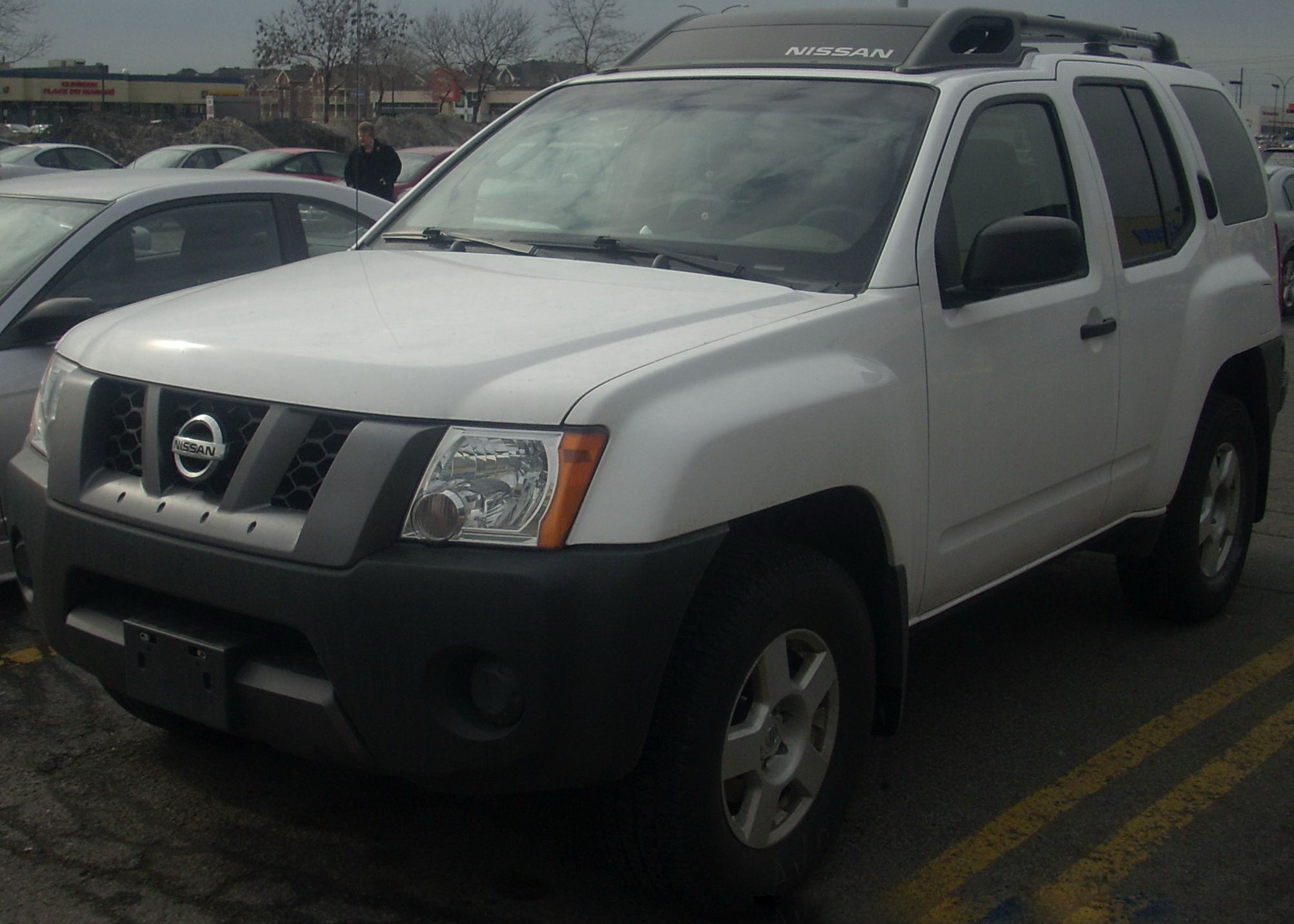
Nissan XTerra
"S.L.K. 230, a 300 ZX manual, 1990 Bronco, Nissan XTERRA, manual BMW Z three, 1984 300 T.D."
The Nissan Xterra is an SUV that’s built to feel more rugged than many regular family crossovers. Here it’s mentioned as one of the cars on a list the person is considering.
The Nissan Xterra is a body-on-frame SUV known for rugged, off-road-capable styling and a more truck-like driving feel than typical crossovers. In the segment, it’s listed alongside other manual cars/wagons as part of someone’s short list.

Ford Bronco
"S.L.K. 230, a 300 ZX manual, 1990 Bronco, Nissan XTERRA, manual BMW Z three, 1984 300 T.D."
The 1990 Ford Bronco is an older, rugged SUV with a reputation for off-road capability. It’s mentioned as one of the cars on a short list, especially because the conversation is about manual/older vehicles.
The 1990 Ford Bronco is a classic full-size SUV known for its truck-like construction and off-road heritage. In this segment it’s included in a list of manual cars, showing the speaker’s interest in older, enthusiast-friendly vehicles.
BMW Z three
"S.L.K. 230, a 300 ZX manual, 1990 Bronco, Nissan XTERRA, manual BMW Z three, 1984 300 T.D."
The BMW Z3 is a small sports car, often thought of as a fun roadster. The host is pointing out they want it with a manual transmission.
BMW’s Z3 is a small roadster/coupe-style sports car line known for classic, open-top driving character. Here it’s specifically mentioned as a “manual,” which matters because it highlights the driver’s preference for a stick shift.

BMW 2002 Bmw
"manual BMW Z three, 1984 300 T.D. wagon Mercedes, 2002 BMW three series wagon manual, Volkswagen all track, ..."
The BMW 2002 is an older BMW model that’s known for being a fun, simple car to drive. The podcast mentions it in a list of classic manual vehicles. It’s brought up because it’s part of the “old-school” car conversation.
The BMW 2002 is a classic compact BMW from the early 1970s era, known for its simple, driver-focused design. In the podcast, it’s listed among other older manual cars and wagons, which suggests they’re discussing memorable enthusiast vehicles rather than modern daily drivers. It comes up because it represents a traditional, analog BMW ownership experience.

Volkswagen all track
"wagon Mercedes, 2002 BMW three series wagon manual, Volkswagen all track, many countrymen."
The Volkswagen Alltrack is a wagon meant to handle rougher roads than a typical wagon. In this conversation it’s mentioned as part of a list of wagons people are considering.
The Volkswagen Alltrack is a wagon variant positioned as more outdoorsy than a standard wagon, typically with added ground clearance and a more rugged setup. The speaker groups it with other wagons, emphasizing the “wagon” theme of the list.
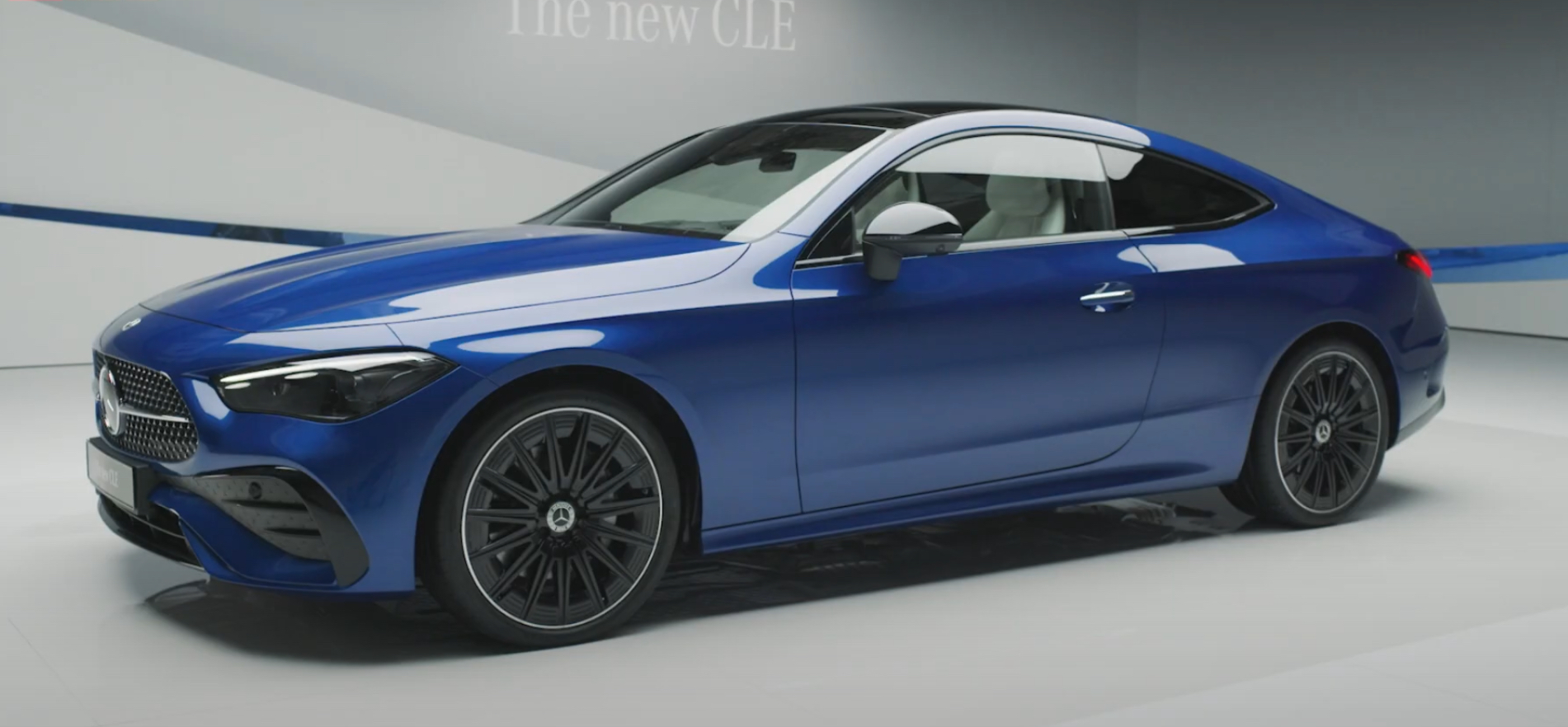
2016 Mercedes C 250 wagon
"It was a 2016 Mercedes C 250 wagon, which is an awesome car, but has primarily served as the family truckster with their two young daughters."
This is a Mercedes-Benz wagon from 2016. A wagon is basically a car with extra cargo space behind the seats, so it’s great for families. The host is saying this one has mainly been used for everyday family driving.
The Mercedes-Benz C 250 wagon (from the 2016 model year) is a compact executive wagon built for practicality—more cargo space than a sedan, with a family-friendly layout. In this segment, it’s described as their “family truckster,” meaning it’s being used as the primary daily vehicle for kids and errands.
parking constraints
"When they moved to Berlin three years ago and due to parking constraints, they had they were only able to have one car, which is a wagon."
This means they don’t have enough parking space for multiple cars. Because of that limitation, they had to choose one vehicle that would work for their family.
“Parking constraints” is the practical limitation that determines what vehicles a household can keep—like needing to fit within a limited garage/space. In this segment, it directly drives the decision to have only one car, specifically a wagon, because of space requirements.
three row SUV
"They'll be buying another family truckster when they move back to the state. So some three row SUV, but for his car, he likes something that seats four relatively comfortably."
A three-row SUV is a bigger family vehicle with seats in three rows. It’s designed to carry more people, which is why it comes up for a family move.
A three-row SUV is a larger utility vehicle with seating across three rows, typically to fit more passengers. In this segment, it’s mentioned as the kind of “family truckster” Aaron’s considering when they move back to the U.S., even though he personally prefers something that seats four comfortably.
rear wheel driver
"he's tested in quite a few cars, definitely found himself gravitating towards rear wheel driver, all wheel drive."
Rear-wheel drive means the power goes to the back wheels. People who like driving feel it can make the car handle and accelerate in a more fun, predictable way.
“Rear wheel drive” (RWD) means the engine sends power mainly to the rear wheels. That often changes how the car accelerates and handles compared with front-wheel drive, and it’s a layout many enthusiasts specifically look for.
Porsche 911
"He's considered a 997 generation Porsche 911, but unfortunately he needs to carry work gear."
The Porsche 911 is a famous sports car from Porsche, built with an engine mounted toward the back. Here, they’re considering a 911 as a daily driver, but it may not work if you need lots of room for work stuff.
The Porsche 911 is a rear-engine sports car known for its distinctive layout and handling balance. In this segment, the host mentions a 997-generation Porsche 911 as a candidate daily, but it’s challenged by the need to carry work gear and still have practical space.
trunk space
"And the GR86 doesn't have a ton of trunk space, but the 911, [3936.1s] I can fit a full sized luggage behind the seats in mine."
Trunk space is how much stuff you can fit in the back storage area. They’re comparing how much luggage and gear each car can realistically hold.
Trunk space is the usable cargo volume in the rear storage area. The hosts use it to compare day-to-day practicality between the GR86 and the Porsche 911, especially for luggage and gear.
magnet ride
"they're borderline too old, but they're four doors, 400 horsepower and they are going to manual, magnet ride. They're going to drive nice."
“Magnet Ride” is an adaptive suspension that can stiffen or soften the shocks electronically. That helps the car feel smoother on bumps but more stable when you drive harder.
“Magnet Ride” is shorthand for a magnetorheological adaptive suspension system. It uses electronically controlled fluid in the shocks to change damping stiffness quickly, helping the car feel more controlled over rough roads while still being comfortable.

Bmw M
"... card, but I think fits. I found a bunch of these BMW M threes, the last gin or two gins ago now, I guess..."
The BMW M Coupe (E36) is an older BMW sports coupe. It’s a performance-focused version of the E36-era BMW lineup. The podcast brings it up because someone is looking at these cars and considering them.
The BMW M Coupe (E36) is a rare, two-door sports coupe built on the E36-generation platform with an M-badged performance focus. The podcast mentions finding “a bunch of these BMW M threes” and references the M Coupe as part of that search. It comes up because it’s a niche, enthusiast-oriented BMW that’s often valued for its character and rarity.
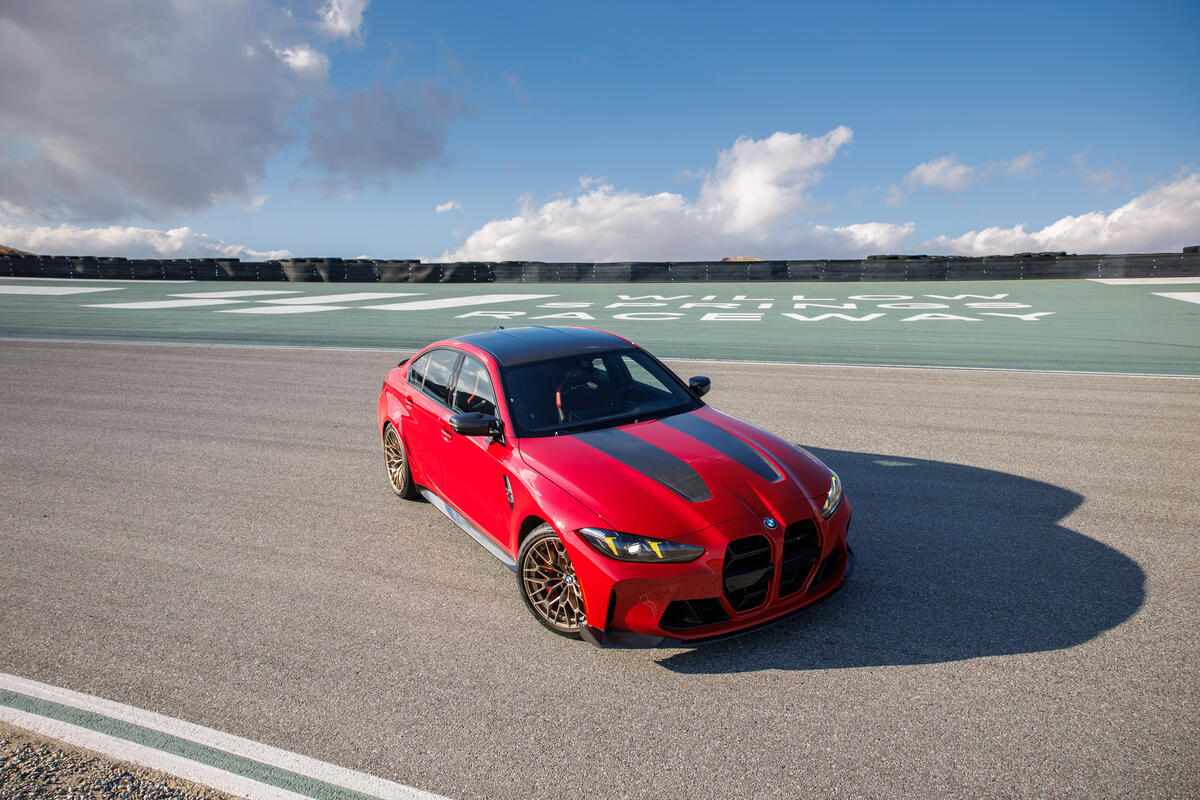
BMW M threes
"I found a bunch of these BMW M threes ... I guess the F80 M threes. ... We're both of these manuals, both of them were manuals."
The BMW M3 is BMW’s performance model. The F80 generation is the one they’re talking about here, and they’re saying it can still be a fun manual car while fitting the “four-door” family requirement.
The BMW M3 (F80) is a high-performance version of the 3 Series that’s famous for combining everyday usability with a track-capable chassis. In this segment, the host highlights it as a family-friendly “four-door” option (with the F80’s practical layout) that can still be had as a manual.

Honda Civic
"The other two wild cards I have is the Elantra N and Civic type R. The only problem here is they're both front wheel drive, front wheel drive."
The Honda Civic Type R is Honda’s high-performance Civic. They’re considering it, but they don’t like that it’s front-wheel drive.
The Honda Civic Type R is a hot-hatch built around a high-output turbo engine and a track-oriented chassis. In this segment, it’s mentioned as a “wild card” family option, but the host points out that it’s front-wheel drive, which they see as the main drawback.
front wheel drive
"The other two wild cards I have is the Elantra N and Civic type R. The only problem here is they're both front wheel drive, front wheel drive."
Front-wheel drive means the front wheels do the steering and the driving. Some people prefer rear-wheel drive because it can feel different when you accelerate hard, but FWD is often easier to live with day to day.
Front-wheel drive (FWD) means the engine’s power is sent to the front wheels, which handle both steering and propulsion. It can be efficient and predictable, but some enthusiasts prefer rear-wheel drive because it can offer different traction and handling characteristics, especially under hard acceleration.

Elantra
"Every once in a while, you'll get a little bit of torque steer in it, the Elantra, and you feel more torque steer, but the Civic type R, the way it rotates,"
The Hyundai Elantra is a common compact car. They’re using it as an example of a front-wheel-drive car that can tug or pull sideways a bit when you accelerate hard.
The Hyundai Elantra is a compact car that’s often offered with front-wheel drive and, in some trims, turbocharged engines. Here it’s mentioned in the context of torque steer—how pulling to one side can happen when the front wheels get different grip under acceleration.

Toyota GR Corolla
"...ed. And then the one I think is the choice is the GR Corolla. Interesting."
The Toyota GR Corolla is a sporty version of the Corolla, but in a hatchback form. The podcast is saying it might be the best pick and that it’s interesting. It’s mentioned because it’s designed to feel more performance-oriented than a normal Corolla.
The Toyota GR Corolla is a performance-focused compact hatchback from Toyota’s GR lineup. The podcast calls it “the choice” and highlights it as an interesting option, which fits the debate about practical performance. It’s discussed because it aims to bring rally-inspired capability to a daily-driveable size.
G-R-A-C-R-O-L-A
" G-R-A-C-R-O-L-A. [4188.6s] All right, I'll jump in. [4189.9s] All your choices are noted."
That’s a word they spelled out letter-by-letter, probably a brand or model name. The clip doesn’t clearly say what it stands for, so it’s hard to pin down exactly what car-related thing they mean.
This appears to be a spelled-out brand or model name (likely a specific car-related term or dealership/trim name) rather than a standard automotive concept. Because the transcript doesn’t provide the actual intended word, it’s not possible to reliably identify what it refers to from this segment alone.
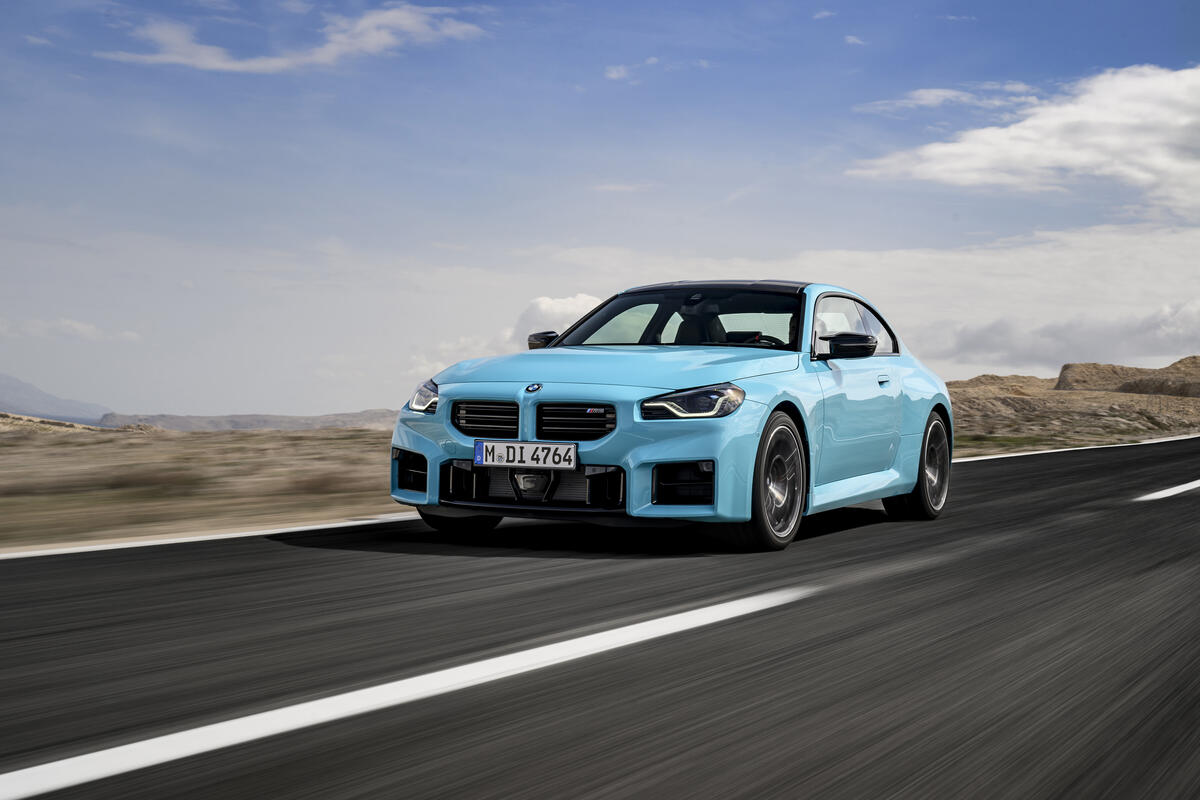
M2 competition
"I'm starting with the M2 competition because I think this would be a great dad car hauling stuff. [4198.2s] It's got a real trunk and hauling your girls in the back and surprising room in the back."
The BMW M2 Competition is a small BMW that’s tuned for driving fun. Here, the host is saying it can still work as a family car because it has real trunk space and back seats.
BMW M2 Competition is a compact performance coupe from BMW’s M division, built around a sporty chassis and a strong turbocharged engine. In this segment, the host frames it as a practical “dad car” because it has a usable trunk and rear seating for hauling passengers.

Audi RS3
"And then moving to an Audi RS3. Those are cool. This could be a great dad car, a little bit more compact."
The Audi RS3 is a small, sporty hatchback from Audi. It’s meant to be quick and fun, but still usable day-to-day—so the host thinks it can work as a family car too.
The Audi RS3 is a compact performance hatchback built around a high-output turbocharged engine and a sporty chassis. In this segment, the host frames it as a practical “dad car” alternative because it’s smaller than some rivals but still quick and engaging to drive.
drift mode
"Those have drift mode. They do have drift mode and they've got a sweet engine and they look great."
Drift mode is a special driving setting that helps the car slide more easily. It adjusts the car’s traction and stability behavior so you can steer while the rear end breaks loose.
Drift mode is a driving setting that changes throttle mapping, steering/traction behavior, and stability-control intervention to make controlled oversteer easier. On cars like the Audi RS3, it’s designed to help the car rotate more readily when you’re intentionally sliding.

2011 to 2013 BMW 335 IS
"You remember the 2011 to 2013 BMW 335 IS. Yeah. That had more peak torque than the M3 at the time."
This is a BMW 3 Series from 2011 to 2013 with a turbo engine. The host is saying it feels punchy—especially because it has a lot of torque—and they point out styling details to help identify the right version.
The BMW 335i (2011–2013) is a turbocharged 3 Series that’s often remembered for strong real-world pull. The host highlights a key selling point: it reportedly made more peak torque than the M3 at the time, and they also describe visual cues like black trim around the grille and black tailpipes.
driver's car
"It's a little bit older is the problem. So it's definitely a driver's car. It's an enthusiast car."
A “driver’s car” is a car that’s fun and engaging to drive, not just something that gets you from A to B. It usually feels responsive and rewarding when you steer and use the pedals. In this segment, they’re saying this one fits that idea.
“Driver’s car” is an enthusiast phrase for a vehicle that prioritizes steering feel, pedal response, and overall engagement over pure comfort or convenience. It usually implies the car is enjoyable to drive even when you’re not pushing it hard. Here, the host ties that idea to the manual transmission and enthusiast-focused ownership.
enthusiast car
"So it's definitely a driver's car. It's an enthusiast car. And if you couldn't get the M3, this was always the one that we always suggested get this instead of the M3."
An “enthusiast car” is a car that people buy because they really care about driving feel, not just transportation. Owners of these cars often talk about them a lot and know the details. Here, it’s used to explain why this pick makes sense for the right buyer.
An “enthusiast car” is a vehicle that attracts drivers who care about how it drives—handling, power delivery, and driver involvement—rather than just commuting practicality. These cars often have a stronger aftermarket and a more knowledgeable owner community. The host uses it to frame why this alternative is recommended even if it isn’t the M3.
auto tempest.com
"And we only use auto tempest.com because auto tempest pulls listings from all the top sites as fast as in a single site and shows them all."
Auto Tempest is a website that helps you search for cars by pulling listings from many other sites. It can also track price changes and notify you when new listings match your search.
Auto Tempest is a car-listing search site that aggregates listings from multiple marketplaces into one view. The segment highlights features like saving searches, setting alerts, and using a price-trend tool to compare pricing over time.
secondhand cars
"And as it does, he says, when you're looking at secondhand cars, especially at the entry level, the budget grew from five to 10 K, then 10 K."
“Secondhand cars” means used cars. The point here is that when you shop for a cheap used car, the real prices you end up seeing can be higher than you expected.
“Secondhand cars” refers to used vehicles, where the buying process is heavily shaped by prior ownership, maintenance history, and hidden wear. The host is specifically talking about how budgets change when shopping used cars at the entry level.
entry level
"And as it does, he says, when you're looking at secondhand cars, especially at the entry level, the budget grew from five to 10 K, then 10 K."
“Entry level” here means the cheapest cars you can buy. When you’re shopping in that price range, the selection and the condition of cars can vary a lot.
In car shopping, “entry level” means the lowest-priced tier of vehicles—typically the cheapest trims and models, often including older used cars. This matters because small differences in price can quickly change what’s available and what problems you might encounter.
MG three
"And even at one point, considering a brand new MG three for 24000 dollars. That's a lot more than five K."
MG is a car brand that usually makes more affordable cars. Here, they’re mentioning an MG model as an example of what you might consider when your budget for a used car grows.
MG is a car brand (owned by SAIC in modern times) that often sells budget-focused vehicles. In this segment, “MG three” appears to refer to an MG model priced around 24,000 Australian dollars, used as an example of how the budget can stretch beyond $5,000.
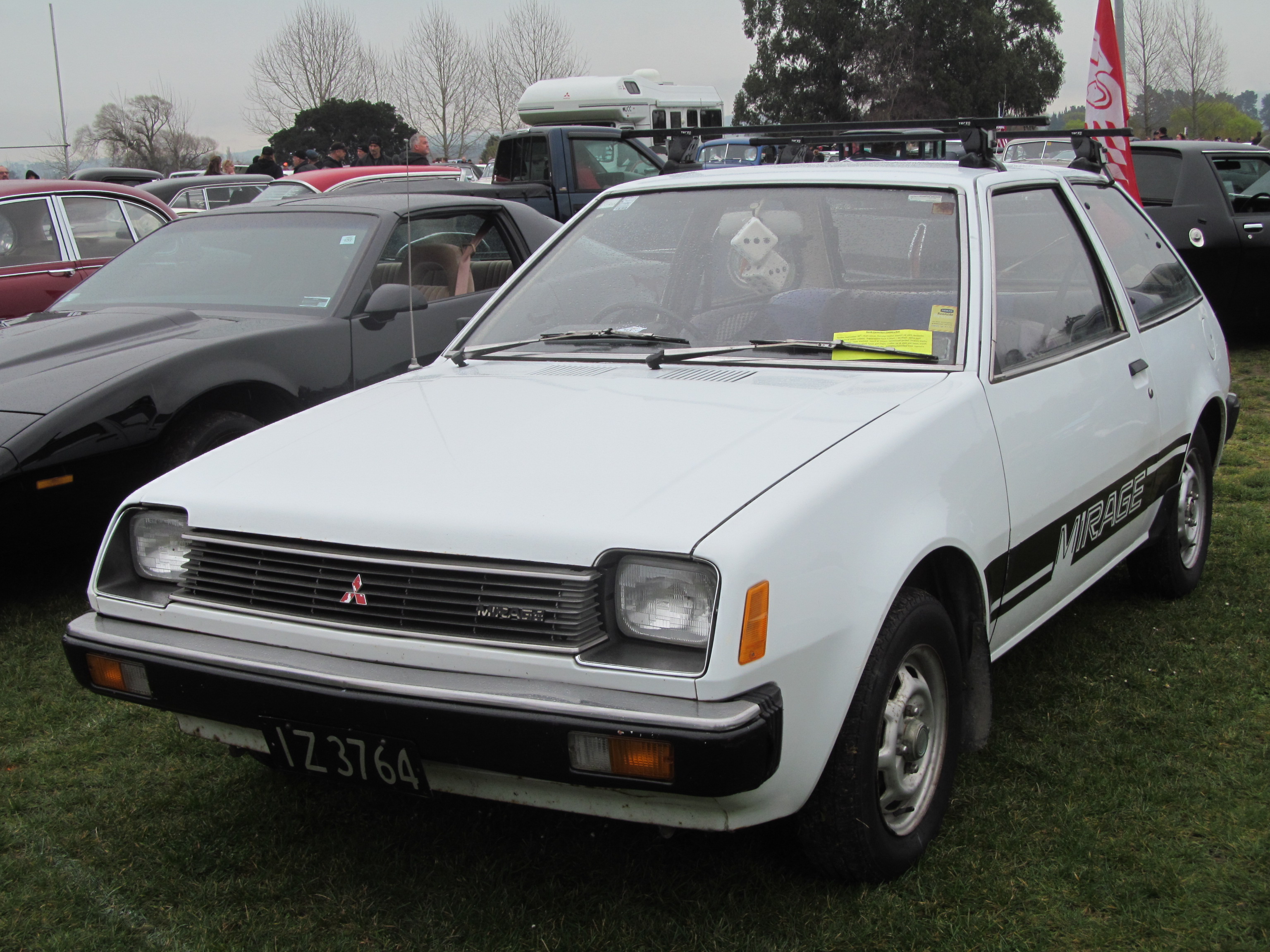
Mitsubishi Mirage
"If you don't know what that is, it's kind of think of a Mitsubishi Mirage."
A Mitsubishi Mirage is a small, low-cost car. The host is comparing something else to it to say it feels like a basic, budget rental.
The Mitsubishi Mirage is a small, budget-focused subcompact car known for being inexpensive to buy and run. In this segment, it’s used as a reference point for a “cheap rental” kind of car feel.
handbrake turn
"Anthony was amazed when it stalled as an auto when he was teaching him how to do a handbrake turn."
A handbrake turn is when you pull the parking brake to make the car’s rear end slide around so you can turn around quickly. It’s a stunt-like move that can wear out tires if you do it often.
A handbrake turn is a maneuver where the driver uses the parking brake to lock the rear wheels, causing the car to rotate and pivot around. It’s often practiced in low-speed situations to change direction quickly, but it can be hard on tires and drivetrain components if done repeatedly.

Toyota Corolla
"Go-Tos of the Corolla and Camry are pretty ruled out quickly because"
The Toyota Corolla is a very common, dependable small car. The host is saying they considered it, but the deal didn’t look good compared to other options.
The Toyota Corolla is a long-running compact car line that’s especially popular for being practical and widely available. Here it’s mentioned as a “go-to” option that gets ruled out because the host thinks the price versus age, mileage, and condition doesn’t make sense.
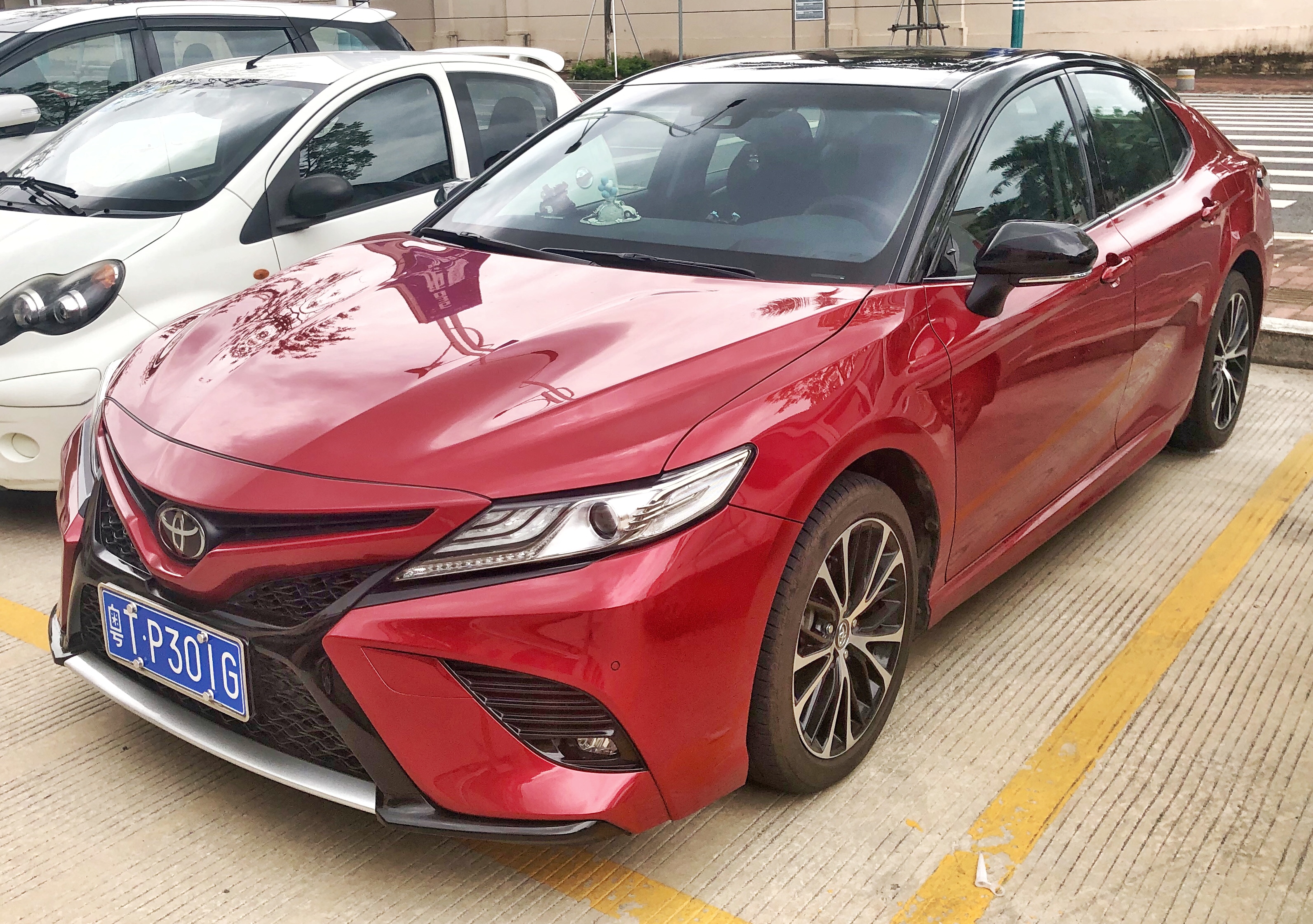
Toyota Camry
"Go-Tos of the Corolla and Camry are pretty ruled out quickly because"
The Toyota Camry is a popular midsize sedan. The host is saying it’s usually a reliable pick, but the specific used-car deal didn’t add up.
The Toyota Camry is a midsize sedan known for comfort, durability, and being a mainstream “safe choice.” In this segment, it’s part of the host’s shortlist of reliable Japanese cars that they decide against due to price and condition tradeoffs.

Ford Orion
"...dition just didn't stack up. How about the Toyota Orion? Orion, essentially sedan version of the Highland..."
The Ford Orion is a car model mentioned in the podcast as something that didn’t meet expectations. The speaker then compares the idea to another “Orion” they describe differently. It comes up because they’re deciding which option makes more sense.
The Ford Orion is mentioned in the podcast as a comparison point, with the speaker saying its “edition just didn’t stack up.” They then pivot to “the Toyota Orion,” describing it as essentially a sedan version of the Highlander concept. It’s discussed because the debate is about which model best fits the intended purpose and value.

Toyota Highlander
"...ta Orion? Orion, essentially sedan version of the Highlander, basic, simple, honest, boring Toyota's legendary..."
The Toyota Highlander is a family SUV meant for everyday driving and carrying people comfortably. In the podcast, they’re comparing it to another model they describe as a sedan version of the same idea. That’s why the Highlander comes up in the debate.
The Toyota Highlander is a family-oriented midsize SUV built for practicality and comfort. The podcast compares it to an “Orion,” describing the Orion as an essentially sedan version of the Highlander concept. It’s discussed because the Highlander represents Toyota’s approach to dependable, straightforward family transportation.
three and a half liter V6
"Toyota's legendary three and a half liter V6, completely forgotten about."
A “3.5-liter V6” is an engine with six cylinders arranged in a V shape. The “3.5-liter” part is about the engine’s size, and V6 engines are often smooth and reasonably strong.
A “3.5-liter V6” describes an engine with six cylinders arranged in a V shape, with a total displacement of 3.5 liters. Displacement is a rough measure of how much air/fuel the engine can move, and V6 layouts are often chosen for a balance of smoothness and power.
cheap, reliable Japanese
"So now we're after dirt, cheap, reliable Japanese and exceptionally frugal."
This is the idea of buying a Japanese car that’s known for being dependable, but not expensive. The host uses it to decide which used cars are worth considering.
“Cheap, reliable Japanese” is a shopping philosophy: prioritize Japanese brands that are perceived to have low ownership headaches and strong parts/service support, while keeping the purchase price down. In this segment it drives the shortlist and the “price vs age/condition” comparisons.

Kia Picanto
"Then the Kia Picanto enters the back to left turn. Tiny, yes, but it's just the two of them."
The Kia Picanto is a very small city car. The host is saying it’s a straightforward, budget-friendly choice that’s easy to live with.
The Kia Picanto is a tiny city car designed for easy parking and low running costs. In this segment, it’s presented as a practical “cheap and reliable” option that’s still an “honest” basic car.

2013 Mercedes B 180
"Anthony buys a 2013 Mercedes B 180 with 100,000 kilometers and a warning light on the dash. As it turns out, they have a dual clutch transmission, which is great until it's not and replacement will cost him as much as the whole car did."
This is a 2013 Mercedes-Benz B 180, a small Mercedes hatchback. In this story, the big issue is the dual-clutch transmission—when it breaks, the repair bill can be so high it can cost nearly as much as the whole car.
A 2013 Mercedes-Benz B 180 is a compact Mercedes designed around practicality, but this one is notable because it’s paired with a dual-clutch transmission. The host points out that the dual-clutch setup can be great when it works smoothly, yet repairs can be extremely expensive if it fails.
warning light on the dash
"Anthony buys a 2013 Mercedes B 180 with 100,000 kilometers and a warning light on the dash. As it turns out, they have a dual clutch transmission, which is great until it's not..."
A warning light on the dashboard means the car detected a problem. Here, the host connects that light to a transmission problem, which is why it becomes a big deal.
A warning light on the dashboard indicates the car’s onboard diagnostics have detected a fault in one of its systems. In this segment, it’s tied to the dual-clutch transmission issue, which is why the host treats it as a serious clue rather than a minor annoyance.
dual clutch transmission
"As it turns out, they have a dual clutch transmission, which is great until it's not and replacement will cost him as much as the whole car did."
A dual-clutch transmission is a type of automatic that shifts very fast. It uses two clutches to keep the next gear ready, but if something inside it breaks, fixing it can be expensive.
A dual clutch transmission (DCT) uses two separate clutches—one handles odd gears and the other handles even gears—so it can shift quickly with minimal interruption. That quick shifting is the appeal, but if the mechatronics/clutches or related components fail, repairs can be very expensive.

GLA 45
"That's kind of a sad ending though, really. I thought these were fine. I thought they were sort of like the little iconobox. Yeah. I mean, isn't that the same gen that the A45 was built on? A GLA 45 and those B class."
The Mercedes-Benz GLA 45 is the sporty version of the GLA crossover. The host brings it up to suggest it’s from the same general generation as the B-Class, meaning they can share similar design foundations and components.
The Mercedes-Benz GLA 45 is the performance version of the GLA crossover, and it’s mentioned here to compare which generation/platform it shares with the B-Class. The point is that related Mercedes compact models can use shared underpinnings, which can also extend to transmission choices.
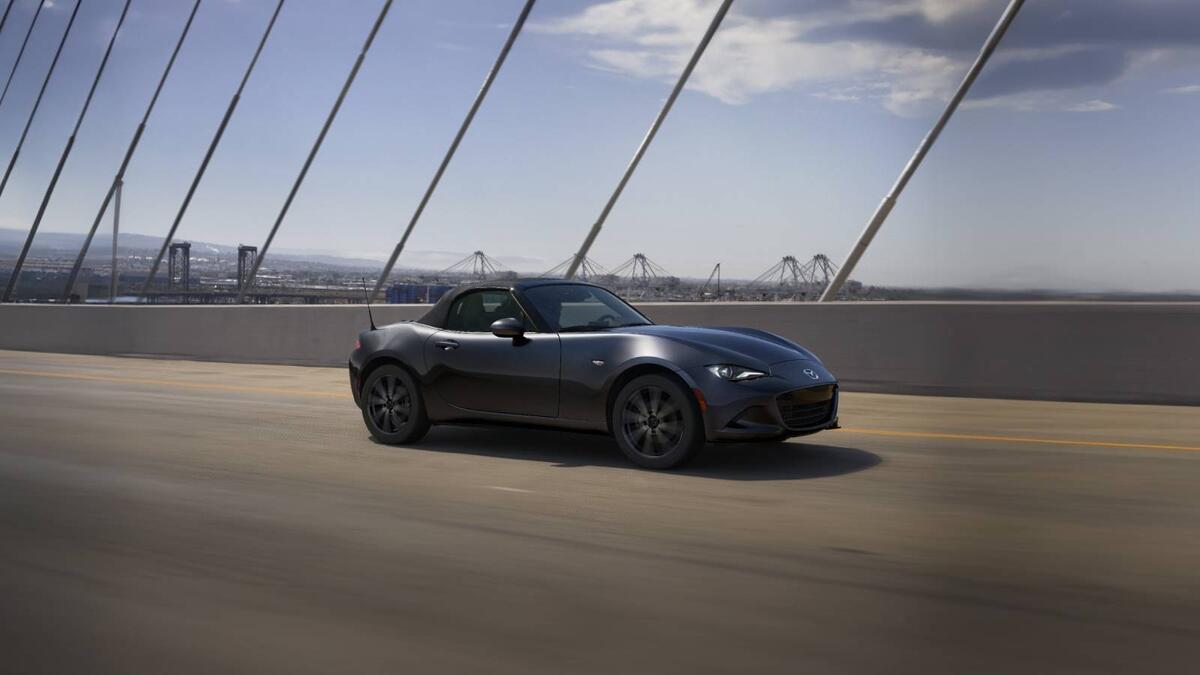
ND to Miata
"And other cars in the household included an ND to Miata Honda Odyssey for him"
The ND Miata is a Mazda MX-5 Miata from the newer generation. It’s a small, light roadster that’s meant to be easy and enjoyable to drive.
“ND Miata” refers to the Mazda MX-5 Miata’s ND generation, known for its lightweight feel and balanced, driver-focused handling. It’s a modern take on the classic Miata formula: simple, light, and fun at everyday speeds.

Honda Odyssey
"And other cars in the household included an ND to Miata Honda Odyssey for him"
The Honda Odyssey is a family minivan. It’s built for carrying people and gear comfortably, especially when you have kids.
The Honda Odyssey is a minivan designed to be practical for families, with space for kids and everyday usability. In this context, it’s part of a multi-car household that complements the more driver-focused cars.

Mazda CX five turbo
"and his wife's Mazda CX five turbo."
The Mazda CX-5 is a compact SUV. The turbo version is the more powerful one, meant to feel quicker for everyday driving.
The Mazda CX-5 is Mazda’s compact crossover, and the “turbo” version adds a turbocharged engine for stronger acceleration than the naturally aspirated trims. It’s positioned as a practical daily driver in a family lineup.
convertible
"when he does use it and he's got to have a convertible. Who doesn't love a convertible?"
A convertible is a car with a roof that can open up so you can drive with more fresh air. It’s often chosen for the fun, open-air feeling.
A convertible is a car body style where the roof can be lowered or removed, typically using a folding soft top or retractable hard top. It changes how the cabin feels—more open-air driving—and can be a major part of why someone keeps a car even if they don’t drive it often.

Audi Rs
"...or the exterior styling, which is polarizing. The Audi RS three, which he loves how it looks, but thought t..."
The Audi RS e-tron GT is an electric performance car. The podcast is talking about how its styling can be a little polarizing, meaning some people like it and others don’t. It’s brought up because it’s a fast, EV version of a performance Audi.
The Audi RS e-tron GT is a high-performance electric sedan from Audi’s RS lineup. The podcast mentions its exterior styling being polarizing and also references the RS3, indicating they’re comparing how different performance Audis look and feel. It’s discussed because it’s an EV that targets the same “performance-first” audience as traditional sports cars.

Cadillac Ct
"...thought about it, the more he really wants manual Cadillac CT four blackwing. He loved also liked the CT five b..."
The Cadillac CT6 is a large luxury sedan. The podcast is talking about Cadillac models and mentions the CT6 while discussing what kind of car someone wants. It’s included because it’s part of the luxury-sedan decision-making.
The Cadillac CT6 is a full-size luxury sedan known for comfort and a more traditional large-car layout. The podcast mentions interest in a “manual Cadillac CT four blackwing” and also references the CT5, suggesting they’re discussing performance-oriented Cadillac options. It comes up because the CT6 represents the kind of luxury sedan people consider when they want size and refinement.
Cadillac CT 4 Blackwing
"but thought the more he thought about it, the more he really wants manual Cadillac CT four blackwing."
The Cadillac CT 4 Blackwing is a sporty Cadillac sedan. What stands out here is that it can be had with a manual transmission, which the speaker really wants.
The Cadillac CT 4 Blackwing is a performance sedan from Cadillac’s Blackwing line, notable for offering a manual transmission option in a segment where manuals are increasingly rare. The speaker specifically says they want the manual CT 4 Blackwing, making the gearbox choice a key part of the appeal.
Cadillac CT 5 Blackwing
"He loved also liked the CT five blackwing, but they're just too far out of his budget."
The Cadillac CT 5 Blackwing is a bigger sporty Cadillac sedan in the Blackwing family. The speaker liked it, but they couldn’t afford it.
The Cadillac CT 5 Blackwing is the larger Blackwing performance sedan, positioned as a more powerful/roomier alternative within Cadillac’s performance lineup. The speaker says they liked it too, but it’s “too far out of his budget,” so cost becomes the deciding factor.
BMW M2
"I looked at the BMW M two, which current gen styling hasn't really grown on him."
The BMW M2 is BMW’s smaller, sportier M model. The speaker is saying they don’t like the look of both the newer and older versions.
The BMW M2 is a compact performance coupe/track-oriented BMW model known for delivering “small car” agility with an M-badged engine and chassis. The speaker says the current-gen styling hasn’t grown on them, and the previous-gen also doesn’t resonate.

Genesis G70
"They also looked at the Genesis G 70. [4735.8s] In short, all the cars they looked at the CT four was a stand out."
The Genesis G70 is a luxury car from Genesis that’s meant to feel more sporty than a typical “nice” sedan. In this part of the show, it’s just one of the cars they looked at.
The Genesis G70 is a performance-oriented luxury sedan from Genesis, known for offering a sportier driving experience than typical entry-luxury cars. Here it’s part of the list of vehicles the family considered before settling on the Civic Type R.

Acura Integra
"learned that one of the Honda dealers he works for had an Integra Type S and a new Civic Type R available at the same price."
The Acura Integra Type S is a sporty version of the Integra. They’re comparing it directly with the Civic Type R to decide what to buy.
The Acura Integra Type S is a performance trim of the Integra that’s positioned as a sportier, driver-focused alternative to other hot hatches. In the segment, it’s mentioned alongside the Civic Type R as part of a used-car shopping decision at the same price point.
big wing
"See, the big wing and the red Type R stuff on the Civic one, [4763.8s] him over when parked next to the Integra had the Type R for about a month now."
A “big wing” is a spoiler on the back of the car. It helps push the car down onto the road at higher speeds, which can improve grip.
A “big wing” is an aftermarket-style or factory rear spoiler designed to increase aerodynamic downforce. More downforce helps the car stay planted at speed, which is especially relevant for track driving.
Canadian Tire Motorsports Park
"He does plan to track it at Canadian Tire Motorsports Park [4795.5s] in the next few months and is looking forward to getting a feel for its limits."
Canadian Tire Motorsports Park is a real race track in Canada. They’re planning to drive their car there to see how it handles at higher speeds and in corners.
Canadian Tire Motorsports Park is a road-course race track in Ontario, Canada, commonly used for track days and motorsport events. Mentioning it signals the Civic Type R owner plans to test the car’s real-world limits on a circuit rather than just street driving.
limits
"and is looking forward to getting a feel for its limits. [4801.4s] Excellent. Well done."
In track driving, “limits” refers to the point where the car’s grip, braking, and stability start to break down. It’s usually about maximum cornering capability and how the car behaves when pushed hard.
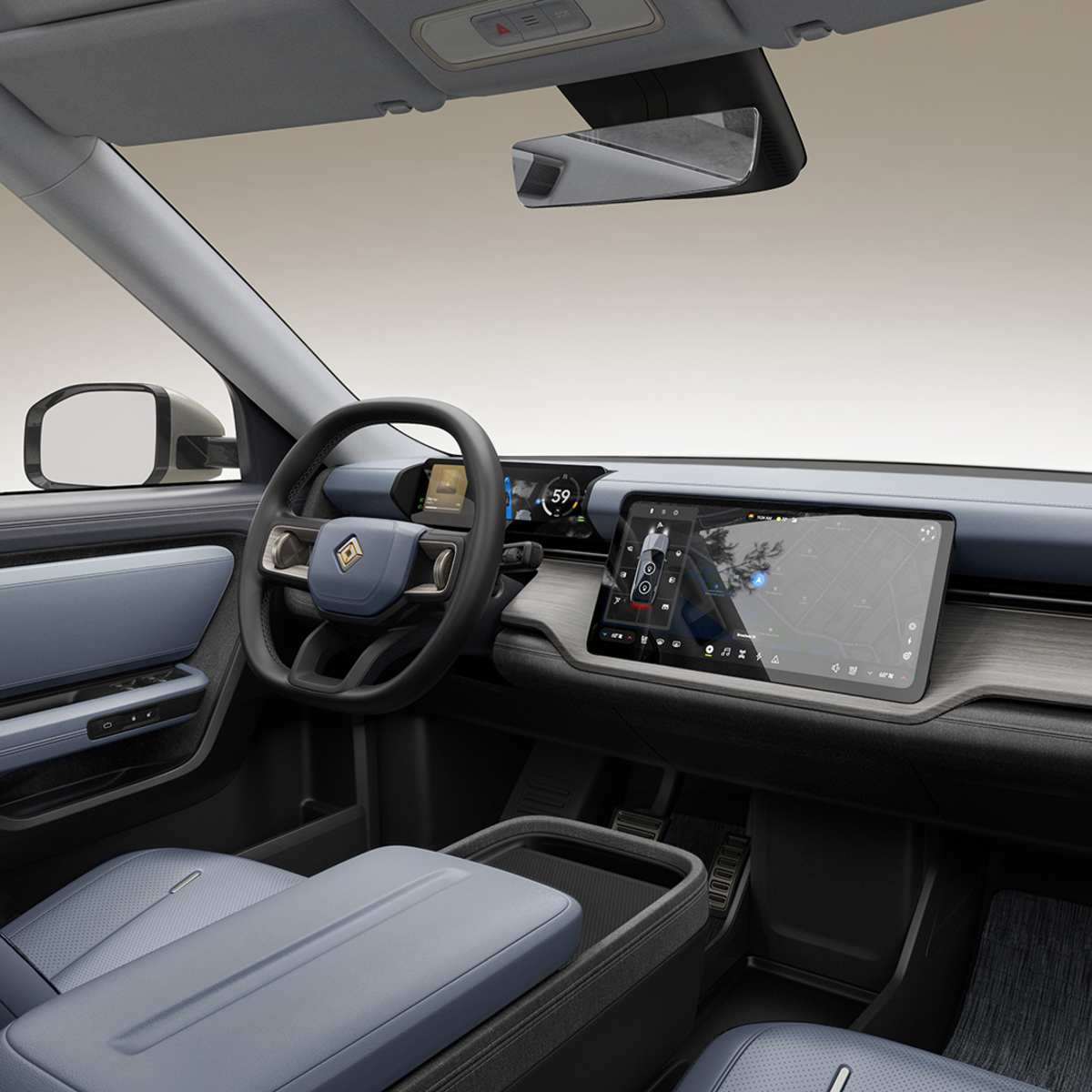
Rivian R2
"And be sure to catch our Rivian R2. [4842.2s] You'll see R2 videos pop up all over the internet."
The Rivian R2 is an electric SUV/EV from Rivian. The episode is pointing you to their videos because it’s a big new model launch and people are comparing it to other cars.
The Rivian R2 is an upcoming electric vehicle from Rivian, positioned as a smaller, more accessible EV than the brand’s larger models. The hosts discuss it as a major new release and emphasize the launch coverage and comparisons, suggesting it’s a key “next EV” for everyday driving.
Park City
"Everybody was in Park City for the launch, which is pretty cool. [4849.3s] We're glad it was here."
Park City is a place in Utah. The hosts are saying a lot of people went there for the Rivian R2 launch, which made the event feel special.
Park City is a city in Utah that the hosts mention as the location where many people gathered for the Rivian R2 launch. It’s being used here as a real-world setting for the event and the media/enthusiast turnout.
three car comparison
"And we squeezed a three car comparison [4853.0s] because this is what we thought the R2 should be compared to."
A “three car comparison” means they’re comparing three cars side-by-side. The goal is to show how one car stacks up against the others so you can judge which fits you best.
A “three car comparison” is a structured evaluation where the hosts line up three vehicles to compare key traits like design, driving feel, and value. It’s commonly used in car reviews to help listeners understand trade-offs between similar choices.
Request an Explanation
Heard something you'd like explained? We'll add it to this episode.
Sign in to request explanations for terms you heard.
Want to learn more?
Browse our glossary for plain-English explanations of automotive terms, jargon, and concepts.
Help improve this episode
See something that's not quite right? Our annotations are AI-generated and can sometimes miss the mark. Click the flag icon on any annotation to suggest a correction.
1 community members have helped improve this episode.