
COTA LIVE - All Questions | Episode 1,048
About this episode
Broadcasting live from Circuit of the Americas, the hosts run a fast Q&A, recap Hooked on Driving day one, and talk track-day logistics—plus why a Miata didn’t fit and a Cayman did. The conversation widens into Europe rally and road-trip planning (C8 Stingray, 911, Dolomites/Stelvio, ending at the Nürburgring), then shifts to car-debate themes: depreciation math, “daily + track” tradeoffs, and Porsche flat-six reliability (IMS and bore scoring). They also cover manual-learning advice and community culture.
Coda
"But yeah, we're back in the lounge above garages one and two. So if you've been to Coda, you know exactly where we're at and live streaming to you."
“Coda” is a race track in Austin, Texas. It has long straightaways and lots of turns, so it’s great for seeing how cars handle and how fast they can go.
“Coda” is the Circuit of the Americas (Austin, Texas), a modern road course used for driving events and motorsport. It’s known for long straights and technical corners, which makes it a good venue for testing real-world driving skills and car behavior.
top speed
"This is almost a three and a half mile track. The back straight is nearly three quarters of a mile. So everybody sees top speed back there."
“Top speed” just means the highest speed a car can reach. On a race track, the long straight sections are where you can actually reach it.
“Top speed” is the maximum speed a car can reach under ideal conditions, usually limited by aerodynamics, gearing, and engine power. On a track, long straights let you see how quickly a car builds speed before braking for the next corner.
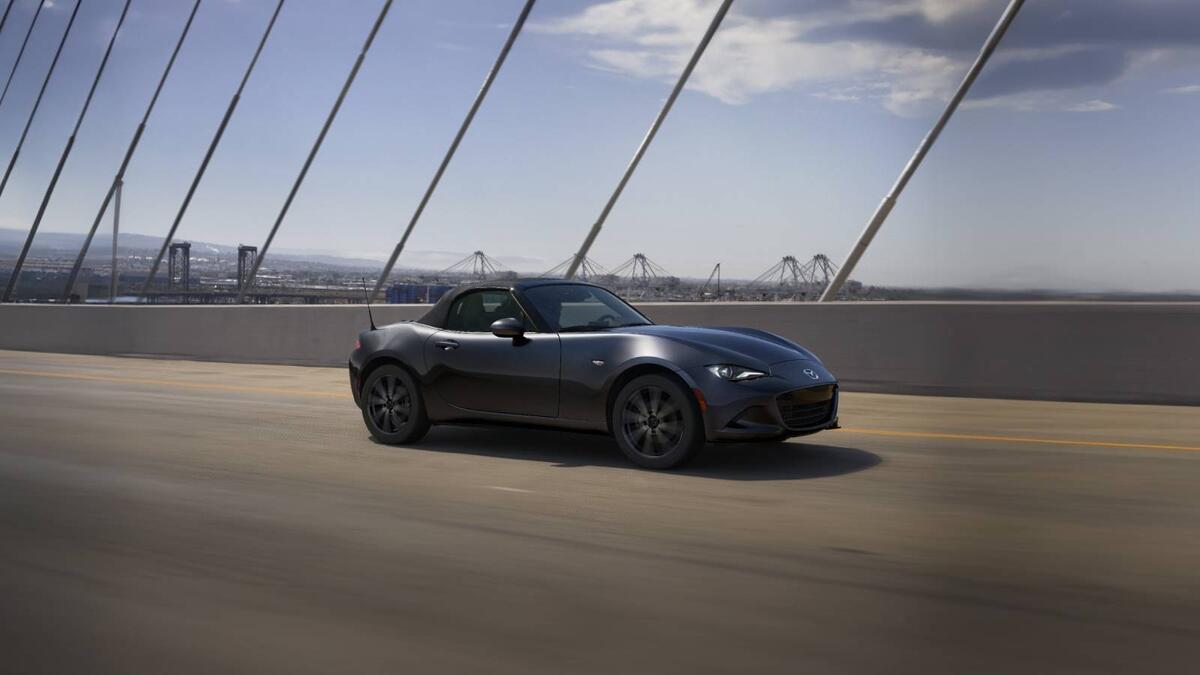
Mazda MX-5 / Miata
"...ch has been great. We turns out we don't fit in a Miata. Todd doesn't fit. And I thought, well, gosh, his..."
The Miata is a small two-seat convertible made for driving for fun. It’s popular because it’s light and handles well. The discussion here is about whether taller or larger drivers can fit comfortably.
The Mazda MX-5 Miata is a small, lightweight two-seat roadster known for being fun to drive and relatively affordable. It often comes up in everyday-driver debates because it’s easy to enjoy on twisty roads. In the podcast, it’s mentioned in the context of fitting—someone doesn’t fit comfortably in the car.
broomstick test
"And I thought, well, gosh, his head was three inches at least. The broomstick test would have been through my forehead."
The “broomstick test” is a joking way to check if someone’s head will hit the roof in a car. If it would, they probably won’t fit comfortably or safely.
The “broomstick test” is an informal way to check whether a person can fit in a car without their head hitting the roof or hard points. It’s essentially a quick, practical measurement of seating position and headroom rather than a formal engineering test.
road rally
"we've gotten questions already about it is our Europe monster that we're about to do. Yeah, we have been invited as of last year. We are still amazed and pinching ourselves to Europe's largest road rally."
A road rally is like a planned driving trip with rules and checkpoints. Instead of racing on a track, you drive a route and hit timing or check-in points along the way.
A road rally is an organized driving event where participants follow routes and schedules across public roads, often with checkpoints and time targets. It’s different from a track day because the emphasis is on navigation, consistency, and sustained driving over long distances.
Nürnürgring
"So we called our friends at RSR in Nürburgr and said, Hey, do you have a couple of cars that we could take on on a rally?"
The Nürburgring is a famous race track in Germany. It’s known for being tough and for being where car people go to test and develop performance cars.
The Nürburgring is Germany’s famous motorsport complex, best known for the Nordschleife (the “North Loop”) and its long history of testing and benchmarking performance cars. When someone says they called friends “in Nürburgring,” it usually points to a team or operation connected to that racing ecosystem.

Chevrolet C8
"So we've got a C8 Stingray Corvette and a 911 992.1 Carrera 4S to drive in Eastern Europe."
The Corvette C8 Stingray is a Corvette with the engine in the middle of the car. That helps it feel more balanced and agile on winding roads.
The Chevrolet Corvette C8 Stingray is notable because it’s a mid-engine sports car—its engine sits behind the driver instead of in the front. That layout changes how it feels on twisty roads, typically improving balance and turn-in compared with older front-engine Corvettes.
Stelvio Pass
"We might as well come back and do the Dolomites and Stelvio Pass and come back through."
Stelvio Pass is a famous mountain road in Italy. It has steep climbs and lots of tight turns, so it’s a great place to see how a car handles uphill and downhill.
Stelvio Pass is a high mountain road pass in Italy famous for steep grades and long stretches of tight switchbacks. It’s a classic “driver’s road” because it tests both climbing power and descending control over sustained cornering.
Dolomites
"And then we'll come back. We thought, hey, we're already going to be in Europe. We might as well come back and do the Dolomites and Stelvio Pass and come back through."
The Dolomites are big mountains in northern Italy. The roads there are twisty and scenic, which makes them great for driving adventures.
The Dolomites are a mountain region in northeastern Italy known for dramatic roads and frequent hairpin turns. They’re a popular choice for driving films and rallies because elevation changes and tight corners make cars’ handling and braking feel very different from flat-road routes.

Alfa Romeo Stelvio
"... might as well come back and do the Dolomites and Stelvio Pass and come back through. Let me see if I can d..."
The Stelvio is a luxury SUV made by Alfa Romeo. It’s meant to be more fun to drive than a typical family SUV. The podcast brings it up in connection with driving a scenic mountain route.
The Alfa Romeo Stelvio is a compact luxury SUV that’s known for offering a more performance-oriented driving character than many mainstream SUVs. It’s mentioned in the context of driving routes and passes, implying it’s being considered for road trips and spirited driving. The podcast references the Stelvio Pass as part of that kind of experience.
Nürburgring
"We've got Germany, Poland, Czechia, Slovakia, Hungary, Romania, Czechia, Austria, Northern Italy, Eastern France, Switzerland, Eastern France again, and ending at the Nürburgring."
The Nürburgring is a legendary race track in Germany. Car companies and drivers use it to test and compare how fast and how well cars handle.
The Nürburgring is a famous motorsports venue in Germany, best known for the Nordschleife (the “North Loop”) circuit. It’s used as a benchmark by automakers and enthusiasts because it’s long, technical, and punishing—so lap times are a big deal.
rallies to dinner
"And suddenly it's a local car show overnight. And then everybody gets in their cars and rallies to dinner that night."
They mean the cars leave together and drive to dinner as a group. It’s like a coordinated meetup instead of everyone going on their own.
In this context, “rallies” means the cars depart together in a coordinated drive to reach dinner. It’s a common road-trip/meetup pattern where multiple cars travel as a group rather than each car going separately.
convoy style
"So it won't be 100 plus cars actually traveling in convoy style. So it'll be groups of cars, but we're so excited to experience this and get out there and drive"
“Convoy style” means lots of cars driving together as a coordinated group. They’re saying they won’t have all 100+ cars doing that at once—just smaller groups.
“Convoy style” describes cars traveling together in a coordinated formation or schedule, typically with the group staying close so they can move as one. Here, they clarify it won’t be one big convoy of 100+ cars—more like smaller groups.
depreciation
"Every year you budget 10 K for the next five years must be a different car, no repeats. So after a year, you can sell that car factor in about 20% reduction in value."
Depreciation just means a car usually becomes worth less after you buy it. In the segment, they assume you’ll lose about 20% of the car’s value after a year when you sell it.
Depreciation is the loss of a car’s value over time. The host estimates that after a year, selling a car would mean factoring in about a 20% reduction in value, which drives the “budget for a new car every year” math.
rolling our buys into each other
"But but I guess theoretically what we're talking about is we're just rolling our our buys into each other and you're buying something that you're going to only sit in that much a year."
“Rolling your buys into each other” describes chaining purchases so the sale proceeds from one car help fund the next one. The host is essentially modeling a rotating schedule where you buy, use for about a year, sell, and then repeat—so depreciation and resale value matter a lot.

Toyota MR2
"But what we're hoping for is that the new MR2 comes out and costs about 45 grand. That's probably the answer. I don't know what I do with year two."
The Toyota MR2 is a small sports car where the engine is placed near the middle of the car. The host is talking about it as a possible future purchase that might fit their budget plan.
The Toyota MR2 is a mid-engine sports car line (the engine sits behind the driver) known for its compact size and balance. Here, the host is speculating about a “new MR2” that would cost around $45,000, making it a plausible step in their five-year car-rotation budget.
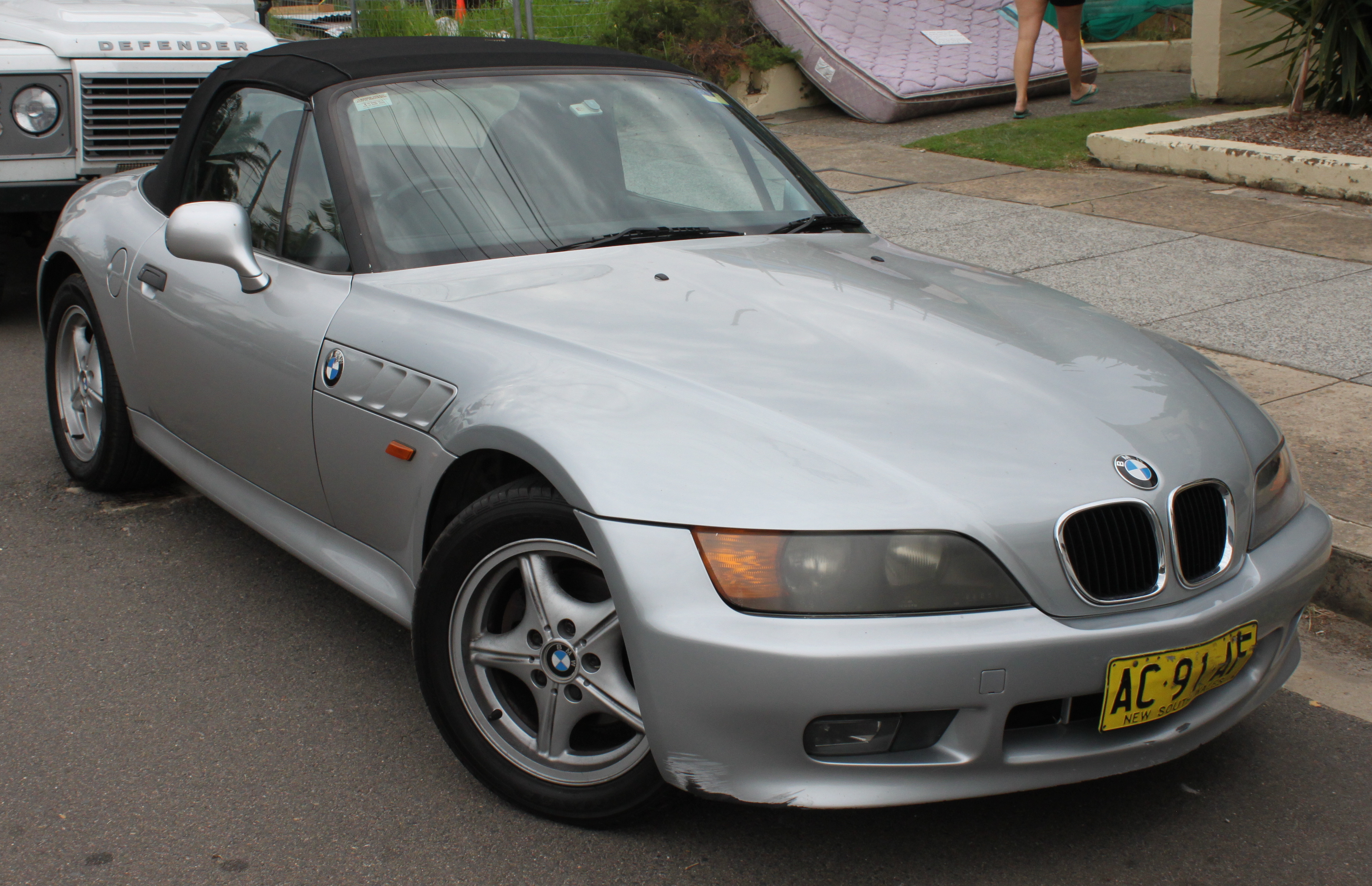
BMW Z3
"...I have to do live math to really figure this out. Z3, Z4s. I can't do slow math, let alone live math. ..."
The BMW Z3 is a small two-seat convertible roadster. It’s designed for fun driving with the top down. The podcast is comparing it to other similar BMW roadsters (like the Z4).
The BMW Z3 is a compact two-seat roadster from BMW’s lineup, known for its classic “open-top” driving feel. It’s often part of conversations about older sports cars and how they compare to other roadsters. The podcast mentions the Z3 alongside Z4s while they’re doing a quick comparison in their decision process.
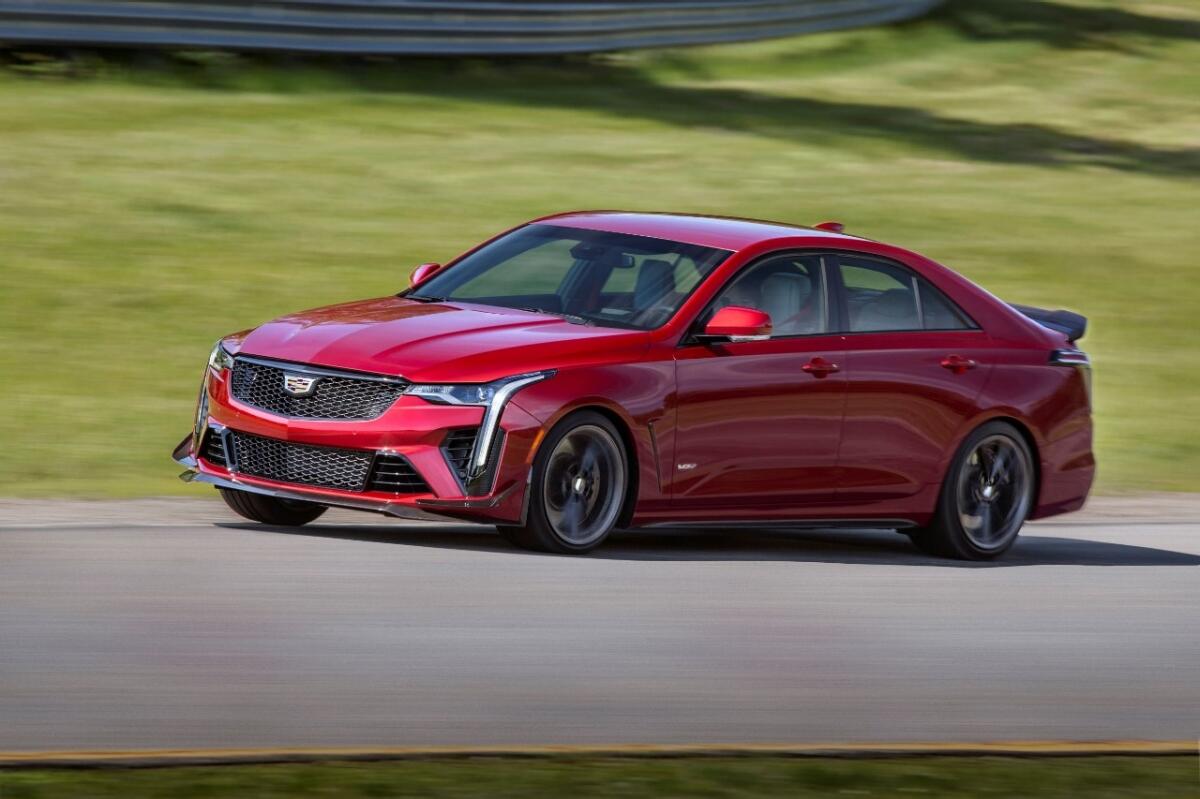
Cadillac Ct4V
"...hing and go, I'm out. Exactly. Ferrari's taking a CT4V through Europe. I get you, except our partner ove..."
The CT4 is a compact luxury sedan made by Cadillac. The CT4V is the more performance-focused version. The podcast is discussing it as a car that could be used for real trips and driving, not just as a concept.
The Cadillac CT4 is a compact luxury sedan, and the podcast references the CT4V as a performance-oriented variant. It’s mentioned in a context that includes taking the car through Europe, suggesting it’s being considered as a real driving option rather than just a showroom vehicle. The discussion is about where it fits among other performance choices.
going private
"The question is, and Olivia's going to hear me say this, the question is, is Coda really going private? Yes. Coda's really going private."
“Going private” means the organization is moving toward a more exclusive, member-only setup instead of something open to the public. The host compares it to private race clubs that become more exclusive over time.
“Going private” here is being used in a business/club-operations sense: shifting from a more public-facing model to a private, member-only model. The host compares it to private race clubs that “go private,” creating a more exclusive “country club” feel. It’s not an automotive engineering concept, but it’s a key framing for what the event/organization is doing.
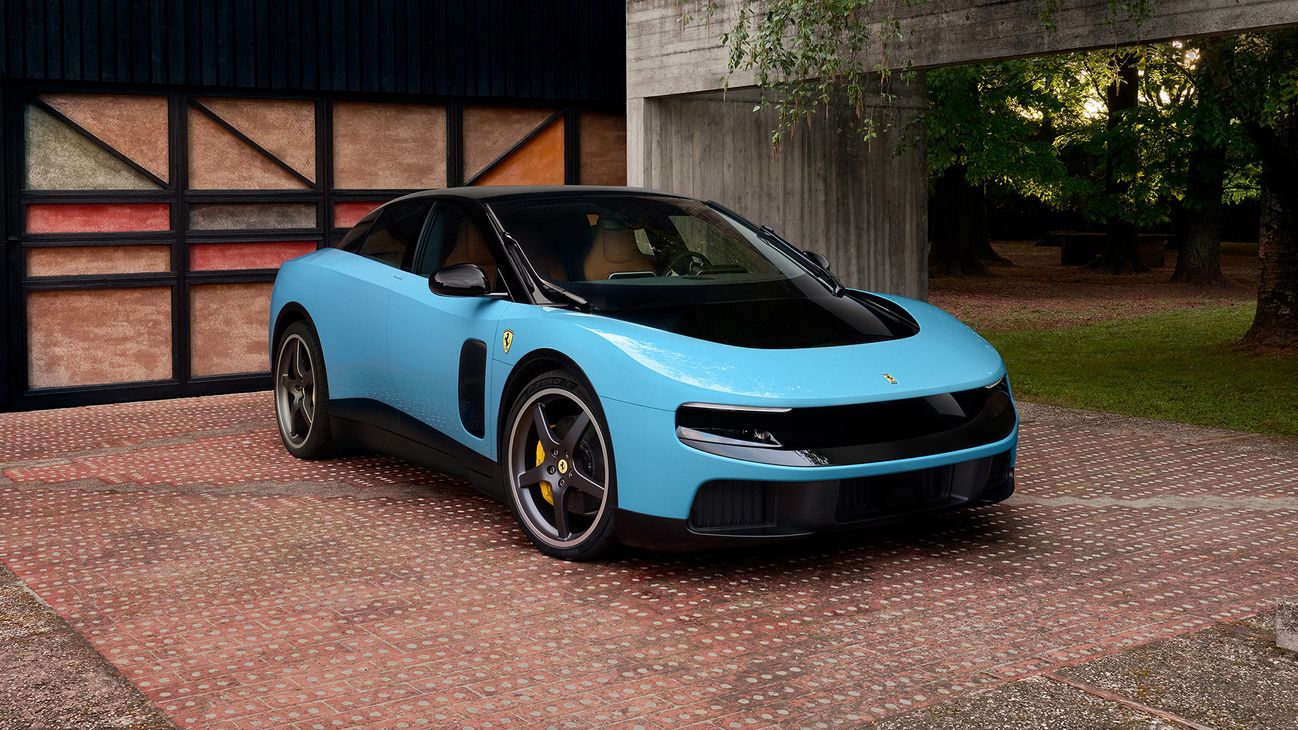
Ferrari Luce
"Somebody asked, what if the Ferrari Luce sets a blistering ring time? Okay, honestly, I could make a joke, but I'm actually going to speak to it honestly."
They’re talking about a Ferrari model they think could be extremely fast around a track. The point is that lap times don’t always translate into people remembering the car.
The host mentions a “Ferrari Luce” as an example of a car that could set a very fast lap time. The key idea is that even if a car is blisteringly quick, it may still get forgotten if mainstream attention doesn’t follow.

Tesla Cybertruck
"...ng. And I think the Luce is, I think it's Ferrari Cybertruck moment. I think it's that weird pivot that they'r..."
The Cybertruck is an electric pickup truck. Instead of using gasoline, it runs on electricity. The conversation is about how unusual and different it is compared with typical trucks.
The Tesla Cybertruck is an electric pickup truck with a futuristic, angular design. It’s discussed because it represents a major shift in what a pickup can be—powered by electricity rather than gasoline. The podcast references it as a “weird pivot” moment, comparing it to another surprising, attention-grabbing vehicle launch.
in-house B8 engine
"Progressive off-road designs ask our thoughts on the Geely Lotus developing an in-house B8 engine, the sign that their all electric switch has failed."
“In-house” means the company makes the engine itself instead of buying it from someone else. “B8” is the engine’s internal model name, like a specific version or family of that engine.
An “in-house” engine means the automaker designs and develops the powerplant internally rather than sourcing it from another supplier. The “B8” label is a specific engine family designation, implying a particular architecture or generation within that manufacturer’s lineup.
Laguna Seca
"We did cover that when we were at Laguna Seca. We were at the top of the corkscrew just a little bit ago and we did dive into that just I think two episodes ago"
Laguna Seca is a well-known road course in California, famous for its distinctive “Corkscrew” corner. The host references it as the place where they previously discussed the topic at hand.
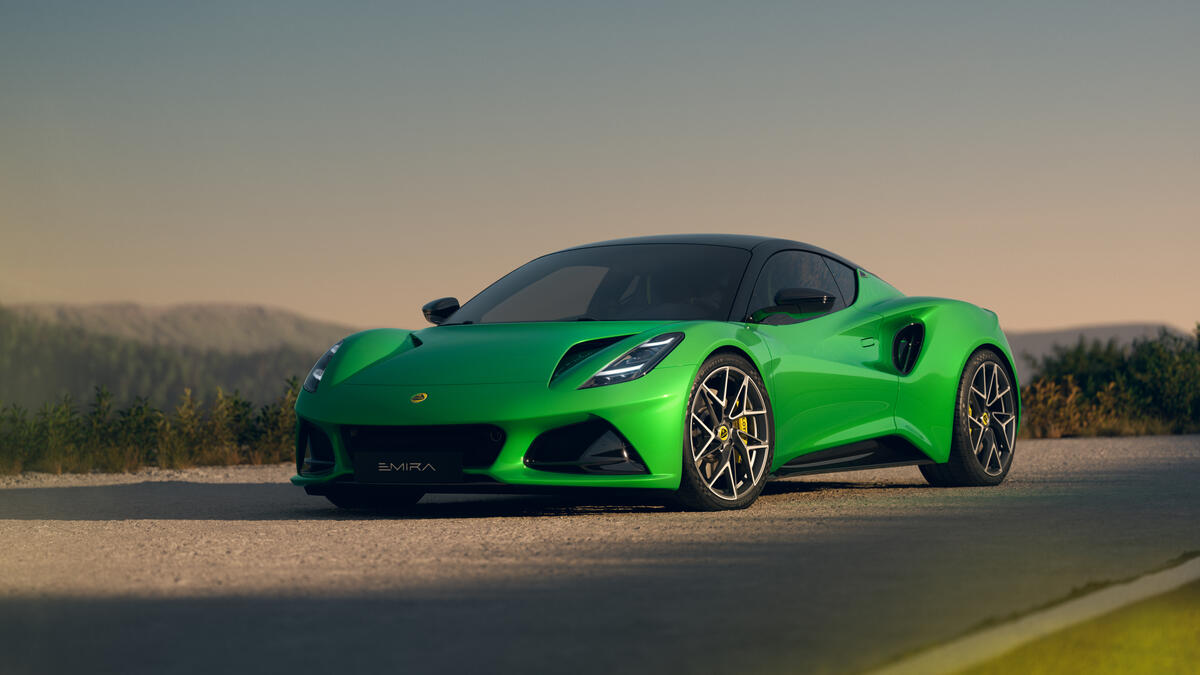
Lotus Amira
"... new model. I mean, no, hang on, hang on. The new Amira, it's more powerful, 20 horsepower, it's lighter,..."
The Emira is a sports car made by Lotus. It’s designed to feel light and handle well. The conversation is about an updated version that’s been improved with more power and lower weight.
The Lotus Emira is a modern sports car from Lotus, built to deliver lightweight, engaging handling. The podcast references a newer version update, noting it’s more powerful and lighter by comparison. It’s being discussed as an option in the context of model changes and what that means for performance.
removable top
"The new Amira, it's more powerful, 20 horsepower, it's lighter, 50 pounds and it has a removable top, which is essentially a sunroof that you have to take the panel off of and not roll back."
A removable top is a roof piece you take off by hand. They’re saying it’s like a sunroof, but instead of sliding open, you remove the panel.
A removable top is a roof panel or section that you physically take off, rather than a roof that automatically opens or slides. In this segment, the host compares it to a sunroof but clarifies it requires removing a panel instead of rolling back.
manual transmission
"So, you know, they're kind of learning from here's how customers think they want, you know, just incremental progress... So we've got the 420 now... Yeah, it's not the manual transmission. So they're going away from it, but it's incremental."
A manual transmission is the kind of car where you choose the gears yourself using a clutch and a gear stick. Here, the hosts are talking about it because getting the manual is part of why someone would want the Amira.
A manual transmission is a gearbox controlled by the driver using a clutch pedal and gear lever, rather than automatic shifting. In this discussion, it’s central because the speaker implies the manual is tied to a specific configuration of the Lotus Amira, making it a key buying factor.

2004 Boxer
"I can never get that low enough. So it just needs, it needs better seats... Price Mars looking at 2004 Boxer manual priced at $17,000. How do you get past the reliability questions with that generation?"
They’re talking about a 2004 Porsche Boxster with a manual transmission. The reason it comes up is that some cars from that era have a known issue involving a bearing inside the engine, so you want to verify whether it’s been addressed.
The speaker is considering a 2004 Porsche Boxster (referred to here as “Boxer”), specifically a manual version. This matters because certain Porsche flat-six generations from that era are associated with the IMS bearing reliability concern discussed immediately afterward.
IMS bearing
"“...what's the other thing that's wrong with those other than the IMS bearing? What's the other thing...”"
An IMS bearing is a small part inside some Porsche engines. If it fails, it can lead to serious engine problems. That’s why people worry about it when buying a used Porsche with that engine.
The IMS bearing is the Intermediate Shaft bearing used on certain Porsche flat-six engines. It can fail and cause major engine damage, which is why it’s a well-known pre-purchase and maintenance concern for those models. Enthusiasts often discuss whether there’s any preventative action or replacement strategy for the specific generation.
bore scoring
"“...The bore scoring. The bore scoring. Yeah. To my knowledge, there's not a thing that can be done about that other than there it is...”"
Bore scoring means the inside walls of an engine cylinder get scratched or worn. If that happens, the engine can lose sealing and start using oil or running poorly. It’s often not something you can just ignore or easily repair.
Bore scoring refers to damage inside an engine’s cylinder bore, where the cylinder wall gets scratched or worn. On certain Porsche flat-six engines, it’s discussed as a known failure mode related to cylinder liner/material behavior. If it’s present, it can be difficult or impossible to “fix” without major engine work.

Shelby GT350
"...drives and the Pacific Coast Highway, is a Shelby GT350 or C8 too much car to justify? That is from Dougl..."
The GT350 is a high-performance sports car based on the Mustang. It’s designed to drive hard and feel sporty, not just commute. The podcast is asking whether it’s more performance than someone really needs.
The Shelby GT350 is a performance-focused version of the Ford Mustang, built for track-capable driving and strong handling. In the podcast, it’s brought up as a question of whether it’s “too much car” compared with another option (like a C8). That frames it as a decision about balancing excitement with everyday practicality.
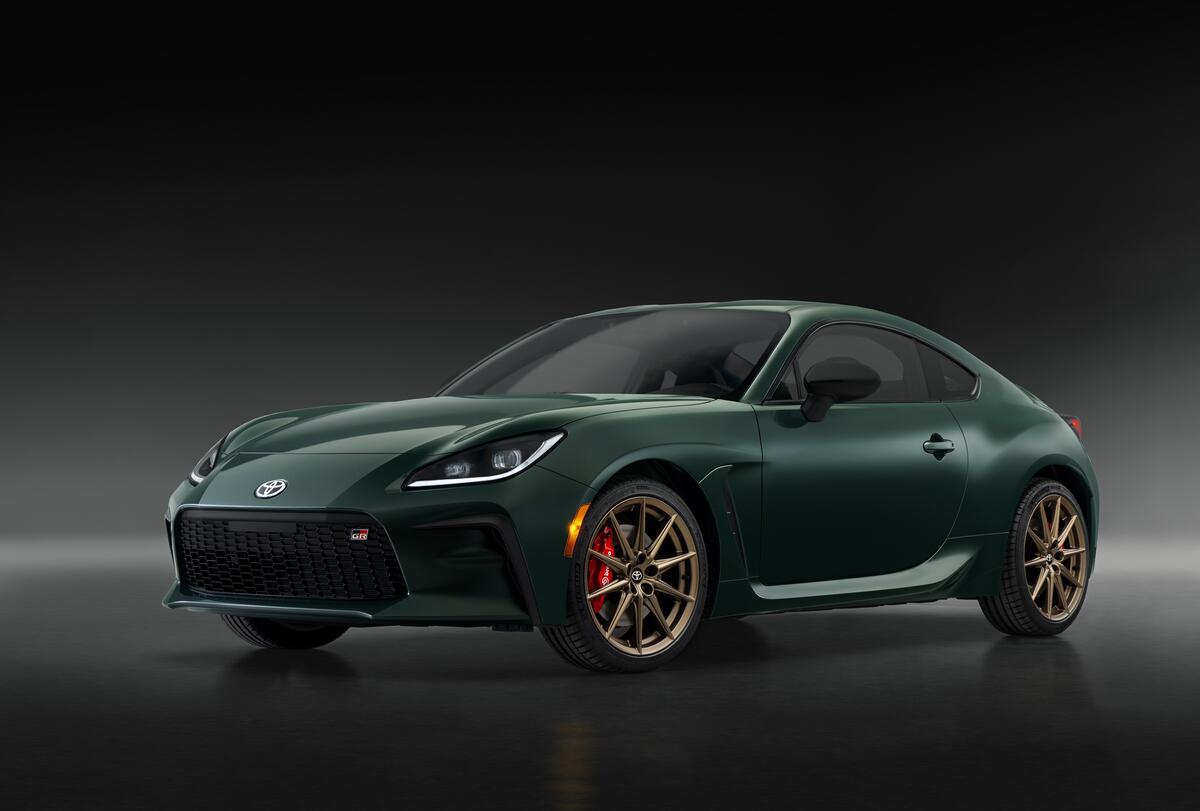
Toyota Gr86
".... 2516. Should Douglas just get the four cylinder GR86 or an ND3 RF? And you already know that kind of d..."
The GR 86 is a small sports car meant to be fun to drive. It’s powered by a four-cylinder engine and is usually chosen by people who want something sporty without spending extreme money. The podcast is comparing it to another similar-style car option.
The Toyota GR 86 is a compact sports coupe built for driver engagement, typically with a naturally aspirated four-cylinder engine. It’s often debated against other small roadsters/coupes because it aims to deliver “fun per dollar” without being overly complicated. In the podcast, it’s mentioned as a possible choice compared to an ND3 RF (a different small roadster).
horsepower rates
"“...it's why these cars exist. That's why these different models at different horsepower rates exist.”"
Horsepower rate is a shorthand for how much power a car makes and how that power is delivered across the rev range. Different models are tuned to feel different—some are more responsive at lower speeds, others pull harder at higher RPM. In the segment, it’s used to justify why different trims/models exist for different driving styles.
tight roads
"I think those tight roads you're going to benefit from the lighter, smaller car. So the 86 of the Miata to get used to driving on those roads..."
“Tight roads” means narrow streets with lots of turns close together. The idea is that a smaller, lighter car is easier to steer and control there than a big, powerful one.
“Tight roads” refers to narrow, twisty routes with frequent turns and limited straight-line space. The host’s point is that smaller, lighter cars tend to feel more controllable and less “theatrical” than heavy, high-power cars when you can’t use that power to pull away.
theater
"I think there would be less theater than the big stuff and you might want a better engine growl and more power."
Here “theater” means the car feels dramatic or showy—like it’s doing a lot even when you’re just driving. The host is saying a small car may feel more calm and controlled.
In car talk, “theater” is used to describe dramatic, attention-grabbing behavior—often from big power, aggressive tuning, or cars that feel more chaotic at the limit. The host contrasts that with smaller cars, implying they’ll be calmer and more predictable on tight roads.

Volkswagen Cc
"He was listening to an older podcast where we recommended the Volkswagen CC for someone and he cried inside. I mean, look, this is early for our question podcast."
The Volkswagen CC is a Volkswagen sedan with a more stylish, coupe-like look. The hosts are referencing an earlier recommendation they made that didn’t work out for the listener.
The Volkswagen CC is a mid-size Volkswagen sedan/coupe-styled car that was often recommended as a comfortable, stylish alternative to more performance-focused choices. In this segment, it’s mentioned as the subject of an earlier “car debate” that someone later regretted after following the recommendation.
clutch pedal
"You're going to have to have a friend or a relative who has a manual transmission and patience for you. That's really the reality. It's the only way to get it done."
The clutch pedal helps you change gears smoothly. When you press it, it lets you shift without grinding the gears.
The clutch pedal is the driver-controlled pedal that disengages the engine from the transmission during gear changes. Proper clutch use is key to smooth starts and avoiding jerky shifts or stalling.
track day
"what I do not want you to do is try to figure out how to drive a manual transmission on your first track day."
A track day is when people drive their cars on a race track instead of public roads. It’s harder on the car and the driver, so it’s not the best place to learn something new like a manual.
A track day is an event where drivers take their cars to a closed circuit for practice and driving sessions. It’s more demanding than normal driving, so learning a manual on track can increase the risk of mistakes and mechanical damage.
transmissions
"But apparently scared quite a few coaches and blew up a lot of transmissions. And now they only rent automatic."
Here, “transmissions” means the car’s gear system. If you’re learning and you shift badly, you can wear out or damage the gearbox and clutch.
In this context, “transmissions” refers to the gearbox assemblies that can be damaged by repeated hard shifting, missed gears, or clutch abuse. New manual drivers can overheat the clutch or stress drivetrain components, especially under track conditions.
roll bar
"Somebody asking here how you're liking your new roll bar. Did you brag on yourself about the fact you put in your own roll bar? Only because it was such a pain in the butt."
A roll bar is a metal safety structure inside the car. It’s meant to protect you if the car tips over, and installing one can be annoying because it often requires taking parts of the interior apart.
A roll bar is a structural safety frame installed inside the cabin to help protect occupants during a rollover or hard impact. It also changes how the car feels and can be part of track-focused setups, but installation can be fiddly because it may require removing interior trim and sometimes seats.
roll cages
"I have mad respect for tuning shops that install roll cages. But I thought, I just want to have the experience."
A roll cage is like a stronger, more complete roll bar system. It’s designed to protect you in a crash, and it’s usually harder to install than a basic roll bar.
A roll cage is a more complete, multi-point version of a roll bar that typically adds additional bars around the cabin for greater structural protection. Compared with a simple roll bar, cages are usually more involved to install and can require more interior disassembly.

Mitsubishi 3000 GT
"Whatever. As far as the twin turbo Japanese cars in the 90s, where does the 3000 GT fit? ... My concern with it is it was of the four. It was the most tech... And it was also the heaviest."
The Mitsubishi 3000 GT is a 1990s Japanese sports car that was packed with advanced features. The hosts say it’s the most complicated of the group they tested, and that complexity plus extra weight makes it more likely to have problems later.
The Mitsubishi 3000 GT is a 1990s “twin-turbo Japanese” grand-touring car known for its heavy, tech-heavy design. In this segment, the hosts compare it to the Nissan 300ZX, Mazda RX-7, and Toyota Supra, and specifically flag it as the most technologically complex and also the heaviest—two traits that can raise the odds of expensive issues over time.

Nissan 300ZX
"We put the other three, right? We did the 300ZX, we did the RX7 and we did the Supra."
The Nissan 300ZX is a well-known 1990s Japanese sports car. In this discussion, it’s one of the reference cars they already covered when trying to compare against the Mitsubishi 3000 GT.
The Nissan 300ZX is a 1990s-era Japanese sports coupe that’s often grouped with other “twin-turbo” performance cars. Here it’s mentioned as one of the cars the hosts tested before trying to line up a back-to-back comparison with the Mitsubishi 3000 GT.

Mazda Rx7
"We put the other three, right? We did the 300ZX, we did the RX7 and we did the Supra."
The Mazda RX-7 is a Japanese sports car known for having a rotary engine, which is unusual compared to most cars. The hosts mention it as one of the cars they previously tested before trying to compare with the Mitsubishi 3000 GT.
The Mazda RX-7 is a 1990s Japanese sports car famous for its rotary engine (a different design than the usual piston engines). In this segment, it’s named as one of the “other three” cars the hosts already covered for comparison.
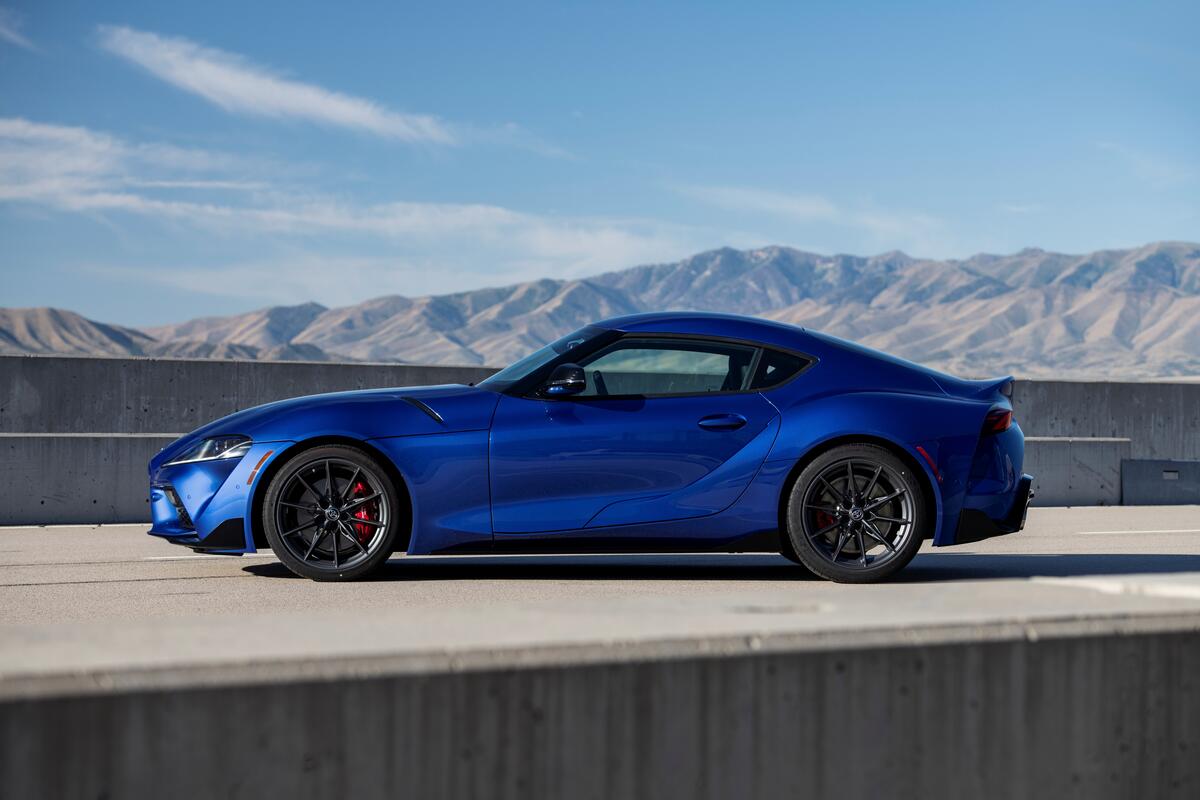
Toyota Supra
"We put the other three, right? We did the 300ZX, we did the RX7 and we did the Supra."
The Toyota Supra is a famous 1990s Japanese sports car, often talked about in the same breath as other turbo performance cars. In this segment, it’s one of the reference cars they already did before comparing to the 3000 GT.
The Toyota Supra is a legendary 1990s Japanese performance coupe that’s commonly associated with turbocharged “twin-turbo” sports-car comparisons. Here, it’s included in the set of cars the hosts already covered while trying to find a Mitsubishi 3000 GT for a back-to-back shoot.
residual value
"Okay. So you said the Tesla has bottomed out in residual value, which is a terrifying sentence. You're going to sell it."
Residual value is basically what the car is expected to be worth later. If it “bottomed out,” it means the expected future value has hit its lowest point.
Residual value is the estimated value a car is expected to have at the end of a lease or over time. Here, the host says the Tesla has “bottomed out” in residual value, meaning its resale/lease-end value has fallen to a low point.
mostly drive itself
"the rest of the time and wish you were in the Tesla because you're commuting and stop and go and you want the car to mostly drive itself."
This phrase means the car can do a lot of the driving for you—like keeping speed and helping with steering—while you still have to pay attention. The host is saying that makes commuting easier.
“Mostly drive itself” refers to driver-assistance features that can handle parts of driving, like steering and speed control, while the driver supervises. The host uses this to argue that a Tesla can reduce workload in daily commuting compared with a traditional manual sports car.
stop and go
"the rest of the time and wish you were in the Tesla because you're commuting and stop and go and you want the car to mostly drive itself."
Stop-and-go is traffic where you keep creeping forward and braking repeatedly. The host is saying that kind of driving can make a manual sports car less pleasant than an easier-to-drive car.
“Stop-and-go” describes heavy traffic where you repeatedly accelerate and brake at low speeds. The host uses it to highlight that commuting conditions can make certain driving setups—like a manual sports car—feel more work than fun.
windshield
"you drive around all the trucks and the pickups and the construction and you just go, how long until I have to replace this windshield? I mean, that, that's just the reality of it."
A windshield is the front glass of the car. The host is saying that in everyday driving—especially around trucks and construction—small cars may be more likely to get damaged by debris.
A windshield is the front glass panel designed to protect occupants and provide visibility. The host mentions it in the context of small-car vulnerability in everyday driving around trucks, pickups, and construction—where road debris can increase the chance of damage.

Acura Integra
"I'm going to say to you, Integra Type S. So you get some nice interior amenities, you still get manual transmission, but it's a much more livable commute car."
The Acura Integra Type S is a sporty Acura that’s still easier to live with day to day. The host is suggesting it as a middle ground: still fun and manual, but less loud and less harsh than the 86 for commuting.
The Acura Integra Type S is a performance-oriented compact hatchback/sedan variant that keeps a more practical daily-driving feel than a sports coupe. In this segment, it’s offered as a compromise: manual transmission for engagement, but more livable commuting manners than the Toyota 86.
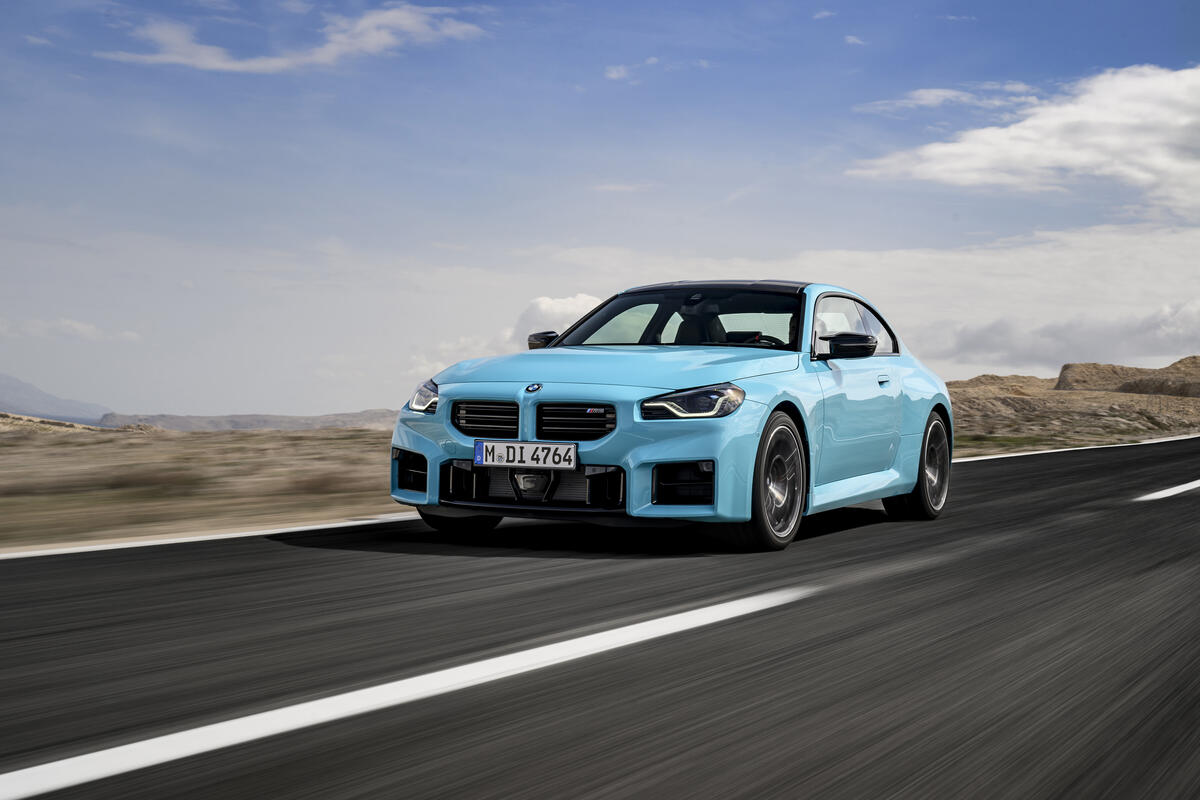
BMW M2
"I think the two, the two series is excellent. I personally prefer the prior gen. I think this one got bigger and uglier and heavier. Okay. But so prior gen, maybe even early M2. ...And that would give you a really nice commute car."
The BMW M2 is a small BMW that’s tuned for driving—more fun than a normal 2-series. Here they’re saying an older M2 can be a great daily commute car, and that it’s not flashy in a way that draws attention. You can enjoy it without constantly worrying about it.
The BMW M2 is a compact, performance-focused coupe from BMW’s M division, built for driver feel and everyday usability. In this segment, the hosts compare “prior gen” vs a newer, heavier/bigger version and discuss using an M2 as a commute car. The point is that the M2 can be a fun daily without needing constant attention from a mechanic.

BMW 2002
"The question is, have we considered owning classic classics like the BMW 2002 alpha Julia GTV, things like that?"
The BMW 2002 is a classic compact “Neue Klasse” era BMW that became a cornerstone of BMW’s enthusiast following. In this segment, it’s mentioned as an example of “classic classics” someone might own, alongside other iconic European models. The underlying idea is that these older cars are desirable but often require more care and cost.

Porsche 928
"After dumping as much money into the 928 as I did. You've been cured. You are a man cured."
The Porsche 928 is an older Porsche grand tourer—basically a classic Porsche meant for longer drives. The host says they spent a lot of money on one and it changed their mind about owning that kind of car. The takeaway is that some classics can be costly to keep running.
The Porsche 928 is a classic grand tourer known for its V8-powered, long-distance comfort and its reputation as a “proper” enthusiast classic. In this segment, the host references “dumping” money into a 928 and says they’ve been “cured,” implying ownership can become expensive and hands-on. That’s directly relevant to the debate about whether to buy older classics and how much work they demand.
sorted
"I want to buy the nicest one so that I know that it's going to be sorted and fine, but I don't want to sort it myself."
When people say a classic car is “sorted,” they mean it’s been fixed up and is in good working order. The host wants one that’s already sorted so they don’t have to do the hard work themselves. It’s about avoiding surprises and constant tinkering.
In classic-car talk, “sorted” means the car has been properly gone through—mechanically and cosmetically—so it’s dependable and not hiding major issues. The host contrasts buying a “nicest one” that’s sorted with the idea of sorting it themselves. It’s essentially shorthand for paying for a car that’s already been brought up to a trustworthy baseline.
wrench
"I am, I am no kind of wrench at all. And I don't have endless money to pay the guy that is the really good wrench."
A “wrench” is just slang for a mechanic—someone who can work on cars. The host is saying they don’t have the skills to fix cars themselves, and they also can’t afford to always pay a top mechanic. That’s why they avoid certain older cars.
A “wrench” is slang for a mechanic or shop technician who works on cars. The host says they’re “no kind of wrench” and doesn’t have endless money to pay a very good mechanic, which frames the practical barrier to owning older cars. It’s not a specific part—more a shorthand for the skill and labor needed to keep vintage vehicles running.

Jaguar E type
"But if I did a car of that era would have to be a Jaguar E type, because that's what my history is. And I would absolutely get one of those. But the idea of owning one of those terrifies me from an actual like how often is it going to run perspective?"
The Jaguar E-Type is a famous old British sports car that many people consider a dream purchase. Here, the host is saying it sounds amazing, but they worry it might not be reliable or easy to keep running. They’d likely need an expert mechanic, which could get expensive.
The Jaguar E-Type is a legendary British sports car famous for its looks and classic roadster/GT character. The host says that if they bought a car from that era, it would have to be a Jaguar E-Type, but they’re terrified by the “how often is it going to run” reality—highlighting the practical risk of vintage ownership. They also mention needing a top mechanic, implying ongoing maintenance and troubleshooting costs.
mid-engine
"Well, technically it's mid-engine. And so we'd probably do similar mid-engine kinds of cars AMG GT springs to mind, but also rear mid-engine kinds of cars too."
“Mid-engine” means the engine sits closer to the middle of the car instead of all the way in front. That usually helps the car feel more balanced and easier to steer when you’re driving hard.
A mid-engine layout places the engine closer to the car’s center, typically behind the front seats and ahead of the rear axle. This helps balance weight distribution and can improve turn-in and handling feel compared with front-engine layouts.

AMG GT
"Well, technically it's mid-engine. And so we'd probably do similar mid-engine kinds of cars AMG GT springs to mind, but also rear mid-engine kinds of cars too."
The Mercedes-AMG GT is a high-performance Mercedes sports car. They’re using it as an example of the kind of car layout and driving feel they might compare against for the GRGT.
The Mercedes-AMG GT is a performance grand tourer known for its front-mid engine layout (engine placed behind the front axle) and strong track-capable character. The host brings it up as an example of a “mid-engine kinds of cars” pairing for the GRGT.
cleaner laps
"And generally, they're pretty friendly. And the car numbers are lower than most of the competition, which means there is a better chance your car is coming home in the same shape it arrived in because there's fewer cars and you get cleaner laps."
“Cleaner laps” means you’re not stuck behind other cars or getting slowed down. With fewer cars on track, it’s more likely you can drive your lap without interruptions.
“Cleaner laps” means laps with less traffic and fewer interruptions, so drivers can maintain consistent speed and line choice. In track-day contexts, fewer cars on track can increase the odds of getting clear space to drive.
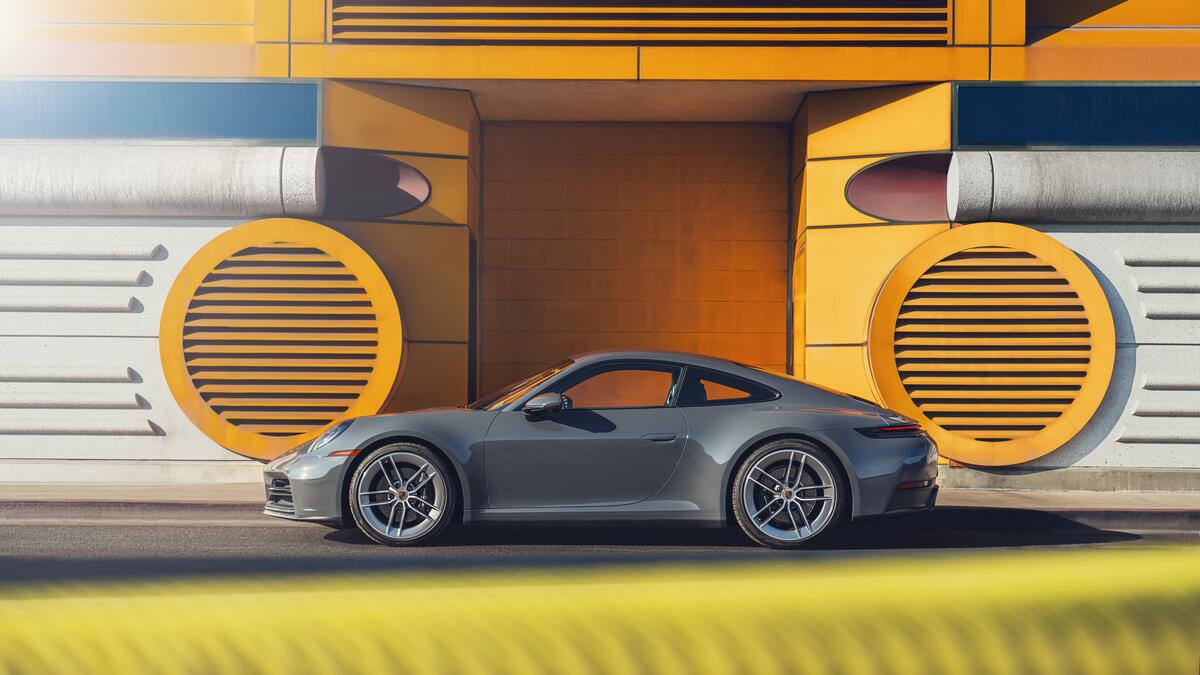
Porsche 911 (997) Targa
"I have a canned answer in spite of not being the 9-11 guy, I have to go 997, late 997 Targa in manual. I mean, just 100 grand? Like That's what the challenge is because good luck finding something like 100 grand or less."
A Porsche 911 Targa is a 911 with a roof that can open up, but it still keeps a strong fixed rear frame. In this discussion, the speaker picks the 997-era Targa and says they’d want it with a manual gearbox.
The Porsche 911 (997) Targa is a 911 variant with a removable roof section and a fixed rear structure, giving open-air driving without going full convertible. This is the specific 997-era Targa the speaker recommends for a ~$100,000 budget, and they also mention preferring a manual transmission.

Type 01
"...alists that have now driven what's it called, the Type 01 or whatever they're calling it. The long-nosed mo..."
“Type 01” sounds like a specific car model name. The podcast is talking about it because it has a very distinctive long front end, and people who have driven it are discussing it. The main point here is the unusual “long-nosed” look.
“Type 01” in this context appears to refer to a specific long-nosed vehicle they’ve discussed after driving it, likely a particular model or concept referred to by that name. The podcast frames it around enthusiasts who have driven it and the distinctive “long-nosed” design. Because the transcript doesn’t provide the make/model, the key takeaway is the car’s standout proportions and that it’s been driven and discussed by the group.
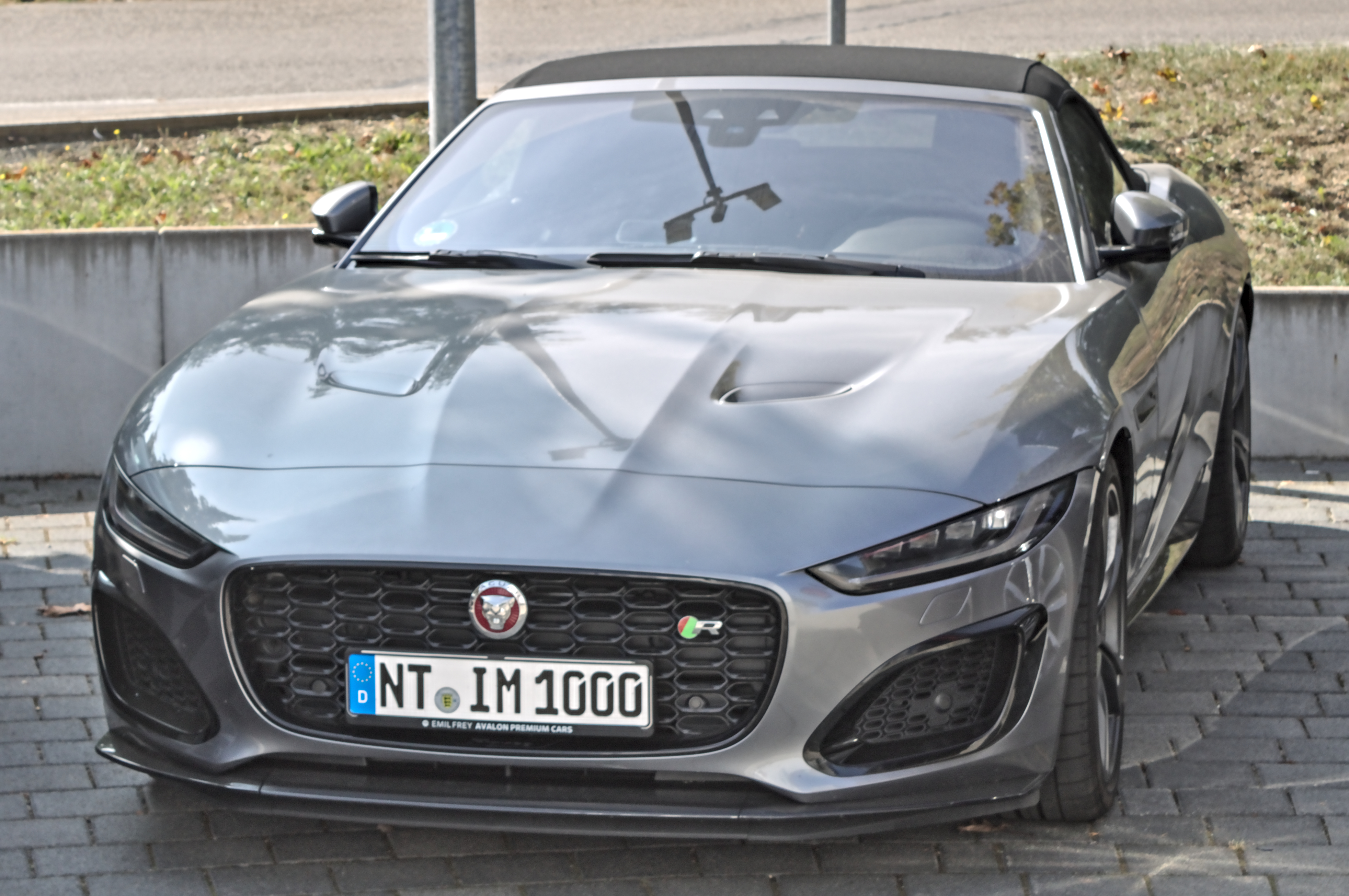
Jaguar F-Type
"but if you go on their configurator right now, you can still buy an F-Type and they're doing this completely other thing."
The Jaguar F-Type is Jaguar’s sports car. The speaker is saying Jaguar is talking about going electric, but you can still buy/configure an F-Type right now.
The Jaguar F-Type is Jaguar’s sports car line, typically known for its performance-focused styling and driving feel. In this segment, the speaker points out that Jaguar still lets you configure an F-Type even while the company appears to be moving toward an all-electric direction.
configurator
"but if you go on their configurator right now, you can still buy an F-Type and they're doing this completely other thing."
A configurator is a website tool where you pick options for a car, like color and packages. It’s being used here to show what Jaguar is still selling/letting people order.
A configurator is an online tool that lets you choose a car’s options (trim, powertrain, exterior/interior choices) and see what you can order. Here, it’s used to show that Jaguar’s ordering options still include the F-Type despite broader EV plans.

Gordon Murray T33
"You know what? I'm going to go T33. That's good. The new Gordon Murray T33. That's good."
The Gordon Murray T33 is a new, high-end supercar made with a strong focus on being light and fun to drive. In this segment, the host is saying it’s the car they’d choose, so it’s treated like a real enthusiast option.
The Gordon Murray T33 is a modern supercar designed by Gordon Murray, known for its lightweight, driver-focused approach and distinctive aerodynamic bodywork. It’s notable here because the host is specifically referencing the “new Gordon Murray T33,” implying it’s a current, enthusiast-relevant release rather than a generic supercar pick.

McLaren W1
"Yeah, I like that. You know, when the McLaren W1 was announced, I didn't have too many nice things to say for it to say about it, but I have actually kind of come around a little bit more and I'm quite intrigued. I'm intrigued with the long tail on what that engineering for the rear spoiler does"
The McLaren W1 is a top-tier McLaren supercar. The host is talking about its rear spoiler and “long tail,” which are shapes meant to help the car stay stable and grip the road at speed.
The McLaren W1 is a flagship McLaren hypercar, and the host is discussing its aerodynamics—specifically the “long tail” and how engineering for the rear spoiler affects downforce and stability. That makes it more than a name-drop: the conversation is about what the design is doing on the car.
rear spoiler
"I'm intrigued with the long tail on what that engineering for the rear spoiler does"
A rear spoiler is the wing-like piece on the back of a car. It helps the car stay planted by changing how air flows over it, which can improve grip and stability.
A rear spoiler is an aerodynamic device mounted at the back of a car to manage airflow. On high-performance cars, it’s used to increase downforce (pushing the car toward the road) and improve stability, especially at higher speeds.
spec Miata's
"People have pushed into Miata's, spec Miata's and even higher series than that. We know these stories"
“Spec” racing means the cars have to follow a ruleset that keeps them more similar to each other. That way, the race is more about driver skill than who spent the most money.
A “spec” racing series limits what you can change on the car, so competitors are judged more on driving than on expensive custom builds. In the Miata world, “spec Miata” typically means a ruleset that standardizes key parts and performance so the racing stays close.

Cayman
"I've been actually talking with with John, he helped us rent the Cayman that we're in and he had a great point saying that tracking is hard,"
The Porsche Cayman is a sports car with the engine in the middle. Putting the engine near the center helps the car handle more predictably, which makes it popular for track days.
The Porsche Cayman is a mid-engine sports car, meaning the engine sits closer to the center of the car for balanced handling. That layout is a big reason it feels so “trackable,” and it’s a common choice for track rentals and coaching sessions.
David Patard
"Even our experience in friendship with David Patard in Europe. Yes, he's so fast. He's so fast around the ring."
David Patard is a real race driver. The hosts mention him because he’s very fast and also likes helping less-experienced drivers learn.
David Patard is a racing driver who’s referenced here for his speed and coaching interest. The hosts use him as an example of someone with serious endurance-racing experience who still enjoys teaching others.

Cadillac Escalade
"...'s up, Chris? We've driven it. We put it with the Escalade. Yeah. Where does that sit in? Who did they make ..."
The Escalade is a big luxury SUV. It’s built to carry people comfortably and usually comes with lots of features. The discussion is about how it compares to another luxury SUV option.
The Cadillac Escalade is a large luxury SUV known for comfort, space, and a premium feature set. It often comes up in debates because it’s a mainstream “big luxury” choice with strong presence and practicality. The podcast mentions it alongside another vehicle to compare where it “sits” in the lineup and who it’s for.

Nissan Armada
"... conversation. And I say that because the current Armada is actually really good. Just the Armada. And so ..."
The Armada is a large Nissan SUV. It’s built for families or groups that need more seating and space. The podcast says the newer version is better than people might expect.
The Nissan Armada is a full-size SUV aimed at buyers who want space, comfort, and a traditional three-row layout. The podcast notes that the current Armada is “actually really good,” suggesting it’s being taken seriously rather than dismissed. It’s mentioned as part of a broader conversation about what makes sense to buy.
Nismo
"Okay. So why isn't the Nismo like, and then we did this, the Nismo like just a little better"
NISMO is Nissan’s performance brand. It usually means the car gets sportier tuning and upgrades, so the hosts are questioning why the NISMO Armada doesn’t feel like a bigger improvement.
NISMO is Nissan’s performance brand, used for higher-output engines, sportier tuning, and track-oriented upgrades. When the hosts ask “why isn’t the Nismo like just a little better,” they’re comparing the NISMO treatment to what they expected from the Armada’s already-strong baseline.
hardtail
"Where are you at? You'd have to get it. Yeah, I think you'd have to go hardtail to pull that off new."
A “hardtail” usually means a bike with no rear suspension. Here it’s being used as a metaphor, not a car part.
“Hardtail” is a bicycle term meaning a frame with no rear suspension (only front suspension, if any). In the transcript it’s used as a metaphor for needing the right setup to “pull that off,” not as an automotive component.

E63 Amg
"... any other options at 45K than the W212 AMG? W212 E63 AMG. You could get a used three series wagon, little ..."
The E 63 AMG is a high-performance version of a Mercedes E-Class sedan. It’s designed to be faster and more sporty than a regular E-Class. The podcast mentions it as a possible used option within their budget.
The E 63 AMG refers to a high-performance Mercedes-Benz E-Class variant tuned by AMG, known for strong acceleration and a sportier driving setup than standard models. In the podcast, it’s mentioned as one of the alternatives they could get around a budget figure. That makes it part of a “what should I buy?” discussion focused on performance and value.

BMW E63
"... any other options at 45K than the W212 AMG? W212 E63 AMG. You could get a used three series wagon, lit..."
The BMW 6 Series is a luxury car meant for comfortable, longer-distance driving. In the podcast, it’s brought up while comparing different used options at a certain price point. They’re trying to decide which car makes the most sense for what they want.
The BMW 6 Series is a luxury grand touring-style car, typically positioned as a more comfortable, higher-end alternative to smaller BMW models. In the podcast, it’s mentioned as part of a comparison while they’re considering options around a certain budget. The point is to weigh what you get in a used luxury BMW versus other choices.

Porsche Panamera
"...r the three series wagon. You can also get an old Panamera for that kind of money. Yeah. Which is a nice wag..."
The Panamera is a Porsche luxury car that’s built like a sedan. It’s meant to be more practical than a typical sports car while still feeling sporty. The podcast brings it up as something you can buy for the money they’re discussing.
The Porsche Panamera is Porsche’s luxury performance sedan, designed to combine everyday usability with sports-car capability. It’s discussed as a way to get Porsche driving dynamics in a more practical body style. In the podcast, it’s mentioned as an alternative purchase option at a certain budget level.

Cadillac Ctsv
"Automatic CTSV wagon. Oh, that's right. 2012 Automatic CTSV wagon. The autos. You're right. The manuals are way out of that, but the autos would work."
This is a 2012 Cadillac CTS-V wagon, which is a supercharged, very fast version of the CTS. They’re saying that if you want one, the automatic version is the one you’re more likely to find.
The 2012 Cadillac CTS-V wagon is a rare high-performance wagon built around the CTS-V’s supercharged V8 character, with the “V” badge indicating serious track-capable tuning. In this segment, the hosts specifically note that the automatic version is the realistic route because manual availability is limited, but the auto still delivers the core CTS-V wagon appeal.
Tale of the Dragon
"Well, as you know, last year at this time, we went out and did Tale of the Dragon. And people were like, come back and do Tale of the Dragon."
This is a driving event that people do to experience a famous twisty-road area. The hosts are saying they already went there last year and are planning different trips since then.
“Tale of the Dragon” refers to a driving event built around the famous road network near Deals Gap (often associated with the Dragon). The hosts mention it as a recent adventure and explain why they chose a different region afterward.
bigger wheels
"It has given that car a new life. I can go through that. It's so fun. I have so much fun with it now. Every time you drive over and we podcast, you say, I almost fell in my face getting out because it's like three feet taller than I thought it was."
Bigger wheels usually means larger rims (and often taller tires). That can make the car sit higher, so getting in and out feels awkward compared to before.
“Bigger wheels” usually means increasing wheel diameter and often using taller tires, which raises the vehicle’s ride height. That changes how the car feels to enter/exit and can affect steering feel and suspension behavior.
ride height
"Yeah, because of course, we own two kions. So I'm used to the ride height of the one we normally use. And then I step out of the Rubik's eye and practically fall down and like, wait, it's three"
Ride height is how high the car sits off the ground. If it’s higher than you expect, stepping out can feel like you’re climbing down from a taller platform.
Ride height is the distance between the ground and the car’s body/suspension at rest. Changing ride height (for example, by fitting larger wheels/tires) affects entry/exit height, ground clearance, and can also influence handling and tire wear.
streetable track car
"Streetable track car or trackable street car. I'll tell you personally, I want a car I can drive daily that is a street car that doesn't embarrass itself on track,"
A “streetable track car” is a performance car you can drive on normal roads, but it’s also good enough for track days. It’s the goal of having one car that can do both.
A “streetable track car” is a car set up to be driven legally and comfortably on public roads, but also capable of being driven hard on a track. The host is using it to describe the ideal compromise: daily usability without embarrassing itself on track.
trackable street car
"Streetable track car or trackable street car. I'll tell you personally, I want a car I can drive daily that is a street car that doesn't embarrass itself on track,"
A “trackable street car” is a car you can drive normally, but it’s set up so it won’t fall apart when you take it to a track day. The host is weighing how realistic that compromise is.
A “trackable street car” is the same idea from the other direction: a normal street car that’s equipped (tires, brakes, cooling, suspension, etc.) so it can handle track driving. In this segment, it’s part of the host’s “one car for everything” debate.
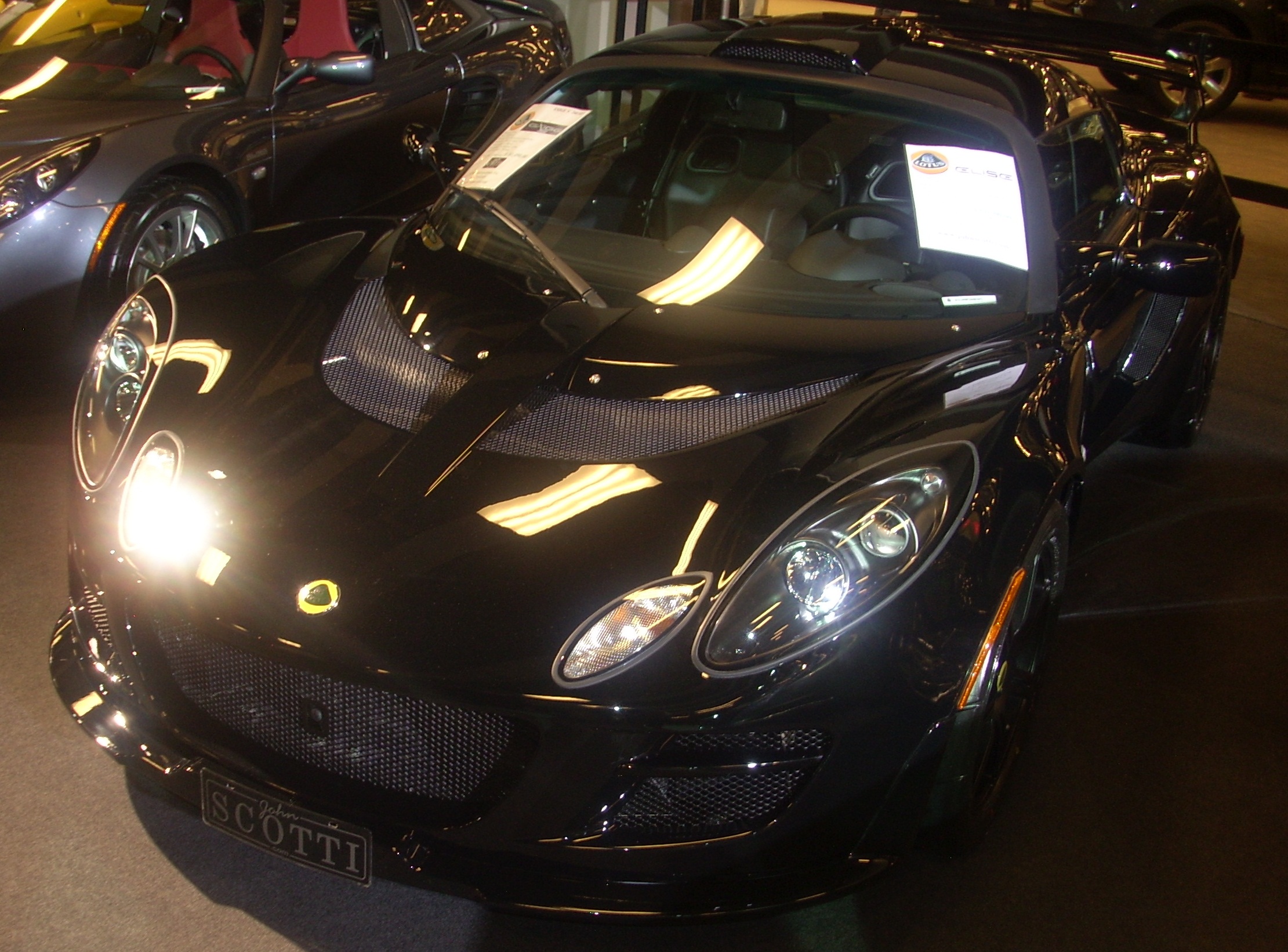
Lotus Elise
"I mean, this is a conversation I have with a lot of people about my Amira. I love my Elise and I cannot believe that I can say I have an Elise and an Amira. That's ridiculous. But I love my Elise and if you're having a driving experience, it's Elise. Elise just wins, okay?"
The Lotus Elise is a small, light sports car that’s really fun to drive. Here, the host is saying it’s the better choice when you care most about how it feels on the road and especially on a track day.
The Lotus Elise is a lightweight, driver-focused sports car known for sharp handling and a very engaging “on-demand” feel. In this segment, the host contrasts it with another car by saying the Elise “just wins” for the driving experience, especially when talking about track capability.
cruise control
"I'm not going to hurt myself if I feel like all I'm going to do today is drive and I have no cruise control into 1000 miles of the Amira is the car."
Cruise control is a feature that keeps your car at a steady speed without you holding the gas pedal. The host mentions it because it makes long drives easier.
Cruise control is a driver-assistance feature that holds a set speed automatically. The host brings it up to emphasize everyday convenience—especially for long-distance driving—when comparing their cars.
enthusiast trap
"So I think of the trade off and I think this is the great enthusiast trap that we all fall into. It's like, well, I want this a little bit better on track. I track four times a year, but now it's a great track car."
An “enthusiast trap” is when you buy a car for the fun parts (like track days) but it ends up being miserable for normal driving. The host is saying you can end up spending more time dealing with the downsides than actually enjoying the car.
An “enthusiast trap” is the tendency to buy or build a car for track performance, then realize it’s annoying or punishing for everyday use. The host describes the cycle: you want it “a little bit better on track,” but then it’s too loud, too uncomfortable, and you end up not enjoying it as a daily driver.
Genesis
"but they're kind of poser cars. Like there's so many of them just driving around. And if you see that car, it's like, wow, that needs to be on track. But what if car companies started really asking themselves that question about like Genesis?"
Genesis is a luxury car brand from Hyundai. The host is using it as an example of a brand that should think about whether its cars are actually good for both everyday driving and track days.
Genesis is Hyundai’s luxury brand, and the host brings it up as an example of a manufacturer that should be asking whether its cars work as both daily drivers and track-capable machines. The discussion is about lineup breadth and how well the cars match real enthusiast use.
Hyundai
"But what if car companies started really asking themselves that question about like Genesis? Well, Hyundai's doing that to themselves like, hey, we've got this broad selection."
Hyundai is the mainstream automaker behind the Genesis luxury brand. The host is saying Hyundai is making cars that enthusiasts are taking seriously, including for track days.
Hyundai is discussed as a company that’s actively evaluating its own lineup for track capability and enthusiast appeal. In this segment, the host credits Hyundai’s approach with producing cars people are “discovering” and “rediscovering.”

Hyundai Genesis
"...really asking themselves that question about like Genesis? Well, Hyundai's doing that to themselves like, h..."
Genesis is Hyundai’s luxury car brand. The podcast is talking about how people decide whether to consider it when shopping for a nicer car. It’s more about the brand choice than a specific model’s features.
Genesis is Hyundai’s luxury brand, and the podcast mentions it as something people are questioning—whether it’s a brand worth considering. It comes up in a debate about how Hyundai is positioning itself in the luxury space. The discussion is about brand strategy and what buyers might be thinking when they see “Genesis” as an option.

Hyundai Elantra
"...ey're great on track. Everybody's discovering the Elantra N, it feels like, or rediscovering it. Like, you ..."
The Elantra is a compact car. The podcast is talking about the Elantra N, which is a sportier version that some people are finding is surprisingly good, including for track driving. The point is that it can be both practical and fun.
The Hyundai Elantra is a compact car, and the podcast specifically points to the Elantra N as a performance version that people are noticing again. It’s mentioned in the context of track capability and renewed attention to how well it can perform. That makes it relevant to everyday-driver debates because it’s a practical car that can still be sporty.
Elantra N
"ends up with a student with an Elantra N. And then after that goes and buys an Elantra N. And like [3667.4s] at the next event, we see the coach is like, oh, that's my brand new Elantra N."
The Hyundai Elantra N is a sportier, higher-performance version of the Elantra. It’s the kind of car that can get people excited enough to go buy one after they’ve tried it or heard about it.
The Hyundai Elantra N is a performance version of the Elantra, built around a sporty turbocharged setup and track-focused tuning. In this segment, it’s used as an example of how a “coach” influences a student to buy the same hot hatch.
straight line acceleration
"I'm going to tie this back together with EVs, [3674.5s] because it can no longer be about just straight line acceleration."
Straight line acceleration is how fast a car can go from a stop in a straight line. The point here is that EVs aren’t only interesting for that one number—they affect how the car drives more broadly.
“Straight line acceleration” is how quickly a car can speed up in a line, usually measured with 0–60 mph or quarter-mile times. The host argues that with EVs, the conversation can’t just be about this because EVs also change the driving experience in other ways.
EVs
"I'm going to tie this back together with EVs, [3674.5s] because it can no longer be about just straight line acceleration."
EVs are cars that run on electricity from a battery. In this discussion, they’re mentioned because electric cars make it harder to focus only on “how fast it goes in a straight line.”
EVs are electric vehicles, powered by one or more electric motors instead of an internal-combustion engine. The host uses EVs to set up a shift in what matters—moving beyond simple drag-style acceleration to how cars perform on track and in real driving.

Hyundai Ioniq
"It has that Ioniq five thing about it where it looks like a hatch. That's not a hatch. [3716.2s] you."
The Hyundai Ioniq 5 is an electric Hyundai with a very recognizable, modern shape. The host is saying the imagined car looks a lot like the Ioniq 5’s design style.
The Hyundai Ioniq 5 is an EV known for its distinctive, SUV-like styling and hatchback-like proportions. The host compares the “thing” they’re imagining to the Ioniq 5’s look, noting it resembles a hatch shape even if it isn’t technically one.
front engine cars
"The reality is that if you have only ever driven front engine cars, you put the engine here and it is so much more evident, plus the changes where the vibration is."
Front-engine cars have the engine in the front of the car. Since it’s farther from the driver, the engine noise and vibrations can be less noticeable inside the cabin.
Front-engine cars put the engine at the front of the vehicle, usually ahead of the driver. Compared with mid-engine layouts, the engine is farther from the cabin, which can reduce perceived noise and vibration levels for some drivers.
tinnitus
"I've known people with tinnitus that has a lot of problems with a mid engine car. And they don't have a problem with the front engine car has to do with how far away the engine, what engine noise is it making, levels of frequency and vibration."
Tinnitus is a condition where a person hears ringing, buzzing, or other sounds without an external source. In the context of car choice, the speaker is linking tinnitus sensitivity to how engine noise and vibration frequencies are transmitted in different engine layouts.
lightly option base
"Devin's our mid-Atlantic regional owner asking about the 911 approaching 200,000 for a lightly option base."
“Lightly optioned” means the car was built with fewer factory extras. The idea is that a simpler car can be easier to live with over a long time.
A “lightly optioned” car is one ordered with fewer factory add-ons and upgrades than most comparable builds. In the context of a Porsche 911 nearing 200,000 miles, it can matter because fewer options can mean fewer potential failure points and a simpler ownership experience.
Mid Ohio
"We've got a request for a hosting event at Mid Ohio. Yes, there's a lot of tracks we're investigating..."
Mid-Ohio is a race track in Ohio where people go to drive cars on track. It has a variety of turns, so it’s a good place to see how well a car handles.
Mid-Ohio refers to Mid-Ohio Sports Car Course in Ohio, a road-course venue used for racing and track-day events. It’s known for a mix of fast sweepers and technical corners, which makes it a good test of braking, traction, and overall chassis balance.
Lime Rock
"Mid Ohio has definitely come up. So, has Lime Rock and others. Road America's come up."
Lime Rock Park is a smaller race track in Connecticut with lots of corners close together. That means handling and braking matter a lot there.
Lime Rock Park is a road course in Connecticut that’s famous for its short length and high corner density. Because it doesn’t have long straights, cars tend to be judged heavily on turn-in, traction, and braking consistency.
Road America
"So, has Lime Rock and others. Road America's come up. Yep. Yeah, Road America be awesome."
Road America is a well-known race track in Wisconsin with long stretches and fast corners. Cars that do well there usually have strong power and stable handling at speed.
Road America is a major road course in Wisconsin known for long straights and fast, flowing corners. That combination makes it a strong test of top-end power, cooling, and high-speed stability.
Request an Explanation
Heard something you'd like explained? We'll add it to this episode.
Sign in to request explanations for terms you heard.
Want to learn more?
Browse our glossary for plain-English explanations of automotive terms, jargon, and concepts.
Help improve this episode
See something that's not quite right? Our annotations are AI-generated and can sometimes miss the mark. Click the flag icon on any annotation to suggest a correction.