
About this episode
“Not Dave Attenborough” bounces from car chat to comedy and then into something more serious. The hosts riff on David Attenborough—“We enjoyed the new. BYD Atto 3, which is the Attenborough 3.”—and get into driver-assist “SDA” quirks, plus listener stories about a “wet belt change at a cost of £1.15,000.” Later, they trade convertible and rare-car details (Ferrari 360 Spider, Renault SpaWet, Morgan Super Sport) before shifting to mental-health support, including CALM’s hotline and encouraging people to talk before “the brink of total despair.”
Jonny and Richard pay a belated 100th birthday tribute with a surprising fact about Sir David Attenborough. Also in this episode, a lizard for a car alarm, a strimmer mishap, the Peugeot 1007 and James Bond, the PR power of swans, a haughty lady and a pastry, two delightful roofless cars from Car & Classic, the Morgan Supersport, Jello Biafra’s Celica, Tiffany in Staffordshire, and midnight vacuuming. WARNING: Around 50 minutes into this episode there is a chat about mental health and a recent incident that some listeners may find distressing. There is a warning in the show when it’s coming up. If you’re struggling, or you know someone who is, there are some links below to places that can help and people you can talk to.
For early, ad-free episodes and extra content go to patreon.com/smithandsniff
To buy merch and tickets to live shows go to smithandsniff.com
This episode is sponsored by Car & Classic https://candc.li/uc1yqz
To get 10 percent off any order of Duramat garage flooring got to duramat.co.uk and use discount code SSG10
CALM: https://www.thecalmzone.net
The Samaritans: https://www.samaritans.org or call 116 123
Hosted on Acast. See acast.com/privacy for more information.
SDA
"He's sometimes referred to as SDA. So David Attenborough. SDA? SDA, I know. That's like some sort of safety system that helps with your Euro NCAP score. Yes. Isn't it? Yes. SDA is standard."
“SDA” here sounds like a car safety/driver-assist feature. The hosts say it can be annoying (“intrusive”) but that you can turn it off.
In this segment, “SDA” is treated as an automotive acronym tied to safety systems and scoring (the hosts connect it to Euro NCAP). They also describe it as intrusive but turnable off, suggesting it’s a driver-assistance feature that can be disabled.
Euro NCAP
"SDA is standard. Yes, we enjoyed the new. BYD Atto 3, which is the Attenborough 3. Oh, yes. It is Atto, isn't it? I was going to say, but some car they go, yes, we enjoyed it."
Euro NCAP is an organization that tests cars for safety and gives them ratings. The hosts are saying that certain safety features can help a car score better in those tests.
Euro NCAP is Europe’s vehicle safety testing program that rates cars based on crash protection and safety-assist technologies. When the hosts mention it alongside “SDA,” they’re referencing how safety systems can affect a car’s safety score.
streaming stumble / gaming-style driving joke
"I spent a bit more time outside and I had a really good weekend gardening. And although I did fall over while streaming, but I'll talk to you about that shortly. Nothing worse than a streaming stumble. Nothing worse. The throttle wide open."
This part is mostly a joke about streaming and falling while playing, with a playful car-themed comparison. It’s not really about car tech.
This slice is mostly a humorous aside about streaming and a “fall” while playing/using a setup, with a car-adjacent joke about being “strapped into” a machine. It’s not a technical automotive deep dive, but it’s a distinct comedic beat.
throttle wide open
"And although I did fall over while streaming, but I'll talk to you about that shortly. Nothing worse than a streaming stumble. Nothing worse. The throttle wide open."
“Throttle wide open” means you’ve fully floored the accelerator. That tells the car to give you maximum power.
“Throttle wide open” means the accelerator pedal is fully pressed, commanding maximum engine power (or maximum torque request in an electric vehicle). In performance driving or diagnostics, it’s a common way to describe a worst-case, high-load condition.
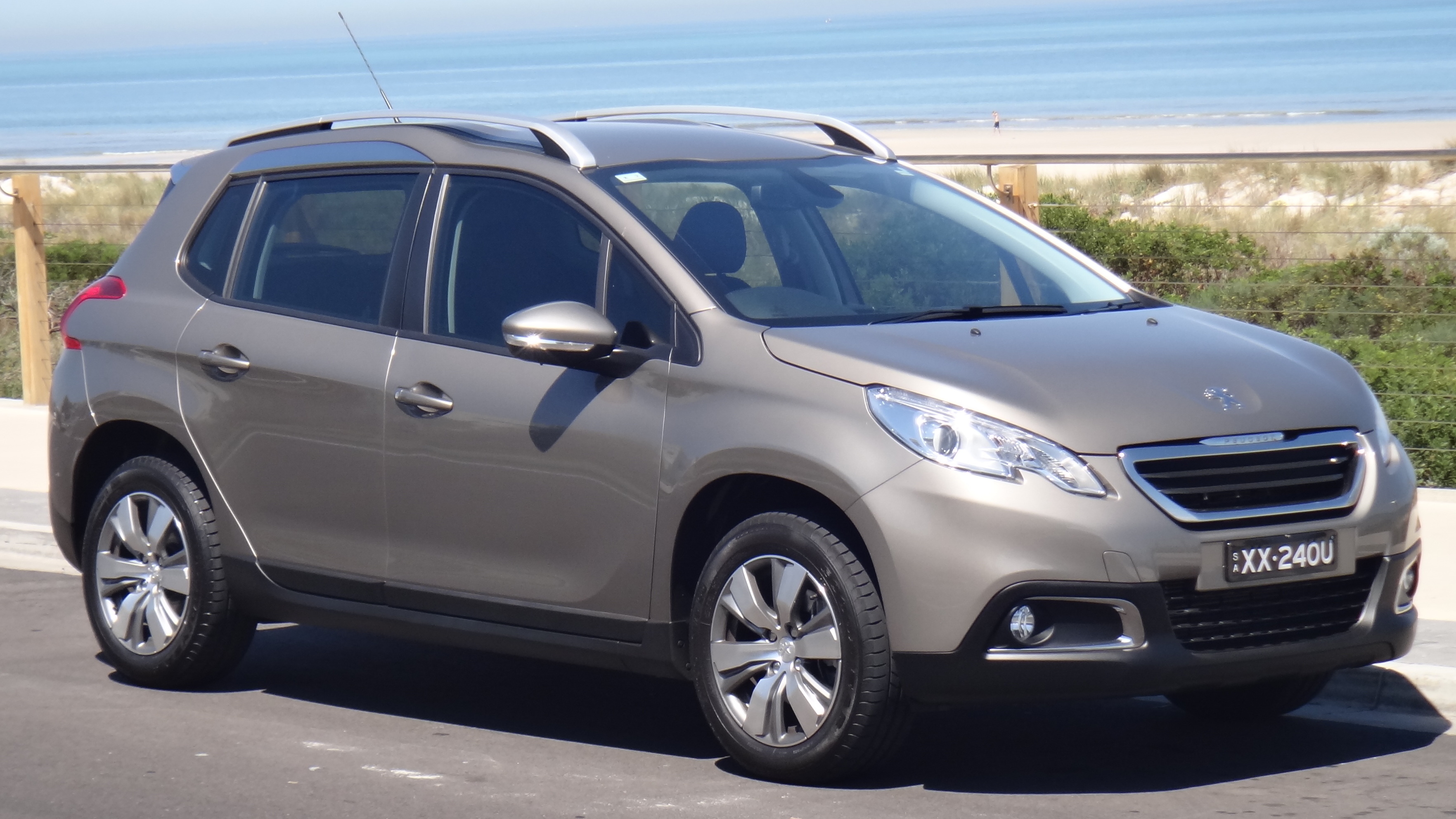
2021 Peugeot 2008 GT Premium 1.2 manual
"Alex who said, listening to Johnny's recent Nutribullet experience reminded me of a time after our son was born when my wife in her state of postpartum brain fog and lack of sleep accidentally left our 2021 Peugeot 2008 GT Premium 1.2 manual."
This is a Peugeot 2008 crossover. The “GT Premium” is a nicer trim level, and “1.2 manual” means it has a 1.2-liter engine and a manual transmission.
The Peugeot 2008 is a small crossover, and the 2021 GT Premium trim is a higher-spec version. In this case it’s a 1.2-liter engine with a manual gearbox, which matters because maintenance items and service intervals can differ by powertrain.
wet belt change
"2021 Peugeot 2008 GT Premium 1.2 manual. Excellent specificity, specificity, which he adds is due for a wet belt change at a cost of £1.15,000."
A “wet belt” is a timing belt that sits in oil instead of running dry. Replacing it is a bigger job than many people expect, which is why it can be very expensive.
A “wet belt” refers to a timing belt that runs in an oil bath (wet-running) rather than dry. That design affects service procedures and costs, because the engine may need oil-related work and careful reassembly when the belt is replaced.
Using a Ring doorbell and a car app to time long idling
"We worked out the times using the Ring doorbell and the Peugeot app that you can have on your phone."
They talk about using phone/smart-home tools to figure out how long the car was left running. One tool is a doorbell camera, and another is a Peugeot phone app.
The hosts discuss using smart-home and phone apps to measure how long a car was left running. They reference a Ring doorbell for timing and a Peugeot app for monitoring.
90 degrees C
"It was absolutely fine. The temp was rock solid at 90 degrees C."
That’s a temperature reading: 90°C (about 194°F). They’re using it to suggest the car stayed at a safe, steady temperature while idling.
“90 degrees C” refers to a temperature of 90°C, which is about 194°F. In the context of leaving a car running, it’s being used as a sign that the engine bay/cooling system temperature stayed stable during long idling.
boroscope
"I can't see, I can't get a boroscope into it and check out its internals, but I feel like it's okay."
A boroscope is like a tiny camera on a flexible stick. It lets you peek inside something without taking it apart.
A boroscope is a small inspection camera you can insert into tight spaces to look at internal components without fully disassembling them. Here, the host says they can’t access the Nutribullet’s internals with one, so they’re relying on temperature and behavior instead.

Ferrari 360 Spider
"Oh. Oh, hello. Yeah. It's a, it's a, it's a not red three paddle Ferrari 360 spider with only 20,000 miles on the clock, uh, in this blue Tour de France color."
This is a Ferrari model called the 360 Spider. It’s special because it’s a mid-engine car (the engine sits behind you) and this one is described as having a manual gearbox with three pedals.
The Ferrari 360 Spider is a mid-engine V8 Ferrari known for its open-top “Spider” body style and three-pedal manual option. In this segment, the hosts focus on a specific example with manual transmission, low mileage, and service history—details that matter a lot for classic Ferrari buying decisions.
Tour de France color
"…in this blue Tour de France color. Yes. Which is a fabulous color."
Ferrari sometimes uses special paint names for certain colors. Here, “Tour de France color” means a particular blue shade, and the hosts think it looks especially good on this car.
“Tour de France” is a distinctive Ferrari paint color name that’s associated with a particular blue shade. In this segment, it’s called out because color and interior spec strongly affect how desirable a specific Ferrari example is to buyers.
cam belt changes
"…20,000 miles, um, 13 services, four cam belt changes."
The cam belt helps keep the engine’s timing correct. Replacing it on schedule is important, and the hosts are using the car’s documented belt changes as evidence of good upkeep.
A cam belt (timing belt) synchronizes the camshafts with the crankshaft so the engine’s valves open at the correct times. “Cam belt changes” are a major maintenance item on many performance engines, and the number of belt changes is used as a proxy for how well the car has been maintained.
gated
"…always been dry stored. Yes. Gated man. Well, creamer colored leather innards."
“Gated” describes a manual gear shifter that feels like it has clear, fixed slots for each gear. It’s about the way the shifter guides you into the right gear.
A “gated” shifter refers to a manual transmission with a shift pattern that has defined positions (a physical gate) for each gear. It’s a tactile detail that enthusiasts often use to describe how the gearbox feels compared with other manual or automated setups.

Ferrari F1
"…but I do know that most people went for the F1 paddles, didn't they, by this point? …because that is still a single clutch in those. And they're, so they're not particularly snappy…"
“Ferrari F1” is a Ferrari system for changing gears using paddles and automation instead of a traditional manual clutch. The hosts are saying it can feel slower to respond than a true manual.
“Ferrari F1” here refers to Ferrari’s F1-style automated manual transmission system (often associated with paddle shifters). The hosts contrast it with the manual 360 Spider, arguing the F1 setup can feel less “snappy” due to its single-clutch behavior and shift/response characteristics.
aluminium space frame
"…this was the first of the mid-engine drives that went to the, um, that's, um, aluminium space frame, effectively. It was. And so, yeah, they're much stiffer."
An aluminium space frame is a strong, lightweight skeleton that the car body is built around. The idea is that it makes the car feel more solid and stable when you drive it.
An “aluminium space frame” is a lightweight structural chassis made from aluminium members arranged in a triangulated framework. The hosts say this 360-era Ferrari used such a structure, which they claim makes the car “much stiffer,” improving how it drives and feels through corners.
single clutch
"…because that is still a single clutch in those. And they're, so they're not particularly snappy, are they?"
A single-clutch gearbox uses one clutch to engage gears. The hosts are saying that this design can make gear changes feel less quick and more old-fashioned than newer systems.
A “single clutch” transmission uses one friction clutch to connect the engine to the gearbox. Compared with dual-clutch systems, single-clutch setups can introduce more noticeable shift interruptions and lag, which is why the hosts describe the F1 system as feeling less immediate.
paddles
"happened 25 years after this car came out and the trend of paddles and two paddles and I think that's why these cars will exponentially rise in value"
Paddle shifters are the little levers behind the steering wheel. You can use them to change gears without moving your hand to a gear stick.
“Paddles” usually refers to steering-wheel paddle shifters, which let you change gears without using a traditional gear lever. They’re commonly paired with an automatic or dual-clutch gearbox to make the car feel more “manual” during spirited driving.
gearbox
"it's like got a proper gearbox and it's, yes, it's got a good power and it corners brilliantly."
The gearbox is what changes the car’s gear ratios so the engine can work efficiently. It helps the car accelerate smoothly and drive well in different situations.
A gearbox is the transmission system that selects different gear ratios to match engine speed to driving conditions. In enthusiast talk, “proper gearbox” often implies smooth shifting and the right gear behavior for acceleration and cornering.
Penske adjustable dampers
"It's had a built engine by Tony Hart... It's rebuilt and maintained by Renault Tuning Specialist Prima Racing. It's got Penske adjustable dampers."
Dampers are the shock absorbers that control how the car settles over bumps and during cornering. “Adjustable” means you can tune that behavior to suit track driving.
Adjustable dampers are shock absorbers whose damping settings can be tuned for different driving conditions. Penske is a well-known motorsport suspension brand, and adjustable dampers are a common upgrade for dialing in ride/handling balance on track.
LSD
"It's got a Prima racing uprated gearbox with an LSD in it. Lovely image billet aluminium three piece wheels."
An LSD is a differential that helps prevent one wheel from spinning uselessly. It improves traction, especially when you’re accelerating out of a turn.
LSD stands for limited-slip differential, a differential that reduces wheel spin when traction is uneven. On track-oriented cars, an LSD helps both wheels work together under hard acceleration out of corners, improving grip and stability.
three piece wheels
"Lovely image billet aluminium three piece wheels. Image wheels are fantastic."
Three-piece wheels are multi-part rims where the outer rim, inner barrel, and center are assembled. They’re popular in motorsport because they can be lighter and can be repaired or reconfigured more easily than one-piece wheels.
billet aluminium
"Lovely image billet aluminium three piece wheels."
Billet aluminum parts are made by cutting them out of a solid chunk of aluminum. This can make them strong and precisely shaped.
Billet aluminum means the part is machined from a solid block of aluminum rather than cast. Billet components are often chosen for strength and precision, though they can be more expensive than cast alternatives.
Le Mans classic road trip
"and paints in the iconic Gulf racing blue with orange livery. [1505.0s] I mean, nothing says Le Mans classic road trip like this, does it?"
This is a reference to the Le Mans racing heritage and the “classic road trip” vibe associated with cars styled for endurance racing. It’s not a technical term, but it frames why the Gulf-inspired livery and track setup matter to the hosts.
left hand drive
"[1543.5s] absolutely, it was a left hand drive on with no windscreen. And the driver was wearing a crash helmet. Of course. And it flew onto the North circular, went straight through the speed camera, [1552.5s] set it off and then just disappeared into the distance."
Left-hand drive means the steering wheel is on the left. In the UK that’s less common than right-hand drive, so it can be a noticeable detail.
Left-hand drive (LHD) means the steering wheel is on the left side of the car, which affects driver position and how the car is laid out for road use. In the UK, many cars are right-hand drive (RHD), so an LHD car is notable and can stand out visually.
ECU
"[1583.7s] Look, the spec's too big for us to talk about. It's enormous. It's got a different ECU. It's got different throttle bodies. [1589.6s] It's been gone through."
An ECU is the car’s engine computer. It controls how the engine runs, and a “different ECU” usually means the engine is tuned differently for that version.
ECU stands for “engine control unit,” the car’s computer that manages engine functions like fuel delivery and ignition timing. When someone says a car has a “different ECU,” it usually means the engine mapping/calibration is unique to that specific variant.
throttle bodies
"[1583.7s] Look, the spec's too big for us to talk about. It's enormous. It's got a different ECU. It's got different throttle bodies. [1589.6s] It's been gone through."
Throttle bodies control how much air gets into the engine. If a car has different throttle bodies, it can change how the engine responds when you press the gas.
Throttle bodies are the air-control components that regulate how much air the engine can draw in. Different throttle bodies can change airflow characteristics, which affects throttle response and how the engine makes power.
forged internals
"[1589.6s] It's been gone through. Forged internals. I wish I had forged internals. I haven't. So yeah, there's tons of other automotive catnip."
“Forged internals” means key inside engine parts are made stronger using a forging process. People bring it up because it can help the engine handle harder driving or higher power.
“Forged internals” refers to internal engine components (like pistons and connecting rods) made by forging, which typically produces stronger, more durable parts than some cast alternatives. Enthusiasts often mention forged internals when discussing engines that have been built for higher stress, performance, or longevity under boost/heat.

Land Rover Discovery Series 1 50th anniversary edition
"[1599.5s] I was going to get you a Land Rover Discovery Series 1 50th anniversary edition. [1606.5s] What? Yeah, there's one there as well. Yeah, that's got a bit of you on it."
This is a special edition of the original Land Rover Discovery (the early “Series 1” version). The “50th anniversary” part means it’s a limited, commemorative model people tend to seek out.
The Land Rover Discovery Series 1 is the original, early-generation Discovery, and the “50th anniversary edition” is a special run celebrating the model/brand milestone. The hosts mention it as another piece of “automotive catnip,” implying it’s desirable due to its rarity and distinctive spec.

Renault Sport Spider
"... on it. I mean, gosh, I haven't thought about the Sport Spider for a bit, but now I'm going to end up thinking a..."
The Renault Sport Spider is a sports car with an open-top design. It’s not as common as many mainstream cars, so people may not think about it often. The podcast brings it up because it’s an interesting, memorable model for car fans.
The Renault Sport Spider is a niche, open-top sports car that’s remembered by enthusiasts more than by mainstream buyers. The podcast notes they “haven’t thought about the Sport Spider for a bit,” implying it’s a model that can fade from conversation until someone brings it up again. That makes it a good example of a less common car that still sparks interest.

Alpine A110
"...ike the new, essentially it was the sort of proto A110. Well, that makes absolute sense if that had an A..."
The Alpine A110 is a small sports car designed to feel quick and nimble. The podcast mentions an early version or concept that relates to the A110’s original idea. It’s the kind of car people discuss because it’s built around handling rather than just straight-line speed.
The Alpine A110 is a lightweight, classic-style sports car that’s known for its agile handling and compact proportions. The podcast references a “proto A110,” suggesting discussion around the car’s design roots and evolution. It’s often brought up as an enthusiast-focused alternative to bigger, heavier sports cars.
electric windows
"…a windscreen for a star and a roof and electric windows. And they probably should have air con as well…"
“Electric windows” means the windows go up and down using a switch and a motor, not a manual crank.
“Electric windows” means the side windows are powered by electric motors rather than being cranked by hand. In older or more basic sports cars, adding electric windows is a common “comfort upgrade” that can change the interior packaging and wiring.
air con
"…And they probably should have air con as well like that. And in the end, you know, the engineers are like, no…"
“Air con” (air conditioning) cools and dehumidifies the cabin. Adding air conditioning to a small sports car can be non-trivial because it requires space for the compressor, condenser, and ducting, and it adds electrical and cooling-system load.
roll hoop
"…it does have a roof, but it has to fit over the over the roll hoop."
A “roll hoop” is a protective bar/frame that’s there to help keep you safer if the car tips over. The roof has to be shaped to fit around it.
A “roll hoop” is a structural safety frame (often on convertibles or open cars) designed to protect occupants in a rollover. Roof/soft-top designs must clear the roll hoop, so the speaker’s point is that the roof has to fit around that safety structure.
kit car roof
"It's like a kit car roof. I can't bear just a roughy or abused MTB roof."
A “kit car roof” is an aftermarket roof that’s not the original factory one. If it isn’t fitted well, it can end up looking wrinkled or saggy.
A “kit car roof” refers to a roof/soft-top supplied as part of an aftermarket or kit-style conversion rather than the original factory solution. These can be harder to fit perfectly, and if the material or frame geometry isn’t right, the roof can look loose, wrinkled, or “lumpy.”

MG MGB
"...oughy or abused MTB roof. Yeah, it's just yes. An MGB in the 70s where the owner has bought an off bran..."
The MG MGB is an older sports car made in the UK. It often comes with a soft top, and the podcast talks about how some owners replace parts with non-standard options. When buying one, it’s important to check what’s been changed from the original setup.
The MG MGB is a classic British sports car from the 1960s and 1970s, typically associated with open-top motoring. In the podcast, it’s mentioned in the context of an owner having an “off brand” or non-original soft-top, which highlights how these cars can be customized or altered over time. That kind of detail matters because it affects originality, condition, and how the car presents.
hood
"This, the hood on this looks like that, but that's fine. Just drive it without the hood would be the way to fix that one."
Here, “hood” means the removable top/cover on a convertible-style car, not the engine cover. They’re saying the cover looks wrong and the solution is to not use it until it’s fixed.
In this context, “hood” is being used like a convertible/soft-top cover rather than the front engine hood. The speaker is comparing the roof/cover’s appearance to a badly fitted cushion and suggests driving without the hood as a “fix” for the fitment problem.
convertible top
"had to pull so hard to try and get the poppers on. And that's why when you see, and please, if you do have a catering, never drive it with the roof up... if you don't get it all taught, it does look like... all a bit slack"
A convertible top is the part of a convertible that you can open or close like a roof. They’re saying it has to be properly tightened/secured—otherwise it can look saggy and not sit right.
A convertible top is the movable roof section that can be raised or lowered. The host discusses the importance of getting it “taught” (properly tensioned/secured), because if it’s slack it can look bad and likely won’t sit correctly.
roof up
"if you do have a catering, never drive it with the roof up. You can't see anything because it just feels like you're in a greenhouse with completely smashed windows."
“Roof up” refers to driving with the convertible top raised. The host argues that with the roof up, visibility and the cabin experience are worse—describing it as feeling like a greenhouse with poor sightlines.
roof off
"but catrums with the roof off, sublime, sexy. Catrums with the roof on, not sexy."
“Roof off” means the convertible top is down. They’re saying the car looks and feels much better that way than with the roof closed.
“Roof off” means driving with the convertible top removed/open. The host contrasts the look and vibe: they call the roof-off setup “sublime” and “sexy,” implying the car’s styling and driving experience are best with the top down.
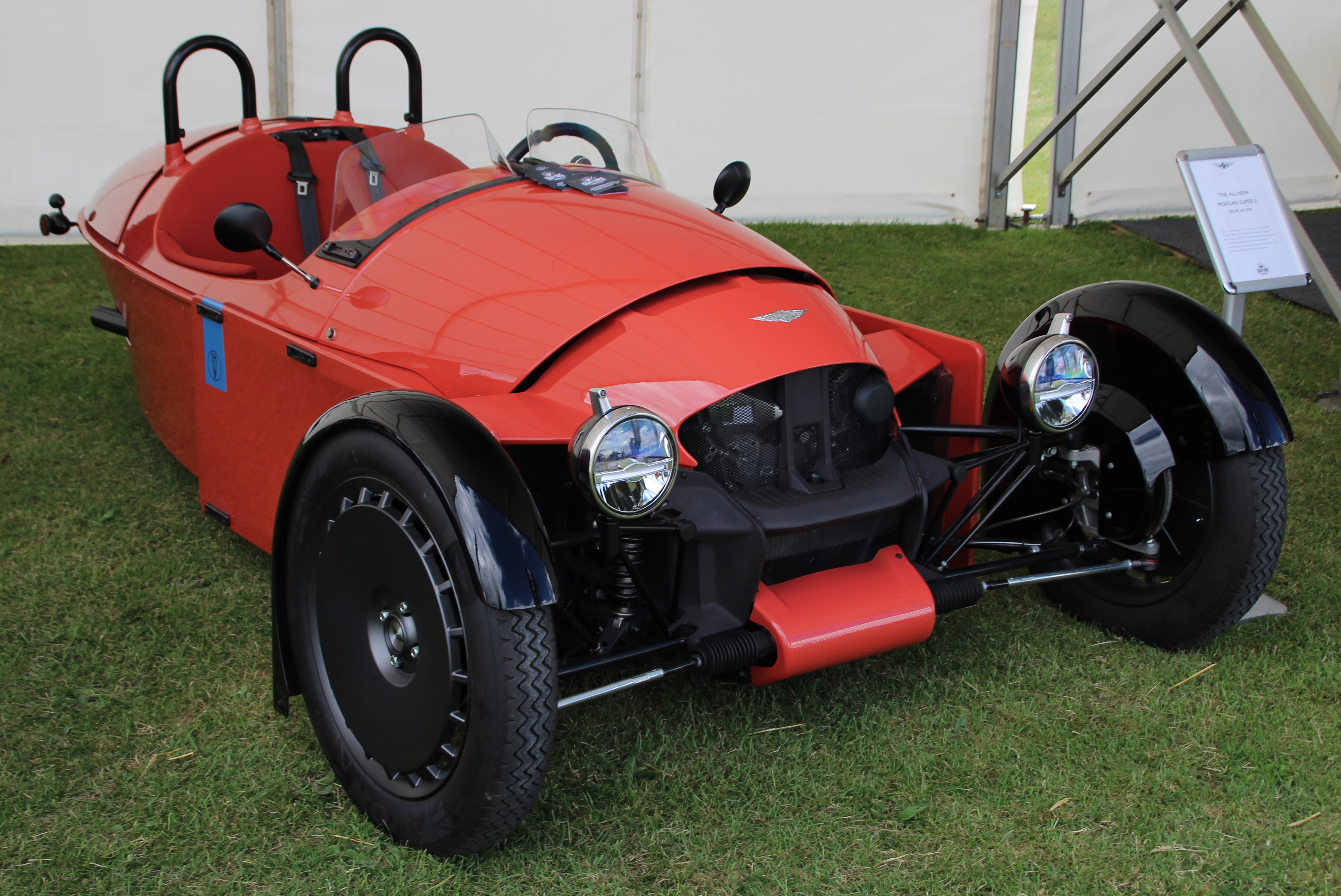
Morgan Super Sport
"Which one? Well, I haven't driven the new, new one, the Super Sport. Yes, it's good. It's sports. Yeah. And I really like the way it looks."
The Morgan Super Sport is a Morgan car—made by the British brand Morgan—that’s known for a distinctive, old-school look with modern driving. Here, they’re talking about how great it feels and how much people notice it when you drive it.
The Morgan Super Sport is a modern Morgan model built around the brand’s traditional, coachbuilt approach, but with contemporary performance and styling. In the segment, the hosts focus on how it looks and the experience of driving it, especially in good weather.

Morgan Plus Four
"But that was a, [1968.3s] that was a plus four. That wasn't a super spout, but um, no, I'm down. I'm down with them."
The Morgan Plus Four is a classic British sports car. People like it because it feels old-school and fun to drive, not like a modern, computer-controlled car.
The Morgan Plus Four is a classic British sports car from Morgan, known for its old-school roadster feel and distinctive styling. It’s part of Morgan’s long-running “Plus” line, and it’s often discussed as a charming, characterful alternative to modern sports cars.

Porsche 911
"proper sort of nice thing to own, I'd imagine. They're also keen value. So the, the, the super spout is, yeah, so it's basically sort of bottom end 9-11 money. Yeah. But it's a hand built car. In a way, it's not like it's a really hand built car."
The Porsche 911 is a sports car made by Porsche. It’s known for being a premium, high-performance car with a distinctive design. People talk about it because it’s expensive, but sometimes can feel like good value for what you get.
The Porsche 911 is a long-running sports car known for its rear-engine layout and distinctive shape. In the podcast, it’s discussed as a “proper nice thing to own” that can still feel like strong value, especially when compared to higher-priced supercars. The mention of it being “hand built” points to how it’s assembled with a focus on craftsmanship rather than mass-market simplicity.
hand built
"But it's a hand built car. In a way, it's not like it's a really hand built car. That's it, isn't it?"
“Hand built” means people assemble more of the car by hand instead of only using robots and conveyor-belt steps. The hosts are saying the Morgan feels special, but it’s not totally like a one-person custom build.
“Hand built” implies more of the assembly is done manually rather than entirely by automated, high-throughput machinery. In this segment, the hosts debate how “hand built” the Super Sport really is—suggesting it’s not the same as fully bespoke, one-off craftsmanship.
mass produced
"Yeah. So if you value that. Yeah. 9-11s are, you know, 9-11s go down a production line just like a, you know, a Ford Puma would or something."
“Mass produced” means lots of cars are made using repeatable, standardized steps. It’s usually the opposite of a small-batch, hand-built approach.
“Mass produced” describes manufacturing designed for high output using standardized processes. Compared with low-volume hand-building, mass production typically prioritizes consistency and cost efficiency over bespoke craftsmanship.
production line
"Yeah. So if you value that. Yeah. 9-11s are, you know, 9-11s go down a production line just like a, you know, a Ford Puma would or something."
A “production line” is a factory process where parts get added step-by-step in a set order. It usually means faster, more standardized building than hand-making.
A “production line” is a manufacturing setup where the car is assembled through a sequence of stations. This tends to increase throughput and consistency, which is why it’s contrasted with low-volume, hand-built processes.

Ford Puma
"...n a production line just like a, you know, a Ford Puma would or something. They are, I mean, well, it's ..."
The Ford Puma is a small car in the crossover category. The podcast mentions it as an example of a car made in a factory production process. It’s brought up to contrast with cars that are made more individually or in smaller numbers.
The Ford Puma is a compact crossover-style car built on a production line, which is why it’s mentioned alongside the idea of mass production. In the podcast context, it’s used as a reference point for how a modern car is manufactured compared with more bespoke or hand-built vehicles. That makes it relevant when discussing ownership expectations and how “normal” cars are made.
low volumes
"And if you're talking about it like in the way that they do with horology, with beautiful watches and low volumes and high-end materials, it's all of that."
“Low volumes” means they don’t build a huge number of these cars. Fewer cars usually means more care and less “assembly-line” feel.
“Low volumes” means the car is produced in relatively small quantities. That usually goes along with more bespoke processes, more attention per unit, and less economies-of-scale than mass production.
high-end materials
"And if you're talking about it like in the way that they do with horology, with beautiful watches and low volumes and high-end materials, it's all of that."
“High-end materials” just means nicer, higher-quality stuff is used in the car. That can make the car feel better built and sometimes last longer too.
“High-end materials” refers to premium-grade components and finishes used in the build. In automotive terms, this often affects perceived quality (fit/finish, touch points) and can also influence durability and weight depending on what materials are used.
boot
"But yeah, it's got a small-ish boot and the hood seemed mostly watertight to me."
A “boot” is the trunk area in the back of the car. They’re saying this one doesn’t hold as much as you might want.
In UK usage, a “boot” is the trunk/storage compartment at the rear of the car. The hosts mention it as “small-ish,” tying it to how usable the Super Sport is day-to-day.
watertight
"But yeah, it's got a small-ish boot and the hood seemed mostly watertight to me. There was a bit, it's got those slidey windows"
“Watertight” means it seals up well so rain doesn’t get inside. They’re basically saying the car seems well protected from the weather.
“Watertight” means sealed well enough to keep water out. When discussed alongside the hood and windows, it’s a practical quality point related to weather sealing and potential water intrusion.
temperamental roof motor
"And it had quite ripped seats and quite a lot of faddle damage here and there with the temperamental roof motor. I love that temperamental roof motor. That's not boating too well."
On a convertible, the roof motor is what powers the top up and down. If it’s “temperamental,” it can be flaky—sometimes working fine and other times acting up.
A “roof motor” is the electric actuator that operates a convertible’s soft top. Calling it “temperamental” means it can be unreliable—often showing slow operation, intermittent function, or failure to complete the open/close cycle.
auction hammer price
"it ended up selling it with a hammer price of $33,600 because fans of the band really wanted to own it because it's like the ultimate piece of memorabilia and it's functioning."
“Hammer price” is the final bid amount at auction—the amount the car sells for when the auctioneer’s gavel (“hammer”) falls. It’s different from the buyer’s total cost, which can include buyer’s premium and taxes.

Seagull
"...we've been thinking it's a, you know, badly drawn Seagull. Yeah. It's actually a deep V when you think abou..."
In the podcast, “Seagull” is mentioned like a joke or nickname. The speaker says it looks like a simple drawing, but it’s actually more like a “deep V” shape. It sounds like they’re describing what it is, not naming a common car model.
In the podcast, “Seagull” appears to be a humorous reference to something “badly drawn,” but it’s described as “actually a deep V.” That suggests the car-related term is being used in a playful, descriptive way rather than as a specific, widely recognized vehicle model. The key takeaway is that the speaker is clarifying what the “Seagull” actually refers to in that moment.
Request an Explanation
Heard something you'd like explained? We'll add it to this episode.
Sign in to request explanations for terms you heard.
Want to learn more?
Browse our glossary for plain-English explanations of automotive terms, jargon, and concepts.
Help improve this episode
See something that's not quite right? Our annotations are AI-generated and can sometimes miss the mark. Click the flag icon on any annotation to suggest a correction.
1 community members have helped improve this episode.