Exploring the fascinating history of Oldsmobile, this episode dives into the brand's rise and fall, highlighting iconic models like the Rocket 88 and 442. The hosts discuss Oldsmobile's innovations, including the first mass-produced automatic transmission and the introduction of the V8 engine. As the company faced challenges from competition and internal restructuring at GM, it struggled to maintain its identity. The episode concludes with a reflection on Oldsmobile's legacy, emphasizing its impact on American automotive history and the reasons behind its eventual demise.
Get After It! Enter for a Chance to Win a Custom Car Co-Built by Donut and Ricky Stenhouse Jr. All brought to you by NOS Energy. For more details visit: https://bit.ly/4fEqemZ
Thanks to Allstate for sponsoring today’s episode! Click here [https://bit.ly/4jRgXth] to check Allstate first and see how much you could save on car insurance.
This week on Past Gas, we’re wrapping up our two-part look at Oldsmobile — the brand that gave us the Rocket 88, the Toronado, and the 442. From the first true muscle car to the first rock ’n roll song, Olds helped shape American car culture like no other. After 107 years, the brand may be gone, but its influence is still everywhere.
Learn more about your ad choices. Visit podcastchoices.com/adchoices
"then ran out of time. Still, for over a century Oldsmobile built some of the coolest, fastest"
Select text to request an explanation
Rainex wipers are the number one wiper blades in America.
That means all kinds of drivers choose Rainex.
Big drivers in small cars choose Rainex.
Small drivers in big cars choose Rainex.
Drivers with long hair and short commutes choose Rainex.
Drivers with short hair and long commutes choose Rainex.
Drivers with pets on board, babies on board,
and board babies on board choose Rainex.
Basically, drivers who love a clear view of the road
all choose Rainex wipers,
the number one wiper blades in America.
Saving on your education should be a right, not a competition.
At University of Phoenix, you'll get the best scholarship or savings you qualify for, simple as that.
Explore scholarship options at University of Phoenix.
Hi, I'm Dustin, your friend and jeweler at Shane Company.
As director of diamond sourcing, it's my job to make sure every single diamond is worthy of a Shane Company engagement ring.
Our team travels the world to see diamonds in person and handpick each one.
That type of dedication only comes from working for a company that's been a family business since 1929.
No matter your budget, your diamond is guaranteed to be the most beautiful, because a friend wants you to pick from only the best.
Drop by your store or Shaneco.com and see for yourself.
Shane Company, your friend and jeweler.
Welcome back to PASCAS, everybody. This week it's Oldsmobile Part 2.
Last week we talked about steam engines and all the old timey stuff.
This week we're going to be talking about the stuff you guys know.
The 442, Rocket 88, the Alero, the Achiva, the Bravada.
We're going to get into all that. How did this brand go from one of the most successful car companies in American history to a quiet, whimpering death?
Well, we're going to talk about it right now. Let's get into it.
Last time on PASCAS, we traced the rise of Oldsmobile from a steam-powered family business to one of the best-selling badges in American car history.
Through thick and thin, the company survived and thrived, but they are about to face some of their biggest challenges yet, including another world war.
Today on PASCAS, why did one of the most important car companies in American history vanish?
What went wrong inside General Motors? And how did Oldsmobile go from cutting edge to the graveyard?
This week on PASCAS is Oldsmobile Part 2.
Welcome to the show, everybody. My name is Nolan Sykes.
You already clapped.
Join us always by Bart Bidlingmeyer across from me. Hello, Bart.
Welcome.
Yeah, this is going to be a fun episode.
I think so.
Happy to be here.
And Joe Weber.
Let me hear you at home. Give me a clap.
There you are.
There you go.
That was so corny.
This is Oldsmobile Part 2. Last week we talked about their early beginning, some Ranny Olds, the engineer extraordinaire.
That went from steam engines to gas engines.
That's right.
And then that Darn Smith family took over.
And then also Ranny proved, screw you guys.
I'm going home.
Yeah.
And he was like, he was right again.
Yeah.
Started at REO. He sold more for a little while than Oldsmobile.
Oldsmobile really kind of bounces back.
We see the creation of GM coming in.
Which saved them.
Which saved them was more of just like a name buy.
Yeah.
I mean, their whole strategy was buying established brands and building up a portfolio.
Your brand ladder.
Building up the brand ladder.
A bunch of different brands at different price points.
And I think we're about to get into World War II now.
So, shall we?
Always fun.
Let's do it.
What's a past gas without a little foyer and a foray into World War II?
It would be, they're rare.
I feel like the last five.
Yeah.
I've just hammered through.
Porsche Nurburgring.
Yeah.
Porsche Nurburgring.
Lamborghini.
Oh, I guess Lamborghini was after.
No, but I mean, he was involved.
Oh, he took tank parts to make his tractors.
That's true.
Yeah.
It was kind of like a big deal.
Caterpillar.
Big deal.
That event.
Well, I got, I got tied up into World War II.
Well, if we ever do a Swiss company.
Yeah.
What a relief.
What a relief.
As America bounced back from the Great Depression, so too did Oldsmobile.
In 1940, Oldsmobile introduced the Hydromatic Transmission, which was the first fully
automatic gearbox ever offered in a mass produced car.
It cost just 57 bucks to add to any model in the company's lineup.
The move helped cement Oldsmobile's reputation as GM's go-to brand for experimentation in cutting
edge technology.
It's, it's fun that this is cutting edge technology and we're portraying it as such.
It's the first automatic transmission in a mass produced car.
But another way to look at it is this is the beginning of the end of the manual
transmission for 57 dollars.
Yeah.
The 40s were poised to be Oldsmobile's most successful decade yet until the U.S.
entered World War II.
Production of all civilian cars was halted by government order on January 1, 1942, the
very same day that Oldsmobile Works was officially renamed the Oldsmobile Division of General
Motors.
From that point through the end of World War II, Oldsmobile factories switched to
defense manufacturing.
Floor workers were dubbed soldiers of production, producing millions of rounds of ammunition,
as well as tens of thousands of aircraft, machine guns, and tank cannons.
So we're basically like soldiers of content.
Yeah.
We're not at war though, thankfully.
Yeah.
When the war ended, Oldsmobile went right back to making cars and didn't miss a beat.
In fact, just a few short years later, the company launched perhaps its most
enduring contribution to the American auto industry, a new overhead valve V8 engine
called the Rocket.
Oldsmobile had begun developing a flathead V8 shortly after the war, but the
project ran into resistance from Cadillac executives who had their own V8 and didn't
want another GM division to build something similar.
I love that it's GM, baby.
It's just amazing that they hadn't figured out like, oh, we should just develop
one power plant and use it across our product line rather than every company
you need to make your own engine.
There's so much infighting in GM.
By design.
Yeah.
Like it works sometimes and then not others.
And then there's also the infighting.
All right, guys, we did it.
And then overhead comes in like, I'm sorry, you can't.
Oldsmobile already did.
Yeah.
We want to do it.
Oldsmobile engineers side-sept these objections from Cadillac by using a
90-degree V-angle and an overhead valve design to differentiate the two
projects.
Because the other one was 60-degree?
Well, the last Olds one was 60-degree, right?
Well, they had their own V8, yeah.
By moving the valves above the cylinders, Oldsmobile's new engine allowed
for better air flow, improved combustion, and more power per cubic inch.
This engine would turn out to be the first mass-produced overhead valve V8,
setting the template for the engines that would help define the U.S.
auto industry for decades to come.
Dude, so many innovations at Oldsmobile.
This is crazy.
No idea.
Olds named it The Rocket in a nod to the public's post-war fascination
with space and missile technology.
The Rocket engine debuted in Oldsmobile's top-of-the-line 98 series,
paired with the new Futuramic styling.
Which looks, that's pretty neat.
Yeah.
All that I forgot about that Olds hood ornament.
What's the hood ornament?
It's kind of like a plane or a rocket.
And then when you get the smaller one, it's still that.
But everything's designed from this point on in their logos
to evoke a plane or a rocket.
Oh, gotcha.
It almost looks like the old Pontiac hood ornament.
That was like the chieftain, the long chieftain.
Yeah, yeah.
That was like quartz looking or something like see-through.
Two months later, in February of 1949,
Oldsmobile introduced another landmark vehicle, the 88.
Designed by engineer Harold Metzel, the 88 body was smaller
and about 300 pounds lighter than the 98,
but still had that Rocket V8 in it.
I wonder if that's the wheelbase.
Because 88 would be a shorter one than obviously 98.
Yeah, that's interesting.
They're probably right.
You want to look it up real quick?
The 1949 Oldsmobile 88's wheelbase, 119 inches.
That's long.
That's long.
Big boy.
The Rocket 88 used the simple formula of small car plus big V8,
which is why it's considered by some to be the first muscle car
more than a decade before the Pontiac GTO.
It could hit 60 miles per hour in just under 13 seconds.
Wow, that's a ripper.
It was impressive performance for the era
and quickly earned a reputation as being a true driver's car.
Hell yeah, dude.
Big **** car, slow as ****.
That's enthusiast right there, dude.
That's a formula that Oldsmobile kept until it went under.
That same year, a racing series got its start
called the National Association for Stock Car Auto Racing,
or NASCAR.
And Oldsmobile jumped at the chance to enter the Rocket 88.
It ended up winning the first three NASCAR Cups
from 1949 to 1951, driven by the legendary Red Byron.
It also inspired the 1951 single Rocket 88 by Jackie Brinston,
considered by some historians to be the first rock and roll song.
Okay.
It's great.
Oldsmobile is also pretty heavily tied to American musical history.
Yeah, it's weird.
Pop music, in fact.
Well, there's that Kendrick song about Oldsmobile in Milero.
Bought in Milero for the weekend.
Production numbers tell the rest of the story.
In 1949, Oldsmobile built nearly 294,000 vehicles.
Wow.
More than 100,000 of them were 88s, despite its mid-year launch.
That's a big success.
By 1950, output rose to over 416,000 units,
a new all-time high for the company.
The Rocket 88 enhanced Oldsmobile's reputation
as an innovator and would remain in production for over four years.
Good Lord.
40.
Imagine redoing Fast and Furious in this time,
and the cops are chasing them down at 42 miles per hour.
Ugh, I can't catch up.
Oldsmobile founder Ransom Olds may have passed away in 1950,
but his old company kept chugging along.
Oldsmobile entered the 50s with momentum,
powered by a winning formula of strong performance
and appealing styling.
The 88 was dominating NASCAR, winning 10 of 19 races
in 1950 and 20 of 41 races in 1951.
Sales remained strong despite production restrictions
caused by the Korean War, and during the conflict,
Oldsmobile contributed to the war effort
by producing nearly 8.5 million Bazooka rockets,
making this our very first mention of the Bazooka
on the podcast.
In 1955, Oldsmobile produced nearly 600,000 vehicles,
overtaking Plymouth to become the fourth-largest car
manufacturer in the US.
But another downturn was coming, and it would be 10 more years
before Oldsmobile could reach that level again.
Several factors contributed to Oldsmobile's next decline.
The brand lost its competitive edge on the racetrack,
American buyers began shifting away from large sedans
in favor of smaller imports like the Volkswagen Beetle,
and a sharp recession in 1957 further strained the market.
Perhaps just as important, though, by the late 1950s,
Oldsmobile's lineup had become difficult to distinguish
from its GM siblings, Pontiac and Buick.
As the economic recession compressed GM's pricing structure,
style became one of Oldsmobile's few differentiators,
but that also backfired with an unpopular,
overly-chromed 1950 lineup.
Cop between Pontiac and Buick and GM's brand hierarchy,
Oldsmobile lacked a clear identity.
To stay relevant, the division turned to technical innovation
once again.
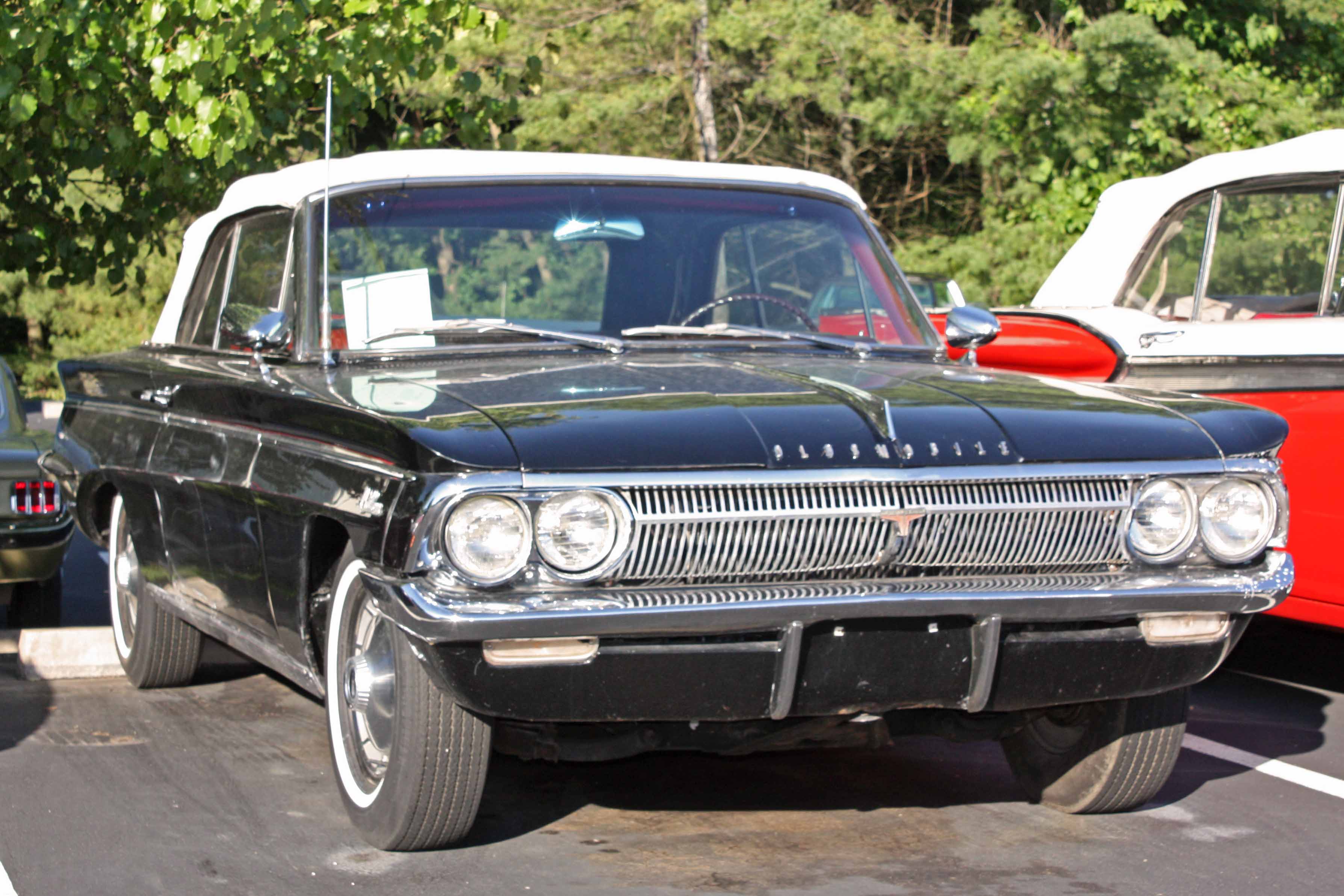
In 1962, Oldsmobile introduced the turbocharged
F-85 jet fire.
Along with the Corvair Monza Spitfire,
the jet fire was one of America's first
high-volume turbocharged cars.
It produced 215 horsepower
and could reach 0-60 in 8.5 seconds.
That's like...
Like that?
Not bad.
I think there's one in the lineup's garage?
Probably.
Yeah, that would make sense.
He also has a Tornado that's really sick.
Like rope here.
We'll be right back after these messages.
Experts in everything from plumbing
and landscaping to roofing, remodels, and more.
Just bring Angie your project, answer a few questions,
and Angie provides you with nearby pros who match your needs.
You can easily read verified reviews,
check out photos of past work,
and request and compare quotes to find your best price.
Which means you could tackle that next-home project
in just a few taps.
So the next time your home needs some TLC,
join the millions of homeowners
who have used Angie to care for their homes.
Download the free Angie app today or visit Angie.com.
That's A-N-G-I dot com.
I had that dream again.
My small business needs to hire,
but I don't use LinkedIn, and I hire wrong.
So then I'm doing IT, and when I go to plug the servers in,
they become sentient, and they won't let us access our network
unless we forward their chain emails and memes
to more and more and more people, and then...
I wake up.
Don't let hiring nightmares ruin your dreams.
LinkedIn Jobs' new AI assistant finds
and invites best fit candidates to apply
so you can discover talent you may have missed.
Post your job for free at LinkedIn.com slash quality.
Start hiring today with LinkedIn.
Now back to the show.
Reliability issues led Oldsmobile to abandon
the jet-fire turbo after just two years,
but the company quickly rebounded
with a much bigger success than 1966 Tornado.
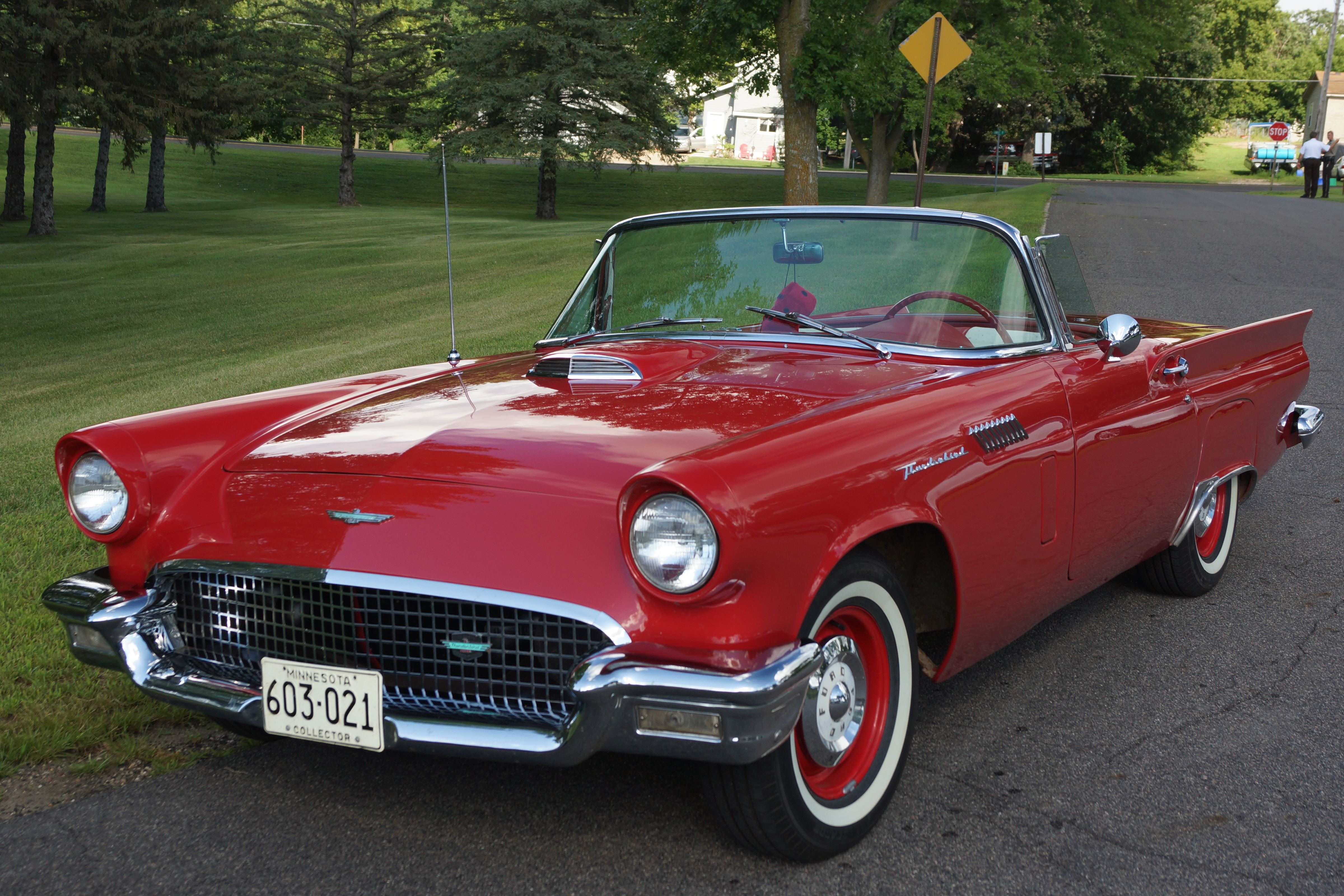
Designed to compete with the Ford Thunderbird,
the Tornado was a personal luxury coupe
that pushed the boundaries of what an American car could be.
By just being that.
That's it.
There was one parked, and it was like a turquoise,
or a light, maybe a light anyways.
Just when you see him, yeah, just street parked.
This is when I lived in Hollywood.
It looks like it's fast.
When it's parked, it looks like it's moving.
It was front-wheel drive.
Well, good to that.
The name was deliberately futuristic-sounding,
designed to evoke speed and technology
without referencing any actual existing object.
Its bold styling set it apart visually,
but the real innovation was in the engineering.
As Bart mentioned, the Tornado was the first
mass-produced front-wheel drive American car
in more than 30 years, making it a radical departure
in a market dominated by rear-wheel drive layouts.
This allowed for a flatter floor,
better traction in poor weather,
and a roomier cabin,
powered by a massive 425 cubic inch V8
making 385 horsepower.
The Tornado could hit nearly 135 miles per hour,
blending muscle car performance
with grand touring comfort.
That's crazy. What year was it?
1960s?
1966.
Do a bunch of front-wheel peels in that thing?
Yeah.
I was thinking it'd be fun to set up a handbrake
for the front wheels.
Skid the front wheels everywhere,
or do backwards drifting.
Sure.
Kinda sick.
The car was a hit with critics
and enthusiasts alike.
The Tornado won Motor Trans Car of the Year award
in 1966 and helped solidify
Oldsmobile's reputation
as GM's most technically
adventurous division.
It proved that Olds can make bold forward-thinking cars
at least for the time being.
That is a crazy front-wheel drive V8
with that much horsepower.
And then it's a boat of a car too
and without a transmission tunnel in it.
Yeah. No transmission tunnel.
And it's lower too.
Yeah, they're low.
Pretty sick.
I like the headlights on them.
But it's funny that the marketing department was like,
and if you reference anything,
that's a real object.
The 70s were a difficult decade
for most of the American car industry,
but Oldsmobile just kept growing
through the oil crises,
new strict regulations,
and rising competition from Japan.
Oldsmobile's production climbed from
560,000 units in 1971
to over a million in 1977,
1978, and 79.
From 72 to 79,
Oldsmobile ranked third in U.S. auto sales
and production every year.
Wow, I honestly did not know
they were so successful.
I feel like in my mind,
the 70s are the Oldsmobile.
Every Oldsmobile I think of
is from the 70s.
The 442.
This is where it's split.
It's just such a look.
And the ones like the 442,
where the hood was actually part
and flipped down in the front.
So sick.
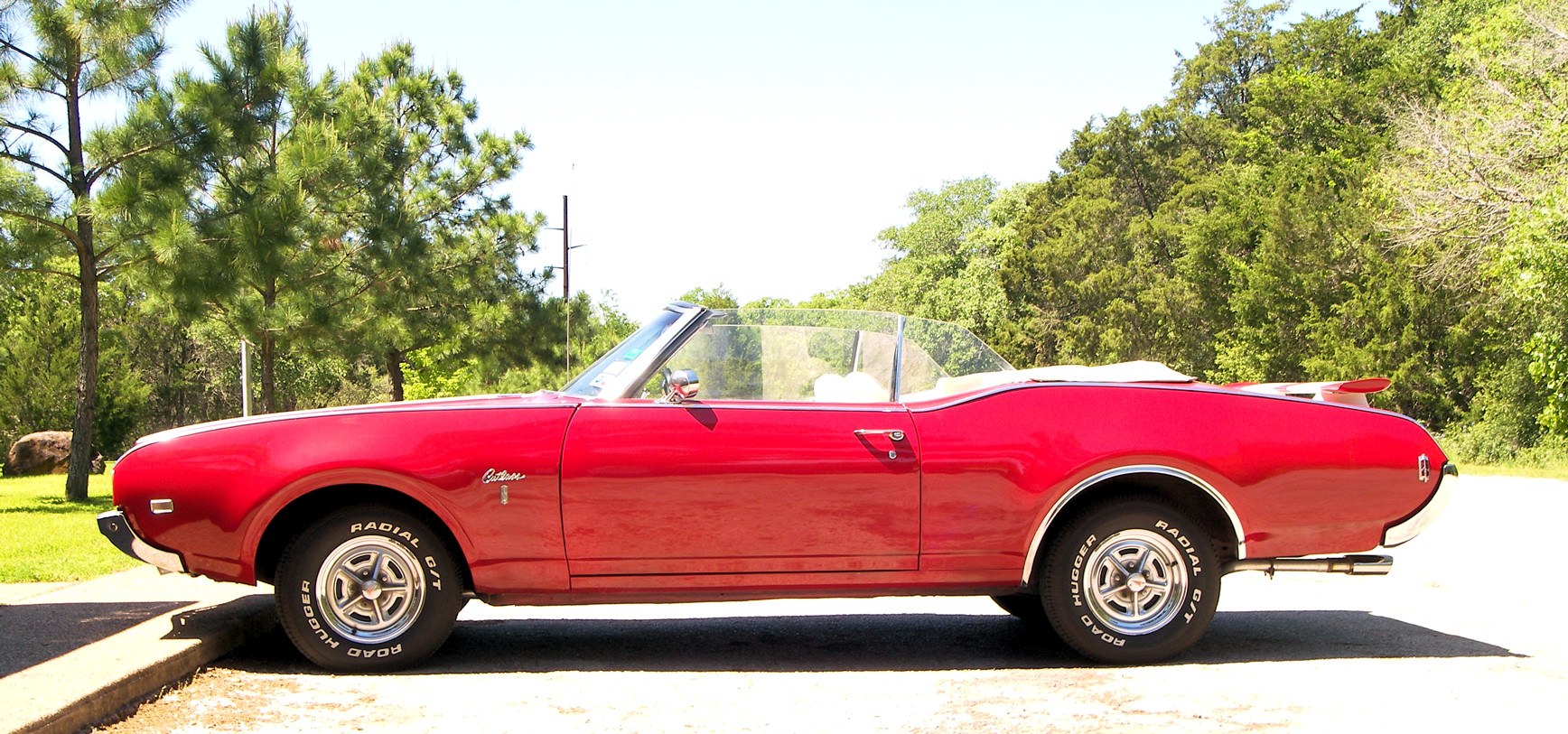
Part of that success was due to the popular Cutlass model.
First introduced in 1961
as a trim level on the compact F85.
The Cutlass eventually became its own model.
By the mid-1960s,
it had grown into a mid-sized car
and become one of the best-selling lines in the country,
especially in its sportier versions
of the Cutlass Supreme and 442.
The 442 in particular became
Oldsmobile's signature muscle car.
First introduced in 1964
as an option package for the F85
and Cutlass, its name was simple.
It had a four-barrel carburetor,
four-speed manual transmission,
and dual exhaust.
So that's so funny.
It's also because they went from
don't you dare reference a thing on the car.
To the most basic.
Four-barrel carburetor.
The 442 became a...
Is that a Rochester carburetor?
I think that's what Oldsmobile was.
Rochester.
What Dorchester?
Dorchester carburetor.
It's going to beat the crap out of you.
Probably call you a slur.
Probably. It's guaranteed.
Guaranteed to call you a slur.
The 442 became a stand-alone model
in 1968.
And by 1970, a top-tier
W30 version came with a
455 cubic inch V8
that made up to 370 horsepower
and 500 pounds
feet of torque.
What is that, like almost 8 liter?
What was it? Displate 59?
Jeez.
Those numbers put it right in the mix
with the era's top muscle cars like the GTO,
the Dodge Charger, and
Chevelle SS.
Wow. Because of blended raw power
with Oldsmobile's more upscale image.
Yeah. It also...
the look...
I think, again, the
fastback that
I think was
that Chevy made.
Yeah, that kind of changed this look.
So now all of these other companies have that
platform to make these super
slippery...
Chevelle-esque.
His first one was the Supernova,
production, but we talked about it in the Camaro episode.
Yeah. This is a
sick era of muscle car where they're
two-door...
442, I think, is one of those cars where
like, look, there's
the Boomer market people,
you know, those people are still
driving up the value of these cars. They're buying cars
they wanted when they were younger.
I think cars like Charger, Challenger,
Nova, Chevelle,
Camaro will
always hold their value,
always be like, desirable
expensive cars.
But something like this 442
might fly under the radar.
Because it's an Oldsmobile and it's dead now.
There's not like Oldsmobile guys now.
I think now probably finding
a good condition in 442 is still...
that's expensive, but we think like
10, 15 years from now
when like Boomers are...
Dead.
Not all of them, but a lot of them.
That'll be a smaller portion
of this market, I think.
The smaller portion that has a nostalgia
for this car
versus the
market that says, oh
that's a good car and I want it.
It's not a nostalgia base.
This is
not like a pop culture icon in the same way.
It's like a challenger or something.
Keep this on your shortlist.
And it was not like
a character car in a movie.
There's none of the bullet stuff.
You know what I drove? Vanishing point.
That I really want now is one of the...
a judge GTO. Oh yeah?
Got to drive one of those and I was like, oh this is...
This is really fun. This is me.
But even though those are expensive too
because like it's the GTO.
But that cutlass body
is a little... it's actually
like handles pretty well.
Wow. Nice.
Hell yeah. Let's all get 442.
Let's do it. I already spent like
so much money on gas
That's true.
Oldsmobile's innovations continued through the
70's when they became the first American brand
to offer airbags.
The company was also a leading adopter of diesel engines.
It was just a... let's be honest though.
It was just a paper bag you blew up put on your dash
just in case.
The concept was like a popcorn bag
and they had a little microwave
and it would...
The company was also the leading adopter
of diesel engines in response to rising fuel prices.
Oh yeah.
The company at the time joked that
we can just about dieselize anything.
Yeah.
And they did, they had a diesel option
for like the 88 and the 98.
Is that like one of the worst diesels ever made?
Yes. Just because it's not... it works.
It was a gasoline...
it was a gasser that they had like converted
I think they took the 408
to make it run on diesel.
I think we're going to talk about it in one sec.
Okay cool. Let's do it.
Don't spill the beans yet.
I know I was like really excited to get into this
episode I think. We're like this is going to be good.
We're going to... but as things are coming up
we're like oh yeah yeah yeah remember you know
it's been fun.
I think it's because a lot of their cars fly
under the radar. You don't think of them
as like a performance company.
The 1973 oil embargo
fundamentally changed the auto industry
in the U.S.
I never heard of that.
And Oldsmobile initially seemed well positioned
to benefit. The division quickly retooled
around smaller more efficient engines
while maintaining the comfort and features
that middle class buyers expected.
The Cutlass in particular continued
to sell well during this period.
By offering a smaller more efficient package
with Oldsmobile's traditional refinement
the Cutlass captured buyers
fleeing both gas guzzling domestic
cars and unfamiliar imports
from 1975 to 77
the Cutlass was America's best
selling car.
But Oldsmobile's success during the energy crisis
came at a hidden cost
that would soon become apparent.
In 1977 facing a shortage
of its Rocket V8 engines
Olds began installing Chevrolet built V8s
in many of its cars without informing buyers.
Oldsmobile customers
saw this as a bait and switch.
It's a cash grab.
It's a cash grab.
The backlash was swift with the tractors
coining the scathing nickname
Chevy Mobile.
Ha ha ha.
Roasted.
Ya burnt.
You're done.
You're done.
GM's response certainly didn't help.
Rather than reversing course
the company introduced a disclaimer
quote, GM cars are equipped
with engines produced by various GM divisions.
Oh my God.
This may have resolved legal concerns
but GM's divisions had been drifting closer together
in both styling and engineering for years.
The disclaimer only deepened
the perception that they had become interchangeable.
They've spent
70 years
60 years creating
very distinct
classes of cars
within their portfolio and then all of a sudden
they're like
listen, let's be honest
it's all the same stuff.
You've never been to Taco Bell
it's all the same ingredients
rearranged. Just don't admit it.
We're gonna knock down all these walls
and make this company open
concept.
You can have your TV
in your kitchen.
Your kitchen
your whole house could smell like your kitchen
if you wanted to.
We'll put a bathroom right next to it.
We'll be right back after these messages.
We've connected this whole time
awkward.
Discover top brands at unexpectedly low prices.
Sierra, let's get moving.
Yeah!
The Carl's Jr. Lawyer said we couldn't name our
new burger the biggest burger for the smallest
price burger.
So we didn't.
And that's called a loophole.
The new Cali XL burger.
A beefed up Charlboro double burger with double cheese
only $5.99.
That's more meat
than meat.
Get it now for a limited time only at Carl's Jr.
Available for a limited time at participating
restaurants. Tax not included. Not valid for use
within a combo or in combination with any other offer at
discount.
How does PWC take your company to the leading
edge? They bring the sharpest
minds in tech to your team.
So you can bring the ideas that will transform
your business. They're passionate about
your industry. So you can walk into any
room with every advantage.
And they're with you every step of the way.
They don't know you're headed in the right direction.
PWC builds for what's next
so you can get there now.
Get started at pwc.com
slash us slash
leading edge.
Now back to the show.
The second oil crisis in
1979 triggered by the Iranian
revolution pushed Oldsmobile
into an even more disastrous
mistake facing renewed pressure
for fuel efficiency and convinced
that diesel technology offered a competitive
advantage. Olds engineers
decided to convert their existing
350 cubic inch
into a diesel engine.
The conversion was rushed
and fundamentally flawed.
Diesel engines operate at compression
ratios nearly three times higher
than gas engines. Rather than
redesigning or strengthening the engine
block, Oldsmobile engineers simply
modified the fuel system and increased
the compression ratio.
They failed to add the additional head bolts
necessary to contain the increased
pressure. The results were catastrophic.
The converted diesel engines
began failing within months
often suffering blown head gaskets.
Customers reported engine seizing,
excess smoke and oil
contamination. It's also a
huge reason why that
diesel thing never happened.
It was an uphill battle
to get Americans to want to use diesel
in the first place and then that happens
because suddenly everybody's like,
well, never doing that.
These twin disasters
marked a turning point for Oldsmobile.
A car that had built its reputation in part
on engineering excellence now faced
widespread customer distrust.
Both problems would haunt the brand for years
to come contributing to the gradual
erosion of customer loyalty that ultimately
led to Oldsmobile's demise.
They'd been using the 350
for like 40 years.
Yeah, it was the Rocket 88.
And all they did
was detune it. You'd still have the
four-barrel carburetor
making 180 horsepower
on a 5.7 liter engine.
Put some big jets in that thing.
Let's fatten it up.
In 1984, GM
chairman Roger Smith
launched a major reorganization that
permanently changed how divisions like
Oldsmobile operated.
Instead of designing and engineering their own cars,
Oldsmobile was placed into the
strategic Oldsmobile Cadillac Group
which centralized product development.
Smith had become GM's chairman in 1981
with a mandate to modernize
the world's largest automaker.
But his decisions would prove
devastating for Oldsmobile.
A finance executive who had risen through
GM's accounting ranks, Smith believed
the company's future lay in high-tech
manufacturing and global expansion
rather than traditional brand management.
Smith's reorganization strategy
centered on reducing costs
through platform sharing
and eliminating redundancies
between divisions. He consolidated
engineering operations, stripped
individual brands of their autonomy
and pushed for common components across
all GM vehicles.
There had always been GM part sharing
which is one of the reasons people liked GM
to work on because you knew you could get your parts.
But it was also mostly just
drivetrain
were similar
and chassis.
Other than that
they were like do whatever you want
for a while. And this was at a time
when Chrysler had just done this
with Liay Coca ahead.
Liay Coca.
From then on, Olds no longer controlled
its own engineering, only their sales
and marketing. This shift
robbed Oldsmobile of what had once
set it apart, the freedom to design
and build its own vehicles. Now
the company's engineers were essentially just
one voice in a much larger GM
and were often ignored by corporate
product teams. Ironically
this strategy worked for Oldsmobile
and this period marked the brand's commercial peak.
It's really funny that every time they're
like you know this could be a hurdle
it makes their
brand boring but then they
thrive. Oldsmobile
sold more cars in 1984
than any other year with annual sales
topping 1 million units
from 1983 through
1986. But it's also I think at this
point because the people
who know Oldsmobile as a brand
like they know the name and they're
ready to buy cars that don't
mean anything. You know what I mean? Because they're at that age
where it's like I just need a car. I'll get an Oldsmobile
that are good cars. I think that
exists for them and that's how they're selling
a lot of them. Even at this high point
the core of the brand was beginning to
erode. Oldsmobile's ever increasingly
resembled models from Buick, Pontiac
and Chevrolet. Meanwhile the
company's dealers were pushing for copies
of whichever vehicle types were currently popular
including minivans, SUVs and
compacts which further diluted Oldsmobile's
identity. If you're GM
I'm thinking why let every
brand make the minivan?
They didn't let Cadillac.
So like pick if you like
good you guys make this way we can
we can keep some brand identity
anyway. In the 80s
consumer tastes were also shifting
mid-market buyers gravitated towards
imports which were perceived as better built
and more reliable. Seeking to reverse
its fortunes Oldsmobile launched
a rebranding campaign centered around
a cringy new slogan
this is not your father's
Oldsmobile. It's funny because
Buick was like it's not your grandma's Buick.
They just reused the same.
Oh my god. In an effort
to appeal to younger drivers Oldsmobile
also ran a series of TV ads
featuring aging celebrities like Leonard
Nimoy and Ringo Starr
and paired with their nonfamous children.
You want to get
kids on board use aging
actors. Spock
drives it and his son.
Spock's son drives an Oldsmobile.
In the cases of Mel Blank
and Rod Serling the celebrities were quite
literally dead.
The marketing
fell flat and sales dropped by 100,000
units the year after the ads debuted.
In 1986 Oldsmobile
sold over a million cars all
of them developed when the division still had
control over its own design.
By 1991 that number had dropped by more
than 60% with a lineup
that was now including rebadged
GMC SUVs like the
Perfata and Chevy
minivans.
Meanwhile Roger Smith was pouring money
into a new domestic brand called Saturn
launched in 1990 with
a $5 billion investment
Smith saw Saturn as GM's
import fighter and gave it the same
innovative mission that had once belonged
to Oldsmobile. While Saturn
developed new materials, manufacturing
processes and dealer relationships
Oldsmobile was left with
increasingly similar products
and a diminished identity. With this
Oldsmobile lost not just its competitive
momentum but its
reason for existing.
I wonder if Saturn is a good story to tell.
I think it is. We were talking about buying
Saturn for a while
I think that would be really funny.
We are telling this story of Oldsmobile
over the course of a hundred years
and GM
and the pitfalls
Saturn is like, you can do that
but it took
a fourth of the time.
That took 14 years.
But it's just a microcosm of
the whole thing.
By 1992 Oldsmobile's position
inside GM had started to slip.
The Washington Post reported that GM
execs have been giving serious consideration
that you are killing the brand
only to pull back at the last minute.
GM and Oldsmobile denied the story
vigorously but a seed of doubt
was planted in the mind of buyers.
Around the same time GM began
another reorganization that would have
lasting effects across the company.
As part of the restructuring, GM
dissolved its group system including Buick
Oldsmobile Cadillac. Now
engineering and manufacturing for all
GM brands were centralized under
a single corporate office.
Oldsmobile's core problem at this point
was one of identity.
It had once thrived by offering innovation
and distinctiveness.
But without those traits it struggled
to hold on to a reason for being.
Oldsmobile cycled through six brand
managers over 13 years
each tasked with finding a new direction
and none ever finding success.
GM's increasing reliance
on platform sharing only blurred the
lines further.
By the late 80s and into the 90s
Oldsmobile's cars had become nearly
indistinguishable from their Buick,
Pontiac and Chevy siblings.
In a market that was rapidly diversifying
and shifting towards imports
the overlap made Oldsmobile feel redundant.
Models like the Achiva
launched in the early 90s were functional
but bland and did little
to revive the brand's appeal.
Did Oldsmobile make any concept cars
in that period? Because I know Cadillac was.
Oh for sure. Yeah they did
some concept cars. Remember Eddie
was Alero. Yeah.
The Olds Alero man. The Alero
was a Pontiac Grand Am
rebadged. That makes sense.
Which is like that was a good car for the time.
I love those Pontiacs.
But no it's also funny that if
like you're saying it was a
rebadged Grand Am like great.
But if you're Oldsmobile you don't want to
talk about that but it's the only way
you're going to get somebody to buy it.
Compounding problems
Oldsmobile remained primarily
a car brand throughout its history.
Unlike Chevrolet Buick or Cadillac the
brand was designed specifically for the
American middle class and American driving
conditions with an emphasis on comfort
size and highway performance that reflected
distinctly American preferences.
European and Asian consumers preferred
smaller more efficient vehicles.
The company chose to export
Chevrolet as its volume brand
and develop regional name plates like
Opel in Europe rather than expanding
existing American divisions.
As time GM began serious globalization
efforts in the 1980s and 1990s
Oldsmobile was already
struggling domestically and suffering
from an identity crisis that made
international expansion impossible.
And it doesn't have the same
kind of prestige
in the name. So like if you were to
export it you know can you imagine
someone in Spain being like
what the f**k is Oldsmobile.
I don't want to buy Newsmobile.
Currentsmobile.
The company eventually
pivoted towards marketing Oldsmobile
as a domestic alternative to Honda
of all things. It was
a risky proposition that required
turning away from the existing Olds
customer base in order to keep chasing
younger buyers. Oldsmobile changed
its entire lineup from large old-style
sedans to smaller sportier cars
and what was called the Centennial
Plan. The Aurora
introduced in 1995 represented
the division's final attempt at
invention. It featured European inspired
styling and advanced engineering.
The design was so radical that
Oldsmobile emitted traditional badges
using only a circular
A logo. Internal
discussions reportedly even considered renaming
the entire division Aurora.
But the circular A logo
was another take
on the historic
Oldsmobile logo representing
a plane or a rocket ship shooting at the sky.
I like the Aurora
honestly. The Aurora's got a 4
liter V8. I didn't realize that. There's something
so comforting about these like 90s
block cars. I know.
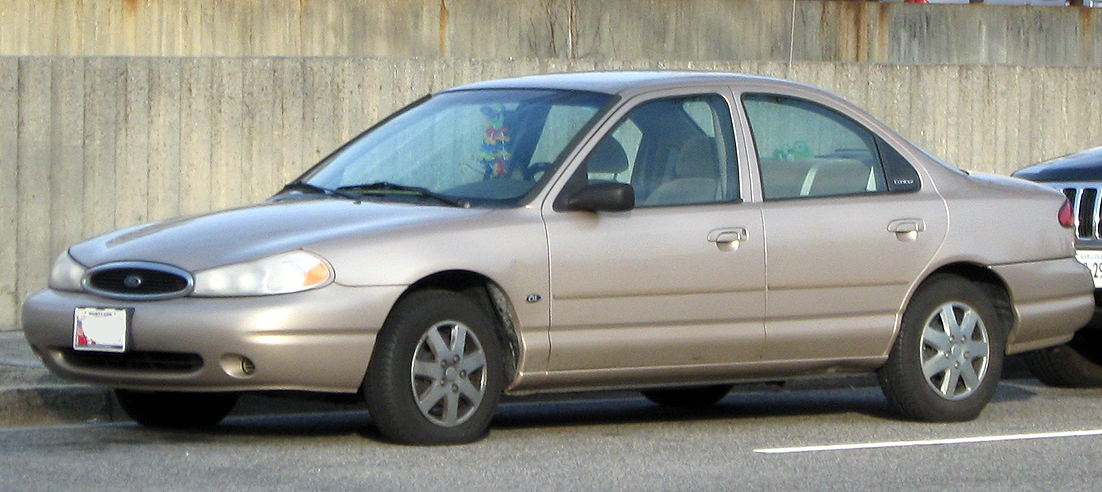
It looks like a Ford
contour. It's just like
familiar, you know?
It's like, oh, I'm driving home
to my
brand-new house. You know it kinda smells a little bit like cigarettes.
Yeah. When you look at it
though, you'd say
if you're trying to compete with
Honda
you're not doing it.
It's still too long.
It's a big car.
I can just see like driving
to my job at the factory
in the Midwest somewhere.
Three deep in the front.
Four in the back.
Smoking a cigarette.
Listening to AM radio.
Heading back from the bowling alley.
Yeah dude.
All bundled up in your down.
You work there, but you also play there.
So the move with the Aurora back
fired. While the Aurora helped lower
the brand's average buyer age from 60
to 49.
Average was 60?
Holy s***.
The shift came at a cost.
Older customers who had long-bought big comfortable
oldsmobiles went elsewhere
and younger buyers weren't drawn in fast enough
to replace them.
You still got the Panther platform.
You still got Grand Marquis.
Yeah.
The Lincoln town car.
So it's still happening.
In other words, not enough young
wanted an olds.
Oh, hey old.
Ding-bong. Got him.
Dealer rebellion became common
during this era of Oldsmobiles decline.
Many dealers openly criticized
GM's product decision.
Some threatened to drop the Oldsmobile franchise
entirely while others began emphasizing
used car sales and service work
over new vehicle sales.
The Aurora, you don't want that.
Come here.
I got some used cars for you.
By the time Oldsmobile became the first
American automaker to celebrate its 100th year
anniversary in 1997
it was already facing extinction.
In 2000, after years of
rumors, GM finally announced
that Oldsmobile would be phased out.
The 2004 model year would be its last.
That's still four
years after they announced it. That's crazy.
That wouldn't sell any cars.
No.
Just cut your losses there.
On April 29th, 2004,
the last Oldsmobile
and a Larrow sedan rolled off the line
in Lansing, Michigan.
The workers signed the cars before it was sent
to the RE Olds Transportation Museum.
It was essentially a rebadged Pontiac Grand
Am, a far cry from the innovations
that have once defined the Oldsmobile brand
and inspired history's
first rock and roll song.
You know that a Larrow rolled off the factory
for smelling like cigarettes?
It was smoked in from the factory.
Yeah.
Well, that's like when you get...
there's another tangent, but if you order stuff
like furniture or whatever
that is coming from Chinese factories
and you open it up, you just get a whiff
of just
cigarette.
Do they smoke while they're working?
I have a feeling.
Our Oldsmobile officially became history itself.
After 107 years in operation
the oldest surviving
American automobile brand
was no more.
In the end, maybe it's no surprise that Oldsmobile
died. The word old
was right there in the name all along.
But the real lesson might be this.
Nothing lasts forever,
especially if it stops being good.
After decades of innovation and reinvention
Oldsmobile ran out of ideas,
then ran out of time.
Still, for over a century Oldsmobile
built some of the coolest, fastest
and most influential cars in American history.
From the first mass-produced American automobile
to some rocket V8 powered muscle machines
they helped shape what cars would become.
Not bad for a legacy
of a brand that started with a 3-wheeled
steamer and a guy named
Ranny.
And there you go. That is
Oldsmobile.
I love stories like this where you're like
this is gonna be kind of a long day
and then it's actually a really good story
and you're like I didn't know that.
But it's also like
it's stuff you forgot you knew
because no one's been talking about them
for 20 years.
There's not like an Oldsmobile enthusiast group
anymore.
You think so?
Someone driving like a grey
87 cutlass that's
immaculate.
Actually now that I'm thinking about it, I really liked
my uncle's Cutlass Supreme
Yeah?
I think it was a coupe Cutlass Supreme
that came with that was the Bacon Tomato Mayo.
Oldsmobile Club of Southern California
Official.
These are some older ones.
These are like old Oldsmobile
Oldsmobile Club of
America has a
442 on the banner image nice.
There's 56,000 numbers.
What?
How many active though?
And three admins.
Those admins are working overtime.
That's sick dude.
That's awesome. Oldsmobile
Enthusiast Car Club.
14,000
There's still people that love these cars.
I'm going to eat my hat now because I was so wrong.
You better start chomping on that hat.
Good thing it's a very light hat.
Alright
that is our episode this week.
Thank you so much for listening. Follow Bart
at Bids Bartow. Follow Joe at Joe G Webber.
Follow me at Nolan J Sykes.
Follow Drew, Audrey and Edgar
behind the camera and our writer this week
Greg Nix. Next week
we've got
Reeves Callaway.
You talking about that sledgehammer?
Sledge hammer
So stick around for that one.
We'll see you then.
Thank you so much for listening. Goodbye.
This is an important step.
Your info is in endless places that could expose you
to identity theft, leading to lost funds.
LifeLock monitors millions
of data points per second.
If your identity is stolen, our restoration
specialists will fix it, guaranteed
or your money back. Resolve to make identity
health and wealth part of your new year's
goals with LifeLock.
Save up to 40% your first year.
Visit lifelock.com
slash podcast. Terms apply.
You practically can. Wix's website
builder is packed with powerful
AI tools to make running your business online
easier. Build a full
site just by talking with AI.
Get an AI agent to manage your sales
and marketing. Or work like a 10-person
team, even if it's just you.
So you don't need superpowers
to get everything done. You just need Wix.
Try it now for free
at Wix.com
It's tax time y'all.
If you want to file free, this next one's
for you.
Love that jam.
Up next, commercials.
Request an explanation for:
19 cars
Scroll for more
19 cars featured
Request an Explanation
Heard something you'd like explained? We'll add it to this episode.
Sign in to request explanations for terms you heard.
Want to learn more?
Browse our glossary for plain-English explanations of automotive terms, jargon, and concepts.
See something that's not quite right? Our annotations are AI-generated and can sometimes miss the mark.
Click the flag icon on any annotation to suggest a correction.