
Porsche's recent decision to revive petrol engines for the Boxster and Cayman sparks a lively discussion on the podcast, alongside a recounting of Andrew's experience at the Daytona 24 Hours. The hosts delve into the history of land speed records set on Daytona Beach, sharing fascinating anecdotes about legendary drivers and their iconic vehicles. They compare the Daytona race atmosphere to Le Mans, highlighting the accessibility and welcoming nature of the event, as well as the intense racing dynamics that keep fans on the edge of their seats.
Dan Prosser and Andrew Frankel discuss Porsche’s about turn on combustion engines in the upcoming Boxster and Cayman, the departure of Andrew’s Range Rover and the shocking EV range of Dan’s new Alpine A290. Does Andrew recommend a trip to the Daytona 24 hour instead of Le Mans? And what about that new Ferrari Luce interior, designed by Jonny Ive?
Use coupon code pod20 at checkout to get 20% off an annual subscription to The Intercooler's online car magazine for the first year! Listen to this podcast ad-free, and enjoy a subscriber-only midweek podcast too. With a 30-day free trial, you can try it risk-free – https://www.the-intercooler.com/subscribe/
"And as many will already know, lots of them were set on Daytona Beach. And in fact, Daytona Beach was made famous largely by the exploits of the likes of Sir Henry C. Grave and Sir Malcolm Campbell."
Daytona Beach is a well-known beach in Florida where many car speed records have been set. It's famous for its long, flat sand that allows cars to drive fast.
Daytona Beach is a famous location in Florida known for its long stretches of sand and as a site for land speed records. It has a rich history in motorsports and is associated with various racing events.
"Driving there, there was the slug of 1000 horsepower sunbeam and then the golden arrow and then Campbell's Bluebird 5. First car to go over 200 miles an hour."
Bluebird 5 is a famous car that was driven very fast, breaking the 200 miles per hour speed limit for the first time. It was built to set speed records.
Bluebird 5 was a land speed record car driven by Sir Malcolm Campbell. It was notable for being the first car to exceed 200 miles per hour, marking a significant milestone in automotive history.
A land speed record is the fastest speed a car has gone on land. People try to break these records to see who can go the fastest.
A land speed record is the highest speed achieved by a vehicle on land, typically measured over a specified distance. These records are often contested and can involve specially designed vehicles.
"...to be powering one of these monstrous things with like two 27 litre aero engines and skinny little tires."
Aero engines are powerful engines used in airplanes. Sometimes, car enthusiasts talk about them when discussing high-performance vehicles that use similar technology.
Aero engines are engines specifically designed for aircraft, often characterized by their high power-to-weight ratio and efficiency at high speeds. In the context of cars, they can refer to engines that are derived from or inspired by aviation technology.
"I think it was Lockhart who died as a result of a tire deflation. One of them did."
Tire deflation means that a tire loses its air and becomes flat. This can make it hard to control the car, especially when driving fast.
Tire deflation refers to the loss of air pressure in a tire, which can lead to a blowout or loss of control, especially at high speeds. This is a critical safety concern in motorsports and high-performance driving.
"I mean, obviously they're great 24 hour races at Spa and the Nürburgring, but it is the only other 24 hour race raced at by the top level by prototypes."
A 24 hour race is a car race that lasts for a full day. Teams of drivers take turns racing their cars to see who can go the farthest in that time.
A 24 hour race is a long-distance endurance racing event where teams of drivers compete to cover the most distance in a 24-hour period. These races test not only the speed of the cars but also their durability and the skill of the drivers over extended periods.
"But yeah, I went over, I went over as a guest of a watch company. I went over with Rolex."
Rolex is a well-known brand that makes high-quality watches. They sponsor car races, which connects them to the automotive world.
Rolex is a luxury watch manufacturer known for its precision and quality. The brand has a strong association with motorsports, including sponsorship of events like the Rolex 24 Hours.
"...you haven't got these sort of epic corners like Ter Rouge and the Porsche Curves and Indianapolis."
The Porsche Curves are a set of turns on the Le Mans race track that are very fast and challenging for drivers. They are named after the Porsche brand, which is famous for its sports cars.
The Porsche Curves are a series of fast, sweeping corners at the Circuit de la Sarthe, the track used for the 24 Hours of Le Mans. These corners are known for their high-speed nature and require precise handling and skill from drivers.
"...you haven't got these sort of epic corners like Ter Rouge and the Porsche Curves and Indianapolis."
Indianapolis is a famous corner on the Le Mans race track. It's known for being tricky and fast, making it an important part of the race.
Indianapolis is a corner at the Circuit de la Sarthe, known for its challenging layout and high-speed entry. It is one of the key corners that drivers must navigate during the 24 Hours of Le Mans, contributing to the race's reputation for difficulty.
"...and Sebring. And the attitude towards the spectators is totally different."
Sebring is a well-known racetrack in Florida where many long car races take place, including a big race that lasts 12 hours. It's an important place for car racing in the U.S.
Sebring International Raceway is a famous road course in Florida known for hosting endurance races, including the 12 Hours of Sebring. It has a rich history in motorsports and is a key venue for sports car racing in the United States.
"So if you get caught behind a safety car, it will wave you on and then you can go and catch it up again."
A safety car is a special car that comes out during a race to slow everyone down if there's a crash or something dangerous on the track. It helps keep the drivers safe until the problem is fixed.
A safety car is deployed during a race to slow down the field when there are hazardous conditions, such as accidents or debris on the track. It helps ensure the safety of drivers and officials until the track is clear.
"...they have these things called wave arounds. Okay. So if you get caught behind a safety car, it will wave you on and then you can go and catch it up again."
Wave arounds are when cars that are behind in the race get to go ahead of the safety car to catch up. This helps them get back into the race and have a chance to win.
Wave arounds are a procedure used in racing where cars that are a lap down are allowed to pass the safety car and rejoin the lead lap. This helps maintain competitive racing and allows teams to recover from setbacks during the race.
"And he reckons that a car that had gone seven laps down one year, I can't remember which year ended up winning the race."
When a car is 'laps down', it means it hasn't completed as many laps as the leading car. This usually happens if the car had problems or got into an accident, making it harder to win the race.
Being 'laps down' refers to a situation in racing where a car has completed fewer laps than the leader. This can happen due to various reasons, including mechanical issues or accidents, and it significantly impacts a driver's chances of winning.
"...how close you can get, watch them come off the banking and so on. And also some people just don't obey the, not the rules, but the sort of the idea of..."
Banking is when the road on a racetrack is tilted or angled. This helps cars go faster around corners without losing control.
Banking refers to the angled surface of a racetrack, particularly in turns, which helps cars maintain speed and stability while cornering. It allows for higher speeds and better grip during races.
"...the last section of the race. And I can remember the battle for, what do they call it, GTD, GT3 over here, between an Aston Martin and a Mercedes for on the last one or two laps of that race."
GTD is a type of racing class where cars are based on real sports cars you can buy. They compete against each other in exciting races.
GTD refers to the GT Daytona class in sports car racing, which features production-based sports cars. This class is known for its competitive racing and includes various manufacturers, allowing for a diverse range of vehicles.
"...the last section of the race. And I can remember the battle for, what do they call it, GTD, GT3 over here, between an Aston Martin and a Mercedes for on the last one or two laps of that race."
GT3 is a type of race car that is based on real sports cars but is specially built to go really fast on the track. They compete in exciting races against each other.
GT3 is a class of racing that features high-performance sports cars specifically modified for competition. These cars are based on production models but have significant enhancements for speed and handling.
"...broadside across the track on full opposite lock at least 170 miles an hour. And he held it."
Opposite lock is when a driver turns the steering wheel the opposite way to keep the car from spinning out while drifting or sliding. It's a way to stay in control during a fast turn.
Opposite lock refers to a steering technique used to control a car during a slide or drift, where the driver turns the steering wheel in the opposite direction of the turn. This helps maintain control and prevent the car from spinning out.
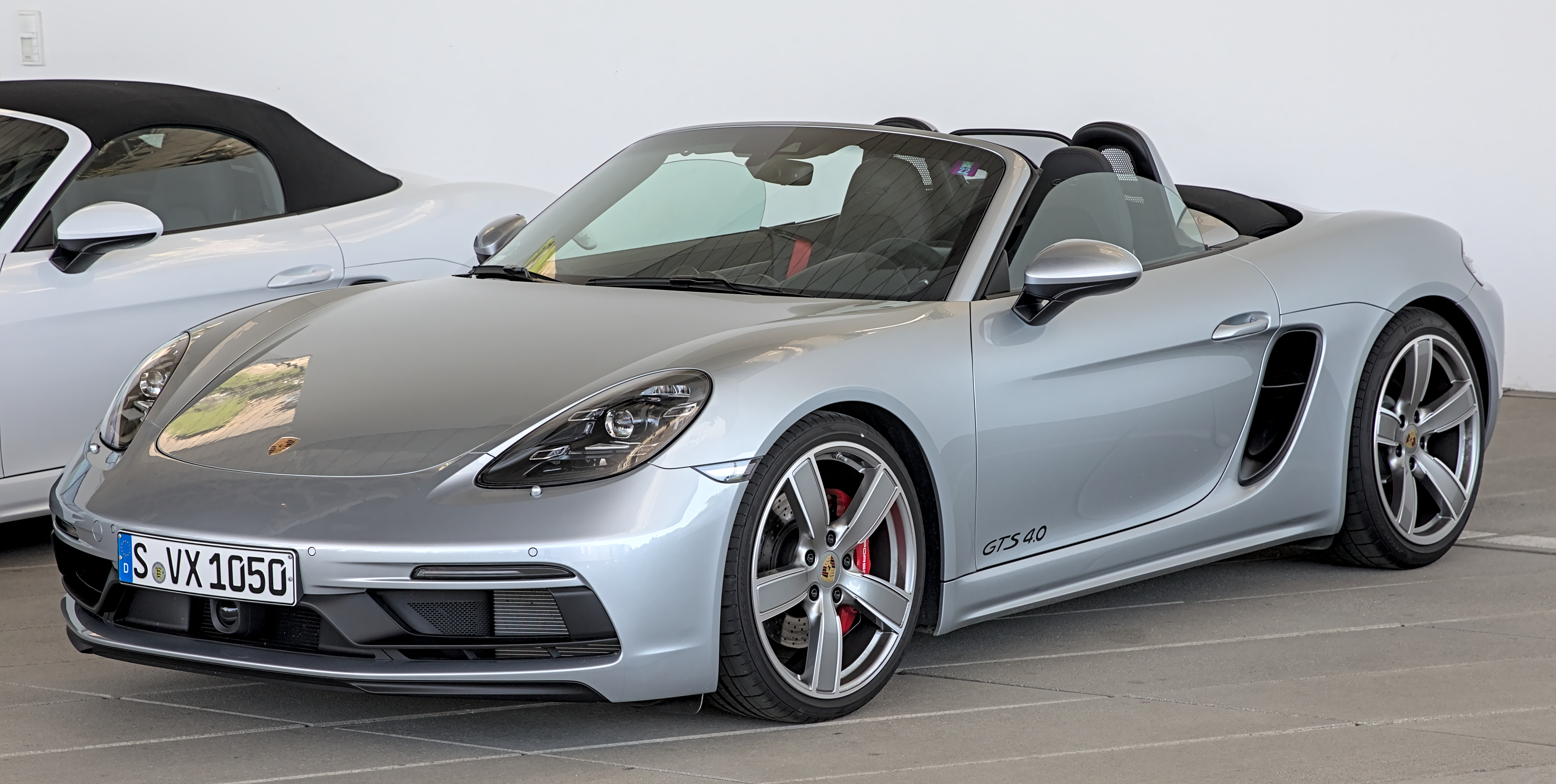
"But Porsche, I mean, it's going on quite a journey with its Cayman and Boxster replacement, isn't it? Do you want to sort of briefly sum it up for us?"
The Porsche Boxster is a small sports car that has a convertible top, meaning you can drive it with the roof down. It also has the engine in the middle, which makes it easy to handle and fun to drive.
The Porsche Boxster is a two-seat convertible sports car that features a mid-engine layout. It is known for its agile handling and is often seen as an entry-level model in the Porsche lineup.
"But Porsche, I mean, it's going on quite a journey with its Cayman and Boxster replacement, isn't it? Do you want to sort of briefly sum it up for us?"
The Porsche Cayman is a sports car that has the engine in the middle, which helps it handle well on the road. It's known for being fun to drive and is similar to another model called the Boxster.
The Porsche Cayman is a mid-engine sports car that is known for its balance and performance. It shares many components with the Porsche Boxster and is often praised for its driving dynamics.
"...but then actually, with that sort of groundswell towards the EV when people started getting excited about them..."
Electric vehicles, or EVs, are cars that run on electricity instead of gas. They are considered better for the environment because they produce less pollution.
Electric vehicles (EVs) are cars that are powered entirely or partially by electricity instead of traditional internal combustion engines. They are often seen as more environmentally friendly alternatives to gasoline-powered cars.
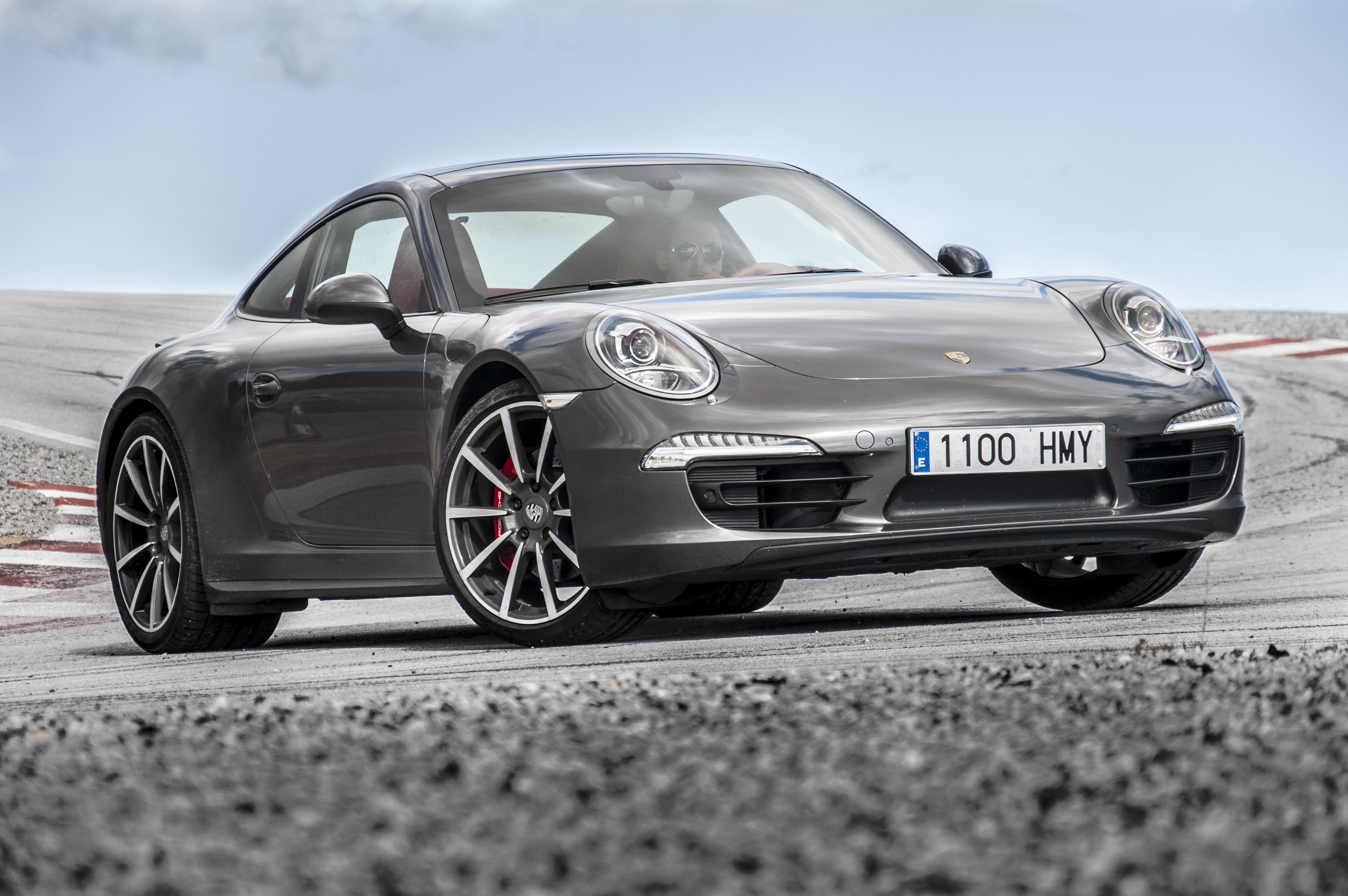
"...what they described as top models, which I think people interpreted as being GT4s and Spiders, but I thought probably also include GTSs,..."
The Porsche 911 GT4 is a special version of the 911 that is built for speed and performance, especially on racetracks.
The Porsche 911 GT4 is a high-performance variant of the iconic 911 sports car, designed for track-focused driving with enhanced aerodynamics and handling.
"...would actually have internal combustion engine powertrains. Now, once that decision had been made,..."
An internal combustion engine is a common type of engine that works by burning fuel to create power, like the engines found in most cars today.
An internal combustion engine is a type of engine that generates power by burning fuel and air inside the engine's cylinders, as opposed to electric motors.
"...that would be attractive to Porsche, because that gives you a very low center of gravity."
A low center of gravity means the car's weight is closer to the ground, which helps it stay stable and makes it easier to turn without tipping over.
A low center of gravity helps improve a vehicle's stability and handling by lowering the point where the weight is distributed, reducing the risk of rollover and enhancing cornering performance.
"...the hybrid element that you get in a 911 with a 911 GTS these days..."
The Porsche 911 GTS is a faster and sportier version of the regular 911, designed for those who want more performance from their car.
The Porsche 911 GTS is a high-performance variant of the iconic 911, offering enhanced power and features compared to the standard models. It often includes sportier elements and tuning for better driving dynamics.
"... the difficulties they've had with other EVs, the Taycan in particular, in terms of their residuals and th..."
The Taycan is an electric car from Porsche that is designed to be very fast and fun to drive. It's talked about because it shows how traditional sports cars are moving into the electric future.
The Porsche Taycan is a high-performance electric sports sedan that showcases Porsche's commitment to electric mobility while maintaining the brand's signature driving dynamics. It has garnered attention for its impressive acceleration and advanced technology.
"...s, I mean, you're probably finding this with your A290 GTS, which I suspect will come on to speak to in ..."
The A290 is a small, sporty car that focuses on being fun to drive. It's discussed because it brings back the excitement of driving in a compact package.
The Alpine A290 is a sporty compact car that emphasizes driving pleasure and lightweight design. It represents a modern take on the brand's performance heritage.
"Let's talk long term as Andrew, because there's been a bit of a few in and outs in the fleet. I think your Range Rover's gone. Yeah, I'm not going to dwell about the range on the Range Rover because regular listeners to this podcast have heard me bang on about it before, but it's gone."
The Range Rover is a fancy SUV that can drive on tough terrains like mountains and mud, but it also feels very comfortable inside. People talk about it because it's a symbol of luxury and adventure.
The Land Rover Range Rover is a luxury SUV known for its off-road capabilities and premium features. It has a long-standing reputation for combining ruggedness with elegance, making it a popular choice among affluent buyers and adventurers alike.
"...run a car like that before, apart from briefly a Bentayga for, I think, three months. I had this for seven..."
The Bentayga is a super fancy SUV that offers a lot of luxury and comfort. People talk about it because it's one of the most expensive and high-quality SUVs you can buy.
The Bentley Bentayga is a luxury SUV that combines opulence with performance, making it one of the most prestigious vehicles in its class. It is often discussed for its high-end features and powerful engine options.
"...tially it's the successor to decades of brilliant Renault Sport hot hatches, isn't it? Yeah."
The Sport Spider is a small, fun car made for driving enthusiasts who love speed and handling. It's mentioned because it's a classic example of a sporty car that focuses on the driving experience.
The Renault Sport Spider is a lightweight sports car that emphasizes driving enjoyment and agility. It is significant for its unique design and is often celebrated among enthusiasts for its performance.
"...o plug in. And I found a up to 200 kilowatt hour charger and 200 kilowatt charger. And it was plugged in ..."
The Charger is a big car that looks sporty and can go really fast. It's popular because it combines a lot of space for passengers with a fun driving experience.
The Dodge Charger is a full-size sedan that blends performance with practicality, often recognized for its muscular design and powerful engine options. It has a strong following among car enthusiasts due to its performance variants and retro styling.
"...t. I had this, remember when I ran that I5, that BMW I5. And the point is, you don't know, you don't kno..."
The i5 is a new electric car from BMW that aims to be both fun to drive and eco-friendly. It's mentioned because it's part of the shift to electric cars while still being sporty.
The BMW i5 is an electric sedan that combines the brand's performance heritage with modern electric technology. It is part of BMW's push towards electrification and is designed to offer a dynamic driving experience.
"That's the thing, isn't it? The Audi A6 e-tron that I've just said goodbye to, I'm going to talk about that and my new Audi long-term on a future episode. But the electric Audi estate car was returning 2.6 miles per kilowatt hour."
The e-tron is Audi's electric SUV that offers a fancy ride without using gas. It's talked about because it shows how luxury cars can also be environmentally friendly.
The Audi e-tron is an all-electric SUV that represents Audi's entry into the electric vehicle market, combining luxury with zero-emissions driving. It is significant for its blend of performance, technology, and practicality.
"That's the thing, isn't it? The Audi A6 e-tron that I've just said goodbye to, I'm going ..."
The A6 is a stylish and comfortable car that feels fancy inside and has lots of tech features. People like to talk about it because it’s a good choice for both work and leisure.
The Audi A6 is a midsize luxury sedan that combines sophisticated design with advanced technology and a comfortable ride. It is often discussed for its balance of performance, luxury, and practicality.
"...h that car. I mean, to me, it just screams get a Renault 5. That does seem to be the conclusion for the tim..."
The Renault 5 is an old small car that many people loved for being practical and easy to drive. It's often mentioned because it has a special place in car history.
The Renault 5 is a classic hatchback that gained popularity in the 1970s and 1980s for its compact size and practicality. It is often discussed for its nostalgic value and influence on small car design.
"...ic runabouts. And we've driven them, Renault 5s, Fiat Pandas, and we really like them. Yeah, they're great fu..."
The Panda is a small car that's great for city driving because it's easy to park and gets good gas mileage. It's often mentioned because it's a fun and practical option for everyday use.
The Fiat Panda is a compact city car known for its practicality and affordability. It has a reputation for being easy to drive and park, making it a popular choice for urban environments.
"...d we now know that that car is going to be called Luce, L-U-C-E. Ferrari's first electric car."
The Luce is Ferrari's first electric car, which is exciting because it shows that even supercars are going electric. It's talked about because it combines Ferrari's performance with new technology.
The Ferrari Luce is the brand's first electric vehicle, marking a significant shift in Ferrari's approach to performance and sustainability. It represents the future of the brand as it embraces electric technology.
"...po wheels that Dignos and Daytonas and Boxers and 308s and all that lot had in the 70s and the early 80..."
The 308 is a small car that's easy to drive and good on gas. It's often mentioned because it's a reliable choice for everyday driving.
The Peugeot 308 is a compact hatchback known for its stylish design and efficient performance. It has been a popular choice in Europe for its practicality and comfort.
"...been driving, well, I've been driving today a Kia EV5, which I think is a very good example of what it..."
The EV5 is a new electric SUV from Kia that offers a lot of space and comfort. It's mentioned because it's part of the growing trend of electric cars that are practical for families.
The Kia EV5 is an electric SUV that aims to provide a spacious and modern driving experience while being environmentally friendly. It reflects Kia's commitment to expanding its electric vehicle lineup.
Select text to request an explanation
We heard you, nine years of bring back the snack wrap and you've won.
But maybe you should have asked for more.
Say hello to the Hot Honey Snack Wrap.
Now you've really won.
Go to McDonald's and get it while you can.
Welcome back to the intercooler podcast Everybody, the podcast powered by car finance specialist JBR Capital.
This episode 301 with Dan Proser and Andrew Frankel.
We've got about a thousand things that we want to discuss this week.
I don't think I'm going to get through all of them, but we can try.
We'll do our best.
It was actually a couple of weeks ago now, Andrew, that you went over the Atlantic to Daytona.
You mostly went to go and look at a beach, as far as I can tell.
It's not entirely true, but it did occur to me.
So regulars will know that I've always had a huge interest in the land speed record.
And as many will already know, lots of them were set on Daytona Beach.
And in fact, Daytona Beach was made famous largely by the exploits of the likes of Sir Henry C. Grave and Sir Malcolm Campbell.
Driving there, there was the slug of 1000 horsepower sunbeam and then the golden arrow and then Campbell's Bluebird 5.
First car to go over 200 miles an hour.
Yeah.
That sunbeam, officially at least, was done on the beach.
It's 23 miles long.
This episode is brought to you by State Farm.
Listening to this podcast, Smart Move.
Being financially savvy, Smart Move.
Another Smart Move.
Having State Farm help you create a competitive price when you choose to bundle home and auto.
Bundling.
Just another way to save with a personal price plan.
Like a good neighbor, State Farm is there.
Prices are based on rating plans that vary by state.
Coverage options are selected by the customer.
Availability, amount of discounts and savings and eligibility vary by state.
Wow.
Wow.
Yeah.
There's a lot of it.
And wide, you know.
Well, kind of depending on the time.
Yeah.
It was a terribly safe place to do it.
Two guys, a bloke called Lee Bible and another bloke called Frank Lockhart, both died in the 1920s.
Trying to take land speed records, which is why they decided to go from there over to Bonifil.
There's much less space at Bonifil.
I think there's only like sort of 13 miles.
Okay.
But it really wasn't a very safe place to go.
But where my hotel was on Daytona Beach, you look out one window of a hotel and it's all pretty grot round there.
Look out the other and there's this pristine beach that goes on forever.
And it's just north of Daytona Pier.
And that's where it happened.
Literally outside my hotel bedroom.
I used to go out in the morning wandering up and down the sand trying to imagine what it would be like to be powering one of these monstrous things with like two 27 litre aero engines
and skinny little tires.
And actually the bluebird is in the museum at the Daytona motor speedway.
And it's in pretty immaculate condition.
What they have got there are two of the tires from the record run.
And they are, I mean, you know, you think you've seen some tired tires?
Oh my goodness.
They are absolutely.
Last legs.
Oh, completely last legs.
I mean, there's basically there's quite a lot of those conferences of each time.
There's no rubber left.
It's just down to whatever material there was on.
I mean, and, you know, as who was it?
I think it was Lockhart who died as a result of a tire deflation.
One of them did.
And if that happens at those speeds on that beach in a car like that, there's no middle ground.
You know, the car is going over, you're coming out of it and you get what you get.
There's no getting hurt, is there?
No, no, probably certainly not.
No.
So that was, for me, that was great to go and see.
But actually, I was obviously there to see the Daytona 24 hours.
Yeah.
And you've never been before, had you?
I've never been before.
No, I'd always wanted to.
It is the only other.
I mean, obviously they're great 24 hour races at Spa and the Nürburgring, but it is the
only other 24 hour race raced at by the top level by prototypes.
I didn't really know what to expect.
And, you know, there are things I have written about this on the website and app are award
winning, multi award winning website and app.
So if you haven't seen it and you don't subscribe going, if you're interested at all, because
actually I think there's a very good argument at least once for going because it is despite
the fact that it's 24 hour racing and despite the fact that many of the cars that race at
Le Mans race at Daytona too.
So there is some commonality there.
It is such a totally different event Le Mans.
For reasons that I will get to shortly.
But yeah, I went over, I went over as a guest of a watch company.
Yeah.
I went over with Rolex.
First time, I think anybody other than a car company or a tire company has ever invited
me to anything.
And it is the Rolex 24 hours.
Yeah.
And their history with that part of the world literally goes back to Malcolm Campbell who
had a Rolex on his wrist when he did 276, I think, Marsman down the beach.
And I didn't really know what to expect.
I knew it was a big bank circuit and there was for the 24 hours, not for the NASCAR race
they do that 24 hours.
There was a sort of twiddly infield section.
And so the bad stuff is what's not great about it for people who love Le Mans is you haven't
got these sort of epic corners like Ter Rouge and the Porsche Curves and Indianapolis.
It's not heroic in that sense.
I imagine from a driver's point of view, they would massively prefer to drive at Le Mans
because I think it's just more interesting from a spectator's point of view.
However, it's a completely different ball game and for more than one reason.
The most obvious reason is if you go up in the grandstand and the big grandstand behind
the banking, you can see it all.
Well, I say all at least 90% of a lap.
You can follow a car around a lap and even in those moments where it goes briefly out
of sight, you can kind of mentally follow it for the odd second that it's gone and then
watch it reappear and then watch it around the rest of the lap.
And so you can kind of keep up with what's going on so much better.
And you can also walk very, very easily to every corner.
You can get so close to the action.
I mean, really, quite given that these are prototypes going very fast indeed.
Despite that really twiddley infield section, an average lap speed is well into the 130s.
Oh, wow.
And you can get so close to everything.
I think the thing that I was charmed by most, however, was just like the attitude of everybody there.
You and I, who have been to Le Mans many times, will know that there is a certain level of
officialdom that is, you know, can become quite sort of frustrating.
You only need to have so many whistles blown at you and told that you can't cross the road
to get a little cheesed off by it.
At Daytona, everybody I met in any kind of official capacity seemed hellbent on just making sure
you had the best possible time you could have.
It's cool, isn't it?
Yeah.
And the access, you know, you can go wander around the pits, not the sort of trackside pits,
there are two pits.
There's the trackside bits where they refuel and change tyres and that sort of thing.
And then set back from that, there are the sort of main pits where cars live and have major repairs
done to them and that sort of thing.
And you can go wander around there, there are always drivers wandering about and everybody
is just lovely.
And it surprised me by how much difference that made because I was made to feel really
welcome and it was lovely.
So interesting.
About 100 years ago when I was doing some work with Aston Martin Racing, I would go to
some of their races and a lot of them were in North America, American Le Mans series
races.
Never date owner, but Petty Le Mans and Sebring.
And the attitude towards the spectators is totally different.
Completely.
It's so inviting and welcoming.
It's like the whole organization, the circuit and the series and the teams, they understand
that all of this is actually for the spectators.
Yes.
Whereas certainly at Le Mans, you were often left with the impression that they regard
spectators as unnecessary evil.
Sort of these really difficult, annoying people who just kind of, except they have to be there,
but that's the limit of your obligation to them is to sort of let them through the door
and where the ticket will allow them to go.
So yeah, I loved it.
And also, also the banking.
So if you sit in the main grandstand, you know, people will say, always not as exciting as
Le Mans, watch two prototypes coming off the banking at 180 something miles an hour with
a GT3 car in front of them and watch them go either side of it and tell me that's not
exciting.
It's unbelievable.
Yeah.
If you're on the sort of start finish line, they're going under your nose at about 200
miles an hour.
And it is mega to watch.
So yeah.
And the racing's super close, isn't it?
Well, yeah, it is super close.
So the idea is, is the sort of unwritten idea is that unlike Le Mans, which you where you
have to go flat out because you can build the gap of Le Mans at Daytona, they have these
things called wave arounds.
Okay.
So if you get caught behind a safety car, it will wave you on and then you can go and
catch it up again.
And I was talking to Jensen Button, name job, but he had, he did the race, I think in 24.
And he reckons that a car that had gone seven laps down one year, I can't remember which
year ended up winning the race.
Wow.
And there are safety cars, there are a lot of safety.
If you think about it, you've got the same number of cars at Le Mans as you get at Le
Mans, but in a circuit that is less than half as long.
So you've got double the car density on the track.
So there are incidents and accidents fairly regularly.
And the entire idea is to stay on the lead lap for the first 22 hours.
And the other idea more observed in theory than practice is that you look after the car.
So you don't have any problems in your first 22 hours.
And then off you go.
But actually the racing is, as a spectacle, is really interesting for all those reasons
I explained earlier, how close you can get, watch them come off the banking and so on.
And also some people just don't obey the, not the rules, but the sort of the idea of
sort of going a little bit gently, they all just go flat out.
And then you get to the last section of the race.
And I can remember the battle for, what do they call it, GTD, GT3 over here,
between an Aston Martin and a Mercedes for on the last one or two laps of that race.
One of the most exciting things I've ever seen on any track.
There was one moment, which I think I wrote about in my story, where there was,
I think there was a brief touch, but anyway, this Mercedes, this GT3 Mercedes,
was broadside across the track on full opposite lock at least 170 miles an hour.
And he held it.
And out the front, the lead, the battle between the Porsche and the Cadillac that came second,
with less than five minutes of 24 hours to go, the gap between them was less than half a second.
That's unbelievable.
Less than half a second.
I mean, it says everything, doesn't it, that the winning margin was about a second and a half.
And that was after the car in second place had backed off.
Yeah, just brought it home.
And if you go back through the records, almost all daytoners end up like that.
And it's slightly managed, isn't it, to some extent, with these full course yellows in the way around?
Yeah, they do manage it to a certain extent.
And that you hear stories about the authorities suddenly finding some debris on the track.
At a very convenient time.
I don't care.
I think what there is an argument for doing is for going over there and having a really good time doing other stuff,
and then just turning it off for the last two hours.
Okay, interesting.
I mean, I'd never do that because I love immersing myself in the whole spectacle of the thing.
I'm really feeling that I've had 24 hours worth of value out of the race.
But if somebody did decide to do that, certainly if I lived locally, that's what I'd do every year.
I'd just turn up for the last two hours.
Okay.
And for people on our side of the Atlantic, should they at least once make a point of getting out there?
If you get a cheap flight to Orlando, it's about an hour and a half from Orlando,
it depends, I guess, on the cost of the flight and the long-term car park and everything else.
But I don't imagine it's going to be massively more expensive than the costs of getting to dover,
getting across the channel, driving down to France and that sort of thing.
And I think it's one of those strange things which I didn't realize that going was part of my automotive education until I'd gone.
Yeah.
But now that I've been, I do sort of feel, having seen both sort of top-level sports car races,
that, yeah, something that was missing is now complete.
Great.
And I would absolutely go again.
Andrew, there was a news report a little while ago now in Bloomberg,
so you would think a credible news report.
Well, and also it's been picked up by everybody.
It has, yeah.
But Porsche, I mean, it's going on quite a journey with its Cayman and Boxster replacement, isn't it?
Do you want to sort of briefly sum it up for us?
Yeah.
So, I mean, I found out, I mean, years and years and years and years ago,
and I wasn't allowed to talk about it, that the new Cayman and Boxster were going to be electric vehicles.
And I can remember raising an eyebrow at the time, which is not me sitting here saying,
I saw this coming, but it did seem surprising.
But then actually, with that sort of groundswell towards the EV when people started getting excited about them,
I could sort of understand the theory of it, but I still couldn't really work out how Porsche could make an electric sports car.
Sufficiently interesting for people who are coming from their internal combustion engine, Boxsters, Caymans,
and indeed all the sort of rivals, all the sort of conquest sales that they would want to get from other manufacturers.
And then as we know, the further down this path we got, once all the sort of early adopters had had their EVs and gone out of the equation,
the environment for those sorts of cars has looked increasingly sketchy to the extent that a few months ago,
probably quite a few months ago now, Porsche announced that what they described as top models,
which I think people interpreted as being GT4s and Spiders, but I thought probably also include GTSs,
would actually have internal combustion engine powertrains.
Now, once that decision had been made, that's the money committed to turn that platform into one that can also carry an internal combustion engine.
And I don't think we should underestimate what that involves, because the platform those cars sit on was never ever designed to take a piston engine.
And I mean, I have read numbers, one of which had the word billion in it, for the cost of the conversion.
And if you think about all the things that you need to do, now, I'm not sure what the layout of this car was.
I'm not sure whether it was a conventional, what they call skateboard layout, where all the batteries are laid down on the bottom of the car.
Now, on one hand, you'd think that would do, Porsche would do that, that would be attractive to Porsche, because that gives you a very low center of gravity.
But it also gives you quite a high seating position.
So my guess is that it probably wasn't quite like that, and that there was a large amount of mass in the middle of the car behind the driver compartment.
So maybe that made the job a little bit easier, because they could take that out and put an engine in.
I don't know.
But you've still got to package the fuel tank and all the gubbins and the gearbox and everything that goes with it.
It's a nightmare.
I suspect it's probably close to a start again job with it.
But once you've taken that decision to do it for top models, your GTS's and your GT4's and your Spiders maybe, then actually, I don't think it's such a big deal doing it for everything.
Well, that's right. Why not?
Why not? Exactly.
Much more volume.
So this is what Bloomberg has reported, is that not only will top models be ice cars, but all Caymans and Boxters forthcoming will be ice cars.
I don't think it even allows for the possibility of like an EV option.
So, right. So this is canning the EV now.
That is my understanding.
So it's a full 180, isn't it?
From EV only to ice only, as reported.
Yeah. I mean, there will clearly be some kind of hybrid element to it.
But that might be as limited as the hybrid element that you get in a 911 with a 911 GTS these days, where you've got a tiny little, what's the 911 GTS battery?
Is it seven kilowatt hour?
Oh, I thought it was less than that.
But yes, exactly.
But maybe it was.
I thought it was like 1.9 or something.
Don't need to check.
I think maybe a right, actually.
But you have a tiny little battery.
And really, all that's there for is to help a little bit with the emissions, but also to eliminate turbo lag and improve throttle response.
You're right. It's a 1.9.
So really, really little battery.
So I mean, we know none of these things.
Porsche hasn't confirmed any of this.
Bloomberg could have been kite flying.
But the fact that there's not been any whiff of a denial and this story is, you know, given when we are going out, it is a matter of weeks rather than days old.
Maybe in between recording this and it going out, there will be something.
There will be some news on the subject.
But as we sit here and record this, there is none.
So I think we can only conclude that that is what is happening.
So is that going to further delay an already delayed program?
I don't know.
But even if we see the cars this year, which has already been delayed, I don't think we'll be driving them until next year.
But from Porsche's point of view, what else could they do?
They must have realized that to continue with their heads in the sand with this EV, would it be an utter disaster for them?
A disaster for the cars, a disaster for the reputation.
And obviously, given the difficulties they've had with other EVs, the Taycan in particular, in terms of their residuals and that sort of thing.
Does Porsche really want that happening when it's already having troubles with tariffs in America, the slowdown of the Chinese market?
There is so much stuff going on.
That's right.
That's the key point.
It's a really, really challenging time.
Oh my goodness.
And do they need to be spending billions producing electric sports cars when the demand doesn't seem to be there for that kind of vehicle?
Better to bite the bullet, suck it up, make the change that needs to be done.
I mean, I completely support what they've done.
And I don't even really blame them.
I think a lot of people sort of said, oh, you know, this is Porsche has messed up.
What's happened to the old Porsche?
I think at the time these decisions were made, and I know how many years ago I heard of this, the world was just a completely different place.
And I think that they took a decision based on the best available evidence that they had at the time.
And through no fault of theirs, it's not worked out.
Time is valuable.
That's why Lowe's blueprint takeoffs turn blueprints into quotes faster.
Bring us your plans, and we'll generate itemized materialists to make quoting easier so you can get back to building.
Plus, at the Lowe's Pro Desk, you get access to thousands of building materials not sold and stored.
And when your order's ready, we'll deliver everything to the job site.
Improving is easy at Lowe's.
It's another example, isn't it, of trying to steer one of these ships right now just sounds horrendous.
Yeah, yeah.
Yeah, I mean, but you know, electric sports cars, I mean, the world.
Yeah.
You mustn't go on about them.
And we must always be mindful of, you know, brave British startups like Longbow who are trying to do something completely different in a very much more recreational side of the market.
So it's not strictly comparable.
It's not remotely comparable.
But in terms of sporting electric cars, I mean, you're probably finding this with your A290 GTS, which I suspect will come on to speak to in a minute.
You know, they are a flawed prospectus to put it mildly.
Yeah.
Well, listen, I am going to talk about the 1890.
Before I do that, a reminder to all of you watching or listening that you really ought to subscribe to The Intercooler.
And if you don't know by now, well, you should do, we talk about it enough.
But The Intercooler is not only a multi-award winning ad-free online car magazine with, we post new articles every day of the working week.
We've been doing it for almost five years.
And so there's 1500 of these things up there.
Do we have any decent writers writing these things for us?
One or two.
Actually, the best team of automotive writers working anywhere in the world today.
Correct.
It has to be true, doesn't it?
I think it is.
It is true.
Well, I mean, I've said this on the podcast before.
We know it's true because we've said it so many times and nobody has ever stood up and go,
actually, what about that publication over there?
It's never happened.
So the point is the magazine, which we publish on our website and app, totally ad-free is a very different new kind of car magazine.
And our subscribers really, really like it.
Go and read the comments.
It's the comments that give it away.
And we always, always interact with people who are kind enough to spend their time telling us what they think about what we've written.
We get back to them.
We have a, well, as we do with you guys on this podcast, we have a fantastically interactive relationship.
Even better one on the subscriber only ask the intercooler podcast.
Yeah, yeah, yeah.
Where you get to ask us the questions.
We love doing it.
We think it's worthwhile.
We're told it's good.
And we think it's worth a few moments of your time to go and check it out.
So it's not only the magazine.
As Andrew says, there are subscriber only podcasts.
That's ad-free.
You get to listen to this podcast completely ad-free.
And if reading is not for you, all of the articles that we now produce are available in audio form as well.
Yes.
I'm not AI chat, but audio form voiced by either the original authors or by one of us.
Yeah.
And so there'll be a link in the description or you can just go to the dash intercooler.com.
Find the subscribe page, choose an annual sub.
It's better value.
And you also get a 30 day free trial.
And then if you use coupon code pod 20, you'll get a 20% discount for the first year.
And by the way, subscribers, new subscribers and old subscribers every month enter a draw of sorts to win a car care kit by supernatural car care, our car care partner at the intercooler.
These kits are worth 125 quid.
It's really, really good quality stuff.
And we give away one of these kits every single month.
If you don't happen to be one of the lucky ones, you can still benefit from our partnership with supernatural car care.
Just head to their website, supernaturalcarcare.com, choose all the products that you want and use our coupon code at checkout.
That's TI 10 for a 10% discount.
Let's talk long term as Andrew, because there's been a bit of a few in and outs in the fleet.
I think your Range Rover's gone.
Yeah, I'm not going to dwell about the range on the Range Rover because regular listeners to this podcast have heard me bang on about it before, but it's gone.
Yeah.
Okay, you're not going to bang on about it.
Sorry to see it go.
You're very happy with it, aren't you?
Goodness, yes.
Goodness, yes.
So, yeah, I think by the time you listen to this, there will be the sort of final farewell story that's on the website and app.
And one of the points I make in it is it did turn me into a slightly different sort of driver.
I just didn't get bothered by other stuff on the road.
It made me so much more, it wasn't just that it was, you know, quite uncomfortable, which made me relaxed.
It was just the whole demeanour of the thing and the way that it made me just chill out.
And I just loved it.
I loved it for that.
It also made me realise, having been slightly SUV-skeptic for most of my life, that certainly at that part of the market, there is a very convincing argument for a car like that.
And it surprises me not at all that the Range Rover outsells all other luxury SUVs put together.
Yeah.
And the reason for that, overwhelmingly, is that it's just a superb product.
Yeah.
And if you think about the sort of, you know, the prestige of the names of, you know, its competitors, you know, the Lamborghinis and the Bentley's and all that,
and you wouldn't have said that Range Rover was in that league, but the market has decided that that's what people want.
And yeah, I mean, it was a car that came and I thought I was really interested to run it because I'd never run a car like that before,
apart from briefly a Bentayga for, I think, three months.
I had this for seven and I just wanted to see how I'd get on with an enormous car like that.
And rightly or wrongly, I absolutely loved it.
Yeah.
I understand.
It is a very, very impressive machine.
Most surprising long-term car I've run.
So you mentioned my Alpine A290.
You were talking about electric performance cars.
The Alpine A290 is exactly that little electric hot hatch.
And you wrote a comparison test very recently on the app and websites up against a VW Polo GTI.
Yes.
Now we chose that car quite carefully, not because it's the best petrol powered hot hatch out there, but because it's almost the only one left.
Well, it's the Mini.
There's the Mini.
But we've used that very recently in a test against an EV.
Yeah.
There's a GI Yaris, but that's become a pretty expensive car now.
Yeah.
Not competitor, really.
No.
And otherwise, all the others are gone.
Yeah.
So really, the Polo was the only one we could put in this test.
Yeah.
Just briefly on the Polo, I mean, it's not the most sort of scintillating small hot hatch, is it?
No, it's not.
And it's also a really, really old hatch.
I mean, it came out in 2017.
Very interestingly, actually, for me, this is a massive reason and a thing in its favor.
It's got the really old nav screen.
It's got exactly the same nav screen that we've got in our 2017 family golf.
Yeah.
Yeah.
So it doesn't have the modern stuff that's driven everybody out the wall.
Yeah.
And I just love the way that it works.
It's just simple, isn't it?
It was just simple.
And it's not the greatest of things, but it's fit for purpose.
Yeah.
It works.
It does the job.
I mean, it's fun to drive.
And if what you want actually is a sort of everyday, quite rounded, small hot hatch, it'll do the job, won't it?
Yeah.
But the A290.
Yeah.
I mean, on the road, it does the job.
Yeah.
I thought the A290 handled superbly well.
Well, this is it.
And we're not surprised by that because essentially it's the successor to decades of brilliant Renault Sport hot hatches, isn't it?
Yeah.
And they've really clearly gone the extra mile, really finessed it because we pushed those things quite hard.
Probably harder than almost all owners were.
And the harder you push, the more questions you ask of that car, the more convincing the answers come back, which is not the case on the Polo.
The Polo is kind of like an eight-tenths car.
It's fine.
Yeah.
You know, if you're just, you know, driving pretty rapidly, but if you actually start to really tax it, it doesn't sort of throw up its arms in horror,
but it kind of runs out of ideas.
Alpine never does.
And I think it's fantastic from that point of view.
Once you're on the road and you've got plenty of battery charge.
That's the thing.
You'll have fun.
You will.
You really will have fun doing it.
But there's an enormous butt, a massive heading in the direction of this conversation.
Yeah.
The trouble is you have to get to the road first.
Yeah.
Unless you're lucky and you live very, very near one of these roads.
That means either charging on the way there or accepting that you're going to run out of charge quite quickly because you do.
When you really use an EV's performance, you do drain the battery pretty quickly.
And so, so I drove the car.
This is my long term.
It lives at home.
I drove the car to our location in Wales.
And I got to, you know, one village along one town along from where we were going to photograph the cars to plug in.
And I found a up to 200 kilowatt hour charger and 200 kilowatt charger.
And it was plugged in to the first one and the payment system wasn't working.
So I had to move the car, plug it into another one and it started charging at 23 kilowatts.
I thought there was something wrong with it.
So I moved to a third one and it was also charging at 23, 24.
Which is, that is what you would get if you had three phase at home.
That's what you'd get at your wall box.
More or less.
I mean, I just couldn't believe it.
Okay.
So the battery was up at, you know, it was in the 60s.
So it wasn't very, very low.
You get a much faster charge when the battery level is low.
You should get, you should get, okay, when it's sort of up by 90%, it's like, it tells off drum.
But 60%, you should still get decent levels of charge.
We're talking a little bit more than 10% of the posted charge rate.
Yes.
Which is, I just couldn't believe it.
No.
And so that's kind of what you're dealing with.
You know, often on motorways, the charge points that you will find there are sort of,
I don't know, better maintained, better serviced, whatever, they're more reliable.
But sometimes they're not.
I had this, remember when I ran that I5, that BMW I5.
And the point is, you don't know, you don't know.
So you have to assume, if you have to turn up somewhere on time, you have to assume it's going to be a nightmare.
Because it just might be.
So what happens is your journey ends up taking the same amount of time, whether you have a good experience or a bad experience.
Because if you have a bad experience, you spend that amount of time trying to find somewhere to charge and then charging it.
But if you have a good experience, you arrive at your destination an hour early.
So you have to sit in the car.
So either way, you're wasting time sat in the car.
Even if it goes swimmingly well, because you have to use that extra time.
It is frustrating.
And these are the realities of it.
So it occurred to me that any time I've gone to the hills to drive an EV performance car, it is not the fact that it doesn't have a combustion engine or a transmission.
That is sort of inhibiting my fun.
It's the fact that I'm immediately worrying about range and charging.
Because you're often somewhere remote where charge points are not easy to come by.
When we've done these tests before, we've asked if the EVs in those tests can be delivered to the location.
Because that's the only way you can get an EV to where you want it to be with a full charge is to get somebody else to take it there for you on a truck.
So this is why I worry about EV performance cars, because they can be fun to drive.
The Alpine is really, really good fun.
It's got a cracking chassis.
I'm not missing an engine while I'm driving it.
It is the reality of getting it there and getting it home.
And all of that infrastructural stuff clearly has to improve.
However, one other point on the Alpine, at the moment, towards the end of winter, on a shorter drive, it will return something like 2.2 miles per kilowatt hour.
On a longer drive, it's about 2.6.
And it doesn't seem to matter that much how you're driving.
I'm going to spend a lot more time...
But neither of those figures is exactly great, is it?
I'm going to spend a lot more time drilling into the detail here, but that's the point.
2.2, 2.6, it's not good enough.
The Audi A6 e-tron that I've just said goodbye to, I'm going to talk about that and my new Audi long-term on a future episode.
But the electric Audi estate car was returning 2.6 miles per kilowatt hour.
And what, weighs half a tonne more?
Yeah, half tonne more. It's a much bigger car. It's got dual motors. It's got close to double the power.
And the efficiency is the same.
So the Alpine, there's an efficiency problem with that car.
I mean, to me, it just screams get a Renault 5.
That does seem to be the conclusion for the time being.
I think the Renault 5 is just a better car.
Yeah, but even that, I mean, it will be a more efficient car.
It's not as powerful. It's got narrower tires.
But I think owners and people who have...
This lighter, the aero will be better.
But people who are running them are saying at this time of year, you know, you might be looking at 120, 130 miles realistic, real world range.
There's a really good website called the EV Database.
Anybody with an EV or particularly anybody thinking about getting an EV,
you need to go on to the EV Database, plug your car details in and there it will give you range,
not just the official government generated numbers, which are nonsense,
but real world ranges, depending on whether you're driving in the city, on the highway or a mix of the two.
And it will do it for cold weather and it will do it for warm weather.
And what I discovered about your A290 GTS is that a warm weather city range is more than double.
Double your cold weather highway range.
That's how big a difference these things can make.
So when manufacturers come out and say, oh, it's got a range of 400 miles, it almost certainly doesn't.
But even if it did, it is only in a very, very particular set of circumstances.
And most of the time you won't be getting anywhere near that.
And I think people need to...
My interest with these sorts of cars is we're at the stage now where I think a lot of people like the idea of small electric runabouts.
And we've driven them, Renault 5s, Fiat Pandas, and we really like them.
Yeah, they're great fun.
What I want to know is in three years' time, when those finance deals come up for renewal,
whether they go back into another EV or not, or whether the reality has not lived up to the promise
and they go, well, it's a nice idea, but actually out there on the road, it just doesn't work for me.
This episode is brought to you by Redfin.
You're listening to a podcast, which means you're probably multitasking,
maybe even scrolling home listings on Redfin, saving homes without expecting to get them.
But Redfin isn't just built for endless browsing.
It's built to help you find and own a home with agents who close twice as many deals.
When you find the one, you've got a real shot at getting it.
Get started at redfin.com.
Own the dream.
So you can cut through clutter and clear a path to your best work.
Learn more at microsoft.com slash M365 copilot.
Here and now, sitting here recording this in February,
my current position on EVs is that they are brilliantly suited to normal everyday driving, transportation.
Okay, there's a question mark.
If you're doing regular long journeys, clearly that can be an issue.
Clearly, in my view, you need to be able to charge at home to make these things work.
But for transport, fantastic.
The moment you're trying to have fun on great roads and enjoy an EV as an enthusiast,
like we did with the A290 recently, there are just fundamental issues.
And it's not for me that there isn't a buzzy engine or a gearbox.
It's that you have to get it there and back.
Yeah, exactly.
And if you give it an enormous battery to make sure that you can get it there and back,
then not only does the price go through the roof,
but you destroy the fun because the car's only way is half done more than it used to.
So it becomes completely counterproductive and self-defeating.
So I'm going to run this Alpine through spring into summer,
and I'll see how the efficiency improves.
It'll be really interesting.
As the weather warms up.
Yeah.
We'll see, and I'll report back.
Excellent.
But I agree with you.
When you are on a good road, it's really, really enjoyable to drive.
Cracking thing.
Yeah.
Love it.
Yeah.
Brilliant.
Brilliant little chassis.
But how often are you in that environment?
I know.
It's for most people, it's a very small proportion of the time.
And the rest of the time, I think you should be better off on a rental file.
Yeah.
Right.
There's one last thing that we wanted to talk about this week, Andrew.
Ferrari has recently unveiled the interior, just the interior, actually,
of its forthcoming EV.
And we now know that that car is going to be called Luce, L-U-C-E.
Ferrari's first electric car.
It's going to be a four-door GT, a thousand horsepower.
We're actually going to see the exterior of the car in a couple of months in May.
But for now we've got the interior.
It seems to have divided the internet down the middle.
It is amazing, isn't it?
The reaction.
I mean, I guess this sort of thing will happen when somebody does something not just totally
different, but entirely unexpected.
I did not see this coming.
I thought it would have the most futuristic interior Ferraris yet come up with.
But it doesn't.
It's gone in completely the opposite direction.
And yeah, we put something up on Instagram about it.
And the comments have been, as you say, straight down the middle.
But nobody doesn't feel strongly about it one way or the other.
And I suspect Ferrari will regard that as good news.
I don't know.
But it's a total departure for Ferrari.
The sort of interior that we haven't seen in their cars for decades.
What do you think of the name?
You like the name?
Luce.
Yeah, I think it's quite a good name.
I think it means light, isn't it, as in light from the sun?
Yes.
Not as in light as in not weighing very much, because I suspect that's one claim it won't
be able to make.
The heaviest Ferrari ever.
It's going to be, isn't it?
It's bound to be.
Yeah, absolutely bound to be.
Yeah.
Luce.
Yeah, cool name.
Fine.
So this interior, what do we know about it?
By the way, if you haven't seen this interior yourself, just go and search Ferrari Luce
and you'll be bombarded with images of the interior.
You will see why we're giving 10, 15 minutes of podcast to this interior, because it's
striking.
And as Andrew says, it's very, very different to what we've seen before.
Yeah, you're right, Andrew.
You know there's an EV Ferrari coming, and you imagine the interior, and you sort of
assume, don't you?
It'll be standard, modern EV stuff, minimalist, huge screens, digital touch screens all over
the place.
It's not that.
But let me give you a little bit of background here.
So the interesting thing about this interior is that it was designed by an agency called
Love From, which was the agency founded by iPhone designer Johnny Ive, Sir Johnny Ive,
and Mark Newsom.
So in terms of the heritage, the pedigree of those designers, it's sort of next level,
and it's very, very unusual for the automotive space, isn't it?
Yeah, and there is a delicious irony there, that the man who did more than anybody else
on Earth to popularise the touchscreen, and to therefore move away from physical controls,
is the person who has put proper metal switches back in the car.
And he's very clear as to why that is.
His view is, and I'm not putting words into his mouth, his view is that touch screens,
things that you have to feel for, only work if you can see what you're looking at, like
your iPhone.
If you actually have to be looking somewhere else, as in the direction in which you are
travelling, they don't work anymore.
So has that not been the experience of frankly all of us who have become so frustrated with
stabbing at icons that you either miss or don't function when you hit them?
And yeah, for me, I mean, full disclosure, I think it's a brilliant interior.
I think it is, I think it's borderline genius, not just the interior itself, but that's an
interior which looks so traditional, has been designed to go inside Ferrari's most forward-looking car.
I think it's brilliant.
I love the steering wheel, which probably reveals my age, but it is absolutely inspired by those
wonderful three-spoke Momo prototipo wheels that Dignos and Daytonas and Boxers and 308s
and all that lot had in the 70s and the early 80s.
Can I read you a line about the steering wheel from the press release?
The steering wheel of the Ferrari Luce pays homage to Ferrari's rich heritage while embracing
modern innovation.
The design team chose a simplified three-spoke form reinterpreting the iconic 1950s and 60s
wooden three-spoke Nardi wheels.
So it very, very intentionally looks back to much, much older Ferrari steering wheels.
And you can see that.
Maybe, maybe, I've driven those Ferraris.
It's interesting that they say that and I don't dispute it for a second.
But when I saw it, I thought of a, if you go and look at the cabin of a, I don't know,
a late 7308 and you'll see that three-spoke, quite a small wheel with quite thick spokes.
Those old Nardi wheels, they were massively larger than this one we're talking about and
the wooden rim was very thin and the spokes were thinner and perhaps more elegant.
But when I saw this one, I just, I didn't think about 50s or 60s Ferraris.
I thought about late 60s, 70s and early 80s Ferraris, but maybe that's just me.
Well, Ed Callow on X, he posted a comparison of the Luce's interior and I believe is a
Berlinetta boxer.
Yeah.
And architecturally, there are striking similarities, actually.
There you go.
It's quite, it is quite interesting to see.
So should we just explain some of the, in more depth, this interior?
So of course there are digital displays.
The instrument binocle is a digital display, isn't it?
But with some quite beautifully rendered analog style clocks get engaged.
But they're so simple.
Yeah.
That's the thing, isn't it?
Very, very.
And you know, if you believe that beauty lies in simplicity, you're going to love this
interior because all that noise, all that stuff, we get bombarded at with screens.
I mean, I've been driving, well, I've been driving today a Kia EV5, which I think is
a very good example of what it does.
But the screen is just, there's just so much stuff coming at you.
And to go back to something which is simple, I mean, you kind of, you almost forget that
the primary job of these screens is to communicate information and to do so in a way that is
readily and easily absorbed by your brain, which is already thinking of lots of other
things because it's got a driver car, as humanly possible.
And you look at these, at the dials that they've got in this car and you just think,
yes, that's what they should be like.
They are gorgeous.
And here's another extract from the press release.
The biticles graphics are inspired by the clarity and elegance of historic instrument dials,
particularly Velia and Jaeger instruments from the 50s and 60s.
So you've got that display right in front of the driver behind the steering wheel.
There is a central touchscreen inevitably, but it's not huge.
And apparently it swivels, so the passenger can, you know, lean it towards them.
It also means they can angle it towards the driver without having to completely re-engineer the dash for a right-hand drive.
Well, that is true.
So you have got those two displays, but importantly, there are lots of physical controls.
And now without having seen it myself, I can't talk about the quality of those controls,
but they look like they are beautifully machined physical analog controls, buttons, levers, you know.
Vents, have you seen the air vents?
Yeah.
They just look gorgeous.
I mean, they look really heavy and beautifully milled and that they operate.
You know, it just feels like mechanical engineering.
That's the thing, isn't it?
You've got this electric car, the least mechanical Ferrari there's ever been.
And yet in the cabin, you've got all this apparently mechanical engineering.
And I'm sure this stuff all just, you know, fires electrons around the place once, you know, you've pressed the switch.
But in terms of the HMI, the human machine interface, what you see, what you touch, what you feel,
I'm guessing is going to feel as mechanical as it looks.
And I love it.
Okay, so another section from the press release talking about the controls.
Defying the convention that electric cars must be dominated by large touch screens.
Many of the Ferrari Lucio controls are mechanical and precisely engineered to be intuitive and satisfying by making every interaction simpler and more direct.
Inspired by classic sports cars and Formula One single-seaters, I'm sure.
The interface is clearly organized and pared down to essential functions.
So it's a very different approach to that which we have become used to.
It really is different.
And I applaud Ferrari for that and love from.
I'm waiting to see it actually within its environment, within a car.
Do you know what?
Just looking at some of the comments on Instagram on the story that you wrote.
Let me pull up one or two because some of you clearly love it, Andrew.
I think I'm on the fence.
Other people think it's terrible.
Here's one comment.
Guys, it's terrible.
Stop drinking the Kool-Aid.
Early learning center toys glued haphazardly across the interior, inexplicable.
Silken flax, thank you.
Others love it.
Others more think it's ridiculous.
It's so strange that it's really divided people.
But there are no wrong answers, are there?
No.
That's the great thing.
I'm not right.
Silken flax isn't right.
Neither of us is wrong either.
We look at these things in a different way.
The only opinion that matters is the customers.
What to me is interesting is whether in time this just becomes seen as a one-off, an experiment
which maybe didn't work, or whether it becomes truly influential, whether in fact.
Do you remember when the first of the new generation of Ferrari HMI's came out?
I think it was in the SF90 was the first one to have it.
It was the first time that Ferrari's infotainment for want of a less excruciating word actually
started to really be attractive to look at and work really well.
I thought it was really good in that.
That's basically what they're still using now because it's not that old.
Now, what will be really interesting is whether the luce approach now filters down to all the other cars
that they come out or whether it will be kept just for that because it is the electric car
and therefore there is the greater perceived need for Ferrari to balance it, if you like,
by having this very traditional interior.
But I think the bigger question is what influence will it have on other car makers?
I just love to know what the likes of Lamborghini and McLaren are thinking,
and Aston Martin when they see that, maybe they are just thinking,
oh, that's really interesting.
They might be thinking, what on earth are they playing at?
What a known goal, whoopee.
I strongly suspect they're not.
I strongly suspect that what they're thinking is actually this is a driver's interior.
Well, also, the likes of McLaren, Aston Martin and Lamborghini and Maserati,
they all now know what you get when you engage probably the world's most expensive design agency
to create a car interior.
That's what some of the brightest minds in design think work,
and now everyone else knows that.
I'm not saying they're necessarily going to copy it, but they all know now.
There are some amazing details.
I just want to highlight this one detail.
The key, this is direct from the press release.
The key is made in Corning Fusion 5 glass, the first automotive glass.
What is that?
I don't know.
Oh, I'll tell you, it's the first automotive glass engineered for superior durability
and scratch resistance while maintaining excellent optical performance.
But this is the cool bit.
The key features a...
Sorry, what?
I don't know what that means.
This is the interesting bit.
The key features a specially developed E-ink display that only uses power during color changes
due to its bistable properties.
This implementation of an E-ink display marks an automotive first.
Inserting the key into its dock on the central console initiates a carefully choreographed sequence.
The key's color switches from yellow to black as it integrates with the glass surface of the central console.
Request an explanation for:
18 cars
Scroll for more
18 cars featured
Request an Explanation
Heard something you'd like explained? We'll add it to this episode.
Sign in to request explanations for terms you heard.
Want to learn more?
Browse our glossary for plain-English explanations of automotive terms, jargon, and concepts.
See something that's not quite right? Our annotations are AI-generated and can sometimes miss the mark.
Click the flag icon on any annotation to suggest a correction.