Porsche GT Boss on the Future of NA Engines, GT Cars & the New GT3 Cabriolet
About this episode
Porsche GT boss Andreas Poininger walks through how the brand keeps GT cars moving forward even when horsepower is frozen by emissions rules. He explains why chassis, aero, gearing, and driver interface matter so much, why the GT3 RS has hit diminishing returns, and why a future GT2 RS-style successor still seems likely. The conversation also covers the new GT3 Cabriolet, its manual-only character, and Porsche’s cautious path toward electrified performance cars.
GT3 Cabriolet
The episode title includes “GT3 Cabriolet,” but this specific excerpt doesn’t talk about it directly.
The episode title mentions the GT3 Cabriolet, but this transcript segment doesn’t contain a clear, timestamped discussion of it. No annotation is added from the provided excerpt.
naturally aspirated
"...the future of high strung naturally aspirated Porsches because we've got such a special guest today."
A naturally aspirated engine doesn’t use a turbo or supercharger to force air in. It makes power by drawing air in normally, so the response can feel more immediate.
Naturally aspirated (NA) engines make power without a turbocharger or supercharger. They rely on atmospheric pressure and engine design to pull air into the cylinders, which often gives a more direct throttle feel.
GT models
"...Andreas Poininger, he is the director of GT Model Line for Porsche. You can say he's basically the head of all the GT models..."
“GT” is Porsche’s label for their more performance-focused cars. They’re set up to feel more like a track car—tighter handling and more aggressive tuning than a regular model.
“GT” refers to Porsche’s performance model family that’s heavily inspired by motorsport. In practice, GT models are tuned for sharper handling and driver engagement, often with track-oriented aerodynamics and braking.
GT2
"What this means is like GT3, GT3 RS, GT4, GT4 RS, GT2, Speedsters, STs, all the stuff we drool over, all the really the best driving porches"
GT2 is a higher-performance GT racing class than GT3 in many rule sets, typically with fewer restrictions and more emphasis on outright speed. Porsche’s GT2 models are built around that idea of maximum performance for the class.

GT3 RS
"What this means is like GT3, GT3 RS, GT4, GT4 RS, GT2, Speedsters, STs, all the stuff we drool over, all the really the best driving porches"
“RS” usually means the more track-focused, higher-performance version. A GT3 RS is Porsche’s more extreme, race-ready version of the GT3.
“RS” in Porsche naming typically indicates a more track-focused, higher-performance version of a model. When paired with GT3, GT3 RS refers to a more extreme, race-oriented take on the GT3 concept—usually with more power, aero, and track hardware.
GT4
"What this means is like GT3, GT3 RS, GT4, GT4 RS, GT2, Speedsters, STs, all the stuff we drool over, all the really the best driving porches"
GT4 is a racing class for cars that come from production models. It’s often considered a more approachable, less expensive step than GT3.
GT4 is another production-based racing class, generally positioned as a step below GT3 in terms of complexity and cost. Porsche GT4 models are built to compete in that category, often emphasizing driver engagement and accessible track performance.
911 Porsche Gt
"...se we talk about the future of Porsche, future of Porsche GT cars and all the fun stuff he's driven."
The Porsche 911 is Porsche’s famous sports car. In the podcast, it’s mentioned as a key part of Porsche’s future performance plans. It’s basically the model people think of when talking about Porsche’s track and driving excitement.
The Porsche 911 is the iconic sports car model that anchors Porsche’s performance identity. In the podcast, it’s referenced in the context of future Porsche GT cars and the broader “fun stuff” the speaker has driven, which highlights how central the 911 is to Porsche’s track-focused lineup. It’s often used as the reference point for what Porsche means by performance.
Dodge Ram
"...As a Dodge Ram. That's the one. The 2017 Ram with a long bed and it's souped up hemi..."
The Dodge Ram is a big pickup truck. It’s often chosen for towing and carrying stuff, and in this case the speaker says theirs is a 2017 with a long bed and a stronger engine.
The Dodge Ram is a full-size pickup truck known for towing and hauling. The speaker later specifies a 2017 Ram with a long bed and a “souped up hemi,” which points to a more performance-oriented setup for a truck.
souped up hemi
"...The 2017 Ram with a long bed and it's souped up hemi. I love it to bits and I towed my motorbikes..."
“Hemi” is a nickname for a specific kind of engine design that Chrysler used. “Souped up” means it’s been upgraded or tuned to feel stronger than a standard version.
“Hemi” refers to Chrysler’s hemispherical combustion-chamber engine design, known for good airflow and performance potential. “Souped up” implies the engine has been modified or tuned beyond stock to make more power.
long bed
"...The 2017 Ram with a long bed and it's souped up hemi. I love it to bits..."
A “long bed” means the truck’s cargo box is longer. That makes it easier to carry bigger or longer stuff than a short-bed truck.
A “long bed” is a pickup truck configuration with a longer cargo area behind the cab. It’s commonly chosen for hauling larger items, and it can be more practical than a shorter bed for certain towing and loading needs.
towed
"...I love it to bits and I towed my motorbikes around my dirt bikes and mountain bikes and all kind of stuff..."
To “tow” means pulling something behind the vehicle, like a trailer. The speaker is saying they used the truck to haul bikes and other stuff.
To “tow” means pulling another vehicle or trailer behind the truck. In this context, the speaker is describing using the Ram for transporting bikes and other gear, which is a common use case for full-size pickups.
long tube headers
"Original Dodge from the SRT and some TRX stuff on it so it's a great exhaust and a little bit of long tube headers and all that stuff..."
Headers are parts that route exhaust gases out of the engine. “Long tube” headers are a performance style that can help the engine breathe better and make more power.
Long-tube headers are aftermarket exhaust headers with longer primary tubes that help improve exhaust flow and can increase power, especially at higher engine speeds. They’re often paired with other exhaust changes like high-flow cats or cat-back systems.
normally aspirated
"It's an offshore boat, a 29 foot offshore boat with a 600 horsepower normally aspirated race engine and big tube headers and open exhaust."
Normally aspirated means the engine doesn’t use a turbo or supercharger. It makes power naturally by breathing through the intake and exhaust.
Normally aspirated (NA) means an engine makes power without a turbocharger or supercharger. NA engines rely on airflow through the intake and exhaust and often use higher revs or specific tuning to make power.
open exhaust
"...600 horsepower normally aspirated race engine and big tube headers and open exhaust. Okay, you're a genius Johnny..."
Open exhaust means the exhaust is set up to be louder and flow more freely. Less muffling usually makes the engine sound more aggressive.
“Open exhaust” usually means the exhaust system is configured to be less restrictive and/or has minimal muffling, resulting in a louder, freer-flowing sound. It’s commonly discussed in performance builds where sound and exhaust flow both matter.
Nissan Gtr
"...total blank father of the GTR, the current guy, the Tamora son. ...He drove it too so I've had the father of the GT3 and the father of the GTR."
“GT-R” is Nissan’s famous performance sports car. People use it like a name for the whole car, not just a description.
“GTR” is almost certainly shorthand for the Nissan GT-R, a high-performance sports car known for strong acceleration and all-wheel-drive traction. In enthusiast talk, “GT-R” is a specific model identity, not just a generic “GT” trim.
car play
"...what I can remember is that that thing didn't have car play and that pushed me off somehow because this is one of the most important things in the car nowadays for me. ...it still doesn't have car play."
CarPlay lets you connect your iPhone to the car and use apps like maps and music on the car’s screen. The speaker is saying they care about it a lot.
CarPlay is Apple’s in-car system that mirrors supported iPhone apps and navigation onto the vehicle’s infotainment screen. It’s become a common “must-have” feature because it standardizes phone integration across many car brands.
fake noises
"[394.1s] I personally, I don't dislike EVs but I dislike fake noises. [399.6s] Yeah, same."
Electric cars sometimes play made-up sounds so people can hear them. Some drivers don’t like those sounds because they don’t feel real.
Some EVs add artificial sounds to mimic engine noise or provide alerts. The goal is usually pedestrian safety or driver feedback, but some enthusiasts dislike the “fake” character of those sounds.
Cayenne
"[400.1s] And even on my Cayenne, I mean I think it's necessary that there's a legislation that [406.2s] says that you can't be completely without any noise so there's this little loudspeaker [413.0s] even in the Cayenne and I have to confess I plucked it off."
The Porsche Cayenne is Porsche’s SUV. Here, they’re talking about a small sound system on the car that makes noise so it’s not completely silent at low speeds.
The Porsche Cayenne is the brand’s SUV, and the speaker mention suggests it has an audible-sound requirement system. In this context, the host is talking about the external/low-speed noise hardware used to satisfy regulations.
loudspeaker
"[400.1s] And even on my Cayenne, I mean I think it's necessary that there's a legislation that [406.2s] says that you can't be completely without any noise so there's this little loudspeaker [413.0s] even in the Cayenne and I have to confess I plucked it off."
Because electric cars can be very quiet, they often use a speaker to make a sound when you’re driving slowly. It helps other people notice the car.
This refers to the external sound system used on EVs and some hybrids to generate audible noise at low speeds. It’s typically a speaker that plays synthesized tones so the car is noticeable to pedestrians and cyclists.
Angelis Crest Highway
"[425.9s] So let's talk about the real reason you're here which is to drive Angelis Crest Highway [433.0s] tomorrow in a very special car which we'll talk about."
They’re talking about a specific scenic drive they’ll do. It’s the kind of road where you can really feel how a car handles.
This is the road the guest plans to drive as part of the episode’s “real reason you’re here” segment. It’s a route choice that sets up a discussion about how different powertrains and GT cars feel on curvy roads.
Laguna Seca
"[465.6s] Where did you wind up? [467.9s] We winded up in Laguna Seca. [470.7s] Yeah, you wouldn't, you probably wouldn't have."
Laguna Seca is a well-known race track in California. They’re saying they ended up there on a previous trip.
Laguna Seca is a famous motorsport circuit in California. Mentioning it suggests the guest has driven in the region before, likely on roads or events connected to the track area.
Autobahn
"I saw so many triple digits that started with a three on the Autobahn during the pandemic [520.6s] because nobody was there and that was automotive freedom."
The Autobahn is Germany’s highway system. People associate it with very high speeds, because some sections don’t have a general speed limit.
The Autobahn is Germany’s high-speed highway network, known for long stretches where there may be no general speed limit. It’s often referenced in car culture because it’s a place where drivers talk about high-speed runs safely and legally (where permitted).
triple digits
"I saw so many triple digits that started with a three on the Autobahn during the pandemic [520.6s] because nobody was there and that was automotive freedom."
“Triple digits” just means speeds above 100. Here, they’re saying they saw a lot of very fast driving during the pandemic.
“Triple digits” is a shorthand for speeds in the 100+ mph (or 100+ km/h) range, depending on the unit system being used. In this context, it emphasizes how fast they were driving on the Autobahn during the pandemic.
991.2 GT3
"...we met on the launch, it was a 991.2 GT3. But I had previously driven the 991.1 and that was the one that was PDK only."
This is the Porsche 911 GT3 from the 991 generation’s updated version (“.2”). They mention it because they’ve driven multiple GT3 generations and are comparing how each one evolved.
“991.2 GT3” is the Porsche 911 GT3 from the 991-generation, second facelift/update (the .2). The speaker contrasts it with earlier GT3s they drove and uses it as a reference point for how the newer car improved.
PDK
"But I had previously driven the 991.1 and that was the one that was PDK only."
PDK is Porsche’s dual-clutch automatic transmission. It shifts quickly by preparing the next gear in advance, so the car feels more responsive than a normal automatic.
PDK is Porsche Doppelkupplung, Porsche’s dual-clutch automatic transmission. It uses two clutches to pre-select the next gear, helping deliver fast, consistent shifts compared with a traditional automatic.
997 GT3 RS
"And I love the 997 GT3 RS as one of my all-time favorite cars."
This is a Porsche 911 GT3 RS from the 997 era. They’re saying it’s one of their favorite track-focused Porsches ever, which sets the bar for what they think the newer GT3 should match.
The “997 GT3 RS” is a Porsche 911 GT3 RS from the 997 generation, widely regarded as one of the most iconic track-focused GT3 variants. The speaker lists it as an all-time favorite, using it to emphasize how meaningful the newer GT3 improvements feel.
anti-dive technology
"...it's got like anti-dive technology and all this crazy stuff and just ripping"
Anti-dive technology is a suspension design feature intended to reduce the car’s tendency to pitch forward under braking. It typically uses geometry and/or hydraulics to limit front-end compression so braking feels more stable and predictable.
torque
"[707.6s] couldn't put it out in sheer numbers, horsepower stayed the same and we lost even some a little [712.7s] bit of torque due to the emission regulations that we have to fight."
Torque is the “pull” the engine has—how strongly it can twist the drivetrain. More torque usually means the car feels quicker when you start moving or accelerate out of corners.
Torque is the engine’s twisting force that strongly affects acceleration feel, especially at low to mid speeds. The speaker notes that emissions regulations reduced torque on the 992 generation, even though peak horsepower stayed similar.
emission regulations
"[712.7s] bit of torque due to the emission regulations that we have to fight. [717.9s] Yeah, it was stuff like, oh, the final gear ratio is 8% different."
Emission regulations are government rules that limit pollutants like NOx and hydrocarbons from the exhaust. They can force engine calibration changes (and sometimes hardware changes) that reduce output or change how power is delivered.
final gear ratio
"[717.9s] Yeah, it was stuff like, oh, the final gear ratio is 8% different. [721.9s] 8% is a big deal. [723.2s] It is, but it's also very hard to hear it."
The final gear ratio is like the car’s “overall gearing.” It changes how hard the car pulls and how fast it reaches higher speeds for a given engine speed.
The final gear ratio is the overall multiplication between the transmission and the wheels, determined by the differential gearing. Changing it (the speaker cites an 8% change) can noticeably alter acceleration, drivability, and how the car uses its engine’s power band.
synchronization
"[726.8s] You're like, okay, and then to write it. [728.9s] It's on some coughs, you know, and it's more the synchronization of all the performance [734.2s] relevant components in the car that is very important because if that is not perfect, [741.3s] you can put as many horsepower or as good as a suspension as you want in the car without"
This is about making sure all the car’s systems “work together” smoothly. If the engine, gearing, and handling aren’t coordinated well, the car can feel no better—or even worse—than the previous version.
Here, “synchronization” refers to how multiple performance systems work together in the right timing and balance—engine response, gearing, traction behavior, and suspension/handling dynamics. The speaker argues that if these pieces aren’t perfectly matched, the car won’t feel better even with strong individual components.
Pareto principle
"[747.2s] having the effect that is better than the predecessor. [750.1s] And so it's the fine tuning can take up a lot of time because it's a Pareto principle."
The Pareto principle (often phrased as the “80/20 rule”) is the idea that a small portion of causes can produce a large portion of results. In tuning, it suggests that a lot of effort may be required to chase the remaining small percentage of improvement after the big gains are already achieved.
Angelus Grouse
"...when the 992.1 touring came out, we took them up Angelus Grouse and again, I liked the 991.2 just fine..."
They’re talking about a particular place/route they drove to test the cars. It’s basically where they went to feel the difference between the two 911 generations.
The speaker references a specific driving route or location (“Angelus Grouse”) used to compare how the 991.2 and 992.1 Touring cars behave. For listeners, it’s a real-world context marker for the handling comparison.
load the front end
"...if you're approaching a corner, you had to hit the brakes in the 991 to load the front end, whereas the new one you sure didn't..."
This means shifting the car’s weight toward the front wheels, usually by braking. When the front wheels carry more weight, they grip the road better and the car turns more easily.
“Load the front end” describes transferring weight forward under braking or deceleration so the front tires carry more grip. In this context, the speaker says the older 911 needed that weight transfer to help the car turn.
front grip
"...whereas the new one you sure didn't like, you had front grip suddenly and you know, first 911, I experienced that..."
“Front grip” is how well the front tires stick to the road. More front grip usually means the car turns in more confidently when you start a corner.
“Front grip” is the traction available at the front tires, which strongly affects steering feel and how quickly the car can turn into a corner. The speaker contrasts generations by saying the newer 911 gets front grip more suddenly, without needing as much braking/weight transfer.
80 20 rule
"...it sounds like this 80 20 rule you're talking about, it gets harder and harder to outdo what you're doing..."
This is a rule of thumb that says most results come from a small amount of effort. After that, squeezing out the final improvements takes a lot more work than you’d expect.
The “80/20 rule” (Pareto principle) is the idea that roughly 80% of results come from 20% of effort. In engineering terms, it often means early improvements are easy, but the last gains get disproportionately expensive and difficult.
emission laws
"So because the emission laws get stricter and stricter and we have to find ways..."
Emission laws are rules about how much pollution a car is allowed to produce. If the rules get stricter, car makers often have to redesign engines to meet them.
Emission laws are government regulations that limit pollutants like nitrogen oxides (NOx) and hydrocarbons from vehicle exhaust. Tighter rules can force automakers to change engine design, calibration, and aftertreatment systems, which can affect how much power an NA engine can make.
linearity of the engine
"...the normally aspirated engine anymore... It's just the linearity of the engine and the sound and everything."
Engine linearity describes how predictably engine output changes with throttle input—how smoothly and consistently the car responds as you press the pedal. The speaker is saying NA engines tend to deliver that kind of straightforward, controllable response.
countermeasures
"...you have to fight for the weight, you have to look for countermeasures to keep the weight as low as possible."
Countermeasures here means “ways to deal with the problem.” If the car gets heavier and you can’t add more power, you have to find other engineering fixes to keep it fast.
In this context, countermeasures are engineering strategies used to offset a problem—in this case, rising vehicle weight. The speaker implies that when you can’t increase horsepower, you must manage weight carefully to protect performance.
performance will be gone
"...when you can't up horsepower, you can't you can't make the car heavier because otherwise performance will be gone."
He’s saying that if the car gets heavier, it can feel less quick and less responsive. Without enough power to compensate, the driving performance suffers.
This is a reference to how vehicle mass affects acceleration, braking, and overall dynamics. As weight increases, the same power output can feel slower, so automakers must balance horsepower, weight, and regulations to maintain performance.
Euro seven
"...if you didn't have to worry about the Euro seven, how much power could you get out of that engine naturally aspirated?"
Euro 7 refers to upcoming/tightened European vehicle emissions regulations that further limit exhaust pollutants. The speaker uses it as a constraint on how much power an NA engine can produce while still passing emissions requirements.
NA engines
"I mean, speculate... We don't have to speculate because we know how much horsepower our race cars have."
NA means naturally aspirated—no turbo or supercharger. The speaker is discussing whether naturally aspirated engines can still make the power people want under modern rules.
NA means naturally aspirated, referring to engines that draw air without a turbocharger or supercharger. The discussion is about the future of naturally aspirated engines and how regulations affect what power levels can be reached.
restrictor
"When they have no restrictor or nothing, GT3R pumps out close to 600 horses."
A restrictor is a rule that limits how much air the engine can breathe. Less air usually means less power.
A restrictor is a mandated airflow restriction used in racing to limit engine power and keep competition closer. Less airflow typically means less combustion, which reduces horsepower.
emission legislation
"I mean, this is without any restraints or any emission legislation."
Emission legislation is the set of rules that limits how much pollution cars are allowed to produce. Those rules can make it harder for engines to make as much power as before.
Emission legislation is government regulation that limits pollutants a vehicle can produce, often forcing changes to engine design and calibration. The discussion links these rules to reduced achievable horsepower compared with earlier eras.
four liter displacement
"...without upping the displacement, staying at four liter, saying a four liter displacement always helps for torque and for horsepower."
Engine displacement is basically the engine’s size, measured in liters. The speaker is saying that around four liters makes it easier to get strong power and torque.
Displacement is the total volume of all engine cylinders, measured in liters. The speaker claims that staying around a four-liter displacement helps with torque and horsepower, because engine geometry and tuning can be optimized for that size.
EPA
"Yeah, maybe I think we discovered the EPA last week."
EPA stands for the U.S. Environmental Protection Agency, which sets and enforces emissions standards. The host is joking that they “discovered” the EPA, implying U.S. emissions rules constrain what power levels are feasible.
cold start emission rules
"So the problem that that is in the way is the cold start emission rules in you six rules already."
When a car starts after sitting, it runs differently than when it’s warm. Emission rules for that moment are stricter because the engine can’t clean up exhaust as well until it heats up.
“Cold start emission rules” are regulations for how much pollution a car must emit right after the engine starts from a cold soak (when it hasn’t been running for a while). Meeting them is harder because the engine and exhaust system aren’t at optimal operating temperature yet.
bore of the piston
"Because the wider the bore of the piston gets and we can't we can't up the stroke anymore."
The bore is basically the inside diameter of the engine’s cylinder. If you change it, the engine’s shape changes, and that can affect how well fuel burns and what comes out of the exhaust.
The “bore” is the cylinder’s diameter inside the engine block. Changing bore affects how the piston and combustion chamber shape work, which can influence power potential and emissions.
piston diameter
"So we have to go in and piston diameter."
Piston diameter is the size of the piston that fits in the cylinder. If you make it bigger, the engine’s shape changes and that can affect how cleanly it burns fuel.
“Piston diameter” here refers to the piston’s size that matches the cylinder bore. Increasing diameter changes combustion geometry and can make it harder to burn fuel efficiently and cleanly.
pre-chamber ignition
"Yeah, I mean, the burning procedure is key. And in that case, Formula One uses the pre-chamber ignition."
Pre-chamber ignition is a spark system that starts combustion in a small “mini” chamber first. That makes it easier to get the main fuel-air mix burning correctly, especially when the engine is cold or operating under tough rules.
“Pre-chamber ignition” is an ignition system where a small chamber near the main combustion chamber is ignited first, then it helps ignite the main mixture. Formula One uses it to improve combustion stability and help meet stringent emissions requirements.
David and Goliath principle
"And this is a little bit of the David and Goliath principle. And it was always like that."
It’s a saying that means “the underdog can still win.” Here, it’s pointing out that you don’t always need the most power to be fast—how the whole car works matters.
This is a metaphor for a smaller or less powerful contender beating a bigger one. In racing terms, it suggests that Porsche can be competitive without chasing the highest horsepower numbers, relying instead on overall vehicle performance and efficiency.
American makers
"And I mean, the American makers, they have one big advantage, they have big engines. Huge, yeah."
This just means U.S. car companies. In the discussion, they’re described as trying to win by using bigger engines and more power.
“American makers” is a broad reference to U.S. automakers, framed here as emphasizing large engines and high power to achieve competitiveness. It’s not a specific brand, but it’s used as a contrast to Porsche’s approach.
synchronize the systems
"But that's what I meant a couple of minutes earlier. You have to synchronize the systems better."
It means the car’s different controls have to work together smoothly. If the engine, tires, and stability/traction systems don’t coordinate well, the car can feel slower or less predictable even if it has power.
In performance driving, “synchronizing the systems” means coordinating how the car’s electronics and mechanical components work together—engine control, traction control, braking, and steering response. When these systems act in harmony, the car can stay stable and fast through corners and under acceleration.
suspension
"You have to know what you're doing on the suspension. You have to know what you're doing on the gearing, on engine management, on traction."
Suspension is what connects the wheels to the car and helps the tires stay planted. A good suspension setup helps the car grip the road and turn more confidently.
Suspension is the system of springs, dampers, and linkages that controls how the tires contact the road. In racing, suspension setup strongly affects grip, ride compliance over bumps, and how quickly the car responds to steering inputs.
engine management
"You have to know what you're doing on the gearing, on engine management, on traction."
Engine management is the car’s computer controlling how the engine runs. It adjusts things like fuel and timing so the engine makes power smoothly and doesn’t waste grip.
Engine management is the car’s electronic control of fuel injection, ignition timing, and other parameters to control how the engine produces power. In racing, it’s crucial for throttle response, efficiency, and keeping the engine operating safely while maximizing traction.
traction
"You have to know what you're doing on the gearing, on engine management, on traction. On the loads on the car."
Traction is how well the tires can “grab” the road. More traction usually means you can accelerate and turn harder without spinning or sliding.
Traction is the grip between the tires and the road that determines how much acceleration, braking, and cornering force the car can generate. Racing teams focus on traction because it limits performance more than horsepower in many situations.
loads on the car
"On the loads on the car. On steering feel."
Loads are the forces the car experiences while driving. If those forces get too high or aren’t managed well, the car can lose grip or feel unstable.
“Loads” are the forces acting on the car’s structure and components during driving—especially through cornering, braking, and acceleration. Managing these loads helps prevent loss of grip, overheating, and unwanted chassis behavior.
steering feel
"On steering feel. It's even the interfaces between man and machine that you have to look into very closely"
Steering feel is how “communicative” the steering is—how much feedback you get about what the tires are doing. When it feels right, it’s easier to drive precisely.
Steering feel describes how the steering system communicates grip, balance, and tire behavior to the driver through feedback and resistance. Better steering feel can help drivers place the car accurately and consistently, improving lap times.
interfaces between man and machine
"It's even the interfaces between man and machine that you have to look into very closely because somebody that feels confident in the car will be quicker."
It means how the driver and the car “talk” to each other. If the car responds in a predictable, easy-to-understand way, the driver can push harder with more confidence.
This refers to how driver inputs and vehicle responses are connected—through steering, pedals, displays, and overall control calibration. In performance driving, better “interface” design and tuning can make the car easier to trust and drive at the limit.
horsepower on the straight equals and better acceleration, higher top speed
"So and more horsepower on the straight equals and better acceleration, higher top speed, as a matter of fact."
They’re saying that more engine power usually helps you go faster on straightaways. But it only works if the car can actually use the power—tires need grip and the car has to fight air resistance.
This is the performance principle that more engine output helps on long straight sections: it supports stronger acceleration and can raise top speed, assuming the car can put that power to the ground and overcome aerodynamic drag. The segment frames it as a physics constraint rather than purely engineering magic.
GM
"And I always was impressed by GM's Chevrolet Corvettes. The great Corvette."
GM is the company that makes Chevrolet cars. They’re giving credit to GM for how good the Corvette is.
GM (General Motors) is the parent company behind Chevrolet and the Corvette brand. The speaker credits GM’s engineering and the Corvette lineup as being impressive.
gearing
"It's the exact right gearing for the exact the torque curve that you have."
Gearing is how the car’s transmission multiplies the engine’s effort to the wheels. The goal is to keep the engine in the sweet spot so the car accelerates efficiently.
Gearing is the ratio between the engine’s speed and the driveshaft/wheels. The “right gearing” keeps the engine operating in the most useful part of its power/torque range so acceleration stays strong where you need it.
9,000
"It's the capability to ref up to 9,000."
Referring to “rev up to 9,000” means the engine can spin to high RPM. High-revving engines often use cam timing and intake/exhaust tuning to make power at those speeds, which matters for track acceleration and responsiveness.
power band
"They have a really wide power band and traction helps as well, at least in the first gear."
The power band is the range of engine speeds where the car feels strong. A wide one means you don’t have to be perfectly in the right RPM to get good acceleration.
A power band is the RPM range where the engine produces strong power. A “wide power band” means the car stays responsive over a larger range of speeds, which helps with passing, corner exits, and lap-time consistency.
Corvette
"I don't think that the Corvette with 1000 horsepower has wheelspin all the time in third gear at 120 miles."
They’re comparing the Porsche GT3 to a very powerful Corvette. The message is that with enough grip and traction control, a big-power car can still put power down effectively.
The speaker compares the Porsche GT3’s traction and drivability to a high-power Chevrolet Corvette. The point is that even with extreme horsepower, modern traction systems can keep power usable instead of constantly spinning the tires.
wheelspin
"I don't think that the Corvette with 1000 horsepower has wheelspin all the time in third gear at 120 miles."
Wheelspin is when the tires spin but the car doesn’t accelerate as much as you’d expect. It usually happens when the road is slippery or the power is too much for the grip.
Wheelspin is when the driven wheels rotate faster than the car is actually moving, usually because there isn’t enough grip. It wastes acceleration and can destabilize the car, so traction systems try to reduce it.
corner entry
"And I think our front axle allows more corner entry corner speed."
Corner entry is when you first turn into a corner. If the car is stable and well-balanced at that moment, you can carry more speed through the turn.
Corner entry is the phase when you turn into a corner and set the car’s position and balance for the rest of the turn. Improving corner entry can raise corner speed and reduce how much you have to “fix it” mid-corner.
corner speed
"And I think our front axle allows more corner entry corner speed. And this is all about lap times now."
Corner speed is your speed while going through the turn. Going faster usually makes you quicker on a lap, but only if the tires and the car’s balance can handle it.
Corner speed is how fast the car is moving while it’s in the turn. Higher corner speed generally improves lap times, but it depends on tire grip, vehicle balance, and how confidently you can load the car through the steering angle.
apex
"Yeah. And the traction of the car allows a little bit being earlier in the gas on the apex."
The apex is the “inside” point of a corner. If you reach it well, you can set up a better exit and accelerate sooner.
The apex is the point in a corner where the car is closest to the inside. Hitting the apex correctly helps you set up the best line for exiting, which is where traction and throttle timing strongly affect lap times.
Nürburgring lap time
"that they have this Mustang GTD competition that just lapped the Nurburgring in six minutes [1373.2s] and 40 seconds. [1374.4s] Six minutes, 40.8."
The Nürburgring is a famous race track in Germany. A “lap time” is just how long it takes the car to go around the track once, and faster times usually mean the car is quicker on a track.
A Nürburgring lap time is how long a car takes to complete a circuit at Germany’s Nürburgring, often used as a benchmark for real-world track performance. Shorter times generally indicate better overall speed, grip, and efficiency through corners and straights.
Ford Mustang GTD
"that they have this Mustang GTD competition that just lapped the Nurburgring in six minutes [1373.2s] and 40 seconds."
Ford’s Mustang GTD is a special, very fast Mustang built for track performance. They’re talking about how quickly it can lap the Nürburgring and roughly how much horsepower it makes.
The Ford Mustang GTD is a high-performance, track-focused Mustang variant Ford announced as a competition car. In this segment, they’re discussing its Nürburgring lap time and how much power it’s claimed to make, comparing it to other “GTD” class cars.
Corvette 01X
"We were talking about the Corvette 01X, which is, I have it here, 640, I think it's 43 or 645. [1385.6s] And so that Mustang is like what, 850 horsepower?"
The Corvette 01X is a special prototype Corvette used to test and prove performance. They’re using its Nürburgring lap results as a comparison point versus the Mustang GTD.
The Corvette 01X is a development/track prototype Corvette used for performance benchmarking. Here, the hosts cite its Nürburgring results and compare its power figures and lap times against the Ford Mustang GTD.
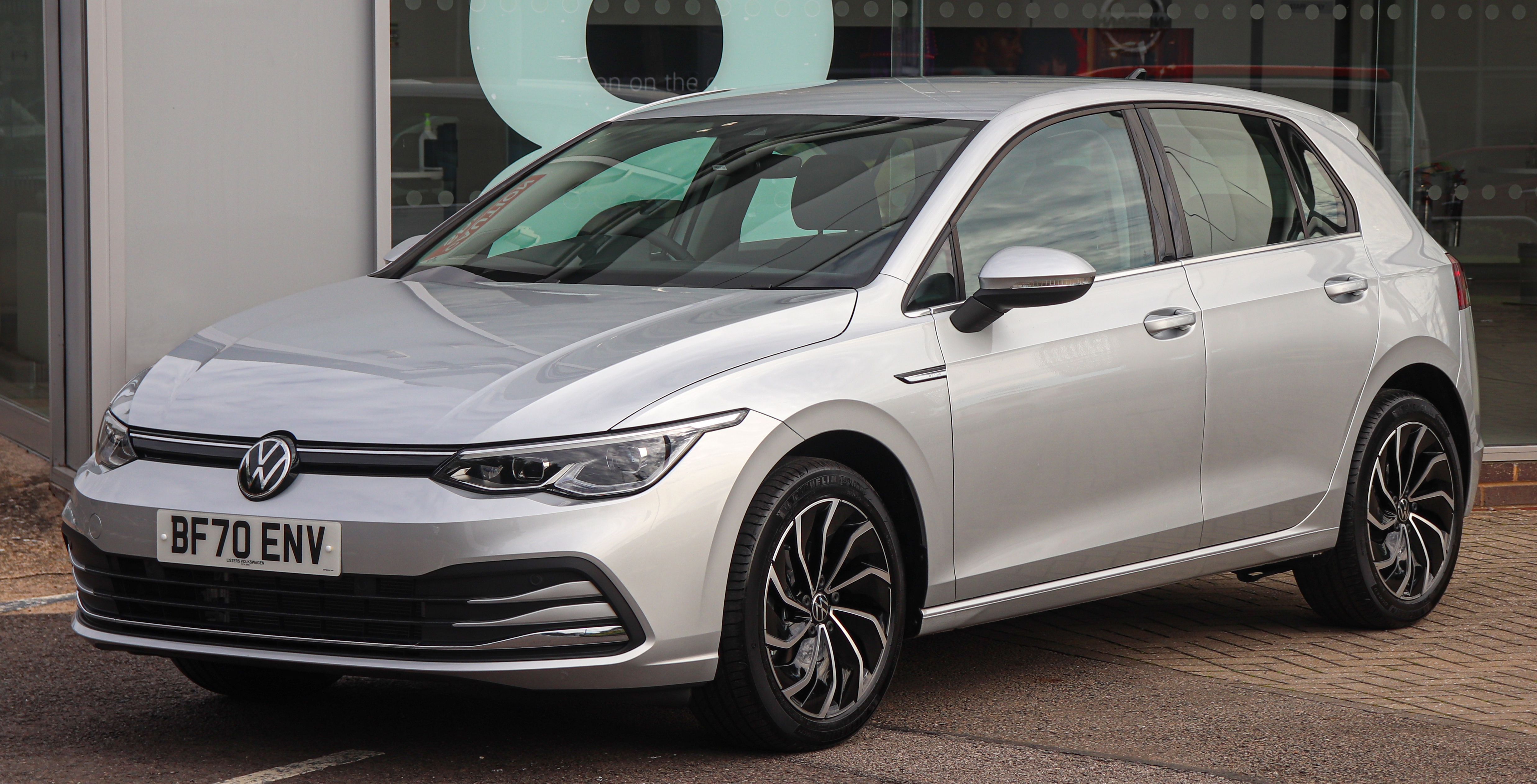
Golf Gtds
"...along. Like the prior GTD, not this, there's two GTDs. One is a competition, one is a regular GTD."
The Golf is a compact car model that comes in different versions. The podcast mentions GTD versions, which are performance-leaning trims. It also notes that there can be more than one GTD type, including a competition-focused version.
The Golf is a compact car line that can be configured for different performance levels, including track-focused “GTD” variants mentioned in the podcast. The context suggests there are multiple GTD versions, including a competition-oriented one and a more regular GTD. It’s discussed because these performance trims show how the Golf platform can be tuned for different driving priorities.
supercharged
"Traditional front engine, V8, supercharged, 5.2 liter with around 815 horsepower."
A supercharger is a device that forces extra air into the engine. More air usually means more power.
A supercharger is an engine-driven forced-induction device that increases the amount of air entering the cylinders. By packing in more air, it can raise power output compared with the same engine without forced induction.
V8
"Traditional front engine, V8, supercharged, 5.2 liter with around 815 horsepower."
A V8 is an engine with eight cylinders arranged in a V shape. It’s a common layout in big, powerful performance cars.
A V8 is an engine configuration with eight cylinders arranged in a “V” shape. The segment mentions a traditional front-engine V8 as part of the comparison set for GT cars.
rear drive
"And it's rear drive. And then the Corvette ZR1X is a 5.5 liter twin turbo VA plus hybrid at 1250 horsepower"
Rear drive means the back wheels get the power. That changes how the car grips and handles compared with cars that drive all four wheels.
“Rear drive” here refers to rear-wheel drive (RWD), where power is sent to the back wheels. RWD affects traction and handling balance compared with AWD, especially during hard acceleration.
twin turbo
"And then the Corvette ZR1X is a 5.5 liter twin turbo VA plus hybrid at 1250 horsepower and all-wheel drive."
“Twin turbo” means the engine has two turbochargers. They compress air so the engine can make more power than it would without turbocharging.
“Twin turbo” means the engine uses two turbochargers to force more air into the cylinders. That typically allows higher power than a naturally aspirated engine of similar size, especially across a wider range of speeds.
all-wheel drive
"and all-wheel drive. And 40-some-on-100 pounds."
All-wheel drive means power goes to all four wheels. That usually helps the car grip the road better when you accelerate.
All-wheel drive (AWD) sends power to all four wheels, improving traction and stability. In performance cars, AWD can help put power down more effectively, especially when accelerating hard or on low-grip surfaces.
around the ring
"And these guys are attempting to best the long-standing records that the GT3 RS has held around the ring."
“The ring” means the Nürburgring race track in Germany. People use it as a benchmark because it’s challenging and well-known for lap times.
“The ring” is shorthand for the Nürburgring, a famous German circuit used as a benchmark for lap times. When hosts cite records “around the ring,” they’re referencing performance measured on that track.
Nürburgring competition and class comparisons
"I mean, I think first it's a little bit of rat race on the ring... Because when you look at the official timetables of Nürburgring, there's different classes. And the GT3 RS is in a different class than the Ford GTD and the Corvette."
They’re talking about racing at the Nürburgring and why you can’t always compare lap times directly. Different types of cars race in different categories, so the rules and performance potential aren’t the same.
The hosts discuss how the Nürburgring is used as a benchmark and why comparing lap times across different race classes can be misleading. They reference official Nürburgring timetables and explain that cars like the Porsche GT3 RS, Ford GTD, and Corvette are grouped differently.
Ford Gtd
"And the GT3 RS is in a different class than the Ford GTD and the Corvette."
They mention the Ford GTD as another car that runs in a different category at the Nürburgring. The takeaway is that it’s not directly comparable to the Porsche GT3 RS because the rules and allowed equipment differ.
The Ford GTD is referenced as a different Nürburgring class compared to the Porsche 911 GT3 RS. The speaker uses it to illustrate that rule differences (and what’s allowed) affect how cars can be compared.
Camber
"...with some adjusting of Camber and tow-in and stuff that everything a customer can do as well."
Camber is the tilt angle of the tire. Changing it can help the tire stay more “flat” on the road when the car is turning.
Camber is the angle of a wheel relative to vertical when viewed from the front or rear of the car. Adjusting camber changes tire contact during cornering, which can improve grip and lap times.
off-the-shelf
"Because we take completely standard off-the-shelf with some adjusting of Camber and tow-in and stuff that everything a customer can do as well."
“Off-the-shelf” means the car or parts are basically standard, store-bought items—not one-off custom race gear. The speaker is saying the GT3 RS starts from what customers can get.
“Off-the-shelf” means parts or cars that are mass-produced and available as standard products, rather than custom-built from scratch for a single race. Here, it supports the idea that the GT3 RS is based on customer-accessible hardware.
tow-in
"...with some adjusting of Camber and tow-in and stuff that everything a customer can do as well."
Tow-in is an alignment adjustment that changes how the tires point relative to each other. It can make the car feel more stable and change how the steering responds.
Tow-in is a wheel alignment setting where the front of the tires point slightly toward each other (as opposed to toe-out). It affects steering response and tire wear, and teams tune it for stability and turn-in.
pedestrian safety standard
"Yeah, but that's because of... Street legal in Europe. That's because of pedestrian safety standard."
Pedestrian safety standards are laws meant to protect people outside the car during accidents. The speaker is saying those rules can restrict design choices, which affects whether a car can be legally driven on public roads.
Pedestrian safety standards are legal requirements that limit vehicle design features to reduce harm in crashes involving people. In this segment, the speaker links these rules to why certain cars aren’t “street legal” in Europe.
aero parts
"No, no, no, no. Look at the aero parts on the cars. I mean, there's a lot of laws in Germany that the wing can't..."
Aero parts are the car’s aerodynamic pieces, like wings and spoilers. They help the car grip the road at speed, but they can also be restricted by rules.
Aero parts are aerodynamic components—like wings, splitters, and other body add-ons—that manage airflow to create downforce or reduce drag. The speaker argues that aero hardware is heavily regulated, including rules about how a “wing” can be used.
Ford Mustang
"And we don't even know the horsepower of this Wonder Mustang now because [1617.3s] they first drive their lap times and then they think about how many horsepower can they make."
They’re talking about a Ford Mustang. The point is that they’re judging the car by how fast it is on track first, before locking in the engine’s power number.
The speaker references a Ford Mustang as an example of how the team approaches development. They mention not even knowing the horsepower yet, because they evaluate lap times first and then decide what power level makes sense.
lap times
"they first drive their lap times and then they think about how many horsepower can they make. [1623.2s] We do need the other way around."
Lap time is how long it takes to do one full lap on the track. They’re saying they look at lap times first to understand what the car needs, rather than just chasing a power number.
Lap times are how long it takes to complete one circuit around a track. In the development discussion, the speaker contrasts using lap times as the starting point versus starting with a horsepower target.
full send
"I'm sure you watched the lap. [1654.6s] It was a full send, six minutes, 45 seconds, just every single lap. [1659.0s] All the guys doing this lap timing."
“Full send” just means going all-out. Here, it means the driver was pushing hard for the whole lap.
“Full send” is slang meaning maximum effort—driving as aggressively as possible within the limits of the car and track. In this context, it describes a lap approach where the driver commits to speed and precision for the entire run.
turbo chargers
"I said, imagine if you had some turbo chargers on there already, send back like a smiley face or something, you know."
Turbochargers are parts that help an engine make more power. They squeeze more air into the engine, so it can burn more fuel and feel stronger—especially when you accelerate.
Turbochargers are forced-induction devices that use exhaust gas energy to spin a turbine, compressing incoming air. More compressed air allows the engine to burn more fuel and make more power without increasing engine displacement.
power drive
"... I can promise you that. And this is great because you can keep your power drive."
“Power drive” here just means the car’s ability to put power down and feel strong when you accelerate. The speaker is saying the next cars should keep that kind of driving character.
“Power drive” is being used as a general phrase for the car’s ability to deliver power effectively to the wheels. In context, it suggests the future GT/race-focused direction will preserve the driving feel and thrust people buy these cars for.
rear wheel drive
"naturally aspirated and rear wheel drive, which was kind of where I was going at with the earlier question, which is, have we reached peak GT3 RS?"
“Rear wheel drive” means the power goes to the back wheels. That can affect how the car launches and how it feels when you drive hard.
Rear-wheel drive (RWD) sends engine power to the rear axle. It changes how the car accelerates and handles—often making it feel more “classic” and allowing predictable traction and balance when pushed on track.
greater displacement
"Is there anything left that you can, without going to greater displacement or without adding carbon fiber or something like that?"
“Displacement” is basically the engine size. “Greater displacement” means a bigger engine, which can make it easier to produce more power.
Displacement is the engine’s total cylinder volume, commonly measured in liters. “Greater displacement” means using a larger engine to make more power, often by increasing the amount of air/fuel the engine can burn each cycle.
carbon fiber
"Is there anything left that you can, without going to greater displacement or without adding carbon fiber or something like that?"
Carbon fiber is a very light, strong material used to make parts of a car. People use it on performance cars to help reduce weight and make the car feel more responsive.
Carbon fiber is a lightweight composite material used in performance cars to reduce weight and improve stiffness. In the context of this discussion, the idea is that further gains might come from expensive weight-saving materials rather than just more engine displacement or power.
differential locking
"I'm going to change my differential locking, which once you play with it, you're like, oh, that's great. Like it was really helpful."
A “locked” differential helps both drive wheels work together instead of letting one spin when traction is poor. That can improve grip when you’re accelerating out of a turn.
Differential locking (or a locking differential) reduces how much the left and right wheels can rotate at different speeds. That helps traction when one wheel loses grip, and it can make a car feel more predictable when exiting corners.
deployed technologies
"It was just light years ahead of the last one in terms of, I would say deployed technologies. Quantum leap."
“Deployed technologies” here means technologies that are actually implemented and used in the car’s systems—not just theoretical or marketing claims. The speaker is saying the newer GT3 RS uses more advanced real-world tech than the previous one.
emissions
"Yeah, it was the fact that we knew that on the engine side, we couldn't do much because of the emissions that got stricter and stricter."
Emissions refers to the legal limits on what a vehicle can release from its exhaust and how manufacturers must design engines and systems to meet those rules. As emissions regulations tighten, it becomes harder to extract big performance gains from naturally aspirated engines without changing the powertrain approach.
powertrain
"So we thought, okay, we have to go through all the other parts of the car, but not the powertrain."
The powertrain is the set of components that create and deliver power to the wheels—typically the engine, transmission, driveshafts, and related driveline parts. The speaker is saying they focused improvements on other areas of the car rather than changing the powertrain.
aerodynamics
"So you end up at aerodynamics and at chassis and at like giving the customer a little bit something to adjust and to play with..."
Aerodynamics is about how the car moves through air. The shape can create extra grip by pushing the car down, and it can also reduce air resistance so the car can go faster.
Aerodynamics is how air flows around the car and how that affects forces like drag (resistance) and downforce (pushing the tires into the road). In racing, aero is often used to improve grip and stability without increasing engine power.
active aerodynamic
"...we said, okay, we need an active aerodynamic. We can't put any more downfalls on the car..."
Active aerodynamics means the car can change its aerodynamic “shape” while driving. That helps it create grip when you need it and reduce resistance when you’re going fast in a straight line.
Active aerodynamics uses moving aero elements (like flaps or air brakes) controlled by the car to change aerodynamic forces depending on speed and driving conditions. The goal is to balance downforce and drag so the car stays fast in both corners and on straights.
downfalls
"We can't put any more downfalls on the car because otherwise on the straights... it will be slower than the predecessor."
Downforce is the “push down” from the air that makes the tires grip better. But more downforce often creates more air resistance, which can make the car slower on straight sections.
“Downfalls” here refers to downforce—an aerodynamic force that pushes the car’s tires harder onto the road. More downforce can improve cornering grip, but it usually increases drag, which can slow the car on straights.
McLaren Senna
"...than what McLaren did with the Senna. Oh, much more, yeah."
The McLaren Senna is a supercar built for the track, and it’s known for clever aerodynamic tech. The hosts are comparing its aero approach to what Porsche is doing—changing airflow to help the car stay fast.
The McLaren Senna is a track-focused supercar famous for its advanced aerodynamic system. In this discussion, it’s used as a comparison point for how active aero (including an air-brake-like approach) can be used to manage performance when power is limited.
air brake
"They began with something similar, but it was only working the back of the car. Yeah, it was an air brake."
An air brake is a flap on the car that can pop out to slow the car down using air resistance. It’s like adding extra “wind braking” when you need it.
An air brake is an aerodynamic device (often a rear spoiler/flap) that deploys to increase drag and/or reduce downforce. In racing, it can help manage speed and stability by changing aero balance at specific points like braking zones or high-speed sections.
prototype
"We mostly build up a prototype and that you can see exactly what the car will look like later on and explain the technology that is needed to be faster or more desirable than the last one."
A prototype is a “first draft” car. It’s built to help the team see how the final car will look and to test whether the new ideas make sense.
A prototype is an early, test version of a car (or design) built to show what the final product will look like and to validate engineering choices. In this context, they’re using it to demonstrate the design direction and explain what’s needed to make the next car faster or more appealing than the previous one.
technology that is needed to be faster
"We mostly build up a prototype and that you can see exactly what the car will look like later on and explain the technology that is needed to be faster or more desirable than the last one."
They’re talking about the engineering changes that help the next car go quicker than the last one. That can include things like how the engine works, how the car moves through air, and how well it handles heat and grip.
The phrase points to the engineering work required to improve performance versus the previous generation—typically involving changes across powertrain, aerodynamics, chassis, and cooling. Even without naming specific parts here, it’s describing the development goal behind the next GT car.
step up to the new one
"We always want to make our customers that have the last ones step up to the new one."
“Step up” here describes a common product strategy in car marketing: encouraging existing customers of the previous model to upgrade to the new version. It’s essentially about maintaining the customer base while moving them to the next generation.
lightweight flywheel
"I believe you told me that you wanted every single one to have a lightweight flywheel. And then you got pushed back within the company and said, no, no, no, make it an option."
A flywheel is a heavy spinning part that helps smooth out engine power. Making it lighter helps the engine speed up and slow down faster, so the car feels more responsive.
A lightweight flywheel reduces rotating mass, which can make the engine respond more quickly to throttle changes. That typically improves throttle “snap” and can help the car feel more immediate, but it can also affect drivability and wear depending on the setup.
take rate
"And it turned out it was over 90% take rate. Did I say that or that was daring?"
Take rate just means “how many people actually bought the option.” If take rate is high, it suggests most buyers want that feature.
Take rate is the percentage of customers who choose an optional feature when it’s offered. In product planning, it’s a key metric for deciding whether an option should be standard or remain optional.
Porsche 918 Spyder
"But the 911R was a success. It didn't have the problems of the 918 had."
The Porsche 918 Spyder is a very advanced, high-end Porsche. They’re saying the 911R didn’t have the same kinds of problems that the 918 had.
Porsche 918 refers to the Porsche 918 Spyder, a high-performance hybrid supercar. The host contrasts the 911R’s reliability/issue profile with the 918, implying the 918 had more problems during its lifecycle.
690 horsepower
"...the GT2RS with the 690 horsepower, like they just kind of say, you know what, we trust Andy or Andy and his team..."
Horsepower is a number that describes how strong the engine is. They’re citing 690 horsepower to show how extreme that GT2 RS is.
Horsepower is a measure of engine output, used to compare performance potential across cars. The hosts mention 690 horsepower to illustrate the scale of the GT2 RS’s performance.
business case has to make a profit
"So development cost and supplier base that you can get the parts for the car in the numbers that you need them. The business case has to make a profit."
A business case is the company’s way of checking whether a project makes financial sense. Even if the idea is exciting, it still has to be possible to build and profitable.
A “business case” is the internal justification for a product: expected costs, supply chain feasibility, and expected revenue/profit. Here it’s framed as one of the non-technical constraints that must align before Porsche can greenlight a radical new car.
form follows function
"like the all the designers, because they're involved in the process, form follows function, but we want the function to look very attractive."
It’s a design idea that says the car’s shape should be based on what it needs to accomplish. So the engineering and practical needs come first, and the looks follow.
“Form follows function” is a design philosophy meaning the shape of a product should be driven by what it needs to do. In car design, it usually implies styling and packaging are secondary to engineering goals like aerodynamics, cooling, and driver ergonomics.
goes faster sideways
"They said the GT3 RS is the first car they've ever driven that goes faster sideways than in a straight line."
This phrase means the car is turning so hard that it’s not perfectly pointed straight at the direction of travel. Instead, it’s sliding a bit while still staying fast through the corner.
“Going faster sideways” describes a car maintaining significant lateral slip while still carrying speed—essentially aggressive cornering with the tires working hard. It’s a way of saying the car’s grip and stability allow fast rotation and controlled oversteer rather than only straight-line acceleration.
turn in
"you mentioned, well, the GT3 RS is likely faster in the corner, maybe a little bit quicker on turn in. Perhaps it gives the driver makes it easier for them to drive quickly..."
Turn-in is how the car reacts when you first start turning into a corner. A “quicker” turn-in means the car feels responsive right when you ask it to change direction.
“Turn-in” is the moment you initiate a corner—how quickly and confidently the car responds to steering input. The speaker suggests the GT3 RS is quicker on turn-in, which helps the driver place the car precisely.
Nurburgring
"quickly, particularly around the Nurburgring. Where is left? Where is there any more improvement to be gained in if you can't touch the power train? ... Nurburgring is a track that welcomes power because you've got long straights."
The Nürburgring is a well-known race track in Germany. The hosts are saying it tends to reward cars that have strong power because there are long straight sections.
The Nürburgring is a famous German road course known for long, varied sections that reward traction and stability as well as power on straights. The speaker specifically says it “welcomes power” because of its long straights, shaping how they think about performance tradeoffs.
downforce
"Because on the car side, you can make only so and so much downforce and we have 860 kilos of downforce on the GT3 RS, which is a lot. You can't just double that, because you need tires that hold up."
Downforce is the “suction” effect from the car’s shape that presses the tires to the road. More downforce usually means more corner grip, but there are limits because the tires and the car need to be strong enough to handle it.
Downforce is the aerodynamic force that pushes the car’s tires harder onto the road, increasing grip in corners. The speaker notes the GT3 RS has about 860 kilos of downforce, and that you can’t simply double it because tires and the car’s structure must handle the loads.
body in white
"And you need the body in white. You don't want to strengthen the body in white and put another 70 kilos in it to endure the downforces."
“Body in white” means the bare metal body structure of the car before it’s finished. They’re saying you can’t just make the structure heavier to handle more downforce without creating other problems like extra weight.
“Body in white” (BIW) is the car’s structural body shell before paint and before many interior/exterior components are installed. The speaker is saying you don’t want to add lots of extra weight/strength to the BIW just to carry higher aerodynamic loads.
field of diminishing returns
"So we're in a field of diminishing returns when it comes to aerodynamics, I would say."
“Diminishing returns” means that after a certain point, making a change helps less and less. They’re saying aero improvements are getting harder to translate into meaningful extra speed.
“Diminishing returns” means each additional engineering effort produces less improvement than before. Here, they’re arguing that aerodynamics has reached a point where adding more downforce is increasingly hard and expensive relative to the speed gained.
tire noise
"And tire technology is very good at the moment and we have future regulations coming up with tire noise that are a little bit counterproductive to building up lateral forces."
Tire noise is the sound tires make while rolling. They’re saying new rules may force tire designs that don’t grip as well laterally, which limits how much cornering performance you can chase.
“Tire noise” refers to the sound tires generate, which regulators can target with future rules. The speaker says upcoming tire-noise regulations could make it harder to build tires that generate maximum lateral grip (cornering forces).
lateral forces
"...tire noise that are a little bit counterproductive to building up lateral forces. So even on tires, we have to fight to stay where we are."
Lateral forces are the sideways “grip” tires provide when you turn. More lateral grip generally means you can go faster through corners.
Lateral forces are the sideways forces tires generate when cornering, which determine how much grip the car has in turns. The speaker connects tire-noise regulations to the challenge of maintaining high lateral grip.
balance
"Because that's where the time lies between us and the others. So nothing else you can do from a driver confidence perspective? Because there's always something. There's always something you can play around with the balance"
“Balance” is how the car feels in a corner—whether it’s predictable and stable as you turn and apply power. They’re saying engineers can tweak setup details to change that feel.
In performance driving, “balance” describes how the car behaves across the corner—how neutral it feels and how predictable it is as load transfers between tires. The speaker ends by saying there’s always something you can adjust to play with the car’s balance.
dampers
"If you play around with traction control and dampers, that's something different."
Dampers are the parts that control how the car bounces after hitting bumps. Softer or firmer damping changes how steady the car feels over rough roads and in turns.
Dampers (shock absorbers) control how quickly the suspension compresses and rebounds. Changing damper settings can significantly affect ride quality and cornering stability by controlling body motion.
steering ratio
"there's no need to change the, like, if you can change the ratio, I feel like BMW, I think they used to be, they had a variable rate rack"
Steering ratio is how “responsive” the steering feels—how much you turn the wheel to make the car turn. Changing it can make the car easier to steer in tight spots.
Steering ratio is how much the steering wheel turns relative to how much the wheels turn. A variable steering ratio can make the car feel quicker to respond at low speeds while still aiming for stability at higher speeds.
variable rate rack
"I think they used to be, they had a variable rate rack, which was sort of interesting."
A variable-rate steering rack changes how the steering “translates” your wheel movement into turning the front wheels. It’s designed to make steering feel better in different parts of the turn.
A variable-rate steering rack changes the relationship between steering wheel input and steering wheel angle across the steering range. The goal is often to improve feel—more direct response around center while maintaining stability at larger steering angles.
RadTuner
"Rubin has this new thing called the RadTuner, where you can adjust everything."
RadTuner sounds like a tool or feature that lets you change how the car behaves. The point being made is that you can adjust settings so much that the car can end up handling worse.
RadTuner is described here as a system that lets you adjust multiple vehicle settings. The speaker argues that because it’s digital, it can still be used to alter handling in ways that may be counterproductive.
wheel slip
"You can actually make the car handle terrible. You can put all, give me all the torque to the front wheels with 100% wheel slip and soft suspension, you could."
Wheel slip happens when the tires spin but the car doesn’t move forward as effectively. It usually means the tires have lost traction.
Wheel slip is when a tire rotates faster than the car’s actual movement, usually because the tire loses grip. It’s a key concept behind traction control and stability systems.
911 GT3 SC Sport Cabriolet
"Okay. Let's change gears completely and talk about what we're really supposed to be talking about, which is this 911 GT3 SC Sport Cabriolet."
Porsche is making a convertible version of its 911 GT3. The idea is to keep the sporty, track-style character but make the top easier to live with so you can use it more often.
This is a Porsche 911 GT3 variant presented as a “Sport Cabriolet,” meaning it’s a convertible version of the GT3-focused track-oriented model line. The “SC” designation is Porsche’s internal naming for this specific open-top GT3 concept, aimed at combining GT3 driving feel with everyday usability.
open GT cars
"And if you look at the history of the brand, the first race cars, even the ones that were driving here in America, were open, open top cars, like the speedsters with their road cages."
They’re talking about Porsche’s performance “GT” cars that have an open top. The point is that Porsche has been doing this style for a long time, not just recently.
“Open GT cars” means grand touring cars with an open-top (convertible/roadster) configuration. The hosts use the term to connect the new GT3 Cabriolet idea to Porsche’s broader tradition of open-top performance vehicles.
fumbling around with the top
"And so on a speedster and both on the speedster and on the spider RS, we had people complaining about the fumbling around with the top. Because when you, it's finicky, it's, it's lightweight."
They’re describing how earlier convertibles could be annoying to operate—like the top is hard to open/close quickly. The new direction is about making the top easier so people use the car more often.
This phrase refers to the inconvenience of manual or complicated convertible top operation. The hosts contrast earlier lightweight open-top designs—where the top mechanism could be finicky—with the customer desire for a more convenient, button-style experience.
finicky
"Because when you, it's finicky, it's, it's lightweight. And it was, it was deliberately lightweight."
Here “finicky” means the top doesn’t work smoothly every time and can be a little troublesome. They’re saying that’s one reason people asked for a better, easier-to-use convertible.
In this context, “finicky” means the convertible top mechanism is temperamental or requires careful handling to operate smoothly. It’s used to explain why owners wanted an easier, more reliable top operation.
press a button
"And yes, to come back to the point, we had people saying, oh, can't you, can't you make a, make a top that is easier to close? I want to press a button because I want to use the car more often."
They’re talking about wanting the convertible top to be power-operated—so you can open or close it with a button. That makes it easier to use the car when the weather changes.
“Press a button” describes the desired convenience of power-operated convertible top systems. The hosts frame it as a key customer requirement: being able to open/close quickly without extra steps, especially when weather changes.
fully automated top
"“And the only thing dilutive might be that it's an automated, fully automated top. Everything else in the car is pure hardcore.”"
They’re referring to the convertible roof being powered and operated automatically. Instead of you manually working the roof, the car does the roof action for you.
A “fully automated top” means the convertible roof operation is motorized and controlled automatically, rather than requiring manual latching and handling by the driver. In practice, it changes how quickly and easily you can switch between open and closed configurations.
lightweight packages
"“It's a super puristic cargo car. And it's this only manual. It's a two seater. And the only thing that we did is use the normal drop top. And we found out…”"
“Lightweight packages” are factory options or configurations aimed at reducing vehicle mass. They typically combine multiple changes—like lighter components and simplified trim—to improve responsiveness and handling, especially in a performance-focused model.
magnesium wheels
"“It features standard, the lightweight packages, magnesium wheels, it had lightweight doors…”"
These are wheels made from a light metal (magnesium). Lighter wheels help the suspension react faster and can make the car feel sharper when driving.
Magnesium wheels are wheels made from magnesium alloy, which is lighter than many conventional wheel materials. Lower unsprung weight can improve suspension response and ride/handling feel because the wheels are easier to accelerate and decelerate.
lightweight doors
"“magnesium wheels, it had lightweight doors as defenders of the SE.”"
They’re saying the doors are made lighter than usual. That helps the car feel more responsive because it reduces weight on the car.
“Lightweight doors” indicates the doors are made or trimmed to reduce mass compared with standard doors. Reducing body and moving-panel weight helps overall vehicle dynamics and can improve how quickly the car responds to steering and suspension inputs.
Skunk Works project
"“we build a car together as a Skunk Works project after hours, just to feel it out.”"
This is a nickname for a small team that builds and tests something quickly, kind of like a “secret project” inside a company. They did it to see how the idea would work in real life.
“Skunk Works” refers to a small, fast-moving internal development effort that works outside normal processes to prototype and test ideas quickly. In automotive terms, it often implies engineers built something experimental after hours to validate a concept before committing to production.
drift
"“Chris Harris stated that too. It's the most easiest car to drift on the GT line at the moment.”"
Drifting is when the car slides sideways on purpose while you steer to keep it under control. They’re saying this car makes that kind of driving easier than other GT cars.
Drifting is a driving technique where the car intentionally over-rotates so the tires maintain a controlled slide while the driver steers to manage the angle. The speaker claims this GT-line car is unusually easy to drift, implying predictable balance and traction behavior.
parts that we all know
"“That's very important for three British guys… And so I think it was a way, absolutely. And it's considered part spin exercise… but it's parts that we all know.”"
They’re saying the car isn’t using brand-new mystery parts. The interesting part is how they combine known performance pieces into this new open-top GT3 setup.
This phrase suggests the car uses familiar, proven components rather than totally new or experimental tech. The speaker’s point is that the novelty comes from combining those known parts into a new configuration (open-top GT3) rather than reinventing everything.
987
"Before that, we had nothing on a 987. We already thought about something similar, but didn't do it back then."
“987” is Porsche’s internal shorthand for a specific generation of the Boxster/Cayman. They’re saying they had a similar idea back then, but didn’t build it.
“987” refers to the Porsche Boxster/Cayman generation code (987 is the mid-2000s to early-2010s era). The speaker is saying they considered something similar on that platform earlier, but didn’t do it at the time.
holed up
"You said, when you get holed up by a car and you're in a GT3, you get homicidal."
Here “holed up” just means you’re stuck behind another car and can’t move freely. The speaker is joking that GT3 drivers get extra annoyed when traffic won’t let them drive.
In this context, “holed up” means being stuck behind or trapped by another car in traffic, limiting your ability to drive the way you want. The speaker uses it to describe how GT3 drivers can get frustrated when they can’t get clear road space.
Lucid Air
"... In a cabriolet, you shift one gear up, sniff the air and enjoy the scenery. And it's exactly like tha..."
The Lucid Air is an electric car, meaning it runs on electricity instead of gasoline. It’s made to be comfortable and smooth for everyday driving. The podcast talks about enjoying the drive and scenery, which fits how it’s designed to feel.
The Lucid Air is an electric sedan known for its comfort and long-distance capability. In the podcast, it’s described in a relaxed, open-air driving scenario, emphasizing how the car can be enjoyed smoothly. It comes up in EV discussions because it’s designed to feel like a premium cruiser while still being an EV.
conceptual anger
"So, you know, I think people just want to be angry. I can explain the conceptual anger, which is like the Porsche has always been about high performance and motorsport and GT3."
The speaker means some online arguments are fueled by emotion and opinions, not by real driving experience. They’re saying it’s better to wait and judge after you’ve actually tested the car.
“Conceptual anger” here refers to the idea that some internet criticism is driven more by attitude and debate than by direct experience. The speaker contrasts that with their own approach: reserving judgment until they’ve driven the car themselves.
homologation special
"[3057.9s] GT3 is a homologation special for the race cars. And you made the point very early. Well, you know,"
Racing series require certain cars to be “approved” before they can race. A homologation special is a street car made in limited numbers so the race version is allowed to compete.
A homologation special is a road-legal version built to meet race eligibility rules. Manufacturers produce a limited number of cars so the race car’s design can be officially approved for competition.
exhaust tuning
"[3135.5s] Was there any special tuning to the exhaust between this car and a regular GT3? [3140.1s] We're exceptionally proud that we never did any sound engineering..."
Exhaust tuning means adjusting the exhaust system so the engine breathes and sounds a certain way. The speaker is saying they didn’t try to fake the sound—they let the engine’s normal sound come through.
Exhaust tuning is changing the exhaust system’s design (and sometimes engine mapping) to influence sound and flow. Here, the speaker emphasizes they did not do special “sound engineering” and instead rely on the engine’s natural character.
valve activation
"[3201.1s] ...it's the rigid valve drain that we have or valve activation, which makes a very distinctive sound. And we"
Valve activation is how the engine controls when its valves open and close. That timing affects how the engine runs—and it can change the sound you hear.
Valve activation refers to how the engine’s cam/valve system is controlled to open and close the valves. The timing and pattern of valve events strongly affect combustion behavior and therefore the engine’s sound.
ST Fender indoors
"Okay. Regarding some of the other changes, why do the ST Fender indoors? Is it primarily weight or also you wanted a visual difference? There's a simple reason for that"
They’re talking about a body-panel change on the car. The reason is partly to save weight and partly to make the car look a certain way.
This appears to be a transcription error for a Porsche body-panel term (likely “front fender”/“side fender” and possibly a specific trim or design). The speaker’s point is that the design change is driven by weight and visual presentation priorities.
homologated weight
"we couldn't surpass the maximum homologated weight of a touring with the convertible. But the convertible has a 70 kilo penalty"
It’s the legally approved weight number the car has to stay under. Because the roof adds weight, they have to save weight elsewhere so the car still qualifies.
Homologated weight is the official, certified vehicle weight used for regulatory approval (including emissions rules). The speaker says the convertible can’t exceed the maximum homologated weight of the touring version, so they must offset the roof’s added mass with other lightweight components.
fully automated roof
"But the convertible has a 70 kilo penalty because of the fully automated roof. So we had to bring in all the parts that make the car as light as possible to compensate that"
It means the convertible top moves automatically with motors. That automation adds extra weight, which affects how heavy the car can be.
A fully automated roof means the convertible top is operated by motors and controls rather than manual latches. This adds mass and complexity, which is why the speaker calls out a specific weight penalty for the roof system.
emission homologation
"And when it's exactly the same, then you don't have to make a new emission homologation on the car. If the car would have had, let's say, four seats and a PDK and normal doors and normal fenders, it would have been too heavy."
It’s the process of getting the car approved to meet emissions rules. If the car changes enough to affect emissions testing, it can require a new approval that takes a long time.
Emission homologation is the regulatory approval process for a car’s emissions configuration. The speaker argues that if the driving resistance stays the same, they may not need a new emissions approval; otherwise, a new homologation can take many months and delay sales.
driving resistance
"we did it before and the normal GT3 because the driving resistance is exactly the same. And when it's exactly the same, then you don't have to make a new emission homologation on the car."
It’s how hard it is for the car to move forward. If that doesn’t change, the emissions testing results are more likely to stay similar, so approvals may not need to be repeated.
Driving resistance is the total resistance the car experiences while moving—commonly including aerodynamic drag and rolling resistance. The speaker notes that if driving resistance is unchanged, the emissions approval may not need to be redone because the car’s tested behavior stays effectively the same.
manual transmission
"And the manual only transmission. So what is the weight? Is the SC the heaviest of all the GT3s"
A manual transmission means you shift gears yourself using a clutch. The host is saying that this makes the car feel more engaging and “hardcore.”
A manual transmission uses a clutch pedal and gear lever, letting the driver choose gears directly. The speaker argues that offering a manual sharpens the car’s character and driving feel.
PCCB
"But because in the NFC, it has PCCB standard as well, which shapes up almost 20 kilos on the car."
PCCB is Porsche’s ceramic brake system. Ceramic brakes can help the car stop consistently, and they can be lighter, but they usually cost more if you need service.
PCCB is Porsche’s “Porsche Ceramic Composite Brake” system, meaning the car uses ceramic brake discs. Ceramic brakes can reduce unsprung weight and help with fade resistance, but they’re typically more expensive to maintain.
homologation purposes
"And so we could bring the car down in weight for this homologation purposes and for the positioning purposes."
Homologation is basically “getting approval” so the car can be sold/used under certain rules. The speaker is saying the weight work also helps meet those requirements.
Homologation is the process of certifying a vehicle for legal use in a specific category or market, often tied to motorsport rules. The speaker is saying weight changes can be made to meet certification and positioning goals.
weight distribution
"How about weight distribution? Weight distribution is a little bit more prone to the rear. Because of the top mechanism."
Weight distribution is how the car’s weight is split between the front and back wheels. More weight toward the rear can change how the car turns and feels.
Weight distribution describes how much of the car’s mass sits on the front versus the rear axles. The speaker says the cabriolet’s top mechanism shifts weight slightly toward the rear, affecting handling balance.
intercoolers
"because a turbo engine is a lot heavier with all the intercoolers and turbos and technology inside."
An intercooler cools the air that’s been compressed by the turbo. Cooler air helps the engine make power more effectively.
Intercoolers are heat exchangers used on turbocharged engines to cool the compressed air before it enters the engine. Cooler intake air is denser, which can improve performance and reduce the risk of knock.
hydraulic fluid
"differential on a PDK car is even heavier because it's a hydraulic fluid. We have the sport PDK..."
Hydraulic fluid is a special liquid used to move force around inside a system. Here, it’s mentioned as adding weight because it’s part of the transmission-related hardware.
Hydraulic fluid is the pressurized fluid used in many automotive systems to transmit force. In this context, it’s part of the drivetrain hardware, contributing to weight.
race genes
"in addition to the GT3 model line because a touring as well, you could say, oh, it's diluting the race genes."
“Race genes” is a way of saying “this car is built with racing in mind.” They’re saying a Touring version can still be a real GT3 even if it’s aimed at drivers who don’t only go to the track.
“Race genes” is a metaphor for the traits that make a car feel truly motorsport-derived—like track-focused design and performance priorities. The speaker argues that adding a Touring-oriented GT3 doesn’t necessarily dilute those traits because many GT3 buyers are still performance-minded.
Porsche 911 R
"the decision to remove the wing to make the 911 R, where did that come from? Because I remember like the press conference that you gave on the 991.2 GT3 about all the arrow and the wing and how magical the wing is. And then you cut the wing off."
The Porsche 911 R is a special, more track-oriented version of the 911. Here they’re talking about removing the big rear wing, which affects how the car sticks to the road at speed.
The Porsche 911 R is a track-focused 911 variant built around reducing weight and simplifying the car for driving feel. In this segment, the host discusses removing the rear wing to create the 911 R look and how that changes aerodynamics on track.
wing
"Because I remember like the press conference that you gave on the 991.2 GT3 about all the arrow and the wing... On the track here, it's worse than a wing car... But we found out that more and more people, they don't track the car. So they don't need the wing and they want the clean looks of a 911."
Here “wing” means the rear spoiler on the car. It helps press the car down for better grip at speed, but it can also change the car’s look.
In this context, the “wing” is a rear aerodynamic spoiler designed to generate downforce. The speaker argues that while a wing can improve track performance at high corner speeds, many customers don’t track their cars and prefer the cleaner 911 silhouette.
rear wheel steering
"Because we just couldn't afford to do two different transmissions for the whole new car that featured a complete new engine, complete new gearbox, rear wheel steering, and the Metzger motor engine was gone."
Rear wheel steering means the back wheels can also steer, not just the front wheels. It can make the car feel more stable at speed and easier to turn.
Rear wheel steering is a system that can turn the rear wheels to help the car rotate more easily or stabilize at speed. The speaker lists it as part of the major technical leap in the newer 911 platform.
gearbox
"Because we just couldn't afford to do two different transmissions for the whole new car that featured a complete new engine, complete new gearbox..."
A gearbox (transmission) is what lets the engine spin at the right speed while the car moves at different speeds. They’re saying the car’s transmission was redesigned, which affected whether they could offer a manual.
A gearbox is the transmission system that changes gear ratios to match engine speed to driving conditions. The speaker emphasizes that the newer 911 platform had a “complete new gearbox,” and that Porsche’s manual-transmission plans were constrained by needing different transmission setups.
Metzger motor engine
"...rear wheel steering, and the Metzger motor engine was gone. It was such a leap from the 997 to the 991."
“Metzger” here refers to a particular Porsche engine lineage. The speaker is saying the newer car no longer used that older engine design.
“Metzger” refers to Porsche’s engine designer/engine family associated with the company’s flat-six development (often discussed in Porsche enthusiast circles). The speaker says that “the Metzger motor engine was gone,” meaning the new generation moved away from that specific engine lineage.
track rats
"We lost some of the drivers out there because the 997 GT3 was always good for track rats and for the drivers because it was manual."
“Track rats” means people who really love going to race tracks and driving hard there. The speaker is saying those drivers liked the manual GT3.
“Track rats” is enthusiast slang for people who spend a lot of time driving on racetracks. The speaker uses it to explain why the manual-equipped 997 GT3 appealed to drivers who care about track driving.
cargo box
"Where did the cargo box idea come from? What problem are you solving there? This is in the SC."
A “cargo box” is basically a built-in storage compartment. They’re describing it as a place to put things and lock them up so you don’t have to close the whole car.
A “cargo box” here refers to a lockable storage compartment integrated into the car’s interior/space behind the seats. The speaker explains it’s meant to solve a practical problem—storing items like a jacket—without needing to close the car.
Porsche 964
"...ah. Where it comes from, I can tell you from the Porsche 964 and 993, because exactly that we offered as an op..."
The Porsche 914 is an older Porsche sports car. It has its engine in the middle, which helps it handle well. The podcast mentions it while talking about Porsche’s model history and how different generations connect.
The Porsche 914 is a classic Porsche sports car known for its mid-engine layout and its place in Porsche’s history. In the podcast, it’s referenced in relation to the Porsche 964 and 993, suggesting a discussion about how Porsche’s model lineup evolved and how certain design or engineering ideas carried forward. It’s often discussed because it’s a distinctive, mid-engine Porsche from an earlier era.
two-seater
"And I think it's a nice idea to take advantage of the room behind the seats, where no seats are because it's a two-seater."
A “two-seater” means the car is designed for only two passengers. That leaves more space behind the seats, which they use for storage.
A “two-seater” is a car layout with seating for two people, which changes how interior space can be used. The speaker points out that because there are no rear seats, there’s room behind them for storage solutions like the lockable compartment.
top loader
"This time we have a, I would say a top loader, like a washing machine in the States. You always have this top loader."
They’re comparing the storage opening to a washing machine that you load from the top. The point is that the compartment is designed to open from above.
“Top loader” is a comparison to a washing machine style where you load from the top. The speaker uses it to describe how the storage access/compartment is designed to be opened from above rather than pushed in from the side.
Jeep center console
"There's one key between the two lids. It's like a Jeep center console. You can lock it, yeah, on the top."
They’re comparing the locking setup to the kind of built-in storage area you might find between the front seats in a Jeep. The idea is that there’s a simple key/lock arrangement for the compartment.
The speaker uses “Jeep center console” as an analogy for a shared locking/key setup between two lids. A center console is the storage/controls area between the front seats, and the comparison helps listeners visualize how the lock/key mechanism is arranged.
5000 RPM
"[3991.1s] a 73 RS lightweight. And man, let me tell you, that's like, [3998.6s] as close as cars get to magic. Like, you hit the 5000 RPM and it's just like, oh my God,"
RPM tells you how fast the engine is spinning. When you reach a certain RPM, the engine often feels more eager and responsive.
RPM (revolutions per minute) is how fast the engine’s crankshaft spins. Hitting a specific RPM range can correspond to where an engine’s power and responsiveness feel strongest.
internal reset button
"[4003.9s] this is what it's all about. Do you get to do that or are you just too busy with the new stuff? [4009.6s] You should never be too busy to push the internal reset button and drive the old car. So from all [4015.3s] the GT cars we did in the last 25 years, there's at least one example that is super fresh, low"
He’s using a metaphor for “go drive the old car.” Cars that sit too long can develop problems, so regular driving helps keep things healthy.
This is a metaphor for periodically driving older cars to keep them in good working condition. In practice, engines, seals, and fluids can deteriorate when cars sit unused for long periods.
low mileage
"[4015.3s] the GT cars we did in the last 25 years, there's at least one example that is super fresh, low [4021.2s] mileage, that we drive from time to time to keep the car in good state because the cars need to"
Low mileage means the car hasn’t been driven much. That usually helps it stay in better shape, but maintenance still matters a lot.
“Low mileage” means the car has been driven relatively little. For enthusiasts and collectors, low mileage can help preserve wear items and keep the car closer to its original condition—though it doesn’t replace proper maintenance.
BMW Z4
"[4092.2s] attention to, I always like to ask people, well, what did you drive when, and sometimes it's funny, [4097.9s] like I remember, it was a BMW for the Z4, and they said, well, you know, we benchmark, I mean, [4105.6s] the Mercedes, the CLK, or whatever it was, and then this, and a Boxster, and we beat all these"
The BMW Z4 is BMW’s sports roadster. They’re just using it as one of the cars in their comparison list.
The BMW Z4 is BMW’s compact roadster, commonly used as a benchmark in comparisons against other sports cars. The speaker references it as part of a set of cars they evaluated.
Mercedes, the CLK
"[4105.6s] the Mercedes, the CLK, or whatever it was, and then this, and a Boxster, and we beat all these [4113.4s] cars with the Boxster, we beat it everywhere except for handling. And I go, yeah, you did."
The Mercedes-Benz CLK is a sporty Mercedes model line. In this conversation, it’s just part of the “which cars did we compare?” list.
The Mercedes-Benz CLK is a performance-oriented coupe/convertible line that was often compared with other sporty European cars. Here it’s mentioned as one of the vehicles used in a benchmarking exercise.
Porsche Macan
"[4136.2s] And it's, it's 911s and some Spiders and some Caymans. Why not a, will you ever do an SUV? [4145.5s] What? An SUV? A Cayman, a Macan? I mean, there are your competitors."
The Porsche Macan is Porsche’s SUV. They bring it up because it’s an example of the kind of SUV people might compare against.
The Porsche Macan is Porsche’s compact SUV, positioned as a more practical alternative to the brand’s sports cars. The question “why not an SUV?” is answered by referencing the Macan as an existing competitor/benchmark.
cup car
"...the GT3Rs, [4167.6s] and, and cup cars are doing the street cars as well. And so there's always a direct brotherhood..."
A “cup car” is a race car built for a one-brand racing series. The idea is that many cars are similar, so driver skill and setup matter more than having totally different machinery.
A “cup car” refers to Porsche’s one-make racing cars used in series like Porsche’s Cup championships. They’re designed to be race-ready with standardized components, which helps create close competition and a strong link to the production 911 line.
Porsche Panamera
"...We have the GT turbo, the turbo GT model line on Panamera and on, [4198.0s] on Cayenne..."
The Porsche Panamera is Porsche’s sporty four-door sedan. Here it’s being used as an example of where Porsche applies its GT-style performance approach to a road car.
The Porsche Panamera is Porsche’s performance sedan/grand tourer. In this segment, it’s mentioned as a platform that can receive Porsche’s “GT turbo” model line, linking the GT racing philosophy to a road car.
4.0
"...You got two years left at the very end of 997. You guys did the 4.0, which we talked about. You're coming up on the end of 992..."
Here “4.0” means a 4.0-liter engine size. Bigger displacement usually means the engine can move more air and fuel, which can change how it makes power.
In this context, “4.0” refers to a 4.0-liter engine displacement used in the GT3R/GT3R-related discussion. Engine displacement is a key spec that affects how much air/fuel the engine can process and often correlates with power delivery characteristics.
4.2 liter
"...you're coming up on the end of 992 there's a 4.2 liter in the GT3R. [4308.67s] Just checking your poker phase here..."
“4.2 liter” means the engine is 4.2 liters in size. Changing engine size can affect how the car makes power and torque, especially at different RPMs.
“4.2 liter” refers to engine displacement for the GT3R mentioned in the segment. Displacement is one of the main ways engineers size an engine, and moving from 4.0 to 4.2 liters typically changes the engine’s breathing and torque characteristics.
homologating
"Knowing from the technical side that we would have extreme problems in homologating that thing from the emission side, I would say that's a tough one."
Homologating means getting a car approved to be legally sold. The company has to prove it meets rules, especially for emissions and other regulations.
Homologating is the process of getting a vehicle or powertrain approved for legal sale and use in a specific market. It typically requires proving the car meets regulations for things like emissions, noise, and safety.
stroke
"Because we up the displacement from the 3.8, 991.1 to the 991.2 by up in the stroke. You struggle with it too. And not the bore."
Stroke is the distance the piston travels inside the cylinder. Changing stroke (rather than bore) alters the engine’s geometry, which can affect torque characteristics, how the engine makes power, and how it behaves across the rev range.
electric GT3
"So will there ever be an electric GT3? I don't know. I'm sitting here, I'm 60 years old."
They’re asking about a battery-electric version of a GT3-style track car. The concern is that batteries are still too heavy to keep the car light and agile.
An “electric GT3” would be a battery-electric version of the Porsche 911 GT3-style concept (track-focused, lightweight, and responsive). The speaker argues that current battery weight and technology make it hard to keep the nimble, light feel GT3 customers expect.
hybrid
"What about a hybrid like a GT2 RS that had some kind of hybrid assist?"
A hybrid uses both a gas engine and an electric system. The electric part can help the car accelerate, but it can also make the car more complex.
A hybrid powertrain combines an internal-combustion engine with an electric motor/battery system. In performance cars, hybrids can add torque on demand and help efficiency, but they also add complexity and weight.
Porsche Carrera GT
"...ain stretches of the Nurburgring, the Turbo, the Carrera GTS, it's a very cool hybrid system. Pretty lightweig..."
The Porsche Carrera GT is a very high-performance Porsche sports car. It’s built for speed and track-style driving. The podcast mentions it in the context of advanced technology that helps it perform better.
The Porsche Carrera GT is a high-performance Porsche supercar associated with extreme performance and advanced engineering. In the podcast, it’s described in terms of track capability and a “hybrid system,” which suggests a focus on modernized performance technology. It’s the kind of car that comes up when discussing Porsche’s most serious, performance-first engineering.
Ferrari 296 hybrid
"But I was going to say, surely you've driven like the Ferrari 296 hybrid. After I could bring it to life with all these systems."
Ferrari’s 296 is a supercar that uses both gasoline and electric power. The car has systems that manage how the two power sources work together while you drive.
The Ferrari 296 is a plug-in hybrid supercar from Ferrari. In this context, “hybrid” refers to the combination of a combustion engine and electric power working together, plus the onboard systems that manage how that power is delivered.
991.2 GT2 RS
"And it was like, my impression was it was like driving like a 991.2 GT2 RS with an extra 120 horsepower. It's a great car."
The Porsche 911 GT2 RS (991.2 generation) is one of Porsche’s most track-oriented 911s. The host is saying the other car drives in a similar way, just with extra power.
“991.2 GT2 RS” refers to the Porsche 911 GT2 RS in the 991.2 generation. It’s a track-focused, high-performance 911 variant, and the speaker is comparing the feel of another car to that baseline—suggesting similar steering/braking/traction character, but with more power.
mid-engine platform
"We don't have the feeling that the market is ready for any kind of GT car, be it a mid-engine platform or a rear-engine platform at the moment because of the weight penalty and because of the simple fact that with track driving"
A mid-engine layout means the engine sits near the center of the car, closer to the driver. The host is saying that for GT cars, the extra weight can hurt how well it works when you drive on a track.
A mid-engine platform places the engine behind the driver but ahead of the rear axle, which can improve balance and handling. The speaker is saying that, for GT cars, the market may not be ready because the weight penalty makes the car less suitable for track driving.
rear-engine platform
"We don't have the feeling that the market is ready for any kind of GT car, be it a mid-engine platform or a rear-engine platform at the moment because of the weight penalty and because of the simple fact that with track driving"
A rear-engine layout means the engine is in the back of the car. The speaker is saying that regardless of whether the engine is in the middle or the back, extra weight can make GT cars less ideal for track driving.
A rear-engine platform puts the engine at the back of the car, which can give distinctive handling characteristics and traction behavior. In this discussion, the speaker groups rear-engine GT layouts with mid-engine ones and argues that weight penalty is a key limitation for track-focused use.
weight penalty
"We don't have the feeling that the market is ready for any kind of GT car, be it a mid-engine platform or a rear-engine platform at the moment because of the weight penalty and because of the simple fact that with track driving"
A “weight penalty” just means the car is heavier than it ideally would be. Extra weight can make the car feel less sharp or less capable, particularly when you drive hard on a track.
“Weight penalty” is the performance and handling downside caused by extra mass, which can come from heavier components like hybrid systems or batteries. The speaker argues that for GT cars, the joy from the concept has to outweigh the downsides of being heavier, especially for track driving.
Porsche Cayman
"The same way happened on the Boxster and on the Cayman."
The Porsche Cayman is a mid-engine Porsche coupe. They mention it to explain how Porsche can expand a lineup step-by-step over time.
The Porsche Cayman is Porsche’s mid-engine coupe sibling to the Boxster. In this segment, it’s used as another example of how Porsche’s model strategy can roll out performance variants after initial versions.
Porsche Boxster
"The same way happened on the Boxster and on the Cayman."
The Porsche Boxster is a Porsche roadster with the engine mounted toward the middle of the car. They’re using it as an example of how Porsche can evolve a lineup from one type of car into more performance versions later.
The Porsche Boxster is Porsche’s mid-engine two-seat roadster platform. The speaker references it as an example of how Porsche expanded from earlier electric two-door versions into more performance-focused variants over time.
Xiaomi SU7
"...go set these go around the ring, the Xiaomi, the Su7 Ultra? As a matter of fact, we talk about this. I..."
The Xiaomi SU7 is an electric car, so it runs on electricity. The podcast talks about it in terms of speed testing on a race track. That means it’s being evaluated for how quickly and consistently it can drive on demanding roads.
The Xiaomi SU7 is an electric sedan that’s been discussed in performance contexts, including track testing around circuits like the Nürburgring. In the podcast, it’s referenced as an example of a high-performance EV variant (“Ultra”) capable of going fast around the ring. It comes up because it represents a newer entrant focused on EV performance and technology.
benchmarking
"Have you done any benchmarking of any of the Chinese EVs? No. I drove the Xiaomi, this looks a little bit like the Ferrari Pura Sangre."
Benchmarking is basically “testing and comparing.” Here, they’re asking whether they’ve measured how these Chinese EVs perform compared to others.
Benchmarking means comparing performance or behavior against a standard or other cars under similar conditions. In automotive media, it often refers to lap times, efficiency, or measured outputs to judge how one car stacks up.
F80
"“I just drove the F80. That's one. I mean, like, rocket ship.” … “it's a three liter V6.”"
They’re talking about the Ferrari F80. The big point is that it revs up extremely quickly, making it feel like a very aggressive, exciting car.
Ferrari’s F80 is discussed as a fast, high-revving car the speaker drove. The segment highlights how quickly it reaches very high engine speeds, which is a key part of why it feels so intense.
BMW M3
"...ose. You like that one? I mean, I just drove the F80. That's one. I mean, like, rocket ship. Wow. I've..."
The BMW M3 is a fast, sporty version of BMW’s 3 Series. It’s designed to accelerate quickly and feel exciting to drive. The podcast mentions the F80 as a particularly strong example of that performance.
The BMW M3 is a high-performance version of the 3 Series, built for quick acceleration, sharp steering, and track-capable driving. In the podcast, the speaker references driving the F80, describing it as extremely responsive—“rocket ship” territory. It’s often discussed because it’s a mainstream performance car that still delivers serious sport-car behavior.
RPMs
"“…it's a three liter V6. I've never seen a car get to 9000 RPMs that quickly.”"
RPMs tell you how fast the engine is spinning. When a car reaches very high RPMs quickly, it usually feels very responsive and energetic.
RPMs (revolutions per minute) measure how fast an engine’s crankshaft spins. Higher RPMs generally mean the engine is working harder and can produce power differently, especially in performance cars.
psi
"“…four atmospheres of boost. 55.5 psi. So it's like 3.75 or 3.9 bar of boost.”"
PSI is a unit for pressure. In this context, it tells you how much extra pressure the turbo is adding to the engine.
PSI (pounds per square inch) is a pressure unit. Here it’s used to quantify turbo boost pressure, letting listeners compare how hard different forced-induction cars are pushing.
boost
"“Well, it's almost four atmospheres of boost. 55.5 psi.” … “That's a lot.”"
Boost is extra “push” of air into the engine to help it make more power. More boost usually means the engine can feel much stronger.
Boost is the extra air pressure forced into an engine, typically by a turbocharger or supercharger, to increase power. The speaker connects boost pressure to how extreme the car’s performance feels.
bar
"“…55.5 psi. So it's like 3.75 or 3.9 bar of boost.”"
Bar is just another way to measure pressure. They’re converting the turbo boost numbers so you can understand how extreme it is.
Bar is another pressure unit commonly used for boost pressure in automotive discussions. Converting between psi and bar helps compare turbocharged performance across different sources and regions.
Bugatti Chiron
"“The next most boosted thing is the Chiron, the Bugatti Chiron. … it's like 2.8 or something.”"
They bring up the Bugatti Chiron as a reference point. The point is that the Chiron is known for huge turbo power, but the numbers they’re discussing are even more extreme.
The Bugatti Chiron is used as a benchmark for how much boost pressure other cars can run. The speaker claims it’s “not quite” as high as the car they’re discussing, emphasizing how extreme the boost figures are.
Formula one
"“Any thoughts on F1 this year and the whole powertrain?” … “We talked a little bit about hybrids…”"
They talk about Formula one racing and what’s happening with the cars’ technology. It’s more about the overall direction of the sport than one specific part.
The hosts discuss Formula one (F1) and its current direction, including powertrain technology and hybrid-related themes. This is treated as a broader motorsport topic rather than a specific technical component being explained.
power is in reserve
"And it's so much is dependent on how much power is in reserve or available. But I mean, this has to change the rules a little bit."
They mean how much extra “go” the car still has available while you’re driving. If drivers can’t use as much of that extra power anymore, passing and driving style can change.
“Power in reserve” refers to how much engine power (or usable performance) remains available beyond what the driver is currently using. In racing, rule changes can shift how much of that reserve drivers can access, affecting overtakes and how aggressively they can push.
Monaco
"The cars are just smaller, I think is the big thing. So like in the Monaco, you could."
They mention Monaco as a famous race location where the track is very tight. That kind of track makes it harder to pass, so changes to the cars or rules can really matter.
The Monaco reference is about the Monaco Grand Prix context—tight streets and limited overtaking opportunities that make rule and car changes feel especially impactful. It’s used as an example of how passing works in that environment.
Request an Explanation
Heard something you'd like explained? We'll add it to this episode.
Sign in to request explanations for terms you heard.
Want to learn more?
Browse our glossary for plain-English explanations of automotive terms, jargon, and concepts.
Help improve this episode
See something that's not quite right? Our annotations are AI-generated and can sometimes miss the mark. Click the flag icon on any annotation to suggest a correction.
1 community members have helped improve this episode.