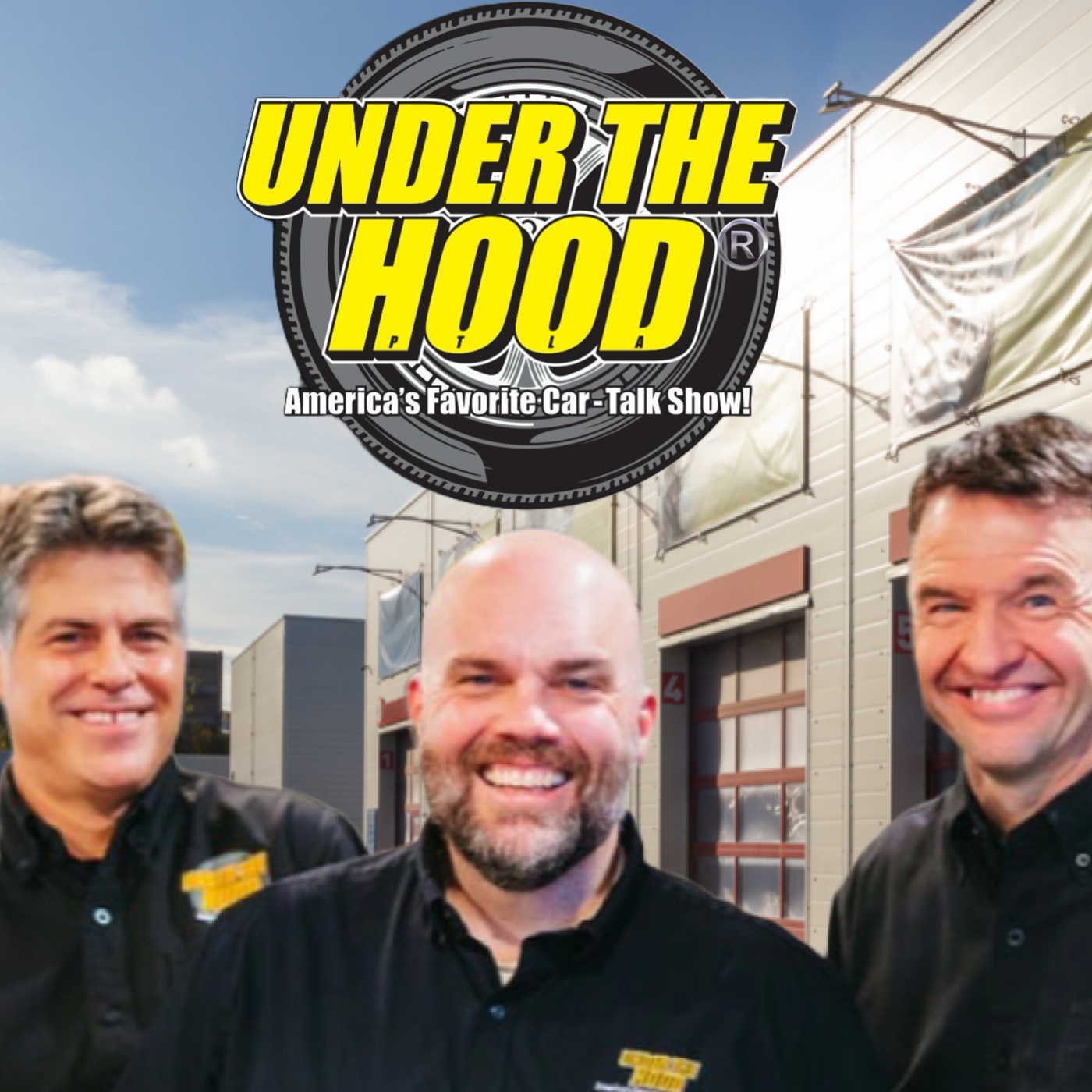
Practical Automotive Advice to Save Money on Car Repairs Were Under The Hood
About this episode
The Under the Hood Show tackles practical, money-saving diagnostics from multiple callers. A 2009 Ford Focus no-crank issue turns out to be a worn ignition switch/lock cylinder—pushing the key helps temporarily, so the fix is the whole programmed assembly. A 2015 Ram EcoDiesel buyer reports white smoke and an “electronic throttle control” code; the advice is to check codes and service emissions/throttle rather than gamble on glow plugs. Other segments cover misfire causes on a turbo 4-cylinder Fusion (coils/plugs vs coolant leaks) and transmission slipping on a high-mileage Bonneville (drive gently, plan for replacement).
Looking to save money on car repairs? Tune in to our latest episode of Under The Hood for practical automotive advice that can help you avoid costly repairs. Watch on YouTube or listen on podcasrt now and start saving money on your vehicle maintenance! #cars #automotive #savemoney #watchnow. Here are today's callers. Why does my 09 Focus not crank? My 15 Ram Eco Diesel has a throttle code My 13 Fusion has a misfire when warm Should I fix my 05 Bonneville Transmission?
replica OEM wheels
"And road ready wheels, replica OEM wheels at huge savings."
“Replica OEM wheels” are wheels made by other companies that look like the original factory wheels. They usually cost less, but you still want to make sure they fit your car correctly.
The term “replica OEM wheels” refers to aftermarket wheel designs that copy the look of original equipment manufacturer (OEM) wheels. They’re often cheaper than genuine OEM wheels while aiming to match the factory style.
crank
"...So it won't crank. It doesn't turn over anything. [325.6s] Yeah. The lights come on, but yeah, it doesn't even try to start."
To “crank” means the starter spins the engine. If the lights work but it won’t crank, the problem is often in the start/ignition path.
“Crank” refers to the starter motor turning the engine over. The speaker contrasts lights coming on with the engine not cranking, which helps narrow the fault to the ignition/start circuit rather than general electrical power.
dash lights on but no start
"...The lights come on, but yeah, it doesn't even try to start. Yeah. So turn the key to the start position..."
If the dashboard lights come on but the car won’t start, the battery is probably okay, but the “start” signal isn’t getting through. That can be caused by the ignition switch or lock cylinder.
When dash lights illuminate but the engine won’t start, it suggests the battery/primary power is present while the starter/ignition command isn’t being made. This pattern is consistent with ignition switch/lock cylinder failures described in the segment.
ignition switch
"...go get yourself, take it in and say, I need a new ignition switch and lock cylinder. I see that all the time."
The ignition switch is what tells the car to start when you turn the key. If it’s worn out, the lights may come on but the engine won’t crank.
The ignition switch is the electrical switch that allows the starter circuit to engage when you turn the key to the start position. A failing ignition switch can cause a “no crank” condition even though the dash lights come on.
relays
"I've had something else weird though that it's probably related, I'm assuming, but I thought it might be the relays or the, what is it, the fuses?"
A relay is like an electrical switch that controls power to another component. If it’s going bad, the car may act up intermittently. That’s why it comes up in starting problems.
Relays are electrically operated switches that route power to specific circuits, such as parts of the starting system. If a relay is failing, you can see intermittent symptoms—like starting working for a while, then stopping. The speaker suggests relays could be related to the “weird” behavior they’re seeing.
fuses
"...but I thought it might be the relays or the, what is it, the fuses? So I popped those open or I popped the box open..."
Fuses protect electrical circuits by breaking the connection when current is too high. A blown or failing fuse can cause certain functions to stop working, sometimes intermittently if there’s a loose fuse or related issue. The speaker mentions checking fuses after noticing weird starting behavior.
voltmeter
"They can take a voltmeter, connect right to the wire coming out of the ignition switch for the starter and the input and say, oh, we've got battery voltage on the input."
A voltmeter is a tool that checks if electricity is reaching a part of the car. Mechanics use it to see whether a switch or wire is getting power.
A voltmeter measures electrical potential (voltage) in a circuit. In car diagnostics, it’s commonly used to confirm whether battery voltage is present at a specific wire or connector before and after a switch.
boost pressure
"yeah, you can get some white smoke because it's going to have a difference in the boost pressure and stuff."
“Boost pressure” is the extra air pressure created by a turbocharger or supercharger. If throttle control and fueling don’t coordinate properly, boost behavior can change, which can contribute to smoke and poor performance.
Eco Diesel
"But not on that one. Okay, on that one. That Eco Diesel, good luck. I am going to try to take them out..."
Eco Diesel is a diesel engine option. The host is saying that on this diesel, removing certain parts can be risky if corrosion has built up.
“Eco Diesel” refers to a diesel engine option used in some Jeep models. The host is warning that certain maintenance/repairs (specifically glow plug removal) can be difficult depending on corrosion exposure.
torque wrench
"I might even get a torque wrench that, that works in reverse to just make sure I don't torque them so much I break them off."
A “torque wrench” is a tool that tightens fasteners to a specific torque value. The host suggests using one (and setting it conservatively) to avoid over-torquing and breaking glow plugs during removal.
glow plugs
"Why are you taking the glow plugs out, Russ? Because they can, because they, they don't come out up here."
Glow plugs help a diesel start by warming things up. If they get stuck, removing them can be a big job.
Glow plugs are used on diesel engines to heat the combustion chambers for easier starting, especially in cold weather. They can be difficult to remove because they may seize in the cylinder head over time, and broken plugs can require major disassembly.
under warranty
"the dealership won't work on it unless it's under warranty because it's one of those things now, unless they feel that they're slow and they're okay with, if something's not good and we'll just price them out an engine."
Under warranty means the car’s manufacturer will pay for certain repairs. They’re saying the dealership may only do the job if the warranty covers it.
“Under warranty” means the vehicle is covered by the manufacturer’s warranty terms, so repairs may be paid for by the warranty rather than the owner. The speaker implies dealerships may only take on difficult diesel jobs when warranty coverage applies.

Jeep Grand Cherokee
"We have also had grand Cherokees in here with 300,000 miles on with that motor. I mean, so people are driving them."
The Jeep Grand Cherokee is a common SUV. The speaker is saying they’ve seen them go to very high mileage, so it’s not always as bad as people fear.
The Jeep Grand Cherokee is a popular SUV, and the speaker mentions examples with high mileage to argue that these engines can last if they’re maintained and treated well. It’s used to counter the idea that a diesel engine is automatically doomed after a certain number of miles.
OEM replica wheels
"ready wheels, OEM replica wheels at a huge savings road ready wheels dot com. Thanks for listening to the under the hood show podcast."
These are replacement wheels that copy the look of the factory wheels. They can cost less, but you still need to make sure they fit your car correctly.
OEM replica wheels are aftermarket wheels designed to look like original equipment manufacturer (OEM) wheels. They’re often cheaper than true OEM wheels, but you’ll want to confirm fitment (bolt pattern, offset, and wheel size) and load rating for your vehicle.
road ready wheels dot com
"ready wheels, OEM replica wheels at a huge savings road ready wheels dot com. Thanks for listening to the under the hood show podcast."
They’re talking about a wheel seller called Road Ready Wheels. The point is you might be able to buy replacement wheels for less than you’d pay elsewhere.
The show is advertising Road Ready Wheels, a retailer focused on wheels sold at a discount. For listeners, this is relevant because wheel pricing can swing a lot between OEM, aftermarket, and replica options.
Berkeley one classics
"Hey, it's Chris Carter with Russ Evans and Shannon Nordstrom under the hood. When you need great coverage for your ride, Berkeley one classics is here for you."
They’re talking about an insurance company for classic or special vehicles. The goal is to get the right coverage so you’re protected without paying for too much or too little.
Berkeley One Classics is presented as an insurance provider specializing in coverage for a wide range of vehicles, including sports cars and rare exotics. For listeners, the relevant concept is matching coverage amount to the vehicle’s value to avoid under- or over-insuring.
snow tires
"a set of spare wheels that you can install on your vehicle over the winter months with snow tires to avoid damaging your nice summer wheels."
Snow tires are tires made for winter weather. They grip better on snow and ice than regular tires, especially when it’s cold.
Snow tires are specially designed tires with softer rubber and deeper tread patterns to improve grip in cold temperatures and on snow or ice. They’re often swapped in for winter to reduce stopping distance and improve traction.
direct fit
"These wheels are a direct fit so your factory caps and TPMS sensors will fit."
Direct fit means the wheels are made to bolt on properly. You shouldn’t need extra parts or modifications to make them work.
“Direct fit” means the wheels are designed to mount without special adapters or modifications. In practice, that usually implies correct bolt pattern, center bore, and clearance for the vehicle’s brakes and suspension.
33s
"...it's got like 33s on it. It's jacked up a little bit. It's green..."
“33s” means the car has big tires. Big tires can help off-road, but they can also make the vehicle feel slower.
“33s” refers to 33-inch tires, which are larger than stock and typically used for off-road or lifted builds. Bigger tires can improve ground clearance and looks, but they often make a small engine feel even more underpowered.
jacked up
"...it's got like 33s on it. It's jacked up a little bit. It's green and and I'll see them..."
“Jacked up” means the car sits higher than stock, usually for off-roading. It can look cool and handle rough ground better, but it can also affect how it drives.
“Jacked up” means the vehicle has been lifted—typically with suspension lift components—raising ride height for clearance. Lifted setups often pair with larger tires and can change drivability, steering feel, and acceleration.
misfire
"Yeah we've got a 2013 Ford Fusion that intermittently will misfire or whatever. Usually not at first start up when it's cold but if you drive somewhere stop and you go to start it'll occasionally then misfire chug..."
A misfire means the engine isn’t burning fuel correctly in one or more cylinders. The car may shake, hesitate, or “chug,” and it can happen sometimes rather than all the time.
A misfire is when an engine cylinder fails to ignite properly during combustion. It can be intermittent—often worse when cold, during restart after driving, or under specific load/temperature conditions—and it commonly triggers diagnostic trouble codes (DTCs).
OEM spark plug
"as far as spark plugs go an OEM spark plug a good factory motorcraft spark plug in there don't put anything cheap on there..."
OEM spark plugs are the same type (or very close) to what the car was built with. They’re usually a safer choice than cheap alternatives.
OEM means “original equipment manufacturer”—the parts made to match what the car’s manufacturer specified. Using OEM-quality spark plugs helps ensure correct fit, heat range, and performance, which can matter on engines that are sensitive to ignition.
Motorcraft
"an OEM spark plug a good factory motorcraft spark plug in there don't put anything cheap on there..."
Motorcraft is Ford’s parts brand. The idea here is to use a reputable, factory-style plug instead of a bargain one.
Motorcraft is Ford’s OEM parts brand, including spark plugs and ignition components. The speaker recommends Motorcraft plugs as a quality option for the engine they’re discussing.
porous block
"the number two issue we see on those engines is what they call a porous block it's more of a screen door than an aluminum cast block and it lets coolant through into the cylinder..."
A porous block means the engine block has a flaw that can let coolant leak where it shouldn’t. That can cause problems like coolant getting into the cylinders.
A porous block refers to an engine block material defect or casting issue that allows coolant to seep into areas it shouldn’t. In the transcript, it’s described as letting coolant into a cylinder under certain driving conditions, leading to overheating or misfire-like symptoms.
K-Seal
"there's no fix to it you can try k-seal that has fixed a few of these it's a product that will it'll fix small leak if there's no pressure behind it..."
K-Seal is a product you add to the coolant to try to stop small leaks. It won’t work for big leaks or serious internal coolant problems.
K-Seal is a coolant sealant product intended to temporarily seal small leaks in some cooling systems. The speaker clarifies it can help with minor leaks but won’t fix a major coolant intrusion caused by a porous block.
fix what you got
"...it makes more sense to fix what you got because those engines wow they're pretty tough..."
Instead of giving up on the car, you repair the problem. They’re saying it’s often smarter financially than selling it for a small amount and buying something else.
“Fix what you got” is the cost-control strategy of repairing the existing vehicle rather than replacing it. In this segment, the speaker argues that installing a replacement transmission can be more rational than selling the car cheaply “as-is,” especially when the engine is still healthy.
drive it gently
"as far as what you can do now is just drive it gently yeah if you change don't change the fluid..."
“Drive it gently” means don’t accelerate hard or push the car. It can reduce strain on a transmission that’s acting up.
Driving gently is a short-term strategy to reduce stress on a failing transmission by avoiding hard acceleration and aggressive throttle inputs. The goal is to extend drivability until a proper repair (like a transmission replacement) can be done.
low oil pressure warning
"and I'm starting to get a low oil pressure warning and of course it has full of oil and just recently changed the oil and still getting the same reading"
This warning means the engine may not be getting enough oil pressure. If it’s real (not just a sensor glitch), the engine can wear out quickly, so it’s important to check it right away.
A low oil pressure warning indicates the engine isn’t seeing enough oil pressure to lubricate internal components. Even if the oil level is full, the issue can be a faulty oil pressure sensor, clogged oil passages, or reduced oil pump output—each has different repair paths.
changed the oil
"and of course it has full of oil and just recently changed the oil and still getting the same reading so I googled and said that I got a"
They already changed the oil, which is usually the first thing you do when you see an oil problem. If the warning still shows up after the change, it usually means something else is wrong.
Changing the oil is the first step when diagnosing oil-related warnings, because fresh oil and a new filter can restore proper flow. However, if the warning remains unchanged after an oil change, it points away from simple neglect and toward sensor issues, incorrect oil viscosity, or mechanical causes.
used engines
"“we put a lot of used engines in a lot of re-manufactured engines in and get vehicles going”"
A used engine is an engine taken from another vehicle (usually a wrecked one) and installed in your car. It can be a cheaper way to fix a major engine problem than replacing everything new.
Using a used engine means sourcing a powerplant from a salvage vehicle and installing it to restore drivability. It’s often cheaper than buying a brand-new engine, and can be a practical way to get a vehicle back on the road.
wheelstander
"I run an exhibition wheelstander I'm fun oh wow we used to see a few of those..."
A wheelstander is a car that lifts its front wheels during hard acceleration. It’s usually done on purpose for drag racing shows because it looks dramatic and requires tuning to do safely.
A wheelstander is a drag-racing/exhibition setup where the car is tuned to lift the front wheels off the ground during acceleration. It typically involves strong engine output, traction management, and careful suspension/weight balance to control how high and how consistently the car stands.
Request an Explanation
Heard something you'd like explained? We'll add it to this episode.
Sign in to request explanations for terms you heard.
Want to learn more?
Browse our glossary for plain-English explanations of automotive terms, jargon, and concepts.
Help improve this episode
See something that's not quite right? Our annotations are AI-generated and can sometimes miss the mark. Click the flag icon on any annotation to suggest a correction.