
RADwood at The Heritage Intitational - DWA! Podcast Ep. #932
About this episode
Charlotte’s Heritage Invitational is the backdrop for a RADwood-style weekend that blends NASCAR-level industry culture with serious collector car energy. Hosts trade stories about lifer careers at Hendrick/Smith, Jeff Gordon’s private paddock setup, and standout restorations like a hand-painted Darrell Waltrip Tide Monte Carlo. The conversation also covers exotic-car trading by Hendrick, the arrival of a McLaren F1, and what’s next for “Charlotte car week.” Between Q&A, they debate biopics, project-car power steering plans, and rally essentials, ending with Porsche’s new “street style” GT3 package talk.
Art and Warren are back from RADwood at The Heritage, Lane had pizza and we're all getting ready to rally.

Toyota Camry
"[7.8s] White on gray Toyota Camry. [11.0s] Egasitle vehiculum."
The Toyota Camry is a very common, everyday car. It’s usually picked for being dependable and comfortable, not for being a race car.
The Toyota Camry is a midsize sedan known for reliability and comfort rather than outright performance. In this segment it’s used as a visual/style reference (“white on gray”), contrasting with the faster cars being discussed.

Chevrolet Corvette
"[12.7s] There's no doubt Corvettes are fast. [14.8s] I'm riding dirty right now."
A Corvette is Chevrolet’s sports car. People talk about them because they’re quick and fun to drive.
“Corvettes” refers to Chevrolet’s Corvette sports cars, which are widely known for strong performance and value compared to many European sports cars. The host’s comment frames them as “fast,” setting up the episode’s theme of cool cars and driving culture.
Charlotte
"[33.8s] Martin and we're back from [37.5s] Charlotte. [39.1s] Well, I'm still here."
They mention Charlotte because they went there for the event. Charlotte is a big hub for car and racing stuff.
Charlotte is referenced as the location the hosts traveled from (“back from Charlotte”). In car culture, Charlotte is strongly associated with major motorsports and automotive events, so it likely frames the RADwood/enthusiast context of the episode.
NASCAR track
"[78.7s] on paper, it's just [80.6s] North Carolina and like outskirts. [82.6s] There's a NASCAR track and stuff. [85.1s] But this part of the world [86.6s] loves cars."
The hosts mention a NASCAR track to describe the regional motorsport landscape in North Carolina. It’s used as context for why the area has a strong car culture even if it’s a different “flavor” than what they personally prefer.
Porsche
"[94.5s] But then again, like after this weekend, [96.5s] it's all kind of tied into the Atlanta scene [98.8s] with the Porsche stuff. [100.4s] Well, they like the stuff. [103.0s] They like good stuff."
They mention Porsche as a big part of the local car scene around Atlanta. The point is that the weekend’s event connects to Porsche fans and cars.
Porsche is referenced as part of the “Atlanta scene” that the hosts say this weekend will connect to. That implies the event and local community overlap with Porsche-focused car culture.
Team Hendrick
"especially like people who are in the NASCAR world, like they work at Team Hendrick or you know, they're actively building these cars or they're, you know, part of the organizations."
Team Hendrick is a major NASCAR racing organization. If someone works there, they’re usually involved in making race cars faster and more reliable.
Team Hendrick refers to Hendrick Motorsports, one of NASCAR’s most prominent racing teams. People working there are deeply involved in building and optimizing race cars for competition.

Honda S2000
"They're like telling me about how they love like B13SERs and they're telling me how they had an S2000. That one dude who's like one of the operations"
The Honda S2000 is a sporty two-seat roadster. It’s famous for revving high and feeling really engaging to drive, and lots of people modify them.
The Honda S2000 is a lightweight, high-revving roadster known for its naturally aspirated engine and sharp handling. It’s a popular enthusiast car because it’s fun to drive and has a strong aftermarket.

BMW Z3M
"That one dude who's like one of the operations managers, he rolled up in a Z3M coupe. You know, like, and he works on the Camaro race cars."
The BMW Z3 M Coupe is a small BMW sports car with an “M” performance version. People like it because it’s compact and has a more driver-focused feel.
The BMW Z3 M Coupe is the M-badged version of the Z3, built for enthusiasts who wanted a smaller, more focused sports car. It’s known for its compact size and character, and it’s often discussed alongside other BMW performance models.

Chevrolet Camaro
"You know, like, and he works on the Camaro race cars. You know, so like it's interesting how yeah, these are just"
The Camaro is a Chevrolet muscle car, and race teams also build special race versions of it. When they say “race cars,” they mean track-focused cars built for competition.
The Chevrolet Camaro is a common platform in racing programs, including NASCAR and other series, where teams build specialized race cars based on the model’s body and engineering. Mentioning “Camaro race cars” highlights that the person works on competitive, purpose-built versions rather than a street car.
Garage 42
"we could see them building the Le Mans Camaro Garage 42 or I forget what it's called, but 56, thank you."
They mention “Garage 42” as a named workshop area. It sounds like a special build/collection space with a cool theme. The takeaway is that there are dedicated areas for building and showing cars.
“Garage 42” is referenced as a specific place/idea connected to the hosts’ visit, likely tied to a racing or heritage facility. In automotive culture, “garage” names often become shorthand for a particular workshop, collection, or build space with a distinct identity. Listeners may want context on what Garage 42 is in that venue and why it’s notable.
clean room
"you can look into like, it's like a clean room, you know, as you look in, super cool"
A “clean room” is a controlled environment where dust and contaminants are minimized. In automotive or racing-building contexts, that can mean precision assembly areas where cleanliness helps protect sensitive components and improves build quality. It’s a way to describe how serious and controlled the manufacturing process is.
generational involvement in the industry
"not only like people like cars now, but it's generational. You know, people have been in the industry either like building, modifying, selling, whatever it is."
They’re saying car culture isn’t just one generation—it’s passed along. People may grow up around cars and then keep working on them, selling them, or building them. That’s why the community feels like it has history.
The hosts describe the hobby/industry as “generational,” meaning families and long-time participants often pass down involvement through building, modifying, and selling cars. This concept matters in enthusiast spaces because it shapes car culture, knowledge transfer, and how certain brands and techniques persist over time. It also helps explain why events like this attract both older and younger fans.
private race track
"It was at this new motoring club, private race track kind of thing. And it's between the Charlotte Motor Speedway, the Speedway Group..."
A private race track is a track that’s mainly used for racing events and club activities, not everyday driving. Because it’s run for specific groups, it often feels more “purpose-built” for motorsports.
A private race track is a facility that isn’t open to the general public like a typical public road course. It’s usually built and operated for a specific club, event series, or partner organizations, which can mean more controlled access and more consistent track conditions.
Speedway Group
"...between the Charlotte Motor Speedway, the Speedway Group, which is the Smith Family and the Hendrick Group..."
The Speedway Group is mentioned as one of the groups involved with building the track. It sounds like they’re connected to running or developing racing facilities.
The Speedway Group is referenced as a partner organization in the creation of the facility. The name suggests involvement in motorsports venues or track-related operations, aligning with the discussion of a purpose-built private track.
Hendrick Group
"...the Smith Family and the Hendrick Group, which is obviously Richard Hendrick. And they came together to build this facility..."
The Hendrick Group is the organization connected to Richard Hendrick. They’re described here as one of the major partners behind building this track facility.
The Hendrick Group is mentioned as one of the organizations involved in building the facility, specifically tied to Richard Hendrick. In motorsports, the Hendrick name is strongly associated with team operations and racing infrastructure.
flowing elevation change
"...but you can just ton of flowing elevation change and really fun track."
Elevation change means the track goes up and down. When it’s “flowing,” it changes smoothly, which usually makes the driving feel more fun and less jerky because the vehicle keeps moving through the turns.
“Flowing elevation change” describes a track layout where the elevation varies smoothly rather than abruptly. This affects braking points, traction, and how the car or UTV transfers weight through corners, often making the driving feel more continuous and “natural.”
Detroit
"Yeah, I think with Detroit is similar, right? Like I feel like you go to Detroit and like when we have events there..."
Detroit is famous for car manufacturing history. The hosts are basically saying that in places like Detroit, lots of people you meet are connected to cars in some way.
Detroit is historically the center of the U.S. auto industry, so it’s often used as shorthand for places where car culture and manufacturing are deeply embedded in everyday life. The hosts compare Detroit to other cities to explain how local communities can be heavily tied to automotive work and brands.
brand allegiance
"There's also that level of like dedication to a brand, right? Like that allegiance is very, very noticeable."
Brand allegiance is the strong loyalty enthusiasts show toward a particular automaker or marque. The hosts say this kind of loyalty is more noticeable in some places than others, which can influence what cars people buy, how they talk about them, and what events they attend.
Hendrick Motorsports
"[365.2s] is on the Hendrick side. [367.0s] Oh man, just the Hendrick [369.7s] paddock, essentially this is"
Hendrick Motorsports is a well-known racing team. If the event has a “Hendrick side,” it usually means there’s a team area connected to how they run race weekends.
Hendrick Motorsports is a major NASCAR team organization, and the “Hendrick side” implies the event had areas aligned with their team operations. Mentioning Hendrick also signals a higher-profile, professional-style track setup.
Hendrick paddock
"[365.2s] is on the Hendrick side. [367.0s] Oh man, just the Hendrick [369.7s] paddock, essentially this is"
A paddock is the team area at a race track. It’s where cars are set up and worked on, and where team members hang out during the event.
The “Hendrick side” refers to the paddock area associated with Hendrick Motorsports. A paddock is where teams park, service cars, and stage before/around track sessions.
zip onto the racetrack
"[373.7s] warehouse paddock meeting [374.9s] space that you can [377.2s] zip onto the racetrack, do your thing, zip"
The hosts describe a setup where vehicles can quickly access the track from a nearby private area. This is essentially about track access logistics—how close the paddock/warehouse space is to the racing surface.
racing slicks
"So anyway, the top dog Corvette, brand new, brand new, like slicks, racing slicks on it, big wing, thousand horsepower, carbon fiber accents, the whole thing, it's insane."
Racing slicks are special track tires with smooth rubber. They grip the road really well when it’s dry, but they’re usually not great for rain or normal street use.
Racing slicks are tires with no tread pattern, designed to maximize contact patch and grip on dry track surfaces. They’re typically used for performance driving because they can generate more lateral grip than street tires, but they’re not ideal for wet weather or everyday driving.
big wing
"So anyway, the top dog Corvette, brand new, brand new, like slicks, racing slicks on it, big wing, thousand horsepower, carbon fiber accents, the whole thing, it's insane."
That “big wing” is an aerodynamic spoiler. Its job is to push the car down onto the road so it sticks better when you’re going fast.
A “big wing” refers to a large rear spoiler designed to create aerodynamic downforce. More downforce helps keep the car stable and planted at higher speeds, improving traction for braking, cornering, and acceleration.
downforce
"So anyway, the top dog Corvette, brand new, brand new, like slicks, racing slicks on it, big wing, thousand horsepower, carbon fiber accents, the whole thing, it's insane."
Downforce is what makes the car feel “heavier” on the road at speed. Spoilers and wings help press the tires down so you get more grip in corners.
Downforce is the aerodynamic force that pushes a car’s tires harder into the road. Wings and spoilers generate it by shaping airflow, which can improve grip and stability at speed—especially when paired with track tires like slicks.
carbon fiber accents
"So anyway, the top dog Corvette, brand new, brand new, like slicks, racing slicks on it, big wing, thousand horsepower, carbon fiber accents, the whole thing, it's insane."
Carbon fiber accents are fancy-looking parts made from a lightweight, strong material. On performance cars, they help cut weight and usually make the car look more track-focused.
Carbon fiber accents are trim pieces made from carbon-fiber composite material, valued for low weight and high strength. On performance cars, they’re often used to reduce mass and add a motorsport look, sometimes alongside functional aero components.
Jeff Gordon
"So we come to find out that that's a home base for Jeff Gordon. That's Jeff Gordon's little zone that he can just work out of there, chill, get away from the crowds."
Jeff Gordon is a famous NASCAR racing driver. The hosts are saying this is his personal area at the event so he can relax and work out of it.
Jeff Gordon is a legendary NASCAR driver, and the segment notes that the event setup is a “home base” for him. For listeners, this helps explain why you’d see high-end, race-prepped vehicles and a more professional motorsports presence at the gathering.
towing
"[470.2s] You got your suburban. [471.9s] You could tow the thing around. [473.9s] It's got a [474.4s] satellite dish on it."
Towing means pulling something behind your vehicle, like a trailer. At car events, it’s useful for transporting gear or other vehicles.
Towing refers to pulling another vehicle or trailer behind your car/SUV. It’s commonly discussed at events because people need to move equipment, tools, or even other cars to and from tracks and shows.
satellite dish
"[473.9s] It's got a [474.4s] satellite dish on it. [476.2s] You know, you're doing [476.2s] your thing in there."
A satellite dish is an antenna that helps you get TV or internet signals from space. They’re pointing out that the vehicle is set up like a “home” even while traveling.
A satellite dish is used to receive TV or internet services from satellites, often for connectivity while traveling. In the context of RVs/motorhomes, it signals a setup for comfort and entertainment away from home.
NASCAR life
"[485.6s] was Mark Martins. And so it's just like [488.5s] a little sneak peek of the [490.2s] NASCAR life. You know, you're just"
“NASCAR life” means the whole lifestyle around NASCAR—traveling to events, being around teams, and living the schedule. They’re saying this event gives a peek into that vibe.
“NASCAR life” refers to the culture and lifestyle around stock car racing, including frequent travel, event logistics, and the community that forms around teams and fans. Here, it’s used to frame what they’re seeing at RADwood as a glimpse into that world.
million dollar pusher RV bus
"[490.2s] NASCAR life. You know, you're just [492.2s] you get a million dollar, [494.1s] million dollar fucking pusher [497.4s] RV bus. It seems very [499.0s] very, very family."
A “pusher” RV is a big motorhome designed for long-distance travel, usually with a powerful rear-mounted setup. They’re exaggerating to make the point that these race-world RVs can be extremely expensive and fancy.
A “pusher” RV typically uses a propulsion setup where the engine is mounted at the rear to push the coach, often improving stability and power for heavy travel. The hosts call it a “million dollar” pusher to emphasize the extreme, high-end scale of race-team-style motorhomes.
Ray Evernham
"looked in between Jeff Gordon and Ray Evernham's RV."
Ray Evernham is a well-known person in racing. Here, they’re using his RV as a reference point for the kind of casual, real-life setup people have around race weekends.
Ray Evernham is mentioned in connection with his RV, highlighting the “behind the scenes” lifestyle around top-level racing. Evernham is known in motorsports as a team/engineering figure, so the name helps anchor who’s being discussed even when the focus is social culture.
RV
"looked in between Jeff Gordon and Ray Evernham's RV. They had just like the most basic like kind of party setup... in a motor home and it was like barbecuing"
An RV is basically a travel home on wheels. They’re talking about how racers sometimes hang out and cook/socialize in their motorhomes during race weekends.
An RV (recreational vehicle) is being used as a stand-in for the motorhome culture common at major racing events. The hosts are describing how drivers and teams often travel and socialize in these spaces.
Indy car
"I think Indy car has a little bit of that too and it's like it. There's something very grass roots about it compared to like F1 where it's that traveling circus"
They’re talking about IndyCar, the big open-wheel racing series in the U.S. The point here is that the weekend culture can feel more normal and less like drivers are kept away from everyone.
“Indy car” refers to American open-wheel racing (commonly IndyCar). The hosts use it as an example of a paddock culture that feels more family-friendly and less like a closed-off celebrity environment.
grass-roots
"I think Indy car has a little bit of that too and it's like it. There's something very grass roots about it compared to like F1 where it's that traveling circus"
They mean the event feels more like a local, down-to-earth scene instead of something super formal. In racing, that can mean drivers feel more approachable and the whole weekend feels less “showy.”
The hosts are contrasting “grass-roots” vibes—more casual, community-like paddock culture—with a more polished, distant atmosphere. In motorsport, this often shows up in how fans and teams interact and how accessible drivers feel off-track.
paddock culture
"I think Indy car has a little bit of that too... compared to like F1 where it's that traveling circus... it was him and his family in a motor home and it was like barbecuing with the other drivers"
They’re talking about the “social scene” around the race—what it feels like when you’re near the teams and drivers. Some series feel more like regular people hanging out, while others feel more like a big, managed spectacle.
The segment is essentially about paddock culture—how different racing series create different social environments around the track. The hosts contrast a more family-and-community feel (IndyCar) with a more celebrity/controlled feel (F1), using driver access and social behavior as examples.
F1
"There's something very grass roots about it compared to like F1 where it's that traveling circus and and all the drivers don't have families, you know"
They mean Formula 1. Their comparison is basically that F1 can feel more like a big, tightly managed show, while other series feel more casual and accessible.
“F1” is Formula 1, which the hosts describe as a “traveling circus” with drivers kept more separated from the public. They’re contrasting the social/paddock feel of F1 versus IndyCar and other series.
Restorer
"So we had a great collector slash builder Restorer, Bill Ryan, who restores these NASCAR cup cars from I think all generations..."
A restorer is a person who takes an old car and fixes it up so it looks and feels like it did when it was new (or close to it). At car shows, that usually means paying attention to the details, not just the engine.
A restorer is someone who brings an older car back to its original (or historically accurate) condition. In events like RADwood, restorers often focus on preserving period-correct details, paint, and finishes rather than just making the car run.
NASCAR cup cars
"...Bill Ryan, who restores these NASCAR cup cars from I think all generations, but he brought a lot of his cars from the 80s and 90s..."
NASCAR Cup cars are the cars that race in NASCAR’s main top-level series. They’re not just regular cars—they’re built to survive racing and follow NASCAR rules, even if they look like they come from the same world as street cars.
NASCAR Cup cars are the stock-car race cars used in NASCAR’s top national series. They’re built around a specific racing rule set, with purpose-built safety equipment and race-focused components, even though they’re based on production models in concept.
Radwood
"I mean, these are like kind of the quintessential Radwood, you know, NASCAR cars and to have them at the space..."
RADwood is a car event that celebrates awesome, nostalgic cars and the people who built, restored, and collected them. It’s basically a themed show where the history and details are part of the fun.
RADwood is a car-show culture brand focused on celebrating “rad” automotive history—especially cool, nostalgic, and often 1980s–1990s-era cars and their stories. The segment uses RADwood as the context for why these NASCAR cars and their details matter to collectors and fans.
hand-painted
"It's painted by the way. It's not a wrap or a sticker. It's like hand-painted and I mean, how many times do they have to paint that thing..."
Hand-painted means the sponsor logos and graphics were painted on by people, not put on with vinyl. It usually looks more “authentic” and can match the original style from when the car was raced.
Hand-painted graphics mean the livery and sponsor artwork are applied manually rather than produced as a pre-made vinyl wrap or sticker. For vintage race cars, hand-painted schemes are often valued because they can better match period-correct textures, edges, and color depth.
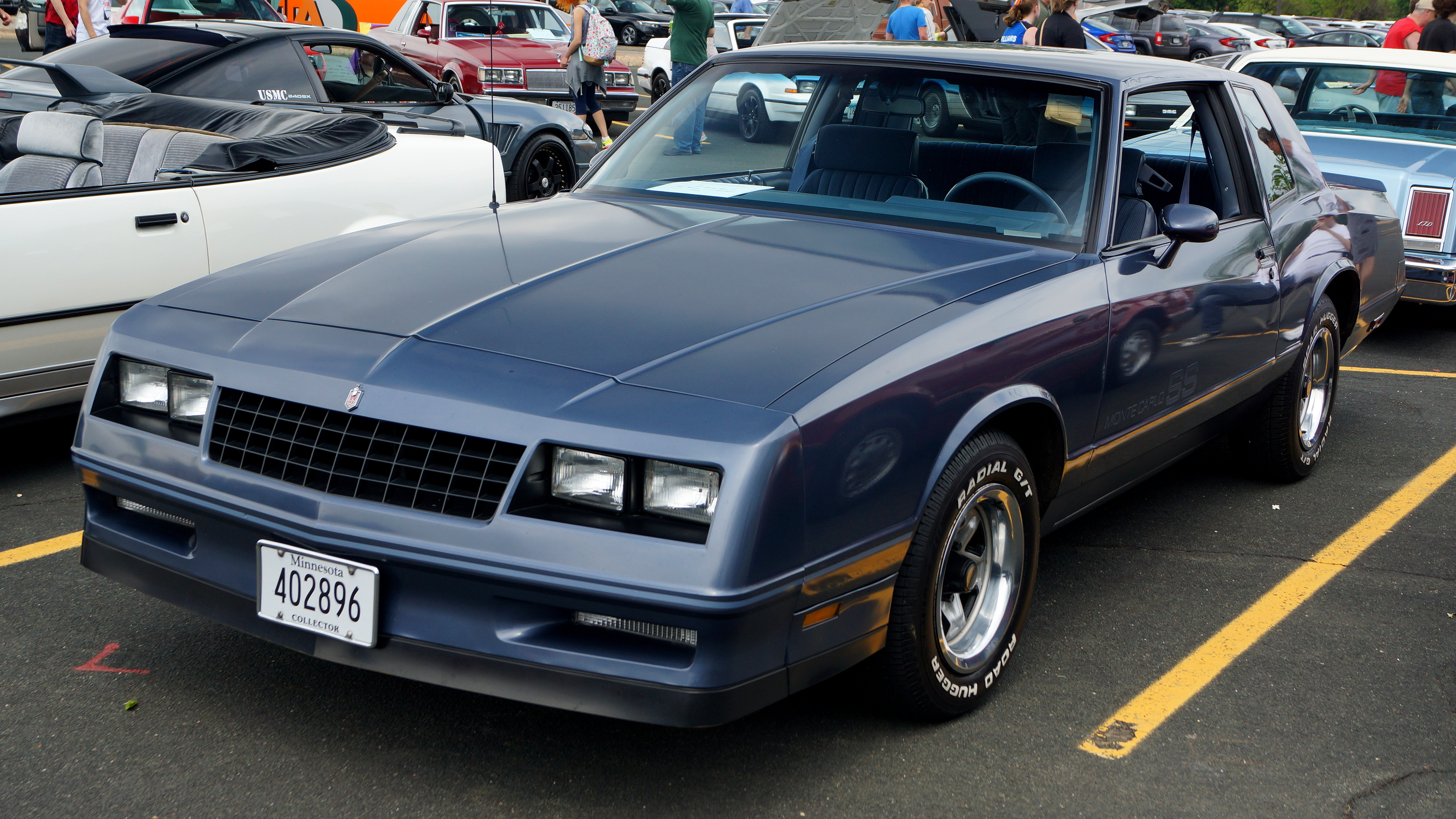
Chevrolet Monte Carlo
"That Tide car and they're super iconic. Like everybody knows what this Monte Carlo looks like, but when you see it in person, it's actually pearl. It's an orange pearl... like the Monte Carlo Aero Coupes..."
This is a classic Chevrolet Monte Carlo variant. The big point here is that the paint looks way more interesting in real life—especially a pearl/orange-pearl color—than it usually does in pictures.
The Chevrolet Monte Carlo Aero Coupe is a classic Monte Carlo body style known for its distinctive, aerodynamic-looking profile. In this segment, the hosts are reacting to how the car’s paint color (described as orange pearl) looks in person versus in photos, emphasizing the visual depth of the finish.
pearl
"...but when you see it in person, it's actually pearl. It's an orange pearl. It's so rad. Yeah. And it has this depth to it..."
“Pearl” refers to a pearl-effect paint finish that uses special pigments to create a shimmering, multi-dimensional look. It often makes colors appear deeper and change slightly with lighting and viewing angle, which is why the hosts say it’s hard to capture in photos.
Hotchkiss
"...and I can build one, you know, and have like Hotchkiss like do all the suspension for me"
Hotchkiss is an aftermarket suspension and chassis parts company known for improving ride quality and handling on classic and enthusiast cars. Here, the host mentions “Hotchkiss like do all the suspension for me,” which signals using a specialist supplier rather than stock components.
slammed
"and like have it like slammed on like those wheels, you know, maybe I'd do"
“Slammed” just means the car is lowered closer to the ground. People do it for looks, and it can change how the car rides and how long the tires last.
“Slammed” is car culture shorthand for lowering a car’s ride height so the wheels sit closer to the fenders. It’s usually done with suspension changes like lowering springs or coilovers, and it can affect ride comfort and tire wear.
fat rubber
"Watts with like fat rubber or something. Just to make it mine. I love it."
“Fat rubber” means wider tires. Wider tires can grip the road better, but they can also make the car feel heavier to steer and may rub if the fitment isn’t right.
“Fat rubber” refers to wider tires that fill out the wheel wells and can improve grip. Wider tires can also increase steering effort and may require careful fitment to avoid rubbing.
aero wheels
"Those aero wheels with the fat rpf ones. I do rpf ones."
“Aero wheels” are wheels that look like they’re shaped to cut through air. They’re often chosen for style, and they might help a little with airflow, but it’s not usually a huge performance change.
“Aero wheels” are wheels designed with aerodynamic styling in mind—often with shapes or spokes that reduce drag. In practice, the biggest difference is usually visual, though wheel design can slightly affect airflow and weight.
RPF ones
"Those aero wheels with the fat rpf ones. I do rpf ones. But most importantly though,"
“RPF1” is a specific style/model of aftermarket wheel (commonly Enkei RPF1). People like them because they’re lighter than many wheels and are popular for performance builds.
“RPF ones” most likely refers to the RPF1 wheel model by Enkei, a popular lightweight aftermarket wheel. These wheels are commonly chosen for track use because they’re relatively light and strong for their weight.
four on the floor
"I want like a, you know, four on the floor or something. You know, I don't want because those are like, you know, they never"
“Four on the floor” means the car has a manual transmission. You shift gears yourself with a clutch pedal instead of relying on an automatic.
“Four on the floor” is slang for a car with a manual transmission, where the gear shifter is on the center console and the driver uses the clutch and shifter. The phrase is often used to contrast with automatic transmissions.
custom setup
"because those are like, you know, they never offered a manual. So like build like a full like custom setup. Yeah, that'd be so sick."
A “custom setup” here implies building a personalized car configuration rather than keeping it stock—likely including drivetrain and suspension choices to achieve the desired look and feel. In enthusiast circles, this often means sourcing parts and doing conversions (like manual swaps) to match the owner’s preferences.

Chevrolet Beretta
"An amazing Chevy Beretta an incredible mark one GTI or golf or I'm sorry, rabbit"
The Chevrolet Beretta is an older Chevy coupe that some people love because it’s a little different from the usual classics. At events like RADwood, it’s the kind of car people build up for style and personality.
The Chevrolet Beretta is a mid-size coupe from the 1980s–early 1990s that’s become a cult favorite in some RADwood-style circles. It’s often discussed as a “cool but overlooked” platform for styling and period-correct modifications.

mark one GTI
"An amazing Chevy Beretta an incredible mark one GTI or golf or I'm sorry, rabbit that thing looks so cool. Zender"
“Mark one GTI” means the first-generation Volkswagen Golf GTI. It’s a classic hot-hatch that people still love because it’s fun to drive and easy to modify.
“Mark one GTI” refers to the Volkswagen Golf GTI Mk1, the original GTI generation that helped define the hot-hatch formula. It’s especially popular with enthusiasts because of its simple, mod-friendly platform and strong vintage styling.
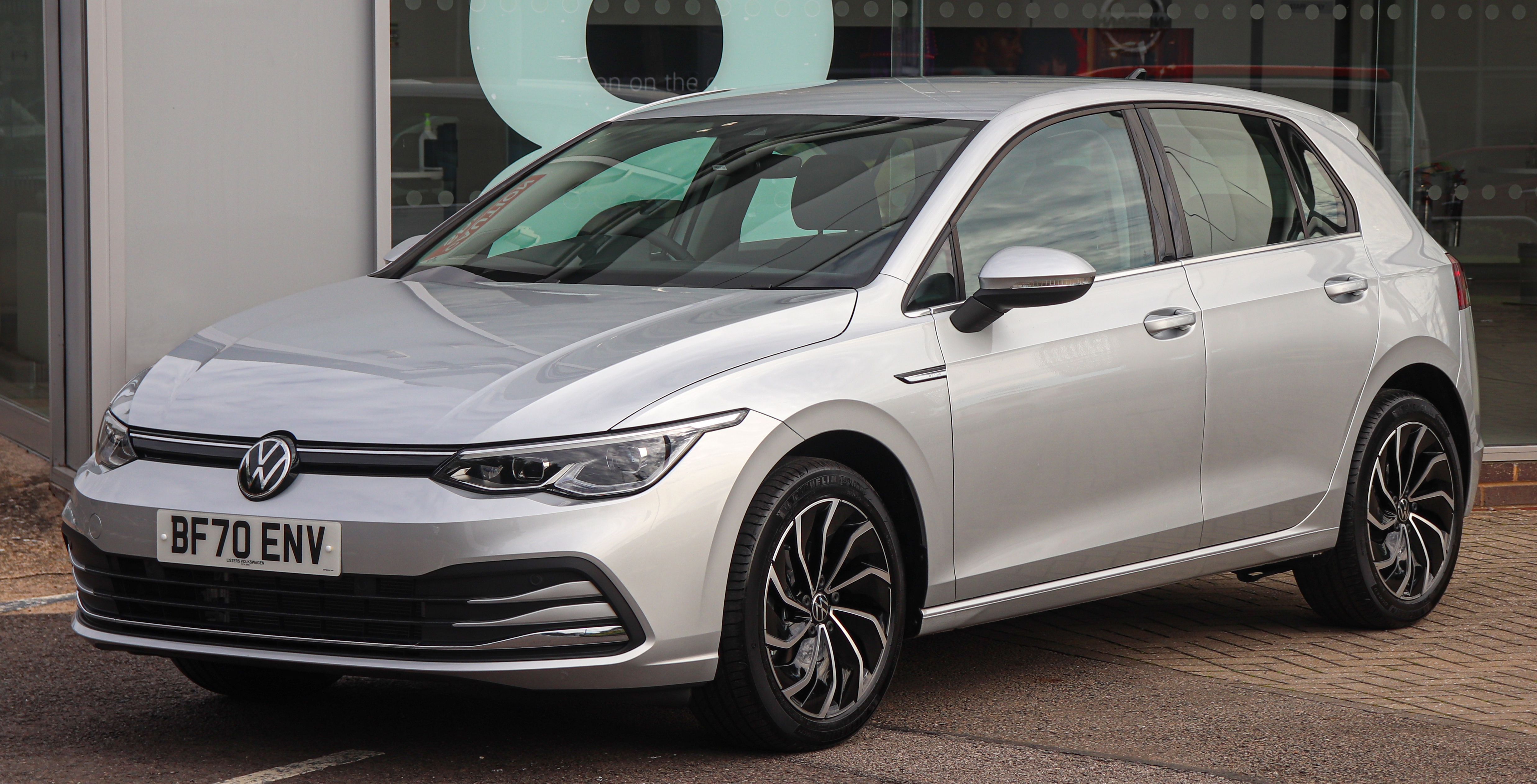
Volkswagen Gti
"Chevy Beretta an incredible mark one GTI or golf or I'm sorry, rabbit"
The Volkswagen Golf is a compact car that many people use for everyday driving. Some versions, like the GTI, are tuned to feel more sporty than a standard Golf. The podcast is mentioning the Golf/Rabbit/GTI as an example of a standout performance model.
The Volkswagen Golf is a widely known compact car line, and the podcast specifically references the earlier “GTI” and “Rabbit” naming that people associate with performance versions. It’s discussed because certain Golf variants became iconic for offering practical everyday driving with a sporty character. That’s why it shows up in conversations about memorable hot hatches and performance history.
Zender
"rabbit that thing looks so cool. Zender"
Zender is a brand known for aftermarket styling parts, like body kits and aero pieces. Mentioning it usually means the car has a specific classic “look” from that tuning era.
Zender is an aftermarket tuning and bodykit brand associated with period-correct styling for certain European cars, especially in the 1980s–1990s era. When someone name-drops Zender, they’re usually pointing to distinctive aero parts and a specific vintage look.

Honda Prelude
"super clean Honda prelude ... pristine and prelude SI like an 86 87 or something. ... the nicest 1985 prelude SI you've ever seen"
The Honda Prelude SI is a sportier version of the Honda Prelude. The hosts are basically saying they saw an unusually clean, well-kept 1985 one, which is a big deal for collectors.
The Honda Prelude SI is a performance-oriented trim of the Prelude, typically associated with sportier tuning and equipment than base models. In the transcript, the hosts highlight a particularly well-preserved example—described as immaculate and “the nicest” 1985 Prelude SI—showing how condition and originality matter in the classic scene.

Mclaren F1
"McLaren F1 finally at a Radwood ... it did have to make an appearance at the Radwood supercar class"
The McLaren F1 is a legendary supercar from McLaren. It’s famous for being extremely special and rare, so seeing one at an event like Radwood is a big moment.
The McLaren F1 is one of the most iconic supercars ever made, known for its lightweight construction and race-inspired engineering. The hosts mention it making an appearance at Radwood, which underscores how rare and special the car is in a show setting—especially alongside other period and enthusiast favorites.
Genesis blue
"It's that dark, I think they call it Genesis blue or I can't remember..."
“Genesis blue” is the name of a specific paint color. It’s how people describe the exact shade of blue on the car.
“Genesis blue” appears to be a paint color name used for a specific car in the show. Color names like this are often tied to manufacturer paint codes or enthusiast shorthand, and they help people identify the exact shade.
transporter
"...like we saw it drive out of the garage saw it drive back, getting the transporter and stuff..."
A transporter is basically a car-moving truck or trailer. It’s used to safely haul cars to and from places like garages and event areas.
A transporter is a specialized vehicle used to move cars—often on a multi-car trailer or enclosed carrier. In events like RADwood, it’s commonly used to safely bring rare cars in and out of garages or staging areas.
enclosed trailer
"...a white closed trailer like old, not new and fancy or anything just like, you know, scruffy..."
An enclosed trailer is a covered trailer that shields the car while it’s being hauled. It helps keep the car cleaner and safer from things like rain and road grime.
An enclosed trailer protects a car from weather, road debris, and dust during transport. For high-value classics and supercars, enclosed transport is often preferred to reduce the risk of damage and preserve presentation.

Ford GT40
"...a McLaren F1 and a real Ford GT40 Oh, wow."
The Ford GT40 is a famous race car from the 1960s. Ford built it to win endurance races like Le Mans, and it became a big part of racing history.
The Ford GT40 is a mid-1960s race car built by Ford to beat Ferrari at Le Mans. It’s historically significant because the GT40 program delivered multiple Le Mans victories and helped define the era of American endurance racing.
Le Mans
"So I mean that raced at Le Mans combined value is like"
Le Mans is a huge endurance race held in France. Cars have to keep running for a full day, so it’s about staying reliable and fast for a long time.
Le Mans refers to the 24 Hours of Le Mans, one of the most famous endurance races in the world. It’s known for testing reliability and efficiency over long stints, not just outright speed.

Ferrari Enzo
"288 F40 Enzo LaFerrari F50 and yeah, that's the five"
The Ferrari Enzo is one of Ferrari’s most famous supercars from the early 2000s. It’s a “halo” car, meaning it was built to show off Ferrari’s top technology and performance.
The Ferrari Enzo (often referred to as the Enzo Ferrari) is a landmark early-2000s supercar built as a halo car for Ferrari. It’s known for its race-car approach—strong performance, advanced packaging, and a very collectible status today.

Ferrari F50
"288 F40 Enzo LaFerrari F50 and yeah, that's the five"
The Ferrari F50 is a rare Ferrari supercar from the 1990s. It’s remembered for its special V12 sound and for being a “serious” performance car, not a daily driver.
The Ferrari F50 is a 1990s-era supercar that sits in the lineage between the F40 and Ferrari’s later halo cars. It’s known for its naturally aspirated V12 character and for being a relatively rare, high-status collector piece.

Ferrari 288 GTO
"Art and I were there early and they're just the 288 GTO sounds rad and they all look amazing, the F40 looks so killer"
The Ferrari 288 GTO is a very special old-school Ferrari supercar. It’s known for being fast and “serious,” thanks to its turbo engine and race-inspired design.
The Ferrari 288 GTO is a 1980s supercar built around a turbocharged V8 and a focus on high performance for its era. It’s famous for being one of Ferrari’s most hardcore road-going turbo cars, with a race-bred reputation that still turns heads at events like RADwood.

Ferrari F40
"they all look amazing, the F40 looks so killer nobody looked at the LaFerrari"
The Ferrari F40 is a legendary Ferrari from the 1980s. People love it because it’s loud, fast, and feels like a real performance machine rather than a luxury car.
The Ferrari F40 is one of the most iconic “modern classic” Ferraris, built as a lightweight, high-boost, driver-focused supercar. It’s often used as a benchmark for what makes a 1980s-era supercar feel raw and special.

Ferrari LaFerrari
"nobody looked at the LaFerrari and then seeing those cars in the garage it was like those five"
The Ferrari LaFerrari is a supercar that uses both a gas engine and an electric system. It’s one of Ferrari’s most important “new-school” halo cars.
The Ferrari LaFerrari is Ferrari’s modern hybrid supercar, combining a high-output V12 with an electric system for extra performance. It’s a big deal historically because it represents Ferrari’s shift toward electrification while still chasing extreme supercar numbers and feel.

Porsche Carrera GT
"the McLaren F1 a black Carrera GT and the black GT40"
The Porsche Carrera GT is a very rare Porsche supercar. It’s known for its V10 engine and for feeling like a lightweight, high-performance machine.
The Porsche Carrera GT (commonly called the Carrera GT) is a rare supercar from the early 2000s known for its V10 engine and lightweight, track-oriented feel. It’s a collector favorite because it’s both dramatic to drive and historically significant for Porsche’s supercar era.
Monterey Car Week
"you know how this goes, like overload Monterey Car Week on a very small scale but super cool"
Monterey Car Week is a big yearly event where car fans all meet up in California. It’s famous for auctions and show-and-tell for classic and collectible cars.
Monterey Car Week is a major annual cluster of classic and collector-car events in Monterey, California. It’s known for auctions, concours-style judging, and lots of enthusiasts gathering around specific makes and eras.
Auto Fair
"they've done it at the same weekend as the Auto Fair, next year it's going to be Auto Fair, the first weekend Heritage Invitational"
Auto Fair refers to a classic-car event that’s being used as a scheduling reference in the show’s discussion. The hosts are comparing how the Heritage Invitational will be placed alongside other car-weekend activities.
Heritage Invitational
"the first weekend Heritage Invitational the second weekend, so it's going to be sort of this once again, everyone wants a car week"
The Heritage Invitational is a car show/event that the hosts are excited about. They’re saying it’s becoming part of a bigger weekend schedule, like other famous car events.
The Heritage Invitational is the specific event being discussed, and the hosts are outlining how it will be scheduled within a broader “car week” style calendar. It’s positioned as a growing festival for enthusiasts and collector cars.
Goodwood
"their plan is to be the next Goodwood, like that sort of festival of speed style experience"
Goodwood is a very well-known car and motorsport festival in the UK. Saying they want to be the next Goodwood means they want their event to feel just as big and exciting.
Goodwood is a famous UK motorsport and car-festival venue known for high-profile events and a strong “festival of speed” vibe. When the hosts say they want to be the next Goodwood, they mean creating a similarly iconic, immersive car culture experience.
festival of speed
"like that sort of festival of speed style experience"
“Festival of speed” is a way of describing a car event that feels exciting and fast, not just a bunch of cars parked in a row. It’s about the overall vibe and motorsport energy.
“Festival of speed” is used as a descriptive phrase for the kind of high-energy, spectacle-driven car event associated with Goodwood. It emphasizes not just static displays, but an atmosphere of motion, excitement, and motorsport culture.
crankshaft
"[991.1s] I'm spacing [993.2s] nevermind, something crankshaft [994.7s] something, they were there [997.3s] yeah, I think so, those two dudes were there"
The crankshaft is a heavy metal shaft inside the engine. Pistons push on it, and it turns that motion into the spinning that ultimately drives the wheels.
The crankshaft is the main rotating shaft inside an engine that converts the up-and-down motion of the pistons into rotational motion. It’s a key part of how an engine makes power and how it’s timed to the rest of the drivetrain.
Parking at SFO
"[1134.6s] it was so hard to park last summer [1137.1s] to SFO too [1138.8s] I've also been really bad at parking lately"
They’re talking about having a hard time parking at SFO and then forgetting where they parked. It’s basically the “where’s my car?” problem after a busy parking situation.
The hosts discuss struggling to park and then not being able to find their car after parking at SFO (San Francisco International Airport). It’s a practical, real-world parking problem rather than a technical automotive topic.
Finding your car after parking
"[1141.3s] and I can't find my car when I go to leave [1143.3s] that's awesome [1144.3s] no picture? [1146.6s] no I take a picture but it's hard to like [1149.8s] I end up parking"
They’re describing the challenge of remembering where you parked in a big parking area. They mention taking a picture, but it’s still hard to keep track of your spot.
The segment touches on a common usability issue: remembering where you parked, especially in large lots. Taking a photo helps, but it can still be difficult to locate the car later.

Chrysler PT Cruiser
"Brian Nesbitt's story the PT Cruiser to the Chevrolet SS that could be good because I don't know the story"
The PT Cruiser is a Chrysler car known for its retro, boxy look. Here, they’re basically saying that a real car story—like the PT Cruiser’s—could make a good movie.
The PT Cruiser is a distinctive retro-styled compact car from Chrysler. In the context of this episode, it’s being used as an example of a real-world automotive story that could translate into a movie.

Chevrolet Ss
"the PT Cruiser to the Chevrolet SS that could be good because I don't know the story anything where you know the story sucks"
The Chevrolet SS is a performance-focused sedan from Chevrolet, best known for its V8 power and rear-wheel-drive layout. The hosts mention it alongside the PT Cruiser to frame a potential “automotive story” movie concept.
biopic
"biopic I mean I love me a documentary biopic is like so it's traumatized biopics are boring you know why I don't like a typical biopic because it's always like"
A biopic is a movie about a real person’s life. The hosts are saying they don’t always like biopics because they can feel repetitive or slow.
A biopic is a movie based on a real person’s life. The hosts are discussing why they find typical biopics boring, which is relevant to the episode’s “should an automotive story deserve a movie?” framing.
Senna
"[1357.2s] I'm struggling to think of a great one [1359.5s] I can think of like Senna it's a documentary [1361.8s] and it's great but it's not a biopic [1363.9s] and maybe that's what he means"
Senna refers to Ayrton Senna, a super famous race car driver. The host is saying a documentary is more like real footage and facts, while a biopic is a movie that tells the story like a drama.
Ayrton Senna is a legendary Formula 1 driver whose life has been covered in multiple film formats. The discussion contrasts a documentary about Senna with a biopic, which is a dramatized movie that typically follows a person’s life more directly.
vignettes
"[1371.4s] I like vignettes [1372.7s] I like when they do a vignette [1373.9s] so it's like a year of someone's life [1375.8s] for a small little piece [1377.3s] like that that's cool"
A vignette is like a short highlight reel of someone’s life. Instead of telling the whole story, it focuses on one interesting slice—like a year or a specific chapter.
A vignette is a short, focused story segment that captures a slice of someone’s life rather than covering everything from start to finish. In an automotive context, it’s a great way to show how a car culture moment or racing era shaped a person without needing a full biography.
Bentley boys
"[1379.5s] you know what would be cool to see is some of the [1381.8s] like the Bentley boys [1383.8s] like back in the day [1385.5s] like the Bentley blue train like [1387.3s] Wolf Bernatto or whatever his name was [1389.4s] that'd be that'd be an insane [1391.9s] story because those guys were like [1393.3s] kind of the billionaires of today [1395.8s] but they were doing like"
“Bentley boys” refers to a group of rich, famous early Bentley racers and fans. It’s basically the story of how Bentley became associated with glamorous, high-profile racing.
“Bentley boys” is a nickname for the wealthy British racing enthusiasts associated with Bentley’s early motorsport success. The term is often used to describe a glamorous, high-society era of racing—where drivers and backers treated motorsport like a lifestyle and a status symbol.
Bentley blue train
"[1383.8s] like back in the day [1385.5s] like the Bentley blue train like [1387.3s] Wolf Bernatto or whatever his name was"
The “Bentley blue train” is a famous Bentley story from the brand’s racing past. It’s remembered because it represents a big, dramatic speed-and-endurance moment in Bentley history.
“Bentley blue train” refers to a famous Bentley racing/record attempt associated with the brand’s early speed and endurance reputation. It’s a shorthand for a storied chapter of motorsport history that’s become part of Bentley folklore.
Silver Arrows era
"I'm thinking back and I'm pretty sure that my answer the last time this question was asked was I wanted to do something around the silver arrows right same era right 1930s Mercedes versus Auto Union"
“Silver Arrows” is a nickname for a famous group of Mercedes race cars from the 1930s. People use it to talk about that whole golden era of racing.
“Silver Arrows” refers to the legendary Mercedes-Benz racing cars from the 1930s, known for their silver-painted appearance and high-performance engineering. The phrase is commonly used to describe that entire competitive period in Grand Prix racing.
Grand Prix racing in the 1930s
"Auto Union and these guys just basically driving like rocket ships on the street I'm not on the street but on tarmac right like these guys are going over 200 miles an hour unbelievable in these cars in the 1930s"
They’re talking about the big race scene in Europe during the 1930s. Even though the cars were older, they could still go extremely fast.
The segment is describing 1930s top-level European racing, where speeds could be astonishing even by modern standards. It highlights how early race engineering and aerodynamic/engine development enabled very high speeds on circuits and tarmac.
tarmac
"I'm not on the street but on tarmac right like these guys are going over 200 miles an hour"
Tarmac just means a paved surface, like asphalt. Race cars handle differently on pavement than on dirt.
Tarmac is a term for paved road or track surface, typically asphalt. In racing context, it matters because grip and stability differ from dirt or other surfaces.
golden age
"[1454.1s] unique sort of like golden age in a way obviously there was the great depression ... [1487.6s] that so that would be cool"
They’re talking about a time when car engineering was improving really fast. Think of it like an “innovation peak” before big events made it harder to keep pushing new technology.
The speaker is describing a “golden age” of automotive development—an era where engineering progress accelerated quickly. In car history terms, it’s often used to mean a period of rapid innovation before major disruptions (like war) slowed or redirected resources.
great depression
"[1454.1s] golden age in a way obviously there was the great depression and all that but like this particulars ..."
They mention the Great Depression because it was a huge economic downturn. When money and investment dry up, big projects like new car engineering often slow down too.
The Great Depression is referenced as a major economic disruption that affected industries, including automotive manufacturing and R&D. It helps frame why certain eras of car development were uneven or delayed.
mechanical engineering progression
"[1468.0s] an engineering standpoint and really kind of like [1471.6s] progression of like the mechanical engineering right as far as they could push technology ..."
They’re basically saying cars improved because mechanical engineering kept getting better. When engineers learn new ways to design and build parts, the whole car can advance.
The speaker ties automotive “progress” to mechanical engineering—how improvements in things like materials, design methods, and manufacturing enable better performance and reliability. In car history, this is a key idea behind why certain decades produced standout engineering breakthroughs.
war came and set everything back 10 15 years
"[1475.7s] right as far as they could push technology and then the war came and set everything back [1479.8s] you know 10 15 years ..."
They’re saying that when war happens, it changes what engineers and factories focus on. Cars and new technology can get delayed, and progress resumes later.
This is a historical concept: major wars can pause consumer-car development and redirect engineering talent and materials toward military needs. The result is often a lag where automotive progress resumes years later, after the disruption.
gas crisis
"John Rye says will our current gas crisis bring back cars like the Honda Fit and the Ford Fiesta if it lasts more than a year"
A gas crisis means gas gets really expensive or scarce. When that happens, people usually start buying smaller cars that use less fuel.
A “gas crisis” refers to a period when fuel becomes significantly more expensive or harder to obtain, which changes consumer behavior. During these times, demand often shifts toward smaller, more fuel-efficient cars and away from larger, less efficient vehicles.

Ford Fiesta
"John Rye says will our current gas crisis bring back cars like the Honda Fit and the Ford Fiesta if it lasts more than a year"
The Ford Fiesta is a small car that’s generally cheaper to run. When gas prices jump, people often look at cars like the Fiesta because they can be more economical.
The Ford Fiesta is a subcompact car (often a hatchback or sedan depending on market) that’s typically associated with affordability and good fuel economy. It’s mentioned here as an example of the smaller cars that tend to regain interest during fuel-price spikes.

Honda Fit
"John Rye says will our current gas crisis bring back cars like the Honda Fit and the Ford Fiesta if it lasts more than a year"
The Honda Fit is a small, efficient hatchback. When gas gets expensive, cars like this are popular because they usually cost less to drive day to day.
The Honda Fit is a subcompact hatchback known for its efficient use of space and strong fuel economy. In a “gas crisis” discussion, it represents the kind of small, economical car people often look for when fuel prices rise.
electric cars
"[1575.3s] do you think I don't know like don't you think [1578.2s] that's where like electric cars come in and stuff [1580.3s] like for gas mileage"
They’re talking about electric cars and how they can be efficient. The idea is that EVs can use less energy to go the same distance than gas cars, but the overall cost still matters.
The hosts suggest electric cars can help with “period pieces” and backgrounds, but they also bring up efficiency. Electric vehicles (EVs) are often discussed for their low energy use per mile, but the real-world cost depends heavily on purchase price, incentives, and charging costs.
gas mileage
"[1578.2s] that's where like electric cars come in and stuff [1580.3s] like for gas mileage [1582.0s] also like new cars are pretty efficient"
“Gas mileage” refers to how efficiently a gas-powered car uses fuel, usually measured as miles per gallon (MPG). The hosts contrast efficiency with affordability, arguing that even if cars get better mileage, high prices can still be the limiting factor for buyers.
efficiency vs price
"[1588.2s] I think it's the price of these cars is a problem [1592.0s] it's not efficiency it's the fricken price of them [1594.4s] there's this"
They’re basically saying that even if cars use less fuel, the bigger issue is that the cars cost too much. So the “math” only works if the purchase price is reasonable.
The discussion pivots from fuel economy to affordability: the hosts argue that the problem isn’t efficiency, it’s the price of cars. This is a common buyer tradeoff—modern powertrains can be more efficient, but high MSRP and dealer pricing can outweigh the long-term savings.
safety standards
"...the cars need to be like to meet safety standards to meet like four stars at five star they need all these like detection stuff..."
Cars have to meet government safety rules before they can be sold. Newer rules often require extra safety features and engineering, which can make cheap cars harder to build.
The hosts are talking about how modern cars must be engineered to pass government safety regulations. Those rules increasingly include crash performance and active-safety requirements, which raises development and production costs—especially for low-priced vehicles.
active safety / driver-assistance requirements
"...to meet like four stars at five star they need all these like detection stuff... you have to meet the standards..."
It’s not only about how the car protects you in a crash. Newer safety rules also push cars to prevent crashes in the first place using extra technology.
The segment implies that meeting higher safety ratings involves more than just crash structure—it also requires active-safety systems. As regulations and rating criteria evolve, automakers must invest in hardware and software to achieve the required performance levels.
detection stuff
"...they need all these like detection stuff you know they need to meet those like the levels or whatever..."
They’re talking about the sensors and tech that “see” what’s around the car. That tech can help prevent crashes by warning you or slowing the car automatically.
“Detection stuff” refers to the sensor-based systems used for modern driver-assistance and collision avoidance. These typically rely on cameras, radar, and/or lidar to detect hazards and trigger warnings or automatic braking.
long-term investment
"...the automobile industry needs to future like whatever they do has to be like has to have a it's a long-term investment right and has to have a pretty long lifespan..."
They’re saying car companies can’t just build something cheap and hope it works. Safety and tech upgrades cost a lot upfront, so the company needs to keep the design around for a long time to make the money back.
The hosts describe automaking as a long-term investment because safety and technology changes require significant upfront spending. That investment needs to be spread across many model years and a long product lifespan to be financially viable.
torqued bolt or fastener
"...concerning cars over torqued bolt or fastener the one that got away a stalled repaint with the primer car out in the rain..."
When a mechanic “torques” a bolt, they tighten it to a measured spec. That helps keep the part secure and avoids problems like a bolt loosening or getting damaged.
A torqued bolt/fastener is tightened to a specific torque value rather than “as tight as you can.” This matters because the correct clamping force helps prevent loosening and reduces the chance of stripping threads or breaking hardware.
limited-run/special-edition car hunt
"...to look for a GTI 337 very nice listener... sent me an awesome car in Sacramento... how am I gonna get to Sacramento to look at this car and it was like perfect... and now it's sold..."
When a car is rare or special, you often have to act fast when one shows up. Even if it looks perfect, it can be gone before you can get there.
This segment highlights the “car hunt” dynamic for limited or special-edition models—waiting for the right listing, moving quickly, and dealing with timing constraints. It also shows how quickly opportunities can disappear once a desirable car is posted.
Request an Explanation
Heard something you'd like explained? We'll add it to this episode.
Sign in to request explanations for terms you heard.
Want to learn more?
Browse our glossary for plain-English explanations of automotive terms, jargon, and concepts.
Help improve this episode
See something that's not quite right? Our annotations are AI-generated and can sometimes miss the mark. Click the flag icon on any annotation to suggest a correction.