Real vs. Virtual Driving, No More Clutch?, The New One Is Better | Episode 1,043
About this episode
Hyundai and Kia’s latest concepts spark a big debate about where car interiors are headed, with huge screens, minimalist cabins, and “immersive” modes that simulate shifting and driving sensations. The hosts worry manufacturers are drifting toward virtual experiences instead of making cars genuinely fun to operate. The discussion also touches on Kia’s evolving design language, the Ioniq 5 N’s fake-but-effective performance tricks, and whether brands can satisfy both enthusiasts and mainstream buyers without turning cars into pods.
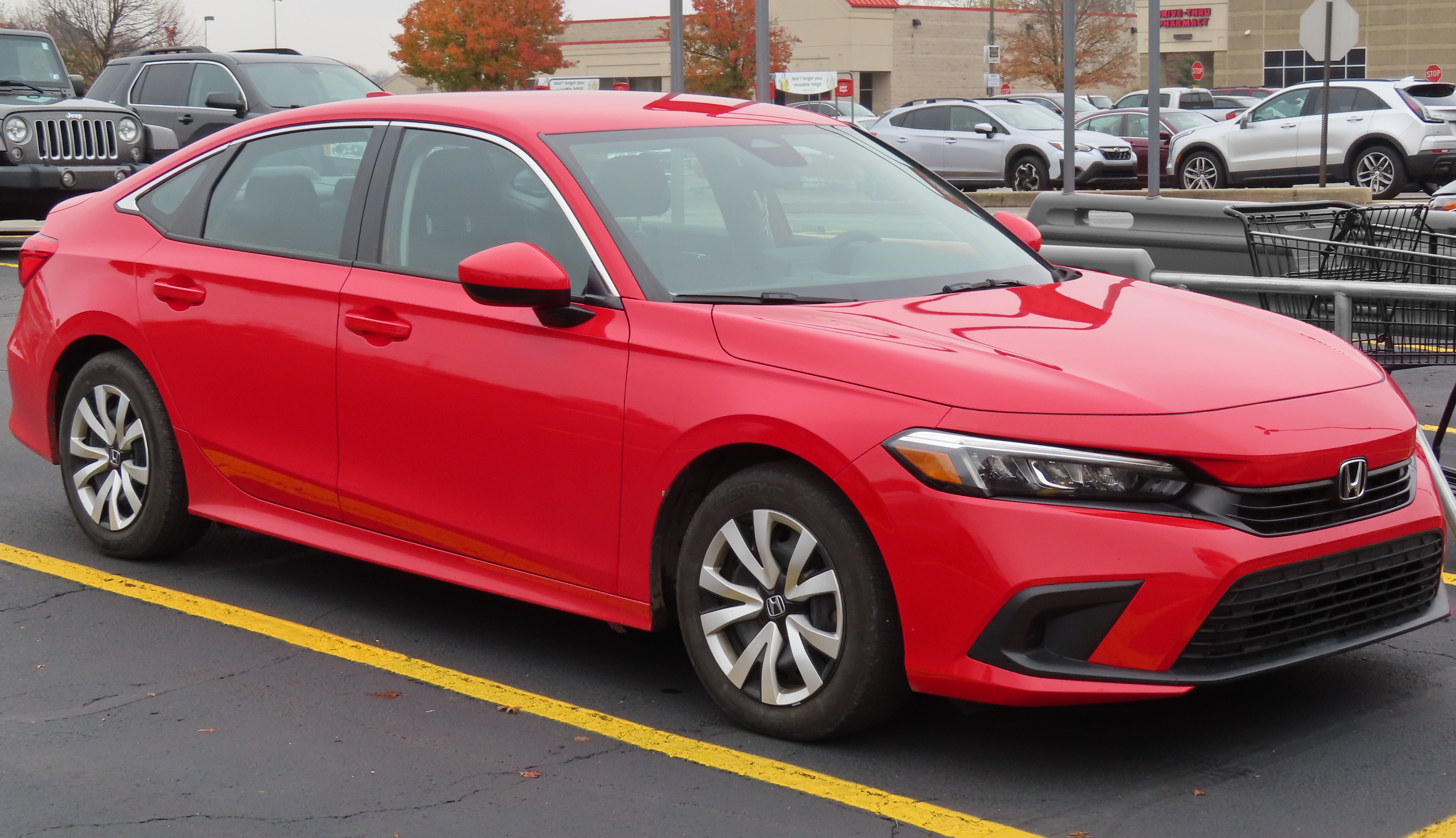
Honda Civic
"Hopefully you've seen our K-4, almost hatch versus the Civic Sport Touring. But this is a piece when the K-4 almost hatch came out, because we're not getting the actual sports wagon that is available in Europe."
Honda’s Civic Sport Touring is a higher-trim Civic aimed at balancing everyday comfort with a more premium feel. Trim names like “Sport Touring” usually indicate added features (often including better infotainment, comfort items, and sometimes more performance-oriented tuning depending on generation).
sports wagon
"But this is a piece when the K-4 almost hatch came out, because we're not getting the actual sports wagon that is available in Europe. We're not getting that in North America."
A “sports wagon” is a performance-oriented station wagon—typically with a sportier suspension setup and sometimes more powerful engines—while still offering the practicality of a wagon. The hosts are pointing out that Europe may get these variants, but North America often doesn’t, which affects what enthusiasts can buy locally.
wagons keep dying
"We're not getting that in North America. Because apparently wagons keep dying and then they don't. And they just don't get offered here."
They mean that wagons haven’t been selling well enough to keep being offered. If not many people buy them, companies stop bringing them to the market.
This is a market concept: “wagons keep dying” refers to how consumer demand and automaker strategy have reduced wagon offerings over time, especially in North America. When sales don’t justify the model, manufacturers stop importing or producing them, which can make wagons rarer even if enthusiasts want them.
Hyundai Ioniq
"The recently introduced Ioniq V. We've got the Ioniq V, so we've got the Ioniq V for the Chinese market only."
The Hyundai Ioniq V is a new electric car Hyundai is planning for China. The big takeaway here is that Hyundai is changing how the cabin looks and feels, not just the powertrain.
The Hyundai Ioniq V is an upcoming electric vehicle aimed at the Chinese market. The hosts discuss it as part of Hyundai’s broader EV push and focus on how the car’s design and cabin layout are evolving for China.
800 volt platform
"The only thing we know it's got 600 kilometers or about 372 miles of range, apparently, an 800 volt platform."
“800 volt” is an electrical system design in the EV. Higher voltage can help the car charge faster and manage power more efficiently, especially on the right fast chargers.
An 800-volt EV architecture is designed to support faster charging and more efficient power delivery than traditional lower-voltage systems. In practice, it can reduce charging time when paired with compatible high-power chargers and can also help with performance and thermal management.
EV experience
"So EV, but it's all about the experience, the future experience."
They’re talking about the “experience” side of EVs—how the car feels inside and how easy it is to use. With EVs, the cabin design and screens often matter as much as the battery range.
The hosts frame the Ioniq V as being about “experience” rather than just specs—meaning the cabin layout, usability, and how the car feels day to day. This is a common EV differentiator because software and interior ergonomics strongly shape driver and passenger satisfaction.
legroom
"They certainly do. Legroom is a very big deal, and having a lot of legroom in the rear,"
Legroom is how much space there is for your legs. The hosts are saying rear-seat legroom is a big deal for this kind of car and market.
Legroom is the space for occupants’ legs, especially in the rear seats. The hosts highlight it as a key selling point for the Chinese market, where rear-seat comfort can be a major priority for buyers.
Tesla
"This is a variation on what Tesla does. Let me be honest, this is a very stark interior with one massive screen..."
Tesla is being used as the comparison point for how EVs can be designed inside. They’re saying this Hyundai’s interior layout feels similar to Tesla’s big-screen style.
Tesla is referenced as the benchmark for EV interior design, particularly the use of a large, centralized screen and a minimalist dashboard. The hosts compare the Ioniq V’s cabin layout to Tesla’s approach, implying a similar “screen-first” user experience.
one massive screen
"Let me be honest, this is a very stark interior with one massive screen that is hugely letterbox..."
This is the “big screen” dashboard style where most controls and info are shown on one display. It can look clean and modern, but you may need to interact with menus more than with physical buttons.
A “one massive screen” layout typically means the vehicle uses a single large display for most functions instead of multiple separate gauges and screens. This can simplify the dashboard visually, but it also shifts important controls to touch/menus and changes how quickly drivers can access information.
letterbox screen effect
"...one massive screen that is hugely letterbox that starts, for those of you who can't see it, it starts over the center console..."
They’re describing the screen shape and how it looks—kind of like the black bars you see on some movies. That look can change how easy it is to read and how the dashboard feels.
The “letterbox” description suggests the screen’s aspect ratio or framing creates a cinematic look, often with bars or a tall/wide presentation that differs from traditional instrument clusters. This affects readability, perceived width, and how the screen visually dominates the cabin.
driver does not have a screen in front of them
"...it sweeps all the way in front of the passengers. The driver does not have a screen in front of them."
They’re saying the driver doesn’t get a separate screen directly ahead. Instead, the main information is probably shown on the big central display, so the driver has to look more toward the middle.
This describes a cabin layout where the driver’s primary information display is not a separate screen directly in front of them. Instead, the system likely relies on the central “sweeping” display for driver information, which can change sightlines and how quickly the driver can scan key data.
minimalist interior design
"It's that minimalist thing, which we've all been supposed to be convinced that it means luxurious, and it really means cheaper to make."
They’re talking about minimalist car interiors, where the cabin looks clean and simple. Some people call that “luxury,” but the host thinks it’s often just cheaper for the manufacturer to make. The idea is that fewer physical pieces can reduce cost.
The segment discusses “minimalist” interiors—few physical controls, lots of clean surfaces, and a simplified layout. The host argues that minimalism is often marketed as luxurious but can actually be cheaper to build due to fewer unique parts and simpler trim. This is a common debate in modern cabin design.
screen-focused interior design
"because everything is focused on screens, the interior experience, that has not led up for production cars, and apparently this is where things are going."
The hosts are criticizing the trend toward putting most of the driver information and controls on large screens. In practice, this can change how quickly drivers can find key functions, and it can also make the cabin feel more “tech product” than traditional vehicle. The segment frames this as a shift in the interior experience that may not translate well to real production cars.
Kia Global Design
"So I move to the new concept from Kia, the executive vice president and head of Kia Global Design, Karim Habib."
They mention Kia’s design leadership team. The point is that Kia has a global group that decides what the brand’s future look and feel should be. That matters because the hosts are judging whether the “future” design actually looks good in practice.
Kia Global Design is referenced as the internal design leadership group responsible for shaping Kia’s future design direction. Mentioning the design executive and the “design philosophy” highlights how automakers use brand-level design teams to set consistent styling and cabin themes across models. It’s relevant here because the hosts are evaluating how that philosophy shows up in real-world interior design.
immersive digital experience
"with the limitless possibilities of an immersive digital experience. I see very little of that in this photo, but okay."
They’re using a phrase that basically means “the cabin feels like a digital experience.” The host is saying they don’t see much of that in the photos and is worried it might not actually be better once it’s in real cars. It’s a commentary on how marketing language meets real design.
“Immersive digital experience” is a marketing framing for cabins that rely heavily on screens, graphics, and software-driven interactions. The host’s reaction suggests skepticism that this kind of experience will translate into something that feels truly better in production cars. It’s part of the broader debate in the segment about whether digital-first interiors improve usability and luxury.
Toyota Prius
"Which looks like a Prius. I have to keep saying it."
They’re comparing the new Hyundai’s shape to the Toyota Prius. That’s basically saying it has a similar “efficient, aerodynamic” look. It doesn’t mean it’s the same car—just that the styling reminds them of the Prius.
The Toyota Prius is used as a visual reference point for the Hyundai Ioniq V’s shape. When someone says “it looks like a Prius,” they’re usually pointing to a streamlined, hatchback-like silhouette and a familiar hybrid-era design language. It’s a shorthand for “efficient-looking” rather than a claim of shared platform or powertrain.
experience modes
"And then here is the interior, giving you three distinct experience modes. Speedster, Dreamer, and Gamer. These are modes."
Experience modes are different settings you can choose in a car. They change how the car feels and responds, like switching between different “personalities” for the drive.
“Experience modes” are selectable driving/cabin settings that change how the vehicle behaves and how the interface feels. Here, the hosts describe three modes—Speedster, Dreamer, and Gamer—suggesting different levels of feedback and interaction tailored to the driver’s desired vibe.
immersive user experience
"It's modes that enhance the highly immersive user experience according to the driving environment and scenario."
“Immersive” here means the car tries to pull you in with more engaging screens and controls. The idea is to make the cabin feel like part of the driving experience, not just transportation.
An “immersive user experience” in cars usually means the cabin is designed to strongly engage the driver through visuals, controls, and feedback tied to driving conditions. In this segment, it’s linked to mode switching and a more interactive interface rather than a purely traditional layout.
joystick
"And you'll notice in this photo, there is a joystick that is part of the driver's seat."
A joystick is a handheld-style control that can move in different directions. In this concept, it’s used to control the car’s functions in a more interactive, futuristic way.
A joystick in a vehicle typically replaces or supplements traditional controls like a gear selector or steering-column stalks. In this concept, it’s part of the driver’s seat area, suggesting a more “game-like” interface for selecting functions and simulating actions.
simulate gear shifts
"but you're able to switch modes and simulate gear shifts. So everything about the future experience is what we all like about the old school stuff."
Simulating gear shifts means the car can mimic the feel or cues of changing gears without a traditional manual gearbox action. This is often done in EVs or automated drivetrains to give drivers familiar feedback, even when the powertrain doesn’t operate like a conventional transmission.
self-driving
"There's little verbiage about self-driving, and you're just going to sit there and look at your phone while the outside world is whatever it's doing."
Self-driving means the car does most of the driving for you. The hosts are saying that if the car drives itself, it might be less fun or less engaging for the person inside.
Self-driving refers to automated driving where the car handles steering, acceleration, and braking with minimal driver input. The hosts contrast that with an “engaged” driving experience, arguing that the future should still make the driver feel involved rather than just watching the phone.
Ioniq 5
"I mean, I hope that they actually make some decent cars to drive. Watch our Ioniq 5-In versus Ferrari piece, which was on purpose a weird dichotomy of two things."
The Hyundai Ioniq 5 is an electric car. The hosts mention it as part of a comparison video, likely contrasting a normal, tech-forward EV with a more traditional performance car.
The Hyundai Ioniq 5 is an electric crossover that’s often used as a benchmark for modern EV usability and tech. The hosts reference an “Ioniq 5-In versus Ferrari” piece, implying a comparison between everyday EV experience and a traditional performance brand.
simulate some of the things about driving
"Because what Hyundai taught us, taught us all, is that they can simulate some of the things about driving and it can work, okay? To follow that is the prelude that's now trying to do it,"
They mean cars using computers to copy the sensations you’d normally get from a gas engine. The question is whether that makes driving more fun—or just makes it feel fake.
This refers to using software and sound/feel engineering to mimic what drivers expect from traditional internal-combustion cars—like shift feel, engine noise, and responsiveness. The debate is whether simulation enhances immersion or just creates artificial behavior that can make the car feel less authentic.
gear shifts that aren't gear shifts
"which is also all fakery in their gear shifts that aren't gear shifts. They're just changing the idle level of the engine, essentially."
The hosts are describing “simulated” gear changes—common on some EVs—where the car changes sound and/or control behavior to imitate shifting, even though the drivetrain may not actually be changing gears. This can create a familiar sensation without the mechanical event of a traditional transmission shift.
idle level of the engine
"They're just changing the idle level of the engine, essentially. It's true."
They’re basically saying the car is changing the “baseline” behavior to make it feel like something is happening. On an electric car, that usually means changing sound and power delivery rather than a real engine idling.
“Idle level” here is used metaphorically for how the car’s control system changes perceived engine behavior—often via motor output modulation and/or synthesized sound. In an EV, there may be no conventional engine idle, so the “idle” change is part of the simulation strategy to mimic traditional drivability cues.
VR headset
"the sun is setting, it's a nice, idyllic kind of evening, right? And my son is over there in silence, except he's got the VR headset on and headphones on, and he's having a whole experience that has nothing to do with the world around him."
They’re comparing the car to VR—something that can pull your attention away from the real world. Their point is that they don’t want driving to feel like a game that disconnects you from what’s around you.
The hosts use a VR headset example to illustrate the risk of over-immersive, disconnected experiences. In the driving context, they’re arguing that too much “virtual” engagement could distract from the real world and reduce the joy of interacting with the car and surroundings.
being a car isn't good enough
"It's almost like car companies continue to explore the theme of, well, just being a car isn't good enough. Fair point."
The point is that today’s buyers often want more than “it drives.” They want the car to offer something extra—like fun, comfort, or a certain vibe.
This idea points to a broader market shift: automakers increasingly sell cars as lifestyle products with features and emotional appeal, not just basic transportation. The “what else could it do?” framing suggests buyers want personality, capability, or fun—not merely mobility.
enthusiast drivers
"Because if you were to ask us, we're enthusiast drivers. Hopefully all of you watching are enthusiast drivers as well, and you want something out of your car."
“Enthusiast drivers” are people who care about how a car drives and often seek engagement—handling, feedback, sound, and performance characteristics. In car debates, this group is contrasted with mainstream buyers who prioritize practicality, comfort, or value.
driving experience category
"But in the driving experience category, you want to have fun driving your car. If it's a minivan, an SUV, a car, a sports car,"
“Driving experience” just means how the car feels to drive. It’s not only about power or speed—it’s about whether the steering, acceleration, and ride are fun and satisfying.
The phrase “driving experience” refers to how a car feels and behaves day-to-day—things like steering feel, throttle response, ride comfort, and overall engagement. It’s a way to frame cars beyond specs, focusing on what you actually enjoy when you drive.
simulating the driving experience
"But now that you're simulating the driving experience, we've gone all the way to full self-driving."
Simulated driving is when a game or setup tries to copy what it feels like to drive a real car. It can be fun and educational, but it still isn’t the same as driving for real because real cars have real road feel and physics.
Simulated driving recreates the feel of steering, braking, and acceleration using software and hardware like steering wheels and pedals. It can help people learn car dynamics and enjoy driving without being on the road, but it can’t fully replicate real-world physics and sensory feedback.
Hyundai and Kia
"And now here's Hyundai and Kia going back to, hmm, the driving experience. And we're harking back to the 1960s, the GT cars, the long road trips."
Hyundai and Kia are big car brands from South Korea. Here, they’re being mentioned in the context of making cars that feel more fun to drive, not just tech-filled.
Hyundai and Kia are major Korean automakers that have been pushing both electrification and driver-focused tech. In this segment, they’re also framed as looking back at what makes driving engaging—suggesting a shift toward more “real car” experiences rather than screen-heavy interfaces.
harking back to the 1960s, the GT cars, the long road trips
"And we're harking back to the 1960s, the GT cars, the long road trips. And by the way, you get to drive yourself and it's simulated."
“GT cars” are built for comfortable long drives, like road trips. The hosts are basically saying they want that classic, enjoyable driving vibe back.
“GT cars” typically refers to grand touring vehicles designed for comfortable, fast long-distance driving. The idea of “long road trips” emphasizes usability and driver engagement—things like seating comfort, sound/feel, and straightforward controls—rather than purely digital experiences.
no screens
"But do we come back around to, we just built a car. There's no screens. It's got a steering wheel seats, a shifter and an engine."
“No screens” means fewer digital displays and more normal buttons and controls. Some people prefer that because it’s quicker and less distracting while driving.
“No screens” here is shorthand for reducing or eliminating infotainment and digital displays in favor of traditional physical controls. For many drivers, physical buttons and knobs can be faster to use, easier to operate while moving, and less distracting than touchscreen menus.
Toyota Gr86
"...mean, I would love Kia to just build some sort of GR86 rival. That's slightly cheaper."
The GR 86 is a small sports car meant to be fun to drive. It’s usually chosen by people who want performance without spending a lot. The discussion is about whether another car could offer a similar experience for less money.
The Toyota GR 86 is a compact sports coupe built for affordable, fun driving, with a focus on responsive handling rather than luxury. It often comes up in debates because people compare it to other “entry-level” sports cars and look for a similar experience at a lower price. In the podcast, it’s referenced as a target for someone wanting a rival that’s slightly cheaper.
volume vs niche sports cars
"Because all of these car companies... they survive on volume. They don't survive on niche sports cars."
They’re saying car companies usually make money by selling a lot of cars, not by making only small numbers of niche sports cars. So the features you get are often designed to appeal to more than just hardcore drivers.
The speaker argues that automakers rely on high sales volume to stay profitable, which pushes them toward mass-market products rather than niche sports cars. That business reality influences how features like multiple driving modes are packaged for broader audiences.
gamer mode
"And the person that does care about driving can have gamer mode or whatever. I mean, that's the concept is to create, it's back to the skateboard concepts..."
“Gamer mode” is basically a nickname for the car’s sportiest settings. It’s meant to make the car feel more responsive, like you’re controlling it more directly.
“Gamer mode” is a colloquial way to describe driving modes that prioritize responsiveness and repeatable, game-like control over smoothness. In EVs and performance cars, these modes often make throttle response sharper and may adjust traction/stability calibration to feel more immediate.
reversible jacket, reversible belt
"Where it's, you make something that the owner can make it whatever they want. It's a reversible jacket, a reversible belt."
They’re comparing the idea of car settings to clothes that can be worn different ways. The point is that different people want different feels, so the car should let you switch it up.
This is an analogy for modular, customizable products—something you can configure to match your preferences. The speaker is applying the idea to cars by suggesting manufacturers should offer multiple “modes” so different drivers can tailor the experience.
Ioniq 5N
"But what it creates is, and that's the Ioniq 5N, let's be honest. You can drive that as just an EV and it works fine as just an EV."
The Ioniq 5 N is the “sporty” version of Hyundai’s electric Ioniq 5. It’s meant to feel more fun to drive, with settings you can change—though some owners might just use it like a normal EV.
Hyundai’s Ioniq 5 N is a performance-focused version of the Ioniq 5 electric crossover, tuned for driving feel rather than just straight-line speed. The “N” branding typically includes more aggressive throttle/drive calibration and chassis tuning, plus selectable driver modes.
driver modes
"I wonder how many people... have bought the Ioniq 5N and then don't use the driver modes. Just use it like an EV that's a performance EV with good suspension."
Driver modes are like different “personalities” the car can switch between. They change how the car feels when you press the pedal and how the car manages grip and power.
Driver modes are preset operating profiles that change how a car responds—most commonly throttle mapping, steering/traction behavior, and sometimes regenerative braking feel. On performance EVs, modes can also adjust how aggressively the car delivers power and how the chassis control systems behave.
virtual thing where you're not actually enjoying driving
"But I'm just worried about this whole virtual thing where you're not actually enjoying driving, but it's been simulated for you. Here's a last photo of the immersive experience."
They’re talking about how driving in real life feels different from driving in a simulator. The host is basically saying real driving has real feedback that simulations may not capture.
This segment contrasts real driving with “virtual” driving experiences (like simulations) and questions whether they deliver the same enjoyment. The underlying concept is that driving feel—feedback through steering, pedals, and vehicle dynamics—can’t be fully replicated by simulation for many enthusiasts.
Powerstop Brakes
"For all our adventures this year, we've upgraded our cars with brake kits from Powerstop Brakes. Powerstop offers reliable, durable upgrade kits for nearly every vehicle on the road."
Powerstop Brakes makes aftermarket brake parts. The hosts are saying their kits can help your car stop better and can also reduce how messy the brakes get.
Powerstop Brakes is an aftermarket brake brand that sells upgrade kits for many vehicles. In this segment, they’re positioned as a way to improve real-world braking performance and reduce brake dust compared with stock parts.
brake kits
"For all our adventures this year, we've upgraded our cars with brake kits from Powerstop Brakes. Powerstop offers reliable, durable upgrade kits for nearly every vehicle on the road."
A brake kit is a set of brake parts sold together, usually including rotors and pads. It’s meant to improve stopping and is chosen to fit your specific car.
A brake kit is an aftermarket package that typically includes components like rotors and pads, sometimes with hardware and sensors, designed to upgrade braking performance. The key value is matching the kit to your vehicle and driving style rather than just swapping one part.
carbon fiber ceramic pads
"Their drilled and slotted rotors keep brake temperatures low and carbon fiber ceramic pads give improved stopping power with less brake dust."
Carbon fiber ceramic pads are a type of aftermarket brake pad material designed to improve braking performance while producing less brake dust than many conventional pads. They’re often marketed for better pedal feel and cleaner wheels, especially for daily driving.
brake temperatures low
"Their drilled and slotted rotors keep brake temperatures low and carbon fiber ceramic pads give improved stopping power with less brake dust."
When brakes get too hot, they can stop working as well. The idea here is that cooler brakes keep your stopping power more consistent.
Keeping brake temperatures low helps reduce brake fade, which is when braking performance drops after repeated hard stops. Cooler brakes also help maintain more consistent friction between pads and rotors.
brake dust
"Their drilled and slotted rotors keep brake temperatures low and carbon fiber ceramic pads give improved stopping power with less brake dust."
Brake dust is the gritty powder that builds up on your wheels as you brake. Some brake pads make more of it than others, so choosing the right pads can keep wheels cleaner.
Brake dust is the fine particulate created as brake pads wear and friction material transfers to the rotor. Some pad materials generate more dust than others, which affects wheel cleanliness and can be a practical reason to choose certain aftermarket pads.
drilled and slotted rotors
"Their drilled and slotted rotors keep brake temperatures low and carbon fiber ceramic pads give improved stopping power with less brake dust."
Drilled and slotted rotors have holes and grooves on the rotor surface. They help the brakes run cooler and can help the pad clean itself during hard stops.
Drilled and slotted rotors are aftermarket brake rotors with holes (drilled) and grooves (slotted) on the friction surface. The holes and slots help manage heat and gas buildup at the pad surface, which can support more consistent braking under repeated use.
Powerstop.com
"Visit Powerstop.com and use their brake finder today, right now. Stop the podcast."
PowerStop sells replacement brake parts. Their website tool helps you pick the correct brake parts for your exact car so you don’t buy the wrong fit.
PowerStop is an aftermarket brake brand and retailer. Their “brake finder” is meant to help you match the right pads/rotors to your vehicle by year/make/model.
BMW 7 Series
"Speaking of car companies that give their customers what they think they want, BMW has redesigned completely the new 7 Series. They've refreshed it to the Neue Class design language."
The BMW 7 Series is BMW’s top-tier luxury sedan. The hosts are talking about how BMW updated it—both the look and what it’s trying to offer buyers.
The BMW 7 Series is BMW’s flagship luxury sedan. In this segment, the hosts discuss a major redesign and styling changes, plus how BMW is positioning it with new branding and technology.
Neue Class design language
"They've refreshed it to the Neue Class design language. Wait, no they didn't. Is that really their commentary on this photo?"
“Neue Klasse” is BMW’s idea of a new design direction. The hosts are basically saying they can’t clearly see that new design theme in the photo.
“Neue Klasse” (New Class) is BMW’s branding for a new design and technology direction. When the hosts debate whether it’s visible on the car, they’re essentially arguing about how clearly BMW’s new styling/identity shows up in the exterior design.
beaver teeth
"Because it still has the beaver teeth and looks every bit as ugly. Okay. No, no, no."
“Beaver teeth” is a joking nickname for a grille that has lots of sharp-looking vertical bars. They’re saying the grille looks ugly, even if it’s a little less offensive than before.
“Beaver teeth” is a slang nickname for BMW’s kidney grille design with prominent vertical elements. It’s used here as a humorous way to criticize the grille’s look on the 7 Series.
electric range
"The fully electric models have a significantly longer electric range that now extends to 447 miles."
Electric range is how many miles an EV can drive before it needs charging. Here, they’re saying the newer electric versions can go farther on one charge.
Electric range is how far a fully electric vehicle can travel on a single charge under a specified testing standard. The hosts mention a longer range for the fully electric 7 Series models, framing it as a key improvement.
M70X drive
"The M70X drive has 608 horsepower, 748 pound-feet of torque. By the way, Lucid Air has already done that."
This sounds like a top, high-power BMW electric version. They’re quoting its power and torque to show it’s meant to be quick.
“M70X drive” appears to refer to a high-output BMW electric powertrain variant (an M-branded model/trim). The hosts cite its output figures to compare performance against Lucid Air.
horsepower
"The M70X drive has 608 horsepower, 748 pound-feet of torque. Lucid Airs are also quite powerful and pretty fast."
Horsepower is a way to describe how strong the motor is. More horsepower usually means the car can accelerate harder, especially when paired with good torque.
Horsepower is a measure of engine (or motor) output, indicating how much power the vehicle can produce. In EV comparisons, horsepower is often used alongside torque to describe acceleration potential.
pound-feet of torque
"The M70X drive has 608 horsepower, 748 pound-feet of torque. Lucid Airs are also quite powerful and pretty fast."
Torque is the force that gets the car moving. EVs typically have a lot of torque right away, which helps with quick starts.
Torque is the twisting force that helps a vehicle move and accelerate, especially at low speeds. EVs often produce strong torque instantly, which is why torque figures are commonly used in performance discussions.
Neue Class style
"[756.0s] And they've redesigned. [757.3s] So the Neue Class style. [758.8s] The interior, I see it."
“Neue Klasse” is BMW’s way of saying they’re moving to a new design direction. Here, it’s basically shorthand for the newer BMW interior and tech look they’re showing off.
“Neue Klasse” is BMW’s branding for a new generation of design and technology direction. In this segment, the hosts connect it to the updated cabin look and interface choices, implying a broader shift in how BMW is approaching modern interiors.
four spoke steering wheel
"[759.6s] The interior is different. [760.7s] They've got the four spoke steering wheel here. [762.6s] They've got the trapezoidal screens, adding screens, adding the immersive experience."
A “four spoke steering wheel” just means the steering wheel has four main sections (spokes) coming out from the center. It’s mostly a styling detail, but it can also change where buttons and controls are placed.
A “four spoke steering wheel” refers to the wheel’s spoke layout—typically two main spokes plus two additional structural/trim elements. It’s a design detail that often goes along with a more modern interior theme and can affect how controls and branding are laid out.
trapezoidal screens
"[762.6s] They've got the trapezoidal screens, adding screens, adding the immersive experience. [766.1s] BMW and Mercedes are the kings of immersion. [769.4s] You see it here."
“Trapezoidal screens” means the screens on the dashboard aren’t just rectangles—they have a slanted, wider/ narrower shape. The hosts are pointing out that the screen design helps make the cabin feel more high-tech and engaging.
“Trapezoidal screens” describes a dashboard display shape that’s wider at one end, giving a more sculpted, design-forward look. In modern cabins, screen shape and placement are part of the overall user experience—often used to make the interface feel more integrated and “immersive.”
immersion
"[766.1s] BMW and Mercedes are the kings of immersion. [769.4s] You see it here. [773.2s] I'll see that."
“Immersion” here means the car’s interior feels like a complete experience, not just a place to sit. They’re talking about how screens and luxury features are arranged to make you feel more connected to what the car is doing.
In-car “immersion” is the idea that the cabin experience pulls you in through coordinated design, screens, and feature integration. Here, the hosts use it to compare BMW and Mercedes-Benz—arguing that their interiors make the tech and luxury feel more enveloping than the exterior design.
giant screen in the rear
"[776.7s] Here is the rear seats. [778.1s] And remember, BMW was obsessed with that giant screen in the rear, but immersion into all [783.6s] of the features and the luxury."
This is a big screen mounted for rear passengers. It’s usually for entertainment or controlling features, and it’s meant to make the back seat feel more like a premium lounge.
A “giant screen in the rear” refers to a large rear-seat entertainment or control display mounted for passengers. It’s a common modern luxury feature that can shift the cabin’s focus toward passenger experience and can also change how rear-seat occupants interact with media and vehicle functions.
headlights
"And keep in mind, the headlights are not where you think they are. Of course they are. They're down here. And same thing on the new car. They're down here."
This segment highlights a common modern design trick: the visible “light-looking” elements on the bumper may not be the actual headlamp units. The hosts point out that the real headlights are positioned lower than the grille/vent shapes suggest, which affects how you interpret the car’s front-end design.
Neue Class styling
"Let me just remind everyone what the Neue Class styling is. I think it's absolutely brilliant. Looks great."
“Neue Klasse” is BMW’s design theme for a new generation of cars. It’s basically the brand’s way of making the front of the car look different and more modern, even if some details (like lights) don’t match where you think they should be.
“Neue Klasse” refers to BMW’s newer design direction, where the brand emphasizes a distinctive, modern front-end look and proportions. In this segment, the hosts use it to frame why the car’s lighting and front fascia appear “off” compared to what you’d expect from the shape.
PHEV
"[856.3s] Would look great. [856.7s] Two PHEV variants and three M performance models. [860.1s] Here's the versions that I counted."
PHEV means the car is a plug-in hybrid. You can charge it like an EV, and it also has a gas engine for longer trips when the battery runs low.
PHEV stands for Plug-in Hybrid Electric Vehicle. It combines a gasoline engine with an electric motor and a battery that you can recharge from an outlet, typically allowing short trips on electricity alone.
BMW i3
"[888.0s] I thought it was just going to be a large i3. [891.5s] And we were going to call it done."
They mention the BMW i3 because it’s a distinctive-looking BMW electric car. They’re saying they expected the new car to look like a bigger version of that, but it doesn’t.
The speaker compares the new car’s look to a “large i3,” referencing BMW’s i3 electric hatchback. The point is that they expected a smaller-car design language scaled up, but the final styling is different.
BMW kidney iconic glow
"[898.1s] The BMW kidney iconic glow and minimalist crystal headlights. [902.1s] Give the car a visually impactful presence."
BMW’s “kidneys” are the grille shape at the front of the car. Here, they’re talking about it being lit up, so it looks brighter and more noticeable.
“Kidney iconic glow” refers to BMW’s signature grille shape (“kidneys”) being illuminated. Using light to emphasize the grille is a modern styling cue that makes the front end stand out, especially at night.
reduced surfaces character line
"[920.6s] The side view impresses with reduced surfaces character line and classy details while the [924.8s] rear ends shaped by newly designed lights in clear forms."
A character line is a crease in the car’s body that helps it look more sculpted. They’re saying the new design uses simpler shapes so that line stands out more.
A “character line” is a body crease that runs along the side of the car to add shape and visual tension. Saying “reduced surfaces” suggests the design uses fewer, cleaner planes so the line and reflections read more clearly.
rear lights
"[927.6s] Let's talk about the rear lights. [928.8s] Here's the old. [929.4s] Here's the new."
The hosts pivot to “rear lights,” comparing “the old” versus “the new.” Tail light design is a major part of how a facelift or new generation reads visually, often changing the light signature even if the body shape is similar.
2011 Lincoln MKZ
"What you've done is you've made a 2011 Lincoln MKZ rear lights that were not successful here. It does look a little like that... And I didn't think the MKZ was successful."
The Lincoln MKZ is a Lincoln sedan. They’re talking about how the rear lights looked on the 2011 model and saying the design didn’t really work.
The Lincoln MKZ is a midsize sedan from Lincoln (Ford’s luxury brand). In this segment, the hosts are critiquing the 2011 MKZ’s rear lighting design and how it looked on the car, implying the styling wasn’t well received.
mid-cycle refresh
"This is this is like a big mid-cycle refresh is what this really is... Without being a new generation and they did a lot of interior stuff."
A mid-cycle refresh is an update automakers do partway through a model’s life—usually to keep the car competitive without redesigning it completely. Hosts describe this as a “big” refresh that includes interior changes, but not a full new generation.
ginormous instrument panel
"Mercedes has introduced the new C-Class EV unveiled with a ginormous instrument panel. It's a single screen."
They mean the dashboard looks like it’s mostly a big screen. Instead of lots of separate gauges, the car shows information digitally.
A “ginormous instrument panel” here means the dashboard is dominated by a very large display area. This is part of the modern trend toward digital cockpits where most driver information is shown on screens rather than traditional gauges.
Mercedes C-Class EV
"Mercedes has introduced the new C-Class EV unveiled with a ginormous instrument panel. It's a single screen... There's nothing about this side profile that says this is a Mercedes."
This is an electric Mercedes-Benz C-Class. They’re talking about how the dashboard is dominated by a big screen and how the outside shape could look like lots of other brands.
The Mercedes-Benz C-Class EV refers to an electric version of the C-Class lineup. The hosts discuss its design and especially the interior “ginormous instrument panel” with a large single-screen layout, plus how the exterior profile doesn’t look distinctly Mercedes.
single screen
"It's a single screen. I hoped you'd bring this up. This is even more screens than I thought possible."
They’re saying the car uses one big display instead of multiple smaller ones. That can make the interior feel more modern and less cluttered.
A “single screen” layout typically refers to one large integrated display that combines functions like the instrument cluster and infotainment. It’s often used to create a cleaner, more minimalist look compared with multiple separate screens.
Audi
"It could be Audi. Yes. Yes. Here's the rear and you start to see that signature."
Audi is a luxury car brand from Germany. Here, they’re basically saying the car’s shape and details look like something Audi would do.
Audi is a German luxury brand known for distinctive exterior styling cues and lighting designs. In this segment, the hosts are using visual details to guess whether a car is an Audi.
pixelation
"Here's the front grille with all of the pixelation. Very clear to me. That's a Mercedes because the grille is all about the Mercedes logos."
“Pixelation” here refers to how the grille and lighting details can look in photos or video due to resolution, compression, or camera processing. It’s not a car feature by itself, but it affects how accurately you can identify styling cues from images.
light carpet
"I couldn't find a good picture of the light carpet that the doors cast onto the ground when you get out from the LED lights underneath the doors. The light carpet. I couldn't find any good photos. We're going to have to drive this and take photos of the light carpet."
“Light carpet” just means the glowing pattern on the ground when you open the door. It’s usually made by the door lights and can look like a logo or design.
“Light carpet” is a descriptive term for the projected pattern of light on the ground created by door puddle lights. It’s a styling/comfort feature that can include branded logos or decorative shapes.
LED lights underneath the doors
"I couldn't find a good picture of the light carpet that the doors cast onto the ground when you get out from the LED lights underneath the doors. The light carpet. I couldn't find any good photos."
LED puddle lights are small light sources mounted near the door that project illumination onto the ground when you open the door. They’re often used for visibility and a premium “welcome” effect.
on-device AI
"Mercedes announced a multi-year partnership with Liquid AI to scale embedded on-device intelligent from Mercedes-Benz models... designed to advance the performance of real-time private and local AI experiences for onboard services at scale..."
On-device AI means the car thinks using its own computer. That can make responses faster and keep more of the interaction private.
On-device AI means the vehicle’s computer runs the intelligence locally inside the car rather than depending on a remote server for everything. That can improve responsiveness and support “private/local” experiences because data doesn’t have to be sent off-board for every interaction.
Mercedes-Benz
"Mercedes announced a multi-year partnership with Liquid AI to scale embedded on-device intelligent from Mercedes-Benz models with third and fourth generation M-Bucks in North America."
Mercedes-Benz is talking about teaming up with a tech company to upgrade the car’s built-in computer. The idea is that the car’s voice/AI features will work better and feel more “smart” while you’re driving.
Mercedes-Benz is describing a multi-year partnership aimed at improving onboard AI features in its vehicles. The goal is to make the in-car system smarter and more capable for real-time, private, on-device experiences.
Liquid AI
"There's a circular vent on the left by the driver. Everything between those vents at the extreme is one huge screen. Mercedes announced a multi-year partnership with Liquid AI to scale embedded on-device intelligent..."
Liquid AI is a tech company that’s helping Mercedes-Benz make the car’s built-in AI smarter. That usually means the car can understand and respond faster using its own systems.
Liquid AI is the company Mercedes-Benz partnered with to help scale embedded, on-device AI capabilities. In this context, it’s about improving how the car processes and responds to intelligent services without relying entirely on the cloud.
M-Bucks
"...third and fourth generation M-Bucks in North America. This partnership is designed to advance the performance of real-time private and local AI experiences for onboard services at scale enabling the next generation of in-car intelligence."
M-Bucks sounds like Mercedes-Benz’s name for the car’s “assistant” software platform. They’re saying newer generations make it better at understanding you and controlling car features.
M-Bucks appears to be Mercedes-Benz’s branding for generations of its in-vehicle virtual assistant/AI platform. The transcript ties it to improving the assistant’s performance and integrating voice control and vehicle functions.
in-car intelligence
"This partnership is designed to advance the performance of real-time private and local AI experiences for onboard services at scale enabling the next generation of in-car intelligence. They keep saying, gives customers value and it's intelligence."
“In-car intelligence” means the car’s system is trying to do more than play media or show maps. It’s meant to understand what’s going on and help you while you drive.
“In-car intelligence” refers to the vehicle’s ability to use sensors, software, and AI to understand context and provide helpful services. The transcript frames it as the next step beyond basic infotainment—more proactive and more integrated with vehicle functions.
marketing speak
"You know what I hear when you read that? Ads are coming. When I hear you read that, it just says to me in marketing speak, ads are coming."
The host is saying the company’s language sounds vague and salesy. They’re implying that the new screen setup might be used to show ads.
“Marketing speak” is the host’s critique of vague, corporate phrasing used to describe new vehicle tech. In this segment, it’s tied to concerns that the new interface could be used to display ads or monetized content.
edge-to-edge screen
"If you haven't seen this yet, you have to look it up because it is edge-to-edge screen. Got a few more images here. With vents on the edges and it is, I cannot believe it."
An edge-to-edge screen means the display takes up almost the whole dashboard area. Instead of lots of buttons and gauges, you mostly interact with the screen.
An edge-to-edge screen layout minimizes traditional dashboard surfaces and places the display as the dominant interface. This changes the driver’s visual and tactile experience—often relying on touch/voice and reducing physical controls.
camera looking into the passenger compartment
"It is just a screen. See what's front and center is a camera looking into the passenger compartment. Yes. Right above the screen."
That camera is pointed inside the car to watch what’s happening with the people in it. It can help the car know where you are and what you’re doing, which can power safety or convenience features.
A camera aimed into the passenger compartment is typically used for driver/occupant monitoring, gesture or attention tracking, and sometimes safety or convenience features. In a mostly-screen-based interior, such cameras can help the car “understand” who’s in it and what they’re doing.
serve up ads
"It's going to search the surrounding area and serve up ads. Of course it will. 100% correct."
“Serve up ads” means the car could show advertisements or promotions based on where you are. In this case, it’s tied to the car knowing your context while you’re on the road.
The hosts discuss in-car systems that can search the surrounding area and deliver targeted advertising. This is an example of how connected vehicles can use location and user behavior to influence what information is shown while driving.
listening to your conversations
"...and be listening to your conversations and almost involved in them when you talk to the car and you want to know EV charge stations, you want to know food, you want to know anything."
They’re suggesting the car could pick up what people are saying inside it. That could let the car suggest things like food or charging, but it also raises privacy concerns.
The segment describes a car that can listen to conversations and use that context to provide relevant information. In practice, this relates to voice recognition, cabin microphones, and privacy/consent questions around always-on or context-aware systems.
EV charge stations
"...and be listening to your conversations and almost involved in them when you talk to the car and you want to know EV charge stations, you want to know food, you want to know anything."
EV charge stations are places where you plug in an electric car to recharge. The idea here is that the car (or its connected system) can find nearby charging options and suggest them while you’re driving.
The segment discusses a connected car that can identify and recommend nearby EV charge stations. This is part of how modern infotainment and telematics try to reduce planning friction for electric-vehicle drivers.
connected to a credit card already in your wallet
"...it will serve up locations and ads and discounts and it might be connected to a credit card already in your wallet. It might be."
This means your car could potentially pay for things automatically using your saved payment info. Instead of you entering details each time, the car could handle it for you.
The hosts describe a scenario where the car’s connected services can use payment information already stored in a user’s digital wallet. That enables faster transactions for things like parking, charging, or in-car offers without pulling out a phone.
nav
"Then when you touch the one you want to go to, it automatically goes to the nav."
“Nav” means the car’s GPS navigation. It helps you pick a destination and then guides you along the route.
“Nav” here refers to the car’s navigation system, which provides route guidance. The point being made is that tapping a destination on the screen quickly routes you there, reducing steps.
entire dashboard that is a screen
"But do we want to have an entire dashboard that is a screen? ... why are we, we're now driving down the road in our living room. We're sitting on the couch looking at a TV screen."
Some cars are moving toward dashboards that are basically big screens instead of normal dials and buttons. That can be convenient, but it can also pull your eyes away from the road more often.
The hosts are debating a fully digital, screen-based dashboard—where most traditional gauges and controls are replaced by displays. The upside is customization and easy access to navigation and media, but the tradeoff is that it can increase visual distraction while driving.
visual distraction
"By the way, there's windows there that somebody needs to be paying attention to."
If you spend too much time looking at screens, it can make it harder to watch the road and other cars. That’s why people worry about distraction from big displays.
The hosts mention that “windows” need attention, which is a common argument against overly screen-heavy driving experiences. When you interact with infotainment or navigation while moving, it can compete with scanning the road and traffic.
virtual driving
"I have less issue honestly with the potential intelligence and interactivity of this than I do with the wall to wall screen."
“Virtual driving” is when the car feels more like a video game or tablet than a traditional machine. The worry is that the big screens and apps can pull your attention away from the road.
“Virtual driving” is the idea that modern cars can increasingly feel like digital experiences—where the screen becomes the primary interface for navigation, media, and even passenger entertainment. The concern is that this can blur the line between driving and using a device, potentially increasing distraction.
wall to wall screen
"Here's the wall to wall screen. It's the seamless M bucks hyper screen, a thousand LEDs surround navigation, 39.1 inches."
It’s basically a huge screen that stretches across the dashboard. Instead of having separate gauges and a separate infotainment screen, the car uses one big display to show everything.
A “wall to wall screen” is an ultra-wide, dashboard-spanning display that replaces most of the physical instrument cluster and infotainment area. The idea is to make the interface feel seamless and more immersive, especially for navigation and media.
interactive
"I don't think anything goes on here for the standard version because the super screen now that's interactive. You're right. That is. That's where the ads are going to serve up."
“Interactive” means the screen isn’t just showing information—it can be used like a device. You can tap, swipe, and run apps, which can make it feel more like a tablet than a car display.
In this context, “interactive” refers to the screen responding like a tablet—supporting app-like functions, touch inputs, and dynamic content. It’s a key part of the debate between real driving and “virtual” driving because it can shift attention toward the display.
one giant screen
"If we go back to anything less than a glass panel with screens... is you can't even see out the front windshield. It's just one giant screen and it's cameras..."
They’re talking about dashboards that are basically all screens. In the extreme version, cameras replace the normal windows so you “see out” using a display instead of glass.
The idea here is a “screen-first” cockpit, where most traditional controls and displays are replaced by large digital screens. Instead of looking through a conventional windshield, the driver may rely on camera-based displays or projections for forward visibility.
cameras
"It's just one giant screen and it's cameras and pole stars got rid of the rear window. How long do we get rid of the front window?"
Instead of looking through windows, the car can use cameras outside and show the view on a screen inside. That can let designers remove some glass and still show you what’s behind or ahead.
Camera-based driver visibility uses exterior cameras to feed a display inside the cabin, often to improve visibility or enable new display layouts. In a “no rear window” scenario, cameras can replace what would normally be seen through glass.
pole stars
"It's just one giant screen and it's cameras and pole stars got rid of the rear window."
Polestar is an electric-car brand. They’re being referenced as an example of a company that’s experimenting with replacing traditional windows with camera views.
Polestar is a Swedish EV brand known for minimalist, screen-heavy interiors. The mention suggests Polestar has removed or reduced traditional rear-window glass in favor of camera-based viewing.
projection
"I could do a projection... It's just a projection. Are we headed there with cars?"
Instead of a normal window, the car could use a projector to show you what the cameras see. It’s like turning the inside of the car into a display that looks like the outside.
A projection-based display would use light projected onto a surface (or into the driver’s field of view) rather than a conventional glass windshield. This concept is often discussed in sci-fi and could be used to simulate a “window” view from camera feeds.
analog watch with actual gauges
"There'll be those like the folks that want the analog... this is the Apple watch... want an analog watch with actual gauges..."
They’re contrasting screens with traditional physical dials. Some people prefer real gauges because they’re easier to read quickly and don’t depend on menus or screen settings.
This is a comparison between digital interfaces and analog instrumentation. In cars, “actual gauges” typically means physical dials and needles that provide immediate, glanceable information without relying on screen UI.
pre-safe curve function
"It's a pre-safe curve function and it tightens the seatbelt. If you come in just a little bit too hot in a corner, the seatbelt goes some sort of sound place over the speakers."
This is a safety system that tries to “see trouble” before it happens in a corner. If you’re going in too fast, it tightens your seatbelt and gives you a warning to help you slow down.
“Pre-Safe” curve functionality is an active safety feature that anticipates cornering risk. If the car detects you’re entering a turn too aggressively, it can tighten the seatbelts and provide warnings so you can slow down before the situation worsens.
seatbelt goes some sort of sound place over the speakers
"If you come in just a little bit too hot in a corner, the seatbelt goes some sort of sound place over the speakers. I'm reading the actual description here that this is the best sentence ever."
The description points to an integrated warning strategy: the car tightens the seatbelt and also issues an audible alert through the cabin speakers. This combines haptic (seatbelt tension) and audio cues to get the driver’s attention quickly.
EV
"We've talked about the Ferrari Luce, the EV coming. [1523.9s] It is supposed to be unveiled in Rome on Monday, May 25th, 2026. [1528.3s] That's Memorial Day in the US."
EV stands for electric vehicle—cars powered primarily by an electric motor and a battery pack instead of a gasoline engine. When hosts discuss EV pricing and “plug it in,” they’re talking about how electricity replaces fuel and how charging logistics affect ownership.
Ferrari Luce
"We've talked about the Ferrari Luce, the EV coming. [1523.9s] It is supposed to be unveiled in Rome on Monday, May 25th, 2026. [1528.3s] That's Memorial Day in the US. [1530.4s] We are just as eager as you to find out what it looks like and exactly why it's expected"
They’re talking about a future Ferrari electric car called the “Luce.” They mention it’s expected to be revealed in Rome and that it’s likely to cost a lot of money.
“Ferrari Luce” is referenced as an upcoming Ferrari EV that’s expected to be unveiled in Rome on May 25, 2026. The hosts also discuss pricing expectations, framing it as a high-cost electric Ferrari.
plug it in
"I've said already they're going to have trouble moving these and they're going to drop like stones. [1551.8s] If you'd never have to plug it in or something and it turns it, it's like the Ferrari perpetual [1555.1s] motion machine or something."
They’re talking about charging an electric car by plugging it into power. The point is that charging is a hassle, and they’re joking about an EV that would never need it.
“Plug it in” refers to charging an EV’s battery from an external power source. The joke here contrasts the inconvenience of charging with the idea of a car that never needs charging, like “perpetual motion.”
perpetual motion machine
"If you'd never have to plug it in or something and it turns it, it's like the Ferrari perpetual [1555.1s] motion machine or something. [1556.2s] There you go."
They’re using a joke about “perpetual motion,” meaning something that would keep going forever without needing anything. They’re comparing that to the dream of an EV that never needs to be charged.
“Perpetual motion machine” is a humorous reference to an impossible device that runs forever without energy input. In the context of EVs, it’s used to mock the idea of an electric car that would never need charging or external power.
spark plugs
"Instead of like change your spark plugs every 100,000 miles, it's now plug it in every 100,000 miles and you otherwise never need to."
Spark plugs are what make the engine’s “spark” to start combustion. If they last longer, you don’t have to replace them as often.
Spark plugs are the small ignition components that create the spark to ignite the air-fuel mixture in a gasoline engine. Their service interval depends on plug type and engine design, but the key point here is that modern ignition systems can extend maintenance intervals.
Lucid Air Sapphire
"The Lucid Air Sapphire is almost a quarter million dollar car. Yeah. I don't know what else you need from speed or range or comfort or tech that the Lucid Air Sapphire can't give you that actually came out in 2024."
The Lucid Air Sapphire is a top-tier electric sedan from Lucid. In this segment, they’re saying it’s impressive in the real world—like how it feels to drive and how “full-featured” it is—despite the big price tag.
The Lucid Air Sapphire is a high-performance variant of Lucid’s Air electric sedan. The hosts are using it as an example of a very expensive EV that still delivers on speed, range, comfort, and tech—then contrasting it with what used pricing can look like.
used bargain
"But then also going back to Lucid, you can get those Lucids for a song now. That's where the used bargain is for sure."
A used bargain means you can buy a car for a lot less than it used to cost. With some new, pricey EVs, the price drops faster than people expect.
A “used bargain” refers to a situation where a vehicle’s depreciation has created a much lower price than what it originally cost. For expensive EVs, early buyers can take the biggest depreciation hit, so later used shoppers may get similar features for less money.
used value in a year
"No matter how amazing this is, what is its actual used value in a year? Somebody buys one and there are people that buy them."
This is basically asking: if you buy a car today, what will it be worth after about a year? That tells you how much money you’ll likely lose to depreciation.
“Used value in a year” refers to how much a vehicle is worth after depreciation over roughly 12 months. For EVs and expensive performance cars, this matters because incentives, battery/tech perceptions, and new model releases can change resale quickly.
trickle down in cost
"Because Ferraris in general, they trickle down in cost. True. They trickle down."
“Trickle down in cost” describes how certain cars tend to depreciate gradually over time rather than dropping sharply. The hosts contrast this with desirability effects—some models can hold value better or even rise for a period on the used market.
EVs have shown us anything, it's a race to the bottom
"Because if EVs have shown us anything, it's a race to the bottom. In a completely unrelated note..."
“Race to the bottom” is a market concept meaning EV makers compete aggressively on price, often compressing margins and forcing companies to cut costs or rethink strategies. The hosts use it to frame why EV investments and partnerships may be changing rapidly.
Lucid EVs
"We will both own Lucid EVs because we will have bought them for $10,000 and we'll be doing a full series on Ferraris Lucid EVs..."
Lucid is a company that makes electric cars. The hosts are saying they’ll review Lucid EVs and compare what you pay to how good they are to live with and drive.
Lucid is an EV brand known for high-efficiency electric drivetrains and long-range focus. In this segment, the hosts talk about owning “Lucid EVs” as part of a future series, implying they’ll evaluate whether the cars are worth the money versus alternatives.
Porsche
"...literally the news that they were recording this is that Porsche is getting out of Bugatti..."
Porsche is the automaker discussed as exiting a stake and rethinking its EV strategy. The segment frames Porsche’s move as part of a broader “reset” cycle in the EV industry, where companies adjust investments based on costs and results.
Bugatti Remock Combination Company
"They have a 45% stake in the Bugatti Remock Combination Company, run by Mate Remock."
They’re talking about a specific business partnership involving Bugatti and a company connected to “Remock.” The important part is that Porsche owned part of it, then sold its share, which the hosts see as evidence that EV plans are changing quickly.
The transcript claims Porsche holds a 45% stake in a “Bugatti Remock Combination Company,” run by Mate Remock. This appears to be a joint venture or partnership structure tied to EV or battery-related work, and the hosts discuss Porsche selling its stake as part of an EV “reset.”
Mate Remock
"...run by Mate Remock. ... I was thinking about the 9-11 GTS Hybrid we drove that had the battery built by Remock."
Mate Remock is mentioned as the operator of the “Bugatti Remock Combination Company.” Later, the hosts reference a car they drove whose battery was built by Remock, linking Remock to battery supply or development for a hybrid/EV-related project.
EV attempts and resets
"We're just watching how EV attempts and resets are affecting all of these companies. I was thinking about the 9-11 GTS Hybrid..."
They mean companies try something with EVs, then later change course when it doesn’t work out as expected. Selling stakes or pulling back is one way companies “reset” their plans.
“EV attempts and resets” describes how automakers and suppliers repeatedly adjust their EV plans—scaling back, exiting partnerships, or changing direction—when costs, regulations, or technology outcomes don’t match expectations. It’s a useful lens for understanding why corporate moves (like selling stakes) happen during EV transitions.
traction battery
"We were just curious and it has the traction battery where the normal battery is under the cowl, so you lift up the panel..."
A traction battery is the main battery that provides power to move the car (especially in hybrids and EVs). Where it’s placed matters because it can change how easy it is to access and maintain.
A traction battery is the high-voltage battery that powers the electric drive system in a hybrid or electric vehicle. The segment notes its placement “under the cowl,” implying packaging choices that affect access and service.
electric turbocharger
"...in the new turbo, we've got two of them, the electric turbocharger and the entire battery technology..."
An electric turbocharger helps the turbo spool up faster using electricity. That can make acceleration feel more immediate because there’s less delay before boost arrives.
An electric turbocharger uses an electric motor to spin the turbo (or assist it) to reduce turbo lag. The hosts say the “new turbo” has two of them, framing it as part of an evolving powertrain strategy.
Ridge Motorsports Park
"May 1st and Saturday, May 2nd is Ridge Motorsports Park, that's the Pacific Northwest region..."
Ridge Motorsports Park is a race track where the hosts say they’ll be hosting driving events. They’re giving it as one of the upcoming locations.
Ridge Motorsports Park is called out as an upcoming Hooked on Driving event location. It’s presented as the venue for the Pacific Northwest region on May 1–2.
Pocono Raceway
"...but the same weekend in the Northeast, Pocono Raceway is happening over there."
Pocono Raceway is another race track where the hosts say an event is happening that same weekend. They’re basically listing track locations for their upcoming driving events.
Pocono Raceway is mentioned as the Northeast counterpart venue for the same weekend as Ridge Motorsports Park. The hosts are mapping out where their events will happen geographically.
track day
"You can go to an H&D track day. A couple of weeks later, the Laguna Seca Summer Adventure is happening."
A track day is when normal drivers get to drive on a real race track. It’s usually not a race—more like practice with safety rules and guidance.
A track day is an organized event where drivers can use a racetrack for timed laps or open sessions, usually with safety briefings and rules. It’s different from racing because most participants aren’t competing for points, and the focus is on learning the car and improving driving skills.
Laguna Seca
"A couple of weeks later, the Laguna Seca Summer Adventure is happening. That is Saturday, May 16th and May 17th at Laguna Seca, but the trick there is..."
Laguna Seca is a well-known race track in California. Drivers like it because it has challenging turns and changes in elevation.
Laguna Seca is a famous road course in Monterey, California, known for technical corners and elevation changes. It’s a popular venue for driving events because it rewards good car control and line choice.
Oregon Raceway Park ORP
"Oregon Raceway Park ORP, that is two hours east of Portland, and the cool thing about this track... you run it one direction Saturday and the other direction Sunday."
ORP is a race track in Oregon near Portland. They’re saying they run the track one way on Saturday and the opposite way on Sunday, so it feels different both days.
Oregon Raceway Park (ORP) is a road course near Portland, Oregon. The hosts highlight a track-day format where the course is run in opposite directions on different days, which changes braking points, corner sequencing, and overall driving feel.
Circuit of the Americas
"CODA, Circuit of the Americas. ... A couple of really cool days, May 30th and 31st, in Austin, Texas, Circuit of the Americas..."
Circuit of the Americas is a big race track in Austin, Texas. It’s known for being a serious, high-energy track, and the hosts are saying their event there is especially large.
Circuit of the Americas (COTA) is a major road course in Austin, Texas, known for long straights and a mix of high-speed and technical corners. The hosts mention it as a key event location, emphasizing the scale of the gathering.
long tube headers
"He's modded everything pretty much still in long tube headers, FI cat back, poured plantament intake manifold, CSC elimination kit with performance pressure plate, unsprung clutch, a different ring gear."
Long-tube headers are aftermarket exhaust parts. They help the engine breathe out more efficiently, which can make the car feel stronger and sound different.
Long-tube headers replace the factory exhaust manifolds and route exhaust gases through longer pipes. This can improve exhaust flow and help the engine make more power, especially at higher RPMs, but it can also change sound and emissions behavior.
FI cat back
"He's modded everything pretty much still in long tube headers, FI cat back, poured plantament intake manifold, CSC elimination kit with performance pressure plate, unsprung clutch, a different ring gear."
“Cat-back” means the exhaust system from the catalytic converter to the back of the car. People upgrade it to change sound and sometimes improve performance.
A cat-back exhaust system replaces everything from the catalytic converter rearward (often including mufflers and resonators). It’s a common upgrade because it can reduce backpressure and change tone while keeping the catalytic converter in place.
intake manifold
"FI cat back, poured plantament intake manifold, CSC elimination kit with performance pressure plate, unsprung clutch, a different ring gear."
The intake manifold is the part that routes air into the engine. A performance version is meant to help the engine get the right amount of air more effectively.
An intake manifold distributes air from the intake system to the engine’s cylinders. Swapping to a performance intake manifold can improve airflow and throttle response depending on the design, but it’s usually part of a broader set of mods.
CSC elimination kit
"poured plantament intake manifold, CSC elimination kit with performance pressure plate, unsprung clutch, a different ring gear."
A CSC elimination kit is a clutch-related modification. It changes how the clutch hydraulics work, usually to make the system simpler or more reliable.
A CSC elimination kit typically removes or bypasses the factory CSC (concentric slave cylinder) setup on certain manual-transmission cars. The goal is often to simplify the hydraulic clutch actuation and reduce failure points, but it can require careful installation and compatible parts.
performance pressure plate
"CSC elimination kit with performance pressure plate, unsprung clutch, a different ring gear."
The pressure plate squeezes the clutch to connect the engine to the transmission. A performance one can handle more power, but it can also make the clutch feel stiffer.
A performance pressure plate increases the clamping force on the clutch disc. That can help the clutch hold more torque, but it often makes the pedal heavier and can increase wear if driven aggressively or if the rest of the clutch setup isn’t matched.
unsprung clutch
"performance pressure plate, unsprung clutch, a different ring gear. I mean, he's done so much this car and he's driven it a lot."
An unsprung clutch is a clutch disc that doesn’t have the usual spring cushioning. It can make the car respond faster, but it may feel more abrupt when you start moving.
An unsprung clutch uses a clutch disc design without the typical spring cushioning. This can improve response and reduce drivetrain “slop,” but it can also make engagement harsher and increase driveline shock, especially on street driving.
different ring gear
"CSC elimination kit with performance pressure plate, unsprung clutch, a different ring gear. I mean, he's done so much this car and he's driven it a lot."
The ring gear is inside the differential and helps determine the final gear ratio. Changing it can make the car feel quicker off the line, but it can also raise engine RPM on the highway.
The ring gear is part of the differential/drive axle final drive. Changing the ring gear (often paired with a gear ratio change) alters how the car accelerates and how it sits at highway RPMs—typically trading top-end RPM comfort for quicker response.
manual transmission driving, clutch driving
"He's had several back surgeries and his days of enjoying manual transmission driving, clutch driving is going to come to an end. That's too bad."
On a manual car, you use the clutch pedal to shift gears. This segment is about how clutch work can get harder for someone with back issues, even if they love driving the car.
“Clutch driving” refers to using a manual transmission’s clutch pedal to engage and disengage power when shifting. For some owners, heavy or high-effort clutch setups (common after performance upgrades) can become difficult over time, which is why the debate is framed around real-world usability.
Audi RS5
"He's also looked at Audi RS5 coupes from 2018 ish."
The Audi RS 5 is a performance coupe/fastback variant of the A5 line, typically associated with a more driver-focused feel than standard trims. The segment mentions “RS5 coupes from 2018 ish,” implying the listener is considering a newer-generation RS 5 for everyday usability.
Ride comfort vs nimbleness
"He's considered the Cadillac CT5V black wing, but the four door size limits the nimble ride he's used to with the Z. He just doesn't see it making him happy."
They’re weighing two things: comfort and how “quick” the car feels. A bigger car can be less nimble, and suspension/ride quality can matter a lot if you’re trying not to aggravate your back.
The discussion contrasts “nimble ride” with ride comfort, implying that larger or heavier cars can feel less agile and may also be harsher or more fatiguing depending on suspension setup. The listener is trying to balance everyday comfort (not hurting their back) with the engaging feel they associate with a smaller car like a Z.
Cadillac CT5-V Blackwing
"He's considered the Cadillac CT5V black wing, but the four door size limits the nimble ride he's used to with the Z."
The Cadillac CT5-V Blackwing is a sporty Cadillac sedan. They’re worried it’s too big and won’t feel as quick and nimble as the smaller car they’re used to.
The Cadillac CT5-V Blackwing is a performance sedan from Cadillac’s V-Series, aimed at enthusiasts who want track-capable power with sedan practicality. Here, the discussion centers on the tradeoff: the sedan’s four-door size may reduce the “nimble” feel the buyer is used to from a smaller car like a Z.
modern touches on classic muscle cars
"He has looked at the classic 68 to 72 American muscle cars, but enjoys the modern touches."
This points to the idea of adding “modern touches” to classic cars—typically things like better drivability, updated electronics, improved braking, or suspension refinements. It’s often a way to keep the classic styling while reducing the day-to-day compromises of older vehicles.
European sports car parts and maintenance costs
"And then he also writes he worries about European sports car parts and maintenance costs, but has found the Nissan parts market seems more reasonable."
They’re talking about a common reality with European sports cars: fixing them can cost more because parts and labor are often pricier. They’re comparing that to Nissan, where they think parts are easier/cheaper to get.
The segment highlights a key ownership concept: European sports cars often have higher parts and labor costs due to smaller production volumes, specialized components, and dealership/specialist pricing. The listener contrasts this with the Nissan parts market, which they perceive as more reasonable.
modding and tuning
"This image is from 2013, just after he brought the the Z home and then he's been modding and tuning it ever since ever since ever since the photo."
“Modding and tuning” refers to changing a car with aftermarket parts and then adjusting the engine/vehicle settings to match. The goal is usually to improve performance, drivability, or responsiveness, but it can also affect reliability if done poorly.
Plymouth Pinto
"His first car was a 73 Pinto that did not blow up."
The Plymouth Pinto is a small older car from the early 1970s. The host is basically saying his first car was a Pinto and it survived, even though the Pinto has a famous reputation.
The 1973 Plymouth Pinto is an early-1970s compact that’s historically known for being a budget car and for its controversial safety reputation. In this episode, it’s mentioned as the owner’s first car that “did not blow up,” highlighting how long it lasted for him.
Ford Mustang
"Yeah. I mean, he survived clearly. 1976 Mustang to Cobra blew its engine 1982 Thunderbird with a 2.3 turbo."
This is a Mustang Cobra from the 1970s. The important part of the story is that it eventually blew its engine, showing how some older performance cars can be maintenance-heavy.
The Ford Mustang Cobra refers to a Cobra-branded Mustang from the mid-1970s, typically associated with performance styling and upgrades. Here it’s part of the owner’s history of cars that had major mechanical issues.
Ford Thunderbird
"1976 Mustang to Cobra blew its engine 1982 Thunderbird with a 2.3 turbo."
This is a 1982 Ford Thunderbird that had a turbocharged 2.3-liter engine. The host is mentioning it because it also had engine trouble, which is a common theme with older turbo setups.
The 1982 Ford Thunderbird with a 2.3 turbo highlights an era when Ford offered turbocharging on mainstream models. Turbo engines can be sensitive to maintenance and tuning, so failures can be more dramatic if something goes wrong.
Shelby Cobra
"It's good. 1976 Mustang to Cobra blew its engine 1982 Thunderbird with a 2.3 turbo..."
The Shelby Cobra is a famous sports car known for being very fast and performance-focused. The podcast brings it up while talking about older cars and engine problems. It’s mentioned because it’s an iconic name, but older performance cars can have complicated histories.
The Shelby Cobra is a legendary American sports car associated with high performance and racing heritage. The podcast references a historical comparison involving a 1976 Mustang to Cobra and an engine failure story, which is why it’s mentioned in a “what could go wrong” or reliability-by-history context. It’s a car people talk about because of its iconic status and the attention it gets when discussing older performance cars.
Chevrolet Chevelle
"He bought and built 68 Chevelle with a truck 350 he had to sell when they he and his family got stationed in England for the Air Force."
The Chevrolet Chevelle (1968 here) is a classic American muscle car platform that’s popular for building and modifying. In this segment, it’s mentioned alongside a specific engine choice, showing the owner’s hands-on approach to projects.
Ford Mustang GTD
"After he returned to the States, he went through several block cars, got a Mustang GT from the year 2000 and then finally got this 2013 370Z base model, 107,000 miles on it."
The Ford Mustang GT is a faster, sportier version of the Mustang. It’s the kind of car people pick when they want more performance than the standard model.
The Ford Mustang GT is the performance-oriented trim of the Mustang, typically emphasizing a stronger engine and sportier equipment than the base models. In a car-history context, it signals the owner moved toward a more performance-focused daily/enthusiast car.
block cars
"After he returned to the States, he went through several block cars, got a Mustang GT from the year 2000 and then finally got this 2013 370Z base model, 107,000 miles on it."
The phrase “block cars” is unclear here, but it sounds like the owner had a series of cars that were more project-like than stock. If you heard this in the episode, it may mean cars he was building or working on.
“Block cars” is likely a transcription error or slang for cars that were heavily modified or “built” (or possibly “block” as in engine blocks). Because the phrase is unclear in context, it’s hard to pin down the exact meaning.
Nissan 370Z
"After he returned to the States, he went through several block cars, got a Mustang GT from the year 2000 and then finally got this 2013 370Z base model, 107,000 miles on it."
The Nissan 370Z is a sports car made by Nissan. The 2013 model is a popular enthusiast choice because it’s fun to drive and people often modify and tune them.
The Nissan 370Z is a modern Z-car (2013 in this case) known for its classic sports-car layout and enthusiast-focused tuning potential. It’s commonly chosen by drivers who want a fun, adjustable platform without going full race-car.
drive the car for what it is
"And so what we've always encouraged you... to do is always drive the car for what it is. Drive it and not imagining the badge on the nose."
They’re saying: don’t judge a car by the logo or what people think. Go drive it and decide how it feels to you.
The hosts emphasize evaluating a car based on its real driving feel rather than expectations tied to brand identity. It’s essentially a “bias check” approach: remove preconceived notions and assess how the vehicle actually performs and feels.
tape the badge
"...as if you tape the badge on the steering wheel, the horn button, you tape that off and then went for a drive and you came back and went, wow, it surprised me..."
“Taping off” logos is a technique to reduce brand bias during evaluation. By removing visual cues, the driver can focus on the car’s actual characteristics—comfort, controls, and performance—rather than reputation.
owning the car
"I want you to think of you driving the car, you owning the car and would you really enjoy it? And we've had to get past some of them, you know, owning some of the cars that we've had."
They’re talking about whether you’d still like the car after you actually own it, not just right after you first see or test it. Real ownership is about how it fits your life and whether it stays fun over time.
The hosts are framing the decision around ownership, not just initial excitement. Ownership considerations include how usable the car is day-to-day, how often you’ll actually drive it, and whether the experience stays enjoyable after the novelty wears off.
automatic
"They do come in automatic. They come with a lot of power. You don't have to wrench on it... So again, no more clutch driving..."
They mean an automatic transmission. Instead of using a clutch pedal and shifting yourself, the car handles it for you, which makes driving less tiring.
“Automatic” here refers to an automatic transmission that replaces manual clutch operation. The hosts frame it as a major ownership benefit: you don’t have to “wrench on it” and you avoid “clutch driving,” making the car easier for everyday use.
Toyota Supra
"The beautiful thing about Z's is they're not Supras. The Supras admittedly have a tighter, smaller cabin and the Z feels like it's it's spacious... There's plenty of room."
“Supras” refers to the Toyota Supra. The hosts compare it to the Nissan Z, specifically calling out that the Supra has a tighter, smaller cabin while the Z feels more spacious—important for everyday comfort in a sports car.
nice GT car
"There's plenty of room. It's a nice GT car. It's built on the bones of the car he owns and loves."
A “GT” car is meant for comfortable, enjoyable trips—like long drives—without giving up too much sportiness. They’re saying the Z feels roomy and relaxed enough to be a real grand tourer.
“GT car” (grand touring) describes a style of car focused on comfortable long-distance driving while still being sporty. In this context, the hosts are positioning the Nissan Z as a practical, spacious option that can feel like a true GT rather than a cramped sports coupe.
Nismo Z
"If you want something slightly more hardcore, that Nismo comes in an automatic. True. So again, no more clutch driving, but it's the car we think should have been built from the first from the get go in the Nismo Z."
They’re talking about a special performance version of the Nissan Z made by NISMO. The key takeaway is that you can get it with an automatic, so it’s more convenient while still aiming for a more hardcore driving feel.
“Nismo Z” refers to a Nissan Z built by NISMO, Nissan’s performance motorsports division. The hosts say this Nismo Z can come with an automatic and that it’s the version they think should have been the starting point—implying a more performance-focused package without requiring manual clutch driving.
6.7 liter V8
"The new C8 Stingray comes with that 6.7 liter V8. Yep. More power."
This means the car has a V8 engine that’s pretty big—6.7 liters total. Bigger displacement often helps with strong acceleration and effortless power.
A 6.7-liter V8 refers to an engine with eight cylinders arranged in a V shape and a total displacement of 6.7 liters. In this context, the speaker uses it to emphasize the Corvette’s strong power and performance potential.
Lexus Lc500
"It is the Lexus LC 500. Ooh, that's a good choice. You keep saying this is the Corvette that people think that they're buying."
The Lexus LC 500 is a luxury grand tourer (GT) from Lexus, offered as an alternative to the Corvette in the speaker’s “what should you buy” debate. The host frames it as a good choice for someone who wants a sports-car experience but may be coming from a non-sports-car background.
Corvette
"Now they get to that retirement age-ish, and they decide they want to buy a Corvette. The car they want to have that does everything they're hoping it will do..."
A Corvette is a Chevrolet sports car. People usually buy it for sporty driving, but here they’re talking about whether it’s the right choice for comfort and long trips versus a more luxury-focused car.
The Corvette is Chevrolet’s performance flagship, known for its sporty handling and strong enthusiast appeal. In this segment, the hosts contrast it with the Lexus LC 500 in terms of comfort, cross-country usability, and how drivers typically use it.
GT
"If you're a person looking for GT, hangout, isn't my car cool driving, you know the Corvette can do that, but the LC 500 does it better."
“GT” means a car that’s designed for comfortable long trips. The idea is you can drive it far without it feeling harsh or tiring.
“GT” stands for grand touring, a category focused on comfortable, high-quality long-distance driving rather than track-only performance. In the segment, the hosts use GT as a lens for choosing between a Corvette and the Lexus LC 500 based on comfort and cruising ability.
red line
"Rip this to red line. Yes. I went searching."
The red line is the top RPM limit of the engine. Revving past it is risky, so it’s usually something you only do briefly (or not at all) depending on the car.
“Red line” is the engine’s maximum safe RPM range; going past it can cause serious engine damage. The hosts mention “Rip this to red line” to describe pushing the car’s engine hard, which ties into the broader comparison of how each car is driven.
collectible classic
"I mean, this is a collectible classic now, and it's still for sale right now. It's very cool."
A “collectible classic” is a car people want to own because it’s special and could be worth more or be more desirable later. It’s not only about using it day to day.
Calling a car a “collectible classic” means it’s valued not just for driving, but also for rarity, desirability, and long-term ownership appeal. The hosts suggest the car they’re discussing has reached that status while still being available for purchase.
dead on in your budget
"That is dead on in your budget. That's actually the lower end of your budget. I think you would love looking at this car, love driving it."
They mean the price is right where you expected it to be. That makes it easier to buy without financial stress.
“Dead on in your budget” is a buying concept meaning the asking price lands right where you planned to spend, with little need to stretch. It’s a practical way to frame affordability beyond just the sticker price.
autotempus.com
"Go get one. Pick a price, pick your mileage, pick your color. They're for sale out there, autotempus.com every day, but you can find a lot of them."
They’re pointing you to a website where you can search for cars like this. The idea is you can narrow down options by price, miles, and color.
Autotempus.com is referenced as a place to find listings for the car being discussed. The host is using it as a practical sourcing tip—showing that you can filter by price, mileage, and color.
used car shopping by mileage and price
"[2487.9s] All different prices. [2488.8s] I had this, I think, set at the lowest price. [2491.5s] So the one you see here at the top has 120,000 miles for $50,000. [2495.4s] And it's going to keep running."
The hosts are evaluating a listing using two key variables: mileage and price. Mileage is a proxy for wear, while price reflects market value and condition—so a “good deal” depends on whether the car’s service history and condition match the numbers.
V8
"[2495.4s] It'll be great. [2497.3s] That V8 that's in there is going to run forever. [2498.9s] The interior is probably fantastic and that's blue with a tan, which I would definitely"
A V8 is a type of engine with eight cylinders. It usually feels strong and smooth, but it can also use more fuel than smaller engines.
A V8 is an engine configuration with eight cylinders arranged in a V shape, typically producing strong low-end power and smoothness. In used-car shopping, “V8” is often shorthand for a certain driving feel and potential fuel consumption.
test drive
"[2502.4s] choose. [2504.4s] Go for a test drive. [2505.2s] I think you'd love this car, Jon."
A test drive means you drive the car yourself before buying it. It helps you check if it feels good to you—like comfort, steering, and how it drives day-to-day.
A test drive is the best way to validate whether a used car actually fits your needs. You can feel real-world comfort, visibility, braking feel, and how the transmission behaves in traffic and at speed.
front engine rear-drive
"What I get from this, Jon, is we're talking about you've had a front engine rear-drive small-ish sports car."
This means the engine is in the front, and the car drives the back wheels. Many drivers like it because it can feel more “classic” and fun to drive.
“Front engine, rear-drive” describes a layout where the engine sits in the front and the rear wheels receive power. Enthusiasts often prefer it because it can offer more balanced handling and a more predictable feel compared with front-wheel-drive setups.
2015 Nissan GTR Black Edition
"...I found one that is about as new and nice as you can get for that money, a 2015 Nissan GTR Black Edition. It has 61,000 miles."
This is a special 2015 version of Nissan’s GT-R. The host is saying it can still feel like a real sports car, but it may be a better fit for comfort and day-to-day ownership than other options in the same price range.
The 2015 Nissan GT-R Black Edition is a performance-focused Nissan with a reputation for strong all-around capability—fast acceleration, confident grip, and usable daily manners for many owners. In this segment it’s being recommended as a way to keep a “sports car” vibe while meeting comfort and maintenance expectations within a ~$90,000 budget.
$90,000
"And with your budget of $90,000 on the high end, I found one that is about as new and nice as you can get for that money, a 2015 Nissan GTR Black Edition."
They’re using a $90,000 budget to decide what cars you can realistically shop for. With a budget like that, the “newest” cars you can find may be limited by price and mileage.
The $90,000 budget is used to frame what model years and condition are realistically attainable. It also sets expectations for how “new” a used car can be—often meaning higher-mileage or fewer options at the low end of the budget.
61,000 miles
"It has 61,000 miles. They want essentially 90 grand for it, 89,990, okay?"
Mileage is a key used-car metric because it correlates with wear items, maintenance history, and how much life remains in components. In this segment, the host uses the mileage to argue the car is “about as new” as possible within the stated budget.
2015s and up
"You said you wanted 2015s and up because you've heard they ride better and be better for your back."
They’re saying they want a newer model year (2015 or newer) because it should be better for comfort and possibly fewer problems. The host is arguing that, for this budget, 2015 is about as new as it gets.
“2015s and up” reflects a buyer’s strategy to target newer model years, often because later cars may have improved ride comfort, updates, or fewer early-life issues. The host counters that within a $90,000 budget, 2015 is already near the newest you can realistically find.
BMW
"You're worried about Porsches. You're worried about BMWs for maintenance. I promise you that the GTR is going to be more expensive to maintain than any Porsche or BMW you might choose."
They’re comparing maintenance costs, and BMW is used as an example of a car brand that tends to be expensive to service.
BMW is brought up as another brand that’s typically more expensive to maintain than many alternatives. The discussion frames BMW maintenance costs as a baseline that the Nissan GT-R will exceed.
aggressive maintenance schedule
"Everything here is bespoke. Everything here is special for this car. And everything here has a very aggressive maintenance schedule."
An aggressive maintenance schedule means the car is serviced more frequently and/or with more demanding intervals than a typical daily driver. The hosts connect this to the GT-R’s expensive ownership experience—more visits, more labor, and more wear items.
2015 Porsche 911
"I have a 2015 Porsche 911 here. This is the Carrera S 2 door, 40,000 miles for 85.5."
A Porsche 911 is a famous sports car from Porsche. Here, they’re talking about a 2015 example and comparing what it might cost to own versus another fast car.
The Porsche 911 is the iconic rear-engine sports car line from Porsche, and the 2015 model year sits in the 991-generation era. In this segment, the hosts are using a specific 2015 911 as a cost-of-ownership comparison point against a Nissan GT-R.
cost more to maintain
"This 2015 911 will be less expensive to own than the 2015 GTR. Interesting. I bet you it would be, Jon."
“Cost more to maintain” is about total cost of ownership—how much a car costs over time for upkeep, repairs, tires, and routine service. The segment frames this as a practical way to decide between two expensive sports cars, rather than focusing only on purchase price.
perception issue
"And in spite of the fact that I understand, Jon, you're dealing with a perception issue. The reality is this car would be brilliant for everything you want."
A “perception issue” refers to how owners’ stories, stereotypes, or reputation can shape expectations about reliability and ownership costs. Here, the hosts contrast that perception with what they believe is the real-world cost/experience of owning the 911 versus the GT-R.
terrifying to own
"I would buy the 911 immediately because the GTR is terrifying to own. So you could do a 2015 911."
“Terrifying to own” is a colloquial way to describe fear of expensive failures, unpredictable maintenance, or high repair costs. In this segment, it’s used to argue that the Nissan GT-R’s ownership experience is worse than the Porsche 911’s, at least from a cost-and-stress perspective.
BMW M2
"Drive the 991 generation 911 and also drive an M2. Oh, that's good. Drive an M2, drive a 911. ... So the BMW M2."
The BMW M2 is BMW’s smaller “M” performance car—meant to feel sporty and fun without being huge. They’re telling you to drive one and compare it to a Porsche 911 to see what you personally enjoy.
The BMW M2 is BMW’s compact performance coupe, positioned as a smaller, more driver-focused alternative to larger M cars. In this segment, the hosts use it as a key comparison point against a Porsche 911 for how it drives and what you might actually like beyond the badge.
drive it like Paul said, drive it with not thinking about the badge
"But so go drive an M2, any variant that you want, drive a 911 and drive it like Paul said, drive it with not thinking about the badge. Do I like this? And here's the better question."
They’re saying don’t get distracted by the logo or reputation. Instead, pay attention to how the car feels when you drive it and what you personally like about it.
This is advice about separating emotional brand perception (“the badge”) from the actual driving experience. The hosts are pushing a more objective test-drive approach: focus on what the car does for you—feel, feedback, comfort, and usability—rather than what it represents socially.
Jaguar Ftype
"[2836.0s] Jaguar F-Type, my friend, the first time I'm showing you, I had to show because I [2839.3s] can't believe it's this cheap 2016 all wheel drive automatic with 134,000 miles ... [2884.8s] This does all the things. [2885.8s] And every time I drive an F type, it surprises me for how well it rotates."
The Jaguar F-Type is a sporty Jaguar that’s meant to feel fun and responsive when you drive. Here, they’re talking about how it handles turns and feels easier to live with than you might expect.
The Jaguar F-Type is a sports car known for its agile handling and driver-focused feel. In this segment, the hosts compare a 2016 F-Type (all-wheel drive, automatic) to a newer 2020 “Checkered Flag Edition,” emphasizing how it feels to drive and how it “rotates” through corners.
rotates really well
"[2884.8s] This does all the things. [2885.8s] And every time I drive an F type, it surprises me for how well it rotates. ... [2902.1s] and to a person, they get out and go, that rotates really well."
When they say it “rotates really well,” they mean the car turns into a corner smoothly and feels like it wants to change direction. It’s a compliment about how the car behaves mid-corner, not just how fast it goes.
“Rotates really well” is driving shorthand for how easily a car changes its direction in a corner—often tied to balance, steering response, and how the chassis transfers load. When a car rotates predictably, it can feel more agile and confidence-inspiring, especially for drivers who expect a sports car to be harder to manage.
Audi Tt
"Anyway, moving on from the Jaguar F type, an Audi TT RS. This is a totally different animal."
The Audi TT RS is the fast, performance-focused version of the TT. The hosts are saying it drives differently than other cars—more nimble and quick to rotate through turns.
The Audi TT RS is a high-performance version of the TT, typically featuring a turbocharged engine and a more track-oriented setup than the standard TT. Here, the hosts emphasize how it feels “totally different,” especially in terms of steering/rotation and overall size.
small with good rotation
"But what I like about this is small with good rotation. Yeah, that's what you're going to like about this."
“Rotation” is how easily the car turns and pivots through a corner. A “small with good rotation” car feels quick and easy to aim into turns, not sluggish or reluctant.
“Good rotation” refers to how easily a car changes direction and pivots through a turn, often influenced by steering response, suspension geometry, tire grip, and balance. When the hosts say the TT RS is “small with good rotation,” they’re describing a nimble, turn-in-friendly feel rather than just straight-line speed.
long nose, rear wheel drive
"But following the trend of what your Z is like. If I think about the progression of your Z car, long nose, rear wheel drive, etc."
“Long nose” means the front of the car is longer, and “rear wheel drive” means the back wheels do the pushing. That combination can change how the car turns and how it grips when you accelerate out of corners.
“Long nose” and “rear wheel drive” describe a car’s layout and weight distribution tendencies that affect steering feel and balance. A long-nose, rear-wheel-drive setup often emphasizes front-end turn-in and rear traction, which can feel different from shorter, front-heavy, or all-wheel-drive cars.
Corvette Grand Sport
"...heel drive, etc. I have to wind up at a Corvette Grand Sport C7. I have a couple of them here."
AC Delco
"Get the most out of your vehicle with GM Genuine Parts and AC Delco Original Equipment, the only parts designed, engineered, tested and backed by General Motors."
AC Delco is a parts brand associated with General Motors. The idea is that their parts are made to fit and work like the original parts on GM cars.
AC Delco is General Motors’ parts brand, best known for supplying replacement components for GM vehicles. In the ad, it’s presented as “Original Equipment” (OE) quality, meaning parts are intended to match what the car was built with.
GMparts.com
"Visit GMparts.com for more information."
GMparts.com is a website where you can search for replacement parts that fit your GM vehicle. It’s basically the GM-approved place to shop for parts.
GMparts.com is General Motors’ online parts portal used to look up compatible parts by vehicle. It’s mentioned as the place to find the “perfect fit” and choose among different tiers of GM-branded parts.
AutoTempest.com
"And we only use AutoTempest.com because AutoTempest pulls listings from all the top sites as fast as any single site and shows them all to you. So you don't miss a listing for your perfect car."
AutoTempest is a website that searches many car listing sites at once. Instead of checking a bunch of different pages, you can see more options in one search and track price changes.
AutoTempest.com is a car-shopping search aggregator that pulls listings from multiple major sites into one place. The idea is to help you compare options faster and avoid missing a good match.
price trends tool
"You can save your search, get alerts and even compare prices with their price trends tool. Plus, AutoTempest was our first sponsor and they've been our partner for years."
A price trends tool tracks how the price of similar cars has been moving. It can help you decide if a deal looks fair or if you should wait.
A price trends tool shows how asking prices for a specific car (or search criteria) change over time. That helps you judge whether a current listing is overpriced or closer to the market norm.
hard budget
"...because we have a son with dreams of one kind of car and parents with dreams of reality and a $13,000 hard budget hanging in the balance."
A hard budget is a firm spending limit. It affects what cars you can actually afford, so you may have to compromise on things like age, mileage, or options.
A hard budget means the buyer has a strict maximum amount they can spend, which strongly shapes the “consideration set” of cars they can realistically shop for. It often forces tradeoffs like higher mileage, older model years, or fewer features.
Ford Explorer
"Their 17 year old son is currently driving a hand-me-down 2016 Ford Explorer XLE. It's only 10 years old, which I'm sure he describes as fine."
A Ford Explorer is a family-sized SUV. The XLE trim usually means it’s the more comfort-and-features version, not the sportiest one.
The 2016 Ford Explorer XLE is a mid-size SUV from Ford’s Explorer lineup, with XLE being a comfort/feature-focused trim. It’s commonly chosen as a practical family vehicle because it’s roomy and easy to live with.
strict budget
"Edmonds has offered them $13,000 for it, and that is their strict budget. No doubling the price."
A strict budget means there’s a firm maximum amount of money they’re willing to spend. It helps decide what cars (or deals) are actually possible.
A strict budget is a hard spending limit that shapes the decision-making process—here, it caps what the family can pay for a replacement vehicle. It also affects how they negotiate trade-in or purchase offers and what options are realistically on the table.
Edmonds
"Edmonds has offered them $13,000 for it, and that is their strict budget. No doubling the price."
Edmunds is a website that helps people research car prices. If they mention an “Edmonds” number, it’s likely based on what the site thinks the car is worth.
Edmunds (often shortened to “Edmonds”) is an automotive research site that provides pricing guidance, reviews, and valuation tools. When someone references an Edmunds offer/number, they’re usually talking about estimated market value or pricing benchmarks.
Nissan 350 Z
"...and get something else. So he's dreaming of this 350 Z older 350 Z or a higher mileage, mileage three 70..."
The 350Z is an older Nissan sports coupe. The podcast is talking about it as a possible choice, including versions with higher mileage. It’s mentioned because it can be a more affordable way to get a sports-car feel.
The Nissan 350Z is a sports coupe known for its enthusiast-friendly driving feel and strong aftermarket support. In the podcast, it’s discussed as an older or higher-mileage option—something someone might consider instead of a different car. That’s why it comes up: it’s often seen as a relatively accessible way to get into the Z-car experience.
Ford Fiesta St
"...or a higher mileage, mileage three 70 Z at this $13,000 price point or a fiesta ST. Yes, we are here to sell you all fiesta STs."
The Fiesta ST is a small Ford hatchback that’s meant to be fun to drive. In this conversation, it’s being suggested as a more realistic choice than a Z car for the money.
The Ford Fiesta ST is a hot hatch known for being small, tossable, and fun—often with a manual transmission depending on the year. The hosts bring it up as a budget-friendly alternative to the Nissan Z, framing it as a “sporting fun” option.
Mazda three hatchback
"They're looking at a Toyota RAV four or the Mazda three hatchback."
The Mazda 3 hatchback is a compact car that’s usually chosen for being practical but still enjoyable to drive. The parents are considering it as a compromise between “fun” and “reasonable.”
The Mazda 3 hatchback is a compact car that’s often praised for handling and interior quality relative to its class. In this segment, it’s listed alongside the RAV4 as a more sensible choice the parents are considering versus the son’s sportier dream cars.
Toyota RAV four
"The parents vote. They're looking at a Toyota RAV four or the Mazda three hatchback."
The Toyota RAV4 is a practical SUV people buy for everyday driving. The hosts are contrasting it with the more sporty cars the son wants.
The Toyota RAV4 is a compact SUV that’s typically chosen for practicality, visibility, and everyday usability. Here it’s mentioned as part of the parents’ consideration set, contrasting with the son’s desire for something more sporty.
Tesla Model three
"Here's the context. Matthew, he says, his family has a Tesla Model three and a Model I bought for"
The Tesla Model 3 is an electric car. The hosts mention the family already has one, which sets the context for what the son is comparing his dream car to.
The Tesla Model 3 is an electric sedan that’s become a common reference point for “real vs. virtual” driving experiences because it’s quiet, quick off the line, and easy to live with day-to-day. The host mentions the family having one, which helps frame the discussion around what the son is used to and what he wants next.
Tesla Model
"... the context. Matthew, he says, his family has a Tesla Model three and a Model I bought for practicality, not..."
The Model Y is an electric SUV, meaning it runs on electricity instead of gas. It’s designed to be practical for everyday use, like carrying people and luggage. The conversation is about whether it fits a family’s needs.
The Tesla Model Y is a compact electric SUV designed around practicality—space for passengers and cargo with an all-electric powertrain. In the podcast, it’s brought up in the context of a family having a Tesla Model 3 and considering a Model Y for practicality. That makes it a common topic when discussing daily-driver needs versus pure performance.
100,000 miles
"Okay, because at $13,000, just put it in perspective at $13,000, most of the cars you're going to find that you're halfway interested in are close to 100,000 miles."
They’re referencing mileage—about 100,000 miles is when a used car may start needing more repairs. That’s why it’s important to check maintenance history and condition before buying.
“100,000 miles” is a common threshold in used-car shopping where wear items and maintenance history start to matter more. At this mileage, the chance of needing repairs increases, so buyers often focus on service records and inspection results rather than just the sticker price.
buying a car for right now and hoping it has a long life
"But I think this is one of those situations where you have to be buying a car for right now and hoping it has a long life."
They’re saying you might buy a car that fits today’s situation, then hope it lasts. With cheaper cars, whether it survives depends a lot on how well it was maintained before you bought it.
This is a practical ownership concept: sometimes you buy based on immediate needs (what the driver wants and can afford) rather than optimizing for guaranteed long-term durability. At lower budgets, the “long life” outcome depends heavily on prior maintenance, mileage, and condition, so the risk is higher.
insurance premium
"Matthew and his wife see the insurance premium or the crash test ratings. Does that Mazda three satisfy both camps or is there a forgotten enthusiast car that fits the budget and won't break at midterms?"
An insurance premium is what you pay each month (or year) for car insurance. Teen drivers often pay more, so the car you choose can change the cost a lot.
An insurance premium is the amount you pay to insure the vehicle and driver, and it can vary widely based on car model, safety equipment, theft risk, and crash history. For teen drivers, premiums are often a major part of the total cost of ownership, which is why the hosts bring it into the budget discussion.
Jeep Grand
"I'm making the argument for you, Matthew, son, because I had a Jeep grand Cherokee, well, it's just a Cherokee then, but it fit all my friends. Guess who was always doing the driving."
They’re talking about a Jeep Grand Cherokee they owned. They’re using it as an example of a roomy car that could fit a lot of people, which changed who ended up driving.
The speaker mentions a Jeep Grand Cherokee as an example of a vehicle that could fit lots of friends. The point is less about performance and more about practicality—how seating and space affect who ends up driving and how crowded the car gets.
seat belts
"Like, sure, we're taking balls because we can fit everybody in the back. No seat belts. Everybody's in the far back. Everybody's piled in."
Seat belts help keep you from flying around in a crash. The speaker is pointing out that riding without seat belts is unsafe, even if it’s common when people cram into a car.
Seat belts are a primary safety system that significantly reduces injury risk by restraining occupants during a crash. The speaker’s joke about “no seat belts” highlights how dangerous it is to ride without proper restraint, especially in crowded situations.
under 25 drivers
"...especially for the under 25 drivers under 25 males. This is when they really stick you for insurance costs."
Insurance tends to cost more for younger drivers because insurers see more claims in that age group. It’s not personal—it’s based on statistics from many drivers.
Young drivers—especially under age 25—are statistically higher risk, so insurers often charge much more for them. The transcript specifically calls out under-25 males as a demographic that insurers price aggressively.
Ferrari 16
"Right. It's brand new Ferrari, 16 year old driver. You may as well buy a Ferrari again for the insurance cost."
The 166 MM Barchetta is an extremely rare and valuable old Ferrari sports car. The podcast mentions it to make a point about how insurance and ownership would be unrealistic for a teenager. It’s mainly used as an example of a dream car that’s not practical.
The Ferrari 166 MM Barchetta is a classic, rare Ferrari sports car from the early racing era. The podcast mentions it in the context of insurance costs for a 16-year-old driver, emphasizing how extreme and expensive the scenario would be. It’s brought up because it represents a “dream car” that’s far beyond normal everyday ownership.
actuarial spreadsheets and stats
"But I'm talking these old used things. What happens is it's all down to the spreadsheets and the stats. And it isn't about how the car was, how expensive it was new."
Think of it like insurance using a big database of past accidents. If a certain type of driver and car combination tends to get into trouble, the insurance price goes up—even if the car seems ordinary.
When insurers say they use “spreadsheets and stats,” they’re referring to actuarial models that estimate risk from large datasets. In this context, the key idea is that premiums reflect the likelihood of claims for a certain driver group and vehicle mix, not the car’s reputation.
insurance company went, not anymore, you're not right
"So the insurance company went, not anymore, you're not right. So that's the thing."
Insurance companies don’t just guess—they use data to decide how risky a situation is. That’s why the price can change even if two people think the same car should cost the same.
This is describing how insurers adjust coverage and pricing based on risk assessment rather than assumptions. In practice, insurers use underwriting rules and local claims data to decide what’s “reasonable” for a given driver and vehicle.
Mazda Miatas
"you, look it up because we've also had sometimes when young drivers have gotten crazy deals on Miata's for insurance. And you would think, well, death trap and a 16 year old is going to"
The Miata is a small two-seat sports car that’s meant to be fun and easy to drive. The podcast talks about it because some young drivers can sometimes get surprisingly low insurance costs. That can make it a more realistic option for a first sports car.
The Mazda MX-5 Miata is a lightweight two-seat roadster known for simple, engaging driving dynamics. It often appears in “first sports car” discussions because it’s relatively affordable and fun, and the podcast mentions young drivers getting unusually good insurance deals. That’s why it comes up as a possible safer-feeling choice compared with more powerful cars.
Scion Frs
"...re is on auto tempest.com starting with the Cyan FRS and I started here because just typing 13 grand i..."
The FR-S is a small sports car that was designed to be fun to drive. The podcast is talking about finding one for around $13,000 by looking at used listings. It’s mentioned because it can be a cheaper way to get into a sports-car experience.
The Scion FR-S is a compact sports coupe that’s often recommended as an affordable entry into rear-wheel-drive driving. The podcast mentions searching listings around $13,000 and specifically references the FR-S as a starting point. It’s discussed because it’s a common budget-friendly alternative when someone wants a fun car without paying premium prices.
insurance varies by zip code
"It depends on if like Honda Civics in your zip code and that's the most stolen car in that zip code. Well, that'll be the most expensive to ensure."
The hosts emphasize that insurance premiums can vary dramatically by location because insurers track theft rates, accident frequency, and claim costs by area. That’s why the same model can be cheap in one zip code and expensive in another.
Toyota Camry
"What's a lowly Honda Civic? What could possibly be wrong or a cords or Camry's or it's very strange and selecting others outside of that weird insurance bubble that metric."
A Toyota Camry is a popular family sedan. The hosts mention it as another everyday car people might choose instead of something more “special.”
The Toyota Camry is a mid-size sedan known for being a mainstream family car. Here it’s mentioned alongside the Civic as another “normal” option, with the discussion focusing on safety thinking and insurance/market perceptions.
crash test ratings
"What I'm going to lean on here is you're thinking crash test ratings and safety and safety in terms of my son is going to survive the giant crash."
Crash test ratings are numbers from tests that try to see how well a car protects people in crashes. The point here is that a good rating doesn’t automatically mean it’s the safest choice for a new driver.
Crash test ratings are scores from standardized crash tests (like frontal/side impacts) used to estimate how well a vehicle protects occupants. The hosts argue that ratings alone don’t guarantee safety for a specific driver situation—like a son learning to drive—where distraction and driving behavior matter.
distraction while driving
"If it's an automatic and not a manual like this, well, that phone's going to come out and I see this too much. Yes, it's the worst. The phone's going to come out. I'm looking at the phone and you're distracted."
Distraction while driving means your attention isn’t fully on driving. The hosts are saying that for a new driver, phones and other distractions make things much more dangerous.
Distraction while driving refers to anything that pulls attention away from the road—like using a phone. The speakers connect distraction to higher risk, arguing that a learner driver needs fewer temptations and more time focused on mirrors, traffic, and other cars’ behavior.
Mazda 3
"...the responsibility of maintaining something that isn't an appliance, the brand four, the Mazda three, something that he feels a little special about."
A Mazda 3 is a normal, everyday Mazda car. The point here is that owning a real car means you have to take care of it—like changing oil—so it keeps running.
The Mazda 3 is a compact car from Mazda, often used as a practical “real world” daily driver. In this segment, it’s mentioned as something a younger driver should learn to maintain, not treat like a disposable appliance.
change the oil
"You don't have to maintain. Oh, I forgot to change the oil two years ago. Maybe I should think about it."
Oil is what helps your engine move smoothly. If you forget to change it for a long time, the engine can start to wear out faster, and you may worry the car won’t run well.
Changing the oil is routine engine maintenance that keeps the engine lubricated and helps prevent wear. Skipping it for a long time can lead to oil breakdown and increased engine stress, which is why the host immediately follows with “Will it keep running?”
car maintenance where it's parked responsibility
"[3660.2s] You're not teaching car maintenance that way at all. [3662.6s] Are you? [3662.9s] Car maintenance where it's parked responsibility with all the financial, [3667.9s] sure, but keeping a machine well maintained and being proud of something"
They’re saying taking care of a car isn’t only about fixing things—it’s also about being responsible with where you park and how you drive. Those choices can prevent damage and reduce wear.
This phrase points to “care by context”—taking responsibility for how and where the car is used and stored, not just doing repairs. Parking choices, driving habits, and overall stewardship can strongly affect how long a car stays in good condition.
being proud of something
"[3667.9s] sure, but keeping a machine well maintained and being proud of something [3672.7s] means his level of interest is going to be much higher on the scale, whether [3677.4s] that, well, my parents bought me a toaster."
They’re saying if you feel good about your car, you’re more likely to look after it. That usually means you notice problems sooner and keep it in better shape.
The discussion links ownership pride to higher engagement—people who feel proud of their car tend to care more about condition and upkeep. That can translate into fewer neglected issues and better long-term reliability.
throwaway
"[3682.3s] Insurance companies don't care about it. [3683.9s] Nobody cares about it. [3684.9s] So it's throwaway. [3686.7s] It got a ding."
They mean treating the car like it doesn’t matter because it’s cheap. If you don’t care for it, small problems can turn into bigger ones later.
The hosts are describing a mindset where a car is treated as disposable because it’s not worth much. That attitude tends to reduce care and maintenance, which can accelerate wear and make the car less reliable over time.
enthusiast car
"[3688.9s] It's not worth much. [3690.0s] And about, no, you got him a driver's car, an enthusiast car. [3694.1s] I'm careful about it. [3695.3s] I'm not precious with it, but I'm careful about where I park."
They mean a car someone buys because they actually enjoy driving it. Owners often take better care of it because it feels special to them.
An “enthusiast car” is typically a vehicle that’s bought for driving enjoyment—handling, feel, and engagement—rather than purely for transportation. The hosts connect that mindset to more careful ownership and better day-to-day stewardship.
Hyundai Genesis
"Not only a Scion FRS, but Hyundai Genesis Coupes. As far as the eye can see, we can go back to BMW Z3s, which are a load of fun."
The Hyundai Genesis Coupe was a sporty Hyundai coupe. The point of mentioning it is that it’s more than just transportation—it’s the kind of car that can teach you driving skills.
The Hyundai Genesis Coupe was a performance-oriented coupe that aimed to bring “real sports car” vibes at a lower price than many competitors. Here it’s grouped with other enthusiast cars to support the argument that real-world driving skills transfer to safer street behavior.
BMW Z3s
"As far as the eye can see, we can go back to BMW Z3s, which are a load of fun. Yeah, that might not pass the parent safety test, but they are very, very"
The BMW Z3 is a small BMW roadster. It’s known for being fun and easy to enjoy, which is why it comes up in a discussion about learning driving skills in real life.
The BMW Z3 is a compact roadster from BMW’s lineup that’s often remembered for being light, playful, and fun to drive. The hosts use it as an example of a “real driving” car that’s engaging enough to build better attention and awareness.
Z4s
"Yeah, that might not pass the parent safety test, but they are very, very fun, small, nimble, and finally Z4s. Same thing here."
The BMW Z4 is a sporty BMW roadster. The hosts are basically saying that these kinds of cars are fun and nimble, which can help you practice driving skills.
The BMW Z4 is a roadster/coupe-style sports car that evolved from the Z3 era into a more modern performance-focused platform. In this segment, it’s mentioned as part of a lineage of small, nimble BMWs that are enjoyable to drive—contrasted with safety concerns.
value of a dollar
"But I'm making the case here. It's the value of a dollar."
They’re saying that real driving practice is a better use of your money than virtual stuff. The reason is that it helps you pay attention and react better on the road.
“Value of a dollar” here is the idea that spending time and money on real-world driving practice (and safer training) can be more beneficial than relying on virtual experiences. The hosts argue that real driving improves attention and awareness, which directly affects safety outcomes.
responsibility for having this car from the get go
"Yes, but it's the value of responsibility for having this car from the get go... And that will ramp up your skills. I think more so than just some sort of throwaway car."
The segment frames car ownership as a responsibility practice: treating the vehicle carefully, maintaining it, and building driving/ownership skills over time. It contrasts “throwaway” behavior (careless parking, curb bashing) with habits that preserve the car and improve competence.
Mini Cooper
"...his very inexpensive Mini Cooper and he's obsessed with is it clean? Do I have fresh oil in it? Because it burns a little bit of oil because it's got nearly 200,000 miles on a Mini Cooper."
A Mini Cooper is a small car. This one has a lot of miles, and the owner notices it uses some oil, so checking and topping it off becomes part of keeping it running.
A Mini Cooper is a small, front-engine car that’s often owned as a daily driver. In the segment, the host highlights that this one has nearly 200,000 miles and burns a little oil, which is common on higher-mileage engines.
fresh oil
"...he's obsessed with is it clean? Do I have fresh oil in it? Because it burns a little bit of oil..."
Fresh oil means the engine oil was recently changed. Clean, new oil helps protect the engine, so checking it is part of taking care of the car.
“Fresh oil” refers to recently changed engine oil that has the right viscosity and additive package to lubricate and protect engine parts. The host connects it to responsible ownership—checking oil condition and level rather than ignoring it.
burns a little bit of oil
"Because it burns a little bit of oil because it's got nearly 200,000 miles on a Mini Cooper. So of course it burns oil."
If a car “burns oil,” it means the engine uses some of the oil while it’s running. That’s why you have to check the oil level and add oil so the engine doesn’t run low.
“Burns a little bit of oil” means the engine is consuming oil as it runs, so the oil level drops over time. This can happen due to wear in engine components, and at higher mileage it’s often something owners monitor closely.
check my oil
"I mean, he came home yesterday and he said, Hey, dad, I'm going to check my oil. I was like, good, good, good."
Checking your oil means looking at the oil level so you know the engine has enough lubrication. It’s important because running low can damage the engine.
Checking engine oil is a basic maintenance habit that helps prevent oil starvation. The host emphasizes it as a skill for a young driver, since low oil can lead to serious engine damage.
blow your engine
"But I taught him. I was like, buddy, if this gets too bad, you're going to blow your engine."
“Blow your engine” means the engine can get so damaged it can’t run properly anymore. In this case, it’s a warning that if you don’t keep enough oil in the engine, it can fail.
“Blow your engine” is a colloquial way to describe catastrophic engine failure, often caused by severe oil starvation or overheating. In this context, it’s the consequence of letting oil consumption go unchecked.
burning oil
"And this thing we know is burning oil. So you need to check your oil every three or four gas tanks."
If a car is “burning oil,” it means the engine is using up oil faster than it should. That’s not normal, and it can be risky because the engine needs oil to stay lubricated. Checking the oil regularly helps catch it before damage happens.
“Burning oil” means the engine is consuming oil instead of keeping it sealed in the crankcase. That can lead to low oil levels, increased wear, and potentially smoke from the exhaust. It’s a common symptom of worn seals, rings, or other internal leaks.
check your oil
"So you need to check your oil every three or four gas tanks. And he came home yesterday and he's like, Hey, dad, I got gas."
Checking your oil means making sure there’s enough oil in the engine. If the level gets too low, the engine can wear out quickly. It’s an easy habit that can prevent expensive problems.
Regular oil checks are a simple maintenance step to prevent engine damage when a car is consuming oil. Oil level can drop between changes, especially if there’s an underlying issue like oil consumption. Using the dipstick (or dash indicator where applicable) helps you catch it early.
body on frame truck
"And that was the bridge too far for my wife who came from the camp of what's the largest body on frame truck possible for my little baby? OK, so she came from one Sierra 2500."
“Body-on-frame” means the truck has a sturdy frame underneath, and the body sits on top of it. That’s why trucks like this often feel big and solid. The hosts mention it to explain why she was used to a large vehicle.
A body-on-frame truck uses a separate ladder frame chassis with the body mounted on top. This construction is common in heavy-duty trucks because it’s strong for towing and rough use, but it usually makes the vehicle feel larger and less “car-like.” The hosts use it to explain the wife’s comfort level coming from a big truck background.
Sierra 2500
"OK, so she came from one Sierra 2500. Exactly. And I came from the other end and to her credit,"
A Sierra 2500 is a big pickup truck. The speaker is saying the wife is used to driving something large and heavy. That’s why she initially pushed back on getting a tiny sports car for their kid.
The GMC Sierra 2500 is a heavy-duty pickup truck known for being large and capable, typically used for towing and hauling. In the conversation, it’s used as a reference point for the wife’s background—coming from a big body-on-frame truck. That contrast drives the debate about what size car is appropriate for their child.
dynamics
"Having a car with dynamics is important. But I, Matthew, I'm going to assume that you and your family are going to have to be bigger than that."
When someone says a car has “dynamics,” they mean it drives in a way that feels controlled and responsive. It’s about how the car handles and how confident it feels in everyday driving.
“Dynamics” refers to how a car behaves and feels—things like steering response, ride/handling balance, braking feel, and overall composure. The host is framing it as important, but also acknowledging real-life constraints like family size and practicality.
used-car mileage as a shopping constraint
"There's so many 70,000 miles, 70,000 miles. That's why I brought this up because it's 70,000 miles, two thousand, too many Cooper for six grand."
They’re talking about how many miles are on a used car and how that affects the deal. With more miles, the car may cost less, but you’re also thinking about wear and future maintenance.
The hosts are using mileage (e.g., “70,000 miles”) as a key factor in what’s affordable and what’s worth considering. Higher mileage often changes the risk/ownership cost equation for a budget buyer, even when the price looks attractive.
outlier
"This is an outlier in Dallas, but I knew you weren't going to go too far for a $13,000 car."
An outlier just means “the exception.” They’re saying one example in Dallas doesn’t fit the usual pattern of what they found for that budget.
An “outlier” is an exception to the general pattern. Here, the speaker says a particular listing/location in Dallas is unusual compared to the typical search results within their stated radius and budget.
insurance costs for a kid's car
"It's a BMW. So it has some cache. Yes, you could argue to me right now. It's a BMW. What's the insurance going to cost? ... That's the other thing you have to understand about insurance, especially for kids cars."
They’re talking about how insurance changes based on the car and who’s driving it. If a car is older and cheaper to repair or replace, insurance often ends up being cheaper too.
The hosts connect insurance pricing to how common a car is, its value, and the risk profile of the driver (especially younger drivers). They also note that when cars become cheap, insurers may charge less because the payout for repairs or replacement is lower.
totaling a car after a wreck ("rode it off")
"This in this case, the car was $8,000 and he wrecked it this morning and we just rode it off. There's no like, what's it going to cost to fit?"
They’re implying the car was written off after the crash. That usually happens when the damage is expensive enough that it costs more to fix than the car is worth.
The phrase “we just rode it off” implies the car was treated as a total loss after a crash—meaning the insurer decided repairs weren’t worth it compared to the car’s value. This ties back to the earlier point that low market value can reduce both repair costs and insurance payouts.
junkyard
"It's going to the junkyard. These are I hate to say this with you at this level."
They’re talking about a junkyard, meaning a place where old cars go when they’re no longer worth fixing. It’s part of the point that some cars are treated as temporary.
“Junkyard” here is shorthand for the end-of-life path for a car that’s too expensive to repair or not worth keeping. It ties into the episode’s theme of real-world driving and ownership realities—some cars are treated as replaceable rather than preserved.
disposable cars for teenagers
"These are I hate to say this with you at this level. These are disposable cars for teenagers."
They’re basically saying some cars are bought for teenagers with the idea that they won’t last forever. So the focus is often on getting something cheap, knowing you may have to fix it or replace it later.
The hosts use “disposable cars for teenagers” to describe a mindset where a car is treated as temporary transportation rather than a long-term asset. That affects buying decisions—prioritizing low purchase price over long-term durability, and accepting that maintenance and eventual replacement are part of the plan.
maintain it
"OK, you're going to have to maintain. Learn to maintain it, learn to... Keep it maintained. This car would last a while."
They’re saying the difference between a car that dies early and one that lasts is maintenance. If you keep up with basic service, repairs are less likely to pile up and the car can last longer.
“Maintain it” is the hosts’ core advice: the car’s lifespan depends heavily on upkeep. They’re arguing that with proper maintenance, a higher-mileage used BMW can still reach much higher mileage than you might assume.
72,000 miles
"This has 72,000 miles on it. It's being sold at a Lexus dealer in Houston."
They mention 72,000 miles to show this BMW isn’t as worn out as the earlier example. Lower mileage usually means you may have more time before big repairs are needed.
“72,000 miles” is presented as a more moderate mileage level compared with the earlier 100,000-mile example. In used-car debates, mileage is often used to estimate remaining wear items and how soon major maintenance might be needed.
Lexus dealer in Houston
"This has 72,000 miles on it. It's being sold at a Lexus dealer in Houston. It happens to be white, which I don't love..."
They’re saying the BMW is being sold by a Lexus dealership in Houston. That matters because dealer sales often come with different paperwork and processes than private-party sales.
The hosts note the car is being sold at a Lexus dealer in Houston, which implies it’s part of a dealer inventory rather than a private sale. Dealer sourcing can affect how the car is priced, serviced, and documented, even if it’s a BMW being sold by a Lexus store.
two series BMW
"It happens to be white, which I don't love, but a two series BMW, a 2014."
They mean a BMW 2 Series. In this conversation it’s being treated like a smaller, more affordable BMW you can buy used, as long as you’re willing to maintain it.
“Two series BMW” is the hosts’ shorthand for a BMW 2 Series, and they’re discussing a 2014 example. The 2 Series is BMW’s compact rear-wheel-drive (or all-wheel-drive) platform, and in this context it’s being positioned as an affordable used “everyday” option.
base engine
"This is the base engine. OK, so it's not super powerful, which keeps the insurance down."
A “base engine” is the standard, lower-power engine option. The idea here is that less power can make it easier to drive calmly, which can help with insurance and speeding risk.
“Base engine” means the lowest-power engine option offered for a given model/trim. In this segment, the hosts connect a base engine to lower insurance costs and fewer speeding tickets because the car is less powerful and easier to keep under control.
BMW 128I
"Well, let me go back to the 2011 128i."
A BMW 128i is a BMW 1 Series from around 2011. The “i” usually means a gas engine, and it’s being discussed as a cheaper way to get into a BMW without paying for the most powerful versions.
The BMW 128i is a 1 Series model (the “128i” naming indicates a specific trim/engine family) that was sold in the early 2010s. In this segment, it’s used as an example of a relatively affordable BMW option for an everyday driver or a younger driver.
budget vs. perceived value
"[4122.2s] No part of that car says I cost $8,000. [4125.9s] Agreed. [4126.4s] You see your car in the same way my son's mini was, $4,200?"
They’re talking about how people judge a car by what it looks like, not what you actually paid. The idea is you can stick to a budget and still end up with a car that makes you feel like you got something good.
This segment is about how a car’s real purchase price can differ dramatically from what others assume based on brand and appearance. The hosts discuss using a budget to buy a car that still looks “premium,” while keeping money left over for other needs.
pride of ownership
"[4139.6s] Now, $8,000. [4141.0s] But there's going to be pride of ownership. [4142.6s] Money left over from your budget."
Pride of ownership means you feel good about your car because you take care of it and it fits your life, not just because it was expensive. The hosts are saying that you can buy something used and still feel proud.
“Pride of ownership” is the idea that even if a car isn’t expensive, the owner’s care, maintenance, and personal satisfaction can still be high. In this segment, it’s contrasted with how others might judge the car based on appearance and assumed purchase price.
Infinity G37
"...because your son wanted a Z car. No Z car, but you know what does work? You can get an Infinity G37. I've got a 2011 limited edition..."
The Infiniti G37 is a luxury car with a V6 engine. In this conversation, they’re basically saying it’s a workable daily-driver choice—especially if you find one at the right price—even if it doesn’t hold value like some other cars.
The Infiniti G37 is a midsize luxury car that was offered with a VQ-series V6 engine and rear-wheel drive (or all-wheel drive on some trims). Here, the host is discussing a 2011 G37 “limited edition,” including pricing strategy and ownership realities like maintenance cost and resale value.
13.9
"I've got a 2011 limited edition. This one happens to be 13.9... I'll admit it... I put in 14,000 because I know you can talk people down."
In this context, “13.9” is being used like a price number (around $13,900). They’re talking about what they listed it for and what they think they can negotiate to.
“13.9” is almost certainly shorthand for the car’s price (about $13,900) rather than a performance metric, since the host immediately compares it to mileage and a $14,000 search filter. The context is negotiation and deal pricing for the Infiniti G37.
VQ engine
"This is the VQ engine that he wants in a slightly less flashy package... There's a cars and coffee that just has now banned all VQ engine cars."
“VQ engine” is the name of a common V6 engine family used by Nissan and Infiniti. The hosts are talking about it as the engine they want, and also as something that’s become controversial in some car-meet circles.
The VQ engine refers to Nissan/Infiniti’s VQ-series V6 family, widely used across many models. In this segment, it’s the specific engine the host says the buyer wants, and they connect it to a local Cars and Coffee ban on VQ-powered cars.
insurance perception of vehicle type
"And there's perception with insurance companies. There's just perception, like oh, I think I know who you are... They don't see a sports car, they see a businessman's car."
Insurance companies don’t just look at the driver—they also look at what kind of car it seems to be. If a car is seen as a sports car, it can cost more to insure, even if you drive it normally.
The segment highlights how insurers may price risk based on perception—e.g., viewing a car as a “businessman’s car” rather than a sports car. That can affect premiums even if the driver is the same, because insurers categorize vehicles by typical ownership and claim patterns.
Mazda 6
"I'm still gonna go there. Mazda 6 Grand Touring, this is the loaded Mazda 6. I thi..."
The Mazda 6 MPS is a stronger, sportier version of the Mazda 6. The podcast is bringing it up as a loaded option someone still wants. It’s basically a performance upgrade to a regular sedan.
The Mazda 6 MPS is a performance-oriented version of the Mazda 6, built to deliver more power and a sportier driving feel than a regular 6. In the podcast, it’s mentioned as a loaded, performance-leaning option someone is still interested in. It comes up because it represents a way to get “more car” in a family-sedan shape.
2017 Mazda 6 Grand Touring
"[4290.2s] 2014, I cannot believe this, [4291.1s] but I have another one here that is a more recent, [4294.2s] this is a 2017 Mazda 6 Grand Touring for $13,000 [4297.9s] to with 117,000 miles on it."
They’re talking about a 2017 Mazda 6 in the Grand Touring trim, which is the nicer, higher-level version of the car. They’re basically saying it’s a good deal for the money, even with a lot of miles.
This segment is about a 2017 Mazda 6 Grand Touring, a higher trim level positioned above the base models. The hosts are discussing it as a value buy, especially given the mileage and price they mention.
chassis
"[4312.6s] This is excellent. [4313.6s] The Mazda 6, we had a couple of these [4315.8s] on one of our adventures one year. [4317.2s] The Mazda 6 has a much better chassis"
The “chassis” is basically the car’s main body structure and how the suspension is attached. If the chassis is good, the car tends to feel more stable and handle better.
“Chassis” refers to the car’s underlying structure—its frame and suspension mounting points—that strongly influences ride quality and handling. When the hosts say the Mazda 6 has a much better chassis than expected, they mean the car’s fundamental platform makes it feel more stable and capable than you’d assume for a mainstream sedan.
full-size car
"[4324.8s] than the others we've talked about. [4326.0s] It's probably more of, I'm also gonna guess, [4328.1s] a more of a parent-approved car,"
A “full-size car” is a bigger type of car with more room inside. In this conversation, they’re using it to describe which option is roomier than the others.
A “full-size car” generally refers to larger vehicles with more interior space and a bigger footprint than midsize cars. The hosts use it to frame how one option compares in size and likely practicality for passengers and families.
parent-approved car
"[4326.0s] It's probably more of, I'm also gonna guess, [4328.1s] a more of a parent-approved car, [4330.7s] but they're still pretty cool."
“Parent-approved” just means a car that parents usually like for practical reasons. Think safety, comfort, and not being too expensive or annoying to own.
“Parent-approved” is a shorthand for cars that tend to score well on practical family priorities like safety, ease of driving, comfort, and reasonable ownership costs. It’s not a technical term, but it reflects the criteria families often use when choosing between vehicles.
family discussion
"[4342.9s] I'm so fascinated to hear, [4344.1s] and this is going to be the beginning [4345.9s] of a lot of family discussion. [4348.2s] We just want to hear the results."
This is a family car decision. The hosts are basically asking: what options you looked at, what you drove, and what made you choose one over the others.
A “family discussion” about cars is often really a decision framework: different drivers have different priorities, and the final choice balances those needs. This segment sets up a structured comparison—what was fought about, who won, what was driven, and what stood out.
BMW E30
"For his weekend fun car, he's got a 1989 BMW E30 touring."
The BMW E30 is a classic 3 Series from the late ’80s. “Touring” means it’s the wagon version, and it’s popular with people who like older BMWs and driving them themselves.
The BMW E30 is the third-generation 3 Series, and “touring” refers to the wagon/body style. In 1989, it’s a classic, enthusiast-focused platform where many owners seek manual transmissions and simple, mechanical driving feel.
Honda Civic Type R
"a Honda Civic Type R, a Toyota GR86, Lotus Amira, and a Porsche Cayman S."
The Civic Type R is a sporty version of the Honda Civic. It’s a compact car that’s designed to feel fun and responsive, not just fast in a straight line.
The Honda Civic Type R is a hot hatch built for track-style driving, with a turbocharged engine and a chassis tuned for grip and steering feel. It’s often used as a benchmark for “real driving” because it’s small, quick, and communicative.
Porsche Cayman S
"a Honda Civic Type R, a Toyota GR86, Lotus Amira, and a Porsche Cayman S. The only vehicle he has not driven yet"
The Cayman S is a Porsche sports car with the engine mounted in the middle. That layout helps it handle really well, so it’s often used to judge how “real” driving feels in a performance car.
The Porsche Cayman S is a mid-engine sports coupe known for sharp steering response and strong balance. “S” typically indicates a higher-output trim than the base Cayman, making it a common benchmark for how a car feels at speed and on twisty roads.
Lotus Amira
"...kwing. But for now, he's narrowed it down to the Amira. He would love to get his hands on a Blackwing"
The Lotus Emira is a sports car made for driving enjoyment. The podcast says someone is considering it as a top choice. The discussion is about finding a fun car that fits their budget.
The Lotus Emira is a sports car from Lotus designed around driving feel and a lightweight, performance-oriented character. In the podcast, it’s mentioned as a narrowed-down choice, with “Amira” likely referring to the Emira. That makes it relevant in debates about whether a driver-focused car can still fit a budget.
backseat with storage
"However, he does have two kids ages 12 and eight, and having a backseat with storage is very appealing too. He's just not sure if he would regret"
If you have kids, the backseat needs to be practical. Storage behind or around the rear seats helps keep snacks, toys, and bags from turning the car into a mess.
Backseat storage matters for family driving because it affects how easily passengers can keep items organized during commutes and trips. When comparing “small and lightweight” versus “big and heavy,” practical packaging like usable rear storage can be the deciding factor.
Grand Canyon between choices
"I don't think there's ever been a more, a Grand Canyon between choices."
It’s a colorful way of saying the two options are really different. The hosts mean you’re not just picking a slightly different car—you’re choosing between two very different kinds of driving.
“Grand Canyon between choices” is a metaphor for how extreme the difference is between two options. Here, it frames the Amira vs. CT5V Blackwing decision as not just a small preference—more like choosing between two very different driving experiences and lifestyles.
Lotus Evora
"... going to say neither. I'm going to vote for the Evora GT. These are exactly Amira budget."
The Lotus Evora is a sports car with the engine placed toward the middle of the car. The podcast is saying the Evora GT could be a good fit if someone wants a similar kind of sports-car experience but with a budget in mind. It’s being considered as a practical alternative.
The Lotus Evora is a mid-engine sports car that’s built to feel agile and driver-focused. The podcast votes for the Evora GT and frames it as fitting an “Amira budget,” meaning it’s seen as a more attainable alternative within a similar performance category. It’s discussed because it offers the Lotus sports-car experience without necessarily matching the highest price tiers.
Evora GT
"You can't believe that you get to commute in an Evora GT... I found manual transmissions, $93,000. They're not cheap, but if you're already looking at Amira and you need four seats, Evora GT."
The Lotus Evora GT is a sporty Lotus that’s meant to feel fun and connected to driving. Here they’re saying it can be a great daily/commute choice, not just a weekend toy. They also mention it works for people who need four seats.
The Lotus Evora GT is a performance grand tourer from Lotus, known for its driver-focused handling and mid-engine layout. In this segment, it’s framed as an exciting, practical-feeling commute car—especially because it’s offered with a manual transmission and has four seats. The hosts also compare its ownership timeline to later “upgrade” cars.
manual transmissions
"I found manual transmissions, $93,000. They're not cheap, but if you're already looking at Amira and you need four seats, Evora GT."
A manual transmission is a gearbox controlled by a clutch pedal and gear lever, giving the driver direct control over engine speed and shift timing. In modern performance cars, manuals are often rarer and can cost more, which is why the segment calls out a specific price premium. The discussion implies the manual is part of what makes the Evora GT feel special.
Cadillac CT5V Blackwings
"...your kids grow and then the Cadillac CT5V Blackwings that are $120,000 now, those will come down in price and then you graduate to that and then you can have both."
The Cadillac CT5-V Blackwing is a powerful Cadillac sedan. They’re saying it costs a lot right now, but the price could come down later, so it could be a good next car after kids grow. It’s part of their long-term buying plan.
The Cadillac CT5-V Blackwing is a high-performance sedan from Cadillac, positioned as a step up from more niche sports cars. In this segment, the hosts talk about its current pricing and how it may drop over time, making it a future “upgrade” option once the family situation changes. The “graduate to that and then you can have both” framing is about planning purchases across life stages.
analog driving
"Look, the E30 is a great chassis. It really is wonderful analog driving, but I get the sense you're trying to get a fun daily..."
“Analog driving” means the car feels more like a traditional, mechanical machine—less digital, more direct. The idea is that it’s more fun because your inputs feel immediate and connected.
“Analog driving” is a shorthand for cars that feel mechanically direct—steering and throttle response are immediate, controls are physical, and the driving experience relies less on computers and screens. The hosts use it to describe why the BMW E30 remains appealing even as EVs and modern tech get better.
fun daily
"...but I get the sense you're trying to get a fun daily, which we are all about here... I'm really wondering, is it going to supersede the BMW?"
A “fun daily” is a car you’d actually want to drive on normal errands and commutes. Here they’re debating whether an older BMW E30 can still be that kind of everyday fun, or if a modern EV is the better choice.
A “fun daily” is a car that’s enjoyable to drive every day, not just on weekends. In this segment, the hosts are weighing whether a classic BMW E30 (with internal combustion and possibly a manual) can still serve that role compared with a modern EV like Lucid.
internal combustion engine
"...If you get something sporty as your daily, internal combustion engine, maybe manual transmission, I'm starting to go..."
An internal combustion engine is the traditional engine type that burns gasoline or diesel to move the car. They’re bringing it up because they’re talking about the classic, non-electric driving experience.
An internal combustion engine (ICE) is a powerplant that burns fuel to create motion, typically paired with a transmission and often associated with manual or automatic driving feel. The hosts mention ICE (and possibly manual transmission) as part of the “fully analog” experience they associate with the E30.
daily that's fun
"you're talking about a daily that's fun with two kids. Should it be the CT5 Blackwing?"
A “daily that’s fun” means a car you can drive every day but still enjoy. The goal is to balance excitement with comfort and practicality.
“Daily that’s fun” is the idea of choosing a car that’s enjoyable to drive in everyday life—commuting, errands, and family use—without sacrificing too much comfort or practicality. It often leads to compromises between pure track capability and real-world usability.
refine it properly / dial it in
"Look, I like the Evora period, but starting at the 400, Lotus started to refine it properly and it started to really dial it in,"
That phrase basically means the car got better over time. The engineers improved it so it drives more smoothly and feels more “right” when you push it.
“Refine it properly” and “dial it in” describe iterative development—improving a platform over time so it feels better balanced, more consistent, and more predictable to drive. In this context, it means later Evora versions are portrayed as more sorted than the earlier ones.
Lotus Evora 400
"Look, I like the Evora period, but starting at the 400, Lotus started to refine it properly and it started to really dial it in, ... The Evora 400 I have showing right now is still the same cool green color, but it has 17,000 miles on it. ... The 400 is the perfect middle place between where the Evora started and the hardcore version it finished at."
The Lotus Evora 400 is a mid-level performance Evora. It’s meant to be more polished than the earlier ones, but not as extreme as the track-focused GT.
The Lotus Evora 400 is a refined, performance-focused trim in the Evora lineup, positioned between the earlier, less-developed cars and the more hardcore GT variant. The “400” name generally signals a higher-output specification than earlier Evora versions, and the discussion frames it as the sweet spot for a fun daily.
Amira
"So 400 actually works here because the Amira does not. I understand, look, I chose the Amira. I love the Amira, but it's two seats and that's not really gonna work for your life."
The Lotus Amira is basically a two-person sports car. That means there’s no real back-seat practicality, so it won’t work if you need to carry kids or passengers in the rear.
The Lotus Amira is a two-seat Lotus sports car, so it’s inherently limited for anyone who needs a back seat. Here, the hosts contrast it with the Evora 400 to explain why the Amira “does not” work for the listener’s life situation.
M2 Cs
"I've got other options for you. 2020 BMW M2 CS happens to be white, but it's $75,000 with 13,600 miles. Those have dropped a bit."
The BMW M2 CS is a sporty BMW coupe, and this one is a 2020 model. They’re basically saying it could be a great everyday choice, and they’re comparing it based on what it costs and how many miles it has.
The BMW M2 CS is a high-performance variant of the BMW M2, and this segment specifically references a 2020 example. The hosts discuss it as a daily-driver-friendly option, including price and mileage context, and then note it’s from the prior generation.
prior generation
"This is the prior generation to the current M2. This was the best way they looked. It drove wonderfully."
“Prior generation” means the car is from the previous model generation rather than the newest one. This matters because the older generation can sometimes be cheaper while still delivering the same core driving experience, and styling preferences often differ between generations.
rose gold motorsports wheels
"These rose gold motorsports wheels. Yeah. This is such a cool car."
They’re talking about the wheels on the car—specifically a motorsports-style design in a rose-gold color. It’s mostly a style/appearance point, but wheel choice can also affect how the car feels and looks.
“Motorsports wheels” refers to performance-oriented wheel designs, often with styling and fitment meant to complement a track-focused setup. The “rose gold” color is a specific aesthetic detail the hosts call out as part of why the car looks cool.
usable back seats
"And this has really genuinely usable back seats. I just happened to find the CS,"
They mean the back seats aren’t just for kids or short trips—they’re actually comfortable enough for real people. That’s a big deal in smaller sports cars.
“Usable back seats” is a practical comfort metric—how realistic it is for adults to sit in the rear without it being purely decorative. In compact sports cars, rear-seat usability often depends on seat shape, rear legroom, and how far the front seats can slide.
very raw, very stiff
"But when you drive this thing, Andy, it's very hardcore. It's very raw, very stiff. This feels like it needs to be on track."
“Raw” and “stiff” describe a car’s chassis tuning and overall driving character—often meaning less isolation from road inputs and more immediate feedback. A stiffer setup can improve responsiveness and reduce body motion, but it can also feel harsher on public roads.
pinnacle of M2
"I'm showing it because this feels to me like the pinnacle of M2, that M2 generation,"
They mean the CS is the most extreme, most performance-focused version of the M2. It’s tuned to feel more like a track car than a comfortable daily driver.
Calling the CS the “pinnacle of M2” is shorthand for the idea that it represents the most extreme, performance-oriented version of that model line. Typically, these top trims focus on firmer chassis tuning, more aggressive driving feel, and track-ready characteristics rather than comfort.
consideration set
"So I'm showing this as the upper level. So that is a really good consideration with real back seats. We joke in that piece about the difference of the usability of the back seats of the Avorra versus the M2 CS."
A “consideration set” is the shortlist of vehicles a buyer is actively comparing before making a decision. In this segment, the hosts are framing which cars make sense for the listener based on practical needs like rear-seat usability and overall size.
Cadillac CT5
"But then you also said the CT5 is just the other big consideration and it's too big. So let's solve that with the CT4. Look, this is not as powerful as the CT5. The CT5 has the better, more interesting engine and the larger, more aggressive feel."
The Cadillac CT5 is a midsize luxury sedan positioned against cars like the BMW 3 Series and Mercedes-Benz C-Class. The hosts discuss it as a “bigger” option and contrast it with the smaller CT4, noting the CT5’s engine is described as more interesting and powerful.
Cadillac CT4
"So let's solve that with the CT4. Look, this is not as powerful as the CT5. The CT5 has the better, more interesting engine and the larger, more aggressive feel. But this is smaller. And as a result of being smaller."
The Cadillac CT4 is a smaller Cadillac sedan. They’re recommending it because it’s not as big as the CT5, even though it won’t feel as powerful.
The Cadillac CT4 is a smaller luxury sedan meant to be easier to live with than the CT5. Here it’s presented as the solution to the CT5 being “too big,” with the tradeoff being less power but a smaller, more manageable size.
2025 CT4 V Blackwing
"7,000 miles, $70,000 for a 2025 CT4 V Blackwing. So this has the turbo V6 and it, look, it's not as powerful."
Cadillac’s CT4 V Blackwing is a sporty version of the CT4 sedan. The hosts are saying that for a daily driver, it can feel more nimble than a bigger Cadillac V model, even though it may not be as strong.
The Cadillac CT4 V Blackwing is a performance-focused compact sedan from Cadillac’s V-Series. In this segment, the hosts are discussing a 2025 example with about 7,000 miles and a $70,000 price point, positioning it as a more agile daily-driver alternative.
turbo V6
"So this has the turbo V6 and it, look, it's not as powerful. The engine is part of the fun of the CT5."
A turbo V6 is an engine with six cylinders arranged in a V shape, plus a turbo that forces extra air in. That extra air helps the engine make more power, especially when you accelerate.
A turbo V6 is a V6 engine equipped with a turbocharger to increase airflow and boost power. In performance sedans like the Cadillac CT4 V Blackwing discussed here, the turbo helps deliver stronger acceleration than a naturally aspirated V6 of similar size.
agile daily
"But this, I would argue to you, if you're wanting a agile daily, this is better. And this is not gonna feel as big as the CT5 would."
An “agile daily” is a car that feels nimble and easy to drive every day. It’s about how the car responds in normal traffic and parking, not just how fast it can go.
“Agile daily” refers to a car that feels quick and easy to maneuver in everyday conditions—think tight turns, parking, and city driving—rather than only focusing on peak horsepower. The hosts connect agility to how the car’s size, balance, and driving feel can matter more than raw power for daily use.
Tesla Cybertruck
"I kinda wanna make a new section called Wrapped Cybertrucks. What do you think, everyone? Jordan spotted this, instantly sent it to us."
They’re talking about the Tesla Cybertruck. It’s a pickup truck made by Tesla with a very distinctive, futuristic look.
“Cybertrucks” is a casual plural reference to the Tesla Cybertruck. It’s Tesla’s angular, stainless-steel-bodied pickup that’s become a cultural icon as much as a vehicle.
wrap
"What you can't see is that this has been wrapped to look kind of like a school bus... I toyed with the idea of doing a wrap Cybertruck section,"
A wrap is like a big, durable sticker that gets applied to the outside of a car. People use wraps to change the look without repainting.
A wrap is a vinyl film applied over a vehicle’s paint to change its appearance, add graphics, or protect the original finish. It’s common for themed looks (like this school-bus style) and for temporary or personal branding.
write off cars
"Okay, so all the write off cars, the wrapped write off, maybe not."
A “write-off” car is one that insurance considers too damaged to be worth fixing. Sometimes it gets repaired and sold again, but it may have a special title status.
“Write-off” cars are vehicles that an insurer has declared a total loss due to damage or cost to repair. When these cars are later repaired and put back on the road, they may be branded with a salvage/rebuilt title depending on jurisdiction, and their appearance (like wraps) can be used to mask or reframe their history.
rolling billboards
"They are billboards, they are rolling billboards. That's exactly right."
They mean the wrapped car is being used to advertise while it drives around. Instead of a sign on the road, the whole vehicle becomes the ad.
Calling wrapped cars “rolling billboards” highlights how wraps are often used for advertising—turning a vehicle into a moving marketing surface. This is especially common for local businesses or fleets where the car is driven frequently and seen by many people.
naturally aspirated engine
"...the reason for this... it's the really cool, naturally aspirated engine and you wanna hear it, therefore convertible."
Naturally aspirated means the engine doesn’t use a turbo or supercharger to force air in. People like them because they often feel responsive and sound more “mechanical.”
A naturally aspirated engine makes power without a turbocharger or supercharger. Enthusiasts often prefer it for the linear throttle response and the distinct intake/exhaust sound, which is part of why the host says you “wanna hear it.”
peacocking
"...if that GT3SC is for peacocking, what is the 911 antithesis?... all the 911s have been soured by a level of peacocking at this point"
In this context, “peacocking” means using a car to get attention or look cool, more than to actually enjoy driving it. They’re arguing about whether some famous cars have become so common that they don’t always mean the owner is a true enthusiast.
“Peacocking” in car culture means driving or owning a car mainly to show off—using it as a status signal rather than for the driving experience. The hosts are debating whether certain cars (like a GT3-style Porsche or the 911) have become so popular that their ownership no longer automatically signals genuine enthusiast intent.
air-cooled
"because if you get into the air-cooled ones... many of the guys that have the air-cooled... The air-cooled 9-11 market is stupid."
“Air-cooled” means the engine is cooled by air flowing over it, not by coolant in a radiator. That can change how you maintain the car and why owners tend to be more hands-on and knowledgeable.
An air-cooled engine relies on airflow over the engine’s fins to remove heat, rather than using a liquid coolant system. With Porsche’s air-cooled 911s, this design choice affects maintenance, how the engine runs, and why enthusiasts often care about originality and proper upkeep.
car's in coffee
"You do, okay. When somebody pulls into a car's in coffee"
“Cars in coffee” refers to informal car meetups where owners bring vehicles to socialize and show them off. The hosts’ mention ties the discussion to car culture and how that environment can encourage image-driven buying.
Porsche 928
"with a pristine, well-running 928... You do not buy a 928 without expecting pain. There is pain coming, okay? You have to love the car, you have to know the car, you have to really want to have one."
The Porsche 928 is a classic Porsche grand tourer. The point here is that it’s not a “buy it and forget it” car—owning one usually means you should expect some maintenance or problems, so you should really want the car itself.
The Porsche 928 is a grand-touring coupe from Porsche that became known for its distinctive styling and for being more complex than many “simple” classic sports cars. In this segment, the hosts frame it as a car you buy because you genuinely want to own and maintain it—not just for status.
timeless
"it's very timeless... But it's not bewinged... there's nothing crazy about the 928 design, it's just classic. And timeless, and they look the same from the 70s to the 90s."
“Timeless” means the car’s design doesn’t look old. They’re saying the Porsche 928’s shape stayed consistent for a long time, so it still looks good even today.
“Timeless” in car talk usually means the design still looks modern decades later rather than feeling dated. The hosts use it to describe the Porsche 928’s styling continuity across a long production span, emphasizing that it doesn’t look like it belongs to only one era.
Porsche 912
"[5267.8s] I was gonna say 912. [5270.8s] Yeah, but 912 is, [5272.3s] I can't afford an air-cooled 911, so I bought a 912."
The Porsche 912 is an older Porsche that looks and feels related to the 911, but it was meant to cost less. The point here is that someone chose the 912 because they liked it, not because they could afford the pricier 911.
The Porsche 912 is a classic 911-era Porsche that was positioned as a more affordable entry point compared to the 911. In the conversation, it’s used as an example of choosing a similar “shape” and driving experience without paying for the most expensive air-cooled 911 options.
tire inflators
"It's very pragmatic. As far as taking it from home. It's having our tire inflators, our torque wrench tools,"
A tire inflator is a small machine you can use to put air back into your tires. If your tire pressure drops, you can top it up right away instead of driving on it too low.
A tire inflator is a portable device used to add air pressure to a tire, usually roadside or at home. It’s a practical “peace of mind” item because it helps you quickly correct low tire pressure without waiting for a gas station compressor.
torque wrench
"As far as taking it from home. It's having our tire inflators, our torque wrench tools,"
A torque wrench is a special tool that tightens bolts to the exact “tightness” you’re supposed to use. That helps keep wheels and parts secure without risking damage from being too loose or too tight.
A torque wrench is a tool that tightens fasteners to a specific torque value (tightness). It’s important for tasks like wheel lug nuts or other suspension-related bolts where over- or under-tightening can cause problems.
Pontiac
"How about Pontiac? With the Solstice? It's like they killed the brand. The Solstice was like."
Pontiac was a GM brand that became famous for sporty and performance cars. The hosts are discussing how Pontiac’s later attempts didn’t revive the brand before it was ended.
Pontiac was General Motors’ brand known for performance and style, especially during the muscle-car era. The transcript frames Pontiac’s late-2000s product strategy (like the Solstice and G8) as too little, too late, leading to the brand being discontinued.
Pontiac Solstice
"How about Pontiac? With the Solstice? It's like they killed the brand."
The Pontiac Solstice is a sports car that Pontiac made. The podcast mentions it while talking about Pontiac being discontinued. It’s mainly brought up as a reminder of a car from a brand that’s no longer around.
The Pontiac Solstice is a sports car that was produced by Pontiac, and it’s often remembered as part of the brand’s performance-era lineup. The podcast mentions it in a “they killed the brand” context, pointing to Pontiac’s discontinuation rather than the car’s technical details. It’s brought up as a nostalgic or historical reference in the broader debate about what happened to certain models and brands.
Pontiac Firebird
"The Knight Rider kit car was a big thing for Pontiac. Cause that was the Firebird era. They had some good stuff in there."
The Pontiac Firebird was a classic American performance car. It’s the kind of model people associate with the muscle-car era, and the hosts are using it as a reference point for Pontiac’s performance history.
The Pontiac Firebird was a long-running Pontiac muscle car line, especially prominent in the late 1960s and 1970s. In this segment, it’s referenced as part of the “Firebird era,” when Pontiac’s performance identity was strongest.
Knight Rider kit car
"The Knight Rider kit car was a big thing for Pontiac. Cause that was the Firebird era."
A kit car is basically a car you build yourself (or have built) from a kit. The Knight Rider reference is about a TV-inspired look that people could create using real car parts, which is why it became a “thing” around Pontiac.
A “kit car” is a vehicle built from a kit rather than purchased as a complete factory car. The Knight Rider kit car reference points to how Pontiac’s Firebird-era styling and parts culture fed into pop-culture builds—often using donor cars to create a look inspired by TV.
GM alt brand
"Yeah, for sure. And they were clearly being established for a long time as the GM alt brand that was a little more performance based."
“Alt brand” here means an alternate brand within General Motors aimed at a different customer than the main GM badge. The hosts describe Pontiac as being positioned as a more performance-oriented GM brand for a time, before later model strategies shifted.
mid-engine layout
"It was the Pontiac Fiero that was the only mid-engine to my knowledge out of GM. Production one, I'm pretty sure you're right."
A mid-engine layout means the engine sits closer to the middle of the car instead of the front. That can make the car feel more balanced and easier to handle, which is why people talk about it as a sports-car trait.
A mid-engine layout places the engine near the center of the car, typically behind the driver but ahead of the rear axle. This often improves balance and handling feel because the weight is distributed more evenly, which is why the hosts highlight the Fiero as a “mid-engine” outlier for GM.
Pontiac Fiero
"It was the Pontiac Fiero that was the only mid-engine to my knowledge out of GM. Production one, I'm pretty sure you're right. Yeah, you're right. The Fiero, yeah."
The Pontiac Fiero was a Pontiac sports car with the engine mounted in the middle. The hosts are saying it felt lighter and more like a real sports car, not a big heavy muscle car.
The Pontiac Fiero was GM’s early mid-engine sports car, and the hosts call it the only mid-engine Pontiac (and, by their knowledge, the only mid-engine GM car at the time). It’s remembered for feeling like a small sports car rather than a heavy muscle car, which is why it stood out in Pontiac’s lineup.
muscle car vs small sports car repositioning
"But yeah, I mean, it just felt like they were becoming the small sports car instead of big heavy muscle car. And they were being repositioned only to die."
They’re talking about Pontiac changing its image. Instead of making big heavy muscle cars, Pontiac tried to sell smaller sports cars, and the hosts think that shift didn’t really stick before Pontiac faded away.
The hosts describe Pontiac’s brand repositioning—from “big heavy muscle car” toward “small sports car.” This kind of strategy shift can change what buyers expect from the brand, and it can be risky if the new direction doesn’t build enough demand before the brand’s lifecycle ends.
fast and furious connections
"Yeah, the Supra that you're thinking of is the Mark IV with the 2JZ, man, and the fast and furious connections"
The “Fast and Furious” movies made certain cars, like the Toyota Supra, famous to a much wider audience. That can shape what people think is the “best” or most iconic car, even if other versions are objectively different.
“Fast and Furious connections” refers to how the franchise helped popularize certain cars—especially the Toyota Supra Mark IV—turning them into pop-culture icons. That kind of media exposure can strongly influence what enthusiasts consider “iconic,” sometimes more than specs alone.
drag monsters
"and they can do 1,000 horsepower and they became drag monsters. And yes, it was the crazy thing in fast and furious."
“Drag monster” is slang for a car that’s particularly dominant in drag racing—optimized for quick acceleration over a short distance. It usually implies strong power, traction management, and a setup geared toward straight-line runs rather than everyday driving. In this segment, it’s used to describe why certain Supra generations became famous.
back road car
"The new Supra is a better sports and back road car than the prior Supra. That's really good."
“Back road car” is shorthand for a vehicle that feels confident on twisty, uneven roads—where steering response, suspension compliance, and power delivery matter more than top speed. The hosts argue the new Supra is better in this role than the prior generation, implying improved real-world drivability. It’s a practical performance metric rather than a spec-sheet one.
speedometer gets pixeled out at certain speeds
"And he said, on many YouTube reviews are included, the speedometer gets pixeled out at certain speeds. Blurred, I can't imagine why we do that."
They’re saying that in some videos, the speedometer looks glitchy or pixelated at certain speeds. That usually happens because the camera and the car’s digital display update at different rates.
The host describes a filming/display issue where the speedometer appears “pixelated” at certain speeds. This is often caused by camera frame rate and the digital instrument’s refresh behavior not matching, which can create visual artifacts in video.
track videos / on-track graphic of speeds
"he liked that there was a track element of this piece. But we never really showed the speeds. He's wondering about an on-screen graphic of the speeds"
They’re talking about how track-driving videos should show speed to viewers. The question is whether the video should add an on-screen speed indicator or simply mention the speeds out loud.
The segment shifts to how track driving content is presented—whether to show an on-screen speed graphic or call out speeds during the run. It’s a content/communication topic: helping viewers understand pace and context even when the speedometer display isn’t clearly readable on camera.
overlays
"where people will post all the overlays of all the track info that's happening. That's certainly helpful."
Overlays are extra graphics on the video that show things like speed and other driving numbers. They help you understand what’s happening without guessing.
In motorsport media, overlays are graphics placed on top of video that display telemetry like speed, RPM, gear, and sometimes G-forces. They’re useful for learning because they translate the driver’s actions into measurable data.
calling out a list of speeds
"I have a personal aversion to the person hosting the show, calling out a list of speeds. Oh, that's 90. Oh, that's 100."
Some hosts read out the speed numbers as they drive. The hosts in this segment dislike it because it can pull your attention away from how to actually drive the car.
“Calling out” speeds in real time is a commentary style where the host narrates the car’s speed as the video progresses. It can be distracting because it encourages viewers to focus on numbers instead of driving cues like braking, turn-in, and traction.
buffeting
"Oh, 130, little bit of buffeting. You all know what I'm referencing. Seriously, that annoys me when hosts do it."
Buffeting is that annoying shaking you can feel from wind hitting the car. It usually shows up at higher speeds and can be worse with things like windows, racks, or certain shapes on the car.
Buffeting is uncomfortable vibration or shaking caused by airflow interacting with the car’s body—often at higher speeds or with certain wind conditions. It can be related to aerodynamic balance, open windows, roof racks, or aero surfaces not behaving as intended.
salt flats
"I know when we did the salt flats, we wanted you to know how fast we were going. We've certainly done it."
Salt flats are huge, flat areas covered in salt that people use to test how fast a car can go. The surface is very smooth and straight, so it’s easier to get accurate speed numbers.
“Salt flats” refers to using large, flat salt-covered areas as a speed-testing surface. Because the ground is extremely level and consistent, it’s ideal for measuring top speed and acceleration runs with minimal variables.
call speed out
"But look, I understand in some situations you have to call speed out, but it's the roll call of speed that drives me nuts."
“Call speed out” means someone says your speed out loud while you’re driving. It’s meant to help the driver stay aware of how fast they’re going without checking a screen.
“Call speed out” means verbally announcing speed readings during a run, often in increments. It’s a common practice in timed driving because it gives the driver immediate feedback without looking away from the road.
track stuff
"But I take your point, if we do more track stuff, it'd be nice to have the overlays. That's really good information."
“Track stuff” means driving on a race course instead of normal roads. When they talk about overlays, they usually mean extra graphics on top of video that show what the car was doing, like speed or when you braked.
“Track stuff” is shorthand for driving activities focused on circuits—things like lap timing, consistent repeatable runs, and analyzing driving inputs. In that context, “overlays” typically mean visual data layers (speed, throttle, braking, or telemetry) over video to help interpret what happened on each lap.
Request an Explanation
Heard something you'd like explained? We'll add it to this episode.
Sign in to request explanations for terms you heard.
Want to learn more?
Browse our glossary for plain-English explanations of automotive terms, jargon, and concepts.
Help improve this episode
See something that's not quite right? Our annotations are AI-generated and can sometimes miss the mark. Click the flag icon on any annotation to suggest a correction.