
Ron Ananian, The Car Doctor - Classic Car Doctor - October 3, 2015 - Hour 2 - Noises, Batteries & The Truth About When Cars Fail
About this episode
Cars fail for reasons that aren’t always obvious—sometimes a code only appears when the right conditions let the monitors run. A Nissan EVAP small-leak pending code traced back to a rusted fuel tank area, and a catalytic-converter efficiency issue made sense only after the EVAP monitor finally ran. The show also tackles cold-start and timing-chain-related noise, exhaust-manifold leak diagnosis, and why stuck bolts can escalate repairs. Battery segments cover year-round electrical stress and Powerframe grid tech, plus practical scan-tool and classic-car flooding troubleshooting.
Ron Ananian, host of The Car Doctor Radio Show, kicks off this hour with a look at why cars seem to break down at the worst possible times — and how driving habits, environment, and circumstance all play a role in vehicle failure.
From there, Ron takes a call on a 2011 Subaru with a persistent noise issue, walking through the diagnostic thought process of tracking down sounds that don’t always show up when you want them to. Then it’s on to a classic — a 1993 Cadillac Fleetwood with exhaust noise concerns — where age, wear, and old-school design all come into play.
In the middle of the hour, Ron sits down with Michael Holzem, Manager of Field Sales, Power Solutions, for a conversation on modern battery technology — how today’s batteries differ from those of the past, and what drivers need to know as vehicles demand more electrical power than ever before.
The hour wraps up with a listener question about scan tools — what they can do, what they can’t, and why having the right information matters more than just plugging something in.
Car Advice Done Right.
- Grab your Car Doctor gear – T-shirts & more at CarDoctorShow.com
-
Follow the wrench – Instagram @ronananian for shop life & behind-the-scenes
-
Watch & learn – Auto repair tips & videos on our YouTube Channel
-
Got a car question? Call the Car Doctor Hotline 24/7 – (855) 560-9900
-
Join the conversation LIVE – Saturdays 2–4 PM Eastern
See omnystudio.com/listener for privacy information.
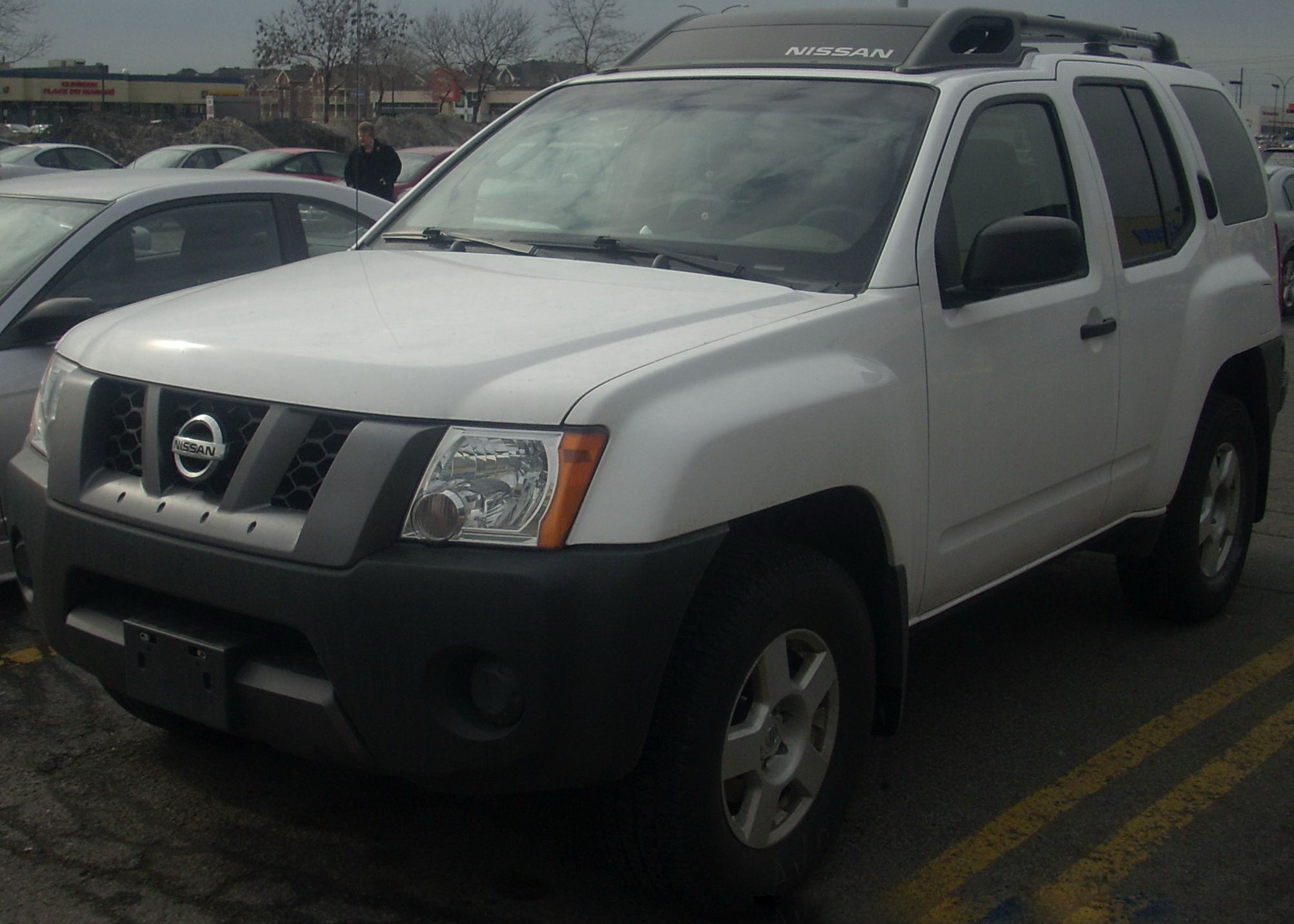
Nissan Exterra
"and it's a bad catalytic converter on a two thousand and four Exterra there are two cats, and the one we were concerned with was the one that is monitored, or the one that the two sensors worry about, is another way of saying it is that the one in the exhaust manifold, so that had to be changed."
They’re working on a Nissan Exterra that has a check engine light. The problem is in the exhaust system: a catalytic converter isn’t working properly, and the shop is replacing the specific one that the car’s sensors watch.
This Nissan Exterra is being diagnosed for an emissions-related check engine light caused by a failing catalytic converter. The key detail is that there are two catalytic converters, and the diagnosis targets the one monitored by the exhaust sensors (including the one in the exhaust manifold area).
cat efficiency code
"had to check engine light on on a P zero four to twenty, which is a cat efficiency code, and diagnosed it and it's a bad catalytic converter on a two thousand and four Exterra"
This is a code that tells the car’s computer the catalytic converter isn’t doing its job well. The sensors compare what comes out of the exhaust to what should be happening after the converter.
A “catalyst efficiency” (cat efficiency) code means the car’s computer thinks the catalytic converter isn’t cleaning exhaust gases as well as it should. It’s typically triggered by sensor readings before and after the catalytic converter that don’t show the expected change.
catalytic converter
"and diagnosed it and it's a bad catalytic converter on a two thousand and four Exterra there are two cats, and the one we were concerned with was the one that is monitored"
A catalytic converter is a part in the exhaust that helps clean up the car’s emissions. If it fails, the car can detect it and turn on the check engine light.
A catalytic converter is an emissions-control device in the exhaust that uses chemical reactions to reduce harmful pollutants. When it fails, the engine computer can set diagnostic trouble codes and turn on the check engine light.
evaporative emission system
"it's set a pending fault code in the evaporative emission system P zero four to four to two small leak."
This system deals with fuel vapors from the gas tank so they don’t escape into the air. If there’s a small leak, the car can detect it and store a code.
The evaporative emission system captures fuel vapors from the tank and routes them for combustion instead of venting them to the atmosphere. When it detects a leak (like a small leak), it can set codes and affect readiness/monitor testing.
pending fault code
"during the course of road testing getting monitors to run, it's set a pending fault code in the evaporative emission system P zero four to four to two small leak."
A pending code is like a “maybe” warning from the car. The problem showed up during testing, but the car hasn’t confirmed it strongly enough to fully lock in the fault.
A pending fault code is a diagnostic code the car stores when it detects a problem during a drive cycle, but it hasn’t met the criteria to “confirm” the fault yet. This often happens when the issue is intermittent or the conditions for a full confirmation aren’t met.
evapp monitor
"Because keep in mind, if you're a regular listener, you know you've heard me say that evaporative emissions monitors won't run on the majority of cars between when it's less than a quarter or more than three quarters of a tank."
An evaporative (evap) monitor is part of the car’s emissions diagnostics that runs only under specific driving conditions. If the car doesn’t see the right conditions (for example, fuel level range and trip type), the evap monitor may not run and can leave codes as pending or unset.
fuel tank rusted away around the top where the sending unit sits
"diagnosed it, and the gas tank was bad. The fuel tank rusted away around the top where the sending unit sits, and it's a really poor design."
If the fuel tank rusts near the fuel level sensor (sending unit), it can cause problems with what the car thinks is happening. Here, the shop believes the rust contributed to the evap system leak warning.
Rust around the top of the fuel tank near the sending unit can cause fuel-level and evaporative system issues, because the tank area is exposed and structurally vulnerable. In this case, the shop links the tank’s rust condition to the evaporative emissions leak code behavior.
P0442
"About seven months ago, the vehicle came in one time for a check engine light scanned it P zero four four two small leak... When I was driving it and it started to tell me upending four four to two and it came up again."
P0442 is a check-engine code. It usually means the car’s emissions system found a small leak, often related to the fuel-vapor system.
P0442 is an OBD-II diagnostic trouble code indicating a small EVAP system leak. In this segment, the host explains how the vehicle initially had a small leak code, then later the car’s catalytic-converter-related fault appeared after the EVAP monitor finally ran.
check engine light
"About seven months ago, the vehicle came in one time for a check engine light scanned it P zero four four two small leak."
The check engine light is the dashboard warning that something in the engine or emissions system needs attention. The mechanic scans it to find the specific code.
The check engine light is the driver-facing warning that the engine control unit has stored a fault code. In this segment, it’s used as the trigger for scanning codes like P0442 and later for the reappearance of emissions-related faults.
fuel cap
"The gas tank at that time, the fuel cap, I'm sorry, the gas cap at that time wasn't on properly. It didn't seat right, So I screwed the cap on right."
The fuel cap helps seal the fuel system so vapors don’t leak. If it isn’t tightened or seated right, the car can think there’s an EVAP leak.
The fuel cap is part of the EVAP system and must seal properly to prevent fuel vapors from escaping. The host notes that the fuel cap wasn’t seated correctly at the time of the earlier scan, then he reseated it.
smoke a system
"Do I recommend to diagnosis? Do I go through one hundred and fifty six dollars chart to smoke a system and go through the usual suspects and look for an EVAP leak that may not be there."
“Smoke a system” means putting special smoke into the car’s emissions/fuel-vapor lines to see where it escapes. It helps pinpoint leaks, but it costs time and money.
“Smoke a system” is a diagnostic method where technician introduces smoke into a vehicle’s EVAP plumbing to find where it leaks. The host is weighing whether to do this expensive diagnostic step versus letting the car run long enough for the EVAP monitor to confirm the issue.
EVAP monitor
"then after the cat fault, the conditions were right, it finally ran the EVAP monitor And wouldn't you know what happened?"
The EVAP monitor is the car’s self-check for leaks in the fuel-vapor emissions system. It only runs when the car’s conditions are right, so the warning may not show up immediately.
The EVAP monitor is the vehicle’s onboard test that checks the evaporative emissions (fuel-vapor) system for leaks. Here, the host emphasizes that the EVAP monitor only runs when specific conditions are met, which is why the code didn’t repeat until later.
Powerframe Batteries
"Welcome back, ron Ni and the car doctor. By the way, stick around because down around the bottom of the hour, we're gonna be talking to the folks from Powerframe Batteries, talking a little bit about some of the expected battery technology..."
Powerframe Batteries is a battery company. They’re going to talk about what battery technology is like now and how to pick the right battery when it gets cold.
Powerframe Batteries is the company the hosts say they’ll speak with about battery technology. The discussion is framed around how battery tech has improved and how to choose a battery for winter conditions.
battery technology
"stick around because down around the bottom of the hour, we're gonna be talking to the folks from Powerframe Batteries, talking a little bit about some of the expected battery technology... also a little bit of common sense on picking a battery for this coming winter..."
“Battery technology” means how batteries are built and what materials they use. The host is saying they’ll explain how improvements over time help batteries work better, especially when it’s cold.
“Battery technology” refers to the design and chemistry of batteries and how those changes affect real-world performance. In this episode, it’s tied to how batteries have improved over time and how that impacts starting and reliability in cold weather.

Subaru
"let's get over and talk to Greg Greenwich, New York, twenty eleven Subaru and some issues with noise. Greg, Welcome to the Car Doctor, Sir."
They’re talking about a Subaru—specifically a 2011 Subaru Forester. The conversation is about a customer’s issues (including noise), which is the kind of problem a shop diagnosis would focus on.
The host introduces a case involving a Subaru, specifically a 2011 Subaru Forester. This matters because noise complaints and cold-weather battery behavior often show up together in real-world drivability troubleshooting.
oil pressure
"We just don't startup on a cold morning or any morning after it sits all night. It has a good noise, almost like it's dry. It's not getting any oil pressure."
Oil pressure is how strongly the engine oil is being pumped around to lubricate parts. If oil pressure is low or missing, some parts may not get lubricated right away, which can cause noisy operation—especially on cold starts.
Oil pressure is the force of pressurized engine oil circulating through the engine to lubricate moving parts. If the engine “isn’t getting any oil pressure,” components like tensioners may not get the lubrication they need, which can lead to startup rattle and accelerated wear risk.
left hand tensioner
"And my neighbor of mine did a all data scan and he says, oh, yeah, that's coming up as the left hand tensioner needs to be changed out, something to do with it's not getting lubricated right, which is great."
A tensioner is a part that keeps a chain or belt tight. If it isn’t working right or isn’t getting proper lubrication, it can make noise and may affect how the engine’s timing components behave.
A tensioner is a component that keeps tension on a chain or belt so it doesn’t slack. In this context, the “left hand tensioner” is being discussed as a likely cause of lubrication-related noise and a potential timing-related issue.

Chrysler Saratoga
"...to anything Vermont, subru and Glens Falls and in Saratoga, all three dealerships all that's fine, that's no..."
The Chrysler Saratoga is an older Chrysler model, from a time when cars were built differently than today. If someone talks about it, it’s usually because older cars need special care and parts can be harder to maintain. The discussion may be about how it’s been cared for or what problems to expect with age.
The Chrysler Saratoga is a nameplate from Chrysler’s past, typically associated with older full-size cars. It may come up in a podcast because classic and vintage models often have unique parts, age-related wear, and maintenance challenges compared with newer vehicles. The transcript’s dealership and location references suggest it was part of a broader discussion about specific cars and their histories or service needs.
bulletin
"Let me let me ask you this, Greg, when when you look at this or when they when they look at this and you talk to them, do you bring up the bulletin do you have convert because you're right, there's there's actually two bulletins... Uh you know it. To me, it's a mark on the company. It's what Subaru is"
A bulletin is an official notice from the car maker about a known problem. It explains what to look for and what repair to do, even if the maker says it’s not dangerous right away.
An automotive “bulletin” here refers to a manufacturer technical service bulletin (TSB), which documents known issues and recommended inspection/repair steps. The speaker is contrasting two different TSBs that both claim the condition is “non detrimental,” while still offering repairs for customers who want to address noise.
timing chain tensioner
"The other bulletin is ten dish oh, seven dish eleven. That's more common, and that's the one that deals with the timing chain tensioner. That one also says this is non detrimental, which really boggles my mind."
The timing chain tensioner keeps the timing chain tight. If it doesn’t work well—especially when the engine is cold—it can cause rattling noises and can be a sign of a timing-related problem.
The timing chain tensioner is a hydraulic (oil-pressure-dependent) device that maintains proper tension on the engine’s timing chain. If it fails or doesn’t build pressure quickly, the chain can rattle on startup and can contribute to timing noise or wear.
warranty expires
"Car companies need to wake up and realize that the buying experience doesn't stop when the warranty expires. ... warranties up. That's it."
They’re saying that once the warranty period is over, the car company shouldn’t just stop caring. If problems show up after the warranty, the owner still needs help.
The speaker argues that car companies shouldn’t treat the end of the warranty as the end of responsibility. They frame it as a “buying experience” problem: problems can still arise after coverage ends, and owners still need support.
exhaust noises
"Let's go over and talk to Stanley Ridge with New Jersey ninety three Cadillac Fleetwood and some exhaust noises. Stanley, you're on with the car doctor, sir."
Exhaust noises are weird sounds coming from the car’s exhaust system. They can happen when something in the exhaust is loose, leaking, or wearing out.
“Exhaust noises” refers to abnormal sounds coming from the exhaust system, such as rattles, hissing, popping, or loud droning. Different noise types can point to issues like exhaust leaks, failing mufflers, or problems with exhaust components.

1993 Cadillac Fleetwood
"Let's go over and talk to Stanley Ridge with New Jersey ninety three Cadillac Fleetwood and some exhaust noises. Stanley, you're on with the car doctor, sir."
The speaker transitions to a caller with a 1993 Cadillac Fleetwood, focusing on exhaust noises. This is a specific classic American luxury car, and the episode uses it to discuss how noises can signal problems even when the car otherwise runs.
engine has to come out of the car
"If the engine has to come out of the car and he doesn't want to do that, he's got to tell you that not a lot of shops pull engines anymore, and that could be part of the problem too."
Some repairs are so hard to reach that the mechanic has to remove the engine. That takes a lot more time and money, so it’s important to know exactly why it’s necessary.
When a repair requires the engine to come out, it usually means the job can’t be done safely or effectively with the engine in place. It’s a major labor step that increases cost and time, so shops may be reluctant unless the diagnosis is clear.
exhaust manifold
"It could be that the bolts are stuck in the exhaust manifold and they're not going to come out and they have to be drilled out of the heads, and then that becomes an issue."
The exhaust manifold is where the engine’s exhaust gases first gather before going down the exhaust pipe. If the bolts there get stuck, the repair can become harder and take more work to fix safely.
The exhaust manifold is the part bolted to the engine that collects exhaust gases from multiple cylinders and routes them into the exhaust system. If bolts seize there, it can turn a normal repair into a much bigger job because the manifold may need to be removed or the fasteners freed.
drilled out
"It could be that the bolts are stuck in the exhaust manifold and they're not going to come out and they have to be drilled out of the heads, and then that becomes an issue."
If a bolt is rusted or seized and won’t come out, a mechanic may drill it out. It’s a more involved fix, because they have to be careful not to damage nearby parts.
“Drilled out” refers to removing stuck fasteners by drilling through them when they can’t be unthreaded. In engine work, this often means extra labor and careful machining/cleanup to avoid damaging surrounding metal.
repetitive cycling
"It comes from repetitive cycling... so that battery constantly going in a discharge recharge cycle, and then you have heat heats a catalyst and it accelerates the corrosion process..."
It means the battery keeps going through the same routine: charge, use, charge again, and so on. That repeated use can wear out the battery faster, especially by encouraging corrosion inside.
Repetitive cycling is repeatedly charging and discharging a battery over and over. The speaker ties it to faster corrosion of the battery’s internal grid because each cycle involves chemical activity and heat.
powerframe grid technology
"So powerframe technology is designed to address these stress points and it gives you up to sixty six percent more corrosion resistant than other grid designs... Well, you know, powerframe has actually been around for over fifteen years..."
This is a special design inside a battery. The idea is to make the battery’s internal metal structure last longer by resisting rust (corrosion) and damage from shaking and repeated charge/discharge cycles.
“Powerframe grid technology” refers to a battery internal grid design meant to resist corrosion and mechanical damage. In this discussion, it’s presented as using a reinforced grid/frame and a specific manufacturing approach to improve durability in real-world cycling and vibration.
cold cranking amps
"the days of picking a battery by cold cranking amps... back twenty thirty years ago when we actually had a crank a car..."
Cold cranking amps (CCA) is a number that tells you how strongly a battery can crank the engine when it’s very cold. The point here is that people used to shop mainly by that number, but now battery durability under repeated use matters more.
Cold cranking amps (CCA) is a battery rating for how much current it can deliver to crank an engine in cold temperatures. The speaker contrasts older buying habits (choosing by CCA) with newer concerns about battery life under repetitive cycling.
start stop technology
"look at start stop technology now, right the car starts in the blink of an eye... and that the battery has no real load on it compared to something thirty years ago..."
Start-stop is the feature that turns the engine off when you’re stopped and turns it back on when you’re ready to go. It changes how hard the battery has to work compared with older cars.
Start-stop technology automatically shuts the engine off when the car is stopped (like at a traffic light) and restarts it when you press the accelerator. The speaker uses it to argue that modern vehicles reduce starting load compared with older cars, changing how the battery is stressed.
vibration
"So vibration is still an issue though, right... equate vibration to hitting potholes... impact will have a detrimental effect on the battery... vibration can then fracture some of these areas of the grid..."
Vibration is the shaking a battery experiences from the car’s movement and road impacts. Over time, that shaking can help crack or weaken internal battery parts, which can reduce capacity or cause electrical problems.
Vibration is a mechanical stress that can damage a battery’s internal grid over time. The speaker explains that vibration can fracture fatigued areas of the grid (especially when corrosion has weakened it), potentially leading to short circuits and reduced capacity.
short circuits
"if that happens, that can lead to short circuits in the battery, and it also diminishes the capacity of the battery... reinforced frame around the grid itself, and that protects the frame from warping, and that also leads to short circuits."
A short circuit is when electricity takes an unintended shortcut inside the battery. In this explanation, damaged or warped internal parts can create that shortcut, which can harm the battery and reduce its life.
A short circuit in a battery is an unintended electrical path that bypasses the normal internal resistance. Here, the speaker links short circuits to grid damage from corrosion and vibration, and also to grid warping that can bring conductive parts into contact.
capacity
"enough of that will impact the capacity and the life of the battery... it also diminishes the capacity of the battery."
Capacity is how much “usable energy” the battery can provide. If corrosion or damage happens inside, the battery can store less energy and won’t last as long.
Capacity is how much electrical energy a battery can store and deliver before it’s depleted. The speaker says corrosion and vibration can reduce capacity, which shortens usable battery life.
metal fatigue
"manufacturing process of powerframe is basically taking a bar of lead, rolling and compressing that lead composite to precise thickness... then will you resist corrosion and metal fatigue."
Metal fatigue is what happens when metal gets stressed over and over until it starts to crack. The speaker is saying the battery’s internal metal is made to better resist that repeated stress.
Metal fatigue is progressive weakening and cracking of metal due to repeated stress cycles. The speaker describes the battery grid manufacturing approach as improving resistance not only to corrosion but also to metal fatigue, which helps prevent fractures that can cause shorts.
power frame manufacturing
"So let me ask you this something we don't talk about a lot here on the Car doctor. Power frame manufacturing, [1477.2s] the way they make powerframe grid technology, if I can say it that way, but power frame manufacturing plants I understand, operate and produce fewer greenhouse gases."
They’re talking about how a battery’s internal metal parts are made. The host says the newer way is cleaner than the older method that requires melting lead.
“Power frame manufacturing” refers to how the battery’s internal grid is produced. In this episode, it’s contrasted with traditional grid casting, with the claim that the newer process reduces environmental impact during production.
greenhouse gases
"Power frame manufacturing plants I understand, operate and produce fewer greenhouse gases. [1488.0s] That's correct. So if you look at the you know,"
Greenhouse gases are pollution gases that help trap heat in the atmosphere. The host is saying the battery-making method produces fewer of these gases.
“Greenhouse gases” are emissions that trap heat in the atmosphere and contribute to climate change. The episode uses this term to quantify the claimed environmental benefit of the power frame manufacturing process.
casting
"So if you look at the you know, [1490.8s] the conventional way of making grids was casting, so that grid casting required to melt lead down and pour the molten lead into molds. Well, that process of melting lead"
Casting is an older manufacturing method where metal is melted and poured into a mold. The host says melting lead creates more pollution than the newer approach.
“Casting” is the traditional manufacturing approach where molten lead is poured into molds to form battery grids. The episode claims this requires melting lead, which releases more environmental gases than the alternative process.
power frame rolling out lead into a strip
"So when [1510.0s] I talked earlier about the power frame rolling out lead into a strip and then it gets stamped, and all that material that gets punched out is then recycled, so there's no gases that are coming from melting down the lead, and all the waste is recycled, so it it eliminates twenty percent of greenhouse gases during the manufacturing process."
Instead of melting lead and pouring it into molds, they roll lead into a thin strip and stamp it into the needed shapes. The show says the leftover pieces get recycled, so the process is cleaner.
The episode describes a manufacturing method where lead is rolled into a strip and then stamped into grid shapes. It also claims the punched-out material is recycled, which reduces emissions associated with melting lead and reduces waste.
how do the consumers determine what has power frame good technology
"Okay, cool, listen, neat stuff. I think it's got to [1572.8s] be comforting for people to know they have alternatives and there are ways to improve on their next battery purchase by what they can buy. They can buy into the [1580.3s] better technology now."
They talk about how to tell if a battery uses the Powerframe technology. The host gives simple steps like checking the label and where to shop.
This segment focuses on how listeners can identify whether a battery uses the Powerframe grid technology. It includes guidance on looking for the Powerframe logo and where to buy it.
Advanced Autoparts
"Well? [1550.4s] Currently, Powerframe is found in battery sold by Advanced Autoparts in their carqust locations. So all you have to do"
Advanced Autoparts is a store chain the host mentions as selling the Powerframe batteries. They suggest checking the battery label for the Powerframe logo.
Advanced Autoparts is named as a retailer that sells batteries containing the Powerframe technology. The episode frames it as a place where consumers can look for the Powerframe logo on the battery label.
Carquest
"So all you have to do [1557.5s] is look for that Powerframe logo on the label and at Advanced Autoparts stores you can find that in their Gold and Platinum line of batteries, and at Carquest and their silver, gold and Platinum."
Carquest is another store the host names that sells Powerframe batteries. They say you can find it in certain battery tiers at that retailer.
Carquest is mentioned as another retailer carrying batteries with Powerframe technology. The host says it’s available in their silver, gold, and Platinum battery lines.

Aston Martin Valhalla
"... zero nine nine zero zero. Next up is Robbie from Valhalla, New York with some questions and comments. Robbi..."
The Aston Martin Valhalla is a very high-end sports car made for fast driving. Because it’s a specialized performance car, repairs and maintenance can be more involved than on regular cars. In a podcast, it’s likely mentioned because someone asked about ownership, reliability, or service.
The Aston Martin Valhalla is a high-performance supercar from Aston Martin, built to deliver track-focused driving with advanced engineering. It’s a notable topic because it’s a modern, specialized car where ownership can involve expensive maintenance and careful attention to service needs. The transcript’s “Valhalla, New York” mention suggests the car was part of a question-and-answer segment or listener discussion.

Dodge Charger
"...nty ten, Toyota twenty ten, Mercedes seventy two, charger of fifty five to four to seventy two, Mercedes bu..."
The Dodge Charger is a car designed for performance, with a focus on power and acceleration. Because it’s offered in many different versions over the years, the things that need repair can vary. A podcast might bring it up to explain what to check or how it holds up with ownership.
The Dodge Charger is a full-size performance-oriented sedan that’s known for strong power and a long model history. It’s frequently discussed in automotive podcasts because different model years can have different engine and drivetrain setups, which affects maintenance and repair patterns. In the transcript, it appears alongside multiple other vehicles and years, suggesting the conversation may be about durability, issues, or what owners should expect.

Ford Ranger
"...ix, BMW twenty eleven, Mini Cooper twenty eleven, Ranger Over twenty ten, Toyota twenty ten, Mercedes seve..."
The Ford Ranger is a pickup truck that’s built to carry cargo and handle everyday driving. People talk about it a lot because it can be used hard, so regular maintenance matters. In a podcast, it may be mentioned for typical repairs or what to watch for on certain model years.
The Ford Ranger is a midsize pickup truck known for being practical and widely used for work and everyday driving. It often comes up in car-doctor discussions because owners may rack up high mileage and use the truck for towing or hauling, which can bring up maintenance and wear items. The podcast context suggests it was mentioned alongside other model years, likely in relation to reliability or common service needs.
scan tool
"The scan tool I had in mind because I wanted to talk about this. I thought it was a good conversation."
A scan tool is a gadget that connects to your car and reads the computer’s error messages. It can also show real-time sensor readings so you can tell what’s going on instead of guessing.
A scan tool is an electronic device that plugs into a car’s diagnostic port to read fault codes and other live sensor data. It’s how a technician figures out what a car’s computer thinks is wrong, even when the check-engine light isn’t obvious.
CRP two twenty nine android based touchscreen
"I'm thinking you want to go to LAUNCHTECHUSA dot com and look at the launch scan tools, specifically the CRP two twenty nine android based touchscreen."
This is a specific diagnostic tablet-style scan tool model. The host says it can read trouble codes and also do certain reset functions after maintenance.
The “CRP two twenty nine” is a specific LAUNCHTECHUSA scan tool model described as an Android-based touchscreen unit. The host claims it can pull codes, show a data stream, and perform functions like oil light resets and steering angle resets.
LAUNCHTECHUSA dot com
"I'm thinking you want to go to LAUNCHTECHUSA dot com and look at the launch scan tools, specifically the CRP two twenty nine android based touchscreen."
This is the website for a company that sells car diagnostic tools. The host is recommending their scan tools for reading codes and doing service-related resets.
LAUNCHTECHUSA is the brand/vendor being recommended for scan tools in this segment. The host is pointing listeners to a specific product line from that company rather than discussing scan tools in general.
data stream
"All right, good solid tool, it'll pull codes, it'll give you data stream."
A data stream is the live information coming from the car’s sensors while the car is running. A scan tool shows it so you can see what the car is doing right now, not just stored error codes.
A data stream is the continuous stream of live measurements a scan tool pulls from the car’s modules—things like sensor readings and calculated values. Watching the data stream helps diagnose intermittent issues and verify whether a repair actually fixed the underlying problem.
oil light resets
"Now you know, it's it also does some of the other things that a lot of the other scan tools won't do oil light resets."
After you change the oil, the car often needs to be told that the service is done. “Oil light reset” is what clears the reminder so it stops showing you that the oil is due.
Oil light resets are procedures that clear the vehicle’s “oil change required” reminder in the instrument cluster after an oil service. Many cars track service intervals electronically, so the light may stay on until the reset is performed with a scan tool.
steering angle resets
"It'll do steering angle resets, because I'm also thinking maybe somewhere down in the future you're going to have need for some of that."
Steering angle reset is a calibration step that tells the car how straight-ahead steering should be. If it’s not calibrated, the car’s safety systems can get confused about how you’re turning.
Steering angle resets recalibrate the car’s steering position sensor so driver-assistance systems (like stability control and lane/driver aids) can interpret steering inputs correctly. This is commonly needed after work that affects alignment or steering components, such as replacing parts or performing certain alignment procedures.
flooding
"and it was having trouble idling right, and it was like almost like a missile. It was flooding, or you know, it was more flooding because I could smell the fuel right at the end of the cut."
Flooding means the engine is getting too much fuel. When that happens, the car can run rough or stall, and you may even smell gasoline.
Engine flooding means too much fuel is getting into the combustion process, so the mixture becomes overly rich and the engine can’t run smoothly. The host also mentions smelling fuel, which supports a rich/flooding condition rather than a purely mechanical noise.
idling
"and I went to pick it up two weeks ago, and it was having trouble when they were pulling out of the garage when they're it was having trouble idling right, and it was like almost like a missile. It was flooding, or"
Idling is what the engine does when the car is sitting still and running. If it’s struggling to idle, it usually means the engine isn’t getting the right fuel/air mix.
Idling is how a car runs while it’s stopped with the engine still on, typically at a low, controlled RPM. If a classic car is “having trouble idling,” it often indicates a fueling/air issue (like a rich mixture) or an ignition/vacuum problem.
fuel pump
"Long story short. They're telling me that they've replaced the fuel pump multiple times with a with a new pump that obviously knew is never ever worked."
The fuel pump is the part that sends gas from the gas tank to the engine. If it’s not working right, the engine can get too much fuel (flooding) or not enough, and the car won’t run properly.
A fuel pump is the component that pressurizes and moves gasoline from the tank to the engine’s fuel system. If it’s failing or incorrectly matched, it can cause symptoms like flooding, hard starts, or poor running because the engine isn’t getting the right fuel pressure/flow.
fuel regulator
"And now he's telling me that it might be a fuel regulator as well. ... Yeah, why would you need a regulator on this car?"
A fuel regulator helps keep fuel pressure steady. If pressure is too high, the engine can get flooded with extra fuel, so the car may run badly or not at all.
A fuel regulator controls fuel pressure in the fuel rail/system so the engine receives a consistent pressure regardless of driving conditions. If fuel pressure is too high, it can contribute to flooding (too much fuel entering the engine), which is why the host is questioning whether a regulator is the real culprit.
dirt in the system
"You know, dirt in the system is causing the needle to flood and you know, causing the car up to drip and creating a flooding out issue."
Dirt or debris in the fuel system can clog or interfere with parts that control fuel flow. If those parts don’t work smoothly, the engine can get too much fuel and flood.
“Dirt in the system” means contamination in the fuel lines, filters, or metering components that can interfere with proper sealing and flow. Contaminants can cause valves/needles to stick or not seat correctly, leading to incorrect fuel delivery and flooding.
fuel pressure
"And I guess what he's thinking is high fuel pressure is pushing the needle off its seat."
Fuel pressure is how hard the fuel system is pushing gas to the engine. Too much pressure can cause the engine to receive more fuel than it should, leading to flooding or rough running.
Fuel pressure is how strongly the fuel system pushes gasoline through the lines and into the injectors/carburetion. If fuel pressure is abnormally high, it can force fuel past intended sealing points or overwhelm metering, contributing to flooding.
needle
"And I guess what he's thinking is high fuel pressure is pushing the needle off its seat."
The needle is a small part that helps control how fuel flows and seals it off. If it doesn’t seal correctly, fuel can leak when it shouldn’t, which can flood the engine.
The “needle” refers to a metering/sealing tip used in some fuel delivery designs to regulate flow. If the needle doesn’t seal properly—due to contamination, wear, or excessive pressure—it can allow fuel to leak into the wrong place and cause flooding.
go back to basics
"Listen, older car. You got to go back to basics. And what I would probably do is the fact that the car sat a couple of months..."
“Go back to basics” is a diagnostic approach: start with fundamental checks (like fuel cleanliness and system condition) before replacing parts repeatedly. The host is arguing that if the fuel system is contaminated or the fuel sample is dirty, swapping pumps won’t fix the root cause.
Request an Explanation
Heard something you'd like explained? We'll add it to this episode.
Sign in to request explanations for terms you heard.
Want to learn more?
Browse our glossary for plain-English explanations of automotive terms, jargon, and concepts.
Help improve this episode
See something that's not quite right? Our annotations are AI-generated and can sometimes miss the mark. Click the flag icon on any annotation to suggest a correction.