
Ron Ananian, The Car Doctor - Classic Car Doctor - September 19, 2015 - Hour 1
About this episode
Ron starts with a crank-no-start Suburban that turns out to be a false anti-theft event, then walks listeners through reset steps and scan-tool diagnosis. He moves into a high-mileage Mercury Marauder transmission discussion, stressing that repairs should be done right, not just cheaply. The hour also features a Superchips segment on tuners, fuel economy, towing, and warranty law, before ending with calls about headlight wiring on a damaged Cavalier and Toyota oil-consumption problems.
Talking to Myself, Tuning Chips & Oil Consumption Truths
From the archives — September 19, 2015.
Ron kicks off the hour in an unusual way—talking to himself (literally) while working through a real-world issue with an anti-theft system on one of his own vehicles. It’s a candid look at how even seasoned techs think through modern car problems.
The calls cover a wide range of issues, including a 2004 Mercury Marauder with transmission concerns, and a classic 1990 Chevy Cavalier where the owner wants to convert from a four-headlight setup to a two-headlight system.
Ron also sits down with Jim McGinn of PowerTeq to talk about performance programming and what modifying your vehicle’s computer really means for drivability and reliability.
Rounding out the hour, a caller with a 2006 Toyota RAV4 asks about a technical service bulletin addressing excessive oil consumption—leading to a broader discussion about manufacturer fixes, expectations, and what drivers should know.
A mix of real shop insight, listener questions, and straight talk you can use.
Car Advice. Done Right.
- Grab your Car Doctor gear – T-shirts & more at CarDoctorShow.com
-
Follow the wrench – Instagram @ronananian for shop life & behind-the-scenes
-
Watch & learn – Auto repair tips & videos on our YouTube Channel
-
Got a car question? Call the Car Doctor Hotline 24/7 – (855) 560-9900
-
Join the conversation LIVE – Saturdays 2–4 PM Eastern
See omnystudio.com/listener for privacy information.

Chevrolet Suburban
"I have a two thousand and four Chevy Suburban, really car out of the family fleet. It's probably the nicest. It's one of those vehicles. It hasn't been out in the snow."
They’re talking about a Chevrolet Suburban (a big family SUV). The whole call is about that specific SUV having a starting problem.
The speaker is describing a Chevrolet Suburban, a full-size SUV known for family use and long-term durability. In this story, it’s the specific vehicle that won’t start after a remote-start attempt.
four wheel drive
"I don't think I've turned the four wheel drive on in the past twelve years a half a dozen times. So when I tell you this vehicle is pampered, it's pampered."
Four-wheel drive means the car can send power to all four wheels for better grip. They’re saying they don’t usually use it, so the SUV mostly sees normal conditions.
Four-wheel drive (4WD) is a drivetrain setup that can send power to both the front and rear axles to improve traction. The caller mentions they rarely use it, which helps explain the vehicle’s typical operating conditions.
remote start
"I was at a seminar the other night down in Secaucus, New Jersey for AC DELCA. They were giving us some training on scan tools... I came out of the meeting, went to do a remote start, and I was a little far away."
Remote start lets you start the engine without being right next to the car. Here, the remote start attempt seems to trigger a problem where the engine keeps trying to start but won’t actually run.
Remote start is a feature that starts the engine from a distance (often via a key fob or app) so the cabin can warm up or cool down before you get in. In the story, the remote start attempt leads to the engine cranking continuously and then failing to start.
scan tools
"They were giving us some training on scan tools and some of the newer scan tools in the marketplace. And I came out of the meeting..."
Scan tools are diagnostic devices used to read a vehicle’s onboard computer data and trouble codes. They’re commonly used to pinpoint why a car won’t start or why systems like ignition, fuel, or sensors aren’t behaving correctly.
AC DELCA
"I was at a seminar the other night down in Secaucus, New Jersey for AC DELCA. They were giving us some training on scan tools..."
AC Delco is a well-known car-parts brand. The caller is saying they were at an AC Delco seminar where they learned about diagnostic equipment.
AC Delco (spoken here as “AC DELCA”) is an automotive parts and service brand, commonly associated with GM-related components and aftermarket parts. The speaker mentions a seminar with training on diagnostic tools from that organization.
cranking
"when I got there, the vehicle was just cranking and it wouldn't start. It was just like a continuous crack. I finally got it to stop cranking..."
Cranking is when the starter spins the engine. If the engine keeps cranking but won’t start, something is preventing ignition or fuel from working.
Cranking refers to the starter motor turning the engine over. The caller describes continuous cranking with no start, which often points to issues like fuel delivery, ignition, or an immobilizer/security condition preventing start.
ignition
"unlocked it, got in the vehicle and found out that even with the key inserted in the ignition, the car wouldn't start."
The ignition is the part of the car that you use with the key to start it. They’re saying the key was in the ignition, but the car still wouldn’t start.
The ignition system controls starting and engine operation by coordinating signals to the starter, spark/ignition, and related controls. The caller notes that even with the key inserted in the ignition, the vehicle wouldn’t start, suggesting a start/authorization or system fault rather than a simple key position issue.
fuel pump
"me any dashboard warning lights on any weird notices that you received from the gauges? Did the fuel pump run? ... when I put the key in and went to start it, I did hear. I was able to tell the fuel pump was running. I could hear that from the back of the vehicle."
The fuel pump is what sends gas from the tank toward the engine. Mechanics often listen for it when you first turn the key to see if fuel delivery is working.
The fuel pump is the component that moves fuel from the tank to the engine. When it runs, you may be able to hear it briefly when you turn the key to the “on” position.
charging system voltage
"What sort of information will it give me? Did the gauges look normal? Where's charging system voltage? If you have a vault gauge? What any dashboard warning lights on?"
Charging system voltage tells you whether the alternator is keeping the battery charged. If it’s off, the car’s electrical system can act up.
Charging system voltage is the electrical output from the alternator while the engine is running. If it’s too low or too high, the battery may not charge properly and you can get warning lights or starting/electrical issues.
anti theft light
"As a matter of fact, I'd venture to say that the anti theft light was on and it was flashing. ... except the anti theft light was flashing quickly, which told me you're right, I was in a false anti theft event."
That anti-theft light is the car’s way of saying “I’m not sure this key is allowed.” If it flashes, the car may block starting even if you’re trying to drive it.
The anti-theft light is part of an immobilizer system that prevents the car from starting if the correct key isn’t recognized. A flashing pattern typically indicates an immobilizer/anti-theft event, which can be triggered by a key or system mismatch.
anti theft code
"Did you have anti theft code stored in the vehicle? ... Yes, I did, run I had, a matter of fact, I had more than just anti theft codes. I had"
The anti-theft code is like a permission check for your key. If the car doesn’t recognize the key’s authorization, it can stop the engine from starting.
An anti-theft code refers to the authorization information used by the immobilizer/anti-theft system to confirm the key is valid. If the code or key authorization doesn’t match what the car expects, the system can prevent starting.
computer was really confused
"...It didn't know which way was up. So what I did was I went back into the seminar... and I borrowed the tech two..."
The car’s computer can sometimes get mixed-up signals from sensors or other modules. When that happens, the car may act wrong, and the error codes help show why.
When the speaker says the computer was “confused,” they’re describing a control module receiving conflicting or invalid signals, leading to incorrect decisions (like refusing to start). In practice, scan data and fault codes reveal what inputs or modules aren’t agreeing.
GM factory scan tool
"...I borrowed the tech two from him, the GM factory scan tool, and he came out to the car with me... hooking up the scan tool, and we saw anti theft codes... cleared them..."
This is a GM-specific computer diagnostic tool used by GM-trained technicians. It can pull error codes from the car and sometimes clear them so the car can try again.
The GM factory scan tool is the brand-specific diagnostic tool used by General Motors technicians to communicate with GM vehicles’ control modules. It can read and clear diagnostic trouble codes and perform certain resets.
anti theft warning indicator
"...first things first, do what I did. Look at the dashboard? Is it giving you any information? Is the anti theft warning indicator on? And if you don't know which light is the anti theft warning indicator, boy, you've got a problem..."
The anti-theft warning indicator is a dashboard light that alerts the driver to a problem or active state in the vehicle’s security system. If it’s on (or not behaving as expected), it can indicate an immobilizer/key authentication issue that may prevent starting.
warning light
"There is a warning light there. Know what it means when it flashes. It may not be a symbol, it may be a color, It may be how fast it flashes or doesn't flash and stay on bright and solid."
A warning light is the dashboard’s way of telling you something needs attention. For anti-theft, the light’s behavior (flashing or staying on) can indicate whether the security system is active or has detected a problem.
An anti-theft warning light/indicator is a dashboard signal that communicates the security system’s status. The speaker notes it can vary by vehicle—flashing vs solid, and sometimes by color or symbol—so you need to interpret it based on the car’s manual or diagnostic info.
scantol routine
"Once I knew it was anti theft and I went into the scantol routine, what would I do if I were you?"
A scan tool is a device that plugs into the car to read trouble information. The “scantol routine” is basically checking what the car is reporting so you know what to do next.
The speaker refers to a diagnostic step using a scan tool to read what the anti-theft system is doing and why. In practice, this means connecting an OBD/diagnostic scanner to pull security-related information and fault codes.
timeout reset
"Most anti theft systems will go through a period timeout reset, meaning that if the light is blinking, you need to sit there, and you need to think of it like this."
A timeout reset is like the security system taking a short pause. Instead of repeatedly trying to start the car, you wait so the system can reset itself and then you try again.
A timeout reset is a built-in delay period where the anti-theft system temporarily stops trying to trigger events and waits before allowing another attempt. The speaker describes waiting about 15–20 minutes without touching anything so the system can “time out” and re-evaluate.
disconnect both battery terminals
"And if the suburb had gone into anti theft event, my next step would have been to disconnect both battery terminals, put a jumper wire between the two terminals, not the battery between the cables."
This means turning the car’s power off completely by removing the battery connections. It can reset the car’s electronics so the security system stops being “stuck” in a fault state.
Disconnecting both battery terminals is a way to fully power down the vehicle’s electronic control units (ECUs) so they reset. The speaker’s method is intended to clear the anti-theft system’s current state and allow the car to relearn/reinitialize after reconnecting.
jumper wire between the two terminals
"my next step would have been to disconnect both battery terminals, put a jumper wire between the two terminals, not the battery between the cables."
A jumper wire across the battery terminals helps drain the battery’s remaining charge. That makes it more likely the car’s computers fully reset when you reconnect everything.
Using a jumper wire between the battery terminals discharges the battery quickly to help bleed down capacitors and reduce residual voltage in the vehicle’s electronics. The goal is to ensure the ECUs lose power enough to reset rather than just partially reboot.
bled the computers down to nothing
"I would have put a jumper wire between the cables and sat there with it connected like that for eight to ten minutes. I would have bled the computers down to nothing."
This is about fully draining power from the car’s computers. Waiting long enough helps the electronics reset instead of staying in the same error state.
“Bleeding the computers down” means letting the vehicle’s electronic modules fully lose power so they reset completely. The speaker describes waiting 8–10 minutes to discharge the system before reconnecting and attempting a start.
cleared all the fault codes
"I would have taken away their memory, cleared all the fault codes, plugged the cables back in, and hopefully it would have started if it didn't, and for the record, if it didn't, I was prepared."
Fault codes are like the car’s log of what went wrong. Clearing them wipes that log so the car can try again with a clean slate.
Fault codes are stored diagnostic entries that identify what the car detected as a problem. Clearing them removes the stored history so the system can start fresh after the anti-theft condition is resolved.
AC Delco
"I had my triple eight card on the wallet. I had an eight hundred AC Delco folder in my glove compartment from when I serviced my own vehicle."
AC Delco is a well-known brand that makes car parts and service-related products. The host is saying he keeps AC Delco info/coverage handy in case his car breaks down.
AC Delco is an automotive parts brand commonly associated with General Motors’ original equipment and service parts. The speaker mentions AC Delco materials (a folder and roadside coverage) as part of his preparedness for breakdowns.
no start condition
"if that vehicle had to be towed in, if it were your car and it had to be towed in with a no start condition, knowing the maintenance was done does cut down on what you need to look at."
“No start” just means the car won’t start. When that happens, mechanics focus on the basics first—battery, starter, and whether the engine is getting fuel and spark.
A “no start condition” means the engine won’t start at all—typically the starter may not crank, or it cranks but the engine never fires. In diagnostics, it narrows the problem to systems like battery/charging, starter, ignition, fuel delivery, and engine sensors.
super Chips
"We've got an interview down around the bottom of the hour with the folks from super Chips. We're gonna be talking about performance and what you may be able to do to modify your vehicle."
Superchips is a company that makes aftermarket tuning tools for cars. They help adjust the car’s engine settings so it can feel more responsive when paired with other upgrades.
Superchips is an aftermarket automotive brand known for performance tuning tools and engine calibration devices. The host mentions them in the context of improving performance and supporting modifications by changing how the engine is controlled.
performance modifications
"We're gonna be talking about performance and what you may be able to do to modify your vehicle. Hopefully it's a little bit better than what I did to the suburban to get it to run..."
They’re talking about upgrades meant to make the car feel quicker or more responsive. It’s more than just maintenance—it's about changing how the car performs.
This segment is about performance modifications—changes made to improve how a car accelerates, responds, or drives. The host frames it as a discussion of what’s possible with tuning tools and upgrades.

Mercury Marauder
"“let's get over and talk to Peter and promote New York two thousand and four Mercury Marauder and some transmission questions… I have a two thousand and four Mercreamer order now.”"
They’re talking about their 2004 Mercury Marauder. They’re bringing up a driving issue and suspecting it might be related to the car’s transmission.
The speaker is describing a 2004 Mercury Marauder, a performance-oriented sedan from Mercury (a Ford brand). They’re using it as the basis for a transmission-related problem they noticed while driving.
transmission
"“So I was thinking maybe with something with the transmission… They test drove it… because we didn't feel anything and the computer is not throwing out any codes.”"
The transmission is what helps the engine’s power get to the wheels through different gear settings. If it’s acting up, you might feel vibration, slipping, or weird shifting.
A transmission is the drivetrain component that changes gear ratios so the engine can deliver power effectively at different speeds. When people say “transmission questions,” they usually mean shifting behavior, slipping, or vibration that could come from internal wear or fluid issues.
slippage
"“And then a week later I felt a little slippage, so I was concerned.”"
Slippage is when the transmission doesn’t “grab” properly, so the car may feel like it’s not accelerating smoothly. It can be caused by worn parts or problems with the fluid inside the transmission.
Transmission slippage is when the gears/clutches don’t fully lock up, so the engine revs can rise without the car accelerating as expected. It often points to worn friction material, hydraulic control issues, or incorrect/contaminated transmission fluid.
computer... codes
"“They test drove it. They said… we didn't feel anything and the computer is not throwing out any codes.”"
Cars have a computer that watches for problems and can save “error codes” when something goes wrong. If there are no codes, the problem might be happening only sometimes or might not be bad enough to trigger the warning system.
Modern cars use onboard computers to monitor sensors and transmission behavior, and they store diagnostic trouble codes (DTCs) when faults are detected. If no codes are present, the issue may be intermittent, mechanical, or not severe enough to trigger a warning.
fluid level was too high
"“they said that they saw too much fluid in the you know, in a flu level was too high.”"
If the transmission fluid is overfilled, it can cause the fluid to act wrong inside the transmission. That can lead to symptoms like slipping or rough behavior.
An excessively high transmission fluid level can cause aeration (fluid foaming) and improper hydraulic pressure, leading to shifting problems, vibration, or slipping. It can also indicate an overfill or contamination that changes how the fluid behaves.
water in here
"“And then they took the pan down and said, look, there's some water in here. There's some water in the”"
Finding water in the transmission fluid means the fluid got contaminated. Water can hurt how the transmission lubricates and works, so it needs to be diagnosed and fixed.
Water contamination in transmission fluid is a serious issue because it can reduce lubrication and interfere with the fluid’s hydraulic function. It often points to a leak or cooling-related problem, and it can accelerate internal wear if not addressed.
dipstick
"...I have checked the transmission, flew it on my own by taking out the dipstick. And the only thing I think is maybe I didn't push it all the way back until it clicked and was completely sealed..."
A dipstick is a small stick you pull out to check how much fluid is in the car. It’s used to make sure the fluid level is correct.
A dipstick is a measurement tool used to check the level and condition of fluids, such as transmission fluid. If the dipstick isn’t seated correctly after checking, it can lead to improper fluid levels or contamination.
radiator overflow
"...did anybody happen to look in the radiator or the radiator overflow? Could we be mixing coolant and trans flew it together inside the radiator and it's it's showing signs of."
The radiator overflow is part of the car’s cooling system that catches extra coolant when the engine gets hot. It helps keep the coolant level from getting too high or too low.
The radiator overflow (often part of the coolant reservoir system) helps manage coolant expansion and contraction as the engine heats up and cools down. If coolant and other fluids get mixed or if there’s a cooling-system issue, it can show up here.
coolant
"Could we be mixing coolant and trans flew it together inside the radiator and it's it's showing signs of. It in the trans..."
Coolant is the liquid that keeps the engine from overheating. It should stay in the cooling system—if it gets into the transmission system, that’s a red flag.
Coolant is the fluid that carries heat away from the engine through the radiator and cooling passages. It’s important that coolant stays in the cooling system; mixing it with transmission fluid can indicate a leak or cooler failure.
rebuild
"...their suggestion was that probably we need to rebuild soon and it would be twenty three hundred dollars."
A rebuild means the transmission is taken apart and fixed with new or repaired internal parts. It’s usually done when the problem is deeper than just dirty or low fluid.
A transmission rebuild is a major repair where the unit is disassembled and worn or failed internal parts are replaced or refurbished. It’s typically recommended when fluid service alone can’t fix the underlying wear or damage.
filter
"...they drained that as much condition food as they couldn't put in a new filter."
A transmission filter helps trap debris and contaminants in the transmission fluid. During service, replacing or cleaning the filter can improve shifting quality, but it may not solve issues caused by internal wear or cooler contamination.
shifting smoothly
"I've been driving it just to let you know for a couple of days now, and it seems to be shifting smoothly again. And there's no vibration and no slippage."
“Shifting smoothly” describes how consistently and gently the transmission changes gears without harshness or delays. It’s often used as a practical indicator that fluid condition, internal wear, and control issues are improving.
oil change
"You know, this is no different than saying, how cheap can you do an oil change? It's not how cheap, it's how right."
An oil change is when a shop drains the old engine oil and puts in new oil. It helps keep the engine running smoothly and helps it last longer.
An oil change is the scheduled replacement of engine oil and (usually) the oil filter. Fresh oil helps lubricate internal engine parts and carries away heat and contaminants so the engine can last longer.
trans rebuilt
"...at one hundred and sixty five thousand miles, you know, me saying that that car is going to need a trans rebuilt is like me telling the eighty five year old man, you know, time's running out."
“Trans rebuilt” means the transmission is repaired more thoroughly than a simple fluid change. It usually involves taking it apart and replacing worn or broken internal parts.
A “trans rebuilt” usually means the transmission is taken apart and repaired with replacement parts rather than simply serviced. Rebuilding is often chosen when wear is widespread or when the transmission’s internal components are failing, and it can be a cost-controlled alternative to replacing the entire unit.
short trips
"As long as you're doing short trips close to home, I think you're okay and you can kind of do that transmission in your time as the budget allows."
Short trips are when you drive only a little and don’t let the car fully warm up. That can be harder on fluids and can make problems show up sooner.
Short trips are driving patterns where the engine and transmission may not fully reach operating temperature. That can increase wear and reduce the effectiveness of oil and fluid conditioning, which may make transmission issues show up sooner or feel worse.
computer flashing
"Questions about chips and computer flashing and hey, how can I make my vehicle run better electric ironically? And we've reached out to the best in the business"
“Computer flashing” is when someone updates the car’s computer software. That can change how the engine behaves—like how it responds when you press the gas.
“Computer flashing” means updating or rewriting the vehicle’s electronic control unit (ECU) software. This is commonly done to change the factory tune so the engine and transmission operate differently under acceleration, load, and cruising.
Powertech
"we're going to talk to Jim McGinn, vice president of marketing for the folks over at Powertech, and we want to welcome Jim aboard today as we talk about chips and flesh"
Powertech is the company the guest represents. They make the electronic “chip” products they’re talking about in the episode.
Powertech is referenced as the company behind the “chips and flesh” technology being discussed. The host brings in Jim McGinn, Powertech’s vice president of marketing, to explain how these electronic upgrades work.

Challenger Hellcat
"...rformance path. You look at some of the cars, the Hellcat, the Camaro SS, the Corvettes, and they're trying..."
The Challenger is a Dodge car built for performance. It’s designed to be fast and exciting to drive, especially in terms of power. It’s often compared with other performance cars when people are choosing something quick.
The Challenger is a performance-focused muscle car from Dodge, known for strong engine options and a design aimed at straight-line speed and aggressive styling. It’s commonly discussed alongside other high-performance models when people talk about choosing a car for power and driving excitement. In the podcast context, it’s part of a comparison set for performance “path” choices.
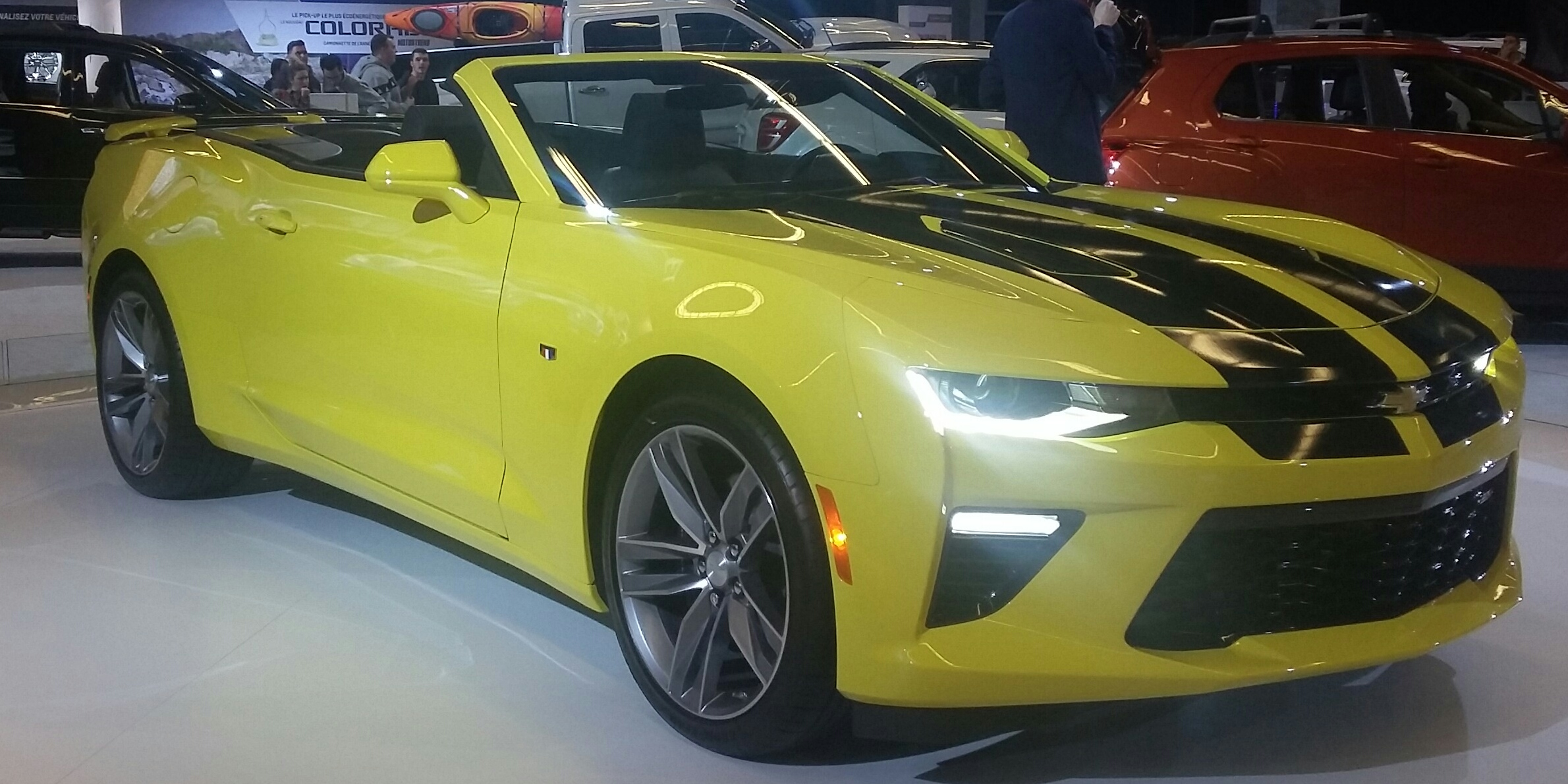
Chevrolet Camaro
"You look at some of the cars, the Hellcat, the Camaro SS, the Corvettes, and they're trying to get more out of less with electronics"
The Camaro SS is a performance version of the Chevrolet Camaro. In this conversation, it’s brought up to show how newer cars use electronics to get more out of the car.
The Camaro SS is mentioned as part of a lineup of performance cars that rely heavily on electronics. It’s used to support the idea that automakers are extracting more capability from existing hardware using electronic control systems.

Chevrolet Corvette
"You look at some of the cars, the Hellcat, the Camaro SS, the Corvettes, and they're trying to get more out of less with electronics"
Corvettes are high-performance Chevrolet sports cars. Here they’re mentioned as examples of cars that use electronics to improve what the car can do.
“Corvettes” is referenced alongside other performance models to illustrate the broader industry trend of using electronics to improve output and features. The episode frames this as automakers doing more with less through electronic control.

Ford Explorer
"if somebody's out there driving a twenty to fifteen Ford Explorer for conversations sake, is there something that chip and flesh technology can do for them"
The Ford Explorer is a common family SUV. The guest is saying that the same kind of electronic tuning used on fast cars can also be used to help regular drivers.
The Ford Explorer is used as a hypothetical example of a non–performance car that could still benefit from “chip” technology. The guest’s point is that electronic tuning isn’t only for hot rods—it can also be aimed at everyday drivability and efficiency.
tuner
"one of the biggest things that we see from our product registration data is that people gravitate towards a tuner or a chip per increased fuel economy"
A “tuner” is someone (or sometimes a tuning device) that adjusts the car’s settings. In this discussion, it’s used to change how the car runs, like improving efficiency.
A “tuner” is a person or device used to modify a vehicle’s calibration, often via ECU tuning. In the episode, it’s tied to customers using tuning to increase fuel economy or tailor drivability.
fuel economy
"people gravitate towards a tuner or a chip per increased fuel economy. There's a lot of people that do recreational towing"
Fuel economy is how far the car can go on a given amount of fuel. The episode says many people use tuning to try to get better MPG.
Fuel economy is how efficiently a vehicle uses fuel, typically expressed as miles per gallon (MPG) or liters per 100 km. The guest notes that many customers pursue tuning specifically to improve fuel economy.
recreational towing
"There's a lot of people that do recreational towing as well, whether they have a tobal boat and RV camper shift points is huge, particularly with gas customers when they're pulling hills"
Recreational towing means towing a trailer for fun—like a boat or camper. It puts extra strain on the engine, so the car’s settings may need to be adjusted for smoother pulling.
Recreational towing refers to pulling trailers for leisure activities, such as boats or RVs. The guest connects it to tuning needs because towing increases engine load and can change how the vehicle should shift and manage power.
shift points
"whether they have a tobal boat and RV camper shift points is huge, particularly with gas customers when they're pulling hills"
Shift points are when an automatic transmission decides to change gears. When you’re towing up hills, getting those timing points right can help the car pull better and feel less strained.
“Shift points” are the engine speed/load thresholds where an automatic transmission decides to upshift or downshift. The guest says tuning shift points is especially important when towing hills, because the transmission needs to stay in the right gear range under heavy load.
RPMs
"based in Ogden, Utah, so as you drive through the mountains you may see the RPMs up at four five thousand."
RPMs tell you how fast the engine is spinning. Higher RPMs usually happen when you’re climbing hills or accelerating because the engine has to work harder.
RPMs (revolutions per minute) measure how fast the engine is spinning. When the speaker says the RPMs go up to 4,500, they mean the engine is running at a higher speed while climbing or driving through the mountains.
down shifting
"Eliminating down shifting is a huge benefit that a chip or a programmer can provide you."
Downshifting means selecting a lower gear. That helps the car respond faster when you need power, like when you’re accelerating or climbing.
Downshifting is changing to a lower gear so the engine can spin faster and provide more immediate torque. The speaker frames eliminating downshifts as a benefit of tuning because it can make acceleration smoother and reduce driveline “hunting.”
programmer
"Eliminating down shifting is a huge benefit that a chip or a programmer can provide you."
A programmer is a device that lets someone update the car’s computer. Think of it like customizing the settings for how the engine and transmission run.
A programmer is a tool used to reflash or reprogram the vehicle’s engine/transmission control software. The goal is to tailor shift points and engine behavior to the driver’s needs or to support performance changes.
wide open throttle
"power and performance from zero to wide open throttle."
Wide open throttle means you’re pressing the gas all the way down. It tells the engine to deliver maximum power potential.
Wide open throttle (WOT) means the throttle plate is fully opened, commanding maximum airflow to the engine. It’s often used as a reference point for how much power the car can make under full acceleration.
third to fourth gear
"it's when you're going from third to fourth gear, or when you're coming on off the expressway getting up to speed."
That’s a specific upshift in the transmission. The point is that tuning can make the car shift more smoothly and feel more responsive when you’re speeding up.
This refers to specific automatic transmission shift transitions (3rd→4th). The speaker is saying tuning can improve how the car behaves during that gear change, especially when merging or accelerating.
chip flash
"chip flash add on performance seems to be becoming an extension of the manufacturers, and it's becoming a logical path for growth."
A chip flash is an ECU reflash that updates the factory software with new calibration. It’s used to change engine and sometimes transmission behavior for improved drivability or performance.
reading and clearing that code
"it's things like a maintenance manager or reading and clearing that code. What does that check engine light mean to me?"
This means using a scanner to find why the check engine light is on, then resetting it. If the problem is still there, the light will come back.
“Reading and clearing that code” refers to using an OBD-II diagnostic tool to retrieve and reset stored trouble codes. Clearing the code turns off the check engine light, but it doesn’t fix the underlying issue if the problem is still present.
maintenance manager
"it's things like a maintenance manager or reading and clearing that code."
A maintenance manager helps you keep up with service. It can track what the car needs and when, so you don’t miss routine upkeep.
A maintenance manager is a device feature that helps track service intervals and vehicle health information. In tuning/diagnostic products, it often pairs with reading vehicle data to remind owners when maintenance is due.
check engine light
"What does that check engine light mean to me?"
The check engine light is a warning that something may be wrong with the engine or emissions system. A scanner can read the specific reason.
The check engine light is the dashboard warning that the car’s engine/emissions control system has detected a fault. It’s typically triggered by diagnostic trouble codes stored in the vehicle’s computer.
RPM band
"see where you may be experiencing a flaw in your vehicle throughout the RPM band."
An RPM band is just a slice of engine speed. The idea is to see if the car feels or runs differently at certain parts of the rev range.
An RPM band is a range of engine speeds (for example, 2,000–3,500 RPM) where you can evaluate how the car behaves. The speaker is saying data logging can reveal issues that only show up at certain engine speeds.
CSV file
"whether it's on an in cap monitor or exporting it to a CSV file, even to really see where you may be experiencing a flaw in your vehicle throughout the RPM band."
A CSV file is a way to save data so it can be opened in a spreadsheet. It helps you look at what the car was doing over time.
A CSV file (comma-separated values) is a spreadsheet-friendly text format used to export logged vehicle data. Exporting to CSV lets owners analyze graphs or share data with tuners.
dash
"manufacturers will continue to offer more things that you'll be able to view on the dash and on Our goal as a company is to really define performance for the customers."
The dash is the screen and gauges behind the steering wheel. They’re saying more data can be shown there now.
“Dash” here means the instrument panel display where the driver can view vehicle data. The speaker is emphasizing that modern tuning/monitoring can show more information directly to the driver.
real time
"Sometimes that means more horsepower, sometimes it means more visibility into what's going on in real time, because."
Real time means data is updated instantly as the vehicle is being driven, rather than after the fact. The speaker is arguing that better visibility into what’s happening while you drive improves the tuning experience.
altitude
"And the other thing that a lot of people maybe don't take into consideration is their altitude and their terrain."
Altitude affects engine operation because air density changes with elevation, which can alter fueling and combustion. The speaker says they do elevation testing so the tune works correctly at different heights.
custom tune
"to make sure that when we provide quote unquote a can tune in our devices, that it actually is a custom tune. It's built for the intent and purpose of performance economy towing."
A custom tune is a calibration tailored to a specific vehicle and operating conditions rather than a one-size-fits-all map. The speaker links it to safety and adequacy after elevation/terrain testing.
elevation testing
"so we have the opportunity between our employees here and customers throughout the country to do elevation testing and to make sure that when we provide quote unquote a can tune in our devices, that it actually is a custom tune."
Elevation testing means trying the tune at different heights above sea level. It helps make sure the car runs right whether you’re in mountains or at lower elevations.
Elevation testing is running calibration tests at different elevations to confirm the tune behaves correctly as air density changes. This helps ensure the performance calibration remains safe and consistent across regions.
emissions inspections
"Here's the question everybody asks me, and I sort of don't have this answer. I'm hoping you do. Does CHIP or a flash improvement affect warranty coverage and emissions inspections?"
Emissions inspections are tests to make sure your car isn’t polluting too much. The question is whether tuning the computer could cause it to fail those tests.
Emissions inspections are government-required checks that verify a vehicle’s exhaust and emissions controls meet legal standards. The speaker is asking whether a chip/flash affects compliance, which can depend on how the tune changes emissions-related behavior.
warranty coverage
"Does CHIP or a flash improvement affect warranty coverage and emissions inspections?"
Warranty coverage is the manufacturer’s obligation to pay for repairs under specified conditions. Aftermarket tuning can sometimes complicate warranty claims, especially if the modification is linked to the failure being repaired.
Magnus and Boss Warranty Act
"So there's two answers to that question. The first one is the Magnus and Boss Warranty Act, which states that a a dealer or a manufacturer, they cannot void your warranty based on the visual presence of an aftermarket part."
This is a U.S. law that protects your warranty. It generally prevents a dealer from denying your warranty just because you added an aftermarket part.
The Magnuson–Moss Warranty Act is a U.S. federal law that limits how manufacturers and dealers can deny or void a vehicle warranty. In this context, it’s being used to argue that a warranty generally can’t be voided just because an aftermarket part is visually present.
aftermarket part
"So there's two answers to that question. The first one is the Magnus and Boss Warranty Act, which states that a a dealer or a manufacturer, they cannot void your warranty based on the visual presence of an aftermarket part."
An aftermarket part is something you buy that wasn’t made by the car’s original maker. The point here is that adding one shouldn’t automatically kill your warranty.
An aftermarket part is a component made by a company other than the vehicle’s original manufacturer. Here, it’s relevant because the discussion is about how aftermarket modifications can affect (or shouldn’t affect) warranty coverage under the Magnuson–Moss Warranty Act.
Air Resources Board
"And then we also let people know that all of our products have gone through the emissions testing phase, both internally here and with the Air Resources Board in California, so we have fifty state legal products."
This is California’s emissions regulator. The speaker is saying their products were tested to meet emissions rules and are intended to be street-legal.
The Air Resources Board (CARB) is California’s agency that regulates air quality and emissions. In the segment, it’s mentioned because the products being sold are said to pass emissions testing with CARB and are intended to be legal across different states.
powertrain warranty
"So we also include a two year powertrain warranty on our products, which is industry exclusive. So we really try to validate our claims... backed by not just a thirty day warranty, but a two year powertrain warranty."
A powertrain warranty covers the big mechanical parts that drive the car—like the engine and transmission. They’re saying their coverage lasts two years.
A powertrain warranty covers major components that make the car move, typically including the engine and transmission/drivetrain. The speaker emphasizes that their products come with a two-year powertrain warranty, which they position as stronger than a short basic warranty.
executive order numbers
"Our products come with executive order numbers as well as a decal that they can furnish at the time of a small check their admission station."
This is an approval ID from California’s emissions agency. If a product has one, it usually means it’s been cleared to meet emissions rules.
An executive order number refers to an approval identifier issued by CARB for emissions-related products. The speaker is claiming their products have CARB approval, which supports the “fifty state legal” positioning for emissions compliance.
dino charts
"So we really try to validate our claims not only by you know, providing the dino charts and all the features, but letting people know that this product is backed by... a two year powertrain warranty."
Dyno charts are graphs from a machine test that measures how much power the car makes. The speaker is saying they show those results to back up their claims.
“Dyno charts” are results from a dynamometer (dyno) test that measures engine output and other performance characteristics. The speaker references providing dyno charts to support claims about the tune’s features and power changes.
OBED two port
"You're not popping the hood. You're plugging in and communicating via the vehicles of diagnostic port, the OBED two port right underneath the dash."
This is the car’s built-in diagnostic plug. The device connects there so it can communicate with the car’s computer during installation.
“OBED two port” appears to refer to the OBD-II diagnostic port (On-Board Diagnostics, second generation). This is the standardized connector used to communicate with a vehicle’s computer for diagnostics and, in this case, for installing/programming a tuning device.
diagnostic port
"You're not popping the hood. You're plugging in and communicating via the vehicles of diagnostic port, the OBED two port right underneath the dash."
A diagnostic port is where a mechanic plugs in a scanner to talk to the car’s computer. The speaker says their setup uses that port for installation.
A diagnostic port is the standardized interface a vehicle uses to communicate with service tools and read fault codes. Here, it’s used as the connection point for a tuning/programming device instead of requiring engine-bay work.
key cycles
"When you plug in, you will power up. Based on the ignition system, you will be cycled through some different key cycles. The unit"
Key cycles are when you turn the ignition on and off in a specific sequence. It helps the car’s computer “wake up” and prepare for the device to connect.
Key cycles are repeated ignition on/off sequences used to put a vehicle’s electronics into specific states for initialization. The speaker says the unit is cycled through key cycles after plugging in, which is a common step for device communication and setup.
ECM
"And what we're doing is we're communicating with the vehicle and we're rewriting. We're flashing the ECM, so we're giving it a new identity based on the features and input that you've given the device."
ECM is the car’s engine computer. It uses sensors to decide how the engine should run, like how much fuel to use and when to ignite.
ECM stands for Engine Control Module. It’s the car’s main computer that manages engine functions like fuel delivery and ignition timing based on sensor inputs.
mileage tune
"So you tell us if you're running ninety three octane, you tell us if you want a mileage tune, if you want a performance tune or a towing tune, and then really it's almost like installing a new version of Windows or software on your computer."
A mileage tune is a software change meant to help the car use less fuel. It changes how the engine computer controls things so you can get better gas mileage.
A “mileage tune” is a custom ECM calibration aimed at improving fuel economy. It typically adjusts throttle response, shift/engine load targets, and fuel/ignition strategies to reduce wasted fuel.
ninety three octane
"So you tell us if you're running ninety three octane, you tell us if you want a mileage tune, if you want a performance tune or a towing tune, and then really it's almost like installing a new version of Windows or software on your computer."
Octane is how resistant your fuel is to engine knocking. If you use higher-octane gas, the engine computer can sometimes run more advanced timing safely for better results.
Octane rating is a measure of a fuel’s resistance to knocking (premature combustion). Higher octane fuels can allow more aggressive ignition timing in a tune without causing knock.
performance tune
"So you tell us if you're running ninety three octane, you tell us if you want a mileage tune, if you want a performance tune or a towing tune, and then really it's almost like installing a new version of Windows or software on your computer."
A performance tune is a software update that tries to make the car feel stronger and more responsive. It changes engine settings so the engine can make better use of the fuel you’re using.
A “performance tune” is an ECM software calibration intended to increase power and/or responsiveness. It may adjust ignition timing, fuel delivery, and boost/air-fuel targets (depending on the engine) to better match the driver’s goals and fuel quality.
towing tune
"So you tell us if you're running ninety three octane, you tell us if you want a mileage tune, if you want a performance tune or a towing tune, and then really it's almost like installing a new version of Windows or software on your computer."
A towing tune is meant to help the car handle heavy loads better. It changes how the engine responds so it can pull more smoothly and stay within safe operating limits.
A “towing tune” is a calibration designed to improve drivability and engine behavior while hauling. It often prioritizes torque delivery, throttle mapping, and protective limits so the engine manages load more smoothly under towing conditions.
two headlight system
"I'm going from a fore head light system to a two head light system, okay, and the I've got the low beam bulbs in the new housing, but they don't lock down. They will fit into the housing, but they can't lock down because of the way they're designed."
A two-headlight system means there are fewer headlight units on the front—usually one per side. They’re trying to make new bulbs fit and lock properly and still have both low and high beams working.
A two-headlight system uses fewer headlamp units, usually with a single housing per side that can provide both low and high beam functions. The caller’s issue is that the replacement bulbs don’t lock into the housing, so they’re considering swapping connectors and housings to make the fit and electrical connections correct.
low beam bulbs
"I'm going from a fore head light system to a two head light system, okay, and the I've got the low beam bulbs in the new housing, but they don't lock down. They will fit into the housing, but they can't lock down because of the way they're designed."
Low beams are the headlights you use for regular night driving. Here, the bulbs go into the housing but don’t properly lock in place, which can affect secure mounting and alignment.
Low-beam bulbs are the headlight setting intended for normal driving at night, aimed to avoid blinding oncoming traffic. In the segment, the low-beam bulbs physically fit but won’t lock down in the new housing, which is a fitment and retention problem.
junk yard
"Okay. What I want to do is go to a junk yard and cut the connectors out of a two headlight system and solder cut cut my fore headlight connectors off, and solder the two headlight connectors on there"
A junk yard is a salvage facility where used parts are removed from wrecked vehicles. The caller wants to harvest connectors from a two-headlight system to adapt wiring for the new housings, which is a common but careful DIY approach.
solder
"What I want to do is go to a junk yard and cut the connectors out of a two headlight system and solder cut cut my fore headlight connectors off, and solder the two headlight connectors on there"
Solder is a way to permanently connect wires together. If it’s done right, it makes a solid electrical connection; if it’s done poorly, the lights can fail or act up later.
Solder is a metal alloy used to permanently join electrical wires by heating it so it flows and bonds the conductors. The caller proposes soldering headlight connectors, which can work well if done correctly, but improper joints can lead to intermittent lighting or heat-related failures.
high beams
"Then what I was going to do is get some get some more housings and cut them up and stick them down in that intake below the bumper for my high beams. And then how are you going to aim them?"
High beams are the brighter headlights you use when the road is clear. They’re planning to place the high-beam housings in a different spot, and the big question becomes whether they can be aimed correctly.
High beams are the brighter headlight setting used when there’s no traffic or when road conditions allow. The caller plans to mount high-beam housings in the grille area below the bumper, which raises concerns about aiming and proper mounting.
aim them
"And then how are you going to aim them? That's a good question."
Headlight aiming is the process of setting the vertical and horizontal aim so the beams illuminate the road without blinding other drivers. Any conversion between headlamp systems can change mounting points, so aiming becomes a critical safety and legal consideration.
four headlamp system
"So do we when do we do this? It sounds like you want to go from a four headlamp system to a two headlamp system to modify it, right. Well, I had to because of accident damage."
A four-headlight setup means the car has more than two headlight lamps working for low/high beams. Changing it to a two-headlight setup means you’ll be rearranging which bulbs and housings handle low and high beams.
A four-headlamp system uses two separate headlight assemblies (typically one for low beam and one for high beam, or two lamps per side) to provide lighting functions. Converting to a two-headlamp setup changes how the bulbs, housings, and wiring are arranged.
low beam high beam headlamp
"...vehicles out there that do utilize a low beam high beam headlamp that will be similar in the connector that you've got, and you can just install that bulb in the housing..."
Headlights usually have two settings. Low beam lights up the road without dazzling other drivers, and high beam reaches farther. If the wiring/connector matches, you can often swap in a bulb that supports both settings.
“Low beam” and “high beam” are two different headlight light patterns. Low beam is for normal driving to avoid blinding other drivers, while high beam throws light farther down the road. The connector/housing needs to match so both functions work correctly.
excessive oil consumption
"...Toyota engine with excessive oil consumption. Friend of mine has this problem."
This means the engine is running low on oil faster than normal. When oil gets into places it shouldn’t, it can burn and create smoke. If it’s happening, you usually need a real diagnosis—not just adding more oil.
Excessive oil consumption means the engine uses oil faster than expected between oil changes. It can be caused by worn piston rings, valve seals, or other internal wear that allows oil to burn. The segment connects it to a TSB and to symptoms like oil burning and smoke.
TSB
"You may have heard about the TSB with the raft fours and the Toyota engine with excessive oil consumption."
A TSB (Technical Service Bulletin) is an official notice from a vehicle manufacturer to dealers and repair shops. It describes known issues and recommended repair procedures, often including parts and labor guidance. In this segment, it’s referenced as relating to excessive oil consumption on certain vehicles.
oxygen sin's
"...But I'm wondering if that's enough because her oxygen sin's now gone, there's no smoke coming out the cars and it's affecting the cat."
An oxygen sensor helps the car figure out how much fuel to use by reading the exhaust. If it’s not working right, the car can run poorly and emissions systems can be affected. It’s part of the feedback system that keeps the engine mixture correct.
“Oxygen sensor” (the transcript appears to say “oxygen sin’s”) is a sensor in the exhaust that measures oxygen content to help the engine control fuel mixture. If it fails or is affected by contamination, the engine may not run correctly and emissions systems can be impacted. In the segment, the caller suggests the lack of smoke is affecting how the catalytic converter is behaving.
fuel line back
"...it's affecting the cat. Shouldn't really everything be replaced from the fuel line back in order to keep everything running?"
They’re asking whether the fix should go beyond the engine and include parts that come after the fuel system. Sometimes when something has been damaging exhaust/emissions parts, you may need to replace those too. They’re wondering if that’s necessary even if the smoke has stopped.
“From the fuel line back” refers to replacing or repairing components downstream of the fuel delivery system—typically parts in the intake/exhaust/emissions path. The caller is questioning whether, once oil consumption issues stop showing visible smoke, the repair should still include replacing downstream parts to ensure everything keeps working. This is essentially a “what needs replacing vs what can be left” question.
oil drain interval
"They've extended the oil drain interval too far. They've taken it out to the point where now a lot of these two thousand and three up Toyotas... they're having oil consumption issues."
It’s the time or mileage between oil changes. If you wait too long, the oil can get worn out and start causing problems inside the engine.
The oil drain interval is how long you’re allowed to drive before changing the engine oil. Extending it too far can let oil break down and allow deposits to form, which can contribute to oil consumption and wear.
oil consumption issues
"...now a lot of these two thousand and three up Toyotas... they're having oil consumption issues."
It means the engine is burning or leaking oil faster than it should. That can lead to low oil levels and potential engine damage if not caught early.
Oil consumption issues mean the engine uses more engine oil than expected between oil changes. Common causes include worn piston rings, valve seals, or oil-control components that let oil pass into combustion.
oil control ring
"...they've extended the oil drain interval out so far that they've got varnish issues on the oil the oil control ring."
Inside the engine, rings help control how much oil stays on the cylinder walls. If the oil-control ring can’t do its job, the engine may start using/burning oil.
The oil control ring is a piston ring designed to scrape excess oil off the cylinder wall and return it to the crankcase. If it’s affected by deposits or wear, oil can slip past and be burned, increasing oil consumption.
varnish
"...they've extended the oil drain interval out so far that they've got varnish issues on the oil the oil control ring."
Varnish is like gunk that forms when old engine oil gets cooked. It can stick parts together and stop the engine from sealing and lubricating properly.
In engines, varnish is a sticky, carbon-like deposit formed when oil breaks down under heat and time. It can interfere with ring movement and oil flow, contributing to oil consumption and other drivability/emissions problems.
cylinder walls
"...it's they want you to take the engine apart and put rings in it. Don't touch the cylinder walls."
These are the inside surfaces of the engine where the pistons slide. If the surface is damaged or the wrong finish is used, the rings may not seal well and oil can get past.
Cylinder walls are the inner surfaces of the engine block where the pistons move. In an engine rebuild, preserving the cylinder wall surface (finish/honing pattern) is important for proper ring sealing and long-term oil control.
crosshatch
"There's conversation about if the crosshatch is still there, hey, leave it alone."
It’s the rough pattern on the inside of the cylinder. That pattern helps the new piston rings wear in correctly so they seal and control oil.
Crosshatch refers to the honing pattern on cylinder walls created during machining. It helps new piston rings seat properly by providing controlled surface texture for oil retention and sealing.
Request an Explanation
Heard something you'd like explained? We'll add it to this episode.
Sign in to request explanations for terms you heard.
Want to learn more?
Browse our glossary for plain-English explanations of automotive terms, jargon, and concepts.
Help improve this episode
See something that's not quite right? Our annotations are AI-generated and can sometimes miss the mark. Click the flag icon on any annotation to suggest a correction.