Ron Ananian, The Car Doctor - December 20, 2025 - Hour 1 - The Stoplight Honda Story (855)560-9900
About this episode
Ron Ananian shares a heartwarming holiday story about an unexpected encounter with a listener while plowing snow in New Jersey. He reflects on the impact of his radio show and discusses a troubling case involving a customer's Mazda that racked up $1,800 in repairs without resolving the issue. The episode dives into the challenges of diagnosing older vehicles, the importance of proper communication in repairs, and the realities of automotive maintenance. Ron also takes listener calls, providing practical advice on various car issues.
Ron Ananian, The Car Doctor opens with a Christmas-season story that stops him cold at a red light in Ramsey, NJ—when he realizes a young couple in the car next to him is listening to this show on the podcast. From there, Ron dives into the real-world chaos of modern repairs: a 2012 Mazda 3 owner spends $1,800 at a dealership with no clear diagnostic paperwork… only to be told the next step is an “obsolete” engine computer. Ron explains why probability, parts availability, and honest research matter before taking a customer down an expensive road. Plus, calls on a Chrysler 300C oil pressure sensor code, Honda CVT fluid service intervals (and the confusion around filters and fluid types), and a hard-start condition that may point to fuel delivery or pressure-regulator issues.
- Grab your Car Doctor gear – T-shirts & more at CarDoctorShow.com
-
Follow the wrench – Instagram @ronananian for shop life & behind-the-scenes
-
Watch & learn – Auto repair tips & videos on our YouTube Channel
-
Got a car question? Call the Car Doctor Hotline 24/7 – (855) 560-9900
-
Join the conversation LIVE – Saturdays 2–4 PM Eastern
See omnystudio.com/listener for privacy information.

2012 Mazda3
"he came in and he's driving a 2012 Mazda three"
The Mazda3 is a small, affordable car that many people use for daily driving. The 2012 version was popular because it felt fun to drive and had good fuel economy.
The Mazda3 is a compact car produced by the Japanese automaker Mazda, known for its sporty handling and efficient engines. The 2012 model is part of the second generation, featuring a front‑engine, front‑wheel‑drive layout.
fault code
"He's got a fault code"
When a car has a problem, its computer saves a code that tells the mechanic what’s wrong. It’s like a clue to fix the issue.
A fault code is a diagnostic message stored by the vehicle’s computer when it detects an issue. Mechanics read these codes to identify problems.
air intake boot
"replaced mass airflow sensor, map sensor, air intake boot and spark plugs"
The air intake boot is a cover that keeps dust out of the engine. If it’s torn, dirty air can get in and make the car run poorly.
The air intake boot is a rubber or plastic cover that seals the connection between the air filter box and the throttle body, preventing dirt from entering the engine. A cracked boot can cause a loss of vacuum and rough idle.
mass airflow sensor
"replaced mass airflow sensor, map sensor, air intake boot and spark plugs"
The MAF sensor tells the car how much air is coming in. If it’s not working right, the car might run poorly or use too much gas.
A mass airflow (MAF) sensor measures the amount of air entering the engine so the computer can mix it with the right amount of fuel. A faulty MAF can cause rough idling, poor acceleration, or high fuel consumption.
MAP sensor
"replaced mass airflow sensor, map sensor, air intake boot and spark plugs"
The MAP sensor checks how much air pressure is inside the engine’s intake. If it fails, the car may not run smoothly.
A manifold absolute pressure (MAP) sensor measures the pressure inside the intake manifold, helping the engine control unit determine air density for proper fuel delivery. A bad MAP can lead to misfires or stalling.
spark plugs
"replaced mass airflow sensor, map sensor, air intake boot and spark plugs"
Spark plugs are the little pieces that create a spark to start the engine. If they’re old or dirty, the car may not run well.
Spark plugs ignite the air‑fuel mixture in each cylinder. Worn or fouled spark plugs can cause misfires, reduced power, and higher emissions.
scan tool
"I could literally spend all day just talking to people at the counter without turning a wrench without hooking up a scan tool without just about their cars and their problems."
A scan tool is a gadget you use to talk to a car’s computer. It shows what’s wrong by reading error codes and live data from the car’s sensors.
A scan tool is a diagnostic device that plugs into a vehicle’s OBD-II port to read error codes, live data, and perform various tests on the car’s electronic systems.
P0101
"Look at this car. It's got a P0101 mass air flow sensor port performance circuit issue."
P0101 is a code that shows up on the car’s computer when something is wrong with the air sensor circuit. It means the engine isn’t getting the right air signal.
P0101 is an OBD-II diagnostic trouble code indicating a problem with the mass air flow sensor’s performance circuit.
engine controller
"That computer, that engine controller is obsolete. There isn't one in the country."
It's a small computer inside the car that tells the engine when to fire spark plugs and how much fuel to use, keeping everything running smoothly.
The engine controller, also known as the Engine Control Unit (ECU), is a computer that manages engine functions such as fuel injection, ignition timing, and emissions control.
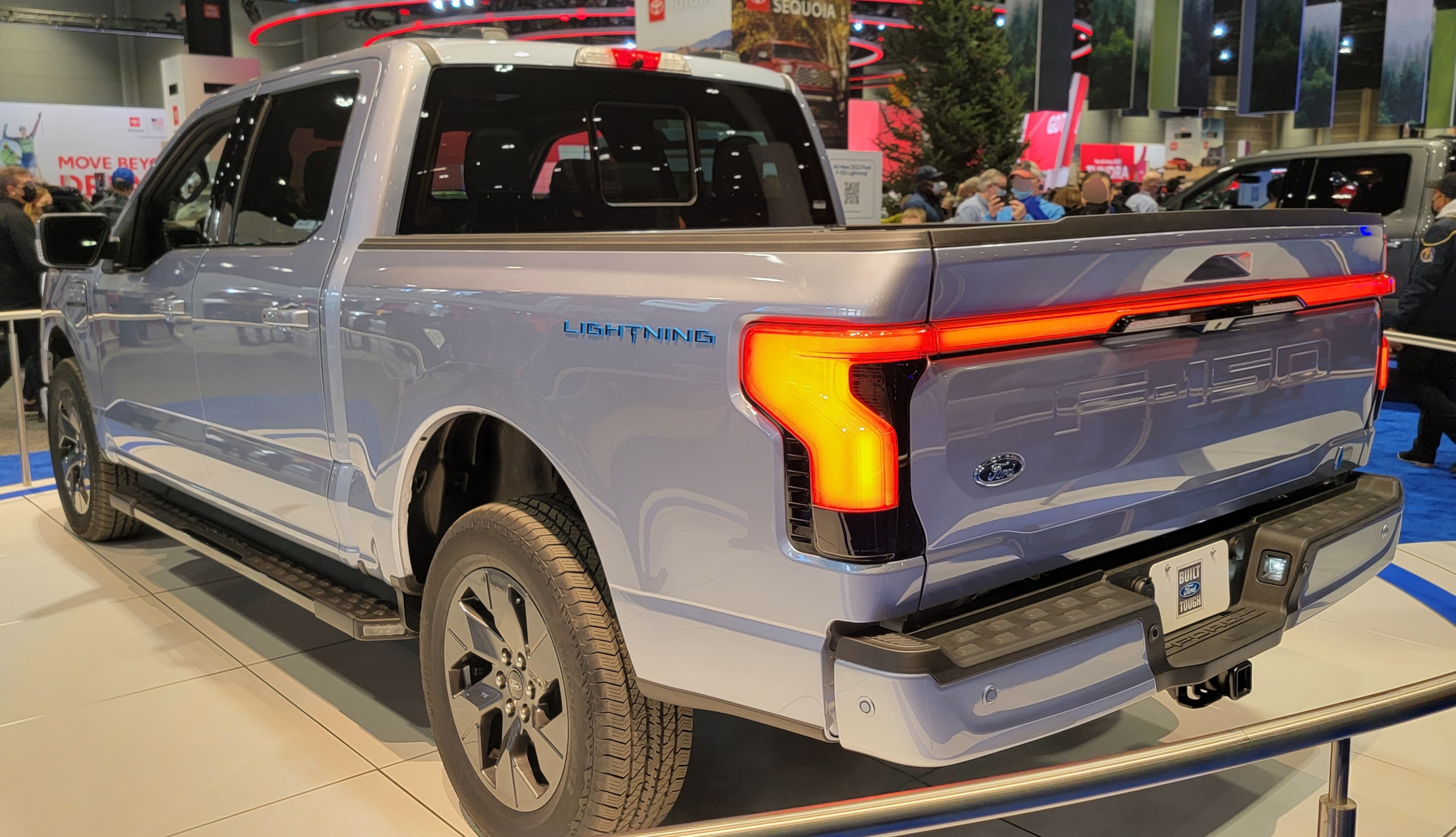
Ford F-150 Lightning
"[1066.0s] Did you see the story in the news this week about Ford? [1069.0s] Ford is dropping to no longer gonna make the electric F-150 the lightning, right?"
It’s a pickup truck made by Ford that runs entirely on electricity instead of gasoline. It has big batteries and electric motors to move the truck.
The Ford F‑150 Lightning is an all‑electric version of the popular F‑150 pickup truck, featuring a dual‑motor setup and a large battery pack that powers the vehicle’s drivetrain.

2005 Chrysler 300C
"[1123.0s] Good, hey, Ron, I got a 2005 Chrysler 300C."
The Chrysler 300C is a big, comfortable car made by Chrysler in the mid‑2000s. It has a roomy interior and a powerful engine.
The Chrysler 300C is a full‑size luxury sedan produced by Chrysler from 2005 to 2010, featuring a V6 or V8 engine and upscale interior amenities.
tone rings
"[1130.0s] I've talked to you before about the tone rings in it."
Tone rings are little metal pieces that sit on the engine to make it run smoother and quieter by soaking up vibrations.
Tone rings are small, metal components mounted on the engine block that help dampen vibration and reduce noise by absorbing certain frequencies.
P0520
"But just before I left it through a P0520, which is the oil center. Right. Oil pressure circuit."
When a car’s computer shows the code P0520, it means the sensor that checks how much oil is flowing in the engine isn’t getting a normal reading. This can happen if the oil is too thin, low, or the sensor itself is bad.
P0520 is a diagnostic trouble code (DTC) that indicates the engine control module has detected an abnormal reading from the oil pressure sensor, often meaning low or fluctuating oil pressure.
oil pressure sensor
"But just before I left it through a P0520, which is the oil center. Right. Oil pressure circuit."
This small device sits in the engine and watches how much oil is moving around. If it sees too little oil, it tells the car’s computer to warn you so you can fix it before something breaks.
The oil pressure sensor monitors the amount of oil flowing through the engine and sends that data to the vehicle’s computer. It helps prevent engine damage by alerting the driver if oil pressure drops too low.

23 RAM
"Yeah, I've been my 23 RAM though."
The 2023 Ram is a big truck that can haul heavy loads and has a roomy cabin for passengers.
The 2023 Ram is a full‑size pickup truck produced by FCA’s Dodge brand, known for its robust towing capacity and comfortable interior.
Chevrolet
"When dad drove a Chevrolet, the kids drove a Chevrolet."
Chevrolet is a big car brand from the U.S. that makes many different kinds of cars and trucks.
Chevrolet is an American automobile brand owned by General Motors, known for producing a wide range of vehicles from compact cars to full‑size trucks.
CVT transmission
"I have yet to change filters on the CVTs. I have not seen them readily accessible, easy to get to, need for replacement."
A CVT is a type of car gearbox that changes speed smoothly without the usual gear shifts you see in manual or automatic cars. It can be harder to fix because its parts are more delicate.
A CVT, or continuously variable transmission, uses a belt and pulleys to provide an infinite range of gear ratios instead of fixed gears. This allows smoother acceleration and better fuel efficiency but can be more complex to service.
CVT fluid
"[1824.9s] it's a traditional CVT fluid. [1826.8s] And then there is a, then there's a, [1828.4s] and I don't understand why Honda does this, [1830.1s] but Toyota does it too."
CVT fluid is a special oil that keeps the automatic transmission in your car running smoothly. It’s made to work with the unique gears of a CVT, which can change speed continuously.
CVT fluid is a special type of transmission oil designed for continuously variable transmissions (CVTs). It has different viscosity and additive properties to handle the unique torque characteristics of CVT gear ratios.
Using the wrong transmission fluid can ruin a gearbox
"if you use anything other than the Honda fluid, you will ruin the transmission. They probably are the manufacturers of Honda Transfluid and Toyota Transfluid and so on."
If you pour the wrong kind of oil into a car’s gearbox, it can damage the gears and seals, causing the transmission to break down. Always use the fluid type your car’s maker recommends.
Transmission fluid lubricates gears, cools the system, and maintains seal integrity. Using a fluid with incorrect viscosity or additive package can lead to premature wear, leaks, and failure.
A13 service
"I need an A13 or a B1 service or a, you know,"
For Porsche cars, the A13 service is a routine check-up that happens every 13,000 miles. It makes sure the engine and other parts are clean and working well.
An A13 service is a scheduled maintenance interval for certain Porsche models, typically performed every 13,000 miles or 12 months. It includes checks and replacements of key components such as engine oil, filters, and fluid levels.
B1 service
"I need an A13 or a B1 service or a, you know,"
The B1 service is a deeper check for Porsche cars that happens every 10,000 miles. It looks at things like brakes and the car’s suspension to keep it running safely.
A B1 service is another scheduled maintenance interval for Porsche vehicles, usually performed every 10,000 miles or 12 months. It involves more extensive checks than an A service, such as inspecting brakes, suspension, and transmission components.
drive train
"don't forget the other fluids in the drive train either, you know, the vehicle's coming up on"
The drive train is everything that takes the engine’s power and gets it to the wheels so the car can move.
The drive train is the collection of components that transmit power from the engine to the wheels, including the transmission, driveshafts, differentials, and axles.
brake fluid flush
"if you haven't, brake fluid flush, right?"
Flushing the brake fluid means draining out old liquid and filling with new one so your brakes stay strong and safe.
A brake fluid flush replaces old, contaminated brake fluid with fresh fluid to maintain hydraulic pressure and ensure reliable braking performance.
Honda
"[2025.4s] And, you know, I know Honda. [2026.8s] I think Honda's going to say five years on coolant"
Honda makes cars that are popular for being dependable and easy to maintain. Many people own Honda models because they last a long time.
Honda is a Japanese automotive manufacturer known for reliable, fuel‑efficient cars such as the Civic, Accord, and CR‑V.
Group 51 batteries
"Yeah, group 51 batteries, the most common failures. So, all right, hey, kiddo, you're good."
Group 51 batteries are a common type of car battery that fits many cars. They have a standard size and shape so you can usually find one that works for your vehicle.
Group 51 batteries are a standard battery size used in many passenger cars and light trucks. They have specific dimensions, terminal placement, and capacity that match a wide range of vehicle models.
fuel rail
"Well, it could prime the rail, but it won't do it on a repetitive basis. So many turns of the key, the car is going to be smart enough to go."
Think of the fuel rail as a tiny highway that carries gasoline from the tank to each part of the engine that needs it. It keeps the fuel at the right pressure so the car can run smoothly.
The fuel rail is a component of the vehicle’s fuel injection system that delivers pressurized gasoline to each injector. It acts like a small pipe or tube that holds the fuel before it’s sprayed into the engine cylinders.
AC Delco
"Yes, I went, I finally put an AC Delco."
AC Delco makes replacement parts for cars, like the fuel pump or filter you might need when something breaks.
AC Delco is an automotive parts manufacturer known for producing replacement components such as filters, fuel pumps, and electrical parts.
fuel filter
"You know, we're things with fuel filters. That's the metal canister filter mounted on the frame rail."
Think of it as a strainer for your car’s fuel. It keeps the engine clean by catching dirt before it can cause problems.
A fuel filter cleans the gasoline before it reaches the engine, removing dirt and debris that could damage components.
metal canister filter
"You know, we're things with fuel filters. That's the metal canister filter mounted on the frame rail."
It’s a sturdy, metal box that holds the fuel filter. It’s designed to last longer than plastic filters and is common in some older cars.
A metal canister filter is a specific type of fuel filter housed in a metal container, often used in older or high-performance vehicles for durability.
vacuum line
"[2631.7s] for giggles, make sure there's no fuel in the vacuum line. [2635.0s] So, basically, with the vacuum line going to the regulator..."
A vacuum line is a hose that pulls air pressure from the engine to help control parts like the fuel regulator. It’s important for keeping the car’s fuel system working right.
The vacuum line is a flexible tube that carries negative pressure from the engine’s intake manifold to components like the fuel pressure regulator. It allows those parts to operate correctly by providing a vacuum signal.
Request an Explanation
Heard something you'd like explained? We'll add it to this episode.
Sign in to request explanations for terms you heard.
Want to learn more?
Browse our glossary for plain-English explanations of automotive terms, jargon, and concepts.
Help improve this episode
See something that's not quite right? Our annotations are AI-generated and can sometimes miss the mark. Click the flag icon on any annotation to suggest a correction.