The Chevrolet Corvette is a sports car made by Chevrolet. It’s designed for fast driving and is often talked about in racing because it’s built to perform. If it’s mentioned in a podcast, it’s usually because it’s a well-known car in motorsports.
Cox Automotive acquiring Fullpath is a dealership-technology consolidation move that can affect how dealers manage online retailing, lead handling, and pricing/offer workflows. For listeners, the important part is how such acquisitions can change vendor roadmaps, integrations, and support for dealer operations.
This is the FTC cracking down more on how companies advertise and sell cars. Dealers may need to change their listings and pricing messages so they don’t accidentally mislead shoppers.
Team Vlocity is referenced as the organization David Boyce leads, and it’s tied to the discussion of FTC compliance and dealer pricing/advertising practices. In this context, it signals a software/solutions provider angle rather than a racing team or consumer brand.
Sometimes the same car ends up with different prices depending on where you look. The concern is shoppers don’t always know why the price changes, which can cause confusion.
A trade appraisal is what the dealer offers for your current car when you trade it in. That number can change the total price you pay for the new vehicle.
Retention in a dealership context means keeping customers coming back for service, parts, and future purchases rather than losing them after the first sale. It’s often tied to CRM follow-up, service scheduling, and customer experience consistency.
Concept
big stops
“Big stops” sounds like a dealership’s important checkpoints during the sales process. It likely means the moments where the team needs to do the right thing to move the deal forward.
They’re saying the average price of used cars went up by about 2.8% in a month. That can make used cars cost more and can also change what dealers are willing to pay for trade-ins.
Trade-in value is how much the dealer says your current car is worth. If used cars are getting more expensive, your trade-in often becomes worth more as well, which can help your next purchase deal.
Depreciation performance describes how quickly a vehicle loses value over time. If depreciation slows (or reverses), it usually means the market is supporting higher used prices, which can raise trade-in values and reduce the risk for dealers holding inventory.
Company
recurrence, 2026 EV market and trends report
The hosts cite a “2026 EV market and trends report” from Recurrence as the source of EV range-retention data. For listeners, the key takeaway is that the numbers are coming from a specific research/reporting effort rather than a casual observation.
This refers to EV range retention, meaning how much usable driving range remains after battery aging over time. Higher retention (like 97% after three years) suggests slower battery degradation than many buyers expect, which can improve long-term ownership confidence.
Cadillac is a luxury car brand. Here it’s mentioned because the hosts are talking about how well EV range stays consistent over the years for used EVs.
Hyundai is a global automaker with a growing EV lineup. In this segment, Hyundai is referenced in the context of used EV range retention over a five-year period.
This is about how dealers talk to customers when selling used electric cars. The goal is to answer the common worry that the battery will make the car lose range too fast.
This is about government tariff refunds—money that gets returned after tariffs are collected. The hosts are saying it probably won’t instantly make cars cheaper at the dealership, but it could change how automakers spend money on incentives.
The “CAPE portal” sounds like the website/process where the tariff refund paperwork is handled. The hosts mention it being live so dealers understand when the money might start moving.
Incentive spending is money automakers put toward deals, like rebates or special financing offers. The hosts are saying that’s more likely than simply lowering the sticker price.
MSRP is the official price number on the car’s sticker. The hosts are saying automakers may not lower that sticker price right away, but they might offer discounts through incentives instead.
Used car leasing means you lease a previously owned car instead of buying it. It can help affordability because your monthly payment may be lower than financing a purchase.
Concept
EV education
EV education just means helping people understand how electric cars work. For buyers, that usually includes things like charging and what happens to the battery over time.
An inflection point is when the industry starts changing in a big way. The hosts are saying the auto business is entering a phase where new approaches—like tech and AI—matter more than before.
Dealership-level efficiencies are improvements that reduce wasted time and effort inside the dealership—often by automating steps, streamlining workflows, or improving how leads and inventory are handled. The goal is typically lower operational cost and faster deal progression.
Concept
AI origination
AI origination means using software that uses AI to start the sales process. It can help find the right customers and move them through the steps faster than doing everything by hand.
AI-first means the company designed its system to use AI as the core of how it works. For dealerships, that usually helps automate parts of finding customers and moving deals forward.
A CDP is software that gathers customer information in one place. The goal is to help dealers use that information better, and in this case they’re talking about using AI to support dealership agents.
Concept
AI engine
An AI engine is the part of a system that uses smart computer models to learn from data. In this context, they’re talking about using dealership/customer data to make better decisions for marketing or sales. The goal is to help dealerships work more effectively.
NADA is the National Automobile Dealers Association, which hosts an annual convention where dealers and vendors discuss retail trends and technology. Mentioning NADA 2026 frames CDPs as a current industry topic that was heavily discussed at the show.
Cleansed data means cleaning up messy information. For example, it can remove duplicates and fix errors so the data is reliable. Dealerships do this before using the data for marketing tools or AI.
Data activation means using the information you have about customers to actually do something—like sending the right messages or automating follow-ups. If the data is messy or duplicated, those actions won’t work well.
CRM is the dealership’s customer database system—where it tracks leads, customers, and interactions. The issue is that the same person can show up multiple times across different systems.
DMS is the main software dealers use to run day-to-day operations (like managing inventory, service, and customer-related workflows). It can also store customer info in a way that doesn’t match other systems.
Data silos are when customer information is trapped in different systems that don’t talk to each other. That makes it harder to use the data effectively for things like targeted marketing.
Machine learning is a way for software to learn from data patterns. Here, it’s referenced as helping the system clean up and connect dealership customer information so it can be used better.
A golden record is the dealership’s “one true profile” for a customer. Instead of having multiple conflicting entries, it creates one clean version that teams can trust.
Concept
data is really the fuel
They’re saying data is what powers the business. If you collect it and organize it, you can use it to make better decisions and run things more effectively.
Concept
customer data platform
A customer data platform is a tool that combines customer details from multiple systems into one place. Instead of building it from scratch, the discussion is about buying a solution that already exists.
Integration means getting different computer systems to “talk” to each other. For dealerships, that can help leads and customer info move correctly between tools instead of being handled manually.
Concept
AI driven campaigns
They’re talking about using AI to help a dealership market to the right people. Instead of sending the same message to everyone, the system can tailor campaigns based on what it knows about each customer.
Concept
single actionable profile
They’re describing a system that combines customer information into one place. That makes it easier for the dealership to know what to do next with each lead.
The hosts discuss making an acquisition to capture a “perfect scenario” and preserve innovation. In dealership/auto-industry software, acquisitions often aim to add capabilities quickly, but integration can threaten agility if not managed well.
Concept
full path coming together
They’re talking about connecting the whole customer experience, from the first contact to the final sale. When the steps are connected, it’s easier to keep information consistent and follow up at the right time.
A “customer record” is basically a dealership’s complete file on a shopper. If it’s filled in correctly, the dealership can follow up better and automate parts of the process.
Concept
automation and engagement
They mean using tools to automate the routine parts of selling, like sending messages or updating info. But the goal is still to keep customers actively involved, not just spammed.
Concept
agents and a gentic AI in your dealership
The segment mentions using “agents” and “genetic AI” (likely referring to generative AI) in a dealership. In practice, AI agents can assist with tasks like responding to inquiries, summarizing customer interactions, and helping staff execute workflows faster.
Data cleansing is the process of correcting or removing inaccurate, duplicate, or incomplete records so analytics and marketing tools work properly. For dealerships, messy data can lead to mis-targeted campaigns, broken lead attribution, and unreliable reporting. The hosts frame it as a necessary step when building a data strategy.
A data lake is a large storage system that holds raw data in its original form, often from many different sources. Dealers may use data lakes to centralize marketing, sales, and customer data so it can be analyzed later. In this segment, it’s mentioned alongside data cleansing as part of building a usable data strategy.
A data strategy is the plan for how a dealer will manage customer information and use it to make better decisions. It’s not just buying software—it’s figuring out what data you need and how you’ll keep it accurate. The point here is that dealers should focus on the plan first.
They’re talking about how car dealers used to rely on things like phone calls and ads, but now customers expect to shop on the internet. If a dealer doesn’t put inventory and prices online, they lose customers to dealers who do.
It means the dealer shows prices on the internet instead of making you ask for a quote. When prices are easy to find, shoppers don’t waste time and are more likely to follow through.
They mean using AI as an add-on that helps with dealer work, but only after the dealer’s information and systems are set up correctly. If the foundation is wrong, the AI won’t help much.
They’re talking about different companies selling software to help dealers run their business. If you pick the wrong mix, you might have to redo the setup later.
First-party data is information the company collects itself from its own customers. Because it comes from direct interactions, it’s usually more accurate for marketing and sales decisions.
It’s a simple idea: if the information you put in is wrong or messy, the results you get out will also be wrong. So dealerships have to clean up and verify their data before using it for decisions.
Proprietary data is data a company has that it controls and uses in its own systems. It can help performance, but it may not plug into other tools as easily unless there’s integration.
The Audi S3 is a small hatchback made by Audi that’s tuned for quicker, more exciting driving than the regular model. It’s still meant to be practical for daily use, but it has more performance. In the podcast, it’s mentioned as a specific model within that broader topic.
Company
Hart
“Hart” is mentioned as part of a short comment, but the episode segment doesn’t explain what Hart is. So listeners may need to look up the reference or wait for a clearer explanation later.
A profit participation program is an arrangement where a dealer shares in profits tied to an insurance or risk-management program’s results. The episode frames it as something that can be tuned—its structure and “levers” can change how much profitability the dealer ultimately sees.
Reinsurance is insurance for insurance companies—insurers transfer part of their risk to other parties to stabilize losses. The segment frames reinsurance strategy as important for defending profitability in automotive-related insurance contexts.
Team Velocity is a company that helps car dealerships with software/technology. The guest says it’s already used by a lot of dealerships and keeps adding more over time.
This describes a strategic choice: developing technology in-house and integrating it into a platform rather than purchasing an existing solution. For dealership software, this can affect speed of iteration, customization, and long-term control of the product.
This is basically a question of whether to get something already made or create it yourself. Buying is usually faster, while building can give you more control over how it works.
A one-stop shop means dealerships can use one main system for several needs instead of juggling lots of different tools. The goal is simpler operations and better results because the pieces work together.
Capital investment means spending a lot of money upfront to build or improve something. They’re saying it cost over $100 million to create the technology that helps dealerships.
They’re saying the software can be added quickly with less hassle. The idea is you don’t have to spend months setting everything up before it starts working.
Apollo is the name of the customer data platform they say you can get through Team Velocity. It’s presented like a ready-to-use option rather than something you have to build over many months.
Concept
take six months or eight months
They’re comparing a fast setup to a slow, expensive project. The point is that some solutions can be implemented in months instead of taking half a year or more.
The FTC (or related regulators) sent letters to many dealership groups. That’s a sign they want companies to double-check their practices to avoid problems.
NADA is an organization for car dealers. Their webinars are training sessions that help dealers learn what they’re allowed to say and how to advertise prices correctly.
A dock fee is an extra charge dealers add for moving the car to the dealership. The big point here is whether dealers show it in the price they advertise online or clearly tell you about it.
This is about making sure the price you see online is the price you’ll actually end up paying. It’s not enough to fix just one page—dealers have to make sure the whole website (like banners and listings) matches the real deal.
VDP is the page on a dealer’s site where you see details about a specific car. They’re saying some dealers do the right thing on that page, but still get it wrong on other parts of the website.
A digital retailing tool is the website software that helps you build an offer—often showing prices and monthly payments. Here, the hosts are saying the online offer can look different depending on where the customer started (banner vs the tool).
Disclosures are the fine print that explains how the price/payment was calculated and what conditions apply. If the fine print changes between pages, it can make the deal feel inconsistent.
Vehicle listing ads are the online ads that show a specific car for sale, sometimes with a monthly payment estimate. The concern is that the ad’s info may not match the final pricing/offer the customer gets.
A connected platform is like one system that updates everything at once. So when you change a car’s price on your website, it automatically updates the other places customers can see it.
Company
Dockv
Dockv sounds like a software tool dealers use for their online setup. The hosts are saying there’s an even bigger change needed beyond that tool to keep pricing/disclosures consistent.
They’re saying you should check every channel where you advertise cars to make sure the price is the same. Don’t just update your website—also check ads and other pages customers see.
They’re saying dealer websites aren’t always one simple system—there can be several outside companies involved. If those systems don’t all match, the price you see online might not line up with what you hear in the store.
They’re talking about keeping the price the same everywhere—online ads, the dealer website, and the listing pages. When the price matches, customers feel less confused and are more likely to move forward.
They’re saying customers often show up with screenshots of the price they saw online. If the dealer matches it, the whole process feels smoother and less like a surprise.
Centralized control means one team or person manages updates, rather than everyone making changes. That helps keep the information consistent and correct.
“Clear and conspicuous” means the important fine print should be easy to see and read. If it’s hidden or hard to notice, it can cause compliance problems.
“Compliance-minded” means someone is focused on doing things the right way and following the rules. In a dealership, that can include making sure pricing and approvals are handled correctly.
A “pop-up deal” is an offer that shows up after you fill out info or click through. The FTC is worried that the price can change in a way that feels sneaky or unclear.
A “second price” means the deal you see first isn’t the final number. Then, after you do something (like enter info), a new price shows up that should be treated as its own offer.
The FTC is a U.S. agency that looks at whether pricing and ads are fair and clear. Here, they’re concerned that if the price changes after you interact with a deal, it may need to be treated as a different price and explained properly.
A pop-up price is a lower price that appears in a box or overlay on the screen, instead of being shown on the main price display. The concern is whether that lower price is real and applies everywhere you look.
LIVE
We're doing better as a result of social media presence.
It doesn't do those three things then it's on the chopping block.
It's in return on investment discussion.
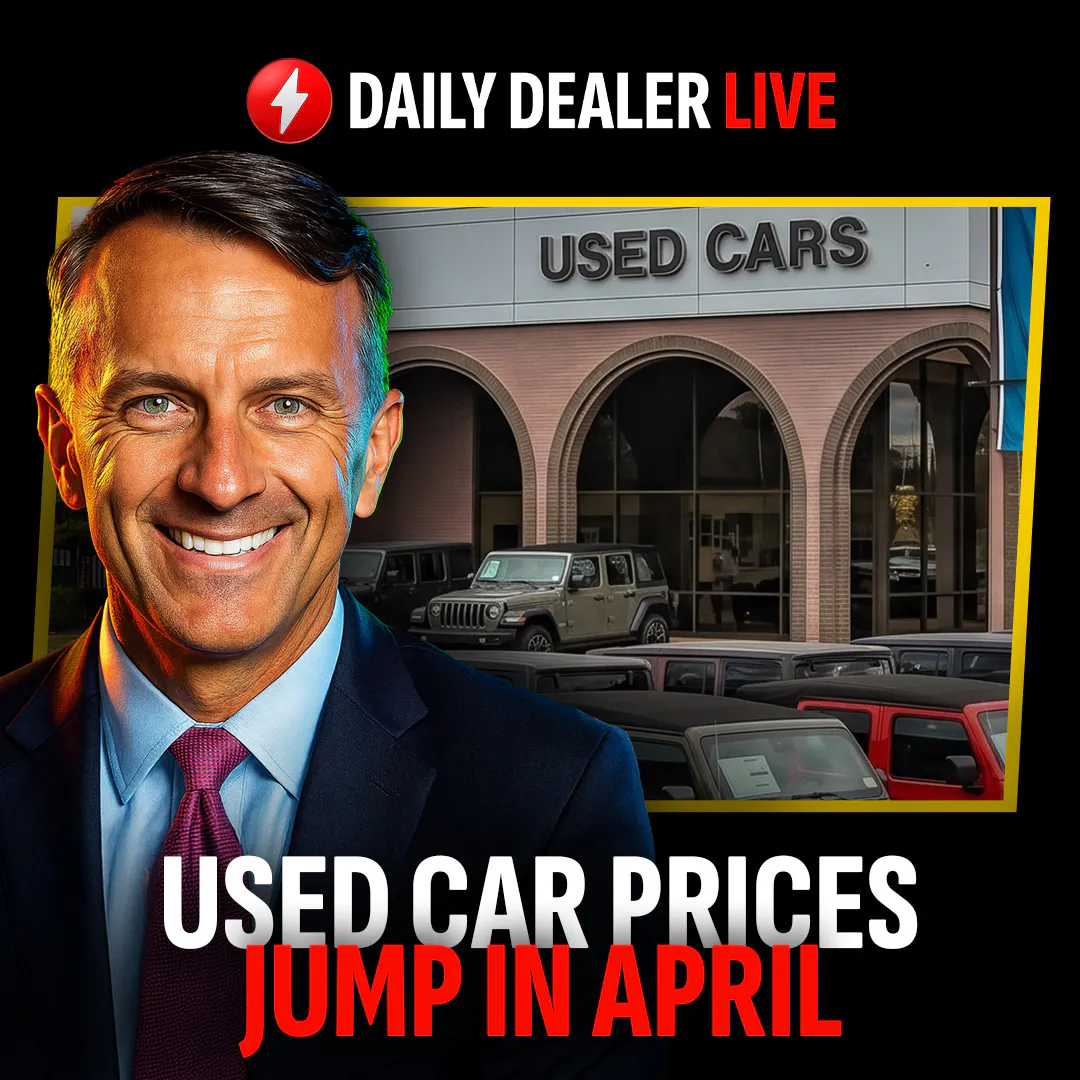
Hey everybody, welcome back to another episode of The Daily Dealer Live.
I'm your host, Sam Darkin.
Thanks for choosing to be here on this April the 27th.
Hey, did you watch NASCAR yesterday?
Yesterday, at Talladega, Carson Hosevar drove the number 77 Chevrolet DeVictory Lane in Ricky
Bobby style.
Nobody has ever seen anything quite like this.
It's his first Cup Series win of his career.
After 91 Cup Series race starts, second ever for Spire Motorsports, 23 years old.
He's from Portage, Michigan, which is about 10 minutes from where I'm sitting right now.
And for those of you who follow what we're doing at the Ziggler Auto Group, Carson is
our partnership driver.
We've got a multi-year deal with him.
We signed it earlier this year.
Aaron Ziggler did.
So, watching that number 77 cross the line ahead of Chris Boucher by a 10th of a second
yesterday, it was just a fraction.
That was so awesome to see.
Congrats to Carson Hosevar, congrats to Jeff Dickerson, to Aaron Ziggler, Carson's parents,
his grandfather, who he specifically mentioned on that lap.
And the entire Spire and Ziggler teams, it was a special day yesterday.
In fact, my voice is a little hoarse from screaming and yelling those last 20 laps.
This is the reason Team Ziggler and Aaron support Cup Series NASCAR.
It was awesome to see him finally get that win.
You can see that here.
By the way, this ended when the car slowed down and it kind of hit into the concrete
barrier on the side of the wall.
He got up and just excitement at a level unparalleled.
And how awesome to see that happen at Talladega for anybody who does like the movie.
Now, to today's show, three guests, three huge conversations.
First, maybe the biggest dealership tech announcement of the year.
Cox Automotive is acquiring full path.
Steve Rowley, Aaron Horowitz, they join us together today.
Both CEOs on the same screen walking through what this deal means for dealers.
Then up today, David Boyce, CEO of Team Vlocity on the FTC Compliance Wave.
97 dealer groups have already received letters, as we know and have talked much about.
And David's making the case that most of us have three different prices on the same car
on our own website right now.
And we don't even know it.
This will be good.
And then we go from theory to the showroom floor on Almeida, general manager of Colonial
Ford of Plymouth, the number one selling superduty Ford dealership out of 150 stores
on the playbook.
And behind that ranking, trade appraisals, big stops, retention and the culture that
makes it all run.
As a reminder, we're streaming live across all social media platforms.
You can push your comments in and we'll bring them into today's show.
Patrick Block Ventures comes in and says, happy anniversary of the discontinuation
of the Pontiac production.
2009, we'll take his word for it.
Eager KV12 says, hello community.
Hello, Sam.
Welcome to the show.
But first, let's dive into today's auto industry headlines.
Diving in with some news on pricing.
Get this, used vehicle prices jumped 2.8% in April.
That's about an $800 average increase and one of the largest monthly gains since Car
Facts launched its index in 2023.
Every major segment posted gains with hybrids, EVs and luxurious SUVs, each up roughly
1200 bucks, pickups, they're up $800 and SUVs up 600 bucks.
The South saw some of the sharpest regional moves with luxury SUVs up over 1850 in
states like Georgia, Florida and Louisiana.
Supply wise, the used market is still short millions of vehicles from the 2020 to
22 sales declines and more consumers are chasing fewer cars.
The silver lining for dealers is that stronger depreciation performance is
lifting trade-in values and if values hold, that improves trade-in dynamics and
offers more to work with on the sourcing side.
Next up today, some interesting data out of recurrence, 2026 EV market and trends report.
Data is showing that the average EV retains 97% of its range after three years
and 95% after five.
That's stronger than most buyers assume.
And by the way, anybody with an iPhone, that's stronger than you get with the Apple
product as great as it is, in my own opinion.
Back to the news, more specifically, five brands Cadillac, Ford, Hyundai, Mercedes
and Rivian showed no apparent range loss over five years in the data set.
For dealers having the used EV conversation, range retention data like this is
probably worth weaving in where possible.
And that's a good point to educate our sales teams across the spectrum.
Now, closing out with a follow-up on the tariff refund story we covered last week.
Now that the CAPE portal, CAPE portal is live and the $166 billion refund
process is underway, CDG News spoke with a partner at Arthur D.
Little about what it actually means for dealers on the ground.
The short answer, well, manage expectations very carefully.
Price reductions at the retail level are unlikely in the near term.
The more probable outcome is that OEMs use refund proceeds to increase
incentive spending rather than cutting MSRPs, which could modestly improve
transaction dynamics without creating the kind of pricing clarity customers might expect.
Dealers should also prepare for customers asking whether prices will come down,
making aligned communications with OEMs important.
And that is a wrap on today's auto industry headlines.
We, as I said, we've got a great show coming up for you today.
That tariff refund process is just fascinating to me.
I'm excited to see CDG do some additional research and understand exactly
what it means for automotive, if anything.
Once collected, it's tough for government to ever give anything back.
Patrick Block ventures, comes in and says,
let's get used car leasing off the ground to address affordability.
Eager case says the battery capacity range retention data varies by brand and models.
I get that.
Maybe we'll do an episode on EV education and battery retention.
That would be a fascinating topic.
But let's go to our first topic today.
Hot off the headlines from last week.
Joining us today, President Cox Automotive, Steve Rowley,
and co-founder and CEO at FullPath, Aaron Horowitz.
Welcome to the show.
Thank you.
Appreciate having you both here.
And Aaron, you joined us even from a separate time zone.
So thanks for, I don't even know what the time zone or what time it is there,
but thanks for joining us as well on today's show and helping us to break
this big news that hit everybody this past week.
So, Steve, on behalf of the Ziggler Auto Group,
we thought it was really cool that you reached out to Aaron and you've reached
out to some of your larger clients to make notification even before the news broke.
And Aaron, I know you did the same on behalf of your dealers.
Tell us about this announcement, Steve, from your perspective.
What's exciting about Cox Automotive and FullPath coming together?
Well, first of all, thanks for having me here today.
It's an honor to be here.
Look forward to it.
And we're, as you can imagine, first of all, we're really excited.
This is, we've been looking at, you know, CDPs for about almost a year and a
half, two years.
And so there's a lot there.
And so there's a lot we're working for.
When we looked at this, you know, we said this is an unbelievable opportunity
for us because I just think the auto industry is at an inflection point.
You know, I spent 30 years in technology.
This is an exciting time and we've got to lead at Cox Auto.
We've got to continue to lead.
We've got to be innovative and we've got to be very special with our dealers.
And that's what came about for us.
For us, it was the focus on the dealers.
How do we continue to innovate for them?
How do we drive options for them?
And how do we create more profitability?
The one thing that this does is it's going to make a ton of efficiencies and
probability at the dealership level.
The second big point was technology and innovation.
We, you know, we really love technology.
We love innovation and there's so much there.
We got to continue to lead and be the trusted advisor for the dealerships for
sure. And then the last component, which was really a big driver for us is AI.
And full path is all about AI, a genetic AI.
The great thing I love about them is their AI first.
They were, they're a native AI origination and really grew the business that way.
They're not being retrofitted from, from any sort.
So that's, that's the big driver for us.
So when you bring these three things together, it's just a special offering for
Cox. It's an unbelievable opportunity for Cox and full path.
And ultimately it's, it's really special.
I think for the autumn industry and especially the dealers.
So Aaron, congrats to you too.
You built something really special with this full path company.
And we have a lot of, we get a listen to kind of chat within the dealer groups
inside the CDG circles, a lot of props and accolades for the company that you've
built. What made Cox Automotive the right home for your company?
Sam, thanks for having me on.
It's, it's, as Steve said, it's really a pleasure and an honor.
You know, the first time I met Steve, he said to me, what matters the most for
him is speed, nimbleness and impactful technology.
So that was already for me a really good start.
But actually we've had a relationship with Cox going back years.
You know, we've, as I assume most vendors do, right?
We've worked with them around KBB, around AutoTrader and in general have felt
like they really have a similar vision as we do, as to how technology can impact
dealers and how important it is to push innovation.
And then when you think about like what a CDP needs, and maybe we'll talk a bit
about later what that is, if you think about a CDP and an AI first CDP and one
that's looking to, you know, build these, this infrastructure for agents to help
do work for dealerships, data is really critical.
So data is kind of this core fuel that a modern AI CDP needs.
And when we got to talking with Cox about opportunities and we understood the
insight in the capacity that they can bring to the table when it comes to
AutoTrader KBB data and the idea of being able to layer that in to our AI engine.
I mean, it was just such an exciting vision of how we can impact, you know,
so many dealerships.
So, you know, in the end, it came down to our mission, which is to deliver
something really powerful and impact the industry.
And when we understood that this partnership and ultimately joining
together could truly turbocharge that, it was an absolute no-brainer for us.
And we just were so excited and honored that they had the trust and the faith
and are excited to build again, all within the framework of this closing and
all those various different disclaimers we always talk about.
You know, and I know there's a lot you probably can't talk about
because it's pending the final deal.
And so we had Scott Painter as an example on the show before the true car
deal finalized.
So there were many questions where he's like, hey, I can't talk about this,
can't talk about that.
So we're going to be respectful and not go too far down.
But one thing I am curious about CDPs were a buzzword at NADA 2026.
Like dealers came from all over the country to Las Vegas, Nevada to try
to figure it out and adoption of CDPs is not high yet.
I don't think I'd be curious what your impression is of the industry.
How many have have cleansed data, established a CDP, data lakes, all the things.
What what is it?
What is the CDP and how is this going to impact the future of automotive
by having this as an advantage within the Cox platform, but but even just
with what you've built within full path?
Yeah, well, I mean, I think you're completely correct.
CDPs are still emerging in the industry.
And I think that that's exciting.
There's a huge amount of white space, a huge amount of opportunity.
Yeah, the concept behind it was just very simple.
You know, we talk about how AI presents us with all this amazing
opportunity for for impact and for automation and efficiency.
But if it's sitting on data that is fragmented, disjointed, duplicative,
then you're going to get poor results when it comes to actually activating.
And I think that every dealer feels this, right?
Every dealer knows that there's 16 records of someone in their in their
CRM, their DMS and their email system and so on and so forth.
And I think fundamentally, what a CDP does first and foremost is
engage with all the different data silos that dealership has, build a lot of
logic and complex logic, including functions that can be done by AI and
machine learning to pull all that data into one clean data layer and then
enable that clean data layer, right?
That kind of golden record to be the fundamental
substrate of the outbound marketing and engagement and even business
operations that happen in the dealership and I think that's the exciting,
this exciting capability that we've we've developed over the years.
And there, by the way, data is really the fuel, right?
You got to have the data, organize the data and then leverage it for
all sorts of functions.
And obviously you could see the beautiful tie in there with, you know,
with what Cox Automotive has.
Yeah. So Steve, a lot of commenters online, I'll bring one in, in particular,
Patrick Block ventures comes in says, Hey, Steve, why buy versus build?
Why not build your own internally?
What made the acquisition with full path so desirable versus creating
your own tool that did somewhere?
So really, really, really good question.
First of all, it's not easy.
It's not easy building a CDP.
That's why you don't see a lot of them because, you know,
Aaron's a humble guy and he's built an unbelievable team and culture.
And what they've built made me recognize that, you know what,
it takes a lot of time, unbelievable energy.
This is a, this is a great opportunity for us to make an acquisition.
The other thing is, is he's done these incredible, difficult things.
Integration, he's got multiple integrations out there.
They're really special.
And, you know, that just, that just makes for, I was looking for nimbleness
and speed and, you know, technology innovation and full path brings
all that to bear.
And so there's something really special for me.
You know, we talk about the golden ticket that this CDP generates.
So it really creates this, you know, single actionable profile, AI driven
campaigns for marketing, and it does more personalization and efficiencies
than I've ever seen anything do.
So that really became, we've got to make an acquisition here because we've
got the perfect, we've got the perfect scenario.
We've got the right leader.
We've got the unbelievable talent.
And we've got a company that is going to lead the path, so to speak.
So Steve, that's an interesting point.
Full path, they've been innovating at a blazing fast pace.
And now they're coming together with Cox, which is a big organization, solid stable.
How do you ensure, Steve, that full path stays nimble and they keep up the same
pace of innovation that they currently have?
Probably that's probably one of the best questions.
So look, I mean, I have spent a career acquiring companies.
It's one of the things and I've developed a thought process and a way of doing it.
And, you know, you never pull back on a racehorse.
You utilize that and you let it go.
And as long as we're meeting customer obligations and continuing to delight
the industry and do things, you know, we're going to keep this in a way that
allows that nimbleness to stay intact.
And I'd love to go much, much deeper on this, but I can't.
But I will tell you that that's one of the secret ingredients we purchased.
And by no means do I want that being pulled back in any way.
So I want the Ferrari on the raceway, not on, not in traffic.
Ooh, that's good words.
Yeah, Aaron, you know, I think there is as happens with acquisitions, probably
a lot of nervousness out in the market about what does this mean for dealers?
What should dealers be excited about when they think about full
path coming together with Cox in this way?
Yeah, I mean, I think that the nervousness is natural.
And I, as I told our team, like the burden of proof is always on us.
Like dealers are always going to give us a chance because we have a real
partnership and I think that they do have confidence in Cox's ability to take
technology and scale it and understand how to integrate effectively.
But there's a lot of really exciting potential when it comes to completing
that customer record.
There's a lot of really exciting potential when it comes to thinking about
how to close loops around automation and engagement.
And then there's a lot of really exciting things when it comes to how to build
efficiency and use agents and a gentic AI in your dealership.
Now, as Steve said, we won't go into much of that at this point because we're in
this kind of more quiet period, but I think as soon as we're able to, dealers
will be very excited when we can really share some great ideas with them and show
it to them and show how quickly we can innovate.
And I think that technology is in an unbelievable moment right now.
And what you're hearing from Steve is this is, yes, Cox Auto is a big
organization, but it's innovating and it's looking to innovate almost like a
startup, right?
Obviously with the constraints that are needed.
And I just think that that's the attitude today.
That's so exciting, isn't it, for all of us in the auto industry to hear from one
of the biggest auto tech company that they want to innovate and push the envelope.
And I think that's what you're seeing here.
And it's going to be amazing for the industry.
Yeah.
And by the way, I'm going to bring on a comment from the Cardiola ship guy
himself, Yossi, put into the text chain.
He says, pretty incredible that an online follower can go straight to asking the
president of Cox Auto a question live on air.
We live in amazing times.
So when you talk about strength and stability, Cox is that you talk about
full path nimble, innovating at a blazing fast pace.
It does strike me to Yossi's comment.
It strikes me that this is an interesting balance that is needed in today's
automotive space to find that balance between strength and size and nimbleness.
And so I think this is an interesting shot over the bow of the industry saying,
look, we can do both in ways that serve the auto industry.
So I know you're both, Steve, I know you're both excited to get to work together.
The deal is expected to close in 30 days.
So I know that you're very limited in what you can talk about the nature of the deal.
There's a lot of other questions that are coming in about integrations and partners
with other companies that'll probably save for the 30 day mark.
But what can dealers expect from you at all as you move forward to close and beyond?
What does the path look like from here, Steve?
Well, look, right now, both of us are going to be focused on our customers at hand
and continuing to do the things we're doing.
We'll wait for the close and then we'll get together and then we'll come out loud
and proud because, you know, there's a lot to be excited about here.
And we owe it to our dealer customers to sit down and say,
here's what it means specifically for you.
But we'll have a day for that.
And I just appreciate the opportunity to talk to you today.
It's exciting.
Yeah, thank you.
And, you know, I'm going to throw this one out here.
We talk a lot on this show about these CDPs, data lakes, cleansing data.
Dealers are engaged in this process right now.
They're trying to figure out how to do it, who to do it with
and what a strategy should be.
I probably had 10 different proposals in the last couple of months.
It's part of your message.
I'll turn this one to Aaron, wait and see what we come out with at the 30-day mark
because we'll have better clarity for industry about best practices.
Or, Aaron, what is your comment to industry about dealers
looking to do a CDP and cleansing their data?
Yeah, I actually don't think it has anything to do with this deal.
I think that every dealer, whoever they choose, right,
needs to just think about data strategy.
Because if you want to be in the AI era, you need to get your data house in order.
I mean, think about that transition from offline to online.
When there were dealers who did not have inventory online,
they fell behind the dealers that did.
Those that did not have pricing online, they fell behind.
So there's this moment right now that you can see in a sense manifesting in a deal like this
and an opportunity like this to bring us together as you described.
But really, it's an industry-wide moment where everyone has to sit down and say,
what's my data strategy?
How do I get my data house in order so that I can layer the AI on it
and really activate and fly?
And I hear what you're saying, but I think there is concern among dealers.
I felt it from my own side that if you start and go down the wrong road,
you end up having to back up and redo it and recreate it.
Right. There is a seat well about what you do.
Yeah, because there are so many different vendor solutions out there.
I chat GPT before coming on to today's show.
There's probably 10 different providers that provide a similar strategy.
Some are independent, some are affiliated and attached.
Actually, once this deal closes in 30 days, will you come back here first?
And we'd love to ask you all the questions that we have left about integrations and strategy
and process go forward.
It would be a great conversation to have.
Once the deals cleared all the hurdles in its final, I. Steve, fair?
That's great. The only thing I'd add because Aaron framed it up so well is,
but data is so critical.
But we're one of the few folks out there with so much first party data.
And it's garbage in, garbage out and making sure you've got the right data.
And then so many dealers have their own proprietary data.
So coupling that together with what full path is,
this is going to be something you're going to know you've got the right CDP
when you're getting more efficiencies, better li and more probability for the,
for the dealership.
Steve Raleigh, President Cox.
Oh, Aaron, you were going to say something.
Go ahead.
I just, I know everything Steve said that that's right to me.
Well, both gentlemen, thank you so much for being on the show.
Steve Raleigh, President Cox Automotive and Aaron Horowitz,
co-founder and CEO of full path.
Thanks for joining Daily Deal Live to share this news.
Appreciate you both being on.
Thank you, Seth.
Big announcement in the industry and we appreciate them bringing it here first.
Lot of great comments online.
Igor K comes in says Cox Automotive plus Mannheim equals Hart.
Three S3 SMM says, with my previous experience across several dealer software platforms,
I can say that Cox is the, that Cox is the, with a seamless integration and workflow.
This is a huge, this is huge for Cox.
Happy for both.
And yoga cars comes in says prediction.
Vin solution goes out, full path takes CDP, CRM, AI.
That's a cool prediction.
We will have to follow that story in 30 days once this thing gets closed up.
So all right, let's talk Zurich.
Today's episode is brought to you by Zurich.
If you're a dealer and have ever wondered whether your profit participation program
could be performing better, Zurich offers a no obligation profit participation checkup.
It's a simple pressure free way to get a clarity on your program structure,
request your profit participation, check up at ZurichNA.com forward slash checkup.
And we appreciate Zurich for supporting today's content,
including that fascinating conversation with Cox and full path about their acquisition,
Cox of full path and the future, how it could impact the future of automotive.
Also, if you want to see an industry spotlight or listening to,
I learned several new things during it.
We launched our Zurich industry pod on Saturday.
So you can go back to your CDG podcast library and check out that episode.
I learned that one of the greatest strategies in reinsurance is simply involving your team,
your GMs, your sales managers and others in it, seeing profitability,
understanding the levers to push and pull will help defend profitability in 2026,
which is huge in automotive reinsurance.
So props to Zurich.
Thanks for supporting today's content.
All right.
Let's turn to our next guest, David Boyce, co-founder and CEO of Team Velocity.
Welcome to the show.
Thanks.
Pleasure to be here.
Thank you for being here.
We appreciate you being here.
So, hey, before we start today's conversation, for those watching who may not know who you are,
tell us who you are and what you do and how's business this April of 26th?
Well, my name is David Boyce.
I'm the CEO and the co-founder of Team Velocity.
We serve about 2,500, 3,000 dealerships today and growing quite fast.
So business is great.
We add about 80 to 100 new clients per month every month and have been for a long time.
So we're growing rapidly.
And I think that you're the guest that I just watched.
First of all, congratulations.
We're a business, we're an industry full of entrepreneurs, right?
I mean, really great, two great companies that got together.
And we're certainly fans of that and wish them all the best.
And I think it's a validation for those companies that are out there, some that you mentioned,
and one of them is ours.
We decided to build that technology into our platform versus buy it.
I think for those that have made that massive capital investment to see Cox step up to what
appears to be a very large acquisition is a validation for I think the industry
and not just for that one particular transaction.
So I think it'll be positive.
So buy versus build, that was a question that came into the chat and the comments.
You decided to build, you're smaller probably, and that may be played into it.
Why did you decide to build it rather than buy it externally?
Well, we've actually bought a lot of companies over the years,
especially if they have something incredibly unique that's already ready to go.
I think that was probably the case with full path and Cox.
For us, it was core to the business model.
And so I think we'll probably see with Cox that they'll probably lead full path alone.
It'll be a standalone entity.
It'll work with dealerships that probably use Cox and probably will work with dealerships that
don't use Cox.
And that's just been a very successful model, I would add.
And so for us, we are more of a one-stop shop type platform,
and which I think will lead us into our conversation around the FTC.
And so for us, it was so core to what we were going to do that we needed to build all that
technology in to make our marketing more effective, to make our websites more effective,
to make everything we do for dealerships more effective.
He's right.
It's absolutely critical.
And when you get it right, the dealers can feel it.
It makes an absolute difference in their business.
So for us, it was just a big capital investment, I would say easily north of $100 million for us.
Yeah, so he's right.
And Steve said it's a lot.
It's a lot.
Yeah, yeah.
Well, it's a lot and it's a rapidly evolving industry and a rapidly evolving technology.
And I do think, I look forward to having them back on you, maybe others,
as we talk about CDPs, cleansing data and whatnot,
because it's something that I think a lot of dealers are interested in doing today.
And the golden path, should we say, is not clear for everyone.
I guess there's a different path for everybody to undertake it.
There's a lot of different ways to skin the cat, I guess.
There really is.
I mean, there are lots of, I know we're going to talk about something.
It's kind of related, what we're going to talk about with the FTC and offers and what the
dealers are out there, is there are a lot of options for dealers.
And you can go up some paths with some CDPs that you're going to be highly involved with.
I think full path is more of a not a one stop shop,
but I think you could just plug right in and have a CDP.
And then there's companies like ours that just include it with our services.
It's just part of, if you do business with team velocity, you get a CDP called Apollo.
It's just part of it.
And the data is all yours and all that kind of stuff.
So I think there's three or four different models out there,
but the overarching message that we just talked about is that doing it,
doing one of the above makes some sense.
And I think dealers have more options now to pursue it.
And not have to go through like take six months or eight months and put a whole
bunch of capital of their own capital into it.
I think dealers want the outcome of what a CDP does.
I don't know that they really want to be part of the process too much of building one,
but there's lots of options in the market.
Again, I think the full path acquisition was very smart for Cox and we'll see how it shakes out.
So there are a lot of options in the market.
You talk about yours that's bolted on.
I've had some proposals from companies that say,
hey, look, for it to really be an efficient, effective CDP,
you've got to have it completely independent from any of your other providers.
Otherwise, it's going to be limited in the way that you can engage with,
you can view, and you can utilize the data.
That may be true, maybe not.
And it depends upon who you're talking to.
If you're just selling a CDP, you're going to say you have to have an independent CDP.
If it's really, come on.
We've got to do a round table on this.
We'll have you back, Hannah.
Let's do this.
Let's do a CDP best practice, because I've had three or four different vendors in front of me
over the past, let's say, two, three months, and they make different arguments.
It'd be interesting to walk through that.
But the big topic for today isn't that.
To your point, we wanted to talk FTC compliance.
It's been something we've talked a lot about on this show.
97-dealer groups got letters.
But there's a lot of dealers that say, hey, today, we've got to figure it out.
We listened to the NADA webinar.
We added dock fee to all of our online advertised price, including our website.
It's now part of the advertised price.
We've got to handle.
Why are so many of them wrong in saying that they've got it handled?
Because if you think about the FTC and what they're doing,
and I'm not going to cover off on dock fees.
You've had so many episodes that just cover off on dock fees.
At this point, I think everybody knows it's probably you have to include it and or display it.
But let's set that aside.
But what the FTC, I think, was really going after is,
whatever you're advertising the car for, you need to sell it for.
That's pretty straightforward.
What many dealers have done is just focused on two narrow pages, which is their SRP and their VDP.
So most of your websites we go to today have a nice SRP, nice VDP.
They're both disclosed.
They got with their website company like all of our dealers did.
And we fixed it exactly the way they needed it.
And it differs per state and so on and so forth.
But that was easy.
The hard part for dealers is how many places they advertise.
So you can go to a dealer's website that's got a great SRP and VDP.
And then you look at the banner on the homepage and you're like, that's not compliant.
It's not even close.
When you click the banner and it takes you to a filtered SRP, you can't even find the car.
If you do try to find the car, oftentimes it's sold, right?
Because the banner is out of date.
It's fast enough.
The specials pages are often totally different.
The banners aren't updated dynamically.
Well, they are for our clients, but for most dealers are not.
And then you go to the digital retailing tool and it's oftentimes different.
It's presented different.
The disclosures are different.
The pricing is a little different.
And you have to, the customer has to figure all that out.
On the same website, forget vehicle listing ads, which now have payments included in them.
Forget Google ads.
Forget emails.
Forget third parties.
Forget, I mean, dealers advertise their cars all over the place.
And they advertise them usually with six or seven or eight or nine or 10.
Look at your own dealerships and just count the number of people
that are advertising a car on your behalf.
Whether that's an equity mining company or four or five widgets.
And then, so dealers' websites, they're taking this, I've seen them take a sigh of relief
because they've gotten one little component of what they do handled.
But what's when you come into the showroom, right, the customer comes into the showroom
and the sales manager says, hey, boss, what's the price?
Which of these four prices?
The one on the banner, the one in the specials page, the one on the SRP and the VDP,
the one in the digital retailing tool, or how about the one we have out on social media
with the seven different vendors?
We saw, now we solve that through a connected platform.
So with our dealers, when we change the website and the price of the website and the disclosures,
it changes it everywhere instantly.
And we update it three, four, five times a day because many of our dealers have
inventory that changes all the time.
So it's a bigger challenge than just changing one area and calling it a win.
And we look at what, obviously, I was on a website just before I got on this call.
And it's just something that dealers are not, they're not yet used to,
that I think they will become accustomed to over time.
So a useful cell phone, even above and beyond Dockv, which by the way, we have talked a lot
about it, but it's one of the biggest changes that were required because there were so many
variations across the country in how states required it to be disclosed.
Now, there's one standard, the FTCs even come out and said, hey, look, where FTC, Trump state,
FTC wins.
So to your point, you've really got to do a kind of an audit or a self-check of all the
different places where your pricing shows up, including salespeople advertisements on Facebook
and elsewhere.
So you're recommending everybody go check the different places their ads show up,
make sure that they're all the same.
Yeah, you can just check a website.
You could just literally check your website and just hit the banners, then go to the special
section, then go to the SRPs, the VDPs.
Well, here comes a pop up.
You want an extra $1,000 off any car we have in stock?
Fill this form out.
Okay, now we're a thousand, are we $1,000 less when the customer comes into the store?
We all know that's not true.
And so, and then you check the digital retailing tool.
So oftentimes, there are seven or eight vendors just involved in the dealer's website.
Forget the advertising.
And there's another seven or eight over there.
So I think it's, yes, if it's me, I'm sitting down and saying, when customers come in and
we need to sell the cars, what we're advertising them for, we should check that we're consistently
advertising the vehicles at the same price across all the different mediums we advertise it.
It's pretty logical, right?
No question.
That is much harder to do than it is to say.
And so that's why I think that at least we're working hard with a lot of our dealers to
try to make sure that we're touching every single area so that they're, and here's the irony.
You know what the crazy irony is?
The deers that do it this way, they sell more cars.
Why they sell more cars?
Because they have consistency in the pricing.
When the customers come in, they're just less friction.
And customers have screenshots.
I saw this screenshot.
And it's interesting too, because I think what you're describing in a lot of cases is unintended,
right?
So there's so many different partners.
There's so many different data sources and platforms and places things get pushed that
it's tough to like track it all and have hands on it all.
So what do you recommend?
Like you've probably had a lot of dealers reach out to you since the letter went out,
just saying, look, how do I get there?
What do you recommend beyond the audit to make sure that you're consistent across all platforms?
Well, I think a number of things.
One is dealers often are out.
You need someone who's centralized who's saying, don't touch.
We are compliant.
We fix this area of the site.
Dealers' websites and their advertising is like open game.
It's like sales managers have input and BDC minute.
The agencies have 25-year-olds writing the disclosures and checking it against their
compliance department.
I think you need some more controls to say when you're doing business with
especially seven or eight vendors, these are the disclosures.
These are the prices.
They have to be consistent.
They have to look the same way.
They have to be clear and conspicuous.
It's just a harder thing to do to get 7, 8, 9, 10 companies on the same page.
But that's where I would start.
And also to say, when you're working with our dealership,
this is the person who needs to provide you some approval.
And I think dealers are going to have to start to have kind of a,
I'm not going to say a compliance manager,
but somebody who's compliance-minded that owns that process.
And I think that's something that you would benefit the industry anyways.
So I'm fascinated.
You talk about the pop-up deal, right?
You mentioned the pop-up being treated as a second price.
That one surprises people.
Can you explain the FTC's thinking on that?
I don't know how it's going to work.
I mean, there are companies out there
that literally you just pop in your information
and it changes the price.
Jeff, well, I'm so sorry.
Sorry about that.
It's all good.
I just...
Technology, 2026.
I had the jury rigged this.
This jury rigged this phone.
I might, I talk a little bit.
Don't worry.
And too much.
All right, you good?
Yep, yep.
You know, sorry.
Where were we?
I was just that pop-up price.
I just lost my...
The pop-up price, the FTC treats that as a second offer,
a second price.
Just curious, you know, pop-ups have been common in the past.
They're probably not going to be as common go forward
as people look to have that consistency across all platforms.
I don't really get how it could be compliant.
I mean, at the end of the day,
you put the number says one a better price, that's fine.
You can put your information in to go to a lower price.
And it should change it across the entire website, right?
Once the price is lowered, it should be lowered everywhere,
but it's not.
It's only lowered in that one little location,
and then anywhere else you go into the digital retailing tool,
that's a different company.
They go back to the old price.
So what's the sales managers,
what are the people in the leadership supposed to do?
At which price are we supposed to sell the car?
The lowered one that we saw for eight seconds on the site,
or the promise of the $1,000 off.
So I think there's going to be a better...
There's better ways to do it anyways today.
I like to think we're one of those solutions,
but I just think things like that in general are going to be too risky.
And the crazy thing is, it's not even necessary.
The dealers don't...
We're so consumed with generating tons of leads.
You actually end up getting more leads, trust me,
when you just do it all the right way,
and just have a price of the car,
and just advertise the price of the car,
have it updated across everywhere you're a market.
It's also faster.
Humans take a really long...
7, 8, 9, 10 companies take a long time to get...
So, oh, I think we lost him.
I was just curious, when you think about that,
from a data standpoint,
when you think about the FTC's letter,
I wonder how long, from his perspective,
it'll take for the industry to get to that consolidated consistent.
Because it is true.
There are so many different places that pricing gets pushed,
and you've got to, in April of 2026,
ensure that every single spot where that data sits
that has pricing and an offer to a consumer,
it's got to be consistent, 100%.
And it's got to be quickly updated as it goes.
Fair, David?
You named it.
It's got to be consistent, and it's got to be quick.
And why not?
It makes it less...
There's so much less friction when you walk into the showroom,
and as the customer is traversing through your journey,
can you imagine an Amazon, if you got a price,
some ad that you looked at, then you clicked it,
and the price on the website was a little different,
then you went to a special section,
it was different, then you went to the shopping cart,
and yet it was again different.
It would be a horrible experience.
So, dealer, we just have a 25-year ecosystem
that has been around for a long time
that unfortunately has built over a long time,
with lots of point solutions.
And so, and then you have the manufacturers
who will certify 100 different companies
to do certain different things for dealerships,
and that's very point solution-oriented.
So, it's not the...
It's unintended for the dealer.
They're just doing business with the companies
that they like, that they think they're doing best,
or they're talking about in their 20 group,
and when they look at it, they say,
geez, this thing just doesn't connect.
It just doesn't work.
And we did it for customer experience.
We didn't do it any of this for compliance.
It just happens to be...
It happens now to be the most compliant platform
in the industry because it's a one-stop-shop,
just like customer data platform.
The guy that was talking earlier from full path saying,
customer data is fragmented.
Do you think customer data is fragmented?
What do you see offers?
What do you see how customers,
how dealers do offers across the different platforms?
It's equally as fragmented,
and it's actually in today,
obviously provides some liability exposure.
So, last question up.
How quickly do you think the industry moves
towards bringing all this data together
so that there is basically just the one offer
sitting out there for one vehicle
in all these different sources?
And how does that impact the customer buying experience
a year down the road, maybe three years down the road?
What do you predict?
First of all, our dealers have been doing this for a long time
and doing well.
We look at the statistic that we look at most often,
the KPIs market share.
If a dealer is doing things well,
their market share is growing.
They're selling a higher percentage of the vehicles
in their market than they were before.
And the dealers who have been consistent
about their pricing across the board,
and I'm not talking about one price,
I'm just talking about be consistent.
So, when the customer comes in the showroom,
there is less friction involved in that transaction
because everywhere the customer has seen,
especially when you're dealing with payments.
Right?
Payments can be a little harder to calculate,
but 85% of the people finance or lease their vehicle.
So, when they come into the showroom
and you're knocking them 50, 60, 70, 80, 100 dollars higher
than where they left the site
because they happen to be on the wrong place on the site,
it's just tough.
It's just a tough, it makes for a tougher transaction.
So, I think it's here.
I don't think that dealers have to,
they may have to work harder for it.
If you've got nine or 10 vendors,
you're going to have to say the same thing nine or 10 times.
To them.
And then those people have turned over and so on and so forth.
So, it's not as easy, but I think it's already available.
I think you're right that success and automotive
in 2026 and beyond now and in the future
is reducing that friction point down to zero
and the different data points,
all being in line and being the same,
but then just supporting that ease of that process
all the way through the buying process.
So, David Boyce, co-founder and CEO,
Team Velocity, appreciate you being on Daily Deal Alive.
Thanks for sharing your perspective on consistent pricing
across platforms.
Thank you.
Thanks for having me.
Good conversation.
Automotive infamously has had so many integrated
different data sets for so long.
I do agree that success in the future is reducing
or eliminating and just making it all consistent across.
That will reduce friction.
That will increase customer satisfaction
and that'll put us in a place to win now and go forward.
All right.
Next up, Ron Almeida,
General Manager, Colonial Ford of Plymouth.
Welcome to the show.
Thanks for having me.
Appreciate you being here.
Hey, for everybody that doesn't know,
you tell us who you are and how's business April of 2026?
Business is great.
We have challenges, but we overcome them.
I've been in business for 31 years.
Down here, right now, Colonial Ford of Plymouth,
number one super-duty dealership in New England.
What makes that really incredible and dynamic is,
to the south of us, is the ocean, water.
Yeah.
Dynamic team here and they're just fantastic.
So give our audience what's one practice that took you
to the number one super-duty dealer?
How did you get that title?
Wow, that's a loaded question.
So I would say intensity drives results,
but you have to have flexibility, employee satisfaction.
We're closed on Sundays, hours of operation.
You have to be flexible.
That goal was achieved with a dynamic general sales manager
who sources the super-duties literally across the country.
Has them shipped in, has drivers pick them up,
and going through links to satisfy the commercial customer.
And that's what we do.
Yeah.
Yeah.
So you've built a culture around dynamic tools
like KBB Trade Appraisal.
How do you get buy-in across all departments
when you roll out something new?
Well, that's the age-old added, right?
How do you get buy-in?
So in order to get your departments to buy in,
you need early communication.
You've got to let them know what's going on.
You need to identify the pain points
when you roll something new out.
And you need to show everyone what is in it for them.
And when you do that, it's much smoother.
And also showing them how it's going to impact the customer
and how it's going to impact the daily operation
and then holding them accountable.
And that's the rollout program.
Yeah.
Yeah.
So you called a dynamic culture driver across all departments.
Break that down.
How does a trade appraisal tool touch fixed ops, AI,
and sales differently?
Well, the increase in trades when it's done the proper way,
right, you'll increase your parts department, your after-sell,
the service work going through the service department.
You'll increase your finance with more vehicles being financed
and more sales.
It impacts every single department in the dealership
when you trade more vehicles in at the door.
Yeah.
Paul Salisman says it begins with how it affects the customer.
And that is right.
So describe the process to us.
How are you going after additional trade ins in April, 2026
at Colonial Ford of Plymouth?
Well, being transparent, everyone has an expectation
of a trade value.
So let's give them the trade value right up front.
Let's not go back and forth.
Let's have a clear, precise, the same format all the time.
What's your tool you're using to come up with the trade appraisal number?
Well, actually, we use a blended matrix at Colonial Ford of Plymouth.
So we're all getting into all the minutiae,
you know, Mannheim, ACV Max, KVB,
and then we have some other tools that we use.
But the presentation is the most important thing.
The appraisal done by the salesperson and the sales manager
and showing the customer.
You could have a discrepancy of 6,000
based on what the customer thinks and what the actual appraisal is,
just based on the miles.
If you have a 20, say a two year old vehicle with 50,000 miles,
you're 30,000 miles over.
So you have to put a number on that at 20 cents a mile.
That's $6,000 right there.
So if the customer comes in with an expectation of 38,000,
the miles alone drops it to 32.
And if you deal with that right up front,
you have an educated conversation,
it's really smooth and transparent.
Instead of asking your customer,
how much do you want for your trade?
They have all the knowledge, share it with them, make it a pie issue.
So taking the approach that you've taken,
what's the biggest takeaway KPI?
Like what have you seen the biggest increase?
Is it number of units traded in?
Is it average of gross per?
Is it CSI?
How's it moving the needle the most?
It hits all those areas.
CSI, selling more vehicles, creates less friction,
the pain point of going back and forth,
and it creates a smoother transition to the finance department.
Because you're not going back and forth numerous times
based on the trade.
It creates a smooth transition and it gives them the opportunity
to have a fresh customer as opposed to someone
that's been worn out by a prolonged sale.
Yeah, yeah.
So you're the number one super duty dealership out of 150.
That customer, the truck buyer, the work truck customer,
the outfit customer is one of the toughest to retain
because they work, because they shop on capability and price.
What's your retention thesis here?
Like how are you going after these customers
efficiently and effectively in 26?
Well, it's more than just price.
When they need a vehicle, they need it now.
Yeah, that's speed, right?
It's more than just price.
It also has to have the right outfit, the right GVW, the right body.
And that's where the general sales manager here,
he does a tremendous job to make sure we stock a wide breadth of product.
And he's dialed in what our customer needs are.
And he makes it happen.
So price isn't the driving factor.
It never has been.
It's about having the right vehicle, building relationships.
I mean, our staff and the coaches,
they're taking calls Saturday night at eight o'clock, nine o'clock.
Sunday at 5.30 a.m., I mean, the hours that were open
truly doesn't reflect the work that's put in to be in the number one superduty dealer.
All right, so you're a Ford dealer.
Ford is one of the most recalled OEMs right now in the news.
2025, they had that distinction.
There's quite a few recalls in 26.
How are you reaching out to your customers
to help satisfy those recall needs?
Is it mobile service?
How are you doing that in 2026?
Well, we address it right up front.
We try to get the recall done.
First of all, we do not release a vehicle out of the dealership without a recall being done.
Clear communication, getting the recalls done.
We have mobile service.
We'll go pick up the vehicle, pick up and delivery.
It really hasn't been a pain point here.
The sales team would disagree.
It has been a little painful.
But in service, it really hasn't been a true pain point.
Everyone's dealing with it.
It's just how you deal with it up front and communicate to the customer.
We have people waiting for vehicles and it's not a major pain point here.
Do you do mobile service?
How many units do you have out doing mobile?
We only have one.
How's that program going?
Ford funded.
Ford's been one of the leading OEMs in mobile service and they support it pretty heavily.
They do. They support it heavily.
It's a challenge.
We're revamping it.
We have a new gentleman hired to dedicate it to it.
We now have two techs dedicated to it.
With our fleet customers and our commercial business,
sky's the limit right now.
Lot of opportunity.
So you've talked about your use car acquisition strategy, including KBB ICO.
What's your overall use car strategy in this market?
We talked about use car prices continue to go up.
There just aren't enough in the market and we're seeing pricing escalating.
What's your read?
Are you staying lean or staying disciplined in the use car acquisition strategy as GM?
Well, I do most of the buying so I'm really dialed into the market.
Yes, we're trying to fill the holes as needed.
I bought 25 last week and that shows me the pricing came down a little bit.
We still have, you have to price these aggressive.
You have to use the tools and you have to update daily.
You have to change your pricing to the market daily if not every day.
So it's a process.
You don't want to get caught in a situation where you're all of a sudden you have a
120 day, 100 day aged and you're underwater.
Yeah. Boston Bob 007 says Ford has a lot of recalls,
not like other companies, Boeing motors or transmissions fair point.
There's a lot of different sorts of recalls out there.
Eager case says Ford and Mercedes both leasing the mobile service and Mercedes was the pioneer
in the mobile service who led the industry with that service being offered.
True story, Mercedes Benz is doing a phenomenal job on mobile service in 2026 and they've been
doing it for years that way.
So I, you know, leaning in a little bit on the use car acquisition strategy.
So you're filling holes, but you're not, you're not stocking up beyond your current supply needs.
You're, you're remaining disciplined in day supply.
That is, that's correct.
Trying to trade as much at the door and through services as we can.
Yeah. So if you're, if you're listening, if you're speaking to a general manager who's
watching today's show, they're sitting in a store.
The store's good, but not great.
They want to achieve the excellence you've got in terms of being number one.
You're that in your area.
What's the one move you'd tell them to make this quarter, April, 2026, Q2?
I would, I would look into your ESI.
I call it employee satisfaction first and find out what their pain points are and then roll out
scheduling, what will help them.
They're in the front, they're the front line.
So if you're just shooting from the hip and not checking with your front line,
yeah, you'll never have the success.
Yeah.
With your front line first.
Yeah. Yeah.
All right.
So, hey, you taught, you heard the conversation with our prior guest, Dave Boyce, CEO of Team Velocity.
He talked about one of the challenges and automotive today is,
is multiple prices existing out on the internet and them not being consistent all the way across the board.
What are you doing to address that in lieu of this shot over the bow from the FTC last month?
How are you thinking about that?
Are you seeing that as an issue in your area?
I deal, the group was on top of this.
She's had to be five months ago, four months ago for consistent pricing,
reflecting the dock fee on our website and all of pushing to all the third parties.
Yep. So you were there.
You're ahead of it on it.
We're way ahead of it.
And I like it.
I'm all for it.
Yeah.
It creates a level playing field.
There's too many dealers that play the old shell game.
And there's no need for that in this day and age.
Yeah.
What's the biggest challenge as we wrap up today?
What's the biggest thing you're looking to solve Ron in April of 2026 into this year to continue to be successful?
You've achieved a certain amount of success.
You look to continue to grow.
What's the biggest problem you're looking to resolve or solve throughout the end of this year?
Well, right now with Ford, they had a few issues with the F-150 and super duty with the fire at the aluminum plane.
I can't solve that.
It is going to be an issue.
So we are going to have to pick up the lost dollars from pre-owned and through our service department
with better customer retention, a better repair order, a better ELR.
Just taking care of the consumer with a better multipoint and setting up future business with that customer.
I'm putting a game plan together to service and maintain that vehicle.
I can't treat you out of it today.
Yeah.
Six months from now, it'll be worth more.
What technology do you use to deliver a multipoint inspection today in April of 26?
We're using text to drive.
It's one of our platforms and our goal is 75 to 80 percent
on all vehicles.
On all of them.
Very good.
Well, Ron, Almeida, General Manager, Colonial Ford of Plymouth.
Thanks for being on today's show.
And by the way, you've got an awesome accent.
I love your accent.
It's classic.
I love it.
Classic Boston, right?
Classic Boston.
We need to, you know, for voice AI, you should be the voice AI for all of automotive.
I love it.
Classic Boston.
Let's put the contract.
Let's go.
Ron Almeida, thanks for being on the show.
You have a great day.
All right.
Thank you.
And as we wrap up today, let's look at the chat.
Just a few comments in the chat as we wrap up today.
Jason Chabot, in case there was a lot of conversation after our piece with David Boyce
on one price.
In fact, I have to go back in the thing.
Somebody said, hey, why isn't anybody talking about one price?
And then all of our viewers ended up engaging in a conversation about one price.
And I'll bring in just a couple, if I can find them, Patrick Block-Venture says,
problem with the best deals, there are too many opinions on what that is.
What's the dealer's best deal?
The customers, the banks, transactions are complicated.
And then Don't13Link85 says, Saturn and Scion were both well received until both brands
became more integrated with GM and Toyota and lost their identity.
In 26, there are customers that want a one price experience.
And then eager case as Boston Accent is unmistakable.
And I'd agree with you.
So that was awesome to get Accent all, including takeaways.
What a great show we had today.
Perspectives from Steve Rowley and Aaron Horowitz on their acquisition.
David Boyce on making sure your pricing is consistent everywhere online.
And then Ron bringing it home with best practices in automotive.
So to you, our Daily Deal Live audience, thanks for watching Daily Deal Live.
We break down the biggest moves in the car business as they happen.
Don't forget, we're here live every Monday, Wednesday, Friday,
1 p.m. Eastern, which means we'll be back this Wednesday, 1 p.m. Eastern.
So if this is your world, hit like, hit subscribe, turn on those notifications
so you never, ever, ever miss a beat.
And we'll see you next episode.
Thanks for being here, everybody.
About this episode
Big dealership-tech news leads the show as Cox Automotive’s Steve Rowley and Fullpath’s Aaron Horowitz explain why the acquisition makes sense: stronger first-party data, AI-first CDP capabilities, and faster innovation for dealers. Team Velocity’s David Boyce then breaks down FTC pricing compliance, warning that many stores are still inconsistent across banners, SRPs, VDPs, digital retailing tools, and third-party ads. The episode closes with Colonial Ford of Plymouth GM Ron Almeida on trade appraisals, fixed ops, recall handling, mobile service, and the culture behind his store’s Super Duty success.
Today's show features:
- Stephen M. Rowley, President of Cox Automotive
- Aharon Horwitz is the Co-Founder and CEO of Fullpath
- David Boice, Co-Founder and CEO of Team Velocity
- Ron Almeida, General Manager of Colonial Ford of Plymouth
This episode is brought to you by:
Zurich – Zurich delivers The Zurich Advantage to dealerships nationwide by combining comprehensive F&I products, consultative training, revenue‑generating programs, and wealth‑building profit participation strategies. Grounded in our mission to provide clarity, confidence, and certainty, we help dealers protect what matters, strengthen performance, and build a legacy for the road ahead. Learn more at https://carguymedia.com/4cNTwyu
Team Velocity – Team Velocity helps dealerships deliver faster, smarter, and more connected customer experiences through fully integrated platform technology. From websites and advertising to retention solutions and a native CDP, Team Velocity provides the tools dealerships need to succeed in every stage of the customer journey. Visit https://teamvelocitymarketing.com/ for more information or to request a demo.
Check out Car Dealership Guy’s stuff:
CDG Circles ➤ https://cdgcircles.com/
CDG News ➤ https://news.dealershipguy.com/
CDG Jobs ➤ https://jobs.dealershipguy.com/
CDG Recruiting ➤ https://www.cdgrecruiting.com/
My Socials:
X ➤ https://www.twitter.com/GuyDealership
Instagram ➤ https://www.instagram.com/cardealershipguy/
TikTok ➤ https://www.tiktok.com/@guydealership
LinkedIn ➤ https://www.linkedin.com/company/cardealershipguy/
Threads ➤ https://www.threads.net/@cardealershipguy
Facebook ➤ https://www.facebook.com/profile.php?id=100077402857683