S2 Ep34: We Just Bought The BIGGEST Financial Mistake In History!
About this episode
The hosts bounce between Shedfest prep, car-show chatter, and a painfully expensive project car that was cheap to buy but awful in condition. They tease a huge, big-engine mystery purchase, compare it with fuel-sipping oddballs, and then spiral into damage, maintenance, and reliability woes. Alongside that, they discuss new wheels, a sold 205 GTI, a rust-free tow rig, listener buying dilemmas, and a few weight-guessing games that end with some surprisingly heavy and light cars.
Use code ALEXCAST for 20% off your next Car Vertical Report: https://www.carvertical.com/gb/landing/v3?utm_source=infl&a=AutoAlex&b=38b26e3a&voucher=alexcast
SIGN UP for a one pound per month Shopify trial at https://www.shopify.co.uk/autoalex
Porsche
"We have got James enjoying all the recent Porsche content, and we've got a lot more coming. Trucker Dan planning his next Nurburgring trip,"
They’re talking about Porsche content. Porsche is a well-known sports-car brand that makes cars many enthusiasts follow closely.
Porsche is referenced as the focus of “recent Porsche content,” indicating the show’s audience is engaging with Porsche-related videos. Porsche is a German sports-car brand known for models like the 911 and Boxster/Cayman.
Nürburgring trip
"Trucker Dan planning his next Nurburgring trip, and that's something we're going to be doing soon as well. Yes. June are we going to Nurburgring?"
They’re talking about going to Nürburgring in Germany. It’s a legendary race track, and car fans often plan trips there to experience the vibe and drive/visit.
The hosts are planning a trip to the Nürburgring, a famous German motorsport venue known for its long, challenging track layout. Trips there are a common enthusiast pilgrimage because you can experience the track culture and driving atmosphere.
track
"To be fair, by the time I get my Tuareg up there, I'll probably need a new track."
“Track” here means something that wears out as the vehicle is driven. They’re saying it’ll probably be worn down and need replacing.
In this context, “track” likely refers to a wear item related to how the vehicle moves—commonly tires/track components depending on the setup. The speaker implies the vehicle will be worn out enough that replacement will be needed after the trip.
Isle of Man TT
"She does like Kitty's BBC stuff, and she's just great. She does like Isle of Man TT as well."
The Isle of Man TT is a well-known motorcycle race. They’re mentioning it to show the host is into serious racing.
The Isle of Man TT is a famous motorcycle road-racing event held on the Isle of Man. It’s mentioned to describe the host’s interests and credibility in motorsport.
Motor Analytics
"And then on the main stage, we have got Nick Sims from Motor Analytics, who's going to be hosting that."
Motor Analytics is the name of the group behind the person hosting the main stage. They’re likely involved in car-related analysis or content.
Motor Analytics is referenced as the source of a host (Nick Sims) who will run the main-stage Q&A. The name suggests a data/analysis-focused automotive brand, but the segment doesn’t provide enough detail to confirm its exact services.

Allegro
"We're going to be on stage. We're going to be giving away the Allegro to one unlucky suspect."
The Allegro is an older British car model. They’re saying they’ll give one away as a prize at the event.
The Austin Allegro was a British small family car produced in the 1970s and early 1980s. Here it’s mentioned as the prize being given away at the event, highlighting the show’s classic-car focus.
Haynes Museum
"I actually met him at a drive-thru event at the Haynes Museum like two years ago."
The Haynes Museum is a place for car enthusiasts. They’re saying they met the person at an event there.
The Haynes Museum is a museum associated with Haynes, known for automotive manuals and enthusiast content. The speaker mentions meeting someone there at a drive-thru event, placing the conversation in a classic-car/enthusiast community context.
camshaft
"And then we've got a camshaft, which is the center bit that holds it up. And then at the bottom, we've got a gear set from a gearbox."
Think of the camshaft as the engine’s timing controller. It tells the valves when to open and close so the engine can take in air and fuel and let exhaust out.
A camshaft is a rotating shaft with lobes that controls when engine valves open and close. It’s central to how the engine breathes, which affects power and drivability.
gear set
"And then at the bottom, we've got a gear set from a gearbox. Yeah. And these parts all come from either cars from this unit or the TDC unit next door."
A gear set is a set of gears that helps the car use the engine’s power effectively. It changes how fast the wheels turn compared to the engine.
A gear set is a set of gears that changes speed and torque between rotating components. In transmissions/gearboxes, gear sets are what allow different driving ratios for acceleration and cruising.
RS4 brake discs
"And there are lots of RS4 brake discs in there as well. Yeah, and there's a bit of RS4 coil over there as well. Yeah, yellow bits."
Brake discs are the metal rotors that your brake pads squeeze to slow the car down. Saying “RS4” suggests these are from a higher-performance Audi, not basic brakes.
“RS4” refers to the Audi RS 4 performance model line, and “brake discs” are the rotors that clamp under the brake pads to slow the car. Using RS 4 discs implies higher-performance braking hardware than typical stock parts.
RS4 coil over
"Yeah, and there's a bit of RS4 coil over there as well. Yeah, yellow bits. So, yeah, five people are going to walk away from Shedfest with these fantastic awards."
Coilovers are suspension parts that control how the car rides and handles bumps. They usually let you adjust the car’s height and stiffness.
“Coil over” (coilover) refers to an adjustable suspension setup that combines a coil spring and shock absorber into one unit. Coilovers are often used to improve handling and allow ride-height tuning.
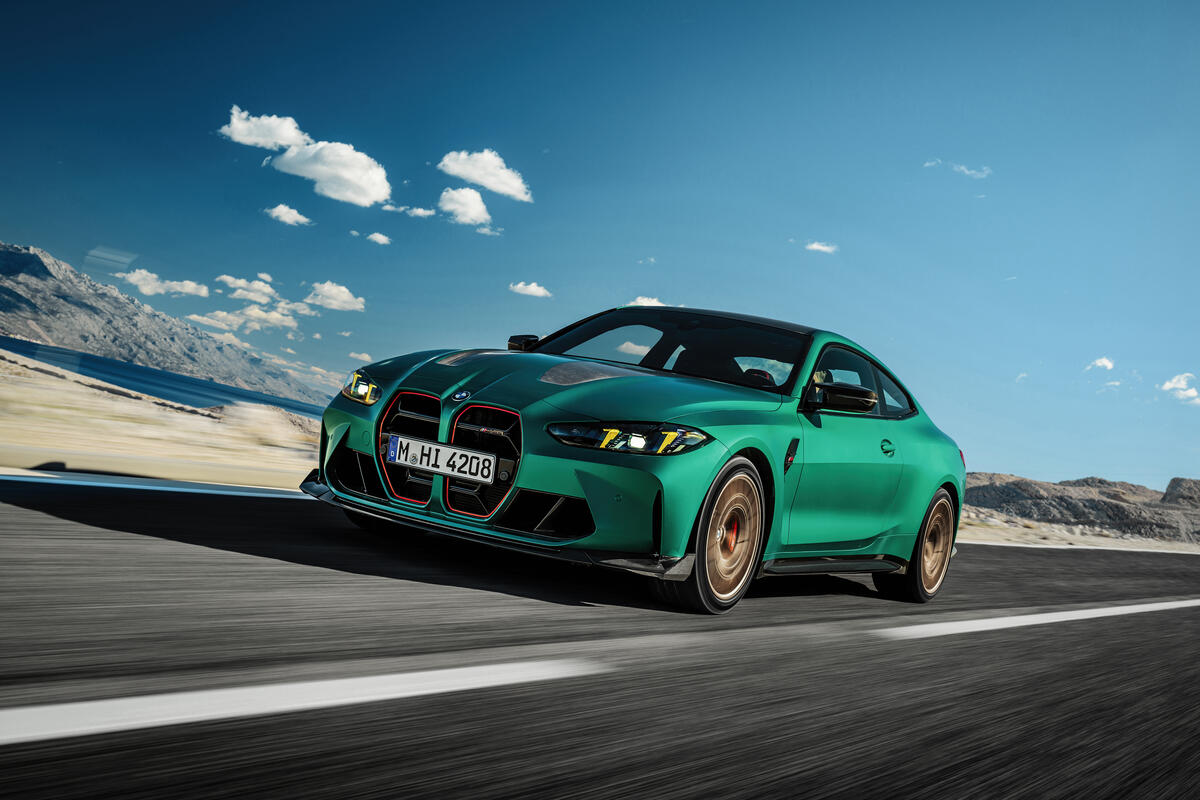
M4
"Oh, Taylor and I last week, we're a bit naughty, weren't we? What, on the M4? No, no, no, no. It was the M25 anyway."
The BMW M4 is a sporty BMW built for strong acceleration and handling. Here it’s mentioned just as a car they were talking about, not as a technical deep dive.
The BMW M4 is a performance version of the 4 Series, known for a high-output turbocharged straight-six and track-capable tuning. In the segment, it’s referenced as part of a joke about where they were driving.

Lupo 3L
"So, this is in an upcoming episode. Obviously, the TDC boys, they bought themselves a Lupo 3L, which is like one of the most fuel efficient cars you can ever buy, which is great because we're in a financial crisis at the moment."
The Volkswagen Lupo 3L is a tiny car designed to use very little fuel. The “3L” name is basically about extreme fuel economy.
The Volkswagen Lupo 3L is a very fuel-efficient small car known for its “3L” (about 3 liters per 100 km) economy focus. It’s often cited as one of the most frugal cars of its era, which is why the hosts mention it during a period of high fuel prices.
fuel efficient cars vs big engine cars
"So, then we thought, what about like really big engine cars? Yeah, surely they're really cheap. So, we've done the opposite at TDC. Yeah, the idea is that cars that aren't fuel efficient have now become really cheap because people can't afford to run them as much."
They’re basically talking about how expensive fuel changes people’s choices—so efficient cars stay attractive, and big-engine cars can get cheaper because they cost more to run.
The hosts discuss a contrast between fuel-efficient cars and large-engine cars, arguing that high fuel costs can change what buyers consider “cheap” to own. It’s a market/ownership mindset shift rather than a specific technical explanation.
oil pressure lamp
"[588.4s] Oh, so big. Really big. And what about the problem list? [592.7s] Enormous. Bigger than the engine. Okay, okay. What about the oil pressure lamp? Is that good? [597.5s] So, it works. It works. Works really well. We do know that it works, because on the M4,"
That “oil pressure” light is the car’s warning that the engine oil isn’t circulating properly. If it comes on, you should treat it as urgent and get it checked before driving too far.
An oil pressure lamp is a dashboard warning light that monitors engine oil pressure. If it illuminates, it usually means the engine may not be getting enough oil flow, which can lead to serious damage if ignored.
oil pressure issue
"and find out why it's illuminated. See if there is actually an oil pressure issue."
Oil pressure is how well the engine’s oil is getting pumped around. If the warning light is on, it can mean the engine isn’t getting enough lubrication, which can cause serious damage if ignored.
An “oil pressure issue” means the engine’s oil pump isn’t maintaining the correct pressure. Low oil pressure can starve engine parts of lubrication, which is why it’s treated as urgent when an oil-pressure warning light comes on.
supercharged
"So, he's got a Project 8, doesn't he? 600 horsepower, supercharged, blah, blah, blah."
“Supercharged” means the engine has a device that forces extra air into it. More air usually lets the engine make more power.
A “supercharger” is a forced-induction device that compresses incoming air to increase engine power. Because it boosts air density, it can make the engine produce more torque and horsepower than the same engine without boost.
fastest saloon on the Nurburgring
"Fastest saloon on the Nurburgring? Yes. I don't know if it still holds. I don't think it is now, but it works."
They’re talking about how fast a sedan-style car can go around the Nürburgring. It’s basically bragging rights based on lap times on a very tough race track.
This is a claim about lap-time performance at the Nürburgring, specifically for a “saloon” (a sedan-style car). It’s referencing how quickly a production car can complete a lap on one of the world’s most demanding tracks.
production
"It's the fastest combustion. Oh, okay. Production. Production. Yeah."
Here, “production” means the car is something regular buyers could actually purchase. They’re using that to say the lap-time claim is about a real customer car, not a custom-built race machine.
In this context, “production” means a car that’s built for customers (not a one-off prototype or race-only special). Lap-time comparisons often specify “production” to clarify the rules for what counts as a legitimate record.
Bista Sunday scramble
"Anyway, I went to the Bista Sunday scramble and I only took a few pictures, [742.6s] but one of them that I took was this."
This is the name of a car meet the speaker went to. They’re talking about the cars they saw there and sharing photos.
This is the name of the car event the hosts attended, where they took photos of cars they saw. It functions as a segment marker for “what was at the show” rather than a technical automotive subject.

B7 RS4 Saloon
"but one of them that I took was this. Oh, that is a red B7 RS4 Saloon. [750.1s] And it was mint with a capital M. It looked nicer in person."
This is an Audi RS4 from the B7 generation, and it’s a sedan (“saloon”). People call it “mint” when it looks like it’s in great condition. It’s a popular enthusiast car because it’s meant to feel sporty, not just get you from A to B.
The Audi RS4 is a performance version of the A4, and the “B7” refers to the generation. A “saloon” is a sedan body style, and the RS4 is known for its sporty, enthusiast-focused setup. When someone says it’s “mint,” they mean it looks extremely well-kept and clean.

Lotus Carlton
"and he sent me lots of pictures of a Lotus Carlton. [795.4s] I saw the nicest 996 Turbo... [814.7s] ...the Lotus Carlton. [822.5s] It was a mint Lotus Carlton."
The Lotus Carlton is a rare, performance-focused version of a regular family sedan. It’s special because it’s meant to be fast and exciting, not just comfortable. The speaker is saying they’d love to buy one, even if it’s not perfect.
The Lotus Carlton is a rare performance sedan built by Lotus in collaboration with Vauxhall/Opel-era engineering. It’s notable because it’s a “fast family car” concept: a luxury saloon with serious performance hardware. The speaker is specifically interested in owning one, including examples that are either crashed or high-mileage.
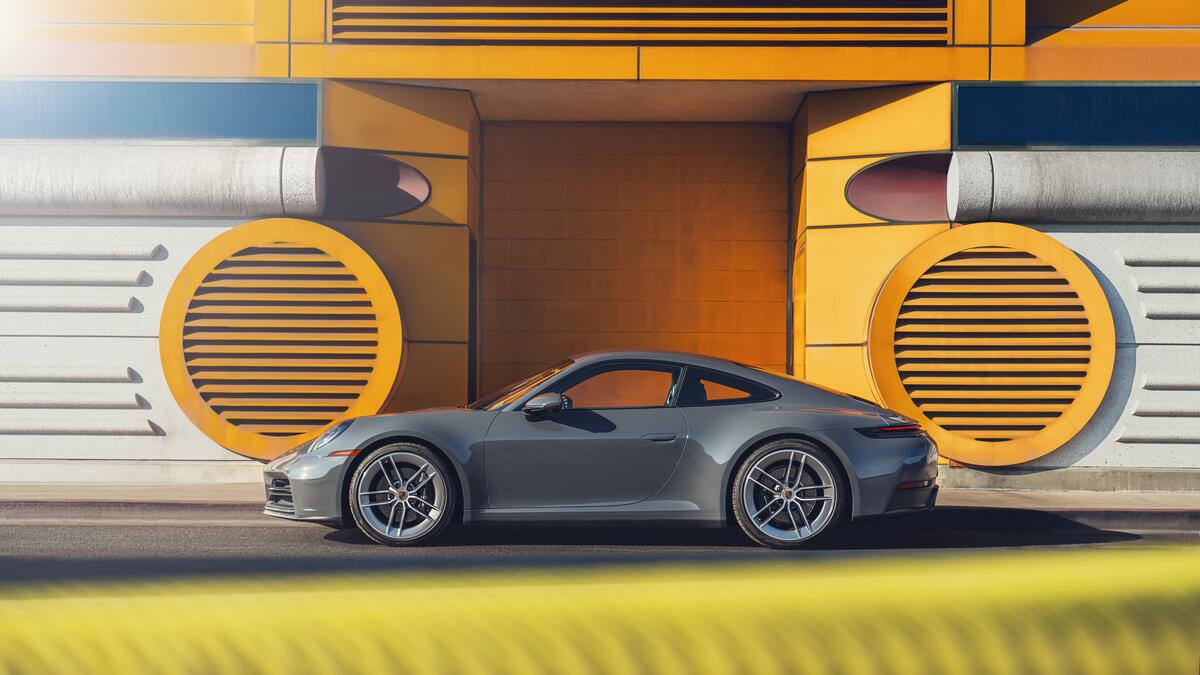
996 Turbo
"I saw the nicest 996 Turbo. That could be your suit. It could be, it's not, but it could be. [801.4s] It was so, so nice."
This is a Porsche 911 Turbo from the 996 generation. “Turbo” means the engine uses a turbocharger to make more power. The speaker is basically saying it was one of the nicest cars they saw.
“996 Turbo” refers to the Porsche 911 Turbo from the 996 generation. The 996-era 911 Turbo is a well-known performance model that uses forced induction (turbocharging) to deliver strong power. In the transcript, it’s mentioned as a standout car the speaker saw at the event.

Dodge Charger
"And you met Johnny Smith as well, didn't you? [808.5s] Yeah. Do you know what? Johnny Smith... [811.8s] He's got a [814.7s] 68 Dodge Charger. It's really cool."
This is a 1968 Dodge Charger, which is a classic American muscle car. Muscle cars are known for big engines and a sporty, aggressive look. The speaker is impressed because it’s one of those iconic cars.
The Dodge Charger is a classic American muscle car, and “68” indicates the 1968 model year. This generation is especially recognizable for its bold styling and strong enthusiast following. The speaker mentions it as Johnny Smith’s car and highlights that it’s “really cool.”
high mileage
"Please, someone, if you've got a crashed one or a really high [827.1s] mileage one, please let me know. I'd love to own one of those."
“High mileage” means the car has been driven a lot. That can mean more parts have worn out over time, so it may need more repairs. The speaker is saying they’d still consider one even if it’s high-mileage.
“High mileage” means the car has been driven a lot, usually implying more wear on components and potentially higher maintenance needs. In buying terms, it often affects price and the likelihood of deferred maintenance. The speaker is asking for a high-mileage example of the Lotus Carlton.
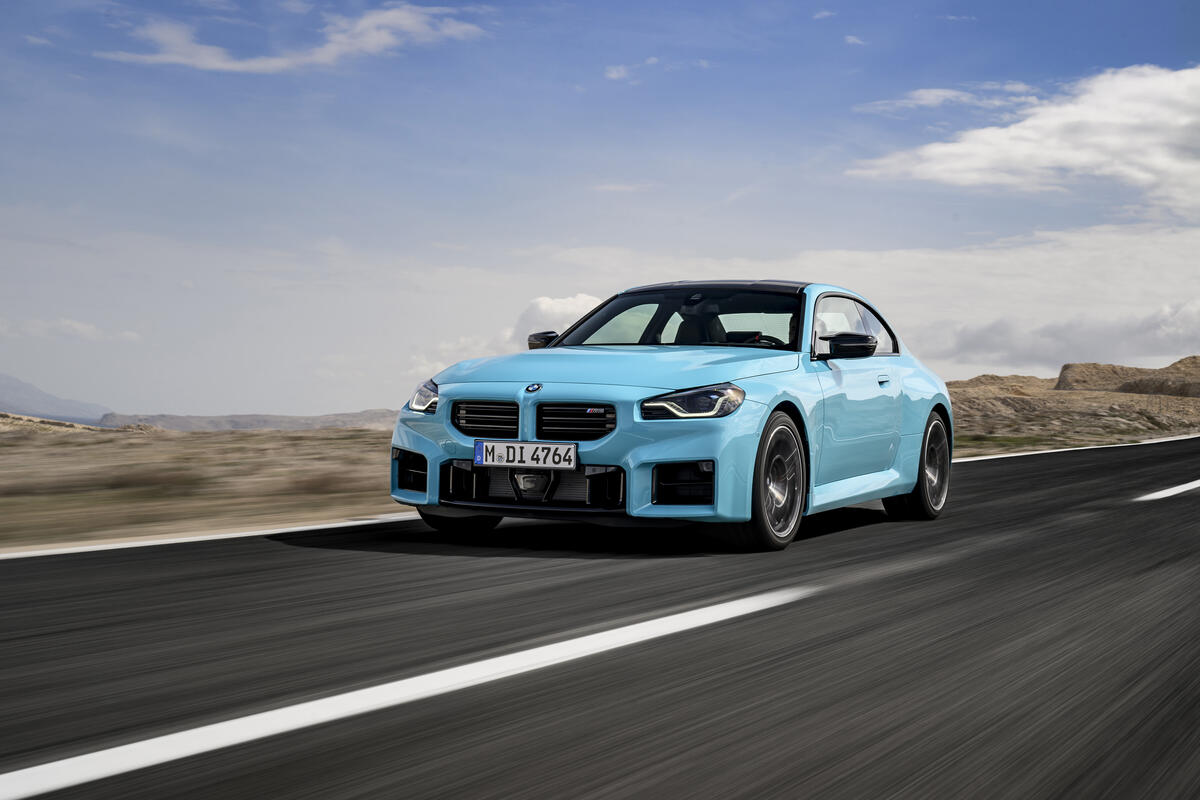
BMW M2
"[841.1s] they go up in value. I can only go by the one thing that you kept saying that you really wanted [844.8s] to own. So it must be a BMW M2 because you didn't shut up about that."
The BMW M2 is a sporty BMW made for driving fun. People like it because it’s not huge, but it still feels fast and exciting.
The BMW M2 is a compact, performance-focused sports coupe from BMW’s M division. It’s popular as a “daily” enthusiast car because it’s smaller and more agile than bigger M models while still delivering strong driving feel.

Ferrari 360
"[868.9s] before they go up in value. Is it Italian? Yeah. Is it Fiat? No. Italian. Oh, not a 360. [875.8s] It is a Ferrari 360. Boring."
The Ferrari 360 is a real Ferrari supercar—mid-engine and built to be exciting to drive. The hosts are basically saying it can be less expensive than some other exotic cars.
The Ferrari 360 is a mid-engine supercar from Ferrari, known for its classic styling and V8 performance. In the discussion, it’s treated as an attainable entry point into Ferrari ownership compared with other exotic brands.
tow bar
"[884.5s] priced. And I think, could you imagine me with a Ferrari? No, I couldn't. I can't. No, just don't. [890.7s] I could imagine you with Ferrari with a tow bar. But like a car like that, I'd love to be able to"
A tow bar is the hitch you attach to a car so it can tow a trailer. They’re joking because towing isn’t something you’d normally do with a Ferrari.
A tow bar is a hitch-mounted device that allows a vehicle to tow a trailer. The host jokes about putting a tow bar on a Ferrari 360, which highlights how unusual towing is for that kind of car.
Lamborghini
"[896.6s] say, you know, I bought a Ferrari or something like that because they are quite compared to all [901.5s] the other cars of that. I mean, the Lamborghini, it was parked next to it's parked next to a [905.2s] Gallardo."
Lamborghini is another famous Italian supercar brand. They mention it to compare how expensive different exotic cars are.
Lamborghini is the Italian supercar brand being used here for price and ownership comparisons. The speaker contrasts a Lamborghini Gallardo’s cost with the Ferrari 360’s lower price point.

Lamborghini Gallardo
"[901.5s] the other cars of that. I mean, the Lamborghini, it was parked next to it's parked next to a [905.2s] Gallardo. That's 100, 120 grand car."
The Lamborghini Gallardo is a Lamborghini supercar. They’re using it as an example of a car that costs a lot more than the Ferrari 360.
The Lamborghini Gallardo is a V10-powered Lamborghini supercar that became one of the brand’s most common “entry” models. Here it’s referenced as a very expensive car parked next to the Ferrari 360, highlighting relative pricing.
engine is out
"[935.9s] All right. OK. Dips from P1 Autocase bought my 360. Has he got any further with it? [941.0s] The engine is out. He's had a look at the frame because they've got a frame jiggery [945.0s] poking machine and he said it's actually not as bad as he thought."
“Engine is out” means the engine has been taken out of the car. It usually happens when the car needs serious work, not just a quick fix.
“Engine is out” means the engine has been removed from the car for repair or inspection. That’s a major job on a mid-engine supercar because it usually requires significant disassembly and careful reassembly afterward.
frame
"[941.0s] The engine is out. He's had a look at the frame because they've got a frame jiggery [945.0s] poking machine and he said it's actually not as bad as he thought. Like on the one side,"
Here, “frame” means the car’s main structure that everything bolts to. If it’s bent or damaged, the car may not line up right even after you fix the outside.
In this context, “frame” refers to the car’s structural body/chassis structure that determines alignment and crash integrity. Damage to the frame can affect how straight the car sits and whether panels line up correctly after repairs.
scissor jack lift
"We've got so much more equipment. We were on a scissor jack lift at that point. And I feel like we didn't we didn't show out like we didn't do what we could have done now."
A scissor jack lift is a small device that raises a car using a folding “scissor” mechanism. It helps you get underneath for work, but it’s usually more limited than a proper car lift.
A scissor jack lift is a compact lifting platform that raises a vehicle using a scissor-like mechanism. It’s commonly used in garages for quick access, but it’s not as stable or convenient as a full two-post or four-post lift.

BMW G31
"So Rory's been borrowing my G 31 530 D touring my daily driver. Why is that Rory? Because everything's broken. Everything's broken. Everything's broken."
That’s a BMW 5 Series wagon (Touring) from the G31 generation, and “530d” means it’s the diesel version. They’re talking about problems it’s having while it’s being used day-to-day.
This refers to a BMW 5 Series Touring in the G31 generation, specifically a 530d (the “d” indicates a diesel). The hosts are discussing it as a daily driver and the issues that have come up while it’s been borrowed.
Carly
"And then I realized you had a Carly in the center console. So do I? Yeah, I plugged it in. And then I then scanned it."
Carly is a diagnostic gadget that plugs into the car and helps you read error codes. It can point you to what’s wrong so you don’t have to guess.
“Carly” refers to the Carly diagnostic tool/app used to read and clear fault codes from a car’s systems. It’s commonly used by owners to identify issues like brake warnings or sensor faults.
rear brake pads
"I plugged it in. And then I then scanned it. I found out he had needed rear brake pads and well, or just a sensor."
Brake pads are the parts that squeeze against the brake discs to slow the car down. If the rear pads are worn, you’ll get warnings and you’ll need to replace them soon.
Rear brake pads are the friction material on the rear brakes that clamp against the brake rotors to slow the car. When they wear down, braking performance drops and the car may trigger a warning.
sensor
"I found out he had needed rear brake pads and well, or just a sensor. So I ordered both of them."
A sensor is a small electronic part that tells the car something needs attention. Here, it’s likely tied to the brake system—either it’s warning that the pads are worn or that the sensor is acting up.
In this context, a brake sensor likely refers to a brake pad wear sensor (or related brake warning sensor) that triggers a dashboard alert when the pads reach a certain wear level. Sometimes the pads may be okay but the sensor itself can fail, causing warnings.
key battery
"So I ordered both of them. And I was like, oh, look, it's also coming up. Key battery. So I ordered a key battery."
The key fob has a battery inside it. When it’s low, the car warns you and the keyless features can start acting unreliable.
A key battery is the power source inside the vehicle’s key fob. When it gets low, the car may warn you and keyless functions (like remote locking/unlocking or starting) can become unreliable.
service due
"And then the service due, even though you've had a service on it. So I then reset that. No services due again."
“Service due” is the car’s reminder that it thinks routine maintenance is coming up. If you really did the service, you usually reset the reminder so it doesn’t keep nagging you.
“Service due” is a maintenance reminder shown by the car’s onboard system, typically based on time and/or mileage since the last service. Resetting it after maintenance prevents the warning from returning until the next interval.
number plate
"...what was the other thing that kept your number plate, your number plates, half off, which then causes the front parking sensor to go off..."
Your number plate is the license plate on the car. If it’s loose, it can move around and cause problems—like confusing the car’s sensors.
A number plate is the license plate mounted on the front and/or rear of a vehicle. If it’s loose or hanging off, it can interfere with sensors or other bumper-mounted components, potentially triggering false warnings or reducing protection.

BMW 335D touring
"...the other day I turned up in my 335D touring and I was reversing and I put it in reverse and it was just going beep because my number plate's hanging off..."
This is a BMW 3 Series diesel wagon (“touring”). They’re talking about it while reversing, when the parking sensors started beeping because the license plate was loose.
The BMW 335d is a 3 Series diesel model, and “touring” refers to the wagon/body style (estate) variant. In this segment, it’s mentioned in the context of reversing and the parking sensors beeping due to a hanging number plate.
Shedfest
"And look how far we've come now. Three days we have got Shedfest, the biggest show of our lives. We're expecting 12,000 of you at Bolesworth Castle on Saturday."
They’re talking about their big event called Shedfest. It’s not related to car tech.
Shedfest is the name of a big show/event they’re preparing for. It’s discussed in the sponsor segment, not as an automotive concept.
Bolesworth Castle
"We're expecting 12,000 of you at Bolesworth Castle on Saturday. Are you bricking it or are you doing all right?"
They’re telling you where their big event is happening. It’s part of the sponsor break, not about cars.
They mention Bolesworth Castle as the venue for Shedfest. It’s a location detail tied to the episode’s sponsor segment rather than a car topic.
Luton van
"There were like four of us about 20 minutes to unbox a Luton van. Yeah. Yeah. There are so many clothes that we've got now."
A Luton van is a delivery van with extra headroom for cargo. They’re describing a delivery they received for their event.
A “Luton van” is a type of box truck/van with a raised cargo area (often called a “Luton” roof) used for deliveries and moving goods. In this segment, it’s referenced as the delivery vehicle they unboxed items from.

Range Rover L322 4.2 supercharged
"Anyway, you've been driving my car. Yeah. Blah, blah, blah. I've been driving my Range Rover L322 4.2 supercharged. It's fantastic. Leaky. Yeah. Very, very leaky. It's a Land Rover product."
This is a Land Rover Range Rover from the L322 generation, with a 4.2-liter engine that’s “supercharged.” A supercharger helps the engine make more power by pushing extra air in.
The Land Rover Range Rover L322 is a specific generation of the Range Rover, and “4.2 supercharged” refers to a 4.2-liter engine with a supercharger. A supercharger forces more air into the engine, which typically boosts power compared with a non-supercharged setup.
power steering fluid
"But it's really bad. I had to top up the power steering fluid again. Oh, really? And then on my driveway this morning, I was like, that's a big leak."
Power steering fluid is the liquid that helps your steering feel light. If it leaks, you might notice it running low and steering can get harder.
Power steering fluid is the hydraulic fluid used in many cars to help the steering system turn with less effort. If it’s low or leaking, steering can feel heavier and you may also see puddles under the car.

BMW M5
"I've bought some new wheels for my M5. Oh, the wheels. Do you know, I must admit, when you first bought them..."
The “M5” is a fast, performance-focused BMW. Taylor is saying he bought new wheels for his BMW M5 and is excited about how it looks.
“M5” refers to the BMW M5, a high-performance version of the BMW 5 Series. In this segment, Taylor is talking about upgrading the wheels on his M5 and how the new look affects the car’s stance and style.
stance boy
"I was like, I think they're a little bit too stance boy for that car."
“Stance boy” is slang for a car that’s modified mainly to look super low and showy. They’re joking about whether the wheel choice makes the car look too “style-first.”
“Stance boy” is slang for a car style focused on very low ride height and aggressive wheel/tire fitment, often prioritizing appearance over everyday practicality. In the conversation, it’s used to question whether the wheels suit the BMW M5’s look.

BMW E88S
"...s. I've always wanted a set. They're a set of BBS E88s and I bought them while we were in Cornwall away..."
The BMW 1 Series is a smaller BMW designed for everyday driving. In the podcast, they’re talking about a specific 1 Series version (E88) and mentioning BBS wheels. It’s basically a conversation about parts and upgrades for that car.
The BMW 1 Series is a compact premium hatchback/small car line from BMW, and the podcast specifically references an E88 (a 1 Series variant). It’s mentioned in the context of wheels—specifically BBS E88 wheels—suggesting a discussion about fitment, upgrades, or parts. That kind of talk is common when owners personalize or restore older BMWs.
BBS E88s
"They're a set of BBS E88s and I bought them while we were in Cornwall away."
BBS makes aftermarket wheels. Taylor is excited because he finally found a specific BBS wheel design he’s always wanted.
BBS is a wheel brand known for high-quality, performance-oriented rims. “E88” is a specific BBS wheel model/design, and Taylor says these are his dream wheels.
Michelin rubber
"They look in Goodnick as well. They've got nice Michelin rubber on them now."
They’re talking about the tires—specifically Michelin tires. Tires affect how the car grips the road and how it feels to drive.
“Michelin rubber” refers to Michelin brand tires. The phrase emphasizes that the wheels now have Michelin tires mounted, which matters for grip, ride feel, and track-day confidence.
Pilot Sport 4Ss
"Yeah. Pilot Sport 4Ss. I put a new set on."
Pilot Sport 4S is a specific Michelin tire model. It’s made for sporty driving and good grip, but it can be pricey.
Pilot Sport 4S is a Michelin “ultra-high-performance” tire line designed for strong grip in both dry and wet conditions. Taylor mentions them because they’re a major part of why the tires are expensive and why he’s considering whether to drive hard at the event.
burnout
"You're going to do a little burnout or maybe some donuts. I won't do a burnout."
A burnout is when you spin the tires to make them smoke and heat up. Taylor says he won’t do that because it would chew up his tires.
A burnout is when a driver spins the tires while the car is stationary or moving very slowly to heat up the rubber and sometimes create smoke. Taylor says he won’t do one, implying he wants to avoid extra tire wear.
donuts
"You're going to do a little burnout or maybe some donuts. I won't do a burnout. I'll do some skids."
Donuts are when you drive in circles with the tires spinning, usually for fun. Taylor is hinting he might do that, but it can wear tires quickly.
“Donuts” are tight circles driven with the rear tires spinning (often with traction control off or reduced). Taylor suggests he might do donuts “for the people,” which would also accelerate tire wear.
skids
"I won't do a burnout. I'll do some skids. Do some donuts for the people."
A skid is when the tires lose grip and the car slides. Taylor is saying he’ll do sliding maneuvers instead of a burnout.
“Skids” refers to losing traction so the tires slide instead of gripping normally. Taylor says he’ll do skids instead of a burnout, which still implies aggressive driving that can stress tires.
GoFundMe
"We're going to set up a GoFundMe for you. For my tyres."
GoFundMe is a website where people ask for donations for a cause. They’re joking about starting one to help pay for Taylor’s tires.
GoFundMe is a crowdfunding platform where people raise money for specific causes. Here, it’s mentioned as a joke about getting donations to cover Taylor’s expensive tires.
tyres
"And you're worried about tyres at Shedfest? Yeah. And you would drive it on the Nurburgring? Yeah, but that's a little while away. So I'll get a bit of use out of them. It's only because they're brand new."
Tyres are the tires on the car. New tires often feel a bit different at first, so people “wear them in” to get better, more consistent grip.
“Tyres” are the tires themselves, and here the hosts are discussing how new tires need time to settle in before harder driving. They also mention “wear them in,” which is about getting consistent grip after initial use.
release agents
"Yeah, but maybe they've got like the release agents on them. You need to just, you know, burn a little bit. Oh, wear them in a bit. Yeah, wear them in."
“Release agents” are chemical coatings used during manufacturing or storage to prevent rubber from sticking to molds or packaging. On brand-new tires, they can temporarily affect grip until the surface is cleaned off through driving.

205 GTI
"So yeah, I have sold my 205 GTI. It has been purchased by LLF. Yeah. And they are currently raffling it."
The Peugeot 205 GTI is a classic sporty small car. It’s well-liked by enthusiasts, and here they’re saying they sold theirs and it’s being raffled.
The Peugeot 205 GTI is a classic hot hatch known for its lightweight feel and enthusiastic driving character. In the segment, the hosts talk about selling it and having it raffled, which highlights its collector appeal.
LLF
"So yeah, I have sold my 205 GTI. It has been purchased by LLF. Yeah. And they are currently raffling it."
LLF is the group that bought the car and is running the raffle for it. They’re the ones you’d check to buy a ticket.
LLF is referenced as the organization that purchased the Peugeot 205 GTI and is now raffling it. The context suggests a collector/raffle platform or group rather than an automotive manufacturer.
machine polished
"Yeah. So you forget how nice that blue is on the, on the truck, especially when it's cleaned up a bit. It's, I'll be honest, I have machine polished it."
Machine polishing means using a machine to clean up the car’s paint. It helps remove small scratches and makes the paint look shiny again.
Machine polishing is using a power polisher to remove light scratches, oxidation, and swirl marks from paint. It typically uses abrasive compounds followed by finer finishing steps to restore gloss.
270,000 miles
"For something that's done nearly 270,000 miles. That is crazy. It actually looks really well."
Mileage is basically how many miles the car has been driven. More miles usually means more parts have worn out over time, so maintenance matters.
Mileage is how far a vehicle has been driven over its lifetime. High mileage doesn’t automatically mean the car is bad, but it does raise the odds of wear items needing maintenance.
heat shields
"So it's had a few more bits done. because I was doing some more working out. I found a little bit more rust under some of the heat shields and stuff."
Heat shields are protective metal plates near the exhaust. They help keep heat from damaging other parts of the car.
Heat shields are metal covers mounted near hot exhaust components to protect nearby wiring, floors, and body panels from excessive heat. They can rust or loosen, and that can expose other areas to corrosion.
rust free
"So that car I can now say is rust free, which is a bit mad really. Like considering how much rust we found on it."
“Rust free” means the car doesn’t have corrosion in the places that matter. Rust can quietly get worse, so a rust-free car is generally healthier and worth more.
“Rust free” means the body and key areas have little to no corrosion, which is a major value and longevity factor for older cars. Rust can spread under panels, so achieving rust-free status usually involves careful inspection and repairs.
window regulator
"I've got a few more little bits to do on it. I've got a new window regulator to put on it and a few bits and bobs."
The window regulator is what makes the window go up and down. If it’s failing, the window may get stuck or move slowly, so replacing it fixes the problem.
A window regulator is the mechanism that moves a car’s power window up and down. It can be driven by a motor and is often replaced when the window won’t move smoothly or at all.
trailer attached
"And I'm actually driving this car up to Shedfest with the trailer attached. I'm having my six series on the back."
A trailer attached means the car is towing something behind it. Towing is harder on the car than normal driving, so you want everything in good shape before you go.
Towing with a trailer attached means the vehicle is pulling an additional load behind it. This increases stress on brakes, tires, cooling, and drivetrain, so preparation matters—especially for older cars.
hybrid turbos
"And for me, it's a bit, it's a bit of a medal. Like a question. This is obviously got hybrid turbos. Yes."
“Hybrid turbos” means the turbo system isn’t the simplest stock setup. It’s usually a mix of turbo parts to change how quickly it spools and how much boost it can make.
“Hybrid turbos” usually refers to a turbocharger setup that combines components (like a different turbine/compressor or housings) to achieve a specific boost response and power goal. It’s not a single standardized factory term, so the exact parts matter for how the car behaves.
tuned
"Is it going to get a little bit of a tune up at some point? It needs to because the last time I towed with it... I do need to get it tuned."
“Tuned” means adjusting the car’s computer settings. If the turbo setup has changed, the tune helps the car control boost correctly.
“Tuned” here means updating the engine’s calibration (engine mapping) so the car’s boost targets and fueling match the current turbo hardware. A proper tune can prevent boost-related fault codes and improve drivability.
overboosting code
"The last time I towed with it or Jamie towed with it, it did actually go into limo because it came up with an overboosting code because it's not mapped to how much boost it has now."
An “overboosting code” is an error message the car logs when it thinks the turbo is making too much boost. That can be caused by the tune not matching the turbo setup.
An “overboosting code” is a diagnostic trouble code triggered when the engine control system detects boost pressure higher than what it expects. This can happen if the turbo/boost setup or engine mapping doesn’t match the current hardware.
limit mode
"If you absolutely boot it like up, up a hill full boost with a trailer attached, it will go into limit mode."
“Limit mode” is when the car deliberately reduces power to protect itself. It usually happens when the car senses something isn’t right under hard driving.
“Limit mode” is a protective strategy where the car restricts power when it detects an issue or an unsafe operating condition. In this context, it’s triggered when the driver requests full boost under heavy load (hill + trailer), likely due to the current mapping/boost control.
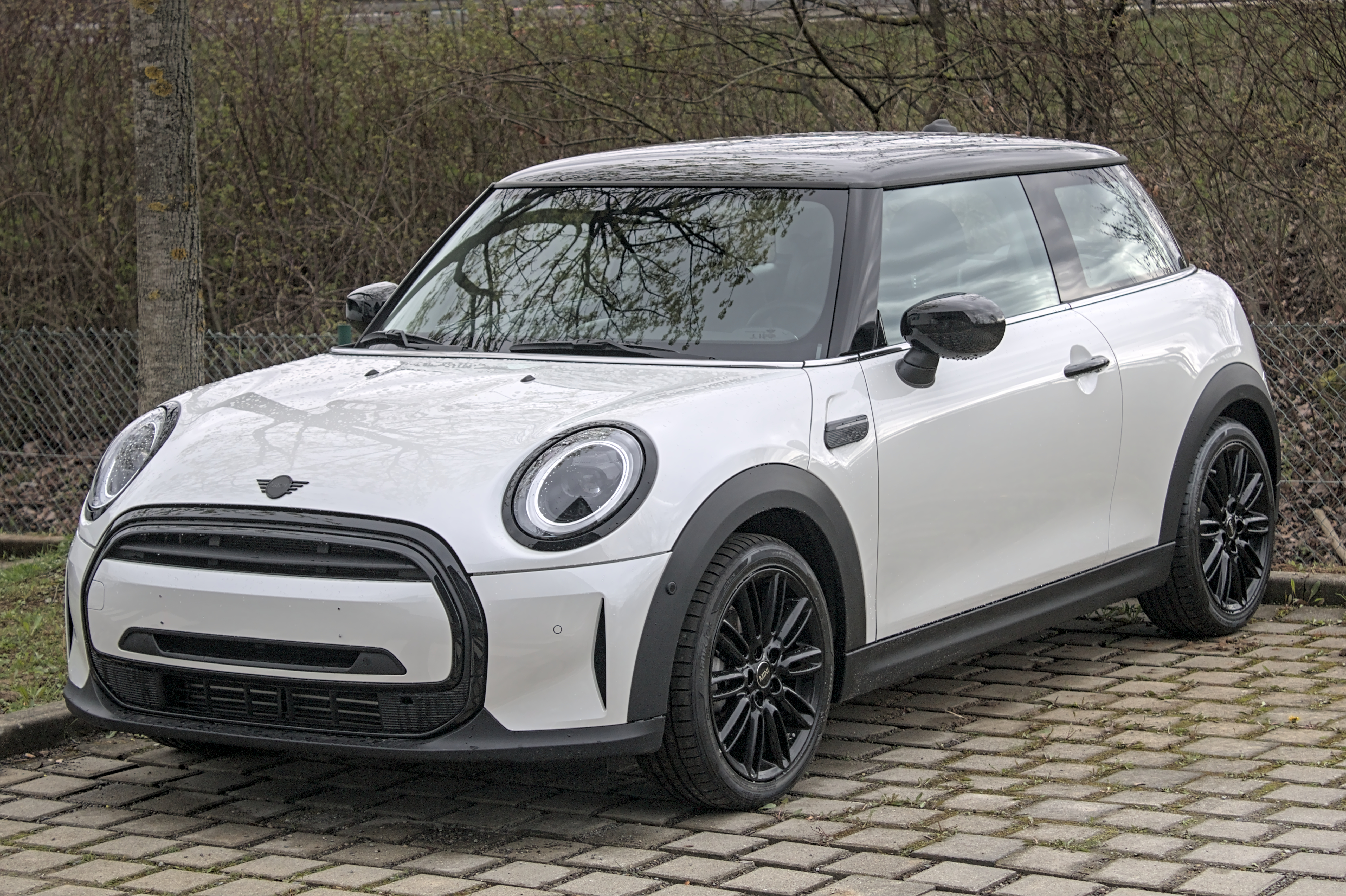
mini R56
"“...the point of being at Landau was to race your mini R56 versus going to be the finale of the mini series... We did a compression test on the mini because it was misfiring at idle.”"
“R56” is the internal generation code for a Mini hatchback. They’re saying their Mini R56 is the car they raced and then later tested because it started misfiring.
The Mini R56 refers to the second-generation Mini hatchback platform (commonly called the R56). In this segment, they’re talking about racing and diagnosing a misfire issue on their Mini R56.
compression test
"“...there’s a little clip and it’s a clip of what Rory? We did a compression test on the mini because it was misfiring at idle. And one of the cylinders is lower than the other.”"
A compression test measures how much pressure each cylinder can build during cranking. If one cylinder reads much lower than the others, it often points to internal engine problems like worn piston rings, a leaking valve, or a head-gasket issue.
misfiring at idle
"“We did a compression test on the mini because it was misfiring at idle. And one of the cylinders is lower than the other.”"
Misfiring at idle means the engine isn’t running smoothly when it’s idling. That can happen if spark or fuel delivery is off, or if there’s a mechanical problem inside the engine.
A misfire at idle means one or more cylinders aren’t combusting properly when the engine is running slowly. Common causes include ignition issues (spark plugs/coils), fuel delivery problems, vacuum leaks, or—if compression is low—mechanical engine wear.
cylinders
"“...one of the cylinders is lower than the other. Yeah. So I've got 200 in free and 101.”"
Cylinders are the engine’s “work chambers.” Each one should behave similarly; if one cylinder is weaker, it can cause the engine to run rough or misfire.
Cylinders are the individual chambers in an engine where the air-fuel mixture is compressed and burned. When one cylinder shows different results (like lower compression), it can explain symptoms such as rough idle or misfires.
freshly rebuilt engine
"[2200.0s] It's a freshly rebuilt engine as well. And we did run it in as well..."
They’re saying the engine was rebuilt recently, so it should be healthy. After a rebuild, you usually need careful break-in and correct maintenance so it lasts.
A “rebuilt engine” means the engine was taken apart and restored with new or reconditioned internal parts. “Freshly rebuilt” implies it was recently rebuilt and should be in good condition, assuming break-in and maintenance were done correctly.
run it in
"...And we did run it in as well. Like you did a thousand miles on it without boosting it..."
They mean they followed a break-in process for the rebuilt engine. That’s a careful early period where you don’t push it too hard so parts wear in properly.
“Run it in” refers to an engine break-in period after rebuild or major work. The idea is to gently seat components and verify everything is functioning before harder use.
oil change
"...And then we'd done an oil change on it and stuff like that. And then it had another oil change just before it went to Landau as well."
They changed the engine oil after the break-in. Fresh oil helps keep the engine clean, especially after rebuilding.
An “oil change” is replacing the engine oil and filter to remove contaminants and metal particles from normal wear. After an engine rebuild, oil changes are often done more frequently to help protect bearings and other internal parts.
boosting it
"...Like you did a thousand miles on it without boosting it. And then we'd done an oil change..."
They’re talking about using turbo/supercharger boost. During break-in, you often avoid boost so the new engine parts aren’t under heavy load right away.
“Boosting” refers to running a turbocharger or supercharger to increase intake pressure above atmospheric levels. Avoiding boost during break-in reduces stress on fresh engine components.
1320
"...it's been properly tuned by 1320 now. It's got a really, really good tune on it."
They say “1320” tuned it properly. That means a specialist adjusted the engine settings so it runs right with the car’s modifications.
“1320” is referenced as the shop that properly tuned the car/engine. In this context, it’s likely a performance tuning company that adjusts engine calibration (fuel/ignition/boost control) for the setup.
warranty
"...they contacted us saying that because they knew who I was... that there was no warranty on it because they hate people from Birmingham... because the car was modified..."
They’re talking about whether the engine seller will cover repairs under warranty. The seller says they won’t because the car is modified.
In this segment, “warranty” is discussed as a coverage promise that may be denied if the engine is considered “modified.” The key point is that some sellers refuse warranty claims when they believe the vehicle setup differs from what they tested.
stock turbo
"...it's got a very good tune on it and a stock turbo. But they don't know that."
They’re saying the turbo is basically the factory one. That usually means the boost levels aren’t as extreme as with a bigger aftermarket turbo.
A “stock turbo” means the turbocharger is the original factory unit (or at least not an upgraded aftermarket turbo). Using a stock turbo can limit how aggressive the boost levels are compared to bigger turbo setups.
misfire
"my Jaguar's lost a cylinder somehow. What's happened to it? It just fell out. [2334.0s] So that's misfire. I'll put it back in."
A misfire means one cylinder in the engine isn’t firing correctly. The car may feel shaky or weak, and it can lead to bigger problems if you keep driving it.
A misfire is when an engine cylinder fails to ignite properly during combustion. It can cause rough running, loss of power, and can sometimes damage components if it continues.
BMW E46
"I've got my BMW E46 and I've got the Range Rover, my 600 pound Range Rover. And both of them also... [2360.9s] ...And then also then my E46, we tried to do some brakes and it looks like the brakes have had some, some modifications that needs changing, which now means that it needs to be made safe."
The BMW E46 is a specific generation of the BMW 3 Series. Here, they’re dealing with brake issues—especially because the brakes have been changed before and now need to be corrected for safety.
BMW E46 refers to the 3 Series generation from the late 1990s to early 2000s. In the segment, the E46 is having brake work done, with the speaker saying the brakes have been modified and need to be made safe.
gearbox
"annoyingly, it looks like one of the seals is leaking, which involves just taking the gearbox back out again. So that was a massive job. [2360.9s] we found out on Friday."
The gearbox is the part that sends power from the engine to the wheels. If they have to take it out to fix a leak, it usually means the repair is complicated and time-consuming.
A gearbox is the transmission assembly that changes engine speed to deliver power to the wheels. Removing it for a seal leak is a sign the leak is in an area that’s only accessible with the drivetrain separated.
brakes
"And then also then my E46, we tried to do some brakes and it looks like the brakes have had some, some modifications that needs changing, which now means that it needs to be made safe."
Brakes are what help the car slow down and stop. They’re saying the brakes have been altered before and now need work so the car is safe to drive.
Brakes are the safety-critical system that slows and stops the vehicle. The speaker notes prior brake modifications that now need changing to make the car safe, implying the setup may not be functioning correctly or may be improperly configured.
Mini Cooper S
"[2482.2s] do I just do I just admit defeat and just I've had offers for the three and a half that I said, [2488.4s] and just go or do I I mean, a man on Instagram has offered me an engine for free. [2493.9s] What what engine? It's just a Cooper S, but he knows nothing about it."
A “Mini Cooper S” is a sportier version of the Mini. Here they’re talking about possibly using an engine from one Mini Cooper S to fix or improve another Mini.
“Mini Cooper S” is a performance-oriented trim of the Mini brand, typically using a turbocharged engine in many generations. In this segment, they’re discussing whether to swap in an engine from a Cooper S into another Mini project.
engine swap
"[2488.4s] and just go or do I I mean, a man on Instagram has offered me an engine for free. [2493.9s] What what engine? It's just a Cooper S... [2526.5s] Yeah. And then make a good engine. Yeah. Well, we still don't know what's wrong with the new engine yet."
An engine swap means putting a different engine into the car (sometimes using parts from more than one engine). They’re discussing different swap options to fix what’s wrong with their current engine situation.
An engine swap is replacing one engine with another (or mixing parts from multiple engines) to get a car running again. Here, they’re weighing options like using a free Cooper S engine versus buying an N18 car and transferring components, because they’re trying to solve an issue with the “new engine.”
N14
"[2493.9s] What what engine? It's just a Cooper S, but he knows nothing about it. Is it an N14? No, don't [2499.5s] do it. Or do we do another thing where we buy an N18 one, which is an N18 car, an N18 car,"
N14 is an engine “type” used in certain Minis. They’re trying to figure out which exact engine it is so they don’t accidentally swap in the wrong one.
N14 refers to a specific engine family used in some Mini models. The hosts are debating whether the offered engine is an N14 (and whether it’s the right one for their car), because different engine variants can have different issues and compatibility.
N18
"[2508.5s] and just take all the bits off and put it on an N18 car. Because the bits on that car are worth [2514.4s] quite a lot of money. Yeah. So like if we got one from Copa or something, that would be fun. [2519.6s] Do we take the original engine and combine the top of that one and the bottom of that one?"
N18 is another specific engine “type” used in some Minis. They’re considering using that engine instead because it may be a better match for their project.
N18 is another Mini engine family designation. The discussion suggests they’re considering buying an N18-powered car/engine and transferring parts (“bits”) to build a working setup, implying the engine variant matters for what can be swapped and what might be failing.
mixing the top and bottom of two engines
"[2519.6s] Do we take the original engine and combine the top of that one and the bottom of that one? [2526.5s] Yeah. And then make a good engine. Yeah. Well, we still don't know what's wrong with the new engine yet."
They’re talking about taking parts from two different engines—using the upper part from one and the lower part from another—to build a working engine. It can work, but you have to make sure the parts are compatible and that you’re fixing the real problem.
“Top” and “bottom” refer to major engine sections—typically the upper assembly (like the cylinder head) and the lower assembly (like the block/pan area). Combining parts this way is a common DIY/repair strategy when you want the best components from two engines, but it requires careful matching and verification of what’s actually failed.
new engine
"“because when I put the new engine in it started leaking, you did that big screen.”"
They’re saying they put in a new engine, but then the car started leaking afterward. That suggests the repair didn’t fully solve the problem.
“New engine” indicates they previously replaced the engine in the car, and afterward it started leaking. Engine swaps/replacements can introduce new issues if installation, seals, or related components aren’t done correctly.
b-force
"“do I just do the really sensible thing and buy an F 56 with a b-force?”"
They mention “b-force” as part of the MINI they’re thinking about buying. It sounds like a specific version or option, but this clip doesn’t explain what it is.
“b-force” appears to be a trim/variant or package name tied to the MINI F56 they’re considering. Without more context in the excerpt, it’s unclear exactly which official name or option it refers to.
alignment
"Yeah. There was a comment where basically Taylor was doing an alignment on my car and in the video, he says, isn't it ironic that I'm the only one that can make your car straight?"
Wheel alignment is when a shop adjusts the angles of your wheels so the car drives straight. If it’s off, the car can pull and tires can wear out faster.
“Alignment” refers to wheel alignment—adjusting the angles of the wheels so the car tracks straight and wears tires evenly. When someone says they were “doing an alignment,” it usually means setting specs like toe and camber for proper handling and tire life.

Mustang
"Well, that and the fact that my Mustang turned up. Oh, yeah. But then in my despair, I was sitting there going,"
The Ford Mustang is a popular American performance car. They’re basically saying that if you put money into one, it may still be worth a lot when you sell it.
The Ford Mustang is a long-running American muscle car line. In this segment, it’s used as an example of a car where spending money on it can increase its value relative to what was invested.
tune it
"If you happen to then buy one and then think about modifying it, don't. If you then want to tune it, don't. And then if you want to then take it on track, don't."
To “tune it” usually means changing the car’s settings so it performs differently. They’re saying that doing that to this Mini can turn into an expensive mistake.
“Tune it” refers to adjusting engine and drivetrain settings—often via ECU calibration—to change how the car runs. In this context, they’re warning that tuning an R56 can increase costs and may not be financially sensible.
part exchange
"What if someone has an F56 now and they would part exchange your, whatever, R56? No one would do that. You wouldn't know someone might."
“Part exchange” means you trade your current car in when buying a different one. The dealer gives you a price for your old car and you pay the remaining amount.
“Part exchange” is a UK term for trading in your current car toward the purchase of another car. The dealer typically applies an agreed value to your trade-in and you pay the difference.
engine's broken
"That's not happening because the engine's broken on it. You put there's a free engine on the table here. Oh, okay."
They mean the engine has a serious problem. That usually makes the car worth a lot less, and it can turn the repair into a big (and expensive) project.
When they say “the engine’s broken,” they’re indicating a major mechanical failure that likely makes the car undrivable or uneconomical to repair. In used-car deals, an engine failure can drastically reduce value and change what parts or replacement engines are offered.
free engine
"You put there's a free engine on the table here. Oh, okay. So you'll give them a free engine."
A “free engine” here implies the seller/party offers an additional engine as part of the deal, potentially reducing the cost of repairing the broken one. It’s essentially a parts-value offset rather than fixing the car immediately.
categorized came up
"Even my R53, a categorized came up. One came up the other day for like three, seven, 50, I think it was."
“Categorized” sounds like the car has a special status from insurance/records (like being written off). That can make it harder to buy/sell and may mean the car has a history you should investigate.
“Categorized” is likely referring to an insurance or vehicle-status category (often salvage/total-loss related) that affects how a car can be sold and insured. Cars with such statuses typically have different paperwork and can be riskier to buy.
car vertical
"Okay. Okay. We need to move it on and let's quickly move it on to one of the sponsors of the Auto Alex podcast. That is our very good friends car vertical."
“car vertical” is a company that helps you check a car’s history. The hosts are using it to see if a car had accident damage that wasn’t disclosed.
“car vertical” is a service brand that provides vehicle history reports. In this episode, the hosts use it to investigate whether a car has accident or structural damage before purchase.
Request an Explanation
Heard something you'd like explained? We'll add it to this episode.
Sign in to request explanations for terms you heard.
Want to learn more?
Browse our glossary for plain-English explanations of automotive terms, jargon, and concepts.
Help improve this episode
See something that's not quite right? Our annotations are AI-generated and can sometimes miss the mark. Click the flag icon on any annotation to suggest a correction.
4 community members have helped improve this episode.