S2 Ep38: Does EV Ownership Make You Less Of A Petrolhead? (And Clarkson Shock News)
About this episode
The AutoAlex crew kicks off with car banter and then tackles the big question: “Can you really be a car guy or girl if you drive a Chinese electric car?” Along the way there’s classic-car weekend talk, track-trip planning (including booking the Nürburgring), and plenty of workshop detail—from diagnosing piston-ring failure to sorting air-con faults. The episode also swings into brand-identity debates for luxury SUVs, plus a health segment on prostate cancer and a “shock news” Clarkson’s Farm tease.
Check out Febi's new All Around The Wheel parts and tools here: https://www.febi.com/aatw
Use code ALEXCAST for 20% off your next Car Vertical Report: https://www.carvertical.com/gb/landing/v3?utm_source=infl&a=AutoAlex&b=38b26e3a&voucher=alexcast

Volvo V60
"...eminder. Stuart fitting Android Auto to his Volvo V60 after coming back from 10 days in Canada, Steve b..."
The Volvo V60 is a wagon-style car that’s meant to be practical and comfortable. In the podcast, someone talks about adding Android Auto, which is a way to connect your phone to the car’s screen. That’s why it comes up—because it’s about everyday tech in a usable car.
The Volvo V60 is a mid-size wagon (estate) known for comfort, practicality, and modern tech features. In the podcast, it’s mentioned specifically in relation to fitting Android Auto, which highlights how owners may update or add smartphone integration. It’s discussed because it’s a real-world family/commuter car that can still be customized.

Sierra Cosworth
"... that stood out to you and your eyes? There was a Sierra Cosworth. I loved those."
The Ford Sierra 3-door is an older Ford car with a three-door body. The podcast mentions it because someone liked the look and also brought up the more performance-focused Cosworth version. It’s brought up as a car that people remember and enjoy.
The Ford Sierra 3-door is a version of the Sierra that uses a three-door body style, and it’s mentioned alongside the Sierra Cosworth. The podcast highlights it as something that stood out to someone’s eyes, which suggests it’s being remembered for its design and enthusiast appeal. It’s discussed because the Sierra line has a strong following, especially in performance trims.

Lotus Carlton's
"But thankfully, there were no Lotus Carlton's, [443.8s] because otherwise they're just really common."
The Lotus Carlton is a rare, high-performance version of the Carlton. It’s special because it looks like a normal car but was tuned by Lotus to be much quicker.
The Lotus Carlton refers to the rare Opel/Vauxhall Carlton engineered by Lotus for high-performance driving. It’s a notable “sleeper” classic because it blends a family-saloon body with serious tuning and a strong enthusiast following.
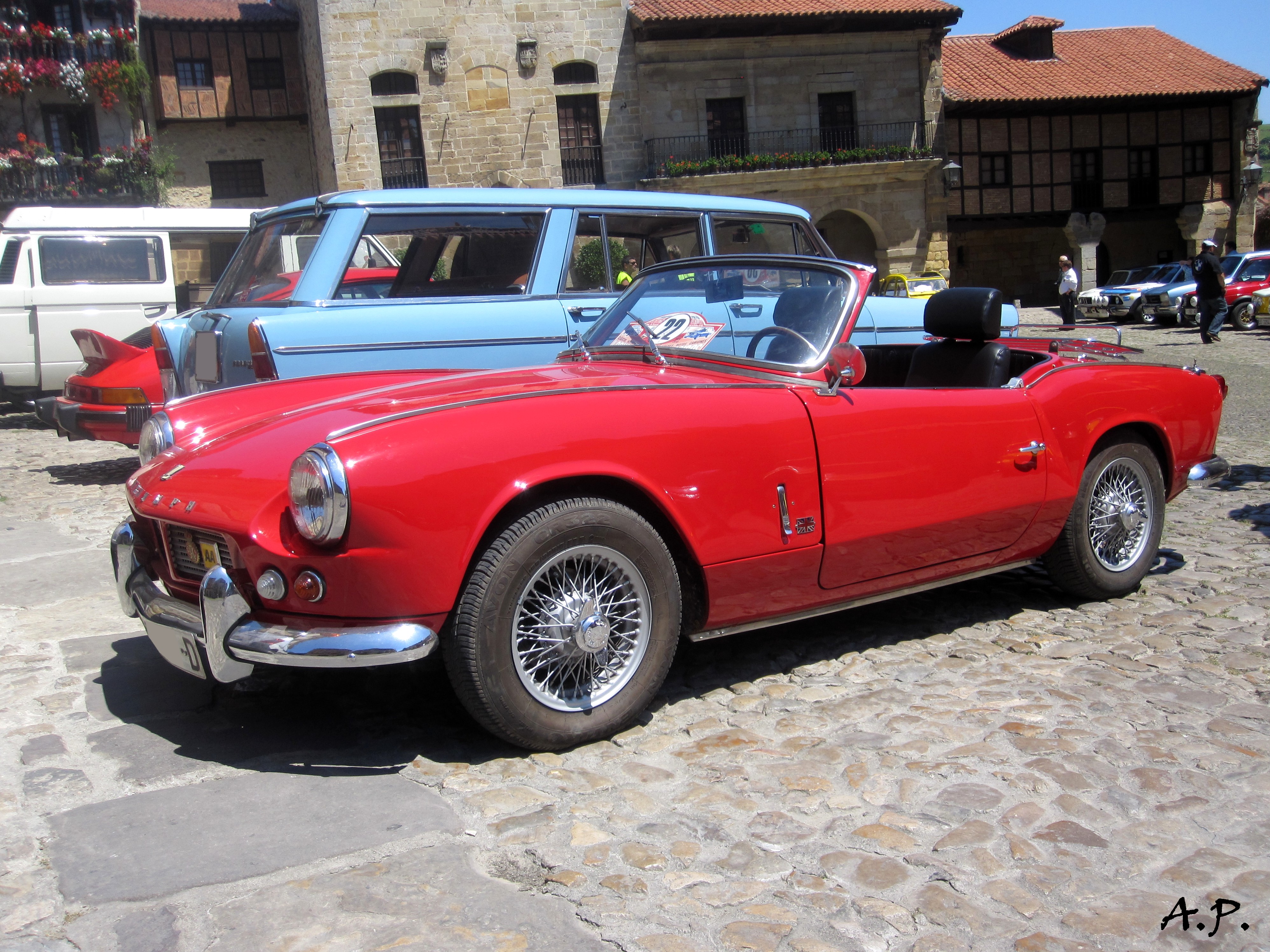
Triumph Spitfire
"There was a Triumph Spitfire. [453.0s] There was a Mustang."
The Triumph Spitfire is a classic British convertible/roadster. People like it because it’s fun to drive with the top down and it’s a well-known classic car.
The Triumph Spitfire is a classic British roadster known for its small, lightweight feel and open-top driving. It’s a popular “starter classic” because it’s relatively simple and has a big enthusiast community.

Aston Vantage
"There was also an Aston Vantage. [457.9s] Okay."
The Aston Vantage is a sports car from Aston Martin. It’s known for being more performance-oriented and more fun to drive than a typical luxury car.
The Aston Vantage is Aston Martin’s performance-focused model line, known for combining a grand-touring feel with real sports-car dynamics. It’s a standout at classic shows because it represents the brand’s “driver’s Aston” identity rather than just luxury.

635 CSI
"Were there any 635 CSIs? No, I didn't see any of those either. They're quite a rare sight."
The BMW 635 CSI is an older BMW coupe from the 1980s that enthusiasts recognize. The hosts are saying they don’t see many of them anymore, so it’s a rare car to spot.
The BMW 635 CSI is a 6 Series grand tourer from BMW, part of the E24-era lineup. It’s mentioned here as a rare sight, which points to how uncommon that specific classic BMW model is on the road compared with more common BMWs.

Land Rover Range Rover
"...t to get away and do different things. I took the Range Rover. Now, I know that you don't have aircon in that c..."
The Range Rover is a large, luxury SUV made by Land Rover. It’s designed to be comfortable for everyday driving and capable for rough roads too. In the podcast, it’s mentioned in the context of what features it has (like air conditioning).
The Range Rover is a luxury SUV from Land Rover, built for comfort and off-road capability. The podcast mentions taking a Range Rover and notes missing features like air conditioning in a comparison context, which highlights how these cars can vary by spec. It’s discussed because it’s a common choice when someone wants a premium, versatile SUV.
compression rings
"So it's like a piece between the two piston rings, [763.7s] the compression rings. [764.8s] Has just broken off."
Compression rings are small metal bands on the piston. They help seal the engine so combustion pressure stays where it belongs, instead of leaking into the lower part of the engine.
Compression rings are piston rings that sit in grooves on the piston and seal the combustion chamber. Their job is to keep high-pressure combustion gases from leaking into the crankcase, which helps power and prevents oil contamination.
piston rings
"So it's like a piece between the two piston rings, [763.7s] the compression rings. [764.8s] Has just broken off."
Piston rings are parts that sit on the piston and help seal the engine. If they break or don’t fit right, the engine can lose compression and run into serious problems.
Piston rings are the sealing rings mounted on the piston. In this context, they’re being discussed because a broken ring land/piece can indicate poor installation during a rebuild or a manufacturing defect in the piston/rings.
rebuild
"that can only either happen from something not being [773.7s] installed correctly on the rebuild. [775.3s] Yeah."
A rebuild is when someone takes an engine apart and puts it back together with new or reconditioned parts. If something is installed wrong, it can cause parts to fail quickly.
A rebuild is an engine overhaul where internal parts are removed, inspected, and replaced or reconditioned. The hosts are linking the failure to either incorrect installation during the rebuild or a manufacturing defect in the piston.
manufacturing error
"Or a really bad manufacturing error on the pistons themselves. [779.0s] You also had a look at the piston,"
A manufacturing error means the part was made wrong at the factory. Even if it’s installed correctly, a bad part can still fail.
A manufacturing error is a defect introduced during production—like incorrect dimensions, material issues, or poor finishing. Here, it’s offered as an alternative cause to incorrect installation during the rebuild.
Chineseian piston
"You also had a look at the piston, [780.5s] and it is a Chineseian piston, isn't it? [782.6s] It's a cheapo piston."
They’re basically saying the piston was a cheap one, likely from China. The point is that cheaper parts can be more likely to have problems after a rebuild.
The speaker is calling out the piston’s origin/quality—implying it’s an inexpensive, likely aftermarket or lower-cost piston. In rebuild discussions, part quality matters because cheaper pistons can be more prone to defects or fitment issues.
cutler suspension arms
"It just needs a little exhaust on it, [839.2s] and it needs a cutler suspension arms, [843.2s] and it'll be good to go."
Suspension arms are parts that connect the wheels to the suspension. They help the wheels move correctly as the car goes over bumps and turns. “Cutler” likely refers to a specific aftermarket version of those arms.
“Suspension arms” are the linkages that connect the wheels to the car’s suspension, controlling wheel movement and alignment under load. “Cutler” here sounds like a specific brand or kit name for those arms, which matters because different aftermarket arms can change geometry, stiffness, and ride/handling feel.
satin black
"And a bit of satin black. [845.1s] Yeah, a lot of satin black."
Satin black is a type of paint finish that isn’t fully shiny. It looks more muted than glossy black, so the car’s details stand out differently in the light.
“Satin black” is a paint or finish with a low-gloss, matte-like sheen. Compared with gloss black, it reflects less light, which can make bodywork look more subtle and “stealthy.”
Nürburgring
"I've been very busy. [852.5s] I've booked the Nürburgring. [854.6s] Yeah."
The Nürburgring is a legendary race track in Germany. People use it to test how well cars handle, and fast laps there are a big deal.
The Nürburgring is a famous motorsport venue in Germany, best known for its Nordschleife (“North Loop”) circuit. It’s a benchmark track where drivers and automakers measure lap times and validate handling and durability under extreme conditions.
Landau
"We sometimes do, as a sort of company, [858.9s] we do our little getaways. [860.1s] We did Landau last year, [862.2s] and this year we thought we'd go bigger and better."
They’re talking about a previous trip to a place called Landau. It sounds like a team outing, not a car-specific technical topic.
“Landau” is mentioned as a prior getaway location for the team. Without more context (city vs. event vs. track), it’s best treated as a named trip destination rather than an automotive technical subject.

BMW E46
"Rory, what about you? What are you taking? I'm taking my free 30i Supercharged E46. Race, yeah. So that was the car that I took around the ring last time."
This is a BMW 3 Series from the E46 generation that’s been modified with a supercharger. A supercharger forces extra air into the engine, which can make it feel much punchier—but modifications can also introduce problems, like the braking and steering feel mentioned here.
This refers to a BMW 3 Series E46 (the 1998–2006 generation) that’s been modified with a “30i” setup and a supercharger. The key enthusiast angle is that it’s not stock—adding forced induction changes how the engine makes power and how it drives, and the host then gets into specific issues like braking and steering vibration.

BMW 30I
"What are you taking? I'm taking my free 30i Supercharged E46. Race, yeah."
The BMW X3 is a smaller luxury SUV from BMW. It’s designed for comfortable everyday driving with a bit more space than a sedan. In the podcast, it’s mentioned as part of what someone was driving.
The BMW X3 is a compact luxury SUV, and the podcast references taking a “30i Supercharged E46” in the same conversation. That phrasing suggests the speaker is talking about a BMW setup or a specific car they were using, with the X3 name appearing in the broader discussion. It’s discussed because the X3 is a common BMW SUV choice and often comes up in owner stories.
Supercharged
"I'm taking my free 30i Supercharged E46. Race, yeah. So that was the car that I took around the ring last time."
A supercharger is a device that forces extra air into the engine. More air usually means more power, and it can make the car feel more responsive.
A supercharger is a forced-induction device that uses a belt-driven compressor to push more air into the engine. More air (and fuel) generally means more potential power, and it also changes throttle response compared with a naturally aspirated setup.
brakes were horrific
"It wasn't running right. The brakes were horrific. And also the steering has this weird vibration thing in it."
When someone says the brakes were “horrific,” they’re describing a serious drivability/safety problem—typically poor stopping power, inconsistent pedal feel, or fade/weak performance. In a track context (they mention taking it around the ring), brake issues can also mean the car isn’t properly set up for repeated hard use.
weird vibration thing
"The brakes were horrific. And also the steering has this weird vibration thing in it. So far, I've fixed one of those, which is the running."
A steering vibration usually means something in the front end isn’t smooth—like tires/wheels not balanced, worn suspension parts, or alignment issues. It can also happen if the brakes or rotors aren’t in good shape.
A steering “vibration” usually points to a chassis or front-end imbalance issue—commonly worn suspension components, alignment problems, or wheel/tire imbalance. If it shows up under braking or at speed, it can also be related to brake rotor condition or mounting.
ECU
"[1019.2s] He's got this weird little emulator thing, [1020.9s] which allows him to tune the ECU live, [1023.7s] which if anyone who tunes BMWs will know is..."
The ECU is the car’s main computer for the engine. It decides how the engine should run. Tuning the ECU means changing those settings so the engine behaves differently.
ECU stands for Engine Control Unit, the car’s computer that controls things like fuel delivery and ignition timing. In tuning, changing ECU settings can significantly alter how the engine runs, and this segment specifically mentions tuning the ECU live using an emulator.
emulator
"[1019.2s] He's got this weird little emulator thing, [1020.9s] which allows him to tune the ECU live, [1023.7s] which if anyone who tunes BMWs will know is..."
Here, an emulator is a tool that helps a tuner work with the car’s engine computer in a more flexible way. Instead of only making changes by fully rewriting the ECU, it helps them test changes more directly. That’s why they can see the effect faster.
In this context, an emulator is a device/software setup that mimics or interfaces with the ECU so the tuner can test changes without the usual full reflash workflow. It’s being used here to enable “live” tuning, which is unusual compared with the standard approach of flashing the ECU, rebooting, and then checking results.
flash
"[1027.6s] You can't do that. [1028.4s] You can't do that. [1029.2s] Yeah, you have to flash it and then turn it off, turn it back on."
To “flash” the ECU means updating the car’s engine computer with new settings. After flashing, you usually restart the ECU so the new settings take effect. Then you can drive or log to see the results.
“Flashing” the ECU means rewriting its software/firmware with a new calibration file. The host contrasts this with live tuning: typically you flash the ECU, power-cycle it, and only then can you test what the change did.
convert it from a math to a map sensor
"[1046.7s] And James basically said that to do what he did on my car, [1049.8s] which was convert it from a math to a map sensor, [1052.3s] so it reads pressure rather than air,"
They’re changing how the car measures airflow. Instead of using a sensor that directly measures air mass (MAF), it uses a sensor that measures intake pressure (MAP). That means the engine computer has to be set up to calculate fueling based on pressure instead of airflow.
This describes changing the engine’s air-measurement strategy from a MAF (mass air flow) sensor to a MAP (manifold absolute pressure) sensor. A MAF measures how much air is entering, while a MAP infers load from pressure in the intake manifold—so the ECU’s fueling and load calculations need to be reconfigured accordingly.
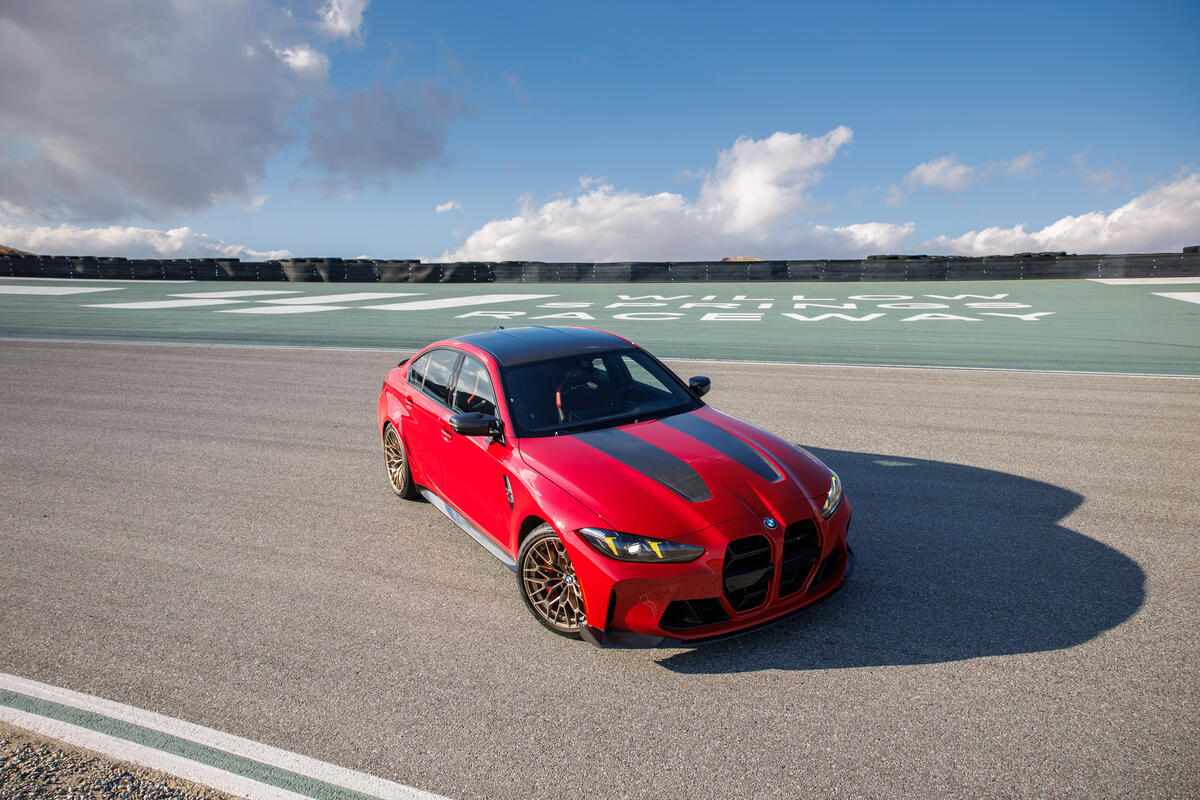
E46 M3
"So how much power is your E46 M3? Well, standard is..."
The BMW E46 M3 is a specific older BMW performance model. Here they’re basically asking how strong it is—how much power and torque it produces.
The BMW E46 M3 is a performance-focused 3 Series from the E46 generation, known for its high-revving character and driver-focused chassis. In this segment, they’re talking about how much power and torque it makes, which is a common enthusiast way to compare real-world vs advertised output.
carbon intake
"So my M3 touring with or without the carbon intake that I'll be fitting."
An intake is the part that brings air into the engine. A carbon intake is an aftermarket version, and it can change how the car breathes—sometimes affecting power and the way it sounds.
A carbon intake refers to an aftermarket air-intake component made with carbon fiber. On many cars, intake changes can alter airflow and intake sound, and sometimes improve throttle response or peak power depending on the rest of the setup.
torque
"Ask me about torque. I don't know what my torque is. I know it's not very much."
Torque is the engine’s pulling strength. More torque usually means the car feels quicker, especially when you’re not at very high engine speeds.
Torque is the twisting force an engine produces, and it strongly influences how quickly a car accelerates, especially at lower speeds. In this segment, they’re using torque as the key metric to judge whether the car is making “enough” compared to expectations.
500 horsepower
"So if yours isn't making 500 horsepower, I'll be really disappointed. Really disappointed."
Horsepower is a measure of how strong the engine is. They’re basically saying they’d be disappointed if their car isn’t making around that level.
“500 horsepower” is a target power figure used to describe how much work an engine can do over time. They’re setting a benchmark for whether the E46 M3 (with or without the intake) is making enough output to meet their expectations.
boost
"it's only running half a bar of boost. Really? And it's getting that power. James said that those can easily handle a bar, if not 1.2 bar of boost."
Boost is the extra pressure a turbo (or supercharger) pushes into the engine. Higher boost can make the car feel stronger because the engine gets more air, but too much can stress the engine.
In a turbocharged or supercharged car, boost is the extra air pressure forced into the engine. More boost usually means more air (and potentially more fuel), which can raise power—up to the point where the engine components can’t safely handle it.
psi
"So that's what, like 14, 15 psi or something? Yeah. It's a lot."
PSI is just another unit for pressure. People use it for turbo boost so they can talk about how hard the turbo is pushing in numbers they’re used to.
PSI is another pressure unit (pounds per square inch). Converting boost from bar to psi helps you compare numbers, because many car people and gauges use psi for turbo pressure.
tune
"with my carbon intake, he can tune it to about 400 horsepower. Close to 400. Close to 400, yeah. Which would be mad. What you don't know is, is we've already spoken to James, and when he tunes your car, we're going to, he's going to tell it, it's a diesel."
A tune is when someone reprograms the car’s computer to change how the engine runs. That can make it produce more power, and it can also change how the car behaves under boost.
A tune is an engine calibration change—typically via the ECU—to alter fueling, ignition timing, boost targets, and other parameters. In this segment, they’re talking about tuning the car to reach around 400 horsepower and even changing how it’s set up (they mention a “diesel tune”).
air con
"I did also have the issue of no air con still. Really? Oh, bugger. I've been trying to fix the air con on my RS4 for a couple of weeks now."
“Air con” means the car’s air-conditioning. If it’s broken, it might be low on refrigerant or have a sensor/wiring problem.
“Air con” is short for an automotive air-conditioning system, which cools and dehumidifies cabin air. When it’s not working, owners often check refrigerant charge, sensors, and electrical connections because the system can refuse to run if it detects a fault.
regassed
"I've regassed it. It's holding gas."
“Regassed” means they topped up the refrigerant in the air-conditioning system. If the system still shows an error afterward, the problem is probably not just low gas.
To “regas” (regassed) an air-conditioning system means adding refrigerant back into the system. It’s a common first step because a low refrigerant charge can prevent cooling, but regassing won’t fix underlying sensor or wiring faults.
pressure switch
"I've put a new pressure switch on it. And it's still coming up with a fault saying that the pressure switch is open circuit."
The pressure switch is a sensor that checks the air con’s refrigerant pressure. If it’s broken or the wires are bad, the car can think there’s a problem and shut the air con down.
An air-conditioning “pressure switch” is a sensor that monitors refrigerant pressure and tells the system whether conditions are safe for operation. If the switch is faulty—or if its wiring is damaged—the car can log a fault and the air con may not work even if the system is holding refrigerant.
open circuit
"And it's still coming up with a fault saying that the pressure switch is open circuit. So I think it's got a bit of a wiring issue."
“Open circuit” means there’s an electrical break somewhere in the system. So even with a new part installed, the wiring or connector might still be the real problem.
“Open circuit” is an electrical fault meaning the circuit is not completing—often due to a broken wire, poor connector contact, or a failed sensor. In an air-conditioning context, an open-circuit reading for the pressure switch points toward wiring or connector issues rather than refrigerant charge.
miltec exhaust
"[1362.0s] I fitted my carbon intake. [1363.6s] So I've just been intaking my noise everywhere. [1366.2s] It sounds awesome. [1367.7s] I'm just waiting on my miltec exhaust now. [1370.2s] I have had a message back from Tegawa."
Miltek makes aftermarket exhaust systems. Swapping to one is usually done to make the car sound better and sometimes to improve how freely exhaust gases can leave the engine.
Miltek is an aftermarket exhaust brand, and a “Miltek exhaust” typically means a cat-back or axle-back system designed to change both sound and exhaust flow. Enthusiasts often choose it to get a deeper tone and more audible engine note compared with stock exhausts.
Tegawa
"[1367.7s] I'm just waiting on my miltec exhaust now. [1370.2s] I have had a message back from Tegawa. [1373.9s] Have you? [1375.0s] Is it good news or bad news?"
Tegawa sounds like the company the host ordered parts from. They’re waiting on an update about the order.
Tegawa is referenced here as the supplier or shop the host is waiting to hear back from. In enthusiast circles, Tegawa is often associated with aftermarket parts sourcing and fulfillment for performance builds.
stock issue
"[1382.5s] Sorry. [1383.3s] Oh, I'm sad. [1384.4s] It's a stock issue. [1385.7s] Okay."
A “stock issue” just means the item isn’t available right now. So the order has to wait until more parts are in.
A “stock issue” means the parts are delayed because they’re not currently available in inventory. For aftermarket exhausts and intakes, this is common when a specific batch or component is backordered.
manifold
"Okay. [1394.1s] Manifold off everything. [1395.3s] There's a whole lot outside, if you want to."
A manifold is a set of passages that gathers exhaust gases together before they go to the rest of the exhaust system. Taking it off is often necessary to reach parts deeper in the engine bay.
A manifold is the part that collects gases from multiple cylinders and directs them into the exhaust system. When someone says “manifold off everything,” they usually mean removing the manifold and related components to fully access what’s behind it.
lumbar computer
"So I had issues with the dials, with the little lumbar computer, the display wasn't working."
A “lumbar computer” refers to the control electronics for a power-adjustable lumbar support system in the seat. When it fails or misbehaves, you can lose proper seat support and related seat functions, which can feel like a bunch of small, annoying issues rather than one obvious failure.
MK Motors and Son
"My friend Armett came over who runs his own little business and it's called MK Motors and Son."
MK Motors and Son is a small car business run by the host’s friend. In this story, they’re the person helping with classic BMW restoration know-how.
MK Motors and Son is the small business run by the host’s friend, who is involved in restoring classic BMWs. The name matters here because it frames the segment as hands-on restoration knowledge rather than generic advice.
onboard computer
"took all the dashboard out [1477.5s] and rebuilt all the onboard computer. [1479.2s] And we took the blower motor out"
The onboard computer is the car’s electronics that keep track of what’s happening and control various systems. On older cars, it can be hard to find replacements, so people repair the existing unit.
The onboard computer is the car’s electronic control unit(s) that monitor sensors and manage functions like engine management, diagnostics, and sometimes comfort features. In older cars, these systems can be difficult to replace, so repairs like circuit-board work matter.
blower motor
"And we took the blower motor out [1481.3s] and rebuilt all the resistor [1482.9s] because it's hard to find parts for these cars now."
The blower motor is the fan that moves air through the car’s heater and A/C vents. If it breaks, you may not get much (or any) airflow from the vents.
The blower motor is the fan that pushes air through a car’s HVAC system (heating and air conditioning). If it fails, you can lose airflow even if the rest of the system is working.
resistor
"and we took the blower motor out [1481.3s] and rebuilt all the resistor [1482.9s] because it's hard to find parts for these cars now."
That resistor helps control how fast the fan runs in your heater/A/C. If it’s bad, the fan might only work on one speed or not work correctly.
In many cars, the HVAC resistor (often called a blower resistor) controls the blower motor’s speed by regulating electrical current. Rebuilding it can restore multiple fan settings without replacing the whole unit.
resoldered
"Like we resoldered some new circuit boards [1495.3s] into the dashboard [1496.3s] and resoldered some new light bars [1499.0s] into the onboard computer and stuff."
Resoldering is fixing electronic boards by re-melting the solder where connections may have cracked. It can bring an old module back to life without replacing it.
Resoldering means re-melting and rejoining soldered electrical connections on circuit boards or electronic modules. It’s a common repair approach when components fail due to cracked joints or aging electronics.
motor oils
"I've got some new tires. [1510.4s] I'm doing all the fluids. [1511.7s] I'm putting some nice fresh motor oils in it."
Motor oil lubricates the engine so metal parts don’t grind against each other. Putting in fresh oil is basically an oil change to keep the engine protected.
Motor oil is the lubricant that reduces friction inside the engine and helps carry heat away from moving parts. “Fresh” oil typically means an oil change to restore proper lubrication and protect engine wear.
trader valves
"And they've got little valves in them. [1563.7s] They're called trader valves. [1564.6s] They're the same valves as what you get in tires."
These are little valves that let you connect an AC refill setup to your car’s AC system. They work like tire valves in that they help keep the system sealed so the refrigerant doesn’t leak out while you’re hooking things up.
“Trader valves” here are small valve stems/adapters used to connect an air-conditioning service setup to the refrigerant lines. They’re similar in concept to tire valves because they use a one-way valve to control flow and help keep the system sealed during charging.
holds a vacuum
"So I've had to order some new adapters. [1590.8s] But I know that it holds a vacuum and stuff. [1593.0s] It just won't really let air in them."
Holding a vacuum means the AC system doesn’t leak when it’s been “emptied” of air. If it leaks, air can get back in and the AC refill won’t work right.
Holding a vacuum means the AC system stays sealed when the technician pulls out air and moisture before charging. If it can’t hold vacuum, leaks or a poor connection can let air back in, which can reduce performance and cause contamination.

Ford Mustang
"...r day, and we were getting the exhaust put on the Mustang. Wait."
The Ford Mustang is a sports car from Ford that’s known for being fun and powerful. People often change parts like the exhaust to change the sound. That’s why it comes up in a conversation about upgrades.
The Ford Mustang is a well-known American sports car, typically associated with a powerful engine lineup and a strong enthusiast following. In the podcast, it’s mentioned while discussing getting an exhaust fitted, which points to how owners often personalize the sound and feel. It’s a frequent topic because it’s both mainstream and highly modifiable.
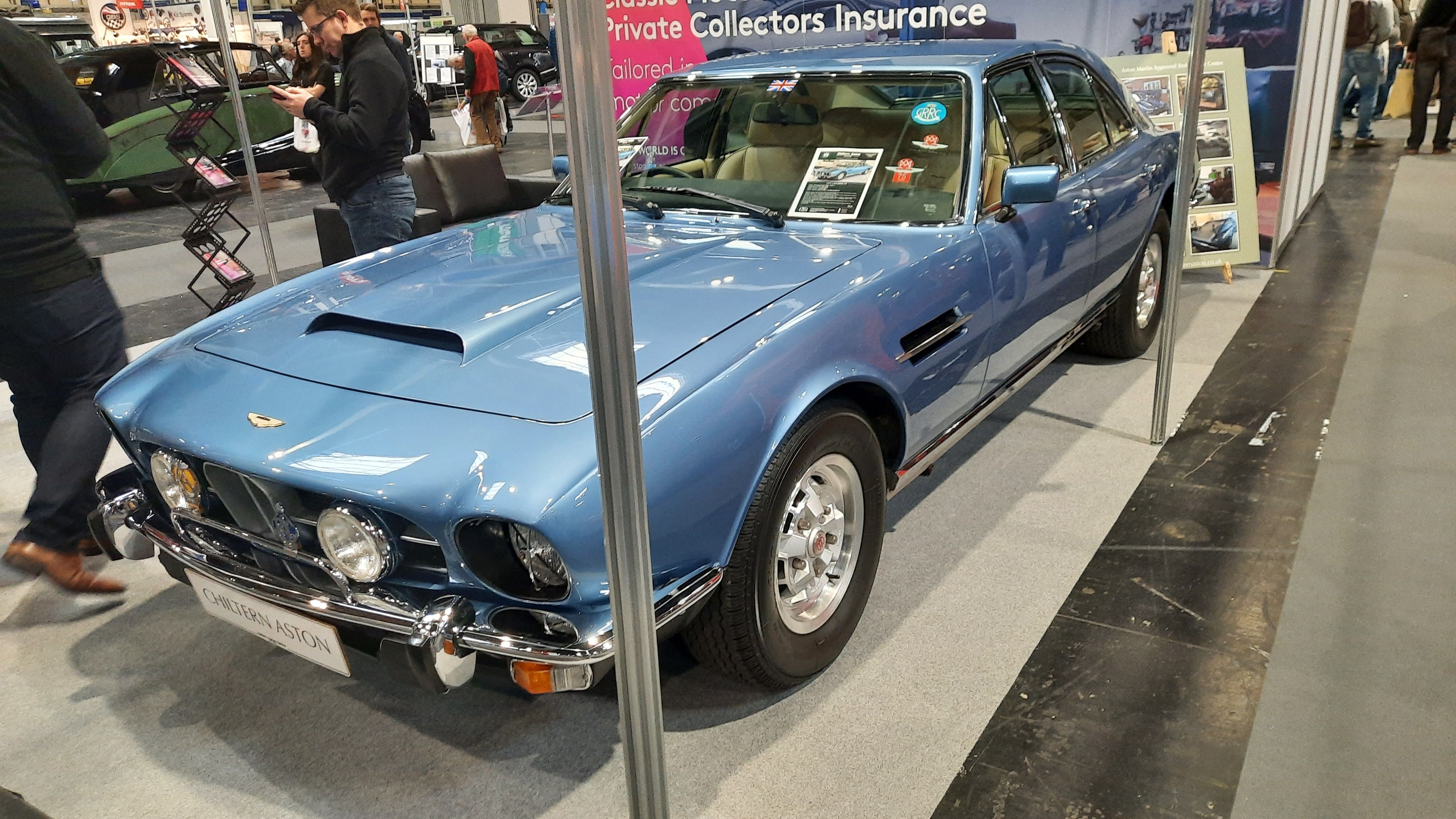
Aston Martin Lagonda
"Revisited. So like I said, Lagonda. That was a car that you thought was in front of ..."
The Aston Martin Lagonda is a luxury car made by Aston Martin. The podcast mentions it as a car that someone felt was ahead of its time. It comes up because it’s a distinctive model that people still talk about.
The Aston Martin Lagonda is a model line associated with Aston Martin’s luxury and grand-touring ambitions. In the podcast, it’s described as a car someone thought was “in front of” its time, which points to its design or concept being ahead of what people expected then. It’s discussed because it’s remembered as a distinctive, forward-looking Aston Martin.

Rolls-Royce Cullinan
"Savannah, you've got a really cool name. So Savannah says, the Rolls-Royce Cullinan is an awful and ghastly thing that does the opposite of what a Rolls-Royce should be..."
The Rolls-Royce Cullinan is a very fancy Rolls-Royce SUV. The hosts are basically saying it doesn’t feel like a “real” Rolls-Royce in spirit, because it’s an SUV instead of the classic type of car people associate with the brand.
The Rolls-Royce Cullinan is a luxury SUV built by Rolls-Royce, known for its ultra-quiet ride and high-end craftsmanship. In this segment, it’s being criticized as not matching what people expect from a traditional Rolls-Royce—i.e., it’s framed as the “wrong” kind of vehicle for the brand’s identity.

Aston Martin Dbx
"The same exact thing can be said for the Aston Martin DBX."
The Aston Martin DBX is Aston Martin’s SUV. The point being made is that some people think it’s not the kind of car that matches Aston Martin’s usual identity.
The Aston Martin DBX is Aston Martin’s performance luxury SUV, designed to bring the brand’s style and power into a higher-riding, family-friendly format. Here it’s used as another example of a “wrong fit” SUV—suggesting it doesn’t deliver the kind of character Aston Martin fans expect.
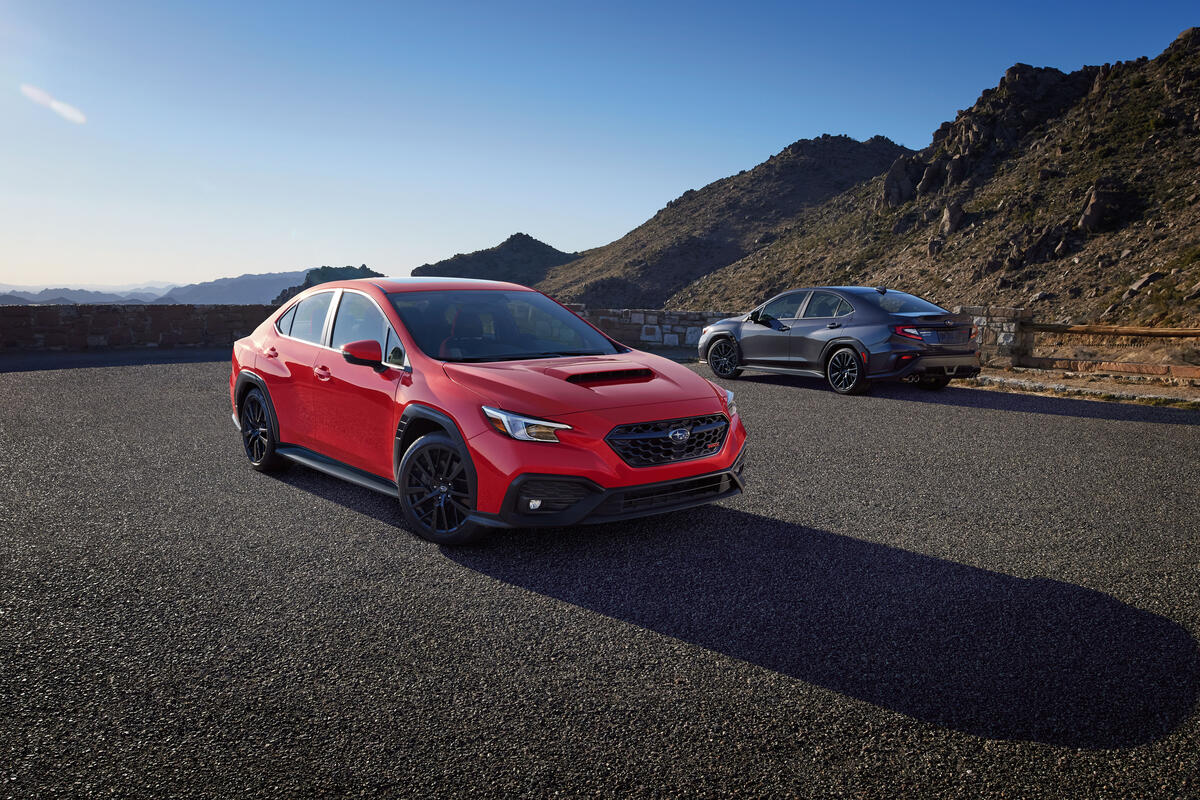
Subaru Wrx
"I'm also going to put forward the current Subaru WRX, which is a saloon trying its hardest to capture the crowd that likes plastic cladded crossovers rather than capturing its rally heritage."
The Subaru WRX is a sporty Subaru that’s famous for rally roots. The hosts are saying the newer version feels like it’s chasing crossover-style buyers instead of staying true to its rally image.
The Subaru WRX is a rally-bred performance sedan (or “saloon”) that’s traditionally associated with Subaru’s rally heritage and driver-focused dynamics. In this segment, the “current Subaru WRX” is criticized as trying to appeal to buyers who prefer plastic-cladded crossover styling, rather than leaning into what made the WRX a rally icon.
rocker cover gaskets
"Oh, I'm so there. You'll see me outside putting a couple of rocker cover gaskets on it. Can we go back to topic?"
These gaskets sit under the valve cover on the top of the engine. Their job is to stop oil from leaking out. If they fail, you’ll often see oil around the top of the engine.
Rocker cover gaskets seal the valve cover (often called the rocker cover) to keep engine oil from leaking. If they harden or fail, you can get oil seepage around the top of the engine and it may eventually drip onto hot components.

The Urus
"I get what you mean. The Urus for me, I don't hate it because of you hated it. You did, yeah."
The Lamborghini Urus is Lamborghini’s SUV. It’s still meant to feel like a Lamborghini, but it’s a four-door vehicle instead of the classic two-door supercar.
The Lamborghini Urus is Lamborghini’s performance SUV, built to bring supercar-style power and attitude into a four-door package. The host’s argument is about brand identity—how the Urus differs from the traditional Lamborghini two-door supercar image.
V12
"[2254.0s] Would you say a Ferrari Parasol is out of character for a Ferrari then? [2261.4s] It is a bit, but it's got a V12 in it. [2263.9s] It's kind of like..."
A V12 is an engine with 12 cylinders arranged in two rows. People associate it with big, smooth, high-performance engines.
A V12 is an engine with 12 cylinders arranged in a “V” shape (two banks of six). It’s often associated with smooth power delivery and high-performance character, which is why enthusiasts treat it as part of a brand’s identity.
platform
"[2292.9s] I think that's the thing. [2293.9s] Like even with a DBX, it's still its own platform. [2296.3s] It's not a copied platform or stuff."
A “platform” is the car’s underlying design that other models can be built from. If it’s a shared platform, the cars can feel similar underneath; if it’s unique, it’s more tailored to that specific model.
In car talk, a “platform” means the shared underlying architecture—things like the chassis design, mounting points, and major engineering components. When hosts say a car is “its own platform” versus “copied,” they’re talking about how much is genuinely engineered for that model versus adapted from another.
twin turbo
"Oh, they are Mercedes engines? Yeah, they are. Oh, they would be, wouldn't they? They're very similar. They're a twin turbo, yeah."
A “twin turbo” engine uses two turbochargers. Turbos cram more air into the engine so it can make more power.
“Twin turbo” means an engine uses two turbochargers to force more air into the cylinders. That typically helps produce strong power and torque, especially compared with a similar naturally aspirated engine.

Bmw X7
"And also the Cullinan is a BMW X7 underneath. Oh, bloody hell."
The BMW X7 is a big luxury SUV. The point here is that the Cullinan shares its basic “bones” with the X7, so it’s not totally unique underneath.
The BMW X7 is a large luxury SUV, and in this segment it’s used as a reference point for platform sharing. They’re saying the Rolls-Royce Cullinan is built on a BMW X7–derived understructure, which is why it can feel mechanically familiar.
CarVertical
"And if you've got a CarVertical story, then please, please email us in so I can read them out. So yeah, another instance of always, always checking the car before you even leave your unit"
CarVertical is a service that looks up a car’s history using records from different sources. The idea is to help you avoid buying a car with hidden issues—like past crashes—without knowing first.
CarVertical is a vehicle-history-report service that aggregates data (like recorded accidents and title/registration events) to help buyers spot potential problems before purchase. In this segment, it’s used to check whether the Golf GTD had been crashed.
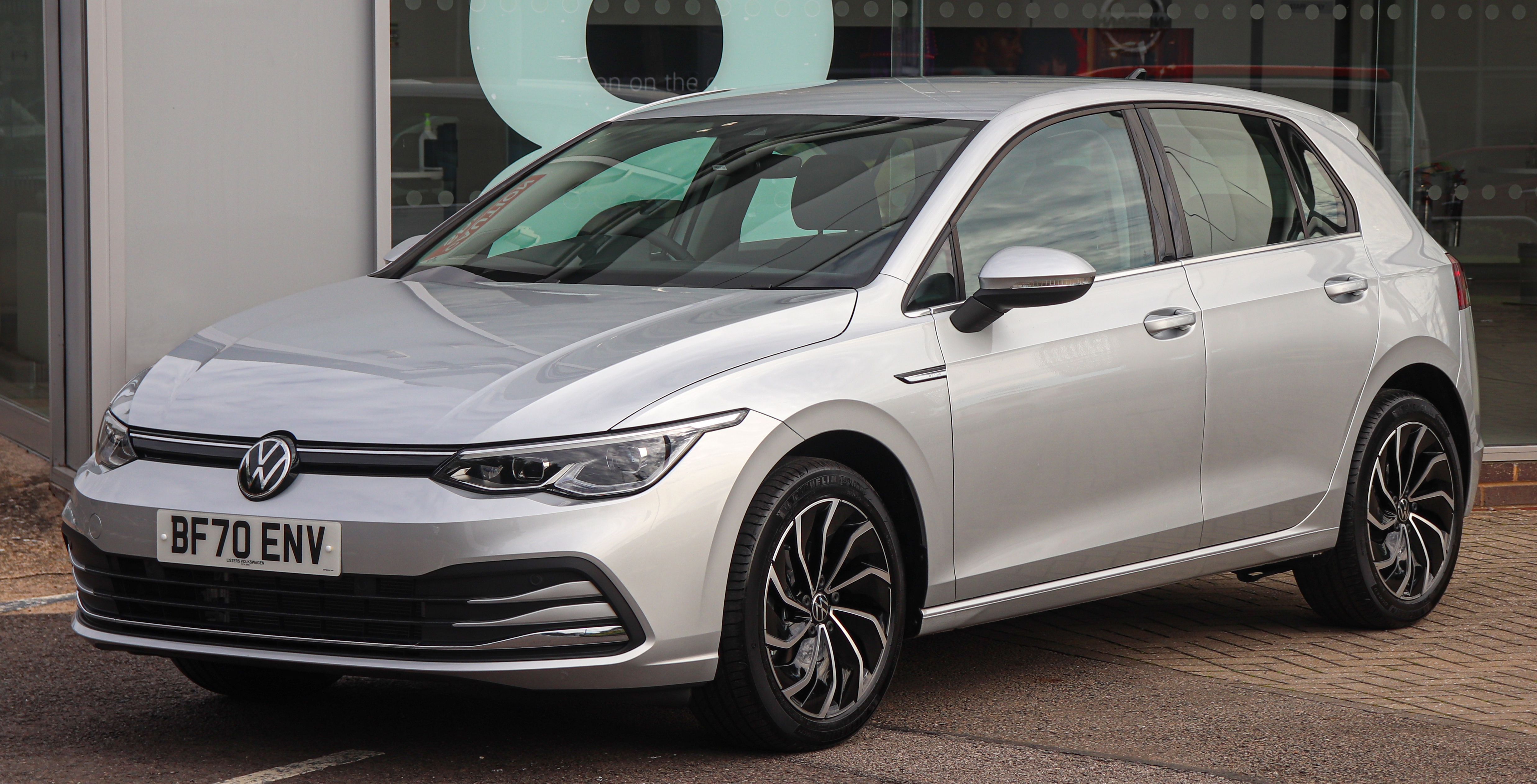
2017 Golf GTD
"Hello, Alex and team. I recently bought a 2017 Golf GTD without running a CarVertical check."
This is a Volkswagen Golf GTD from 2017. It’s a sportier Golf that uses a turbo diesel engine, so it tends to feel punchy in everyday driving. It’s basically a quicker, more torque-focused daily driver.
The Volkswagen Golf GTD is a hot-diesel version of the Golf, using a turbocharged diesel engine tuned for stronger midrange torque than a regular Golf. In enthusiast circles it’s known as a practical “fast daily” alternative to petrol hot hatches.
crashed in 2021
"And guess what? I should have listened to you guys sooner because I found out that it was crashed in 2021. However, it was not categorized, which is at least a little win."
Saying it was “crashed in 2021” means the car had an accident at that time. That can matter because repairs might not be perfect, and it can change what the car is worth.
A recorded crash date like “crashed in 2021” matters because it can indicate prior structural damage, repairs, and potential long-term effects on safety and value. Even if the report doesn’t label it as a major category, a crash history can still affect how the car was repaired and priced.
not categorized
"I should have listened to you guys sooner because I found out that it was crashed in 2021. However, it was not categorized, which is at least a little win. Had I done the check before buying, I could have probably got it a little cheaper."
“Not categorized” means the report didn’t label the crash as a specific type or severity. So you know something happened, but you don’t get a clear “how bad was it” label from that entry.
“Not categorized” suggests the vehicle-history report recorded an event (like a crash) but didn’t assign it to a specific severity or damage category. That can mean less clearly documented impact level, which may affect how confidently you can judge the repair quality from the report alone.
checking the car before you even leave your unit
"So yeah, another instance of always, always checking the car before you even leave your unit or your house or your toilet or anything like that. Leave no car unchecked."
They’re basically saying: don’t buy first and check later. Do your homework early—like looking up the car’s history—so you don’t get surprised after you’ve already committed.
This is an argument for doing due diligence before committing to a purchase—using tools like vehicle-history reports to reduce the chance of buying a car with hidden issues. The key idea is that verifying history early can influence price and avoid unpleasant surprises later.

Renault Megane RS
"having owned an A35 AMG, a sleeper 320 brake horsepower Ford Mondeo, Lexus IS250 and a track Renault Megane RS, [2537.0s]"
The Renault Megane RS is a fast, sporty hatchback made for driving enthusiasts. Here it’s specifically called out as the car they used on a track.
The Renault Megane RS is a hot hatch built for track-style driving, with a performance-tuned chassis and engine aimed at enthusiasts. Mentioning it as “a track Renault Megane RS” signals the speaker’s hands-on experience with a purpose-built performance car.

Ford Mondeo
"having owned an A35 AMG, a sleeper 320 brake horsepower Ford Mondeo, Lexus IS250 and a track Renault Megane RS, [2537.0s]"
The Ford Mondeo is a regular, everyday Ford car. Here it’s just mentioned as one of the cars the speaker has owned.
The Ford Mondeo is a mainstream mid-size sedan/hatchback that’s better known for practicality than for being a track car. In this segment, it’s mentioned alongside other enthusiast cars to show the host’s varied ownership history rather than as a performance-focused model.

Lexus Is250
"having owned an A35 AMG, a sleeper 320 brake horsepower Ford Mondeo, Lexus IS250 and a track Renault Megane RS, [2537.0s]"
The Lexus IS250 is a luxury sedan. In this part of the podcast, it’s mentioned as another car the speaker has owned.
The Lexus IS250 is a compact luxury sedan from Lexus, known for its smooth, naturally aspirated V6-era feel (depending on market) and comfort-focused driving. It’s included here as part of the speaker’s mix of ownerships, contrasting “petrolhead” credibility with more mainstream luxury choices.

Renault Megane E-Tech
"...ower Ford Mondeo, Lexus IS250 and a track Renault Megane RS, and countless motorbikes."
The Renault Megane E-Tech is an electric car version of the Megane. Instead of using petrol, it runs on electricity. In the podcast, it’s mentioned while talking about different kinds of cars and how they compare.
The Renault Megane E-Tech is an electric version of the Megane, aimed at bringing EV practicality to a familiar compact-car shape. The podcast groups it with other cars and track-focused options, which suggests it’s being discussed in the context of performance expectations versus everyday use. It’s relevant because EVs like this are often compared on how they fit into real driving routines.
engine swap
"And I love my 1975 Triumph Spitfire. [2561.5s] Great choice. With a two litre straight six engine swap. [2564.6s] Two litre."
An engine swap means putting a different engine into a car than the one it originally came with. People do it to get more power or a different driving feel, but it usually takes a lot of work to make everything fit.
An engine swap is when an enthusiast replaces the original engine with a different engine from another model (or a different configuration entirely). It’s often done to change power, character, or parts availability, but it can also require custom mounts, wiring, and cooling work.
straight six engine
"With a two litre straight six engine swap. [2564.6s] Two litre. [2566.0s] Two litre."
A straight six is an engine with six cylinders lined up in a row. Many people like it because it tends to run smoothly.
A straight six (inline-six) engine has all six cylinders arranged in a single line. It’s often praised for smoothness and balance because the engine’s firing order and internal geometry reduce vibration compared with many other layouts.

Chery Tiggo 8
"I feel now that since I have purchased a Chinese Cherry Tigo 8 plug-in hybrid for work and personal use, [2576.4s] am I still a true petrolhead?"
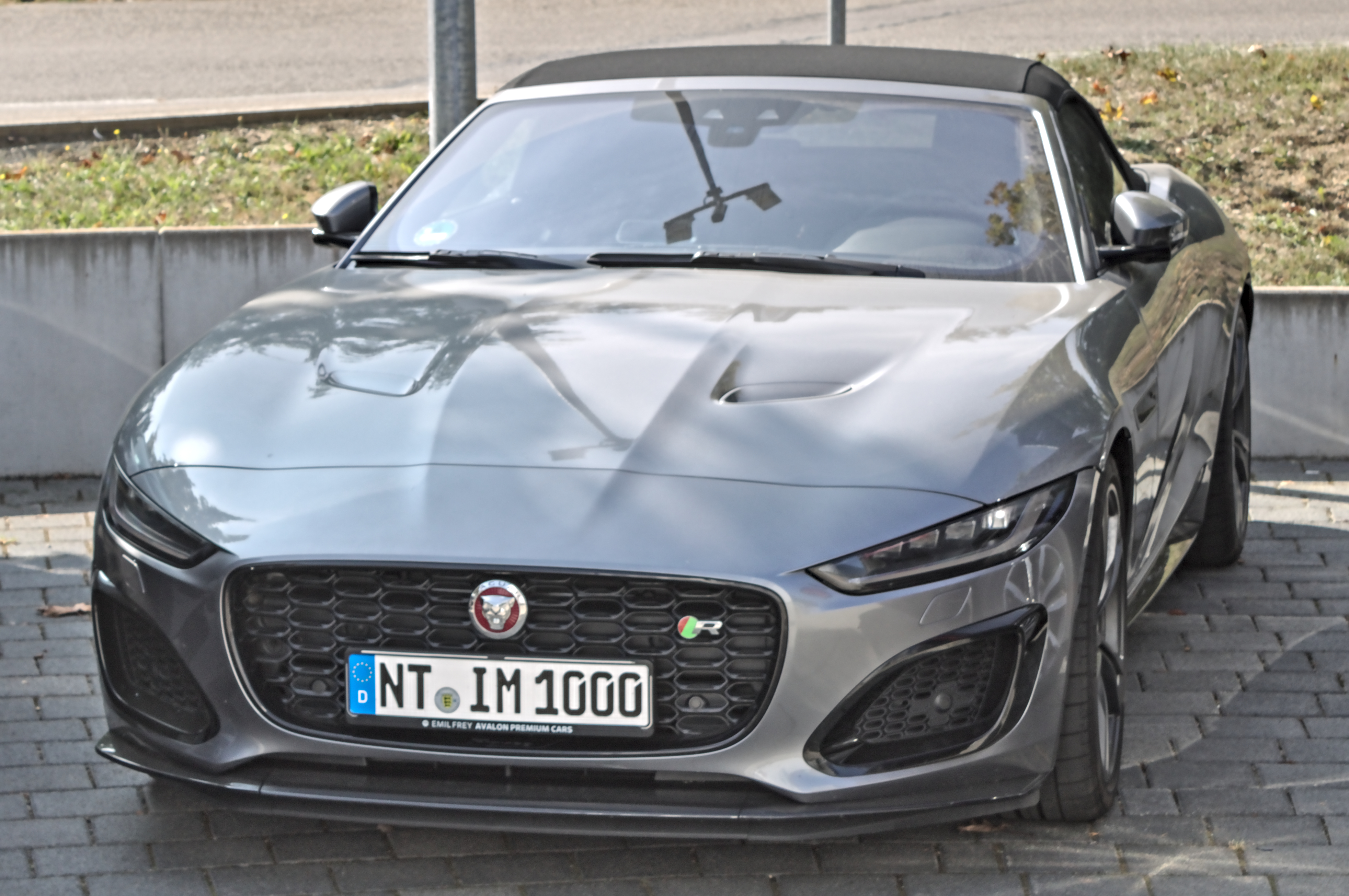
Jag F-Type V8
"down for going Chinese and constantly getting slated [2585.5s] from my brother who owns a 600 horsepower Jag F-Type V8."
The Jaguar F-Type is a sporty Jaguar. When it’s the V8 version, it’s the loud, powerful kind of car people usually think of as “petrolhead” stuff.
The Jaguar F-Type is a sports car known for its performance-focused design and, in V8 form, a traditional gasoline engine character. In this segment, the host uses the “600 horsepower” V8 F-Type as an example of a big-output petrolhead car.

W204 C63 AMG
"With fuel prices going up and road tax going up, [2594.0s] my dream W204 C63 AMG, better than an RS4, by the way,"
The Mercedes-Benz C63 AMG (W204) is a high-performance Mercedes C-Class. It’s the kind of car enthusiasts chase because it’s fast and feels very “old-school” compared with many newer alternatives.
The Mercedes-Benz C63 AMG (W204) is a performance version of the C-Class, famous in enthusiast circles for its aggressive sound and strong V8-era power. Here, it’s framed as the speaker’s “dream” car that’s being pushed out by higher costs and changing ownership choices.

RS4
"With fuel prices going up and road tax going up, [2594.0s] my dream W204 C63 AMG, better than an RS4, by the way,"
The Audi RS4 is a performance Audi. People compare it to other hot cars like the Mercedes C63 AMG when they’re arguing which one is “better.”
The Audi RS4 is a high-performance version of the A4, typically associated with a balanced “fast but usable” approach and strong enthusiast following. In this segment it’s used as a comparison point against the Mercedes-Benz C63 AMG (W204).
Chinese plug-ins
"My dream is slowly fading from view. [2603.9s] The value for money with these Chinese plug-ins [2606.3s] were too good to miss out compared to the European market."
“Plug-ins” means cars you can charge from a plug, usually a hybrid that can drive on electricity sometimes and use petrol too. The point being made is that some Chinese plug-in hybrids felt like a better deal than the European alternatives.
“Plug-ins” here refers to plug-in hybrid electric vehicles (PHEVs), which can run on an electric motor and also use a gasoline engine. The speaker is arguing that certain Chinese PHEVs offered unusually strong value compared with European options.
Tesla
"I think this was Juicy told me this. [2626.6s] Because Juicy drives? [2627.7s] Juicy drives a Tesla everywhere that he goes."
Tesla is the company behind many of the most common electric cars. Here it’s used as an example of someone who drives an EV all the time while still trying to be part of the car community.
Tesla is the brand most associated with modern battery-electric cars, and in this context it represents going fully electric rather than sticking with petrol. The speaker uses “Juicy drives a Tesla everywhere” to frame the debate about whether EV owners still count as true petrolheads.
A to B
"So basically, I wanted something that would get me from A to B, [2779.9s] like, with as least fuss as possible."
“A to B” just means getting from point A to point B. They’re saying they wanted a car that’s easy to use for everyday driving, not something complicated or high-maintenance.
“A to B” is shorthand for getting from one place to another with minimal hassle. In car talk, it usually means prioritizing everyday usability—easy commuting, predictable operation, and low drama—over thrills.

BMW G31
"I've done nearly 30,000 miles in the G31 530D, [2785.2s] and it's only needed like basic serviceable items, new rear brakes recently."
They’re talking about a BMW 5 Series diesel (“530d”). They’re saying it’s been easy to live with—after a lot of miles it mostly just needed normal maintenance like brake pads, and it’s been reliable day to day.
“G31 530D” refers to the BMW 5 Series (G31 generation) with a 3.0-liter diesel “530d” setup. The speaker highlights real-world ownership costs and simplicity: after nearly 30,000 miles it only needed basic service items like rear brakes, and it “just works.”
basic serviceable items
"and it's only needed like basic serviceable items, new rear brakes recently. [2789.4s] It just works."
They mean normal maintenance things that wear out over time. In this case, they’re saying the car mostly just needed routine items, not expensive unexpected repairs.
“Basic serviceable items” refers to routine, expected maintenance tasks rather than major repairs. The speaker’s point is that the car required only normal wear-and-tear work (like brakes) and otherwise stayed trouble-free.
rear brakes
"and it's only needed like basic serviceable items, new rear brakes recently. [2789.4s] It just works."
“Rear brakes” are the brake parts on the back wheels. They’re saying the car only needed normal brake work, which is usually a routine maintenance item.
“Rear brakes” means the braking components on the back axle—typically pads and rotors. The speaker uses them as an example of a normal, expected maintenance item rather than a major problem.
front bumper
"It just works. [2790.3s] New front bumper. [2791.1s] Well, no, I got crashed into."
The front bumper is the part on the front of the car that takes impacts. Here they’re saying it needed replacing because they were hit, not because the car had a mechanical issue.
The “front bumper” is the exterior impact-absorbing panel at the front of the car. In this segment it’s mentioned as damage from being “crashed into,” not as a mechanical failure.
hand it back
"If it's an electric car, fine, it's easy. [2803.2s] Like Roy said, you can hand it back. [2804.5s] And it makes working on cars, or it makes the petrol power cars"
“Hand it back” implies returning the car after a period—commonly associated with leasing or short-term ownership. The speaker contrasts this with petrol cars, suggesting EV ownership can feel simpler because you’re not committing long-term.
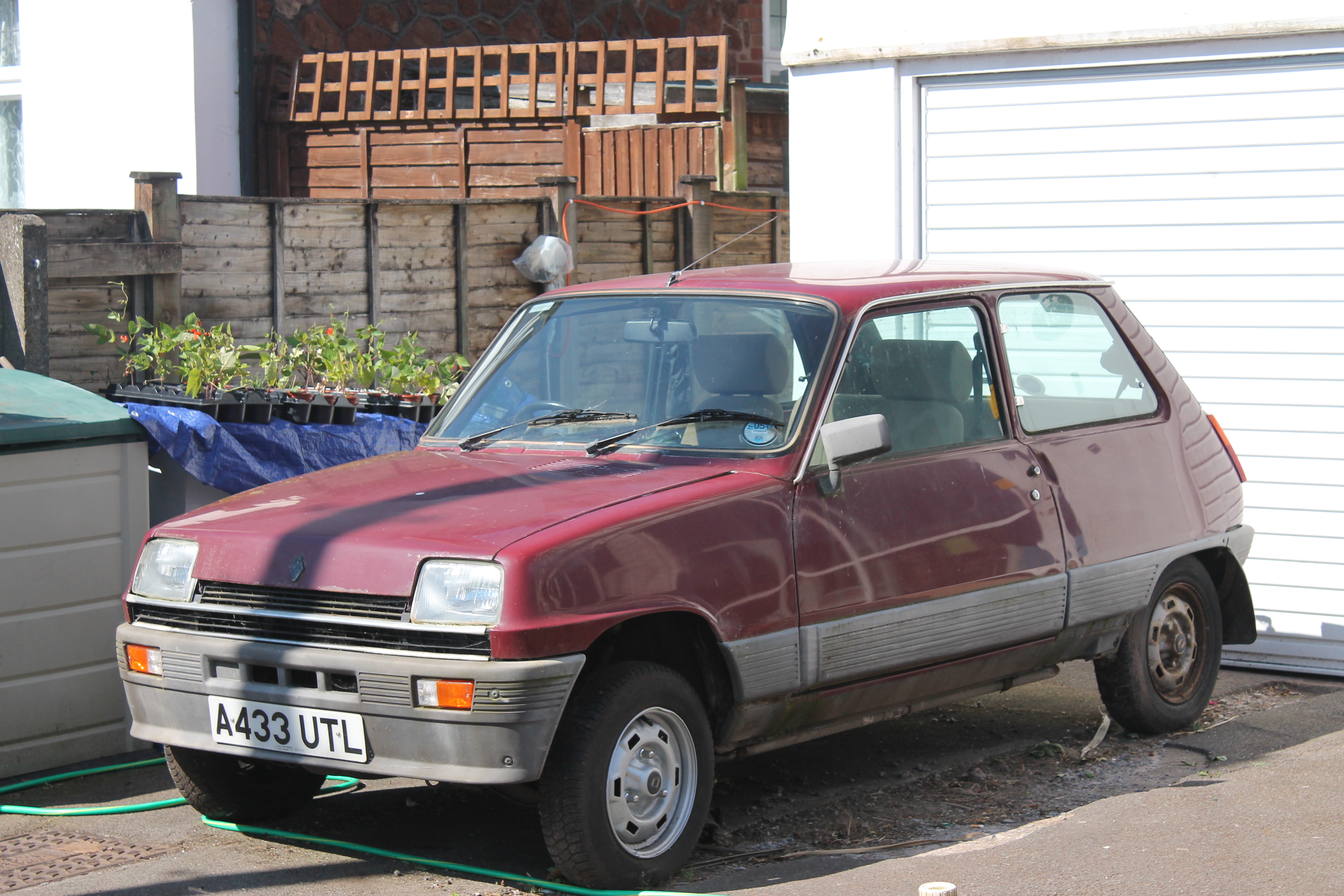
Renault 5
"I'd have a Renault 5. Oh, okay. Yeah, but that's big money though, isn't it?"
The Renault 5 is a small hatchback model from Renault. Here, it’s mentioned as a car someone would choose, but they point out it wouldn’t suit long motorway driving because it doesn’t have a lot of range.
The Renault 5 is a compact hatchback that’s become a classic for its simple, fun-to-drive character. In this segment, it’s brought up as an alternative to newer EVs, but the discussion immediately pivots to EV range limits versus what you’d want for motorway trips.

5 Renault 5
"...go up and down the motorway with a lot? Because a Renault 5 doesn't have that much range. I don't know."
The Renault 5 E-Tech Electric is an electric version of the Renault 5. It runs on a battery instead of petrol. The podcast brings it up because someone is wondering if it can drive far enough on the motorway.
The “5 E-Tech Electric” refers to the Renault 5 E-Tech Electric, an all-electric version of the Renault 5 nameplate. The podcast specifically questions whether it has enough range for motorway driving, which is a common real-world consideration for EV buyers. It’s discussed because range and everyday usability determine how practical an EV feels.

Porsche Taycan
"A Porsche. I don't want a Porsche Taycan. I'd get a Taycan. Yeah. I like those."
The Porsche Taycan is Porsche’s electric car. In this chat, it’s the EV the speaker says they’d choose, because it fits the “real car” vibe they want.
The Porsche Taycan is Porsche’s fully electric performance sedan, known for its fast acceleration and “sports car” feel despite being an EV. Here, it’s specifically mentioned as the kind of EV the speaker would actually want, contrasting with their dislike of many Chinese EVs’ looks and the range concerns for other options.
wheel bearings
"I've done the wheel bearings. [2904.2s] I've done all of it."
Wheel bearings are small parts that help the wheel spin smoothly. If they get worn out, the car can start making noises and the tires may wear unevenly.
Wheel bearings are the parts that let your wheels spin smoothly while supporting the car’s weight. When they wear out, you can get noise (often a humming/grinding) and extra play that can affect steering feel and tire wear.
ingenium
"What with the ingenium? [2929.3s] No. [2930.3s] It's got the 2.2 from the Freelander."
“Ingenium” is Jaguar Land Rover’s name for a set of newer engines they designed to be used across different models. The hosts are basically saying this car isn’t necessarily using that newer engine family.
“Ingenium” is Jaguar Land Rover’s engine family name for modern modular engines. When the hosts mention it, they’re contrasting the idea of an Ingenium engine with the fact that this Range Rover Evoke is instead said to use a 2.2 engine from the Freelander.

Land Rover Freelander
"No. It's got the 2.2 from the Freelander. Isn't that the 2.2 that's in the Jag?"
The Land Rover Freelander is a smaller Land Rover SUV. The podcast mentions a “2.2” engine from the Freelander, meaning a specific engine size used in that model. It comes up to clarify which engine is being talked about.
The Land Rover Freelander is a compact SUV, and the podcast mentions a 2.2 engine from the Freelander being used in a different context. That kind of comment usually points to engine sharing or similar powertrains across vehicles. It’s discussed because it helps explain what engine a particular Land Rover might have.
DPF
"But that, it had a new engine [2944.2s] because of the DPF actually. [2946.3s] Yeah, okay. [2946.7s] So the DPF clogged and then ended up heating up [2950.1s] back and then. [2951.3s] And blow it all up."
DPF means diesel particulate filter. It’s a part that cleans soot out of diesel exhaust; if it clogs and gets too hot, it can cause serious damage—potentially even destroying the engine.
DPF stands for diesel particulate filter, a emissions device that traps soot from diesel exhaust. The hosts describe a scenario where the DPF clogged, then overheated, and that overheating led to catastrophic engine failure (“blew it all up”).
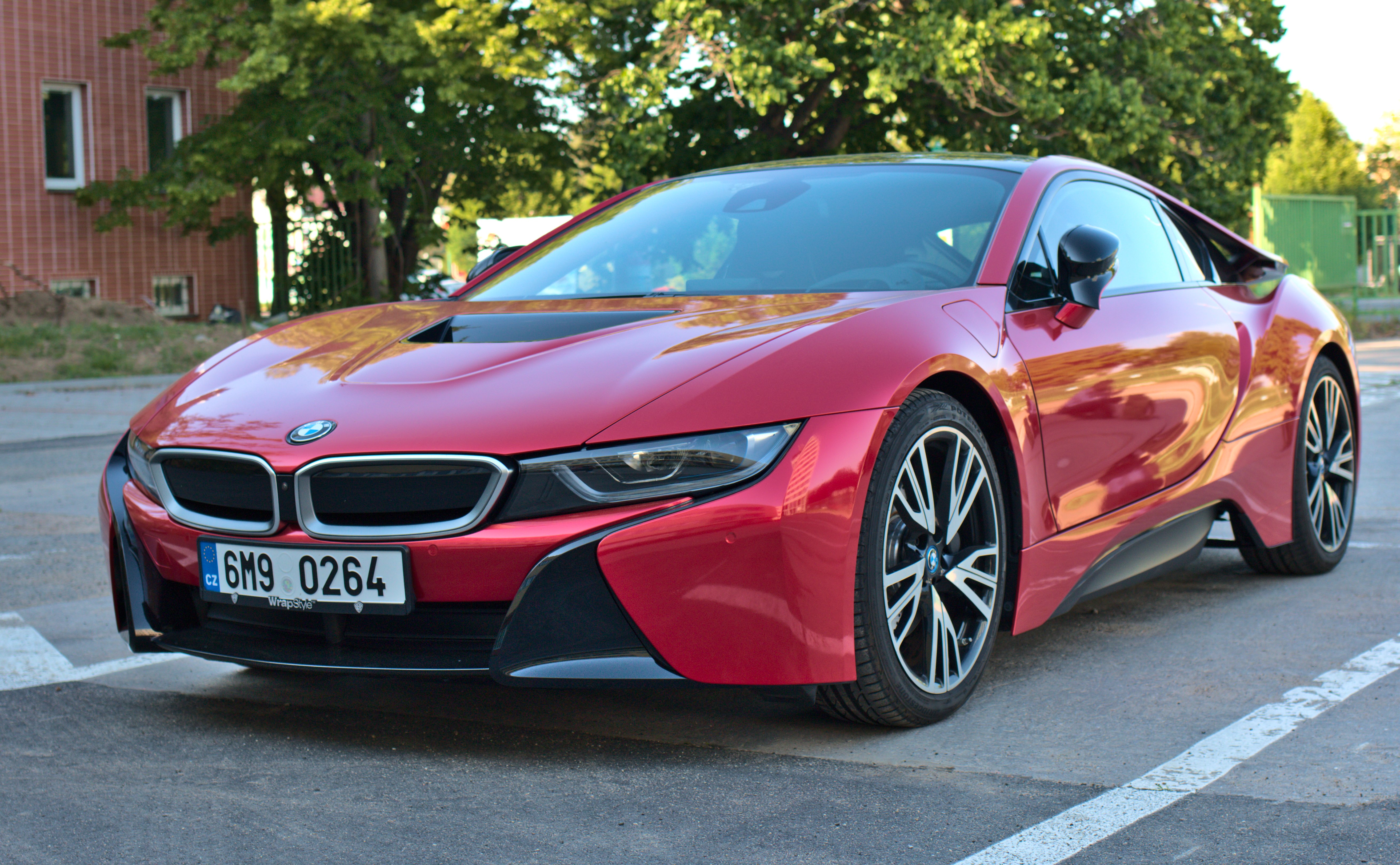
Bmw I8
"They're a little bit older, but I've always, always liked them as a BMW i8. I think they look so cool."
The BMW i8 is a special BMW sports car that uses both electricity and a gasoline engine. It’s known for looking futuristic and feeling quick. Here, the host says they’ve always wanted one and even remembers the launch event in Scotland.
The BMW i8 is a plug-in hybrid sports car that pairs a turbocharged engine with electric drive for quick, futuristic acceleration and a distinctive look. The speaker calls it out specifically as a car they’ve always wanted to own, and they describe attending its original launch in Scotland.
scissor doors
"And they've got the scissor doors. And they're not very practical, I don't think."
Scissor doors are doors that open upward like they’re hinged and lifted into the air. They look really cool, but they can be harder to use when you’re parked close to something.
Scissor doors are a type of car door that pivot upward and outward, usually along a hinge near the front of the door. They’re dramatic and visually distinctive, but they can be awkward in tight parking spaces and generally reduce everyday practicality.
drivetrain
"Because the i8, great looking car on the outside, even the interior is nice. [3020.6s] I do think the drivetrain is now very outdated."
The drivetrain is basically everything that makes the car’s power reach the wheels. Here, they’re saying the i8’s power system feels old compared to what’s available now.
In automotive terms, the drivetrain is the set of components that deliver power from the engine (or motors) to the wheels. When the hosts say the i8’s drivetrain is outdated, they mean the overall powertrain tech and how it integrates (hybrid system, control strategy, and hardware) feels behind newer solutions.
cars will become a little bit like phones
"[3047.4s] I do think cars will become a little bit like phones. [3051.2s] And new one comes out every year. [3053.4s] And people just get rid of the old one."
The host is comparing cars to phones: phones get new versions often, and people replace the old one. They’re suggesting cars could start feeling the same way, with frequent upgrades and less keeping cars for decades.
This compares car ownership to smartphone upgrade cycles—new models arriving regularly and owners replacing older devices. The underlying point is that technology-driven refreshes could reduce long-term ownership and repair culture, especially for EVs.
throw away society
"And I do think we'll end up as just a throw away society. [3073.1s] Which is nice for us because we can buy the old shit"
The phrase “throw away society” means people replace things instead of fixing them. The host is using it to suggest cars might be treated the same way—buying newer ones and getting rid of older ones.
“Throw away society” is a critique of consumer culture where people replace products rather than repair them. Applied to cars, the idea is that EVs (and cars in general) may be treated like phones—updated frequently and discarded when they’re no longer “new.”

Byd Seal
"Those will probably be the last classic cars. [3093.3s] Because no one's going to be keeping a BYD seal for 40 years."
The BYD Seal is an electric car made by BYD. The host is saying that newer EVs like this probably won’t be kept for 40 years the way older gas cars sometimes are.
The BYD Seal is an electric sedan from BYD, a Chinese automaker known for battery-electric vehicles. In this episode, it’s used as an example of a modern EV that likely won’t be kept for decades like older “classic cars.”
barn
"Can you imagine unearthing a J.C.U. after 40 years of being in a barn? But that's a thing."
A “barn” here just means a place where a car is stored for a very long time. The point is that after decades, parts—like batteries—may not work anymore.
In car talk, a “barn” usually means a long-term storage place where a vehicle can sit for decades. The idea here is that EV batteries and other components may degrade or become unusable after being stored that long.

Chevrolet Nova
"...e 90s, people would say, who's going to keep this Nova or something? Yeah, or Nissan Sunny."
The Chevrolet Nova is an older American car model. Some people don’t think much about it, but others like it and keep them running. In the podcast, it’s mentioned as an example of a car people might question owning.
The Chevrolet Nova is a classic American compact car that became popular in earlier decades and is still remembered by enthusiasts today. The podcast references people asking who would keep a Nova, which reflects how these cars can be overlooked or treated as “just a car” despite having a dedicated following. It’s discussed as part of a conversation about keeping and valuing older models.

Sunny Nissan Sunny
"...'s going to keep this Nova or something? Yeah, or Nissan Sunny. Yeah, but like it's just a car."
The “Sunny” is the Nissan Sunny, which is a regular compact car. In the podcast, it’s mentioned as an example of a car that some people might not expect someone to keep. The point is about everyday cars and ownership choices.
“Sunny” in the podcast context refers to the Nissan Sunny, a compact car model that’s often thought of as a simple, practical vehicle. It’s mentioned alongside the Chevrolet Nova as an example of a car people might question keeping, implying it’s seen as ordinary rather than special. It comes up because the conversation is about which cars people choose to hold onto.
electric car
"I'm saying no, like there is not going to be physically possible to get a 40 year old electric car working."
An electric car runs on electricity stored in a battery instead of burning fuel. The point being made is that keeping one running for decades is harder because the battery and electronics may not last that long.
An electric car is a vehicle powered primarily by an electric motor and a high-voltage battery pack. The discussion here is about long-term serviceability—whether the battery and related electronics can realistically be kept working for 40 years.
big jump pack
"You have to have a big jump pack. Yeah. Bloody big jump."
A jump pack is like a portable battery booster you use to start a car with a dead battery. They’re joking that for an old EV you’d need something much bigger than a normal jump starter.
A jump pack is a portable battery used to provide starting power to a vehicle. The host’s “big jump pack” phrasing implies that an EV would need a very large external power source to get it going if its own battery system can’t be revived—highlighting how EVs differ from older cars that can often be jump-started.
battery technology
"Yeah, the battery technology is just not built to last 40 years like an engine is."
“Battery technology” is just how EV batteries are made and how well they hold up as they get older. Batteries don’t last forever, so after many years they can lose capacity or become unreliable.
Battery technology refers to how rechargeable batteries are designed and built—chemistry, cell design, and how they age over time. In EVs, battery aging is a major reason people doubt an EV can be kept running reliably for decades the way many classic internal-combustion cars can.
classic cars are gone
"So yeah, realistically, classic cars are gone. So anyway, to circle back to Andrew's question,"
They’re saying that in the future, it might be hard to keep EVs running long enough to become “classic” cars. The concern is that EV batteries and electronics may wear out or be too hard to repair after many years.
This is a prediction about the future of “classic cars,” arguing that EVs may not become the same kind of long-lived, maintainable classics as internal-combustion cars. The underlying idea is that EV components—especially batteries and high-voltage electronics—may not be practical to keep running for decades.
commuter car
"But it makes sense, but it makes sense to have an electric car. Yeah, I think as your commuter car, yeah."
A commuter car is the car you use every day to get to work or school. They’re saying EVs can be a good fit for that kind of regular use.
A commuter car is a vehicle chosen mainly for daily driving—short trips, predictable routes, and regular use. In this segment, the hosts suggest EVs make sense as commuter cars because they’re convenient for routine driving, even if they may be less suited to long-term “classic” ownership.
one car
"if you had the choice between your, you've got one car and that's your one car, which is the case for most people"
They’re talking about households that only have a single car. In that case, you can’t easily “risk it,” so the car has to work reliably for everyday life.
The “one car” scenario is a practical ownership situation where a household has no backup vehicle. The hosts are framing EV suitability around real-life constraints—if you only have one car, you need it to be dependable every day.
Nurburgring
"Yeah, also, Andrew, if I see you on the Nurburgring in your Chinese plug-in, I will aim for you. [3233.0s] There's a lot of electric cars on the Nurburgring these days."
The Nürburgring is a well-known race track in Germany. People use it to see how well cars handle hard driving for a long time, not just quick laps.
The Nürburgring is a famous German motorsport venue, best known for the Nordschleife, a very long and demanding circuit. It’s often used as a real-world stress test for brakes, tires, cooling systems, and—more recently—EV thermal management during repeated laps.
low power mode
"But don't they overheat halfway round and then they go into low power mode. [3241.2s] You only get one lap out and then you just"
Low power mode is when an EV automatically reduces power to protect itself. It usually happens when something gets too hot, so the car slows down instead of pushing harder.
In an EV, “low power mode” is a protective strategy where the car limits power output to prevent damage when components overheat. It’s typically triggered by thermal issues in the battery, inverter, or motor after sustained hard use like repeated track laps.
overheat
"But don't they overheat halfway round and then they go into low power mode. [3241.2s] You only get one lap out and then you just"
Overheat means the car’s parts get too hot. When that happens, the EV may reduce performance to avoid damage.
“Overheat” here refers to EV components reaching temperatures high enough to trigger protection limits. On track, sustained power draw can raise battery and power electronics temperatures, which can lead to reduced performance until the system cools.

G-Class Gwagon
"which means that we have to get this G-Wagon running sooner than we thought. $3,000 G-Wagon from 1979. And we don't know if the head's cracked."
The “G-Wagon” is a Mercedes-Benz off-road SUV famous for being tough. If yours is from 1979 and you’re not sure what’s wrong—like whether the engine head is cracked—that can decide whether the car can be repaired and started again.
The “G-Wagon” refers to the Mercedes-Benz G-Class, a boxy, body-on-frame off-road SUV known for rugged durability and simple mechanicals. A 1979 example is an older, classic generation where issues like cracked cylinder heads can be a big deal for whether it can be brought back to life.
head's cracked
"And we don't know if the head's cracked. No. We don't know nothing about it."
If the engine “head” is cracked, it can leak coolant or fail to seal properly. That can stop the engine from running well—or at all—until it’s fixed.
“Head’s cracked” means the engine’s cylinder head has a fracture. On many engines, a cracked cylinder head can cause coolant leaks and loss of compression, often making the engine hard or expensive to repair.
Request an Explanation
Heard something you'd like explained? We'll add it to this episode.
Sign in to request explanations for terms you heard.
Want to learn more?
Browse our glossary for plain-English explanations of automotive terms, jargon, and concepts.
Help improve this episode
See something that's not quite right? Our annotations are AI-generated and can sometimes miss the mark. Click the flag icon on any annotation to suggest a correction.