Steve Sheridan's 2026 Model Y Performance Journey
About this episode
Steve Sheridan walks through upgrading from a 2020 Model Y Performance to a 2026 Performance model, with the biggest win being a dramatically better ride and much lower cabin noise. He and Bodie compare Tesla’s adaptive suspension, one-pedal driving, the Juniper redesign, paint protection, and the quirks of Tesla’s screen-based controls. The conversation also digs into full self-driving on hardware 4, including improved lane changes, parking, and the still-imperfect lane-change behavior on highways.
Description:
In this episode, I sit down with Steve Sheridan to talk about his upgrade from a 2020 Tesla Model Y Performance to the new 2026 Model Y Performance. Steve shares what motivated the change, including the significantly improved ride quality, quieter cabin, and refinements Tesla has made to the vehicle over the last several years. We discuss why the Model Y continues to be the right fit for his needs, from garage constraints to the features he values most, such as one-pedal driving, visibility, and Tesla's user interface.
Steve also walks us through the ordering and delivery process, including a few issues that popped up at delivery and how Tesla addressed them. We chat about his decision to go with the Quicksilver paint option, paint protection film, ceramic coating, and some of the cosmetic changes he made after taking delivery. Finally, Steve shares his thoughts on the latest version of Full Self-Driving, where it's improved, where it still falls short, and why he remains attentive behind the wheel. It's a fun conversation packed with real-world ownership insights for anyone considering the updated Model Y.
Support the Show
https://www.supportkilowatt.com/
Other Podcasts:
Links:
- Steve Sheridan on Instagram
- Steve Sheridan on X
- Steve Sheridan on YouTube
- Steve Sheridan on Mastodon
- Steve Sheridan on Threads
Hosted by Simplecast, an AdsWizz company. See pcm.adswizz.com for information about our collection and use of personal data for advertising.
Steve Sheridan
"on today's episode we have Steve Sheridan and he is going to tell us all about his 2026 Model Y performance. ...So with that, let's go ahead and welcome Steve to the show."
Steve Sheridan is the guest on the show. He’s sharing what it’s been like to live with his electric vehicle—specifically his Model Y Performance.
Steve Sheridan is the guest in this episode, and he’s the one who owns and discusses his Tesla Model Y Performance. The hosts frame the conversation around his personal ownership experience and updates.
Leap Motor C10
"then we have an interview with David. He's going to talk about his Leap Motor C10 and then we're going to have Ford's earnings call and GM's earnings call"
The Leap Motor C10 is an electric car the host says they’ll talk about in a future interview. It’s a model name, not a general EV category.
The Leap Motor C10 is mentioned as the subject of an upcoming interview on the podcast. It’s a specific EV model that the host plans to cover in a later episode.

Chevrolet C10
"...th David. He's going to talk about his Leap Motor C10 and then we're going to have Ford's earnings call..."
A Chevrolet C10 is a pickup truck model that people recognize from older trucks. In this podcast, the C10 name is connected to an EV version or conversion discussion involving a Leap Motor C10. The point is how a truck like that can be used with an electric power system.
The Chevrolet C10 is a classic pickup truck platform that’s often discussed in the context of modern conversions and EV swaps, because its simple, popular truck layout makes it a frequent candidate for electrification projects. In this episode, it’s mentioned as the host’s conversation topic about a Leap Motor C10, tying the name to an EV-focused discussion. That makes it relevant for understanding how older truck shapes can be adapted to electric drivetrains.

2026 Tesla Performance Model Y
"So we had to have you on today and we're going to talk about the 2026 Tesla Performance Model Y that you purchased recently."
This is a Tesla Model Y, but the “Performance” version is the sportier, more aggressive one. It’s an electric crossover, and the episode is about the 2026 Performance model Steve bought.
The Tesla Model Y is Tesla’s compact electric crossover, and the “Performance” version is tuned for quicker acceleration and sharper handling than the standard trims. In this episode, the host is specifically discussing the 2026 Performance Model Y that Steve Sheridan recently purchased, framing it as an upgrade from his earlier Model Y.

General Motors Ev1
"...bout what was the topic? The Spruce Goose and the EV1. EV1 and then you got off into a tangent, or she ..."
The General Motors EV1 was an early electric car made by GM. It was designed to show that electric vehicles could be built and used like regular cars. The podcast mentions it because it’s an important part of EV history.
The General Motors EV1 is an early, purpose-built electric vehicle from GM that became a landmark in the history of modern EVs. It’s often discussed because it represents one of the first major attempts to bring battery-electric cars to the public at scale. In this episode, it’s brought up directly in a conversation that includes the EV1 as a key topic.
ride quality
"Yeah, good question. And not huge driving issues. I was fairly happy with my 2020, but the biggest complaint, concern was the ride quality."
Ride quality is basically how smooth and comfortable the car feels over bumps. A “stiff” ride feels harsher, while a “softer” ride feels more forgiving.
“Ride quality” is how comfortably a car absorbs bumps and vibrations from the road. In this segment, it’s used to describe the difference between a stiff ride (more impact felt) and a more compliant ride (less harshness).
stiff ride
"The 2020 performance Model Y had a very stiff ride. Now, on the good side, that led to pretty good cornering, fairly flat ride."
A stiff ride means the suspension doesn’t soak up bumps very much. The car feels more “jolty,” but it can feel more controlled when turning.
A “stiff ride” generally means the suspension is tuned to resist body movement, so the car doesn’t roll as much. The tradeoff is that the suspension transmits more road impacts to the cabin, making potholes and small bumps feel harsher.
cornering
"Now, on the good side, that led to pretty good cornering, fairly flat ride."
Cornering is how the car handles when you turn. In this story, the stiff suspension helped the car feel more stable and flatter in corners.
“Cornering” refers to how a car behaves while turning—how much it grips, how stable it feels, and how much it leans or rolls. Here, the host connects a stiff ride to improved cornering and a flatter attitude through turns.
flat ride
"Now, on the good side, that led to pretty good cornering, fairly flat ride."
A flat ride means the car leans less when you go around a corner. It can feel more controlled, but it often comes with a firmer ride over bumps.
A “flat ride” describes reduced body roll during cornering, meaning the car stays more level rather than leaning. The segment implies the 2020 Performance Model Y’s stiff setup kept it flatter in turns, even though it made bumps feel harsher.
two-car garage
"Yeah, the biggest constraint we have is our garage. Unlike most people that I've observed, park both of our cars in our two-car garage."
A two-car garage is just a garage sized for two cars. In this story, it matters because the space is tight, so the car has to fit without making it impossible to park or get around.
A two-car garage is a specific kind of parking space where the available width and depth are limited, which directly affects whether a longer vehicle can be parked without blocking access. In this episode, the host treats garage space as a hard constraint in the car-selection process.

Model 3
"But she has the Model 3. I had the Model Y and they both just fit just about perfectly in the space we had."
The Tesla Model 3 is an electric car. Here it’s brought up because the speaker is comparing garage space—whether both cars can fit side-by-side in a small garage.
The Tesla Model 3 is an electric sedan, and it’s mentioned as the other car in the same constrained two-car garage. The comparison is about real-world fit—how the Model 3 and Model Y can both fit without blocking access or requiring major rearranging.
spreadsheet
"Yeah, Allison came up with a spreadsheet with many parameters, including length of the car. And as you go down and then she would grade, you know, red, yellow, green, whether that met our criteria."
They used a spreadsheet to compare different electric cars. It helped them check measurements like length and then mark whether each car would fit (using red/yellow/green).
A spreadsheet here refers to a structured way to compare car fit metrics (like vehicle length) against the household’s garage constraints. The host describes using a color grading system (red/yellow/green) to quickly identify which EVs meet the criteria.
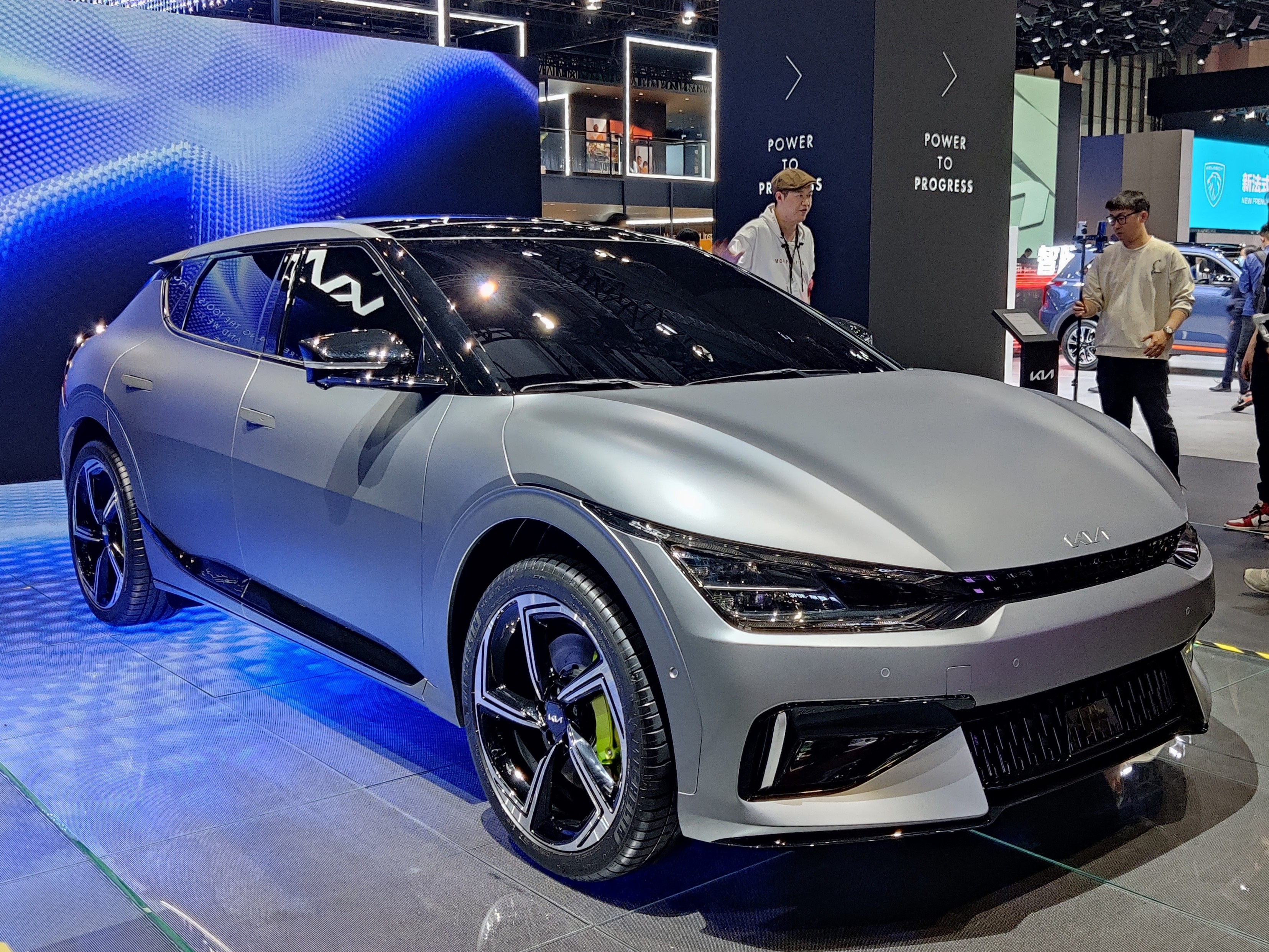
Kia EV6
"...are red too long in that category. So I think the EV6, the KEV6 was one of the few that fit in our gara..."
The Kia EV6 is an electric car in the crossover category, meaning it’s built for everyday driving with a higher ride position. It runs on a battery instead of gasoline. The podcast mentions it because it was one of the few EVs that fit in a tight garage space.
The Kia EV6 is an electric crossover designed to balance everyday comfort with efficient electric performance. It’s discussed in EV conversations because it offers practical packaging and is often considered when people are trying to fit an EV into a specific parking or garage setup. In the podcast context, the EV6 is mentioned as one of the few models that fit in the host’s garage.
tachometer
"And my wife's carnaval has round, it's where the speed, the speedometer goes or where the tachometer, depending if you're turning left or right when you turn your blinker on."
The tachometer is a gauge that shows engine speed. The host is saying their dashboard uses a round display area that can show different gauges depending on what you’re doing.
The tachometer is the gauge that shows engine speed (RPM) in vehicles that use an engine. The host is describing a dashboard design in which the tachometer and speedometer occupy the same circular area depending on driving/turning behavior.
speedometer
"And my wife's carnaval has round, it's where the speed, the speedometer goes or where the tachometer, depending if you're turning left or right when you turn your blinker on."
The speedometer is the gauge that shows how fast the car is going. The host is talking about where it appears on the dashboard and how it changes depending on which direction you’re turning.
The speedometer is the instrument that displays the vehicle’s current speed to the driver. The host mentions it as part of the dashboard/cluster layout, contrasting it with the tachometer depending on which side you’re turning toward.
one-pedal driving
"true one-pedal driving, which, you know, lots of cars say they have, but rarely do they come straight out the box with one-pedal driving."
One-pedal driving means you can slow down a lot just by taking your foot off the gas. The car uses its motor to slow down and recharge the battery, so you don’t have to use the brake pedal as often.
One-pedal driving is an EV control style where lifting off the accelerator provides strong deceleration, so you can slow and often stop with minimal brake pedal use. It relies on regenerative braking to convert the car’s motion back into electrical energy.
regenerative braking
"A lot of them, you know, almost all of the EVs have regenerative braking of some sort, but how that's implemented is the key."
Regenerative braking is how an EV slows down while also recharging. When you lift off the accelerator or slow down, the car turns the motor into a generator and sends energy back to the battery.
Regenerative braking is when an EV uses its electric motor as a generator during deceleration. Instead of wasting energy as heat in the brake pads, it sends some of that energy back to the battery.
feather
"then you don't have to rely on your brakes. There are many times I will drive, you know, someplace and never apply my brakes because it will come to a complete stop if you just learn how to feather properly."
Here, “feather” means gently controlling the gas pedal so the car slows down smoothly. It’s a technique to get the deceleration you want without jerky changes.
In EV driving, “feather” means smoothly modulating the accelerator pedal to fine-tune deceleration and regen strength. The goal is to match the car’s slowing rate to traffic without abrupt transitions.
brake pads
"One bonus is the brakes will last forever on a Tesla because you rarely use them, the brake pads."
Brake pads are the parts that squeeze against the brake rotors to slow the car down. If you slow down mostly using regenerative braking, the pads usually wear more slowly.
Brake pads are the friction material that clamps onto the brake rotors to create stopping power. In EVs with strong regenerative braking, drivers may use the friction brakes less, which can reduce pad wear.
over-the-air updates
"I love the over-the-air updates and the improvements that come with it. It's just all around."
Over-the-air (OTA) updates are software updates delivered wirelessly to the car, without needing a dealer visit. In this segment, the speaker credits OTA updates for improvements to the Model Y experience over time.
suspension
"Do you know what the... What exactly did they do to the suspension that was better in the 2026 versus the 2020?"
Suspension is what helps the car handle bumps and keep the wheels planted. They’re asking what was changed in the Model Y suspension so the newer one rides more comfortably than the older one.
Suspension is the system of springs, dampers, and linkages that controls how the wheels move and how the car absorbs bumps. The host asks what Tesla changed in the Model Y suspension to make the 2026 version ride better than the 2020.
dampers
"This is adjusting, I believe, the opening in the shocks, the dampers, so that they are more or less responsive to shock."
Dampers are the parts of the suspension that control how the car bounces after hitting a bump. If they’re adjusted to be more or less responsive, the ride can feel smoother or more controlled.
Dampers (shock absorbers) control how quickly the suspension moves up and down after hitting a bump. The host suggests the system changes the damper/shock opening so the car becomes more or less responsive to road impacts, which affects ride quality.
body would tend to roll with bumps
"I found, I talked about this roll with my 2020 Model Y, the body would tend to roll with bumps."
Body roll is the sideways leaning of a car’s body when cornering or when the suspension is disturbed by bumps. The host says their 2020 Model Y showed more roll over bumps, while the 2026’s adaptive suspension reduces it.
dealerless
"Tesla, as many I think car manufacturers are now, is almost, it's dealerless and it's almost touchless in that you don't really have to go in and make place the order with a dealer."
“Dealerless” means you don’t buy the car through a traditional car dealership. Instead, you order it directly (in this case, online) from the manufacturer.
“Dealerless” describes a sales model where the manufacturer sells directly to customers instead of routing purchases through independent car dealerships. In Tesla’s case, the host says ordering is handled online rather than through a dealer showroom or salesperson.
touchless
"Tesla, as many I think car manufacturers are now, is almost, it's dealerless and it's almost touchless in that you don't really have to go in and make place the order with a dealer."
“Touchless” means the buying process is mostly done without in-person steps. You order online and handle the process remotely instead of going to a dealership.
“Touchless” here means a low-contact buying flow where most steps happen remotely—like placing the order online and handling delivery logistics without a dealer visit. The host contrasts it with the traditional process of going to a dealership to place the order.
delivery date was projected
"When I ordered the car online, the delivery date was projected to be the last couple of weeks in December of 2025. This is for the 2026 model."
A “projected” delivery date is an estimate, not a guaranteed day. The host explains that their Tesla’s delivery window kept moving as the factory and shipping schedule changed.
A “projected” delivery date is an estimate that can shift as production schedules and logistics change. The host describes how the Model Y’s delivery window moved from late December 2025 into January/February 2026, reflecting how EV production and shipping timing can affect customer timelines.
delivery inspection
"With Tesla, I got this long list to review and check out the car using that list. Went over the car pretty thoroughly."
A delivery inspection is a careful check of the car when you pick it up. The goal is to spot problems early—before you’re stuck with them—like damage or parts that don’t work correctly.
A delivery inspection is the check you do when the car is handed over to confirm condition and identify defects before you’re fully responsible for them. The host mentions using Tesla’s checklist to review the car thoroughly, including exterior paint and a functional issue with the right rear seat.
right rear seat
"Probably the biggest was the right rear seat would not fully, it would recline, but it wouldn't come back up, which is a problem."
The right rear seat is the seat on the passenger side in the back. They found it wouldn’t move back to the upright position—so it’s a seat adjustment problem that should be fixed right away.
The right rear seat is a specific seating position in the back row, and in this case it’s part of the seat’s power adjustment system. The host reports a functional problem: it reclines but won’t return upright, which is the kind of issue you’d want to address immediately under warranty/service.
HomeLink
"I wanted HomeLink install in the car, which it doesn't come stock with anymore."
HomeLink is a feature that lets your car automatically open things like your garage door or gate. In this story, the car didn’t include it anymore, so they had to get it added.
HomeLink is an in-car system that can wirelessly control compatible garage doors, gates, and other home access devices. The speaker notes their Tesla Model Y Performance no longer comes with it from the factory, so they wanted it installed.
balancing
"There was a slight imbalance in the front wheels that needed some balancing."
Wheel balancing is making sure the tire and wheel spin smoothly without wobbling. If they’re slightly off, you can feel vibration or hear noise, especially at certain speeds.
Wheel balancing is the process of correcting uneven weight distribution in a wheel/tire assembly so it spins smoothly. The speaker says there was a slight imbalance in the front wheels that needed balancing, which can cause vibration or noise at lower speeds.
front camera
"We got an error on the front camera that said it needed to be cleaned. This is the camera behind the windshield in front of the rear view mirror."
The front camera helps the car “see” the road for safety features. The car warned that the camera needed cleaning, and the speaker explains where it’s located.
On many modern cars, the front camera is used for driver-assistance features and vehicle sensing. The speaker got an error saying the front camera needed cleaning, and they explain it’s mounted behind the windshield near the rear-view mirror area.
overflow lots
"When Kerry Murphy was on a couple of weeks ago, he was like, basically, no worry that Tesla overflow lots are. Then, if the likelihood is wherever that overflow lot is..."
An overflow lot is an extra place dealers store cars when their main lot is full. The speaker suggests checking what’s around your pickup location and doing a quick inspection before you drive away.
Overflow lots are secondary storage areas dealerships use when they have more cars than their main delivery lot can hold. The speaker’s point is that if your car is stored in an overflow lot near your pickup route, it may reduce the amount of time you spend waiting and can affect what condition checks you should do before leaving.
paint protection film
"even though we park it indoors, I decided to go with paint protection film on the front facing surfaces of the car for those road trips to Vegas, for instance, or up north when we go to Fresno. This basically just the front bumper, the side view mirrors"
Paint protection film is a clear sheet you put on the car’s paint to protect it. It’s mainly used to stop small rock chips and scratches, especially on the front bumper and mirrors.
Paint protection film (PPF) is a clear protective layer applied to vulnerable areas of a car’s paint. It helps prevent rock chips and abrasion on high-impact surfaces like the front bumper and side mirrors, which is why the host mentions applying it to the Model Y’s front-facing areas.
rock chips
"So I had them put an area of wrap in front of that flare or on that flare to keep the rock chips down."
Rock chips are the little nicks and spots in your car’s paint caused by small rocks hitting it while you drive. That’s why people use clear protective film on the front areas.
Rock chips are small paint impacts caused by road debris striking the front of the vehicle. They’re a common reason owners apply PPF film to leading edges and fender areas, since those spots take the brunt of impacts.
ceramic coat
"I could have coated the entire car, wrapped it, but I decided just to save some cost not to do that. Yeah, so you had the ceramic coat done, and then you had the PPF film."
A ceramic coat is a protective layer you put on your car’s paint to help it look shiny and resist dirt. People often pair it with PPF, which is the clear film that protects against rock chips.
A ceramic coat is a liquid polymer coating applied to paint that forms a durable, hydrophobic (water-repelling) surface. It’s often used alongside PPF film to improve shine and make the car easier to clean, while PPF handles the most impact-prone areas.
PPF film
"Yeah, so you had the ceramic coat done, and then you had the PPF film. Was that expensive? I think it's PPF first and then ceramic."
PPF film is a clear protective sheet that you put on parts of the car’s paint. It helps stop small rocks and road debris from chipping or scratching the paint.
PPF film (paint protection film) is a clear, protective layer applied to vulnerable areas of a car’s paint to reduce damage from road debris. It’s commonly used on front bumpers, fender flares, and leading edges to prevent rock chips and abrasions.

Tesla Cybertruck
"the Cybertruck has it, a more even more advanced version of this, but this allows you to plug an adapter in the charge port and provide power from the Tesla's battery out to some load,"
The Tesla Cybertruck is an electric truck. Here they’re talking about how it can power things outside the car—like appliances—using electricity stored in its battery.
The Tesla Cybertruck is an all-electric pickup known for its distinctive angular design and for offering a built-in power-out capability. In this segment, it’s referenced as having an advanced version of the ability to plug in an adapter at the charge port and run external loads from the vehicle’s battery.
charge port
"an adapter in the charge port and provide power from the Tesla's battery out to some load, 120 volt AC power up to 20 amps."
A charge port is the EV’s plug-in spot for charging. In this case, they’re saying you can use it (with an adapter) to send power from the car’s battery to things outside the car.
A charge port is the external connector on an EV used to plug in for charging. In this segment, it’s also used as an access point for power via an adapter, letting the vehicle supply electricity from its battery to external devices.
120 volt AC power
"120 volt AC power up to 20 amps. So you could operate most appliances, not high power appliances, but you know, a fridge or a washing machine."
This means the power coming out is like normal home electricity (the kind you’d get from a wall outlet). With the right setup, you can run some household devices from the EV.
“120 volt AC power” refers to standard household-style alternating-current electricity in the U.S. EVs can output this kind of power through the right adapter, enabling you to run common appliances (within limits).
20 amps
"120 volt AC power up to 20 amps. So you could operate most appliances, not high power appliances, but you know, a fridge or a washing machine."
Amps tell you how much electricity is flowing. The EV can only provide up to a certain amount (20 amps), so very power-hungry appliances may not work.
“20 amps” is a measure of electrical current, which helps determine how much total power the EV can safely supply to the load. Even if an appliance plugs in, higher-draw devices may exceed the EV’s output limit.
16 inch screen
"What about the, so it's got a bigger screen than mine. It's got a 16 inch screen. Yeah, it's not."
This is the size of the car’s main screen. A bigger, higher-resolution screen can make maps and camera images easier to read.
An EV’s infotainment screen size affects how much information can be displayed at once and how readable maps and camera views feel. The speaker compares a 16-inch screen to a previous screen size and claims the newer display has more pixels and a crisper map.
rear view camera
"It seems that there's more information. The rear view camera is just incredible. Oh yeah. Yeah, it's really good."
A rear view camera shows you what’s behind the car on the screen. They’re saying it’s so good they don’t feel the need to look back the old way.
A rear view camera is an EV’s/vehicle’s camera system that displays what’s behind the car on the infotainment screen. The speaker emphasizes it as highly effective, to the point that they stop looking over their shoulder.
side view mirror cameras
"I mean, I don't look behind my shoulder. I just look at the rear view mirror. That with the side view mirror cameras, looking rear into the side of your back."
These are cameras built into the side mirrors area so you can see around the sides of the car better. The speaker says using these views together makes it easier to know what’s around you.
Side view mirror cameras are camera feeds integrated into or near the side mirrors to improve visibility of blind areas. In this segment, they’re described as working together with the rear view camera and mirrors to provide sufficient visibility.
full self-driving
"And she uses full self-driving almost exclusively. She's one of those folks. And we're driving and she's like, why aren't you using, because I still use my mirrors."
“Full self-driving” is Tesla’s name for advanced driver-assist features. It can help with driving, but the speaker is saying they still rely on mirrors for safety and awareness.
“Full self-driving” is Tesla’s driver-assistance software package name, aimed at automating more driving tasks than basic cruise control. In this segment, it’s contrasted with the idea of still using mirrors for situational awareness while driving.
lane changes
"But yeah, she's like, why, why don't you just, this is a better view. You know, for lane, yeah, for lane changes, I do the same."
A lane change is when you move your car into a different lane. The point here is that the speaker prefers checking mirrors first because the camera view can lag a little.
Lane changes are a driving maneuver where you move from one lane to another, typically requiring checks for nearby vehicles and safe gaps. The speaker contrasts mirror-first habits with camera reliance, noting that cameras can have a slight delay.
camera has a slight delay
"I don't rely on the cameras. One of the reasons is the camera has a slight delay before it comes up. So I do what you do. I first look at the mirror..."
They’re saying the camera picture doesn’t show up instantly—it comes with a small lag. That lag can matter when you’re trying to decide quickly, so they rely on mirrors first.
This refers to the latency between when the camera captures an image and when it appears on the display. In fast-changing situations, even a small delay can make it harder to judge where other cars are, so the speaker uses mirrors as the primary check.
frontage roads
"But I do find, and this is a uniquely, I think, Arizona problem, but we have, along the freeways, we have frontage roads. So you could, you could travel along..."
Frontage roads are side roads that run next to a highway. They’re useful for getting around without staying on the highway, but you still have to deal with intersections and cars pulling in.
Frontage roads are parallel roads that run alongside a freeway, providing local access without directly merging onto the main highway. The speaker describes a scenario where you can travel along a freeway corridor using frontage roads, but you’ll repeatedly encounter stop signs/lights and vehicles entering from the freeway.
ambient light
"Okay. So you have, you have lots of little ambient light in the card. Do you notice that that's an added bonus? It's a nice to have. It's something I do notice."
Ambient light is the soft lighting inside the car that sets the vibe. Some cars let you change the color, which can make the cabin feel more fun or personalized.
Ambient light is interior lighting designed to create a mood or highlight cabin areas, rather than provide primary illumination. In EVs and modern cars, it’s often customizable (including color changes) and can be a noticeable comfort/experience feature.
drive in reverse and park using the screen
"What about, so there's no more stock for you. How do you feel about changing the, the drive in reverse and park using the screen? So let me just be clear. There is a stock on the left for turn signal, which I would really have a problem with if they did away with that, which they did in some models."
They’re talking about shifting gears by tapping options on the car’s screen instead of using a stick or buttons. It can feel weird at first, but it’s usually only for when you’re stopped, like going into Park or Reverse.
This describes a vehicle interface where gear selection (reverse, park, and forward/neutral) is done through the infotainment screen instead of a traditional gear lever. It changes how you perform low-speed maneuvers and can feel awkward at first until you get used to the workflow.
touchscreen
"That's interesting. So it turned out okay. I always think of the Steve Jobs quote of when somebody asks when they're going to get a touchscreen Mac. He's like, you really want to"
A touchscreen is a screen you tap to control things. In some cars, you use it to do actions that used to be done with buttons, like selecting drive modes or gears.
A touchscreen is a display you interact with directly using your fingers (or a stylus), rather than physical buttons or knobs. In cars, it’s often used for controls like climate settings and driving functions, including gear selection in some EVs.
neutral
"And it would be nice. It is easy enough to get into neutral, but it would be nice when I go to [2155.7s] the car wash. Yes, I take my car to the car wash."
They’re talking about putting the car into “neutral” so it can roll correctly. For things like a car wash, the car needs to be in the right mode so the wheels can move without the car trying to drive.
“Neutral” here is the drivetrain state used for specific low-speed handling situations—like preparing an EV for a car wash. The speaker is describing how the car must be placed into the correct neutral mode so the rollers can move the vehicle without the drivetrain fighting the motion.
car wash
"But yes, it would be nice when I'm in the car wash and the rollers are coming up to take [2180.6s] my car away, not to be in panic to get that into neutral."
A “car wash” in this context means an automated wash with rollers that pull the vehicle through. EVs often require a specific neutral procedure (or “service mode” behavior) so the drivetrain doesn’t engage while the rollers move the car.
high voltage problem
"So I went to pick up my car in 2023. It had a high voltage problem. So they wouldn't let me take it"
In an electric car, “high voltage” is the big battery power that runs the drivetrain. If there’s a “high voltage problem,” the car may need to be checked by a technician before you can drive it.
“High voltage problem” refers to a fault in the EV’s high-voltage electrical system—typically the battery pack, power electronics, or related wiring. Because that system is what drives the electric motor, these issues often require service and may limit or block vehicle operation for safety.
emergency flashers
"And for park, reverse, drive neutral right up there and emergency flashers. So there's a backup, a manual backup."
Emergency flashers are the hazard lights that blink to warn other drivers. They’re often used when something unexpected happens or you need to be extra visible.
Emergency flashers (hazard lights) are the system that turns on the car’s flashing turn-signal lights to alert other drivers. The host mentions them as part of the manual backup controls available when the Tesla screen is blank.
acoustic glass
"And I think it was after 2024 or late 2024 that they put in things like acoustic glass. It might be a double pane glass with a layer between."
Acoustic glass is special window glass made to block more noise. It helps keep the inside of the car quieter by reducing sound coming through the windows.
Acoustic glass is a type of laminated windshield/side glass designed to damp sound vibrations. In the Model Y context, it’s used to reduce road and wind noise inside the cabin.
Juniper
"Tesla has not changed the look of the Model Y for many years since the introduction and I think the latest one is called Juniper and that came out what in 2025?"
Juniper is the name Tesla uses for a refreshed version of the Model Y. In this episode they’re pointing out the visual changes, especially the new light bar and redesigned rear lights.
Juniper is Tesla’s internal/marketing name for a mid-cycle refresh of the Model Y. In this segment, it’s described as changing the front and rear lighting design—most notably adding a front light bar and a redesigned rear with a rear light bar and updated tail lights.
light bar
"The lights are different and it has a light bar in the front instead of separated left, right headlights and the light bar then has the headlights, actually it has the running lights integrated on the edges"
A light bar is a long strip of lights across the front or back of the car. It’s used for visibility and styling, and in this discussion it’s part of the refreshed Model Y’s new lighting layout.
A light bar is a continuous strip of LEDs used for exterior lighting, often spanning the width of the front or rear fascia. Here, the host explains that Juniper’s Model Y uses a front light bar and a rear light bar that illuminate at night, with the headlights and running lights integrated around it.
small speed rear end collisions
"I think they've extended the bumper out a bit from the hatch, probably to reduce damage for small speed rear end collisions."
This means low-speed crashes where someone hits you from behind. The idea is that the bumper shape/position is designed to take the hit and help prevent expensive damage.
“Small speed rear end collisions” refers to low-speed impacts from behind, where the bumper and surrounding structure are designed to absorb energy and reduce damage. The host suggests the bumper extension is intended to reduce damage in these minor rear-end events.
21 inch wheels
"Wheels are very important to me and performance model wise have 21 inch wheels."
“21 inch wheels” just means the wheel is 21 inches across. Bigger wheels can make the ride feel a bit firmer and can make curb scuffs more noticeable.
“21 inch wheels” refers to the wheel diameter, which strongly influences how the car rides and handles. Larger wheels typically pair with lower-profile tires, which can change comfort and can also affect how easily the wheel lip gets scuffed.
wheel covers
"They come with what do you call those, arrow covers, individual inserts, not a full single arrow cover, but individual inserts around these 10 different little V shapes."
Wheel covers are decorative parts that sit on top of the wheel. Here, the host says these particular covers mainly change the look and don’t really prevent damage if you scrape a curb.
Wheel covers (often called hubcaps or wheel inserts depending on design) are cosmetic pieces that sit over parts of the wheel. In this segment, the host argues these “arrow covers” are mostly for appearance and don’t meaningfully protect the wheel from curb rash.
curb rash
"some of those individual, the wheel covers, they cover the some of the road rash that maybe you might scrape up against something with your tire."
Curb rash is the scraped-up marks you get when you accidentally hit the curb with your wheel. It’s mostly cosmetic, but it can look bad on nicer wheels.
Curb rash is the scuffing or scraping damage that happens when a tire or wheel lip contacts a curb. It’s a common cosmetic issue on alloy wheels, and the host is discussing whether the factory wheel inserts actually help prevent it.
range
"You do sacrifice a little bit on mileage as a result because you're removing the arrow covers, but it's probably on the order of one or two or three miles."
Range is the estimated distance a vehicle can travel before needing to recharge. The host claims removing the wheel inserts slightly reduces range (on the order of 1–2%), likely due to changes in aerodynamic drag and/or rolling resistance.
wrapped
"to have two and I think the other one got in an accident, but he has this beautiful golden black wrapped Tesla and it's Model 3 was one of them."
A wrap is a sticker-like vinyl layer put over a car’s paint. People use it to change the look (like a two-tone color) without doing a full paint job.
A “wrap” is a vinyl film applied over a car’s paint to change its color or finish (like matte, gloss, or metallic) without repainting. Here, the speaker describes a “golden black” wrapped Tesla, emphasizing customization that’s mostly cosmetic.
hardware four
"Okay. So now comes to full soft driving because you have hardware four. You're getting the newest updates. Alison, bless her. She's on hardware three. She doesn't have the newest updates."
“Hardware four” refers to Tesla’s onboard computer hardware version used to run advanced driver-assistance features. The speaker contrasts it with “hardware three,” noting that cars with newer hardware get the newest updates and can access features like Full Self-Driving sooner or more reliably.
subscription
"It's month to month. And there was in Europe for a little bit, you could buy it still outright. ... Subscription. You can't buy it anymore. Cannot buy it."
Here, “subscription” means you pay ongoing fees to keep using the self-driving features, instead of buying them once. The host is saying Tesla changed how you can purchase it, especially in the US.
In this context, “subscription” refers to Tesla’s business model for FSD access—paying periodically rather than buying the capability outright. The speaker contrasts Europe (at one point) with the US, where they say you can’t buy it anymore and it remains subscription-based.
FSD
"So I sold the car and transferred the FSD over. It's, as you said, I have hardware for, so I now have the latest version of full-cell striving today."
FSD stands for Full Self-Driving. It’s Tesla’s software that tries to do more of the driving tasks for you, and in this story it’s something you can transfer to a different car and later get updated.
FSD (Full Self-Driving) is Tesla’s software package that adds advanced driver-assistance and autonomous-driving features beyond basic autopilot. In this segment, the speaker describes transferring FSD to a new Tesla and then receiving newer FSD software versions.
14.3.2
"It's, as you said, I have hardware for, so I now have the latest version of full-cell striving today. It's 14.3.2, I believe. There may be a slightly later version coming out."
14.3.2 is the version number of Tesla’s self-driving software. The host is saying that after updating to that version, the car’s behavior improved in noticeable ways.
14.3.2 refers to a specific Tesla FSD software release version. The speaker uses it to explain that newer updates can change how the car behaves at intersections and during turns.
full-cell striving
"It's, as you said, I have hardware for, so I now have the latest version of full-cell striving today. It's 14.3.2, I believe."
This phrase sounds like a mis-transcription of Tesla’s Full Self-Driving (FSD). The speaker is talking about the self-driving software on their car and how it gets updated.
“full-cell striving” appears to be a transcription error for Tesla’s Full Self-Driving (FSD) software. The context is clearly about the speaker’s FSD capability and its software version, not a separate hardware system.
hardware for
"It's, as you said, I have hardware for, so I now have the latest version of full-cell striving today."
This means the car already has the equipment needed for the self-driving features. So when the software updates arrive, the car can actually use them.
“Hardware for” indicates the car has the necessary sensors/compute to run FSD features, even if the software package is activated later. The speaker implies that because they have the right hardware, they can receive the latest FSD software version.
hurry
"Now the five modes that Tesla offers for full self-driving are sloth, chill, standard, hurry, and Mad Max. I tend to drive in the hurry mode."
“Hurry” is a named self-driving style setting in Tesla’s system. It generally makes the car drive more assertively than the slower, calmer options.
“Hurry” is one of Tesla’s named driving modes within Full Self-Driving behavior. It’s intended to make the car’s driving style more assertive (for example, how it accelerates and times maneuvers) compared with calmer modes.
Mad Max
"Now the five modes that Tesla offers for full self-driving are sloth, chill, standard, hurry, and Mad Max. I tend to drive in the hurry mode. Mad Max is just a bit much for me."
“Mad Max” is Tesla’s most aggressive self-driving style setting. The host is saying they don’t like it because it feels overly intense.
“Mad Max” is Tesla’s most aggressive named driving mode option within Full Self-Driving. The speaker says it’s too much for them, implying it pushes the car’s behavior to be more forceful than other modes.
hands off mode
"Now that we have hands off mode. Yeah, my hands are pretty close if not slightly touching the wheel. But still an improvement..."
“Hands off mode” is when Tesla lets you drive without keeping your hands on the wheel. You still need to watch the road and be ready to take over quickly.
“Hands off mode” refers to a Tesla autonomy setting where the car allows the driver to stop physically holding the steering wheel while it performs driving tasks. Even then, the driver is expected to remain attentive and ready to intervene if the system requests it.
lane changing
"The thing that it does that I don't like is lane changing. It tends to want to change lanes more often on the freeway than I would like."
Lane changing is when the car decides to switch lanes. The speaker is saying the system does it more frequently than they would choose themselves.
Lane changing is the autonomy behavior of deciding when to move to a different lane and executing that maneuver. The speaker’s complaint is that the system initiates lane changes more often than they personally prefer during freeway cruising.
lower modes
"Now, if you go to these lower modes, the sloth of the chill, lane changes will occur less often."
“Lower modes” means a less aggressive driving setting. The speaker says it makes the car switch lanes less often.
In Tesla autonomy discussions, “lower modes” typically refers to reduced-aggressiveness driving settings that change how assertively the system behaves. Here, the speaker links lower modes to fewer lane changes, implying a tradeoff between driving style and autonomy behavior frequency.
dichotomy
"So I have kind of a dichotomy between how often I want to change lanes and how fast I want to go. They're not quite compatible."
They’re describing a tradeoff: they want the car to change lanes less, but they also want to keep going faster. The problem is that the system doesn’t let them control those things separately.
The speaker uses “dichotomy” to describe a conflicting pair of goals: they want fewer lane changes while also wanting to drive faster. In autonomy terms, it highlights that some driving behaviors are coupled in the software rather than independently adjustable.
Tesla interface
"Maybe you wouldn't want to do it in the Tesla interface on the car, but in the app, maybe there is a way to fine tune this kind of stuff."
The Tesla interface is the screen and controls inside the car. The speaker is wondering if there should be more detailed tuning available, possibly through the app.
The Tesla interface is the in-car UI where drivers can adjust settings for autonomy and driving behavior. The speaker suggests that fine-tuning autonomy parameters might be better done in an app than in the car’s interface.
supercharger
"you should be able to navigate to a supercharger and then have it do everything back into the stall. The cable to plug into your car."
A Supercharger is Tesla’s fast-charging station network. Here, the host is saying the car can guide itself to the right charging spot so you can plug in more easily.
A Supercharger is Tesla’s high-power charging network for Tesla vehicles. In this segment, the host is describing how the car’s navigation and automation can guide the vehicle to a Supercharger stall and manage the approach for plugging in.
noise
"He was most interested in noise first and ride quality second. He said, you'll be happy with it."
Here “noise” means how loud the car is—especially road and tire sounds. For an EV, people often care a lot about how quiet it feels compared with other cars.
In EV context, “noise” usually means how quiet (or not) the car feels at speed—things like tire/road noise and any motor or drivetrain sounds. The speaker says the other buyer was most interested in noise first, implying NVH (noise, vibration, and harshness) is a key part of the Model Y Performance decision.
Request an Explanation
Heard something you'd like explained? We'll add it to this episode.
Sign in to request explanations for terms you heard.
Want to learn more?
Browse our glossary for plain-English explanations of automotive terms, jargon, and concepts.
Help improve this episode
See something that's not quite right? Our annotations are AI-generated and can sometimes miss the mark. Click the flag icon on any annotation to suggest a correction.