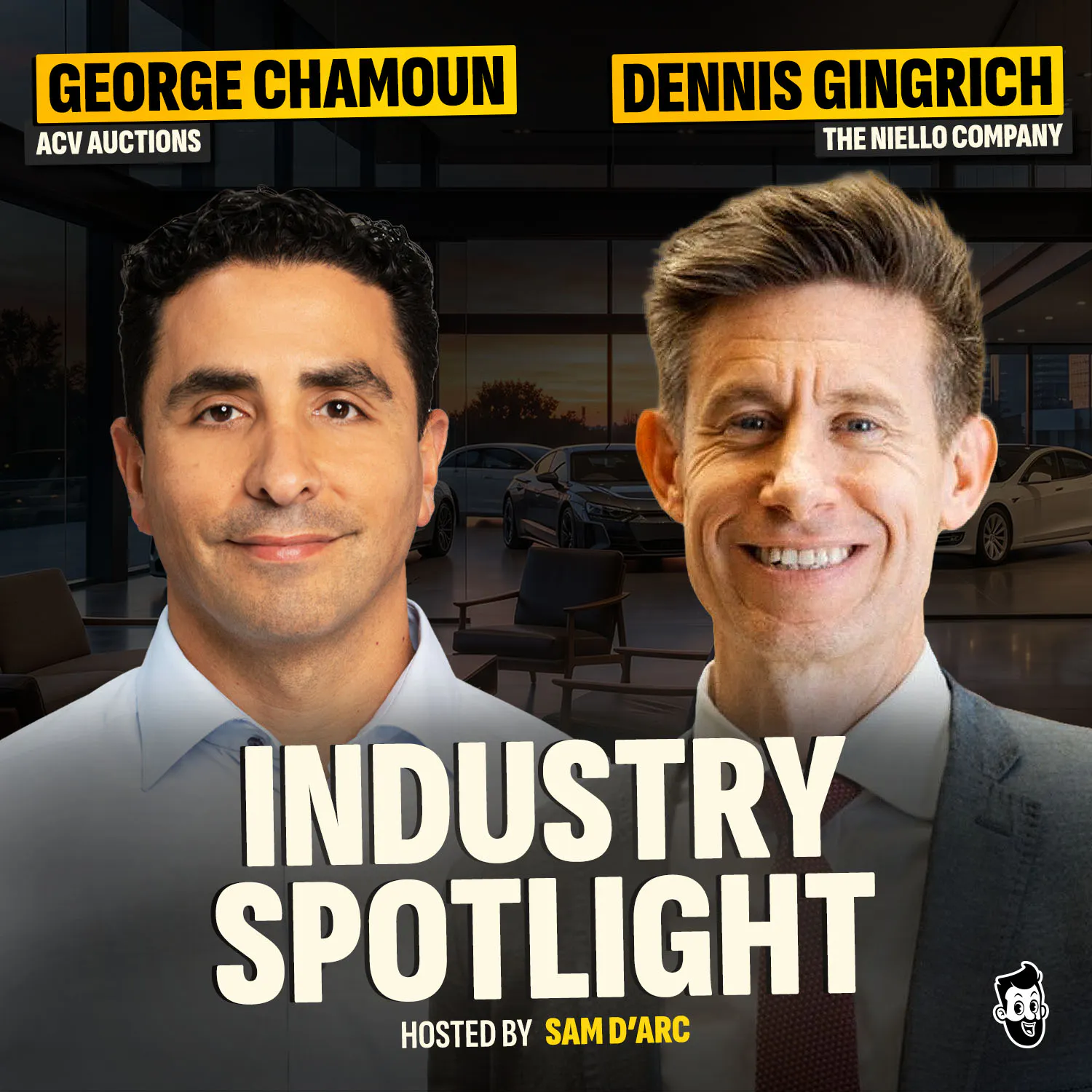
"Stop Guessing on Used Cars" – How Data is Killing the "Art" of the Appraisal | Industry Spotlight
Car Dealership Guy Podcast
"Stop Guessing on Used Cars" – How Data is Killing the "Art" of the Appraisal | Industry SpotlightCar Dealership Guy Podcast · May 14, 2026
Annotations will appear as you listen
0:00
42:18
Term
historical data points
Historical data points are past examples of what happened before. The idea is to use those past results to make better guesses about what a used car should cost today.
It means how much profit a dealership actually makes when it buys and sells used cars. If the price is off, the dealership can lose money even if sales volume looks fine.
Used car acquisition is the process of sourcing and buying inventory from auctions, trade-ins, wholesalers, or other partners. The segment argues that in 2026 it depends heavily on getting the right price because profit margins are thin.
Mispricing means the dealership asks too much (or too little) compared to what the market will pay. If the price can’t be backed up with data, buyers lose confidence and deals fall apart.
Inventory turn is basically how fast the dealership sells its cars. If cars don’t sell quickly, the dealership has money tied up and has to deal with pricing pressure.
They’re arguing that dealerships shouldn’t guess at prices. Instead, they should use data about customers and specific cars to price more fairly and consistently.
Company
Nilo company
They’re talking about a specific dealership group/company called Nilo. The point is that they’re trying to use better planning and data when buying and pricing cars.
The speaker mentions BMW because they’re using BMW dealership performance numbers as an example. Those numbers are used to show how trust and repeat service can influence other parts of the deal.
In dealership terms, retention is the percentage of customers who return for repeat service and maintenance. The speaker frames retention as a measurable indicator of customer trust, which then affects how confidently the dealership can make trade-in value offers.
VIN level data means looking up information using a car’s unique VIN number. Since that number identifies the exact car, it can help the dealership understand what leads to follow and how to price more accurately.
The service department is the dealership’s repair and maintenance shop. The idea here is that how well they handle maintenance affects whether customers come back.
Maintenance items are the regular upkeep and wear-and-tear parts a car needs over time. The speaker is saying competitive pricing on these helps customers trust the dealership.
Nilo Volkswagen is a dealership used in the story to show that two nearby dealers can quote different prices for the same kind of vehicle. That inconsistency can damage trust.
ACV is a way to estimate what the car is worth in today’s market. It’s the kind of number dealers try to calculate consistently when appraising used cars.
VIN level pricing is when a dealer uses the car’s unique ID number (the VIN) to price that exact vehicle. It helps avoid guessing based only on the model name.
NADA is a reference guide dealers use to estimate what a used car is worth. It helps them put a starting number on a car before they consider the car’s condition and local market.
Topic
used car appraisal with data vs "art"
The hosts are talking about how dealers should price used cars using better data instead of guessing. The goal is to quote the right number for the exact car, not a rough estimate.
Acquisition leads are people the dealership finds through ads or online marketing who could become customers. The idea is that it can take a long time to follow up and get them to say yes.
DMS is the software system dealerships use to manage inventory and sales. If data is connected to the DMS, it can help the dealer quote and track cars more accurately.
Book data is a published estimate of a car’s value from pricing guides. The point here is that the guide number may not match the exact car and its real local market.
Segment pricing means pricing cars based on a category they fit into, not the exact car’s details. The episode’s claim is that category-based numbers can be off for the specific vehicle being appraised.
They’re using computer models trained on lots of past car sales to guess what a car will be worth soon. The goal is to make the price estimate more consistent than relying on gut feel.
When you trade in your car, the dealer has to buy it from you at a price that makes sense for their resale business. “Wholesale” is the lower, dealer-to-dealer kind of pricing, not the higher retail price you’d see on the lot.
A franchise dealer is a dealership operating under a manufacturer’s franchise agreement, typically selling that brand’s vehicles and using brand-approved processes. The segment argues that if consumers don’t trust franchise-dealer pricing, they may avoid selling their car to that dealer.
The idea is that customers should be able to see a fair price without needing special insider knowledge. When the price is based on data, it’s easier for people to trust it.
Term
grab on attempted gross
Dealers often have a target profit they want to make on a car deal. The speaker is saying some pricing differences might be driven by those profit goals instead of the car’s true market value.
It means the dealer group uses software to price lots of cars quickly and consistently. Instead of each store guessing, the system handles it for many cars at once.
They’re also estimating what the car might bring if it’s sold through wholesale channels. Think “dealer-to-dealer/auction price,” not the retail sticker price.
Viper is a software tool the hosts say helps dealers decide what parts of pricing can be automated and what still needs a person. It’s about the day-to-day workflow, not just the price number.
ClearCar is described as the product that assigns a numeric value to a vehicle across different contexts (sell/trade) and powers pricing on dealership websites. In this segment, it’s positioned as the foundation for condition-adjusted vehicle valuation.
An API is like a digital “messenger” that lets different software talk to each other. Here, it means dealer systems can automatically use the pricing data.
Condition-adjusted value is a pricing approach that modifies a vehicle’s baseline market price based on its actual condition. Instead of treating every car as equal, the model accounts for differences like wear, damage, and overall condition.
Max is another software product that helps predict what a car should sell for and manage dealer inventory. The key idea here is that it can update prices automatically.
This is dynamic pricing: the system updates retail prices automatically as market conditions and inventory signals change. Changing prices every few days helps dealers stay competitive without relying solely on manual repricing decisions.
The undercarriage is the bottom of the car—where you’d see things like the suspension and the parts that can get hit by potholes or debris. Its condition can strongly affect whether a used car is priced as “clean” or not.
“Virtual lift” is a way to check the bottom of a car while it’s still on the ground. It helps the system spot damage or issues that would normally require lifting the car.
Brand
Carvon
The host mentions another used-car company besides CarMax. The exact brand name in the transcript is a bit unclear, but it’s being used as an example of a buyer that wants “clean” cars.
They’re using a schedule for contacting leads multiple times. The point is to keep following up—right after the car is scanned and then again weeks later—so more leads turn into sales.
Concept
capturing the data
The big idea is that pricing used cars should be based on real condition information. They’re describing a process where the scan results are recorded and then acted on consistently.
The service drive is where cars go for maintenance and repairs. The hosts are saying cars that just went through service are often the best candidates for inventory because they’re more likely to have been cared for.
Term
tumble leads
“Tumble leads” sounds like a term for leads that aren’t very promising. The speaker is saying the service-drive cars are better leads than the usual lower-quality ones.
Curb rash is scuffing or scraping damage on a wheel from hitting the curb. It’s important because it can mean extra repair cost and can lower what the car is worth.
Matching tires means the tires are the same type and tread level. Dealers look for this because different tires can be a safety/quality concern and may require replacement to sell the car properly.
The Volkswagen ID.4 is an electric SUV, which means it runs on a battery instead of gasoline. It’s made for regular driving like commuting, and you charge it by plugging it in. Because it’s electric, some parts wear differently than on gas cars, and owners may notice things like tire wear from everyday driving.
A catalytic converter is a part that cleans up car exhaust. If it’s gone, the car may fail emissions checks and it can be an expensive problem to fix—so it needs to be caught during inspection.
“Flagged” means the computer system is warning that something might be wrong with a car. The manager then checks it in person to confirm before making a pricing or buying decision.
“AI tools” are computer programs that try to help dealers make decisions about cars. The host is saying different tools can disagree, so you still need a solid process and people to verify what’s going on.
Inventory management is how a dealership keeps track of cars—what they have, what it’s worth, and what stage it’s in. Here, they’re saying the tool helps manage that whole process, not just a spreadsheet.
The trade process is what happens when you bring in your current car as part of buying a different one. The dealership has to figure out what your car is worth and what to do with it next.
Here, “ecosystem” means the whole chain of dealership steps that involve a used car. They’re saying the tool connects to many parts of that chain, not just one step.
Auction acquisition means buying cars from auction sites (usually wholesale). The idea is that the same data-driven system helps decide what to buy and how to price it afterward.
A workflow solution is like a guided checklist app. They’re saying that in the near future, tools that only guide steps won’t be enough—dealers will want the data to connect directly to their main systems.
Term
core actual cash value
They’re talking about a “real” value number for the car—what it should be worth in cash terms. The point is that their system is built around producing that valuation, not just being another app.
They’re using software models to predict what a car will be worth soon, instead of relying on gut feel. Those predictions help dealers decide what to offer and list the car for.
VIN-specific pricing means the quote is based on the exact car you’re dealing with, not just the model name. The VIN is like the car’s unique ID number.
Pricing intelligence is basically “smart pricing” using lots of data. Instead of guessing, it tries to estimate a car’s value using details about that specific vehicle.
“Banded” means putting cars into rough groups and pricing them from the group average. The point here is that VIN-specific pricing is more precise than those broad buckets.
The “wholesale side” refers to pricing and transactions between dealers (or dealer networks) rather than retail sales to end customers. The speaker claims the system already saw condition-adjusted data there before expanding into retail pricing.
No reserve means the seller isn’t setting a minimum “must get at least this much” price. If bids don’t reach a certain level, the car can still sell—so pricing accuracy matters a lot.
Concept
common issues with a year make model brand
The phrase describes a valuation approach that accounts for recurring problems tied to specific vehicle attributes like year, make, model, and brand. Instead of treating every car as unique, the system tries to learn which defects are common for a given configuration and adjust value accordingly.
Artificial intelligence is computer software that learns from lots of examples. In this context, it helps estimate used-car value by learning patterns from vehicle data.
An inflection point is a turning point where things start improving faster or working better. Here, it means their valuation product reached a stage where it started delivering better results.
Retail pricing is the customer-facing price a dealer puts on a used car for sale. Here, the system can automate those prices and related listing details.
Guardrails are safety limits that stop an automated pricing system from making extreme or unreasonable price changes. The idea is to keep pricing consistent even when the market shifts fast.
AI-powered pricing means using software that uses data to help set car prices. The hosts say it can automate pricing and descriptions, but with rules to keep it from making wild changes.
Aftermarket means the parts weren’t made by the car’s original manufacturer. The hosts are implying that non-factory work on the underside can be a risk worth investigating.
This phrase means how dealerships gradually start using a new system or service. They’re about to explain what makes some dealers adopt it faster than others.
They mean using computer systems to handle the used-car buying steps instead of doing everything by hand. That can make the process faster and more consistent.
They’re talking about whether customers believe the dealership is being honest and consistent. If prices don’t line up, customers may not trust the process.
GSM usually means General Sales Manager. It’s the person in charge of how the dealership runs its sales process, including pricing decisions.
Concept
data-driven pricing vs gut-driven pricing
They’re comparing pricing based on intuition (“gut”) versus pricing based on data. The point is that data can back up the decision instead of relying on one person’s instincts.
Concept
use car manager
A used-car manager runs the used-car side of the dealership. The point here is that once the data tools are in place, the manager spends less time guessing and more time helping customers.
An AI vendor is a company that uses software (AI) to help dealers contact customers and keep up with follow-ups. It’s meant to make the process faster and more consistent.
BDC is the dealership team/system that handles leads—calling and messaging people after they show interest. The goal is to follow up quickly so you don’t lose the customer.
The VIN is like a car’s fingerprint. “VIN captured” means the dealer gets that number so they can look up the exact car and price it correctly.
LIVE
Hey everybody, welcome back to Cardiola Ship Guy Industry Spotlight.
I'm your host, Sam Dark, and today, if you ask a use car manager how they arrived at
a trade-in value, they'll often point to their gut or a decades-old artistic sense
for the market.
But in 2026, relying on art, it's a recipe for leaked margins.
Use car acquisition has become a data science arms race, where being off by a few hundred
dollars can be the difference between a retail win and a total loss.
Between inconsistent pricing across rooftops and missing hidden mechanical flaws in the
service drive, dealerships today are fighting a battle for credibility they can't win
with legacy tools.
Coming up in this episode, we discuss why the art of the appraisal is officially dead
and how VIN-specific data is the only way to protect your brand's trust, and why inventory
management as a mere workflow tool will be obsolete in just a few years.
Joining me today are Dennis Gingrich, VP of Fixed Ops and Sales at the NELO Company,
and George Shimon, CEO of ACV Auctions.
Props to ACV Auctions for supporting today's content now, let's get into it.
Alright, Dennis, welcome back to the Cardiola Ship Guy Industry Spotlight.
So set the table on NELO first, Dennis.
How many rooftops, what brands, what markets, and where does the BMW store sit in the mix?
Awesome.
Well, we're the NELO company.
We're located here in Sacramento, California, Northern California.
We don't have that many palm trees like they do down south, but we're predominantly operating
in the luxury segment.
We have a total of 10 different rooftops.
Our brands include Porsche, Land Rover, Acura, Volvo, BMW Mini, Volkswagen, and I think I
got, oh, Audi.
I forgot our friends at Audi, but two Porsche stores, two BMW stores, and two JLR stores.
But that's our platform.
And we've been in business here for over 100 years, and we work for some amazing human
beings in the NELOS.
And you've been on the Daily Deal Live multiple times.
You've been a part of the Cardiola Ship Guy Network for a while.
And you have an unique view.
We talk often on the show.
You split both sales and finance, which is a rare seat in any organization.
What, Dennis, does that dual view show you about where stores leak money on pricing that
a pure sales lens misses?
Well, I think the lens of F&I is an important lens, really, because not only is it a big
profit center for dealerships that we all need to focus on, there's a lot of compliance
things that go into F&I.
But I think that the unique lens there is markets ebb and flow.
When supply dwindles, we get more margin.
And then when it goes the other way, which is arguably where we're at now, F&I becomes
a crucial piece of our operation, not only in profitability, but driving repeat and
referral business and helping us skyrocket our retention rates to keep customers in the
showrooms now and into the future.
So none of us can do our jobs without inventory, right?
So let's talk about the old way at NELO.
You were buying leads to source inventory.
What did that cost you, Dennis?
Not just the lead spend, but competing against three or four other rooftops of that same
car, the time, the close rates.
What was the cost, Dennis?
Yeah, I mean, frankly, money aside, because they're not exactly cheap.
I think all of the listeners know that.
But when you were buying some of these leads, one lead would be sold to a variety of
different dealerships in the market.
And when we started digging into the details, for example, our Volkswagen store would get
a lead, but literally around the corner on some days, it's quicker to walk there than
to drive, that same store would get the same lead.
And we're sitting here fighting against one another.
And that's not good.
And as you know, Sam, salespeople, they're competitive.
And it's like, ha, let's see who could pay the most for this car.
And it was just bad all the way down the funnel there.
Yeah, it's crazy to me, too.
Two people are paying for that same thing, and then you end up having to fight it out,
race to the bottom.
That's a frustrating deal.
So before you change your acquisition approach, Dennis, how are your managers appraising
trades and pricing the retail?
Tell us what tools, what data, how much of it was gut?
How are managers pricing, Dennis?
There is art and science to this still today, but I would say, pre or move over to ACV
Max, it was a little bit more art.
And with all the data that's available in our industry, it's a huge topic over the
last few years.
You know, our change made us get a little bit more data forward, looking at what is
actually happening with our historical data points when we're putting numbers on cars.
We're just leaning into the data more so than we ever have been last year in terms
of our used car profitability.
It was not a pretty picture.
You know, so that's what led us to looking at how we're acquiring cars and looking at
different partners to find a better solution where we could, you know, make this make
more sense for the Nilo company.
And I get passionate about this because in 2026, used car acquisition has everything to
about the right price.
You've got to have enough data to make the right pricing decision to get aggressive enough
to get that car because the margins are so thin.
Was there an example pre this change where you mispriced a car?
There was a trade miss.
There was a customer conversation that went sideways because the number was less
defensible than maybe it is today.
When we looked at how we were pricing our cars and our overall turn of our inventory,
it was just we were hanging on to hope that we were going to make this this big margin.
And once you get behind the eight ball and you're chasing it is just such a rapid fall
to the bottom and next thing, you know, you're in desperation and you just, you know,
and then once you're behind, you know, the guys and gals that work at the store, they're
like, man, how do I catch up?
It clouds their judgment and they just don't make good decisions.
So being more proactive in the way we acquire our cars, price our cars so we can move them
is definitely a better equation for the Nilo company and everybody in the industry at
large.
Okay.
So I see a retention number from your BMW store, 74 percent.
Tully's been on the show a lot.
He talks retention, retention, retention.
So what is that 74 percent retention that BMW have to do with how you source cars today?
And what is retention plus VIN level data unlock that buying leads?
Never could, Dennis.
Well, I mean, just VIN level data, just unpacking the retention question, the 74 percent, you
know, Tully does a great job, not just at our BMW store, but across the group, really
tracking that number, holding the service department accountable and, you know, and he
does that really by, you know, being competitive on maintenance items.
We're not here to make money on maintenance and tires and all that stuff.
I know he said that on the show before, but when you, when we are able to get that level
of trust, because in my opinion, retention is a, is a quantitative measurement of trust.
Do our customers trust us?
And if they trust us enough to come back 74 percent of the time for their service and
maintenance, when it comes time for us to offer them a value on their trade, you know,
they believe that we're going to be honest and fair and forthright.
And, you know, we do want to do that.
We want to put for a fair value.
And I think fair is good for the customer and good for us.
And that's, that's a hallmark of all good deals.
So that just helps us get more yeses.
So pre the change, was there an issue where customers would be frustrated feeling like
the number wasn't accurate or people didn't have confidence in the number?
What was the breaking point where you're like, Hey, this isn't working.
It's not supporting that 74 percent retention number at BMW.
Well, you could see it just in the CRM, you know, with enough examples, you know,
Dennis Gingrich goes down to Nilo Volkswagen and gets, you know, X and then literally goes
around the corner and gets, yeah, it's a completely different number.
Yeah, blasts our credibility, you know, all over the place because, because our customers,
and I think if you go to an Apple store, you expect the same experience of Apple store and
Buffalo as you do out here in Sacramento, California.
And I think our customers here in this market, we've been around long enough.
They expect that same type of consistent experience, regardless of the rooftop they visit.
Okay. So you have this frustration.
You saw the cost of the organization and you brought in a tool to help change the direction on this.
Before we get to George and get to ACV, walk us through an acquisition story.
Customer in your service drive, BMW, you've got their data, you've got VIN level pricing.
What's the conversation today versus what it would have been a couple of years ago?
The conversation today is just really having meaningful data that is presented in a way
in which we can use internally, but a lot of it we can share with the customers because
seeing is believing and really pivoting on the Y of the switch, you know, some of the legacy
providers of leads, so on and so forth. You know, it was, I don't know, 34 years ago,
we were clamoring just to get a Bluetooth driver to put into our trades that would integrate with
the system. We couldn't get it done. And, you know, we met with George and his team
out at a NADA and they, you know, they showed this project and it's like, it wasn't ready at the time,
but what they offered was where the industry was going to go and it needed to go.
And it's like, okay, I need to be ready on the front line to where we can, you know,
quote customers, give them a value on their car as many times as possible because you know this,
Sam, that the closing rate on these acquisition leads or, hey, we want to buy your car leads is
very, very low, you know, and it's because it is sold to multiple dealers in the market.
It takes a long time to follow up on those leads to get a yes. And, you know, a lot of stores
aren't great at follow up. And so it's like, okay, I felt like I could quote my way to success.
So at that point with, you know, the, you know, this future product, which we now know is Viper
and all the VIN level data and the metrics that are tie into our DMS to where we could really
see what was going on. And it's like, all right, we're jumping in. So George, Dennis described the
problem that all of automotive faces today. Getting that great used car is job number one,
working with your existing customer base, especially at a BMW store with retention that high
is job number 1.1. And keeping credibility with that consumer, nothing's more important. You
can't get outbid by another competitor that has a better price. Why is book data and segment
pricing actually wrong, George? Not just imprecise, but wrong for the car that's sitting in front of
a manager today in that lane looking to put a number on it. Yeah, Sam, maybe before we talk
about why it's wrong. Let's go up a little bit and see what's important. What's important, at least
if I own the franchise dealer group is brand and trust matters. And when you think, if you really
believe that, that brand and trust matters, then if you've got one number on your website, some
widget company, the dealers got some widget on their website, that's giving a number. You got an
inventory management tool, that's giving a number. You got some hardware in your service drive with
some whiz bang hardware company, that's giving a number. And then you've got some experts within
your company. And they are the best at that specific car. And they give a number. All right.
So basically at any one dealership, we can get four numbers, maybe more. And then if I go to brand
X versus brand Y, I might within my dealership group yet get another number. And I'm supposed to
trust that franchise dealer, that owner of that principle. And meanwhile, I can go work with the
big box guys, put in my name, van, get a number, and I can trust that. And so Sam, what
we've done is we've predicted using machine learning and AI, we'd be able to predict the retail price
of what the car is going to sell for in the next 30 days within $100. And we may be able to predict
the trade in wholesale within $100. So if you can predict because of our, you know,
1500 dealers, we've got direct DMS integrations, we know what cars are selling for at some of the
biggest groups in the country. We have, you know, the largest dealer wholesale auction in the country,
digital dealer auction, where we're inspecting over a million cars a year. So we have this massive
data mode, we're able to make these predictions both for retail and trade. So now go back to
Dennis's problem statement. Car drives through within seconds, you get a price. That's simple.
No, like, you know, wizard of Oz, you need to come up with a number, you drive through,
you get a number. A matter of fact, if you go to the website, you get the same number.
And that ability to democratize price creates trust. And trust is important,
because if we don't allow consumers to trust the franchise dealer, they're not going to sell their
car to the franchise dealer. So what causes the problem Dennis talked about in the beginning,
what causes this problem of all these different prices out there, just that nobody has enough
accurate correct data to be able to price it accurately? Or is it a grab on attempted gross,
or is it just lack of experience? What has caused us to be in this place where, because I agree with
you, like, at one of our stores to get out bid by one, like, let's say a car von or a car max,
because they have access to data that they're willing to pay $1,000 more for a trade in,
you kind of scratch your head and go, how are they doing that and making it make economic sense?
Is that they have better data and they know that price more accurately so they can go more in?
Or why are we where we are today, George? History has created a business model where every store
runs on its own. And so this specific car for this specific store based on, you know, market
pricing and blah, all the things today a dealer does to price that car.
Yeah. Well, the big box guys aren't looking at, you know, what's the value of that car based on
that one store. And so when you have the ability to price vehicles at scale, which we do, you now
can predict what it's going to retail for in the next 30 days, what it's going to wholesale for
in the next 30 days. And you've taken out the emotional element of a local person saying,
man, I've gotten burned on this before. I've got 10 of these. I don't need another.
As soon as you start to even introduce any of that into your mix. At the end of the day,
you've got Mary or Johnny in the service drive. We got to buy their car. We've got a gold line here.
We can't introduce all these things. And that's really the benefit of machine learning and data
sciences. You're not doing all that. We're buying the car. Whether we're going to retail or wholesale
it, that's a secondary decision. We're buying the car. All right. So back us up now that we've
got the accurate price and we have that data insight Dennis does explain George Viper in plain
English to the dealer who's not used it. What's the workflow? What gets automated? What stays human?
And where does a manager still need to override it in 2026?
Yeah, it's certainly same. So I'll start with what we did right before launching Viper. So
clear car is the ability to be able to put a number on a car, whether it's a sell your car,
trade your car, wherever the car is. So clear car is powering the websites of, you know,
thousands of dealerships. It's also the trade in for a large e-commerce company. It's the trade
in. It's an API being used by two of the largest dealer groups in the country. So clear car already
gave us the ability to do a condition adjusted value. I believe it's starting to become the
market leader in pricing cars to consumers. So that was clear car. Then there was Max. Max is
the sister product. Max does the retail prediction, wholesale prediction, inventory management and
even go as far as automatically doing, setting retail prices and changing them every couple
of days. So think about, about not only predicting the price, but changing it on day three, changing
on day five. Okay. So we had clear car. We have Max. Now comes Viper. Viper are two towers
coupled with our scanner to scan the undercarriage called virtual lift. You drive through
and it leverages video and leverages other proprietary capabilities that allows us to
take the entire vehicle, know whether or not there's a dent, know that not there's an issue,
whether or not there's something with the undercarriage, dentists might share one or two of
those. They found some, some misses that could have, could have happened within the other group.
And within seconds, we've now have the entire vehicle scanned. And so that automation, because
as we all know, knowing the value really very much depends on the condition.
Yeah. And that allows, and a lot of these cars in the service driver clean as we know. So you
got some of the best cars in the industry. I mean, these are cars, CarMax, Carvon and others would
love. These are great cars. We should be paying all the money for the ones that are clean. And
that's what this ability does is Viper allows us to know. And then then we got, we have all that
amazing data. We're pumping it back into the CRM. And now it's up to the dealer to follow up on
not only that day, but how are we setting this up, whether it's your BDC, whether it's somebody
else, each dealer groups a little different. But now we have to follow up on day one, we have to
follow up on week two, we need to follow up on day 60, we need to follow up on day 90. And we
follow up, up. And so where we've got dealers buying seven out of, you know,
seven out of 100 ROs, eight out of 100 ROs. I mean, the numbers we're seeing are massive.
But it's all about capturing the data, pumping it back into your CRM, having an established process
and follow up, up. So Dennis, walk us through that then. What's changed most
since you've adapted the process in your day to day process with your sales managers, finance
teams and everyone else in service since adopting ACV Max and Viper as well.
The biggest win for me is what we signed up as free leads out of the service drive, like George
just keyed in on those cars that come out of the drive. Those are absolutely the best cars we can
have in our inventory because we know they've been maintained properly. When they run through the
system, we don't have to worry about our sales manager that's too busy counting tumble leads
going across the lot when we need them to get out there and check tires, check brakes, check for
door dings, check for curb rash, matching tires and all those things. Because a miss specifically
on the brands we represent, I have a Volkswagen ID4, I commute back and forth. I had to buy a new
tire. It was 416 bucks for one tire, I think totally overcharged me, but that's for another time. But
if a guy won't get out of his chair and take a look at these cars, if you need four tires,
I mean, that's 2 grand. That's 1600, right? And then you got all the other stuff. I mean,
that's the difference between having a potentially making some money on a retail piece or losing if
people aren't paying attention. So really just to get some accurate data, I had another example.
This was pre-ACV Max. We took a car in on trade, went through the shop, long story short,
cat converter was gone. We missed it. We had to deal with it. We had to make the customer
right, which, hey, no problem. We don't have any issue standing on it when we miss it. But
that was a huge miss. And then, lo and behold, we had a car go through the system the other day,
and the amazing picture it generates is like, Houston, we have a problem. And that is where
I think the manager comes in. When these things are flagged, it's like, hey, hey, we really need
you to come and look at this thing, put your eyes on it, coach your people so we can make
the right decision. When you get the output, I mean, that's huge. People believe what they see.
And so when we have something tangible to put in front of a customer, it makes a big difference.
And not to mention just organic leads coming off of our website. We implemented the clear car
piece that George had talked about in the previous provider we had. I remember the number. It seared
into my memory. Over 12 months across 10 rooftops, we got 1,299 people said, hey, we want to sell your
car. In the first two months, when we made the change, we got 600 leads. So I think the biggest
difference is just opportunity. And at the end of the day, once we get the opportunity,
it's up to us to execute. Now we can focus on execution instead of chasing things all over
the worldwide web with 12 different AI tools that say 12 different things.
I got to admit something. When I came into this recording, I made an assumption based on
ACV that I knew of the past, not today. And it's interesting. My assumption was a more narrow
application of a tool than what this actually is. So I heard about Viper. It's a tool you drive over.
There are other companies out in the marketplace that have a tool you drive over, takes pictures,
it'll send things to places. What hits me that this is different, George, is you're owning the
entire ecosphere. You're owning the inventory management, you're owning the trade process in
the service department, the used car trading process in used cars, even the auction acquisition
process. Everywhere a used car or used piece of inventory touches the dealership ecosphere,
you're owning that, embedding your technology into it, then specific and helping to get the
right price. I didn't see that fully, Dennis. Is that right? Yeah. I mean, just the application
is amazing. You're exactly spot on. He's owning the whole ecosystem. And I think what's really
unique and just their willingness to partner with some other vendors in the space, it really is end
to end when it comes to used cars, inventory management. It's a Swiss Army knife to get the
job done. We're not just trying to be a traditional inventory management. Matter of fact, I think
just inventory management to be a workflow solution will be nearly dead in the next
handful of years. We can't just think about workflow like screen A, screen B. We're integrating our
data into key DMS systems. We're integrating our data into other third-party applications.
We're going to integrate with everybody. Yeah. And when you think about being a partner, Dennis
said in a really important word, partner, the price you're giving to the consumer,
both in where you want to, where you're going to, we're going to predict the retail price
within the next three days. Here is the price the consumer, all these really important predictions
we're making. You don't want that just sitting in ACV systems. We've got to go out there and
integrate. And so we're determined to really be that core actual cash value. We're not trying to be
every vendor. There's other great vendors folks are working with. There's great startups out there
doing some cool, I would say AI follow-up tools. There's some really cool vendors and partners
out there. We're going to integrate with them. There's some new great DMS systems. We're
integrating with them. There are some legacy DMS systems who are now willing to integrate.
And so we want that ability for Dennis and his team and each one of our dealer partners,
they're in control. And by the way, it's not the ACV number. Every one of our dealers can change
the number. So you want your number a little higher, put a little higher. If you want your
number a little lower, put a little lower. If you want your number a little higher for certain
make some models, go do it. So there's no such thing as the number. It's not the clear card
number or the ACV number. Here's the data science. Here's where we predict in the next 30 days it's
going to retail for. Here's where we predict what it could be wholesale for. Now, Dennis,
what would you like to do with this car? And that's the control we're putting back to the franchise
dealer. And the focus is not only the data piece, being able to get it so tight within that pricing
range, but it's your focus on VIN specific pricing, right? You're not bundling, you're going VIN specific.
I'd like to ask George why, but before we go there, Dennis, how has focusing on this VIN specific
data changed the trade in conversation with a customer at trade in? Because again, I'm thinking
about all these spots, service department, trade, use car vehicle acquisition, it's sitting in all
those buckets. How does it trade, change your ability to be competitive and get that elite
trade in at purchase? Well, you know, the VIN specific data is just huge because at the end
of the day, we get all this data and all this information to do something with, like he says,
make it higher, make it lower, whatever it is. But just a simple example is when a car comes in with
blank VIN, you know, ACV Max is telling us, hey, these cars historically, which I know they're
leveraging their auction data and all the millions of data points they have, you know, this car
routinely gets blinker fluid leaks and their dual diagonal horns break and just whatever it is,
all these different things to where you can show that to a customer and, you know, maybe in the
back of their mind, well, hey, man, that's maybe that's why that's making the noise. That makes
sense. That number, hey, I get it, you know, because at the end of the day, all these customers,
whether they're going to Carvana, CarMax or the Nilo company or wherever, when they get a value on
the worldwide web, they know when they show up, the car is going to go through an inspection process,
right? And the way our world has become so connected and seamless, and I think it's getting
there quicker and quicker every day, you know, now, hey, they come in and, you know, Dennis says,
hey, this car on average 70% of the time around 70,000 miles, yours has 65, has X wrong with it?
I mean, they know that when they show up to the next place, if they're going to shop me,
it's kind of going to be the same way because data is what it is, you know.
And that's the credibility George is talking about. When they go from place to
place and it's accurate, it's consistent, it's within a range, everybody wins, not just you,
everybody wins. And again, if you're close and you're in the range, you know, and plus they've
been servicing with us and we treat them right, they have a good experience and we're just giving them,
you know, data to look at that they can see, it's like, you know what, I'm not going to drive 30
minutes away and maybe get 500 more. So George, why did ACV decide to build the pricing intelligence
around the VIN and not just the segment or make model, it's the old banded thing we used to do
as Zurich Dennis, right? You're a VIN specific, you're not banded. We really found both
an event specific condition, really condition enabled pricing, we found such significant
differences more than dealers were expecting. And, you know, before we were pricing retail cars,
right, we already saw that data on the wholesale side. So, you know, we, you know, even before we
acquired Max and we brought it into the family, we already saw how condition adjusted, you know,
data really mattered. And then the other things Dennis mentioned of being able to predict what
could go wrong with this ram truck, what could go wrong with this specific BMW or this specific
Nissan. And now we have the statistical data to know that in the next 5000 miles, we're likely
going to have this issue. That's incredible data. And then we've been able to take that
and actually give dealers even a guarantee on their wholesale side. And keep in mind,
you know, over 20% of the cars running on ACV right now are no reserve. And why I'm
mentioning that is we gave a guarantee to the seller. It's a lot of cars. And we run them no
reserve. Why? We're that confident on our pricing. We're that confident in our data. So it's not
like we're just saying, Hey, Dennis, trust me, just trust me. Oh, it's a great book. Believe my
book. We have the best book, you know, we're taking and bringing it down all the way down to a
guarantee. That's how much the dealer can trust it. Because we've got it down to then make model
condition, you know, and that that type of a challenge we've now solved for, you know, I
chuckle in my mind a little bit because there are competitors of yours that are coming out with
similar capabilities. So I think about there. There's a big competitor in the space that recently
is saying, Hey, we're working on the capability to bring in common issues with a year make model
brand. This AI and some of the technology out there is enabling companies like yourself to
to evolve very quickly. What do most people, George, who maybe looked at ACV a year ago or
two years ago, what would be the biggest misconception or the biggest mistake in making an assumption
about what ACV's capabilities have two years ago versus today? Yeah, I think listen, we started out
as an auction company, which we're really proud of. And you know, when I started in 2016, there
was 11 people, right? So depends on where you met us in that journey. Yeah, today we're 3000
people. We have an incredible team. We have an incredible work. We have hundreds of software
and tech developers across not only the US and in folks in Ireland and Paris, France and in India,
and we in an incredible R&D team, many of our partners actually come to our Buffalo R&D center
and actually come and seen really see the magic happening. So yeah, if you would have met us like
a year or two years ago, we weren't this far. And you know, the breakthroughs of what you can do now,
leveraging artificial intelligence, I think we had the vision of where it was going to go.
But it took us a few years. And I think in the world of technology, it's hard to predict like
when you're going to be done. But I think we've hit an inflection point this year that's very
significant. The feedback we're getting, you know, working with a dealer group, obviously recently
we've brought in the Cochrane Automotive Group in the Pittsburgh area and other just incredible
dealer groups. You're starting to see us now hit this inflection point now where the product is
really ready to help dealer streamline. It's not just talk. We even have one dealer group where
we're automating the retail pricing with someone else that was on your show and automating the
retail pricing all the way down where you don't even need to actually change the prices and it
automates the descriptions. All that, Sam, we talked about that years ago. Now we're...
Yeah. Yeah, it was aspirational. Now it's reality. What do you say to the dealer that says, hey,
automating all of that is terrifying because conditions change so quickly. What happens if
it goes off the rails? I mean, there are guardrails that will help prevent, keep a dealer confident
that it's not going to start dropping prices irrationally, right? That's a consistent marketplace.
That's the type of data you have. What's amazing is anything we can think of as a human, like for
example, if there's a CRM lead, one lead, do you want to change the price or not? If there's three
leads, don't change the price. If there's an appointment, don't change the price. So anything
a superhuman can do, like the master artist can do, these are just rules.
So we have this imagination of man versus machine. What we do is we tell the machine what to do.
We're not just letting the machine go do whatever it's doing. It's like, you're going in there and
you're saying, and every one of you can operate something different. Do you want to keep the
price, whether or not you have two or three leads? All those types of things, those are just business
rules. And it's interesting too, the company, ACV is a large company or stable company. You've got
the credibility of the industry, but you're also nimble enough to be able to evolve and develop
these quickly. Thinking about where you're taking the product next and what the AI-powered pricing
landscape looks like, what do you have ahead, George? What are you working on next?
The objective right now is to go deliver and what we've told Dennis and our other dealer
partners is, one, I really want to see our dealer partners buying anywhere between, I would say,
five to 10 out of 100 ROs. Let's go do it. I already have some dealers doing it. There's no reason
why. If you're part of the ACV network, you're going to be buying more cars. If you buy more cars,
we're now set up to retail the right car. Some of the cars franchise dealers are retailing,
they should not be retailing. And if you look at sourcing as the start of the problem,
right now we're trying to manage our inventory based on what we have. And so we have human beings
making the best decisions they can based on inadequate sourcing. By solving this riddle
and allowing us to go automate the whole process, ACV will keep showing up with additional parts
of the roadmap where not only are we helping buy the cars, we're also saying, hey, by the way,
two out of the four tires, you know, and Dennis mentioned two out of the four tires,
you know, need to be changed automatically just by driving through, right? Well, what that does
is a two-fold. It either helps us sell tires or it helps us say, time to sell your car or trade
in your car. However, the dealer wants to use that content. We notice that you've got, you know,
we've got some oil or other liquids showing in the undercarriage. We've got some issues right here.
We need to go diagnose it. What's going on here? One of the ones Dennis mentioned was they literally
had an entire undercarriage of the BMW that was all aftermarket undercarriage. It was like,
what was it? That's like a $7,000, $8,000 mistake if we would have bought that car.
Yeah. So by the way, who owns this product anyway, Dennis, is it you or Tully?
Well, Tully is just trying to ride my coattails as he always does. Does he get a touch it?
Well, you know, what's really interesting, you know, Tully and I have just really come at this
thing really together and at the BMW store. And I think it's an amazing story because Tully and
I are always talking about how do we keep sales and service close? And, you know, even the service
department, you know, Tully makes fun of, you know, his service advisors for running out there,
taking pictures with an iPad. You know, those are in the garbage or repurposed more than likely,
right? You know, we're relying on the pictures. So, you know, it's speeding up our drive and,
you know, to speak a little bit more as to what George talked about, you know, them linking up
with different companies in our space, you know, it was really amazing. And for me, this is huge
when it comes to making a decision about who the NELO company wants to do business with.
So, George, talk to us about the dealer adoption curve. What separates those dealers who embrace
this type of pricing strategy and inventory management versus those who are really still
stuck in old habits in 2026? Yeah, I think the beautiful thing, Sam, is we're seeing real results.
So, no longer is this saying, trust that this will happen in the future. So, dealers that are
adopting, you know, automated processes to buy cars are buying more vehicles. They're able to
really streamline, you know, they're retelling the right cars. So, I think at the end of the day,
it's very simple. Are you right now buying at least five to 10 out of 100 ROs going through
your service drive right now? If not, we should talk, right? You know, and if you are a dealer,
you've got a different price in your website, is a different price on your inventory management
solution, and you're giving all different prices and really just hurting your brand,
right? We should talk. And if they're, if they're, that's really the core of this whole thing
is your brand matters, trust matters. You're trying to get, you know, $500 or $1,000 more out of those
one or two consumers versus having an automatic process, right? Focus on your brand, focus on
the trust that consumer, buy more cars, streamline the whole thing. Love it. So, Dennis, what advice
would you give to a GSM who's hesitant to make a change like this, to how they've always priced
cars? And it's so interesting to me because so much of pricing and automotive five years ago,
even maybe even two years ago was so much gut driven. And that used car manager was an artist,
right? And don't bother the artist while they're working. And this is so different, Dennis. What
do you tell a GSM that's like, I don't know if I can turn it over yet? Man, you just got to go
to the data. I mean, every, every kind of vibe or feeling and things you hear, like you're able
to substantiate it. So that tells you one thing, you got to go with the data. And, you know, I
know he's an artist, but like, think about this, a lot of what we're solving for is to get people
out of doing mundane routine tasks that take a lot of time. Anybody in your store, sales manager,
use car manager, GSM, general managers, almost every single one of those people has one thing
in common. They were amazing sales people at some point in their career, and they were good
with people. So if you can automate a lot of these mundane tasks and the pricing and trust the
data, now all of a sudden your people are in front of your customers, which is the very reason
they got the promotion to begin with. So if you're hesitant to change, if we were all hesitant to
change, we'd still be looking for faster horses and not driving cars. So you got to get with the
times and trust the data. Yeah, I like that. George, for a dealer who's never used ACV, what
does the first 90 days look like? And how quickly do you see the difference? Once you get over the
curve, right? Once you calm that use car manager down, tell them everything's going to be okay.
You can focus on being in front of that consumer rather than having to price. What does that first
90 days look like, George? Well, each dealer group, it's a little different, but one dealer group
came back and said they bought more cars from consumers in his first 90 days than he did the
entire year with the legacy vendor. And that was just an example of what I was just so proud of,
okay, we're putting up real, real numbers here. We're allowing that dealer now to source. So
that would be one example. Second would be you could decide to integrate this to the nth degree,
where if you've got an AI vendor going out and be able to message consumers and following up,
or we could just integrate this into your BDC right now and just have a great process. So
wherever you are with the rest of your vendor like selection, we coach you because we all know
getting the VIN captured is step one. The follow up really important. We even had one of our
customers retire and he was a dealer down in the Texas area and he retired and he came on board.
All he does is literally helps our dealers on the follow up on the mindset between service and
sales and the conflict between service and sales and how we got to harmonize this. So
not only are we bringing you technology, we're going to help you make sure you have the right
process, make sure you have the right follow up. All the success is in the follow up. And we come
to you with both the technology and that process. So George, it does occur to be if there's one big
takeaway today. It's this, the car in your lane is unique, price it this way. So George, Dennis,
thanks for pulling back to Curtin on what modern pricing really looks like. It does seem this
absolutely is the way the industry is going. And to your point, Dennis, use car managers who are
nervous by this change. It's not a matter of fighting, but embrace it and find ways to lean
in more to that human, that live customer in front of you with the better pricing at your six,
covering and protecting you, making you more competitive in the marketplace. George, Dennis,
thank you both for being on Cardiola Ship Guy Industry Spotlight. Thank you, Sam. Thanks, Dennis.
Thanks, George.
About this episode
Used-car pricing and trade appraisal get reframed as a data problem, not an “art.” The hosts connect thin margins, inventory turns, and lead competition to why guesswork gets expensive fast. They dig into VIN-level, condition-adjusted pricing and CRM-linked retention metrics—arguing inconsistent quotes erode trust. From DMS integrations and auction/inspection data to automated repricing with guardrails and timed follow-up, the episode shows how systems replace gut-driven appraisal and standardize ACV across dealers.
In this episode of the Industry Spotlight, joining host Sam D’Arc are Dennis Gingrich, Sales and Finance Director at the Niello Company, and George Chamoun, CEO of ACV Auctions to discuss the shift from gut-based appraisals to VIN-specific data science and how Niello Company exploded their lead volume by democratizing trade-in values.
George breaks down why traditional inventory management is dying and how automated service drive inspections are uncovering hidden $8,000 mistakes before they hit the books.
This conversation highlights the tension between "the artist" manager and the machine, proving that transparency is the ultimate tool for dealer retention.
This episode of the Car Dealership Guy Podcast is brought to you by ACV Auctions.
ACVAuctions - ACV is on a mission to transform the automotive industry by building the most trusted and efficient digital marketplaces and data solutions for sourcing, selling, and managing used vehicles with transparency and comprehensive insights that were once unimaginable. ACV offerings include ACV Auctions, ACV Transportation, ACV Capital, MAX Digital, True360, and ClearCar. For more information about ACV, visit @ here.
Check out Car Dealership Guy’s stuff:
For dealers:
CDG Circles ➤ https://cdgcircles.com/
Industry job board ➤ http://jobs.dealershipguy.com
Dealership recruiting ➤ http://www.cdgrecruiting.com
Fix your dealership’s social media ➤ http://www.trynomad.co
Request to be a podcast guest ➤ http://www.cdgguest.com
For industry vendors:
Advertise with Car Dealership Guy ➤ http://www.cdgpartner.com
Industry job board ➤ http://jobs.dealershipguy.com
Request to be a podcast guest ➤ http://www.cdgguest.com
Topics:
03:25 The Tire That Broke the Old Way.
05:30 How Buying Leads Made Niello Compete Against Itself.
07:50 Why Your BMW Quote Should Match Buffalo's.
08:10 The Closing Rate That Made Dennis Switch.
12:05 Predicting Trade Value Within $100.
14:30 Why Your Gut Is Costing You Thousands.
19:55 The $8,000 Mistake Viper Caught.
21:00 600 Leads in Two Months vs. 1,299 in Twelve.
22:00 Why Inventory Management Software Is Dying.
29:00 The Guarantee That Proves ACV's Data.
38:30 Why Your Best Salespeople Should Stop Pricing Cars.
Car Dealership Guy Socials:
X ➤ x.com/GuyDealership
Instagram ➤ instagram.com/cardealershipguy/
TikTok ➤ tiktok.com/@guydealership
LinkedIn ➤ linkedin.com/company/cardealershipguy
Threads ➤ threads.net/@cardealershipguy
Facebook ➤ facebook.com/profile.php?id=100077402857683
Everything else ➤ dealershipguy.com