The 987.1 Porsche Cayman Drives Like a 993 — For 1/5 the Price
About this episode
The 987.1 Cayman/Boxster is framed as a “survival guide” for buying and enjoying the base 2.7-liter cars—without paying 993 money. Hosts connect the 987.1’s feel to older, more “old-school” Porsches, including why revving keeps throttle response “lightning quick” and how the cabin amplifies sound. They also tackle reliability talk head-on (IMS, bore scoring, and year-by-year sweet spots), then shift to practical ownership: PPI, VIN/build checks, and DIY maintenance boundaries.
In this episode of ElevenAfterNine, Derek sits down with Jeff Lehman, author of
"A Porsche Enthusiast's Guide to the 987.1 2.7 Boxster and Cayman" and the
guy people actually trust on first-generation base Boxsters and Caymans.
Jeff recently drove a 993, his own 987.1 Cayman, and a 997.1 back-to-back —
and his takeaway flips conventional wisdom on its head. We get into why the
base 2.7 motor is more fun than people give it credit for, why the IMS and
bore scoring panic on 2007-2008 cars is overblown, and why the .1 cars
might be the last honest value play left in the Porsche lineup.
If you've ever talked yourself out of a Boxster or Cayman because it wasn't
an S — this one's for you.
📖 Grab Jeff's book on Amazon (proceeds go to car-related charities):
A Porsche Enthusiast's Guide to the 987.1 2.7 Boxster and Cayman
GIVEAWAY: Drop a comment and STAR rating for the podcast and we'll pick one listener to receive
a signed copy of Jeff's book, courtesy of Jeff himself.
━━━━━━━━━━━━━━━━━━━━━━━━━━━━
⏱️ TIMESTAMPS
00:00 — Hook & Intro: Meet Jeff Lehman, the 987.1 savant
02:25 — Why focus on just one generation? The case for the 2.7
04:36 — Jeff's first Porsche: the 1976 912E
06:03 — Porsche history nugget: the original 356 was mid-engine
08:04 — Confessions of a reformed "S" guy
10:29 — Why base cars sound better (engine, induction, exhaust)
13:30 — IMS bearing & bore scoring on 2007-2008 cars: the real data
16:36 — The Blackstone Labs 3% figure & forum misinformation
18:36 — DIY-friendly? What you can (and shouldn't) tackle yourself
24:17 — Why these cars are still actually affordable
26:00 — 981 vs 987.1: hydraulic vs electric steering
28:30 — The big test: 993 vs 987.1 Cayman vs 997.1 back-to-back
32:06 — Power-to-weight: why the Cayman feels closer to the 993
35:00 — Do you really need more than 325hp?
39:50 — Why the .1 beats the .2: aesthetics, scarcity, and DFI concerns
43:01 — The perfect second Porsche
45:09 — Buying advice: spec, options, and the rear wiper
47:30 — PPI red flags and the importance of receipts
50:00 — Importing a Cayman from Canada (and the TPMS gotcha)
52:43 — Carrera GT design DNA in the 987.1 headlights
53:38 — Mods worth doing (and the Carniwal exhaust trick)
57:04 — Final verdict & the signed book giveaway
━━━━━━━━━━━━━━━━━━━━━━━━━━━━
🎙️ ABOUT ELEVENAFTERNINE
ElevenAfterNine is a Porsche podcast for people who actually drive their
cars.
Website: www.ElevenNine.com
YouTube: @ElevenAfterNine
Instagram: @TheElevenAfterNine
Listen on Apple Podcasts, Spotify, and everywhere podcasts live.
━━━━━━━━━━━━━━━━━━━━━━━━━━━━
#Porsche #987Cayman #987Boxster #PorscheCayman #PorscheBoxster #993Porsche
#997Porsche #PorschePodcast #ElevenAfterNine #JeffLehman #PorscheBuyersGuide
#AirCooledPorsche #PorscheEnthusiast #IMSBearing #BoreScoring
Hosted on Acast. See acast.com/privacy for more information.
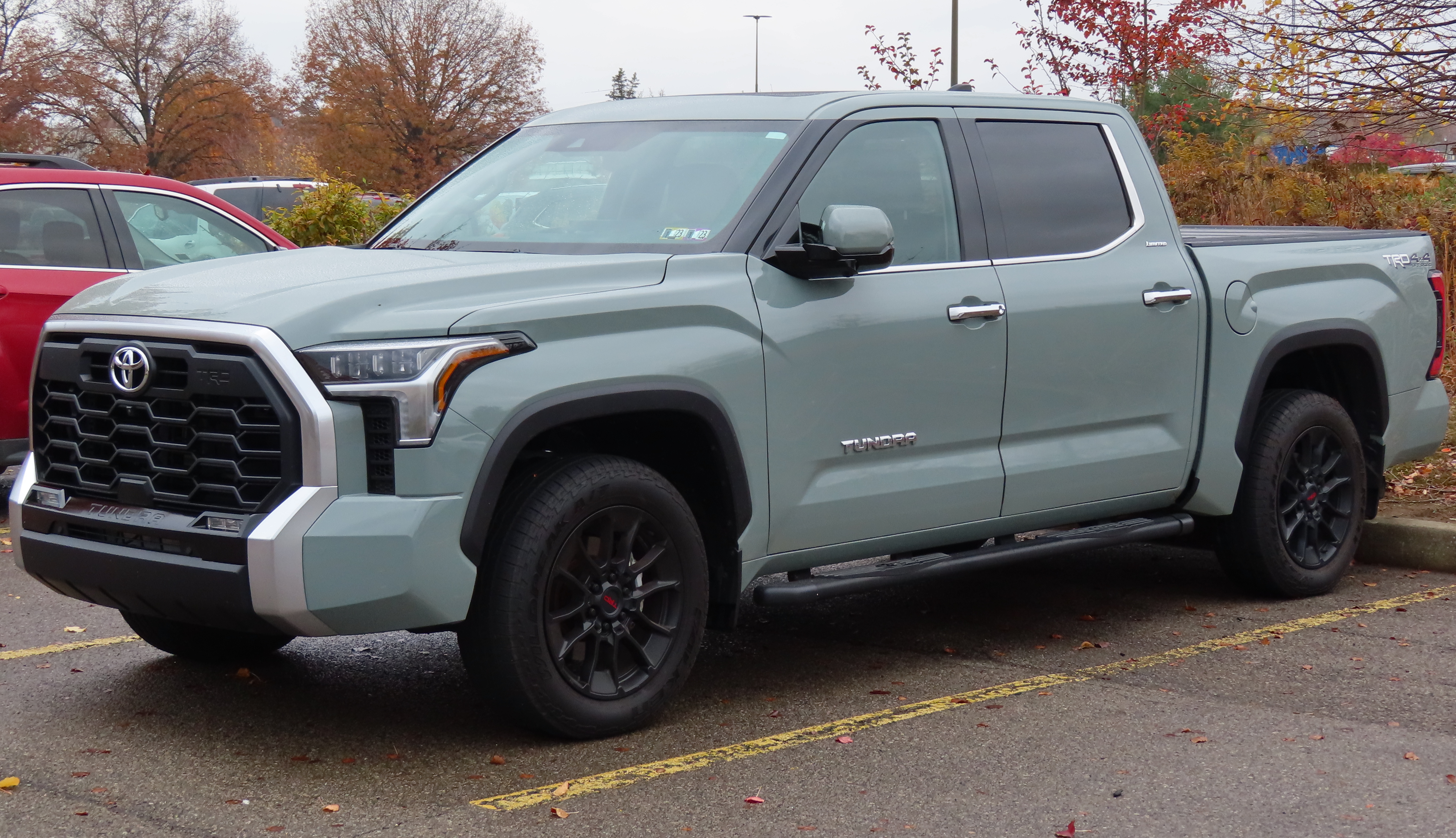
Toyota Tundra
"Next we're heading to the hot springs in a rad four And finally park your tundra's and Tacoma's around the campfire because we're roasting marshmallows Your summer start here dealer in between may vary so you're participating Toyota dealer for details event and stream first"
The Toyota Tundra is a large pickup truck. It’s made for carrying things and driving around for work or trips, which is why it fits the camping/outdoors vibe mentioned in the episode.
The Toyota Tundra is a full-size pickup truck built for hauling and everyday driving, often discussed as a dependable option for people who want a truck that can handle trips and work. In the podcast context, it’s mentioned alongside the Tacoma as something you might park around a campfire—highlighting its role as a practical, outdoors-friendly vehicle.
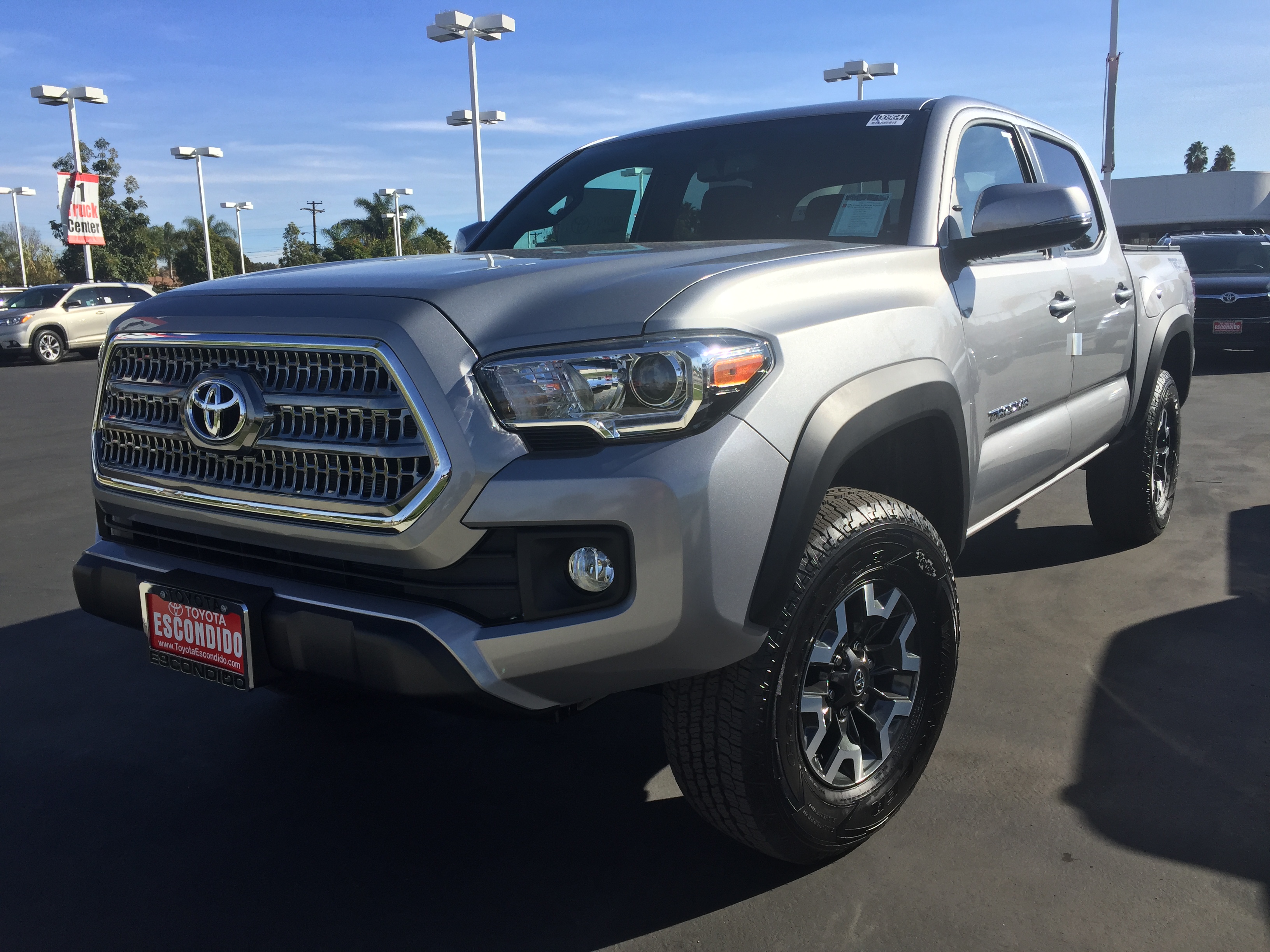
Toyota Tacoma
"Next we're heading to the hot springs in a rad four And finally park your tundra's and Tacoma's around the campfire because we're roasting marshmallows Your summer start here dealer in between may vary so you're participating Toyota dealer for details event and stream first"
The Toyota Tacoma is a medium-sized pickup truck. It’s designed to be useful for carrying and for outdoor trips, which is why it’s brought up in the campfire/camping part of the podcast.
The Toyota Tacoma is a mid-size pickup known for being versatile, popular for off-road and outdoor use, and commonly chosen by drivers who want a truck that’s easier to live with than a full-size model. The podcast mentions it with the Tundra in a camping setting, emphasizing its everyday practicality for road trips and outdoor weekends.

Porsche 987.1
"That's a Porsche enthusiast guide to the 987 dot one 2.7 boxer and caiman"
The Porsche 987.1 is a specific generation of the Cayman/Boxster. People like it because it can feel very “classic Porsche” to drive, and it’s often discussed as a cheaper way to get that vibe.
The Porsche 987.1 is the first facelift-era Cayman (and Boxster) generation, known for being a more affordable entry into the 911-style Porsche feel. It’s especially notable because the 987.1-era cars are often compared to the older 993 in terms of driving character, despite being a different platform.
drivetrain durability
"They they have a little bit of a mixed Reputation based on on some of the hoopla about the motors In the survivability or the durability of the drivetrains"
“Drivetrain durability” refers to how long the powertrain components (like the engine, transmission, and related driveline parts) can last under real use without major failures. The hosts are flagging that the 987.1-era cars have a “mixed reputation” tied to concerns about how well those components survive over time.
2.7 liter motor
"Generation and not only specific generation, but the base model of that generation with a 2.7 liter motor"
A “2.7 liter” engine means the engine is about 2.7 liters in total size. Bigger or smaller displacement can change how the car feels when you drive it, especially how it responds to throttle.
“2.7 liter” refers to engine displacement, measured in liters, which is the total volume of all cylinders. In Porsche terms, the 2.7-liter base engine is often discussed because it changes the car’s character—how it revs, how it delivers power, and how it compares to pricier variants.
brass tacks
"But when it comes down to brass tacks and you're actually gonna purchase a car"
“Brass tacks” just means the practical stuff—the real details you need to make a decision. Here, it’s about shifting from reading history to figuring out what matters when buying a car.
“Brass tacks” is an idiom meaning the practical, real-world details rather than theory or background. In car shopping, it signals moving from general history and opinions to the concrete information you need to buy a specific car.
value
"I just think they are The value for Porsches today and we'll get into a little bit more of that later as to why we will talk values"
Here, “value” means whether the car is a smart buy—what you get for the money. It’s not only the sticker price; it’s also how good the car is to own and drive.
In enthusiast car talk, “value” usually means more than just price—it’s the relationship between what you pay and what you get (driving feel, parts quality, desirability, and long-term ownership costs). The episode frames this as “the value for Porsches today,” setting up a discussion of why certain models are considered better buys.

Porsche 912
"“...the 912 was the four-cylinder version of the 911 back in the 60s... what people actually found out is... it handled like you wouldn't believe... and so the 912 kind of... became kind of the driver's choice.”"
The Porsche 912 is an older Porsche that’s related to the 911, but it has a smaller four-cylinder engine. The hosts are saying it can still feel really fun to drive because of how it’s balanced and how it handles.
The Porsche 912 is a classic, entry-level 911-era model that uses a four-cylinder engine instead of the six-cylinder 911 motor. In this segment, it’s framed as a “drivers’ choice” because the car’s balance and handling can feel surprisingly engaging despite the smaller engine.
entry-level Porsche
"“Porsche came out with what was essentially maybe the Boxster of the time in approachable entry-level car... priced under the long hood 911...”"
They’re talking about a Porsche that was meant to be easier to buy and live with than the top models. Even so, they say it can still be really fun because it drives well.
This segment frames the Porsche 912 as an “approachable entry-level” Porsche—meaning a model positioned to be easier to get into than the more powerful, more expensive 911. The hosts connect that positioning to how the car still ends up being engaging to drive due to its handling and balance.

Porsche 356
"“...the 356... first one ever registered... was a mid-engine car... The very first 356 was a mid-engine car correct.”"
The Porsche 356 is an early Porsche sports car. The hosts are pointing out a history detail: the very first 356 is described as having its engine in the middle of the car.
The Porsche 356 is the brand’s early sports car, and this segment highlights a key historical detail: the very first 356 is described as a mid-engine car. That’s notable because it contrasts with the later, more familiar Porsche layout people associate with the 911 era.
mid-engine
"No, it's just from the Porsche archives that that the original 356 number one was a mid-engine car and as"
“Mid-engine” means the engine sits closer to the middle of the car instead of the front or the back. The hosts mention it to describe how Porsche’s early layout changed over time.
“Mid-engine” means the engine is placed near the center of the car, typically between the front and rear axles. The segment uses this to explain an early Porsche 356 layout and how moving the engine location is tied to the later rear-engine identity.
rear-engine
"So they had to switch the engine around the other way and that's that's why the the 356 is after that ended up as rear-engine cars"
“Rear-engine” means the engine is in the back of the car. The hosts connect this layout to how Porsche’s early cars evolved into the classic Porsche feel.
“Rear-engine” means the engine is mounted at or near the back of the vehicle. This segment links the rear-engine layout to the Porsche 356’s evolution and frames it as part of why later Porsche cars feel and handle the way they do.
2.7 911
"That 76 912 was this is please no offense to you Jeff was considered to be a slow kind of dog shit example of the 2.7 911 for a long time"
“2.7 911” is a Porsche 911 with a 2.7-liter engine. The hosts use it as a comparison point for how the 912 was judged before people realized it could be more fun than expected.
“2.7 911” refers to the 2.7-liter engine used in certain Porsche 911 variants. In the segment, the 1976 Porsche 912 is compared to this 2.7-liter 911 as a benchmark for how it was perceived—initially as slower, then later re-evaluated after people drove it.
low horsepower
"But then people started driving it and saying well There's a purity to it and the low horsepower is what's exciting because you can get into it all the time, right?"
“Low horsepower” just means the engine makes less power than stronger versions. In this discussion, they say that can be fun because the car feels more straightforward and enjoyable to drive.
“Low horsepower” refers to a lower peak power output from the engine compared with higher-output variants. Here, the hosts argue that the Porsche 912’s lower horsepower is exciting because it makes the car feel more “pure” and easier to enjoy frequently.
torque
"So why wouldn't you get a GTS over an S? I mean better. It's faster. It's more powerful. There's more torque."
Torque is the engine’s “pulling power.” It’s what helps the car get up to speed, especially when you’re not revving it all the way to the top.
Torque is the twisting force the engine produces that helps the car accelerate, especially at lower engine speeds. It’s different from horsepower: you can have strong torque without necessarily having the highest peak horsepower.
rev the motor out
"The base cars give you a little bit of a window into being able to really rev the motor out and have a lot of fun with the car"
“Rev the motor out” means taking the engine to higher RPM rather than shifting early. The host’s point is that base models can be driven in a way that lets you explore that higher-RPM behavior more often without the car becoming too easy to get into trouble with.
rpm
"Work those base cars through the gears here the engines rev here ... between four and 54 and 4500 rpm"
RPM tells you how fast the engine is spinning. When people talk about using the rev range, they mean keeping the engine in the part of the RPM range where it feels strongest and most fun.
RPM (revolutions per minute) is how fast the engine spins. Enthusiasts talk about RPM because the engine’s power and responsiveness change across the rev range, and driving “through the gears” often means keeping it in the useful RPM band.
work the car through the gears
"my preference is to work those base cars through the gears ... have the driving experience as opposed to just having so much power"
It means you’re not just driving in a lazy way—you’re shifting and using the gears to keep the engine in the right range. The host likes that because it makes the car feel more engaging.
“Work the car through the gears” means actively using the transmission—accelerating, shifting, and keeping the engine in its effective RPM range—to maximize the driving experience. Here, it’s contrasted with simply having lots of power you may not be able to use safely.
plenum
"my preference is to work those base cars through the gears here the engines rev here the plenum open up"
The plenum is part of the intake system that helps feed air to the engine. When it “opens up,” it’s describing how the engine gets more air as you accelerate.
The plenum is an intake-air chamber that distributes air to the engine’s cylinders. When the host says “the plenum open up,” they’re describing how airflow changes as you press the throttle and the engine transitions into a more responsive state.
rev range
"All of the fun that car lives in breeze above 5000 rpm and you and you [754.7s] 4500 to 7000 is where your playground is in those cars and"
Rev range is the band of engine speeds (RPM) where a particular engine feels best and produces its strongest character. Here, the host says the “playground” is roughly 4500 to 7000 RPM, implying that the car’s fun and responsiveness are most noticeable there.
throttle response
"By the very nature of being that high in the rev range your throttle response is lightning quick and the sound is [767.1s] Glorious in these motors, right?"
Throttle response is how fast the car reacts when you hit the gas. The host is saying that when the engine is spinning faster, it feels quicker to respond.
Throttle response describes how quickly the car reacts when you press the accelerator. In this segment, the host links strong throttle response to keeping the engine in a higher rev range, where the engine is already “spooled up” for immediate changes.
exhaust
"everybody focuses on the muffler [778.1s] but [779.6s] but [782.0s] But with these cars the engine is right over your shoulder, right? [785.9s] So you're hearing you're hearing the mechanics of the engine [788.9s] You're also hearing the induction and you're hearing the exhaust"
Exhaust is the path where the engine’s gases go after combustion. The host is saying you can hear the exhaust sound as part of the overall engine noise experience.
Exhaust is the flow of burned gases leaving the engine through the exhaust system. In this segment, the host contrasts “muffler focus” with the broader idea that you can hear the exhaust note and other engine sounds directly because of the car’s layout.
induction
"You're hearing the mechanics of the engine [788.9s] You're also hearing the induction and you're hearing the exhaust"
Induction is the engine’s air intake process. The host is saying you can hear that intake sound more clearly in these cars, especially when revving.
Induction refers to the intake process—how air is drawn into the engine. The host is describing the sound you can hear from the intake/airflow system, which becomes more noticeable at higher RPM.

Porsche Boxster
"You're also hearing the induction and you're hearing the exhaust and if you're driving a Boxster [794.9s] You're hearing a lot more of it because that sound is coming right into the at the top's down"
The Porsche Boxster is a Porsche roadster with the engine placed near the cabin. Because of that layout, you can hear the engine more clearly, and with the top down the sound feels even more direct.
The Porsche Boxster is a mid-engine roadster where the engine sits close to the cabin, so you hear more of what the engine is doing. In this segment, the host points out that the sound comes right into the driver—especially with the top down—making the experience feel more immediate than in many other cars.
revving an engine
"I think you actually touch on this in your book, but they they not only do they need to be revved [824.7s] But they're actually they're a healthier engine if you're revving them [828.2s] Correct. I think I think that's true."
Revving means making the engine spin faster. The host’s point is that some engines are designed to be used at higher RPM, and that can be part of how they stay happy.
Revving an engine means raising RPM, usually by pressing the accelerator and keeping the engine spinning faster. The host argues that these “base cars” are healthier when driven that way, framing it as how the engine was designed to be used rather than something inherently harmful.
short shift
"And I and I come out and I shift from first to second and if I kind of short shift in my revs around [892.2s] 2500-3000 there is a little dead spot that I have to kind of work out of before it starts to get on cam"
Short shifting means shifting to the next gear sooner, before the engine spins very high. The host is saying that doing that can make the car feel a little lazy until the engine starts pulling again.
“Short shifting” means upshifting earlier than you normally would, keeping engine speed (RPM) lower. The host says that if they short-shift around 2500–3000 RPM, there’s a “dead spot” before the engine starts making power.
on cam
"there is a little dead spot that I have to kind of work out of before it starts to get on cam as [899.4s] I guess as it were and and really pull"
“On cam” is car-speak for when the engine finally hits the part of its RPM range where it starts making strong power. Before that, it can feel like there’s a pause before it pulls.
“On cam” refers to the engine reaching the RPM range where the camshaft’s valve timing is working most effectively, so power comes on strongly. The host describes a delay after short-shifting, then the engine “gets on cam” and really pulls.
dead spot
"if I kind of short shift in my revs around [892.2s] 2500-3000 there is a little dead spot that I have to kind of work out of before it starts to get on cam"
A “dead spot” is when the car feels temporarily unresponsive—like you press the gas or shift and it doesn’t pull right away. In this case, it happens before the engine reaches its stronger RPM range.
A “dead spot” is a noticeable gap in acceleration where the engine doesn’t respond immediately—often due to RPM falling below the effective power band or because of gearing and throttle mapping. Here, it’s the hesitation the host feels when shifting around 2500–3000 RPM before the engine comes on cam.
twisties
"You know, we all love our twisties [916.2s] and [917.8s] If you put that car in third gear"
“Twisties” just means roads with lots of turns. The point here is that the right gear and RPM range make the car feel smooth and fun on curvy routes.
“Twisties” is enthusiast slang for winding roads with lots of curves. The host is discussing how gearing and torque delivery affect drivability on these roads—specifically how you can avoid frequent shifting while staying in the power band.
gearing
"Yes, but I know this on the 981 that it actually because the 981s are known for very long gears and [937.5s] That's kind of right a system [939.5s] The base models at least on the 981s are a little bit shorter than the s models in terms of gearing"
“Gearing” is how the gearbox ratios are arranged, which changes how fast the engine spins in each gear. Different gearing can make the car feel more eager or more relaxed depending on RPM.
“Gearing” is how the transmission ratios are set, which determines how engine RPM relates to vehicle speed. The host says the 981 “S” models have different gearing than the base models, and that this affects how quickly the car feels responsive versus how it stays in a usable power band.
long gears
"Yes, but I know this on the 981 that it actually because the 981s are known for very long gears and [937.5s] That's kind of right a system"
“Long gears” means the car uses ratios that keep the engine speed lower for a given speed. That can make the car feel smoother, but it may also require more RPM to get strong pull.
“Long gears” means taller (less aggressive) gear ratios that keep RPM lower at a given speed. The host notes that the 981 is known for this, which can change how quickly the engine reaches its effective RPM/power band after you accelerate or shift.
six-speeds
"so the 987s unless you have one of the really rare six-speeds that was attached to the 2.7 [958.1s] You know, that's a really good question."
A “six-speed” is a gearbox with six forward gears. More gears can help you keep the engine in the right RPM range more easily.
A “six-speed” refers to a manual transmission with six forward gears (or, in general discussion, a six-gear gearbox). The host brings it up while wondering about rare 987 configurations, implying that gear count/ratios can affect how “quick” the car feels through the rev range.
gear ratio
"This is the deep end of the pool of portion urgery that we're talking about gear ratio so I'm gonna back this up because"
Gear ratio is the numerical relationship between gears in the drivetrain that determines how engine speed (RPM) translates into vehicle speed. Different gear ratios change acceleration feel, cruising RPM, and how the car behaves under load. The host frames this as part of the “minutiae” they’re excited to discuss.
IMS bearing issues
"You I want to talk about IMS bearing issues. I want to talk about more scoring issues Give me your take on this Okay, so Let's talk about IMS first so the cars that I think are the sweet spot from 2005 to 2008..."
The IMS bearing is a small part inside some Porsche engines. If it wears out or fails, it can cause major engine damage. People often ask if it’s been replaced because it affects how risky the car is to buy.
IMS bearing issues refer to problems with the Intermediate Shaft (IMS) bearing used in certain Porsche flat-six engines. When the bearing fails, it can lead to expensive engine damage, which is why buyers often ask whether the IMS bearing was replaced. In this segment, the hosts discuss which Cayman years are less affected.
bore scoring
"You I want to talk about IMS bearing issues. I want to talk about more scoring issues Give me your take on this Okay, so Let's talk about IMS first so the cars that I think are the sweet spot from 2005 to 2008 are the 2007 and 2008..."
Bore scoring means the inside wall of the engine cylinders gets scratched or worn. That can hurt engine health over time. It’s one of the reasons people worry about certain older Porsche engines when buying used.
Bore scoring is damage (scuffing/grooving) inside an engine’s cylinder bore. It can reduce compression and lead to oil consumption or more serious engine wear. The hosts connect it to which Porsche years are less prone to the problem.
auction pricing
"That means this great value play that we've been getting because everybody's been scared of these cars. Yeah Is now I've seen the prices creep up a little bit on these cars as they go through auction"
Auction pricing is what a car actually sells for when people bid on it. The host is saying that even if a car used to be cheap because of fear, the price can creep up once buyers realize it’s not as risky as people thought.
Auction pricing is how market value is discovered in real time when cars are sold through bidding rather than fixed retail listings. The host says that as more people realize the “issues” aren’t as bad, prices can rise through auctions anyway.
air filter
"All right, so there's the stuff that we can all do, you know the air filter cabin filter cleaning..."
The air filter is a part that keeps dirt out of the air going into the engine. It’s one of the easier things people can check or replace themselves.
An air filter is the replaceable element that cleans incoming air before it reaches the engine. Keeping it clean helps maintain proper airflow for combustion and can be a common DIY maintenance item.
cabin filter
"All right, so there's the stuff that we can all do, you know the air filter cabin filter cleaning..."
The cabin filter cleans the air inside the car. Changing it can make the ventilation smell better and feel stronger, and it’s often an easy DIY job.
A cabin filter cleans the air entering the passenger compartment through the HVAC system. DIY cabin filter service is common because it’s usually straightforward and improves airflow and odor control.
drain plugs
"cleaning out the the drain plugs and you know, wherever they are"
Drain plugs are little openings you can use to let out water or fluid from certain spots on the car. People sometimes clean or service them to avoid buildup problems.
Drain plugs are fittings used to let fluids or accumulated water out of specific areas. In the context of DIY work, they’re often part of routine cleaning or maintenance to prevent water buildup.
brakes
"I've done my own brakes on them. I they're not particularly difficult to do"
Brakes are what slow the car down and help you stop safely. The host is saying brake work is one of the easier DIY tasks on these cars.
Brake service involves components like pads and rotors (and sometimes calipers) to restore stopping power. The host calls out doing their own brakes as a DIY-friendly job, implying it’s within reach for many owners.
AOS
"when you get into doing an AOS Or a serpentine belt, that's where the cursing and screaming could start for some people"
An AOS (Air Oil Separator) helps keep oil vapors from getting into the wrong places in the engine. The host is saying this kind of job can be harder than basic maintenance.
AOS stands for Air Oil Separator, a system used on some Porsche engines to separate oil mist from crankcase gases. It’s often a more involved DIY job because it requires careful access and correct reassembly to avoid leaks or drivability issues.
serpentine belt
"when you get into doing an AOS Or a serpentine belt, that's where the cursing and screaming could start for some people"
The serpentine belt is a belt that powers important accessories on the engine. Replacing it can be annoying because you have to route it correctly and deal with the tensioner.
The serpentine belt is the long, multi-rib belt that drives several engine accessories (like the alternator and power steering pump, depending on the car). Belt replacement can be fiddly because of belt routing and tensioner access, which is why the host warns it can be frustrating.
shocks
"I would never do Shocks or suspension parts or that kind of stuff."
Shocks help smooth out bumps and keep the tires in contact with the road. The host is saying suspension work like this is harder to DIY than simpler tasks.
Shocks (shock absorbers) control how the suspension moves over bumps and during cornering. The host says they wouldn’t tackle shocks or suspension parts themselves, suggesting those jobs are more complex and may require specialized tools or alignment considerations.
suspension parts
"Shocks or suspension parts or that kind of stuff. That's just not my I don't have a garage"
Suspension parts are what connect the wheels to the car and help it handle bumps and turns. The host is saying this kind of work is not something they’d do themselves.
Suspension parts include components that control ride height, damping, and wheel alignment under load (like control arms, bushings, and related hardware). Replacing them can affect handling and often requires careful setup afterward.
tire swaps
"but I can do tire swaps. I can do, you know, radio swaps."
Tire swaps means switching to a different set of tires. It’s usually a simpler DIY job than engine or suspension work.
Tire swaps are changing tires between sets (for example, seasonal tires) or replacing tires when worn. It’s a common DIY task because it doesn’t require opening up major drivetrain or engine systems.
Steering wheel swaps
"I can do Steering wheel swaps even are pretty easy to do in those cars"
A steering wheel swap means changing the steering wheel. Since the airbag is involved, it’s important to do it the right way and make sure everything matches.
Steering wheel swaps involve replacing the steering wheel, which may include buttons, airbag modules, and wiring. Because airbags are safety-critical, this kind of job is usually more about correct procedure and compatibility than mechanical difficulty.
radio swaps
"I can do, you know, radio swaps. I can do Steering wheel swaps even are pretty easy to do in those cars"
A radio swap means replacing the car’s stereo/infotainment unit. The host is saying they’re comfortable doing that kind of upgrade themselves.
Radio swaps refer to replacing or upgrading the infotainment head unit. It’s typically an electrical and fitment job, often requiring wiring adapters or coding depending on the car’s system.
plugs and coils
"It's just the usual stuff that any car would have I you know, I wouldn't do plugs and coils"
Plugs and coils are parts that help the engine ignite fuel. The host is saying they wouldn’t tackle that job themselves.
“Plugs and coils” refers to ignition components: spark plugs and ignition coils that generate the spark for combustion. The host is saying they wouldn’t do this kind of work themselves, which can be more time-consuming and requires correct torque and part matching.
Engine numbers
"You know, they try to do it by Engine numbers and all that and I don't even know if that was a hundred percent accurate"
Engine numbers are like an ID tag for the engine. People sometimes use them to guess which version of a part the engine has, but in this case the hosts say it might not always be 100% reliable.
Engine numbers are Porsche’s identification codes stamped on the engine that can be used to infer which parts revision a car has. Here, the hosts note that using engine numbers to determine IMS bearing type may not be perfectly accurate, so additional inspection methods may be needed.
non serviceable bearing
"But in general kind of that 05 to 06 range They went to a non what they call a non serviceable bearing and it's a permanent bearing and it's a larger bearing"
A non-serviceable bearing is one you’re not meant to replace as a normal repair. If it fails, the fix usually involves taking the engine apart much more than a simple bearing swap.
A non-serviceable bearing is a bearing design that Porsche does not intend to be replaced during normal service. In this context, the later IMS bearing is “permanent,” meaning replacement generally requires splitting the engine case and doing major disassembly.
split the case
"Then you can replace that bearing, but the chances of that are pretty impossible You have to split the case to do that."
“Split the case” means taking the engine apart down the middle. It’s a big job, and it’s usually necessary when the part you need to replace is deep inside the engine.
“Split the case” means separating the engine’s crankcase halves to access internal components. For a non-serviceable IMS bearing, this is typically required because the bearing sits inside the engine assembly rather than being reachable from the outside.
flange
"They were doing the clutch and I'm like, well, I better do the what they were calling the IMS back then was just the flange and So I ordered the parts Had them shipped in took them and then when the guys did it they said this doesn't fit"
In this context, a flange is the mating interface piece that bolts/seals to the engine housing for the IMS bearing update. Using the wrong flange version can prevent the bearing/kit from fitting correctly, which is why the speaker had a parts mismatch between “old” and “new” bearing setups.
body panel
"But for some reason there's like a mental block to removing a body panel to get [1566.6s] Well, you know the other the other issue is is that if you're taking it to a dealer for service"
A body panel is one of the car’s outer metal pieces. Removing it can be annoying and risky because you might scratch the paint or take extra time to put it back correctly.
A body panel is an exterior sheet-metal piece of the car’s body (like a door skin, quarter panel, or cover). The hosts mention a “mental block” to removing a body panel, which is relevant because disassembly can be time-consuming and increases the chance of scratching or damage.
dealer service labor cost
"Well, you know the other the other issue is is that if you're taking it to a dealer for service [1571.5s] You're paying for them to take that off and put it back on again [1574.3s] Yeah, so here's one thing I found out"
Dealer service labor cost refers to what you pay for a dealership technician’s time to perform work, often including time spent removing and reinstalling parts like body panels. In this segment, the hosts compare labor hours and explain how the hourly rate adds up, whether you use a dealer or an independent shop.
oil change
"[1581.3s] For the 987 dot one cars [1583.5s] It's one hour of labor to do an oil change and for the 987 dot two cars"
An oil change is regular service where old engine oil is replaced with new oil. They’re using it as an example of how service costs can differ between car versions.
An oil change is routine maintenance where the engine oil is drained and replaced with fresh oil. The segment matters because the hosts are comparing how long (and therefore how expensive) this basic job is on different Cayman generations.
GT car
"So so to me the 981 starts to get a Little bit closer to a GT car. It's a little bit bigger."
A “GT car” is a grand touring car—built to feel good on longer trips, not just for quick bursts. The host is saying the 981 starts to feel more like that style of Porsche.
A GT car (grand tourer) is designed for comfortable, long-distance driving while still offering performance. The host uses “GT car” to describe how the 981 feels bigger and more oriented toward that kind of driving character.
electronic steering
"but you know, that's when we got into the Electronic steering electric steering, whatever it is, you know, yeah, and away from the hydraulic steering and all that"
Electronic steering means the car uses electronics to help control the steering, instead of relying only on older hydraulic-style systems. The host thinks that change can make the driving feel different—sometimes more modern, sometimes less “old-school.”
Electronic steering refers to steering systems where assist and/or control is handled by electronics rather than purely hydraulic components. In this segment, the host frames it as one of the “nuances” that changes the feel between Cayman generations, implying it affects how the car drives and how “classic” it feels.
hydraulic steering
"Electronic steering electric steering, whatever it is, you know, yeah, and away from the hydraulic steering and all that"
Hydraulic steering uses fluid and a pump to help you turn the wheel. The host is contrasting it with electronic steering to highlight how the steering feel can change between generations.
Hydraulic steering uses a hydraulic system to provide steering assist, typically using a pump and fluid to reduce driver effort. Here it’s contrasted with electronic steering to explain why different Cayman generations can feel different at the wheel.
air-cooled
"But then you were also able to drive the last of the air-cooled cars a 993 from the late 90s ... But representative of the final iteration of what the air-cooled became"
“Air-cooled” means the engine is cooled mainly by air flowing over it, not by circulating coolant through a radiator. Porsche’s air-cooled cars are especially famous to enthusiasts.
“Air-cooled” refers to an engine cooling system that relies primarily on airflow over the engine rather than a liquid coolant system. Porsche’s air-cooled 911s are a major enthusiast reference point because the cooling approach shaped how the cars feel and how they’re engineered.
Stuttgart market letter
"I track The Stuttgart market letter and also bring a trailer and I kind of watch how the prices Fluctuate around"
A “Stuttgart market letter” is basically a Porsche price-trend report. The speaker uses it to justify how the Cayman’s price has changed over time.
A “Stuttgart market letter” is an enthusiast-market pricing reference that tracks Porsche values and auction/market trends. In this segment, it’s used to support the claim that Cayman prices have risen only modestly compared with other models.
Bring a Trailer
"I track The Stuttgart market letter and also bring a trailer and I kind of watch how the prices Fluctuate around"
Bring a Trailer is a popular car auction website. People use it to see what cars actually sell for, which helps estimate market prices.
Bring a Trailer is an online auction platform that’s widely used by car enthusiasts to gauge real-world market pricing. The host references it as a place where auction results help them track how prices fluctuate for these Porsche models.
mileage
"You can pick one of those up a higher mileage one for maybe 40 a lower mileage for maybe mid 40 ... was it it was a lower mileage car if I remember correctly"
Mileage just means how many miles the car has been driven. Generally, higher mileage cars tend to cost less than lower mileage ones.
Mileage is the total distance a car has been driven, usually reported in miles. In used-car shopping, mileage is a major factor because it correlates with wear and can strongly influence price.
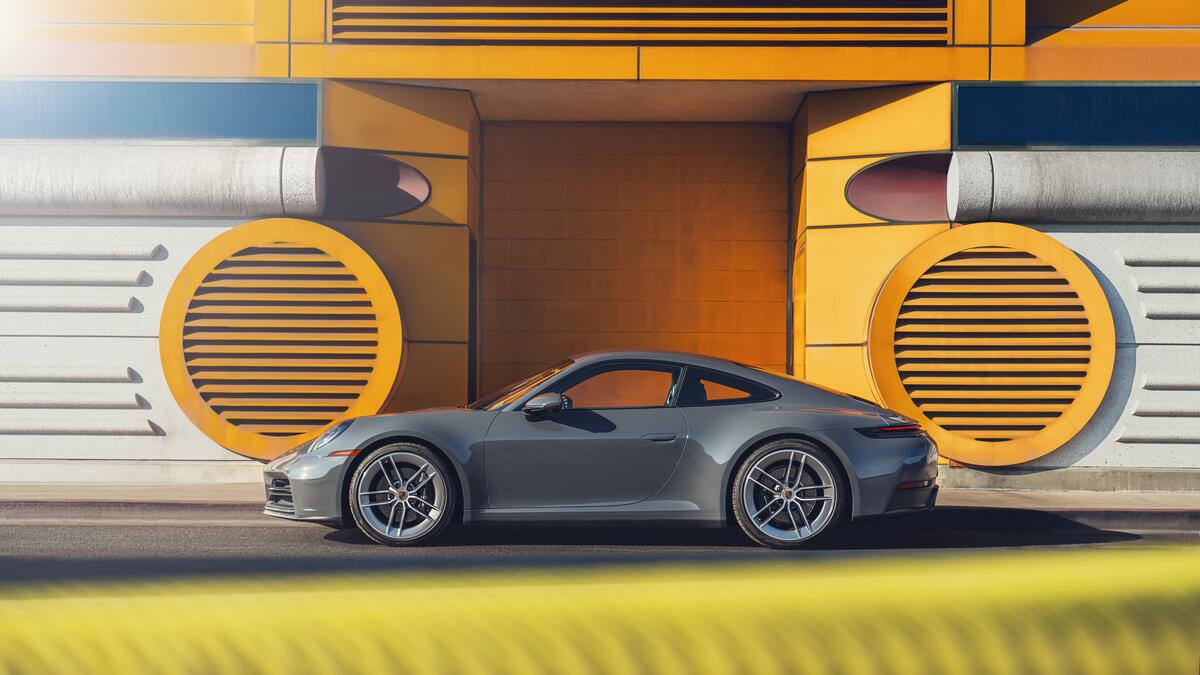
Porsche 993
"The 993 you're really close to the windshield. You're really close to the instruments... and then you know when I'm in the cave... as I'm driving the 993... This is Really indicative of what everybody thinks of when they think of an air cooled 911"
The Porsche 993 is a classic 911 generation that uses an air-cooled engine. People like it because it feels very mechanical and you can hear and feel a lot more of what the car is doing.
The Porsche 993 is the last generation of the classic air-cooled 911, and it’s known for a very driver-focused, mechanical feel. In this segment, the hosts compare how the 993’s cockpit layout, shifter feel, and sound/insulation characteristics make it feel “close” and raw compared with newer cars.
ride height
"coil overs that kind of lowered it to european ride height"
Ride height is how high or low the car sits relative to the road. Lowering it can change how the suspension feels and how the car handles.
Ride height is the distance between the car’s body and the ground. Changing ride height (often via coilovers) affects suspension geometry, steering feel, and how the car absorbs bumps.
power to weight ratio
"[2216.2s] I mean the the 993 and the 987 dot one cars have a very similar power to weight ratio [2222.0s] They're only off by about a pound per horsepower."
Power to weight ratio is a way to judge how “strong” a car feels for its size. If a car has more power for its weight, it usually feels quicker when you accelerate.
Power to weight ratio is a performance metric that compares an engine’s output (power) to how heavy the car is. A higher ratio generally means the car can accelerate more strongly because there’s more power available per unit of mass.
butt dyno
"[2243.3s] Felt pretty similar in terms of I know you just talked about the power to weight ratio [2247.1s] But did they feel like on your butt dyno?"
A “butt dyno” is just a humorous way to say you’re judging how fast a car feels by how it pushes you in your seat. Here, they’re asking whether two cars feel equally quick without looking at numbers.
“Butt dyno” is a slang term for judging a car’s acceleration and responsiveness by seat-of-the-pants feel rather than using instruments. In this segment, it’s used to ask whether the Cayman 987.1 and 993 feel equally “peppy” in real-world driving.
drivetrain loss
"But when they did the stock 997 dot one on the dyno, uh, the drivetrain loss was only A few horsepower. It was maybe like six or seven horsepower to the the hubs in the wheel"
Drivetrain loss is power the engine makes but doesn’t reach the wheels because of friction and mechanical inefficiency. Lower drivetrain loss means more of the engine’s power actually gets to where it moves the car.
Drivetrain loss is the power that gets consumed by the car’s mechanical components between the engine and the wheels (like the transmission and differential). In this segment, the host highlights that the measured loss to the hubs is only about 6–7 horsepower, which helps explain why the car feels stronger than the raw engine number suggests.
hubs
"It was maybe like six or seven horsepower to the the hubs in the wheel That's what I thought it was fantastic."
In this context, “hubs” means the wheel hubs—where the car’s rotational power is delivered to the wheels. Measuring power at the hubs (rather than just at the engine) makes drivetrain loss visible and helps explain real-world acceleration feel.
zero to the market
"It's like so How much of the time am I going to use this car zero to the market?"
It sounds like the host is talking about how often they’d really use the car’s speed/ability. The point is: don’t pay for performance you won’t use.
This appears to be a mis-transcription of “zero to the market,” but the surrounding line is about how often the host would actually use the car’s performance. The key automotive idea being discussed is matching a car’s capability to real driving frequency and needs.
driving safely vs driving safely and being unsafe
"There's a I think there's a fine line between, you know, driving safely and having fun and driving safely and being unsafe"
This segment is about the boundary between “safe” driving and pushing into unsafe territory. The host’s idea is that modern cars and traction/stability systems can mask how close you are to losing control, so the line can feel bigger than it really is.
PSM off
"To get the car to slide like that now some people do that's great That's the nice thing about the cars. You could turn that off if you want sure"
PSM is the car’s electronic “stability help.” If you turn it off, the car will intervene less, so it can slide more when you push it in a corner.
PSM (Porsche Stability Management) is Porsche’s electronic stability control system. Turning PSM off reduces the car’s intervention, which can allow more rotation/slide—like the host’s point that you’d need to disable it to get the car to behave that way.
car facts report
"It's like, um, you know, I'm playing with ... I'm not dealing with a diminished value case and uh, you know, like oh A bad bad car car facts report or something like that."
A car facts report is like a vehicle history summary that can show things that may make buyers cautious. The host is saying they don’t want a bad report to affect what the car is worth.
A “car facts report” is a vehicle history/condition report that can include information affecting how buyers perceive the car, such as reported damage or title/insurance history. The host is implying that a negative report could hurt resale value.
christmas tree led lights
"I think the back end with the the christmas tree led lights on the back I don't know. They just they looked more they look more dated to me now"
“Christmas tree” LED tail lights are a nickname for a multi-segment, vertically stacked LED light pattern. In this context, the host uses the look of the 987.2’s rear lighting to explain why they think the later car appears more dated than the earlier 987.1.
scarcity
"And so they didn't make a lot of them And part that's part of the reason why the price has been driven up so high is that there's scarcity on those"
Scarcity just means there aren’t many of those cars around. If fewer cars exist, prices can go up because buyers have less choice.
In car pricing, scarcity means there are relatively few examples available for sale. When a model (or a specific variant like the 987.2) is produced in lower numbers, limited supply can push up market prices even if the cars are otherwise similar.
DFI engines
"they're finding out now that those dfi engines maybe weren't the best"
DFI means the car injects fuel directly into the engine’s cylinders. The hosts are saying that, in their experience or based on reputation, those direct-injection engines may not have been as good as other versions.
DFI typically refers to direct fuel injection, where fuel is sprayed directly into the combustion chamber rather than into the intake port. The hosts suggest that the “DFI engines” in question “weren’t the best,” implying there were known drawbacks or reliability/driveability concerns compared with other Porsche engine setups.
2.7 liter engines
"but the 987 dot one and your 981 both have 2.7 liter engines ... Porsche has been making 2.7 engines."
“2.7 liters” is the engine size—basically how big the engine is. The hosts are using that number to connect today’s Porsche 2.7 engines to Porsche’s older history.
A “2.7-liter” engine describes engine displacement—how much total volume the cylinders sweep as the engine runs. In this segment, the hosts treat the 2.7-liter displacement as a historical Porsche theme, linking the Cayman 987.1 and Boxster 981 back to earlier Porsche 2.7-era engines.
"not a real Porsche" debate
"when the 986 came out ... everybody just lost it, you know, there was like, oh, this isn't a real Porsche."
This segment references the enthusiast argument over whether certain Porsche models (like the 986-era Boxster/Cayman platform) are “real Porsches” compared with the 911. The hosts frame it as a perception shift that later gets re-evaluated as owners learn more about the cars’ engineering and history.
punches way above its weight class
"But it punches way above its weight class. It really does Um, go ahead."
They mean the car feels better than you’d expect for what it costs—like it’s “more car” than the price would normally buy.
“Punches way above its weight class” is a performance/enthusiast phrase meaning the car feels stronger, more engaging, or more capable than you’d expect given its price or category. Here it’s applied to the 987.1 as a second Porsche that delivers more driving satisfaction than the cost suggests.
base spec
"Well, the two that I have are very different. So the Boxster is a pretty base spec. Um, it's got the mid-range radio"
“Base spec” just means the car is set up with fewer options than a fully loaded one. So it may not have all the convenience or tech features you’d find on a more expensive build.
“Base spec” means the car is configured with fewer factory options and a simpler equipment level than higher-trim or more-optioned cars. In Porsche terms, that affects what features you get from the factory (comfort tech, audio, convenience items, etc.).
mid-range radio
"Um, it's got the mid-range radio It's uh Maybe it had a premium package or something in it"
A “mid-range radio” is an audio system that’s better than the simplest setup, but not the best one available. It can mean you get more features or better sound than the cheapest option.
“Mid-range radio” refers to an audio head unit/system tier that’s not the top premium option. On many cars, different radio/audio packages can change speaker count, amplifier power, and available features.
premium package
"It's uh Maybe it had a premium package or something in it, uh, you know, not a whole lot going on there"
A “premium package” is a group of extra features you can add to the car from the factory. It usually upgrades things like comfort or convenience, and it’s more than just one small add-on.
A “premium package” is a bundled set of factory upgrades (often including interior comfort features, convenience tech, and sometimes audio). The exact contents vary by model year and market, but the key idea is that it’s an option bundle rather than a single standalone item.

Toyota Rav 4
"...runner Next we're heading to the hot springs in a rav 4 And finally park your tundras and Tacomas around ..."
The Toyota RAV4 is a compact SUV. It’s made for everyday driving but can also handle road trips and outdoor outings, which is why it’s included in the episode’s camping-style lineup.
The Toyota RAV4 is a compact SUV that’s widely used for daily driving while still offering practical capability for trips and light off-road conditions. The podcast mentions it in the same camping context as the Tundra and Tacoma, positioning it as another go-to vehicle for getting out to places like hot springs.
rear wiper
"They even had a fire extinguisher, you know factory fire extinguisher in it has a rear wiper [3064.9s] A rear wiper is super rare."
A rear wiper is the wiper on the back window of a car. It helps keep the rear view clear in rain or snow, which makes the car easier to use every day.
A rear wiper is a windshield wiper mounted to the rear glass to clear rain, snow, or road grime. On some cars it’s rare, and Porsche owners often treat it as a “nice-to-have” option that improves day-to-day usability in wet or snowy climates.
daily driver
"But like to have a rear wiper on a car whether it was a 944 or a 911 or a caiman [3089.4s] Yeah, it makes it more usable, right? It makes it more like a daily driver."
A “daily driver” is the car you use most days. They’re saying features like a rear wiper help make a sports car more practical for everyday weather.
A “daily driver” is a vehicle you use regularly for everyday commuting and errands, not just for occasional weekend driving. The hosts connect the rear wiper to this idea by arguing it makes the car more practical in bad weather.
inclement weather
"Yeah, it makes it more usable, right? It makes it more like a daily driver. [3095.2s] So you can use it more and more inclement weather"
Inclement weather just means bad weather, like rain or snow. They’re saying the rear wiper helps you see better when conditions are rough.
Inclement weather refers to harsh or unpleasant conditions like heavy rain, snow, or freezing temperatures. The hosts use it to explain why rear visibility features (like a rear wiper) matter for real-world usability.
19s
"and also the car also had pasum. So it's got a whole and it had 19s [3114.3s] But I took those off because I just find the 19s just ride a little too rough"
“19s” means the car has 19-inch wheels. They’re saying those wheels made the ride feel harsher, so they switched them out.
“19s” is shorthand for 19-inch wheels (wheel diameter). The hosts say they removed the 19-inch wheels because they ride rougher, even with the car’s suspension setup.
pasum
"and also the car also had pasum. So it's got a whole and it had 19s [3114.3s] But I took those off because I just find the 19s just ride a little too rough even with pasum"
“Pasum” sounds like a misheard suspension name. If it was “PASM,” it’s a system that helps control how stiff or soft the suspension feels.
“Pasum” appears to be a transcription error for a suspension-related term (likely “PAS”/“PASM,” Porsche Active Suspension Management). If that’s what was meant, it’s Porsche’s electronically controlled suspension system that adjusts damping for ride comfort and handling.
VIN number
"And then, you know, I always think if you can get a hold of the VIN number and see what the build was"
The VIN is like a car’s fingerprint. It can help you find out how the car was built and what options it originally had.
A VIN (Vehicle Identification Number) is a unique 17-character code assigned to a specific car. Because it’s tied to the car’s production data, you can use it to look up the build/spec details and confirm how the car was originally configured.
PPI
"Get a ppi done Um, you know or or have a checklist do a pre ppi like walk around the car."
A PPI (pre-purchase inspection) is a professional inspection done before buying a used car. It’s meant to uncover hidden problems—like mechanical issues or damage—so you’re not relying only on the seller’s description.
rust
"They sent me a video. I saw rust Corrosion coolant pipes failing"
Rust is metal corrosion. If a shop finds rust during an inspection, it can mean the car may have deeper problems that aren’t obvious just by looking at it.
Rust is corrosion of metal, and it can quickly become expensive on a used car because it attacks structural parts and can spread under coatings. In a PPI context, seeing rust usually means there may be hidden damage beyond what’s visible on the surface.
corrosion
"I saw rust Corrosion coolant pipes failing"
Corrosion is what happens when materials break down over time, usually from moisture and chemicals. On a car, it can lead to leaks or parts failing.
Corrosion is the chemical/electrochemical breakdown of materials—often metal—caused by moisture, road salts, and time. On cars, corrosion can compromise lines, brackets, and underbody components, leading to leaks or failures.
coolant pipes
"I saw rust Corrosion coolant pipes failing You know oil leaks all this stuff."
Coolant pipes move the liquid that keeps the engine from overheating. If they’re failing, the car can start running too hot and can cause bigger problems.
Coolant pipes are the plumbing that carries engine coolant to and from components like the radiator and heat exchangers. If they fail, you can lose cooling capacity, which can lead to overheating and potentially serious engine damage.
oil leaks
"coolant pipes failing You know oil leaks all this stuff. I'm like, okay, the dealer said, yeah, it's about $10,000 to fix it"
Oil leaks mean the car is losing oil somewhere. That matters because the engine needs oil to stay properly lubricated.
Oil leaks mean engine oil is escaping from seals, gaskets, or lines. Beyond the mess, leaks can reduce lubrication and increase wear, and they often point to specific failed components that need repair.
import it
"So it took me a couple of months to negotiate with the owner because it was up in Canada And I had to import it"
Importing means buying a car from another country and bringing it home. It can be paperwork-heavy, but it may let you find the exact car you want.
Importing a car means bringing it into a different country than where it was originally sold. It can add complexity like shipping, customs paperwork, and local compliance requirements, but it can also expand your pool of available cars.
barn find
"The barn find, you know, you find this blurry ad in the in the back pages of the one ads when I was younger, you know"
A “barn find” is a car that’s been sitting unused for a long time, like in a barn or garage. People get excited because it might be rare or original, but it could also need a lot of work.
A “barn find” is an old car that’s been stored away for a long time—often forgotten—until someone discovers it. In enthusiast circles, it usually implies potential originality and low mileage, but it can also mean hidden issues from years of neglect.
tire pressure monitoring systems
"um certain cars if they have tire pressure monitoring systems. This is in this range of cars that I'm writing about but if they have tire pressure monitoring systems"
TPMS is a system that checks your tire pressure and warns you if something’s off. It matters when importing cars because the sensors and rules can differ by country.
Tire Pressure Monitoring Systems (TPMS) are sensors that monitor tire pressure and alert the driver when pressure is too low or otherwise out of spec. For cross-border buying, TPMS matters because different markets may require different sensor/compatibility setups, affecting whether the car can be registered and how much work is needed to make it compliant.
importing to the us
"But as far as bringing it over the border you just you know build a relationship with the customs people You'll tell them when you're bringing it in you fill out some forms the taxes are minimal"
Importing a car across borders involves customs paperwork, taxes, and compliance steps that can vary by origin country and vehicle equipment. In this segment, the host discusses how to handle customs and then pay the same state/local taxes you’d pay for a domestically purchased car.

Porsche Carrera GT
"You know a lot of the design cues from the 987.1 cars come from the Carrera GT And a lot of people don't get that you look you look at them face to face and you're like, oh"
The Porsche Carrera GT is a famous Porsche supercar. Here, the hosts are saying the Cayman’s styling looks like it borrowed design ideas from the Carrera GT—so you can spot the connection in details like the headlights.
The Porsche Carrera GT is a halo supercar known for its distinctive styling and engineering, and it’s also a reference point for design language. In this episode, the hosts connect the 987.1 Cayman’s design cues to the Carrera GT, especially visible front-end details like the headlights.
Carrera GT headlights
"And nobody dish dishes on the the Carrera GT headlights, you know, they don't they don't go Bananas because they're not round"
They’re talking about the shape of the Porsche Carrera GT’s headlights. The point is that the Cayman’s front-end design cues make more sense when you see them in person, not just in photos.
“Headlights” here refers to the specific front lighting design on the Porsche Carrera GT, which the hosts say is distinctive enough that you can understand the styling intent just by looking at the car directly. The segment is using the headlights as an example of design cues that carry over to the 987.1 Cayman.
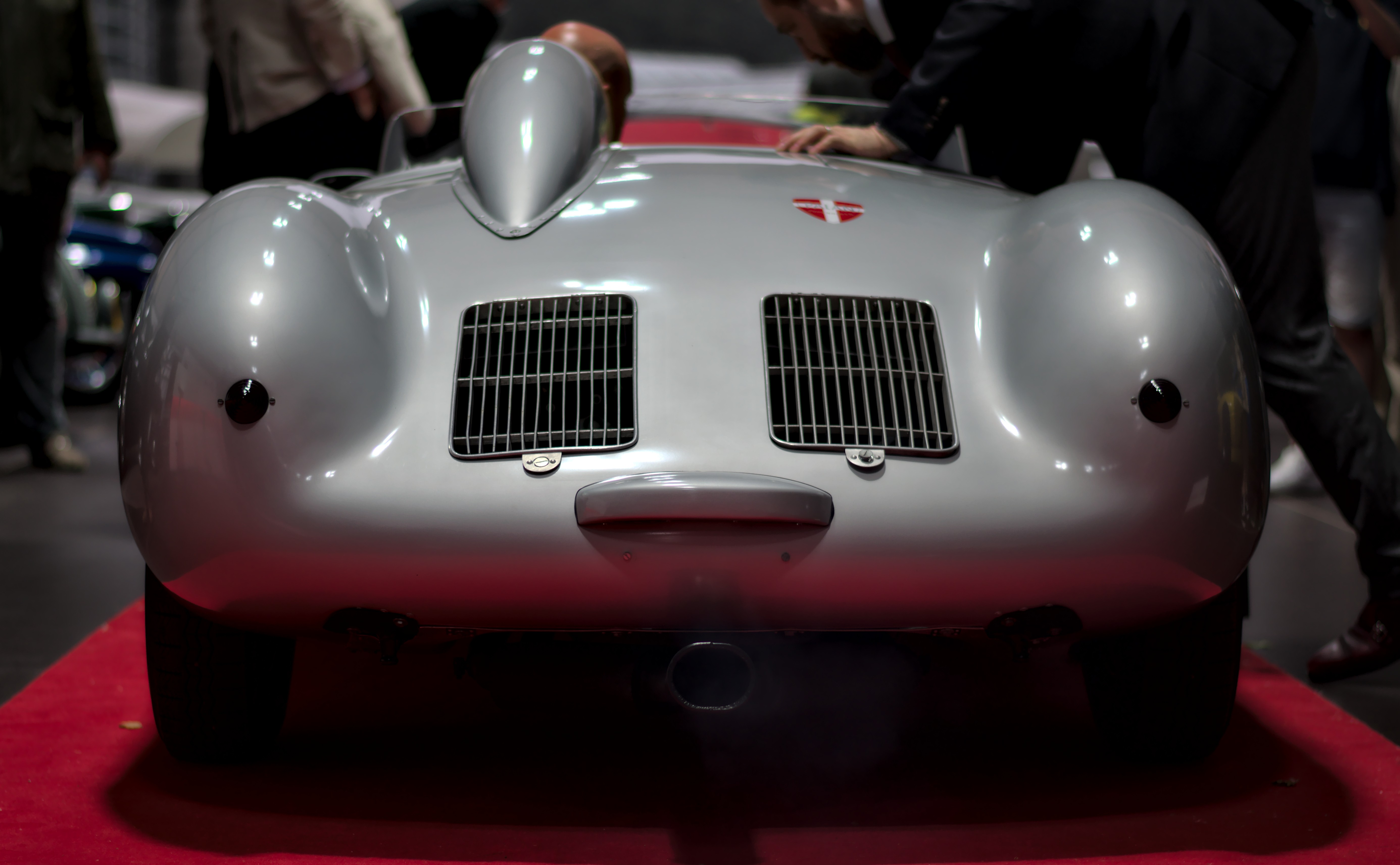
Porsche 550 spider
"if anything you can even say the early 986 is harken back to You know the beautiful lines of the 550 spider and you know, that's that was right Especially the especially the back end for sure."
The Porsche 550 Spyder is a classic, famous Porsche race car from decades ago. Here it’s used as a design comparison—saying the later Cayman/Boxster’s lines remind them of the 550’s look, especially at the back.
The Porsche 550 Spyder (often shortened to “550 Spyder”) is a lightweight, iconic mid-century Porsche race car. The hosts use it as a styling reference point, arguing that the early 986 Cayman/Boxster era “harkens back” to the 550’s beautiful lines—especially the rear shape.
Request an Explanation
Heard something you'd like explained? We'll add it to this episode.
Sign in to request explanations for terms you heard.
Want to learn more?
Browse our glossary for plain-English explanations of automotive terms, jargon, and concepts.
Help improve this episode
See something that's not quite right? Our annotations are AI-generated and can sometimes miss the mark. Click the flag icon on any annotation to suggest a correction.