
The AMG Story, Chrysler Concepts, and Saving the Manuals with Matt DeLorenzo ✍️🐍
About this episode
Matt DeLorenzo joins the show to connect automotive history, modern tech, and the joy of driving. They start with DeLorenzo’s background in trade publishing and his AMG book, then dive into the story of AMG’s origins and Chrysler’s concept-car era—highlighting how the Viper and cross-functional development shaped the brand. A big theme is saving manuals: DeLorenzo’s Gremlin learning days, Doug’s manual vs modern driving engagement, and why analog still matters. The conversation also tackles EV affordability, battery cost, and why “all of the above” is the real future.
Click here to share your favorite car, car story or any automotive trivia!
Badass cars with terrible rear ends, the birth of the Dodge Viper, and the truth about the EV market. 🏁
In this episode, we sit down with automotive journalism royalty, Matt DeLorenzo. With over 45 years in the industry—including serving as the Editor of AutoWeek and a founding juror of the North American Car of the Year (NACTOY) awards—Matt has truly seen and driven it all. From buying a $2,000 AMC Gremlin as his first car to rubbing elbows with Carroll Shelby, Matt shares the unbelievable history and stories behind the metal.
In this episode, we cover:
🚙 First Cars & Clutches: Matt’s $2,000 blue AMC Gremlin, and learning how to drop a transmission in a college parking lot.
🕹️ Saving the Manuals: Why out of all the hypercars he has driven, a simple 1984 Honda Civic CRX remains one of his favorite cars of all time.
📉 Design Disasters: A hilarious debate on "Badass Cars with Terrible Rear Ends," from the infamous BMW "Bangle Butt" to the Hyundai Ioniq 6.
📖 Automotive History: The true story of Mercedes-Benz's AMG division, Chrysler's 90s concepts, and how the Dodge Viper changed the industry.
⚡ The Future of EVs: Why the future of the auto industry isn't just electric, but an "All of the Above" approach for consumers.
Don't miss Matt's favorite episode with friend and colleague, John Davis from MotorWeek: https://buzzsprout.com/2316026/episodes/18157530
Whether you love modern hypercars, weird 90s concepts, or just the feeling of banging through the gears of a manual transmission, this episode is packed with automotive history.
*** Your Favorite Automotive Podcast - Now Arriving Weekly!!! ***
Listen on your favorite platform and visit https://carsloved.com for full episodes, our automotive blog, Guest Road Trip Playlist and our new CAR-ousel of Memories photo archive.
Don't Forget to Rate & Review to keep the engines of automotive storytelling—and personal restoration—running strong.
SEMA
"...depending on when people hearit. Uhit'salreadyout... gettinginvitedtoSEMA, walkingaround askingpeoplequestions..."
SEMA is a huge car show/trade event where aftermarket companies and builders show off parts and projects. If someone gets invited, it usually means they’re doing something notable in the car world.
SEMA (Specialty Equipment Market Association) is a major annual trade show focused on aftermarket parts, customization, and performance products. Being “invited to SEMA” signals recognition in the enthusiast/aftermarket community rather than mainstream OEM circles.

1969 Camaro
"Hey,Ihavethisgaragefullofpartsforuhherherdad's1969Camarothatshewasrestoring andwasboughtasafather-daughterproject, andhepassedaway."
The 1969 Camaro is a famous classic muscle car from Chevrolet. People restore them a lot because there are lots of parts and guides available.
A 1969 Chevrolet Camaro is a classic first-generation muscle car year known for its iconic styling and huge aftermarket support. It’s a popular choice for father-daughter restoration projects because parts availability and community knowledge are strong.
car culture
"Ilovethataboutourcallcarculturebecausewelovesharingknowledgeanditkeepsitalive."
Car culture is basically the community of people who love cars. It’s how people share stories, tips, and knowledge so the hobby keeps growing.
“Car culture” is the community around cars—events, media, and conversations that keep automotive knowledge and enthusiasm alive. In podcasts like this, it usually means sharing stories and learning from others’ experiences.
car story
"Everybody'sgotacarstory. Thehandmedownthatgotyouthroughcollege,theoneyoushouldn'thavesold."
A car story is the personal history of a car—who owned it, what happened with it, and why it was special. It’s more about the meaning than just the numbers.
A “car story” is the personal history behind a vehicle—how it was owned, modified, or passed down, and what it meant to the people involved. These narratives are often as important as specs because they explain why certain cars matter.
AutoWeek
"He'swrittenseveralbooks,he'sworkedatseveralofthemostpopulartradetrademagazinesbackintheday,includingAutoWeekandmanyothers."
AutoWeek is a car-focused magazine/news outlet. It’s the kind of place that covers cars and the auto industry, so it hints at the guest’s professional car-writing experience.
AutoWeek is a well-known automotive trade publication that historically covered new cars, industry news, and reviews. Mentioning it signals the guest’s background in mainstream automotive journalism and industry reporting.
pace car
"I had an opportunity to ride with him at Indy when the Viper was the pacecar."
A pace car is used to lead the cars around at a controlled speed. It’s there to keep everything safe when the race can’t run at full speed.
A pace car is a vehicle used to lead the field at the start of an event or during caution periods. It helps control speed and spacing while ensuring safety until racing conditions are restored.
Indy
"I had an opportunity to ride with him at Indy when the Viper was the pacecar."
“Indy” is short for Indianapolis Motor Speedway, one of the most famous racing tracks in the U.S. The story is set there, which makes it a big motorsports moment.
“Indy” refers to Indianapolis Motor Speedway, commonly called “Indy,” a major venue for motorsports. The segment uses it to place the Viper pace-car ride in a high-profile racing setting.
Dale Jr.
"I got other little, you know, I have you can't see them that well, but I got a couple of things signed by Dale Jr. and Dale Sr."
Dale Jr. is a well-known NASCAR driver. Having something signed by him is like getting an autograph from a big racing star.
Dale Earnhardt Jr. (“Dale Jr.”) is a major figure in American stock car racing, especially NASCAR. The transcript mentions signed items from him, reflecting how Matt’s work connected him with top motorsports personalities.
Dale Sr.
"I got a couple of things signed by Dale Jr. and Dale Sr."
Dale Sr. is a legendary NASCAR driver. An autograph from him is considered especially meaningful in racing circles.
“Dale Sr.” refers to Dale Earnhardt Sr., a legendary NASCAR driver. Mentioning signed items from him highlights the prestige of the memorabilia and the speaker’s access to prominent racing figures.
MotorWeek
"MotorWeek. Yeah. And uh, of course, Dave and I growing up in Maryland, MotorWeek was the show to watch, and it still is."
MotorWeek is a long-running car TV show. People watched it to learn about cars and see reviews and news.
MotorWeek is a long-running automotive TV show in the U.S. that helped popularize car culture and consumer-focused reviews for decades. In the segment, it’s referenced as a key show people grew up watching.
North American Car, Truck and Utility of the Year
"And again, he and I were um founders, original jurors on the North American Car, Truck, and Utility of the Year. That's right. So whenever we get together and do a drive every year of these semifinalists back in Michigan, so I always look forward to seeing John there."
This is an annual award where a group of judges picks the best new cars, trucks, and SUVs sold in North America. If you’re a juror, you help evaluate and vote on the winners.
The North American Car, Truck and Utility of the Year awards are judged by a panel of jurors and are meant to recognize standout vehicles sold in North America. Being a “juror” means participating in the evaluation process and voting based on criteria like design, engineering, and overall value.

Dodge Charger
"So the car winner was the Dodge Charger, and the charger comes into two doors, four doors. It's a big American, you know, rear drives sedan and coupe. It comes in all electric."
The Dodge Charger is a famous American performance car name. Here, they’re talking about the Charger winning the award and being offered as an electric vehicle.
The Dodge Charger is a long-running American performance sedan/coupe nameplate. In this segment, it’s specifically discussed as the award winner and as an electric model with multiple body styles.
620 horsepower
"So the most powerful version of it, 620 horsepower, all batteryelectric. "
Horsepower is a number that roughly indicates how much power the vehicle can produce. Higher horsepower usually means stronger acceleration potential.
Horsepower is a measure of engine/motor output, used to compare performance potential across vehicles. The speaker uses the figure to highlight that the most powerful Charger variant is very strong for an all-electric model.
all-wheel drive
"It comes in all-wheel drive, but it has a lockable rear-wheel drive mode, so you can do burnouts."
All-wheel drive means the car can send power to more than two wheels. That usually helps it grip the road better, especially when it’s wet or slippery.
All-wheel drive (AWD) sends power to more than just the front or rear axle, improving traction and stability—especially in poor weather or low-grip situations. In performance cars, AWD can also help you launch harder and maintain control during aggressive driving.
compact pickup truck segment
"...that again kind of pointstothe compact pickup truck segment, which isgrowing..."
This is the market for smaller trucks. They’re easier to drive and park than big trucks, but still offer real truck usefulness.
The compact pickup truck segment refers to smaller trucks that aim to deliver pickup utility (beds, towing) while being easier to live with than full-size trucks. The speaker frames it as growing, with more new models expected to enter the market.

Hyundai Santa Cruz
"Right now you have the Hyundai Santa Cruz and the Maverick, but there’s some talk."
The Hyundai Santa Cruz is a small truck-like vehicle that’s popular because it blends SUV comfort with pickup utility. They’re mentioning it as a current example in the compact pickup trend.
The Hyundai Santa Cruz is a compact pickup-style crossover (often called a “compact pickup truck segment” vehicle). The segment frames it as one of the current options in a growing market, alongside the Ford Maverick.
Toyota
"Right now you have the Hyundai Santa Cruz and the Maverick, butuh, there'ssometalk. Toyotamight come in with one..."
Toyota is a major automaker, and they’re being mentioned as a company that could build a small truck. It’s about the market getting more competitive.
Toyota is mentioned as potentially adding a compact pickup to the market. The point is less about a specific model and more about how major brands are watching the segment’s growth and considering new entries.

Palisade
"And then in the utilities segment, the Palisade one, which kind of showsthe strength of the Koreanautomakers in the U.S. market."
The Palisade is a big family SUV with three rows of seats. They’re saying it’s a strong seller and that it can come with a hybrid option.
The Hyundai Palisade is a three-row full-size SUV positioned as a family-friendly alternative to traditional American and European large SUVs. In the segment, it’s highlighted as showing Hyundai’s strength in the U.S. market and as offering a hybrid option.
hybrid option
"...and it offers a hybrid option."
A hybrid option means the car can use gas and electricity together. That usually helps it use less fuel than a purely gas SUV.
A hybrid option means the SUV can use both an internal combustion engine and an electric motor to improve efficiency. Hybrid systems can reduce fuel consumption in stop-and-go driving and may also help with emissions.
miles per gallon
"It'll get you over 30 miles per gallon."
MPG tells you how efficiently a car uses gas. Higher MPG generally means you spend less on fuel.
Miles per gallon (MPG) is a fuel-economy measure that tells you how far the vehicle can travel on one gallon of fuel. The speaker uses it to emphasize that the hybrid-equipped SUV can achieve over-30 MPG, which is a key buying factor for many shoppers.

Dodge Dakota
"Is it true that Dodge is thinking about bringing back the Dakota platform? ... And I would like to see a Dakota."
The Dodge Dakota was a smaller pickup truck compared to full-size trucks. The rumor here is whether Dodge might restart that idea to sell a more affordable, easier-to-drive truck.
The Dodge Dakota was a midsize pickup sold by Dodge for decades. The discussion is about whether Dodge (or RAM) could bring back a Dakota-style smaller truck to compete in the compact/midsize segment.

Ford Ranger
"And you know, the Ranger used to be a compact pickup, and now it's a midsize pickup that's almost as big as some F-150 so a couple generations ago."
The Ford Ranger is a pickup truck. They’re saying it used to be smaller, but newer versions are much bigger—almost like a full-size truck.
The Ford Ranger is a compact/midsize pickup that has grown in size over the years depending on generation and market. The host contrasts the Ranger’s earlier, smaller footprint with today’s larger truck dimensions.
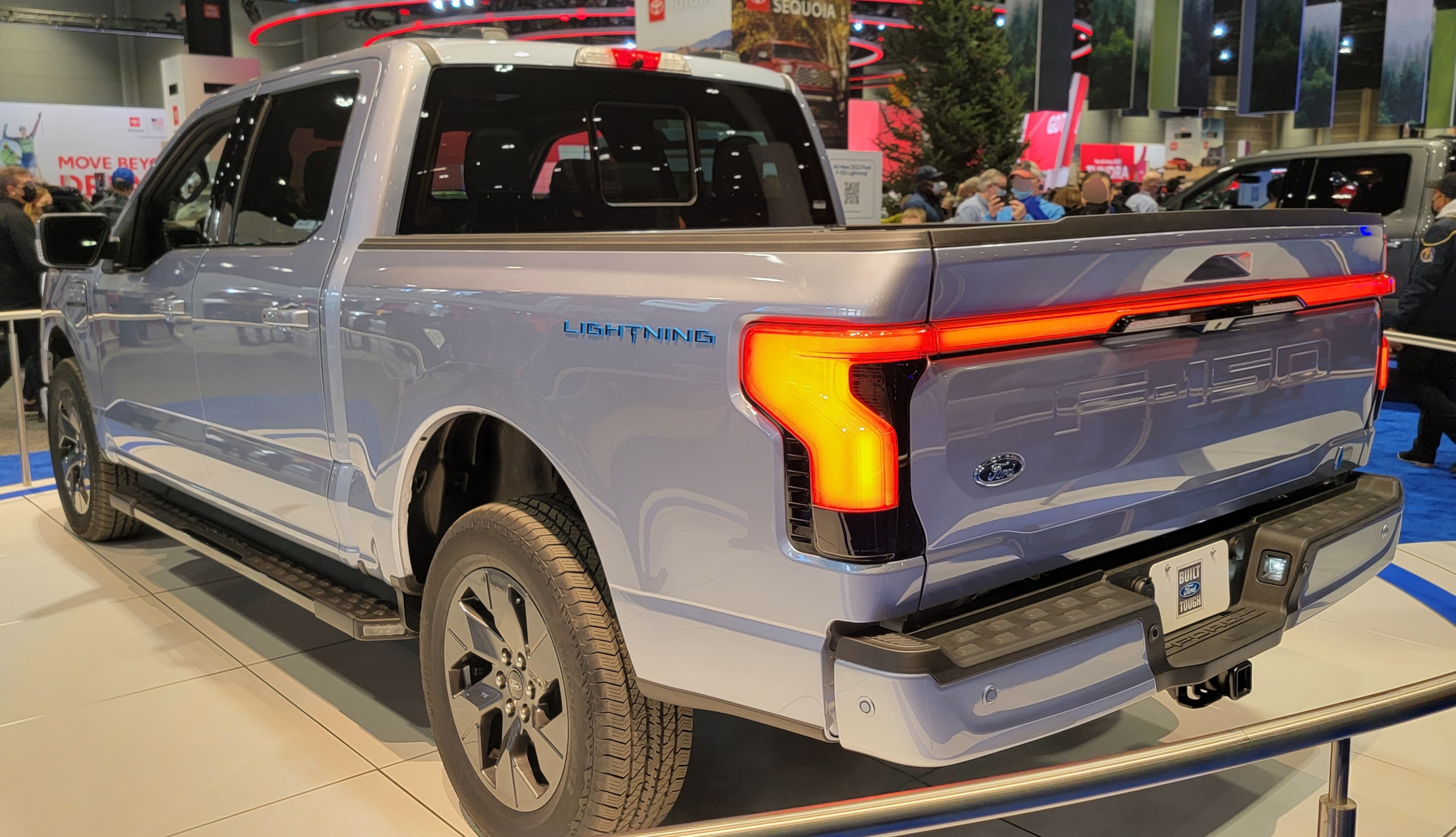
Ford F-150
"...now it's a midsize pickup that's almost as big as some F-150 so a couple generations ago."
The Ford F-150 is a big, full-size pickup truck. They’re using it as a reference point to explain that the Ranger got bigger too.
The Ford F-150 is Ford’s flagship full-size pickup. It’s used here as a size benchmark to show how much the Ranger has “grown” over time.

Nissan Leaf
"[899.7s] IhadaHondacordthatwasblue. [901.9s] UhNissanLeafthatIhaveisblue."
The Nissan Leaf is an electric car (it runs on a battery instead of gas). They’re just saying theirs is blue, as part of their car-color story.
The Nissan Leaf is a mass-market electric vehicle (EV) that helped popularize affordable EV ownership. The speaker notes theirs is blue, tying it into their preference for that color.
three on the tree
"...aCorvette, Mustang, andaPackard with athreeonthetree."
“Three on the tree” means the car shifts gears using a stick on the steering column, and it has three forward gears. It’s an older style of manual that feels different from modern floor shifters.
“Three on the tree” refers to a manual transmission with three forward gears shifted by a lever mounted on the steering column (“the tree”). It’s a classic layout common on older American cars and is a memorable way to learn shifting because the shifter position and feel are different from a floor-mounted shifter.
manual transmission
"Iammustsavethemanualtransmissionguy,mainly becauseofmyVolkswagenloveandpassion."
A manual transmission is the kind where you shift gears yourself. The driver has to pay attention and actively control what the car is doing.
A manual transmission requires the driver to use a clutch and shift gears. The speaker argues that keeping manuals alive matters because they create a more engaging, connected driving experience.
stop-and-go traffic
"Itstillcanbealittlebitofachallengetodriveamanualandinstopandgotraffic,butthat'syouknow,thatcomeswiththeturf."
Stop-and-go traffic is driving conditions where you frequently accelerate, brake, and come to a stop. The speaker notes that manuals can be challenging in this environment, which is a common real-world downside of manual transmissions.
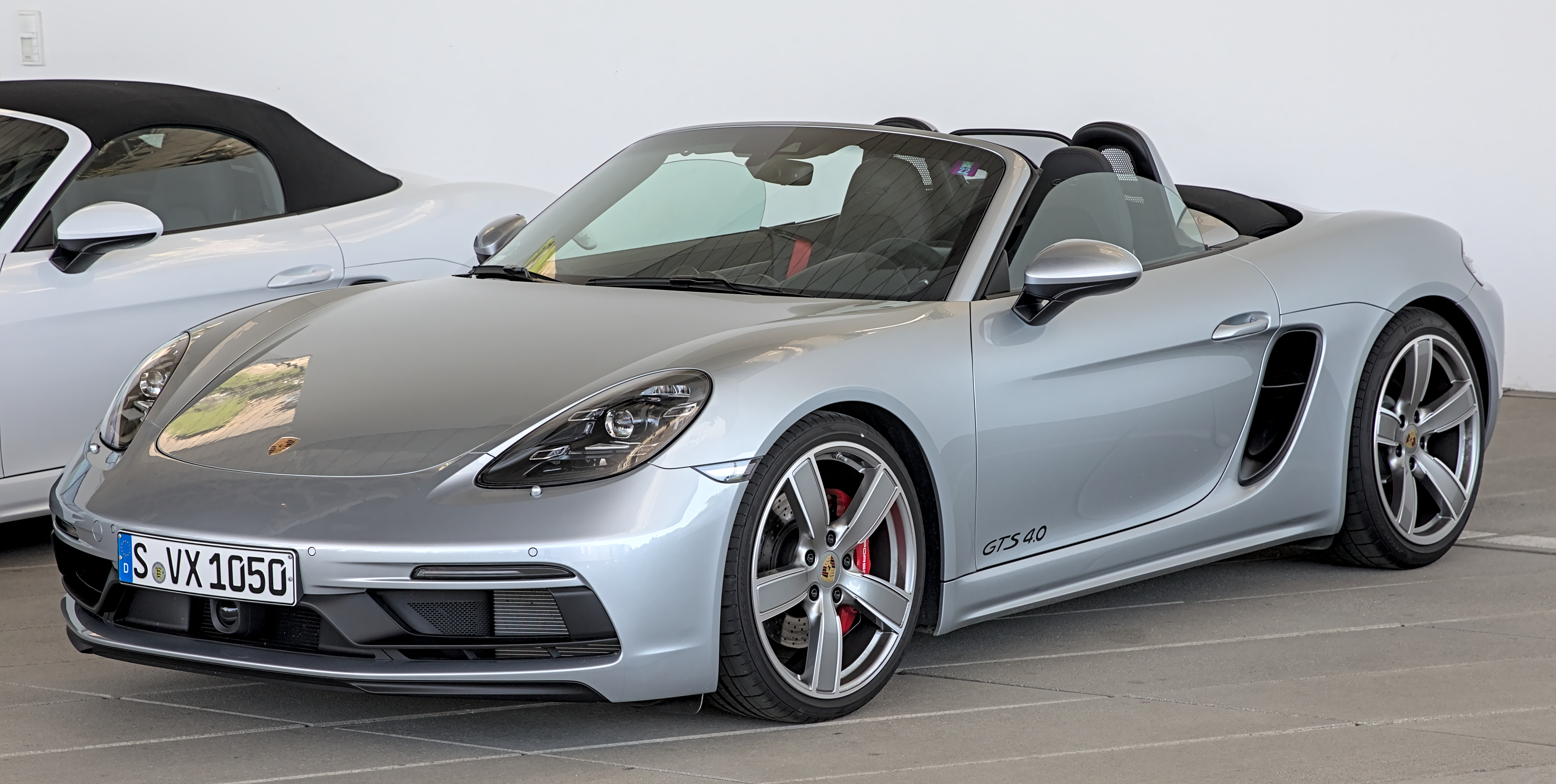
Porsche Boxster
"IIwouldlovetohaveaPorschePorscheBoxster. IIthinkthat'sjustafab. I'dgetanolderone. IItheneweroneshavekindofgottenbigger"
The Porsche Boxster is a two-seat sports car from Porsche. It’s built to feel nimble and fun, with a sporty engine and great handling.
The Porsche Boxster is a mid-engine two-seat roadster from Porsche. It’s known for its balanced handling and the way the flat-six engine character shows up in everyday driving.
electric power steering
"Youknow,whenelectricpowersteeringfirstcameout,itwasawful. Nowadays,thesystemsaresoadvanced,it'sveryhard-pressed."
Electric power steering uses a motor to help you steer. It can be smoother and more efficient than older hydraulic steering systems.
Electric power steering (EPS) uses an electric motor to assist the driver, instead of hydraulic pressure from a pump. EPS became common because it can be controlled precisely and can reduce energy losses compared with hydraulic systems.
EV
"And I wrote a book… How to Buy an Affordable Electric Car… an owner’s owner’s guide to EV guide to EV ownership."
EV means electric vehicle—basically a car that runs on electricity instead of gasoline. The segment is about buying one without spending too much.
EV stands for electric vehicle. In this context, the speaker is discussing how to buy and own an EV affordably, including incentives and ownership considerations.
EVs
"Sothethemark,youknow,thethingthatreallyranklesmeisthatalotofpeoplewerelookingatEVsastheanswer when,inessence,it'sgonnabealloftheabove."
EVs are cars that run on electricity instead of gasoline. The speaker is saying EVs are important, but they won’t be the only solution for everyone’s needs.
EVs (electric vehicles) are powered primarily by electricity stored in a battery. The point being made is that EVs are only one part of the broader shift in powertrains, not a universal answer for every use case.
AMG
"Uhsoyouknow,AMGistheperformancedivisionofMercedes-Benz,butitdidn'tstartoutthatway."
AMG is the performance division of Mercedes-Benz, known for high-performance engines, chassis tuning, and motorsport heritage. The speaker notes that AMG’s origin wasn’t always as a formal “performance division,” which is central to the story.
Mercedes-Benz
"Uhsoyouknow,AMGistheperformancedivisionofMercedes-Benz,butitdidn'tstartoutthatway."
Mercedes-Benz is the main car company in this story. AMG is connected to it, and the speaker is explaining how Mercedes’ performance culture started.
Mercedes-Benz is the automaker behind AMG and the broader engineering ecosystem discussed in the episode. The transcript ties AMG’s early development to Mercedes’ internal engineering and motorsport involvement.

2005 Ford Mustang
"I'vedoneIdidabookonthe2005FordMustang,uh,IdidabookonCorvettes,IhadabookonAmericancars."
They mention writing about a 2005 Ford Mustang. That’s a specific Mustang year, and it’s part of the “modern” Mustang era people still talk about a lot.
The speaker says they wrote a book about the 2005 Ford Mustang. That year falls within the S197 Mustang generation, which is a common reference point for enthusiasts because it’s when the modern Mustang styling and performance direction really solidified.
Request an Explanation
Heard something you'd like explained? We'll add it to this episode.
Sign in to request explanations for terms you heard.
Want to learn more?
Browse our glossary for plain-English explanations of automotive terms, jargon, and concepts.
Help improve this episode
See something that's not quite right? Our annotations are AI-generated and can sometimes miss the mark. Click the flag icon on any annotation to suggest a correction.