
Bill Mitchell, the flamboyant director of styling at General Motors, is the focus of this episode, showcasing his pivotal role in designing iconic cars like the Corvette Stingray and Buick Riviera. Known for his wild personality and innovative designs, Mitchell defied corporate bans to secretly develop the Stingray, leading to its legendary status. The episode dives into his creative process, personal anecdotes, and the impact of his designs on American automotive history, making it a fascinating exploration of a true automotive visionary.
Thanks to Allstate for sponsoring today’s episode! Click here [https://bit.ly/3GSyliQ] to check Allstate first and see how much you could save on car insurance.
This episode is brought to you by BetterHelp. Give online therapy a try at https://betterhelp.com/PASTGAS and get on your way to being your best self.
Meet Bill Mitchell, the hard-drinking, womanizing, design genius who shaped General Motors’ golden age. From the Corvette Stingray to the Buick Riviera and Cadillac Eldorado, Mitchell’s fingerprints are on nearly every iconic GM car of the ’50s through ’70s. He defied bans, built secret studios, and literally climbed trees drunk at company parties. It’s the wild story of the man who made American cars beautiful — and himself impossible to ignore.
Learn more about your ad choices. Visit podcastchoices.com/adchoices
"...most iconic designs in General Motors history. C2, Stingray Corvette, Buick Riviera, Cadillac Seville, you name it, he probably had his"
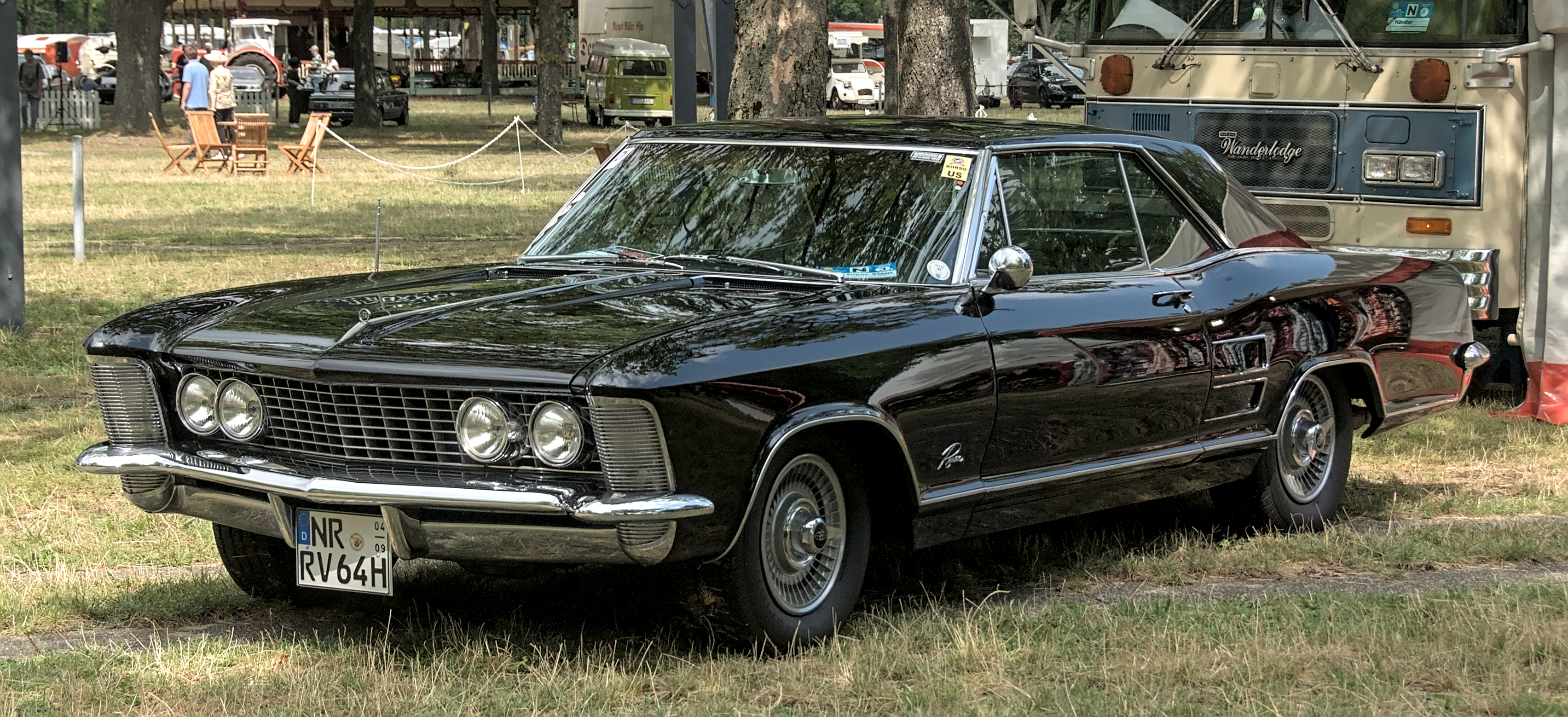
The Buick Riviera is a stylish car that was made by Buick, known for being luxurious and comfortable. It was popular in the 1960s and 1970s.
The Buick Riviera is a luxury coupe that was produced by Buick from the 1960s to the early 1990s. It is known for its elegant design and was often considered a personal luxury car.
"...most iconic designs in General Motors history. C2, Stingray Corvette, Buick Riviera, Cadillac Seville, you name it, he probably had his"
The Cadillac Seville is a luxury car made by Cadillac, known for its comfort and high-end features. It was popular among people looking for a stylish and elegant vehicle.
The Cadillac Seville is a luxury sedan that was produced by Cadillac from the mid-1970s to the early 2000s. It was known for its upscale features and was a key model in Cadillac's lineup during its production run.
"On June 6, 1957, the Automobile Manufacturers Association banned American automakers from participating in any motorsports or quote unquote performance activities."
The Automobile Manufacturers Association is a group that used to represent car makers in America. In 1957, they decided that American car companies couldn't take part in racing or performance events, which changed how cars were made at that time.
The Automobile Manufacturers Association (AMA) was an organization that represented the interests of American automakers. In 1957, they banned these manufacturers from participating in motorsports and performance activities, which significantly impacted the development of performance cars in the U.S.
"Just two years earlier, the deadliest crash in motorsport history happened at the 1955 24 Hours of Le Mans, which claimed 77 lives and injured many more."
The 24 Hours of Le Mans is a famous car race that lasts for a whole day. Cars race around a track, and the team that covers the most distance in that time wins.
The 24 Hours of Le Mans is one of the most prestigious endurance races in the world, held annually in France. It involves teams racing for 24 hours straight, testing both speed and durability of the cars.
"Do you know who Bill Mitchell is? Have you heard that name? I know... I've heard it from just in terms of Corvette, in terms of Chevy, in terms of design, but I don't know much else about him."
Bill Mitchell was a famous car designer who worked for Chevrolet. He is best known for designing the Corvette and many other notable cars.
Bill Mitchell was a prominent automotive designer known for his work with Chevrolet, particularly on the Corvette. He played a significant role in shaping the design language of several iconic cars during his tenure.
"Imagine knowing that your family traded in a vintage Rolls Royce at some point for a Buick."
Buick is a car brand from America that makes comfortable and reliable cars. They are often seen as a step up from regular cars.
Buick is an American automobile brand that is part of General Motors. It is known for producing mid-range luxury vehicles and has a reputation for comfort and reliability.
"...at Sleepy Hollow Ring, which was a private 0.7 mile circuit at Poconito Hills, New York. That's one of my favorite tracks."
Sleepy Hollow Ring is a short racetrack in New York where people can race cars. It's popular because of its interesting design and the fun it offers to racers.
Sleepy Hollow Ring is a private racing circuit located in Poconito Hills, New York, known for its 0.7 mile length. It's a favorite among local racers for its unique layout and challenging turns.
"...at Sleepy Hollow Ring, which was a private 0.7 mile circuit at Poconito Hills, New York. That's one of my favorite tracks."
Poconito Hills is a place in New York where a racetrack called Sleepy Hollow Ring is located. It's a nice area that people enjoy visiting for racing.
Poconito Hills is a location in New York where the Sleepy Hollow Ring racetrack is situated. It is known for its scenic views and is a popular area for motorsport enthusiasts.
MG Cars is a brand from Britain that makes sports cars. They are known for being fun to drive and were very popular in the past.
MG Cars is a British automotive marque known for its sports cars and was particularly popular in the mid-20th century. The brand has a rich history and is associated with affordable sports cars that offer a fun driving experience.
"the 1931 founders of the Automobile Racing Club of America, or ARCA for short. The brothers were impressed enough with Mitchell's work at the advertising firm that he became the official illustrator of ARCA."
ARCA is a group that organizes car racing events in the U.S. It started in 1931 and is important for stock car racing.
The Automobile Racing Club of America (ARCA) is a sanctioning body for motorsports in the United States, known for promoting stock car racing events. Founded in 1931, it has played a significant role in the development of racing in America, particularly in the stock car category.
"Mitchell's first car for Cadillac was the 1938 60 special, a smaller Cadillac sedan, which became the first personal luxury car."
The Cadillac 60 Special is a car made by Cadillac in 1938. It's known for being one of the first cars designed specifically for personal luxury, meaning it was made to be more comfortable and stylish than regular cars.
The Cadillac 60 Special, introduced in 1938, is recognized as the first personal luxury car, designed to offer a more refined and comfortable driving experience compared to standard sedans.
Art Deco is a style of design that was popular in the 1920s and 1930s. It features bold shapes and bright colors, making things look fancy and modern.
Art Deco is a design style that emerged in the early 20th century, characterized by bold geometric shapes, vibrant colors, and luxurious materials. It influenced various fields, including architecture and automotive design.
"While this wasn't part of the first generation DeVille that would debut 10 years later, it was an influence on Cadillac moving forward, especially with the addition of tail fins, which resulted in a massive shift in design language for years."
The Cadillac DeVille is a large luxury car made by Cadillac. It was popular for its stylish design and comfort, and it helped shape how cars looked in the years that followed.
The Cadillac DeVille is a full-size luxury car that was produced by Cadillac from 1949 to 2005. It became known for its elegant design and was a significant model in Cadillac's lineup, influencing automotive styling with features like tail fins.
"...especially with the addition of tail fins, which resulted in a massive shift in design language for years."
Tail fins are the pointed extensions at the back of some cars that look like fins. They were very popular in the 1950s and made cars look more stylish and futuristic.
Tail fins were a prominent design feature in American automobiles during the late 1940s to early 1960s, characterized by upward extensions at the rear of the vehicle. They were popularized by Cadillac and became a symbol of the era's automotive styling.
"One of the first tasks of Director of Styling was revamping the Chevrolet Bel Air. These cars went on to become some of the most emblematic cars of the 1950s."
The Chevrolet Bel Air is a famous car from the 1950s, known for its stylish design and is often seen as a symbol of that era.
The Chevrolet Bel Air is a classic American car known for its distinctive design and popularity during the 1950s, often associated with the post-war automotive boom.
"Would you have a 55, 56, or 57? Oh, I don't know the difference. They look all slightly different. I think the 57 is the..."
The 1957 Chevrolet is a famous classic car that many people love for its unique look and history. It's one of the most popular cars from the 1950s and is often collected by car enthusiasts.
The 1957 Chevrolet is a classic car known for its distinctive design and popularity in American automotive history. It is often celebrated for its styling and performance, making it a sought-after model among collectors.
"...We bought him an R8, a little Mustang, and then an X6, because it was red."
The Audi R8 is a fast and stylish sports car made by Audi. It's known for being fun to drive and has a powerful engine that makes it very quick.
The Audi R8 is a high-performance sports car known for its sleek design and powerful engine options, including V10 variants. It's often praised for its handling and driving dynamics.
"...We bought him an R8, a little Mustang, and then an X6, because it was red."
The BMW X6 is a luxury SUV that looks sporty and has a high-end feel. It offers a lot of space and comfort while still being fun to drive.
The BMW X6 is a luxury crossover SUV that combines sporty performance with the practicality of an SUV. It's known for its distinctive coupe-like design and powerful engine options.
"...We bought him an R8, a little Mustang, and then an X6, because it was red."
The Ford Mustang is a classic American car that's known for being powerful and sporty. It's popular for its cool looks and fast performance.
The Ford Mustang is an iconic American muscle car known for its performance and distinctive design. It has a long history and is available in various trims and engine options.
The Ferrari Superamerica is a special convertible car made by Ferrari. It has a unique roof that can rotate and is known for being very fast and luxurious.
The Ferrari Superamerica is a limited-production convertible version of the Ferrari 575M Maranello, known for its unique rotating roof design and high performance.
The Ferrari 250 GT is an older sports car made by Ferrari that is very famous for its beautiful design and speed. Many people love to collect these cars.
The Ferrari 250 GT is a classic sports car produced by Ferrari from the late 1950s to the early 1960s, renowned for its performance and elegant design, and is highly sought after by collectors.
"One of Mitchell's favorites was a 1955 Alfa Romeo Disco Volante. Alfa Romeo had done a coupe version and Mitchell wanted to do the first Corvette coupe."
The Alfa Romeo Disco Volante is a famous car from 1955 known for its unique shape and sporty performance. It's considered a classic and is admired by car enthusiasts.
The Alfa Romeo Disco Volante is a classic sports car known for its distinctive design and performance. Originally produced in the 1950s, it has become a symbol of Italian automotive artistry and engineering.
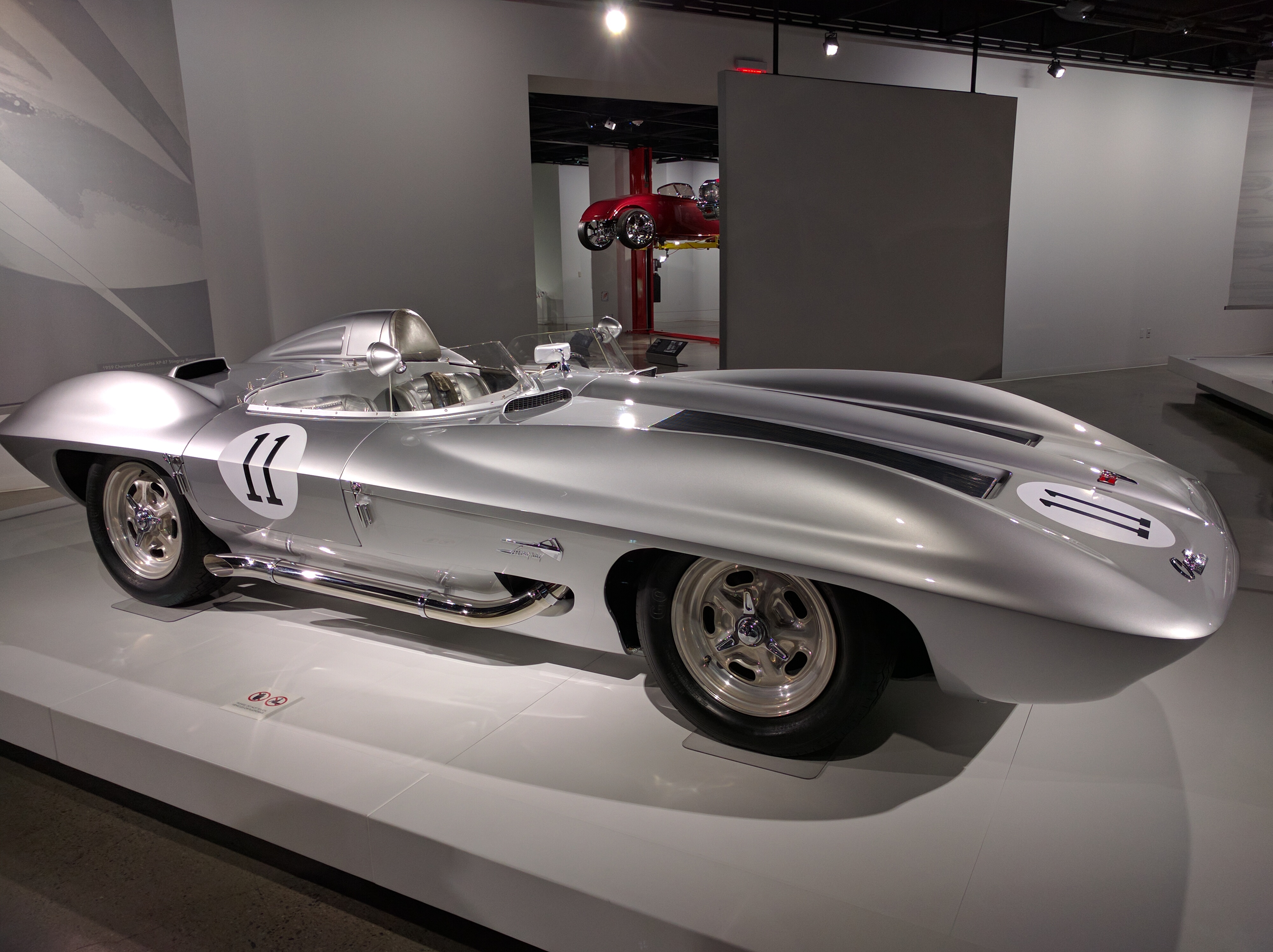
"...called XP87, which was later developed into the 1959 Stingray Racer, which looks like this. That is so sick."
The Chevrolet Stingray Racer is a special car from 1959 that was designed to look really cool and sporty. It was a concept car, meaning it was created to show new ideas for future cars.
The Chevrolet Stingray Racer is a concept car that was developed in 1959, showcasing advanced design and performance features for its time. It is notable for its distinctive styling and is considered a precursor to the later production Corvette models.
"It featured an entirely new frame from the first generation Corvette along with a new nose and pop-up headlights."
A new frame means the basic structure of the car has been completely changed. This can make the car handle better and be safer.
A new frame in automotive design refers to a completely redesigned structural base of the vehicle, which can improve handling, safety, and overall performance. It often signifies a significant evolution in the vehicle's engineering.
"...He also worked on the Monza GT and SS Concepts,"
The Chevrolet Monza GT is a concept car that was designed by Chevrolet in the 1970s. Concept cars are often unique designs that show what a manufacturer might produce in the future.
The Chevrolet Monza GT is a concept car designed in the 1970s, showcasing innovative styling and performance features. It was part of Chevrolet's efforts to create sporty vehicles during that era.
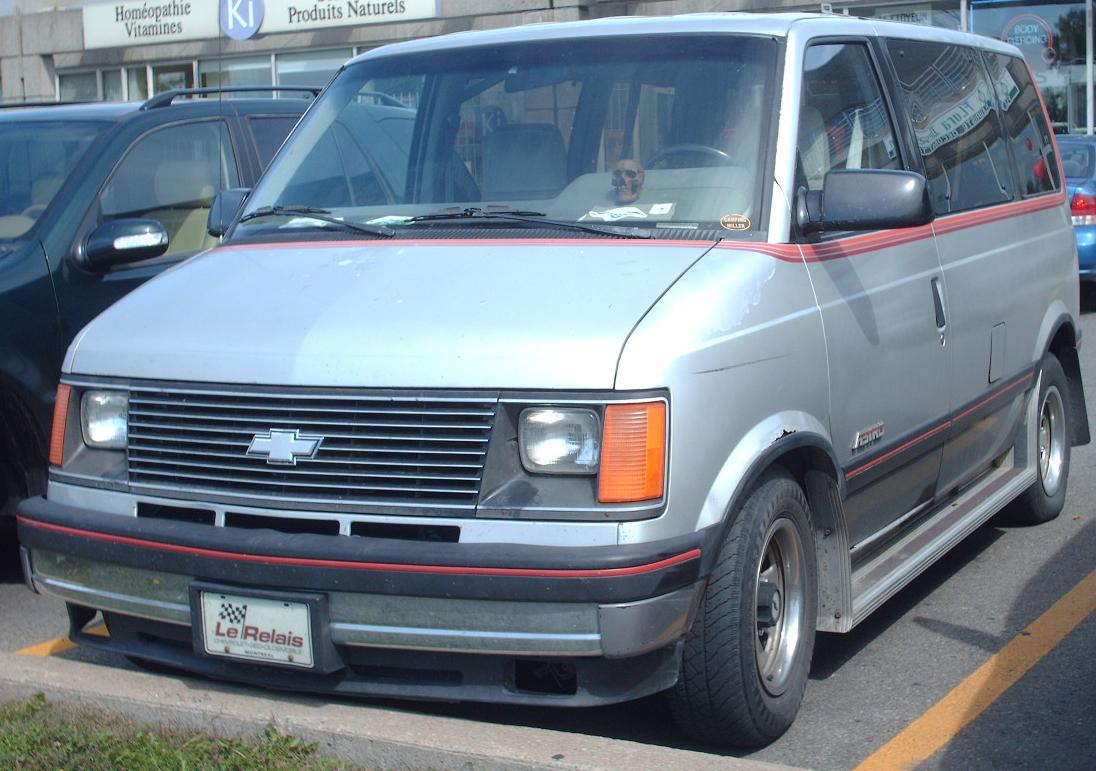
"... also worked on the Monza GT and SS Concepts, the Astro 1, 2, and 3 Idea Cars, and two Mako Shark Concept..."
The Chevrolet Astro is a van that was made for many years and is known for being roomy and useful. It's great for families or anyone who needs to carry a lot of stuff.
The Chevrolet Astro is a mid-size van that was produced from 1985 to 2005, known for its versatility and spacious interior. It was popular among families and businesses for its practicality and ability to carry multiple passengers or cargo.
"...the Astro 1, 2, and 3 Idea Cars, and two Mako Shark Concepts..."
The Astro Idea Cars were experimental cars made by General Motors to try out new designs and technologies. They were like concept cars that showed what the future of cars could look like.
The Astro Idea Cars were a series of experimental vehicles developed by General Motors to explore new design and technology concepts. They represented innovative thinking in automotive design during their time.
"...and two Mako Shark Concepts, and a mini Camaro project."
The Mako Shark Concepts were special prototype cars made by Chevrolet that looked very cool and helped shape the design of the Corvette. They were like test cars to show new ideas.
The Mako Shark Concepts were a series of prototype cars designed by Chevrolet in the 1960s, which influenced the design of the Corvette. They featured sleek, futuristic styling and innovative features.
"...and a mini Camaro project. Now that Mitchell was finally the chief stylist..."
The Chevrolet Camaro is a popular sports car that has been around for many years. It's known for being fast and stylish, often compared to other muscle cars.
The Chevrolet Camaro is a classic American muscle car known for its performance and sporty design. It has been in production since 1966 and has undergone several generations of updates and redesigns.
"Yeah. In 1959, the Mitchell-designed Cadillac Coupe DeVille was first put into production."
The Cadillac Coupe De Ville is a classic luxury car that was made for many years, known for being very spacious and stylish. The 1959 version is especially famous for its big tail fins and is a symbol of 1950s cars.
The Cadillac Coupe De Ville, produced from 1949 to 1999, is a classic American luxury car known for its spacious interior and elegant design. The 1959 model is particularly famous for its distinctive tail fins and is often considered a symbol of 1950s American automotive culture.
"...l them bullet-like, too. Taillights on, like, the Impala of that era are so iconic."
The Chevrolet Impala is a big car that many people in America have loved for a long time. It's famous for its cool looks and roomy inside, especially the older models from the 1960s that people often talk about.
The Chevrolet Impala is a full-size car that has been a staple of American automotive culture since its introduction in 1958. Known for its distinctive styling and spacious interior, the Impala has become iconic, particularly the models from the 1960s, which are celebrated for their design and performance.
"morning when he saw a 1955 Rolls Royce Silver Dawn around a corner, seemingly coming right out ..."
The Rolls-Royce Silver Shadow is a luxury car made from the mid-1960s to the late 1970s. It's known for being very smooth to drive and made with high-quality materials, which makes it popular among people who love fancy cars.
The Rolls-Royce Silver Shadow, produced from 1965 to 1980, is a luxury sedan that marked a significant evolution in the brand's design and engineering. It is known for its smooth ride and high-quality materials, making it a favorite among luxury car enthusiasts.
"Its long, low sleekness was the perfect look to go with the Silver Dawn's knifing lines."
The Rolls-Royce Silver Dawn is an old luxury car made after World War II, known for being very stylish and smooth to drive. It's one of the first fancy cars that Rolls-Royce made after the war.
The Rolls-Royce Silver Dawn, produced from 1949 to 1955, is a classic luxury car known for its elegant design and smooth performance. It was one of the first post-war models to be built by Rolls-Royce, marking a significant return to luxury after the war.
"model once again with the Chevrolet Corvair. The Corvair had debuted as part of GM's attempt ..."
The Chevrolet Corvair is a small car that was made in the 1960s and is known for having its engine in the back. It was different from most cars, but some people worried about how safe it was.
The Chevrolet Corvair was a compact car produced from 1960 to 1969, notable for its unique rear-engine design and innovative features. It gained attention for its unconventional approach to car design but also faced criticism for safety issues.
"in 30 years, the Oldsmobile Toronado. He did that? He did that."
The Oldsmobile Toronado is a car that started being made in 1966 and was special because it was one of the first American cars to have the engine in the front and the wheels in the front too. It was a mix of luxury and speed.
The Oldsmobile Toronado, introduced in 1966, was a groundbreaking vehicle as one of the first American front-wheel-drive cars. It combined luxury with performance, making it a unique offering in the automotive market during its time.
"elk tallow. The 1967 Cadillac Eldorado was one of Mitchell's personal favorite designs,"
The Cadillac Eldorado is a fancy car that was made for a long time, known for being very stylish and comfortable. The 1967 version is especially famous for its beautiful design.
The Cadillac Eldorado is a luxury car that was produced from 1953 to 2002, known for its elegant design and advanced features. The 1967 model is particularly notable for its distinctive styling and is often regarded as a high point in Cadillac's design history.
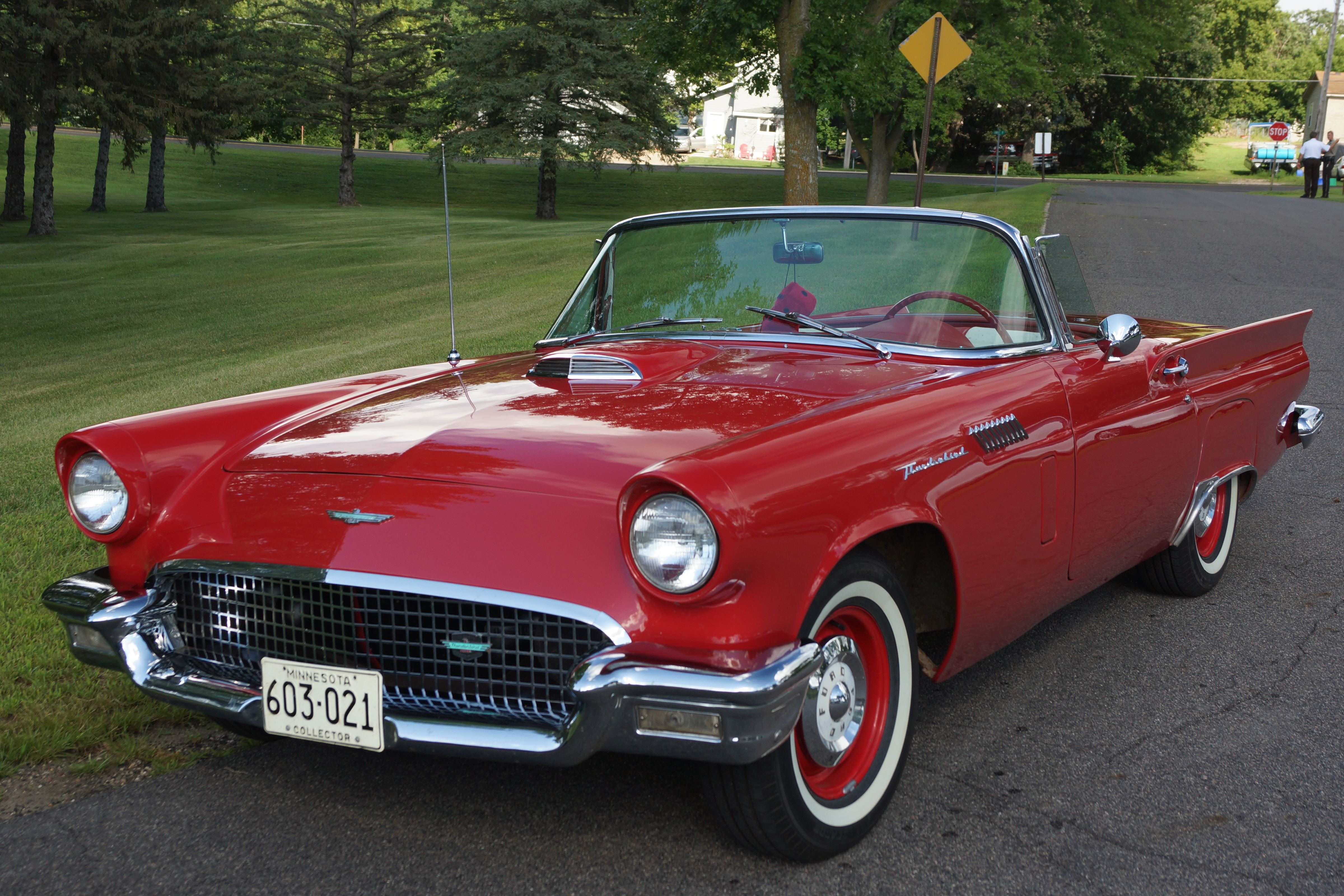
"As well as the Ford Thunderbird. The final design earned Automobile Quarterly's"
The Ford Thunderbird is a classic car that started being made in the 1950s. It was designed to be a fancy car for people who wanted something stylish and fast.
The Ford Thunderbird, launched in 1955, is a classic American car that was originally designed as a personal luxury vehicle. It became known for its stylish design and powerful performance, making it a popular choice among car enthusiasts.
"And this was the Chevy Supernova concept that they came up with, that they were"
The Dacia SuperNova is a small, affordable car made in the late 1990s and early 2000s. It's known for being simple and cheap, which makes it a good choice for people who want to save money.
The Dacia SuperNova is a compact car that was produced in the late 1990s and early 2000s, primarily aimed at budget-conscious consumers. It is known for its simplicity and affordability, making it a practical choice in markets where cost is a significant factor.
"...is last act of expression in car design, the 1977 Phantom. This car was a large,"
The Rolls-Royce Phantom is a super fancy car that is all about luxury and comfort. The 1977 version is known for being very elegant and well-made.
The Rolls-Royce Phantom is a luxury sedan that represents the pinnacle of automotive craftsmanship and opulence. The 1977 model is particularly significant as it showcases the brand's commitment to elegance and performance.
"an earlier version of the Dodge Wraith prototype, you know?"
The Rolls-Royce Wraith is a fancy car that started being made in 2013. It's built for people who want a fast car that also looks really nice and feels luxurious.
The Rolls-Royce Wraith, launched in 2013, is a luxury grand tourer that combines performance with the brand's signature elegance. It is known for its powerful engine and exquisite craftsmanship, appealing to those who desire both speed and luxury.
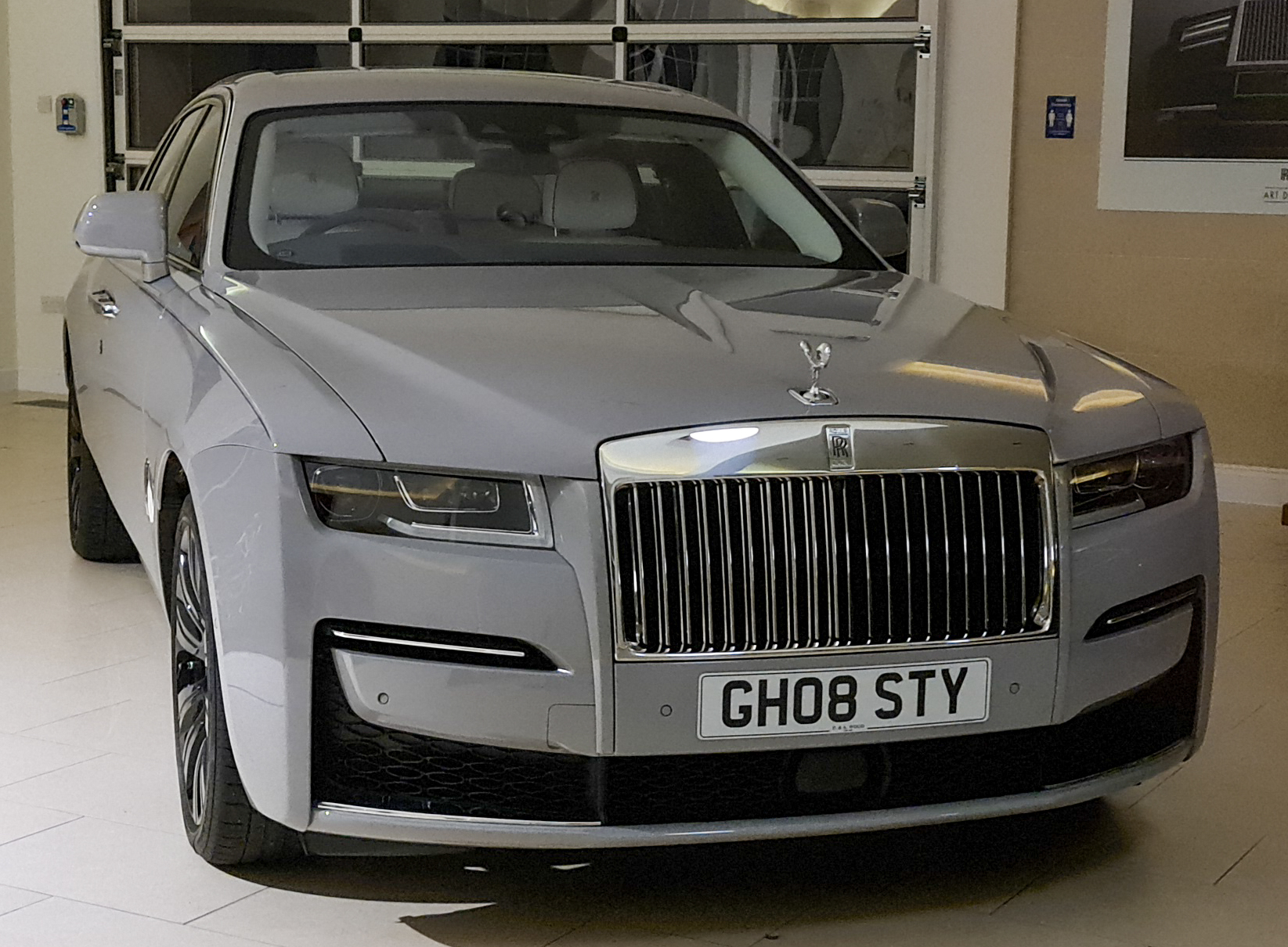
"prototype, you know? Wraith, Phantom, both ghosts. I don't like"
The Rolls-Royce Ghost is a very luxurious car that started being made in 2009. It's designed to be super comfortable and has a lot of high-tech features.
The Rolls-Royce Ghost is a luxury sedan that debuted in 2009, designed to provide an unparalleled level of comfort and performance. It is known for its understated elegance and advanced technology, appealing to those seeking a high-end driving experience.
"the 1961 Ford Thunderbird, the 1968 Pontiac GTO, and the 1968 Corvette."
The Pontiac GTO is a car that many people think of when they hear 'muscle car.' It was first made in the 1960s and is known for being fast and looking really cool.
The Pontiac GTO, introduced in 1964, is often credited with starting the muscle car trend in America. With its powerful engine and sporty design, the GTO became a symbol of performance and style during the 1960s.
Select text to request an explanation
Big thank you to our sponsor this week, BetterHelp.
October 10th was World Mental Health Day, and this year, BetterHelp is shining the spotlight
on therapists, people who truly make the world a better place.
This World Mental Health Day, we're celebrating the therapists who've helped millions of people
to take a step forward.
If you're ready to find the right therapist for you, BetterHelp can help you start that
journey.
Our listeners get 10% off their first month at betterhelp.com slash past gas.
That's BetterHelp, H-E-L-P.com slash past gas.
Thank you, BetterHelp.
This episode is brought to you by Underdog Fantasy.
Download the app today and use promo code gas to score $100 in bonus funds or bonus
entries when you play your first $5.
That's promo code gas, underdog, make picks, win money.
Must be 18 plus, 19 plus in Alabama and Nebraska, 19 plus in Colorado for some games, 21 plus
in Arizona, Massachusetts, and Virginia, and present in a state where Underdog Fantasy
operates.
Terms apply.
Visit underdogfantasy.com slash web slash play and get terms underscore DFS underscore
dot html for details.
Offer not valid in Maryland, Michigan, New Jersey, New York, Ohio, and Pennsylvania.
Concerned about your play?
Call 1-800-GAMBLER or visit www.ncpgambling.org.
In New York, call the 24-7 HOPE line at 1-877-8-HOPE-NY or text HOPE-NY 467-369.
Big thank you to our sponsor, Every Plate.
Guys, if you want flavor-packed, homemade meals that are delivered right to your door,
you got to get Every Plate.
And thanks to Every Plate's constantly rotating weekly recipes delivered right to your door,
you'll always have the best answer to what's for dinner.
What are you waiting for?
Dig into these flavor-packed meals that your household will love.
New customers can enjoy this special offer of only $1.99 a meal.
Go to everyplate.com slash podcast and use code GAS199 to get started.
Apply at a discount on the first box, limited time only.
Thank you, Every Plate.
Hey, how are you doing?
Welcome back to Past Gas.
This week, we're talking about a guy named Bill Mitchell, responsible for some of the
most iconic designs in General Motors history.
C2, Stingray Corvette, Buick Riviera, Cadillac Seville, you name it, he probably had his
hand in it.
He is a wild man.
He got really drunk at a company party and had to be rescued by the fire department.
We'll talk about that.
He was a guy that just, you know, he was like one of those guys where, you know, he'd probably
say you got to break a few eggs to make an omelet, you know, like he was one of those
kind of guys.
This is a really great episode and we're going to start right now.
On June 6, 1957, the Automobile Manufacturers Association banned American automakers from
participating in any motorsports or quote unquote performance activities.
This included the building, selling, or advertising of performance-oriented projects.
Just two years earlier, the deadliest crash in motorsport history happened at the 1955
24 Hours of Le Mans, which claimed 77 lives and injured many more.
The AMA was responding accordingly.
At the same time though, Bill Mitchell, the brilliant, strong-willed, hard-living, flamboyant,
maniacal director of styling at General Motors was trying desperately to keep the Corvette
alive.
After making a trip to the Turin Motor Show, he had some ideas on how to base the second
generation Corvette on the streamlined Italian sports cars he saw.
However, he was told the Corvette would be removed from the lineup due to the AMA ban
on sports cars.
Bill Mitchell's reported response was a simple,
Bullshit!
I'm not going to let that happen!
Bullshit!
I'm not going to let that happen!
How did he rise to the ranks of General Motors to become one of the world's most ubiquitous
car designers?
Which cars is Bill Mitchell known for?
And what inspired him most?
Today on Past Gas, legendary General Motors Head of Design, Bill Mitchell.
Hello and welcome back to the show everyone.
We're talking about a guy today, not a car.
A man.
Bill Mitchell.
My name is Nolan Sykes, joined as always by Bart Bidlingmeier.
Hi guys, good to see you.
Great to be here.
Thanks for having me.
You're welcome.
And...
Joe Weber.
Hello!
Wink Wink Nation!
Let's hear it!
Oh yeah, you can hear them in the distance.
Oh.
Wow.
I think that was a plane.
Well, who's on the plane then?
Okay.
I don't want to derail us too early.
Yeah, go ahead please.
I'm going to have to get this out of the way because I'm going to be staring at it the
whole time.
Does that say hot dog machine?
It does.
There's a little...
Off camera, there's something on our shelf over there wrapped in saran wrap with some
masking tape on it labeled hot dog machine.
And you know what?
We had that on set, I think, for an ad that we shot a couple weeks ago.
Okay.
Yeah.
Is it like the rollers?
Roller hot dogs.
Oh.
And they were...
We had hot dogs on it and I arrived to set and they were looking like, okay.
And then like, you know, we're still getting set up to shoot and they were on there for
like another hour or so and I think the heater was turned on too high and they started getting
like really blistered and disgusting looking.
Yeah.
Well, Donut might be missing a hot dog machine after this.
That's exactly where my head was.
Well, no.
We need to...
It doesn't look like you're using it.
Since we bought it, it's going to be featured in so many...
Every ad spot is...
There was that ad for Handcook where Jimmy's fingers were hot dogs.
Yeah.
Yeah.
There was that one where Edgar snatched a hot dog off of a mother's, I don't know, f***ing
who.
Let's just jump right into it, huh boys?
Yeah.
Let me ask you guys a question real quick.
Okay.
Okay.
Do you know who Bill Mitchell is?
Have you heard that name?
I know...
I've heard it from just in terms of Corvette, in terms of Chevy, in terms of design, but
I don't know much else about him.
I'm unfamiliar.
Uninitiated?
I'm uninitiated.
Well, I think you're going to be surprised at like how many cars he touched.
Well, I have a pitch.
Okay.
Because I'm completely unfamiliar and it sounds like you know something about it.
Yeah.
Should we have you read this one?
No, because I want to hear the joy of discovery in your voice.
Okay.
Okay.
Sounds good.
The only Bill Mitchell I know is Billy Mitchell, the guy that did the Donkey Kong, King of
Kong.
That guy.
Yeah.
That dude is a wiener.
Talk about hot dogs.
Hot dog machine.
All right.
Well, then let's get into it.
Bill Mitchell was born William Leroy Mitchell on July 2nd, 1912 in Cleveland, Ohio.
His father was a Buick dealer.
Bill would see the different cars his father's customers would trade in, including Rolls
Royce, Stutz, Hispana Suiza, Mercer, Templar, and Isotta Freschini.
This exposure to cars led Bill to develop a talent for sketching automobiles early in
his life.
Imagine knowing that your family traded in a vintage Rolls Royce at some point for a
Buick.
Yeah.
God damn it.
After graduating high school, Mitchell attended the Carnegie Institute of Technology, now
Carnegie Mellon University in Pittsburgh, Pennsylvania.
From there, he studied at the Arts Students League in New York City.
In his free time, he'd race and sketch at Briarcliff and later at Sleepy Hollow Ring,
which was a private 0.7 mile circuit at Poconito Hills, New York.
That's one of my favorite tracks.
Must be upstate.
Yeah.
My favorite 0.7 mile track.
Sleepy Hollow Ring sounds like a track from like a Nightmare Before Christmas cart racing
game.
Yeah.
Mario Kart.
Yeah.
Mario Kart Ah!
Racetrack.
Jack-o'-lanterns everywhere.
So anyway, these experiences of studying art and racing helped shape Mitchell's views on
car design, realizing the importance of both form and function.
After finishing art school, Mitchell was hired on by Baron Collier Advertising, also located
in New York.
Here, he prepared layouts and illustrations for advertisements, including working with
MG Cars.
It was while working at Baron Collier that Mitchell met Baron Jr., Miles, and Sam Collier,
the 1931 founders of the Automobile Racing Club of America, or ARCA for short.
The brothers were impressed enough with Mitchell's work at the advertising firm that he became
the official illustrator of ARCA.
We're going to Sleepy Hollow Ring later.
Can you come sketch for us?
I mean, were cameras a thing back then?
Yeah.
Yeah, I think so.
Okay.
Well, shit.
1930s.
It is 1930s.
You're right.
I'm still thinking like 1912.
Maybe they had those cameras that had like the gunpowder flash or whatever.
It's probably easier to, like the cameras of the day, I don't know, like you can capture
the action a little better with sketches rather than photos.
You definitely show speed better.
Come sketch with us, dude.
Dude, Larry, we had Larry Chen on the interview show.
I got his book yesterday.
Yeah.
It arrived.
That's awesome.
I pre-ordered it.
Nice.
Yeah.
I got one of 12 hand-stitched ones.
Whoa.
Signed by him.
Oh, shit.
But anyways, he was saying how it never dawned on me that when you're trying to capture speed,
you follow the car with your camera and you try to match the speed with your camera so
that everything else is kind of out of focus and the car is in focus.
I'm probably dumb for never thinking of that before.
But if you want to show how still a mountain is, you keep the camera on the mountain and
that captures how still the land is.
There's a-
Cars play.
There's a really great photo he took at Daytona where he captured a Corvette going through
the banking when he was doing tracking, like you're talking about.
But he got it.
There's either a Ferris wheel or some other sort of light setup, and he got the Corvette
in the middle of the hole in the lights.
I remember that picture.
So the Corvette's going.
The Corvette actually kind of looks like it's a little still, but the lights in the Ferris
wheel or whatever it is-
Are streaking.
It's so sick.
It's like the sickest photo ever.
Dude, that book is so good.
Yeah, he's great.
And while we're talking about sketching, too, and capturing speed-
No one was talking about drawing.
We were talking about photos.
Yeah, but before that, we were talking about sketching.
But in American, like the established language of the American comic is to show the motion
in the person, where it's like the lines and someone's jumping across.
Like if you have Heathcliff jumping.
But in Japan, it became the dominant language to have a stationary figure with the background
blurred.
Oh.
It was just interesting, those two.
It was easier to animate-
Well, not even like animated.
Just like-
Just in like a comic, yeah.
That's interesting.
Thanks.
Thanks for letting me finish.
Bill Mitchell's work with ARCA soon grabbed the attention of the legendary General Motors
designer Harley Jarvis Earl.
Earl.
Harley Jarvis Earl.
Waylon brought this up to me.
He was like, oh, I'm almost done with V1.
Also, by the way, I'm pretty sure Tim Robinson got the name for like the little buff boys.
Bart Harley Jarvis.
Yeah.
From this.
If you guys watch, I think you should leave.
There's a little bad boys competition or something.
No, there's one that's just a baby pageant.
The other one is the little buff boys.
Little buff boys.
Look at that crop.
But yeah, is it Bart Harley or Bart Harvey Jarvis is the baby with like the leather jacket?
Yes.
Boo.
Screw you.
F*** you, Harley Jarvis.
So here we go.
We got Harley Jarvis Earl.
In 1935, Earl hired Mitchell to be part of the brand new General Motors art and color
department.
After experimenting for a bit on one of his own coupe designs, Mitchell had the idea to
remove the B pillar, inventing the fixed head coupe.
So no B pillar at all.
That's pretty neat.
Didn't dawn on me until I read this too, but like that kind of design didn't exist before
he did this.
Yeah.
With the deleted B pillar kind of open window.
In 1937, Bill claims he quote, beat out Frank Hershey on the 1938 Buick.
Earl Hershey kiss.
I bested you, Hershey kiss.
This 38 Buick was the start of quote catwalk cooling where the nose didn't have a grill.
This innovation earned him a room in the back.
He was to become a modeler and a couple of designers were working for him.
According to Mitchell, he and Virgil Exner in Pontiac were the only two designers who
knew how to draw perspective at the time.
When Exner left for Studebaker later in 1937, he took the newly appointed head of Cadillac
with him.
Mitchell, hoping to be appointed to the head of Buick was instead promoted to chief designer
in the still relatively new Cadillac design studio.
This broke Mitchell's heart until he realized that quote, Cadillac was the only car Earl
ever gave a damn about.
Harley Jarvis Earl.
Harley Jarvis Earl.
Yeah.
Mitchell's first car for Cadillac was the 1938 60 special, a smaller Cadillac sedan,
which became the first personal luxury car.
Looks like this, a massive car.
Yeah.
I know.
A smaller car.
Cool.
According to Mitchell, he designed the car with quote, Earl looking over my shoulder.
The result was the first car without running boards or belt moldings.
The 1941 Cadillac design with its horizontal egg crate grill and wide front end made a
huge splash and became a major influence on car design in the U.S.
The grill design continued to influence the Cadillac design well after Mitchell had left.
I do think this is a huge departure from the other cars in the era.
It's so Art Deco.
Yeah.
What year is this?
1941.
I mean, I think it is definitely ahead of the time a little bit.
Like it's a lot curvier.
Like Art Deco accents.
I don't know how to describe them, but there's little streaks behind the wheels.
Streaks.
That's such a good word, Nolan.
Thank you.
The fenders really pop out from the body.
Yes, they do.
It's like some, what's that, Dick, not Dick Clark.
Dick Tracy.
Dick Tracy.
Yeah.
This is like.
It's like one of those Dick Clark cars.
Dick Tracy's like punching.
He might have driven one of those.
Yeah, maybe.
Yeah.
The guy was, he lived, he was old.
He never got old.
I'm going to mention out Prune Face and he says, get in the back of my 60s special.
In 1942, Bill was commissioned in the air arm of the US Navy as a lieutenant.
He served first.
This is what I, like the arrow.
Bart's flapping his arms.
He served first with the Bureau of Aeronautics and later with the Naval Air Training Command.
His duties were to prepare flight training manuals for combat aircraft.
Little did he know how significantly this would inspire him.
After the war and back in civilian clothes, Mitchell didn't skip a beat.
He took Cadillac to the future with his designs for the 1949 Coupe de Ville.
It debuted at the 1949 Motorama show, sitting on a Cadillac 60 special chassis with a dummy
air scoop, chrome trim, and a one piece windshield.
One piece windshield.
That's pretty cool.
A dummy thick, that glass was dummy thick.
Dummy thick air scoop.
The model was so impressive that GM president Charles E. Wilson personally owned the car.
While this wasn't part of the first generation DeVille that would debut 10 years later, it
was an influence on Cadillac moving forward, especially with the addition of tail fins,
which resulted in a massive shift in design language for years.
I'm going to look this thing up for you guys.
The fins were an homage to planes at the time.
These are the first fins.
That's interesting because they were on everything.
They're on Chevys.
Yeah, a tip of the hat to planes and jets.
Jet age.
It's got little baby fins on the back there.
Oh yeah.
Yeah.
Just a little boop.
On May 1st, 1954, with decades of iconic car designs now under his belt, Bill Mitchell
moved up to become General Motors Director of Styling, working directly under Harley
Jarvis Earl.
One of the first tasks of Director of Styling was revamping the Chevrolet Bel Air.
These cars went on to become some of the most emblematic cars of the 1950s.
He brought his fins with him.
Did they have fins?
I think so.
Go ahead.
Yeah, they did.
Oh shit.
They do have fins, of course.
How long have you had that in your pocket?
And are you sure?
It's really warm.
Was that in your pocket?
No, it was in my crotch.
I love those things.
They are just like the perfect 50s car.
Yes.
Would you have a 55, 56, or 57?
Oh, I don't know the difference.
They look all slightly different.
I think the 57 is the...
It's not that warm.
I know.
This is a 57.
Yeah, 57 is like...
I think 57 has the right proportions, length, height.
The other ones, sometimes they're a little bit bubbly, or you look at them and you're
like, that's a little too long.
Oh, look.
No, B-pillar.
The Mitchell Special.
Sweet little side tangent about these toy cars.
They sell them at the...
Rite-Aids?
Yeah.
At the front, by the cashier and stuff.
Walgreens and...
They all have like...
They're all...
I don't know if they have different scales.
Slightly different scales.
Yeah.
But we've bought enough for Wyatt.
I think there's an...
We bought him an R8, a little Mustang, and then an X6, because it was red.
I don't know.
He picks them out.
I think they tune the sound to them, because the Mustang sounds like a V8.
The R8 sounds different.
And then this sounds different than all of them.
And it doesn't really sound like an old engine, but...
That is a different sound than the other cars that we bought.
I'm like, do they actually tune it to sound like something?
I wonder if it has to do with the...
The weight of it?
The height, or the...
Yeah, I don't know.
I'll bring the other cars in just for reference.
I would love to hear it, because it is weird if that's true.
We'll be right back after these messages.
Big thank you to our sponsor this week, BetterHelp.
October 10th was World Mental Health Day, and this year BetterHelp is saying thank you, therapists.
BetterHelp therapists have helped over 5 million people worldwide on their mental health journeys.
That's millions of stories, millions of journeys.
And behind every one of them is a therapist who showed up, listened, and helped someone take a step forward.
Moments in therapy, like the right question, a safe place to cry, or a small win, can change lives.
And let me tell you guys something.
I started seeing a therapist this year.
I don't know if you guys have seen a change in me.
I hope you have, because it's completely changed my life.
I think I'm going on like 6 months right now.
I recognize a lot of thought patterns better now.
I recognize why I feel the emotions I do, when I do.
BetterHelp is a super easy way to find a therapist.
So this World Mental Health Day, this October, we're celebrating the therapists who've helped millions of people take a step forward.
If you're ready to find the right therapist for you, BetterHelp can help start that journey.
Our listeners get 10% off their first month at BetterHelp.com slash Past Gas.
That's BetterHelp, H-E-L-P dot com slash Past Gas.
Thank you, BetterHelp.
Some people just know they can save hundreds on car insurance by checking Allstate first.
Like you know to check your parking breakers off first before pulling out of the driveway.
You're gunning it, trying to make it to work on time, but something's wrong.
You get out and check under the hood, you try again, the whole car's vibrating, and it smells bad.
You left the parking break on. Total amateur mode.
Checking first is smart, so check Allstate first for a quote that can save you hundreds.
You're in good hands with Allstate.
Potential savings vary subject to terms, conditions, and availability.
Allstate North American Insurance Company and affiliates, Northbrook, Illinois.
It's Every Plate. They are sponsoring this episode.
Do you think you have to spend big bucks or tons of time in the kitchen to make delicious food at home?
Well, you're wrong. Dead wrong.
When you use Every Plate, you get restaurant-level deliciousness week after week
with recipes like crispy buffalo ranch chicken and cheesy Mexican street corn hash.
So, you'll spend less on these flavor-packed, homemade meals than you would on your normal groceries or at a restaurant.
Dude, it is so expensive going out now. Groceries are expensive.
It's not a good situation, but Every Plate is helping you guys out.
Up your dinner game in 30 minutes or less with Every Plate's clear, easy-to-follow recipes.
Super easy stuff here.
And thanks to Every Plate's constantly rotating weekly recipes delivered right to your door,
you'll always have the best answer to what's for dinner.
I kind of want to sign up for this. I think I might. I think it's super convenient.
Also, it's a lot of fun.
Every Plate. What are you waiting for?
Dig into these flavor-packed meals your household will love.
New customers can enjoy this special offer of only $1.99 a meal.
Go to everyplate.com slash podcast and use code GAS199 to get started.
Applied as a discount on your first box. Limited time only.
Thank you so much, Every Plate.
Now, back to the show.
Consumer Guide called the 1957 Bel Air a, quote, icon of its age.
It ranks right alongside Elvis, Marilyn Monroe, and Leave it to Beaver.
The iconic look featured a, quote, unquote, Ferrari-inspired front grill.
It does look like the round headlights and the jutting out.
You know what? I see it.
Yes. I never thought of that before.
No, but...
But look at the Super America.
Super America? Ferrari Super America?
Yeah.
Okay.
Yeah, 250 GT, too.
Okay.
I never thought of it before now, but it is true.
It is true.
Oh, wow.
Let me see.
What do you think?
That's interesting.
Yeah. Okay. I see it.
Maybe a little Mercedes, too, from the era.
That's very, very, very interesting.
The iconic look featured a Ferrari-inspired front grill,
rear tail fins inspired by the jet engines of military aircraft,
rocket hood ornaments, and chrome headliner bands.
The perfect amount of chrome, too.
That's a good point, too.
Perfect amount of chrome.
They did start to get out of hand.
Yeah.
Yeah.
In November of 1957, Bill Mitchell walked alone
into GM's basement-level Research B styling studio.
He'd set up this secret, hidden studio in response to being told
the Corvette would no longer be in production
because of the aforementioned ban.
Bullshit.
Yeah.
Yeah.
He wanted to keep the work hidden from GM execs,
accountants, and even other designers.
Mitchell looked at the booming economy in 1957
and knew that the demand for sports cars in the U.S. would be strong.
He felt confident that the ban wouldn't last long.
Research B was intentionally staffed with only a few people.
Just three or four employees were there
when Mitchell walked in that November day.
According to designer Peter Brock,
who we've talked about a few times on the show...
There's two different Peter Brocks.
There's Pete Brock...
Pete Brock...
...who worked for Shelby.
Yeah.
Pete Brock, this guy.
And then, I guess, three different ones.
There's another...
The Australian guy.
Yeah.
Wow.
Who put the crystals in the car.
Yeah.
Yeah.
Okay, never mind.
This is a different guy.
Designer Peter Brock.
According to Mr. Designer Peter Brock,
Mitchell, quote,
sat down and told us what he wanted us to do.
And we were looking at each other thinking,
is he for real?
He wants to give us the Corvette program?
Mitchell laid out numerous pictures from Turin for the men to see.
Brock went on to say, quote,
they all had a crisp line around the belt
separating upper from lower
and aerodynamic shapes over the wheels.
One of Mitchell's favorites
was a 1955 Alfa Romeo Disco Volante.
Alfa Romeo had done a coupe version
and Mitchell wanted to do the first Corvette coupe.
Mitchell told the room,
okay, guys, give me your best.
Put it up the walls.
I'll be back in a few days to check it out.
Mitchell would pop in every few days
to give ideas and coach
until the young team took it from sketches
to a full-scale model.
So just go back to that Alfa Romeo.
If you've never seen this car,
Disco Volante means flying saucer,
flying disc.
Oh, Disco Volante.
It looks very absurd.
It looks like you could drive into the water
and it would be fine.
Unfortunately for Mitchell,
the AMA ban was still not lifted
by the time the full-scale model was complete.
His solution?
Put it in the hands of designer Greg Hamburger.
His solution was that he would finance
a prototype racer based on the concept design himself.
He wanted to test the public's reaction
while having no connection to Chevrolet
or General Motors.
He had the designers remove the roof
and make the car a roadster.
The team worked tirelessly
and in the middle of the night
during Christmas break in 1957,
which I'm sure the employees
really appreciated being away from their families,
they moved the car to another secret studio
Mitchell had built behind a tool room
called the Hammer Room.
To ensure that no one would meddle with their projects,
the men put up a false wall.
According to Brock,
walking down the hall,
looking into the Hammer Room,
it looked like a regular tool room,
but it wasn't a regular tool room.
Look, it's not what it looks like.
I know it's called the Hammer Room,
but all we do in there is just
use hammers to hammer out metal.
Just f*** around and build false walls
and do all this crazy, like,
we have to have a secret design studio.
These guys, okay.
Imagine having a company where this can go on.
It's so big.
That's what I'm thinking.
You can have a whole team of designers
doing something they're not supposed to do,
including taking the time to build the wall
to keep you from knowing what they,
as your employees, are doing.
Okay, we've covered this kind of stuff
a few times on the show.
Usually it's like a wink-wink.
Yes.
This is exclusively,
we told you not to do this,
and now there's a team.
If somebody comes in and it's like,
what are these guys working on?
What are you going to tell them?
Yeah.
False walls?
Carpets for the new full-size sedan.
Don't go in there!
Don't go in there!
I'm kind of annoyed at myself
that it's taken me this long
to kind of start thinking about this,
but how much of this do you think is actually true,
or how much of it is, like,
myth-making around a really iconic sports car
to make it even that much more?
Isn't that the great thing about storytelling?
I guess so.
I choose to believe that it's true.
So yeah, it was in this room,
the Hammer room,
that I'm sure was real,
that they designed a little car
called XP87,
which was later developed
into the 1959 Stingray Racer,
which looks like this.
That is so sick.
Yeah, very cool.
That would be hard to keep a secret.
Yeah.
If you're, like, tracking that.
When Harley Jarvis Earl
was forced to retire in 1958
because he had reached GM's mandatory retirement age...
Ah, let's bring that back, please.
Yeah.
For Congress.
Yeah, absolutely.
Yeah, let's get f***ing real here for a second, folks.
Let's be real ageist.
Let's do it.
Mitchell took over for Harley Jarvis Earl
as GM's vice president of the styling section.
Soon after this transition,
Mitchell asked staff assistant Ken Pickering
to find a better space for his secret studio.
Eventually, Pickering found the perfect space,
Earl's personal file room.
This became Studio X.
So, in Studio X,
Mitchell removed the walls
from the windowless space
and replaced them with movable panels.
The studio was barely big enough for Mitchell's team.
Designer Roy Launberger remembered it as,
quote,
approximately 40 by 15 feet
with room for one platform for a car
and two drawing tables,
a small table for a coffee pot,
and an even smaller table for a telephone.
Mitchell would later say about the room that it was,
quote,
like trying to play trombone in a telephone booth.
Which we've all tried.
Difficult, but doable.
We've all done it.
You just go down.
Yeah, we've all seen that Clown Corps video.
Yeah.
On April 18th, 1959,
the car made its debut at a race in Marlboro, Maryland.
It had no badging except the word Stingray
in chrome script on the sides.
The Stingray won the 1959 and 1960 SCCA class championships.
And afterwards, Mitchell started driving it on the road,
evolving the design to what would later become
the first production model,
the 1963 Corvette Stingray.
That's a good looking car.
It is.
It's one of my favorites.
This revolutionary Corvette marked a shift
in the design of the model.
It featured an entirely new frame
from the first generation Corvette
along with a new nose and pop-up headlights
and a two-piece rear window.
Mitchell also wanted to highlight a spinal ridge
that ran like a bulge down the rear end of the car.
It's a split window.
Yeah.
And then there is a little bulge there.
Bulge.
I like how my spine bulges out.
It goes to the left and then it goes to the right.
You should have that looked at.
No, it's fine.
Okay.
The Corvette became Mitchell's baby.
He would insist on having a hand in the design
through the 1976 model.
Whenever a young new designer thought
they had a new great idea for a design,
Mitchell would respond,
Don't flatter yourself, kid.
I'm the one who does Corvettes here.
The secret studio is where Bill Mitchell
did some of his finest work.
He also worked on the Monza GT and SS Concepts,
the Astro 1, 2, and 3 Idea Cars,
and two Mako Shark Concepts,
and a mini Camaro project.
Now that Mitchell was finally the chief stylist
for all of General Motors,
he could move away from...
His f***ing secret rooms.
Let's just get a factory, man.
He could move away from Earl's fondness
for excessive chrome and fat fins,
which Mitchell hated.
He remarked that Earl had a tendency...
It's so funny.
He remarked that Earl had a tendency
to make fat, rounded, heavy things.
Yup. Yup.
It's true, though, right?
And then when you see what he starts doing
when he can with the Corvette,
that concept car's got no lines.
Mitchell guessed Earl liked this design
because Earl himself was a big man!
That's what...
He's throwing shade at Earl.
Yeah, he's throwing shade this whole time.
I probably likes it because he's a big old fat ass.
Sorry, you arrogant piece of shit rookie.
I do Corvettes.
And that guy's fat.
You know, like, where's this guy?
Mitchell had a vision for a sleeker style of automobile
and believed that each division should have their own
quote, image car.
When designing the 1959 models,
Mitchell encouraged his designers to quote,
go as far out as you can.
He also introduced tape drawings.
This eliminated the need for watercolors,
paints, colored pencils, and pens,
allowing for initial drawings to be produced
and modified much more quickly.
After the first five years of Mitchell at the head,
the Chevrolet design studio alone
produced more designs per year
than all the studios had done together
in any year under Earl's reign.
Even though Mitchell was accused of having, quote,
a cartoon artist sensitivity,
whatever that means,
he always knew...
Well, we know from Heathcliff that...
that guy's pretty sensitive.
Yeah, he always knew what he wanted
and had a vision for the future.
Quote, I don't believe in surveys
and asking people what they want.
Mitchell would later say,
good taste comes from experience.
Good design sells.
You lead when you believe in yourself.
I do believe in that.
That's a very good quote.
Yeah.
In 1959, the Mitchell-designed Cadillac Coupe DeVille
was first put into production.
This first-generation DeVille
featured the distinctive large tail fins
and bullet-shaped taillights.
The design helped usher in an age of car design
that focused more on form over function,
as, quote, big and beautiful were the signs
of an American luxury car.
I do think the...
almost, like, jet-like...
I guess you could call them bullet-like, too.
Taillights on, like, the Impala of that era
are so iconic.
There's no beating that style.
It's so cool, yeah.
And with the wings.
With the wings, too.
Their design language around that era
was, like, so airtight
and just so clean.
We'll be right back after these messages.
I'm Timberwolves, and I'm selecting LeBron James
for higher than 24 1⁄2 points
and Austin Reeves for
higher than 20 1⁄2 points.
I got a feeling.
So, download the app today
and use promo code GAS to score $100
in bonus funds or bonus entries
when you play your first $5.
That's promo code GAS.
Underdog. Make picks. Win money.
Must be 18+, 19+, in Alabama and Nebraska,
19+, in Colorado for some games,
21+, in Arizona, Massachusetts, and Virginia.
And present in a state where underdog fantasy operates.
See assets.underdogfantasy.com
slash web slash play and get terms underscore DFS
underscore dot html for details.
Offer not vowed in Maryland, Michigan, New Jersey, New York,
Ohio, and Pennsylvania. Concerned about your play?
Call 1-800-GAMBLER or visit www.ncpgambling.org.
In New York, call the 24-7 HOPE line
at 1-877-8-HOPE-NY
or text HOPENY467369.
Black Friday savings are here
at the Home Depot, which means it's time
to add new cordless power to your collection.
Right now when you buy
a select battery kit from one of our
top brands like Ryobi or Milwaukee,
you'll get a select tool from that
same brand for free.
Click into one of our best deals of the season
and stock up on tools for all
your upcoming projects.
Get Black Friday savings happening now
at the Home Depot. Limit one per transaction.
Exclusion supply. Full eligible
tool list in-store and online.
Now back to the show.
Bill Mitchell was a big
personality in his personal life as well.
He loved cars and drove a variety
of his own prototypes and concept cars
including the XP-87 Stingray,
the Stingray, the Monza SS,
and the XP-755 Shark,
also known as the Mako,
which was inspired by an encounter
with a shark while snorkeling in the Bahamas.
This encounter also resulted
in another design idea for Mitchell.
He also loved
talking about his cars and the
attention that came from always having a new
concept to show off so he could see
the reactions of the people in his neighborhood
and on the street. Bill cut
the museum of his designs in his basement.
Items on display included
his favorite designs, autographs
from nearly every great Grand Prix racer
from the 1930s to the 1960s,
the gear that Rudolf Caracciola
wore in one of his last
drives for the Mercedes-Benz racing team,
and his original scrapbook
from when he was a kid.
He loved motorcycles almost as much
as he loved cars. He wrapped one of his
Harleys in silver fiberglass
and would ride it to work
in matching silver leathers.
He was
awesome, dude. Look at that!
Whoa, that looks like
a shark, too.
Hats off. I want to see
a picture of him on it, though.
Can you find a picture of him?
He's got one of those pointy helmets.
In silver leather?
You know, it was
made with lead paint, too.
What he did is he made
a fairing for his Harley.
That's pretty sweet, I'll be honest.
It looks like something that Robin
would ride. Yeah, I'm sure
if you told him that, though, he'd be like,
no, I'm Batman. I'm just
a silver Batman, though.
He's the type of guy who,
when his kid says, alright,
I'm Batman, you're Robin, which
a son will always do,
he's like, sorry,
sorry, son, I'm Batman.
I do the Batmans around here.
Bill Mitchell was
a wild, unpredictable man when having
fun. After one party thrown
by GM designer George Moon,
the police and fire departments were called in
to get Mitchell down from a 50-foot
tree.
Also,
that's a company function.
Times were different.
That's crazy.
During a visit to New York,
Mitchell and Olds designer Art Ross
got stuck in the lobby of the Ritz-Carlton
after stealing a horse-drawn
carriage from Central Park.
I've heard this story. Bill was
also a terrible golfer who would get
more and more frustrated with
each hole. He'd often abandon his
round, storming off before speeding
away in one of his concept cars.
This is
like an Adam Sandler.
Yeah. Yeah, this is
like Shooter McGavin if he was a
little bit cooler. This would be a
hilarious movie.
Mitchell was also a known womanizer
leading to divorce from his
first wife. The day after his divorce
was finalized, he got remarried
to a woman who lived one block away.
He was once banned from an
upscale hotel in Frankfurt for having
a foursome with three women.
Another account had him hiring seven
prostitutes for a lunchtime orgy.
One of Mitchell's favorite sayings
was, quote, if God made anything better
than women, he kept it to himself.
I could see him saying that a lot.
Sounds like a guy. So he's a feminist.
Getting stuck in trees.
Getting divorced.
Having orgies.
Paying for sex.
Designing cars.
He's happy.
I mean, he's a guy who knows
who he is. I mean,
silver leathers on a silver
pointy motorcycle? What woman
could resist?
Along with the Stingray,
the Buick Riviera was
Mitchell's pet. He once said that they
were his two greatest creations, and he
sold them to the heads of GM over the same
Christmas break. Man, that's a good
Christmas. That's a great
Christmas.
Like many of his ideas, Mitchell's idea
for the Riviera came while he was traveling,
this time in London.
Oh yes, the
famous London Riviera.
Mitchell was sitting in a cafe on a foggy
morning when he saw a 1955
Rolls Royce Silver Dawn around a corner,
seemingly coming right out of the fog.
When GM needed a fast,
luxurious car to compete with Ford,
Mitchell wanted to do an Americanized
version of the Rolls Royce.
However, once he handed off the project
to Ned Nichols,
one of his favorite designers,
he wasn't satisfied with the sketches.
So he gave it to Pete Penny.
Growing frustrated, the pair stumbled
on a picture of a 1955
Ferrari Super America.
Which looks like a DB
5.
Its long, low sleekness was
the perfect look to go with the Silver Dawn's
knifing lines.
In 1962, the Lassalle
XP715 prototype was
unveiled. Oh, that's
f***ing sick. That's so sick.
While the response to the Lassalle was amazing,
Cadillac heads didn't want to revive the
Lassalle brand and risk cannibalizing
sales numbers. Luckily, Buick
was on board, and after dealing with some
red tape, Mitchell started to work on
the Riviera. Mitchell decided to make
two key changes for the 1963
Riviera prototype. He got rid of the
quote-unquote pancaked hood, and
moved the headlights from the grille to the fenders.
The result stunned everyone
inside and out of
GM. There's just one
major problem.
The Riviera frame was not shared by
any other platform. While GM
finally relented on this costly idea,
it was too expensive to keep the headlights
on the fenders, and they were moved back
to the grille. Bummer.
The 1963 Buick Riviera
was released in October of 1962,
and its 40,000 units
sold out in seven months, with Road & Track
calling it, quote, the most roadable
American car to date. But
don't try to track it. Yeah.
Only road. I mean, that's
pretty sick, dude. Yeah. I'm into it.
What do you think, guys? And they kept the
feeling of the headlights
being on the edge,
which is cool. It's almost like faux
headlights. Alright, guys, it's time
to decide. Is this a road
or a track? Why can't it be
both? You're fired.
I'm starting a magazine.
In 1965... Car and driver?
Road and track.
In 1965,
Mitchell altered the design of an existing
model once again with the Chevrolet
Corvair. The Corvair had debuted
as part of GM's attempt to wade into
the, quote, compact,
fuel-efficient car arena.
The Corvair's first generation debuted in
1960, notably
as a rear-engine model.
In 1966, Mitchell designed
America's first front-wheel-drive car
in 30 years,
the Oldsmobile Toronado.
He did that? He did that.
Oh, yeah, it's a good-looking car. He did that, man.
It looked a lot like... You can see
the, yeah, line from
Riviera to that. Yep.
The Riviera to Toronado. Agreed.
So this is an era where he's
kind of shaving off the
rear a little bit. It's starting to become
more of a fastback. An unnamed
general manager once told Mitchell
that he should put a grill on the Oldsmobile
Toronado. Oh, bad move,
buddy. Mitchell's response...
Can't wait for this.
...was predictable. He said, quote,
I don't want to tell you how to make your car run your plant,
but keep your damn nose out of the design.
You don't go to a tailor and tell him
how to make your suit. You have no business in
design, jackass.
That suit you've got on, my wife's got better linoleum
on our kitchen floor than that
goddamn suit you're wearing. I don't
come to down where you work and slap
the buttholes out of your mouth.
The design of the Toronado
was low-slung but bulky.
I added the jackass, but everything
else was what he said. Okay.
He did go pretty hard on that guy.
I didn't expect to...
He's making fun of his suit now.
The design of the Tornado
was low-slung but bulky, weighing
over two tons. Bob
Merlis of Motor Trend called it, quote,
the rolling embodiment of GM's design prowess.
The whole look is
boldly unique, and there is no other way to say
this. Very testosterone-y.
Okay. Testosterone-y.
That's my favorite pizza topping.
Testosterone-y. I was gonna say
something about Chef Boyardee.
It's pepperoni made out of
elk meat.
The 1960s... You gotta drink it with
your bulletproof coffee.
It's like bulletproof...
Look, here's my startup idea.
Bulletproof coffee, but
elk tallow.
The 1967 Cadillac Eldorado
was one of Mitchell's personal favorite designs,
preferred over the Tornado and
the second-generation Riviera.
Cadillac wanted something distinctly different
from these other two GM luxury cars.
It's very funny, too, that Cadillac's like,
here, we're about three...
We could've done this three models ago.
As well as the Ford
Thunderbird. The final design
earned Automobile Quarterly's
prestigious Design and Engineering
Excellence Award. It won the best
car of the quarter.
Only the third time the magazine had
given that award, and the first
to a production car. One car
Mitchell doesn't claim is the
1967 first-gen
Camaro. While he had a hand
in designing it, he would later dismiss it
as a, quote, committee car.
We talked about this in the Camaro episode.
That's where they got the com for Camaro, from committee.
He later said in 1985,
I can't remember what the hell
they look like, he said.
Yeah, but he also had Alzheimer's.
Oh, God.
This wasn't to say Mitchell was initially
excited about the Camaro. The Camaro
concept started with designer
Irv Rebicki, who we talked about. With the
release of the 1964 Ford
Mustang, Rebicki felt
he was rushed into designing the first
Camaro concept. He saw the success
of Buick, and wanted to take those ideas
to make a sporty, dynamic Chevy
that they could sell to the youth.
And this was the Chevy
Supernova concept
that they came up with, that they were
trying to turn into the
Camaro, but it was on a different chassis.
So they wanted something quicker
and efficient, and cheap,
and not this new thing that needed a new chassis.
So Rebicki went to Mitchell,
and Mitchell gave the go-ahead. Once the
new clay model was made, Mitchell was asked
to take a look. After taking one
lap around the model, he said,
Jeez, that's a damn good-looking car.
However, the Chevrolet brass
weren't interested, telling Mitchell,
The last thing Chevy needs is another car.
What do you think we are, a car company?
Well, they did design more models
in one year than it was.
The next year, it became clear
that Chevrolet did need another car,
but they weren't interested in the concept
by Rebicki and Mitchell. The executives
wanted something quick and cheap to produce,
leaving little room for innovation.
When the Camaro came out, Mitchell felt
it was a shadow of the original concept.
When the energy crisis hit in 1973,
Mitchell recognized the desire
for smaller, more fuel-friendly cars.
This was a departure from GM's
standard idea of bigger
being better.
So then they built it
while they were building the old
generation Impala for the following
year already. And then when
they showed it to the brass,
they were like, Oh, that is good.
So then they started making it.
It's so funny that
there are so many skunk's works
going on at one time
during this period
that you have to question
leadership at that point.
Well, you can't get your team
in line. That's what I say.
The company is so big.
I'm also just talking about
the taste
and the decision-making
of the top brass at the time
was questionable.
They're not letting this happen on its own.
These things squeak through
and then become massive commercial hits.
It's like, do those people need
to be in power?
And things like the
Tornado or the
Riviera.
Had
he worked for Ford,
most of this couldn't have happened.
Because of
the way GM ran
their structure, where they wanted
to inspire the different
branches to try and
beat each other.
Because he worked for GM,
he got to take
the Cadillac rejected
design to Buick.
Once Oldsmobile saw that,
they were like, well, let's get him over here
because we're going to take a chance.
He gets to design
for GM
to get his voice heard as opposed
to just going up to
the brass at one company.
I think that's interesting.
By 1977 and 78,
Mitchell had helped usher
in the scaling down of GM's
full-size and intermediate-size cars.
He struggled with these designs, saying,
quote, small cars are like vodka.
Sure, people will try them out,
but they won't stay with them.
That's an insanely subjective
metaphor right there.
It's also like,
his first thought
is to go to the booze.
Yes.
You know, it's like climbing a 50-foot tree
when you're drunk. You do it once and it's fun
and then...
The 70s were also a trying time
for Mitchell as the government and activists
like Ralph Nader, quote, antagonized him.
Mitchell once said,
there are those in the government
who have tried to kill the 75-year love affair
between American people and their cars.
Nothing's changed.
Yeah.
Mitchell enjoyed sending nasty letters
to any magazine that had the gall
to criticize his work or his philosophy
on car design.
He hired professional writer Gary Witzenberg
as a speech and nasty letter writer
Mitchell wanted someone with, quote,
gasoline in his veins.
As Mitchell was nearing retirement,
he wanted to design one last car
that would reflect some of his favorite looks.
In 1979, the Cadillac Seville platform...
It had big boobs and legs.
In 1979,
the Cadillac Seville platform
was set to be discontinued.
So, he wanted to select a new platform...
God damn it.
He wanted to select a new platform
that reflected his ideas,
Looking again to Rolls-Royce
with their swept-back C-pillar
and bustle-back trunk,
he wanted to incorporate the London look
into the new Seville platform.
He had tried this style before
in a mock-up for the 1976 Seville,
then going by LaSalle,
but it didn't go anywhere.
While Mitchell retired before this design
went into production,
the 1980 model was the one last design
from Mitchell and GM.
Oh, yeah!
There it is.
Putting a lot of bodies in that trunk.
This actually does look quite London right here.
When you cut off...
It does.
The dual-color scheme
is giving Rolls-Royce...
I actually kind of like this.
I like it.
Big fat LS in that, dude.
Freaking single-turbo LS.
Single-turbo LS, 1981 Seville.
1,200 horsepower to the rear tires.
More torque.
People will be like,
oh, Carmelo Sopranos here.
And then you'll just smoke them.
The 1980 Seville was the culmination
of Mitchell's life work in production cars,
but a different car is considered
his last act of expression in car design,
the 1977 Phantom.
This car was a large,
fastback, two-seat coupe
built on the Pontiac Grand Prix chassis.
The Phantom was a clear callback
to the Cadillac's Mitchell design
in the 1930s,
using sharp edges, flowing lines,
and exposed wheel wells.
The Phantom was pure design,
as it never went into production
and never even had a drivetrain.
A styling show was planned
in Milford, Michigan.
You can always tell a Milford man.
And in another secretive move,
Mitchell shipped the Phantom
without anyone knowing.
His aim was to surprise the board
in attending GM execs.
One of these executives,
one Howard Curl,
was no fan of Mitchell.
He'd risen through the ranks at GM
and had been on the wrong end
of more than one of Mitchell's classic tirades.
He spotted the Phantom
being prepped for display
and ordered it off the grounds immediately.
While Mitchell ranted and raved,
for once he didn't get his way,
and the Phantom was never seen
by the board.
And here's what the Phantom looks like.
Kind of looks like the Tornado, right?
Tornado mixed with a Stingray.
Is that a Pontiac?
Doesn't it look like the Pontiac badge in the front there?
Oh, it does. That is a Pontiac badge.
I think it looks pretty...
looks cool.
I don't know what kind of car you would
make from that prototype,
but it looks cool.
The wedge shape looks a little bit like
an earlier version of
the Dodge Wraith
prototype, you know?
Wraith, Phantom, both ghosts.
I don't like
when headlights are too close together.
My biggest criticism
of the EB110 is that
they're too close,
and this is kind of
the same thing.
I get what you're saying.
Bill Mitchell retired in July 1977,
reaching GM's mandatory
retirement age of 65.
Aside from the production models
mentioned, he's also responsible
for the 1963 Buick LaSalle,
which he modeled after
the 1961 Ford Thunderbird,
the 1968 Pontiac GTO,
and the 1968 Corvette.
He also designed and drove countless
prototypes and one-off cars, often
to the delight of the neighborhood children.
He'd give them rides on errands,
and on rare occasions, let one of them
drive the cars around the block.
In 1977, Bill Mitchell started his own
design consultancy firm,
William L. Mitchell Design.
He worked with this firm before stepping away
in 1984. He stayed critical
of his successors while away from GM,
especially regarding the Corvette,
which he felt was, quote, bland.
But isn't that
generation of Corvette is based so
closely on the make-up?
Yeah.
His views...
In 84, though, that'd be C4, right?
Oh, yeah.
But still, it's very Corvette.
Very close, yeah.
His views on the modern car were evident
in a speech he gave in Minneapolis
in winter of 1984, saying, quote,
I don't like modern design, art.
If God made beautiful things,
if you can imitate them, you're doing
pretty good. I don't like crazy music,
and I don't like crazy designs on automobiles.
Man, old guy
yells at Clark.
Yeah, he got old quick, huh?
This is a guy who
had to be rescued by the fire
department at a company
work function,
and he doesn't like crazy.
Come on, dude. Bill Mitchell died
in Royal Oak, Michigan,
from heart failure at the age of 76
on September 12, 1988.
Mitchell's design legacy is
rivaled by his legacy as a personality.
He was profane
and drank heavily. He drove too fast.
He yelled at anyone he could.
He's hated by Harley Earl's
family. He was a shameless
self-promoter. He told off-color
jokes. He was the living embodiment
of the mid-century chauvinistic
exec stereotype.
But despite his many character flaws,
his designs are what endure today.
According to Peter Robinson at MotorTrend,
GM's design leadership through the
1950s, 60s, and 70s
was never seriously challenged.
It was during these decades that
style was king. Mitchell had
one thing Harley Earl didn't have,
which was experience as an artist.
This, coupled with his willingness
to think big, allowed for some of the most
iconic car designs of all time.
George Moon, a senior
interior designer at GM, said of
Mitchell, quote,
Bill Mitchell ruled over the GM design staff
during its most creative, most exciting
years in corporate history.
No matter his mood, his manner, his style,
he gave the place a verve
and excitement it had never had before
or since. He brought out
the best creative energies from all
of us, and he oversaw the designs
of the greatest diversity of cars
ever produced. And that
was Bill Mitchell's life.
There you go.
I'm glad that I know about this guy now.
I knew he was,
I didn't know how
hands-on he was
in the
design of so many GM cars.
I knew he was head of design, but
here it's, he was
doing it. Across
all brands too,
which at the time was probably
seven or eight. If you look at his
designs, and obviously this is an audio
format, please go Google
all the cars we talked about.
Not any one is alike.
And he does have kind of eras
where he's like, this is his Art Deco era.
This is his moving into
a wedge type era, whatever.
Every single era he
has had was super iconic.
And if you just
look at the 57 Chevy alone,
like that is such
a perfect car for the time.
And he was truly
like a design genius.
I agree. I mean, you look at all
these cars together and you're like, oh, that's a Bill Mitchell car.
For sure.
Thank you so much
for listening. That was Bill Mitchell.
Big thank you to our writer this week,
Waylon. Waylon McQueen.
Waylon McQueen. Great guy.
We should go disc golfing soon.
We should go disc golfing. We should go see him
at Upright Citizens Brigade perform.
He's still on a Herald team. He's very funny.
Hell yeah, he is very, very, very funny.
Big thank you to you for listening.
Thanks to Bart. Follow Bart at Bids Barta.
Follow Joe at Joe G. Weber on social media.
Follow me at Nolan J. Sykes if you'd like.
And thanks to Audrey, as always, for
doing a great job behind the camera over here
and making sure that we're on time
and that we're just not completely falling apart.
Alright, we'll
see you guys next week.
Are we talking NHRA?
Yeah, NHRA next week.
We'll see you then. Bye.
Bye-bye.
Liberty, liberty, liberty, liberty.
Savings Ferry. Underwritten by Liberty Mutual Insurance Company
and affiliates excludes Massachusetts.
Request an explanation for:
26 cars
Scroll for more
26 cars featured
Request an Explanation
Heard something you'd like explained? We'll add it to this episode.
Sign in to request explanations for terms you heard.
Want to learn more?
Browse our glossary for plain-English explanations of automotive terms, jargon, and concepts.
See something that's not quite right? Our annotations are AI-generated and can sometimes miss the mark.
Click the flag icon on any annotation to suggest a correction.