
The new car market is a total bloodbath #311
About this episode
Dan Proser and Andrew Frankel dig into why the new car market feels like a “bloodbath,” arguing that automakers face relentless macro shocks while the EV transition is happening out of sync with real demand. They cite massive EV write-downs and widespread rollbacks of “all-electric” timelines across major brands, then debate what happens if buyers want EVs but the cars aren’t there. Government mandates, discounts, and residual fears add pressure. They also discuss Chinese brands’ rapid UK uptake and why enthusiast demand for new tech is weak, with ADAS and hybrid complexity turning people off.
The new car market is a total bloodbath #episode 311
Dan Prosser and Andrew Frankel discuss the state of the new car market, as brands write off billions of dollars in EV development programs. How are the Chinese brands managing to be so competitive, and what room is there left for enthusiast vehicles?
Use coupon code pod20 at checkout to get 20% off an annual subscription to The Intercooler's online car magazine for the first year! Listen to this podcast ad-free, and enjoy a subscriber-only midweek podcast too. With a 30-day free trial, you can try it risk-free – https://www.the-intercooler.com/subscribe/
Find out more about JBR Capital here – https://www.jbrcapital.com
Use coupon code Ti10 to get 10% off your Supernatural Car Care order – https://supernaturalcarcare.com/
Hosted on Acast. See acast.com/privacy for more information.
new car market
"We're talking about the new car market in this episode and a couple of other topics a bit later on, but the new car market is just a total bloodbath at the moment, Andrew."
They’re talking about what’s happening to car sales right now—who’s winning, who’s struggling, and why it feels brutal for car companies. It’s basically the overall “health” of the market for brand-new cars.
The hosts are focusing on the state of the new car market—how sales, pricing, and business conditions are changing for automakers. When the market is described as a “bloodbath,” it usually points to intense competition and financial pressure across brands.
car company CEO these days
"I'm glad I'm not a car company CEO these days, because they seem to be on a hiding to nothing and they have been for a long, long time."
They’re saying running a car company right now feels like a no-win situation. When the market is tough, even good companies can get squeezed by costs and weaker demand.
The phrase “on a hiding to nothing” frames the idea that automakers face unusually high uncertainty and downside risk. In a stressed market, even strong brands can struggle due to demand shifts, cost pressures, and financing conditions.
absorbed by another
"I just wonder, do we need to seriously consider that one of the big established car makers might not exist a few years from now or might have to be absorbed by another?"
They’re asking whether some car companies might get taken over by other companies. When the market gets really bad, consolidation can happen to keep the business alive.
The hosts are raising the possibility of consolidation—one automaker being absorbed by another—if financial pressure becomes severe. This is a common industry outcome during downturns, especially when brands can’t fund product development or meet demand.
Rover
"When I came into this business in 1988, the idea that Rover wouldn't exist, the idea that Saab wouldn't exist."
Rover was a well-known British car brand. The point here is that brands can vanish even if they used to be big and familiar.
Rover is a British automaker that ultimately ceased operations as a standalone brand. The hosts use Rover as an example of how even historically established companies can disappear when business conditions deteriorate.
Saab
"the idea that Rover wouldn't exist, the idea that Saab wouldn't exist."
Saab was a Swedish car brand that eventually went away. They’re using it as proof that even respected brands can fail when the market turns.
Saab was a Swedish automaker known for distinctive engineering and safety-focused design. The hosts mention it to illustrate that brand survival is not guaranteed, even for companies that once had strong reputations.
BMW
"It'd be like saying, I don't know, BMW or Land Rover wouldn't exist."
BMW is mentioned as an example of a big, well-known car company. The takeaway is that no brand should assume it’s safe forever.
BMW is used as a reference point for a major, established automaker. The hosts’ comparison underscores that even large brands can’t assume permanent existence in a rapidly changing industry.
brands being absorbed into other companies
"And I can certainly see brands being absorbed into other companies and quite possibly putting out product, which are not necessarily true to the historic values of that brand."
Sometimes car brands get bought by bigger companies. When that happens, the new owner may steer the brand in a different direction, which can make the cars feel less like what longtime fans expect.
When one automaker is absorbed by another, the brand may lose some autonomy over engineering, design, and long-term strategy. The hosts suggest this can lead to products that don’t reflect the brand’s “historic values,” meaning the identity fans associate with the marque could change.
small, high quality luxury car manufacturers
"I mean, a couple of things. I think the first thing that I admire so much about the car industry, particularly people who head up, you know, small, really high quality luxury car manufacturers..."
Some luxury car brands sell fewer cars and spend more per car to keep quality high. The hosts are saying that even though there are easier ways to make money, these companies choose the harder path of making cars.
“Small, high quality luxury” automakers typically operate with lower volumes and higher per-unit costs than mass-market brands. The segment frames this as a business challenge: these companies could chase easier, higher-margin luxury markets, but they instead prioritize building cars and brand heritage.
Aston Martin
"...people who head up, you know, small, really high quality luxury car manufacturers, I'm thinking of sort of, you know, the Aston Martin's and the McLaren's of this world."
Aston Martin is a luxury car brand from the UK. The hosts mention it because it’s a smaller, premium sports-car company that’s hard to run profitably compared with other luxury businesses.
Aston Martin is a British luxury sports-car brand known for performance and distinctive styling. In the segment, it’s used as an example of a “small, high-quality luxury” manufacturer that chooses a difficult business path rather than chasing easier high-margin luxury categories.
McLaren
"...people who head up, you know, small, really high quality luxury car manufacturers, I'm thinking of sort of, you know, the Aston Martin's and the McLaren's of this world."
McLaren is a high-end sports-car brand from the UK. The hosts bring it up as an example of a premium car company that’s not chasing easy money, but trying to build a brand people truly love.
McLaren is a British manufacturer famous for high-performance supercars and track-focused engineering. Here, it’s referenced alongside Aston Martin to illustrate how passion-driven luxury brands take on tough market and margin realities to keep their identity intact.
2008 financial crash
"So we'll go back to the 2008 financial crash, a disaster for a lot of them. Brexit, so in Europe and particularly in the UK, massive headache for a lot of them, COVID, the semiconductor crisis..."
In 2008, the economy basically took a big hit. When people feel unsure about money, they buy fewer cars, and it becomes harder for dealerships to get customers approved for loans.
The 2008 financial crash triggered a major global recession, which hit car sales and financing availability hard. Automakers often had to cut production, reduce staffing, and offer incentives to move inventory.
semiconductor crisis
"...massive headache for a lot of them, COVID, the semiconductor crisis, the war in Ukraine, Trump tariffs, the war in Iran now..."
Modern cars rely on lots of small computer chips. If those chips are hard to get, factories can’t finish cars, so production slows down.
The semiconductor crisis refers to shortages of computer chips used throughout modern vehicles. When chip supply is disrupted, automakers can’t build certain models or must pause production, even if they have the rest of the parts.
Trump tariffs
"...the semiconductor crisis, the war in Ukraine, Trump tariffs, the war in Iran now, all of these things, one after another, bang, bang, bang, bang..."
Tariffs are taxes imposed on imported goods, and in the auto world they can raise the cost of parts and vehicles crossing borders. That can squeeze margins and force companies to renegotiate sourcing or pricing.
energy transition from fossil to renewables
"...all of these things, one after another, bang, bang, bang, bang, all while managing a once-in-a-generation fundamental energy transition from fossil to renewables."
This is the big shift away from burning fossil fuels toward cleaner energy like wind and solar. That pressure influences what car companies build, especially more electric vehicles.
An energy transition from fossil fuels to renewables is the broader shift toward cleaner electricity generation. For automakers, it affects regulations, consumer expectations, and the business case for electrification (EVs and hybrids).
Volkswagen group
"...particularly for those companies which don't have a Volkswagen group behind them, they'll all completely be on their control."
Volkswagen Group is a huge car company with lots of brands under one umbrella. The point here is that smaller or less-backed automakers have a harder time surviving tough times because they don’t have that same financial cushion.
The Volkswagen Group is a major global automaker with multiple brands and large scale purchasing and shared platforms. The hosts suggest that companies without a Volkswagen Group-style backing have less financial and operational flexibility when shocks hit the industry.
EV market
"So I've, we need to obviously, we need to talk a bit about EVs and what's going on in the EV market. Now, however you feel about EVs, that's beside the point because all of the discussion we're about to have now is factual."
“EV market” just means the business of electric cars—who’s building them, how many people are buying them, and whether the companies think it’s making money. The discussion here is about EV plans getting scaled back because sales aren’t meeting expectations.
The EV market refers to how electric vehicles are being planned, produced, sold, and financed worldwide. In this segment, the hosts focus on how demand and profitability are affecting manufacturers’ strategies.
rolling back EV commitments
"So manufacturers are rolling back EV commitments. You remember five, 10 years ago, they were tripping over one another to, um, announce that they would be fully electric, 100% electric by 2030 or 2035. They've rolled back on them."
Rolling back EV commitments means car companies are backing off from big promises they made about going fully electric. If sales are slower or costs are higher than expected, they may delay or cancel parts of their EV plans.
“Rolling back EV commitments” means automakers are reducing or abandoning previously announced timelines and production plans for fully electric vehicles. This often happens when forecasts for demand, costs, or regulation change, making earlier targets harder to justify financially.
Ford
"Okay. You're going to have to bear with me because it's worth going through them. Okay. Ford announced it would take a $19.5 billion right down and cancel several electric vehicle models, signaling a major retreat from battery powered vehicles amid weakening demand."
Ford is one of the big automakers mentioned as cutting back on electric-car plans. The point is that they’re canceling some EV models because they don’t think those investments will pay off right now.
Ford is cited as one of the automakers scaling back EV plans, including canceling multiple electric vehicle models. The segment frames this as a retreat driven by weakening demand and profitability concerns.
write-down
"Okay. Ford announced it would take a $19.5 billion right down and cancel several electric vehicle models... General Motors announced a $6 billion right down in January this year as"
A write-down is basically a financial “we were wrong” adjustment—companies admit some investment isn’t worth as much as they thought. Here, it’s tied to EV plans that didn’t work out.
A “write-down” is an accounting adjustment where a company reduces the value of assets or investments because they’re not expected to perform as hoped. In this segment, the hosts connect write-downs to canceled or underperforming EV projects.
battery powered vehicles
"Ford announced it would take a $19.5 billion right down and cancel several electric vehicle models, signaling a major retreat from battery powered vehicles amid weakening demand."
“Battery powered vehicles” means cars that run on electricity stored in a battery. The hosts are saying some companies are stepping back from building more of these cars.
“Battery powered vehicles” is a plain-language way of referring to battery-electric vehicles (BEVs), as opposed to hybrids or fuel-cell vehicles. The segment uses it to emphasize the shift away from fully electric models.
General Motors
"Okay. Ford announced it would take a $19.5 billion right down and cancel several electric vehicle models, signaling a major retreat from battery powered vehicles amid weakening demand. CEO Jim Farley stated, we can't allocate money for things that will not make money. Okay. General Motors announced a $6 billion right down in January this year as"
General Motors is also mentioned as taking a big financial hit tied to EV plans. The takeaway is that EV strategies are being adjusted because the numbers aren’t working out the way companies expected.
General Motors is mentioned as announcing a large financial write-down related to EV plans. In the context of the segment, it supports the broader theme that automakers are reducing EV commitments due to business realities.
Cadillac
"Cadillac will no longer be going fully electric by 2030. It goes on."
Cadillac is GM’s luxury brand. If Cadillac isn’t going fully electric by 2030, it usually means they think EV sales or costs aren’t lining up with earlier plans.
Cadillac is General Motors’ luxury brand, and its EV strategy is a bellwether for how major automakers are adjusting to EV demand and profitability. When Cadillac says it won’t go fully electric by 2030, it signals a slower or more cautious electrification timeline.
Stellantis
"Stellantis wrote off $26.5 billion during the second half of 2025. The CEO attributed the right down to overestimating the pace of the energy transition."
Stellantis is a big car company that owns several brands. A “write-off” like this usually means they spent money expecting one outcome, and the results were worse than planned.
Stellantis is a major automaker formed from the merger of Fiat Chrysler and PSA. The transcript’s mention of writing off $26.5 billion highlights how EV and software investments, plus changing market expectations, can lead to large financial adjustments.
Volvo
"Volvo dropped its plans to go all electric by 2030. In June 24, the Volkswagen Group said it would pour $65 billion into internal combustion engine development."
Volvo is a car brand that has been pushing EVs. If it’s backing off an all-electric-by-2030 plan, it suggests EV demand or economics aren’t moving as fast as expected.
Volvo is a Swedish automaker known for safety and electrification efforts. Dropping plans to go all-electric by 2030 indicates it’s responding to EV demand, cost pressures, and competitive dynamics rather than sticking to a fixed end date.
internal combustion engine development
"In June 24, the Volkswagen Group said it would pour $65 billion into internal combustion engine development. Having said that, they were going to stop all internal combustion engine development by some time that's already in the past."
This is the work of improving gas engines—making them cleaner and more efficient. The point here is that companies are changing their plans and continuing engine work longer than they previously said.
“Internal combustion engine development” covers ongoing engineering work to improve gasoline/diesel engines, emissions controls, and efficiency. The transcript contrasts this with earlier promises to end such development, illustrating how automakers are revising timelines as regulations and demand shift.
Porsche
"Porsche dialed back plans for its electric vehicle rollout due to weaker demand, pressure in China and higher US tariffs."
Porsche is a German sports-car brand, and its EV rollout decisions are closely watched because it’s known for performance and engineering. The transcript says Porsche dialed back EV plans due to weaker demand, China pressure, and higher US tariffs—showing how global trade and regional sales can reshape product strategy.

Porsche Panamera
"Porsche confirmed that Panamera and KN will continue to be sold with internal combustion and hybrid powertrains well into the next decade, causing a $6 billion hit to profits."
The Porsche Panamera is Porsche’s four-door sports sedan. Keeping it in production with gas or hybrid power means Porsche isn’t betting everything on EVs right away.
The Porsche Panamera is Porsche’s four-door performance sedan. The transcript says Porsche will keep selling the Panamera with internal combustion and hybrid powertrains into the next decade, which affects how Porsche balances EV investment with near-term profit and customer demand.
hybrid powertrains
"Porsche confirmed that Panamera and KN will continue to be sold with internal combustion and hybrid powertrains well into the next decade, causing a $6 billion hit to profits."
A hybrid uses both a gas engine and an electric motor. It’s a “middle step” that can reduce fuel use while still giving you the flexibility of gas.
A hybrid powertrain combines an internal combustion engine with an electric motor and battery. In the context of the transcript, Porsche keeping hybrid options longer is a strategy to serve customers who want electrification benefits without fully switching to battery-electric vehicles.
Lotus
"Lotus was going to be full EV by 2028. It's just put a plug-in hybrid electric powertrain into its electric SUV."
Lotus makes performance cars. If Lotus is changing from “full EV” to a plug-in hybrid setup, it means they’re adapting their electrification plan based on what buyers and the market will support.
Lotus is a sports-car brand known for lightweight design and handling. The transcript says Lotus planned to go full EV by 2028 but instead is putting a plug-in hybrid powertrain into an electric SUV, showing how electrification plans can change when market conditions shift.
plug-in hybrid electric powertrain
"It's just put a plug-in hybrid electric powertrain into its electric SUV."
A plug-in hybrid is part electric and part gas. You can charge it like an EV, but it also has a gas engine for when you need it.
A plug-in hybrid electric powertrain (PHEV) uses both a battery-electric system and a conventional engine, and the battery can be recharged by plugging in. It’s often used as a bridge technology: drivers can run on electricity for short trips, while the engine helps for longer distances or when charging isn’t convenient.
Mercedes-Benz
"In 2022, Mercedes-Benz CEO Ola Kalenya said, we have made a clear and definitive decision that we are going all in on electric. As of 2025, all new vehicle architectures for Mercedes will be electric only."
Mercedes-Benz is a major luxury car brand. The transcript says they first committed strongly to EVs, then later changed course—showing how plans can flip when the market doesn’t cooperate.
Mercedes-Benz is a major luxury automaker, and its EV commitments influence both competitors and consumer expectations. The transcript highlights a reversal: earlier statements about going all-in on electric and electric-only architectures later changed, reflecting how quickly strategies can shift with demand and economics.
electric-only vehicle architectures
"As of 2025, all new vehicle architectures for Mercedes will be electric only. By 2024, two years later, that had changed entirely."
This means building a car’s design specifically for electric power, not just converting a gas-car design. If a company changes this plan, it usually means the EV rollout is harder or slower than expected.
“Electric-only vehicle architectures” means designing new vehicle platforms from the ground up for battery-electric drivetrains, rather than adapting them from gas-car designs. The transcript’s reversal suggests Mercedes later decided that sticking to EV-only platforms wasn’t practical given market conditions.
electrified vehicles, including hybrids
"[508.9s] electrified vehicles, including hybrids, to represent only half of [514.4s] total sales by 2030."
Electrified vehicles are cars that use electricity to help power the drivetrain. Hybrids use both gas and an electric motor, while full EVs use electricity only.
“Electrified vehicles” is an umbrella term for cars that use electric power in some form. It includes hybrids (which combine an internal-combustion engine with an electric motor) and fully electric vehicles (EVs) that run only on electricity.
2030 EV sales forecast
"[517.2s] Ferrari committed to be keeping combustion engines alive and cut its [522.3s] 2030 EV sales forecast from 40 to 20 percent. [526.2s] Last one, in 2022, Bentley laid out a $3.4 billion investment as part of"
An EV sales forecast is a prediction of how many of a company’s cars will be electric by a certain year. If the forecast drops, it usually means they think fewer customers will buy EVs than they expected.
An EV sales forecast is a company’s estimate of what percentage of its sales will be electric by a target year. When forecasts change (like cutting from 40% to 20%), it usually reflects updated expectations for demand, charging infrastructure, and regulatory pressure.
Bentley Beyond 100 strategy
"[526.2s] Last one, in 2022, Bentley laid out a $3.4 billion investment as part of [531.7s] its Beyond 100 strategy to become fully electric by 2030. [536.0s] That was rolled back in 2020, in 2020, sorry, I'll do that again."
Bentley’s “Beyond 100” was a big plan to move toward electric cars. The key point here is that Bentley kept changing the timeline and ultimately gave up on the original “fully electric by 2030” goal.
Bentley’s “Beyond 100” was a corporate plan aimed at electrifying its lineup, including a timeline to become fully electric by 2030. The transcript notes that the plan was repeatedly rolled back and eventually abandoned, highlighting how quickly luxury EV strategies can change.

DB2 Aston Martin Db12S
"...'s going on? I was also talking to, I was on the Aston Martin DB12S launch about a fortnight ago and I was talking t..."
The Aston Martin DB2 is an older sports car model from Aston Martin. It’s mentioned because it’s part of the brand’s history and the “DB” name is important to Aston Martin. The podcast brings it up while talking about a newer Aston Martin event.
The Aston Martin DB2 is a classic sports car from Aston Martin’s early lineup, and it’s mentioned in the context of an Aston Martin launch discussion. In that setting, it likely comes up as a reference point for the brand’s heritage and how current models relate to earlier DB cars. It’s significant because the DB name is closely tied to Aston Martin’s identity in sports car history.
EV transition
"[591.5s] what I find so interesting about this and I guess so concerning is [598.5s] that the EV transition and the companies that are responsible for [608.3s] delivering it seem strangely out of sync."
The EV transition is the shift from gas cars to electric cars. The point being made is that automakers, customers, and the market aren’t moving together as smoothly as expected.
The “EV transition” refers to the industry-wide shift from internal-combustion engines to electric drivetrains. The transcript argues the transition is “out of sync,” meaning companies’ plans, consumer willingness, and market conditions aren’t aligning at the same pace.
infrastructure
"...even the way the infrastructure does seem finally to be less rubbish than it was. Although goodness me, with a huge amount of distance still to go."
Here, “infrastructure” refers to the charging network and related support systems that make EV ownership practical. If charging access improves, EVs become easier to live with—so the market can shift from “theoretically good” to “actually usable.”
demand vs supply mismatch
"The decisions to build those cars would need to have been made around about now. And they've been abandoned. So the cars aren't there to satisfy that demand."
Car companies have to plan and build cars well ahead of time. If they don’t build enough EVs when people start wanting them, buyers can’t find the cars they want.
The segment highlights a classic market timing problem: automakers must decide years in advance to build EVs, but consumer preferences and charging readiness evolve over time. If those decisions are “abandoned,” the market can end up with demand arriving before product availability.
EVs costing less than 20,000 pounds
"But now there are some really affordable EVs coming along. You know, EVs costing less than 20,000 pounds."
They’re talking about EVs that cost under £20,000. That price matters because it’s the point where more normal buyers can consider an EV instead of it being a luxury purchase.
The “under £20,000” threshold is a major psychological and financial barrier for EV adoption. When EVs reach this price point, the market can shift from niche buyers to mainstream customers, which changes how manufacturers compete and how quickly technology scales.

Renault Twingo
"...than 20,000 pounds. I'm going to drive a Renault Twingo quite soon and really interested in that. And th..."
The Renault Twingo is a small car made for city driving. It’s meant to be easy to maneuver and park. The podcast is bringing it up because the host is planning to drive it and wants to see how it feels.
The Renault Twingo is a small city car designed for easy driving and parking in tight spaces. The podcast mentions an upcoming drive and interest in it, which suggests the conversation is focused on how it performs and feels for everyday use. It’s often discussed because it’s a practical, budget-friendly option in the small-car segment.
solid state battery
"But now there are some really affordable EVs coming along... I think Toyota are going to put a solid state battery on sale quite soon."
A solid-state battery is a newer type of EV battery that uses solid materials instead of the usual liquid inside the battery. People expect it could make EVs safer and possibly give more range, but it’s still not everywhere yet.
A solid-state battery replaces the liquid or gel electrolyte found in today’s lithium-ion packs with a solid material. The promise is higher energy density (more range for the same size) and potentially improved safety, though mass-market availability and cost are still key questions.
EVs are almost indistinguishable from each other mechanically
"And actually, because EVs are almost indistinguishable from each other mechanically, any old tap will do and we'll just fill it up with gadgets and gizmos and hope nobody notices."
They’re saying a lot of EVs use very similar basic technology underneath. If the hardware is close, companies often try to stand out with gadgets, software, and features instead of big mechanical differences.
This is a critique of how many EVs share similar underlying architectures and powertrain layouts, making them feel mechanically “samey.” When the hardware differences are small, manufacturers may differentiate more through software, styling, and features rather than fundamental driving or engineering changes.
EVs properly
"I think they've realized the folly of that approach and they're now actually doing EVs properly. You know, EVs like the sort that we've that we've talked about."
The host means EVs are being designed better now, not just converted from gas-car designs. That usually helps the car use energy more efficiently and feel more practical.
“Doing EVs properly” refers to the idea that automakers have moved beyond early, compromised EV efforts and are designing vehicles around electric power from the start. That typically improves efficiency, packaging, and real-world usability.

Bmw Ix3
"You've also got things like the BMW iX3, which has, you know, a potential 500 mile range, I mean, you'll never get it."
The BMW iX3 is BMW’s electric SUV. The point of mentioning it is that EVs are getting better at going farther on a charge than they used to.
The BMW iX3 is BMW’s electric version of its X3-based crossover. It’s used here as an example of how EVs are improving, including claims about real-world driving range.
range
"But, you know, things like range are being absolutely transformed. The new Mercedes CLA, which isn't massively heavy, doesn't have a massive battery, but will still do 400 and something miles on a charge."
“Range” means how many miles you can drive before the battery runs out. EVs are getting better at this, but real-world driving can be different from marketing claims.
In EV talk, “range” is how far the car can drive on a single charge. The segment highlights that EV range is improving quickly, even if advertised numbers can be optimistic.

Mercedes CLA
"The new Mercedes CLA, which isn't massively heavy, doesn't have a massive battery, but will still do 400 and something miles on a charge."
The Mercedes CLA is a small Mercedes model. The host is saying that even with a smaller battery, newer EVs can still drive around 400 miles on a charge.
The Mercedes-Benz CLA is a compact car line, and the speaker is referencing a newer EV/EV-leaning version. They’re using it to argue that EVs don’t necessarily need huge battery packs to achieve competitive range.
industrial strategy
"So imagine trying to come up with an industrial strategy and I would be if I was a car manufacturer, I probably wouldn't be saying anything about it."
An industrial strategy is basically a long-term plan by governments (and sometimes industries) to guide how a whole sector grows. The point here is that car makers can’t wait for perfect timing—they have to commit early.
An “industrial strategy” is a government plan for how to support and shape an industry—here, the car industry—through policy, incentives, and long-term planning. The speaker argues that manufacturers and governments have to make decisions years ahead, even when the market is unstable.
EV
"I think we need to be designing some EVs... Because, you know, you can just go and fill your EV now as easily as you could your petrol car back then."
An EV is an electric car that runs on a battery instead of gasoline. The big practical question is whether it’s easy enough to charge it where you live and drive.
EV stands for battery-electric vehicle, meaning the car is powered by an electric motor and a rechargeable battery. The discussion highlights how EV adoption is tied to charging availability and how quickly consumers can “fill” an EV compared with refueling a petrol car.
transition from combustion to zero emissions
"It's a transition from combustion to zero emissions, probably EV. And it's, it was always going to be a massive, massive struggle for lots of car makers, wasn't it?"
Car companies are trying to move away from burning fuel to making cars that produce no tailpipe pollution. That usually points to electric cars, and sometimes hydrogen cars, but the switch depends a lot on charging or fueling infrastructure.
The phrase describes the industry shift away from internal-combustion engines toward “zero emissions” powertrains. In practice, it usually means battery-electric vehicles (EVs) and, in some cases, hydrogen fuel-cell vehicles—each with different infrastructure and energy pathways.
massive, massive struggle
"It was always going to be a massive, massive struggle for lots of car makers, wasn't it? ... give it a few more years and the transition will be complete?"
The “struggle” is basically the hard part of switching car companies from making gas cars to making electric or hydrogen cars. It’s not just the cars themselves—factories, suppliers, and customer demand all have to change too.
This refers to the economic and engineering challenges automakers face during the shift to new powertrain technologies. Common drivers include retooling factories, supply-chain changes, regulatory compliance, and managing demand uncertainty—especially when the market is volatile.
bloodbath out there at the moment
"In the short term, we know it's, it's chaos... It's an absolute, as you said, it's a bloodbath out there at the moment."
“Bloodbath” here means the car market is really tough right now. Companies are competing hard, and it can lead to price cuts and financial stress.
“Bloodbath” is a metaphor for intense competition and financial pressure in the current auto market. It typically points to falling margins, aggressive pricing, and rapid shifts in consumer demand as electrification accelerates.
hydrogen is the answer
"I think in the long term, and I've said this a few times on the podcast, I don't think the, I don't think EVs are the answer. I think in the long term, hydrogen is the answer."
Hydrogen cars make electricity using hydrogen, so they don’t burn gasoline. The catch is that hydrogen has to be made and delivered to fueling stations, which is why it’s not as widespread as charging.
Hydrogen fuel-cell vehicles generate electricity onboard by combining hydrogen with oxygen, producing water as the main byproduct. The claim that hydrogen is the long-term answer is about energy storage and refueling convenience, but it depends heavily on hydrogen production and distribution infrastructure.
hydrogen fuel cells
"I think that ultimately most cars on the road will be powered by hydrogen fuel cells. I think that's where we're going."
A hydrogen fuel cell is a way to make electricity inside the car using hydrogen gas. The car still drives like an electric car, but it “refuels” with hydrogen instead of charging batteries. The challenge is that there aren’t many hydrogen stations yet, so the system needs a lot of infrastructure to work well.
Hydrogen fuel cells generate electricity onboard by combining hydrogen with oxygen, producing water as a byproduct. The vehicle then uses an electric drivetrain, but the energy source is hydrogen rather than batteries. The big hurdle is building hydrogen production, storage, and fueling infrastructure at scale.
bridging technology
"EV will be regarded in the same way as hybrids are regarded today as what they describe as a bridging technology between the old world and the new."
A “bridging technology” is a stopgap solution that helps us get from today’s cars to whatever comes next. The speaker is saying EVs might play that role the way hybrids do now. The open question is whether EVs will be the final destination or just an in-between step.
“Bridging technology” is the idea that one powertrain (like EVs) is a transitional step toward a longer-term solution. In this context, EVs are compared to hybrids—something that helps the industry move away from older combustion technology while the “next” system (or the supporting ecosystem) catches up. The key uncertainty is how long the transition lasts.
government mandates
"everything right now is complicated in the UK and in Europe by these government mandates that determine what proportion of a car maker's sales must be zero emissions."
Government mandates are rules that require car companies to sell a certain number of zero-emission cars. The speaker’s point is that these targets may be set faster than people are ready to buy them. That mismatch can make the market feel chaotic for both buyers and manufacturers.
Government mandates are policy requirements that force automakers to sell a certain proportion of zero-emission vehicles (often BEVs and sometimes FCEVs) by specific timelines. These rules can affect product planning, pricing, and supply chains, especially if consumer demand or charging/fueling availability doesn’t match the mandated targets. The transcript frames them as being out of step with real-world demand in the UK and Europe.
EV mandates
"So the government is saying... it was 25, 28 percent... But it changes... And so most car makers are not meeting this. ... there are huge fines that must be paid."
Some governments set rules for how many electric cars a company must sell. If a company falls short, it can face big penalties and has to adjust its strategy.
EV mandates are government rules that require automakers to sell a minimum percentage of electric vehicles within a given timeframe. When most brands can’t meet the targets, they use tactics like discounts or purchasing credits to avoid penalties.
EV credits
"You either have to discount the EVs and torpedo your residuals, or you have to buy EV credits from your rivals. ... giving Tesla money or the other way to make sure that 28 percent or whatever it is of your sales, our EVs is to reduce sales of your non EVs."
Some governments require car companies to sell a certain percentage of electric cars. If they don’t, they can sometimes buy “points” from other companies that did better, instead of selling enough EVs themselves.
EV credits are compliance credits used by automakers to meet government mandates tied to the share of electric vehicles sold. If a manufacturer can’t hit the required EV percentage, it may buy credits from competitors who exceed the target.
discounting EVs to push units
"...the average discount on an EV last year was 11,000 pounds. Just to try and push some units, get some cars out the door to try and meet those mandates..."
Discounting means lowering the price or offering incentives so more people buy the cars. Here, the hosts are saying companies do it to sell enough EVs to meet government requirements.
Discounting is when automakers lower prices (or add incentives) to sell more vehicles quickly. In a mandate-driven environment, companies may discount EVs to increase their EV sales share and reduce the risk of fines.
residuals
"You either have to discount the EVs and torpedo your residuals, or you have to buy EV credits from your rivals."
Residual value is what a car is expected to be worth later, like at the end of a lease. If a company discounts cars a lot today, buyers may expect lower resale prices later too.
Residual value (“residuals”) is the estimated worth of a car at the end of a lease or financing term. Heavy discounting can lower market expectations for future resale values, which can hurt profitability and leasing economics.
Tesla
"...giving Tesla money or the other way to make sure that 28 percent or whatever it is of your sales, our EVs is to reduce sales of your non EVs."
Tesla is being used as an example of a company that may be doing well enough on EV sales that other automakers would need to “pay” for credits to catch up.
Tesla is referenced as a likely seller of EV credits under the compliance system described. In this context, the idea is that if one automaker sells more EVs than required, others may buy credits from it.
zero emissions by 2035
"And I think it declared that 100 percent of new cars sold with some exceptions for very low volume cars had to be zero emissions by 2035. That's been watered down, I think to 90 percent."
Some governments set rules that say new cars sold after a certain year must produce no exhaust pollution. That pushes car companies to make more electric cars instead of gas cars.
The EU’s “zero emissions by 2035” goal is a regulatory target aimed at ensuring new vehicles sold are effectively emissions-free at the tailpipe. In practice, it drives automakers toward battery-electric vehicles and away from new internal-combustion car sales.
90 percent
"That's been watered down, I think to 90 percent. So it leaves the door open for combustion cars for a while."
Instead of requiring every new car to be zero-emission, the rule is loosened so some share can still be non-electric for longer. That gives automakers more time to transition.
“Watered down” from 100% to 90% means the mandate allows a portion of new-car sales to be non-zero-emission vehicles (typically low-volume exceptions or a longer transition). This kind of policy change can slow the pace at which combustion cars are phased out.
combustion cars
"So it leaves the door open for combustion cars for a while. And presumably the UK mandate is going to have to be adjusted some way."
Combustion cars are regular gas or diesel cars that burn fuel and produce exhaust. The point here is that policy changes can let these cars stick around longer.
“Combustion cars” refers to vehicles that burn fuel (gasoline or diesel) and produce tailpipe emissions. The transcript uses it to describe how looser emissions mandates can keep gas/diesel vehicles on sale longer.
road pricing scheme
"You know, the Chancellor brings in her road pricing scheme to tax the whatever out of people who use EVs or indeed hybrids."
Road pricing is a system where you pay for driving, usually based on where or when you drive. The idea is to charge drivers differently depending on the type of vehicle.
A road pricing scheme is a policy that charges drivers based on how they use roads—often by time, location, congestion, or vehicle type. In the transcript, it’s framed as a way to tax EV and hybrid users, which can affect consumer cost of ownership.
threat from the East
"Should we talk a little bit about the threat from the East? I think at some point, maybe we need to do an entire episode. We do."
They’re talking about competition from Chinese car brands. The main point is how that competition can shake up the market, especially on price.
This is a discussion framing for the competitive pressure coming from Chinese automakers entering or expanding in other markets. It’s less about a specific car model and more about how the influx affects pricing and brand positioning.
Chinese cars
"You see them on the roads, cars that you just don't recognize with badges that you just don't recognize. And these are Chinese cars, credible cars, attractive in a kind of bland and generic way, a lot of them, and they are cheap, relatively speaking."
They mean cars made in China that are showing up more in other countries. The conversation is about why they’re becoming common—often because they’re priced aggressively.
The hosts are referring to Chinese-made vehicles that are increasingly visible on the road, often with unfamiliar badge/branding. The segment connects this visibility to pricing and competitive strategy rather than any single model.
subsidized by the Chinese state
"You've driven many more than I have, Andrew, but I think one of the key things is that these cars are often subsidized by the Chinese state. And these manufacturers' incentives are very different to established European carmaker incentives."
Some Chinese car companies may get financial help from the government. That can make it easier for them to sell cars cheaper than other brands, because their costs are effectively lower.
The idea is that some Chinese automakers receive government subsidies, which can lower their effective production costs. That can translate into lower prices in export markets and change how aggressively they can discount vehicles compared with non-subsidized brands.
carmaker incentives
"You've driven many more than I have, Andrew, but I think one of the key things is that these cars are often subsidized by the Chinese state. And these manufacturers' incentives are very different to established European carmaker incentives."
Incentives are the reasons companies make certain choices, like how much they can afford to discount cars or how they decide what to build. If those reasons are different for different companies, the market can get more competitive fast.
“Incentives” refers to the underlying business motivations and financial drivers that shape what automakers do—pricing, marketing spend, product strategy, and investment. When incentives differ between new entrants and established European brands, the competitive landscape can shift quickly.
on-limit handling characteristics
"Now, they may not appeal because of their on-limit handling characteristics. They may appeal because they are affordable, well-equipped, quite uncomfortable."
“On-limit” means pushing the car really hard, close to the point where it starts to lose grip. The hosts are saying some buyers might not care as much about how the car behaves when you’re driving it at that extreme level.
“On-limit” refers to the performance of a car when it’s being driven at the edge of traction and stability—near the point where grip is about to be lost. “Handling characteristics” describes how the car behaves under those demanding conditions, which can matter to enthusiasts but may be less important than price and features for many buyers.
inadvertent commerce threats
"In many ways, I think that, and we've seen this so many times before, we saw it with the Japanese in the 70s and the 80s, and then we saw it with the Koreans. These inadvertent commerce threats turn up, and all the legacy brands throw out their hands in horror and say, it's terrible."
They’re describing competition that ends up hurting the old guard, even if it wasn’t planned as a direct attack. The idea is that this pressure can force other brands to make better cars.
The hosts use “inadvertent commerce threats” to describe competitive pressure that wasn’t necessarily intended as a direct challenge, but still disrupts the market. They argue that when new entrants gain traction, legacy brands often respond by improving quality and product development.
Japanese
"we saw it with the Japanese in the 70s and the 80s, and then we saw it with the Koreans. These inadvertent commerce threats turn up, and all the legacy brands throw out their hands in horror and say, it's terrible."
They’re pointing to a past period when Japanese car companies started competing strongly in the U.S. The point is that this kind of competition can eventually make everyone’s cars better.
The hosts reference Japanese automakers as an earlier wave that challenged legacy brands in the U.S. during the 1970s and 1980s. It’s used as historical context for how new competitors can raise overall industry quality over time.
Koreans
"we saw it with the Japanese in the 70s and the 80s, and then we saw it with the Koreans. These inadvertent commerce threats turn up, and all the legacy brands throw out their hands in horror and say, it's terrible."
They’re saying Korean car brands went through a similar “new competitor” phase earlier on. The takeaway is that once these brands gain ground, other companies often improve their cars too.
The hosts mention Korean automakers as the next historical wave after the Japanese. They’re using this as an example of how new brands can initially be dismissed, then later push improvements across the industry.
BYDs
"whether it is as simple subsidized the big Chinese car max, the cherries and the BYDs and the geelys of this world are subsidized by the Chinese government"
BYD is a well-known Chinese car company. The hosts are suggesting that Chinese brands like BYD may have advantages that help them sell aggressively, possibly due to government support.
BYD is one of the major Chinese automakers discussed in the context of market competition. The hosts are implying that BYD (along with other Chinese brands) may benefit from government support, which can affect pricing and competitiveness.
Geelys
"whether it is as simple subsidized the big Chinese car max, the cherries and the BYDs and the geelys of this world are subsidized by the Chinese government"
Geely is a Chinese car brand. The hosts are talking about whether government support helps brands like Geely compete more aggressively.
Geely is a Chinese automaker referenced as part of the competitive set the hosts are discussing. The mention is tied to the idea that government subsidies could influence how these brands price and expand in foreign markets.
cherries
"whether it is as simple subsidized the big Chinese car max, the cherries and the BYDs and the geelys of this world are subsidized by the Chinese government"
“Cherries” sounds like it’s meant to be a Chinese car brand name. They’re grouping it with other Chinese automakers to discuss whether government support helps them sell more easily.
“Cherries” appears to be a transcription error for a Chinese automaker name (likely Chery). The hosts group it with BYD and Geely while discussing whether Chinese government subsidies affect competitiveness.
best-selling car (monthly figures)
"This isn't the episode to do that, but I will just say this, that in March this year, the JQ7 was the UK's best-selling car. Yeah, as a brand didn't exist before the beginning of last year in this country. That's just amazing. So, I mean, often those sort of monthly figures can be skewed by the number"
When you look at the top-selling car for a single month, it can be affected by things that don’t last—like a new release or limited stock. So the monthly winner might not tell the whole story about what people will keep buying.
Monthly “best-selling car” rankings can be misleading because they’re influenced by short-term factors like new model launches, supply constraints, and how many variants a brand offers. The hosts hint that these figures can be “skewed,” meaning the headline number may not reflect longer-term demand.

7 Jq7
"...will just say this, that in March this year, the JQ7 was the UK's best-selling car. Yeah, as a brand ..."
The podcast is talking about a car model called “JQ7” that was the best-selling car in the UK for March. That means more people bought it than other cars that month. It’s mentioned because it shows what buyers are choosing.
The podcast refers to “JQ7” as the UK’s best-selling car for March, and it frames this as a brand-level sales success. The mention is likely about market popularity and what’s selling, rather than specific technical details. It’s discussed because sales rankings can indicate consumer demand and product momentum.
cost of living crisis
"And perhaps the timing actually is right for these Chinese makers because we are living in a cost of living crisis. People are trying to reduce their costs."
When life gets more expensive, people have less money to spend on big purchases. That can make cheaper cars more appealing, even if they’re from brands you don’t know as well yet.
A cost of living crisis means everyday expenses (like food, housing, and energy) rise faster than wages, squeezing household budgets. In car markets, that pressure often pushes buyers toward lower monthly payments and lower purchase prices, which can benefit value-focused brands—including newer entrants like many Chinese automakers.
car of the year jury
"One of the things I said... is that another thing called the car of the year jury have done for at least 15 years, where we have to test every new car that goes on sale. And from that drop a short list of seven cars..."
“Car of the year” is an award where judges test and compare new cars. The host is saying that Chinese cars weren’t even making the final group for many years, and none had won.
A “car of the year” jury is a panel that evaluates new cars sold in a market and selects finalists based on testing and scoring. The host is emphasizing that, for at least 15 years, Chinese cars were absent from the short list and never won—suggesting a historical gap in perceived quality or competitiveness.
good enough
"It says that the Chinese car manufacturers understand that there is such a thing as good enough, they don't have to excel."
“Good enough” is a market strategy where a manufacturer focuses on meeting the minimum expectations that most buyers care about—like reliability, features, and value—rather than trying to be best-in-class in every category. The host argues Chinese brands have learned that they can win market share without needing to “excel” in traditional judging criteria.
value proposition (being better value than everybody else)
"So they're doing it by being better value than everybody else. And we know the approach work because it worked for the Japanese and worked for the Koreans and it's now working for the Chinese."
Instead of trying to build the “best” car in the world, some brands try to build the “best deal.” They focus on giving you a lot of car for the money—so it feels worth buying even if it’s not the most advanced on paper.
The idea here is that some automakers win by offering a stronger overall deal—features, quality, and reliability—at a lower price, rather than trying to be the absolute best on every technical metric. In practice, that means spending engineering effort on what customers notice and pay for, not just chasing headline performance or complexity.
The Intercooler (subscriber-only show)
"So Andrew's mentioned that extra podcast that we do ask the intercooler, which is the subscriber only show that goes out on a Thursday."
They’re talking about a special subscriber-only show they run called “Ask the Intercooler.” It’s mainly a reminder about where to find more episodes, not a car topic.
The hosts mention an additional, subscriber-only podcast/show called “Ask the Intercooler,” released on Thursdays. It’s a content-format note rather than an automotive technical point, but it’s a clear segment marker for listeners.
Supernatural Car Care
"By the way, we're also in partnership with Supernatural Car Care. They are our car cleaning partner."
Supernatural Car Care is a company that sells car cleaning products. The hosts mention they work with the podcast and offer subscribers a chance to win products and get a discount.
Supernatural Car Care is the podcast’s car cleaning partner. They provide detailing/cleaning products and run a monthly giveaway for subscribers, plus a discount code for listeners.

Renault 5 Turbo 3E
"...on. Longbow we've spoken about before, the Nutty Renault 5 Turbo 3E. There's going to be an electric version of the ..."
The Renault 5 E-Tech Electric is a Renault 5 that runs on electricity. It’s designed to keep the idea of the original car while using an EV powertrain. The podcast mentions it because they’re talking about new electric versions of the Renault 5.
The Renault 5 E-Tech Electric is an electric version of the Renault 5 nameplate, bringing the classic model into a modern EV format. In the podcast, it’s discussed alongside the idea of a “Renault 5 Turbo 3E,” pointing to the electric direction of the lineup. It’s significant because it combines a familiar design identity with an all-electric powertrain.
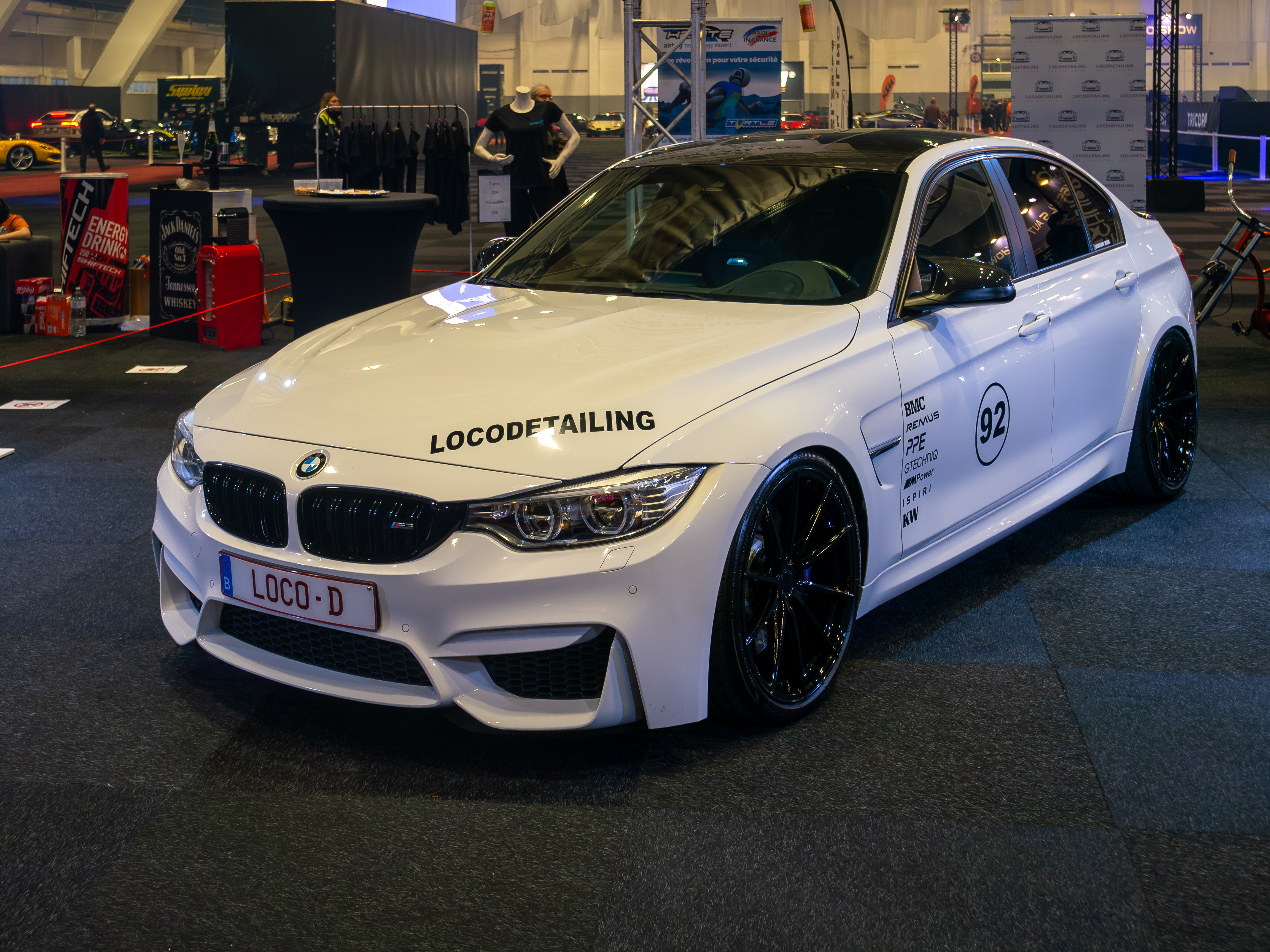
BMW M3
"There's going to be an electric version of the BMW M3 for the first time."
They’re saying BMW is planning an electric M3. Since the M3 is known for being a sporty, driver-focused car, it’s a big deal to see how BMW will translate that to an EV.
The hosts mention an electric version of the BMW M3, which would be a major shift for BMW’s performance lineup. The M3 name is strongly associated with high-performance driving dynamics, so an EV M3 would be a notable test of whether electric tech can deliver that same “sports sedan” feel.
straight six
"Yeah, people who love those great straight six and before that V8 engines, you know, that have been in those M3s for so long, are they really going to be happy with?"
A “straight six” is an engine with six cylinders in a single line. People often like them because they can sound smooth and feel balanced, and the hosts are saying that’s part of what makes certain performance cars special.
“Straight six” refers to an inline-six cylinder engine layout. The hosts are pointing to the emotional appeal and driving character of inline-six engines (and earlier V8s) as part of why some enthusiasts may resist electrified replacements.
V8 engines
"Yeah, people who love those great straight six and before that V8 engines, you know, that have been in those M3s for so long, are they really going to be happy with?"
A V8 is a powerful engine type with eight cylinders arranged in a V shape. The hosts are bringing it up because many fans connect the “feel” and sound of V8s with performance cars like the M3.
A V8 is an engine with eight cylinders arranged in a “V” shape. In this discussion, the V8 is referenced as part of the traditional powertrain identity that enthusiasts associate with certain BMW M cars, and the hosts are questioning whether electrification can replicate that appeal.
electric motor that's going to be so much heavier
"I mean, I'm sure it'll have a Brazilian horsepower, but with, you know, with a car, with an electric motor that's going to be so much heavier. For that, I'm not saying that I struggled to see why anybody buys an EV clearly..."
EVs often weigh more because of the battery. That extra weight can change how the car handles and feels, so the hosts are saying it might not be as exciting as the lighter, traditional performance versions people love.
This is about how EV powertrains can add mass—especially from the battery pack—changing vehicle balance, ride/handling feel, and performance dynamics. The hosts are arguing that even if an EV can be fast, the added weight may make it harder to deliver the same “thrilling” experience.
Brazilian horsepower
"I mean, I'm sure it'll have a Brazilian horsepower, but with, you know, with a car, with an electric motor that's going to be so much heavier."
They’re joking about horsepower numbers—basically saying the EV might still be rated as powerful. But the point is that power on paper doesn’t automatically mean the car will feel as exciting to drive.
“Brazilian horsepower” is likely a tongue-in-cheek reference to horsepower figures being quoted in a way that may not reflect real-world performance or feel. In context, it’s used to suggest the EV might still have strong power numbers, even if the driving experience changes due to weight and character.
reputational damage
"Because every time they do something like that, if it doesn't work, it's not just you've lost the sales, there's a certain reputational damage as well, that BMW has abandoned, you know, a very substantial kernel of its identity."
If a company makes a big change and customers don’t like it, the brand can lose trust and excitement. The hosts are saying BMW could hurt its image if electrifying the “M” formula doesn’t work.
Reputational damage refers to how a brand’s perceived identity can take a hit if a major strategy (like electrifying a performance line) doesn’t land with customers. The hosts argue that BMW risks not just lost sales, but also weakening the “M” brand’s core appeal.

Porsche Taycan
"I haven't driven an electric car that's thrilling to drive yet, even the very best of the Porsche Taycan's as well. They're very impressive and I like them."
The Porsche Taycan is Porsche’s all-electric performance sedan. The hosts mention it as an example of a top-tier EV that still doesn’t feel “thrilling” in the same way as traditional performance cars, highlighting how instant torque and refinement don’t automatically equal the same driving excitement.

C63
"A V8 engine. It is. And the trouble is the previous, every previous C63 had the V8... hard sell to take it away... As we understand it, the four cylinder C63 is going to be dropped soon and replaced probably by a six cylinder car."
The “C63” is a Mercedes-AMG performance version of the C-Class. People often buy it specifically for the V8 sound and feel, so when Mercedes changes the engine layout, some buyers feel like the car lost part of its identity.
“C63” refers to the Mercedes-Benz AMG C-Class performance model. In this segment, they’re discussing how earlier C63 versions used a V8, and how a newer direction (a four-cylinder, and possibly a six-cylinder later) is changing what buyers expect from the car’s character.
hybrid component
"But it's a V6, most of its predecessors were V8 and it's got a big hybrid component."
A hybrid component is the electric part of a hybrid car—usually a motor and battery—that helps the engine. The hosts are saying some buyers worry about how reliable and expensive that electric system might be over many years.
A “hybrid component” refers to the electric motor/generator and battery system that work alongside the engine. Here, the hosts point out that the Ferrari 296 GTB has a hybrid system, and they later connect buyer concerns about long-term hybrid maintenance to weaker residual values.

Ferrari F8 Tributo
"And actually you, so it's immediate predecessor was the F8 Tributo, V8 car, twin turbo, and I looked at the cheapest examples of each..."
The Ferrari F8 Tributo is an older Ferrari supercar that uses a V8 engine (not a hybrid). The hosts bring it up because it’s the “previous generation” style of Ferrari before the newer hybrid approach.
The Ferrari F8 Tributo is a V8-powered supercar that the hosts call out as the 296 GTB’s immediate predecessor. They specifically mention it as a twin-turbo V8, then compare used pricing between the F8 and the newer hybrid 296 GTB.
twin turbo
"...the F8 Tributo, V8 car, twin turbo, and I looked at the cheapest examples of each..."
Twin turbo means the engine has two turbochargers that help it make more power. More air gets pushed into the engine, so it can feel stronger without needing a bigger engine.
“Twin turbo” means the engine uses two turbochargers to force more air into the cylinders, improving power and throttle response. In this segment it’s used to describe the Ferrari F8 Tributo’s V8 setup, contrasting it with the 296 GTB’s hybridized approach.

Ferrari 296 GTB
"The cheapest 296 GTB, a 2023 car with just two and a half thousand miles is up for 186,000 pounds."
The Ferrari 296 GTB is a high-end Ferrari supercar that uses a V6 plus an electric/hybrid system. It’s the kind of car where the “newer but cheaper” vs “older but more expensive” comparison can tell you a lot about how buyers value modern Ferraris.
The Ferrari 296 GTB is a modern Ferrari supercar built around a V6 engine paired with a hybrid system. In this segment, the hosts compare it to the preceding Ferrari model and discuss how pricing and demand differ despite the newer car having far fewer miles.

Land Rover Defender Octa
"You know, the Land Rover Defender Octa, the most powerful version of the Defender, the most expensive version, people want it."
The Land Rover Defender Octa is a high-performance, top-spec version of the Defender. The point here is that people are still excited to buy new, powerful versions of big SUVs.
The Land Rover Defender Octa is the most powerful, top-tier version of the Defender lineup mentioned in this segment. The hosts use it as an example of strong demand for new cars with high-capacity, multi-cylinder engines—suggesting buyers still want big performance even in a tough market.
maintenance of the hybrid over time
"...And how much do you think it is nerves about maintenance of the hybrid over time?"
They’re talking about whether the hybrid parts will be reliable and affordable to fix years from now. Even if the car is great today, buyers may hesitate if they think the hybrid system could become costly later.
This refers to concerns about how expensive or troublesome the hybrid system (battery, electric motor, cooling, and control electronics) might be as the car ages. The hosts connect this worry to weaker sales and poor residuals for hybrid-equipped performance cars like the Ferrari 296 GTB.
straight four
"Because I think if Ferrari did a Mercedes and went from a V8 to a straight four, that I can understand people just going, well, forget it. That's not a Ferrari."
A straight four is an engine with four cylinders in a single line. Here it’s mentioned because changing from a V8 to a smaller four-cylinder can make some fans feel the car isn’t what they expect from Ferrari.
A “straight four” is an inline four-cylinder engine layout. The hosts are using it as an example of Ferrari moving away from its traditional V8 configuration, which some buyers interpret as a loss of character or brand identity.
Request an Explanation
Heard something you'd like explained? We'll add it to this episode.
Sign in to request explanations for terms you heard.
Want to learn more?
Browse our glossary for plain-English explanations of automotive terms, jargon, and concepts.
Help improve this episode
See something that's not quite right? Our annotations are AI-generated and can sometimes miss the mark. Click the flag icon on any annotation to suggest a correction.