About this episode
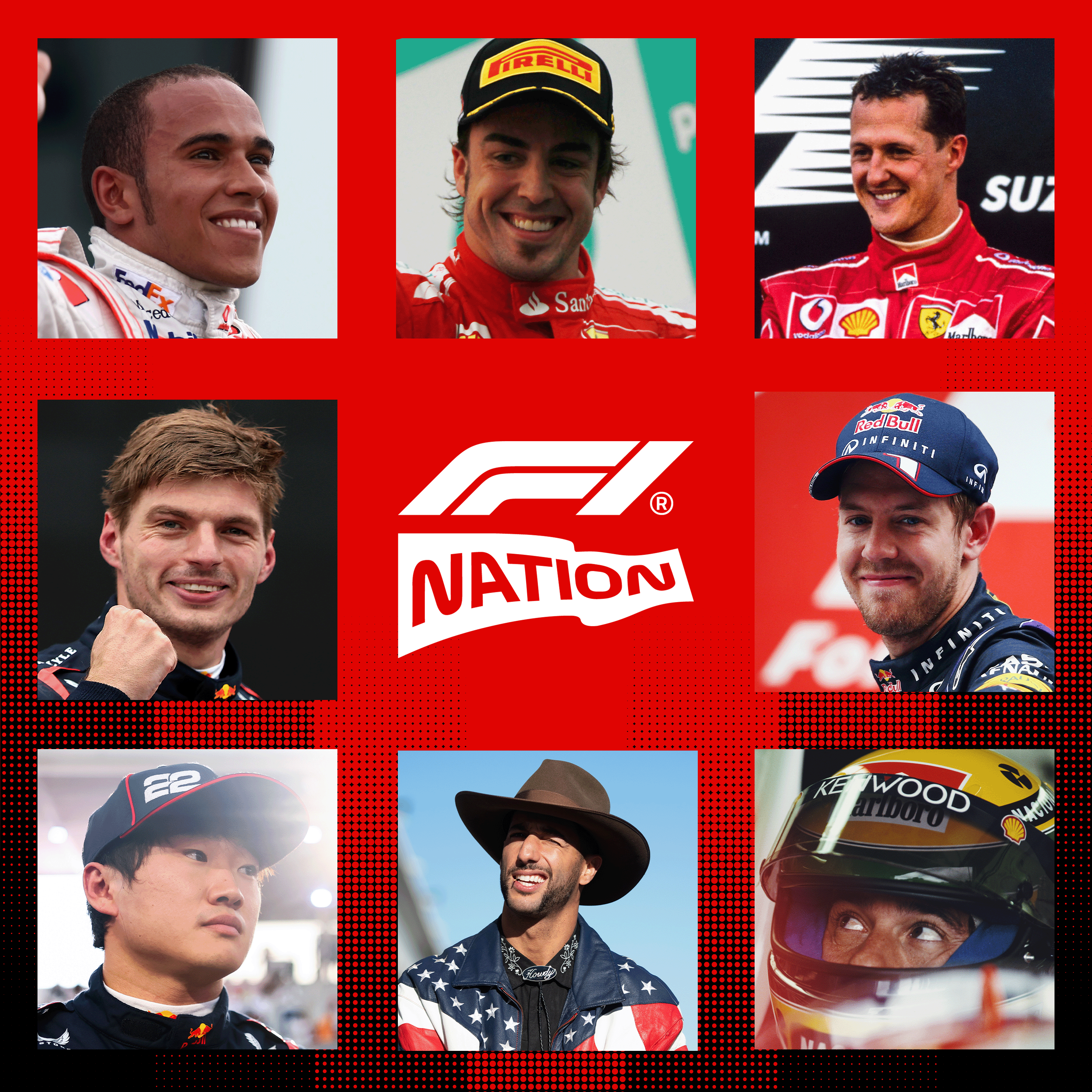
The F1 Nation crew debates what “perfect” looks like in a driver, arguing no one is flawless and that perfection is a blend of physique, attitude, intelligence, feel for grip, and racecraft. They compare traits from Alonso, Schumacher, Verstappen, Hamilton, Senna, and Vettel—down to how drivers manage teams, handle media, and push rules. The discussion also turns to the 2027 driver market, focusing on how Verstappen’s contract could trigger domino moves. They wrap with favorite Bahrain and Saudi memories, from Grosjean’s survival to 2021’s title-tension finale.
Verstappen's mentality? Schumacher's teamwork? Alonso's intelligence? Tsunoda's physique? Tom Clarkson is joined by former F1 driver Jolyon Palmer and IndyCar race winner James Hinchcliffe to build the ‘perfect’ F1 driver.
They debate the key attributes needed to become the best in the pinnacle of motorsport and which drivers from past and present are closest to perfection.
Plus, the guys chat about the possible driver market ramifications if Max Verstappen does leave Red Bull Racing and they share their standout moments from the Bahrain and Saudi Arabian Grands Prix over the years.
Listen to more official F1 podcasts
F1 Beyond The Grid - in-depth interviews with F1's biggest names
F1 Explains - expert answers to your F1 questions
This episode is sponsored by:
Indeed
Get a £100 sponsored job credit at indeed.com/f1nation
Quince
Refresh your wardrobe with Quince. Go to quince.com/nation for free shipping and 365-day returns.

Max Verstappen
"Hinch, what about attitude? I'm going to go with like the Max Verstappen approach and attitude in the car."
They’re talking about Max Verstappen’s mindset and driving style—how he approaches races and pushes the car. The idea is that attitude and confidence can be as important as the car’s speed.
The host mentions the “Max Verstappen approach and attitude in the car,” framing Verstappen’s driving style as part of what makes a driver “perfect.” Verstappen is known for aggressive, high-commitment driving and strong racecraft—traits that can influence how a car is driven at the limit.
Red Bull
"If Max leaves Red Bull, where's his most likely destination? I think Max only leaves if he's going to Mercedes."
They’re talking about Red Bull as the team Max Verstappen drives for. If a driver changes teams, it can change the car they get and how competitive they are.
Red Bull is mentioned in the context of Max Verstappen potentially leaving the team. In F1, team identity matters because the car’s design philosophy, engineering approach, and resources can strongly affect how a driver performs across seasons.
Mercedes
"I think Max only leaves if he's going to Mercedes. The only other one I'm thinking is you're going to be surprised by this but Ferrari."
They’re saying Mercedes would be the most likely team for Max Verstappen if he left Red Bull. In F1, switching to a powerhouse team like Mercedes usually means getting a different car and different engineering support.
Mercedes is named as the most likely destination if Max Verstappen were to leave Red Bull. Mercedes is one of F1’s historically dominant constructors, and a move there would imply a shift to a different technical base, team culture, and car development direction.
Ferrari
"The only other one I'm thinking is you're going to be surprised by this but Ferrari."
They’re suggesting Ferrari could be another possible team for Max Verstappen. The point is that team changes in F1 can be huge because the car and engineering team are different.
Ferrari is mentioned as an alternative destination to Mercedes if Max Verstappen were to leave Red Bull. Ferrari’s role in F1 is significant because it’s a major constructor with a distinct approach to car development, which can affect how a driver’s strengths translate into results.
race engineer
"Now, last week we reacted to the news that Max Verstappen's race engineer, Giampiaro Lambiassi, is leaving Red Bull and joining McLaren."
In F1, the race engineer is the person in the garage who talks to the driver during the race. They use the car’s data to help the driver decide things like how hard to push and how to manage tires.
In Formula 1, a race engineer is the key technical link between the driver and the team. They help translate data into driving instructions—like setup preferences, tire strategy, and how to manage pace over a stint.
McLaren
"Now, last week we reacted to the news that Max Verstappen's race engineer, Giampiaro Lambiassi, is leaving Red Bull and joining McLaren."
McLaren is another major Formula 1 team. If a high-level engineer joins them, it can change how they set up the car and support the driver.
McLaren is a historic F1 constructor and a current front-runner with a strong technical base. The mention of McLaren in connection with Verstappen’s engineer underscores how teams compete not just with cars, but with expertise and communication.
team principal
"I asked both of you if Max were to leave and you were Red Bull team principal Laurent Mechiers who would you pick to replace him?"
A team principal is the top leadership role at an F1 team, responsible for overall direction and major decisions. They oversee strategy, staffing, and long-term planning—like driver selection and how the team responds to personnel changes.
Laurent Mechiers
"I asked both of you if Max were to leave and you were Red Bull team principal Laurent Mechiers who would you pick to replace him?"
They’re imagining Laurent Mechiers as the person running Red Bull. The idea is that the team’s top leader would decide who replaces a star driver.
Laurent Mechiers is referenced as the Red Bull team principal in a hypothetical scenario. The point is to frame driver replacement decisions as something led by top management rather than only by engineering or marketing.
Leclerc
"J.P., you said Leclerc, Hinch, you said Piastri. And that micro disagreement got me thinking..."
Leclerc is a top Formula 1 driver. In this conversation, he’s mentioned as one possible choice if Verstappen were to leave a team.
Leclerc refers to Charles Leclerc, a leading F1 driver often discussed in the context of team lineups and potential replacements. The transcript uses him as an example in a hypothetical “who replaces Verstappen” scenario.
Piastri
"J.P., you said Leclerc, Hinch, you said Piastri. And that micro disagreement got me thinking..."
Piastri is a current Formula 1 driver. Here, he’s brought up as the other option in a debate about who would replace Verstappen.
Piastri refers to Oscar Piastri, another prominent F1 driver. The hosts use him as the alternative pick in their hypothetical driver-replacement debate, illustrating how different drivers are valued for different strengths.
perfect F1 driver
"So let's start today's show by discussing what makes the perfect F1 driver. First of all, does that person exist?"
They’re debating what it would take to be the best possible F1 driver overall. The key point is that being great isn’t just about being fast—it’s also about being consistent and making the car work well across a whole race.
The “perfect F1 driver” idea is about balancing many different skills at once: raw speed, consistency, tire management, racecraft, and feedback to engineers. The hosts also frame it as a moving target—because improvements in tools (like AI) and changing regulations mean “perfect” evolves over time.
AI
"If you put AI out there in some form, if you ticked all the boxes to 100, they'll be better than the almost perfect best drivers out there."
They’re talking about AI as a hypothetical super-driver. The idea is that if AI could do everything perfectly using data, it might beat the best humans.
The hosts mention AI as a hypothetical benchmark for driver performance—suggesting that if an AI system could “tick all the boxes,” it might outperform even the best human drivers. In racing, this relates to how data, prediction, and control could theoretically optimize driving inputs.
prescribed weight limit for the driver (80 kilos)
"Okay, there's now a prescribed weight limit for the driver. ... in the era before we had the weight limit that's now set at 80 kilos."
In Formula 1, there’s a rule that sets a minimum weight for the driver. That means drivers can’t be too light, and teams have to plan around it—so being very small or very light doesn’t automatically mean you’ll be faster.
F1 uses a minimum driver weight rule to keep cars and driver performance more comparable. The commonly cited limit is 80 kg (driver plus required equipment), which affects how teams manage ballast and how drivers train and maintain weight.
Adrian Newey wants the smallest, lightest driver
"Well, Adrian Newey will tell you that you want the smallest, lightest driver. Okay, there's now a prescribed weight limit for the driver."
They’re saying Adrian Newey believed that having a smaller, lighter driver could help the car. In racing, even small weight differences can affect how the car handles.
The speaker attributes a design/performance preference to Adrian Newey: smaller, lighter drivers can help car balance and efficiency. In F1, driver mass and fit can influence how the car is packaged and how the team sets up weight distribution.
jockeys driving these cars
"But back in the day, it was all about having jockeys driving these cars. That's what Adrian wanted."
They’re describing an older idea that smaller, lighter drivers had an advantage. Before modern weight rules, being “jockey-sized” could help the car feel better and be faster.
The “jockey” comment refers to the historical preference for smaller, lighter drivers in eras before strict weight limits. In F1, driver mass influences car balance and performance, so teams and drivers often chased lower body weight.
mandated minimum weight limit
"...pushing for, let's have a mandated minimum weight limit because it's not healthy. We're not eating any calories..."
This is the rule that stops drivers from trying to be dangerously underweight. It’s meant to protect health and also to make racing fairer.
The “mandated minimum weight limit” is a health-and-performance regulation that prevents drivers from becoming dangerously underweight. It changes the competitive balance by reducing the advantage that very small drivers used to have.
dehydrated into the races
"...because it's not healthy. We're not eating any calories. We're going dehydrated into the races."
They’re saying that in the past, some drivers tried to get lighter by cutting weight in unhealthy ways, including dehydration. The rule changes were meant to stop that.
The transcript describes a past practice of extreme weight cutting and dehydration to meet lower weight targets. That highlights why modern minimum-weight rules exist: to reduce unhealthy behavior and protect driver health.
80 kilos rule came in around 2018
"So now that rule came in, sadly, shortly after I stopped racing. ... it might have been even the year after in 2018..."
They’re talking about when the weight rule changed. Around that time, drivers had to stop chasing extreme weight loss because the rules set a floor.
The speaker suggests the driver weight rule (minimum 80 kg) was introduced around 2018. This timing matters because it marks a shift in how teams and drivers approached fitness, weight management, and competitive advantage.
weight down low
"But you still, if you want to be panicked about it, you still get weight down low... They still have to sit up. But I guess they've got a little bit of weight down low, which must be a marginal gain."
They’re talking about putting the driver’s weight as low as possible in the seat. That can help the car feel more stable and balanced, which may give a tiny speed advantage. It’s not about “more weight,” it’s about where the weight sits.
The discussion is about keeping a driver’s mass as low as possible in the cockpit. In racing, lower mass can help the car’s center of gravity and can slightly improve balance and handling. They’re treating it as a small but measurable performance advantage.
perspective of curbs
"But then sometimes, you know, taller drivers sit a bit higher and they get a better viewpoint of curbs and those sort of things as well... So you've still got that weight low down, but you've got a little bit more height in the car to get the perspective as well."
If you sit higher, you can often see the track edges and curbs better. That can make it easier to judge where the car is relative to the kerb, which helps you drive more confidently and consistently. Less guesswork can mean faster lap times.
Driver height affects how well they can see curbs and track edges, which can influence braking points, corner entry, and how aggressively they can use kerbs. Better visibility can reduce uncertainty and help the driver place the car more precisely. The hosts connect this to performance differences between taller and shorter drivers.
aerodynamicist
"I bet there's an aerodynamicist somewhere back at Mercedes HQ thinking, man, I wish that helmet sat a little bit lower in the car. So I still, from an aero standpoint, think, you know, maybe it's an advantage on street circuits."
An aerodynamicist is the person who works on how air moves around the race car. They look for ways to make the car “cut through” air more efficiently. The idea is that if the helmet sits lower, it can slightly improve airflow and reduce drag.
An aerodynamicist is the specialist who designs and optimizes a car’s airflow to reduce drag and manage downforce. Here, they’re imagining Mercedes engineers wanting the driver’s helmet to sit lower to improve aerodynamic efficiency. Even small changes in the driver’s position can affect airflow around the cockpit.
street circuits
"So I still, from an aero standpoint, think, you know, maybe it's an advantage on street circuits."
Street circuits are temporary or semi-permanent tracks built on city streets, typically with tight corners, walls, and limited runoff. The hosts suggest aerodynamic advantages from driver positioning may matter more on street circuits because the racing line is constrained and small efficiency gains can compound over many laps. It’s a track-type-specific argument about where aero and visibility pay off.
on track attitude
"I think you have to have the on track attitude. Then I think you have to have the off track attitude."
This is basically how a driver acts when the race is happening. It’s about how hard they push, how risky they get, and how they try to win while still staying within the race rules.
“On track attitude” refers to how a driver behaves during racing—how aggressively they attack corners, manage risk, and apply pressure to opponents. In F1, it’s often about balancing speed with control while staying within the rules.
off track attitude
"Then I think you have to have the off track attitude. I do think those two can be different."
This is the driver’s mindset away from the track—how they train, think, and deal with stress. The idea is that who they are off-track can show up in how they race.
“Off track attitude” is the driver’s mindset and behavior outside the car—how they prepare, communicate, and handle pressure. The hosts are arguing that a driver’s personality outside the cockpit can influence how they drive inside it.
relentless pursuit of the absolute nth degree driving
"In terms of that relentless pursuit of the absolute nth degree driving to within that fraction of a limit of the rules, sometimes maybe once or twice a season beyond."
They’re describing a driver who’s obsessed with squeezing out every last bit of speed. Instead of being “good enough,” they aim for the absolute best performance, even if it’s only a tiny improvement.
This phrase describes an F1 driving approach focused on extracting the maximum possible performance—down to tiny margins. It implies consistently pushing right up to the limit of grip, braking, and tire behavior, while also respecting the rulebook.
fraction of a limit of the rules
"In terms of that relentless pursuit of the absolute nth degree driving to within that fraction of a limit of the rules, sometimes maybe once or twice a season beyond."
They mean pushing right up to the boundary of what the rules allow. In F1, sometimes the fastest approach is also the one that tests how strictly the rules are enforced.
This refers to operating at the edge of what the regulations allow—where performance gains come from exploiting gray areas. In F1, teams and drivers can be affected by how far they can push setup and tactics without triggering penalties.
pushed the rules too far
"What they've both got in common is a level of controversy where they've pushed the rules too far because they've been so desperate for executing the absolute maximum rather than necessarily accepting on any given day that it's not on."
They’re talking about breaking or bending the rules more than the sport intended. In F1, that can cause penalties and arguments, because the goal becomes winning at all costs.
This describes a pattern where a driver or team extracts performance by pushing regulations beyond the intended spirit. In F1, that can lead to penalties, controversy, and rule changes—especially when the pursuit of maximum performance overrides acceptance of “what’s possible today.”
ethics and morals
"So that's where I don't know the the line of how you want to be as a racing driver... I guess it depends on your own ethics and morals there with how much you're willing to risk."
They’re talking about how a driver’s personal values affect how they race. Some drivers are more willing to take risky chances, while others avoid actions that could hurt others or break rules.
The hosts connect racing decisions to personal ethics—how far a driver is willing to go in pursuit of victory. In F1, that often shows up as how aggressively a driver defends, whether they accept contact, and how they balance risk versus rule compliance.
taking penalties
"You know, there was a lot of big moments where he was getting penalty after penalty or at least conversational penalties in the past as well... This could be a risky one... you see drivers that will take chances on taking penalties on getting it wrong to actually win a race that other people wouldn't win."
In F1, if a driver breaks a rule, they can get a penalty that costs time or positions. Sometimes a driver thinks the penalty won’t ruin their race, so they’ll still try a bold move to win.
In Formula 1, “taking penalties” means accepting a time or position penalty for breaking race rules (like track limits, unsafe driving, or causing a collision). Some drivers and teams decide that the penalty is still worth it if it keeps them in contention for the win.
the last 1%
"I will find a way to make something work that I think other drivers probably don't quite have that last 1%... Whether you necessarily want the last 1% is it down to a personal preference, I guess."
“The last 1%” refers to the final, marginal gains that separate top drivers from the rest—small improvements in decision-making, braking points, tire management, and racecraft. It’s often about pushing right up to the limit without crossing into mistakes or rule violations.
passion
"Is it an ice cold attitude or is it is it passion?... For me, it's like it's just a clinical."
They’re talking about how much drive and emotion a driver has for winning. Some people race with intense passion, while others focus more on a calm, calculated approach.
“Passion” here is framed as the emotional drive behind racing—wanting success intensely enough to keep pushing. The hosts contrast it with a more “clinical” approach, suggesting different ways drivers find motivation and manage risk.
ice cold attitude
"Is it an ice cold attitude or is it is it passion?... For me, it's like it's just a clinical."
They’re describing a mindset where you stay calm instead of getting emotional. That helps a driver make smarter choices when the race gets tense.
An “ice cold attitude” describes a calm, controlled approach under pressure—staying rational when deciding whether a move is worth the risk. In racing, that can translate to better timing, fewer emotional errors, and more consistent decision-making.
never settling attitude
"It's never settling... Yeah, it's the never settling attitude, right? Whether you're racing for seventh and eighth or first and second, the attitude from this driver behind the wheel is the same."
A “never settling” attitude is the mindset of continuously pushing for better outcomes rather than accepting whatever position you’re currently in. In racing, that can mean taking calculated risks, staying aggressive in overtakes, and constantly looking for opportunities even when the race is going “okay.”
Schumacher and Verstappen
"[727.2s] Okay, so in car, you guys are mentioning Schumacher and Verstappen. [733.5s] What about outside the car?"
They’re using famous F1 drivers—Schumacher and Verstappen—as examples. The point is to talk about what teams value in a driver beyond just driving fast.
The hosts bring up Michael Schumacher and Max Verstappen as examples while discussing what makes an “ideal” F1 driver. In this context, it’s less about their specific cars and more about the mindset and off-track behavior that teams expect from top drivers.
off track who you are within the race team
"[757.7s] And again, I think this one kind of needs to be cut down into two different categories because I look at it as off track who you are within the race team. [766.6s] And then off track who you are with that media kind of hat on and all the commitments required there in mind."
They’re saying being a great driver isn’t only about lap times. It’s also about how you act and work with your team—like communicating well and helping the engineers do their jobs.
This frames driver performance as not only what happens on track, but also how a driver behaves inside the race team. In F1, that includes communication, feedback quality, professionalism, and how well the driver works with engineers and strategists to execute race plans.
off track who you are with that media kind of hat on
"[766.6s] And then off track who you are with that media kind of hat on and all the commitments required there in mind. [773.9s] If we want to start with the former, you know, the attitude that these drivers bring to the race teams has a tremendous effect and a tremendous impact."
They’re talking about the public side of being an F1 driver. Beyond racing, you also have to do interviews and media work, and teams care how you handle that.
This highlights the “media obligations” side of being an F1 driver—public appearances, interviews, and sponsor-facing commitments. Modern F1 drivers are brand ambassadors as much as athletes, and teams consider how effectively drivers represent the team and handle public scrutiny.
rallying the troops
"Whatever you thought of them in front of a microphone, whatever you thought of them, you know, behind the wheel, Michael had a unique talent in really rallying the troops, right? Really getting the race team behind him demanding and expecting the absolute best out of them..."
It means getting the whole team excited and focused. In racing, the driver can influence how hard and how smart the team works together, which helps results.
“Rallying the troops” describes how a driver motivates and unifies the whole race team—engineers, mechanics, strategists—so everyone is aligned on performance goals. In F1, that leadership can directly affect execution on race day, not just driver skill.
basics of what's going to make you quicker
"And it's hard work doing that anyway, before you even get on to, like, your driving and focusing on the absolute, you know, your basics of what's going to make you quicker."
“Basics” here points to foundational driving and feedback habits that improve lap time: consistent technique, clear communication, and disciplined execution. In F1, small improvements in how you drive and how you relay data can compound into meaningful performance gains.
coming in and just understanding the people in the team
"And I think Seb was a driver that was very good from early on at coming in and just understanding the people in the team."
They’re describing how a top driver learns the team quickly. It’s not just about driving fast—it’s about communicating well so the whole group can improve the car together.
This describes a key F1 concept: driver-team integration. The “perfect” driver isn’t only fast on track; they also communicate effectively, understand how the garage and factory operate, and help translate feedback into faster car development.
title-winning-ish positions
"Obviously, then he had the couple of years where he had quite a few spins and incidents from title-winning-ish positions and then it starts to unravel a little bit."
They mean Vettel was often running in spots that could lead to a championship. But when crashes or mistakes happen from those positions, you lose big points and momentum.
“Title-winning-ish positions” is a shorthand for being in championship-contending places (or close to them) when things go wrong. In F1, spins and incidents from strong positions can quickly turn a title challenge into a lost points haul.
spins and incidents
"Obviously, then he had the couple of years where he had quite a few spins and incidents from title-winning-ish positions and then it starts to unravel a little bit."
They’re talking about moments where the driver loses control (“spins”) or gets into trouble (“incidents”). In F1, even one of these can ruin a race because you can lose time, positions, or the whole result.
“Spins and incidents” refers to on-track mistakes or contact that lead to loss of control, damage, or retirement. In F1, these events are especially costly because they can happen during qualifying or races when the car is already optimized for performance.
pop culture zeitgeist
"he brings an attention and kind of bring... I think he really helped bring F1 into sort of the pop culture zeitgeist, right?"
“Pop culture zeitgeist” just means what’s popular and talked about in everyday culture. They’re saying F1 became more mainstream because top drivers helped it show up in the broader public conversation.
“Pop culture zeitgeist” means the dominant trends and conversations in mainstream culture at a given time. The hosts argue that certain star drivers (like Lewis Hamilton) helped bring F1 into that mainstream spotlight, increasing attention beyond traditional motorsport fans.
Lewis
"and to do more to help grow the sport, I think Lewis was great in that... So Lewis brings a huge amount to Ferrari..."
“Lewis” refers to Lewis Hamilton, whose public profile and off-track efforts are discussed as part of what makes him valuable to the sport and to teams. The segment contrasts his media/brand impact with what actually translates into lap time.
Lando Norris
"And this might be an unpopular take, but I'd say a little bit of Lando Norris... because what I love out of Lando is the honesty that you get when the microphone's in front of him."
Lando Norris is discussed as an example of a driver whose honesty in interviews breaks from the usual PR script. The hosts connect that communication style to how fans perceive drivers and how teams evaluate a candidate beyond racing performance.
PR mold
"Drivers for so long were just beaten into this kind of PR mold of here's the line you have to say, here's what you can and can't say, things like that."
“PR mold” refers to the tightly controlled messaging drivers are often expected to deliver to media—what they can say, what they can’t, and the “approved” lines. The hosts argue Norris stands out by being more candid, which changes how fans connect with drivers.
Daniel Ricardo
"...because I was thinking when you talk like media personalities, how people are in front of camera and Daniel Ricardo is someone that springs to mind."
“Daniel Ricardo” is a reference to Daniel Ricciardo, whose media persona is described as energetic and character-driven. The hosts argue that such personality can boost visibility and fan engagement, but may not directly improve racing results.
personal brand
"It's important for their own personal brand. But if I'm a team looking to sign someone, I guess the brand is important."
“Personal brand” is the idea that a driver’s public image—how they speak, behave, and connect with fans—can influence opportunities and team decisions. In this segment, the hosts distinguish brand value from direct racing value, suggesting teams may care about both.
split
"It doesn't necessarily help you on the track. So there's a sort of split there with it's nice to have someone that's got a big personality..."
They’re describing a disagreement between two things: being likable/marketable versus actually helping the team win races. The hosts think both matter, but not equally.
The “split” is the hosts’ framing of two different evaluation criteria: personality/brand versus on-track impact. They suggest it’s good to have a driver with charisma, but teams still need to consider what actually helps performance.
correlation between success in a Formula One car and intelligence
"But then is there definitely a correlation between success in a Formula One car and intelligence? I don't know if there's that much correlation and it depends how you define intelligence. But an ability to absorb information and react to it? Of course. That's like the most important thing in the game, isn't it?"
They’re asking a big question: does being smarter (or learning faster) really make you win in Formula 1? In reality, winning depends on many things, but drivers who can quickly understand what’s happening and adjust tend to do better.
The hosts debate whether “intelligence” actually correlates with success in Formula 1. In F1, success is heavily influenced by car performance, team strategy, and driver skill, but the driver’s ability to process data, learn quickly, and react under pressure can look like “intelligence.”
driver chatter
"And when you hear all the driver chatter and everything, is that necessarily... Is that intelligence or is that having an ability to compute things? I guess I'm rambling now, but maybe that is a part of it."
“Driver chatter” refers to the constant communication between the driver and the team during sessions—describing grip, balance, braking feel, and what the car is doing. The segment links it to “intelligence” or the ability to compute and interpret feedback in real time.
TC
"...I think I know what you're trying to say there, TC, and I do agree."
“TC” sounds like a nickname for someone in the conversation. It doesn’t appear to be a car or racing technical term in this excerpt.
“TC” is referenced as a person the speaker is agreeing with, likely shorthand for a co-host or guest. In this segment it functions as a conversational marker rather than a technical F1 term.
racing intelligence
"...where I raced against drivers that were just, they were massively talented... They had no idea why they were fast. They had no idea how they were fast... So to me, that racing intelligence, that driving intelligence comes from that understanding of the car."
It’s the skill of figuring out what the car is doing and how to drive it better. Instead of just being naturally quick, the driver can “read” the car and improve it over time.
“Racing intelligence” here means the ability to understand what’s happening in the car and translate that into faster driving. It’s not just raw talent—drivers need to diagnose why they’re fast (or not) and adapt when the car isn’t perfect.
understanding of the car
"So to me, that racing intelligence, that driving intelligence comes from that understanding of the car. Formula cars are a very complex machine, understanding how it works at different phases of a corner or different phases of a stint."
They’re saying top drivers don’t just drive—they understand how the car behaves in different situations. That helps them make better decisions mid-corner and across a whole race stint.
The hosts connect driver performance to understanding the car’s behavior across different corner phases. In F1, that means knowing how grip, balance, and response change as fuel load, tire condition, and aerodynamic effects evolve.
different phases of a corner
"Formula cars are a very complex machine, understanding how it works at different phases of a corner or different phases of a stint."
A corner isn’t one single moment—it has stages. Great drivers handle braking, turning, and accelerating in a way that matches what the car needs at each stage.
“Different phases of a corner” refers to how a car’s needs change from entry to apex to exit. F1 setups and driver inputs are tuned for braking stability, turn-in response, and traction on exit—so a driver’s intelligence shows up in how consistently they manage each phase.
different phases of a stint
"Formula cars are a very complex machine, understanding how it works at different phases of a corner or different phases of a stint."
A stint is the time you spend on track between pit stops, and the car changes as the tires wear and fuel runs down. Good drivers adapt their driving style as conditions evolve.
“Different phases of a stint” highlights that performance changes over time due to tire wear and temperature, fuel burn-off, and evolving car balance. Drivers must adjust their technique as the car’s grip and balance shift during the stint.
aerodynamic engineering
"You need to have a bit of a grasp of engineering, of mechanical engineering, of aerodynamic engineering."
In F1, the car’s shape and airflow are a big deal. Aerodynamics help the car stick to the track, especially in corners, and it can change depending on speed and how the car is positioned.
Aerodynamic engineering in F1 focuses on how airflow creates downforce and drag, which directly affects cornering grip and straight-line speed. Because aero performance depends on speed, ride height, and car attitude, drivers often need to understand how aero changes through a lap and across a stint.
mechanical engineering
"You need to have a bit of a grasp of engineering, of mechanical engineering, of aerodynamic engineering."
Mechanical engineering is about how the car’s parts work together—especially the suspension and how tires grip the road. It affects how the car responds when you steer, brake, or accelerate.
Mechanical engineering here points to how the car’s physical systems—suspension, tires, and chassis behavior—translate driver inputs into traction and balance. In F1, small mechanical changes can strongly affect how the car feels at turn-in, mid-corner, and under braking/acceleration.
maximize everything to that last 10th, 100th
"to be able to maximize everything to that last 10th, 100th is crucial."
In F1, races can be won or lost by tiny time differences. So teams work hard to squeeze out every small advantage from the car and the driver’s driving.
In F1, performance is often decided by fractions of a second, so teams and drivers focus on extracting every possible improvement. That means optimizing setup, driving technique, and how the car’s systems are managed lap after lap.
FP1
"because he was super intelligent and he sat in for me, Magnuson, back in the day in FP1s."
FP1 refers to the first Free Practice session of an F1 race weekend. It’s an early on-track opportunity for drivers to gather baseline data, test setups, and understand how the car behaves.
debrief
"he'd sit in the debrief and give the most thorough debrief for a guy that's just sat in the car."
A driver debrief is the structured discussion after a session where the driver reports what the car felt like and how it behaved. Teams use that feedback alongside telemetry to diagnose issues and refine setup and strategy.
Williams
"You know that Williams used to set an engineering test for all new drivers."
Williams is an F1 team with a strong engineering background. They apparently used to give new drivers a test to see how well they could understand technical information and work with the team.
Williams is a historic F1 team known for its engineering culture and driver development approach. The transcript mentions an engineering test for new drivers, highlighting how teams use structured evaluations to assess a driver’s ability to interpret data and communicate feedback.
engineering test for all new drivers
"there was a question that didn't make any sense. I think I got one thing wrong. It was loads of data traces, loads of plots and everything"
This sounds like a test where drivers have to look at technical information, like data and graphs, not just drive fast. The goal is to see whether they can understand what the car is doing and explain it clearly to the engineers.
The “engineering test” described sounds like a technical assessment where drivers interpret data and plots rather than just driving. In modern F1, the ability to understand telemetry and translate it into actionable feedback is a major part of performance.
data traces
"It was loads of data traces, loads of plots and everything, but it was a fascinating thing."
Data traces are basically graphs of what the car is doing over time. They help the team figure out why the car felt a certain way and where it could be faster.
Data traces are time-series recordings from the car’s sensors, showing how variables change during a lap or session. Drivers and engineers use them to pinpoint where performance is lost and to verify whether setup changes improved the car.
data trace / telemetry plots
"[1478.6s] You'd get like a data trace and there'd be all sorts of plots and one would be like, [1482.0s] let me know when the car goes over a bump and there'd be a damper plot that goes..."
Telemetry is recorded car data (like what the suspension and brakes are doing). A “data trace” is the timeline of that data, and the test is basically asking the driver to read it and figure out what happened.
A data trace with multiple telemetry plots is a way to analyze what the car did—often including suspension, braking, steering, and tire-related signals. The test described requires interpreting these plots to identify events like when the car hits a bump. This kind of analysis is important for modern driver development because it links driver actions to vehicle responses.
dampers
"[1478.6s] You'd get like a data trace and there'd be all sorts of plots and one would be like, [1482.0s] let me know when the car goes over a bump and there'd be a damper plot that goes..."
Dampers are the parts that control the suspension’s up-and-down movement. When the car hits a bump, dampers help keep the tires in contact with the road instead of bouncing.
Dampers (shock absorbers) control how the suspension moves and settles after bumps. The transcript references a “damper plot,” implying telemetry that shows damper movement/response over time. Understanding damper behavior helps drivers and engineers predict how the car will react to surface changes.
feel for grip
"[1521.9s] It's the big one, isn't it? It's like talent. [1526.2s] So it's a feel for grip and that's for me more than any of these sort of like your brain function, your physique."
Grip is how much the tires can “hold” the road. A driver with a good feel for grip can tell when the tires are close to losing traction, so they can go faster without spinning or sliding too much.
“Feel for grip” is a driver’s ability to sense how much traction the tires have at any moment. In F1, that comes from reading tire behavior and vehicle balance through steering, throttle, and braking inputs. Drivers who have it can push harder while staying stable and consistent.
microslides
"[1541.5s] Feel the microslides on the front axle, the rear axle. [1544.9s] Know then how much opposite lock or steering input, brake input, pedal input to catch the slides."
Microslides are very small slips at the tire-road contact patch. They’re like the tires “warning” you they’re about to lose grip, and a skilled driver can react before it becomes a full slide.
Microslides are tiny, brief moments when a tire starts to slip but doesn’t fully break traction. In F1, drivers use these signals to understand the car’s limit and adjust inputs to keep the car balanced. Being able to detect and manage microslides is part of extracting the last performance.
opposite lock
"[1544.9s] Know then how much opposite lock or steering input, brake input, pedal input to catch the slides. [1554.8s] That's the magic."
Opposite lock is when you turn the steering the opposite way of the car’s slide. It helps stop the slide from getting worse, but you have to do it at the right moment and not too much.
Opposite lock is steering input in the direction opposite the slide to help the car rotate back toward stability. It’s commonly used when the rear (or front) starts to step out under braking or cornering. Correct opposite lock timing helps the driver “catch” the car without overcorrecting.
seek time
"[1564.0s] Or let's say 60% of that is a natural feel, 30% of that is experience and seek time as well. [1571.1s] That's for me the magic beyond all of this."
Seek time is the time it takes a driver to “figure out” the car and start driving it at its best. A faster learner can get to the right feel and pace sooner, especially as conditions change.
“Seek time” here refers to how quickly a driver can find and repeat the correct setup/line for maximum performance—essentially the time spent getting into the right operating window. In F1, that can mean learning the car’s balance, tire behavior, and grip level so the driver can consistently hit the limit. It’s treated as a key part of driver effectiveness beyond raw talent.
Sergei Sorokin
"[1564.0s] Or let's say 60% of that is a natural feel, 30% of that is experience and seek time as well. [1571.1s] That's for me the magic beyond all of this. [1573.6s] So when I come up with the Sergei Sorokin example."
Sergei Sorokin is a real Formula 1 driver. The host brings him up as an example while talking about what skills make a driver great.
Sergei Sorokin is referenced as an example in the discussion about what makes a “perfect” F1 driver. The mention is likely used to illustrate how the traits discussed (grip feel, microslides management, learning speed) show up in real driver cases. The transcript doesn’t provide details here, but the name anchors the concept in a real-world context.
slicks
"And it's your ability to be quick without crashing, your ability to then be quick when it rains and you're on slicks and you need to just suddenly switch on the,"
Slicks are racing tires that have no tread grooves. They work best when the track isn’t wet, because they can’t handle standing water as well.
“Slicks” are tires with no tread pattern, designed for maximum contact and grip on dry or very dry track surfaces. In wet conditions, slicks can be dangerously low-grip because they can’t evacuate water like treaded tires.
being quick without crashing
"And it's your ability to be quick without crashing, your ability to then be quick when it rains and you're on slicks and you need to just suddenly switch on the,"
It’s not just about going as fast as possible. The top drivers can drive aggressively but still keep the car under control so they don’t spin or crash.
In Formula 1, “being quick without crashing” is about balancing speed with car control. The best drivers can push hard while staying stable and consistent, which is often more valuable than raw peak speed.
switch on the limit of this grip
"So I need to be on the limit of this grip now, but who the heck knows where the grip is?"
Tires have a “maximum grip” before they start sliding. The best drivers can feel when they’re near that limit and adjust their driving right away.
This describes the driver’s ability to quickly find and operate at the tire’s traction limit. Grip changes constantly with temperature, rubbering-in, and weather, so the driver must adapt instantly to avoid going over the edge.
on the limit of that grip
"knowing what the tires, what the car's saying to you and driving to the limit of that. And that's what, let me down because I didn't have it as much as the rest of them."
“On the limit” means the car is right at the edge of grip. Tiny steering or throttle changes can make it grip or slide.
Operating “on the limit” means the car is near maximum traction, where small inputs can cause big changes in behavior. It’s a hallmark of top-level driving because it requires precision and smoothness under uncertainty.

Dodge Challenger
"...ll of these scores and it makes him a formidable challenger. Then you've got Lewis, absolutely."
The Dodge Challenger is a performance car made by Dodge. It’s built to be fast, especially in straight-line driving, and it’s known for its strong engine options and sporty style. People bring it up when they talk about cars that can really “go up against” others.
The Dodge Challenger is a classic American muscle car known for its powerful V8 options and long-running, performance-focused design. It often comes up in conversations about cars that prioritize straight-line acceleration and a bold, iconic look. In a podcast context, it may be mentioned as a recognizable example of a “challenger” type vehicle—something that can compete strongly in its category.
feel the grip when the grip was on the lower side
"That would eventually get to within a tenth or two of them, but that ability to feel the grip when the grip was on the lower side, he would immediately, and then you look at the drives in the rain,"
This describes performance in reduced-traction conditions, where tires generate less usable grip. Drivers who excel here can manage weight transfer and throttle/steering inputs to keep the car stable and avoid sudden loss of traction.
racecraft
"And if there's one category I'll add to it to finish it off, it would be just pure racecraft, right? The wheel-to-wheel ability to battle come out on top."
Racecraft is how good a driver is at racing other cars, not just driving fast. It includes things like when to brake, where to position the car, and how to out-think rivals during the race.
“Racecraft” is the set of skills that let a driver win wheel-to-wheel battles—judging braking points, positioning the car, managing tire and fuel constraints, and anticipating opponents’ moves. It’s less about raw one-lap speed and more about decision-making under pressure across laps.
wheel-to-wheel ability
"The wheel-to-wheel ability to battle come out on top. He's, for me, as good as I've seen."
Wheel-to-wheel means racing right next to another car. The best drivers can do it while staying in control—so they don’t get pushed off line or lose time.
Wheel-to-wheel ability refers to how effectively a driver can race directly alongside another car without losing too much speed or causing contact. In F1, it often comes down to precise car placement, timing, and understanding how much grip and traction you’ll have at the moment of commitment.
Aston Alonso
"You know, I think back to Pico Alonso in 0506 and then even late Alpine, early Aston Alonso, still had some incredible races."
This is likely referring to Aston Martin, another F1 team. They’re saying Alonso was still great even after moving teams.
This appears to be a transcription error for “Aston Martin,” which is the F1 team associated with Alonso in the later part of his career. The hosts are pointing out that his racecraft stayed elite across different teams.
brake later than me
"He reads racecraft so well that he will calculate before you get to a corner, say, I'm going to brake here. If you brake later than me, fair play, but you won't turn the corner from there."
This is about braking timing. If you brake later than the other driver, you might not have enough space to turn properly, so you can run wide or go too deep—and the defender keeps the advantage.
The phrase highlights a common racing tactic: defending by forcing an opponent to brake later, which can leave them without enough distance to turn in cleanly. If the opponent can’t make the corner, the defender keeps position and may avoid contact by anticipating the inevitable lock-up/overrun or deep entry.
position his car... cover off the inside
"And the same when you look at his race starts, he will position his car so often just in the perfect spot where he'll cover off the inside."
It’s about where the driver puts the car before a corner. By taking away the inside option, the driver forces the other car to choose a harder line or risk getting out of shape.
This describes defensive/offensive positioning at a corner entry. “Covering the inside” means placing the car so the opponent can’t take the inside line safely, forcing them to either back out, brake earlier, or attempt a less favorable line that costs time or increases the chance of a mistake.
Saturday vs Sunday
"My big day is Sunday and to go back to your point about talent, surely that is manifested most on a Saturday... And yet we're eulogising about Alonso whose speciality was 56 laps on a Sunday."
Saturday is qualifying (one-lap speed). Sunday is the actual race (staying fast for a long time and making the right strategy calls).
“Saturday” refers to qualifying, where drivers chase peak grip and speed for one lap. “Sunday” refers to the race, where strategy, tire wear, fuel load, and repeated decision-making determine results—so a driver can be less dominant in qualifying but still excel in the race.
pole lap at Monaco
"We think of Senna's 1988 pole lap at Monaco where he was one and a half seconds faster than Prost."
A pole lap is the fastest lap in qualifying, and it puts you at the front for the race. Monaco is a track where it’s hard to pass, so starting up front often matters a lot.
A “pole lap” is the fastest lap in qualifying that earns first place on the grid. Monaco is especially sensitive to small differences in grip and driver precision because it’s slow-speed, tight, and has limited overtaking opportunities, so qualifying performance can be decisive.
56 laps on a Sunday
"And yet we're eulogising about Alonso whose speciality was 56 laps on a Sunday."
They’re saying Alonso’s best strength shows up during the race itself, not just in qualifying. It’s about staying fast and controlled for many laps, managing tires, and making good choices over time.
This contrasts one-lap qualifying pace with long-run race performance. “Speciality was 56 laps on a Sunday” points to endurance of grip, tire management, and consistent decision-making across a full race distance rather than just a single explosive lap.
slipstream
"These are like split second judgment decisions when you're coming into a corner, you're in the slipstream of the car ahead and you're thinking, can I, can't I?"
Slipstream is when one car benefits from another car’s airflow. If you’re close behind, the air resistance drops a bit, so you can carry more speed and have a better chance to make a move.
Slipstream is the aerodynamic effect where a car behind gains reduced air resistance by drafting the car in front. In F1, it can improve acceleration and top speed, which then affects how late you can brake and when you can attempt a pass into a corner.
clinical
"If you did there in those moments, you get it wrong, you crash, you have to be clinical and you just have to have that clarity of thought."
“Clinical” means staying focused and making the right calls under pressure. In racing, being calm helps you react correctly instead of panicking.
“Clinical” here is describing a driver’s mental discipline: staying calm and making correct decisions even when the situation is chaotic. In F1, that clarity matters because one mistake at high speed can quickly turn into a crash.
Fernando Alonso in those Ferrari years
"Can I give you a... I was thinking about this. Fernando Alonso in those Ferrari years is, for me, the closest we've had to perfection. Especially 2012, when he nearly won the title."
This is about Fernando Alonso when he drove for Ferrari. They’re saying that during those years—especially 2012—he looked like an extremely complete driver: consistent, fast, and good at managing races.
Fernando Alonso’s “Ferrari years” refer to his stints with Ferrari, where he was known for extracting strong performance across different car characteristics. The hosts call out 2012 specifically as a peak period, emphasizing consistency and all-around driver quality.
consistency
"But that was when I thought he is ticking all of these boxes, the consistency of it as well."
Consistency means you’re not just fast once—you keep performing well again and again. In F1, that’s huge because one bad weekend can ruin your championship.
Consistency in F1 means repeatedly delivering strong results—staying in the points, avoiding major mistakes, and maintaining performance race after race. The segment treats it as a key “box-ticking” trait that separates great drivers from merely fast ones.
Vettel in the Red Bull years
"Alonso in the Ferrari years, I think, is right there. I think Vettel in the Red Bull years is pretty close as well, because I know the car had its advantages, but you think back to how they finished off 0-9 and then the subsequent championships."
This is about Sebastian Vettel while he drove for Red Bull. They’re saying that even with a strong car, his results and championship performances were a big part of why he was considered close to “perfect.”
“Vettel in the Red Bull years” refers to Sebastian Vettel’s time driving for Red Bull Racing, when he won multiple championships. The hosts acknowledge the car’s advantages but focus on Vettel’s ability to close out championships and finish strong.
team leader
"You mentioned the point, J.P., about the way he rallies the team and was a team leader. He was beating a very talented driver, a multiple Grand Prix winner."
A team leader is the driver who helps steer the team day-to-day. They’re good at communicating with engineers and making sure the whole team is working toward the same goal.
A team leader in F1 is a driver who helps set the tone for the team—communicating effectively with engineers, guiding strategy decisions, and often mentoring or pushing teammates. The segment connects this leadership to beating a talented teammate and managing the team’s performance direction.
Lewis 2008
"So I would say 2008 was Lewis coming in with a plum. And some of the drives he put in that year obviously won the title right at the end."
Lewis Hamilton’s 2008 season is highlighted as a peak moment—coming in strongly and ultimately winning the title late in the year. The segment uses this as evidence of championship-level consistency and race-winning execution.
Silverstone
"But when you think back to Silverstone, when he was clearly a class ahead of the rest and he nearly lapped the whole field, didn't he?"
Silverstone is a well-known F1 track in the UK. They’re using a race there to show how dominant Lewis Hamilton was at that time.
Silverstone is the famous British Grand Prix circuit, and the hosts reference Hamilton’s dominance there as part of his peak performance argument. Specific track characteristics often influence how drivers manage tire wear, braking zones, and overtaking opportunities.
nine consecutive podiums
"In his first year, was it nine consecutive podiums? I know the McLaren that year was very good. But nine consecutive podiums to start his Formula One career."
This means Lewis Hamilton finished in the top three in nine races in a row. That’s a big deal because it shows he was consistently fast and the car/reliability/strategy all worked out repeatedly.
“Nine consecutive podiums” is a measure of sustained top-three performance across multiple races. In F1, podium streaks are difficult because reliability, strategy calls, and tire management all have to go right repeatedly.
Melbourne first turn overtake
"He went round the outside of Fernando Alonso at the first turn in Melbourne, the first race. He was perfect, actually, for those first nine races for, you know, in his debut season."
This is about an overtake right at the start of an F1 race in Melbourne. The first corner is where drivers have to be brave and precise, because there’s little room and everyone is fighting for position.
This refers to an early-race overtaking move at the first corner in Melbourne, which is a classic F1 moment because it happens at high pressure and limited space. In F1, first-corner incidents and overtakes can set the tone for the entire race and often reflect driver skill and car control.
debut season
"He was perfect, actually, for those first nine races for, you know, in his debut season. Come on, come up with a better season."
A debut season means a driver’s first season in F1. It’s a big challenge because they’re still getting used to everything, so strong early results stand out.
A debut season in F1 is a driver’s first year in the sport, where they’re adapting to new cars, teams, and race routines while still delivering results. The hosts argue that the driver in question was “perfect” for the first nine races, emphasizing consistency and learning speed.
tactics vs pace
"And we think about this Fernando, the tactics and all the racecraft. That was such a display as well as having pace."
They’re basically comparing two things: how fast the driver is (“pace”) and how smart the driver is about strategy (“tactics”). Great F1 drivers do both, not just one.
The segment contrasts “tactics” (strategy decisions like timing of overtakes and pit stops) with “pace” (outright speed). In F1, elite drivers combine both: they can be fast, but they also need to execute the right plan based on track position, tire condition, and rivals’ behavior.
2016 end-of-season run
"The races at the end of 2016, I know he didn't win the title. But when he went on that run and he had to win every race to try and beat Nico..."
They’re talking about the end of the 2016 season when the championship situation was very tight. In that kind of scenario, drivers can’t just play it safe—they often need to win and take more chances.
The hosts discuss the end of 2016 and a run of races where the driver needed to win to beat Nico (Rosberg). This is a common F1 storytelling theme: championship math changes how drivers and teams approach strategy, risk, and tire management.
Brazil Grand Prix 2016 title fight
"the Brazil Grand Prix where we think so much about Max, but Lewis just romped it in a different league as well. That was an unbelievable part of his career."
This is about the Brazil Grand Prix during a close championship battle. When you’re chasing the title late in the season, you often have to take bigger risks and win races, so it becomes a great test of driver skill.
This references the Brazil Grand Prix as part of the 2016 end-of-season title fight, where the hosts emphasize Hamilton’s dominance in a run of must-win races. In F1, late-season pressure and points scenarios can force aggressive strategy choices and amplify the importance of racecraft.
back-to-back World Champion
"He was the back-to-back Rating World Champion and he nearly got owned by a rookie."
It means a driver won the championship two years in a row. That’s harder than winning once because the car, rivals, and conditions all change year to year.
“Back-to-back World Champion” means winning the Formula 1 World Drivers’ Championship in consecutive seasons. It’s a strong indicator of sustained performance rather than a one-off peak year.
Donnington 93
"...Donnington 93 when he went from fifth to first in the rain. Just that hunger."
They mean the 1993 British Grand Prix at Donington Park. It was a rainy race where the track got slippery, and Senna made a huge comeback from near the back.
“Donnington 93” refers to the 1993 British Grand Prix at Donington Park, a race remembered for dramatic weather and Senna’s charge through the field. The key detail here is the move “from fifth to first in the rain,” which highlights how quickly grip and pace can change in wet conditions.
Request an Explanation
Heard something you'd like explained? We'll add it to this episode.
Sign in to request explanations for terms you heard.
Want to learn more?
Browse our glossary for plain-English explanations of automotive terms, jargon, and concepts.
Help improve this episode
See something that's not quite right? Our annotations are AI-generated and can sometimes miss the mark. Click the flag icon on any annotation to suggest a correction.