
The Sports Car Is Dead: Slate, BYD, Carvana, AI, and the Future of Automotive Retail
About this episode
The hosts kick off with Slate’s ultra-cheap, stripped EV pitch—“It’s a $25,000 car. It’s got a hundred and fifty-mile range”—and weigh whether limited range works in a “renter economy.” They connect the decline of sports cars to the shift toward EV crossovers, then pivot to retail realities: alleged dealer fee markups, Nissan ordering audits of “45 New York Nissan dealerships,” and how AI could improve transparency. Carvana’s model runs into title-law friction and financing fragility, while BYD’s expansion and pricing keep pushing the EV market forward.
The conversation covered a range of topics, including the introduction and reunion, the Slate vehicle's features and market potential, the decline of sports cars, Motor Acceptance Corp's audit of Nissan dealerships, Carvana's investment in Slate Auto, BYD's expansion to Canada, BYD's impact on the EV market and the rental economy, and the role of transparency, competition, and AI in the automotive industry.
Takeaways
- Slate vehicle's potential impact on the market
- The role of transparency, competition, and AI in the automotive industry
Chapters
- 00:00 Introduction and Reunion
- 07:15 Motor Acceptance Corp's Audit of Nissan Dealerships
- 13:09 Carvana's Investment in Slate Auto and BYD's Expansion to Canada
- 25:54 BYD's Impact on the EV Market and the Rental Economy
- 34:55 Transparency, Competition, and the Role of AI in the Automotive Industry
hundred and fifty-mile range
"It's a $25,000 car. It's got a hundred and fifty-mile range. It's stripped out. ... When it gets if you're in a cold environment, how long's that battery gonna last?"
Range is how far an electric car can go before it needs charging. The hosts are basically saying 150 miles might not be enough, especially in bad weather.
“Range” is the estimated distance an EV can drive on a full charge. It’s a core buying metric because real-world range can drop in cold weather, and it can also be affected by driving speed and climate use.

cyber truck
"mean, that's a so I my cyber truck, I think I've got like three hundred and ⁓ don't know, thirty mile range. But because you know, I don't You know, I drive Mad Max usually, which is full F F S D."
They mention the Tesla Cybertruck as an example of an electric truck. The point is to compare how often it needs charging versus the cheaper EV being discussed.
The Tesla Cybertruck is an all-electric pickup known for its distinctive angular design and large battery packs. In this segment, it’s used as a comparison point for EV range and charging frequency.
FSD
"But because you know, I don't You know, I drive Mad Max usually, which is full F F S D. That doesn't have any FSD."
FSD stands for Full Self-Driving. It’s a Tesla software feature that helps the car drive more automatically, but it still depends on conditions and driver involvement.
FSD (Full Self-Driving) is Tesla’s driver-assistance software package that can automate parts of driving, depending on the vehicle and regulatory approvals. The host ties it to driving style and how that affects charging needs and real-world EV usage.
Carvana
"And this is a company that Carvana just recently invested, you know, bought some stock in."
Carvana is a company that sells cars online and delivers them to you. Here, they’re mentioned because it invested in the EV being discussed.
Carvana is an online used-car retailer known for selling vehicles through a digital shopping experience and delivering cars to customers. In this segment, it’s mentioned as an investor in the EV “Slate” story, connecting retail investment to EV adoption.
Jeff Bezos
"and I know this Jeff Bezos is this is one of the companies he's heavily invested in."
Jeff Bezos is a famous tech billionaire who invests in a lot of companies. The host brings him up to suggest that big investors are putting money into this space.
Jeff Bezos is the founder of Amazon and a major tech investor. The host mentions him in the context of investments tied to the EV/retail ecosystem, implying that large investors are backing these shifts.

Mitsubishi Eclipse
"Well, the next one ⁓ is the why the sports car dead? So ⁓ Mitsubishi just released a new eclipse it's not like the original eclipse. ... And now I guess people just don't want to buy sports cars."
They’re talking about the Mitsubishi Eclipse name. The host says the newer version doesn’t feel like the old sporty Eclipse anymore—it’s been turned into a more family-style four-door EV crossover.
The Mitsubishi Eclipse is a long-running nameplate that originally became known for sporty, two-door styling and performance-focused appeal. In this segment, the host highlights a modern shift: the “new Eclipse” is described as no longer a traditional sports car, but instead a four-door EV crossover.

Chevrolet Corvette
"... Mitsubishi sports car compared to, you know, the Corvette for instance, I mean Well, you're also looking at..."
The Chevrolet Corvette is a two-seat sports car made for fast driving and handling. People talk about it a lot because it’s a well-known example of a performance car. It can be used as a reference when someone is comparing different types of cars.
The Chevrolet Corvette is a performance sports car known for its two-seat layout and strong focus on driving feel. It often comes up in discussions because it represents a long-running, mainstream American approach to high-performance without needing to be a luxury vehicle. In a podcast, it’s a common reference point when comparing what “a sports car” is supposed to deliver.
EV crossover
"the Eclipse was ⁓ the it was cool and now it's a four door E V crossover."
An EV crossover is an electric car that’s shaped like an SUV. The host is saying the old sports-car nameplates are being turned into this kind of vehicle instead.
An EV crossover is a sport-utility style vehicle (crossover) that’s powered by an electric drivetrain. The “crossover” part matters because it changes packaging and driving feel compared with traditional sports cars, which is central to the episode’s “sports car is dead” argument.
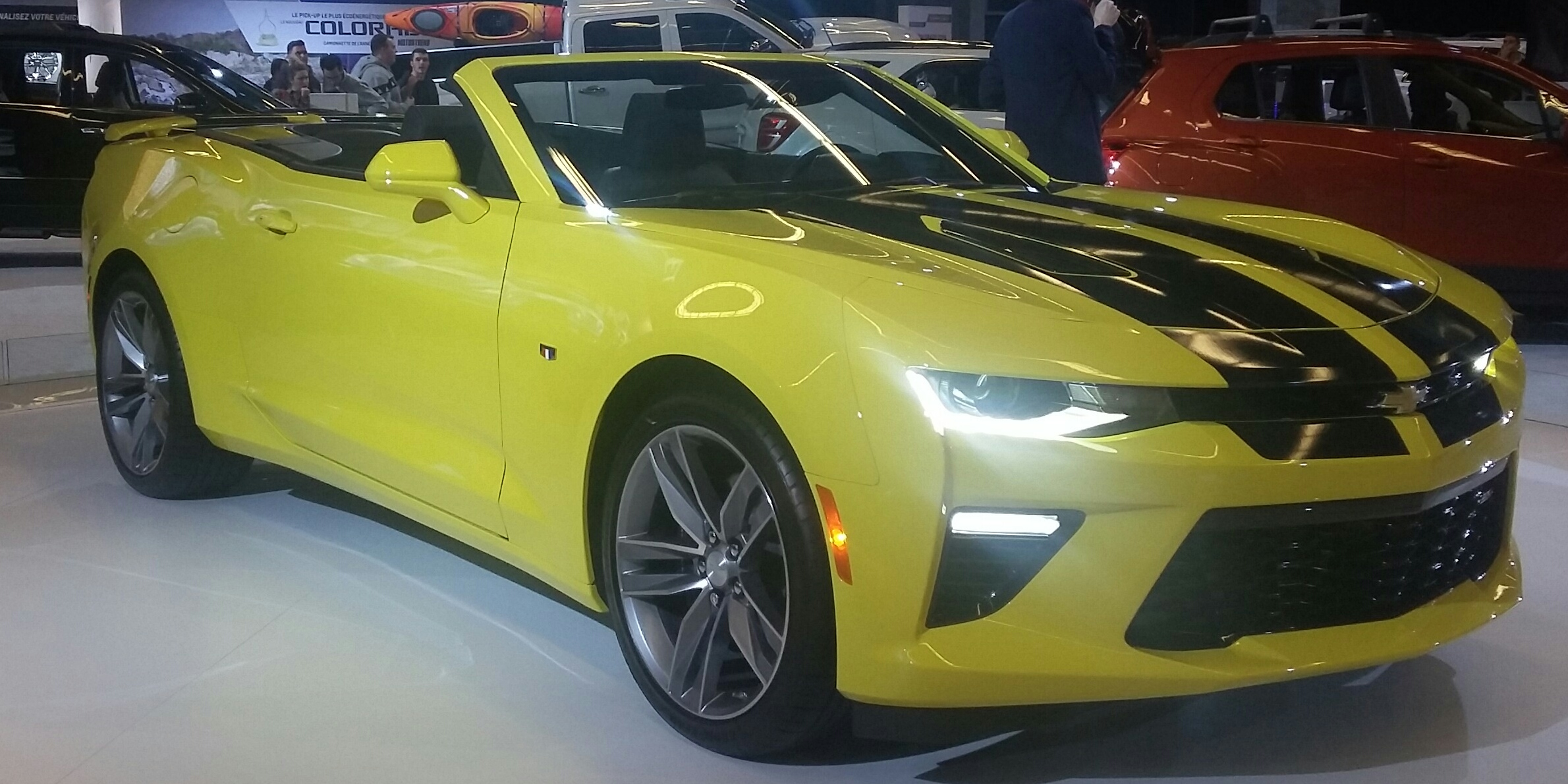
Chevrolet Camaro
"Sure. Right? Like on a Corvette, but still the the Eclipse was ⁓ the it was cool and now it's a four door E V crossover. Yeah, it's interesting. I mean, you know, manufacturers are moving that direction and trying to keep some of the names and and trying to transfer that over into the electric version of those vehicles. But yeah, I'm with you on that one. But I mean I still think it looks cool. I think, you know, it's got know I I don't know. if I'd I'd I'd buy it, but it looks cool. Like I I could see my kids driving it or you know, even as maybe an extra car, but look, the Camaro's gone, the Challenger's gone, you the you just don't see them anymore. Well that you know cars, I mean think about cars versus SUV. I mean we've seen this in the in the in the careers moving away from sedans into smaller SUVs. And so that's that's kind of where the whole market has gone."
The Chevrolet Camaro is a sports car that’s usually built as a coupe, and sometimes as a convertible. It’s designed to feel sporty and look aggressive. It’s often mentioned when people talk about how car makers change their lineup and focus.
The Chevrolet Camaro is a sporty American coupe (and in some generations, convertible) built around performance and styling. It’s frequently mentioned alongside other sports cars because it’s part of the same “muscle car” tradition, but with different design and driving character depending on the generation. In the podcast context, it’s likely being used to illustrate how manufacturers’ lineups and directions can shift over time.

Dodge Challenger
"Sure. Right? Like on a Corvette, but still the the Eclipse was ⁓ the it was cool and now it's a four door E V crossover. Yeah, it's interesting. I mean, you know, manufacturers are moving that direction and trying to keep some of the names and and trying to transfer that over into the electric version of those vehicles. But yeah, I'm with you on that one. But I mean I still think it looks cool. I think, you know, it's got know I I don't know. if I'd I'd I'd buy it, but it looks cool. Like I I could see my kids driving it or you know, even as maybe an extra car, but look, the Camaro's gone, the Challenger's gone, you the you just don't see them anymore. Well that you know cars, I mean think about cars versus SUV. I mean we've seen this in the in the in the careers moving away from sedans into smaller SUVs. And so that's that's kind of where the whole market has gone."
The Dodge Challenger is a performance car, usually built as a two-door coupe. It’s meant for strong acceleration and a sporty driving experience. It often comes up in conversations about how car makers change what they sell over time.
The Dodge Challenger is a performance-oriented muscle car, typically offered as a two-door coupe. It’s discussed because it’s a recognizable nameplate in the American performance segment and because its design and powertrain choices have evolved across model years. In a podcast, it may be referenced when talking about how manufacturers move away from certain body styles or shift what they offer.

Pontiac Firebird
"I remember when, you know, every like everybody wanted a sports car. ... they should come back back with the ⁓ Pontiac Firebird. The Firebird was a cool car."
The Pontiac Firebird was a classic American sports/muscle car. The host is basically wishing for a comeback of that style of car.
The Pontiac Firebird is a classic American muscle/pony car nameplate from Pontiac’s lineup. The host’s point is nostalgic—arguing that a modern return of that kind of car would be appealing.

Chrysler Crossfire
"... It was like a Pontiac. Yeah. The little two-door crossfire. There was it's similar to the Crossfire. I forge..."
The Chrysler Crossfire is a two-door sports car made by Chrysler. It’s a smaller coupe meant to look sporty and drive more like a performance car than a typical family car. It comes up in discussions when people are comparing compact sports coupes.
The Chrysler Crossfire is a small, two-door sports coupe produced by Chrysler in the mid-2000s. It’s notable because it was built as a more niche, style-and-handling-focused alternative to bigger American performance cars, and it’s sometimes brought up when people compare “sports coupe” options. In the podcast context, it’s mentioned as being similar to another compact two-door sports car.
audit
"another that's that's a big deal is Nissan Acceptance being ordered to audit 45 New York Nissan dealerships. And what they're saying is that they're alleging that these dealers larger fees on these lease buyouts."
An audit is a formal check of what a company is doing—like reviewing records to see if they followed the rules. In this story, the finance company is being asked to check whether dealerships charged fees correctly.
An audit is an official review to check whether rules, contracts, or financial practices are being followed. Here, Nissan Acceptance is ordered to audit 45 New York Nissan dealerships, and later the hosts discuss how involving the finance company changes who performs the review and how resources are deployed.
lease buyouts
"And what they're saying is that they're alleging that these dealers larger fees on these lease buyouts. So they were going to facilitate the transaction of a deal and they ended up adding an extra fee to buy allow the customer to buy out their lease."
A lease buyout is how you turn a leased car into your own car. You pay what the lease says the car is worth, and then you own it. The hosts are discussing allegations that some dealers charged extra fees when doing that.
A lease buyout is when you pay the remaining value of your leased vehicle to take ownership of it at the end of the lease (or sometimes earlier). In this segment, the claim is that Nissan dealers allegedly added extra fees specifically when customers wanted to buy out their leases.
Nissan Acceptance
"But another that's that's a big deal is Nissan Acceptance being ordered to audit 45 New York Nissan dealerships."
Nissan Acceptance is the financing side of the Nissan business. The hosts say it’s being told to check dealerships’ lease-related charges, because it likely has the financial paperwork and records.
Nissan Acceptance is referenced as the finance company involved in the lease and dealership ecosystem. In the segment, it’s ordered to audit Nissan dealerships, implying it has access to transaction/financing records that can be used to verify whether dealers charged fees properly.
doc fees
"then one could argue and say, Well, that's why there's doc fees to to facilitate that transaction, but then What they're s what they're alleging is they were adding more fees even on top of that."
Doc fees are charges a dealership adds for handling the paperwork. The point here is that paperwork fees are one thing, but the claim is that some dealers may have added extra charges on top of that.
Doc fees (documentation fees) are charges dealers add to cover paperwork for a vehicle sale or transaction. The discussion here is that doc fees might be expected for processing, but the allegation is that dealers added additional fees beyond what the original agreement allowed.
class action lawsuits
"Or does this open up, you know, where now you got these attorneys that are doing class action lawsuits because they see blood in the water?"
A class action lawsuit is when lots of people with the same complaint team up in one case. The hosts are saying that if the problem is bigger than just a few dealers, lawyers might file lawsuits for many affected customers at once.
A class action lawsuit is a legal case where many people with similar claims join together under one lawsuit. The hosts suggest that if the alleged fee practices are widespread, attorneys could pursue class actions against automakers (OEMs) and related parties.
warrant
"Carvana They they received a a warrant tied to Slate Auto… giving Carv Carvana the ability to acquire shares at certain performance milestones."
A warrant is like an option to buy stock later. In this case, it’s tied to goals the company has to reach, so the deal only becomes actionable if those milestones happen.
A warrant is a financial instrument that gives the holder the right to buy shares at a set price, usually if certain conditions are met. Here, the warrant is tied to performance milestones, so Carvana’s ability to acquire shares depends on hitting those targets.
Slate Auto
"Carvana They they received a a warrant tied to Slate Auto, those valued at approximately one point five million at the end of 2025."
Slate Auto is a company mentioned in connection with Carvana. The hosts are talking about how that relationship could help Carvana expand its ability to move cars and sell them at scale.
Slate Auto is referenced here as the company Carvana is connected to through a warrant. The discussion frames it as part of a broader push toward scaling automotive distribution and logistics.
EV startup
"But what I felt was interesting about this is there the EV startup backed by Jeff Bezos…"
An EV startup is a newer company trying to build or support electric cars. The hosts mention it to set context for who’s backing the project.
An EV startup is a young company focused on electric vehicles, typically working on technology, manufacturing, or supply-chain partnerships. The segment uses this to describe the kind of business Slate Auto is framed as—backed by major investors.
private party sales
"…Auto Traders doing the private party sales and facilitate the whole transaction. I… did the private party sale. I bought a car facilitated through Auto Trader."
Private party sales are when you buy from a person, not a dealership. Even if a website helps, the paperwork—especially the title—can still be slow or confusing.
Private party sales are transactions where the buyer and seller are individuals rather than a dealer. The segment highlights that facilitating these sales through a marketplace can still be complicated—especially around getting the title and completing registration steps correctly.
title issue
"I couldn't not a store but a state. ⁓ yeah, I mean ⁓ they had that title issue, right? And so ⁓ there's there's a law in place that says that you get your title in a certain period of time."
A title issue means the paperwork proving who owns the car isn’t handled correctly or on time. Since every state has rules, delays or mistakes can stop a seller from legally completing sales.
A title issue is a problem with the legal ownership paperwork for a vehicle. The segment explains that state laws require the title to be obtained within a certain timeframe, and failing to do so can lead to penalties and even being blocked from selling in some states.
out-of-state titles
"…we were in Texas and trying to title something for New York or California or whatever state we're in, it's some of those were nightmares."
Out-of-state titles are when you buy a car from one state but need to register it in another. Different states have different rules, so the paperwork can take much longer.
Out-of-state titles are vehicle ownership documents that originate in one state but must be processed for registration in another. The hosts describe this as especially difficult because each state has different rules, which can turn a straightforward transaction into a long, paperwork-heavy process.
OEM
"Amount of time, ⁓ they could theoretically pull the franchise. whereas you have something like Carvana, they they don't have a an OEM report to."
OEM means the carmaker itself—the company that actually builds the vehicles. The point here is that some sellers have to follow rules tied closely to the carmaker, while others don’t.
OEM stands for “original equipment manufacturer,” meaning the automaker that builds the vehicles. The hosts contrast OEM oversight/reporting with Carvana’s approach, implying Carvana isn’t as directly constrained by automaker franchise rules.
CarMax
"So and what's interesting about that is CarMax, you know, when they first started, they had like a OEM at every for every they had a franchise for every new car franchise, right?"
CarMax is a big used-car seller. They buy cars and then resell them, and the hosts are saying their early approach used dealer-style relationships to source cars from auctions and trade-ins.
CarMax is a large used-car retailer known for buying cars from consumers and reselling them through its own inventory. The segment describes how CarMax’s early strategy involved OEM-linked franchises to access supply channels like auctions and leased trade-ins.
loan performance
"And reported success may be tied to a financial ecosystem that depends heavily on investor confidence, loan performance."
Loan performance means whether people who borrowed money actually pay it back. If lots of borrowers start missing payments, the whole financing model gets riskier quickly.
Loan performance refers to how well borrowers repay loans—e.g., whether payments are made on time and how often loans default. The hosts argue Carvana’s reported success may rely on strong loan performance, which is crucial for lenders and financing partners.
investor confidence
"Like he looks politics because politics directly affect what happens business a lot of times. Right. and so what he was his current concern was Carvana's valuation. ⁓ And reported success may be tied to a financial ecosystem that depends heavily on investor confidence, loan performance."
Investor confidence is basically whether investors believe a company is worth backing. If investors lose confidence, funding can dry up and the company’s plans can fall apart—especially if loans start going bad.
Investor confidence is how willing investors are to fund a company (directly or indirectly) and accept its valuation. In the segment, the claim is that Carvana’s success is tied to a financial ecosystem that depends on investor confidence and loan performance.
restructures debt
"And so his theory is saying that Carvana restructures debt, the stock rises, the Garcia family gains access to more capital through appreciated shares, capital flows into loan purchases and related financing activities, and then Carvana reports stronger results."
Restructuring debt means a company renegotiates its loans to make them easier to handle. The idea here is that doing that can improve the company’s financial picture and help it keep operating.
Restructuring debt means changing the terms of existing borrowing—such as extending maturities, altering interest rates, or swapping obligations—to reduce near-term pressure. The segment claims Carvana restructures debt as part of a loop that supports valuation and access to capital.
market correction
"And he's basically saying is that if there's market correction or when there's a market correction, that could crush whole company."
A market correction is when prices fall a lot after a period of being high. In this context, the worry is that a downturn could hurt companies that rely heavily on financing and investor money.
A market correction is a significant drop in asset prices from recent highs, often driven by changing expectations about risk or fundamentals. The hosts use it as a scenario where a downturn could “crush” a highly leveraged or financing-dependent business.
Bridgecrest
"Well, and here's the So the Bridgestone, I think is the name of the I forget Bridgewater or Bridge Bridgecrest."
Bridgecrest is a lending company that helps provide financing for car purchases. The point being made is that having a financing arm can make it easier to buy cars and keep sales moving.
Bridgecrest (the hosts appear to be referring to it) is a consumer lending brand associated with auto-related financing. The segment describes a finance arm that buys/backs loans, enabling higher purchase prices for cars because financing is available.
SpaceX
"I mean, think about Tesla, not Tesla but SpaceX. They're IPO I think I don't know if it's today or tomorrow, they're supposed to IPO and be worth, you know, almost two trillion dollars."
SpaceX is a company that builds rockets. The hosts mention it as an example of how a company can become extremely valuable after big business events, like an IPO.
SpaceX is a private aerospace company used here as an analogy for how a company’s valuation can surge around major milestones like an IPO. The hosts compare that kind of valuation shock/attention to what could happen in automotive retail.
BYD
"Well, here's a here's another one we have. So BYD, that's a big EV company, by the way. I don't know if you're familiar Yeah. they are now hiring, they just announced they're hiring in Canada."
BYD is an EV company from China. The hosts are saying it’s expanding into Canada and that its pricing strategy is helped by subsidies, which could make its cars more affordable.
BYD is a major Chinese electric-vehicle (EV) manufacturer. The segment highlights BYD’s expansion plans (hiring in Canada) and discusses how aggressive pricing and subsidies in China can make EVs cheaper in other markets.
tariffs
"Now I understand there's gonna be some import, export, maybe tariffs and and stuff like that, but think about it."
Tariffs are taxes on imported products. If a country charges tariffs on imported EVs, that can make the cars cost more once they arrive.
Tariffs are taxes added to imported goods. The segment suggests that when BYD cars are imported, tariffs (and other trade barriers) can affect the final price in the destination market.
subsidies
"Ten, fifteen thousand dollars, US dollars for EV that looks well that's what they're saying is like the subsidies there are kind of crazy. for the for ⁓ they're some Sub heavily subsidized in China."
Subsidies are government money that helps lower the cost of a product. The hosts are saying EVs can be much cheaper in China because the government helps support the price.
Subsidies are financial incentives (often from governments) that reduce the effective cost of buying or producing something. Here, the hosts claim EVs in China are heavily subsidized, which supports very low pricing compared with what buyers might expect elsewhere.
full self-driving
"Right. And it's really eight, $10,000 cars. Right. So, but I they're full self-driving. They've got the giant screens. They've got you know they look good."
“Full self-driving” is a phrase companies use to describe how much driving the car can do by itself. The hosts are saying BYD is offering lots of tech features, not just a low price.
“Full self-driving” refers to a marketing claim about advanced driver-assistance or autonomous driving capabilities. The hosts mention it alongside big screens and range, implying the feature set is part of BYD’s value proposition even as pricing is aggressive.
Tesla
"They have bigger infrastructure out there... where Tesla, I mean, they've done a good job here in the US... ...So it's kind of crazy."
Tesla is a company that makes electric cars. They also built a lot of the charging infrastructure, so their chargers matter a lot for EV day-to-day use.
Tesla is an EV brand known for building out its charging ecosystem in the U.S. The hosts discuss how Tesla’s charger availability and charging speed affect real-world EV convenience.
charging stations
"They have bigger infrastructure out there that they went all in on, you know, charging stations and things like that, where Tesla... ...We have three charging stations in the entire town."
Charging stations are the EV “fuel pumps.” If there aren’t enough of them—or if they charge slowly—EVs can be annoying to use.
Charging stations are places where an electric vehicle (EV) can recharge its battery. In practice, the number and type of chargers (fast vs slower) strongly affect how convenient EV ownership feels day-to-day.
full charge
"Versus here, a full charge, if you're at like almost zero, it's gonna take you an hour... ...you can go in there and spend minutes and it gives you half charge, but You want a full charge."
A full charge means topping the battery up as much as possible. Charging gets quicker when the battery is low, but a “full” top-off can take much longer.
A full charge means charging the EV battery up to (near) 100% state of charge. EV charging time depends heavily on how empty the battery is and whether you’re using fast charging.
state of charge
"Versus here, a full charge, if you're at like almost zero... ...it gives you half charge, but You want a full charge."
State of charge is basically how full the battery is right now. Charging behavior changes depending on whether the battery is nearly empty or almost full.
State of charge (SoC) is the percentage of battery capacity currently available in an EV. Charging time varies with SoC—especially near very low levels and when approaching a full charge.
universal cables
"They'd have to probably come in and piggyback off a Tesla or somebody 'cause or make the universal cables that you could plug into anything... 'Cause I know a lot of OEMs were trying to do that too."
They’re talking about having one kind of charging plug/cable that works with lots of cars. If the plugs don’t match, you can’t charge easily.
“Universal cables” refers to the idea of using one charging connector/cable that can plug into many different EVs and charging networks. In reality, EV charging is limited by connector standards and compatibility between vehicles and chargers.
summons capability
"You can some of well, Tesla has the summons capability. ...if you're at the mall, you park it far away... it'll come pick you up."
Summons is a feature where your car can drive itself a short distance to you from where it’s parked. It’s meant to make parking lots and tight spots easier.
Summons capability is an EV feature that lets the car move under its own control to pick up the driver, typically from a parking spot. The host describes using it at a mall—especially in rain—so you don’t have to walk as far.
gestures
"You've has gestures. So Mercedes has gestures too. ...if you're in a tight parking space, you can say, hey, come out..."
They’re talking about controlling the car with hand motions. For example, you might gesture and the car responds by opening a door or doing a small task.
In this context, “gestures” refers to gesture-based vehicle controls—using hand motions to trigger actions like opening doors or other convenience functions. It’s part of the broader trend of EVs and modern cars adding more driver-assist and infotainment-style interaction.
Mercedes
"You've has gestures. So Mercedes has gestures too. ...these things are when you think about tech from a tech standpoint..."
Mercedes is a car brand. In this segment, they’re mentioned because Mercedes also has features that let you control the car with gestures.
Mercedes (Mercedes-Benz) is referenced here as another automaker offering gesture-based convenience features. The host uses it to compare how different brands implement similar “tech” interactions.
Daewoo
"Because remember when Daewoo came. I don't know if you're familiar with that. I mean, they had the cr craziest commercials…"
Daewoo was a car brand that tried to sell cars in the U.S. The host is using it as a cautionary example: some brands come in with excitement, but they don’t always stick around.
Daewoo is a South Korean automaker that tried to sell cars in the U.S. with heavy marketing. The host uses Daewoo as an example of a brand that arrived with big hype but didn’t last long, implying that new entrants may struggle to sustain dealer networks and long-term support.
pre orders
"So this could be one of those things that, yeah, they bring this thing and kind of like Slate, they've got a hundred and sixty thousand pre orders, but it's fifty dollars to pre-order…"
A pre-order is when you put money down to reserve a car before it’s actually available. The host’s point is that big pre-order counts don’t automatically mean cars will be easy to get right away.
Pre-orders are customer deposits placed before a vehicle is available for delivery. The host contrasts large pre-order numbers with the reality that the cars may not arrive until later and may be limited-run, which affects buyer expectations and trust.
renter economy
"Renter economy. My daughter, gonna be 30 this year, can't and she makes good money. It's hard to afford houses…"
A “renter economy” means lots of people rent where they live. For electric cars, that can be a problem because charging at home is harder when you don’t own the place.
A “renter economy” describes a society where many people rent homes instead of owning them. In EV adoption, this matters because renters often can’t install home chargers, so they rely more on public charging availability and convenience.
AI
"Okay, so everything we talked about, transparency, the the we're in an age and an era that's AI is iterating is faster than anything I've ever seen."
AI is computer software that can do smart tasks, like analyzing information quickly. The host is saying AI could make it easier to check facts and verify information, which affects trust when buying cars.
AI (artificial intelligence) refers to software that can perform tasks like pattern recognition, automation, and decision-making. Here, the host argues that AI can speed up investigations and auditing, which could raise the importance of transparency in automotive retail and listings.
trust score
"I know Car Edge, they're they've done some things that are kind of gone that direction. gonna happen where you're gonna have a trust score that you're the you're they're gonna be able to look into your your business…"
A “trust score” is like a rating that tries to show how trustworthy a seller is. The idea is that if the information is verifiable, buyers can judge who they’re dealing with more easily.
A “trust score” is a quantified rating of how credible or reliable a seller or business is, based on verifiable information. The host connects it to AI-enabled transparency, suggesting future car listings may be accompanied by scores that let buyers assess risk and authenticity faster.
SEO
"No. That's exactly right. It's like the the new new tool that you created, you know, inside the company. Yeah, yeah. ⁓ that ⁓ how do you optimize? I mean we have traditional internet, right? and everybody can do SEO…"
SEO is how websites try to show up higher in Google search results. The host is saying there are newer ways to get visibility that may matter more as AI changes how people find information.
SEO (search engine optimization) is the practice of improving a website so it ranks higher in search results. The host contrasts it with newer AI-driven visibility approaches, implying that traditional SEO may not be the only way companies get discovered.
AEO
"…everybody can do SEO and S E ⁓ but what is you know, AEO and you know GEO?"
AEO is about making sure your information gets picked up by AI tools, not just search engines. The host is suggesting that as AI becomes the way people look things up, companies will need to optimize for that too.
AEO (AI engine optimization) is an emerging concept for improving how content is surfaced by AI systems (like chat-based assistants) rather than by traditional search rankings. The host uses it alongside SEO to suggest that automotive retail visibility may shift toward AI-driven discovery and answers.
GEO
"…but what is you know, AEO and you know GEO? The AI visibility is real."
GEO is another “optimization” idea mentioned alongside AEO. The host doesn’t clearly define it here, but it sounds like it’s about how information shows up when AI is doing the searching or answering.
GEO is mentioned as a counterpart to AEO in the context of AI visibility, but the transcript doesn’t define it. Given the surrounding discussion, it likely refers to another optimization approach for how AI systems interpret and present information, rather than traditional search ranking.
Request an Explanation
Heard something you'd like explained? We'll add it to this episode.
Sign in to request explanations for terms you heard.
Want to learn more?
Browse our glossary for plain-English explanations of automotive terms, jargon, and concepts.
Help improve this episode
See something that's not quite right? Our annotations are AI-generated and can sometimes miss the mark. Click the flag icon on any annotation to suggest a correction.