“Front end gross” means the dealer’s profit from the car sale itself—what they make when they sell the vehicle for more than they paid for it. It’s basically the money made on the price of the car.
“Back end” is extra money the dealer can make beyond the car’s sale price. It often comes from things like financing, warranties, or other add-ons sold with the car.
“Total gross” is the dealer’s total profit from the whole deal. It adds up the money made on the car price plus any extra profit from financing or add-ons.
Brand
VW
VW is short for Volkswagen. The speaker is using it as an example of a dealership brand that’s selling more used electric cars.
The “used EV market” means the market for previously owned electric cars. The speaker is saying dealers should focus on it because it can be profitable.
F&I means the dealership’s finance and insurance side. It’s where they try to make extra profit after selling the car, often by adding optional coverage and related products.
Service retention is the dealership strategy of keeping customers coming back for maintenance and repairs. For EVs, it often depends on whether the service team is trained and whether the dealership can handle EV-specific needs, which affects repeat business.
CSI scores are a way dealerships measure how satisfied customers are. If customers feel like they know more about the EV than the salesperson, they may rate the experience lower.
These are reports that tell you how healthy an EV’s battery is. They help estimate how much battery life the car still has left, which matters for pricing and future repairs.
Plug-in hybrids are cars that can drive using electricity, but they also have a gas engine. How much the battery has degraded can change how valuable the car is.
Extended range EVs are mostly electric cars, but they can keep going longer when the battery runs low. That extra “backup” system means the car’s value and battery story can be different from a regular EV.
Driving an EV isn’t just about how it feels on the road. You also have to think about how far it can go and where you’ll charge, so the test drive should include checking those things.
Term
plan a trick in the EV
The phrase is referring to trip planning in an EV, where the car’s navigation and energy/range estimates determine whether you’ll need charging and when. In practice, the “plan” can change based on the specific EV, battery size, driving style, and available charging locations.
A charging stop is when you pull over to recharge the EV during a longer trip. It matters because it can add time, and you want to know the best places to stop.
This is the EV’s navigation helping you pick where to charge. It tries to choose the most convenient charging stop based on how much battery you’ll use.
Regenerative braking is how an EV slows down while also recharging its battery. Instead of wasting energy as heat, it turns some of that energy back into electricity.
Single pedal driving means you can slow down mostly by lifting off the accelerator. It uses the car’s electric braking system, so you don’t have to touch the brake as much.
A public charger is a charging station you can use outside your home. Showing it at a public charger helps new EV owners see how charging works in everyday life.
A battery certificate is paperwork that shows the battery’s condition. It’s meant to prove how much life is left so the buyer can feel confident about the car.
In this context, “streamline” means making the buying process simpler and faster. The speaker is saying the process was designed to get you driving quickly, even if you still need to learn the details.
The Tesla Model Y is an electric SUV, so it uses a battery instead of gasoline. It’s built for everyday driving and family-style practicality, which is why people bring it up often. When someone says they didn’t do enough research, they’re usually talking about what it’s like to own an EV day to day, especially charging.
“Mapping a trip” for an EV is planning your drive so you also plan where you’ll charge. Instead of only thinking about distance, you think about battery level and charging stops.
Customer retention means getting customers to come back again and again after buying a car. With gas cars, oil changes naturally force repeat visits. With EVs, that repeat-visit habit is weaker, so dealers need other reasons—like battery checks—to bring people back.
Battery checks are diagnostic inspections of an EV’s battery health and performance. They typically look for issues like capacity loss, abnormal charging behavior, or error codes. In this segment, the host frames battery checks as a dealership “retention” tool to bring customers back for service.
A battery report is a readout of how healthy an EV’s battery is. It helps you understand whether the battery is still in good shape or has started to wear out.
A battery health check is how you find out how worn out an EV battery is. It gives a clearer picture of whether the battery still has most of its life left.
Cell health means how well the individual battery cells are doing. If the cells are unhealthy, the battery can lose range faster and may charge less effectively.
Battery degradation means the battery slowly wears out. Measuring it helps you estimate how much range you’ll get now and how much worse it might get later.
Here, “transparency” means being upfront with real information about how worn out the battery is. The point is that not many dealers provide this clearly today.
The Equinox EV is a fully electric Chevrolet SUV. The hosts are using it to show that, when you shop used, the price gap between an EV and a gas version can shrink a lot.
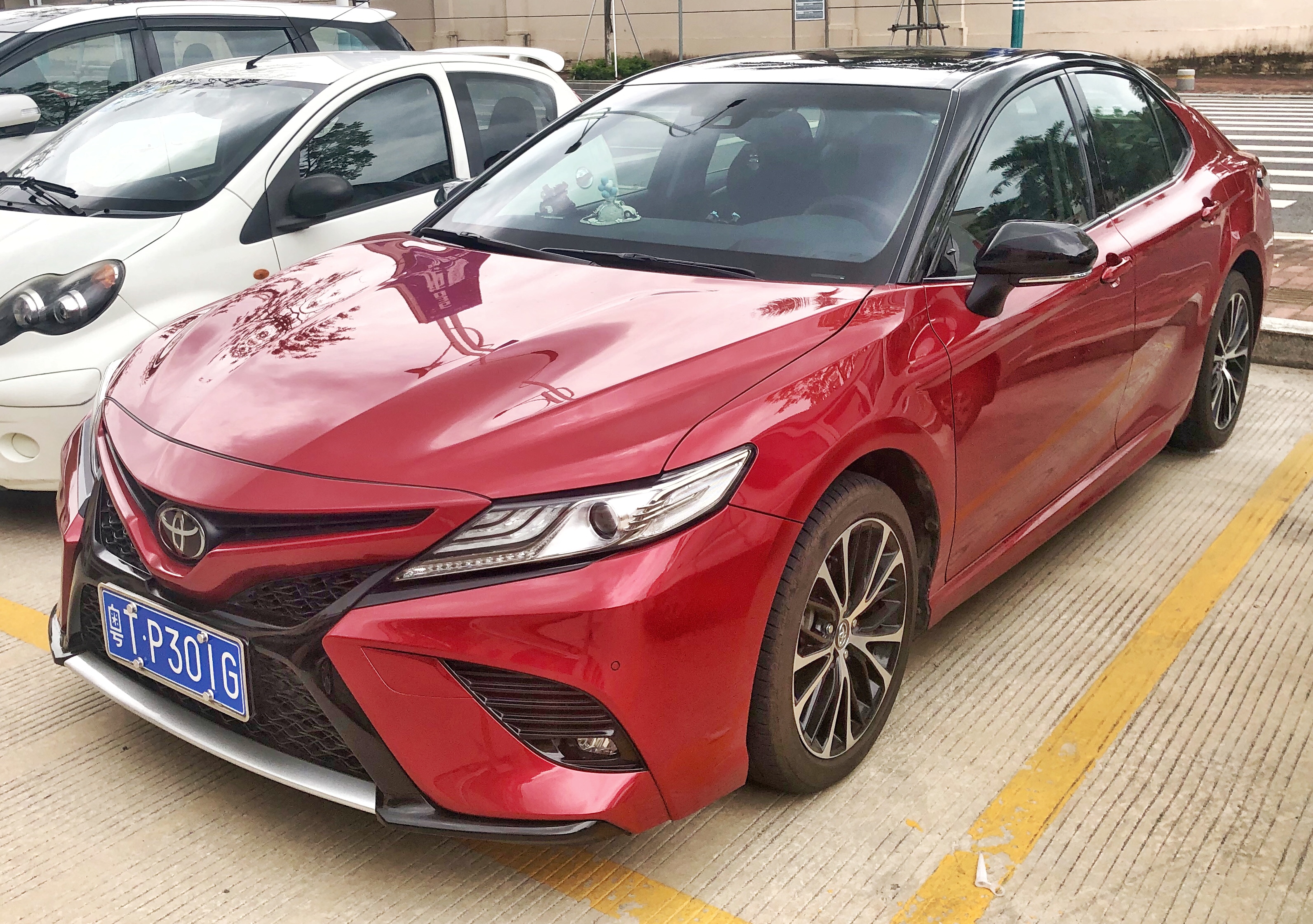
The Toyota Camry is a regular gas-powered sedan that’s designed for everyday commuting and family use. It’s popular because it’s comfortable and easy to live with. In conversations about price, it’s often used as a reference point for what you can get without switching to an electric car.
The Tesla Model 3 is an electric car. In this segment, it’s the example of an EV that can end up costing about the same as a common gas car when you’re shopping used.
Residual value is what a car is expected to be worth at the end of a lease. If that estimate is too optimistic, the company that financed the lease can take the hit when the car sells for less later.
Concept
market equilibrium
“Market equilibrium” means the market finds a fair price where there’s neither too much inventory nor too little. The speaker is saying used EV prices can reach that sweet spot.
“Off lease volume” means the number of cars that are coming back from leases and getting sold as used cars. More lease returns can change used-car prices.
Concept
pricing parity
“Pricing parity” means used EV prices are aligned with a benchmark level—often relative to other comparable vehicles or to what the market can support. The speaker ties it to hitting a “pricing being a good spot,” implying better margins when prices are neither too high nor too low.
Concept
another 12 to 24 months
They’re saying this used EV profit opportunity may last only for a limited time—roughly the next year to two years. It’s about timing the market, not a car feature.
LIVE
I've been living in this space for a while.
Dealers are making three to four K front end gross.
And then another 1500 back end,
they can go five K total gross on these vehicles.
And so that's why they should care
because there is money to be made.
I know dealers that are VW dealers
and they're running them as just like fronts for used EVs.
Like they're selling a few VWs
and they're selling 60 Tesla's a month.
It kind of seems like what I'm hearing,
if I'm listening between the lines is like,
used EV market is something that we really need
to be paying attention to.
100%.
One of the things that I enjoy most
about producing the dealer playbook is hearing from you.
The messages that I get of people
who are getting so much value out of the podcast,
applying it to their day to day workflows
and finding a thriving career rate
here in the retail auto industry.
It means the world to me.
And you know, one of the ways
that we make doing this possible
is through my agency, Flex Dealer.
And of course, in the spirit of providing value,
I think this is a perfect time to head over
to www.flexdealer.com
to show even further support for you,
my beloved DPB gang.
Right now, if you go to my website, flexdealer.com,
you can get a full free PDF
of my number one bestselling book, Don't Wait Dominate.
And the reason I think it's so special
is that a lot of the topics
that are discussed in this book
are even more relevant today than ever
with this surge in popularized AI
and people wondering, well, what can I do next?
How can I have a competitive advantage?
Well, that's all here in this book.
And so I'd love to be able to offer you a free copy of this.
If you go to flexdealer.com,
it would mean the world to me
because that is how we continue to produce this show for you.
All right, here we are.
We got to see each other for about 12 and a half seconds
at a Sotocon boss.
So I'm so happy every time I get to see you
and get to hang out with you.
Welcome back to the dealer playbook.
Thank you, Michael.
Is it Mike or Michael?
It's whatever.
Some people, they care.
So thank you, Mike.
Thank you, Mike.
It's great to be back.
And we had a great time at a Sotocon.
I mean, it's a banger conference.
So everyone should go if they don't already go.
What's wrong with you?
It's a lot of fun.
You got me all of a sudden thinking,
here's a little bit of Canadiana for our audience.
This is where they all exit.
You said, Mike, you asked me, Mike or Michael,
and I immediately thought Mike from Canmore.
Royal Canadian Air Force was a TV show big in the 90s.
And they had a character, Mike from Canmore.
And I'm going way back on that one.
I don't know.
People are going to look it up.
You should look it up.
I thought it was funnier than SNL.
They should look up Canmore.
Canmore is beautiful.
Canmore is beautiful.
Old stomping grounds.
I want to get into this with you.
I've got a bunch of questions.
So and I'll kick it off this way.
I was recently at a dealership, a Chevy store,
and he had a lineup of EVs that he lamented.
I cannot sell these things.
And I'm like, you know what?
You kind of put a pin in things you're like, when?
And if I ever get a chance to talk to somebody
who is living, breathing, eating, thinking, learning,
building around EVs, I'm going to ask this question.
Dealers have EVs sitting on their lots right now, 90 plus days.
They don't know what to do with them.
But I'm really curious from an operational perspective,
from your vantage point, what are some of the costs
that are just eating away at that dealer
that he may not even be aware of from those things sitting
on his lot?
Oh, well, I mean, one thing is just opportunity cost.
I mean, you've got space taken up on your lot.
Forget about floor plan and those sorts of things.
But it's taking up space in your lot.
It's taking up mindshare for your team.
If your team is not trained on them,
there's morale and soul costs, let's say,
where they've got these things.
They're not trained on how to sell them.
They're not bought in on them.
And so there's an energy drain on them anytime
some customer asks about them or whatever.
So I think that there's other things also
if you don't have a plan for F&I or service retention,
when you sell those, you're basically
going to lose that customer for life.
And you might have low CSI scores on those deals also
because the customer knew more than you, which
is something we hear often, like shoppers know more
than us about EVs.
And we're like, well, that's that.
That's not a good thing.
Yeah, it's not a good thing.
So there's all these things.
From where we sit at LightFlow, the reason
we started the company was, and by the way,
we provide EV sales and merchandising tools
for dealerships and EV battery health reports.
And the reason we did this is because we
could see that the industry was built for gas vehicles.
The websites are built for gas vehicles.
Training is built for gas vehicles.
Marketing is built for gas vehicles.
And now there's plug-in hybrids.
There's EVs and soon to be extended range EVs.
I bet most dealers won't even know what extended range EVs are.
And bringing in those electrified vehicles now
breaks all the rails of your website and marketing
and appraisal and service retention.
And yeah, it's created big challenges for dealers.
I love that you bring in the human element right away
because it's an increasing conversation, right?
I often think, hey, if our teams are better equipped
to answer questions appropriately, morale goes up.
Well, what's the opportunity of morale going up?
Well, they're going to feel more confident.
They're going to take a harder swing at the ball.
And they're going to have a greater chance
to knock them out of the park.
And the more often they do that, morale goes up.
Again, they follow process.
They want to show up to work.
Years ago, when I interviewed Cardone for the first time,
he's like, you know why salespeople hate their jobs?
I said, why?
He's like, because they suck at it.
And typically anything we suck at, we hate.
But then you see salespeople that love their jobs
and it's because they are the most equipped.
They're well trained.
They know how to do all those sorts of things.
You brought up the customer thing,
and I want to segue into that for a minute.
Customer goes on a test drive.
What are you guys seeing being in the information space?
What are you seeing as maybe those common questions
they're asking that dealership teams are kind of fumbling over?
Yeah, first of all, I love the Cardone thing.
That's awesome.
Like just even just saying, you know,
they don't like something because they suck at it is so true.
When you get good, I mean, it's all you're getting dopamine, right?
When you figure out who play guitar, right?
I know that like you figure out some new pattern or whatever.
You absolutely get like a warm feeling over your whole body
because you just figured you want to do it more.
Yeah, yeah, you just won.
You just succeeded at something about your question.
Test drive is interesting.
So the test drive for a gas vehicle
hasn't changed in a long time.
And the test drive for an EV is much different
than test drive from a gas vehicle.
This is like brand new technology.
It's a computer on wheels.
It's like if you had a blackberry and then you're now like,
oh, check out this iPhone.
Well, would you give it to them and be like,
yeah, here's like the tactile.
You know, you just you type on the on a on a regular keyboard.
And, you know, you you have to show them how you swipe
and how you have gestures and all these things.
It's like fundamentally different.
So I'll give you a few examples.
So one, you're going to want to show how you can plan a trick in the EV.
That is a thing that you don't have to do in gas vehicles.
Yes, you might use ways or whatever.
But if you're planning a trip, maybe a four hour trip,
you might have a charging stop.
And so you're going to want to show how, hey, the car
running on the car and this can be different between cars
is how it identifies where you need to stop the best place to stop.
Maybe you're talking about how it's going to preheat the battery
to make it fast for you when you charge and and stuff around that.
Another thing you're going to want to talk about is regenerative braking.
A lot of people not familiar with or also known as single pedal driving,
right, and a lot of people and probably many dealers don't even know
that single pedal driving can be turned on, off
and also has settings in between.
So you can in some cases so you can have levels of single pedal driving.
And for those that don't know, single pedal driving essentially applies.
A the motor slows itself down so you don't have to use brakes.
Now, some people find that jarring and, you know, can jerk you
if you're not comfortable with it, but it can extend your range.
And so that's something to show on a test drive.
And then the other thing you want to do is demonstrate charging.
Maybe this person's never charged before.
Why don't you go to a public charger that you know is around the dealership
or maybe you have one at the dealership and show how you plug it in
and show how it charges and show how, hey, it's like 20 minutes,
you know, 15, 20 minutes for you to get a nice charge up to 80 percent.
You know, typically you can grab some food or hit the bathroom or whatever it is
and talk about those things.
So a few other things that people are asking when they're interested.
So if it's a used TV, more and more customers are asking about battery health
because batteries degrade and consumers are getting more educated about that.
So I think we're quickly going to see we have cases where we've seen
where customers won't buy a car without a bat.
They're requiring a battery health from the dealer.
And then they're like, yeah, I'm good to buy the car.
I'm good with the payment.
I just need to see a battery certificate or a battery report.
Right. Oh, that's one where chargers around me.
How much am I saving?
Some people are savings.
Fuel savings is like a big deal for some customers, especially right now
with straight straight-of-home moves, which has become, you know, a topic.
Yeah, people didn't even know what the straight-of-home moves was, including myself.
And now, you know, we'll know we'll know the name for the rest of our lives.
So they're asking about fuel savings, maintenance, savings, those things.
I think it's so interesting.
You know, my wife and I, everything you're talking about,
I'm thinking about my own experience with an EV.
You know, we had a Model 3 for a little over a year.
And had somebody actually gone through those things?
Now, I get it. I'm no victim.
I could have, if I really knew what to, you know, I could have figured these things out.
But it's weird, though, like being, being somebody who researches so much pre-buying,
it's weird that I didn't do enough, like I felt like I didn't do enough research.
And the whole Tesla model in particular was to streamline
how quickly you get the vehicle and drive away.
And so how to map things and that you can drive this thing right until zero miles.
And it will give you, these are things I did not know about.
And range anxiety in particular was something that I struggled with,
which was so annoying to me that I was even struggling with this,
because like I could get into my car right now and see that it's only got 19 miles of gas left
and will feel no measure of anxiety.
When you really find a gas station.
Right. Had I known these things, I probably would not have traded out of that vehicle.
My wife would still be driving it.
She still talks about how much she loved the driving experience of that vehicle.
All of these things combined.
Plus, you know, we live, I don't want to say we live in a rural area,
but we're in the growth path right in DFW.
And so at the time when we were driving it, it was she was putting 100 miles
on this thing before 9 a.m.
Right. Getting the kids to school, which was 11 miles away.
Then she had drive to her, her work, which was 20 miles from there.
And then by the time she gets home and I look at it, I'm like, she's doing 100 miles.
So a year into this thing, I swipe and I look at the mileage.
And it was like 32,000 miles in a year.
And I was like, holy crap.
Imagine how much you're saving in gas.
I know, I know, dude.
I know all the things that I regret.
I wish I would have been more educated.
And I think, you know, and I'm kind of an edge case in the way I typically live my life,
but in the EV thing, I think I'm right in the middle of some of the things that customers,
kind of the typical customer doesn't know that they don't know,
and are making decisions based off of that, I'm going to say ignorance.
And so many of those things have been dispelled now.
And somebody's shown me, oh, no, like, here's how you map a trip.
And it's actually a better mapping of a trip.
You know, you map a trip on ways, bro.
You don't know what gas station you're pulling into and what side of town.
And yeah, yeah.
And so we have a home charger.
We have a home charger.
Yeah.
So that it was, yeah.
So there were all sorts of things that I kind of regret my, my personal,
I'm not calling anybody stupid.
I'm calling myself, I think my level of stupidity around it.
But those were all real things.
And it brings validity, I think, to your point, which is, well, if that information
is readily accessible, not just to customer, but to the person selling the vehicle,
the whole infrastructure of this relationship changes.
You brought up fixed, and I want to touch on that.
You know, because everything is still built around gas to your point,
we talk about the oil change.
But like, there's a, there's an avenue here where you brought up battery checks.
I mean, that's like another thing, right?
What's your, what's your vantage point on that?
Yeah, for sure.
So at a high level, obviously EVs don't need oil changes.
And I often say that oil change was the best, the best invention in the history of customer
retention.
It was like, you had to come back, have to come back to get this thing serviced every
six months or three months, whatever, depending on how much you drive.
And that drove so much business for, and an engine for the dealerships around
raising cars and switch in and pull ahead, at least pull ahead and, you know,
acquiring a vehicle, which allows you to sell a new vehicle to that customer and then also
take that acquired vehicle and sell that.
So you're making a lot of money on those things, on bringing the customer back.
And that's going away.
So we still have a few things.
We have tires and some coolants and stuff like that.
But even, even brakes are less on EVs because of the regenerative braking.
So with battery checks, we believe that will be a key retention tool for dealerships.
And whether they're charging for it or not, it's a way to bring the customer back in.
So some dealers will use it as a loyalty tool as a Y buy.
It's like, hey, whenever you buy an EV from us, you get a free battery health report,
free battery health check every year.
Come back in, it's free.
So some dealers will do that.
And some dealers will use it as a RO line item where they'll charge for battery health reports.
We're already seeing the, and we expect there to be a substantial market in the after,
in the independent service shops offering battery reports.
We're already seeing it show up where independent report, independent service shops are offering
for $69, $79, $89 a battery report, a battery certificate, a battery health check
using tools like LightFlow or others.
And customers are wanting those on like pre-purchase inspections.
Let's say they're buying an EV and they want to get that battery checked out.
They may take it to their independent service shop to do that.
So I believe that they're, we're seeing dealers, this already show up in the service lane.
And so, and if you're in for tires, by the way, we can check your battery,
make sure the cell voltages are good, make sure there's no issues with cell health,
as well as give you an independent assessment of degradation on the battery.
And we're seeing that show up as a use case as well.
Yeah, I'm seeing this as a big opportunity.
I know you guys are leaning into that space as well.
For the dealer, that's like, oh, that's a good idea.
I should, I should be the first dealer in my market to offer battery checks.
What do they need infrastructure-wise?
Is there new equipment they need?
Like, is it a heavy install?
How does that work?
Yeah, so I'd say firstly, there is an opportunity for dealers right now where,
and there will be, I think it'll exist for the next 12 to 24 months, where not a lot of
dealers are offering transparency around battery health.
And particularly in the used EV market right now is having a huge moment where
the price of one of the, one of the issues with EV is one of the issues that has been
an obstacle to adoption is the price of EV.
So in the new market, new vehicles, they're about 10 grand more than a equivalent gas vehicle.
So if you have an Equinox EV and a gas, Equinox gas, they'll be, you know,
call it roughly 10K apart.
In the used market, they're about equal.
There I am.
In the used market, it's come down.
So they're about equal.
At the point where I can have a, I can get a Tesla Model 3 for the same price as a Camry,
literally just got off, was on a call with a dealer this morning.
Want to, I think used, used dealer who is doing a lot of EVs.
And they were like, most of the Tesla's we see or sell, customers coming in for a Camry,
and they see they can get a Model 3 for the same price.
And so they go Model 3.
And so the back to your question, that's why dealers should kind of care about the battery
reports. They'll be this window where you can be the only dealer that's offering a battery
health report to, to customers, whether it's in service or in sales.
And to answer your question.
So primarily we're using the OBD port to read data from the battery management system.
Do you take one of these guys?
Everyone's familiar with an OBD dongle, I guess they call it or device.
But you plug this guy into the OBD port on an EV and within two minutes reading the data
from the battery cell health voltages of the individual cells as well as degradation.
So showing it's a 95% or 90% showing what the actual range of the vehicle is.
And within two minutes, you've got a full beautiful report that you can print,
give it to the customer, it'll post to your website, you can email it on lead follow up and
use it as a key merchandising piece for those EVs.
Okay, I've got one more question as we wind down here. You brought up used EVs.
Obviously, we know we've gone through these weird roller coasters of like,
we're all in on EVs. Oh, actually, we're not. And so I think about that from a franchise
perspective. Do I need the new lineup? I don't care if I get allocation or maybe I do.
It kind of seems like what I'm hearing if I'm listening between the lines is like,
use TV market is something that we really need to be paying attention to.
100%. So firstly, what I say to dealers is, look, you shouldn't do this if you're not
all in on it. Like unless you want to, because you can't just dabble, right? You got to clean
your team, you need to figure out how to acquire these things, you need to understand how to
appraise them. You need to become drool with taking some risk in order to open up a new line of
business for your shop. So firstly, you got to be fully bought in. Secondly, the used EV market
is set to grow very different from the new market. It's like they're not even, they're not the same
thing, right? The new market, you're getting force fed allocation. Some of those vehicles were just
not compelling vehicles at compelling prices, not a compelling value prop, I should say.
A Hummer is a very cool vehicle at a certain price point, right? Maybe 70K,
no matter what that point is, but not at 110K or whatever it is, right? So it has to be the
right product to the right price point. And the thing in the back, so it's set to grow 26% per
year. We're going to have, that's a combination of things. One is we're going to have 1.1 million
EVs coming off lease over the next three years. And so there's going to be a lot of lease coming back.
The finance companies who held them at too high residuals are going to, and now the vehicles aren't
going to be priced at where the residuals were at. Someone's going to be holding that bag,
but it's not going to be the consumer. And so what's going to happen is the consumer is now
getting a really compelling product at a really compelling price because we're enabled, the product
can now hit the market equilibrium of where the price should be. And so off lease volume combined
with that pricing parity and pricing being a good spot. And then the final point around why
they should care is because gross is very good on these cars. So I know I've been living in
this space for a while. Dealers are making three to four K front end gross and then another 1500
back end. They can go five K total gross on these vehicles. And so that's why they should care
because there is money to be made. I know dealers that are VW dealers and they're running them as
just like fronts for used EVs. Like they're selling a few VWs and they're selling 60 Tesla's a month.
So they're selling more used Tesla's than they are new cars at their frame. What a wild time.
It's crazy. And you've gone from, and so this opportunity will be around for another 12 to
24 months for dealers that are motivated and adventurous. What I selfishly heard is there's
a second chance for me in the next couple of years to get back in. OK, as we wind down one last
question, how can those listening watching connect with you? Yeah, absolutely. So follow me on
LinkedIn. Connect with me on LinkedIn. I'm pretty active on there. Go to lightflow.com. You can
fill out a form. But you know, I think the best thing to do is connect with me on LinkedIn. And
I'd love to chat EVs or reach out at Ryan at lightflow.com. Ryan, my pal, the CEO of Lightflow,
you got to check him out. Thanks so much for joining me on the Dealer Playbook podcast.
Thank you, Mike. Have a great day. Hey, thanks for listening to the Dealer Playbook podcast.
If you enjoyed tuning in, please subscribe, share and hit that like button. You can also join us
and the BPD community on social media. Check back next week for a new Dealer Playbook episode.
Thanks so much for joining.
About this episode
Dealers are finding real profit in the used EV market by treating it as a dedicated business—not something to “dabble” in. The conversation breaks down how front-end and back-end gross can add up to about $5K total per vehicle, while idle EV inventory creates opportunity cost and hurts CSI when teams aren’t trained. Buyers increasingly demand battery health proof, and dealers can differentiate with fast OBD-based reports, better EV test drives, and retention tools like annual battery checks.
Is your dealership struggling to move used EVs while your competitors are banking big? It's time to stop letting inventory sit and start capitalizing on the massive opportunity in the pre-owned electric vehicle market.
In this episode with Lyteflo Co-Founder and CEO Ryan Osten, you'll discover:
Why used EVs are consistently delivering up to \$5,000 in total gross profit per unit.
The critical operational changes needed to stop inventory from aging out.
How to leverage battery health reports to build trust, boost sales, and drive fixed ops revenue.
The specific questions modern EV buyers are asking and how to equip your team to answer them confidently.
Actionable strategies to gain a significant competitive edge in automotive retail for the next 12-24 months.
Ryan Osten, Co-Founder and CEO of Lyteflo, provides EV sales and merchandising tools to help car dealerships confidently sell more electric vehicles.
Follow The Dealer Playbook so you never miss an episode.