TMCP #646: Ask Rick – Memorial Day Muscle, Summer Flip Strategy, and Parade-Ready Classics
About this episode
Rick Schmidt covers a wide-ranging mix of Memorial Day reflections, summer car plans, and market talk. The conversation moves from the possibility of a Camaro comeback and which classic platforms could support a Revology-style build, to why the restoration-parts market feels flat after the post-COVID boom. It also gets practical with parade-car shopping and a summer flip strategy, where Rick weighs a low-mile ZR1, a Saleen Mustang, and a Chevelle convertible as different kinds of buys.
In this episode of The MuscleCar Place, Rob Kibbe and Rick Schmidt kick off May with a thoughtful look at Memorial Day—balancing its deeper meaning with the traditions that bring car enthusiasts together, from local parades to community gatherings. The conversation then shifts into the latest Dallas Kibbe Racing update, where steady progress on the track is matched by a big off-track milestone: a new presenting sponsor stepping in behind the program. From there, Rick delivers his signature straight talk on topics ranging from whether giving a car as a gift is a great idea or a logistical gamble, to the future of continuation builds like Revology and whether the Camaro comeback rumors hold any real weight.
The episode wraps with two fun but strategic car-buying segments. First, the guys pick parade-ready classics under $50K that can be enjoyed all summer without losing money. Then, with the budget removed, the focus turns to real profit—analyzing a ’92 Corvette ZR-1 as an undervalued opportunity, a 2000 Saleen Mustang as a niche play, and a ’71 Chevelle as the safest bet for consistent return. As always, Rick cuts through the noise with practical insight, making this episode equal parts car culture, market reality, and smart enthusiast thinking.
The post TMCP #646: Ask Rick – Memorial Day Muscle, Summer Flip Strategy, and Parade-Ready Classics first appeared on The Muscle Car Place.
flip
"...shop for some cars to use for the summer at parades, flip and make a little money on."
“Flip” here means buy a car, fix it up or improve it, and then sell it for more money. It’s like turning a car into a short-term money-making project.
In car-market talk, “flip” means buying a vehicle, improving it (often cosmetically or mechanically), and then selling it for a profit. The hosts mention it alongside parades and making money, framing it as a business strategy.
parades
"...shop for some cars to use for the summer at parades, flip and make a little money on."
“Parades” in this context suggests the cars are being selected not just for driving, but for show use—meaning appearance, reliability, and ease of operation matter. It’s part of the “summer strategy” the hosts are discussing.

Dodge Durango
"Now we're going to talk about all sorts of things, like is the Dodge Durango sales thing really making money or is that just smoke?"
The Dodge Durango is a Dodge SUV. They’re talking about whether people are really buying it in a way that makes money, or if it’s just hype.
The Dodge Durango is a midsize SUV from Dodge. In this segment, the hosts are discussing whether its sales are actually profitable or just a marketing story.
EV models
"And is GM really bringing back the Camaro yet again with all of the EV models going away? Or is it just battery smoke?"
EV models are electric cars. Instead of a gas engine, they run on electricity stored in a battery.
“EV” stands for electric vehicle, meaning the car is powered primarily by an electric motor and a battery rather than a gasoline engine. The hosts use it to frame how the market is shifting and how that affects muscle-car plans like the Camaro.
Camaro
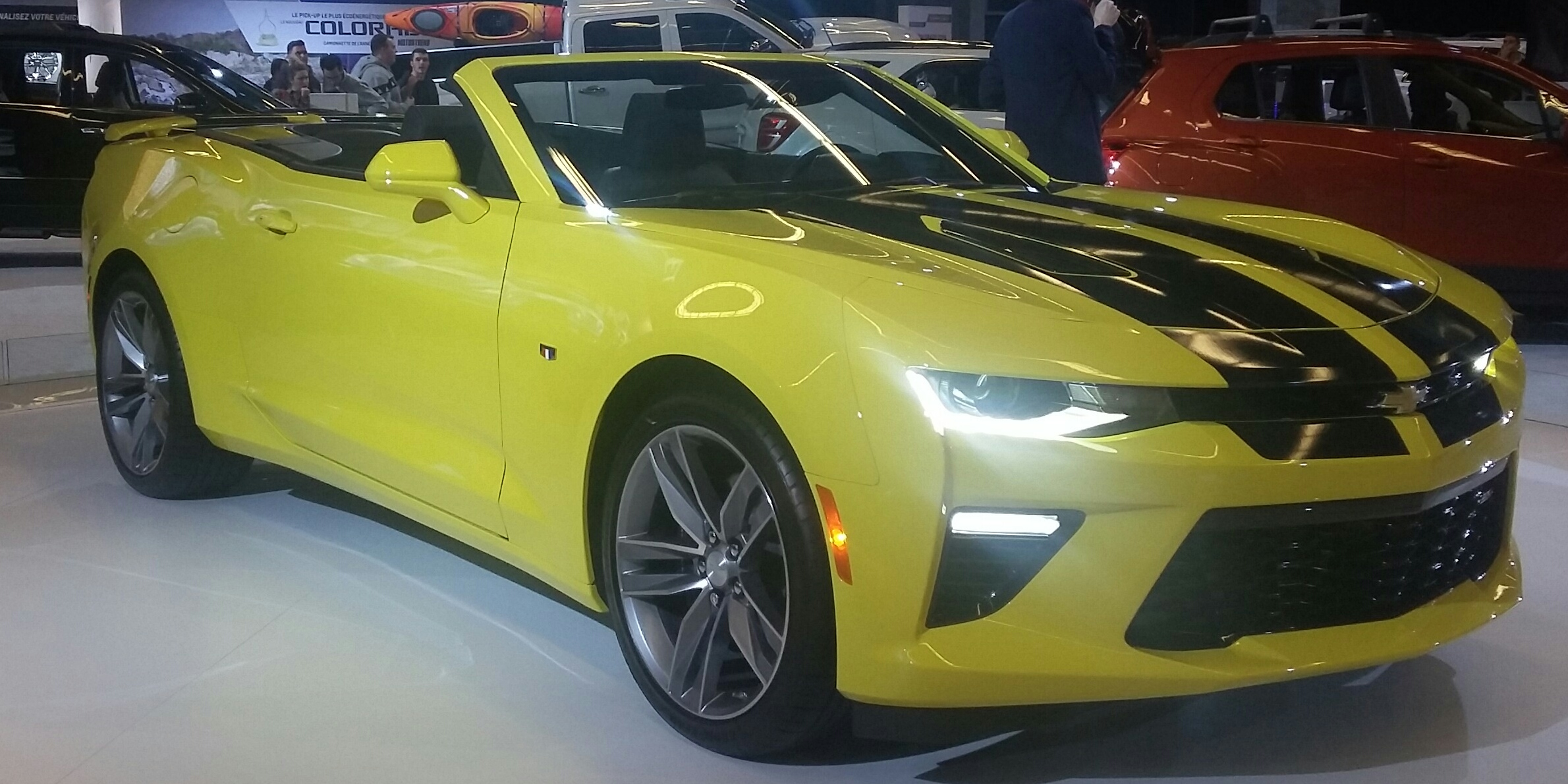
"And then we're going to talk really, we'll talk thoroughly is the Camaro coming back. I mean, for real, is it coming back? And he'll tell you about that. And then I really did say, Rick, is there any other car that you could see doing the same level of customer acceptance as a Ravology Mustang?"
The Camaro is a classic American muscle car made by Chevrolet. Here they’re talking about whether it’s going to return and become popular again.
The Chevrolet Camaro is a long-running American muscle car. In this segment, the hosts are discussing whether it’s “coming back,” meaning a renewed interest or potential return to prominence in the market.
Memorial Day Muscle
"Well, changing gears here, since it's the first month of May, [450.3s] that means we are one third of the way through the year."
They’re talking about the Memorial Day theme for muscle cars. It’s more about the season and what kinds of cars/content they’re focusing on next.
The hosts are shifting into the seasonal theme of Memorial Day “muscle” content—classic American performance cars and the culture around them. It’s a framing topic for what they’ll discuss next rather than a technical automotive subject.
changing gears
"Well, changing gears here, since it's the first month of May, [450.3s] that means we are one third of the way through the year."
They’re using “changing gears” to mean “switching topics.” It’s not about shifting a car’s transmission.
“Changing gears” is used here as an idiom to signal a transition to a new discussion segment. It’s not describing a specific drivetrain or gear-change event in a car.

Chevrolet Chevelle
"... the most selfish is I really want to upgrade my Chevelle, my General and my gear. Now, my gears, it's jus..."
The Chevrolet Chevelle is an older muscle car that many enthusiasts like to restore or upgrade. The podcast mentions wanting to improve parts of the car, like gearing, which can change how it feels when you drive. It’s basically about making a classic car perform the way the owner wants.
The Chevrolet Chevelle is a classic American muscle car that’s especially popular with collectors and restorers. The podcast context suggests a personal connection—someone wants to upgrade their Chevelle, including parts like the gearing—because those changes can significantly affect how the car drives. That’s why it comes up: it’s a platform people keep and modify to tailor performance.
rebuild the engine
"...It's fixable, but I got to pull the engine and at least repair it. But I really want to rebuild the engine. On the General, I just wanted more motor..."
Rebuilding an engine means taking it apart and replacing worn parts so it runs like new again. It’s a bigger, more expensive fix than just repairing one broken component.
An engine rebuild is a major overhaul where worn internal parts are replaced or restored—often including components like pistons, bearings, rings, and sometimes the cylinder head. It’s typically done when the engine’s condition or performance goals can’t be met with simpler repairs.
pull the engine
"...It's fixable, but I got to pull the engine and at least repair it. But I really want to rebuild the engine..."
“Pull the engine” means taking the engine out of the car so the mechanic can get to parts that are hard to reach. It usually signals a more involved repair job.
“Pull the engine” means removing the engine from the car to access components that are otherwise difficult or impossible to reach in-place. It’s commonly required for deep repairs (like major leaks, internal work, or drivetrain-related issues).
Chevelle 2.0 plan
"...I've kind of started cooking up a Chevelle 2.0 plan that I think is the right long-term call. That's the bad news."
“Chevelle 2.0 plan” is the host’s way of saying he wants to upgrade his Chevelle in a bigger, more serious way over time. It’s like making the car a “new version” with more capability.
“Chevelle 2.0 plan” is a project nickname for a staged upgrade path—essentially treating the car like a “version 2” with more power and capability than the current setup. It implies long-term planning rather than a quick fix.
drag races
"It's the drag races out there. That comes right off the event. If the worst thing that happens is you go up there, you learned one thing and you went to see drag racing and hung out the cars, that's pretty good."
Drag racing is when cars race side-by-side in a straight line to see who’s fastest. It’s usually over a short distance, and it’s a big part of what people go to watch.
Drag racing is a motorsport where cars accelerate in a straight line over a short, measured distance, typically from a standing start. The segment references going to watch drag racing and seeing the cars up close as a key takeaway from attending.
simpletire.com
"Some music, some horns, some fireworks, cheers. You know those streamer things? Burn, the Dallas Kibbe Racing Update is officially now presented to you by Lexani Tyres, Lionheart Tyres, and Rolling Big Power Tyres, all available for purchase easily online at simpletire.com."
SimpleTire.com is a website where you can order tires online. The hosts mention it as the easy way to buy the sponsor tires.
SimpleTire.com is an online retailer where you can buy tires without visiting a physical store. In the segment, it’s presented as the easiest place to purchase the sponsor brands’ tires.
Lexani Tyres
"Burn, the Dallas Kibbe Racing Update is officially now presented to you by Lexani Tyres, Lionheart Tyres, and Rolling Big Power Tyres, all available for purchase easily online at simpletire.com."
Lexani Tyres is a tire brand that’s sponsoring this racing segment. Tires matter a lot for how a car grips and handles.
Lexani Tyres is a tire brand sponsoring the Dallas Kibbe Racing Update. Tire sponsors are common in motorsports because tires are a major performance and safety component.
Rolling Big Power Tyres
"Burn, the Dallas Kibbe Racing Update is officially now presented to you by Lexani Tyres, Lionheart Tyres, and Rolling Big Power Tyres, all available for purchase easily online at simpletire.com."
Rolling Big Power Tyres is a tire brand sponsoring this racing update. The hosts are telling you where to buy them online.
Rolling Big Power Tyres is a tire brand sponsor for the Dallas Kibbe Racing Update. The segment frames it as purchasable online through the sponsor’s retail link.
Lionheart Tyres
"Burn, the Dallas Kibbe Racing Update is officially now presented to you by Lexani Tyres, Lionheart Tyres, and Rolling Big Power Tyres, all available for purchase easily online at simpletire.com."
Lionheart Tyres is a tire brand sponsoring this part of the show. They’re being promoted as available to buy online.
Lionheart Tyres is another tire brand sponsor for the Dallas Kibbe Racing Update. The mention is part of the show’s sponsor read rather than a technical discussion.
loose is fast
"The Rurian's loose, car's fast. Loose is fast and on the edge, you're out of control. Okay, the big announcement here for the Dallas Kibbe Racing Update"
“Loose is fast” is a common racing saying that means a car that feels a bit more “slippery” can be quicker. But it also warns that if you go too far, the car can get out of control.
“Loose is fast” is a driving/handling saying meaning the car is set up to rotate more readily (more oversteer) and can be quicker through certain conditions. The host adds the caution that being “on the edge” means the driver can lose control if they push too far.
TurboTires
"The parent company is actually called TurboTires, but you don't even need to remember that. TurboTires owns three tire brands, Lexani, Lionheart, and Rolling Big Power."
TurboTires is a company that makes and sells tires. They own several different tire brands under one umbrella.
TurboTires is the parent company behind multiple tire brands. In this segment, the hosts describe it as owning several lines aimed at different customer needs and price points.
SEMA
"We met the TurboTires team at SEMA MPMC in January, hit it off, and over three months we've come up with a really creative plan."
SEMA is a big auto-industry event where companies show off products. The hosts met the TurboTires team there.
SEMA is the Specialty Equipment Market Association show, a major industry event where companies showcase automotive products. The hosts say they met the TurboTires team at SEMA, which is why the sponsorship relationship started.
Inex Spring Nationals
"[811.2s] So for Dallas, during my last show, [813.4s] he was halfway through the Inex Spring Nationals. [815.6s] There's three national events of the year. [817.4s] He was on number two, the last event of the year. [819.4s] He finished the finale at the Nashville Fairgrounds"
The “Inex Spring Nationals” refers to a specific racing event within the INEX national schedule. The host is describing how Dallas progressed through the series’ major events during the year.
Nashville Fairgrounds
"[817.4s] He was on number two, the last event of the year. [819.4s] He finished the finale at the Nashville Fairgrounds [821.9s] a lot better than the first track, the Highland Rim Track. [825.5s] He was still on race-issued tires, and they have to be."
This is the race track/venue in Nashville where the final event happened. Different tracks can feel very different, so learning one can help you race better.
“Nashville Fairgrounds” is the venue where the finale race took place. Track familiarity and surface/layout differences can strongly affect lap times and tire behavior, which is why the host compares it to another track.
Highland Rim Track
"[819.4s] He finished the finale at the Nashville Fairgrounds [821.9s] a lot better than the first track, the Highland Rim Track. [825.5s] He was still on race-issued tires, and they have to be. [829.0s] And it's ironic that I have a sponsor tire now here for him."
This is another track the host is comparing to Nashville. The point is that some tracks are easier to understand or suit a driver’s style more than others.
“Highland Rim Track” is the earlier track the host compares against Nashville. The comparison suggests that track layout and driving feel can change how quickly a driver learns and how well the car performs.
race-issued tires
"[819.4s] he finished the finale at the Nashville Fairgrounds [821.9s] a lot better than the first track, the Highland Rim Track. [825.5s] He was still on race-issued tires, and they have to be. [829.0s] And it's ironic that I have a sponsor tire now here for him."
These are the tires the race organizers give you or require you to use. Everyone runs the same type, so it’s more about how well the car is set up and how you drive.
“Race-issued tires” are tires provided or approved for competition by the event or series. They’re typically the same spec for all drivers, so the racing outcome depends more on setup and driving than on tire choice.
fast lines
"[831.7s] But what we learned at the Nashville Fairgrounds, [835.1s] A, is Dallas just likes that track better. [837.5s] He just understood it better. [839.0s] But B, we also figured out a way to help him learn fast lines better. [844.0s] And what's interesting, what we used to do to teach him"
A “fast line” is the route you take through a turn that keeps you moving quickest. It’s about where you enter, where you aim for the middle, and how you exit so you don’t slow down.
“Fast lines” are the racing paths through a corner or section of track that maximize speed and minimize time. Learning fast lines usually means finding the best entry, apex, and exit points for the car’s grip and balance.
points
"And even with all that, he almost goes in the top 10 of points for the whole event anyway. And it just kind of tells you, these events are hard."
“Points” are the scoring units used in many racing series to rank drivers over an entire season or event. Even if you don’t win every race, consistent high finishes can put you in the top positions for the overall standings.
win
"I know he wanted a win. I know that. And I want that for him too. It would justify for him probably a lot... because they justify, you are good enough."
A “win” just means finishing first in the race. The host is saying it’s really hard to do, even if you’re a strong driver, because the competition is tough.
A “win” is the top finishing position in a race, and it often carries extra meaning beyond bragging rights—such as prestige, sponsorship value, and momentum in a points chase. The speaker emphasizes that earning a win is difficult because the field is competitive and outcomes are hard to control.
national level
"This is the national level of Inex Legends car racing. He's good enough to earn it, but he does have to earn it."
When they say “national level,” they mean the race series is bigger than just local events. It usually has more top drivers competing, so it’s harder to win.
“National level” means the competition is organized and judged across a whole country, not just locally or regionally. In motorsports, that usually implies tougher fields, more consistent officiating, and higher stakes for points and wins.
Charlotte shootout
"In June and July, he's running all the Charlotte shootout in Charlotte, North Carolina. That's eight weeks in a row for 10 races."
This is a racing event in the Charlotte area. The host is saying the driver plans to race there repeatedly for a long stretch.
The “Charlotte shootout” refers to a specific stock-car style racing event/series held around Charlotte, North Carolina. In this segment, it’s part of a packed schedule the driver plans to run for multiple weeks.
late model debut
"On June 6th at Orange County Speedway, North of Raleigh, he's going to do his late model debut in the Carolina Pro Series."
“Late model” is a type of race car and racing class. “Debut” means it’s the driver’s first time racing in that class.
A “late model” is a class of stock car racing that typically uses purpose-built cars based on production models, often with strong regional followings. A “debut” here means the driver’s first race in that late-model category.
Carolina Pro Series
"he's going to do his late model debut in the Carolina Pro Series. So the month of May here, I'm just looking for some options"
This is a regional set of races (a “series”) in the Carolinas. The driver will be competing in it for that debut.
The Carolina Pro Series is a regional racing series the driver is entering for the late-model debut. The host is using it to frame where the driver’s schedule fits in the broader racing calendar.
Lexani tires
"Anyway, that concludes the Dallas Kibby Legends car racing update as presented by Lexani tires, Lionheart tires, and RBP tires."
Lexani is a tire brand sponsoring the update. In racing, the tires are a big deal because they control traction and handling.
Lexani is a tire brand mentioned as a presenter/sponsor for the racing update. Tire brands can matter in racing because tire choice affects grip, wear, and consistency.
Lionheart tires
"update as presented by Lexani tires, Lionheart tires, and RBP tires. Study them all up on the websites"
Lionheart is a tire brand sponsoring the segment. Tires are important in racing because they affect how well the car sticks to the track.
Lionheart is another tire brand credited as a presenter/sponsor for the racing update. Different tire brands can be selected to match track conditions and driving style.
RBP tires
"and RBP tires. Study them all up on the websites and buy them at simpletire.com."
RBP is a tire brand mentioned as a sponsor. In racing, tires can make a big difference in grip and how the car feels.
RBP is listed as a tire brand presenting the racing update. In motorsports, tire supply and selection can influence performance and consistency across events.
NPD
"with Mr. Rick Schmidt from NPD. Now, we are going to talk all the things we talk."
NPD is a company that deals with aftermarket parts for classic cars. In this interview, Rick Schmidt is connected to them, so he likely knows what parts people are buying and what’s trending.
NPD (often referenced as NPD) is an aftermarket parts and restoration-focused company that supports classic-car owners and shops. In the episode, Rick Schmidt is described as working with NPD, implying he brings industry insight about parts availability and trends.
high-end pro touring cars
"but so help me, I think we now have Rick interested in high-end pro touring cars. You'll see."
Pro touring is when someone takes an older muscle car and upgrades it to drive and handle more like a modern performance car. “High-end” just means the upgrades are more serious and expensive.
“Pro touring” refers to a style of classic-car build aimed at modern handling and driving performance, not just straight-line speed. When the hosts say “high-end pro touring cars,” they’re implying higher-budget builds with upgraded suspension, brakes, and drivability for confident road-course-style behavior.
National Parts Depot
"is brought to you by our good friends at National Parts Depot. See them through the link at themusclecarplace.com."
National Parts Depot is a parts store that sells aftermarket upgrades and restoration parts. They sponsor the podcast and want you to check their website link for parts.
National Parts Depot is an aftermarket parts retailer/supplier that sponsors the show. The hosts direct listeners to use a link to find parts, which signals it’s a place for restoration and performance components.

1988 Oldsmobile Calais Quad 4
"had just given her an 88-olds Calais quad 4. Do you remember back then, when they tried to brand that as the 442?"
442
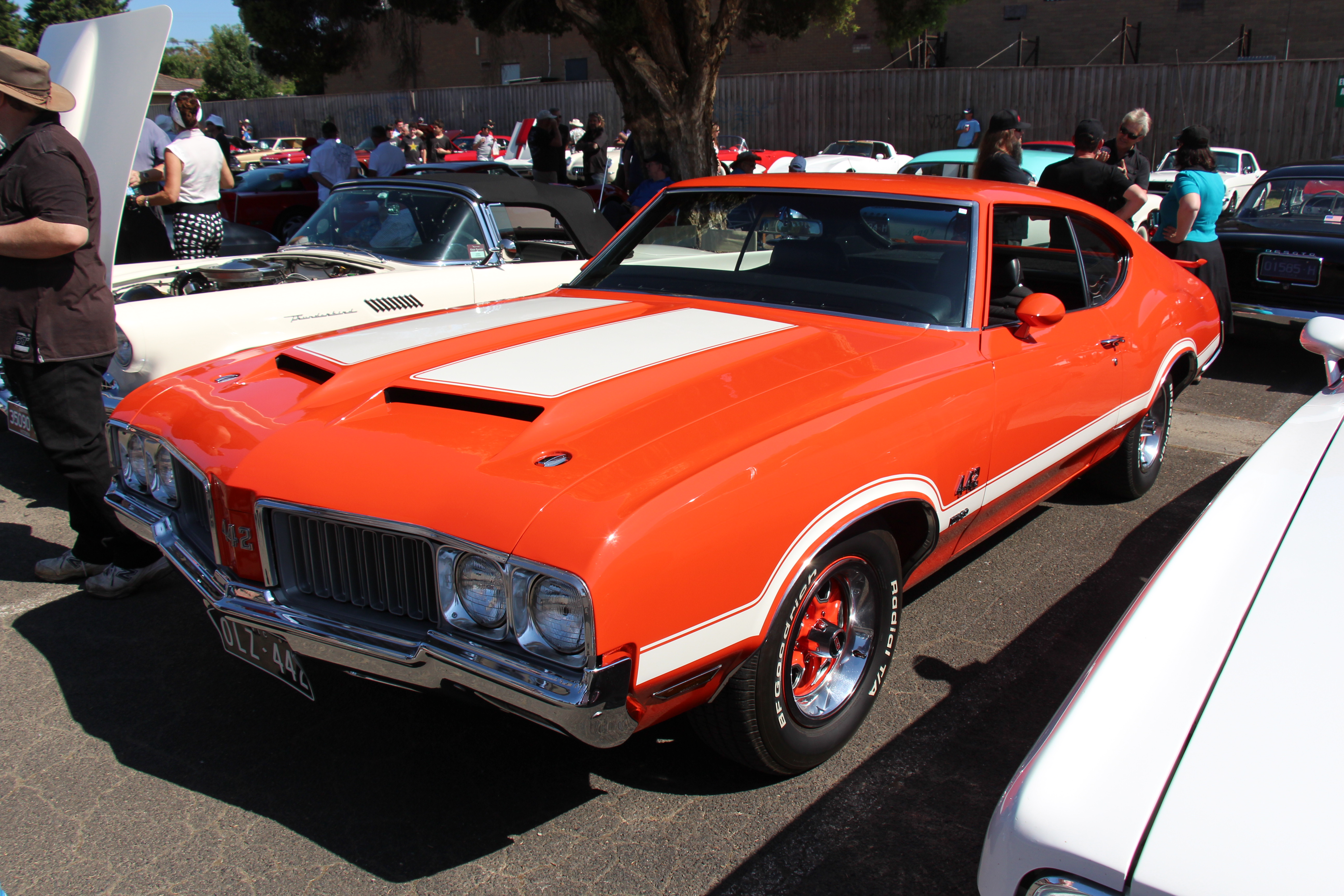
"Do you remember back then, when they tried to brand that as the 442? I always thought, wouldn't it be cool if I got her a real 442?"
“442” is an Oldsmobile muscle-car name people recognize from the classic era. In the conversation, they’re saying it wouldn’t be the same as owning the actual “442” model, even if a different car was marketed using that label.
“442” is a famous Oldsmobile performance badge historically associated with the 1960s–1970s muscle-car era. In this segment, the host is questioning the idea of branding a different car as a “real 442,” because the badge carries specific performance and model identity. It’s essentially a shorthand for “the real deal” muscle-car heritage.

Ford Mustang GTD
"So I bought him a brand-new Mustang GT 6-speed e-drives during the non-winter months up in Detroit. Thornton flight are building when the roads are nasty, and then when things clear up, it's his daily driver."
They bought a Ford Mustang GT. “6-speed” means it has six gears, which usually makes it more engaging to drive. The point is that it was a brand-new Mustang GT meant to be used every day.
This is a Ford Mustang GT described as a “6-speed” car, meaning it uses a six-gear manual-style transmission. The phrase “e-drives” appears to be a transcription of a specific Mustang drivetrain/trim wording, but the key point is the speaker bought a new Mustang GT with a six-speed setup for a gift. It’s positioned as a daily-driver car for the recipient.
daily driver
"and then when things clear up, it's his daily driver. I remember that video. I assume it meant the world to him."
A “daily driver” is the car you use most days for normal stuff like commuting and errands. It’s meant to be practical for everyday life, not just for occasional fun. Here, they’re saying he drives it regularly when conditions are good.
A “daily driver” is the car someone uses regularly for everyday commuting and errands. It implies the vehicle is practical enough to live with day to day, not just a weekend or show car. In this segment, the Mustang is described as being used when weather and roads are better.

1937 Buick
"My dad and I bought a 1937 Buick for my grandfather, simply because it was a clean driver quality car that was rolling across an auction block."
They’re talking about a classic car from Buick, specifically a 1937 model. It was bought because it was in good enough shape to be a “clean driver” and then given to the grandfather.
The hosts mention buying a 1937 Buick as a gift for a grandfather. In this context, it’s a specific vintage classic car year from the Buick brand, chosen because it was a clean, drivable example.
clean driver quality car
"My dad and I bought a 1937 Buick for my grandfather, simply because it was a clean driver quality car that was rolling across an auction block."
“Clean driver quality” usually means the car is nice enough to actually drive and enjoy. It’s not necessarily a flawless museum/show car, but it’s in good condition overall.
“Clean driver quality” describes a classic car that’s presentable and mechanically usable for regular driving, even if it’s not a perfect show car. It’s a common enthusiast phrase meaning the car looks good and can be enjoyed without needing immediate major restoration.
auction block
"simply because it was a clean driver quality car that was rolling across an auction block."
An “auction block” is where items—here, a car—are sold at an auction. It means the car was up for bidding and being sold to the winner.
An “auction block” is the stage or platform where vehicles are auctioned off to the highest bidder. When someone says a car was “rolling across an auction block,” they mean it was being sold at auction.
clutch and pressure plate
"And the clutch and pressure plate had a propensity [1335.6s] to constantly want to... [1337.4s] He'd drive it and then he'd put it away for a month"
The clutch helps you smoothly connect and disconnect the engine from the gearbox when you shift. The pressure plate is the part that squeezes the clutch so the car can move.
The clutch is the friction connection between the engine and the transmission, letting you start moving smoothly and change gears. The pressure plate is the spring-loaded component that clamps the clutch disc against the flywheel so power can transfer.
rusted together
"And they'd be rusted together [1343.1s] and you had to start the car up in gear [1346.7s] and then get it out on the dirt roads that he lived down"
If a car sits unused, rust can build up and make parts stick. Here, the clutch-related parts were stuck together, so it was hard to get the car moving again.
When a car sits for long periods, moisture and corrosion can cause parts to seize. In this case, the clutch/pressure plate assembly can effectively “stick,” making it hard to disengage and operate normally when you restart.
start the car up in gear
"and you had to start the car up in gear [1346.7s] and then get it out on the dirt roads that he lived down [1349.3s] and try to break that clutch and pressure plate loose."
“In gear” means the transmission is engaged, so when you start the engine the car can start rolling right away. If the clutch isn’t working normally, people may do this carefully to get it moving.
Starting in gear means the transmission is already engaged, so the car can move as soon as the engine is running. It’s sometimes used as a workaround when a clutch is stuck, but it can be risky because the car may lurch forward.
revology
"Different topic. I've had some interesting feedback from your visit to revology. It's not that people didn't think you'd dig it, but you did."
“Revology” is the name of a business the hosts are talking about. They’re discussing how it works and what makes its approach different.
Revology is a company name the hosts use in the context of a business model and a visit. In this episode, it’s discussed as a marketplace concept rather than a specific car or part.
first generation
"in doing either a first generation or an early 72nd generation Camaro, I think done the revology way would just really, really be slick."
“First generation” means the earliest version of that car model. Collectors often like the first ones because they’re the most classic-looking.
“First generation” refers to the earliest production run of a model line. For the Camaro, that typically means the original 1967–1969 era, which is especially popular with collectors.
RS split bumper
"A 1970 in a RS split bumper Camaro, done the revology way, that'd be a hell of a car."
RS is a Camaro trim/appearance package. The “split bumper” part means the front bumper is shaped in two sections, which helps identify the car’s classic look.
“RS” refers to the Rally Sport package, which typically adds specific exterior styling cues to a Camaro. “Split bumper” describes the front bumper design where the bumper is divided into separate sections rather than one continuous piece.
Chevy pickup trucks
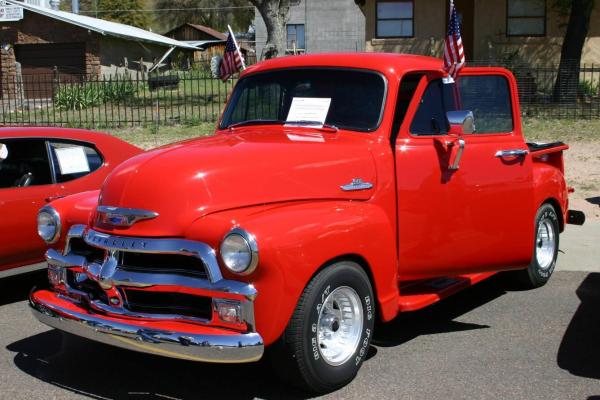
"And also when I was down there, we also had a chat about the potential of possibly doing 67 to 72 style Chevy pickup trucks. Think about that."
They’re talking about making or selling classic-looking Chevrolet pickup trucks from the late ’60s to early ’70s. The point is that there are a lot of buyers paying big money for trucks like that.
The hosts are discussing a business opportunity around classic-style Chevrolet pickup trucks (the “67 to 72 style” idea). In this context, it’s about building or selling modified trucks that look like late-1960s/early-1970s models.

Chevrolet Corvette
"What about a Corvette? No, that's being so overdone by so many different."
They mention the Chevrolet Corvette as another possible project, but say it’s already very popular. In other words, there may be too many similar cars competing for buyers.
The Corvette is being brought up as an alternative to the Chevrolet truck plan, but the host argues the market is already crowded. That implies pricing and demand may be less attractive than focusing on another segment.
volume and market demand
"Again, we're talking about volume and market demand and the Dodge, not the new stuff, but the classic Dodges and the Mopark Electros."
They’re talking about whether there are enough buyers and whether people are actively looking for that kind of car. That’s important for flipping because it affects how fast you can sell and what prices you can get.
“Volume and market demand” is a business framing: how many buyers exist and how consistently they’ll purchase a certain type of car. In classic-car flipping, it matters because it affects how quickly inventory sells and how stable pricing can be.

Dodge Challenger
"... or four Revology Camaros for every one Revology Challenger. I could see that."
The Dodge Challenger is a muscle car made by Dodge that’s designed for strong performance. The podcast is talking about how often certain special versions or builds show up for Challengers compared with other muscle cars. So the Challenger is part of a discussion about popularity and availability of those builds.
The Dodge Challenger is a muscle car known for its bold styling and wide range of performance options. In the podcast, it’s mentioned in a comparison about how many “Revology” Camaros versus “Revology” Challengers exist, which points to how enthusiast builds or special versions may be more common for one model than the other. That’s why it comes up: it’s not just the car itself, but its presence in the enthusiast scene.
DeLorean
"And I mean, there are parallel businesses out there, [1629.2s] DeLorean, that is trying to do something kind of like this [1632.4s] right now, the new DeLorean."
DeLorean is the car brand famous for the stainless-steel DMC-12. The host is saying the brand is trying to come back with a newer version.
DeLorean is the automotive brand associated with the iconic DMC-12. The host mentions “DeLorean” in the context of a current effort to build something similar to what the brand is known for, specifically referencing “the new DeLorean.”

Delorean DMC-12
"...I mean, there are parallel businesses out there, DeLorean, that is trying to do something kind of like this..."
The DeLorean DMC-12 is a sports car that’s known for its unusual look, including doors that open upward. In the podcast, it’s mentioned as an example of a company trying to build something in a similar kind of space. The point is about ambitious car projects and how they get started.
The DeLorean DMC-12 is a distinctive sports car famous for its unusual design and gull-wing doors. The podcast references “parallel businesses” and a DeLorean effort that sounds like it’s being used as an example of someone trying to do something similar in a niche space. That makes it a natural reference point when discussing ambitious automotive projects and how they’re organized.
AI nonsense
"I saw that on social media and just like many things [1664.5s] are that pop up on social media, [1666.1s] especially automotive related anymore."
The host is saying they think the rumor might be fake or made up by AI. In other words, they don’t trust the online claim.
“AI nonsense” is the host’s dismissal of a claim they saw online as likely generated or exaggerated by artificial intelligence rather than being a credible automotive announcement. It’s used to question the reliability of social-media “news” about cars.
amortizing those costs
"But in today's world in that hundreds of millions that go into R&D for a modern car with all the technology and engineering that goes into a modern vehicle these days, amortizing those costs over 50, 60, 70,000 sold a year."
When a company spends a lot of money designing a car, it doesn’t want that cost to hit just one vehicle. So it spreads the cost across many cars it expects to sell.
Amortizing costs means spreading a big upfront expense (like R&D and engineering) across many units sold over time. Automakers do this so the per-car cost becomes manageable when they sell a limited number of vehicles each year.
platform
"So Ford's more recent swings with the Mustang was that they built it on a platform and they designed the platform that they could go global with it."
A platform is like the car’s main “foundation.” If a company uses the same foundation for different versions, it can build them more efficiently and cheaper.
A vehicle platform is the shared set of core engineering pieces—like the chassis architecture, mounting points, and major structural design—that multiple models can use. Using one platform helps a company reduce development cost and adapt the same basic car to different markets.
pedestrian safety
"But different countries have, they all have their own regulations as far as safety, approach angles, pedestrian safety, and all this other stuff."
Pedestrian safety is about making the front of the car less likely to seriously hurt someone if there’s a collision. Different countries may require different design choices.
Pedestrian safety refers to design requirements intended to reduce injury to people outside the vehicle during a crash. Regulations can affect things like bumper shape, hood design, and how the front end absorbs impact.
left-hand or right-hand drive
"And then you've got all of the extra expense of being able to produce a car either left-hand or right-hand drive, that's no small deal."
Some countries drive on the right side of the road, others on the left, so the steering wheel location changes. Building both versions costs more because the car has to be set up differently.
Left-hand drive vs. right-hand drive refers to where the steering wheel is positioned. Producing both versions adds cost because the car’s controls, wiring, and sometimes safety systems must be engineered and manufactured differently for each market.
amortize the costs
"That opened up the opportunity to increase sales [1776.1s] and be able to amortize the costs over a larger production number."
“Amortize the costs” means the company tries to spread the big upfront development spending across lots of cars. If they build more cars, each one effectively “pays back” less cost.
To “amortize the costs” means spreading the expense of developing a new platform or vehicle over a larger number of units. In car terms, higher production volumes can lower the per-car development cost and make the program more financially viable.

Ford Mustang
"And right now, if you just look at NASCAR, [1818.2s] Chevrolet's offering is a Camaro-shaped vehicle, [1822.1s] but it's just called a Chevrolet. [1824.3s] Like where Ford is racing the Ford Mustang"
The Ford Mustang is Ford’s famous sports car. Here it’s mentioned because NASCAR uses the Mustang name/identity for the race car, similar to how other brands use their own models.
The Ford Mustang is Ford’s iconic pony car, and in NASCAR it’s used as the brand identity for the race car’s “shape” and marketing connection. The speaker is contrasting how NASCAR ties the racing entry to the production model name.
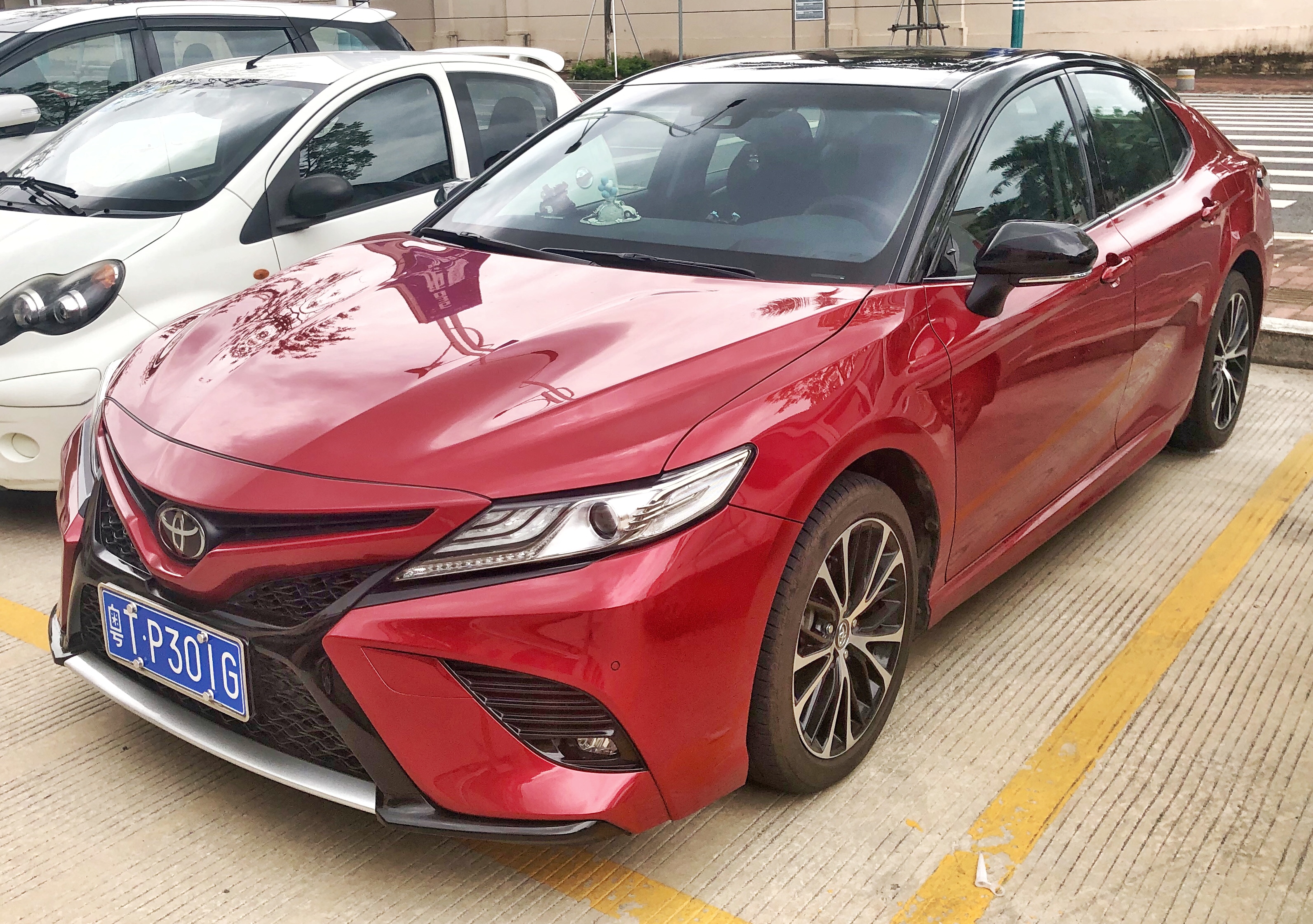
Toyota Camry
"Like where Ford is racing the Ford Mustang [1826.8s] and Toyota is racing the Toyota Camry, [1829.8s] the Chevrolet is just the Chevrolet."
The Toyota Camry is a common Toyota sedan. The speaker mentions it to show how NASCAR often matches the race car’s name to the real car model people recognize.
The Toyota Camry is Toyota’s midsize sedan, and the speaker uses it as an example of how NASCAR aligns race-car branding with the production model name. It’s part of the comparison: Ford uses Mustang, Toyota uses Camry, and Chevrolet’s entry is treated differently.
waiver
"I have a feeling that NASCAR has made some waiver here [1838.3s] to buy a couple of years for a real production model"
A “waiver” is permission to not follow a rule for a specific time or situation. The speaker is implying NASCAR allowed Chevrolet a temporary exception before switching to a more production-like setup.
A “waiver” is an official exception to a rule or requirement. In this context, the speaker suggests NASCAR granted Chevrolet some flexibility for branding or configuration for a couple of years before a more production-accurate model is used.
NASCAR
"of absurdity that NASCAR has become in my mind, you know, you can't call a stock car racing."
NASCAR is a popular U.S. race series. The cars are supposed to be based on regular cars, but modern race cars are often very different from what you’d buy at a dealership.
NASCAR is a stock-car racing series in the U.S. that uses purpose-built race cars based loosely on production models. In the episode, the host is questioning how “stock” modern NASCAR cars really are.
tooling
"So that's where because all of that tooling and all that development and engineering cost is paid off."
“Tooling” is the expensive equipment factories use to build cars. If a car design stays in production longer, the factory can spread those setup costs over more vehicles.
In manufacturing, “tooling” refers to the specialized equipment and production tooling used to build a vehicle—like stamping dies, jigs, and assembly fixtures. The host is saying those upfront costs are amortized over time when a model isn’t redesigned.
development and engineering cost
"because all of that tooling and all that development and engineering cost is paid off."
This is the cost of designing and engineering a car before it can be built. Automakers try to make that money back by selling the same design for a long time.
“Development and engineering cost” is the money spent to design, test, and prepare a new vehicle (or major redesign) for production. The segment frames these costs as something manufacturers try to recover by selling the same generation for years.
break even
"[1919.5s] Yeah, it's making money. [1920.6s] They hit break even years ago. [1922.9s] So now the rolling 80,000 out the factory door every year is pure gravy."
“Break even” means the point where the money coming in matches the money being spent. After that, sales start turning into actual profit.
“Break even” is the point where total revenue equals total costs, so the business stops losing money and starts generating profit. In automotive/production talk, it often refers to how long it takes a model’s tooling and development costs to be paid back.
Challenger Hellcat
"You know, they're cool. The Hellcat is either available now or coming back. I mean, ..."
The Challenger is a muscle car model from Dodge. The podcast is talking about the Hellcat version, which is a high-performance trim, and whether it’s available now or will return soon. The focus is on getting that specific performance option.
“Challenger” in this context refers to the Dodge Challenger, a muscle car that’s known for high-performance variants. The podcast mentions the Hellcat being available now or coming back, which points to interest in a specific performance trim and its availability. That’s why it’s discussed: it’s about what powertrain options enthusiasts can get right now.
tariffs
"[1984.7s] Tariffs are here, tariffs are there. [1986.5s] Rick, are things better, worse, or staying the same [1988.4s] as of the first quarter?"
Tariffs are extra taxes on imported items. If car parts are coming from overseas, tariffs can make them cost more, which can affect prices for restorations.
Tariffs are taxes the government places on imported goods. In car-part markets, tariffs can raise costs for imported components, which can ripple into pricing and availability for restoration and aftermarket products.
restoration parts
"[1994.6s] Are we just talking about restoration? [1996.4s] Yes. [1996.8s] In the past year? [1997.2s] Yeah, restoration parts specifically."
Restoration parts are the pieces people buy to bring an older car back—like making it look right and work right again. The discussion here is about whether people are spending on those parts.
“Restoration parts” are components bought specifically to return a classic car to its original look and function (or close to it). In the muscle-car world, demand for these parts often tracks how many owners are actively fixing up cars rather than just driving them.
COVID
"[2019.2s] the market from leaping out of its skin, so to speak. [2023.0s] That and COVID. [2024.6s] I mean, COVID is way in the rear view mirror now,"
COVID is the pandemic that changed everyday life and schedules. The host is saying it led to more people working on car restorations because they had more time at home.
COVID refers to the COVID-19 pandemic, which disrupted supply chains and also changed consumer behavior. The host notes it caused a spike in restoration activity as people had more time at home to work on projects.
parade cars
"We need some parade cars. And in the first segment, your goal is less than 50K all in. You got to buy the car, get it."
“Parade cars” are cars used for public events where they drive slowly and look good for people watching. The goal is usually to be dependable and presentable, not to race.
“Parade cars” refers to vehicles used for public events where they’re driven slowly and displayed for spectators. Because the car is on display, owners often prioritize reliability, appearance, and comfort for passengers over outright performance.
less than 50K all in
"And in the first segment, your goal is less than 50K all in. You got to buy the car, get it. If there's any fees, less than 50K, you got to use it all summer in as many or as few parades as you want."
“All in” means the total money you spend, not just the sticker price. They’re saying keep the total under $50,000 so the plan doesn’t get out of hand.
“All in” is a budgeting concept meaning the total cost includes everything needed to get the car ready for use (purchase price plus any required fees and immediate expenses). The speaker is setting a constraint so the project stays financially controlled through the summer.

Ford Thunderbird
"First one is a 1964 Ford Thunderbird convertible. Red with red interior, kind of a fully documented numbers matching."
A 1964 Ford Thunderbird is a classic Ford from the 1960s. “Convertible” means the roof can open, which makes it popular for parades because people can enjoy the ride and the car looks great in motion.
The Ford Thunderbird is a personal-luxury coupe/convertible that Ford produced across multiple generations, and the 1964 model is a classic mid-1960s design. A “convertible” means the roof can be lowered, which is why it’s often chosen for parade use where visibility and showmanship matter.
Earl Scheidt
"Ooh, look at that driver. This looks like an Earl Scheidt paint job on a very tired old car."
They’re saying the paint job looks like it was done by Earl Scheidt. That implies the color/finish style is recognizable to people who follow custom car work.
Earl Scheidt is referenced as the likely source of the paint job style on the car. In enthusiast circles, naming a specific painter/artist often signals a recognizable custom finish or quality of workmanship.
crate engine
"Number two, a bright yellow 69 Camaro. Got a Z4 crate engine in it. Now they..."
A crate engine is a new engine you buy ready to install, like a “turnkey” package. People use them to swap engines without having to hunt down lots of individual parts.
A crate engine is a brand-new engine sold as a complete package (often with wiring, accessories, and sometimes a warranty) that you install into a vehicle. It’s popular for swaps because it can be easier to source and standardize than building an engine from scratch.
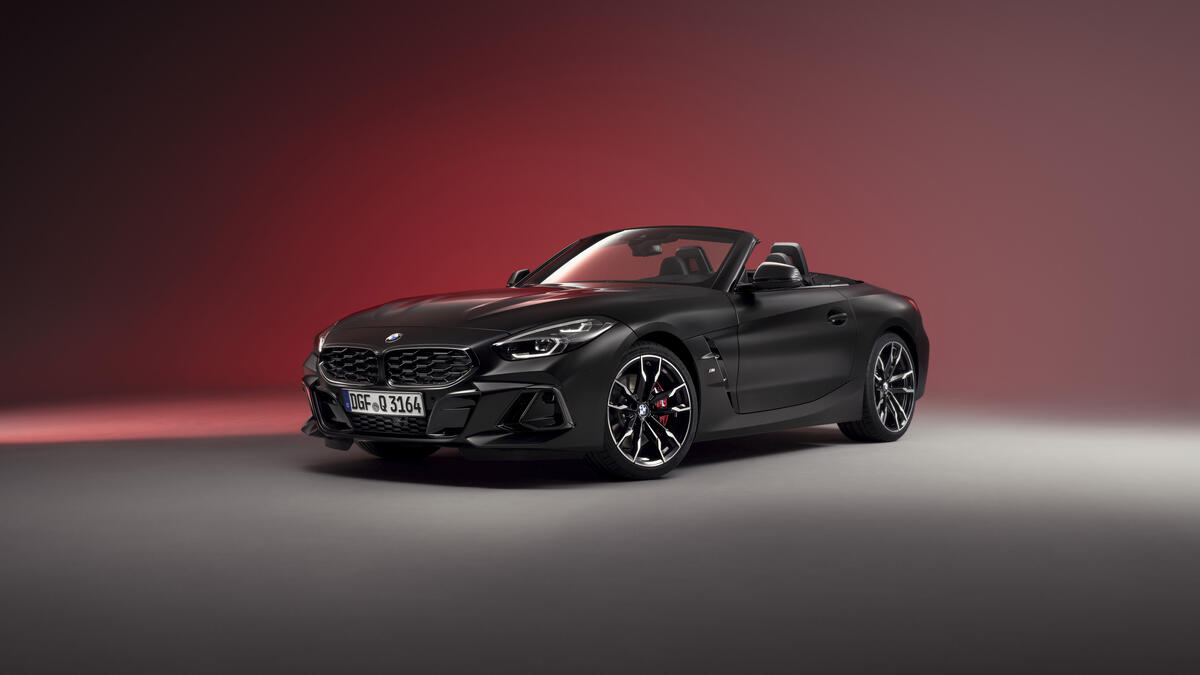
BMW Z4
"Number two, a bright yellow 69 Camaro. Got a Z4 crate engine in it. Now they..."
The BMW Z4 is a sports car that’s made for driving enjoyment, usually as a roadster. The podcast mentions a “Z4 crate engine,” which means an engine sold as a packaged unit for installation. The conversation is likely about using that engine in a custom build.
The BMW Z4 is a sports roadster designed for a more driver-focused experience, typically with a compact, lightweight feel. In the podcast, it’s brought up alongside a “bright yellow 69 Camaro” and a “Z4 crate engine,” implying an engine swap or crate-engine discussion. That’s significant because it highlights how enthusiasts sometimes mix components to create a specific performance or build goal.
make offer thing
"[2336.6s] But they do have the make offer thing. [2338.9s] So you'd have to make an offer under there. [2341.7s] Well, let's come back to it. ... [2381.2s] But Hemings always has that make offer number because these aren't auctions."
Instead of a take-it-or-leave-it price, the seller invites you to send your own offer. That usually means you can try negotiating rather than bidding like an auction.
A “make offer” listing lets buyers submit an offer rather than paying a fixed auction-style price. The speaker contrasts this with auctions, suggesting the listed price may be negotiable.

Dodge Coronet
"Well, let's come back to it. [2342.5s] How about car number three? [2345.7s] The 69 Dodge. [2347.7s] Coronet convertible. [2349.2s] Yeah, I do like it better."
They’re reviewing a classic 1969 Dodge Coronet convertible. It’s being considered as a car you can actually drive and enjoy, not just a show-only collectible.
The speaker is talking about a 1969 Dodge Coronet convertible. They’re evaluating it as a classic “driver” car and pointing out details like the engine and interior/exterior color combo.
numbers matching
"[2359.2s] Big car. [2360.1s] It says that it's in the, and for a Dodge numbers matching it means something. [2364.1s] So it's an original 383 car. [2366.4s] Under the hood looks fairly original and honest."
“Numbers matching” means the car’s key parts (like the engine) appear to be the original ones that came with the car. Collectors like it because it suggests the car hasn’t been heavily swapped or rebuilt with different parts.
“Numbers matching” means the car’s major components—most importantly the engine—have identification numbers that match the vehicle’s original records. For muscle cars, it’s often used as a proxy for originality and can affect collector value.
flex radiator hose
"[2366.4s] Under the hood looks fairly original and honest. [2371.0s] Got a flex radiator hose, but that's easy stuff to pick up. [2374.8s] This is just a driver car."
This is a rubber hose that moves engine coolant to the radiator. If it’s worn or cracked, it’s usually a simple, inexpensive fix compared to bigger mechanical problems.
A “flex radiator hose” is a coolant hose designed to tolerate movement and heat cycling while carrying engine coolant to and from the radiator. The speaker notes it as an easy-to-replace item, implying it’s not a major concern for the car’s overall condition.
Hemings
"While Hemings does have an auction, none of these are. These are all just cars for sale for a price and you can make an offer."
Hemmings is a classic-car website and marketplace. The speaker is saying these listings aren’t being sold through an auction format—just as regular cars with a price tag where you can make an offer.
Hemings refers to Hemmings, a well-known classic-car media and marketplace brand. In this context, the host is contrasting Hemmings’ auction listings with the fixed-price “cars for sale” listings being discussed.
driver quality cars
"Of these three, these are all driver quality cars. Under 50 all in. The first two kind of frighten me."
“Driver quality” means the car is nice enough to drive and enjoy, not a perfect showpiece. It may have some flaws, but it’s still the kind of car you can take out without worrying too much.
“Driver quality” is a collector-car term meaning a car that’s presentable and enjoyable to drive, but not necessarily a concours-level show car. It typically implies cosmetic wear or minor imperfections while still being mechanically sound enough for regular use.
Under 50 all in
"Of these three, these are all driver quality cars. Under 50 all in. The first two kind of frighten me."
“Under 50 all in” means the total cost stays under $50,000, not just the sticker price. It includes the extra stuff you have to pay to get the car ready.
“Under 50 all in” means the total cost—including purchase price plus typical additional expenses—stays below $50,000. In car-flipping or buying discussions, “all in” is shorthand for the true out-the-door budget.
hold its value
"And I like the body style and a core net convertible is always going to hold its value. I think I'm safest and I think I'm most willing to cruise around town in the Dodge."
“Hold its value” means the car doesn’t lose much money over time. In classic cars, that usually happens when the car is in demand—like certain body styles collectors want.
“Hold its value” means the car’s price is relatively stable over time compared with other vehicles. In classic-car buying, this usually points to desirable specs (like a popular body style such as a convertible) and strong collector demand.
ROI
"I mean cash money, not ROI and percent, just money, money. You want to make the most money you can at the end of the summer."
ROI is a way to measure how good an investment is using a percentage. Here, the speaker is saying they care more about the actual dollars you make than the ROI math.
ROI (return on investment) is a percentage-based way to measure how much profit you make relative to what you put in. The speaker explicitly says they’re thinking about “cash money” rather than calculating ROI.
original miles
"Our number one is a white 1992 Corvette CR1 with only 87 original miles on it. ... But this one was having only 87 miles on it."
“Original miles” just means the car’s mileage is the real, recorded mileage from when it was driven. Collectors usually prefer very low mileage because it suggests the car has been well kept.
“Original miles” means the odometer reading reflects the car’s actual, early-life usage rather than being replaced or significantly altered. In collector circles, low original mileage is often treated as evidence of preservation and can strongly affect value.
investments
"Those are actually investments because at some point the car collecting community as a whole has to wake up... and they're going to go strongly up in value."
They’re talking about the CR1 as something people buy hoping it will be worth more later. It’s about collector demand and rarity, not about improving how the car drives.
The speaker frames CR1s as “investments,” meaning they expect the cars’ collector value to rise over time due to rarity and growing demand. This is a market/collector concept rather than a technical automotive feature.
triple white
"I like the triple white. I think super elegant. That's a good color combination for a CR1."
“Triple white” means the car is dressed in white in three places—usually the outside paint, the interior, and (if it’s a convertible) the top too. The speaker thinks that look is especially classy.
“Triple white” refers to a coordinated all-white look—typically white exterior paint plus white interior and white convertible top (when applicable). The speaker calls it an especially elegant color combination for the Corvette CR1.
convertible
"I know it's not a convertible and the other two are, but I see Corvette's in parades all the time."
A convertible is a car where the roof can be opened up so you can drive with the top down. The speaker is pointing out their CR1 isn’t a convertible, even though some other Corvettes they see are.
A convertible is a car with a roof that can be lowered or removed. The speaker notes that their CR1 is not a convertible, while other Corvettes they mention are, and connects that to why they see certain Corvettes in parades.
supercharged
"How about the next one? [2566.8s] 2000 Celine Mustang, S281 Supercharged Speedster, 6,000 original miles. [2574.5s] This is another pretty blue-chip car."
A supercharger is a device that helps the engine breathe more air, which usually makes it faster. If a car is “supercharged,” it’s typically a more special performance version.
A supercharger is a forced-induction device that increases engine airflow, allowing the engine to make more power than it would naturally aspirated. In collector-car talk, “supercharged” often signals a more performance-focused (and sometimes rarer) build.
blue-chip car
"[2574.5s] This is another pretty blue-chip car. [2576.9s] And it's two days to go. [2579.1s] It's at $17,000."
A “blue-chip car” is a collector car people think will keep its value and stay desirable. It’s basically the “safe” choice in the collector market.
A “blue-chip car” is a collector-car term for an asset that’s expected to hold value well and attract consistent demand. It’s borrowed from finance language (blue-chip stocks) to describe cars that are seen as safer bets.
SN95
"[2580.8s] The dynamite look in great color and salines in general for the SN95 are also, I think, [2589.9s] undervalued right now. [2591.5s] Under-appreciated, undervalued."
SN95 is Mustang-speak for a specific generation of the car, roughly the mid-1990s through early 2000s. They’re saying those Mustangs are still a good deal compared to what they’ll be worth later.
“SN95” refers to the 1994–2004 generation of the Ford Mustang (the chassis code used by enthusiasts). The speaker says certain SN95 examples—especially in good colors and condition—are undervalued right now.
351
"[2596.2s] I've got a 97S 351 Supercharged that I special ordered and I've done since new. [2601.0s] And that's a really special car."
“351” is the engine size—about 351 cubic inches. Bigger displacement often means the engine can make strong power, especially with performance upgrades.
“351” refers to the engine’s displacement: 351 cubic inches (a V8 size commonly associated with Ford engines). Displacement is a key spec enthusiasts use to compare how engines are built and what kind of power potential they have.
sleeper car
"[2602.6s] And that's another totally sleeper car right now because they're just so damn special. [2608.2s] This is a strong one too, man."
A “sleeper” is a car that doesn’t look like it’s anything special, but it’s secretly fast or impressive. The host is saying these Mustangs fit that idea.
A “sleeper car” is a vehicle that looks or sounds ordinary but is actually very capable—often because of hidden performance upgrades. The host uses it to describe these rare Mustang builds that don’t get recognized for how special they are.
Chevelle Ss
"The last one, a well-sorted 71 Chevrolet Chevelle SS convertible with a 502 big block in it. So it's got a crate motor in it."
They’re describing a 1971 Chevrolet Chevelle SS convertible. “SS” is a performance trim level, and “convertible” means the top comes down.
The speaker is talking about a 1971 Chevrolet Chevelle SS convertible. The “SS” is the Super Sport trim, and the convertible body style is a rarer configuration than a coupe or hardtop.
502 big block
"The last one, a well-sorted 71 Chevrolet Chevelle SS convertible with a 502 big block in it. So it's got a crate motor in it."
A “502 big block” is a big V8 engine (about 502 cubic inches) known for making strong power. It’s the kind of engine people choose when they want a classic muscle-car feel.
“502 big block” refers to a large-displacement V8 engine commonly associated with Chevrolet’s big-block family. In muscle-car terms, it’s a shorthand for a powerful engine size and character rather than a small-block setup.
crate motor
"So it's got a crate motor in it. It is not a numbers..."
A crate motor is an engine you buy as a ready-to-install package. It’s convenient, but collectors may prefer an engine that’s original to the car.
A crate motor is an engine sold as a complete package by a manufacturer or engine builder, ready to install. In collector-car discussions, it often matters because it can reduce “originality” versus an engine that matches how the car left the factory.
driver car
"This is just a driver car. The other cars are much more modern than this one."
A “driver car” is a classic you’re meant to actually drive. It’s not necessarily built to be a flawless showpiece.
A “driver car” is a classic that’s meant to be used and enjoyed rather than kept as a perfect, museum-grade collectible. It typically implies more wear, less strict originality, or fewer collector-grade details.
Request an Explanation
Heard something you'd like explained? We'll add it to this episode.
Sign in to request explanations for terms you heard.
Want to learn more?
Browse our glossary for plain-English explanations of automotive terms, jargon, and concepts.
Help improve this episode
See something that's not quite right? Our annotations are AI-generated and can sometimes miss the mark. Click the flag icon on any annotation to suggest a correction.