The Concorde Agreement is the big contract that sets the rules for how Formula 1 is run. When it expires, F1 can renegotiate how future regulations work.
In modern F1 power units, the battery stores electrical energy used by the hybrid system. The mention of battery “10%, 15%, 20%” points to how much of the overall energy strategy is allocated to electric power versus combustion.
A turbo hybrid is a car that uses both a turbo engine and an electric system. The turbo boosts power, and the electric part helps with extra push and energy recovery.
Refuelling in F1 is when the car takes on fuel during the race at the pits. It affects strategy because teams can plan different stop timing and fuel loads.
Here, “numbers” means the strategy calculations teams use—like fuel and expected lap times. The point is that refuelling could make the race feel more like math than racing.
Low fuel means the car has only a small amount of fuel left. As fuel runs down, the car gets lighter, which can change how it drives and when teams decide to pit.
A full tank of fuel means the car has been topped up at the pits. That changes how heavy the car is and can affect how long it can go before the next stop.
“Fuel sizes” means how much fuel the car is allowed to start with. More fuel makes the car heavier at the beginning, and that changes how fast it can go lap after lap.
Lap times are how long it takes to complete one lap on the track. In F1, teams care a lot because lap times show whether the car is fast enough and how consistent it is over a stint.
AI means computer “smart” systems that can learn from data and make better decisions. The point being made is that AI could help teams choose fuel plans that make performance too predictable.
Algorithms are basically rules or procedures computers follow to solve a problem. In racing, they can be used to calculate the best plan based on data like fuel load and expected lap times.
Fuel strategy is how an F1 team plans its fuel use during the race. Because the car gets lighter as fuel runs out, the team has to plan to keep lap times strong without hurting the tires or reliability.
This means F1 rules that let cars add fuel during the race. That can change when teams pit and how cars race each other, which affects how exciting passing is.
“Yo-yo racing” is when positions keep flipping back and forth in a stop-start way. Instead of one driver steadily passing and holding the lead, it can feel like cars are trading places repeatedly.
Silverstone is a well-known F1 race track in the UK. People pay attention to big passes there because it’s a major venue for showing how good the racing is.
“Cops” is the name of a particular corner at Silverstone. It’s the kind of spot where drivers can brake late and try to pass, so it’s often used as an example of exciting racing.
“Maggots” is part of a famous corner sequence at Silverstone. It’s a section where cars stay close and drivers can keep fighting for position.
Term
D-values
“D-values” sounds like a technical number or rule setting used in F1. In this clip it’s mentioned as part of the discussion about overtaking, but the exact meaning isn’t explained here.
In Formula 1, there’s an official rulebook that tells teams what they’re allowed to build and how races are run. When the rules change, it can completely change how the cars behave and how the race strategy works.
Downforce is the “suction” effect from the car’s shape and wings that presses the tires harder onto the track. More downforce generally helps you go faster through corners, but it can make the car less efficient on straights.
In F1, the “power unit” is the car’s engine setup, including the hybrid parts that store and reuse energy. The rules control how these systems must work, so it affects how fast the car can be and how teams plan their race.
Term
variable strategies
In F1, teams can choose different game plans for the race. “Variable strategies” means not everyone does the same thing with fuel and timing, and refueling can make more options possible.
Fuel load just means how much fuel the car is carrying. More fuel usually makes the car heavier, which can slow it down and change how it drives, so teams plan fuel carefully.
Qualifying is when drivers set their positions for the race grid. If teams can run different fuel amounts in qualifying, it can make the results less comparable to what you’ll see in the race.
Term
fuel totals
Fuel totals means the total fuel amount involved over a session or race. Teams can’t just “make fuel disappear,” so the total amount affects what strategies are actually possible.
A pit stop is when an F1 car comes into the pits to get serviced. It can include tire changes, and depending on the rules, refueling too. When you do it can make a big difference to who ends up in front.
Strategic divergence is when teams choose meaningfully different race plans—like different pit stop timing or fuel/tyre approaches—rather than all following the same playbook. In F1, rules changes can be aimed at creating this so races become less predictable.
Concept
fuel load going into the race
This is about not knowing how much fuel each car has when the race starts. Since fuel affects how heavy the car is and how long it can run, not knowing it makes strategy harder and can change when teams pit and how aggressively they drive.
This is the fuel amount a team is allowed to start the race with. If the rules limit that fuel, teams have to drive in a way that still lets them finish the race without running out.
This means a fuel designed to be cleaner than regular gasoline or diesel. The hosts are suggesting that with sustainable fuel (and the right engine setup), refueling might not be needed.
The tyre supplier is the company that makes the tires all the teams use in F1. If the rules change—like whether cars refuel—then the tires may need to work differently.
Safety advancements are improvements in F1 safety systems, procedures, and car design that reduce the chance and severity of crashes. The discussion here links those improvements to why refueling might be less risky than it used to be.
Topic
Singapore 08
Singapore 08 means the 2008 Singapore Grand Prix. It’s brought up because that race had notable incidents, so it’s a reference point in the safety debate.
This is the time in F1 when cars could stop during the race to add fuel. It forces teams to plan their pit stops and strategy, because you can’t just drive the whole race on one tank.
A “pit fire” means a fire during a pit stop. It’s especially dangerous in eras where cars are refueled, because fuel and fueling gear are right there in the pits.
“Engine rules” are the regulations that define what engine technologies, operating limits, and performance constraints teams are allowed to use. In F1, these rules strongly influence how the car is designed, because the chassis, cooling, and aerodynamics often have to be tailored around the engine’s packaging and power delivery.
Term
power offset
“Power offset” means giving cars a power advantage (in a controlled way) to help them overtake. The goal is to counter the problem of dirty air when you’re chasing another car.
“Aerodynamic” here means how the car’s shape and airflow create grip. When you follow another car too closely, the air gets messy and you lose downforce, so it’s harder to pass.
This is about teams making different plans during the race—like when to pit and what tires to use. If strategies differ, you don’t always know who will win until the end.
Barcelona is a well-known F1 track in Spain. What happens there—like how easy it is to pass—can make races feel better or worse depending on the rules.
Term
three stop versus the two stop
This is about how many pit stops a team plans during the race. A “two-stop” means two pit stops total, while a “three-stop” means three. More stops can mean more tyre changes, which can help the car go faster between stops.
Tyre changes are when the team swaps the tyres during a pit stop. Since tyres affect how much grip the car has, changing them at the right time can make the car faster.
They’re talking about the wheel/tyre assembly that gets swapped during a tyre change. The team has to mount it correctly and quickly, because any mistake can slow the stop down.
Term
cause a fire
They’re joking about safety risk: refuelling can be dangerous if something goes wrong. Tyre changes don’t involve pouring fuel, so the risk profile is different.
Monaco is the Monaco Grand Prix, a Formula 1 race on very tight city streets. It’s famous for being hard to overtake, so race strategy and passing rules matter a lot.
Strategy variation means teams choose different race plans instead of doing the exact same thing. In F1, that can change when cars pit and how they manage tires, which can make the race more unpredictable and exciting.
Wheel-to-wheel battles are when two cars are right next to each other and actively competing for position. It’s the kind of close racing fans usually want to see.
A push-to-pass system is a rule that lets a driver use a temporary advantage to try to pass. The question is whether it helps overtaking in a fair way or makes racing feel too “button-controlled.”
DRS is an F1 system that gives a driver a temporary aerodynamic advantage to help them go faster and pass. It’s meant to improve overtaking, but it can also make the race feel like the car behind has a built-in edge.
This is the idea of having a separate company make engines that other teams can buy and use. The point is to make it harder for only the biggest manufacturer teams to have an advantage.
A manufacturer customer team is one that gets its engine (and sometimes other tech help) from a big carmaker. The debate is about fairness—whether those teams get an advantage over teams without that direct support.
Cosworth is a motorsport engineering company. Here it’s brought up as an example of a company that could build F1 engines for teams that want to buy rather than develop everything themselves.
“FIA appointed” here means the FIA would choose who the independent engine supplier is. The worry is that it could get political or unfair, especially if manufacturers and independents are competing.
Mercedes is a top Formula 1 name that also supplies engines to other teams. The point here is that Mercedes’s engines have a strong reputation, so switching away could be risky.
An independent supplier is a company that provides engines to teams instead of the team’s own factory or the biggest manufacturer brands. The question is whether that engine would be good enough to compete.
Ferrari is one of the most famous Formula 1 teams. Here it’s mentioned as one of the big engine suppliers that teams might stick with because they trust the results.
Haas is a Formula 1 team. The idea here is that Haas would probably stick with Ferrari’s engine support because switching suppliers could be too risky.
Red Bull is a Formula 1 team. In this context, it’s being used as an example of a strong partner teams would rather stay with than gamble on a new supplier.
Brand
Racing balls
This sounds like a mis-transcription of a Formula 1 team name. The point is that the speaker thinks that team would rather stay with Red Bull than take a risk with a new engine supplier.
“Electrics” means cars powered mainly by electricity, like battery-electric vehicles. The point being made is that this trend influenced what manufacturers wanted and how F1 rules were written.
An internal combustion engine makes power by burning fuel inside the engine. The segment is saying that governments pushed electrification, which affected how car makers approached F1 rules.
Concept
50-50
“50-50” is a shorthand for a rules balance in F1 about how the car’s power is divided between different energy sources. The host’s take is that this split hasn’t helped manufacturers as intended.
A V8 turbo is a type of engine with eight cylinders, shaped in a V, and it uses a turbocharger to push extra air into the engine. More air generally means the engine can make more power.
Technology transfer means taking racing tech and turning it into technology that shows up in regular cars. The claim is that F1 can help companies sell that tech to the public.
A control engine is an engine that’s controlled by the rules so teams can’t freely design completely different engines. It’s meant to keep costs down and make the competition closer.
A spec engine means all teams use essentially the same engine design under the rules. The idea is to reduce differences and keep costs and development pressure under control.
A tender process is a formal bidding process where organizations ask for offers and choose a supplier. In this case, it’s about selecting an engine for F1 under a standardized plan.
A “breakaway” is when teams threaten to leave the current racing series and start something separate. Here it’s mentioned as part of the fight over who controls Formula One.
Max Mosley was a major leader in Formula One’s governing body. Here, he’s mentioned because his influence affected how F1’s rules and control were handled between teams and car makers.
Bernie Ecclestone was one of the most influential people in Formula One business and leadership. In this part of the episode, he’s mentioned as someone who helped steer who had control over F1.
Craig Pollock is a motorsport figure connected to Formula One. In this discussion, he’s credited with an idea from the early 2010s that later came back into the conversation.
Independent teams are F1 teams that aren’t fully backed by a car manufacturer. They often have to buy key parts like engines, so the cost and availability of power units directly affects whether they can compete.
Prototype race cars are built mainly for racing, not for regular customers to buy. The point being made is that F1 should keep feeling like a place for advanced, experimental race engineering.
Homologation is basically “official approval” that a design meets the rules. In racing, it means teams can only use parts that have been certified as compliant.
It’s a rear wing design that can change shape or position. The goal is to help the car generate the right grip in corners while not creating too much drag on straights.
Sometimes the air stops flowing smoothly over a wing. “Reattachment” means the air starts following the wing again, which can change how much downforce the car gets.
High-speed corners are sections of a circuit where cars maintain large velocity through the turn. The host argues that when the wing/aero concept fails, it tends to happen in these fast corners (or after long straights), making the consequences more severe.
A long straight is a long section where the car speeds up a lot. If a problem happens right after, it can be more dangerous because the car is moving so fast.
Spa is a famous F1 track in Belgium known for very high speeds. The Kemmel Straight is one of its fastest sections, so problems there are especially risky.
Gary Anderson is the technical director for XF1. That means he helps lead the engineering side of the team, deciding how the car is developed and set up for performance.
Promotional days are official times teams are allowed to use the track for filming and marketing. Even though it’s for promotion, it can still help a team because it gives them extra real track experience.
Monza is one of the most famous race tracks in Formula 1, in Italy. It’s known for being very fast, and Ferrari previously did a filming day there earlier in the year.
Filming days are times teams are allowed to use the track to record content for media. Even if it’s not a race weekend, it can still give the team useful track time.
Madrid is where Ferrari is getting early track time for filming/promotional work. The idea is that being there first helps them prepare better than the other teams.
In F1, simulations are computer models used to predict how the car will behave—such as performance, tire behavior, and aerodynamic effects—before running on track. The hosts argue that simulations can’t fully replace real-world testing.
A real world advantage means getting better results because you’ve actually done the thing in real life, not just planned it on computers. In this case, Ferrari gets early track experience compared to other teams.
Ferrari is the F1 team in this story. They’re doing a short test to learn how the track behaves, which can help them adjust the car and plan strategy for the race weekend.
Demonstration tyres are tyres brought out for a special day (like filming) instead of the exact tyres teams race on. They can still teach teams about grip and handling, but they might not behave exactly like race tyres.
The pit lane is where teams work on the cars during a race weekend. If something gives one side an advantage, people notice quickly and the debate can blow up there.
Tyre behaviour is how the tyres act as you drive—how they warm up, how much grip they give, and how quickly they wear. Knowing that helps teams plan pace and strategy.
LIVE
The Athletic
The race is on.
And with the possible return of refueling back on the agenda, we ask if this is a good
idea and delve into the latest state of play on the next generation engine regulations.
And we explain what's going on with rear wings and Ferrari's madring test.
I'm Ed Schrauer and joining me today are Josh Sutil and John Noble.
Well, John, we're going to look into the far future today.
This is obviously stuff that's been rumbling on in the background.
So it's good to kind of catch up and talk about some of the big issues
related to that next generation engine, isn't it?
Because this is one of those things that's not kind of immediate, but it's rumbling on
kind of week by week, isn't it?
Yeah. So the V8s are coming.
They've got absolutely no doubt about that.
What we don't know is the year.
At the moment, the concord agreement runs until the end of 2030.
So from 2031 in theory, the FI can write its own regulations,
dictate what it wants the power units to be and teams choose, manufacturers choose.
Do they sign up or not?
F1 doesn't really work like that.
It's much better to have everyone lined up and in agreement.
So we're now in the process of framing what is the V8 going to look like?
Is it going to be naturally aspirated?
Is there going to be a turbo?
Is the battery going to be 10%, 15%, 20%?
Is it going to be a turbo and a battery or just a turbo battery?
And amidst all this debate is the elephant in the room, which has kind of cropped up
during conversations over the past 12 months, that if we go naturally aspirated V8,
that's less efficient than a current turbo hybrid or a turbo engine.
That means more fuel and more fuel means heavier cars,
which seems ridiculous because there's a big push to make the cars lighter.
So the only way around this is to come back with refuelling.
So Josh, refuelling.
We've got this broad consensus on some of the elements of the future engine,
but refuelling, this is a pretty big question, isn't it?
So this will be the first time it's been there since 2009.
Is this a good idea?
A short answer, no.
I think this would be a horrendous mistake to bring back refuelling to F1.
There's good reasons why it was dropped in the first place.
I never liked it when it was around.
I think it really was a bit of a stain on some of the races in the 2000s, unfortunately,
because it just has some fundamental problems.
And I think that the primary one is that it moves a lot of the action from happening on track
into the pit lane and onto numbers.
So it's more about you can just extend your stint because you've got more fuel.
That fuel burns off, you're on low fuel, and you basically just do an overcut
because you're on really low fuel.
You can do really good lap times.
Somebody else has come into the pits, they've got a full tank of fuel.
They're obviously going slower.
So you are just running longer, which you already knew before the race,
because the fuel sizes have already been released.
So you already know a car's heavier, and then that car just sort of rather easily then
is able to do those lap times and quite predictably then get ahead.
So yeah, I was never a fan of it back in the 2000s.
And honestly, I think it'd be even worse now because back then,
obviously they had really good simulations still.
But right now, there would just be the way that algorithms have advanced and AI has advanced
and will advance even more if this was coming in the 2030s.
Everything would just converge on the best possible fuel strategy,
and everything would just be done by numbers and it would be driving to a lap time.
And yeah, it would just be disastrous for F1.
So at the moment, at least they're only considering it.
And I hope that analysis will reflect what I've just said.
And yeah, we don't go down this path because I think it would be a horrid mistake.
Where are you on this, John?
Do you agree with Josh or do you go the other way?
No, I don't think it would work.
I think it's one of those things.
From speaking to Fi President Mohammed Ben Salim at the weekend,
the study has been commissioned to look at the pros and cons.
But I do get the impression there isn't much support for it.
I think it's a default fallback to analyze it.
You've got to see, does it work?
Do we need it or not?
Because there is the absolute priority in getting the cars lighter,
making the power units simpler.
All these elements that everybody wants.
But there's no point in doing any of this if the racing is worse.
And I don't think a refueling formula delivers great racing.
The overtaking, as Josh says, happens in the pit lane, not out on track.
I think 2031 offers a great platform possibility just to redefine what do we want from F1
overtaking, because you go from a refueling area where there's very, very little,
to what we've got now, which has, I don't like some of the overtaking at the moment,
beyond just the yo-yo racing.
I didn't especially like the fact that Silverstone, for example,
Lewis Hamilton goes around the outside of George Russell at cops, great move.
They're side by side into maggots, fantastic hustling each other,
battling exactly the sort of thing you want to see.
And then 100 meters later, Russell just pushes a button and overtakes on the straight.
So a complete waste of time.
D-values and overtake.
I don't believe in overtakes and overtake.
Just like in football, a goal isn't a goal.
There are some great goals and there are some rubbish goals.
They do vary.
So I don't think, I think we need a formula one that's got all the right elements,
and all the right elements does not include refueling.
The critical thing for me is that the answer to the question of does F1 need refueling
needs to be within a broader question of what kind of output you're trying to get.
This has been something that formula one regulations have fallen victim of too many
times in terms of there'll be one overwhelming thing you're working to,
whether it's, oh, we want the cars to have more downforce in 2017,
or basically this current reg set is all about making the power units work,
they have some flaws baked into them.
So it's really important, I think, to sort of work backwards from what F1 do you want.
Because actually, I think we all agree that lighter smaller cars are a good thing,
and heavier, potentially slightly bigger cars to hold more fuel.
That's a bad thing, isn't it?
And refueling is a good answer to preventing that.
But that's just an answer to one really close loop of reasoning,
and it needs to kind of plug into everything.
But I think to play devil's advocate on it, and I'm not a big fan of refueling,
for the reasons Josh in particular laid out,
but to play devil's advocate on it, the argument people often make is,
oh, you get variable strategies, don't you?
You can have different fuel loads, et cetera, et cetera.
So does this not present an opportunity to have a little bit more variety in races,
as some people argue?
We'd often ruin qualifying, because before you'd have different fuel levels in qualifying.
So you'd have this great qualifying result where maybe you've got a tow to suddenly
on the front row, you've got an old tow to front row,
and it seems like a really good interesting racer setup.
But then, of course, you think about it for a second, and you get the fuel totals,
and you realize, well, it's because they were running light.
So we're going to have this race where they're maybe leading at the start,
but then they're inevitably going to have to make more pit stops than the
faster cars behind, and those faster cars are going to come through.
So you've kind of got the fastest packages qualifying 5th or 6th,
but they've obviously got the right amount of fuel.
Anyone running lighter then qualifies ahead.
So yes, it does create more strategic variants,
but I think F1 fans will see through that, especially now with so much data we have.
I think it just wouldn't work.
You'd have to make a lot of tweaks compared to how it was, because otherwise,
yeah, you get variation, but it's all artificial.
And if we've learned anything from 2026, it's that I don't think that's a good thing.
We need 2031 to be a proper reset, a proper clean slate,
and not to bring back any of these things that I think just haven't worked before,
and have created much annoyance both in 2026 and back in the 2000s.
You could, of course, do things to create a bit more mystery.
For example, I guess, John, there's no reason why you have to start on
have to qualify and race start fuel loads, which is what happened.
But of course, that was introduced because the racing wasn't good enough, wasn't it?
That was injected into it to create an extra question mark
and to drive some strategic divergence,
because everybody just jumped onto similar approaches.
So could you just have a normal qualifying,
and then everyone's blind in terms of fuel load going into the race?
Could that be interesting?
Or do you just think that with the amount of number crunching and that kind of thing,
everyone would just end up on similar strategies,
and you run the risk of either driving around in a queue
or if overtaking is very straightforward,
you just sort yourself into order endlessly,
and you're not actually getting that wheel-to-wheel racing,
which I think it's fair to say is the thing that everybody wants most of all.
Yeah, it becomes too strategic.
I'm sure people would converge on the right strategy.
And then when that happens, you then get into your knee-jerk responses
and complicated rules of qualifying on your race start fuel
and all that nonsense that we had before.
But actually, when you dig into it, we don't need to bring it back.
I think the debate primarily is, do we have a turbo with the V8s,
in which case the cars aren't going to be as loud?
They might be a little bit heavier.
So it's not the pure V8s we had in the past,
but you bring the turbos, you get the efficiency,
we've got a sustainable fuel, you don't need refueling.
I'll take a slightly quieter engine.
There's a tiny little bit heavier.
If it allows the drivers to push flat out, the manufacturer's happy,
all the teams are committed, and we can have some decent racing.
Yeah, that pushing flat out is an important thing.
Another argument you can make is if you do have refueling
and the cars aren't so heavy, that makes it easy for the tyre supplier, etc.
So again, I'm trying here, Josh, to play devil's advocate,
because it's not what I'm not open-minded on refueling.
It's just I saw a lot of it and I rarely saw it doing the things
that are often argued it did achieve.
So there are other areas where it can have benefits though,
and I would say that in terms of the tyres you're trying to produce,
that is something that could help, isn't it?
Yeah, it's true.
And I'll give you another positive, probably the safety aspect.
Obviously, that was always a concern.
I'm sure now with how many advancements has been,
it would be safer than it was before.
And even then, I think it was a fairly safe thing,
even though we did still see the occasional accidents.
But I think stuff like Singapore 08 and stuff,
we probably see hopefully never even if it came back,
just because the safety advancements have come on so long.
So I'm not arguing against it on the safety grounds.
I think there's been good advancements there.
But again, yeah, I'm sorry, there's just no there's no compensate me on this one.
Yeah, I've got a degree of sympathy for the safety argument in so far as you can do it very safely.
But having refueling is an element of risk that isn't there if you don't have it.
That is just a fact.
And actually, when the last refueling era, which ran from 94 to 2009,
there were very few incidents.
There were a few people remember, obviously, the Yosfer Stapham one in 94 is the big one.
Ready, Irvine had a big one for Jordan, Jammery, Bruni later on had a pit fire as well.
But it was by and large pretty safe.
But it does introduce that little bit of extra element of risk to things.
And then you've also got the question of the expense of the equipment,
carting that around, et cetera, cetera.
And that does require resources.
So kind of stepping back, John, how do you think with these engines?
We do all the engine rules and the wider rules, in fact,
because the car has to be tailored to it.
What should the template be to mean we get the best possible racing?
Because like you say, the really easy overtakes
when you've got massive amounts of power more than the car you're going past
aren't super interesting.
But they do show that having a power offset is a good way to push through the aerodynamic
following challenge.
So there's an interesting learning there.
There's various things you can take to try and get the outcomes you want.
So what's the recipe you feel is the natural direction?
The best grand prix are always when there's a difference of strategy
that you don't know which is the winning strategy until the final closing stages of the race.
And I'll point to Barcelona this year, for example,
these current cars aren't fantastic.
They're quite difficult to overtake.
But it was a day where the three stop versus the two stop was in play.
And this is what makes the variation because you go into the race,
no one's sure what the winning strategy is.
It fluctuates around a bit.
The problem with refuelling, if you fill in, say, 10 litres less fuel than someone else,
that's a numbers game, not a skill game.
Unlike with tyre changes now, you can have a really quick pit stop.
You can have a terrible pit stop.
There is that variation of skill between the teams.
We'll go back to 10 second pit stops where you and I could fit a tyre in that time
because there's no skill at all to get a tyre wheel on and off in that.
So you ruin the pit lane.
There's some of the NF1 team listening to you thinking,
we'll show that, John Noble.
You're going to get an email in a few days.
I reckon you and I could get a tyre on and off a car in 10 seconds.
We'd probably find a way, even without refuelling,
to cause a fire doing that, to be honest.
But there would be variation there.
It would be quite amusing.
Maybe that's the variation to get you and I to do the pit stops
during this refuelling, just to add some very good...
Just make it a joke, for every race,
you get me and John on your pit crew team and guarantee extra time in the pit.
It's one race a year you get to choose when you don't get us.
Bad luck, it's Monaco.
So I think it's the strategy variation is the key to a good race
because it's the second level of unpredictability.
You can have the wheel-to-wheel battles themselves,
then you throw on top a variation of a 2v of 3 or a 1v of 2, those sort of things.
These are what make the good races.
These are the elements that need to be preserved
and you don't want anything that makes these two aspects more predictable.
Another element I think they could throw in as well is the curse element
or some push-to-pass system, which is going to help with that overtaking.
I think you can achieve overtaking with things like that,
more so than something like refuelling.
So I'd be in favour and I know that's part of the discussions they're having,
is to make sure that drivers have some aid behind the wheel,
which isn't too artificial and I don't think having so much battery
or a push-to-pass button for a certain amount of seconds per lap or per race is artificial.
I think if everyone has the same thing, they can use it to attack or defend.
I think that's a more proper solution, I'd say, if they want a bit more overtaking.
Yeah, certainly something of that.
Elk haven't quite worked out the optimal way to do it
because you can have a push-to-pass with a certain amount of time.
That can be interesting, but there's a risk of things cancelling each other out.
But equally, you don't want the DRS situation where the car behind's got an advantage
and the car in front can't counter it.
So these are the things that really need to be looked into.
I think it's really positive that they are saying,
okay, refuelling is potentially an answer to one of the complications that we're running into.
What does that actually mean?
And it's being really rigorous in this process
and trying to analyse what you're trying to achieve
and being really focused in terms of what are our key objectives and what we're trying to do.
Because even if you agree on those objectives, it's really hard to deliver them.
If you're vague on those objectives or you're oversimplified those objectives to one thing,
you're basically holding yourself below the waterline before you've even started.
So good to be at this point in the process.
And I'll be interested to hear from listeners if they disagree on refuelling.
I know there are plenty of people who like the idea of refuelling.
So if you've got a strong argument to it, let us know.
Hey, hold up.
This is your minute, your day to play, to make, to move, to move through, to explore.
It's your body to rest, to nourish, to grow. It's your mind, you know.
It's your place, your life, to love, to dream, to change.
It's your world to understand.
The New York Times.
Find out more at nytimes.com slash your world.
Let's talk about another aspect of the future engines, John.
Something that Mohamed Ben Selyam raised was the potential of appointing an independent customer
engine supplier to effectively prevent there being manufacturer customer teams.
How serious the proposal is this and how seriously should we take it?
I think it is serious. I think there is a big push to bring costs down dramatically.
It's one of the kind of key motivations that's behind the switch to V8s.
These current turbo hybrids are too expensive, too complex.
So you want to drive down costs by at least 50% per unit.
And I think the ultimate aim, having spoken to Ben Selyam at Silverstone,
was primarily that the power units become so cheap that either it becomes realistic for
a team or other manufacturers to create their own, or it becomes cost-effective for an independent
supplier like a Cosworth, for example, to make its own power unit, sell it to customers in Formula One,
and create a solid business model that from Ben Selyam's perspective means customer teams
are no longer have to go cap and hand to manufacturers and have to do what they say
and be it their beck and call and vote in favour of certain rules and all those elements.
So it's about increasing the independence of the customer teams.
Yeah. I think there's two things here, aren't there?
I think having independent engine suppliers would be a positive for Formula One.
That's often been the case. It shouldn't have to be manufacturers.
I'm a little bit wary of this idea to have an FIA appointed one.
I'm slightly cautious about that because then you have all sorts of question marks about,
do you start trying to, if you're competing against manufacturers, for example,
do you run the risk of helping out the independent one?
Where do you set the level? There'd be politics about what level that independent supply should be at.
There's lots of complexities, but it's an interesting notion at least, isn't it, Josh?
Yeah. I'm not sure if this will ever come to pass. I think, again, like the refueling,
it's good, but it's up for consideration. It's a good idea to have.
But I'm wondering if it will actually come to pass in reality. I mean, we've seen it,
again, there's another thing we've seen before, but it hasn't always worked.
So I would not come to fruition or it hasn't lasted very long.
I mean, think of the kind of cause worth at the start of the 2010s.
It supplied a lot of the new teams and there was talk of it carrying on to the V6 era,
but that kind of fizzled out. I think after 2013, they stopped supplying.
So yeah, I'm not sure if it will come in because I'm just thinking of it from the
perspective of a customer team. Say you're Alpine and I know the René CEO has already,
it's told John kind of there, not interested in starting up their injured project,
obviously, but they've just got rid of again. From their perspective, would you switch away
from a Mercedes customer unit to then go to this independent one that would feel like
a bit of a risk? I know the formula will be simpler, but at the end of the day,
you know, that Mercedes engine facility is obviously very well-renowned, very accomplished,
and you bet on them doing a good job on whatever the formula is.
So the question for me is that independent supplier going to be a good enough standard?
Because if the engines are cheaper anyway, then you'd imagine the supply from a Mercedes
or a Ferrari isn't going to be maybe as expensive as it was before. So for me, it'll be,
will there be the motivation there for any of the independence to actually use it
overtaking a Ferrari and Mercedes supply? And that's a difficult question to know now, but
for me, that's with the current level and the kind of the one where it falls down,
because I'm not too sure of really any of the independence that would go in that direction.
You've got people like Haas and surely for them, it's better to stay aligned with Ferrari.
You've got racing balls. Surely it's better for them to stay aligned with Red Bull.
Like I said, you've got Alpine. Again, they've just had really good success from moving to
Mercedes. Would they be so quick to move away? So I wonder if the idea will fall down because
none of the teams will actually use this.
Yes, I think more appealing just to have an engine formula where it is possible for
independence to compete. But there is this whole problem, isn't there, John, with manufacturers,
that F1 does want the manufacturers in there? Because the manufacturers, to use that dreaded
phrase, they do add value to Formula One, significant value literally in terms of the
money and the investment. And we do also know from years of audience behaviour and the kind
of thing we do that actually manufacturers do actually, in terms of storylines, attract people
quite a lot. So I know there's people who will kind of hark back to the oldest and say,
I'll just get rid of the manufacturers, have all independent engine suppliers. And there's a certain
appeal to that. But this is that again, the line that F1 needs to tread and decide exactly what
place the manufacturers take in the F1 ecosystem. Because I think it's fair to say that some of
the problems we've got now that we're stuck with with these power units is a consequence
of just that dial being a little bit too much in favour of the manufacturers through the desire
to get them in. And that's actually created some of the difficulties that F1's facing now.
Yeah, manufacturers are essential for Formula One. They bring investment, they bring the marketing
benefits, they bring the profile. As you mentioned, when we do website stories on manufacturers,
especially new manufacturers coming in, there is a genuine interest in it. And it's that link between
road cars and the racetrack that a lot of people follow F1 actually like.
So there's a value to seeing Mercedes versus a Ferrari versus a Honda out on track compared to
being a Cosworth versus another independent supplier, which doesn't quite have the same attraction,
doesn't cross that line to attract people who don't understand Formula One. So there is benefits
to be had. I think the mistake that was made with these regulations was partly timing because it
came in a time when the car makers didn't really know where the automotive world was going.
There was this obsession with electrics. Governments were pushing everyone to get rid of
internal combustion engines, go electric. So we ended up in this world where the manufacturers
fought for 26 to 2030, they needed to be in this place. But actually, things are being pulled
back a bit. 50-50 hasn't worked. I don't think it brings any particular benefit to manufacturers
being at this basis. We're going to go to 60-40, which is what it probably should have been to
start off with. And I think manufacturers will sell as many cars when we have a V8 Turbo with a
10% battery as they will under the current regulations anyway. So you can argue the rules
ultimately aren't so relevant as long as you can sell that idea of technology transfer.
But it goes back to the same old thing that's been true of F1 for decades,
win on Sunday, sell on Monday. But maybe, John, as well, the picture will change by the time we're
2031 and we'll get to 2031 and suddenly we'll want different engines. Maybe an electric would
have gone nuclear by then or not literally nuclear or hydrogen power or something will
have changed the picture as well. So it's not something F1 can particularly avoid,
because it's fair to say, isn't it? The picture could all change then again in another five years
time. Yeah, that's a really challenging thing because obviously there's lag in the system
in terms of these decisions are made and we're talking about things for
several years down the line. And we don't have the most stable and predictable world
at the moment in many ways. So it is difficult to actually position yourself for effectively,
this is an engine that will still be being used in the mid 2030s, isn't it? So you're really talking
about 10 years down the line. That's extremely difficult to foresee. And obviously, it's tempting
just to say, I want to just close it off, do what's best for it, do the best possible products.
But F1, whether we like it or not, it is a big money making machine. They want the
cash coming in, they want the manufacturers, they want everything basically. And that does come
with the risk of you end up compromising so much that your product suffers and there is a risk of
that. But there's a lot of things that have to be factored into these decisions. One thing I
wanted to ask you, John, do you remember when the FIA put out a tender for a control engine for
Formula One, when it was going to be the spec engine? There was actually a tender process
was launched for a single make engine. I remember Max Mosley was quite in favour of this idea.
But you've got to remember that a lot of this was at the time when Mosley and Bernie Eccleston were
at war with the manufacturers. There was the threats of the breakaway. So the fight was for
the control of Formula One. So some of the movement in those days wasn't actually based on
the reality of what was going to be best for Formula One. It was based on the reality of what
was going to be best for Max Mosley and Bernie Eccleston in controlling Formula One and weakening
the hand of the manufacturers. I mean, it's been an idea that has come around. Obviously,
Craig Pollock's pure idea of early 2010s came around. But the turbo hybrid engines were so
expensive. It was never realistic to get off the ground and have that scale of investment
that was needed to succeed with these power units. But if we end up with a very cheap V8,
which is limited in materials, limited in design, it's quite easy for everybody to produce a
competitive V8, then there's no reason why an independent can't make a successful business
model for it. But the economics are going to have to match up. At the moment, manufacturers
sell customer power units to independent teams basically at a loss because it's limited in the
regulations how much you can charge. That doesn't cover the costs of them doing it. So it's an
investment from manufacturers. It's the add-ons on top of the power units where they can even
the money out a little bit. There's the marketing returns and benefits. So this is another area
where the assistance of manufacturers sometimes isn't respected because if the manufacturers
absolutely hardcore and say, well, we're not interested in selling power units because we're
going to make a loss on it, then you have a lot of teams with no engines at all.
Yeah, and that's always something that has to be factored in and considered. I do think the ideal is
to have a variety of engines in Formula One. I've said this before, but there's a lot of
series out there that have had to go one make for very, very good reasons. And I think it's
really important to keep these as prototype race cars and prototype engines basically. That's
what we're dealing with here. I know there's various restrictions on engines and homologation and that
kind of thing, but I think that is something that makes F1 special. And one of the good things
about this season actually has been, for all the frustrations about some of the characteristics
and subtleties, trying to understand the different characteristics of the engines and the performance
implications has been genuine interesting. And that's something that has injected some interest
into the season. So I think the first choice, if we're coming back to that thing of drawing up
the F1 you want, I think it's very much you want multiple different engine suppliers and you want
it to be competitive and with room for some innovation, but you also want it to be cost
effective and also ideally not to allow one manufacturer or another to gain a massive
advantage. And that list of things I've just read out there is, as always, it's so easy to say,
but we can all argue for outcomes, but it's how you get that outcome that's the real challenge
and that's what F1 is going through right now. Let's move on to a few other topics. Now, John,
the rear wings, the flip top rear wings, the Macarena, the McLaren Aina or whatever it's called
and all the other names we've got for it. The FA seems to be taking a look at this. Is that a
result of safety concerns? Is this something that could lead to it being outlawed because there are
problems with Max Verstappen constantly crashing? Yeah, I think Max Verstappen's crash in the
British Grand Prix just a week after he went off in qualifying and Austria has made it automatic,
the Fi is going to look into this. Although the differences from what Red Bulls say were slightly
different, that the Austria incident was more related to air flow reattachment, whereas Silverstone
seemed to have been something slightly different. But it's the very fact that it's well understood
that these Macarena wings, flip-flop wings, whatever we want to call it, are more difficult
as they transition between straight mode and corner mode. They're more complex. The getting
the airflow to reattach in the proper way is more difficult. It's why it took Ferrari a little while
to get it onto its car. It tested it in China. It wasn't 100% convinced it could get it to work
consistently enough that weekend. So it delayed it until Miami. Red Bull have had it had these
problems. So I think this is due diligence from the FIA just to see are there consistent problems
with these wings? Is the Red Bull incidents in Austria and Silverstone? Are they isolated?
Is there a clear explanation? Is there something they can fix to guarantee it doesn't happen again?
Or is it something the Fi's got to step in? Because I think the Fi always has at the back
of its mind. It's not what's going on now sometimes with these things. It's where the next steps
happen. Because we know other teams are looking at this. We know McLaren have tried its version of
the wing, which didn't even make it out of the garage. It hit problems. So as more teams do it,
obviously the risks of further incidents increase. And the FIA sometimes refers to nip these things
in the bud. Say, right, we're not going to carry on this because the risks in the future are too
great. So is this something that's going to be wound down this year? Is it something the Fi is
going to let happen till the end of this year? And then we'll say, well, for 27, I think we're
going to have to stop this just in case it gets out of control. But we'll wait and see. I think
we'll have an answer by Belgium. Yeah, the traditional thing would be, sort of a recent
year's tradition would be to let it run to the end of the season and then close it off. That's
normally what they do with these things. But if there's a safety concern, they may move earlier.
What do you think, Josh? Is this something Fi should be intervening in or should it just be
the responsibility of the teams to design it in a way that is safe? Because it's clear that they
can be safe and consistent. You just have to work at it. I love the innovation and I love the
development race we've seen. I love Ferrari and Red Bull have been able to make it work and
but McLaren are trying to keep up as well and bring their own version. And no doubt,
I wouldn't be surprised if we see it from more teams too. I think the problem is,
there's no small incidents when this goes wrong, just the very nature of it going from
straight mode to corner mode. It's almost usually going to be in high speed corners or after a really
long straight. The speeds are always going to be high. That's kind of the problem, I think. It's
just that both of those for stepping chunks were quite big chunks. And if it happens again, it could
be somewhere else can imagine it at Spa at the end of the Kemmel Strait or where there's somewhere
with barriers and a harder stop or somewhere like Monza. So I can fully understand why the FAA is
looking at this. And if it does mean all that development has to go in the bin, it would be
a shame to lose that innovation, but probably understandable if the review concludes that
it's just a risk too far. If you'd like to hear a little bit more about this particular topic,
we're going to tackle that in the next episode of the Race F1 Tech Show with
XF1 technical director Gary Anderson. That'll be coming out certainly at some point this week.
It might not be there immediately, but it will be being released and we're getting some of the
fine technical detail of that. Josh, to finish off, why is Ferrari getting to test at the
Madrid before everyone else? Yeah, this is classic F1, isn't it? This is a brilliant bit of
getting ahead of the game from Ferrari. Totally within the rules. It's classed as one of their
filming days, one of their promotional days. They had one at Monza earlier this year in April,
and this is their second one that's taken place at the Madrid, like I say, way before
anybody else will have a look at it. You guys were obviously there, weren't you? I mean,
only a few weeks ago. So I guess the circuit is now ready for a car to drive in the track,
because when you two were there, it didn't look like it could be fully ready for a filming day,
but it seems like it advanced since you guys were there. Yeah, it's definitely worked to be
done. Wasn't there John, in terms of actually being safe to do an F1 car at speed all the way
around it? Yeah, that was my biggest surprise, but actually, we could have a filming day just at
the circuit, but it was ready enough. So fair play to them. Yeah, it's a promoter, isn't it,
but it's kind of organised it to make sure that the circuit's on the right track. And yeah,
good for Ferrari to get ahead of the game, because you can do all the simulations in the world,
but I think there's no substitute for the real thing, especially with this year's car as well.
So yeah, all totally within the rules and a good real world advantage for Ferrari is getting
over the other teams. And I suppose it's quite good, John, as well, for the circuit,
because it's no bad thing to have the track almost tried out in anger, isn't it? But before,
because that old rule about having a pilot event, which he used to have sort of fell by the wayside
about 15 odd years ago, didn't it? So it's no bad thing to test it out in that regard, is it?
Yeah, it's good for the circuit. It will get a first indication of how things look and any
initial problems that flare up. But it also is good for Ferrari. It's only 200km. The value's
not massive. You're on demonstration tyres that are for filming day, but it is knowledge.
Others, I spoke to a few other teams about this, I said, is this a bit cheeky of Ferrari to get
a head start? They thought cheeky wasn't the right word. They thought quite clever, because
the opportunity clearly been there for anybody else to have done this, but Ferrari's got a head
there. It will just give it a step in front, whether that translates to a proper advantage.
If we turn up in Madrid and then on Friday, Ferrari's two seconds lap quicker, having taken a
completely different line and different setup approach to everybody else, then we'll know
it may well have had a bit of a head start. So it will be a little bit of a help. And always
go back. I remember in the early Michelin days, there was a demonstration at the Australian Grand
Prix, involved one of the cars on some Michelin tyres. And it was only a couple of laps, but it
created a huge controversy in the pit lane, because people are arguing that actually this is
given Michelin an advantage in understanding the track surface and the grip and all those
sort of elements. So there will be knowledge that will be fed into the system. If you know what the
track surface is like and the grip levels, then that gives you a big head start in terms of
understanding downforce levels, tyre behaviour. And with these 26 cars, don't forget that
grip levels have a big impact on energy management. High gripper is the less energy deployment you
potentially need coming out of the corner. So it's all going to be, they'll be logging absolutely
everything will be fed into their system and will help them in their preps from Madrid.
It's going to be the most useful promotional day I think ever for an F1 team, that's for sure.
And another example of how nimble this new Ferrari is, to be fair. I mean, they've had the
exhaust wind, the flip-flop wing, they're using the advantage here to get this test. It's just,
it's quite nice to see a team that's often criticised for being a bit slow and behind the
times. To be on the front foot many times this year, like with this test, it's really nice to see.
Yeah, so that's a good treat. I'd be interested to know what the timeline was when they thought of
this and knew it was possible, because obviously some teams wouldn't be able to do it because
they'd already used up their promotional, you get two of those days over the year. So maybe this
was something that was in the plan significantly earlier, but it'll feed into the simulation
work and all of those things. And it should mean that they get to the start of the weekend
in a better place, which is no bad thing. And yeah, it's good that people have been sensible
about it and just realised, yeah, that's a good idea. We probably should have thought of that,
because I'm sure there'll be a few people thinking maybe we should have done, but yeah,
certainly in terms of how ready the track was, there's a lot of barrier work and all those sorts
of things. That's probably the best way to characterise, isn't it, John, that the track
itself was there, wasn't it? But it was all the peripheral stuff, I mean, primarily things like
the fan zones and that kind of thing. But it looked like it was only sort of a handful of weeks away
from the actual track itself if they wanted it to be fully ready in terms of the ribbon of Sarmac.
Yeah, the asphalt had been laid. I think they were going to say they were going to
water treat it so to make it so it's actually ready for the weekend. So I don't know if that's
been done yet, but I'm also not, I'm not a construction expert. I don't know how quick
you can erect. Why not? Because I'm just an expert in changing F-on tyres in 10 seconds.
So I'm not sure how quick you can create barriers, how fast these things go up in terms of the
peripheries. And certainly Ferrari will have got an enormous amount of benefit from being able to
do that. And I'm sure everyone will be trying to glean from what they can from anyone at Ferrari
if there's any lessons to be learned, doubtless in the paddock in the Spa weekend. So yeah,
good move from Ferrari, good sign of their intent. Well, thanks very much to Josh and John.
We've got Spa coming up soon, but we've got another podcast before then. So stay with us for
the next video.
About this episode
Refueling is back on the agenda, but the hosts wrestle with what it would do to F1’s racing, strategy, and safety. They argue refueling could move “a lot of the action from happening on track into the pit lane,” turning outcomes into “a numbers game,” while also raising an added risk—despite improvements since the last era (1994 to 2009). Engine uncertainty looms too: “So the V8s are coming,” yet the year and hybrid battery split remain unclear.
F1 seems destined for a V8 engine future, but with a push to make the cars considerably lighter at the same time, could that mean a return of in-race refuelling?
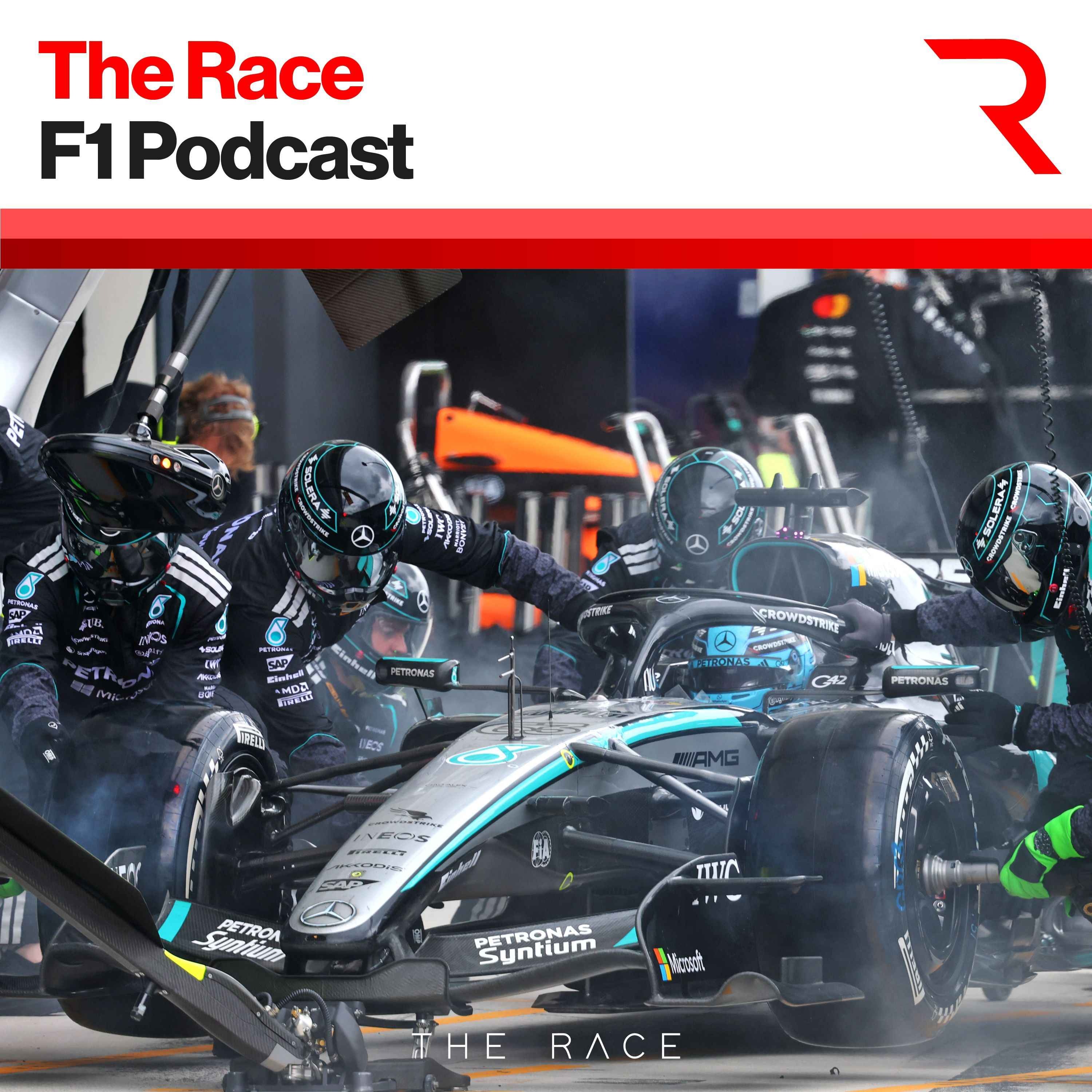
On the latest episode of The Race F1 Podcast, Edd Straw is joined by Jon Noble and Josh Suttill to debate whether bringing back fuel stops would be a good or bad idea for F1.
They also discuss whether FIA president Mohammed Ben Sulayem's suggestion of appointing an independent engine manufacturer is workable, plus we explain what's going on with the safety probe into revolving rear wings and ask whether Ferrari have got a jump on the rest of the field by arranging a filming day at the Madring, ahead of the first ever race at the Spanish circuit in September.
Get bonus F1 podcasts, extra content and ad-free listening, sign-up to The Race Members' Club on Patreon today.