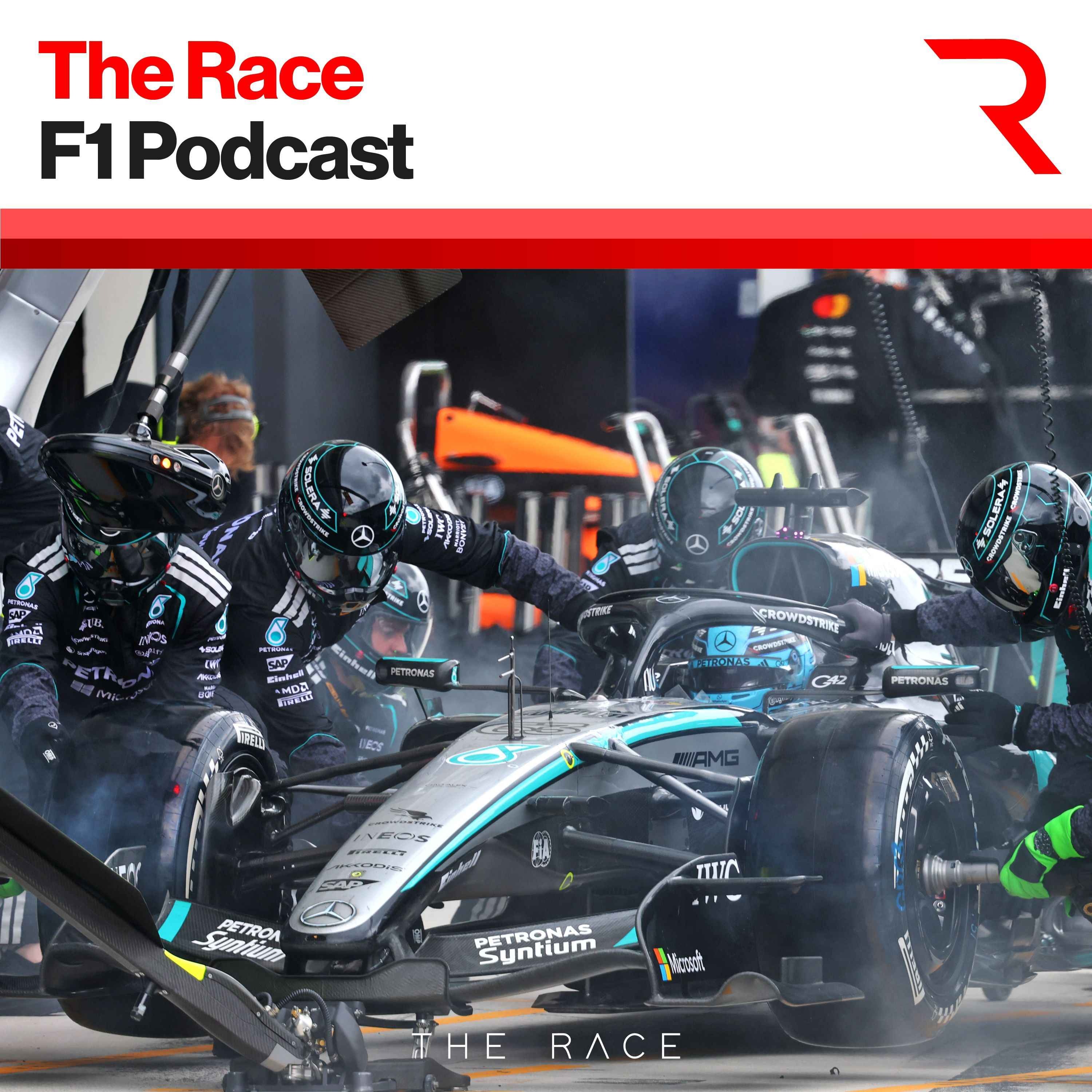
To refuel or not to refuel - The dilemma hanging over F1's future
About this episode
Refueling is back on the agenda, but the hosts wrestle with what it would do to F1’s racing, strategy, and safety. They argue refueling could move “a lot of the action from happening on track into the pit lane,” turning outcomes into “a numbers game,” while also raising an added risk—despite improvements since the last era (1994 to 2009). Engine uncertainty looms too: “So the V8s are coming,” yet the year and hybrid battery split remain unclear.
F1 seems destined for a V8 engine future, but with a push to make the cars considerably lighter at the same time, could that mean a return of in-race refuelling?
On the latest episode of The Race F1 Podcast, Edd Straw is joined by Jon Noble and Josh Suttill to debate whether bringing back fuel stops would be a good or bad idea for F1.
They also discuss whether FIA president Mohammed Ben Sulayem's suggestion of appointing an independent engine manufacturer is workable, plus we explain what's going on with the safety probe into revolving rear wings and ask whether Ferrari have got a jump on the rest of the field by arranging a filming day at the Madring, ahead of the first ever race at the Spanish circuit in September.
Get bonus F1 podcasts, extra content and ad-free listening, sign-up to The Race Members' Club on Patreon today.
Hosted on Acast. See acast.com/privacy for more information.
V8
"Yeah. So the V8s are coming. They've got absolutely no doubt about that."
“V8s” means an engine with eight cylinders arranged in a V shape. In F1, it’s shorthand for what kind of engine the sport might use next.
“V8s” refers to an eight-cylinder engine configuration arranged in a V shape. In F1 discussions, it usually means the planned next-generation engine direction and what cylinder layout the sport may adopt.
Concord Agreement
"At the moment, the concord agreement runs until the end of 2030. So from 2031 in theory, the FI can write its own regulations,"
The Concorde Agreement is the big contract that sets the rules for how Formula 1 is run. When it expires, F1 can renegotiate how future regulations work.
The Concorde Agreement is the contract framework that governs commercial and regulatory relationships in Formula 1. Its end date matters because it sets the timeline for when F1’s governing body can rewrite rules for future engine regulations.
naturally aspirated
"So we're now in the process of framing what is the V8 going to look like? Is it going to be naturally aspirated?"
Naturally aspirated means the engine pulls in air without using a turbo. That can change how the car makes power and how it feels to drive.
A naturally aspirated engine makes air flow without a turbocharger or supercharger. In F1 engine regulation debates, it’s a key choice because it changes power delivery, efficiency, and how teams manage engine modes.
battery
"Is there going to be a turbo? Is the battery going to be 10%, 15%, 20%?"
In modern F1 power units, the battery stores electrical energy used by the hybrid system. The mention of battery “10%, 15%, 20%” points to how much of the overall energy strategy is allocated to electric power versus combustion.
turbo hybrid
"that if we go naturally aspirated V8, that's less efficient than a current turbo hybrid or a turbo engine."
A turbo hybrid is a car that uses both a turbo engine and an electric system. The turbo boosts power, and the electric part helps with extra push and energy recovery.
A turbo hybrid combines a turbocharged engine with an electric motor/generator. The turbo helps the engine make strong power at lower engine speeds, while the hybrid system can add torque and recover energy under braking.
refuelling
"So the only way around this is to come back with refuelling. So Josh, refuelling. We've got this broad consensus on some of the elements of the future engine, but refuelling, this is a pretty big question, isn't it?"
Refuelling in F1 is when the car takes on fuel during the race at the pits. It affects strategy because teams can plan different stop timing and fuel loads.
Refuelling in F1 means adding fuel to the car during a race, typically via a pit stop. It changes race strategy because teams can extend stints by carrying less fuel at the start and then topping up later.
numbers
"because it moves a lot of the action from happening on track into the pit lane and onto numbers."
Here, “numbers” means the strategy calculations teams use—like fuel and expected lap times. The point is that refuelling could make the race feel more like math than racing.
In this context, “numbers” refers to the quantitative race data and calculations that drive strategy decisions (fuel remaining, lap-time expectations, and timing). The speaker argues refuelling would make strategy more about these numbers than on-track racing.
stint
"So it's more about you can just extend your stint because you've got more fuel. That fuel burns off, you're on low fuel, and you basically just do an overcut"
A stint is how long a car drives before it makes its next pit stop. Changing refuelling rules changes how long teams can go between stops.
A stint is the period a race car runs between pit stops. With refuelling, teams can often extend a stint because they can add fuel later, which changes tire/fuel management and overall race pacing.
overcut
"That fuel burns off, you're on low fuel, and you basically just do an overcut because you're on really low fuel."
An overcut is when one car waits longer to pit than another car. The idea is to build an advantage on track before the other car stops.
An overcut is a strategy where a car stays out longer than a rival (delaying its pit stop) to gain track position. It relies on the car being able to run competitive lap times on its current fuel/tire state before the rival pits.
low fuel
"That fuel burns off, you're on low fuel, and you basically just do an overcut because you're on really low fuel."
Low fuel means the car has only a small amount of fuel left. As fuel runs down, the car gets lighter, which can change how it drives and when teams decide to pit.
Low fuel refers to the car running with a small remaining fuel load late in a stint. In F1 strategy discussions, it matters because fuel weight changes the car’s balance and performance, and it can influence when teams choose to pit.
full tank of fuel
"Somebody else has come into the pits, they've got a full tank of fuel."
A full tank of fuel means the car has been topped up at the pits. That changes how heavy the car is and can affect how long it can go before the next stop.
A full tank of fuel means the car has been refilled to its maximum fuel capacity after a pit stop. In F1 strategy, starting a stint with more fuel typically changes weight and can affect lap-time potential and how long the car can run before needing another stop.
fuel sizes
"So you are just running longer, which you already knew before the race, [175.6s] because the fuel sizes have already been released. [179.1s] So you already know a car's heavier, and then that car just sort of rather easily then"
“Fuel sizes” means how much fuel the car is allowed to start with. More fuel makes the car heavier at the beginning, and that changes how fast it can go lap after lap.
“Fuel sizes” refers to the amount of fuel allocated/allowed for the race, which determines how heavy the car starts and how quickly it becomes lighter. In F1, that starting fuel load is a key input to performance planning and lap-time expectations.
lap times
"because the fuel sizes have already been released. [179.1s] So you already know a car's heavier, and then that car just sort of rather easily then [183.4s] is able to do those lap times and quite predictably then get ahead."
Lap times are how long it takes to complete one lap on the track. In F1, teams care a lot because lap times show whether the car is fast enough and how consistent it is over a stint.
Lap times are the measured time it takes an F1 car to complete one circuit. Teams use lap-time predictions to judge whether a rule change (like refueling) would make racing more or less competitive and predictable.
AIS
"But right now, there would just be the way that algorithms have advanced and AI has advanced [201.9s] and will advance even more if this was coming in the 2030s."
AI means computer “smart” systems that can learn from data and make better decisions. The point being made is that AI could help teams choose fuel plans that make performance too predictable.
AI (artificial intelligence) refers to computer systems that can optimize decisions using data and pattern recognition. Here, the speaker argues that advanced AI could optimize fuel strategy to the point where outcomes become overly predictable.
algorithms
"But right now, there would just be the way that algorithms have advanced and AI has advanced [201.9s] and will advance even more if this was coming in the 2030s."
Algorithms are basically rules or procedures computers follow to solve a problem. In racing, they can be used to calculate the best plan based on data like fuel load and expected lap times.
Algorithms are step-by-step computational methods used to process data and produce decisions or predictions. In motorsport strategy discussions, they often refer to optimization tools that help teams choose settings and race plans based on expected lap-time outcomes.
fuel strategy
"Everything would just converge on the best possible fuel strategy, [210.5s] and everything would just be done by numbers and it would be driving to a lap time."
Fuel strategy is how an F1 team plans its fuel use during the race. Because the car gets lighter as fuel runs out, the team has to plan to keep lap times strong without hurting the tires or reliability.
In Formula 1, fuel strategy is the plan for how much fuel to carry and when to use it over a race. It affects lap times, car weight, tire wear, and how the team manages performance as fuel load changes.
refueling formula
"And I don't think a refueling formula delivers great racing. The overtaking, as Josh says, happens in the pit lane, not out on track."
This means F1 rules that let cars add fuel during the race. That can change when teams pit and how cars race each other, which affects how exciting passing is.
In F1, a “refueling formula” would be a rules package that allows (or requires) cars to refuel during a race. The idea is that refueling can change race strategy, pit-stop timing, and how often cars are close enough to pass.
yo-yo racing
"to what we've got now, which has, I don't like some of the overtaking at the moment, beyond just the yo-yo racing."
“Yo-yo racing” is when positions keep flipping back and forth in a stop-start way. Instead of one driver steadily passing and holding the lead, it can feel like cars are trading places repeatedly.
“Yo-yo racing” describes a style of racing where cars repeatedly gain and lose position in a stop-and-go pattern, often driven by pit stops, tire degradation, or traffic rather than sustained wheel-to-wheel battles. It can make the racing feel less continuous even if positions change often.
Silverstone
"I didn't especially like the fact that Silverstone, for example, Lewis Hamilton goes around the outside of George Russell at cops, great move."
Silverstone is a well-known F1 race track in the UK. People pay attention to big passes there because it’s a major venue for showing how good the racing is.
Silverstone is a famous Formula 1 circuit in the UK, known for fast corners and heavy braking zones. Because it’s a high-profile track, notable overtakes there often become talking points in F1 debates about racing quality.
cops
"Lewis Hamilton goes around the outside of George Russell at cops, great move. They're side by side into maggots, fantastic hustling each other,"
“Cops” is the name of a particular corner at Silverstone. It’s the kind of spot where drivers can brake late and try to pass, so it’s often used as an example of exciting racing.
“Cops” refers to a specific corner at Silverstone (part of the complex around Copse). It’s a well-known overtaking and braking zone, so passing there is often highlighted as evidence of good racecraft.
maggots
"They're side by side into maggots, fantastic hustling each other, battling exactly the sort of thing you want to see."
“Maggots” is part of a famous corner sequence at Silverstone. It’s a section where cars stay close and drivers can keep fighting for position.
“Maggots” is shorthand for the Maggots-Becketts section at Silverstone, a fast sequence of corners. Because cars are loaded up and close together through this area, it’s a common place for side-by-side racing and momentum-based overtakes.
D-values
"And then 100 meters later, Russell just pushes a button and overtakes on the straight. So a complete waste of time. D-values and overtake."
“D-values” sounds like a technical number or rule setting used in F1. In this clip it’s mentioned as part of the discussion about overtaking, but the exact meaning isn’t explained here.
“D-values” likely refers to a specific F1 metric or rule parameter used in the discussion of overtaking and race dynamics. Without more context in this excerpt, it’s not possible to pin down the exact definition, but it’s clearly treated as a technical element of the debate.
Formula One regulations
"This has been something that formula one regulations have fallen victim of too many times in terms of there'll be one overwhelming thing you're working to,"
In Formula 1, there’s an official rulebook that tells teams what they’re allowed to build and how races are run. When the rules change, it can completely change how the cars behave and how the race strategy works.
“Formula One regulations” are the sport’s rulebook that governs everything from car design limits to race procedures. Changes to these rules can strongly influence how teams build cars and how races play out.
downforce
"whether it's, oh, we want the cars to have more downforce in 2017, or basically this current reg set is all about making the power units work,"
Downforce is the “suction” effect from the car’s shape and wings that presses the tires harder onto the track. More downforce generally helps you go faster through corners, but it can make the car less efficient on straights.
Downforce is the aerodynamic force that pushes a car downward, increasing tire grip. In F1, more downforce usually improves cornering performance, but it can also increase drag and affect straight-line speed and efficiency.
power units
"or basically this current reg set is all about making the power units work, they have some flaws baked into them."
In F1, the “power unit” is the car’s engine setup, including the hybrid parts that store and reuse energy. The rules control how these systems must work, so it affects how fast the car can be and how teams plan their race.
In modern F1, “power units” refers to the hybrid engine system that includes the internal-combustion engine plus energy-recovery components. The regulations aim to make these units durable and effective, which can shape fuel use, performance, and strategy.
variable strategies
"the argument people often make is, oh, you get variable strategies, don't you? You can have different fuel loads, et cetera, et cetera."
In F1, teams can choose different game plans for the race. “Variable strategies” means not everyone does the same thing with fuel and timing, and refueling can make more options possible.
“Variable strategies” in F1 refers to different race plans—like when to push, how to manage fuel, and how to time stints—rather than everyone following the same approach. Refueling can increase the range of possible strategies by decoupling starting fuel from race-end fuel.
fuel loads
"You can have different fuel loads, et cetera, et cetera. So does this not present an opportunity to have a little bit more variety in races,"
Fuel load just means how much fuel the car is carrying. More fuel usually makes the car heavier, which can slow it down and change how it drives, so teams plan fuel carefully.
Fuel load is how much fuel a car carries at a given time. In F1, fuel load directly affects car weight and therefore lap times, tire wear, and handling—so changing fuel loads can alter both qualifying and race performance.
qualifying
"But then, of course, you think about it for a second, and you get the fuel totals,"
Qualifying is when drivers set their positions for the race grid. If teams can run different fuel amounts in qualifying, it can make the results less comparable to what you’ll see in the race.
Qualifying is the session that sets the starting grid for the race. Because fuel load and car setup can differ between qualifying and the race, rules that change fuel handling can also change how meaningful qualifying results are.
fuel totals
"But then, of course, you think about it for a second, and you get the fuel totals,"
Fuel totals means the total fuel amount involved over a session or race. Teams can’t just “make fuel disappear,” so the total amount affects what strategies are actually possible.
Fuel totals refers to the overall amount of fuel used or carried across the session, which determines how much fuel remains at key points. In strategy debates, fuel totals matter because they constrain how teams can vary pace between qualifying and the race.
pit stops
"So we're going to have this race where they're maybe leading at the start, but then they're inevitably going to have to make more pit stops than the faster cars behind, and those faster cars are going to come through."
A pit stop is when an F1 car comes into the pits to get serviced. It can include tire changes, and depending on the rules, refueling too. When you do it can make a big difference to who ends up in front.
In Formula 1, a pit stop is when the car enters the pit lane to service the car—most commonly changing tires, and in some eras also refueling. The timing of pit stops strongly affects track position and strategy.
strategic divergence
"That was injected into it to create an extra question mark and to drive some strategic divergence, because everybody just jumped onto similar approaches."
Strategic divergence is when teams choose meaningfully different race plans—like different pit stop timing or fuel/tyre approaches—rather than all following the same playbook. In F1, rules changes can be aimed at creating this so races become less predictable.
fuel load going into the race
"So could you just have a normal qualifying, and then everyone's blind in terms of fuel load going into the race?"
This is about not knowing how much fuel each car has when the race starts. Since fuel affects how heavy the car is and how long it can run, not knowing it makes strategy harder and can change when teams pit and how aggressively they drive.
The idea of being 'blind' to fuel load going into the race refers to removing or hiding information about how much fuel each car starts with. That uncertainty can change how teams time their pit stops and manage pace, because fuel affects weight, tire wear, and how long a stint can last.
race start fuel
"And then when that happens, you then get into your knee-jerk responses and complicated rules of qualifying on your race start fuel and all that nonsense that we had before."
This is the fuel amount a team is allowed to start the race with. If the rules limit that fuel, teams have to drive in a way that still lets them finish the race without running out.
“Race start fuel” is the amount of fuel the car is allowed to begin the race with. In F1, fuel rules can strongly affect strategy and how teams manage pace, because the car must finish within the fuel allowance.
sustainable fuel
"So it's not the pure V8s we had in the past, but you bring the turbos, you get the efficiency, we've got a sustainable fuel, you don't need refueling."
This means a fuel designed to be cleaner than regular gasoline or diesel. The hosts are suggesting that with sustainable fuel (and the right engine setup), refueling might not be needed.
“Sustainable fuel” is a lower-carbon fuel intended to reduce emissions compared with conventional fossil fuels. The hosts link it to efficiency and the idea that F1 might not need refueling if the fuel and regulations make that unnecessary.
tyre supplier
"Another argument you can make is if you do have refueling [570.1s] and the cars aren't so heavy, that makes it easy for the tyre supplier, etc. [573.5s] So again, I'm trying here, Josh, to play devil's advocate,"
The tyre supplier is the company that makes the tires all the teams use in F1. If the rules change—like whether cars refuel—then the tires may need to work differently.
The tyre supplier is the company that provides the tires used by the teams in F1. Tire design and performance are influenced by race rules like whether cars carry less fuel (and thus are lighter) and how often they pit.
safety advancements
"Obviously, that was always a concern. [603.7s] I'm sure now with how many advancements has been, [606.6s] it would be safer than it was before."
Safety advancements are improvements in F1 safety systems, procedures, and car design that reduce the chance and severity of crashes. The discussion here links those improvements to why refueling might be less risky than it used to be.
Singapore 08
"But I think stuff like Singapore 08 and stuff, [615.7s] we probably see hopefully never even if it came back, [618.4s] just because the safety advancements have come on so long."
Singapore 08 means the 2008 Singapore Grand Prix. It’s brought up because that race had notable incidents, so it’s a reference point in the safety debate.
Singapore 08 refers to the 2008 Singapore Grand Prix, a race remembered for its safety-car and crash-heavy moments. Here it’s used as an example of why safety concerns matter when discussing whether refueling could return.
refueling era
"And actually, when the last refueling era, which ran from 94 to 2009, there were very few incidents."
This is the time in F1 when cars could stop during the race to add fuel. It forces teams to plan their pit stops and strategy, because you can’t just drive the whole race on one tank.
In Formula 1, the “refueling era” refers to the period when cars were allowed (and required) to stop and add fuel during a race. That changes race strategy because teams must plan when to pit for fuel and how to manage tire and engine performance across multiple stints.
pit fire
"Ready, Irvine had a big one for Jordan, Jammery, Bruni later on had a pit fire as well. But it was by and large pretty safe."
A “pit fire” means a fire during a pit stop. It’s especially dangerous in eras where cars are refueled, because fuel and fueling gear are right there in the pits.
A “pit fire” is a fire that breaks out in the pit lane or during a pit stop, often involving fuel, equipment, or hot components. In refueling periods, the risk profile is higher because fuel-handling equipment is present during stops.
engine rules
"So kind of stepping back, John, how do you think with these engines? We do all the engine rules and the wider rules, in fact, because the car has to be tailored to it."
“Engine rules” are the regulations that define what engine technologies, operating limits, and performance constraints teams are allowed to use. In F1, these rules strongly influence how the car is designed, because the chassis, cooling, and aerodynamics often have to be tailored around the engine’s packaging and power delivery.
power offset
"But they do show that having a power offset is a good way to push through the aerodynamic following challenge."
“Power offset” means giving cars a power advantage (in a controlled way) to help them overtake. The goal is to counter the problem of dirty air when you’re chasing another car.
“Power offset” is a regulatory or technical approach where the balance of performance is adjusted so that cars have different power characteristics depending on their situation. The idea is to help cars that are stuck in turbulent air behind others by giving them enough extra drive to break away and attempt an overtake.
aerodynamics
"But they do show that having a power offset is a good way to push through the aerodynamic following challenge."
“Aerodynamic” here means how the car’s shape and airflow create grip. When you follow another car too closely, the air gets messy and you lose downforce, so it’s harder to pass.
In F1, “aerodynamic” refers to how airflow over the car affects downforce and grip. The key issue discussed here is that when a car is close behind another, disturbed airflow can reduce aerodynamic efficiency, making it harder to stay close and overtake.
difference of strategy
"The best grand prix are always when there's a difference of strategy that you don't know which is the winning strategy until the final closing stages of the race."
This is about teams making different plans during the race—like when to pit and what tires to use. If strategies differ, you don’t always know who will win until the end.
A “difference of strategy” in F1 means teams choose different pit-stop timing and tire/fuel management plans rather than all running the same sequence. It increases uncertainty because the winning approach may only become clear in the final stages of the race.
Barcelona
"And I'll point to Barcelona this year, for example, these current cars aren't fantastic."
Barcelona is a well-known F1 track in Spain. What happens there—like how easy it is to pass—can make races feel better or worse depending on the rules.
Barcelona refers to the Circuit de Barcelona-Catalunya, a frequent F1 venue used for pre-season testing and major races. Track characteristics and overtaking opportunities can strongly affect how strategy and rule changes play out.
three stop versus the two stop
"But it was a day where the three stop versus the two stop was in play."
This is about how many pit stops a team plans during the race. A “two-stop” means two pit stops total, while a “three-stop” means three. More stops can mean more tyre changes, which can help the car go faster between stops.
In F1 strategy, a “two-stop” or “three-stop” race refers to how many times the car makes a pit stop during the Grand Prix. More stops usually means more time spent in the pit lane, but it can allow fresher tyres and better lap times between stops.
tyre changes
"Unlike with tyre changes now, you can have a really quick pit stop."
Tyre changes are when the team swaps the tyres during a pit stop. Since tyres affect how much grip the car has, changing them at the right time can make the car faster.
Tyre changes are pit-stop operations where the team swaps the car’s tyres to match the race conditions and strategy. Because tyres strongly affect grip and lap times, the timing and speed of tyre changes can swing the outcome between teams.
tyre wheel
"because there's no skill at all to get a tyre wheel on and off in that."
They’re talking about the wheel/tyre assembly that gets swapped during a tyre change. The team has to mount it correctly and quickly, because any mistake can slow the stop down.
A “tyre wheel” here means the wheel assembly being swapped during a tyre change—tyre mounted on the rim. In F1, these are handled as a single unit, and the speed/accuracy of mounting them is critical to avoid delays or safety issues.
cause a fire
"We'd probably find a way, even without refuelling, to cause a fire doing that, to be honest."
They’re joking about safety risk: refuelling can be dangerous if something goes wrong. Tyre changes don’t involve pouring fuel, so the risk profile is different.
The phrase “cause a fire” points to the safety risk associated with refuelling and hot components in the pit environment. It’s a reminder that adding fuel under race conditions introduces hazards that tyre-only stops don’t.
Monaco
"Bad luck, it's Monaco. So I think it's the strategy variation is the key to a good race"
Monaco is the Monaco Grand Prix, a Formula 1 race on very tight city streets. It’s famous for being hard to overtake, so race strategy and passing rules matter a lot.
Monaco refers to the Monaco Grand Prix, a Formula 1 race held on a tight street circuit in Monaco. Because it’s narrow and slow, overtaking is unusually hard there, so any rule changes that affect strategy or passing can have an outsized impact.
strategy variation
"So I think it's the strategy variation is the key to a good race [821.0s] because it's the second level of unpredictability."
Strategy variation means teams choose different race plans instead of doing the exact same thing. In F1, that can change when cars pit and how they manage tires, which can make the race more unpredictable and exciting.
Strategy variation is the idea that teams don’t all follow the same race plan, so different pit-stop timing and tire-use choices create different outcomes. In F1, that unpredictability can make races more interesting because track position and timing swings between teams.
wheel-to-wheel battle
"You can have the wheel-to-wheel battles themselves, [826.8s] then you throw on top a variation of a 2v of 3 or a 1v of 2, those sort of things."
Wheel-to-wheel battles are when two cars are right next to each other and actively competing for position. It’s the kind of close racing fans usually want to see.
Wheel-to-wheel battles are direct on-track fights where two cars run side-by-side or contest the same racing line. In F1, these are a key ingredient for entertaining racing because they test driver skill, braking points, and racecraft under pressure.
push to pass system
"Another element I think they could throw in as well is the curse element [844.0s] or some push-to-pass system, which is going to help with that overtaking."
A push-to-pass system is a rule that lets a driver use a temporary advantage to try to pass. The question is whether it helps overtaking in a fair way or makes racing feel too “button-controlled.”
A push-to-pass system is an F1-style rule that gives drivers a temporary boost or advantage intended to help them overtake. The key debate is whether it feels like a natural racing tool or an artificial button that can distort competition.
DRS
"But equally, you don't want the DRS situation where the car behind's got an advantage [891.2s] and the car in front can't counter it."
DRS is an F1 system that gives a driver a temporary aerodynamic advantage to help them go faster and pass. It’s meant to improve overtaking, but it can also make the race feel like the car behind has a built-in edge.
DRS (Drag Reduction System) is an F1 feature that temporarily reduces aerodynamic drag by opening a rear wing flap. It’s designed to make overtaking easier, but the tradeoff is that it can create an advantage for the car behind that the leader may struggle to counter.
independent customer engine supplier
"Something that Mohamed Ben Selyam raised was the potential of appointing an independent customer [987.7s] engine supplier to effectively prevent there being manufacturer customer teams."
This is the idea of having a separate company make engines that other teams can buy and use. The point is to make it harder for only the biggest manufacturer teams to have an advantage.
An independent customer engine supplier would be a separate organization that provides engines to multiple teams that are not all tied to the same manufacturer program. In F1 governance discussions, the goal is often to reduce the dominance of manufacturer-backed teams by making engine access more standardized across the grid.
manufacturer customer teams
"engine supplier to effectively prevent there being manufacturer customer teams. [993.2s] How serious the proposal is this and how seriously should we take it?"
A manufacturer customer team is one that gets its engine (and sometimes other tech help) from a big carmaker. The debate is about fairness—whether those teams get an advantage over teams without that direct support.
Manufacturer customer teams are teams that race with engines and technical support supplied by an F1 manufacturer, rather than developing everything themselves. The concern in rule debates is that this structure can create unequal competition if manufacturer-backed teams get better resources, updates, or integration than fully independent teams.
Cosworth
"supplier like a Cosworth, for example, to make its own power unit, sell it to customers in Formula One,"
Cosworth is a motorsport engineering company. Here it’s brought up as an example of a company that could build F1 engines for teams that want to buy rather than develop everything themselves.
Cosworth is an engineering company known for motorsport engine development, including work connected to Formula 1 power units. In this discussion, it’s mentioned as an example of an independent supplier that could build and sell engines to customer teams.
FIA appointed one
"I'm a little bit wary of this idea to have an FIA appointed one."
“FIA appointed” here means the FIA would choose who the independent engine supplier is. The worry is that it could get political or unfair, especially if manufacturers and independents are competing.
An “FIA appointed” independent supplier refers to the FIA (Formula 1’s governing body) selecting or designating who supplies engines. The concern raised is that such an arrangement could create conflicts or political pressure, especially if it affects how competition between manufacturers and independents plays out.
V6 era
"It supplied a lot of the new teams and there was talk of it carrying on to the V6 era, but that kind of fizzled out."
Formula 1 has changed its engine rules over time. “V6 era” means the years when the main engine design was a V6 (six-cylinder) setup.
In Formula 1, the “V6 era” refers to the period when the sport used V6-cylinder engines as part of the hybrid power units. It’s a shorthand for a specific generation of engine regulations and hardware.
Mercedes
"From their perspective, would you switch away from a Mercedes customer unit to then go to this independent one that would feel like a bit of a risk?"
Mercedes is a top Formula 1 name that also supplies engines to other teams. The point here is that Mercedes’s engines have a strong reputation, so switching away could be risky.
Mercedes is a major Formula 1 engine and team brand, known for supplying customer teams with highly developed power units. The speaker contrasts Mercedes’s established performance with the uncertainty of switching to an independent engine supplier.
independent supplier
"So the question for me is that independent supplier going to be a good enough standard?"
An independent supplier is a company that provides engines to teams instead of the team’s own factory or the biggest manufacturer brands. The question is whether that engine would be good enough to compete.
An “independent supplier” is a non-factory engine provider supplying power units to multiple teams. The speaker is questioning whether an independent supplier could meet the performance and reliability level that teams expect from established brands like Mercedes or Ferrari.
Ferrari
"So for me, it'll be, will there be the motivation there for any of the independence to actually use it overtaking a Ferrari and Mercedes supply?"
Ferrari is one of the most famous Formula 1 teams. Here it’s mentioned as one of the big engine suppliers that teams might stick with because they trust the results.
Ferrari is a top Formula 1 team and engine brand, often used as a benchmark for performance and competitiveness. In this segment, Ferrari is paired with Mercedes to illustrate the established suppliers that teams might be reluctant to leave.
Haas
"You've got people like Haas and surely for them, it's better to stay aligned with Ferrari."
Haas is a Formula 1 team. The idea here is that Haas would probably stick with Ferrari’s engine support because switching suppliers could be too risky.
Haas is a Formula 1 team brand that has historically relied on customer relationships for key technical components, including engines. The speaker argues Haas would likely prefer staying aligned with Ferrari rather than switching to an independent supplier.
Red Bull
"You've got racing balls. Surely it's better for them to stay aligned with Red Bull."
Red Bull is a Formula 1 team. In this context, it’s being used as an example of a strong partner teams would rather stay with than gamble on a new supplier.
Red Bull is a Formula 1 team brand with its own highly competitive technical program and strong supplier alignment. The speaker suggests teams like Haas would prefer staying aligned with Red Bull’s ecosystem rather than moving to an independent engine supplier.
Racing balls
"You've got racing balls. Surely it's better for them to stay aligned with Red Bull."
This sounds like a mis-transcription of a Formula 1 team name. The point is that the speaker thinks that team would rather stay with Red Bull than take a risk with a new engine supplier.
“Racing balls” appears to be a transcription error for a Formula 1 team name. The speaker’s intent is to reference another team that would likely prefer staying aligned with Red Bull rather than switching to an independent supplier.
electrics
"There was this obsession with electrics. Governments were pushing everyone to get rid of internal combustion engines, go electric."
“Electrics” means cars powered mainly by electricity, like battery-electric vehicles. The point being made is that this trend influenced what manufacturers wanted and how F1 rules were written.
"Electrics" here refers to electrified road-car technology—especially battery-electric vehicles and related powertrain approaches. The hosts connect this broader push to how F1 regulations were shaped during a period when manufacturers were prioritizing electrification.
internal combustion engines
"There was this obsession with electrics. Governments were pushing everyone to get rid of internal combustion engines, go electric."
An internal combustion engine makes power by burning fuel inside the engine. The segment is saying that governments pushed electrification, which affected how car makers approached F1 rules.
Internal combustion engines (ICE) are engines that produce power by burning fuel inside the engine cylinders. In the F1 context here, the discussion is about how regulation and politics pushed manufacturers toward electrification and away from ICE-focused development.
50-50
"But actually, things are being pulled back a bit. 50-50 hasn't worked. I don't think it brings any particular benefit to manufacturers"
“50-50” is a shorthand for a rules balance in F1 about how the car’s power is divided between different energy sources. The host’s take is that this split hasn’t helped manufacturers as intended.
"50-50" is used as shorthand for a split balance in F1’s current hybrid-era rules—specifically how much of the car’s performance and energy usage is allocated between different power sources. The speaker argues that this balance hasn’t delivered benefits for manufacturers.
V8 turbo
"And I think manufacturers will sell as many cars when we have a V8 Turbo with a 10% battery as they will under the current regulations anyway."
A V8 turbo is a type of engine with eight cylinders, shaped in a V, and it uses a turbocharger to push extra air into the engine. More air generally means the engine can make more power.
A V8 turbo is an engine with eight cylinders arranged in a “V” shape, using a turbocharger to force more air into the cylinders. In F1 discussions, it usually refers to the direction of power-unit design and how much of the performance comes from forced induction versus other technologies.
technology transfer
"So you can argue the rules ultimately aren't so relevant as long as you can sell that idea of technology transfer."
Technology transfer means taking racing tech and turning it into technology that shows up in regular cars. The claim is that F1 can help companies sell that tech to the public.
Technology transfer is the idea that innovations developed in F1—like hybrid systems, turbocharging, or energy recovery—should carry over into consumer road cars. The argument here is that even if F1 rules change, manufacturers may still benefit commercially by selling the “same idea” to customers.
control engine
"One thing I wanted to ask you, John, do you remember when the FIA put out a tender for a control engine for Formula One, when it was going to be the spec engine?"
A control engine is an engine that’s controlled by the rules so teams can’t freely design completely different engines. It’s meant to keep costs down and make the competition closer.
A control engine is a standardized or tightly regulated engine concept where teams have limited freedom to develop their own power units. The goal is usually to reduce performance gaps and costs, making racing more about setup and driver skill than pure engine development.
spec engine
"One thing I wanted to ask you, John, do you remember when the FIA put out a tender for a control engine for Formula One, when it was going to be the spec engine?"
A spec engine means all teams use essentially the same engine design under the rules. The idea is to reduce differences and keep costs and development pressure under control.
A spec engine is a “specification” engine that all teams use under the same rules, typically with limited allowable variation. In F1, spec engines are discussed as a way to standardize performance and reduce the arms race in engine development.
tender process
"There was actually a tender process was launched for a single make engine."
A tender process is a formal bidding process where organizations ask for offers and choose a supplier. In this case, it’s about selecting an engine for F1 under a standardized plan.
A tender process is a formal procurement method where an organization invites bids to supply a product or service. Here, it’s used to describe how the FIA would have selected a single engine supplier for a spec/control-engine era.
single make engine
"There was actually a tender process was launched for a single make engine. I remember Max Mosley was quite in favour of this idea."
A single make engine means everyone uses the same engine brand or design. It helps keep the playing field more even and can reduce development costs.
A single make engine means one designated engine manufacturer or design is used across all teams. That kind of standardization is intended to limit cost and reduce performance disparities caused by different engine development paths.
breakaway
"at war with the manufacturers. There was the threats of the breakaway. So the fight was for the control of Formula One."
A “breakaway” is when teams threaten to leave the current racing series and start something separate. Here it’s mentioned as part of the fight over who controls Formula One.
A “breakaway” refers to the threat that teams or stakeholders could leave the existing Formula One structure to form a competing series. The segment frames it as part of the power struggle over control of F1 and the leverage between teams, the FIA, and manufacturers.
Max Mosley
"It was based on the reality of what was going to be best for Max Mosley and Bernie Eccleston in controlling Formula One and weakening the hand of the manufacturers."
Max Mosley was a major leader in Formula One’s governing body. Here, he’s mentioned because his influence affected how F1’s rules and control were handled between teams and car makers.
Max Mosley was a key figure in Formula One governance, most notably as the FIA president. In this discussion, he’s referenced as someone whose influence shaped how power and control in F1 were negotiated with teams and manufacturers.
Bernie Eccleston
"It was based on the reality of what was going to be best for Max Mosley and Bernie Eccleston in controlling Formula One and weakening the hand of the manufacturers."
Bernie Ecclestone was one of the most influential people in Formula One business and leadership. In this part of the episode, he’s mentioned as someone who helped steer who had control over F1.
Bernie Ecclestone was the long-time commercial boss of Formula One, strongly shaping how the sport was run and financed. The segment frames him as a central power broker in the struggle over who controlled F1 and how manufacturers were positioned.
Craig Pollock
"I mean, it's been an idea that has come around. Obviously, Craig Pollock's pure idea of early 2010s came around."
Craig Pollock is a motorsport figure connected to Formula One. In this discussion, he’s credited with an idea from the early 2010s that later came back into the conversation.
Craig Pollock is associated with F1 team management and has been linked to proposals about engine and technical direction for the sport. Here, he’s referenced for an “early 2010s” idea that later resurfaced in the debate.
independent teams
"But if we end up with a very cheap V8... it's quite easy for everybody to produce a competitive V8, then there's no reason why an independent can't make a successful business model for it."
Independent teams are F1 teams that aren’t fully backed by a car manufacturer. They often have to buy key parts like engines, so the cost and availability of power units directly affects whether they can compete.
Independent teams are F1 entrants that don’t have the same level of manufacturer backing and typically rely on buying engines and technical components from suppliers. The segment argues that if power units are priced too high or not supplied, independents can end up without engines at all.
prototype race cars
"And I think it's really important to keep these as prototype race cars and prototype engines basically. That's what we're dealing with here."
Prototype race cars are built mainly for racing, not for regular customers to buy. The point being made is that F1 should keep feeling like a place for advanced, experimental race engineering.
Prototype race cars are purpose-built racing machines that are developed to compete under rules but aren’t mass-produced for everyday sale. The speaker argues F1 should stay focused on prototype-style engineering and prototype engines, which is part of what makes the sport distinctive.
homologation
"I know there's various restrictions on engines and homologation and that kind of thing, but I think that is something that makes F1 special."
Homologation is basically “official approval” that a design meets the rules. In racing, it means teams can only use parts that have been certified as compliant.
Homologation is the process of certifying that a car or engine design meets the sport’s rules so it’s eligible to compete. The speaker mentions it alongside engine restrictions, implying that approved designs and rule compliance shape what can be developed and sold.
flip top rear wing
"Now, John, the rear wings, the flip top rear wings, the Macarena, the McLaren Aina or whatever it's called"
It’s a rear wing design that can change shape or position. The goal is to help the car generate the right grip in corners while not creating too much drag on straights.
“Flip top rear wings” refers to a rear wing design that can change its aerodynamic configuration during a lap. In F1 discussions, it’s often shorthand for a movable/adjustable wing concept that alters downforce and drag between straight-line and cornering conditions.
airflow reattachment
"Although the differences from what Red Bulls say were slightly different, that the Austria incident was more related to air flow reattachment, whereas Silverstone seemed to have been something slightly different."
Sometimes the air stops flowing smoothly over a wing. “Reattachment” means the air starts following the wing again, which can change how much downforce the car gets.
Airflow reattachment is when disturbed airflow that has separated from a surface returns and “reattaches” downstream. In F1 aero terms, it matters because movable wings can change how smoothly air follows the wing, affecting downforce and stability.
straight mode
"The very fact that it's well understood that these Macarena wings, flip-flop wings, whatever we want to call it, are more difficult as they transition between straight mode and corner mode."
On straights, the car usually wants less drag so it can go faster. If the wing can move, “straight mode” is the wing setup meant for that.
“Straight mode” is the aerodynamic configuration a car uses on straights, typically prioritizing lower drag over maximum downforce. When wings are movable, the car may switch between straight mode and corner mode to balance speed and grip.
corner mode
"The very fact that it's well understood that these Macarena wings, flip-flop wings, whatever we want to call it, are more difficult as they transition between straight mode and corner mode."
In corners, the car needs more grip. “Corner mode” is the wing setup meant to give that extra downforce for turning.
“Corner mode” is the aerodynamic configuration intended for turning, typically prioritizing higher downforce for grip. With movable aero devices, switching into corner mode is meant to improve stability and traction through bends.

McLaren
"Because we know other teams are looking at this. We know McLaren have tried its version of the wing, which didn't even make it out of the garage."
McLaren is one of the Formula 1 teams. They try new car parts, but in this case their version of the wing had issues and didn’t even get to race.
McLaren is a Formula 1 team that develops its own aerodynamic parts and concepts within the FIA’s rules. In this segment, the host mentions McLaren trying a version of a wing concept that failed to make it to the track due to problems.
Belgium
"But we'll wait and see. I think we'll have an answer by Belgium. Yeah, the traditional thing would be, sort of a recent year's tradition would be to let it run to the end of the season"
They’re saying we’ll probably get an answer around the time F1 is in Belgium. That’s typically connected to the Belgian race weekend.
Belgium is referenced as the likely timing point for an F1 decision. In F1 context, this usually lines up with the Belgian Grand Prix weekend, where rule/safety calls can be communicated.
high speed corners
"It's almost usually going to be in high speed corners or after a really long straight. The speeds are always going to be high."
High-speed corners are sections of a circuit where cars maintain large velocity through the turn. The host argues that when the wing/aero concept fails, it tends to happen in these fast corners (or after long straights), making the consequences more severe.
long straight
"It's almost usually going to be in high speed corners or after a really long straight. The speeds are always going to be high."
A long straight is a long section where the car speeds up a lot. If a problem happens right after, it can be more dangerous because the car is moving so fast.
A long straight is a track section where the car accelerates to very high speed before braking or turning. The host links failures to these high-speed conditions, since the aerodynamic loads and kinetic energy are greatest.
Spa
"it could be somewhere else can imagine it at Spa at the end of the Kemmel Strait or where there's somewhere with barriers and a harder stop or somewhere like Monza."
Spa is a famous F1 track in Belgium known for very high speeds. The Kemmel Straight is one of its fastest sections, so problems there are especially risky.
Spa refers to Circuit de Spa-Francorchamps in Belgium, one of F1’s highest-speed tracks. The host specifically mentions the end of the Kemmel Straight, where cars are fast and any aerodynamic or safety issue can have serious consequences.
Gary Anderson
"we're going to tackle that in the next episode of the Race F1 Tech Show with [1911.1s] XF1 technical director Gary Anderson."
Gary Anderson is the technical director for XF1. That means he helps lead the engineering side of the team, deciding how the car is developed and set up for performance.
Gary Anderson is described here as the XF1 technical director. In F1, a technical director is responsible for overseeing engineering direction and technical decision-making, especially around car systems and performance development.
promotional days
"It's classed as one of their [1939.4s] filming days, one of their promotional days. They had one at Monza earlier this year in April, [1944.4s] and this is their second one that's taken place at the Madrid..."
Promotional days are official times teams are allowed to use the track for filming and marketing. Even though it’s for promotion, it can still help a team because it gives them extra real track experience.
Promotional days are scheduled track sessions that teams use for filming and marketing activities. In F1, they still involve real car running, so they can create a competitive advantage if one team gets track time earlier than others.
Monza
"They had one at Monza earlier this year in April, [1944.4s] and this is their second one that's taken place at the Madrid, like I say, way before anybody else will have a look at it."
Monza is one of the most famous race tracks in Formula 1, in Italy. It’s known for being very fast, and Ferrari previously did a filming day there earlier in the year.
Monza is a famous F1 circuit in Italy, known for its high-speed layout and heavy emphasis on engine power and aerodynamic efficiency. In this segment, it’s referenced as the location of Ferrari’s earlier filming/promotional day.
filming days
"It's classed as one of their [1939.4s] filming days, one of their promotional days. They had one at Monza earlier this year in April, [1944.4s] and this is their second one..."
Filming days are times teams are allowed to use the track to record content for media. Even if it’s not a race weekend, it can still give the team useful track time.
Filming days are track sessions teams are permitted to use for media production. The segment frames Ferrari’s filming day as being “totally within the rules,” but also notes it can function like early testing.
Madrid
"They had one at Monza earlier this year in April, [1944.4s] and this is their second one that's taken place at the Madrid, like I say, way before anybody else will have a look at it."
Madrid is where Ferrari is getting early track time for filming/promotional work. The idea is that being there first helps them prepare better than the other teams.
Madrid is referenced as the location of Ferrari’s second filming/promotional day, scheduled before other teams. The key point is that teams use early track time to reduce uncertainty and improve setup and preparation.
simulations
"And yeah, [1984.1s] good for Ferrari to get ahead of the game, because you can do all the simulations in the world, [1988.0s] but I think there's no substitute for the real thing, especially with this year's car as well."
In F1, simulations are computer models used to predict how the car will behave—such as performance, tire behavior, and aerodynamic effects—before running on track. The hosts argue that simulations can’t fully replace real-world testing.
real world advantage
"So yeah, all totally within the rules and a good real world advantage for Ferrari is getting [1997.6s] over the other teams."
A real world advantage means getting better results because you’ve actually done the thing in real life, not just planned it on computers. In this case, Ferrari gets early track experience compared to other teams.
A real world advantage is the performance benefit a team gains from real track time rather than relying only on models or planning. Here, the hosts argue Ferrari benefits because they can gather practical data and experience with this year’s car before rivals.

Ferrari
"But it also is good for Ferrari. It's only 200km... But it will be a little bit of a help... If we turn up in Madrid and then on Friday, Ferrari's two seconds lap quicker..."
Ferrari is the F1 team in this story. They’re doing a short test to learn how the track behaves, which can help them adjust the car and plan strategy for the race weekend.
Ferrari is the Italian Formula 1 team being discussed, and the segment focuses on how it uses a short test to gain information. In F1, even a small on-track test can influence setup choices and strategy because teams learn about grip, tyre behavior, and aerodynamic performance.
demonstration tyres
"You're on demonstration tyres that are for filming day, but it is knowledge."
Demonstration tyres are tyres brought out for a special day (like filming) instead of the exact tyres teams race on. They can still teach teams about grip and handling, but they might not behave exactly like race tyres.
Demonstration tyres are tyres provided for a specific event or filming day rather than the full race-spec programme. They’re still useful for learning track behavior, but they may not match the exact performance window of the tyres used for racing.
pit lane
"And it was only a couple of laps, but it created a huge controversy in the pit lane, because people are arguing..."
The pit lane is where teams work on the cars during a race weekend. If something gives one side an advantage, people notice quickly and the debate can blow up there.
The pit lane is the area where F1 teams service cars during a race weekend, including during pit stops. It’s also where teams and drivers can react quickly to changes, so controversies about tyre tests often become public there.
tyre behaviour
"If you know what the track surface is like and the grip levels, then that gives you a big head start in terms of understanding downforce levels, tyre behaviour."
Tyre behaviour is how the tyres act as you drive—how they warm up, how much grip they give, and how quickly they wear. Knowing that helps teams plan pace and strategy.
Tyre behaviour describes how tyres respond over time and across conditions—how they heat up, wear, and generate grip. In F1, understanding tyre behaviour is crucial because it directly shapes lap times and how long the tyres remain effective.
Request an Explanation
Heard something you'd like explained? We'll add it to this episode.
Sign in to request explanations for terms you heard.
Want to learn more?
Browse our glossary for plain-English explanations of automotive terms, jargon, and concepts.
Help improve this episode
See something that's not quite right? Our annotations are AI-generated and can sometimes miss the mark. Click the flag icon on any annotation to suggest a correction.
1 community members have helped improve this episode.